Superadditivity of the Classical Capacity with Limited Entanglement Assistance
Elton Yechao Zhu, Quntao Zhuang, Peter W. Shor

TL;DR
This paper demonstrates that limited entanglement assistance can induce superadditivity in the classical capacity of quantum channels, revealing complex roles of entanglement in quantum communication.
Contribution
The authors construct a quantum channel where classical capacity is additive but becomes superadditive with limited entanglement assistance, highlighting new phenomena in quantum information theory.
Findings
Limited entanglement assistance can induce superadditivity.
Classical capacity can be additive while assisted capacity is superadditive.
Entanglement's role in quantum communication is more complex than previously understood.
Abstract
Finding the optimal encoding strategies can be challenging for communication using quantum channels, as classical and quantum capacities may be superadditive. Entanglement assistance can often simplify this task, as the entanglement-assisted classical capacity for any channel is additive, making entanglement across channel uses unnecessary. If the entanglement assistance is limited, the picture is much more unclear. Suppose the classical capacity is superadditive, then the classical capacity with limited entanglement assistance could retain superadditivity by continuity arguments. If the classical capacity is additive, it is unknown if superadditivity can still be developed with limited entanglement assistance. We show this is possible, by providing an example. We construct a channel for which, the classical capacity is additive, but that with limited entanglement assistance can be…
Click any figure to enlarge with its caption.
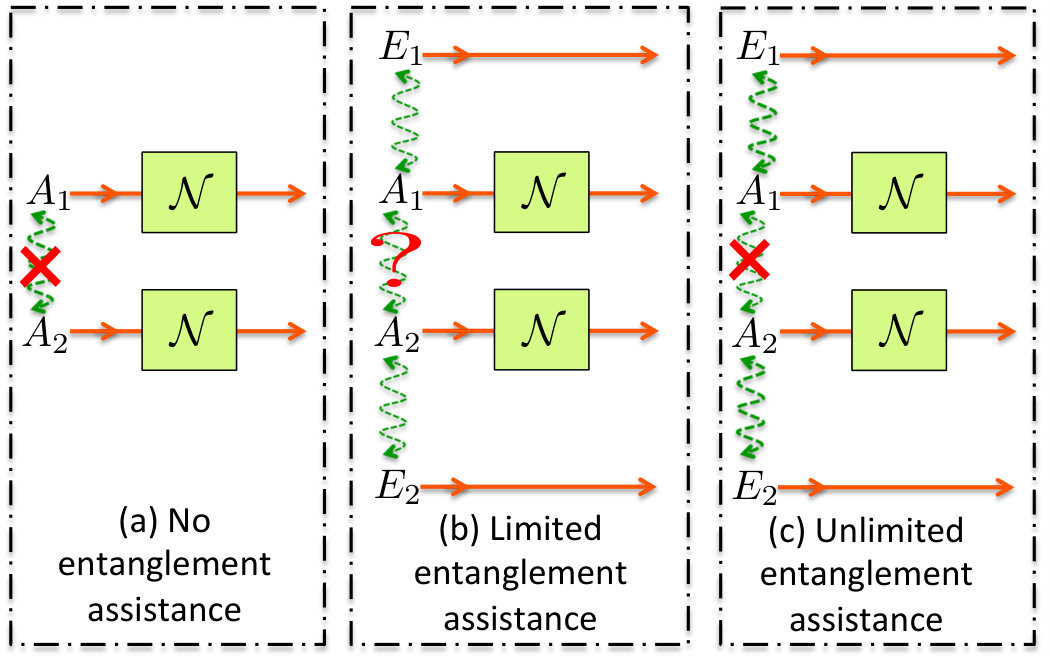 Figure 1
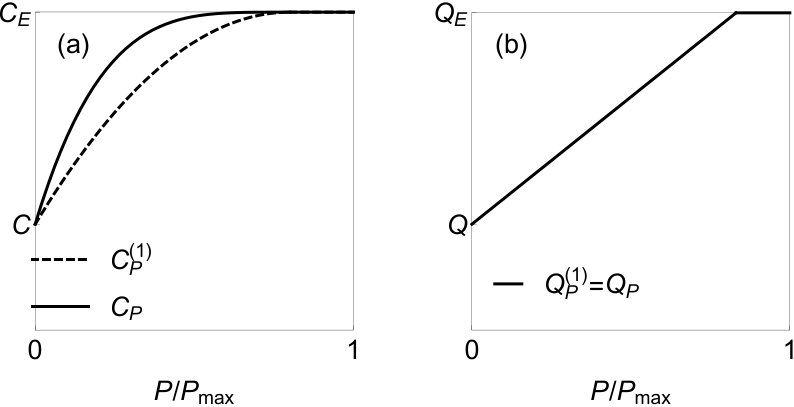 Figure 2
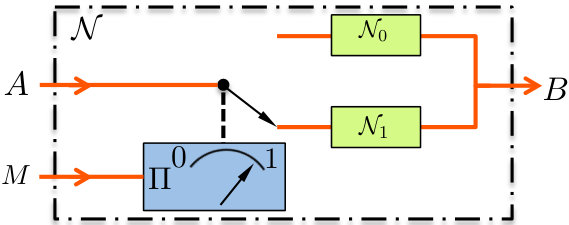 Figure 3
Peer Reviews
No public reviews on file for this paper yet. If you reviewed it on a platform where reviews are public (OpenReview, ICLR, NeurIPS, ICML), you can paste yours below so the community can read it here.
Videos
No videos yet. Explain this paper in a talk, walkthrough, or lecture? Add one.
Superadditivity of the Classical Capacity with Limited Entanglement Assistance
Elton Yechao Zhu
Department of Physics, Massachusetts Institute of Technology, Cambridge, Massachusetts 02139, USA
Center For Theoretical Physics, Massachusetts Institute of Technology, Cambridge, Massachusetts 02139, USA
Quntao Zhuang
Department of Physics, Massachusetts Institute of Technology, Cambridge, Massachusetts 02139, USA
Research Laboratory of Electronics, Massachusetts Institute of Technology, Cambridge, Massachusetts 02139, USA
Peter W. Shor
Center For Theoretical Physics, Massachusetts Institute of Technology, Cambridge, Massachusetts 02139, USA
Department of Mathematics, Massachusetts Institute of Technology, Cambridge, Massachusetts 02139, USA
Abstract
Finding the optimal encoding strategies can be challenging for communication using quantum channels, as classical and quantum capacities may be superadditive. Entanglement assistance can often simplify this task, as the entanglement-assisted classical capacity for any channel is additive, making entanglement across channel uses unnecessary. If the entanglement assistance is limited, the picture is much more unclear. Suppose the classical capacity is superadditive, then the classical capacity with limited entanglement assistance could retain superadditivity by continuity arguments. If the classical capacity is additive, it is unknown if superadditivity can still be developed with limited entanglement assistance. We show this is possible, by providing an example. We construct a channel for which the classical capacity is additive, but that with limited entanglement assistance can be superadditive. This shows entanglement plays a weird role in communication, and we still understand very little about it.
pacs:
Valid PACS appear here
††preprint: MIT-CTP/4895
In Shannon’s classical information theory Shannon (1948), a classical (memoryless) channel is a probabilistic map from input states to output states. This has been extended to the quantum world. A (memoryless) quantum channel is a time-invariant completely positive trace preserving (CPTP) linear map from input quantum states to output quantum states Choi (1975). A classical channel can only transmit classical information, and the maximum communication rate is fully characterized by its capacity. A quantum channel can be used to transmit not only classical information but also quantum information. Hence, there are different types of capacity, such as classical capacity for classical communication Holevo (1998); Schumacher and Westmoreland (1997) and quantum capacity for quantum communication Lloyd (1997); Shor (2002a); Devetak (2005).
Since quantum channels transmit quantum states, and quantum states can be entangled with other parties, it is natural to ask if entanglement can assist the communication. This was first considered by Bennett et al., who showed that unlimited preshared entanglement could improve the classical capacity of a noisy channel Bennett et al. (1999, 2002). Shor examined the case where only finite preshared entanglement is available and obtained a trade-off curve that illustrates how the optimal rate of classical communication depends on the amount of entanglement assistance (CE trade-off) Shor (2004a). One can also consider how entanglement (E), classical communication (C), or quantum communication (Q) can trade-off against each other as resources. The tradeoff capacity of almost any two resources was studied by Devetak et al. Devetak and Shor (2005); Devetak et al. (2008), such as entanglement-assisted quantum capacity (QE trade-off). Subsequently, the triple resource (CQE) trade-off capacity was also characterized Hsieh and Wilde (2010a, b); Wilde and Hsieh (2012).
However, almost all the capacity formulas above are given by regularized expressions. They are difficult to evaluate because they require an optimization over an infinite number of channel uses, which is typically intractable. The existence of this regularization is because entanglement across different channel uses can sometimes protect information against noise and improve the communication rate, a phenomenon often called superadditivity. Superadditivity has long been known to be the case for quantum capacity DiVincenzo et al. (1998); Smith and Smolin (2007), but remained undiscovered for classical capacity until Hastings gave an example Hastings (2009). One exception is the entanglement-assisted classical capacity Bennett et al. (2002); Note (1). An intuitive understanding of the additivity of is that the best way to use entanglement is to preshare it to the receiver, but not across different channels.
The need for regularization for various capacity formulas represents our incomplete understanding of quantum channels, as one cannot find the optimal transmission rate and best encoding strategies. Thus, an important goal in quantum Shannon theory is to characterize quantum channels with additive capacities. For classical capacity, many such channels are known, including unital qubit channels King (2002), entanglement-breaking channels Shor (2002b), etc. For quantum capacity, there are also examples like degradable channels Devetak and Shor (2005). Additivity for the double or triple resource trade-off capacity has also been considered, but many fewer examples are known Brádler et al. (2010).
One can also ask if it is possible to characterize the additivity of a capacity region (e.g., CE trade-off) from some of its subregions (e.g., ). This has been shown to be possible for QE trade-off, as additivity of implies the additivity of quantum capacity with any amount of entanglement assistance Devetak et al. (2008). However, the same problem is open for CE trade-off. This question has only been recently explored Zhuang et al. (2017), where one can restrict the encoding and constraint on entanglement to make it additive.
In this work, we consider the implication of additivity of the classical capacity on the CE trade-off region. Suppose is additive, this means we can look at each channel separately, and entangled input states do not help [Fig. 1(a)]. The same is true if there is unlimited entanglement assistance [Fig. 1(c)]. But with limited entanglement assistance, it is unclear whether entangled input states could help [Fig. 1(b)]. We answer the above question affirmatively. We show that there exists a channel such that the classical capacity is additive, but with some entanglement assistance , it becomes superadditive. We give a schematic plot of our CE trade-off curve in Fig. 2(a).
To describe our results precisely, we need to first review a few key notions and results in classical capacity. To transmit classical information, Alice picks a set of signal states with probability (denoted as ), and sends them through the channel to Bob. The -shot classical capacity (i.e., Holevo capacity) Holevo (1998); Schumacher and Westmoreland (1997) of is
[TABLE]
where is the von Neumann entropy. This is the maximal rate of reliable classical information transmission achieved using tensor products of states , hence the “1-shot” classical capacity Note (2). If we can use input states which are entangled across channel uses, we obtain the -shot classical capacity . denotes the (regularized) classical capacity and is the ultimate limit of reliable classical information transmission through . If is additive for channel , i.e., for all , then we use in place of .
Now consider the scenario where the purifications of the states are preshared to Bob, who can use them together with the states he receives through for decoding. If we restrict the average amount of preshared entanglement to be ebits per channel use, we arrive at the 1-shot classical capacity with entanglement assistance Shor (2004a), denoted as ,
[TABLE]
where is the density matrix of together with a purification. This is also achieved using inputs which are tensor products of states . Similar to classical capacity, there is and . Note that the above formula works for any . In particular, when , we get . When is maximal, we get .
Now we are ready to state our main result.
Theorem 1
(Main Theorem) There exists a channel such that
[TABLE]
i.e., its classical capacity is additive. However, there exists such that
[TABLE]
i.e., its classical capacity with limited entanglement assistance can be superadditive.
This additivity to superadditivity transition in classical capacity is illustrated in Fig. 2(a). This is in sharp contrast to the QE trade-off curve [Fig. 2(b)], as grows linearly in with gradient 1. Additivity of follows from the additivity of .
Our channel is a conditional quantum channel Yard (2005), where register determines whether or is used (see Fig. 3 for a diagrammatic representation). Explicitly, on any input state Note (3),
[TABLE]
This construction is similar to the one in Ref. Elkouss and Strelchuk (2015). However, their construction does not directly apply to our case since is kept and contains classical information.
The intuition why a channel like will work is that without entanglement, we are only using the classical channel , hence its classical capacity is additive. As one increases entanglement assistance, one starts using the quantum channel , where superadditivity kicks in.
Our construction is generic and does not depend on the specific forms of and . Hence we give the properties of and that are required for our argument to work and will give a construction of later. An example of is given in the Supplemental Material.
We require the classical channel to have the following properties: (0.1) . (0.2) It has a noise parameter which can be tuned, such that varies from [math] to continuously.
We require the quantum channel to have the following properties: (1.1) It has a superadditive classical capacity, i.e., . (1.2) For any and ,
[TABLE]
(1.3) There exists such that , and is strictly concave at .
Here by saying a function is strictly concave at , we mean for all satisfying , with . It is clear that is always concave in . If , then , as one can always just use entanglement for the fraction of the channel uses and entanglement for the other fraction.
The rest of the paper is organized as follows. We first state Lemma 2 about the classical capacity with limited entanglement assistance, of partial cq channels (defined in Lemma 2). This lemma together with the properties above lead to the simplification of capacity formulas, as we show in Lemmas 3 and 4. We will prove our main theorem in the main text and leave the proofs of various lemmas to the Supplemental Material.
Lemma 2
Suppose a channel has an input Hilbert space . If there exists a noiseless classical channel on with orthonormal basis , such that
[TABLE]
then can be achieved with an input ensemble , where are states of .
By saying is a noiseless classical channel with orthonormal basis , we mean . This is very intuitive. Entanglement between and other parties is not useful, as destroys it. Since we only have limited entanglement, it is better to use it on .
Using Lemma 2 and properties of and , we can simplify the various capacity formulas of .
Lemma 3
[TABLE]
Lemma 2 ensures that for different uses of the channel, we can choose to use or only, without sacrificing the capacity. Lemma 3 simply states that, for all channel uses, we should use either or .
Lemma 4
[TABLE]
This lemma states that, for entanglement-assisted classical communication, the best strategy is to use for some fraction of the channel uses and for the other fractions of the channel uses (i.e., time sharing). Since using does not require entanglement assistance, we can allocate more of it to .
Now we are ready to prove the main theorem. Proof of main theorem— Choose such that
[TABLE]
By Lemma 3, the classical capacity of is additive, i.e.,
[TABLE]
From Eqs. (3),(4) and concavity of with respect to , we have . Also, by choosing in Eq. (3). So we have
[TABLE]
Choose according to property 1.3. By Lemma 4, suppose is achieved at some with , i.e.,
[TABLE]
If , we have
[TABLE]
where the inequality follows from property 1.3.
If and thus ,
[TABLE]
where the first inequality follows from property 1.3.
**Construction of —**The first two properties for can be easily satisfied. One can take a channel with a subadditive minimum output entropy Hastings (2009) and unitally extend it to a channel with a superadditive classical capacity, via Shor’s construction Shor (2004b); Fukuda (2007). Unfortunately, such channels are poorly understood, and we do not know if it satisfies property 1.3. We argue that if it does not, we can tensor product a dephasing channel that will guarantee it is satisfied, without sacrificing the other properties.
We quote the following property about concave functions Rudin (1976): A concave function is continuous, differentiable from the left and from the right. The derivative is decreasing, i.e., for , we have . We use “” to denote the right and left derivatives when needed.
Let be a random orthogonal channel with subadditive minimum output entropy Hastings (2009) and (with ) be a conditional quantum channel of the form
[TABLE]
where ’s are the Heisenberg-Weyl operators on Shor (2002a). This ensures satisfies properties 1.1 and 1.2 Note (4).
Because of Lemma 2, the useful entanglement assistance is at most . Thus, we restrict to .
Let
[TABLE]
Since
[TABLE]
[TABLE]
This implies cannot always be 1. Thus, there exists such that
[TABLE]
and
[TABLE]
Next, we discuss the few different cases. (1) . Then is strictly concave at by definition. Note that but , thus and satisfies property 1.3. (2) . Let , where is the qubit dephasing channel . The CQE trade-off region is additive for , for any channel ; thus, satisfies property 1.1. satisfies property 1.2, and by arguments similar to Appendix B of Ref. Brádler et al. (2010), one can show also satisfies property 1.2.
Since d\mathcal{C}_{P}\left(\mathcal{F}\right)/dP|_{0+}$$<1, choose small such that d\mathcal{C}_{P}\left(\Delta^{Z}_{\lambda}\right)/dP|_{1-}$$>d\mathcal{C}_{P}\left(\mathcal{F}\right)/dP|_{0+}. This ensures that when ,
[TABLE]
Since is strictly concave with respect to when Hsieh and Wilde (2010a), is also strictly concave with respect to , for . Also, when ,
[TABLE]
where the first inequality comes from Eq.(16), the second one comes from our assumption and Eq. (11) and the last one comes from Eq.(12).
This ensures that is superadditive. Thus when , is strictly concave and superadditive, satisfying property 1.3.
*Conclusion.—*Our work unveils the complications in characterizing the additivity of the CE capacity region. In fact, the only known channels that admit an additive CE capacity region are the quantum erasure channels Hsieh and Wilde (2010a) and Hadamard channels Brádler et al. (2010), many fewer than the class of channels with an additive classical capacity. Coincidentally, these two classes of channels also admit an additive CQE trade-off capacity, suggesting a nontrivial connection Hsieh and Wilde (2010a); Brádler et al. (2010); Zhu et al. .
Also, we do not know the number of shots at which the superadditivity occurs. However, it is very likely that our only has superadditivity in classical capacity up to two shotsMontanaro (2013). In that case, the superadditivity in classical capacity with limited entanglement will appear at two shots.
EYZ and QZ would like to thank Min-Hsiu Hsieh for many insightful discussions. EYZ and PWS are supported by the National Science Foundation under Grant Contract No. CCF-1525130. QZ is supported by the Claude E. Shannon Research Assistantship. PWS is supported by the NSF through the STC for Science of Information under Grant No. CCF0-939370.
.1 Proof of Lemma 2 in Main Text
Proof. For channel , suppose one uses the ensemble for entanglement-assisted classical communication. Holevo’s bound gives the maximum classical information transmitted as
[TABLE]
where the pre-shared entanglement is in Hilbert space , and . Then
[TABLE]
We apply the noiseless classical channel on the register . Since , this does not change the amount of information transmitted. Hence Eq.(S1) is equal to
[TABLE]
Now, we consider an alternative protocol, described below. Formally, the state of after is
[TABLE]
Note are states of CE and ’s are the basis of the classical channel. Moreover, for the density matrix , consider its spectral decomposition
[TABLE]
So Eq. (S4) is equal to
[TABLE]
where . We introduce the notation for the reduced density matrices and . Denote .
Suppose Alice and Bob instead use the ensemble for entanglement-assisted classical communication. We prove in the following that using this ensemble will consume less entanglement and transmit more information, which suffices to prove the lemma.
First, we show that the entanglement consumption for the second protocol is less than that for the original protocol. The original entanglement assistance for using state is
[TABLE]
where ’s are the entanglement assistance for the second protocol. By concavity of the von Neumann entropy,
[TABLE]
and thus
[TABLE]
This means the average entanglement used between Alice and Bob is smaller for the second protocol.
Next, we show that the amount of information transmitted by the second protocol is larger than that by the first protocol. For the second protocol, is
[TABLE]
We introduce a new register , which records the indices of the second ensemble of states. Denote each state as . Denote the output register of the channel . Consider the following state of
[TABLE]
It has the following properties,
[TABLE]
By strong subadditivity,
[TABLE]
Now we are ready to compare Eqs. (S3) and (S10). The second term of Eq. (S3) and Eq. (S10) are the same. From Eq. (S13), with each term given in Eqs. (S12), we immediately see that the first and the third terms of Eq. (S3) and Eq. (S10) are exactly the terms in Eq. (S13). So Eq. (S10) is greater than Eq. (S3).
.2 proof of Lemma 3 in Main Text
Proof. Let . Then and is a partial cq channel. Taking in Lemma 2 from the main text, can be achieved with ensembles of the form , with .
The Holevo information of with respect to is given by
[TABLE]
where we define and . In the last line, we used properties (0.1) and (1.2) from the main text. This means
[TABLE]
On the other hand, by choosing states such that the first register is 0 or 1, it is obvious that
[TABLE]
so
[TABLE]
Similarly
[TABLE]
Since is classical Shor (2002b),
[TABLE]
This means
[TABLE]
Therefore,
[TABLE]
.3 proof of Lemma 4 in Main Text
Proof. One can apply Lemma 2 from the main text to and only consider ensembles of the form , with . For such an ensemble, is given by
[TABLE]
where and .
Since is classical, by the same argument in the proof of Lemma 2 from the main text,
[TABLE]
This means Eq. (S22) is less than
[TABLE]
where again we’ve used properties (0.1) and (1.2) from the main text. So
[TABLE]
This upper bound can always be achieved, hence
[TABLE]
Essentially the same argument shows that
[TABLE]
Applying Lemma 5 (see below) to and , we obtain
[TABLE]
So Eq. (S27) becomes
[TABLE]
Since
[TABLE]
we have
[TABLE]
where in the second line, we used the concavity of with respect to . The third line is just a relabelling. This implies
[TABLE]
On the other hand, it is clear that by taking for in Eq.(S27), we have
[TABLE]
Taking the limit on both sides, we obtain the other direction of the inequality
[TABLE]
Hence
[TABLE]
.4 Lemma 5
Lemma 5
For classical channel and quantum channel , the 1-shot classical capacity of with limited entanglement assistance satisfies
[TABLE]
This lemma is very intuitive. Essentially it says the CE tradeoff region for a tensor product of classical and quantum channel is additive. Unfortunately we did not find any description of this result in the literature. So we provide our own proof here, using Lemma 2 from the main text.
Proof. Since is classical, there exists a classical noiseless channel such that . So is a partial cq channel. Hence can be achieved with ensemble of the form . For such an ensemble, is
[TABLE]
Notice that for the second term, by subadditivity of the von Neumann entropy,
[TABLE]
Also, since
[TABLE]
the third term is equivalent to
[TABLE]
So
[TABLE]
On the other hand, by restricting input states to product states with respect to the two channels, it can be easily shown that
[TABLE]
Hence
[TABLE]
.5 Construction of
Let be the classical symmetric channel of the form
[TABLE]
Its classical capacity is
[TABLE]
where
[TABLE]
and is the binary entropy.
Take with . Then has basis . Define as
[TABLE]
Then is a classical channel with the same classical capacity as . It’s clear that satisfies properties (0.1) and (0.2) from the main text.
.6 Properties of
We prove satisfies properties (1.1) and (1.2) from the main text.
It’s clear that
[TABLE]
The above inequality is true for any channel .
In proving Lemma 2 from the main text, we basically show that with averaged input entropy constrained to be no more than , ensembles of the form minimizes .
[TABLE]
Suppose minimizes subject to . By the above argument, it’s clear that
[TABLE]
Now consider the ensemble
[TABLE]
where we’ve used the following qudit twirl formula Wilde (2013)
[TABLE]
One can show a similar result for . This shows satisfies property (1.2) from the main text.
Let be a state that achieves minimum output entropy for . Consider the ensemble with equal probability. The Holevo information of this ensemble is
[TABLE]
For any ensemble ,
[TABLE]
and
[TABLE]
Hence
[TABLE]
Similarly it can be shown
[TABLE]
Since we’ve chosen with subadditive minimum output entropy, i.e.
[TABLE]
the channel will satisfy property (1.1) from the main text
[TABLE]
References
- Shor (2002b) P. W. Shor, “Additivity of the classical capacity of entanglement-breaking quantum channels,” J. Math. Phys. (N.Y.) 43, 4334 (2002b).
- Wilde (2013) M. M. Wilde, Quantum Information Theory (Cambridge University Press, Cambridge, England, 2013).
The reference list from the paper itself. Each links out to its DOI / PubMed record.
- 1Shannon (1948) C. E. Shannon, “A mathematical theory of communication,” Bell Syst. Tech. J. 27 , 379 (1948) . · doi ↗
- 2Choi (1975) M.-D. Choi, “Completely positive linear maps on complex matrices,” Linear Algebra Appl. 10 , 285 (1975) . · doi ↗
- 3Holevo (1998) A. S. Holevo, “The capacity of the quantum channel with general signal states,” IEEE Trans. Inf. Theory 44 , 269 (1998) . · doi ↗
- 4Schumacher and Westmoreland (1997) B. Schumacher and M. D. Westmoreland, “Sending classical information via noisy quantum channels,” Phys. Rev. A 56 , 131 (1997) . · doi ↗
- 5Lloyd (1997) S. Lloyd, “Capacity of the noisy quantum channel,” Phys. Rev. A 55 , 1613 (1997) . · doi ↗
- 6Shor (2002 a) P. W. Shor, “The quantum channel capacity and coherent information,” MSRI Workshop on Quantum Computation (2002 a).
- 7Devetak (2005) I. Devetak, “The private classical capacity and quantum capacity of a quantum channel,” IEEE Trans. Inf. Theory 51 , 44 (2005) . · doi ↗
- 8Bennett et al. (1999) C. H. Bennett, P. W. Shor, J. A. Smolin, and A. V. Thapliyal, “Entanglement-assisted classical capacity of noisy quantum channels,” Phys. Rev. Lett. 83 , 3081 (1999) . · doi ↗