Crossover-model approach to QCD phase diagram, equation of state and susceptibilities in the 2+1 and 2+1+1 flavor systems
Akihisa Miyahara, Masahiro Ishii, Hiroaki Kouno, and Masanobu Yahiro

TL;DR
This paper develops a crossover model for QCD that successfully reproduces lattice QCD data on the equation of state and susceptibilities, and maps the phase diagram for 2+1 and 2+1+1 flavor systems, highlighting flavor independence and transition temperatures.
Contribution
A simple crossover model based on lattice QCD data that accurately describes the QCD phase diagram and susceptibilities for multiple flavor systems.
Findings
The model reproduces lattice QCD data on EoS and susceptibilities.
Transition lines are nearly identical in certain chemical potential planes.
C quark does not influence the 2+1 flavor subsystem.
Abstract
We construct a simple model for describing the hadron-quark crossover transition by using lattice QCD (LQCD) data in the 2+1 flavor system, and draw the phase diagram in the 2+1 and 2+1+1 flavor systems through analyses of the equation of state (EoS) and the susceptibilities. In the present hadron-quark crossover (HQC) model is successful in reproducing LQCD data on the EoS and the flavor susceptibilities.We define the hadron-quark transition temperature. For the 2+1 flavor system, the transition line thus obtained is almost identical in planes that are created by temperature and the chemical potential for the baryon-number(B), the isospin(I), the hypercharge(Y), when the chemical potentials are smaller than 250 MeV. This BIY approximate equivalence persists also in the 2+1+1 flavor system. We plot the phase diagram also in planes that are created by temperature and the chemical…
Click any figure to enlarge with its caption.
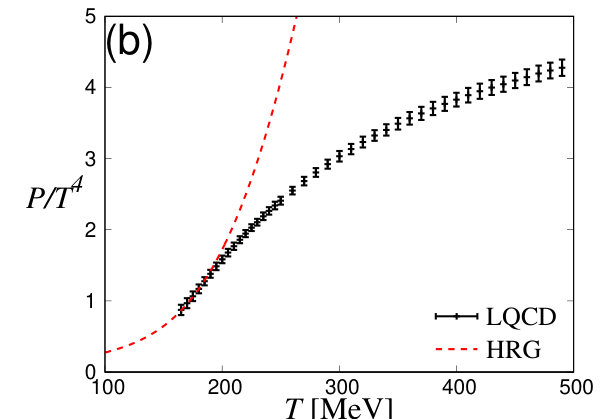 Figure 1
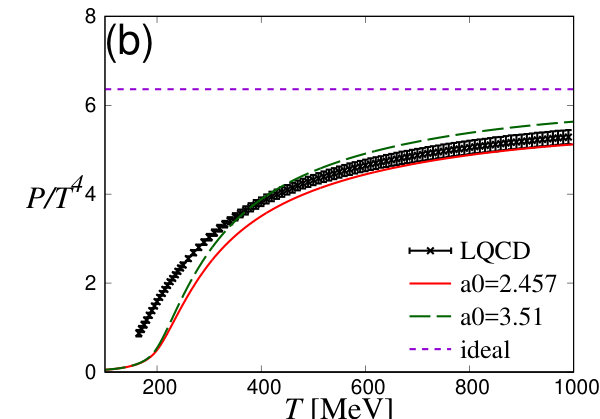 Figure 2
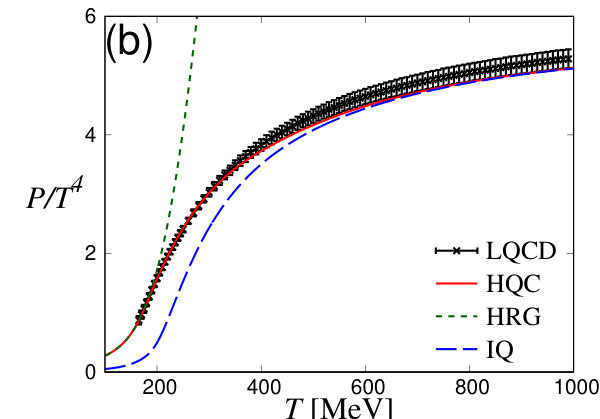 Figure 3
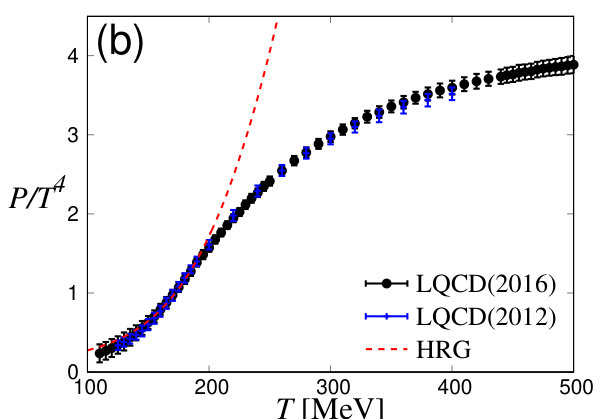 Figure 4
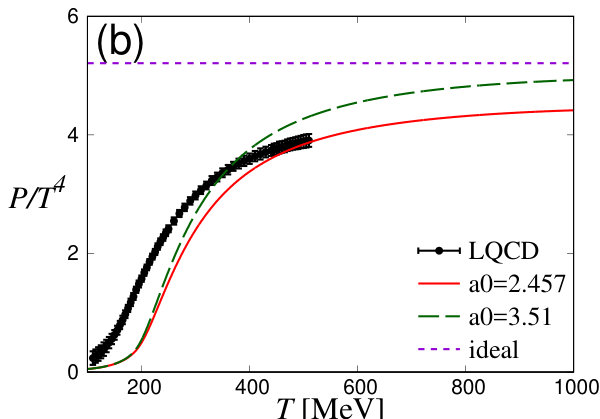 Figure 5
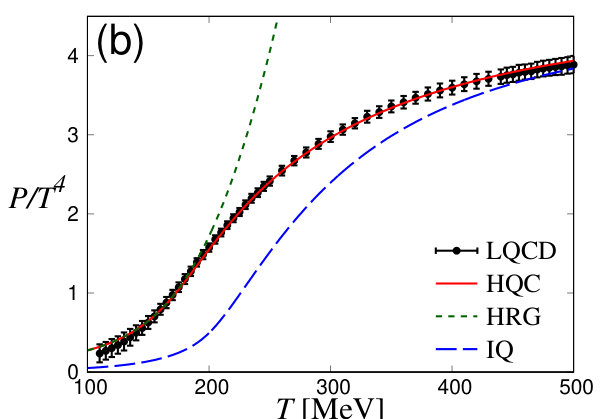 Figure 6
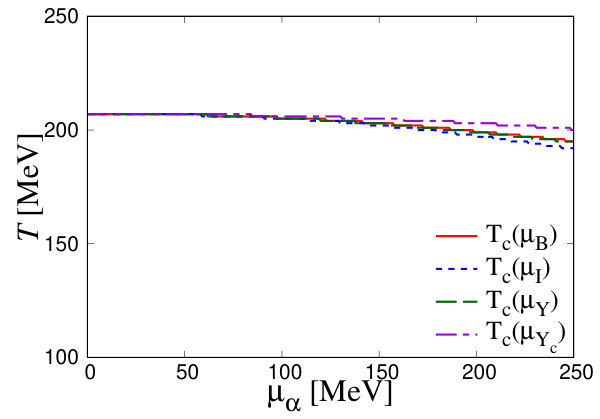 Figure 7
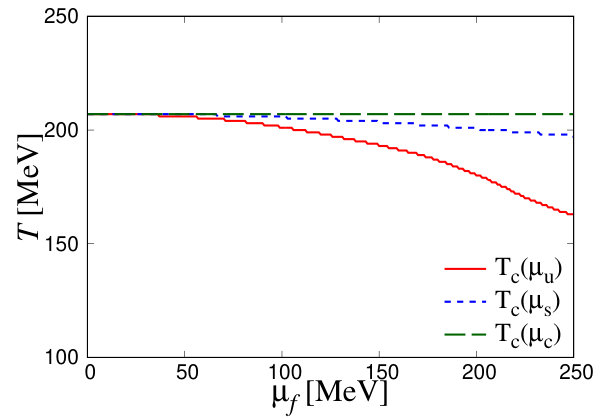 Figure 8
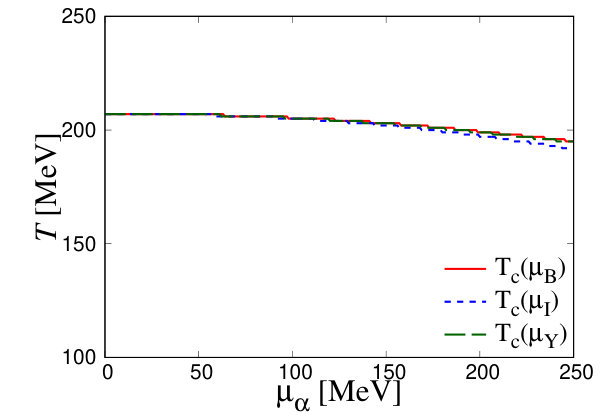 Figure 9
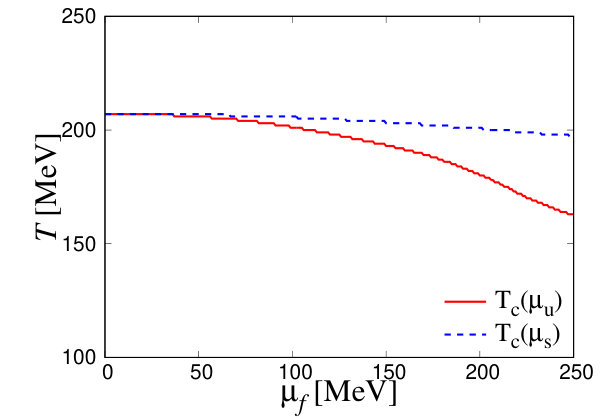 Figure 10
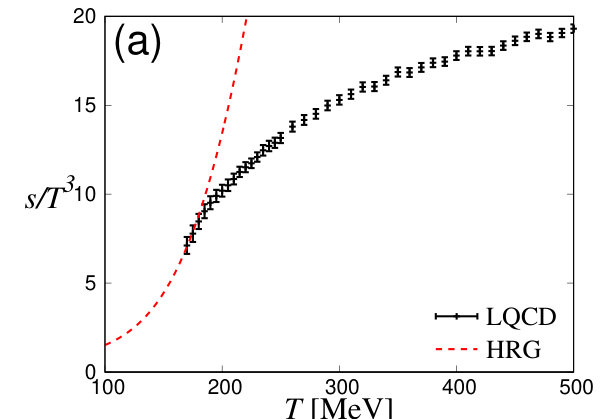 Figure 11
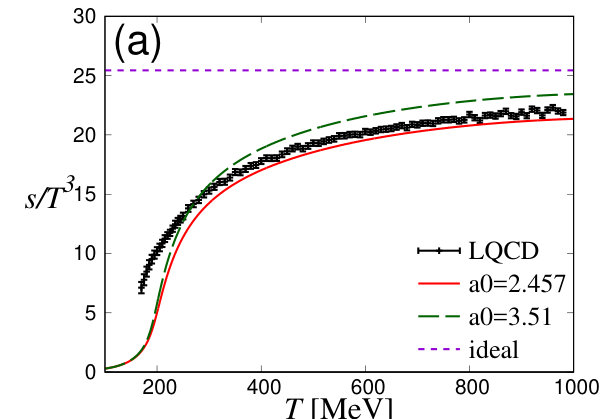 Figure 12
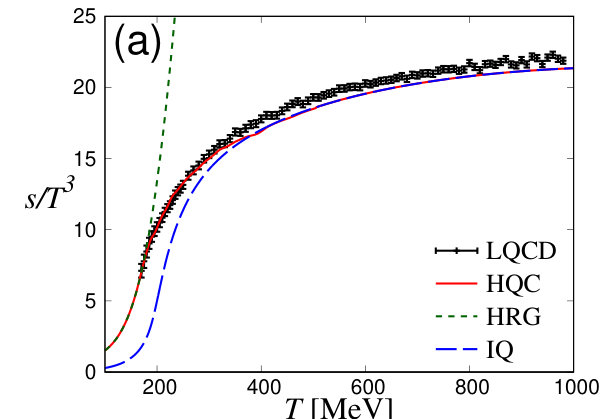 Figure 13
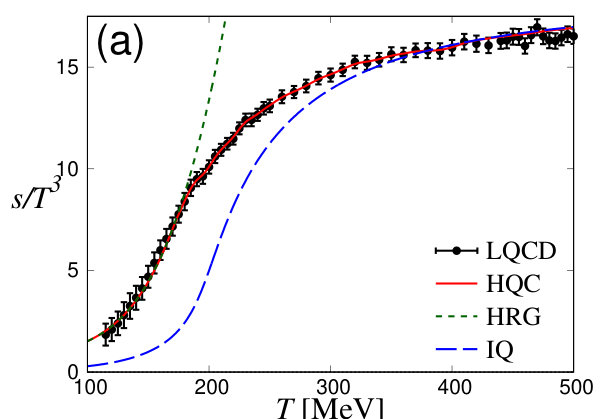 Figure 14
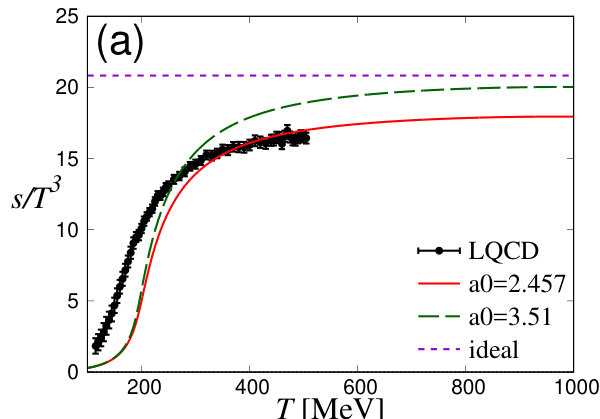 Figure 15
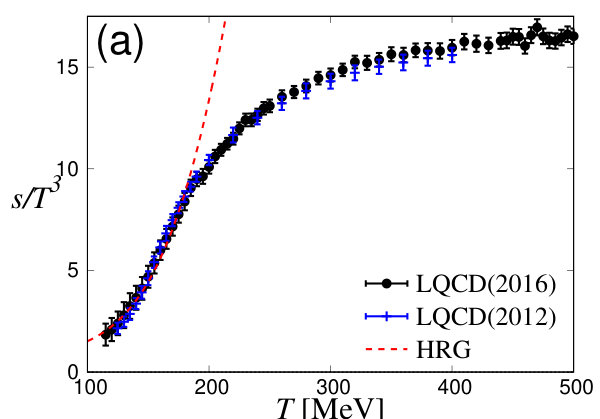 Figure 16
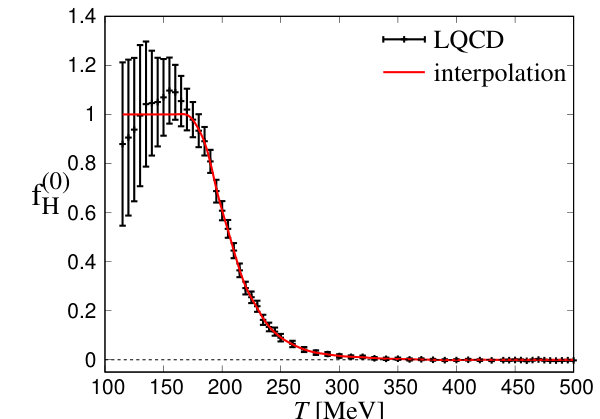 Figure 17
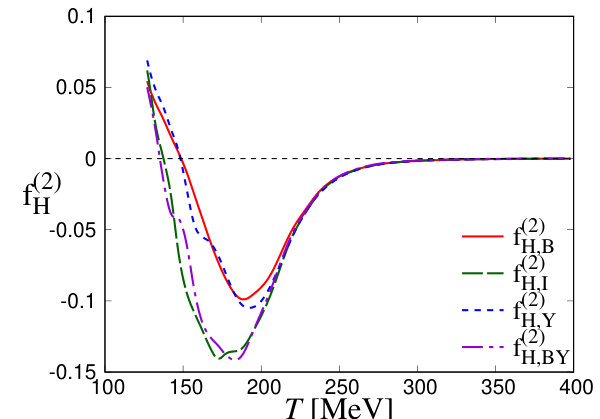 Figure 18
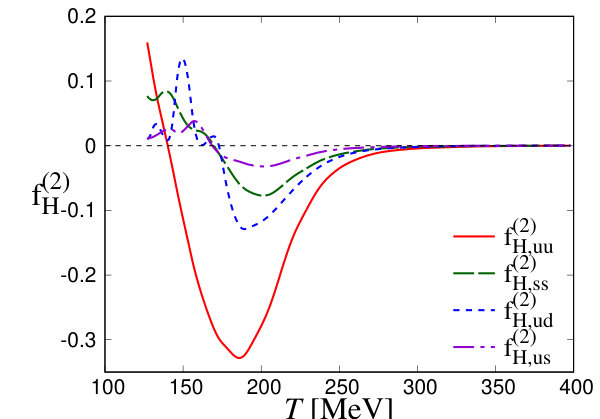 Figure 19
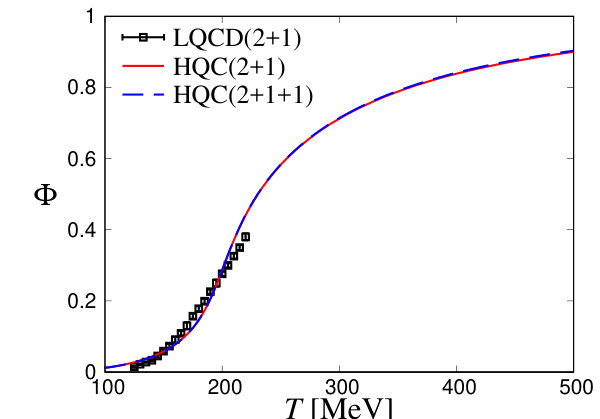 Figure 20
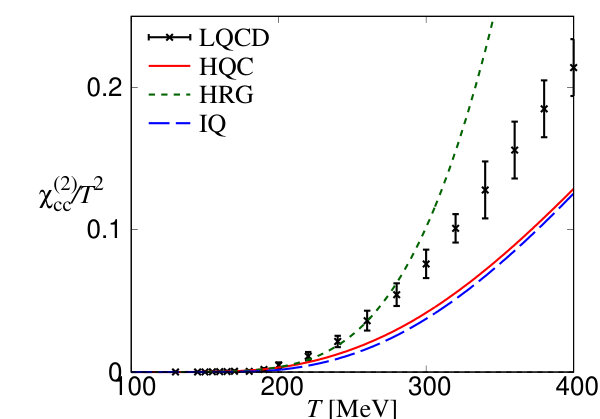 Figure 21
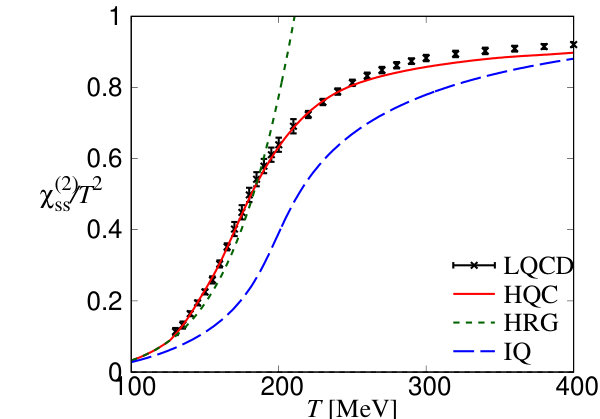 Figure 22
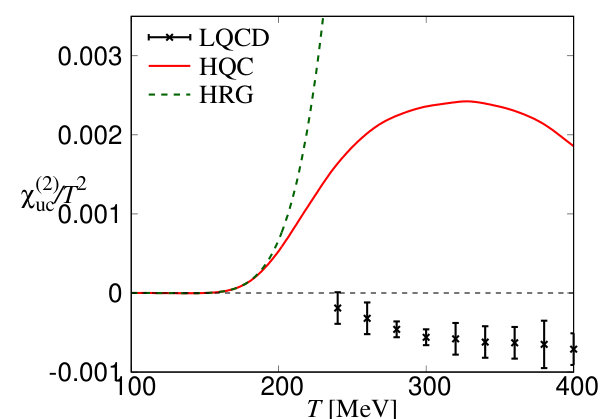 Figure 23
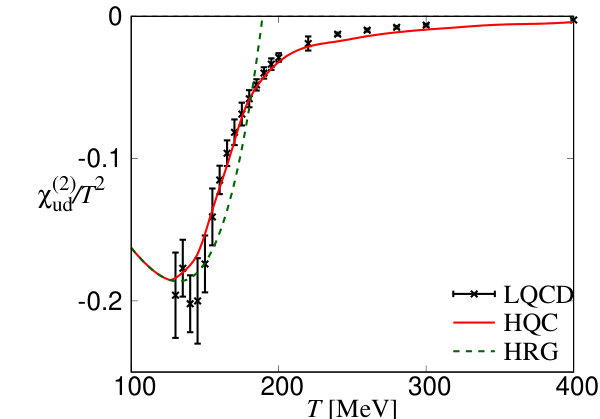 Figure 24
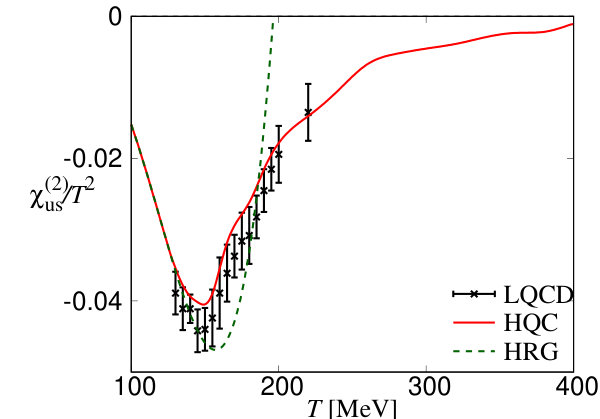 Figure 25
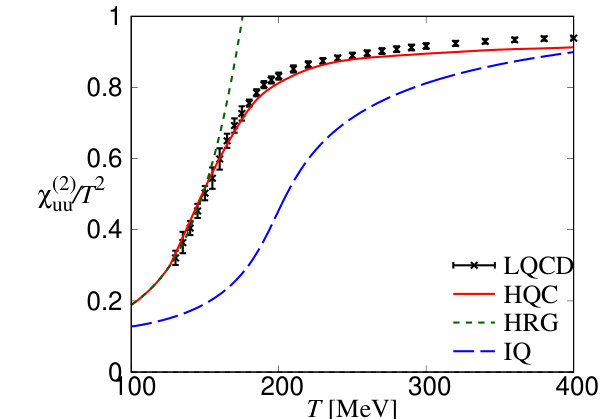 Figure 26
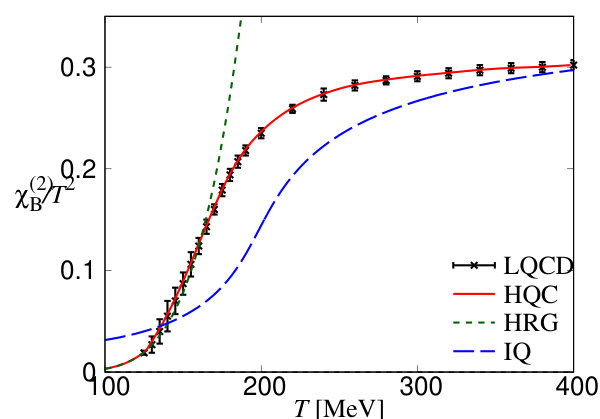 Figure 27
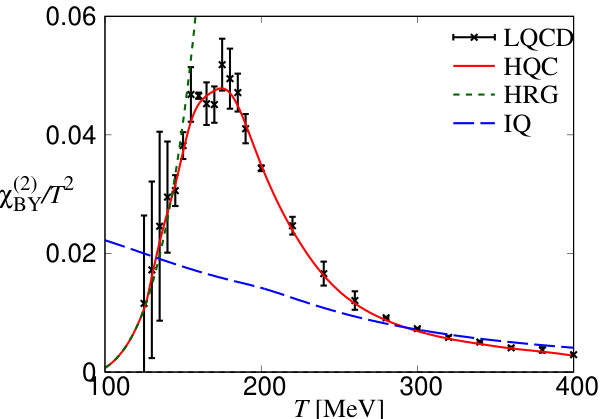 Figure 28
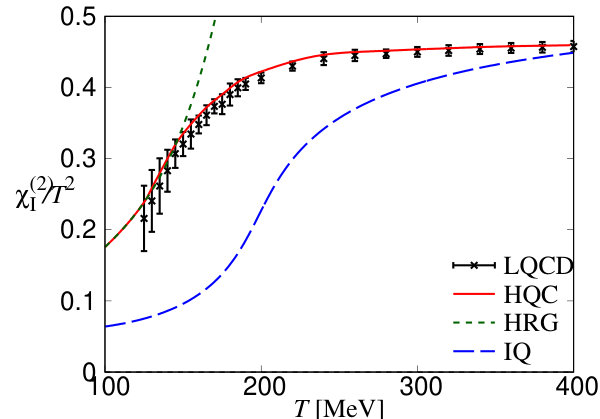 Figure 29
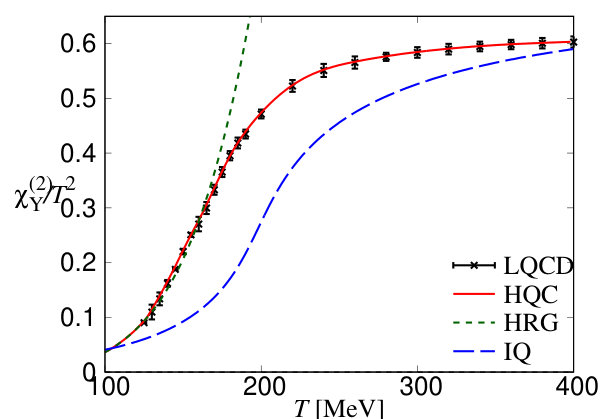 Figure 30
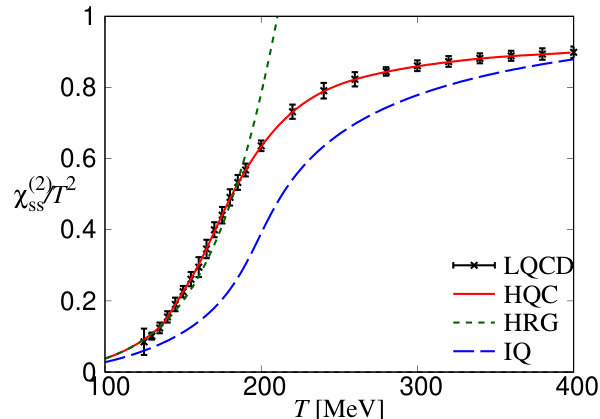 Figure 31
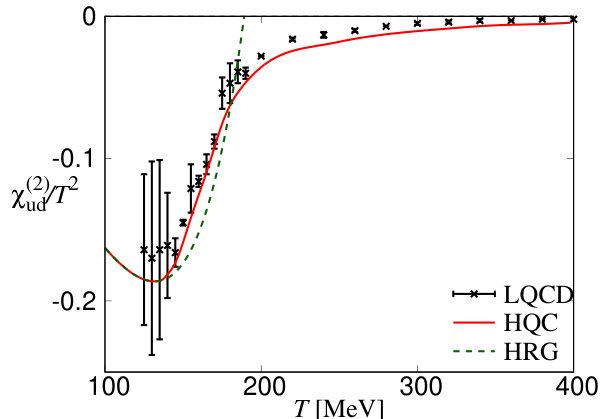 Figure 32
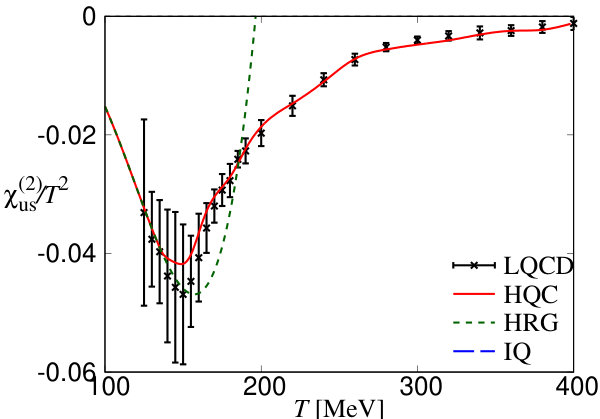 Figure 33
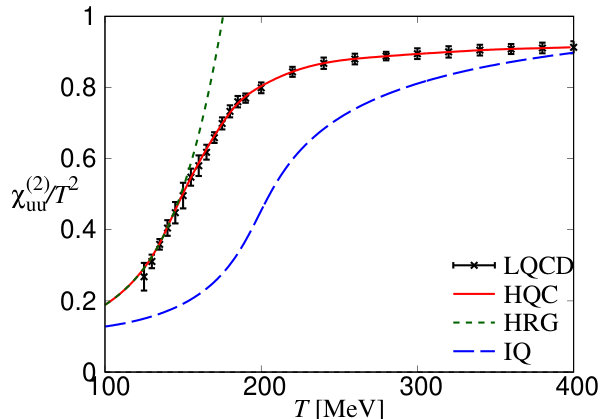 Figure 34
Peer Reviews
No public reviews on file for this paper yet. If you reviewed it on a platform where reviews are public (OpenReview, ICLR, NeurIPS, ICML), you can paste yours below so the community can read it here.
Videos
No videos yet. Explain this paper in a talk, walkthrough, or lecture? Add one.