Graph Invariants with Connections to the Feynman Period in $\phi^4$ Theory
Iain Crump

TL;DR
This paper explores graph invariants related to Feynman periods in $ $ theory, introducing the extended graph permanent and analyzing its invariance properties, with implications for understanding the structure of Feynman graphs.
Contribution
The paper introduces the extended graph permanent, demonstrating its invariance under key graph operations and providing new computational and interpretative methods.
Findings
Extended graph permanent is preserved by key graph operations.
The sequence of residues from the extended graph permanent has a product property.
Alternative interpretation as point count of a novel graph polynomial.
Abstract
Feynman diagrams in theory have as their underlying structure 4-regular graphs. In particular, any 4-point graph can be uniquely derived from a 4-regular graph by deleting a vertex. The Feynman period is a simplified version of the Feynman integral, and is of special interest, as it maintains much of the important number theoretic information from the Feynman integral. It is also of structural interest, as it is known to be preserved by a number of graph theoretic operations. In particular, the vertex deleted in constructing the 4-point graph does not affect the Feynman period, and it is invariant under planar duality and the Schnetz twist, an operation that redirects edges incident to a 4-vertex cut. Further, a 4-regular graph may be produced by a 3-sum operation on triangles in two 4-regular graphs. The Feynman period of this graph with a vertex deleted is equal to…
Click any figure to enlarge with its caption.
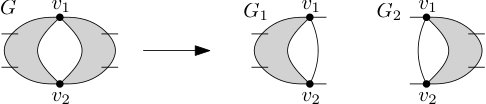 Figure 1
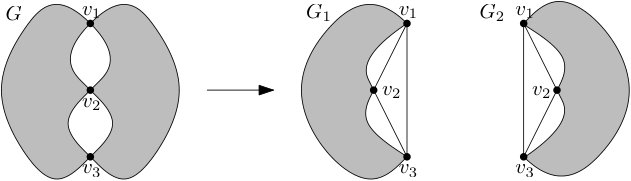 Figure 2
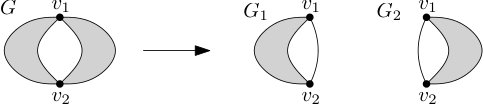 Figure 3
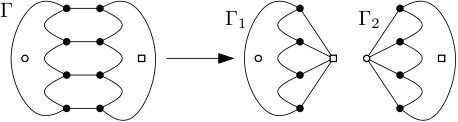 Figure 4
 Figure 5
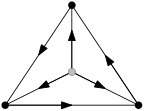 Figure 6
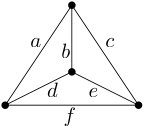 Figure 7
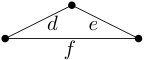 Figure 8
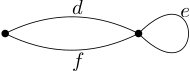 Figure 9
 Figure 10
 Figure 11
 Figure 12
 Figure 13
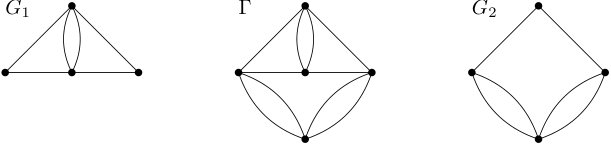 Figure 14
 Figure 15
 Figure 16
 Figure 17
 Figure 18
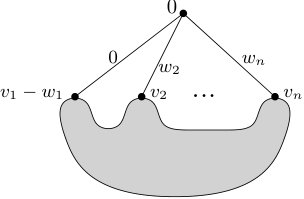 Figure 19
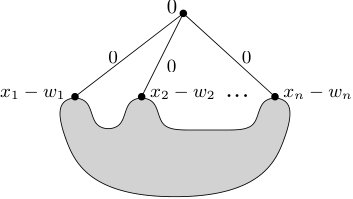 Figure 20
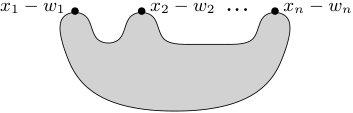 Figure 21
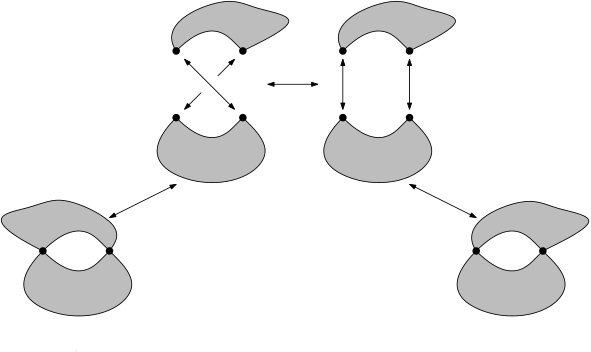 Figure 22
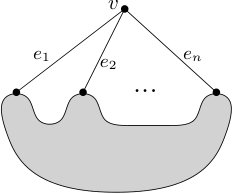 Figure 23
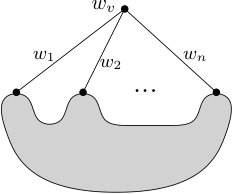 Figure 24
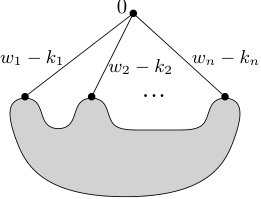 Figure 25
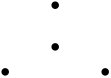 Figure 26
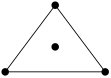 Figure 27
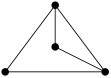 Figure 28
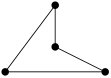 Figure 29
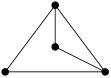 Figure 30
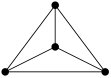 Figure 31
 Figure 32
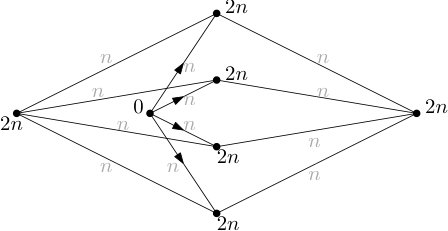 Figure 33
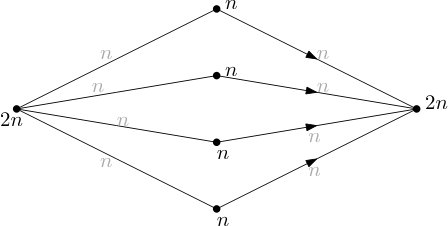 Figure 34
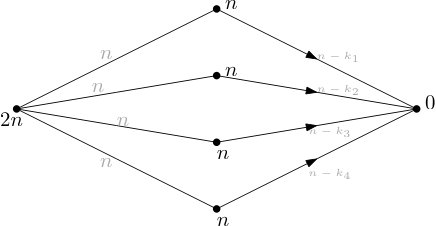 Figure 35
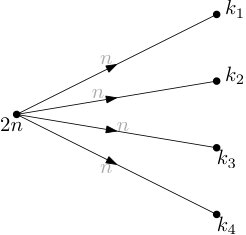 Figure 36
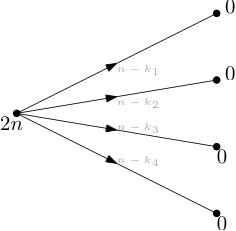 Figure 37
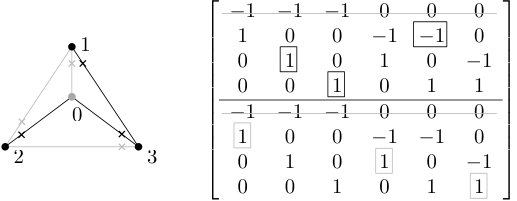 Figure 38
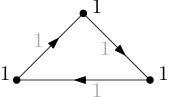 Figure 39
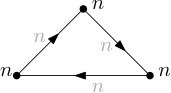 Figure 40
Peer Reviews
No public reviews on file for this paper yet. If you reviewed it on a platform where reviews are public (OpenReview, ICLR, NeurIPS, ICML), you can paste yours below so the community can read it here.
Videos
No videos yet. Explain this paper in a talk, walkthrough, or lecture? Add one.
Taxonomy
Topicsadvanced mathematical theories · Black Holes and Theoretical Physics · Noncommutative and Quantum Gravity Theories