Dome of magnetic order inside the nematic phase of sulfur-substituted FeSe under pressure
Li Xiang, Udhara S. Kaluarachchi, Anna E. B\"ohmer, Valentin, Taufour, Makariy A. Tanatar, Ruslan Prozorov, Sergey L. Bud'ko and, Paul C. Canfield

TL;DR
This study investigates how sulfur substitution and pressure influence magnetic, structural, and superconducting properties in FeSe, revealing a dome-shaped magnetic order and complex pressure-dependent superconducting behavior.
Contribution
It provides new insights into the interplay of chemical and physical pressure effects on magnetic order and superconductivity in sulfur-substituted FeSe.
Findings
Magnetic order is suppressed to a small dome with sulfur substitution.
Superconducting transition temperature exhibits non-monotonic pressure dependence.
Emergence of magnetic order correlates with a local maximum in T_c.
Abstract
The pressure dependence of the structural, magnetic and superconducting transitions and of the superconducting upper critical field were studied in sulfur-substituted Fe(SeS). Resistance measurements were performed on single crystals with three substitution levels (=0.043, 0.096, 0.12) under hydrostatic pressures up to 1.8 GPa and in magnetic fields up to 9 T, and compared to data on pure FeSe. Our results illustrate the effects of chemical and physical pressure on Fe(SeS). On increasing sulfur content, magnetic order in the low-pressure range is strongly suppressed to a small dome-like region in the phase diagrams. However, is much less suppressed by sulfur substitution and of Fe(SeS) exhibits similar non-monotonic pressure dependence with a local maximum and a local minimum present in the low pressure range for all . The…
Click any figure to enlarge with its caption.
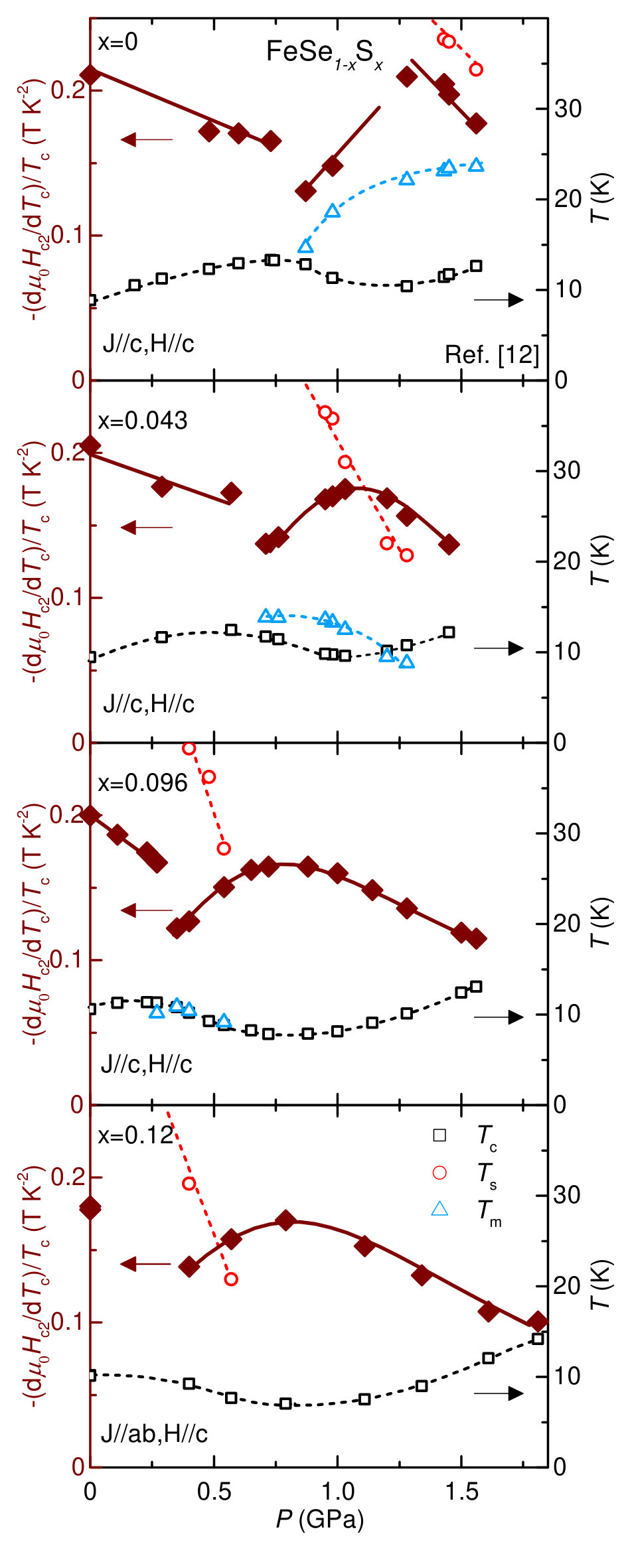 Figure 1
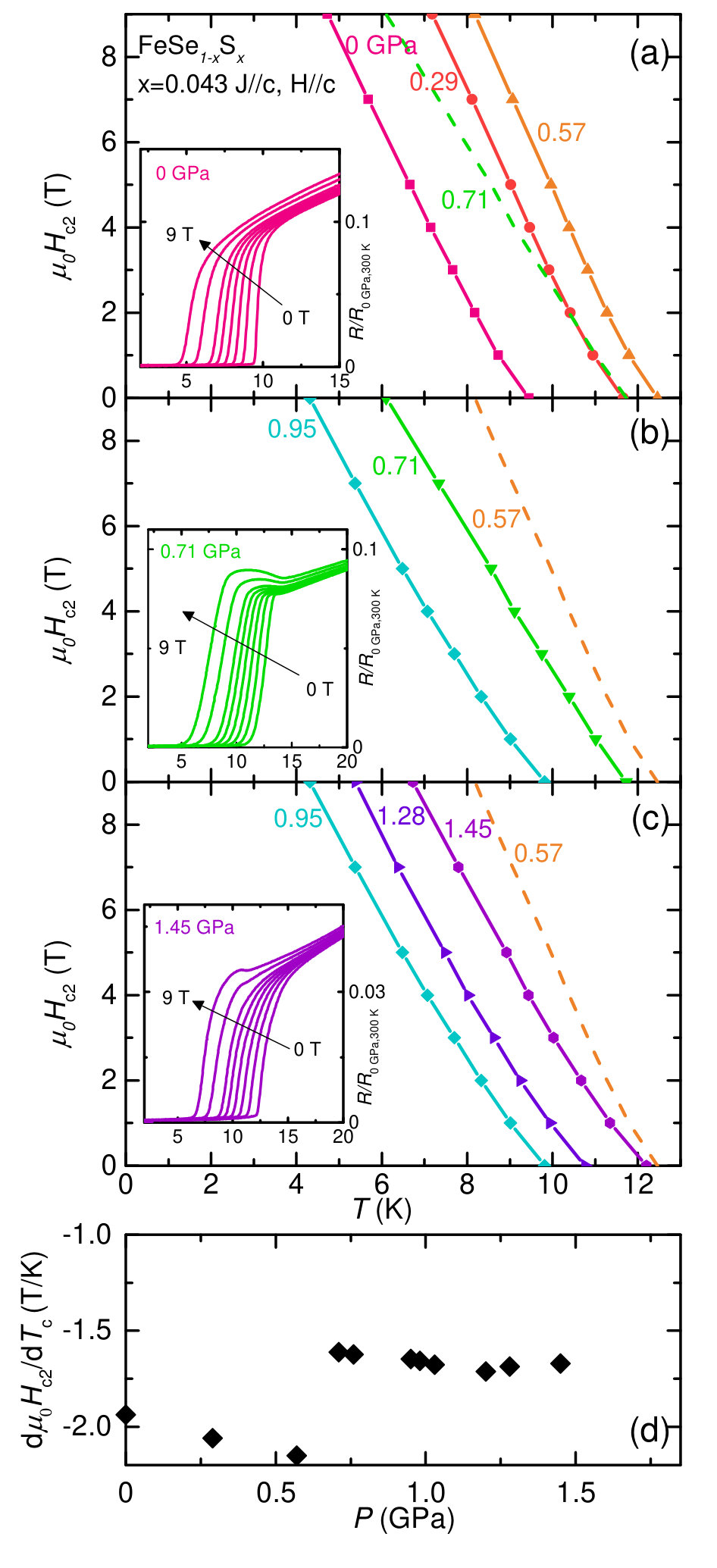 Figure 2
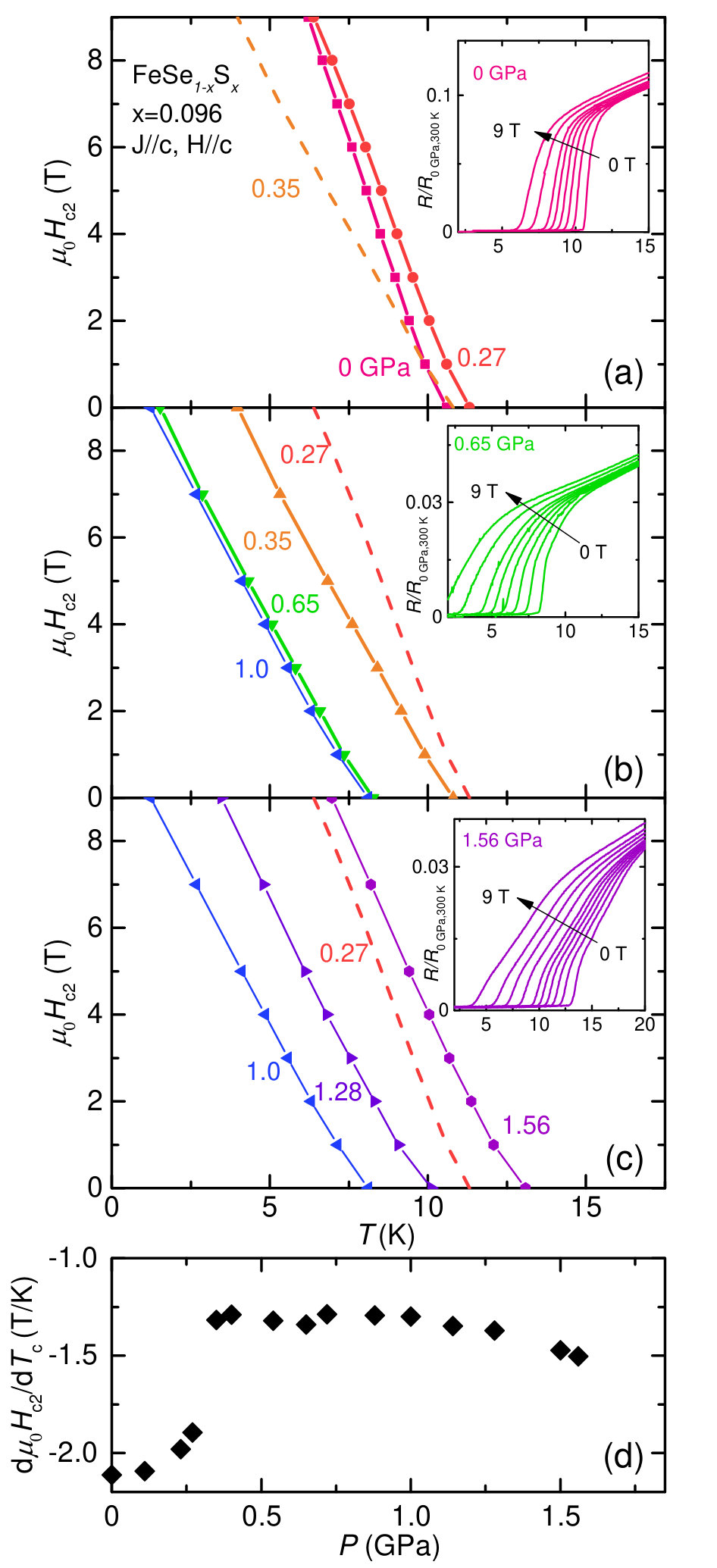 Figure 3
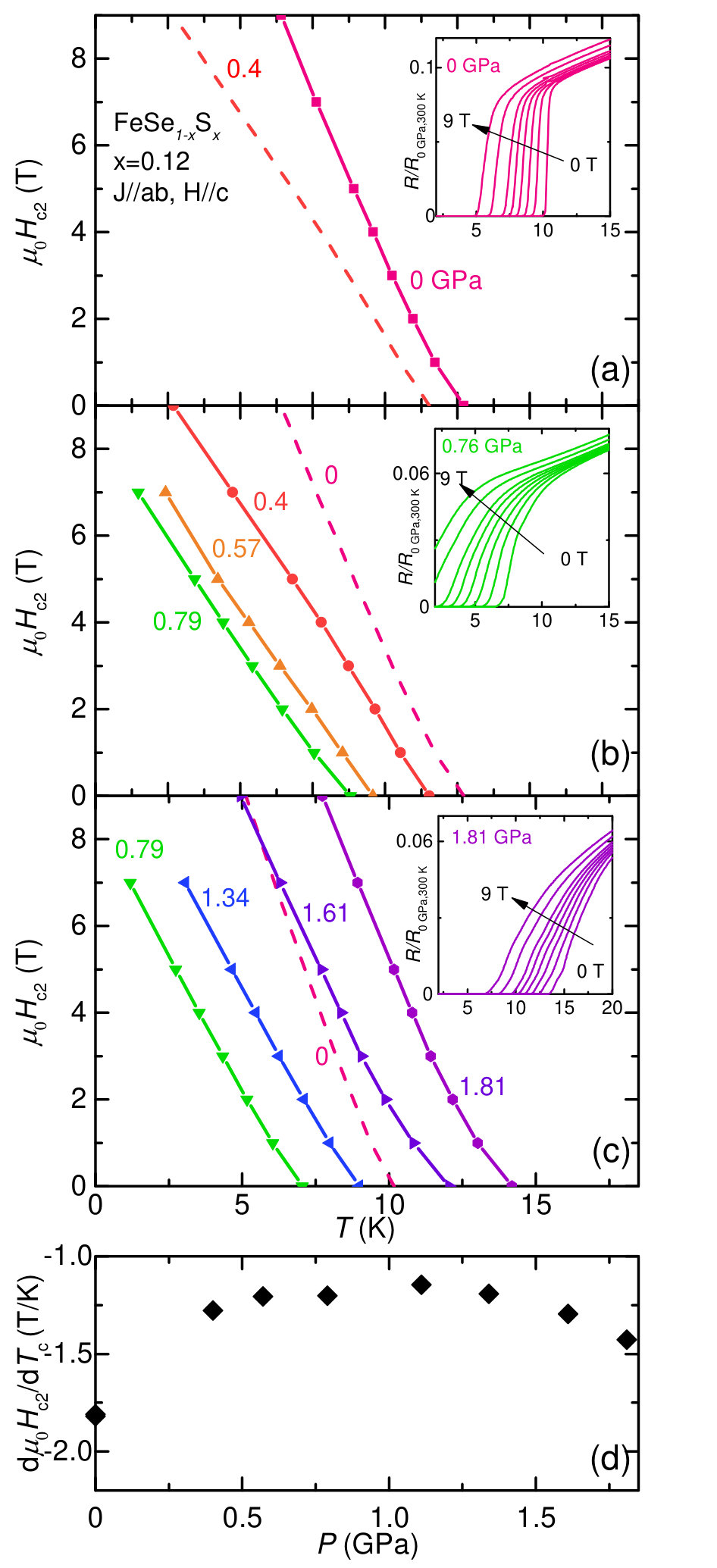 Figure 4
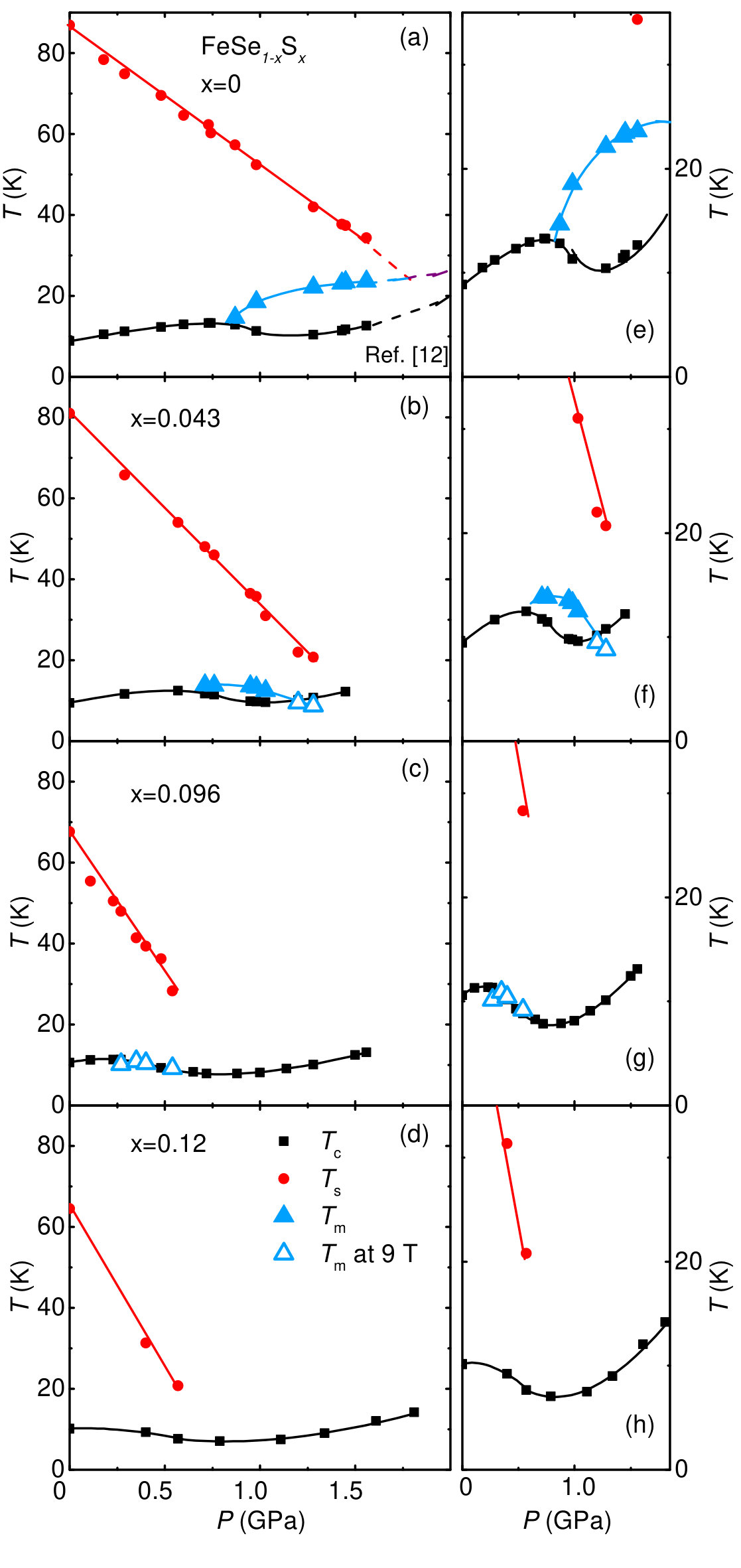 Figure 5
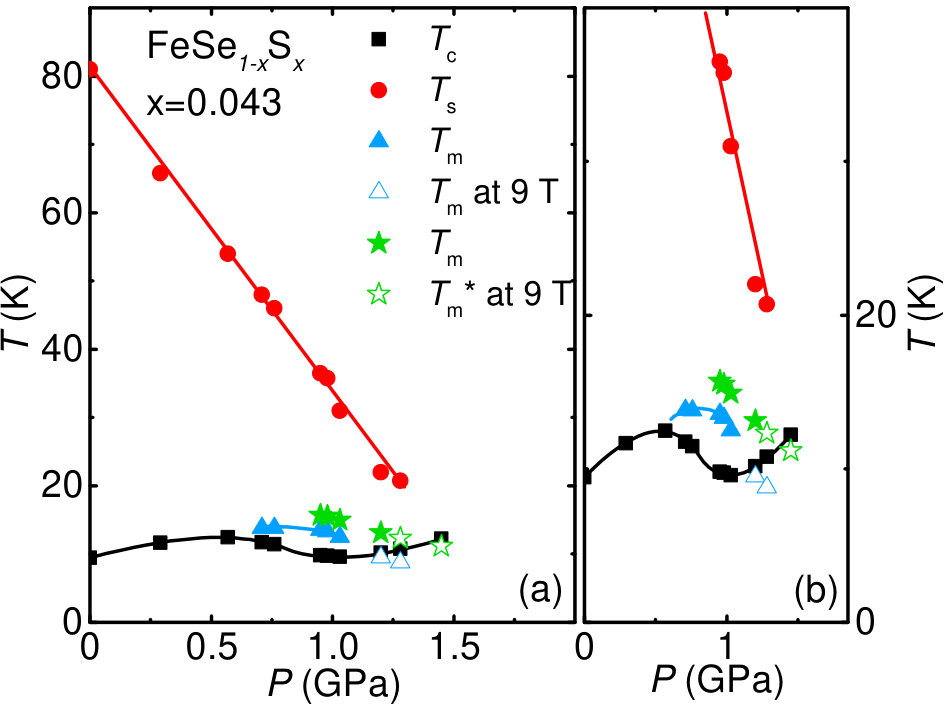 Figure 6
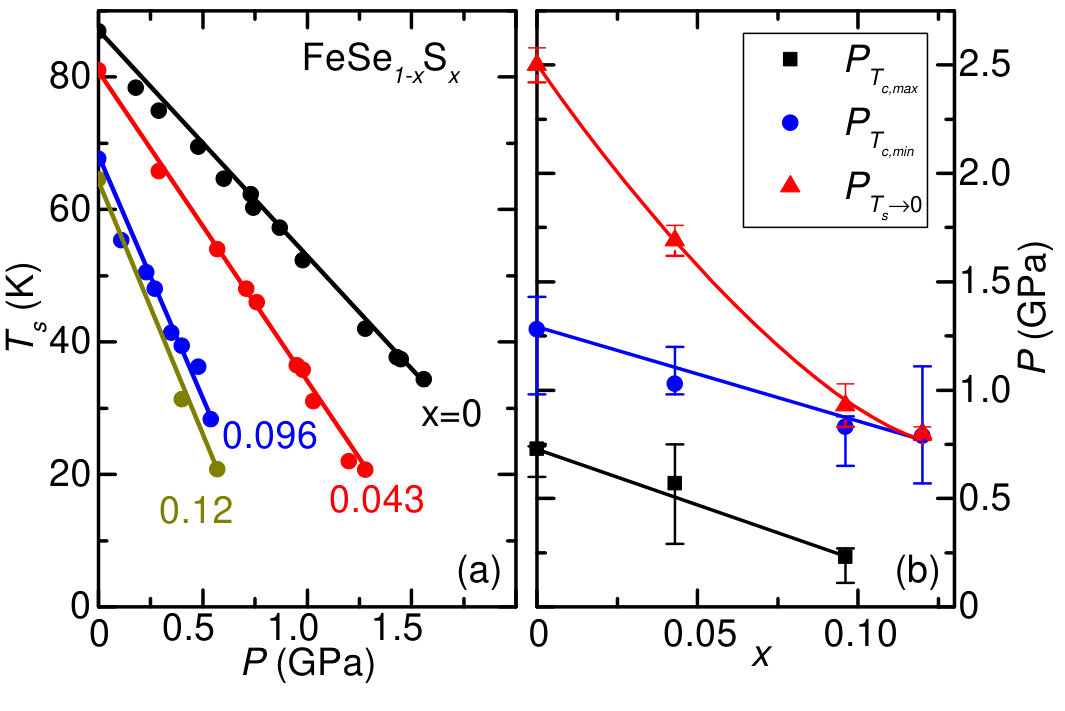 Figure 7
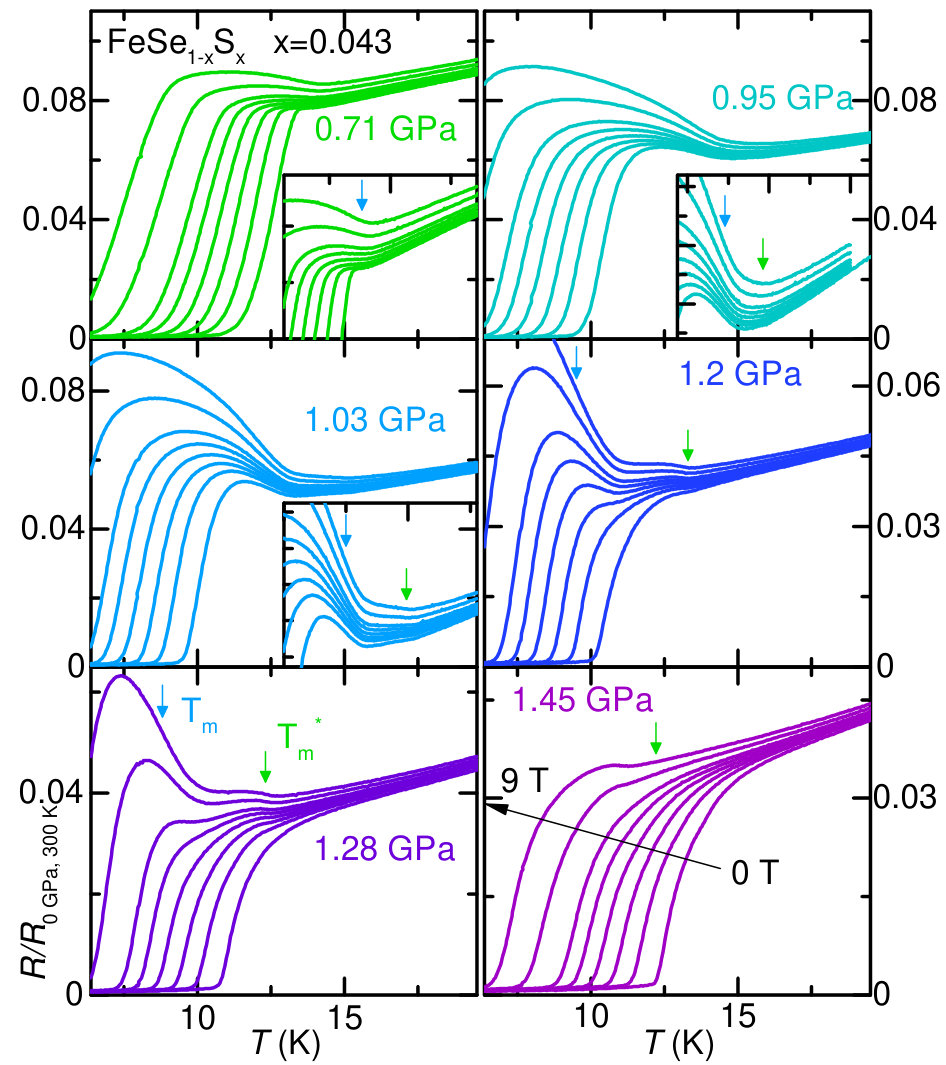 Figure 8
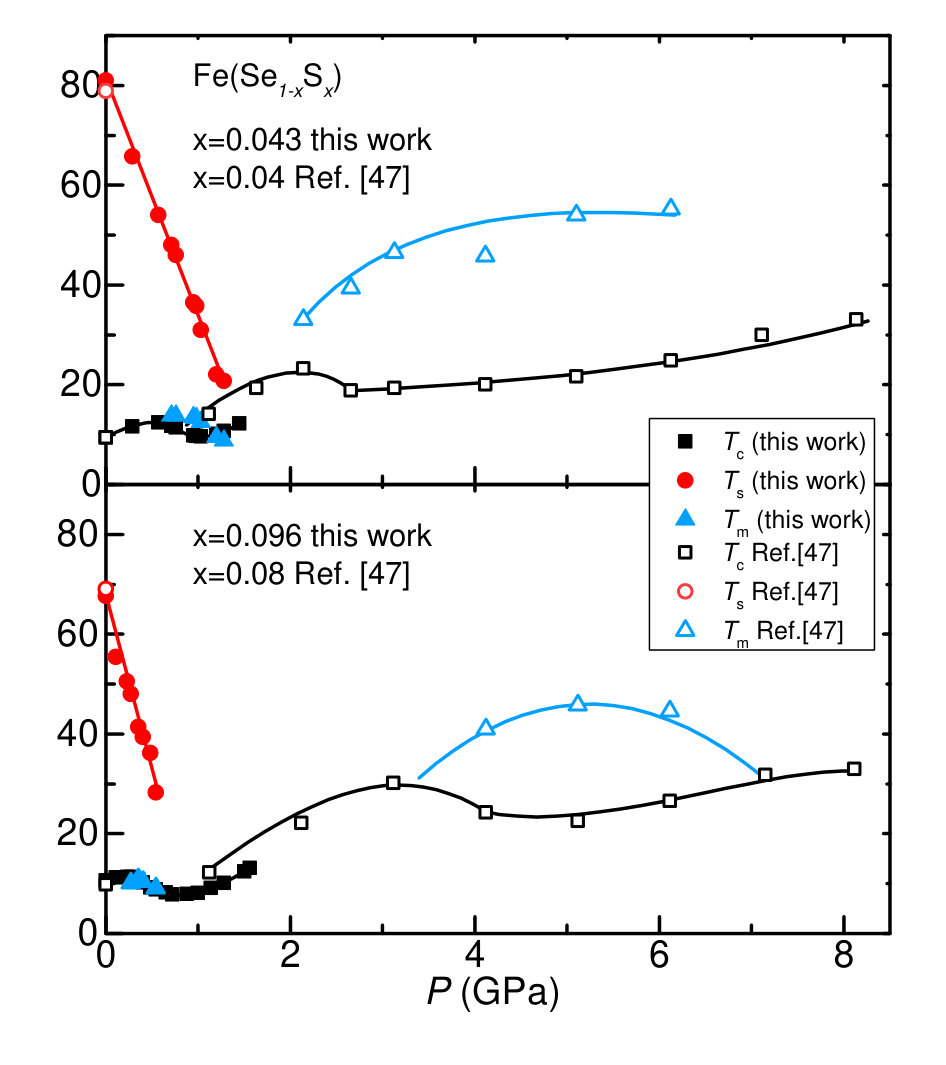 Figure 9
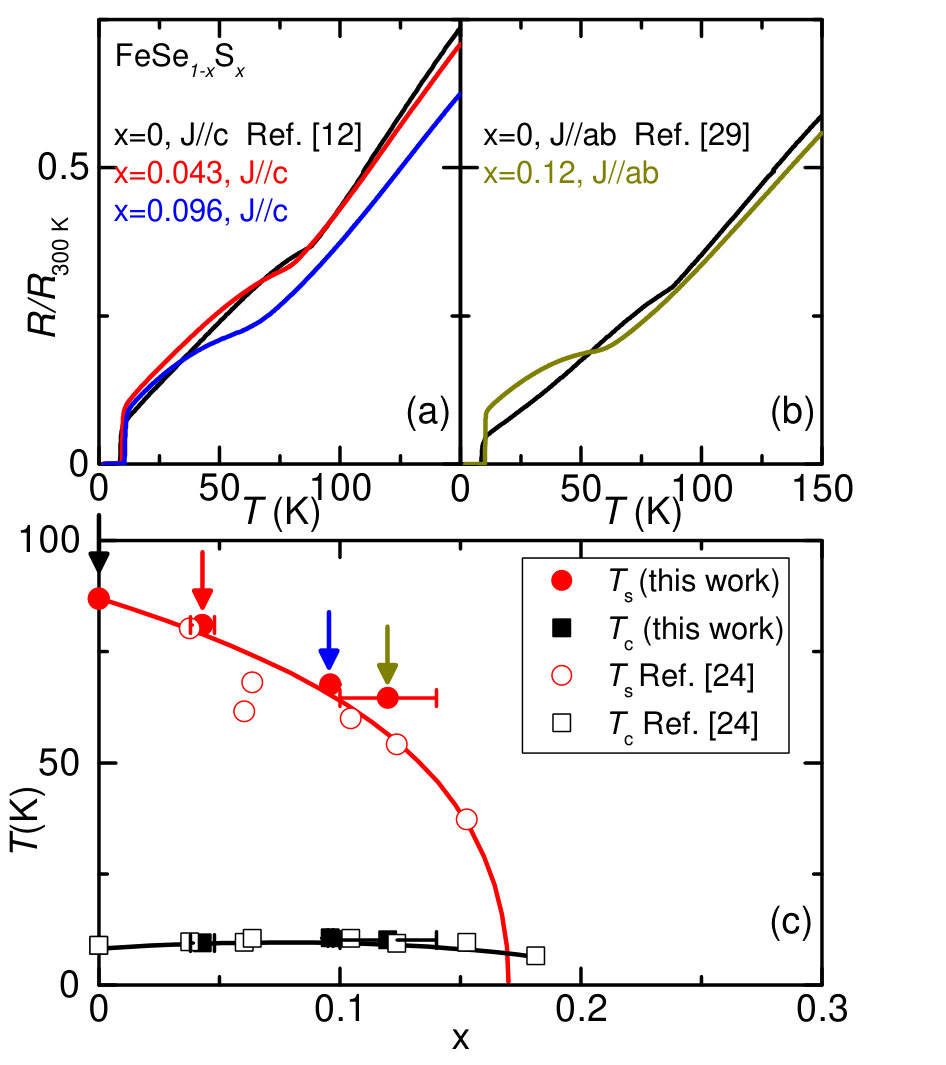 Figure 10
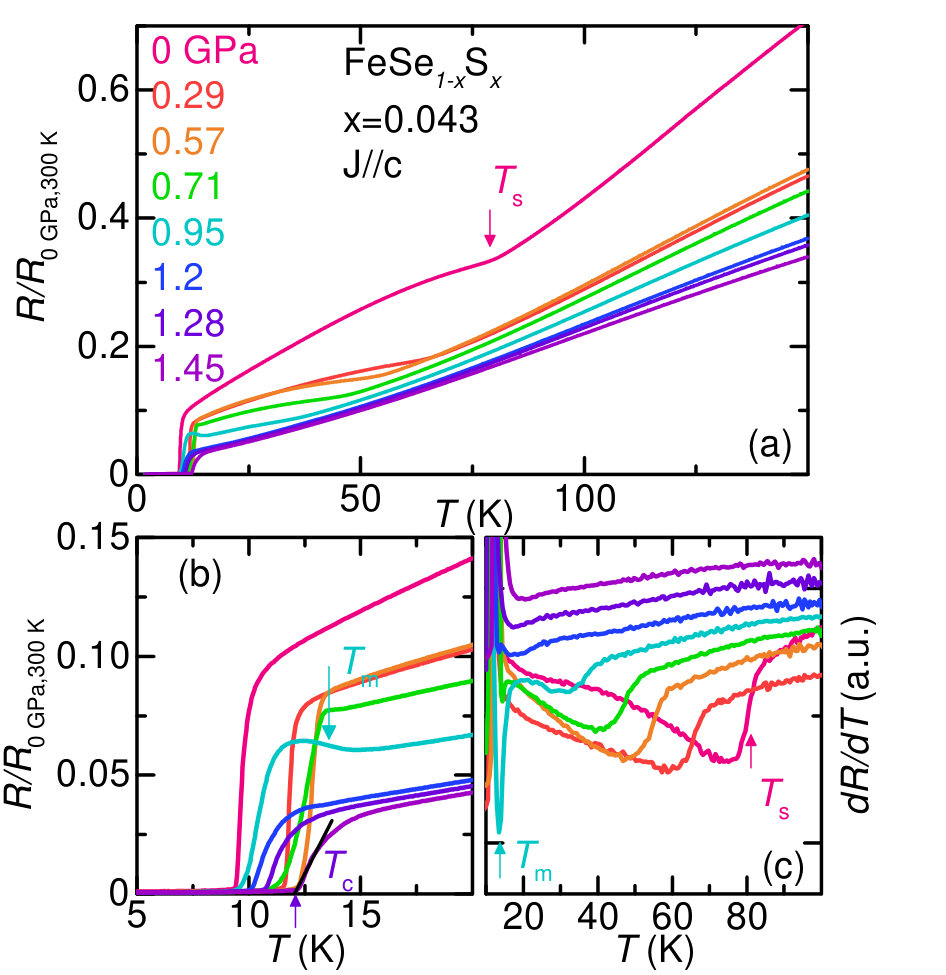 Figure 11
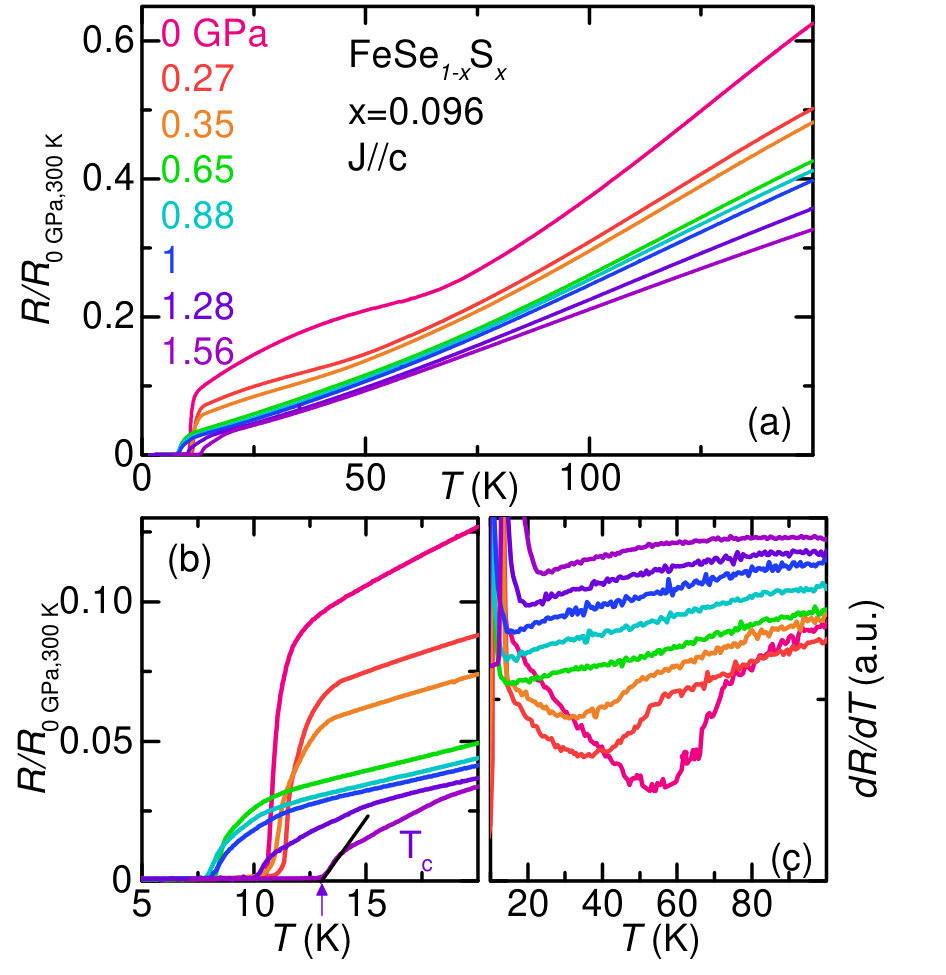 Figure 12
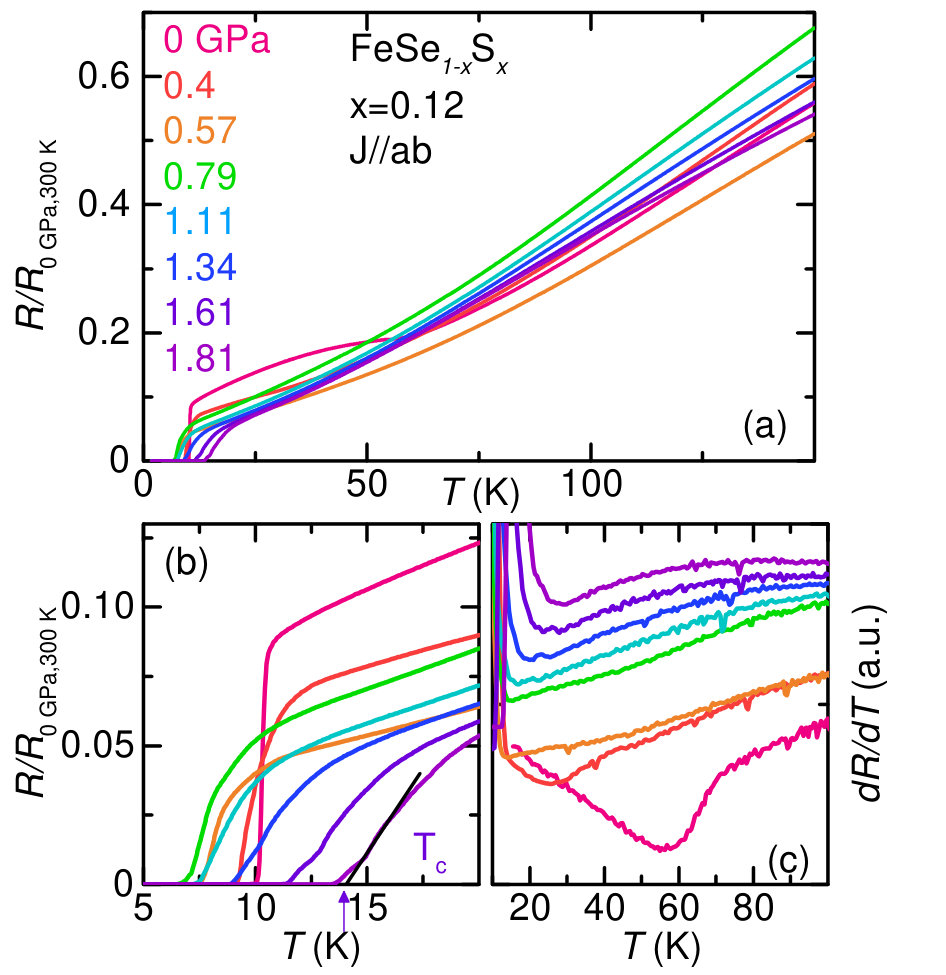 Figure 13
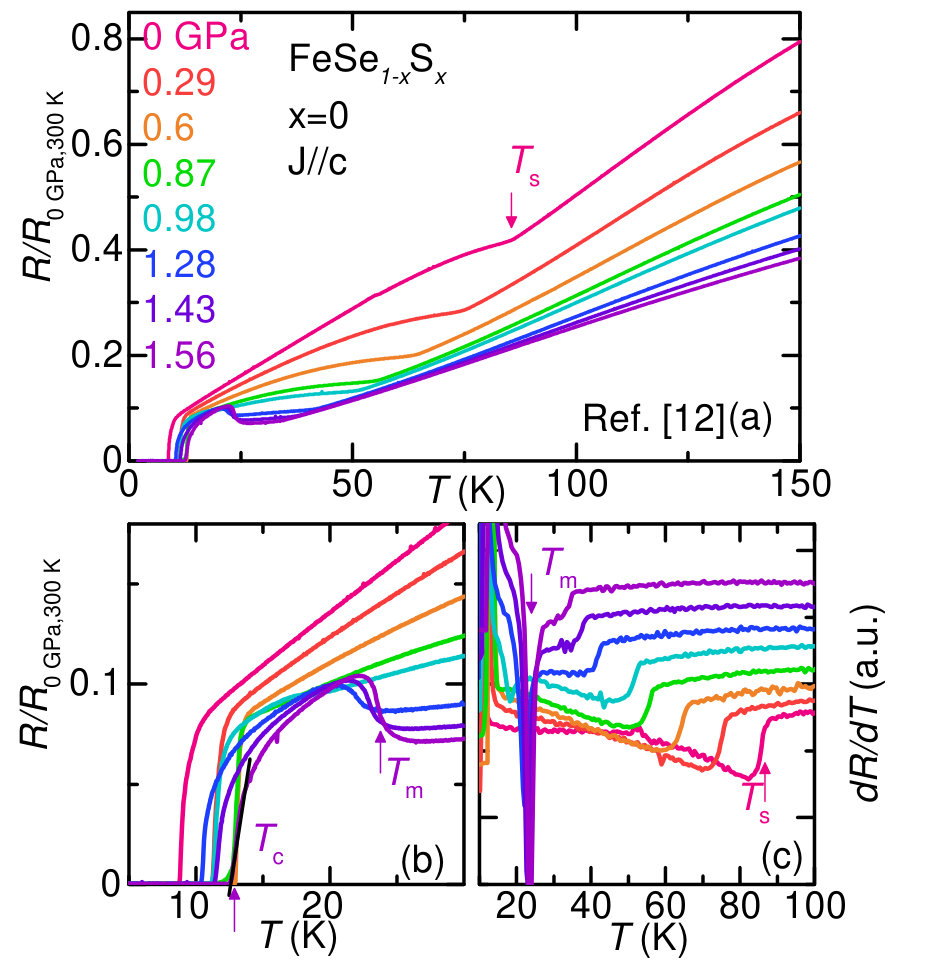 Figure 14
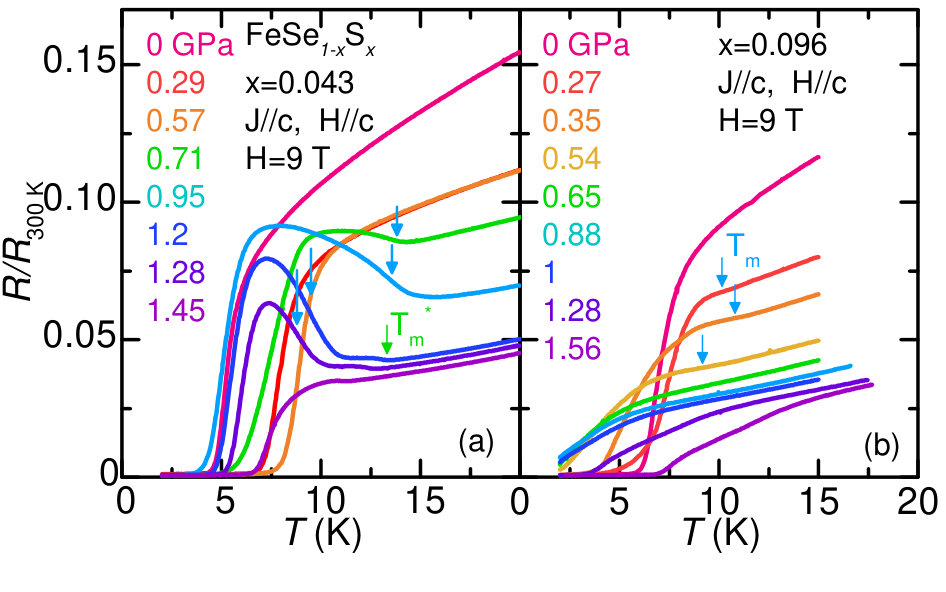 Figure 15
Peer Reviews
No public reviews on file for this paper yet. If you reviewed it on a platform where reviews are public (OpenReview, ICLR, NeurIPS, ICML), you can paste yours below so the community can read it here.
Videos
No videos yet. Explain this paper in a talk, walkthrough, or lecture? Add one.
Dome of magnetic order inside the nematic phase of sulfur-substituted FeSe under pressure
Li Xiang
Ames Laboratory, Iowa State University, Ames, Iowa 50011, USA
Department of Physics and Astronomy, Iowa State University, Ames, Iowa 50011, USA
Udhara S. Kaluarachchi
Ames Laboratory, Iowa State University, Ames, Iowa 50011, USA
Department of Physics and Astronomy, Iowa State University, Ames, Iowa 50011, USA
Anna E. Böhmer
Ames Laboratory, Iowa State University, Ames, Iowa 50011, USA
Valentin Taufour
Ames Laboratory, Iowa State University, Ames, Iowa 50011, USA
Department of Physics, University of California, Davis, California 95616, USA
Makariy A. Tanatar
Ames Laboratory, Iowa State University, Ames, Iowa 50011, USA
Department of Physics and Astronomy, Iowa State University, Ames, Iowa 50011, USA
Ruslan Prozorov
Ames Laboratory, Iowa State University, Ames, Iowa 50011, USA
Department of Physics and Astronomy, Iowa State University, Ames, Iowa 50011, USA
Sergey L. Bud’ko
Ames Laboratory, Iowa State University, Ames, Iowa 50011, USA
Department of Physics and Astronomy, Iowa State University, Ames, Iowa 50011, USA
Paul C. Canfield
Ames Laboratory, Iowa State University, Ames, Iowa 50011, USA
Department of Physics and Astronomy, Iowa State University, Ames, Iowa 50011, USA
Abstract
The pressure dependence of the structural, magnetic and superconducting transitions and of the superconducting upper critical field were studied in sulfur-substituted Fe(Se1-xSx). Resistance measurements were performed on single crystals with three substitution levels (=0.043, 0.096, 0.12) under hydrostatic pressures up to 1.8 GPa and in magnetic fields up to 9 T, and compared to data on pure FeSe. Our results illustrate the effects of chemical and physical pressure on Fe(Se1-xSx). On increasing sulfur content, magnetic order in the low-pressure range is strongly suppressed to a small dome-like region in the phase diagrams. However, is much less suppressed by sulfur substitution and of Fe(Se1-xSx) exhibits similar non-monotonic pressure dependence with a local maximum and a local minimum present in the low pressure range for all . The local maximum in coincides with the emergence of the magnetic order above . At this pressure the slope of the upper critical field decreases abruptly. The minimum of correlates with a broad maximum of the upper critical field slope normalized by .
I Introduction
Despite a large number of different compounds, many iron-based superconductors share similar physical properties. A characteristic feature of this material class is rich phase diagrams, containing an antiferromagnetic phase, which is suppressed upon substitution or pressure, and superconductivity, which emerges at a critical value of this tuning parameterCanfield and Bud’ko (2010); Paglione and Greene (2010). Usually, the antiferromagnetic ordering is of stripe-type and is preceded or accompanied by a structural tetragonal-to-orthorhombic distortion, associated with electronic nematic orderFernandes et al. (2014). The magnetic and structural transitions typically extrapolate to zero temperature near the maximum of the superconducting dome, suggesting the possibility that magnetic or nematic fluctuations surrounding a quantum critical point mediate superconductivityKasahara et al. (2010); Putzke et al. (2014).
Among all the iron-based superconductors, the structurally most simple binary compound, FeSe, does not share this common behavior. First, the structural and magnetic transitions are well separatedMcQueen et al. (2009); at ambient pressure the structural transition occurrs at K with no signature of magnetic order observed at ambient pressure down to 0.24 K (Ref. Bendele et al., 2010). Very recent specific heat indicates a possible antiferromagnetic transition at 1.08 K (Ref. Chen et al., 2017). However, their results contradict previous resultsLin et al. (2011), in which no anomaly in the specific measurement near this temperature was observed.
Second, under approximately 0.8 GPa of applied pressure, magnetic order clearly emergesBendele et al. (2010, 2012); Terashima et al. (2015); Kaluarachchi et al. (2016) above and the magnetic transition temperature exhibits a dome-like pressure dependence between 0.8 GPa and 6 GPaSun et al. (2016, 2017). Strong coupling between orthorhombic distortion and magnetic order under pressure was demonstratedKothapalli et al. (2016). Nevertheless, the large separation of and at ambient pressure raises the question of how the nematic order and magnetism are related in this compoundGlasbrenner et al. (2015); Yu and Si (2015); Wang et al. (2015a); Chubukov et al. (2016).
Third, the pressure dependence of superconducting transition temperature shows a remarkable non-monotonic structure, with a local maximum of around 0.8 GPa, a local minimum around 1.2 GPa, a plateau around 4 GPa and finally a maximum of K around 6 GPa, before decreases at even higher pressures Miyoshi (2014); Kaluarachchi et al. (2016); Sun et al. (2016). Moreover, recent studies found that monolayer thin films of FeSe on STO shows superconducting behavior at temperatures higher than 100 KGe et al. (2015). Hence, FeSe gives us a unique opportunity to study how nematicity, magnetism and superconductivity interact with each other.
The maximum of bulk FeSe under pressure is achieved in the pressure range above 5 GPa. However, FeSe has a complex and interesting phase interplay in the pressure range below 2 GPa. In this pressure range falls the intersection of the nematic phase, magnetic order and superconductivityTerashima et al. (2015); Kaluarachchi et al. (2016); Sun et al. (2016). Several studies have investigated the effect of sulfur substitution on FeSeMizuguchi et al. (2009); Watson et al. (2015); Coldea et al. (2016); Hosoi et al. (2016); Ovchenkov et al. (2016). Similar to applied pressure, sulfur substitution suppresses . In contrast to pressurized FeSe, no magnetic ordering is found in the substitution-temperature phase diagram of Fe(Se1-xSx) and is only moderately enhanced to 11 K by substitutionWatson et al. (2015). In this work, we combine chemical pressure through sulfur substitution up to 12% and physical pressure up to 1.8 GPa and show that the pressure-induced magnetic phase is strongly suppressed upon substitution in this pressure range. In contrast, the nematic phase and superconducting phase are quite robust and their behaviors under pressure do not change qualitatively.
II Experimental details
High quality single crystals of FeSe1-xSx (, , ) with sharp superconducting transitions at ambient pressure (see Fig 2-5 (b) below), were grown using chemical vapor transport, similar to Ref. Böhmer et al., 2016. The doping ratio was determined by energy-dispersive x-ray spectroscopy (EDS) and the given values and errors correspond to the average and standard deviation of EDS results obtained on spots from typically 3 different samples per batch, respectively. The -axis resistance was measured on samples with doping ratio and of approximate dimensions of mm3, using a two-probe technique similar to Refs. Kaluarachchi et al., 2016; Tanatar et al., 2009. Two Ag wires were attached to the samples by soldering with In-Ag alloyKaluarachchi et al. (2016); Tanatar et al. (2016). The contact resistance is less than 50 which is much smaller than the sample resistance of approximately 10 m. Four-probe wiring was used down to the sample contacts. The in-plane resistance was measured on a sample with doping ratio of approximate dimensions of mm3 in a standard four-contact configuration, with contacts prepared using silver epoxy. AC resistance measurement were performed in a Quantum Design Physical Property Measurement System using 1 mA; 17 Hz excitation, on cooling and warming at a rate of 0.25 K/min. A Be-Cu/Ni-Cr-Al hybrid piston-cylinder cell similar to the one described in Ref. Bud’ko et al., 1984 was used to apply pressure. Pressure values at low temperature were inferred from the of leadBireckoven and Wittig (1988). Good hydrostatic conditions were achieved by using a 4:6 mixture of light mineral oil:n-pentane as pressure medium, which solidifies at room temperature in the range GPa, i.e., well above our maximum pressureBud’ko et al. (1984); Kim et al. (2011); Torikachvili et al. (2015).
III Pressure-temperature phase diagrams
Figure 1 shows the ambient-pressure resistance of the studied Fe(Se1-xSx) samples. The resistance is normalized at 300 K. The -axis and in-plane resistance data on the parent compound FeSe are taken from Ref. Kaluarachchi et al., 2016 and Tanatar et al., 2016 respectively. increases slightly from 8.9 K for undoped FeSe to 10.1 K for . The structural transition, visible as a kink in the resistance data, is suppressed from 90 K to 60 K at the highest studied substitution level. Note that in this work, the in-plane resistance is studied for the sample, but -axis resistance for the other three substitution levels. The features at in in-plane and inter-plane resistance are rather similar. The positions of the studied compositions are indicated in the composition-temperature phase diagram in Fig. 1(c).
Figures 2-5 (a) show the pressure dependence of the resistance of Fe(Se1-xSx) for , , and , respectively. In these plots the resistance is normalized by dividing it by the ambient-pressure, room-temperature value for each sample. In general, the resistance decreases under applied pressure. A non-monotonic change of the high-temperature resistance value for the sample is possibly due to contacting between the outside wiring and the piston cylinder pressure cell body in the first three pressure runs. The kink-like anomaly, associated with the structural phase transition , is clearly visible in the lower pressure data and appears as a step-like anomaly in the temperature derivative / (Figs. 2-5(c)). With increasing pressure, is suppressed in all compounds. The blow up of the low temperature region, presented in Figs. 2-5(b), highlights non-monotonic changes of under increasing pressure. Furthermore, the superconducting transition broadens systematically under pressure, a tendency observed in the parent compound in the magnetically ordered phase. The increasing broadening of the superconducting transition under pressure could also be due to inherent inhomogeneity of pressure when larger loads are applied and the substituted samples may be increasingly sensitive to this inhomogeneity.
The magnified scale in Figs 2-5 (b) reveals the effect of S-substitution on . For , an increase of resistance upon cooling is observed below 15 K for pressures between GPa. This anomaly is reminiscent of the resistance increase at of the parent compound at low pressures, shown in Fig. 2(b). We therefore associate it with the magnetic transition temperature . In contrast to the parent compound, however, is much less prominent in the S-substituted samples.
A magnetic field suppresses but does not measurably affect Kaluarachchi et al. (2016), allowing for the study the magnetic transition in the absence of superconductivity. The application of a 9 T magnetic field, parallel to the axis, permits us to discern at pressures up to 1.28 GPa for the sample (Fig. 6). An additional anomaly at temperatures slightly above is observed for pressures greater than 0.95 GPa and is discussed in the appendix.
No feature corresponding to a possible magnetic transition is observed in the resistance data for and in zero magnetic field. However, the application of a 9 T magnetic field reveals a subtle resistance anomaly between GPa for the sample (Fig. 6(b)), which may be associated with . For the sample, even in a 9 T magnetic field, no anomaly that could be associated with magnetic ordering is observed in the resistance measurement with pressure up to 1.81 GPa. It is possible that the anomaly at is less pronounced in the in-plane resistance, which was measured for the sample, and therefore not resolved in these data.
The values of , and were obtained using the criteria outlined in Ref. Kaluarachchi et al., 2016 and shown in Figs. 2 and 3. is defined as the intersection between highest slope of and zero resistance. is defined as the midpoint of the step in d/d, i.e., the midpoint of the kink in , and is defined as the point of the highest slope of the resistance. The resulting phase diagrams of Fe(Se1-xSx), , are presented in Fig 7.
The orthorhombic phase line is clearly resolved in all of the phase diagrams in the pressure range below GPa. At ambient pressure, is suppressed by 12% S-substitution from 90 K to 60 K. Pressure suppresses almost linearly for all , but as shown in Fig. 8(a), with increased rate for higher .
For the parent compound FeSe, the magnetic transition at is observed for pressures greater than 0.8 GPaKaluarachchi et al. (2016); Terashima et al. (2015). Subsequent work has shown the magnetic phase to persist up to 6 GPa, with a dome-like dependence of on pressureSun et al. (2016, 2017). For the sample, a similar phase line emerges above 0.5 GPa, and we tentatively associate it with . But in contrast to pure FeSe, increases only slightly to a maximum of 13.8 K at 0.71 GPa and is suppressed to below already by 1.2 GPa. For higher S-content, , this transition seems to occur within the small pressure range GPa and with a dome-like shape barely exceeding at its maximum. For , no corresponding transition is resolved in the in-plane resistance measurement.
For all measured substitution levels, of Fe(Se1-xSx) shows a similar non-monotonic dependence on pressure. The local maximum of shifts to lower pressure on increasing sulfur content, from GPa for to 0.23 GPa for and close to ambient pressure for . Likewise, the local minimum of shifts from GPa for to 0.79 GPa for , as presented in Fig. 8(b).
The clear suppression of below its local maximum in the intermediate pressure range is similar for all studied substitution levels. The onset of this suppression correlates with the emergence of the magnetic phase for , even though in the sample, is indicated only by an extremely weak feature in resistivity and practically coincides with . For , is not visible at all. It seems likely that the competing order setting in at suppresses for . However, whether this is still the case at higher substitution levels remains an open question and possibly another mechanism for the partial suppression of needs to be invoked.
The minimum of of pure FeSe at 1.3 GPa likely coincides with a change of the Fermi-surface under pressureKaluarachchi et al. (2016); Terashima et al. (2016). It is plausible that a similar change of Fermi surface occurs in the doped samples and is the origin of the local minimum of . In contrast, the extrapolations of the phase lines intersect at non-unique positions for the different substitution levels. The extrapolation does not correlate universally with either the maximum or the minimum of in Fe(Se1-xSx), (Fig.8(b)). This behavior differs from many other iron-based superconductor phase diagrams, where and typically intersect near the maximum of (Ref. Paglione and Greene, 2010).
Fe(Se0.904S0.096) provides an example in which the structural transition extrapolates to the minimum of . Several theories have discussed the influence of a nematic phase, and in particular of a nematic quantum critical point, on superconductivityLederer et al. (2015); Labat and Paul (2017). In all cases, the nematic fluctuations are assumed to enhance (or induce) superconducting pairing and correlate with a maximum in , opposite to the observed behavior. This is a sign that nematic fluctuations may not be involved in the superconducting pairing in this compound.
The magnetic phase in the low-pressure range is extremely sensitive to S-substitution, but the orthorhombic/nematic phase is not. For example, in Fe(Se0.957S0.043) we observe only a tiny magnetic dome, contained entirely inside the nematic phase. In pure FeSe, increases under applied pressure until and merge. The increase of orthorhombic distortion below in FeSe demonstrates the cooperative coupling of the two types of orderKothapalli et al. (2016), similar to many iron-arsenide materialsKim et al. (2011). In the well-known spin-nematic scenario for iron-arsenide materialsFernandes and Schmalian (2012), the nematic transition is believed to be a consequence of incipient stripe-type magnetic order. The strikingly different response of nematic and magnetic order to sulfur substitution in FeSe suggests, however, that the nematic phase in Fe(Se1-xSx) may not be related to the magnetic order observed in the low pressure range. A number of alternative scenarios for the origin of nematic order in FeSe have been put forward, including quadrupolar orderYu and Si (2015); Wang et al. (2016), frustrated quantum paramagnetismWang et al. (2015b) and a Pomeranchuk instabilityChubukov et al. (2016).
Isovalent substitution, as the replacement of selenium by sulfur, may be thought of as chemical pressure. Well-known examples in the iron-arsenide systems are BaFe2(As1-xPx)2 and Ba(Fe1-xRux)2As2Klintberg et al. (2010); Jiang et al. (2009); Colombier et al. (2009); Thaler et al. (2010). If pressure and substitution were simply additive, the phase diagrams for different substitution levels would be shifted with respect to each other. This is clearly not the case for the transition at in Fe(Se1-xSx), whose maximum temperature is strongly suppressed with increasing . Sulfur substitution and pressure are not additive concerning either. Fig. 8(a) shows the phase lines for the four substitution levels , , and . Both substitution and pressure suppress , but the rate of suppression of under pressure depends on the substitution level. This would not be the case if S-substitution was simply additive to pressure. Similarly, an overlap of the ”S-shaped” pressure dependence of for different can not be achieved by a simple shift. Even though and are suppressed at a similar rate by sulfur substitution (Fig.8(b)), this ”S” changes shape for increasing sulfur content. These comparisons demonstrate that sulfur substitution and physical pressure are not equivalent in FeSe concerning any phase transition and likely modify the electronic structure as well as any salient coupling constants in different ways.
IV Pressure-dependence of the upper critical field
To better understand the superconducting properties of Fe(Se1-xSx), including the non-monotonic pressure dependence of , the superconducting upper critical field is analyzed following Refs. Kaluarachchi et al., 2016; Taufour et al., 2014. Figs 9, 10 and 11 show the temperature dependence of the upper critical field for of Fe(Se1-xSx) for , and at various pressures. The insets show the temperature dependence of resistance in magnetic fields between T, from which these data are obtained, for representative pressure values. Notably, for the sample, the current was applied along the ab plane, whereas the current was along the -axis for the other compounds. In principle, the configuration can minimize the contribution of flux flow to the superconducting transitions, but no fundamental difference with different current directions was observed between the measurements. At ambient pressure, the superconducting transition remains sharp for all field values. As the pressure is increased the superconducting transition becomes broader, especially in the and samples.
A distinct change of the slope of , which is abtained by fitting the 0-9 T date, is observed between 0.57 GPa and 0.71 GPa (between 0.27 GPa and 0.35 GPa) for (). For , a slope change occurs between ambient pressure and 0.4 GPa (Figures 9-11 (d)). These pressure ranges are close to the local maximum of and, for and , the onset of magnetic order. No abrupt slope change of occurs around the pressure associated local minimum of .
Fig 12 shows the pressure evolution of the upper critical field slope normalized by , -[/]/, and of the transition temperatures , , for (Ref. Kaluarachchi et al., 2016), , and . For all substitution levels, -[/]/ exhibits a sudden decrease near the local maximum of under pressure. For the substituted compounds, a more continuous change is observed near the local minimum of at which point -[/]/ has a broad maximum.
Generally speaking, the slope of the upper critical field normalized by , is related to the Fermi velocity and superconducting gap of the systemKogan and Prozorov (2012). In the clean limit for a single-band case,
[TABLE]
where is the Fermi velocity. Note that the mass enhancement expected at a quantum critical point should result in an increase of -[/]/ (Ref. Putzke et al., 2014). The superconducting gap structure and, in a multiband-case, the coupling constants for the different bands are also involvedKogan and Prozorov (2012). A change of the normalized slope of may result from changes of the Fermi surface, of the superconducting gap structure or of the pairing mechanismTaufour et al. (2014); Kogan and Prozorov (2012). In addition, a change of scattering rates can also change (Ref. Kogan and Prozorov, 2014). It was previously shown in pure FeSe that both the decrease of -[/]/ close to the local maximum of as well as its increase close to the local minimum of under pressure can be explained by changes in the Fermi velocity Kaluarachchi et al. (2016).
Similarly to pure FeSe, -[/]/ of Fe(Se1-xSx) displays an abrupt decrease close to the local maximum of under pressure for all studied substitution levels. This points to a similar change of Fermi velocity as in the parent compound and supports the identification of this pressure level with the emergence of magnetic order entailing a reconstruction of the Fermi surface. Possibly, a change of electronic scattering rates at the onset of magnetic order also influences . The subsequent broad maximum of - results from dividing an almost pressure independent (Figs 9-11 (d)) by , since displays a minimum in this pressure range. This maximum of the normalized slope of may also be associated with a pressure-induced Fermi surface change or with a gradual mass enhancement at this pressure. Note that a pressure-independent indicates that , according to equation 1.
V Conclusion
In conclusion, the resistance of sulfur-substituted FeSe1-xSx () has been studied under pressures up to 1.8 GPa and in magnetic fields up to 9 T. exhibits a similar, non-monotonic pressure dependence with a local maximum and a local minimum for all substitution levels. is suppressed by pressure, at increasing rates for higher sulfur contents. The magnetic phase in the low-pressure range is strongly suppressed by substitution, which raises the question of how closely magnetic order and orthorhombic phase are related. Abrupt changes in the normalized slope of the upper critical field -[/]/ near the local maximum of may indicate a Fermi-surface reconstruction coinciding with the emergence of magnetic order for and suggest its existence in as well. Another change of Fermi surface likely occurs near the local minimum of at slightly higher pressures. These results highlight the differences between chemical pressure and physical pressure as tuning parameters for FeSe.
Note added: During the finalization of this manuscript, related results on the pressure-temperature phase diagrams of Fe(Se1-xSx) () with a focus on the higher pressure range 2-8 GPa were made availableMatsuura et al. (2017). By means of resistivity measurements in a cubic anvil cell, a prominent dome of likely magnetic order was found to exist in the higher pressure range, detached from the nematic phase for . Taken together with the results presented here, this indicates that the pressure-temperature phase diagram of lightly S-substituted Fe(Se1-xSx) features two magnetic phases (see Fig. 13), possibly resulting from a splitting of the single pressure-induced magnetic dome of pure FeSe. The mechanism by such a splitting would occur remains to be studied, as indeed, the microscopic nature of the pressure-induced phases and their relation to each other. Altogether, the recent results reveal the astounding complexity of pressure- and substitution-tuned FeSe.
Acknowledgements.
We would like to thank A.Kreyssig for useful discussions. This work was carried out at the Iowa State University and supported by the Ames Laboratory, U.S. DOE, under Contract No. DE-AC02- 07CH11358. V.T. was partially supported by Critical Material Institute, an Energy Innovation Hub funded by U.S. DOE, Office of Energy Efficiency and Renewal Energy, Advanced Manufacturing Office. L.X. was supported, in part by the W.M. Keck Foundation.
VI APPENDIX
An additional anomaly is observed in the resistance measurement for FeSe0.957S0.043 under pressure. As shown in Fig. 14, in pressure range 0.95 - 1.45 GPa, two anomalies emerge above the superconducting transition. We associated the lower-temperature anomaly with the magnetic transition due to its similarities with the parent compound FeSeSun et al. (2016). The other anomaly, labeled , occurs slightly above and is indicated in Figs. 6 and 14. For 0.71 GPa, only is observed. From 0.95 - 1.03 GPa, both of these anomalies can be seen in zero field resistance measurements. Furthermore, with application of magnetic fields up to 9 T, these two anomalies barely shift. At higher pressures 1.2 - 1.45 GPa, those anomalies are no longer discernible in the zero field resistance measurements. However, by suppressing the superconducting transition with magnetic field, they are revealed in resistance for 1.2 GPa and 1.28 GPa. At our highest pressure of 1.45 GPa, only could be observed.
The temperature - pressure phase diagram of FeSe0.957S0.043 complemented by including is presented in Fig. 15. exhibits a dome-like pressure dependence, whereas emerges on the high-pressure side of this dome. Whether this new anomaly is related to a possible incommensurate magnetic transition or a different phase transition needs further studies.
The reference list from the paper itself. Each links out to its DOI / PubMed record.
- 1Canfield and Bud’ko (2010) P. C. Canfield and S. L. Bud’ko, Annu. Rev. Condens. Matter Phys. 1 , 27 (2010) . · doi ↗
- 2Paglione and Greene (2010) J. Paglione and R. L. Greene, Nat Phys 6 , 645 (2010) . · doi ↗
- 3Fernandes et al. (2014) R. M. Fernandes, A. V. Chubukov, and J. Schmalian, Nat Phys 10 , 97 (2014) . · doi ↗
- 4Kasahara et al. (2010) S. Kasahara, T. Shibauchi, K. Hashimoto, K. Ikada, S. Tonegawa, R. Okazaki, H. Shishido, H. Ikeda, H. Takeya, K. Hirata, T. Terashima, and Y. Matsuda, Phys. Rev. B 81 , 184519 (2010) . · doi ↗
- 5Putzke et al. (2014) C. Putzke, P. Walmsley, J. D. Fletcher, L. Malone, D. Vignolles, C. Proust, S. Badoux, P. See, H. E. Beere, D. A. Ritchie, S. Kasahara, Y. Mizukami, T. Shibauchi, Y. Matsuda, and A. Carrington, Nat. Commun. 5 , 5679 (2014) . · doi ↗
- 6Mc Queen et al. (2009) T. M. Mc Queen, A. J. Williams, P. W. Stephens, J. Tao, Y. Zhu, V. Ksenofontov, F. Casper, C. Felser, and R. J. Cava, Phys. Rev. Lett. 103 , 057002 (2009) . · doi ↗
- 7Bendele et al. (2010) M. Bendele, A. Amato, K. Conder, M. Elender, H. Keller, H.-H. Klauss, H. Luetkens, E. Pomjakushina, A. Raselli, and R. Khasanov, Phys. Rev. Lett. 104 , 087003 (2010) . · doi ↗
- 8Chen et al. (2017) G. Chen, X. Zhu, H. Yang, and H. Wen, ar Xiv:1703.08680 (2017) .