Full-Duplex Device-to-Device Collaboration for Low-Latency Wireless Video Distribution
Mansour Naslcheraghi, Seyed Ali Ghorashi, Mohammad Shikh-Bahaei

TL;DR
This paper introduces a full-duplex device-to-device communication scheme for wireless video distribution, demonstrating significant improvements in throughput and latency over traditional half-duplex methods through analytic and simulation comparisons.
Contribution
It proposes a novel FD-D2D scheme for video sharing that allows simultaneous transmission and reception, enhancing network capacity and reducing delay in cellular networks.
Findings
FD-D2D outperforms HD-D2D in throughput
FD-D2D reduces end-to-end latency
Analytic and simulation results confirm performance gains
Abstract
Growing demand for video services is the main driver for increasing traffic in wireless cellular data networks. Wireless video distribution schemes have recently been proposed to offload data via Device-to-Device (D2D) communications. These offloading schemes increase capacity and reduce end-to-end delay in cellular networks and help to serve the dramatically increasing demand for high quality video. In this paper, we propose a new scheme for video distribution over cellular networks by exploiting full-duplex (FD) D2D communication in two scenarios; scenario one: two nodes exchange their desired video files simultaneously with each other, and scenario two: each node can concurrently transmit to and receive from two different nodes. In the latter case, an intermediate transceiver can serve one or multiple users' file requests whilst capturing its desired file from another device in the…
Click any figure to enlarge with its caption.
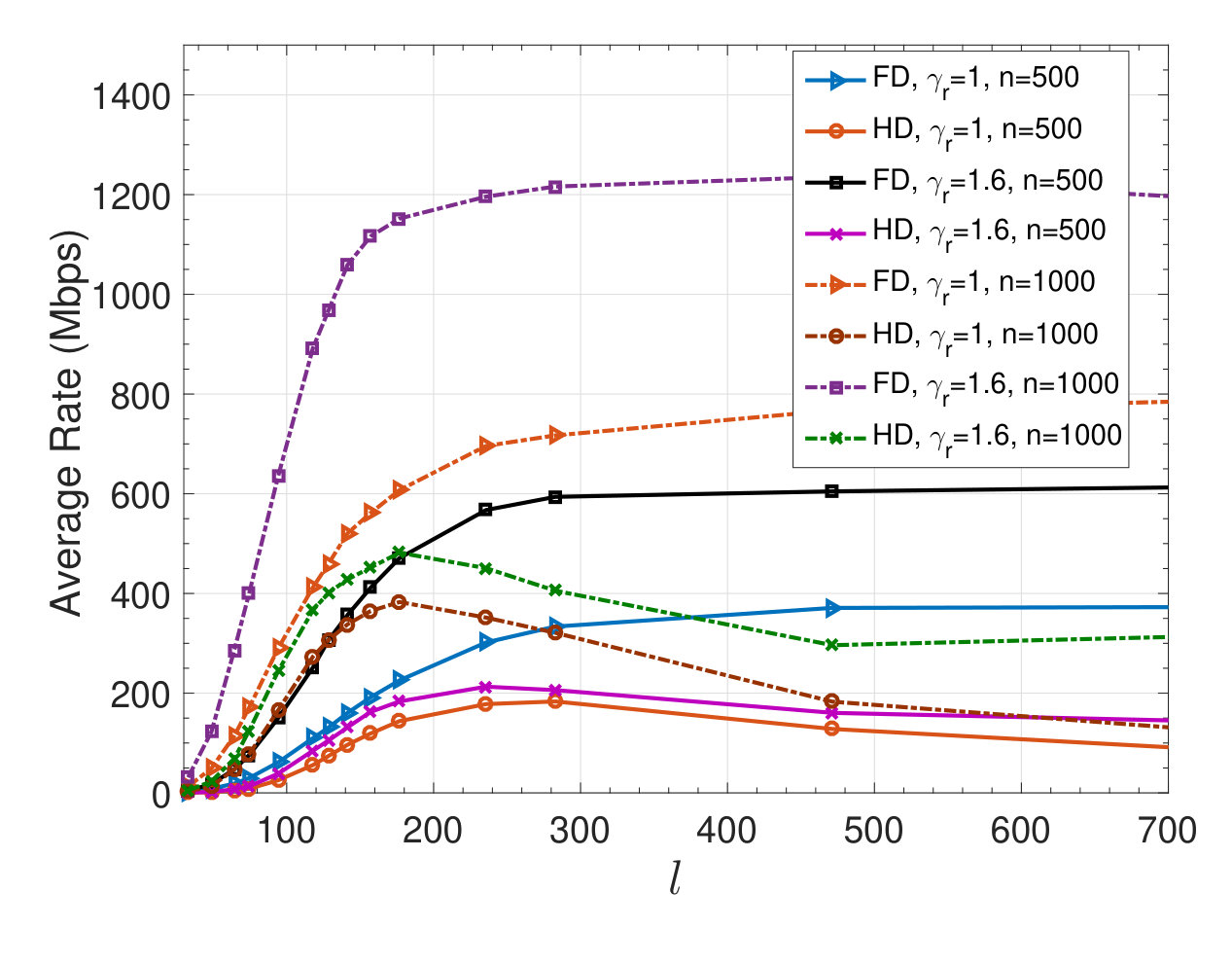 Figure 1
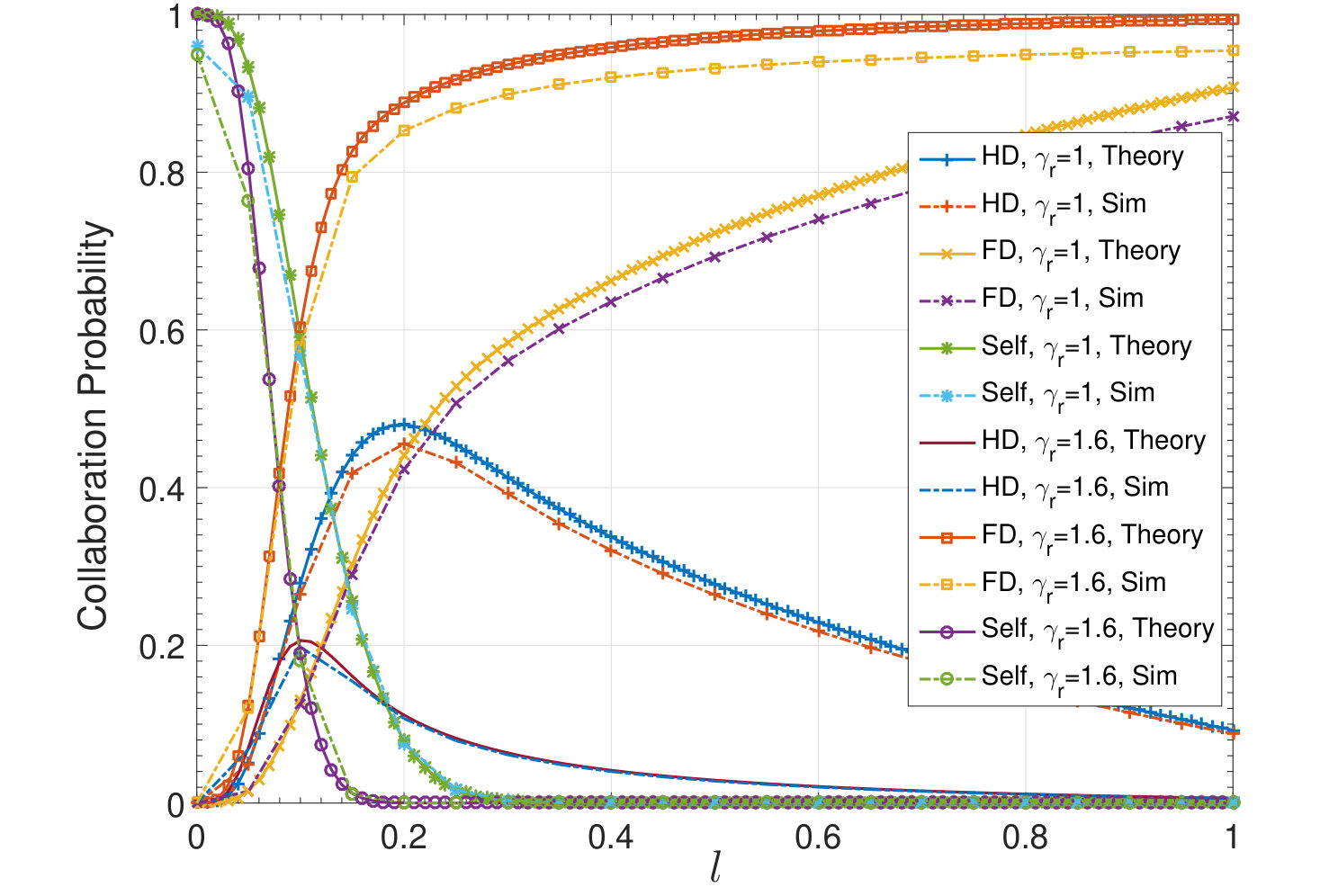 Figure 2
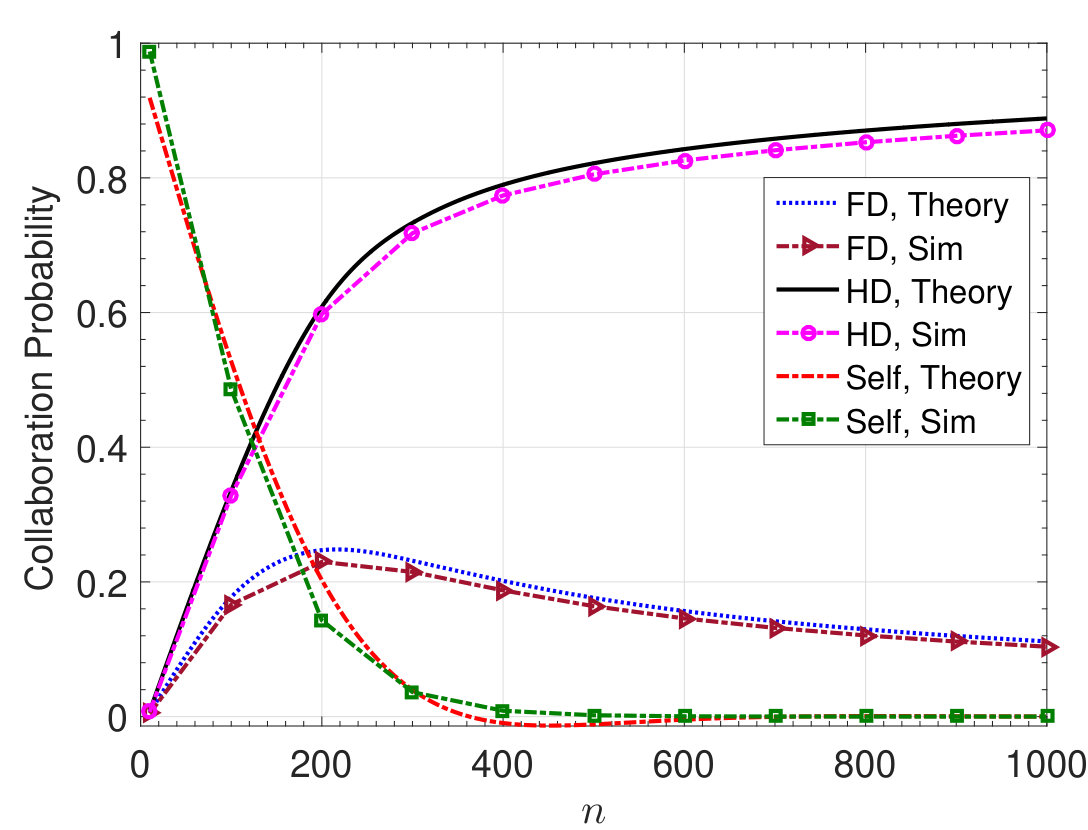 Figure 3
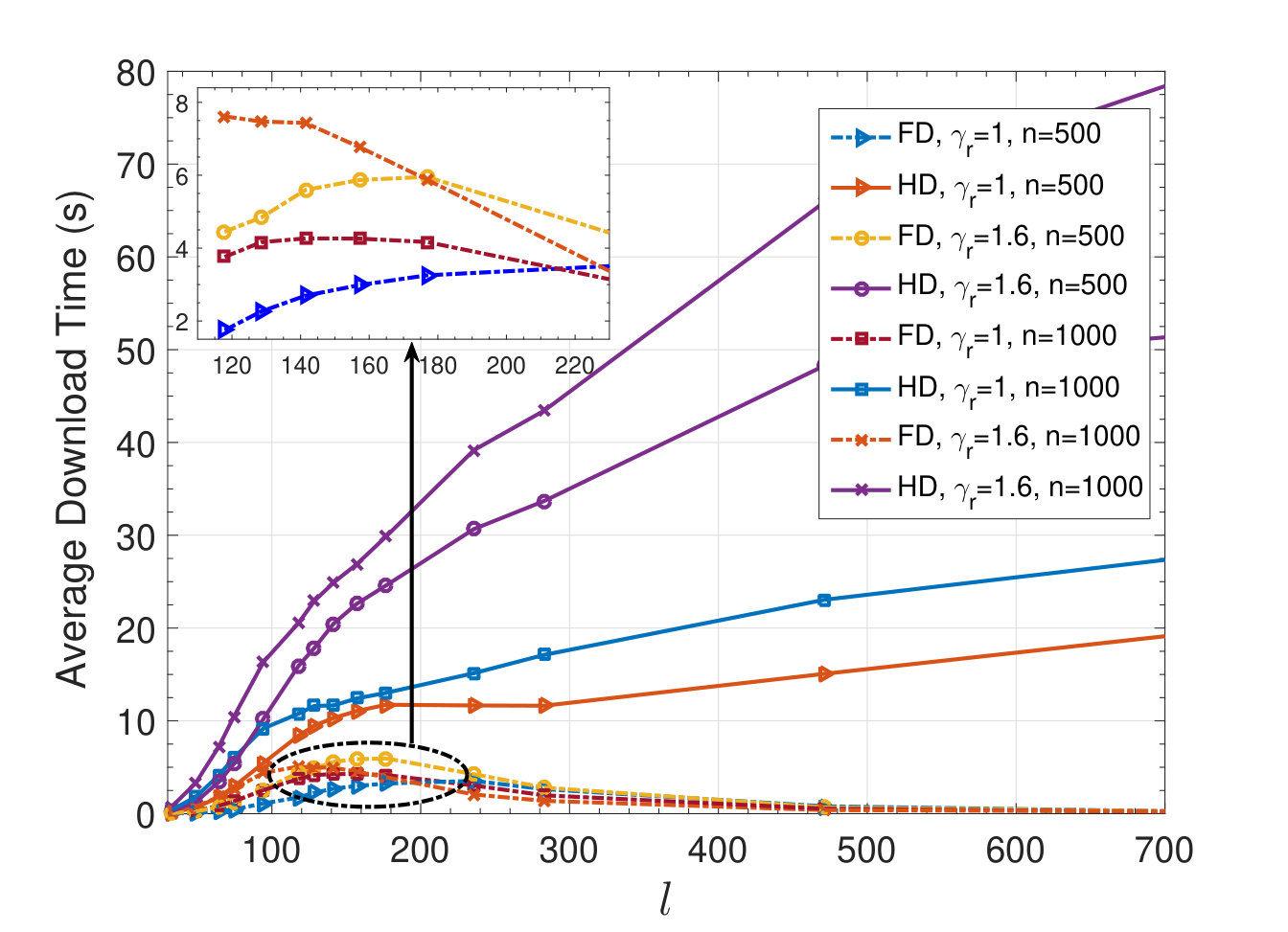 Figure 4
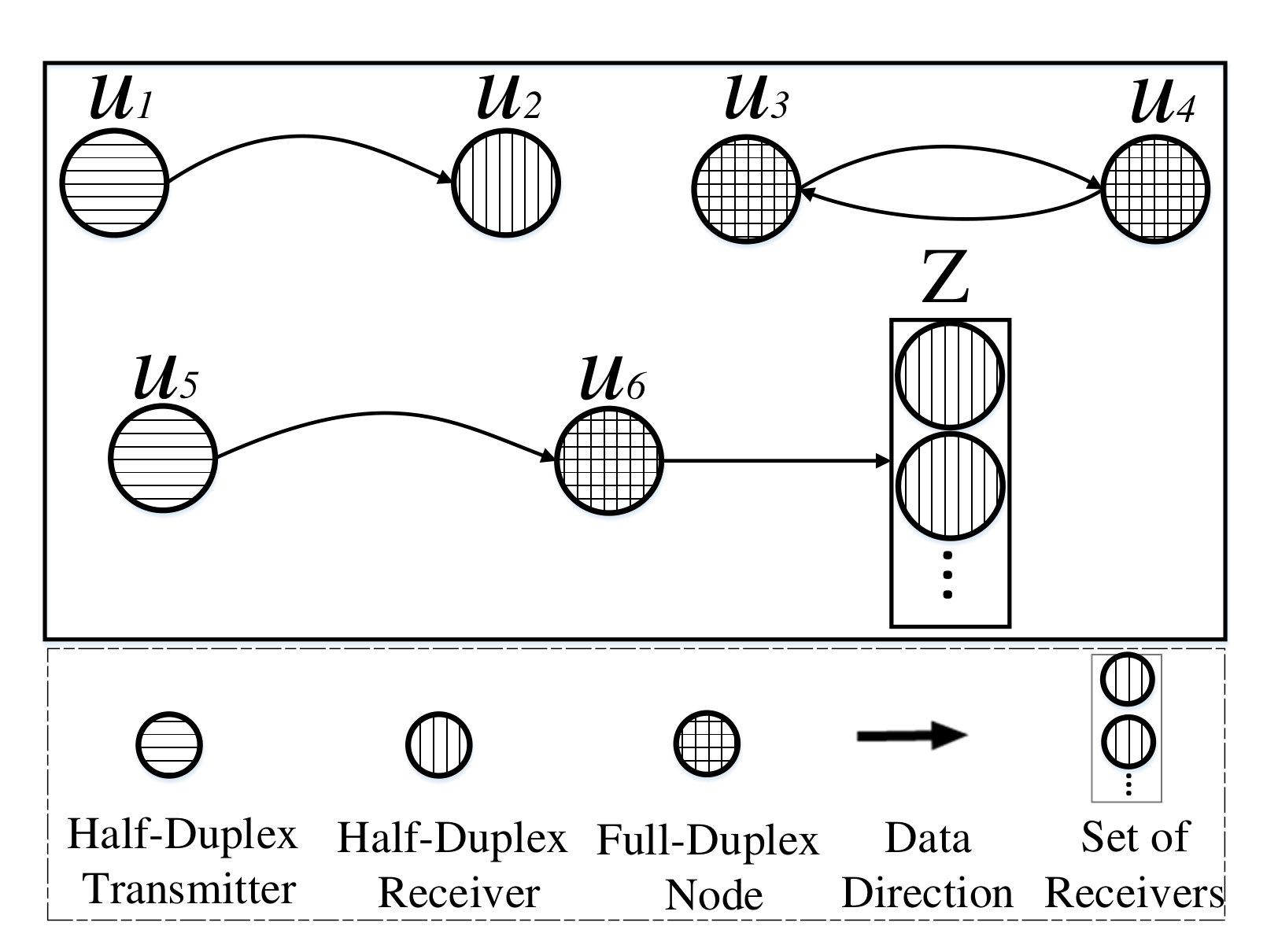 Figure 5
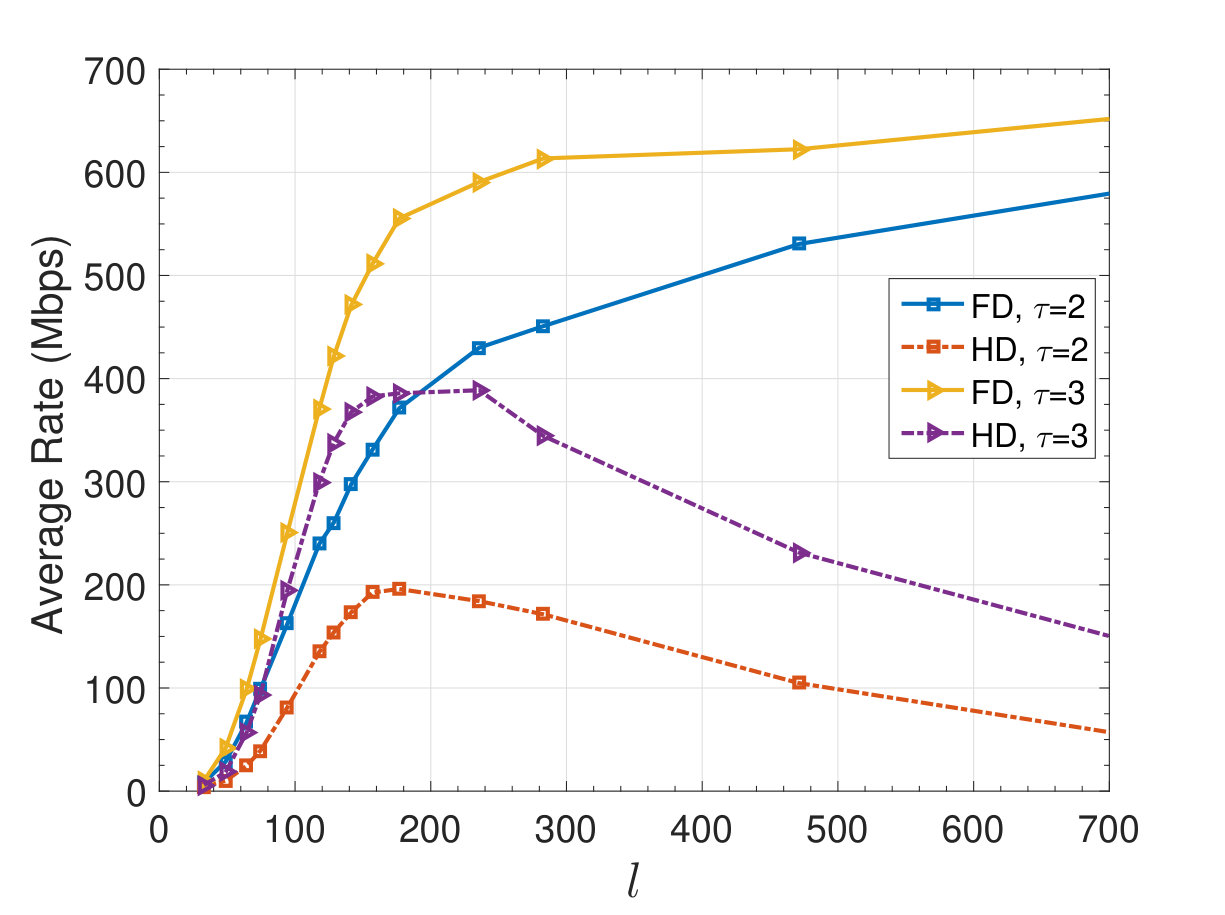 Figure 6
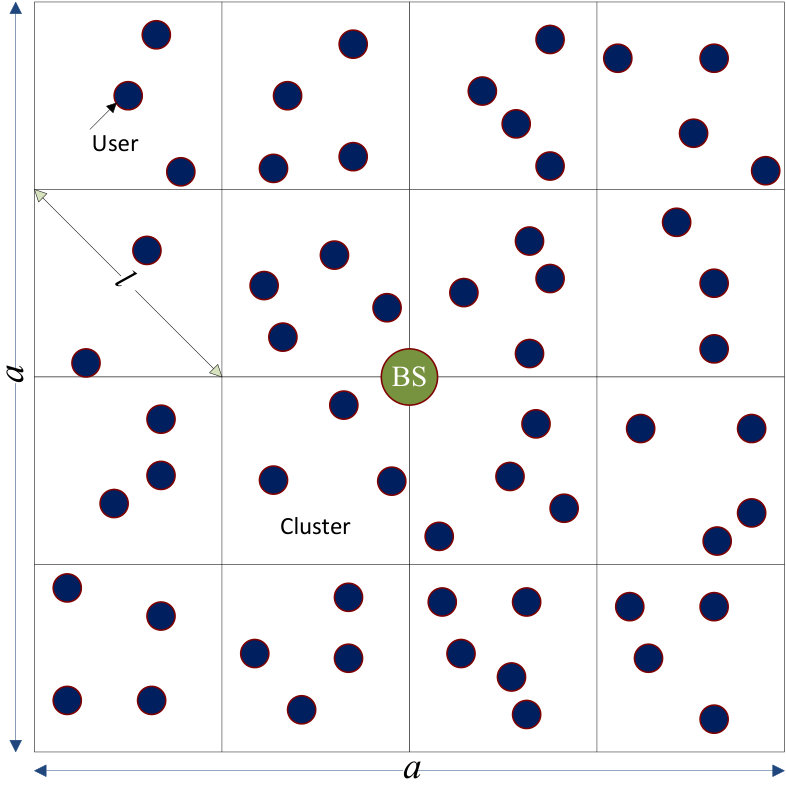 Figure 7
| Parameter | Values |
|---|---|
| Video Content Library | |
| th video content in library | |
| Number of users () | [10 1000] |
| Cached contents per node () | 1, 3, 5 |
| Size of library () | 1000 |
| Zipf exponent () | 1, 1.6 |
| SI cancellation factor () | -70 dB |
| Number of established nodes () | 1, 2, 3 |
| D2D link bandwidth () | 1.2 MHz |
| Background noise () | -174 dBm/Hz |
| Path loss exponent () | 2.6 |
| Size of files | [5 50] MB |
| User transmit power () | 23 dBm |
| Cell size () | 1 km |
| Log-normal shadow fading | 4 dB standard deviation |
| Monte-Carlo iterations | 1000 |
Peer Reviews
No public reviews on file for this paper yet. If you reviewed it on a platform where reviews are public (OpenReview, ICLR, NeurIPS, ICML), you can paste yours below so the community can read it here.
Videos
No videos yet. Explain this paper in a talk, walkthrough, or lecture? Add one.
Full-Duplex Device-to-Device Collaboration
for Low-Latency Wireless Video Distribution
Mansour Naslcheraghi1, Member, IEEE
Seyed Ali Ghorashi1,2, Senior Member, IEEE, Mohammad Shikh-Bahaei3, *Senior Member, IEEE
-
Department of Electrical Eng., Shahid Beheshti University, G.C. Tehran, Iran
-
Cyberspace Research Institute, Shahid Beheshti University, G.C. Tehran, Iran
-
Centre for Telecommunications Research, King’s College London, UK
[email protected], [email protected], [email protected]
Abstract
Growing demand for video services is the main driver for increasing traffic in wireless cellular data networks. Wireless video distribution schemes have recently been proposed to offload data via Device-to-Device (D2D) communications. These offloading schemes increase capacity and reduce end-to-end delay in cellular networks and help to serve the dramatically increasing demand for high quality video. In this paper, we propose a new scheme for video distribution over cellular networks by exploiting full-duplex (FD) D2D communication in two scenarios; scenario one: two nodes exchange their desired video files simultaneously with each other, and scenario two: each node can concurrently transmit to and receive from two different nodes. In the latter case, an intermediate transceiver can serve one or multiple users’ file requests whilst capturing its desired file from another device in the vicinity. Analytic and simulation results are used to compare the proposed scheme with its half-duplex (HD) counterpart under the same transmitter establishment criteria to show the achievable gain of FD-D2D scheme in video content delivery, in terms of sum throughput and latency.
Index Terms:
cellular video caching, wireless video distribution, D2D communication, full-duplex, half-duplex.
I introduction
Increasing demand for high data rate and live video streaming in cellular networks has attracted researchers’ attention to cache-enabled cellular network architectures [1]. These networks exploit D2D communications as a promising technology of 5G heterogeneous networks, for cellular video distribution. In a cellular content delivery network assisted by D2D communications and similarly in peer-assisted networks [2], user devices can capture their desired contents either via cellular infrastructure or via D2D links from other devices in their vicinity. Recently, several studies in both content placement policies and delivery strategies are conducted to minimize the downloading time, and to maximize the overall network throughput in terms of rate and area spectral efficiency. From the content placement perspective of view, contents can be placed on collaborative nodes formerly, either according to a predefined caching policy (reactive caching) [3], or more intelligently, according to statistics of user devices’ interest (proactive caching) [4]. The theoretical bounds for D2D caching network proposed in [5], indicates that caching most popular contents in users’ devices is optimal in almost all system regimes. Cross-layer resource allocation methods are also investigated for supporting video over wireless in multiuser scenarios [6]. It is shown that quality-aware resource allocation can improve video services in wireless networks. However, the conventional architectures of content delivery in both wireless cellular and D2D networks, are based on half-duplex (HD) transmission and to the best of our knowledge, full-duplex (FD) capability and its advantages have not yet been investigated in both wireless cellular video distribution and D2D caching systems. Recent advances in FD radio design [7], materialized by advanced signal processing techniques that can suppress self-interference (SI) at the receiver, have enabled simultaneous transmission and reception over the same frequency band. From theoretical point of view, FD communication can potentially double the spectral efficiency of a point-to-point communication link, providing SI is entirely canceled. In this paper, we propose an FD-based scheme for D2D wireless video distribution. Details along with the main contributions are as follows:
- •
The proposed scheme has been investigated in two different scenarios: a) user devices operate in bidirectional FD mode in which two users can exchange data simultaneously at the same frequency and b) user devices can concurrently transmit to and receive data from two different nodes at the same frequency. i.e., an intermediate node can receive its desired content from one node and simultaneously serve for other user’s demand at the same frequency.
- •
We have analyzed throughput and delay in both scenarios and compared them against conventional HD systems.
- •
In contrast with the works in the literature [3], where only one active node per cluster is considered, we consider D2D communication among multiple nodes in our proposed scheme.
- •
We have derived closed form expressions for FD/HD-D2D collaboration probabilities which previously obtained by numerical evaluations in [8].
The remainder of paper is structured as follows. In Section II system model is introduced. In section III, throughput analysis for the proposed FD-enabled cellular system is provided. In section IV simulation results are explained and conclusions are presented in section V.
II System model
We consider a cellular network with a single cell, one base station (BS) and randomly distributed users (Fig.1 (a)) according to uniform distribution. Assuming that inter-cell interference is negligible or canceled out, analysis can be extended to multi-cell scenarios. We divide the whole cell area into logical equally sized square clusters (Fig. 1(a)) and neglect co-channel interference and neighboring cell users’ influence, for the sake of simplicity. We consider an in-band overlay spectrum access strategy for D2D communications [9]. Thus, there is no interference between cellular and D2D communications. All D2D communications are under full control of the BS. We also assume that SI cancellation allows the FD radios to transmit and receive simultaneously over the same frequency band. However, since all D2D pairs in all clusters share the same resource blocks, inter- and intra-cluster interference is taken into account.
Denote the set of popular video files as with size . We use Zipf distribution for modeling the popularity of video files and thus, the popularity of the cached video file in user , denoted by , is inversely proportional to its rank, i.e., f_{\omega s}=\left(s^{\gamma_{r}}\sum\nolimits_{g=1}^{m}g^{-\gamma_{r}}\right)^{-1},\begin{array}[]{*{20}{c}}{}\hfil&{1\leq s\leq m}\end{array}. The Zipf exponent characterizes the distribution by controlling the popularity of files for a given library size . Contents are placed in users’ caches in advance according to a caching policy in which each user with a considerable storage capacity can cache a subset of files from the library, i.e., , . We assume that there is no overlap between users’ caches, i.e., . Each user randomly requests a video file from the library according to Zipf distribution. Technically, to schedule and establish a D2D connection, necessary signaling messages are needed to be exchanged between D2D pairs and the BS [10]. However, the signaling mechanisms do not affect our analysis in this work. Hence, we adopt the protocol model of [11] to setup D2D communications, which is based on a distance threshold; A pair of users/devices can potentially initiate a D2D communication for video file transfer providing that the distance between and is less than a threshold ( in Fig. 1(a)) and one of them finds its desired video file in the other device. Fig. 2(b) illustrates the schematic of typical D2D communication graphs inside a cluster. Each user generates a random request according to the Zipf distribution. BS is assumed to be aware of all contents in the users’ caches. We define a directed edge from pointing to if the user requests a file that has been previously cached by . Since we assume that each user can make only one request (as shown in Fig. 1(b)), there will be at most one incoming link to the user node and one or multiple outgoing links from the user node. In this system, no data is relayed over multiple hops, which means any transmission(s) from one node to another node(s) corresponds to delivering a different video content. It is also possible that some users demand for the same video content which is previously cached by one user. For instance the users in set demand for the same video content from user (Fig. 1(b)). The number of users in set depends on the popularity of the video content which is desired by these users. As can be seen in Fig. 1(b), there are two different possible configurations for FD collaboration; i) bi-directional full-duplex (BFD) mode, in which two users exchange their desired video content and ii) three node full-duplex (TNFD) mode, in which an intermediate node can receive its desired video content from one node and simultaneously serve for another user(s)’ demand (see in Fig. 1(b)).
III Analysis
Both analog and digital SI cancellation methods can be used to partially cancel the SI. However, in practice, it is difficult or even impossible to cancel the SI perfectly. We assume that all users transmit with power . The SI in FD nodes is assumed to be canceled imperfectly with residual self-interference-to-power ratio and hence, the residual SI is . The parameter denotes the amount of SI cancellation, and is the SI cancellation in dB. When , there is perfect SI cancellation, while for , there is no SI cancellation. Thus, the signal-to-interference-plus-noise ratio (SINR) at receiver due to transmitted signal from can be written as
[TABLE]
where is total inter- and intra-cluster interference due to the nodes in set , which is the set of concurrent transmitting nodes. Backslash in eq. (1) implies that the node is excluded from transmitters. and are the fading power coefficients with exponential distribution of mean one, corresponding to the channel between transmitter and receiver , and interferer , respectively. denotes the Euclidean distance between transmitter and receiver inside the cluster. is the path loss exponent. A white Gaussian noise with power is added to the received signal. denotes collaboration mode; , when user operates in HD mode, and , when it operates in FD mode.
III-A Collaboration Probability
For given users which randomly fall inside a cluster and given number of cached contents for each user inside the random cluster , we define popularity of cached contents within the cluster as , where is the popularity of cached contents by user . For the th user, , we define two parameters and as follows; : the probability that cannot find its desired content within cluster. : the probability that user can serve for other user(s)’ request(s). Since all requests are identically distributed and independent (i.i.d) at each user, given users inside the cluster, the probability that operates in HD mode is
[TABLE]
Similarly, the probability that operates in FD mode is
[TABLE]
However, the probability of making HD-D2D and FD-D2D connections depends on parameter . The probability that can collaborate in HD or FD mode is
[TABLE]
where is the operation mode, is the probability that there are users in the cluster. Since the distribution of users is assumed to be uniform within the cell area, the number of users in the cluster is a binomial random variable with parameters and , i.e., , where is the ratio of the cluster area to the cell area. Hence, the probability that users fall inside the cluster is
[TABLE]
The probability that can find its desired file inside the cluster and cannot find on its own cache (i.e., we exclude self-request111self-request takes place when the user finds its desired file in its own cache. from user ), can be written as
[TABLE]
We define which determines the probability that can serve number of users’ requests inside the cluster. The number of users demanding for a content which is cached by is a binomial random variable with parameters and , i.e.,
[TABLE]
It is clear that for , , which implies that there is no user’s demand for cached content by . And finally, can be written as
[TABLE]
By substituting eqs. (6, 8) in eqs. (2, 3), and eqs. (2, 3) in eq. (4), respectively, we get the final mathematical expressions for HD and FD collaboration probabilities.
[TABLE]
[TABLE]
Denoting as the probability that user finds its desired content on its own cache, By substituting eqs. (9) and (10) in , the probability that node demands for a file which is cached by itself is
[TABLE]
III-B Throughput Analysis
We focus on a typical random cluster (representative cluster) and derive system sum throughput for this cluster. We obtain the ergodic capacity of the link associated with D2D pair (,), which is defined by , where, is the bandwidth for D2D link. For the wireless D2D network described in section II, the expected value of the throughput of the system due to establishing node in mode can be written as
[TABLE]
where is the collaboration probabilities for mode, which is derived in equations (9) and (10). is achievable capacity by establishing node in mode and can be calculated as
[TABLE]
[TABLE]
where and are the set of users which are connected to in HD and FD modes respectively. First term in eq. (III-B), i.e., , determines the ergodic capacity for the link through which receives its desired file in FD mode from (TNFD mode). Showing the set of established nodes inside the random cluster is by , the sum throughput of the respective cluster can be written as
[TABLE]
III-C Download Time
As we described in section II, there are two full-duplex collaboration modes: TNFD and BFD. For better understanding the concept of download time in HD and FD modes, we use the D2D communication graphs shown in Fig. 1(b).
III-C1 TNFD Mode
consider , and in which , . For a typical link between and , and assuming that is transmitting video file to , the experienced average download time at can be defined as , where is the number of bits for video file and is the achievable ergodic capacity for transmitting link from to . Similarly, for the set , we have: where, . Due to random distribution of the users’ locations, the ergodic capacity for all links associated with all users in set is not necessarily the same, hence for . Since all users in set are demanding the same video content from , the total average download time due to one transmission of user can be defined as
[TABLE]
Denoting and as the total experienced average download times by establishing in HD and FD modes, respectively, we have:
[TABLE]
III-C2 BFD Mode
In this mode, both users (i.e., and in Fig. 1(b)) exchange data simultaneously. Denoting and as the experienced download time for and , respectively, the total average download time can be calculated as
[TABLE]
In practice, the received and transmitted packets may have different lengths. Therefore, the transmission of all nodes will not end up at the same time. Therefore, due to asymmetric data packets at the transmitter and receiver, this situation is referred to as “the residual hidden node problem”. However, the node that finishes data transmission earlier can resolve this issue by transmitting busy tone signals until the other node completes its transmission [12].
IV Numerical Evaluations
In this section, we provide Monte-Carlo simulation to evaluate the performance of our proposed FD-D2D caching system. We assume a single square cell as shown in Fig. 1(a). Simulation parameters are shown in Table 1. The proposed FD-scheme simulated based on the following scenarios:
Caching procedure: Each user caches multiple files from the library, according to the described caching policy in section II. This procedure can be launched in the off-peak hours of the cellular network to avoid traffic load.
Delivery procedure: Users make and send their request to the BS randomly according to Zipf distribution and consequently the BS recognizes users’ interests. Moreover, users’ locations are known in advance for BS via channel state information (CSI) procedure. Hence, BS can predict potential D2D communications graphs (as such in Fig. 1(b)) for all clusters by having knowledge of users’ caches, interests and locations. In each cluster, BS determines and establishes number of nodes associated with most popular cached contents. Since all D2D communications in all clusters use the same time-frequency resources, inter- and intra-cluster interferences are taken into account. Fig. 2 shows the probability that a node inside a cluster is in FD, HD or self-request mode. By increasing D2D collaboration threshold , the expected number of users inside a cluster increases and, consequently, the expected number of nodes that collaborate in FD mode increases. As can be seen in Fig. 2, the probability that users can find their desired content on their own caches, decreases as increases, because for lower values of , there are few users inside a cluster and these users previously stored high popular files. Hence, when the users inside a cluster make request according to Zipf distribution, there is a high probability that they make a request for a file that they have previously stored on their own caches. In contrast, as the density of users inside a cluster increases (i.e., higher values of ), the number of self-request users decreases. Fig. 3 shows the impact of the number of users () within the cell on the aforementioned probabilities. As can be seen from Fig. 3, the higher density of users within a cell, the higher is FD collaboration probability. Fig. 4 and Fig. 5, show the total average rate for FD-D2D and HD-D2D systems. Although the number of clusters increases at lower ranges of (we expect that the frequency reuse increases as well), nevertheless, the probability that clusters are of low density or that no D2D candidates are found therein, also increases. This can be interpreted as the fact that the probability of finding a user’s desired file inside the cluster decreases when the node density decreases. As the number of clusters in the cell decreases, the frequency reuse decreases too. However, the probability that a user can find its desired file inside the cluster increases and hence the probability of making D2D communication increases. The impact of parameter ( in Fig. 5) demonstrates that incorporating FD-enabled nodes, with multiple nodes establishments inside a cluster can improve the average gain in sum throughput by increasing the number of active D2D links. Alongside the considerable improvements in system sum throughput, the gain in frequency reuse in FD-enabled system is more accentuated for higher ranges of . Fig. 6 illustrates the total average download time versus . As we discussed in section II, there are three possible ways for the users to access their desired file; through conventional cellular infrastructure, via D2D collaboration, and by self-request. We define the download time as the delay incurred in downloading a file, i.e. the time between sending requests by the user till capturing the file. Download time for self-request case is zero and we exclude this case from calculations of download time. In the proposed FD-D2D system, each D2D receiver can download its desired file with zero waiting time. Fig. 6 shows the major impact of FD collaboration on decreasing the latency in downloading video files.
V CONCLUSION
In this paper, we used full duplex radios on user devices to increase the throughput of video caching in cellular systems with D2D collaboration. We investigated FD-enabled networks by enabling FD radios only for D2D communications. Simulation results show that achievable throughput gain can increases in high intra- and inter-cluster interference conditions. We also showed that allowing full duplex collaboration can have a major effect on the quality of video content distribution by reducing download time compared to HD-only collaboration.
The reference list from the paper itself. Each links out to its DOI / PubMed record.
- 1[1] N. Golrezaei, A. F. Molisch, A. G. Dimakis, and G. Caire, ”Femtocaching and device-to-device collaboration: A new architecture for wireless video distribution,” IEEE Commun. Mag. , vol. 51, pp. 142-149, 2013.
- 2[2] N. Anjum, D. Karamshuk, M. Shikh-Bahaei, N. Sastry, ”Survey on Peer-assisted Content Delivery Networks,” Computer Networks, Elsevier.
- 3[3] N. Golrezaei, P. Mansourifard, A. F. Molisch, and A. G. Dimakis, ”Base-Station Assisted Device-to-Device Communications for High-Throughput Wireless Video Networks,” IEEE Trans. Wireless Commun. , vol. 13, pp. 3665-3676, 2014.
- 4[4] E. Bastug, M. Bennis, and M. Debbah, ”Living on the edge: The role of proactive caching in 5G wireless networks,” IEEE Commun. Mag. , vol. 52, pp. 82-89, 2014.
- 5[5] M. Ji, G. Caire and A. F. Molisch, ”Fundamental Limits of Caching in Wireless D 2D Networks,” IEEE Trans. Inform. Theory , vol. 62, no. 2, pp. 849-869, Feb. 2016.
- 6[6] H. Saki and M. Shikh-Bahaei, ”Cross-Layer Resource Allocation for Video Streaming Over OFDMA Cognitive Radio Networks,” IEEE Trans. Multimedia , vol. 17, pp. 333-345, 2015.
- 7[7] Knox, Michael E. ”Single antenna full duplex communications using a common carrier.” IEEE WAMICON, 2012.
- 8[8] M. Naslcheraghi, S. A. Ghorashi, M. Shikh-Bahaei, ”Full-Duplex Device-to-Device Communication for Wireless Video Distribution,” IET Communications , 2017.