Low-Energy Surface States in the Normal State of $\alpha$-PdBi2 Superconductor
Hongchul Choi, Madhab Neupane, T. Sasagawa, Elbert E. M. Chia, and, Jian-Xin Zhu

TL;DR
This study predicts that the superconductor $ ext{α}$-PdBi2 hosts unique Rashba surface states in its normal state, making it a promising candidate for exploring the interplay between superconductivity and topological surface phenomena.
Contribution
First prediction of orbital-dependent and asymmetric Rashba surface states in $ ext{α}$-PdBi2 using density functional theory, linking its normal state to topological properties.
Findings
Prediction of Rashba surface states near the Fermi energy.
Identification of orbital-dependent and asymmetric surface states.
Implication for future studies on superconductivity and topology.
Abstract
Topological superconductors as characterized by Majorana surface states has been actively searched for their significance in fundamental science and technological implication. The large spin-orbit coupling in Bi-Pd binaries has stimulated extensive investigations on the topological surface states in these superconducting compounds. Here we report a study of normal-state electronic structure in a centrosymmetric -PdBi2 within density functional theory calculations. By investigating the electronic structure from the bulk to slab geometries in this system, we predict for the first time that -PdBi2 can host orbital-dependent and asymmetric Rashba surface states near the Fermi energy. This study suggests that -PdBi2 will be a good candidate to explore the relationship between superconductivity and topology in condensed matter physics.
Click any figure to enlarge with its caption.
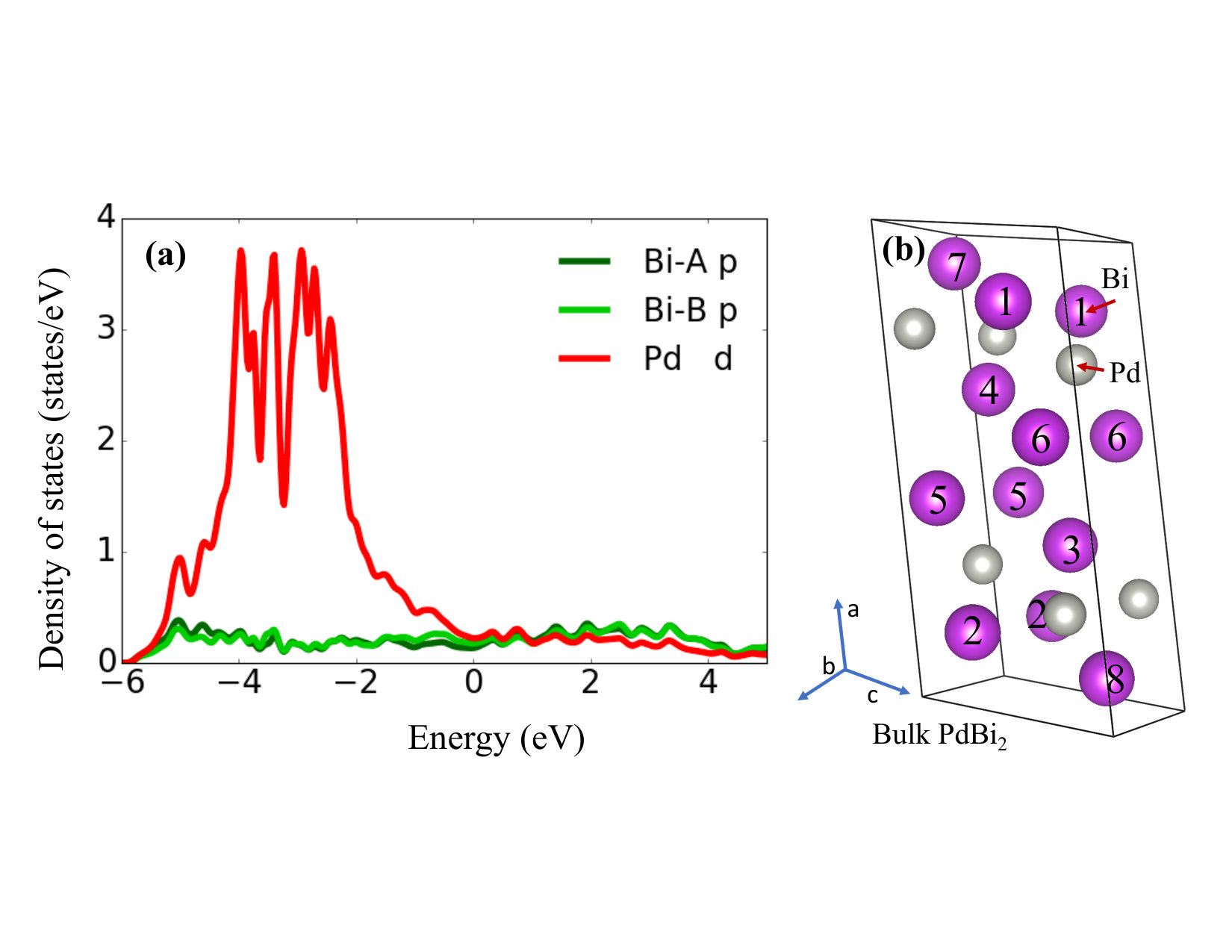 Figure 1
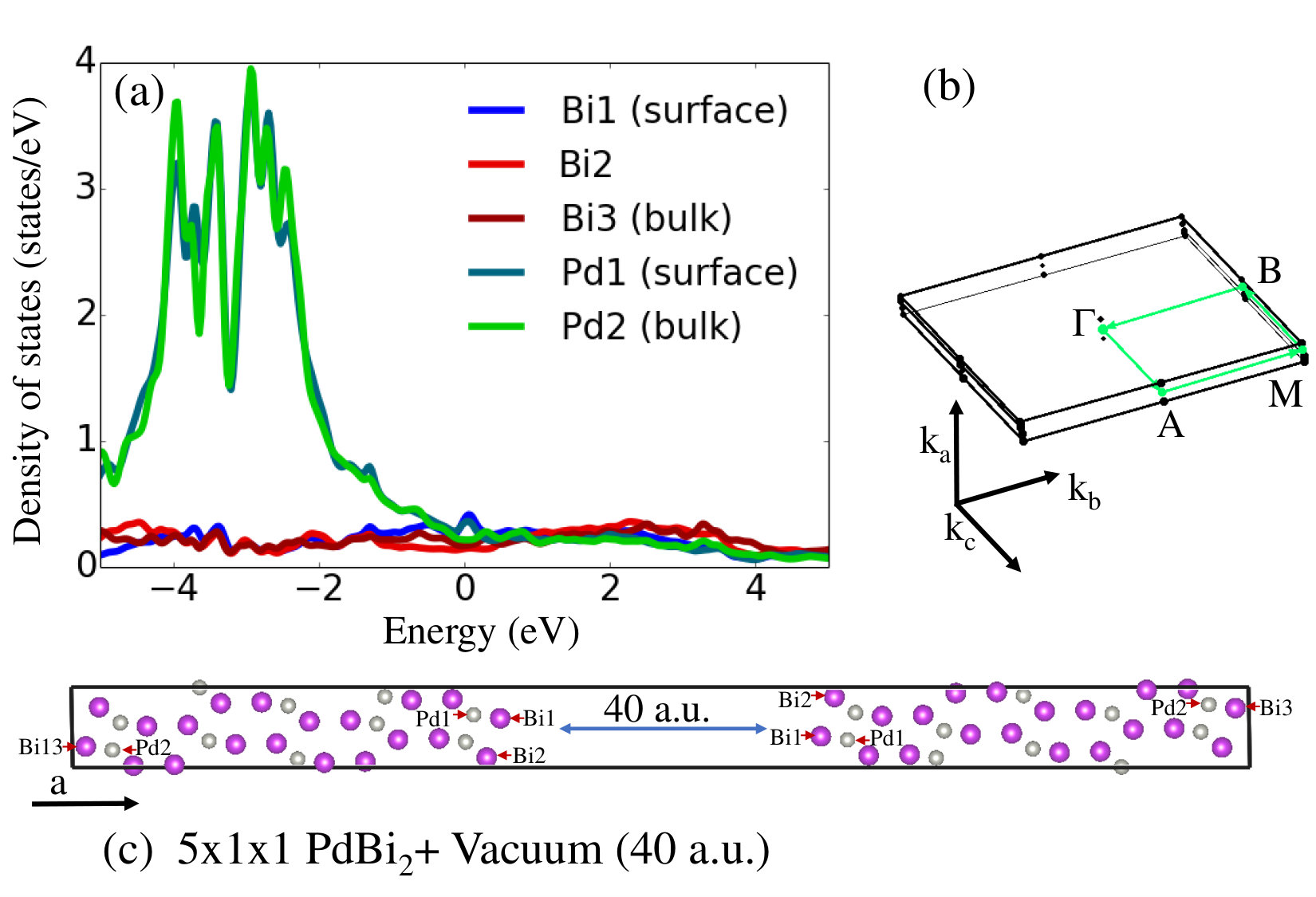 Figure 2
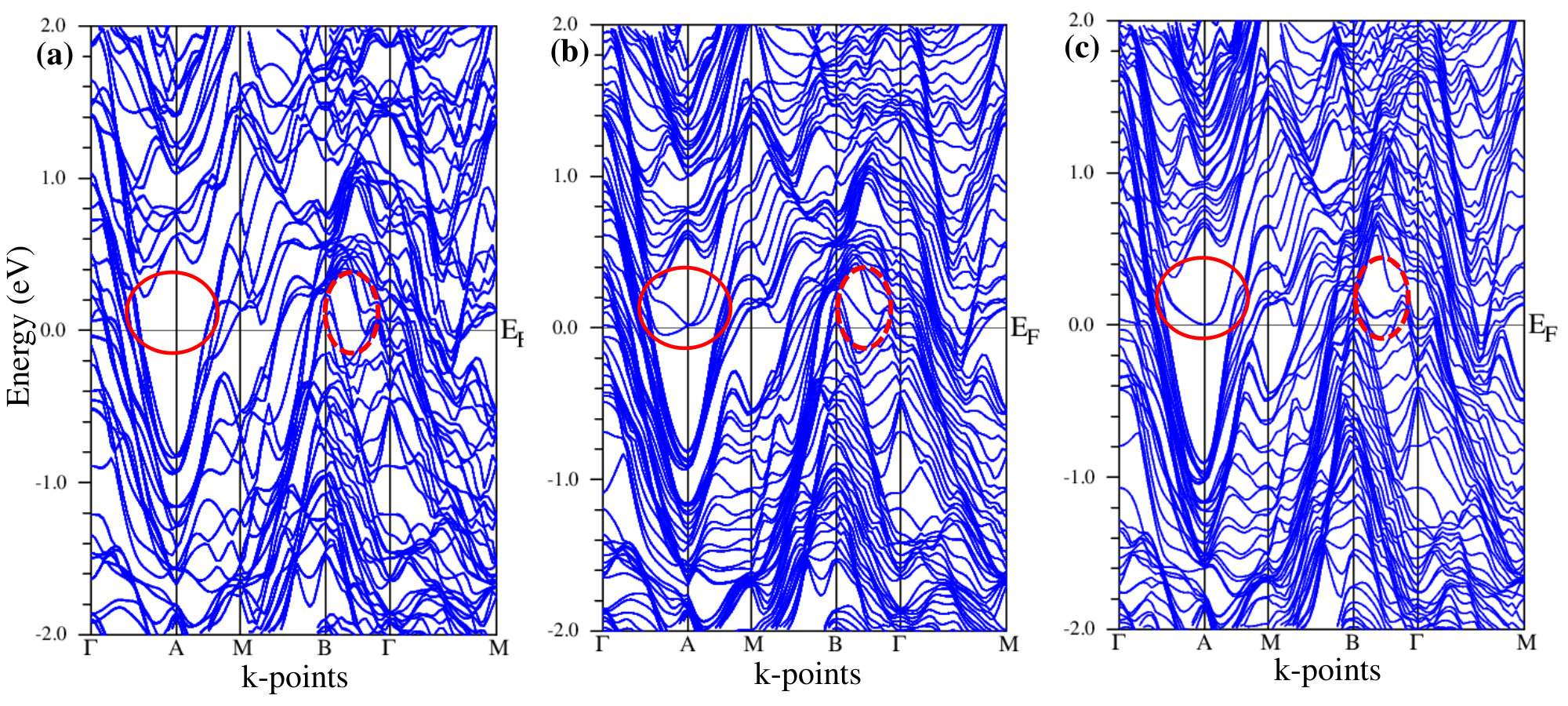 Figure 3
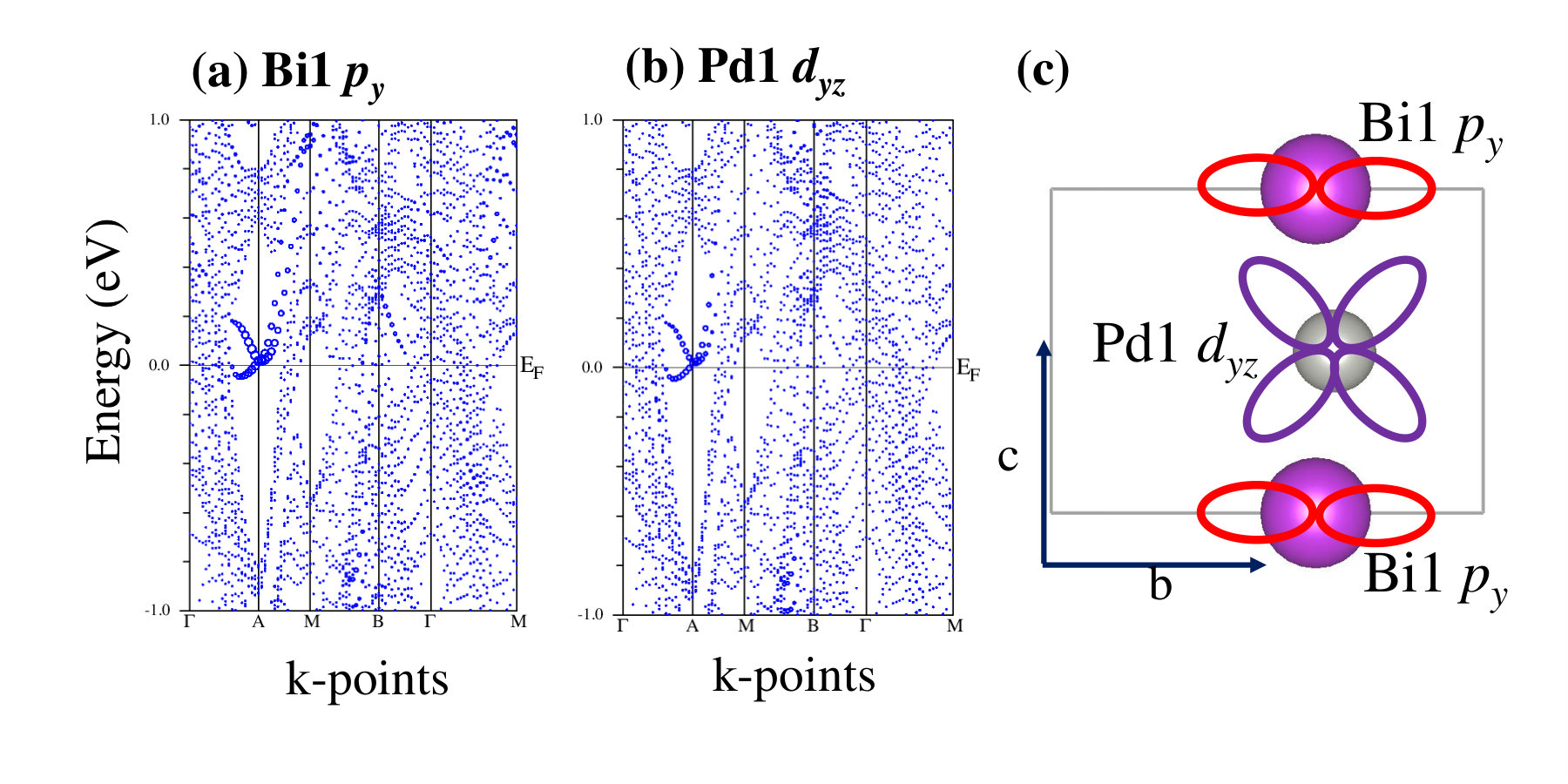 Figure 4
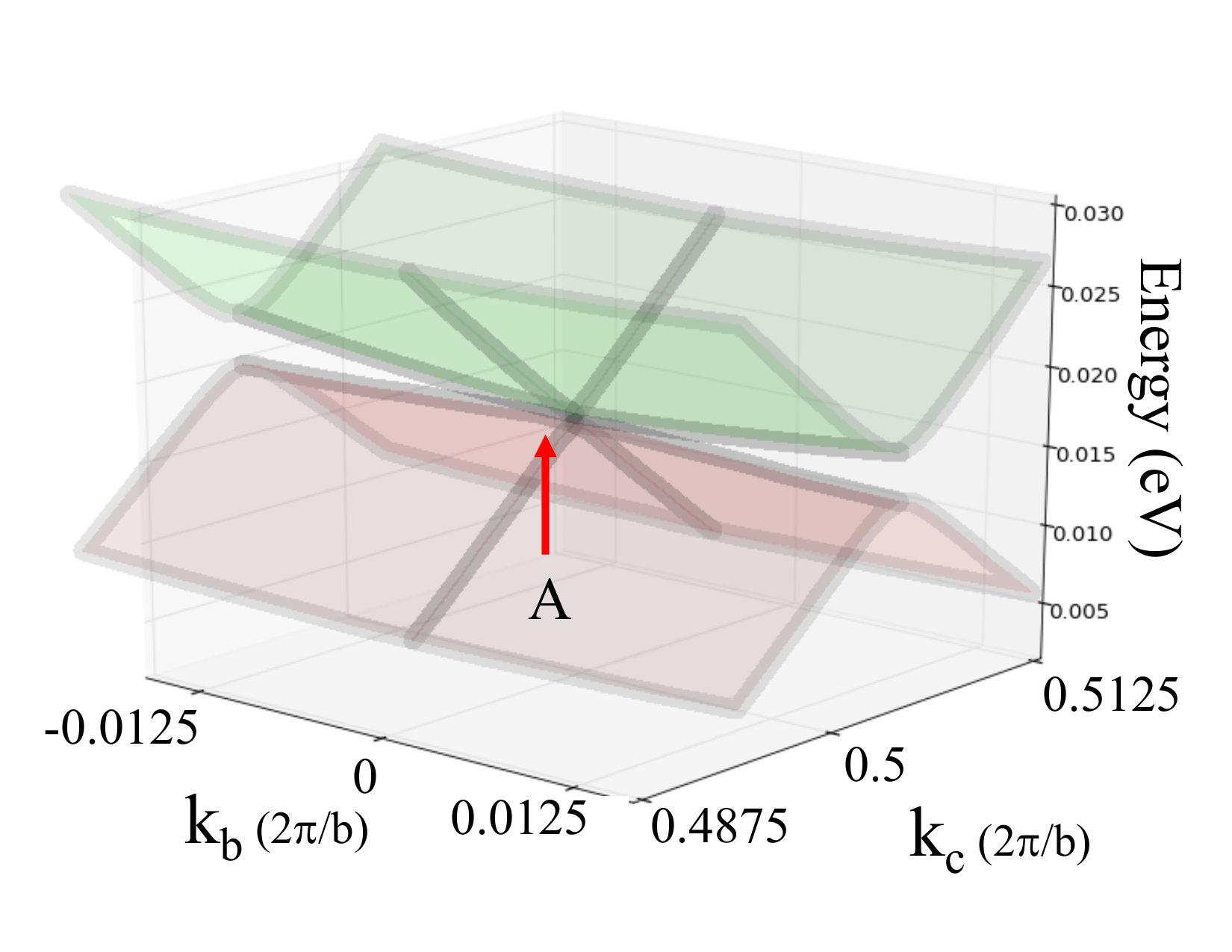 Figure 5
Peer Reviews
No public reviews on file for this paper yet. If you reviewed it on a platform where reviews are public (OpenReview, ICLR, NeurIPS, ICML), you can paste yours below so the community can read it here.
Videos
No videos yet. Explain this paper in a talk, walkthrough, or lecture? Add one.
Low-Energy Surface States in the Normal State of -PdBi2 Superconductor
Hongchul Choi
Theoretical Division, Los Alamos National Laboratory, Los Alamos, New Mexico 87545, USA
Madhab Neupane
Department of Physics, University of Central Florida, Orlando, Florida 32816, USA
T. Sasagawa
Laboratory for Materials and Structures Laboratory, Tokyo Institute of Technology, Kanagawa 226-8503, Japan
Elbert E. M. Chia
Division of Physics and Applied Physics, School of Physical and Mathematical Sciences, Nanyang Technological University, 21 Nanyang Link, Singapore 637371, Singapore
Jian-Xin Zhu
Theoretical Division, Los Alamos National Laboratory, Los Alamos, New Mexico 87545, USA
Center for Integrated Nanotechnologies, Los Alamos National Laboratory, Los Alamos, New Mexico 87545, USA
Abstract
Topological superconductors as characterized by Majorana surface states have been actively searched for their significance in fundamental science and technological implication. The large spin-orbit coupling in Bi-Pd binaries has stimulated extensive investigations on the topological surface states in these superconducting compounds. Here we report a study of normal-state electronic structure in a centrosymmetric -PdBi2 within density functional theory calculations. By investigating the electronic structure from the bulk to slab geometries in this system, we predict for the first time that -PdBi2 can host orbital-dependent and asymmetric Rashba surface states near the Fermi energy. This study suggests that -PdBi2 will be a good candidate to explore the relationship between superconductivity and topology in condensed matter physics.
pacs:
03.65.Vf,73.20.At, 74.70.Ad
*Introduction. * Recent discovery of quantum materials with gapped bulk but protected metallic surface states has sparked a revolution in condensed matter physics. Among them, although the topological insulators MZHasan:2010 ; XLQi:2011 are now popular, the topological superconductors (TSCs) AKitaev:2009 ; APSchnyder:2008 ; MSato:2009 are rare. Nevertheless, the TSCs are of great interest because they can host protected Majorana surface states MSato:2009 ; FWilczek:2009 ; CIniotakis:2007 ; AVorontsov:2008 ; YTanaka:2010 ; MSato:2010 ; JAlicea:2012 ; CWJBeenakker:2013 , arising from a nontrivial topology of the bulk Bogoliubov-de-Gennes quasiparticle wavefunctions JXZhu:2016 . The Majorana fermions, that is, hypothetical particles originating from the field of particle physics, have been suggested Kitaev01 as a candidate for quantum bits robust against decoherence, motivating intense efforts to materialize the topological superconducting state.
It is noteworthy to mention that several theoretical proposals have been made to realize the Majorana states in the condensed matter, from the superfluid phase of cold atoms to the interface of the heterostructure with a normal metal, ferromagnetic insulator, superconductor Sato:2009 ; Tanaka:2009 ; Sau:2010 ; Tanaka:2012 . The key ingredients of these systems are s-wave superconducting pairing, Rashba spin-orbit interaction, and ferromagnetic exchange interaction. Therefore, searching for the topological superconductivity among heavy element-based compounds is promising to realize Majorana fermion in the real material. Since the existence of the surface state, the heavy element-based compound have the strong intrinsic Rashba interaction and the superconducting pairing to drive a TSC under external magnetic field.
To date, possible topological superconductivity has been suggested in Cu- or Sr-intercalated Bi2Se3 YSHor:2010 ; MKriener:2011 ; LAWray:2010 ; SSasaki:2011 ; ZLiu:2015 ; Shruti:2015 ; MNeupane:2016 , In-doped SnTe SSasaki:2012 , highly-pressured Bi2Te3 and Sb2Te3 JLZhang:2011 ; JZhu:2013 , point-contact induced pressure in Cd3As2 HWang:2016 , and hybrid superconductor-semiconductor or -topological insulator heterostructures VMourik:2012 ; MXWang:2012 ; SYXu:2014 . However, Pd-Bi family Matthias63 ; Zhuravley57a ; Zhuravley57b of superconductors are particularly interesting because both Bi and Pd atoms intrinsically maintain strong spin-orbit coupling (SOC). The possibility of the TSC drives the incarnation of the research on Pd-Bi compounds. The noncentrosymmetric -BiPd Joshi11 exhibits a superconducting state at K. If the TSC is realized in -BiPd, the mixture of singlet and triplet pairings is expected due to the absence of inversion center and the strong SOC effect. However, the full gapped superconducting density of states (DOS) was revealed with the scanning tunneling spectroscopy measurement Sun15 . Also the angle-resolved photoemission (ARPES) experiment demonstrated that the Dirac cone was located at 700 meV below Neupane15 ; Thirup16 ; HMBenia:2016 . The other member of this Pd-Bi family, PdBi2, preserves the inversion symmetry, and it has two types of the structures, depending on the annealing temperature. Recently, -PdBi2 had been reported as a multi or single superconducting gap Imai12 ; Sakano15 ; Biswas16 ; Kacmarchik16 . The Dirac point in this structure was detected 2 eV away from Sakano15 . Finally, the absence of the TSC was established by the point-contact Andreev reflection spectroscopy Che16 . Although the existence of the topologically protected surface states in -PdBi and -PdBi2 has been confirmed, their location of being far away from the Fermi energy negates the possibility of the topological superconducting behavior on the surfaces of these compounds, or in another word, these surface states has no effect on the bulk of the superconductor Biswas16 .
More recently, -PdBi2 has also been investigated by the penetration depth measurement Mitra17 . Although the data seem to suggest that the superconducting order parameter has a similar pairing symmetry across the Pd-Bi family of superconductors, the much larger penetration depth itself as deduced for the zero-temperature limit prevents one from ruling out the existence of surface states in this material. This ambiguity suggests the need of a detailed electronic structure study even in the normal state of -PdBi2, which is currently not available. Here we report the electronic structure of the bulk and slab structure in -PdBi2 and investigate the characteristics of the surface state. We find -PdBi2 might be a good candidate for the TSC with the existence of low-energy surface states.
*Method. * We employed the density functional theory (DFT) calculation with the full-potential linearized augmented plane wave method implemented in the WIEN2k package W2k . The spin-orbit coupling was considered to describe the heavy elements of Bi and Pd. The Perdew-Burke-Ernzerhof PBE exchange-correlation functional was adopted. The experimental crystal structure was used without the structural relaxation calculation. The -PdBi2 has a centrosymmetric monoclinic crystal structure of space group . The experimental crystal structure has =12.74Å, =4.25 Å, =5.665 Å, , and Zhuravley57b . The angle between -axis and -axis is . is two times longer than and . There are four formula units in the primitive unit cell to have four Pd and eight Bi atoms. Each Bi or Pd atom makes a mono-atomic single layer stacked along -axis. The crystal structure was visualized in Fig. 1(b). There are two types of Bi atoms such as Bi-A and Bi-B atoms with the same local symmetry. 1-4 atoms and 5-8 atoms in Fig. 1(b) correspond Bi-A and Bi-B, respectively. The inversion symmetry is maintained in (1, 2), (3, 4), (5, 6), and (7, 8) pairs.
*Results and discussions. *
At the first stage, we performed the DFT calculation of the bulk PdBi2 to comprehend the underlying electronic property. The valence states of Pd are made up with and . The valence state of Bi is expected to have . But, the occupancy of Pd and Bi states are computed to show about 8.25 and 1.15 electrons, respectively. The state of Pd is almost empty. Around two electrons for each Bi and Pd ions are not included within each muffin radius. Missing electrons would be distributed in the interstitial region to indicate the covalent bond. Also, we investigated the DOS in the bulk -PdBi2. Figure 1(a) provides the DOS for Bi-A , Bi-B , and Pd states. The DOSs of Bi-A and Bi-B show uniform distribution in this energy range together. Pd states are mostly occupied to show the several manifestive peaks between -4 and -2 eV. The valence states are well delocalized to show a metallic feature. Pd and Bi states show strong hybridization with the similarity of peaks shown in their DOS. The strong SOC might be associated with the topological surface state through the hybridization.
We examined the surface state in the slab geometry. Since the bulk structure has the alternating stack of single Bi and Pd layers along axis, the bulk structure is elongated five times to become a unit cell. The vacuum of 40 a.u. (i.e., Bohr radius) was inserted into the to construct a slab structure. The slab structure is presented in Fig. 2(c). The inversion symmetry was maintained to carry out an efficient slab calculation. However, the global inversion symmetry does not affect the numerical result but is associated with computational cost. It is noteworthy that both interfaces are Bi1 layers.
We investigated how the existence of the interface would affect on the electronic structure. Figure 2(a) shows the DOS for Bi1-3 and Pd1-2 atoms as marked in Fig. 2(c). The DOS of Bi1 and Pd1 provides the additional high peak at the Fermi energy. The DOS of Bi2 does not show such a peak around . Therefore, the surface state disappears drastically as going inside into the bulk. Geometrically, the distance between Bi1 and Pd1 is also shorter than that between Bi1 and Bi2. As such, the hybridization between Bi1 and Pd1 might be stronger than that between Bi1 and Bi2. The DOS of Bi3 and Pd2 located deep inside from the surface show the bulk-like DOS. We note that the DOS of Bi1-3 located around -4.5 and 3 eV shows some deviation. This difference might be attributed to modified bonding and anti-bonding states arising from the surface states. Interestingly, the DOS of the surface states is higher than that of the bulk states at . When -PdBi2 enters the superconducting state, the surface states could affect the superconducting pairing, which is in striking contrast to the cases of -PdBi and -PdBi2, where the surface states are too far away from the Fermi energy to have any effect on the superconducting pairing.
The band structure for the supercell without and with the vacuum were given in Fig. 3(a) and (b), respectively. The insulating gap of around 1.4 eV at A point of the wavevector in the Brillouin zone corresponding to the supercell is closed due to the new surface states. Interestingly, the center of the surface bands is located in the proximity of . This surface state is not associated with the global inversion symmetry of the slab structure, but with the local breakdown of the inversion symmetry at the interface between -PdBi2 and vacuum. This assumption is confirmed by the two slab geometries with and without the inversion symmetry to produce the same surface states. Since both interfaces of the slab structure have the same local symmetry, the surface state has a two-fold degeneracy. Besides, the red circles marked around the B and points of the wavevector shows the additional clear surface effect around .
To understand the SOC effect on the surface state, the slab band structure with and without SO were compared to each other. The band structure without SOC in Fig. 3(c) shows a parabolic degenerated surface state with one local minimum at the A point. The SOC drives the momentum-dependent splitting (Rashba splitting) of the degenerated surface state to induce several local minimums away from the A point. These SOC-induced Rashba surface states with their energy so close to the Fermi energy opens up a revenue for the emergence of unconventional pairing symmetry at the surface.
The characteristic of the edge state at A was analyzed with the angular-momentum-projected orbitals for each atom in the slab geometry. From the DOS shown in Fig. 2(a), the electronic states derive from Bi1 and Pd1 atoms make up with the surface states. Furthermore, the clarification of the specific angular momentum was investigated. Figure 4(a) and (b) show that the surface edge states consist of Bi1 and Pd1 orbitals. Schematic real-space wavefunction distribution for these two orbitals are displayed in Fig. 4(c). Bi1 and Pd1 sites have the coordinates of (0.36388,0.61235,0.0) and (0.34137,0.6559,0.5), respectively. The - and -components of their coordinates are very close to each other. They are separated away along -axis. The relative location between Bi1 and Pd1 suggests the formation of -bonding along the -axis. This specific bonding nature might lead to the anisotropic and orbital-dependent surface states.
The detailed topology of the edge states at the point was examined with the two-dimensional eigenvalues as a function of and around the point. Figure 5 shows clearly the existence of the Dirac-cone at the point. The energy of the Dirac point is 0.017 eV above . The slight tuning of the chemical potential could enable the Dirac cone to be established at . The dispersion along the -direction is much steeper than that along the -direction. This asymmetric Dirac cone is associated with the bonding along the -axis. The asymmetric geometry of the surface states suggests the momentum dependent effective mass of the Dirac quasiparticles. Future ARPES experiments should be able to detect this asymmetric feature of the Dirac cone in -PdBi2. We would like to note that although there is no theoretical formalism to directly calculate the topology nature of the bulk -PdBi2 metal, the fact that the contribution to the Dirac-like surface states is mainly from the Bi- orbitals seems to suggest that the bulk electronic structure should be topologically nontrivial.
Fu and Kane LFu:2008 proposed that topological superconductivity could be achieved through the creation of a ()-wave superconducting pairing symmetry on the Dirac-cone type surface states inside the topological insulator band gap, when the topological insulator is in proximity to a conventional -wave superconductor. Here the surface states are buried in the metallic bands. Therefore, whether the Cooper pairing of the surface states in -PdBi2 form a TSC remains an open question, for which the superconducting pair potential must be incorporated explicitly. Recently, it has been shown for both doped topological insulators PHosur:2011 and iron-based superconductors GXu:2016 (both are metallic in the normal state) that the TSC with an -wave pairing symmetry on the surface can be realized in an appropriate range of carrier doping. A similar conclusion can be drawn for -PdBi2.
*Summary. * Through a systematic analysis of electronic structure of -PdBi2 within the DFT framework, we have identified for the first time the existence of low-energy surface states in the proximity of in this compound. The bulk DFT calculation shows the delocalized and covalent valence states. The existence of the surface geometry drives the Rashba splitting of the surface state. These split surface states meet at the A point to produce a Dirac cone in the Brillouin zone. The Dirac cone is generated by the bonding between Bi1- and Pd1 -orbitals in the interface. We have also shown the Dirac cone exhibits orbital-dependent and anisotropic momentum distribution. Since these Dirac states are close to to be easily tunable, the further study of -PdBi2 could shed new light to the realization of the TSC. Interestingly this material will provide the ideal platform to manipulate Rashba spin-orbit coupling and s-wave superconducting pairing. When it is in contact with a ferromagnetic insulator, which provides a ferromagnetic exchange interaction, a topological superconductor which host Majorana fermions can be realized Tanaka:2012 . Furthermore, the high-resolution ARPES measurement in this compound will be necessary to confirm the Rashba surface states near .
*Acknowledgments. * This work was supported by the U.S. DOE Contract No. DE-AC52-06NA25396 through the LANL LDRD Program (H.C. & J.-X.Z.), the start-up fund from University of Central Florida (M.N.), a CREST project from Japan Science and Technology Agency (JST) and a Grants-in-Aid for Scientic Research (B) from Japan Society for the Promotion of Science (T.S.), and the Ministry of Education (MOE) Tier 1 Grant (RG13/12 and MOE2015-T2-2-065) (E.E.M.C.)). The work was supported in part by the Center for Integrated Nanotechnologies, a DOE BES user facility, in partnership with the LANL Institutional Computing Program for computational resources.
The reference list from the paper itself. Each links out to its DOI / PubMed record.
- 1(1) M.Z. Hasan and C. L. Kane, Rev. Mod. Phys. 82 , 3045 (2010).
- 2(2) X. L. Qi and S. C. Zhang, Rev. Mod. Phys. 83 , 1057 (2011).
- 3(3) A. Kitaev, AIP Conf. Proc. 1134 , 22 (2009).
- 4(4) A. P. Schnyder, S. Ryu, A. Furusaki, and A. W. W. Ludwig, Phys. Rev. B 78 , 195125 (2008).
- 5(5) M. Sato and S. Fujimoto, Phys. Rev. B 79 , 094504 (2009).
- 6(6) F. Wilczek, Nat. Phys. 5 , 614 (2009).
- 7(7) C. Iniotakis et al. , Phys. Rev. B 76 , 012501 (2007).
- 8(8) A. Vorontsov, I. Vekhter, and M. Eschrig, Phys. Rev. Lett. 101 , 127003 (2008).