Competition between electron pairing and phase coherence in superconducting interfaces
G. Singh, A. Jouan, L. Benfatto, F. Couedo, P. Kumar, A. Dogra, R., Budhani, S. Caprara, M. Grilli, E. Lesne, A. Barthelemy, M. Bibes, C., Feuillet-Palma, J. Lesueur, N. Bergeal

TL;DR
This study investigates the interplay between electron pairing and phase coherence in LaAlO3/SrTiO3 superconducting interfaces, revealing a transition from BCS-like behavior at high doping to phase coherence loss at low doping, with implications for quantum technologies.
Contribution
It provides the first detailed phase diagram showing the competition between pairing and coherence, highlighting the role of high-energy bands in superconductivity at oxide interfaces.
Findings
Superfluid stiffness and gap energy vary with carrier density.
High doping aligns with BCS theory, low doping shows phase coherence loss.
Only a small electron fraction condenses into the superconducting state.
Abstract
The large diversity of exotic electronic phases displayed by two-dimensional superconductors confronts physicists with new challenges. These include the recently discovered quantum Griffith singularity in atomic Ga films, topological phases in proximized topological insulators and unconventional Ising pairing in transition metal dichalcogenide layers. In LaAlO3/SrTiO3 heterostructures, a gate tunable superconducting electron gas is confined in a quantum well at the interface between two insulating oxides. Remarkably, the gas coexists with both magnetism and strong Rashba spin-orbit coupling and is a candidate system for the creation of Majorana fermions. However, both the origin of superconductivity and the nature of the transition to the normal state over the whole doping range remain elusive. Missing such crucial information impedes harnessing this outstanding system for future…
Click any figure to enlarge with its caption.
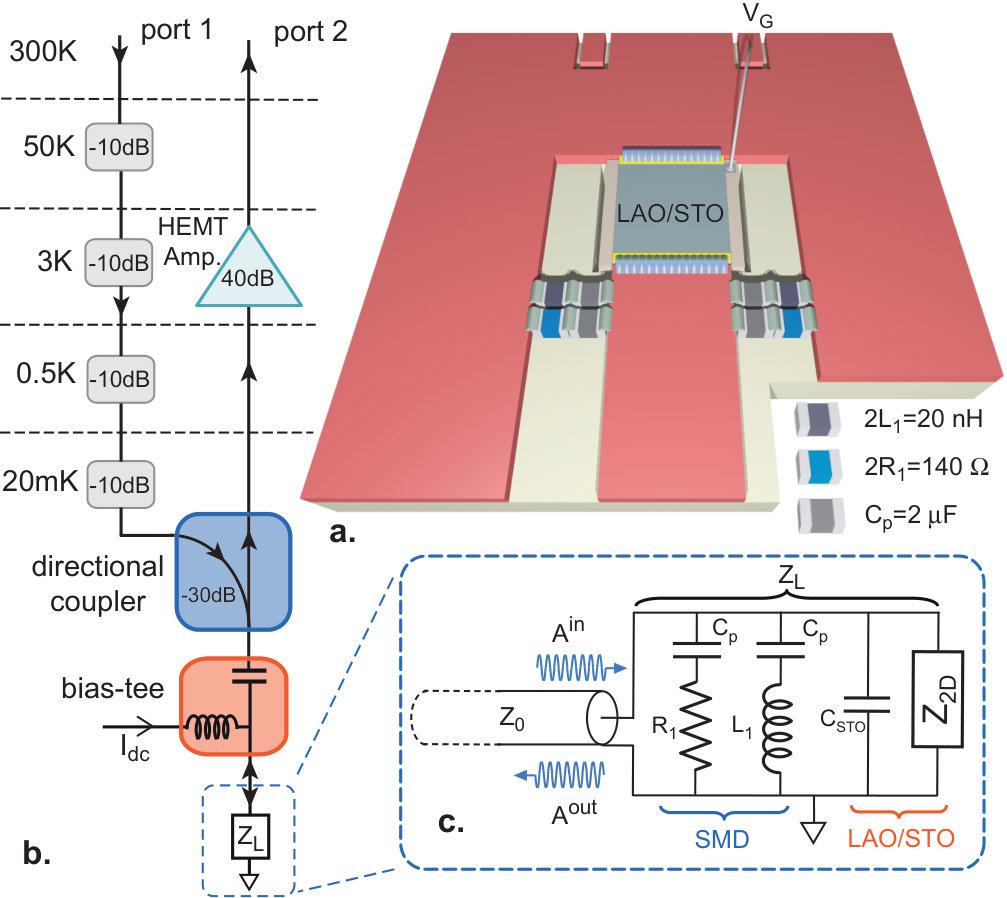 Figure 1
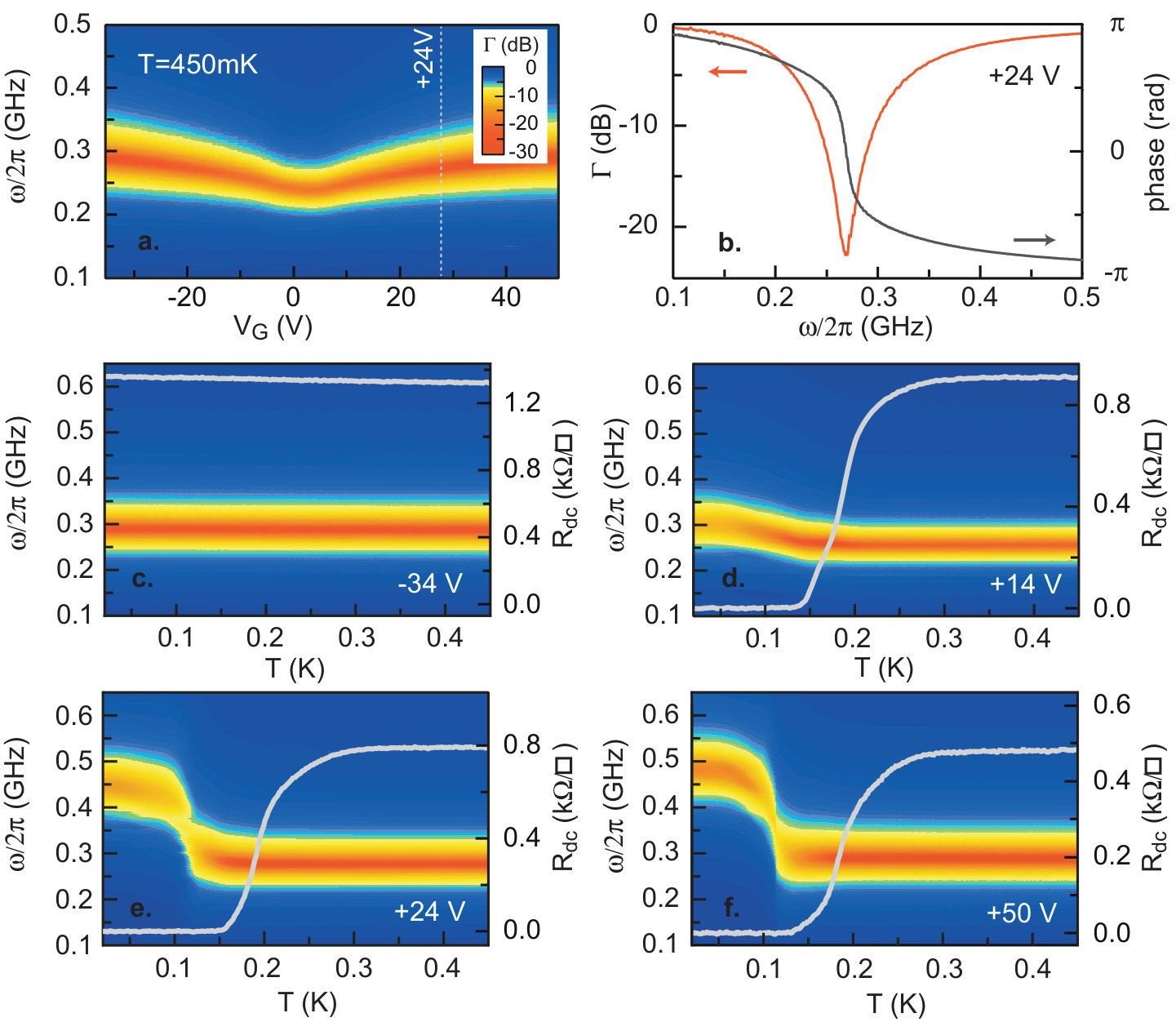 Figure 2
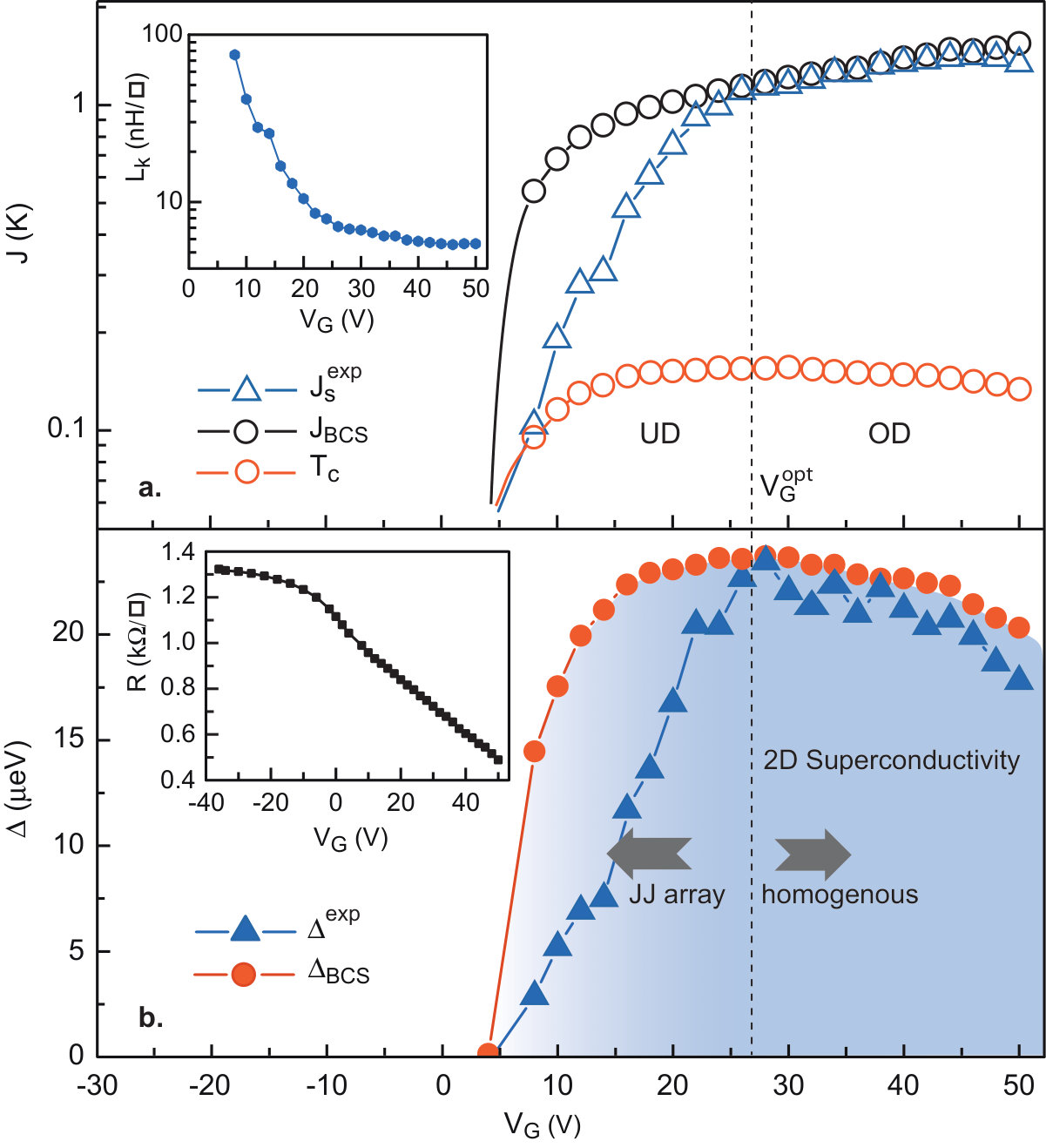 Figure 3
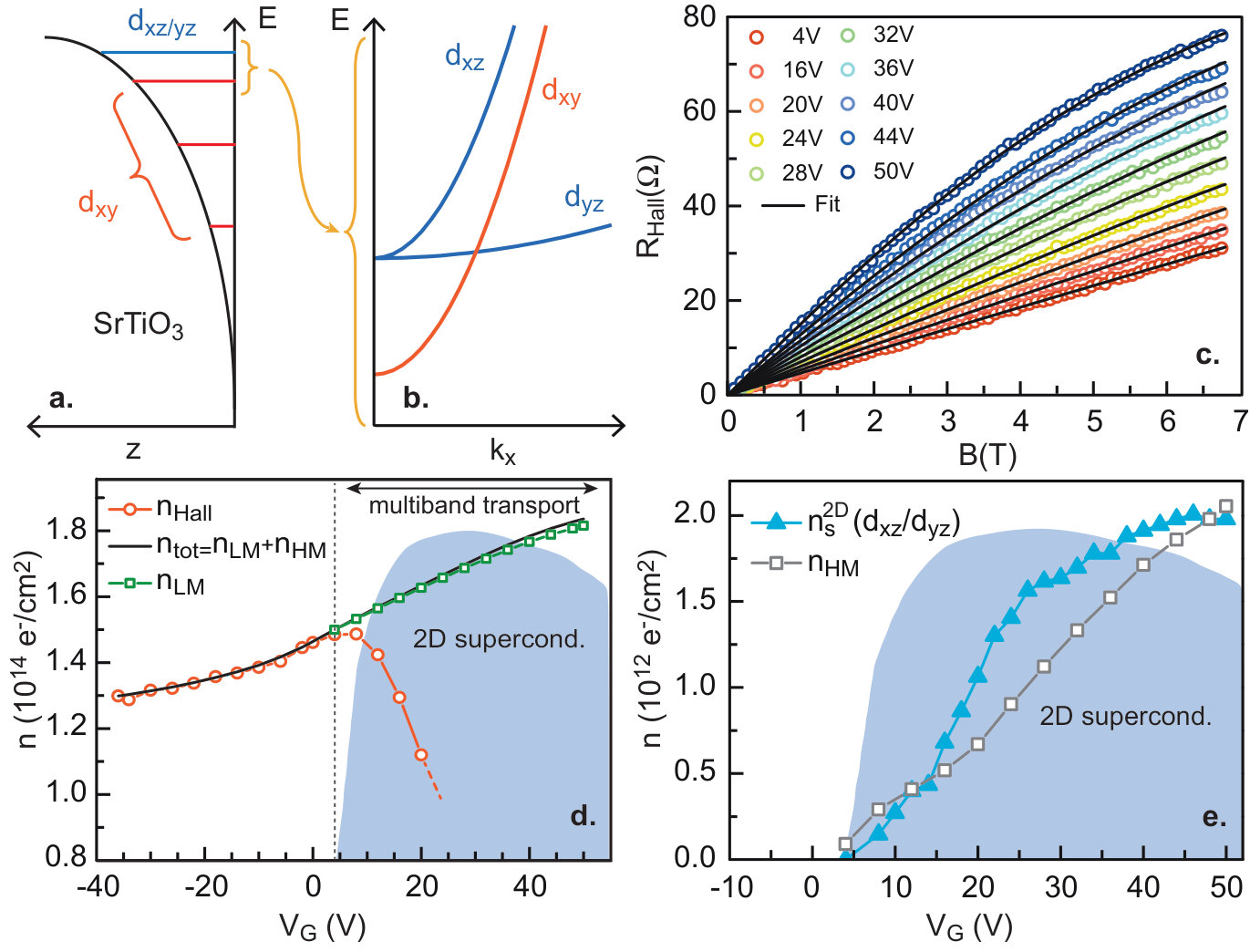 Figure 4
Peer Reviews
No public reviews on file for this paper yet. If you reviewed it on a platform where reviews are public (OpenReview, ICLR, NeurIPS, ICML), you can paste yours below so the community can read it here.
Videos
No videos yet. Explain this paper in a talk, walkthrough, or lecture? Add one.
Competition between electron pairing and phase coherence in superconducting interfaces
G. Singh1,2†, A. Jouan1,2†, L. Benfatto3,4, F. Couedo1,2, P. Kumar5, A. Dogra5, R. Budhani6, S. Caprara4,3, M. Grilli4,3, E. Lesne7, A. Barthélémy7, M. Bibes6, C. Feuillet-Palma1,2, J. Lesueur1,2, N. Bergeal1,2∗
1Laboratoire de Physique et d’Etude des Matériaux, ESPCI Paris, PSL Research University, CNRS, 10 Rue Vauquelin - 75005 Paris, France.
2Université Pierre and Marie Curie, Sorbonne-Universités,75005 Paris, France.
3Institute for Complex Systems (ISC-CNR), UOS Sapienza, Piazzale A. Moro 5, 00185 Roma, Italy
4Dipartimento di Fisica Università di Roma“La Sapienza”, Piazzale A. Moro 5, I-00185 Roma, Italy.
5National Physical Laboratory, Council of Scientific and Industrial Research (CSIR)Dr. K.S. Krishnan Marg, New Delhi-110012, India.
6Condensed Matter Low Dimensional Systems Laboratory, Department of Physics, Indian Institute of Technology, Kanpur 208016, India.
7Unité Mixte de Physique CNRS-Thales, 1 Av. A. Fresnel, 91767 Palaiseau, France.
† : Both authors contributed equally to this work.
∗ : Correspondence and request should be sent to N. B. ([email protected]).
The large diversity of exotic electronic phases displayed by two-dimensional superconductors confronts physicists with new challenges. These include the recently discovered quantum Griffith singularity in atomic Ga films xing , topological phases in proximized topological insulators xu and unconventional Ising pairing in transition metal dichalcogenide layers xi . In / heterostructures, a gate tunable superconducting electron gas is confined in a quantum well at the interface between two insulating oxides Caviglia:2008p116 . Remarkably, the gas coexists with both magnetism li:2011p762 ; bert:2011p767 and strong Rashba spin-orbit coupling caviglia2 ; benshalom and is a candidate system for the creation of Majorana fermions mohanta . However, both the origin of superconductivity and the nature of the transition to the normal state over the whole doping range remain elusive. Missing such crucial information impedes harnessing this outstanding system for future superconducting electronics and topological quantum computing. Here we show that the superconducting phase diagram of / is controlled by the competition between electron pairing and phase coherence. Through resonant microwave experiments, we measure the superfluid stiffness and infer the gap energy as a function of carrier density. Whereas a good agreement with the Bardeen-Cooper-Schrieffer (BCS) theory is observed at high carrier doping, we find that the suppression of at low doping is controlled by the loss of macroscopic phase coherence instead of electron pairing as in standard BCS theory. We find that only a very small fraction of the electrons condenses into the superconducting state and propose that this corresponds to the weak filling of a high-energy band, more apt to host superconductivity.
The superconducting phase diagram of / interfaces defined by plotting the critical temperature as a function of electrostatic doping has the shape of a dome. It ends into a quantum critical point, where the is reduced to zero, as carriers are removed from the interfacial quantum well Caviglia:2008p116 ; biscaras2 . Despite a few proposals maniv ; gariglio , the origin of this gate dependence and in particular the non-monotonic suppression of remains unclear. There are two fundamental energy scales associated with superconductivity. On the one hand, the gap energy measures the pairing strength between electrons that form Cooper pairs. On the other hand, the superfluid stiffness determines the cost of a phase twist in the superconducting condensate. In ordinary BCS superconductors, is much higher than and the superconducting transition is controlled by the breaking of Cooper pairs. However, when the stiffness is strongly reduced, phase fluctuations play a major role and the suppression of is expected to be dominated by the loss of phase coherence emery . Tunneling experiments in the low doping regime of / interfaces evidenced the presence of a pseudogap in the density of states above richter . This can be interpreted as the signature of pairing surviving above while superconducting coherence is destroyed by strong phase fluctuations, enhanced by a low superfluid stiffness bert2 . Superconductor-to-Insulator quantum phase transitions driven by gate voltage Caviglia:2008p116 or magnetic field biscaras4 also highlighted the predominant role of phase fluctuations in the suppression of .
The low superfluid stiffness corresponds to a low superfluid density which has to be analyzed within the context of the peculiar / band structure. Under strong quantum confinement, the degeneracy of the bands of (, and orbitals) is lifted, generating a rich and complex band structure berner . Experiments performed on interfaces with different crystallographic orientations ([110] vs conventional [001] orientation) revealed the crucial role of orbitals hierarchy in the quantum well, and also suggested that only some specific bands could host superconductivity gervasi ; joshua . Here, we use a resonant microwave experiment to measure the kinetic inductance of the superconducting / interface. This allows us to determine the evolution of the superfluid stiffness and corresponding superfluid density in the phase diagram.
Figure 1 gives a schematic description of our experimental set-up, largely inspired by recent developments in the field of quantum circuits wallraff ; bergeal . The / sample is mounted on a microwave circuit board which is anchored to the 18 mK cold stage of a dilution refrigerator. It is embedded into a RLC resonant circuit whose inductor L1 and resistor R1 are Surface Mounted microwave Devices, and whose capacitor is the substrate in parallel with the two-dimensional electron gas (2-DEG) (Fig. 1a and 1c.). After calibration, the measurement of the complex reflection coefficient at the input of the resonant sample circuit allows to determine the complex conductance of the 2-DEG in a frequency band centered on the resonance frequency (see Methods). In the normal state (), CSTO is deduced from for each gate value (Fig. 2a,b). In the superconducting state, the 2-DEG conductance acquires an imaginary part that modifies , as the total inductance is then given by in parallel with . The superconducting transition observed in dc resistance (=0 ) for positive gate voltages , coincides with a continuous shift of towards high-frequency (Fig. 2d,e,f). In absence of superconductivity (for 0 V), the resonance frequency remains unchanged (Fig 2c).
We now determine the gate dependence of the important energy scales in superconducting / interfaces, and compare them with the BCS theory predictions. In Figure 3a, we show the experimental superfluid stiffness as a function of at the lowest temperature = 20 mK ( 0 K in the following). For a single band BCS superconductor, within a dirty limit approximation (-mean free path- -coherence length-) and for , can be expressed as a function of the gap energy pracht :
[TABLE]
where = is the normal state resistance (inset Fig. 3b). A remarkable agreement is obtained between experimental data () and BCS prediction () in the overdoped (OD) regime defined by 27 V, assuming in Eq. (1) a gap energy = 1.76 (Fig. 3a). In this regime, the superfluid stiffness takes a value much higher than in agreement with the BCS paradigm. However, in the underdoped (UD) regime, corresponding to , a discrepancy between the data and the BCS calculation is observed. The superfluid stiffness drops significantly while and evolve smoothly before vanishing only when approaching closely the quantum critical point where 0 (= 4 V). This indicates that the global phase coherence of the superconducting condensate is partially lost in the 2-DEG. Such behavior is due to strong phase fluctuations, probably reinforced by the presence of spatial inhomogeneities which has been proposed as an explanation for the observed broadening of the superconducting transitions sergio . In this context, it was shown that the 2-DEG in / interfaces exhibits the physics of a Josephson junction array consisting of superconducting islands coupled through a metallic 2-DEG biscaras4 ; guenevere . Whereas in the OD regime the islands are robust and well connected (homogeneous-like), in the UD regime, the charge carrier depletion makes the 2-DEG more inhomogeneous. In this case, the system can maintain a rather high ( = 0 ) as long as the dc current can percolate between islands. However, as a fraction of the interface is non-superconducting, the overall stiffness is lower than the one expected in a homogenous system of similar .
Using Eq. (1), we now convert into a gap energy and compare it directly with = 1.76 (Fig. 3b). Strikingly, these two characteristic energy scales of superconductivity evolve with doping quite differently. While continuously increases with , has a dome shape dependence. More precisely, in the OD regime, coincides with the BCS value and decreases like while the superfluid stiffness increases : this is a clear indication that is controlled by the pairing energy () as in the BCS scenario. On the contrary, in the UD part of the phase diagram, departs from . The maximum energy gap at optimal doping ( 27 V) is 23 . By using tunneling spectroscopy on planar Au// junctions, Richter et al. have reported an energy gap in the density of states of eV for optimally doped / interfaces richter , which corresponds to in agreement with our result. However, the tunneling gap was found to increase in the UD regime, which is different from the behavior of reported here. In addition, a pseudogap has been observed above in this regime, as also reported in High- superconducting cuprates timusk or in strongly disordered films of conventional superconductors sacepe ; pracht . The results obtained by the two experimental approaches can be reconciled by considering carefully the measured quantities. In our case, the superconducting gap probed by microwaves is directly converted from the stiffness of the superconducting condensate and is therefore only reflective of the presence of a true phase-coherent state. On the other hand, tunneling experiments probe the single particle density of states and can evidence pairing even without phase coherence. The two experimental methods provide complementary informations which indicate that in the UD region of the phase diagram, the superconducting transition is dominated by the loss of phase coherence rather than the pairing. In the region , some non-connected superconducting islands could already exist without contributing to the macroscopic stiffness of the 2-DEG.
A simplified scheme of the band structure in the interfacial quantum well is presented in Figures 4a and 4b. The degeneracy of the three bands is lifted by confinement in the direction, leading to a splitting that is inversely proportional to the effective masses along this direction. subbands are isotropic in the interface plane with an effective mass =0.7 whereas the / bands are anisotropic with a corresponding average mass 3.13. At low carrier densities, we expect several subbands to be populated, whereas at higher density ( 0 V), the Fermi energy should enter into the / bands, leading to multiband transport. Recent measurements of quantum oscillations showed that, in addition to a majority of low-mobility carriers (LMC), a small amount of high-mobility carriers (HMC) is also present, with an effective mass close to the one yang . Despite a band mass substantially higher than the one, these carriers acquire a high-mobility as orbitals extend deeper in where they recover bulk-like properties, including reduced scattering, higher dielectric constant and better screening. Multiband transport was also evidenced in Hall effect measurements biscaras2 ; Kim:2010p9791 . Whereas the Hall voltage is linear in magnetic field in the UD regime corresponding to one-band transport, this is not the case in the OD regime because of the contribution of a new type of carriers (the HMC). We performed a two-band analysis of the Hall effect data combined with gate capacitance measurement to determine the contribution of the two populations of carriers to the total density (Fig. 4c) biscaras2 . The first clear signature of multiband transport is seen when the Hall carrier density , measured in the limit B0, starts to decrease with instead of following the charging curve of the capacitance ( in Fig. 4d). Figures 4d and 4e show that LMC of density are always present, whereas a few HMC of density are injected in the 2-DEG for positive , which corresponds to the region of the phase diagram where superconductivity is observed. In consistency with quantum oscillations measurements, we identify the LMC and the HMC as coming from the and subbands respectively and we emphasize that the addition of HMC in the quantum well triggers superconductivity.
To further outline the relation between HMC and superconductivity, we extract the superfluid density from assuming a mass for the electrons, and plot it as a function of the gate voltage (Fig. 4e). It increases continuously to reach at maximum doping, which is approximately of the total carrier density. This behavior is similar to the one observed for the superfluid density measured by scanning SQUID experiments bert2 . The comparison of with in Fig. 4e shows that, unexpectedly, both quantities have a very similar dependence with the gate voltage and almost coincide numerically. This suggests that the emergence of the superconducting phase is related to the filling of bands, whose high density of states is favorable to superconductivity. This is consistent with the observation of a gate-independent superconductivity in [110] oriented / interfaces for which the bands have a lower energy than the subbands and are therefore always filled gervasi . The fact that is somewhat intriguing as the dirty limit that we used in Eq. (1) implies that should correspond to a fraction of the total normal carrier density (approximately 2, where is the scattering time) and not to . To understand such apparent discrepancy, it is needed to go beyond single-band superconductor models that can not account correctly for the unusual -based interfacial band structure of / interfaces. Further investigations of recent experimental dai and theoretical chubukov developments on superconductors having two dissimilar bands (e. g. clean and dirty, weak and strong coupling), should provide an appropriate framework to address this question.
References
- (1) Ganguly, R., Chaudhuri, D., Raychaudhuri, P. and Benfatto, L. Slowing down of vortex motion at the Berezinskii-Kosterlitz-Thouless transition in ultrathin NbN films. Phys. Rev B 91, 054514 (2015).
- (2) Kitano, H., Ohashi, T. and Maeda, A. Broadband method for precise microwave spectroscopy of superconducting thin films near the critical temperature. Rev. Sci. Instrum. 79, 074701 (2008).
- (3) Scheffler, M.and Dressel, M. Broadband microwave spectroscopy in Corbino geometry for temperatures down to 1.7 K. Rev. Sci. Instrum. 76, 074702 (2005).
- (4) Mattis, C. and Bardeen, J. Theory of the Anomalous Skin Effect in Normal and Superconducting Metals. Phys. Rev. 111, 412 (1958).
- (5) Tinkham, M. Introduction to Superconductivity Second Edition, Dover Publications, Inc., Mineola, New York (2004).
- (6) Pozar, D. M. Microwave engineering 4th edition, John Wiley Sons (2012).
- (7) Biscaras, J., Hurand, S., Feuillet-Palma, C., Rastogi, A., Budhani, R. C., Reyren, N., Lesne, E., Lesueur, J. and Bergeal, N. Sci. Rep. 4, 6788 (2014).
**Acknowledgments
**We acknowledge C. Castellani and J. Lorenzana for useful discussions. This work has been supported by the Région Ile-de-France in the framework of CNano IdF, OXYMORE and Sesame programs, by CNRS through a PICS program (S2S) and ANR JCJC (Nano-SO2DEG). Part of this work has been supported by the IFCPAR French-Indian program (contract 4704-A). Research in India was funded by the CSIR and DST, Government of India.
The reference list from the paper itself. Each links out to its DOI / PubMed record.
- 1(1) Xing, Y. et al. Quantum Griffiths singularity of superconductor-metal transition in Ga thin films. Science 350 , 542-545 (2015).
- 2(2) Xu, S-Y. et al. Momentum-space imaging of Cooper pairing in a half-Dirac-gas topological superconductor. Nature Phys. 10 , 943-950 (2014).
- 3(3) Xi, X., Wang, Z., Zhao, W., Park, J-H., Law, K. T., Berger, H., Forro, L., Shan, J., Mak, K. F. Ising pairing in superconducting Nb Se 2 atomic layers. Nature Phys. 12 , 139-143 (2016).
- 4(4) Caviglia, A. D., Gariglio, S., Reyren, N., Jaccard, D., Schneider, T., Gabay, M., Thiel, S., Hammerl, G., Mannhart, J. and Triscone, J-M. Electric field control of the La Al O 3 subscript La Al O 3 \mathrm{La Al O}_{3} / Sr Ti O 3 subscript Sr Ti O 3 \mathrm{Sr Ti O}_{3} interface ground state. Nature 456 , 624-627 (2008).
- 5(5) Bert, J. A., Kalisky, B., Bell, C., Kim, M., Hikita, Y., Hwang, H. Y. and K. A. Moler. Direct imaging of the coexistence of ferromagnetism and superconductivity at the La Al O 3 subscript La Al O 3 \mathrm{La Al O}_{3} / Sr Ti O 3 subscript Sr Ti O 3 \mathrm{Sr Ti O}_{3} interface. Nature Phys. 7 , 767-771 (2011).
- 6(6) Li, L., Richter, C., Mannhart, J. and Ashoori, R. C. Coexistence of magnetic order and two-dimensional superconductivity at La Al O 3 subscript La Al O 3 \mathrm{La Al O}_{3} / Sr Ti O 3 subscript Sr Ti O 3 \mathrm{Sr Ti O}_{3} interfaces. Nature Phys. 7 , 762-766 (2011).
- 7(7) Caviglia, A. D., Gabay, M., Gariglio, S., Reyren, N., Cancellieri, C. and Triscone, J-M. Tunable Rashba Spin-Orbit Interaction at Oxide Interfaces. Phys. Rev. Lett. 104 , 126803 (2010).
- 8(8) Ben Shalom, M., Sachs, M., Rakhmilevitch, D., Palevski, A. and Dagan, Y. Tuning Spin-Orbit Coupling and Superconductivity at the Sr Ti O 3 subscript Sr Ti O 3 \mathrm{Sr Ti O}_{3} / La Al O 3 subscript La Al O 3 \mathrm{La Al O}_{3} Interface: A Magnetotransport Study. Phys. Rev. Lett. 104 , 126802 (2010).