Structural Properties of Finite and Infinite Nuclear Systems and Related Phenomena
Subrata Kumar Biswal

TL;DR
This thesis investigates nuclear structure properties, focusing on magic numbers in super-heavy nuclei, using theoretical models, and explores related phenomena like giant monopole resonances and meson effects.
Contribution
It predicts new magic proton numbers in super-heavy nuclei and develops a novel constrained calculation method for giant monopole resonances.
Findings
Predicted magic proton numbers as Z=114, 120, 126 with N=184.
Developed a new constrained calculation method for ISGMR.
Analyzed effects of delta meson on neutron systems.
Abstract
In the present thesis, we have carried a thorough investigation of nuclear structure properties. We start our investigation from the study of the magic property of nucleus in the super -heavy region. We know the magic combination of proton and neutron in the light and medium heavy region. But in the super-heavy region, it is still unclear. We applied SEI (simple effective interaction ) and RMF (relativistic mean field ) formalism with a different parameter sets to predict the magic combinations and it turned out Z=114, 120, 126 with N=184. We have also studied theisoscalar giant monopole resonance energy of nucleus of Z=114, 120,126, with scaling and constrained method using RETF formalism. Isoscalar giant monopole resonance (ISGMR) is also known as the breathing mode. We have a developed a new constrained type calculation for the ISGMR and IVGDR. Effects of delta meson on the neutron…
Click any figure to enlarge with its caption.
 Figure 1
 Figure 2
 Figure 3
 Figure 4
 Figure 5
 Figure 6
 Figure 7
 Figure 8
 Figure 9
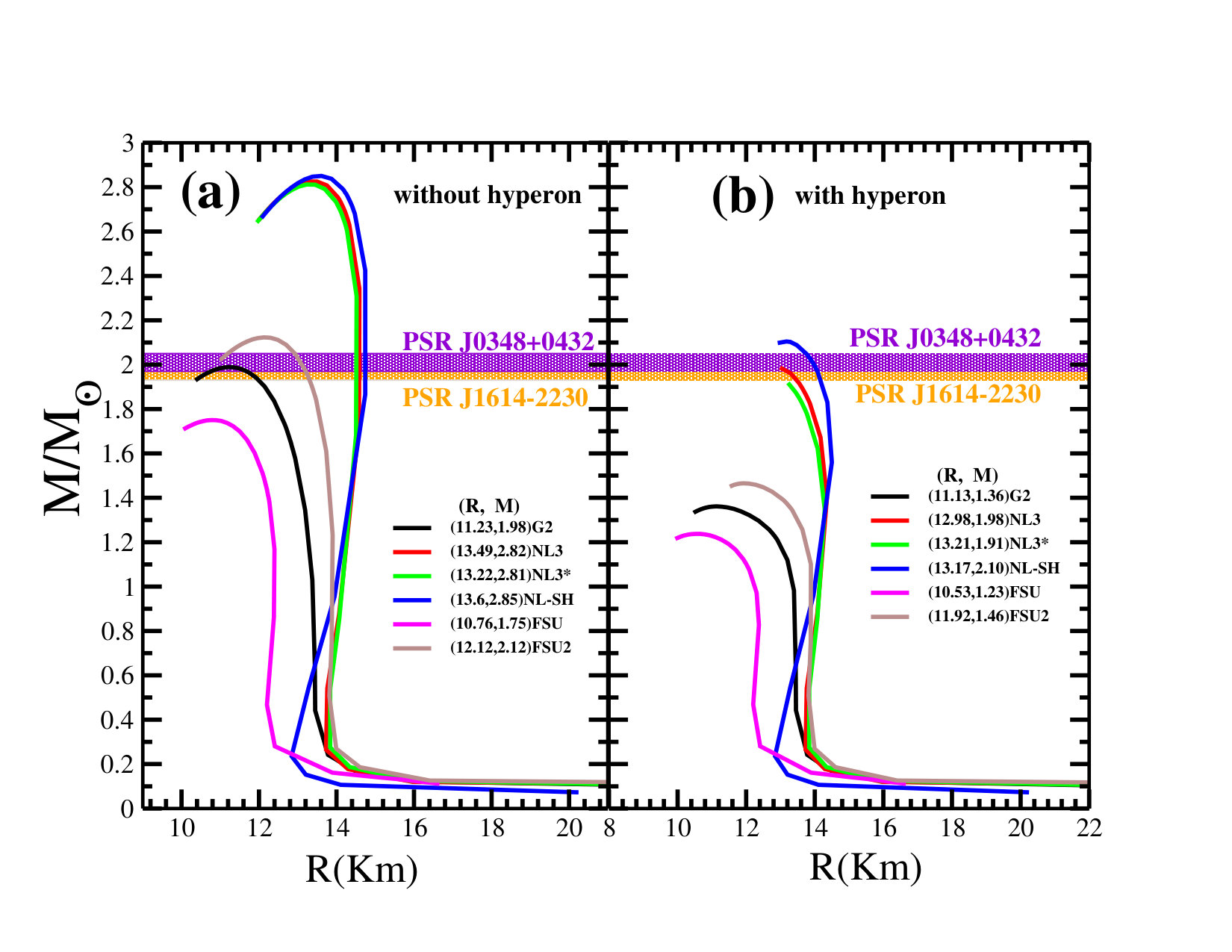 Figure 10
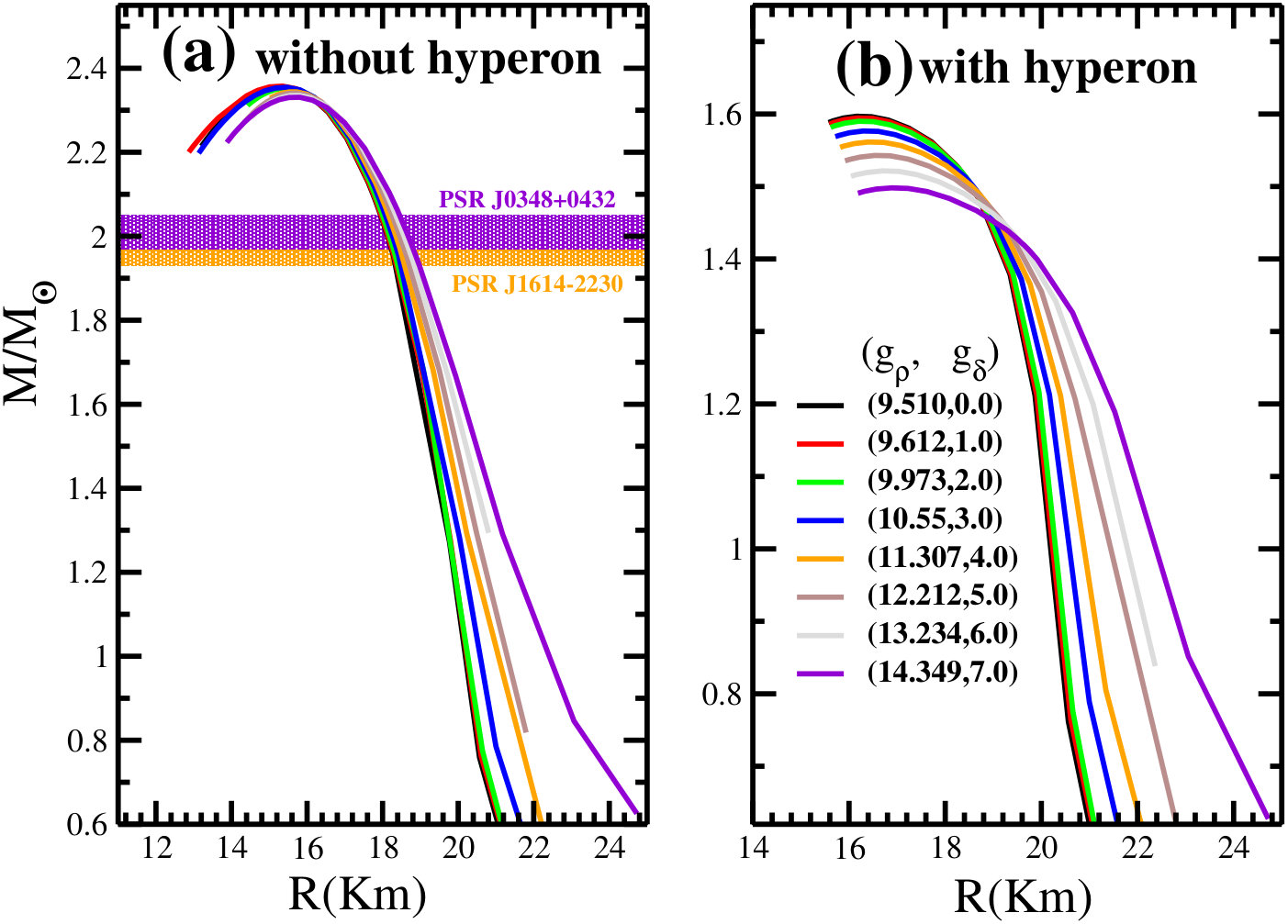 Figure 11
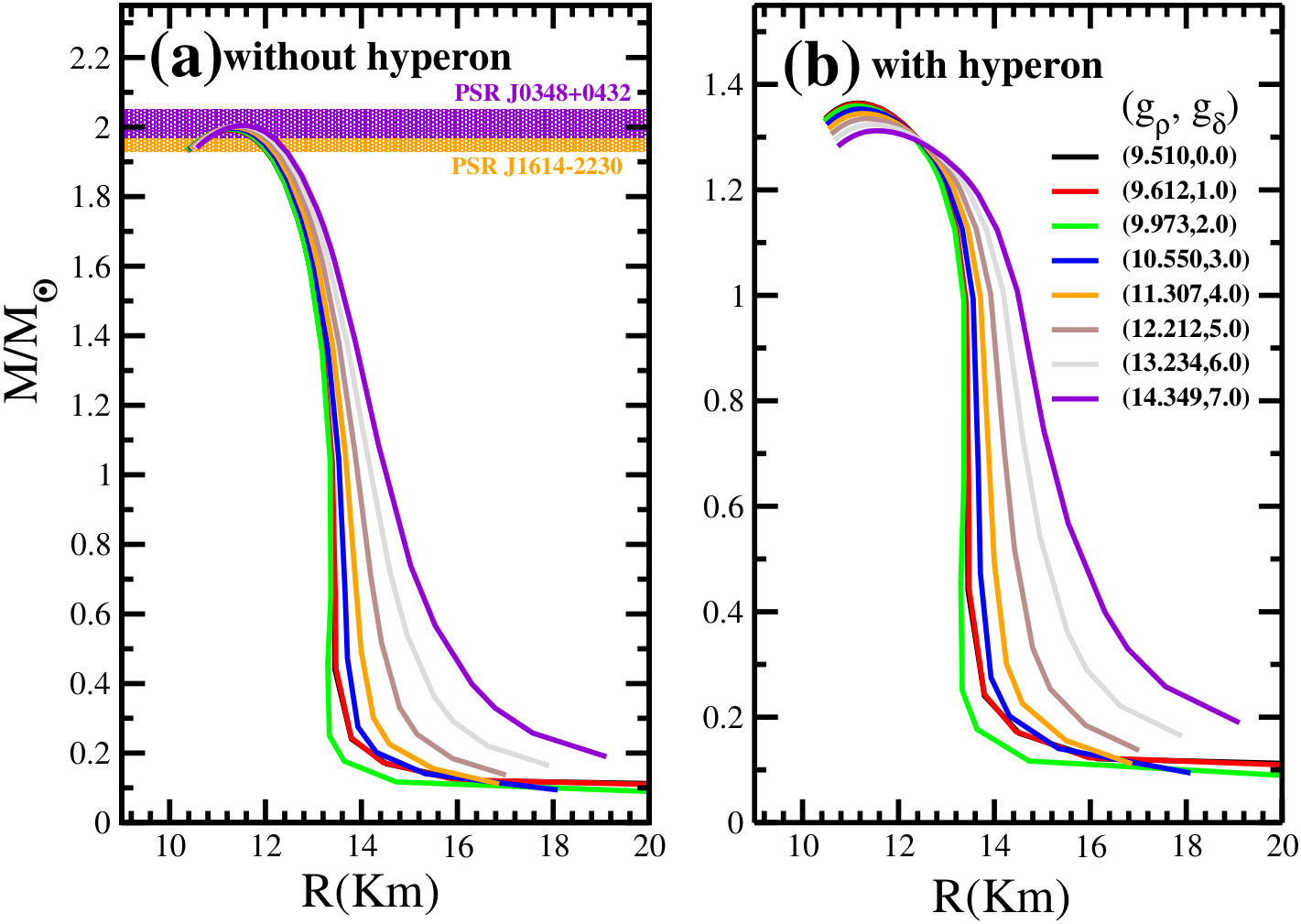 Figure 12
 Figure 13
 Figure 14
 Figure 15
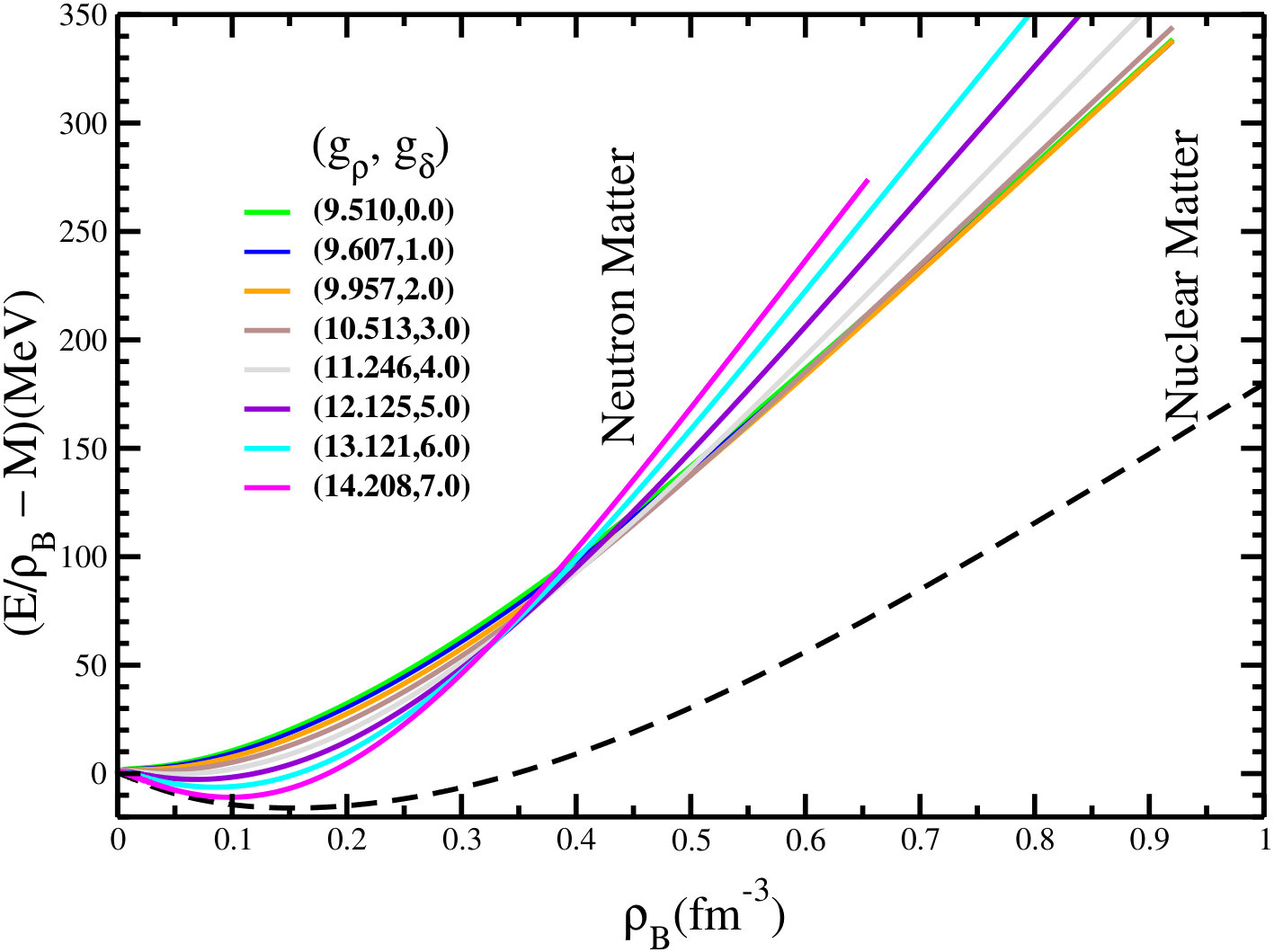 Figure 16
 Figure 17
 Figure 18
 Figure 19
 Figure 20
 Figure 21
 Figure 22
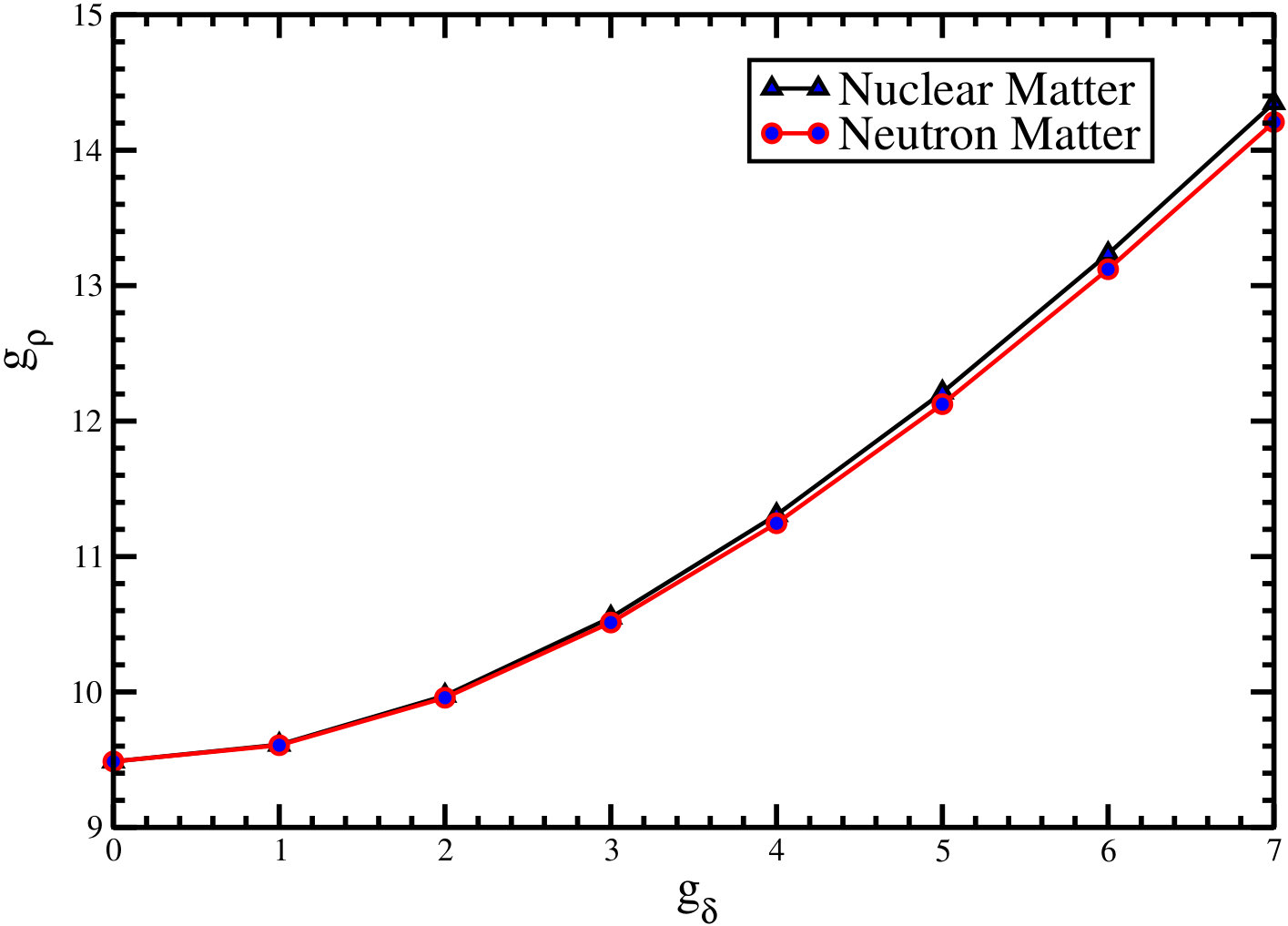 Figure 23
 Figure 24
 Figure 25
 Figure 26
 Figure 27
 Figure 28
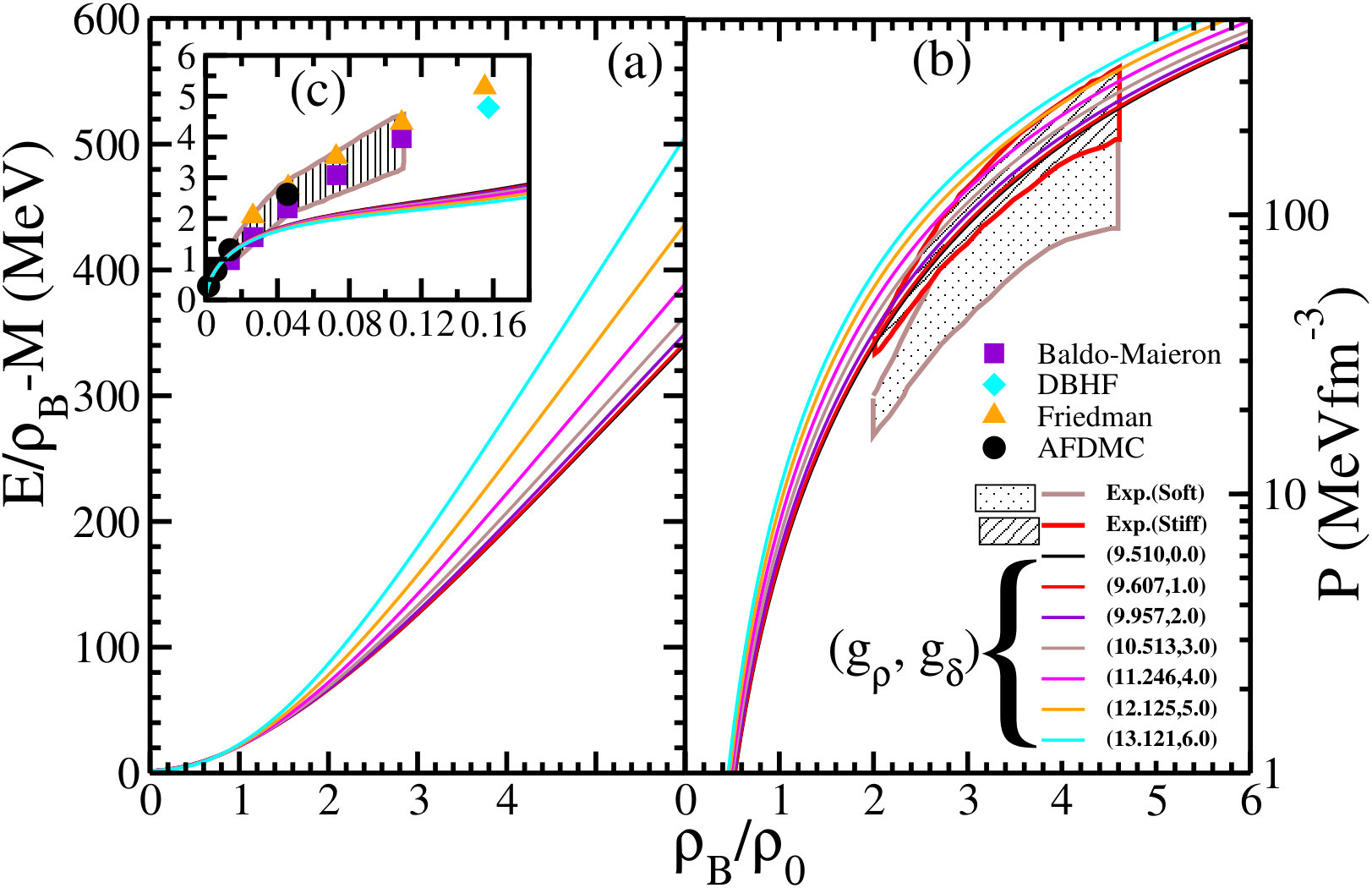 Figure 29
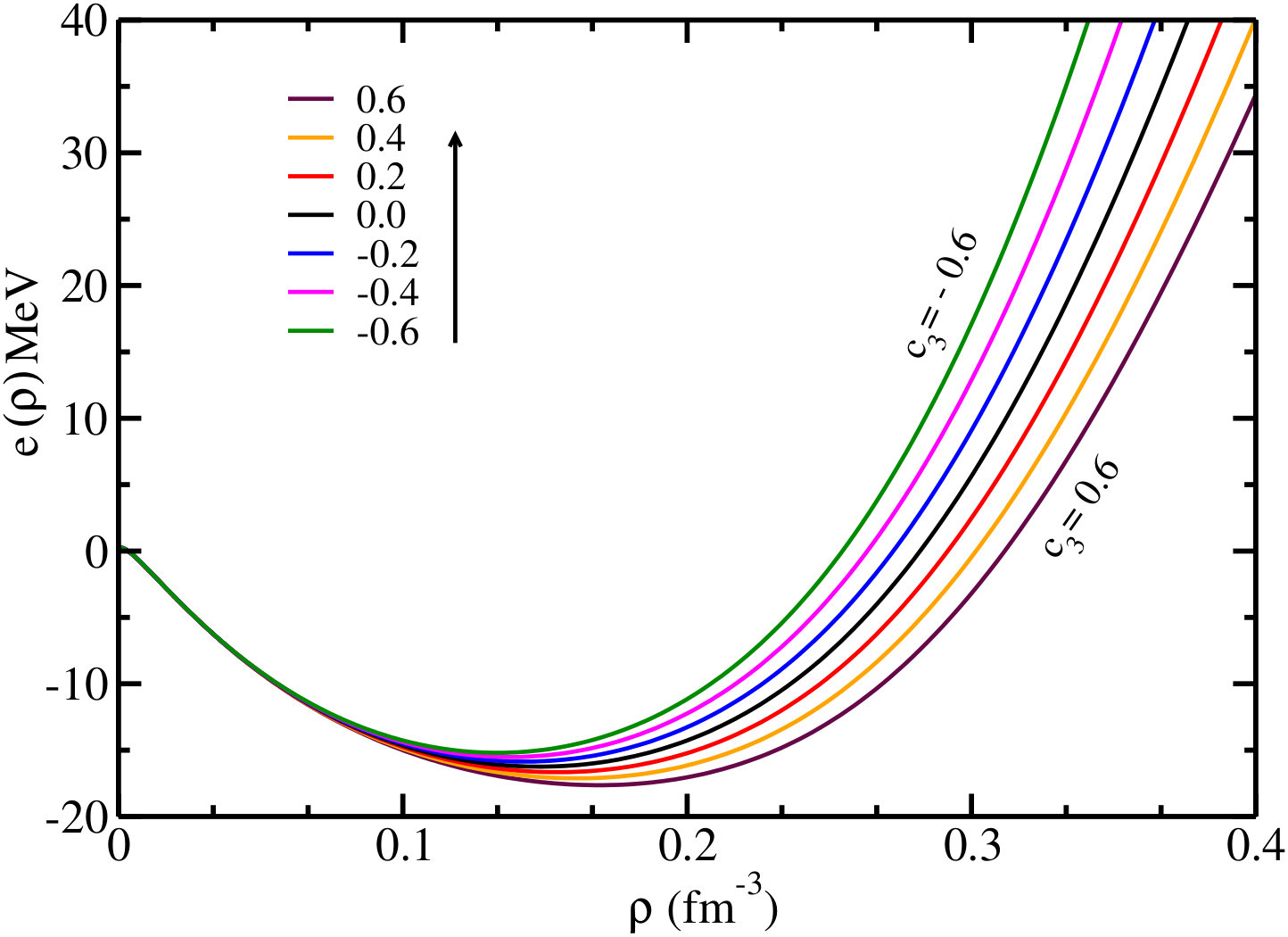 Figure 30
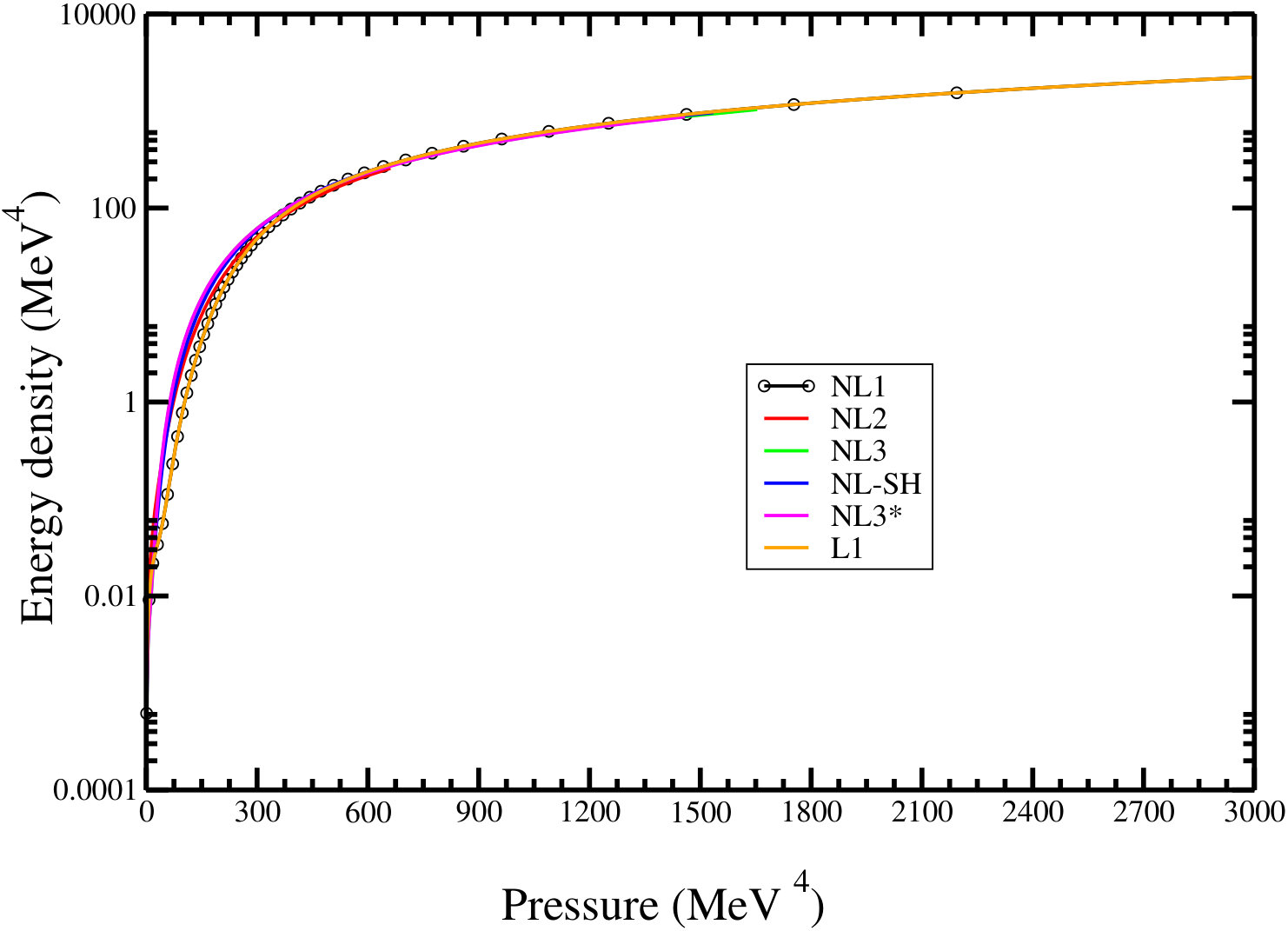 Figure 31
 Figure 32
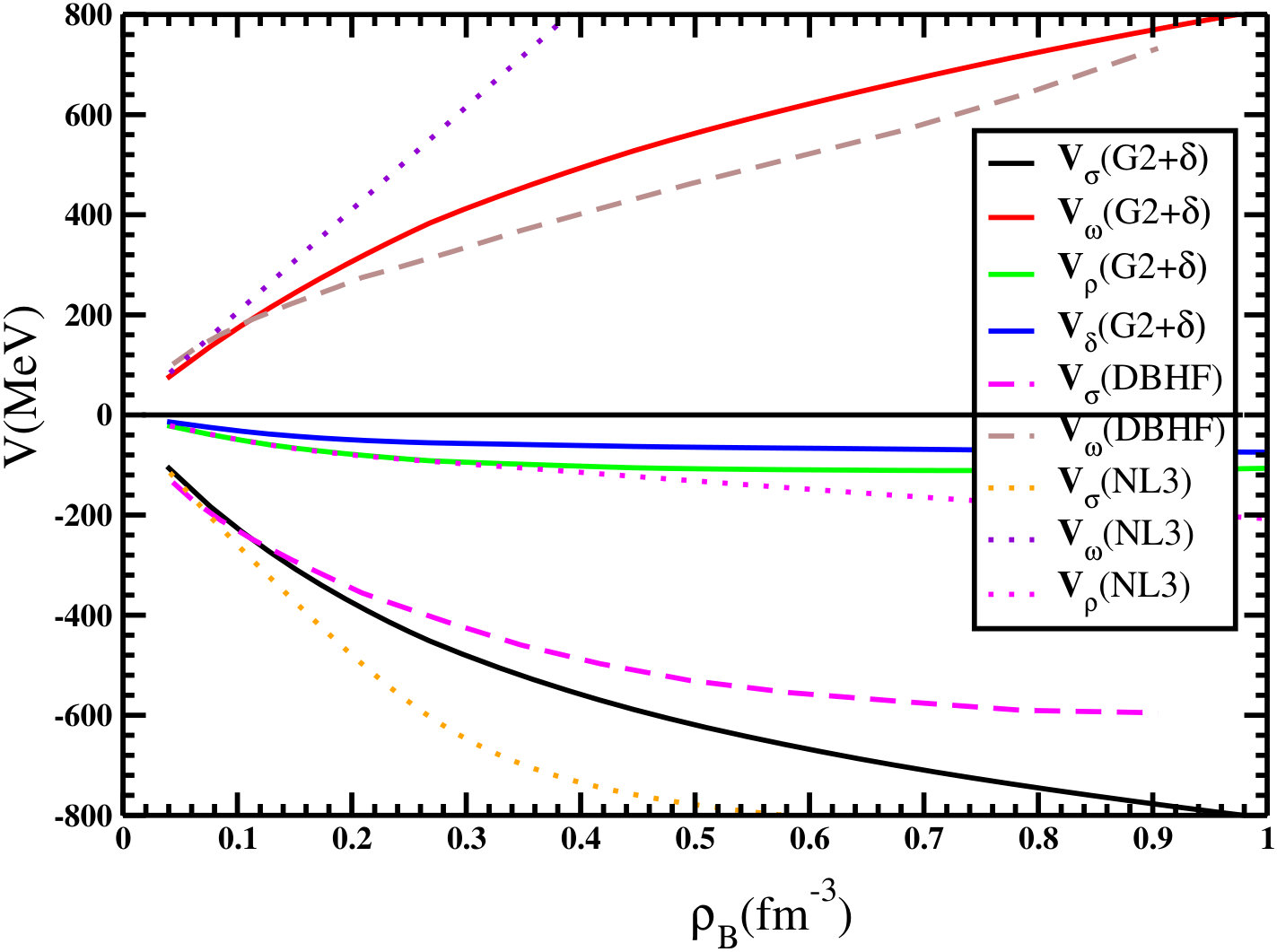 Figure 33
 Figure 34
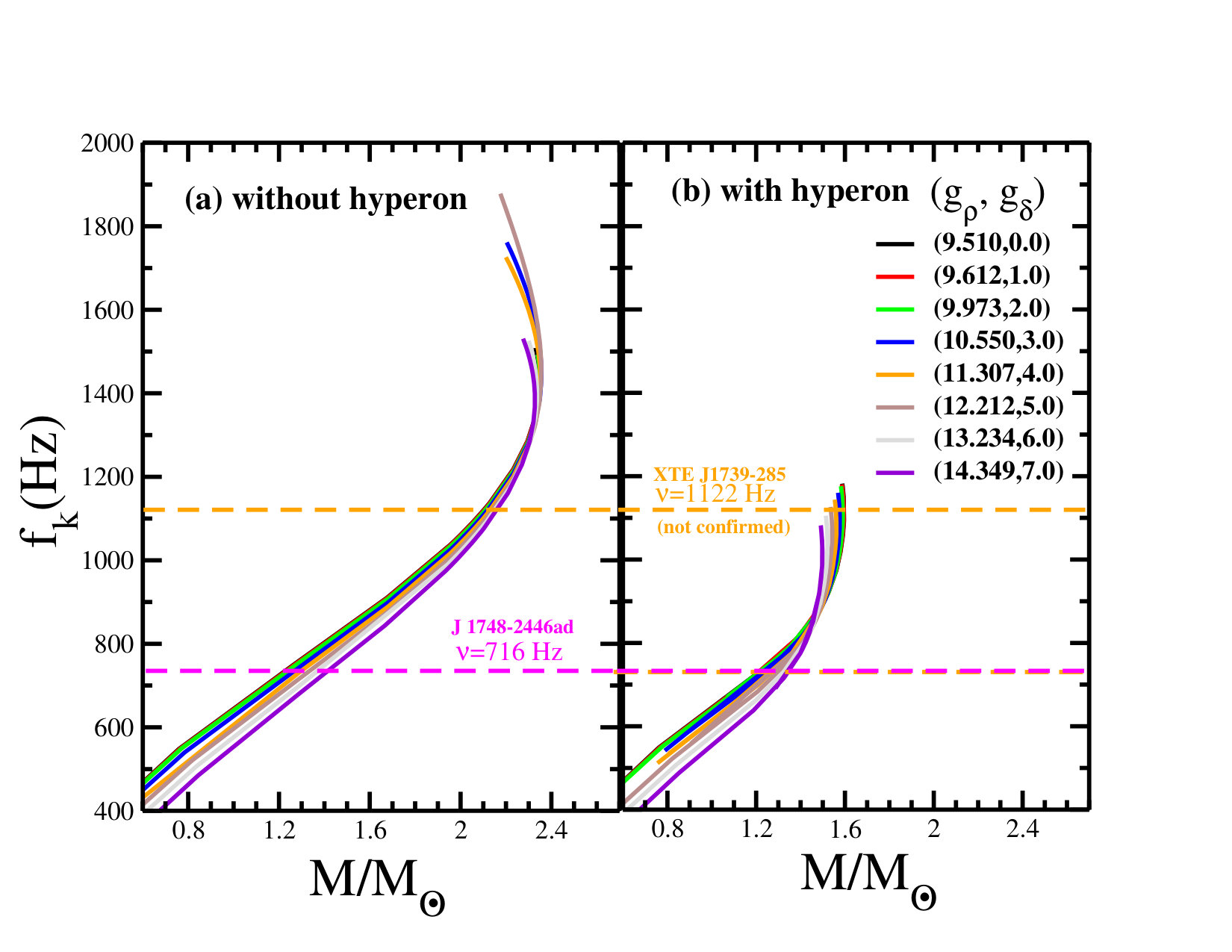 Figure 35
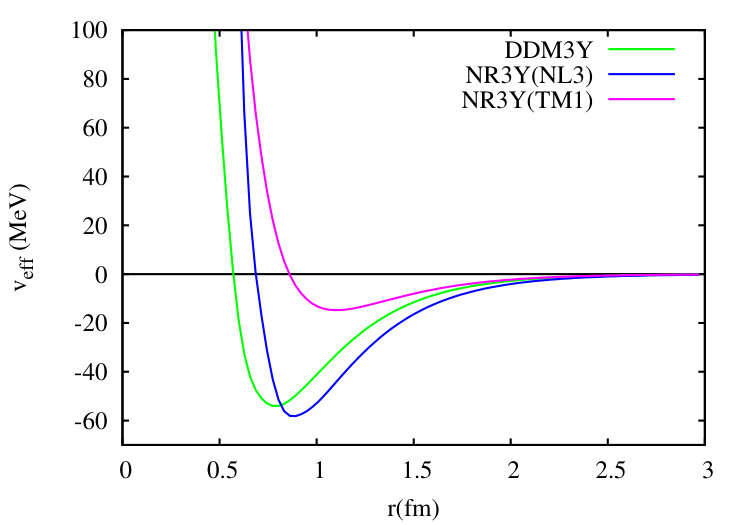 Figure 36
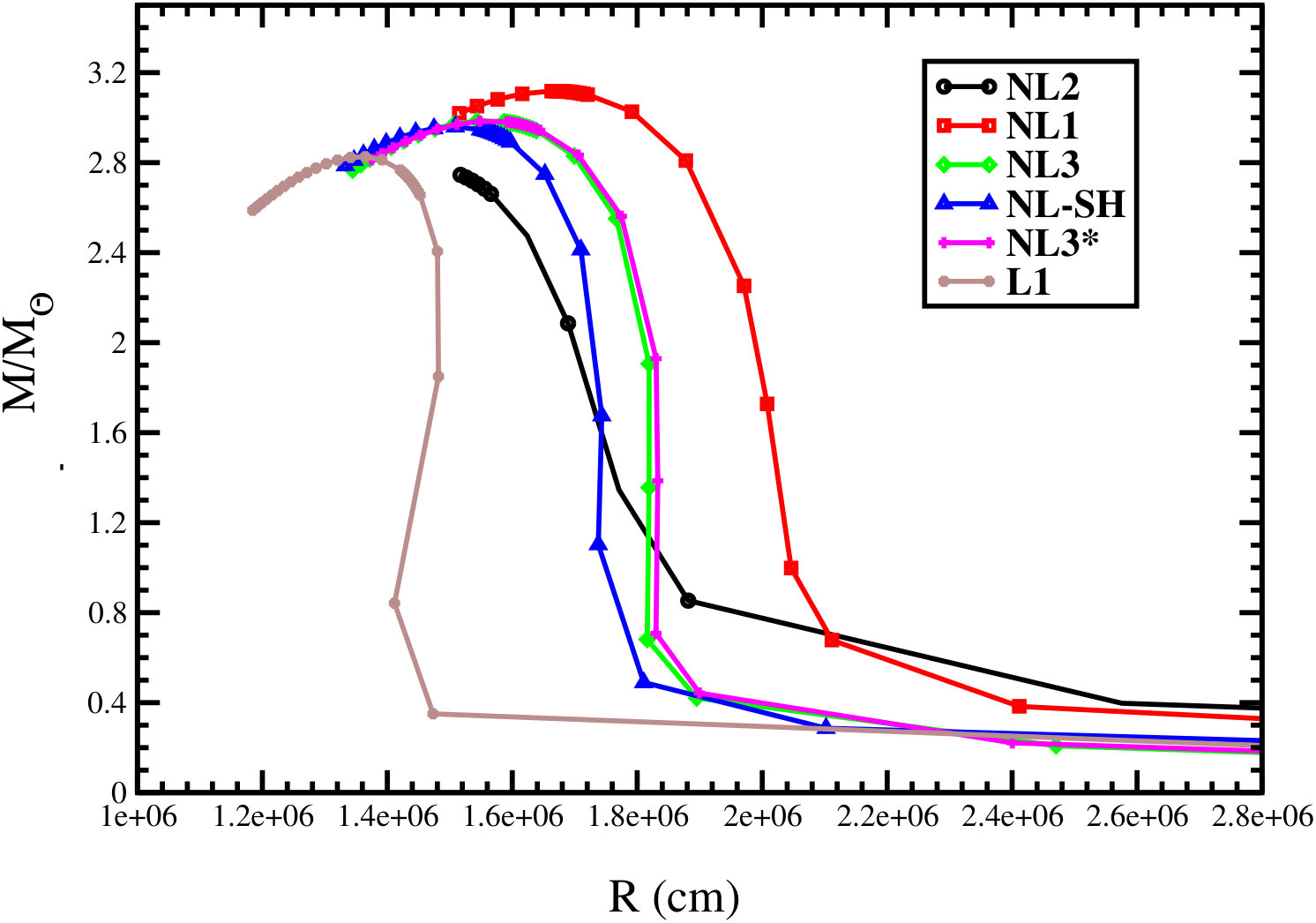 Figure 37
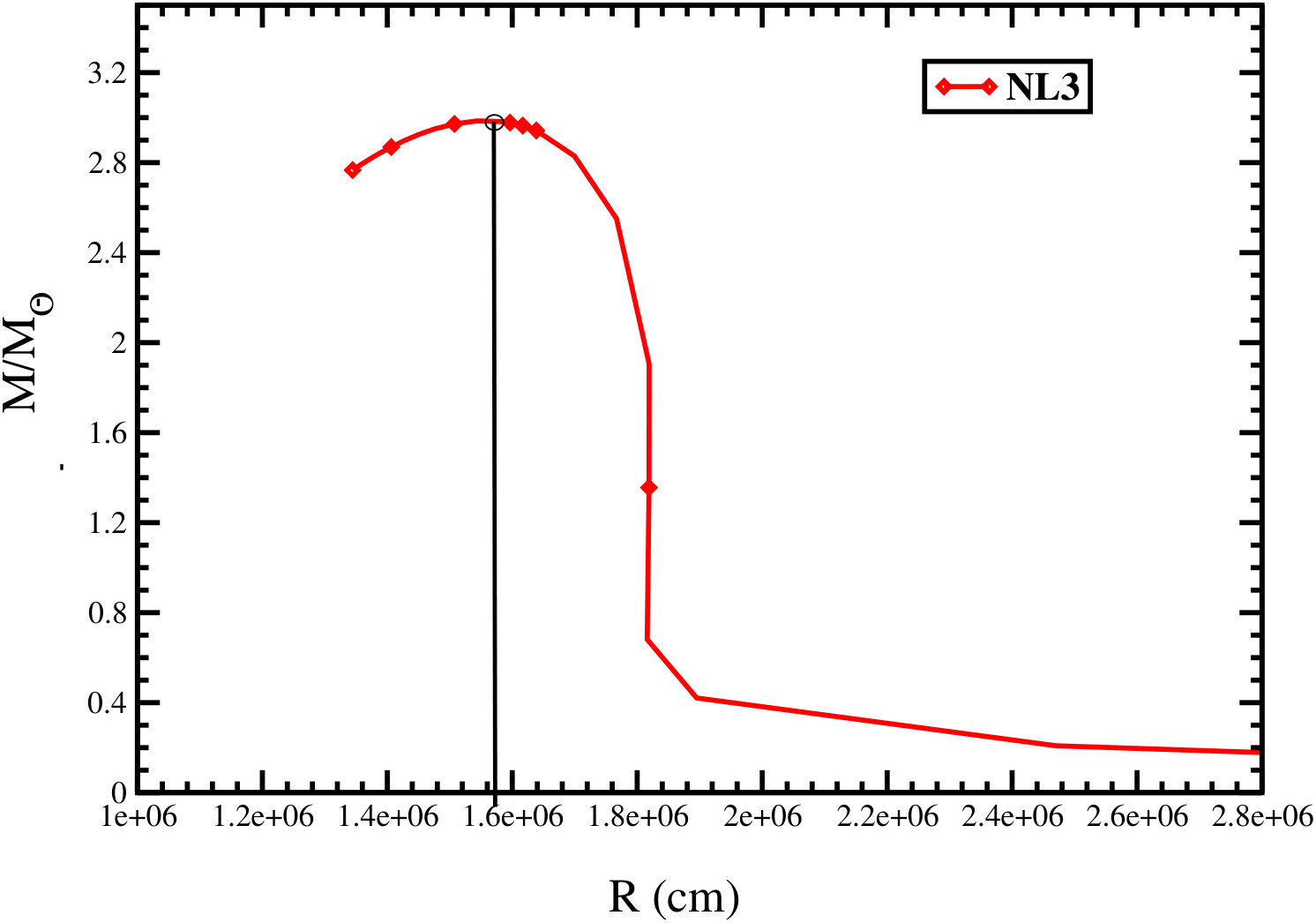 Figure 38
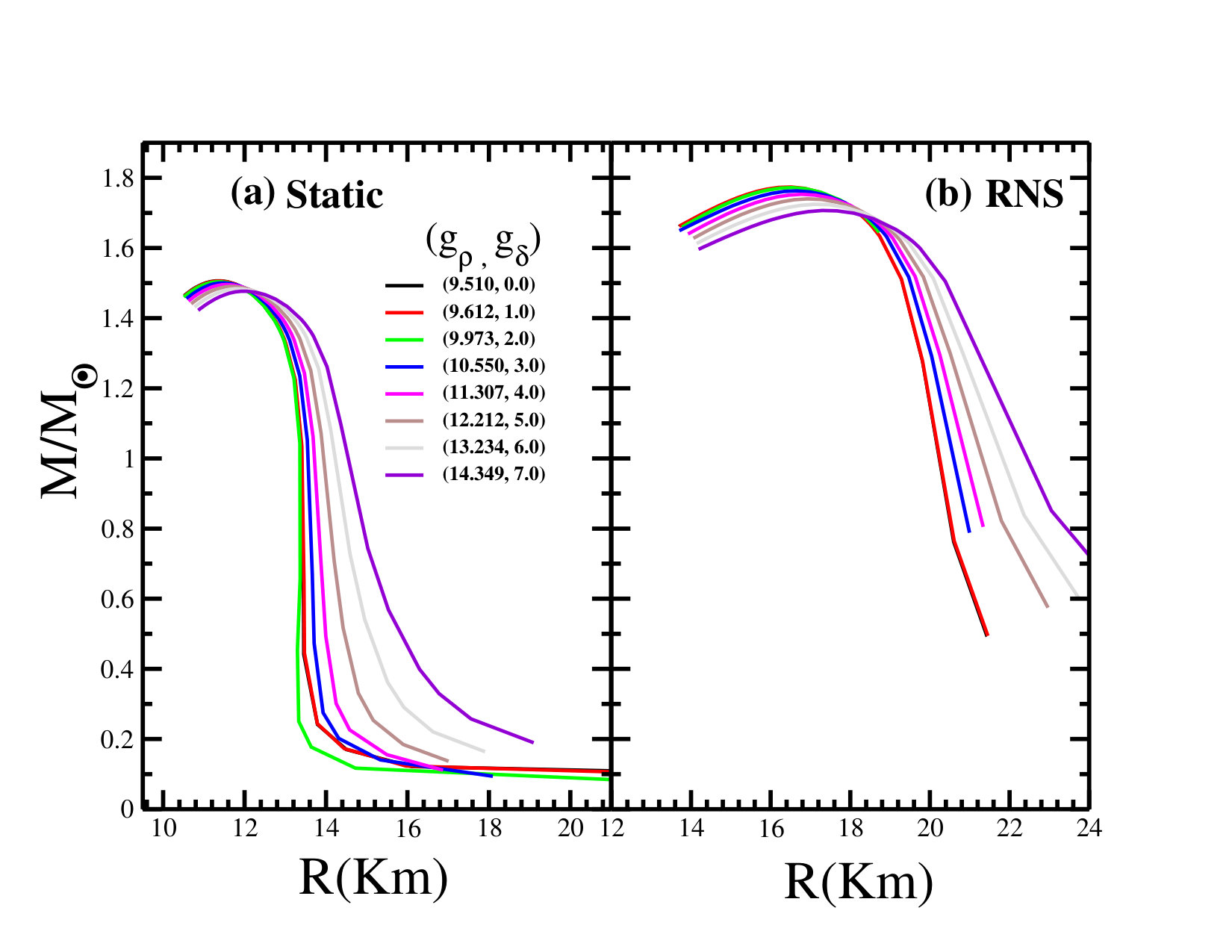 Figure 39
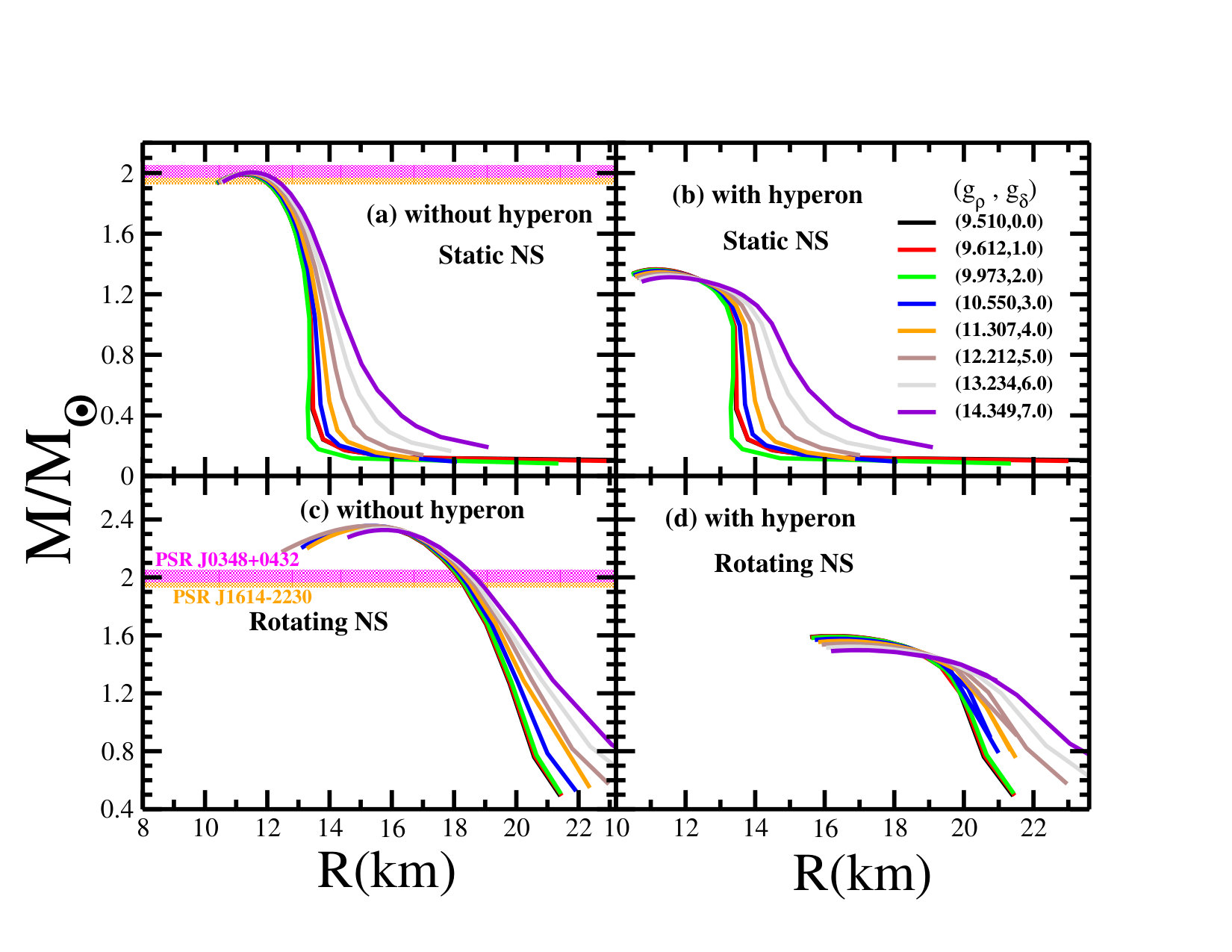 Figure 40
| = 939.0 MeV | = 520.206 MeV | = 782.0 MeV | = 770.0 MeV | = 980.0 MeV | = 0.0 | = 2.642 | = 0.39 | |
| = 10.5088 | = 12.7864 | = 9.5108 | = 0.0 | = 3.2376 | = 0.6939 | = 0.65 | = 0.11 | |
| = 0.153 | E/A = -16.07 MeV | = 215 MeV | = 36.4 MeV | = 0.664 | ||||
| (9.510, 0.0) | (9.612, 1.0) | (9.973, 2.0) | (10.550, 3.0) | (11.307, 4.0) | (12.212, 5.0) | (13.234, 6.0) | (14.349, 7.0) |
| (,) | (9.510, 0.0) | (9.612, 1.0) | (9.973, 2.0) | (10.550, 3.0) | (11.307, 4.0) | (12.212, 5.0) | (13.234, 6.0) | (14.349, 7.0) | |
|---|---|---|---|---|---|---|---|---|---|
| Nucleus | Theory | Expt. | |||||||
| 16O (BE) | 127.2 | 127.2 | 127.2 | 127.2 | 127.2 | 127.2 | 127.2 | 127.2 | 127.6 |
| rch | 2.718 | 2.718 | 2.718 | 2.718 | 2.718 | 2.717 | 2.717 | 2.716 | 2.699 |
| 40 Ca (BE) | 341.1 | 341.1 | 341.1 | 341.1 | 341.1 | 341.1 | 341.1 | 341.1 | 342.0 |
| rch | 3.453 | 3.453 | 3.453 | 3.453 | 3.452 | 3.451 | 3.450 | 3.449 | 3.4776 |
| 48Ca (BE) | 416.0 | 415.8 | 415.2 | 414.1 | 412.6 | 410.7 | 408.4 | 405.7 | 416.0 |
| rch | 3.440 | 3.439 | 3.438 | 3.437 | 3.435 | 3.432 | 3.430 | 3.427 | 3.477 |
| 56Ni (BE) | 480.4 | 480.3 | 480.3 | 480.3 | 480.3 | 480.3 | 480.3 | 480.2 | 484.0 |
| rch | 3.730 | 3.730 | 3.730 | 3.730 | 3.730 | 3.730 | 3.730 | 3.724 | |
| 58Ni (BE) | 497.2 | 497.2 | 497.1 | 497.0 | 496.9 | 496.7 | 496.5 | 496.3 | 506.5 |
| rch | 3.765 | 3.765 | 3.763 | 3.762 | 3.761 | 3.758 | 3.756 | 3.753 | 3.775 |
| 90Zr (BE) | 781.6 | 781.2 | 780.6 | 779.4 | 777.9 | 775.9 | 773.6 | 770.8 | 783.9 |
| rch | 4.238 | 4.238 | 4.237 | 4.235 | 4.233 | 4.230 | 4.228 | 4.225 | 4.269 |
| 116Sn (BE) | 981.2 | 980.7 | 979.4 | 977.2 | 974.1 | 970.2 | 965.6 | 960.3 | 988.7 |
| rch | 4.604 | 4.603 | 4.601 | 4.598 | 4.594 | 4.589 | 4.584 | 4.579 | 4.625 |
| 118Sn (BE) | 997.6 | 997.1 | 995.4 | 992.7 | 989.0 | 984.3 | 978.7 | 972.2 | 1004.9 |
| rch | 4.620 | 4.619 | 4.617 | 4.613 | 4.610 | 4.604 | 4.599 | 4.594 | 4.639 |
| 120Sn (BE) | 1013.9 | 1013.2 | 1011.2 | 1008.0 | 1003.5 | 998.0 | 991.3 | 983.8 | 1020.5 |
| rch | 4.627 | 4.626 | 4.624 | 4.620 | 4.616 | 4.610 | 4.605 | 4.600 | 4.652 |
| 208Pb (BE) | 1633.3 | 1631.4 | 1625.7 | 1616.2 | 1603.0 | 1586.4 | 1566.4 | 1543.5 | 1636.4 |
| rch | 5.499 | 5.498 | 5.497 | 5.494 | 5.492 | 5.489 | 5.487 | 5.485 | 5.501 |
| Radius (Km) | Esym (MeV) | Lsym (MeV) | Ksym (MeV) | ||
|---|---|---|---|---|---|
| (9.510, 0.0) | 1.980 | 11.230 | 36.4 | 101.0 | -7.58 |
| (9.588, 1.746) | 1.993 | 11.246 | 35.3 | 98.3 | -0.60 |
| (9.896, 3.543) | 1.997 | 11.262 | 31.7 | 90.2 | 20.90 |
| (10.518, 5.742) | 2.004 | 11.294 | 23.8 | 72.5 | 67.07 |
| (11.774, 8.834) | 2.018 | 11.510 | 6.35 | 30.6 | 169.03 |
Peer Reviews
No public reviews on file for this paper yet. If you reviewed it on a platform where reviews are public (OpenReview, ICLR, NeurIPS, ICML), you can paste yours below so the community can read it here.
Videos
No videos yet. Explain this paper in a talk, walkthrough, or lecture? Add one.
Taxonomy
TopicsSuperconducting Materials and Applications · Particle accelerators and beam dynamics
\catchline
Effects of isovector scalar meson on static and rotating hyperon star
S. K. Biswal111Email: [email protected]
Bharat Kumar and S. K. Patra
Institute of Physics, Bhubaneswar-751 005, India.
((received date); (revised date); (Day Month Year))
Abstract
We study the effects of isovector-scalar ()-meson on neutron and hyperon stars. Influence of -meson on both static and rotating stars are discussed. The -meson in a neutron star consisting of protons, neutrons and electrons, makes the equations of states stiffer at higher density, and consequently increases the maximum mass of the star. But induction of -meson in the hyperon star decreases the maximum mass. This is due to the early evolution of hyperons in presence of -meson.
{history}
\ccode
PACS Number(s): 26.60.+c, 97.60.Gb, 14.20.Jn
1 Introduction
Neutron star is a venerable candidate to discuss the physics at high density. We can not create such a high density in terrestrial laboratory, so a neutron star is and the only object, which can provide much information on high-density nature of the matter[1, 2]. But it is not an easy task to deal with the neutron star for it’s complex nature, as all the four fundamental forces (strong, weak, gravitational and electromagnetic) are active. High gravitational field makes mandatory to use general theory of relativity for the study of neutron star structure. Equations of states (EOS) are the sole ingredient that must be supplied to the equation of stellar structure, Tolman-Oppenheimer-Volkoff (TOV) equation, whose output is the mass-radius profile of the dense neutron star. In this case, the nuclear EOS plays an intimate role in deciding the mass-radius of a neutron star. Its indispensable importance attracts the attention of physicists to have an anatomy of the interactions Lagrangian. As the name suggests, a neutron star is not completely made up neutrons, a small fraction of protons and electrons are also present, which is the consequence of the equilibrium and charge neutrality condition[3]. Also, the presence of exotic degrees of freedom like hyperons and kaons can not be ignored in such a high dense matter. It is one among the most asymmetric and dense nuclear object in nature.
From last three decades [4, 5], the relativistic mean field (RMF) approximation, generalized by Walecka [6] and later on developed by Boguta and Bodmer [7] is one amongst the most reliable theory to deal with the infinite nuclear matter and finite nuclei. The original RMF formalism starts with an effective Lagrangian, whose degrees of freedom are nucleons, , and mesons. To reproduce proper experimental observable, it is extended to the self-interaction of meson. Recently, all other self- and crossed interactions including the baryon octet are also introduced keeping in view the extra-ordinary condition of the system, such as highly asymmetric system or extremely high- density medium [8]. Since the RMF formalism is an effective nucleons-mesons model, the coupling constants for both nucleon-meson and hyperon-meson are fitted to reproduce the properties of selected nuclei and infinite nuclear matter properties [6, 7, 9, 10]. In this case, it is improper to use the parameters obtained from the free nucleon-nucleon scattering data. The parameters, with proper relativistic kinematics and with the mesons and their properties are already known or fixed from the properties of a small number of finite nuclei, the method gives excellent results not only for spherical nuclei but also of well-known deformed cases. The same force parametrization can be used both for stable and unstable nuclei through-out the periodic table [11, 12, 14, 13].
The importance of the self- and crossed- interactions are significant for some specific properties of nuclei/nuclear-matter in certain conditions. For example, self-interaction of -meson takes care of the reduction of nuclear matter incompressibility from an unacceptable high value of MeV to a reasonable number of MeV [7, 15], while the self-interaction of vector meson soften the equations of states [14, 16]. Thus, it is imperative to include all the mesons and their possible interactions with nucleons and hyperons, self- and crossed terms in the effective Lagrangian density. However, it is not necessary to do so, because of the symmetry reason and their heavy masses [17]. For example, to keep the spin-isospin and parity symmetry in the ground state, the contribution of a meson is ignored [18] and also the effect of heavier mesons are neglected for their negligible contribution. Taking into this argument, in many versions of the RMF formalism, the inclusion of isovector-scalar () meson is neglected due to its small contribution. But recently it is seen [21, 23, 19, 20, 22, 24] that the endowment of the -meson goes on increasing with density and asymmetry of the nuclear system. Thus, it will be impossible for us to justify the abandon of meson both conceptually and practically, while considering the high asymmetry and dense nuclear systems, like the neutron star and relativistic heavy ion collision. Recent observation of neutron star like PSR J1614-2230 with mass of (1.970.04) [25] and the PSR J0348+0432 with mass of (2.010.04) [26] re-open the challenge in the dense matter physics. The heavy mass of PSR J0348+0432 (M=2.010.04) forces the nuclear theorists to re-think the composition and interaction inside the neutron star. Therefore, it is important to establish the effects of the -meson and all possible interactions of other mesons for such compact and asymmetry system.
The paper is organized as follows: In Sec. 2, we have outlined a brief theoretical formalism. The necessary steps of the RMF model and the inclusion of meson is explained. The results and discussions are devoted in Sec. 3. Here, we have attempted to explain the effects of -meson on the nuclear matter system like hyperon and proton-neutron stars. This analysis is done for both static and rotating neutron and neutron-hyperon stars. In this calculations, the E-RMF Lagrangian (G2 parameter set) is used to take care of all possible self- and crossed interactions [27]. On top of the G2 Lagrangian, the meson interaction is added to take care of the isovector channel. The concluding remarks are given in section 4.
2 Theoretical formalism
From last one decade a lot of work have been done to emphasize the role of meson on both finite and infinite nuclear matter [28, 29, 30, 31]. It is seen that the contribution of -meson to the symmetry energy is negative [32]. To fix the symmetry energy around the empirical value (30 MeV ) we need a large coupling constant of the meson value in the absence of the . The proton and neutron effective masses split due to inclusion of -meson and consequently it affects the transport properties of neutron star[19]. The addition of -meson not only modify the property of infinite nuclear matter, but also enhances the spin-orbit splitting in the finite nuclei[28]. A lot of mystery are present in the effects of -meson till date. The motivation of the present paper is to study such information. It is to be noted that both the and mesons correspond to the isospin asymmetry, and a careful precaution is essential while fixing the -meson coupling in the interaction.
The effective field theory and naturalness of the parameter are described in [27, 33, 34, 35, 36]. The Lagrangian is consistent with underlying symmetries of the QCD. The G2 parameter is motivated by E-RMF theory. The terms of the Lagrangian are taken into account up to order in meson-baryon coupling. For the study of isovector channel, we have introduced the isovector-scalar -meson. The baryon-meson interaction is given by [8]:
[TABLE]
The co-variant derivative is defined as:
[TABLE]
where and are field tensors and defined as follow
[TABLE]
[TABLE]
Here, , , and are the sigma, omega, rho and delta meson fields, respectively and in real calculation, we ignore the non-abelian term from the field. All symbols are carrying their own usual meaning [8, 21].
The Lagrangian equation for different mesons are given by [8]:
[TABLE]
[TABLE]
[TABLE]
[TABLE]
with , and are scalar densities for the proton and neutron, respectively. The total scalar density is expressed as the sum of the proton and neutron densities , which is given by
[TABLE]
and the vector (baryon) density
[TABLE]
where, is the effective energy, is the Fermi momentum of the baryons. and are the proton and neutron effective masses written as
[TABLE]
which is solved self-consistently. is the third component of isospin projection and stands for baryon octet. The energy and pressure density depends on the effective mass of the system, which first needed to solve these self-consistent equations and obtained the fields for mesons. Using the Einstein’s energy-momentum tensor, the total energy and pressure density are given as [8]:
[TABLE]
and
[TABLE]
where and are lepton’s pressure and energy density, respectively.
3 Results and discussions
Before going to the discussions of our results, we give a brief description of the parameter fitting procedure for gρ and gδ. As it is commonly known, the symmetric energy Es, is an important quantity to select the equation of states. This value of Es determines the structure of both static and rotating neutron stars. On the other hand, an arbitrary combination of gρ and gδ with a fixed value of Es can affect the ground state properties of finite nuclei. Thus, to have a clear picture on the effect of gδ on hyperon star structure, we have chosen two different prescriptions for the selection of gδ in our present calculations. (1) In the first method, we have constructed various sets of gρ and gδ keeping Es fixed. Here, all the other parameters of G2 set are remained unchanged. The G2 set and the combination of gρ and gδ are displayed in Table 1. (2) In the second procedure, we have chosen the gρ, gδ pairs keeping the binding energy constant (experimental binding energy) for finite nuclei. The values of these gρ and gδ are given in Table 3 with other properties of infinite nuclear matter. It is worthy to re-emphasized here that we are not looking for a full-fledged parameter set including the meson coupling, but our aim in this paper is to study the effects of meson coupling on hyperon star and the production of baryon octet. Therefore, after splitting the gρ coupling constant into two parts (gρ, gδ) using the first prescription, the results on hyperon star along with the neutron star structures both for static and rotating cases under equilibrium condition are discussed in the subsequent subsections 3.2, 3.3, 3.4, 3.5 and 3.6. In Sec. IV, we follow the second procedure to get the (gρ, gδ) pairs and applied these to some selective cases.
3.1 Parametrization of and with constant symmetry energy
It is important to fix value to see the effects of the -meson. The isovector channels in RMF theory come to exist through both the and mesons couplings. While considering the effects of the -meson, we have to take the -meson into account. Since both the isovector channels are related to isospin, one can not optimize the coupling independently. Here, we have followed a more reliable procedure by fixing the symmetry energy with adjusting simultaneously different values of and [19]. As it is mentioned earlier, we have added on top of the G2 parameter set. Thus, the symmetry energy of G2 parameter MeV is kept constant at the time of re-shuffling and . The G2 parameters and the and combinations are displayed in Table 1. The nuclear matter properties are also listed in the table (middle panel).
For a particular value of MeV, the variation of and are plotted in Fig. 1. From Fig. 1, it is clear that as the increases the value also increases, almost linearly, to fix the symmetry energy unchanged. This implies that and -mesons have opposite effect on contribution, i.e., the -meson has negative contribution of the symmetry energy contrary to the positive contribution of -meson.
We feel that it is instructive to check the finite nuclear properties with these combinations of and . We have tabulated the binding energy and charge radius of some spherical nucleus in Table 2. From the table, it is clear that binding energy for asymmetric nucleus goes on decreasing with increasing meson and decreasing meson couplings. However, it is well understood that the scalar meson gives a positive contribution to the binding energy. Thus, the binding energy of asymmetric nuclei should go on increasing with gδ contrary to the observation seen in Table 2. This happens, because of the simultaneous change of (, ) pair to keep the constant symmetry energy, i.e., gρ is decreasing and is increasing. As a result, the contribution of meson, which is negative to the binding energy dominates over the meson effect on binding energy. But in case of symmetric nucleus, like 16O etc. the effects of both and mesons are absent due to iso-spin symmetry. A further inspection of Table 2 reveals a slight change in binding energy and charge radius even for symmetric nuclei because of the slight different in density distribution of protons and neutrons, although it is small.
3.2 Fields of and mesons
The fields of the meson play a crucial role to construct the nuclear potential, which is the deciding factor for all type of calculations in the relativistic mean field model. In Fig. 2, we have plotted various meson fields included in the present calculations, such as , , and with on top of G2 parameter set .
It is obvious that and are opposite to each other, which is also reflected in the figure. This means, the positive value of gives a strong repulsion, which is compensated by the strongly attractive potential of the meson field . The nature of the curves for and are almost similar except the sign. The magnitude of and looks almost equal. However, in real (it is not clearly visible in the curve, because of the scale), the value of is slightly larger than , which keeps the overall nuclear potential strongly attractive. The attractive and repulsive potentials combinely give the saturation properties of the nuclear force. It is worthy to mention that the contributions of self-interaction terms are taken care both in and , which are the key quantities to solve the Coester band problem [39] and the explanation of quark-gluon-plasma (QGP) formation within the relativistic mean field formalism [40]. The self-interaction of the meson gives a repulsive force at long range part of the nuclear potential, which is equivalent to the 3-body interaction and responsible for the saturation properties of nuclear force. The calculated results of and are compared with the results obtained from DBHF theory with Bonn-A potential[38] and NL3 [13] force.
Fig. 2 clearly shows that in the low density region (density ) both RMF and DBHF theories well matched. But as it increases beyond density ( is the nuclear saturation density) both the calculations deviate from each other. The possible reason may be the fitting procedure of parameters in Bonn-A potential is up to times of saturation density , beyond that the DBHF data are simple extrapolation of the DBHF theory. Again, the and fields of NL3 are very different from results. The for NL3 follows a linear path contrary to the results of and Bonn-A. This could be due to the absence of self- and crossed couplings in NL3 set. The contribution of both and mesons correspond to the isovector channel. The meson gives different effective masses for proton and neutron, because of their opposite iso-spin of the third component. The nuclear potential generated by the and mesons are also shown in Fig 2. We noticed that although their contributions are small, but non-negligible. These non-zero values of and to the nuclear potential has a larger consequence, mostly in compact dense object like neutron or hyperon stars, which will be discussed later in this paper.
3.3 Energy per particle and pressure density
The energy and pressure densities as a function of baryonic density are known as equations of states (EOS). These quantities are the key ingredients to describe the structure of neutron/hyperon stars. To see the sensitivity of the EOS, we have plotted energy per particle () as a function of density for pure neutron matter in Fig 3. Each curve corresponds to a particular combination of and (taken from Table 1), which reproduce the symmetry energy MeV without destabilizing other parameters of G2 set. The green line represents for , i.e., with pure G2 parameter set. Both the binding energy per particle as well as the pressure density increase with the value of . This process continues till the value of reaches, at which equals the nuclear matter binding energy per particle. An unphysical situation arises beyond this value of because the binding energy of the neutron matter will be greater than for the symmetric nuclear matter. In the case of G2+ parametrization, this limiting value of reaches at = 0.7, after which we do not get a convergence solution in our calculations.
In Fig 4 we have plotted the variation of energy and pressure densities as a function of for different combinations of and . The enlarge version of energy density in the sub-saturation region is shown in panel (c) of the figure. Similar to other parameter sets of RMF formalism, the G2+ set also deviates from the experimental data. It is to be recalled here that special attentions are needed to construct nucleon-nucleon interaction to fit the data at sub-saturation density. For example, the potentials of Friedman and Pandharipande [41], Baldo-Maieron [42], DDHF [43] and AFDMC [44] are designed to fit the data in this region. The three-body effect also can not be ignored in this sub-saturation region of the density [45]. Although, the non-linear interactions fulfilled this demand to some extent [39, 40, 46], like Coester band problem [47], till some further modification of the couplings are needed. In this regard, the relativistic mean field calculations with density dependent meson-nucleon coupling [48] and constraining the RMF models of the nuclear matter equation of state at low densities [49] are some of the attempts. The mean field approximation is also a major limitation in the region of sub-saturation density. This is because, the assumption of classical meson field is not a proper approximation in this region to reproduce precisely the data. In higher density region, most of the RMF forces reproduces the experimental data quite well and the predictive power of these forces for finite nuclei is in excellent agreement both for stable and unstable nuclei. The energy and pressure densities with G2 set reproduce the experimental data satisfactorily [50]. The variation of pressure density as a function of is shown in panel (b) of Fig. 4, which passes inside the stiff flow data at higher density [51]. Also, the meson coupling has significant effect in supersaturation density than the sub-saturation region. All the EOS with different and remain inside the stiff flow data (Fig. 4, panel (b)). In the present investigation, we are more concerned for highly densed neutron and hyperon stars, which are considered to be super-saturated nuclear objects.
3.4 Stellar properties of static and rotating neutron stars
The -equilibrium and charge neutrality are two important conditions to justify the structural composition of the neutron/hyperon stars. Both these conditions force the stars to have 90 of neutron and 10 proton. With the inclusion of baryons, the equilibrium conditions between chemical potentials for different particles:
[TABLE]
and the charge neutrality condition is satisfy by
[TABLE]
To calculate the mass and radius profile of the static (non-rotating) and spherical neutron star, we solve the general relativity Tolmann-Oppenheimer-Volkov (TOV)[52] equations which are written as:
[TABLE]
and
[TABLE]
with G as the gravitational constant, \cal E$$(r) as the energy density, as the pressure density and as the gravitational mass inside radius . We have used c=1. For a given EOS, these equations can be integrated from the origin as an initial value problem for a given choice of the central density c(). The value of r (= R) at which the pressure vanish defines the surface of the star. In order to understand the effect of meson coupling on neutron star structure, we must also look, what happens to massive objects as they rotate and how this affects the space-time around them.
For this, we use the code written by Stergioulas[53] based on Komastu, Eriguchi, and Hachisu (KEH) method (fast rotation)[54, 55] to construct mass-radius of the uniform rotating star. One should note that the maximum mass of a static star is less than the rotating stars. Because, when the massive objects rotate they flatten at their poles. The forces of rotation, namely the effective centrifugal force, pulls the mass farthest from the center further out, creating the equatorial bulge. This pull away from the center will, in part, counteract gravity, allowing the star to be able to support more mass than its non-rotating star.
We know that the core of neutron stars contain hyperons at very high density (7-8 ) matter. As it is mentioned before, with the presence of baryons, the EOS becomes softer and stellar properties will be changed. The maximum mass of hyperon star decreases about 10-20 depending on the choice of the meson-hyperon coupling constants. The hyperon couplings are expressed as the ratio between the meson-hyperon and meson-nucleon couplings as:
[TABLE]
In the present calculations, we have taken = 0.6104 and = 0.6666[58]. One can find similar calculations for stellar mass in Refs. [59, 60, 61]. Now we present the star properties like mass and radius in Figs. 5, 6 and 7. In Fig. 5 we have plotted the mass-radius profile for the proton-neutron star as well as for the hyperon star using a wide variation of parameter sets starting from the old parameter like NL-SH[12] to the new set of FSU2 [57]. The mass-radius profile varies to a great extend over the choice of the parameter. For example, in FSU parameter set [16], the maximum possible mass of the proton-neutron star is 1.75 , while the maximum possible mass for the NL3 set [13] is 2.8 . These results are shown in the left panel of the Fig. 5, while right panel shows same things for the hyperon star.
3.5 Ef
fects of meson on static and rotating stars
The main aim of this paper is to understand the effects of -meson on neutron stars both with and without hyperons. Figs. 6 and 7 represent the mass-radius profiles for non-rotating and rotating stars taking into account the presence of with and without hyperons. These profiles are shown for various combinations of and (see Table 1), which we have obtained by fitting the symmetry energy of pure nuclear matter.
Analyzing the graphs, we notice a slight change in the maximum mass with gδ value. That means, the mass of the star goes on decreasing with an increase value of the -meson coupling in hyperon star. A further inspection of the results reveals that, although the -meson coupling has a nominal effects on the maximum mass of the proto-neutron stars, we get an asymptotic increase in the mass. This asymptotic nature of the curves is more prominent in presence of hyperons inside the stars. Similar phenomena are also observed in case of rotating stars.
3.6 Effects of meson on baryon production
Finally, we want to see the effects of meson coupling on the particle production for the whole baryonic family at various densities in nuclear matter system.
The Fermi energy of both proton and neutron increases with density for their Fermionic nature. After a certain density, the Fermi energy of the nucleon exceeded the rest mass energy of the nucleon (1000 MeV), and strange particles () are produced. As a result, the equations of state of the star becomes soft and gives a smaller star mass compare to the neutron star containing only protons, neutrons and electrons. The decrease in star mass in the presence of whole baryon octet can be understood from the analysis of Fig. 8. From the figure it is clear that -meson has a great impact on the production of hyperons. The inclusion of meson accelerate the strange particle production. For example, the evolution of takes place at density in absence of meson. However, it produces at when meson is there in the system. Similarly, analyzing the evolution of other baryons, we notice that although the early production of baryons in the presence of meson is not in a definite proportion to each other, in each case the yield is faster. A significant shifting towards lower density is maximum for heaviest hyperon () and minimum for nucleon (see Fig. 8). For example, evolves at = 6.5 for a non- system and \rho_{B}$$\sim5.0 for medium when meson is included. Thus, the coupling has a sizable impact on the production of hyperons like and .
3.7 Fitting of and with fixed binding energy and charge radius
In previous sub-sections we have seen the effects of (, ) pair with a constant symmetry energy on the maximum mass and radius of the neutron and hyperon stars. The effects of the (, ) pairs are not prominent on the star structure in this method. On the other hand, it affects the bulk properties, like binding energy and root mean square radius considerably for asymmetric finite nucleus. In Table 2, we have given the mass and charge radius for some of the selected nuclei. Although, all the combination of and are fixed at a constant symmetry energy, the binding of 208Pb differ by 90 MeV in the first and last combination of and . In this sub-section, we would like to change the strategy to select the (, ) pairs. Here, we have followed the second procedure as we have discussed in the previous sub-section, i.e., we find the values of and by adjusting the binding energy and charge radius of 208Pb. Once we get the (, ), we used the pair for the calculations of other nuclei of Table 2. Surprisingly, the outcome of binding energy and charge radius matches pretty well with the original calculations. The and combination along with the corresponding mass and radius of a neutron star is given in the Table 3. From the table it is clear that these combinations are also not affecting much to the maximum mass and radius of the neutron star. However, the , and calculated from the corresponding (, ) combinations for nuclear matter changes a lot (See Table 3). We used the hyperon-meson coupling constants of Ref. [62] to evaluate the hyperon star structure. The calculated results for static and rotating hyperon star are plotted in Fig. 9. The maximum mass increases and the radius decreases slightly with the addition of meson effects.
4 Summary and Conclusions
In summary, using the effective field theory approach, we discussed the effect of isovector scalar meson on hyperon star. The inclusion of -meson with G2 parameter set, we have investigated the static and rotating stellar properties of neutron star with hyperons. We fitted the parameters and see the variation of gρ and gδ at a constant symmetry energy for both the nuclear and neutron matter. We also used these (gρ, gδ) pairs to finite nuclei and find a large change in binding energy for asymmetric nuclei. Then we re-fitted the (gρ, gδ) pairs keeping binding energy and charge radius fixed for 208Pb and tested the effects for some selected nuclei and able to reproduced the data similar to the original G2 set. With the help of G2+ model, for static and rotating stars without hyperon core, we get the maximum mass of 2 and 2.4, respectively. This prediction of masses is in agreement with the recent observation of M\sim$$2M_{\odot} of the stars. However, with hyperon core the maximum mass obtained are 1.4 and 1.6 for static and rotating hyperon stars, respectively. In addition, we have also calculated the production of whole baryon octet with variation in density. We find that the particle fraction changes a lot in the presence of meson coupling. When there is meson in the system the evolution of baryons are faster compare to a non- system. This effect is significant for heavier masses and minimum for lighter baryon. Hence, one can conclude that the yield of baryon/hyperons depends very much on the mesons couplings. One important information is drawn from the present calculations is that the effect of gδ is just opposite to the effect of gρ. As a consequence, many long standing anomaly, such as the comparable radii of 40Ca and 48Ca be resolved by adjusting the (gρ, gδ) pairs properly. Keeping in view the importance of meson coupling and the reverse nature of gρ and gδ, it is necessary to get a new parameter set including proper values of and , and the work is under progress.
The reference list from the paper itself. Each links out to its DOI / PubMed record.
- 1[1] J. M. Lattimer and M. Prakash Science 304 (2004) 536.
- 2[2] J. M. Lattimer and M. Prakash Phys. Rep. 442 (2007) 109.
- 3[3] N. K. Glendenning, Astrophys J. 293 (1985) 470.
- 4[4] P. G. Reinhard, Rep. Prog. Phys. 52 (1989) 439.
- 5[5] P. Ring, Prog. Part. Nucl. Phys. 37 (1996) 193.
- 6[6] J. D. Walecka, Ann. Phys. (N. Y.) 83 (1974) 491.
- 7[7] J. Boguta and A. R. Bodmer, Nucl. Phys. A 292 (1977) 413.
- 8[8] B. K. Sharma, P. K. Panda and S. K. Patra, Phys. Rev. C 75 (2007) 035808.