Controlling Lipschitz functions
Andrey Kupavskii, Janos Pach, Gabor Tardos

TL;DR
This paper investigates conditions under which sequences in Euclidean space can control all Lipschitz functions mapping to lower-dimensional spaces, establishing necessary and sufficient criteria and proving the conjecture for the case when the domain dimension is one.
Contribution
The paper introduces a conjecture characterizing Lipschitz-d-controlling sequences and proves it for the case m=1, providing new insights into Lipschitz function control.
Findings
Necessary condition for d-controlling sequences established.
Sufficient condition slightly stronger than necessary proved.
Conjecture confirmed for the case m=1.
Abstract
Given any positive integers and , we say the a sequence of points in is {\em Lipschitz--controlling} if one can select suitable values such that for every Lipschitz function there exists with . We conjecture that for every , a sequence is -controlling if and only if We prove that this condition is necessary and a slightly stronger one is already sufficient for the sequence to be -controlling. We also prove the conjecture for .
Click any figure to enlarge with its caption.
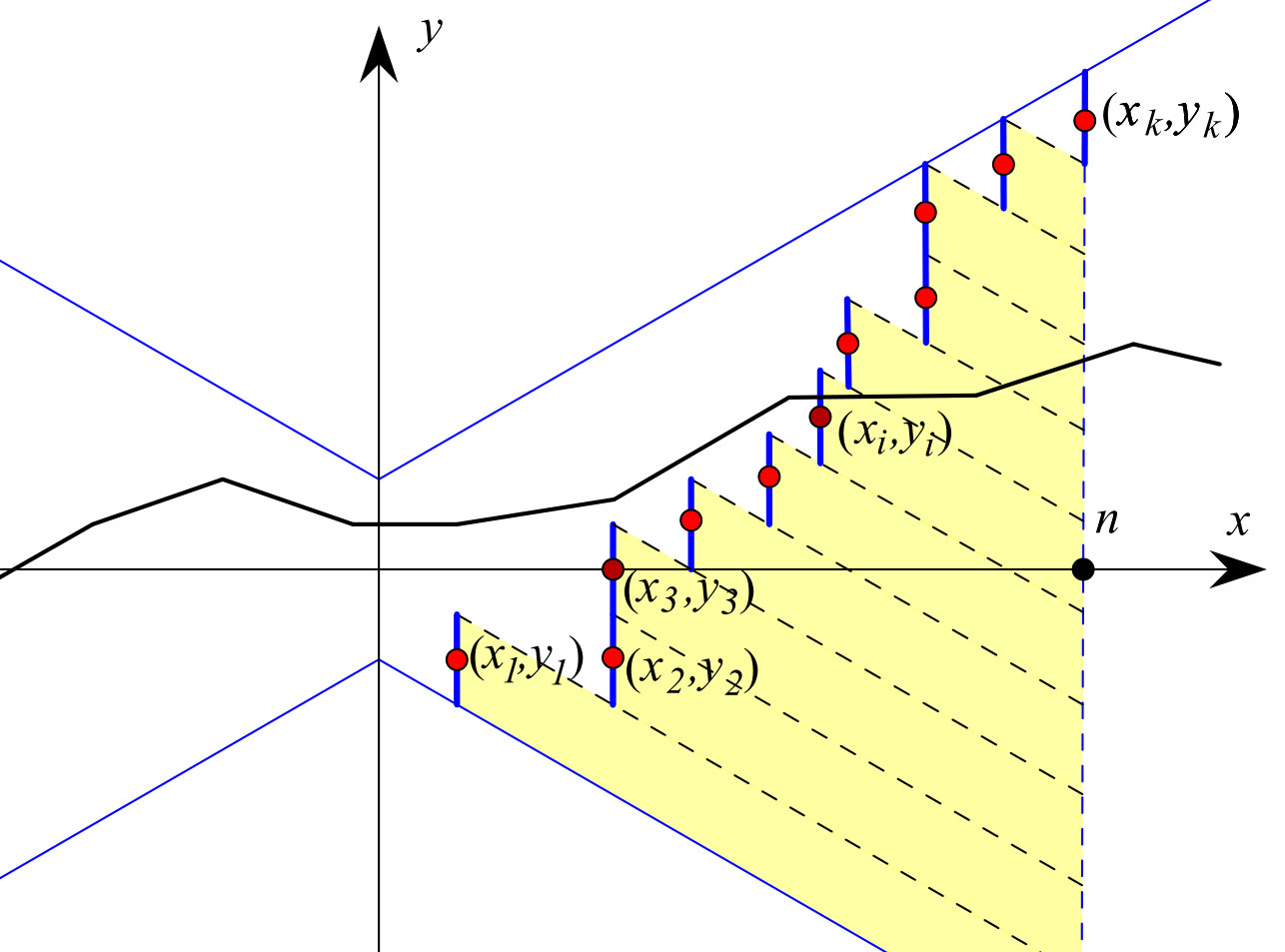 Figure 1
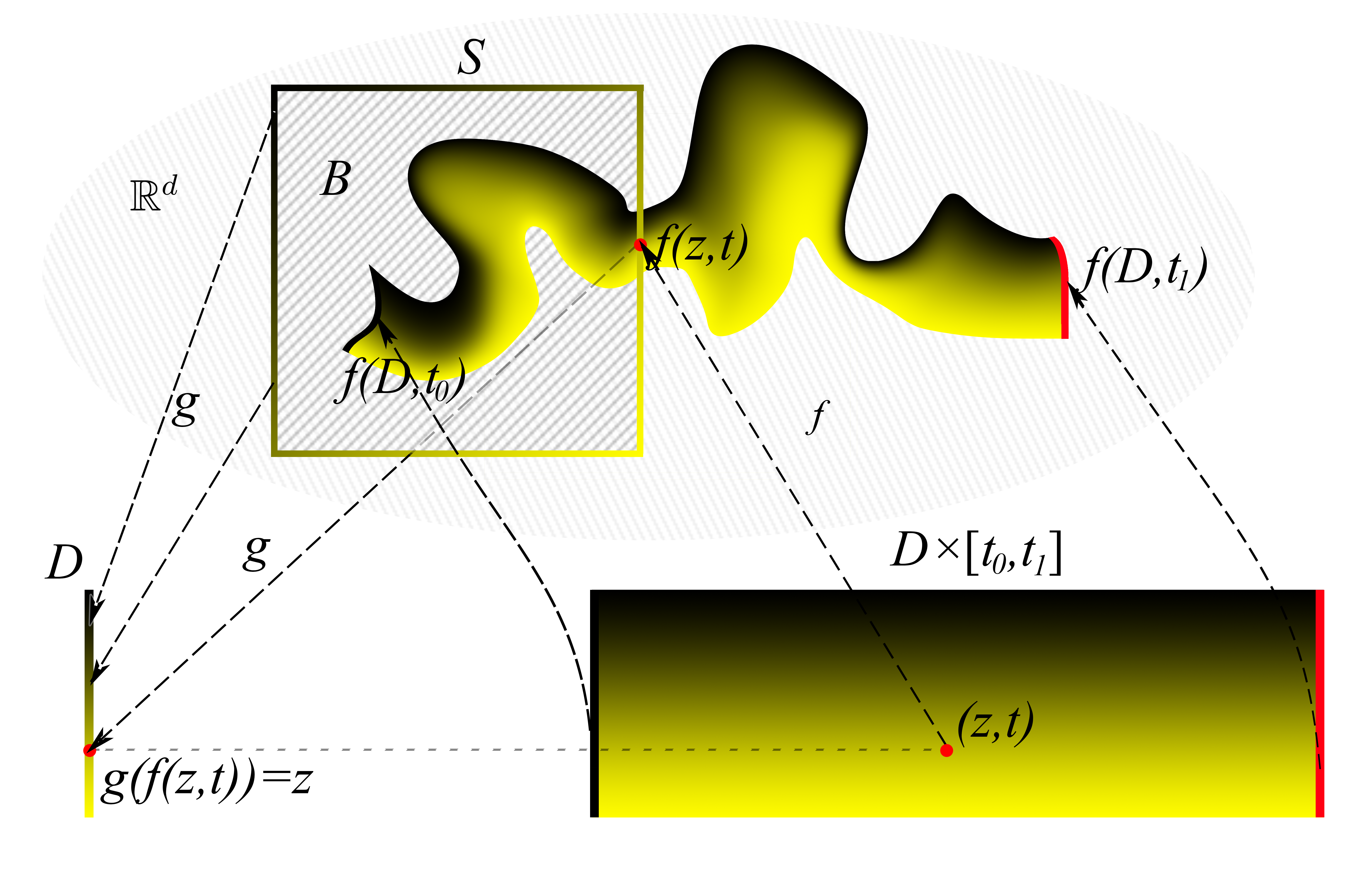 Figure 2
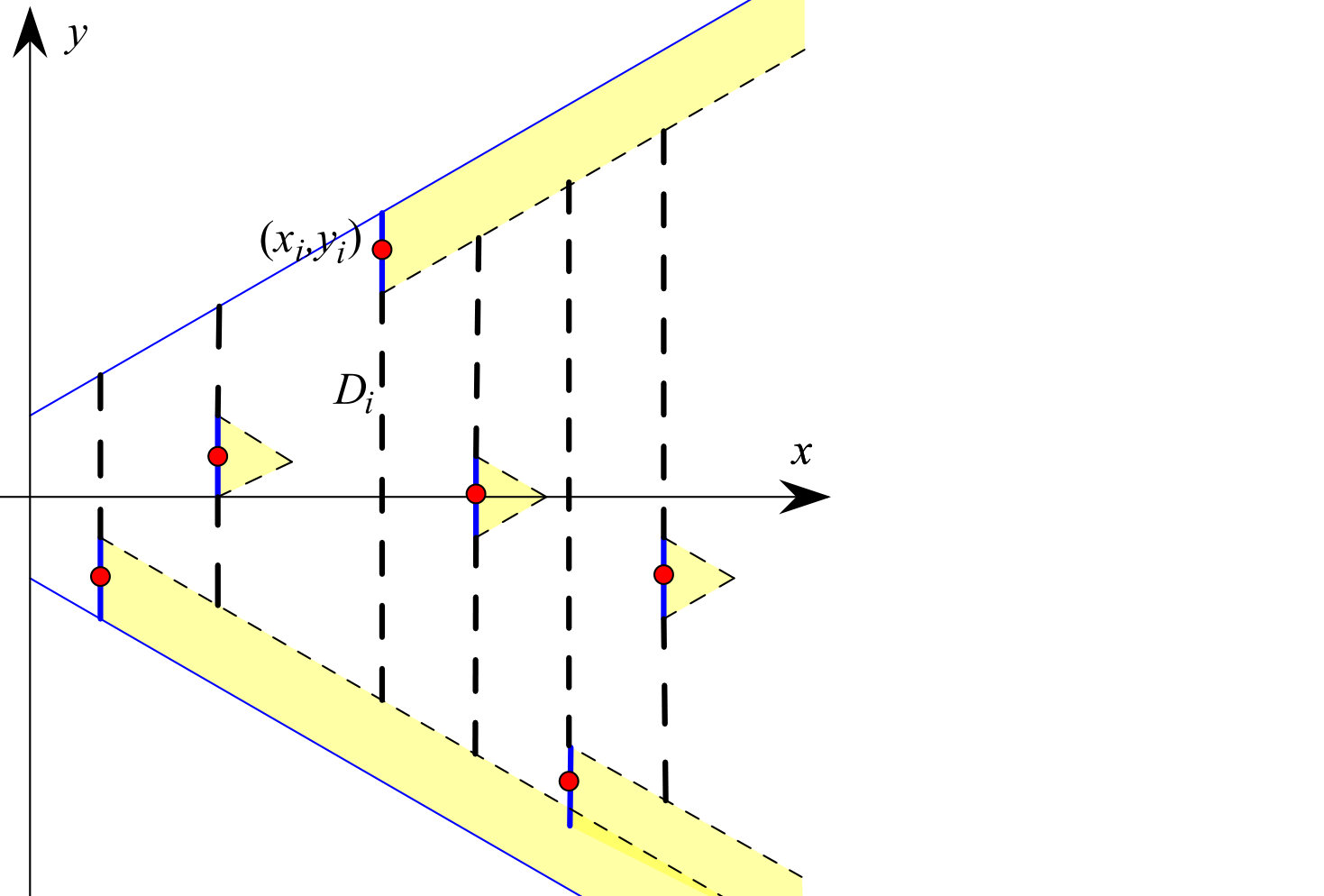 Figure 3
Peer Reviews
No public reviews on file for this paper yet. If you reviewed it on a platform where reviews are public (OpenReview, ICLR, NeurIPS, ICML), you can paste yours below so the community can read it here.
Videos
No videos yet. Explain this paper in a talk, walkthrough, or lecture? Add one.
Controlling Lipschitz functions
Andrey Kupavskii EPFL, Lausanne and MIPT, Moscow. Supported in part by the grant N 15-01-03530 of the Russian Foundation for Basic Research. E-mail: [email protected].
János Pach EPFL, Lausanne and Rényi Institute, Budapest. Supported by Swiss National Science Foundation Grants 200020-162884 and 200021-165977. E-mail: [email protected].
Gábor Tardos Rényi Institute and Central European University, Budapest. Supported by the Cryptography “Lendület” project of the Hungarian Academy of Sciences and by the National Research, Development and Innovation Office, NKFIH, projects K-116769 and SNN-117879.
Abstract
Given any positive integers and , we say the a sequence of points in is Lipschitz--controlling if one can select suitable values such that for every Lipschitz function there exists with . We conjecture that for every , a sequence is -controlling if and only if
[TABLE]
We prove that this condition is necessary and a slightly stronger one is already sufficient for the sequence to be -controlling. We also prove the conjecture for .
1 Introduction
The following question, in some sense dual to Tarski’s famous plank problem [15, 12, 13], was raised by László Fejes Tóth [6]: What is the “sparsest” sequence of points in the plane with the property that every straight line comes closer than to at least one of its points? Erdős and Pach [4] answered this question by showing that for every infinite sequence of positive numbers , one can find points with such that every line passes at distance less than from , for at least one , if and only if and
Makai and Pach [11] proposed a closely related, but more general question. Given a family of real functions , we say that an infinite sequence is -controlling if one can choose reals such that the graph of any function “comes close” to at least one of the points in the sense that
[TABLE]
In particular, they proved that if is the family of all linear functions , a sequence of numbers is -controlling if and only if Kupavskii and Pach [10] managed to generalize this statement to the case where consists of all polynomials of degree at most , for some positive . In this case, the corresponding necessary and sufficient condition is
The aim of this note is to investigate the analogous problem for another interesting class of functions. Given two positive integers and , let denote the class of Lipschitz functions from to , that is, the class of functions for which there exists a constant such that
[TABLE]
If a function satisfies the condition above with a fixed , then is called a -Lipschitz function (or a function with Lipschitz constant ). Note that in this definition we can use any norm equivalent to the Euclidean norm. Throughout this note, we will work with maximum norm. For convenience, will stand for the maximum norm, and the word “ball” will refer to a ball in the maximum norm, that is, a cube.
Definition. Given a function and two points we say that the pair controls if .
An infinite sequence of points in is said to be -controlling or, in short, -controlling if one can choose points in such that for every there exists such that controls .
It follows from the definition that replacing the condition by the inequality for any fixed , does not effect whether a sequence is -controlling. To see this, it is enough to notice that if and only if , and that controls if and only if
Obviously, if a sequence is -controlling, then it is also -controlling for every . Indeed, can be regarded as a subspace of , so every Lipschitz function from to is a Lipschitz function from to .
We solve a problem in [11] by giving, for any , a necessary and sufficient condition for a sequence of points in to be -controlling (). We conjecture that this result generalizes to sequences of points in , for any , but we can prove only a slightly weaker statement.
The following theorem gives a necessary condition. A somewhat weaker result was established in [11, Theorem 3.6A] (it is stated in the concluding remarks of this note).
Theorem 1**.**
Let be positive integers. If a sequence of points in is -controlling, then we have
[TABLE]
Our next result shows that for , the necessary condition in Theorem 1 is also sufficient for a sequence of points in to be -controlling.
Theorem 2**.**
Let be a positive integer. A sequence of points in is -controlling if and only if
[TABLE]
For , the condition in Theorems 1 and 2 is necessary, but not sufficient for a sequence in to be -controlling. To see this, observe that the sequence consisting of all integer points in satisfies the condition for all . Nevertheless, this sequence is not even -controlling. Indeed, for any function , there exists a 2-Lipschitz function for which for all . For any sequence of reals , choose so that for every , and notice that is not controlled by any pair .
However, we believe that for , the above condition is not only necessary but also sufficient for a sequence in to be -controlling.
Conjecture 3**.**
Let be positive integers, . A sequence of points in is -controlling if and only if
[TABLE]
We cannot prove this conjecture for , but we can formulate a slightly stronger condition that is already sufficient for a sequence to be -controlling, provided that .
Theorem 4**.**
Let be positive integers, . Suppose that a sequence of points in satisfies the following condition for every positive : The set of all points with
[TABLE]
is bounded.
Then the sequence is -controlling.
For any , the region contains at least some positive constant times pairwise disjoint balls of radius (that is, cubes of side length , in the maximum norm). If the condition of the last theorem is satisfied, then each of these balls contains at least points , provided that is sufficiently large. Thus, in this case,
[TABLE]
Letting we obtain that the condition in Conjecture 3 also holds. Roughly speaking, the condition in Theorem 4 is equivalent to the condition in Conjecture 3 for “uniformly distributed” sequences , but the two conditions differ when the density of the point sequence depends “unevenly” on the location. We remark that our Theorem 1 differs from Theorem 3.6A in [11] in the same sense: for “uniform” sequences the two statements are equivalent, but in general they are not.
The exponent of in the right-hand side of the displayed formula in Theorem 4 cannot be replaced by any smaller number, as follows from Theorem 1. Theorem 4 disproves a conjecture from [11]; see the Remark at the end of Section 4.
It is easy to see that the sufficient condition stated in Theorem 4 is not necessary even if and is arbitrary. The sequence of points consisting of copies of for every positive integer , satisfies the condition of Theorem 2 and is, therefore, -controlling. On the other hand, apart from those that are closer than to some power of , every satisfies the inequality in Theorem 4. The set of these is unbounded, thus Theorem 4 is not applicable. Since every -controlling sequence of points in can be regarded as a -controlling sequence of points in for any , we obtain that the sufficient condition stated in Theorem 4 is not necessary for a sequence to be -controlling, for any values of and .
Nevertheless, for some “natural” classes of sequences, the two conditions are equivalent, that is, Conjecture 3 holds. For instance, let and be fixed, and consider the sequence of all points in whose each coordinate is the -th power of some natural number. It is easy to see that this sequence satisfies both the condition in Conjecture 3 and the one in Theorem 4 if and neither of them, otherwise.
Concerning the case , we have a conjecture that (roughly speaking) states that a sequence in is -controlling if and only if there is a -dimensional Lipschitz surface passing through a subset of its points that already guarantees this property. The precise statement can be formulated for every and , but for the conjecture is obviously true.
Conjecture 5**.**
Let be positive integers. A sequence of points in is -controlling if and only if there exist a Lipschitz map and a -controlling sequence of points in with such that for all .
The “if” part of the conjecture is trivially true. Indeed, suppose that a sequence in shows that is -controlling. Then the same sequence also shows that the sequence of points in is also -controlling. To see this, take any Lipschitz function , and observe that is also a Lipschitz function. Thus, we have for some .
The “only if” part of the conjecture evidently holds for . Indeed, choose to be the projection to the subspace induced by the first coordinates, set and for every . The important part of the conjecture is the “only if” direction where .
The proofs of Theorems 1, 2, and 4, are presented in Sections 2, 3, and 4, respectively.
2 Proof of Theorem 1
As mentioned in the introduction, a somewhat weaker statement (Theorem 3.6A) was proved in [11]. Here we extend the proof to the general case.
Consider a sequence that violates the condition in the theorem, that is, for which
[TABLE]
Given any sequence of points in , we have to find a Lipschitz function from to that is not controlled by any of the pairs . We will find such a function with the property that for some Lipschitz function . Then it is enough to guarantee that no pair controls . In other words, it is enough to prove the statement for .
For technical reasons, we deal with the indices for which , separately. Let denote the number of such indices. It follows from the assumption that is finite. Suppose without loss of generality that the index set is the set of integers larger than and that is monotonically increasing in with . Thus, we have
[TABLE]
Let and . For denote and the lower and the upper integer part of , respectively. Define a real number . It is easy to see that is a finite number bigger than . Notice that and, hence, , because
[TABLE]
In what follows, we define a nested sequence of families of -Lipschitz functions from to , we show that their intersection is nonempty, and any function meets the requirements.
Fix a point such that for every . Let denote the family of all -Lipschitz functions with . By the choice of , no function is controlled by any of the points with .
For every , let be defined as the set of all functions in that are not controlled by any of the pairs with , and let
[TABLE]
See Fig. 1, for an illustration of the case . (The points are marked red. If a -Lipschitz function belongs to , its graph cannot intersect the yellow region incident to .)
We establish a lower bound for the Lebesgue measures of the sets .
Claim 2.1. For every , we have
Proof. By induction on . For , we have , which is a nonempty set of zero measure. It follows from the definition of that the bound in Claim 2.1 is strictly positive for every . Assume that we have already verified the Claim for some , and we want to prove it for .
Let . Clearly, can be obtained as the Minkowski sum of and the ball of radius around the origin. On the other hand, we have , where denotes the ball of radius around . Therefore,
[TABLE]
By the Brunn-Minkowski inequality, we have
[TABLE]
Combining the last two inequalities,
[TABLE]
As we use the maximum norm, we have and . Using the inductive hypothesis, we get the following chain of implications.
[TABLE]
where as before. By the definition of , we have for every . Consider the function . Then
[TABLE]
for every . Therefore, the last inequality of the chain holds, and so does the first one, as claimed. Q.E.D.
In particular, it follows from Claim 2.1 that and, hence, is not empty for every . To complete the proof of Theorem 1, it is enough to note that the set is compact in the pointwise topology. Therefore, . By definition, no function is controlled by any pair , as required.
3 Proof of Theorem 2
The “only if” part of the theorem is a special case of Theorem 1. Thus, we have to prove only the “if” part.
Let be a sequence of real numbers satisfying the “density condition”
[TABLE]
Split this sequence into two sequences, one consisting of the nonnegative numbers and the other consisting of the negative ones. At least one of these two sequences must satisfy the above density condition, so we can assume without loss of generality that, say, for all . If has a convergent subsequence , as , then choose any sequence of points , everywhere dense in . Obviously, every Lipschitz function is controlled by infinitely many pairs . Therefore, we can assume without loss of generality that is an increasing sequence of nonnegative numbers, tending to infinity.
We need a simple statement about a finite portion of the sequence .
Fix a positive integer . Let denote the family of -Lipschitz functions with . (Note that this deviates from the definition of used in the previous section.) We also fix . Let , and assume that for .
Since we use the maximum norm in , the ball (cube) of radius around the origin can be uniquely partitioned into balls of radius . Let the centers of these balls be denoted by and the balls themselves by Index the centers decreasingly with respect to the lexicographic order. For every , set
[TABLE]
where is the all- vector in . See Fig. 2, which depicts the case .
Claim 3.1. Any function is controlled by one of the pairs
Proof. Let be an arbitrary element of . Notice that the function is monotonically decreasing in all of its coordinates, and that for every
Consider the set of all indices such that is contained in a ball for some . As is in , it belongs to a ball for some . Therefore, , so that the set is not empty. Let denote the smallest element of .
Then we have . Indeed, otherwise for some index . Thus, . Using the monotonicity of and the monotonicity of the sequences and , we obtain that for some , contradicting the minimality of . Hence,
[TABLE]
This means that controls , as claimed. Q.E.D.
Now we can easily finish the proof of Theorem 2. We need to show that the sequence is -controlling. To control all functions in for a fixed , pick an such that for at least distinct indices we have . It follows from the density condition that such an exists.
By Claim 3.1, we can choose for distinct indices such that every function in is controlled by one of the pairs . Repeat this step this successively for , making sure that we always use pairwise disjoint sets of indices. This is possible, because removing any finite number of elements from , the remaining sequence still satisfies the density condition. Since every Lipschitz function belongs to one of the classes , after completing the above process for all , all Lipschitz functions will be controlled by one of the pairs . This proves Theorem 2.
4 Proof of Theorem 4
As in the proof of Theorem 2, for every positive integer , denotes the family of -Lipschitz functions with . As we did in that proof, we fix and we show that one can control using only finitely many points . To complete the proof of Theorem 4, we perform this step for , sequentially, observing that the density condition in the theorem continues to hold even if we delete any finite number of points from our sequence.
The proof of Theorem 4 is based on a topological lemma. We consider a continuously moving set that leaves a ball . By continuity, each point of must cross the boundary of the ball. Using Brouwer’s fixed point theorem, we find a point that crosses the boundary at a point with a special property. See Figure 3, for an illustration. The color gradation distinguishes different points of , that is, points of the same color indicate the trajectory of a point, as it progresses in time .
Lemma 4.1. Let be a positive integer. Let denote a closed ball of positive radius around the origin in , and let stand for the boundary of . Let be a closed interval on the real line, let be an arbitrary topological space, and let and be continuous functions.
If and for all , then there exist and such that and .
Proof. Denote the radius of . Let , and let be defined as , where and . Let be a coordinate-wise retraction; to be specific, let . Finally, let be the composition of these functions: .
Clearly, is continuous and is homeomorphic to the -dimensional ball. Thus, we can apply Brouwer’s fixed point theorem to conclude that there exists with . Let and .
If , then the second coordinate of equals . Hence, either we have or was retracted to from the left. Since , we have , and thus , contradicting our assumption.
Analogously, if , then , so , implying that , which is again a contradiction.
Consequently, we must have . Using the fact that is a retraction, we obtain that , so and . We must also have , which implies that . Q.E.D.
To apply the lemma, we think of as a product space , with the last coordinate considered as time. Let and be balls, let be an interval, and let a linear map (see Fig. 3). Consider any -Lipschitz function and focus our attention on the restriction of to . In order to apply Lemma 4.1, we choose large enough to make sure that lies in the interior of for all . By the lemma, we can either find such that satisfies , or there exists such that belongs to the boundary of and . Our goal is to find sufficiently many indices with , and to assign appropriate values to them, so that for every conceivable pair provided by the lemma we can find a pair that is close to it. Specifically, if we have and for some , then implies that the pair controls . Next we spell out the details of proof.
*Proof of Theorem 4. * Let and let be a sequence of points in satisfying the density condition in the theorem. Let us fix . As we have pointed out earlier, it is sufficient to show that we can select finitely many indices and assign to them suitable points such that every function in is controlled by at least one of the pairs .
Set and choose a positive integer with . Using the density condition in the theorem with , we obtain that there exists such that
[TABLE]
holds for every with . Set . The density condition we really need for our argument is
[TABLE]
which holds for every , since the ball of radius around can be split into internally disjoint balls of radius , each containing at least points in their interior. This adds up to total of , as required. Finally, set such that
[TABLE]
holds for all . The existence of such a value follows easily from the density condition on the sequence , because for every sufficiently large , the left-hand side of the above inequality is at least , while its right-hand side is a constant.
Let be the ball of radius around the origin in , let , let be the ball of radius around the origin in , and let denote the sphere bounding . Define a linear map by setting
[TABLE]
We identify with and will use the notation for and .
Cover with internally disjoint balls (cubes, in the -norm) of radius . These balls will be referred to as the -balls. Let be a fixed -ball, where is a ball of radius and is an interval of length .
The sphere consists of facets (-dimensional cubes). A facet is obtained by fixing one of the coordinates to or , and letting the other coordinates take arbitrary values in the interval . Consider all points on a facet such that . If the fixed coordinate of the facet is one of the first coordinates, and such points exist at all, then the first of their coordinates are determined within an interval of , while the remaining coordinates can take arbitrary values in . This set can be covered by at most balls of radius . We refer to these balls as the -balls for .
Next, consider all points on a facet of such that , but assume that the fixed coordinate of this facet is one of the last coordinates. Cover this set with balls of radius , as follows. Partition the possible values of the ’th coordinate into intervals, each of length . These intervals determine each of the first coordinates of within an interval of length , and there are further coordinates that can take any value in . We have balls of radius that cover all points on this facet with . Summing up over all facets of , we have at most -balls for . For each of these -balls for , select a separate index such that lies in the interior of , and set to be the center of the ball . Note that the center of satisfies (otherwise, would be disjoint from ). Thus, by our choice of , we have enough indices to choose from. We repeat the same procedure for every the -ball .
Case 1: Consider now any for which there exists such that and .
Clearly, for some -ball , and for some -ball for . Thus, there exists such that lies in the interior of , and is the center of . This implies that and . Using the Lipschitz property, we obtain
[TABLE]
Hence, controls , as .
Case 2: It remains to deal with the case where for some we cannot find such that and .
Let be such a function. Notice that for every . Indeed, we have and, hence, , as required. Then, according to Lemma 4.1, if we cannot find such that and , then must hold for some . We show that in this case one can select a few more indices and set the corresponding values so that for some of the newly selected indices , the pairs control .
To achieve this, cover the entire ball with balls of radius , and refer to them as new balls. For any -ball that contains a point and for any new ball , choose a separate (yet unselected) index such that lies in the interior of , and set to be the center of . Note that the center of satisfies the inequality . Thus, by our choice of , we have enough indices to choose from. It can be shown by a simple computation similar to the above one that if for some we have , then for the indices selected for the -ball containing and the new ball containing the pair controls .
This completes the proof of the fact that every is controlled by one of the pairs and, hence, the proof of Theorem 4. Q.E.D.
Remark. Makai and Pach [11] proved the following result (that also follows from our Theorem 1): Let and let be a set of points in satisfying the condition that for any , the number of points in the unit ball around is at most , where is a suitable constant. Then is not -controlling. Makai and Pach made the conjecture that the same statement remains valid if for any , the unit ball around contains at most points of . This would be a significant improvement for . However, our Theorem 4 shows that no such improvement is possible. Indeed, for any function tending to infinity, one can construct a set of point in with at most points in the unit ball around any point , but still satisfying the condition of Theorem 4. By the theorem, such a set is -controlling.
We close this paper by constructing an explicit set with the properties mentioned above. We choose an increasing sequence of reals such that whenever . Consider the set . Form a set by collecting points from the ball of radius around every point . Consider the set . For , we have at least points of in the -ball around . This shows that satisfies the conditions of Theorem 4 and is, therefore, -controlling. On the other hand, if is the highest index such that the unit ball around contains a point in , then , and the unit ball around contains at most points of around each of the at most points of in the ball of radius about . By our choice of , this shows that the unit ball around contains at most points of , as claimed.
Acknowledgements. We thank the referee for carefully reading the text and pointing out an inaccuracy in the proof of Claim 2.1.
The reference list from the paper itself. Each links out to its DOI / PubMed record.
- 1[1] Th. Bang, On covering by parallel-strips , Mat. Tidsskr. B. 1950 (1950), 49–53.
- 2[2] Th. Bang, A solution of the “plank problem,” Proc. Amer. Math. Soc. 2 (1951), 990–993.
- 3[3] P. Brass, W. Moser, and J. Pach, Research Problems in Discrete Geometry , Springer, Heidelberg, 2005.
- 4[4] P. Erdős and J. Pach, On a problem of L. Fejes Tóth , Discrete Math. 30 (1980), no. 2, 103–109.
- 5[5] P. Erdős and C.A. Rogers, Covering space with convex bodies , Acta Arithmetica 7 (1962), 281–285.
- 6[6] L. Fejes Tóth, Remarks on the dual of Tarski’s plank problem (in Hungarian), Matematikai Lapok 25 (1974), 13–20.
- 7[7] H. Groemer, On coverings of convex sets by translates of slabs, Proc. Amer. Math. Soc. 82 (1981), no. 2, 261–266.
- 8[8] H. Groemer, Covering and packing properties of bounded sequences of convex sets , Mathematika 29 (1982), 18–31.