In-gap features in superconducting LaAlO$_3$-SrTiO$_3$ interfaces observed by tunneling spectroscopy
Lukas Kuerten, Christoph Richter, Narayan Mohanta, Thilo Kopp, Arno, Kampf, Jochen Mannhart, Hans Boschker

TL;DR
This study uses tunneling spectroscopy to detect in-gap quasiparticle states in superconducting LaAlO₃-SrTiO₃ interfaces, revealing complex behaviors dependent on sample history and external conditions, with potential implications for exotic superconducting states.
Contribution
It reports the observation of in-gap states in LaAlO₃-SrTiO₃ interfaces and discusses possible unconventional physical mechanisms behind these states.
Findings
In-gap states depend on thermal cycling history.
States include zero-energy and finite-energy peaks.
States vanish with increasing temperature and magnetic field.
Abstract
We identified quasiparticle states at well-defined energies inside the superconducting gap of the electron system at the LaAlO-SrTiO interface using tunneling spectroscopy. The states are found only in a number of samples and depend upon the thermal-cycling history of the samples. The states consist of a peak at zero energy and other peaks at finite energies, symmetrically placed around zero energy. These peaks disappear, together with the superconducting gap, with increasing temperature and magnetic field. We discuss the likelihood of various physical mechanisms that are known to cause in-gap states in superconductors and conclude that none of these mechanisms can easily explain the results. The conceivable scenarios are the formation of Majorana bound states, Andreev bound states, or the presence of an odd-frequency spin triplet component in the superconducting order parameter.
Click any figure to enlarge with its caption.
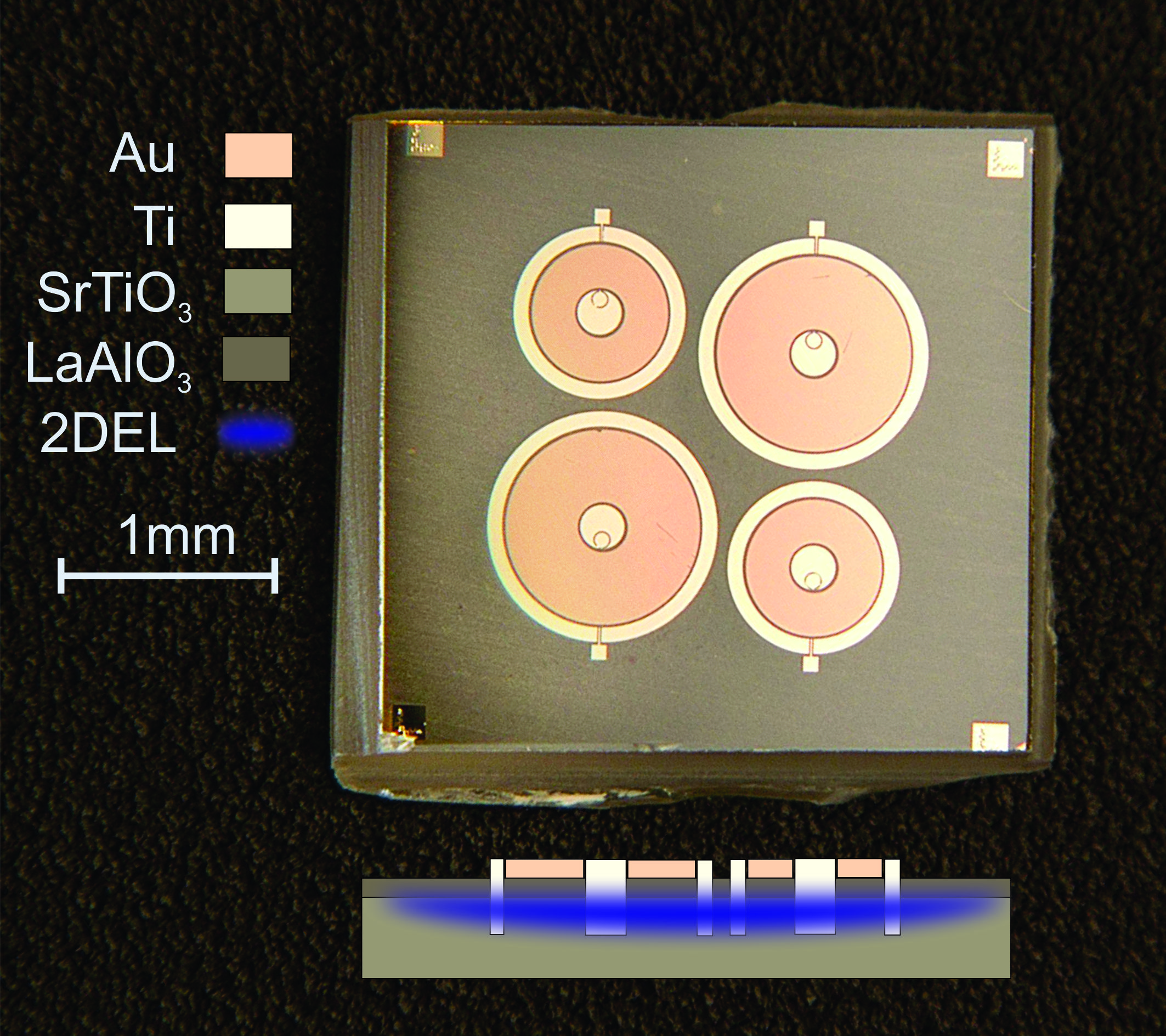 Figure 1
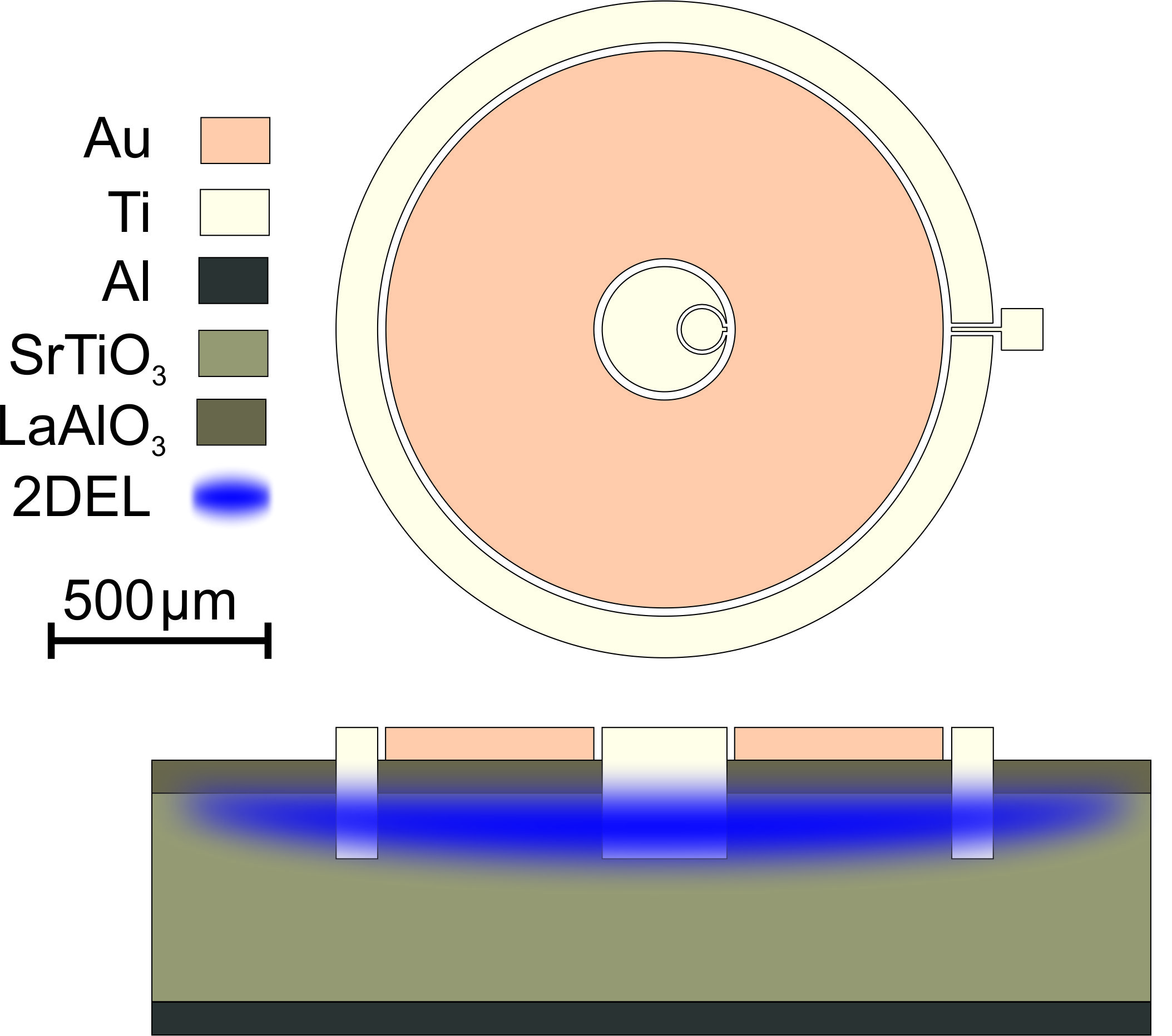 Figure 2
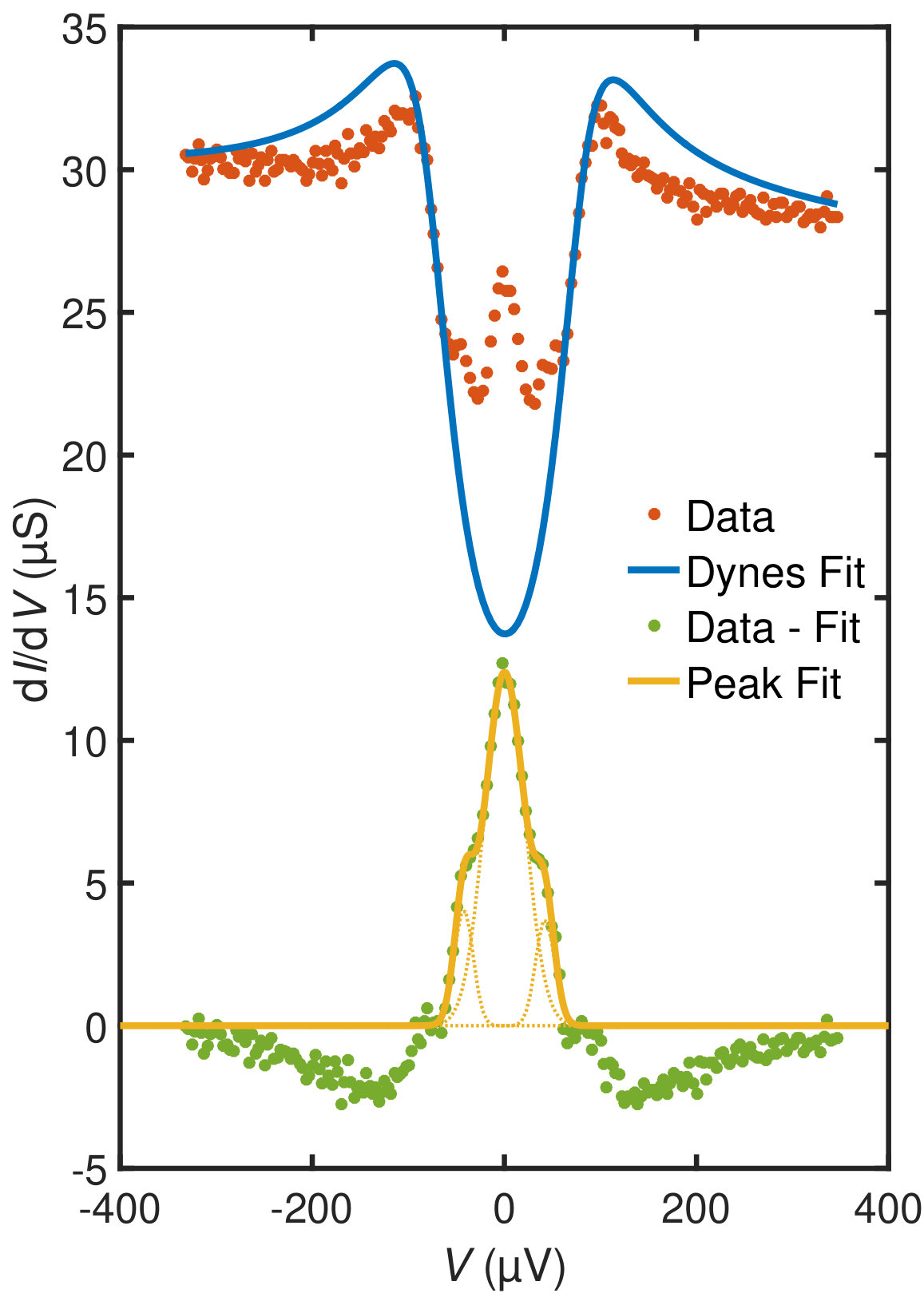 Figure 3
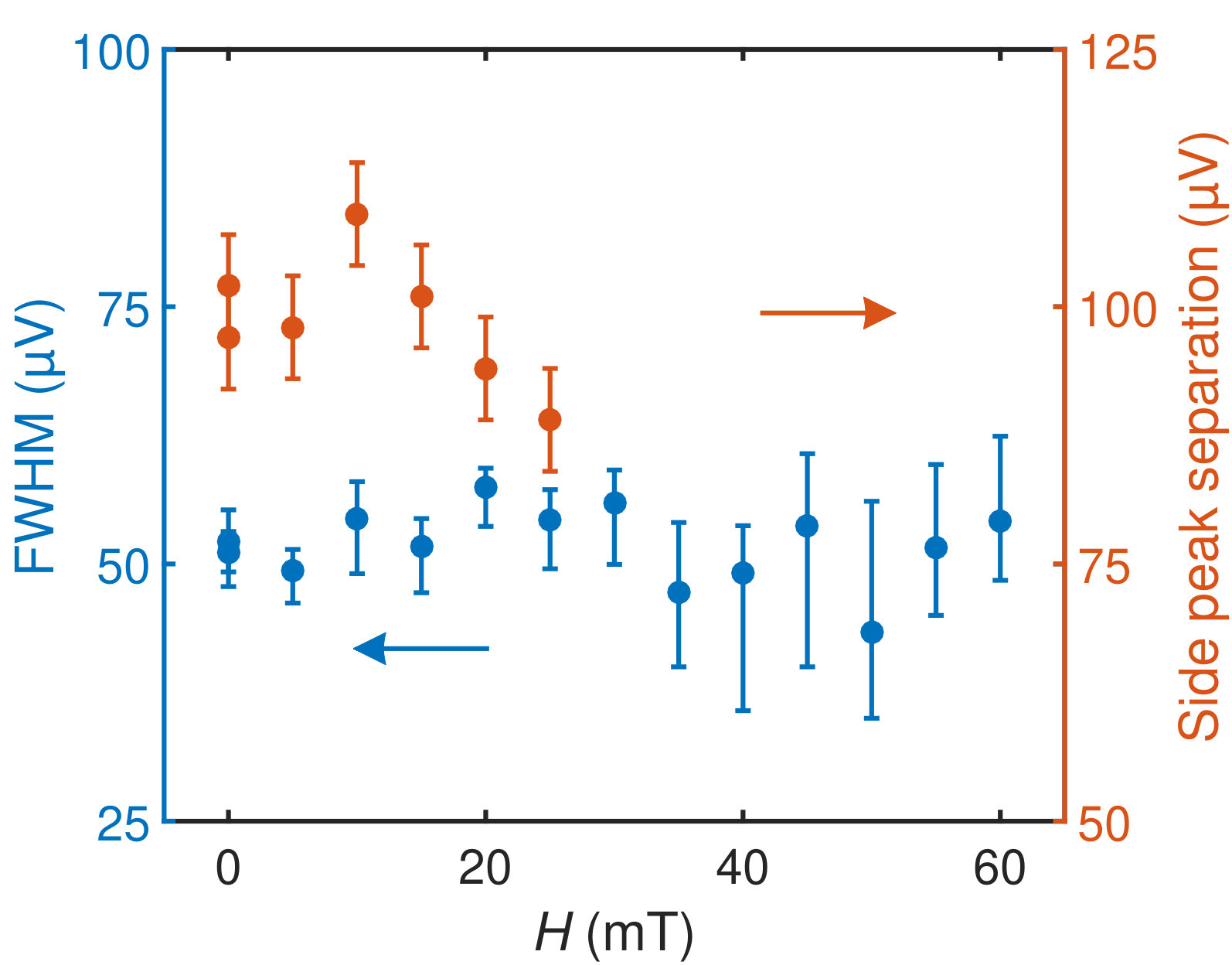 Figure 4
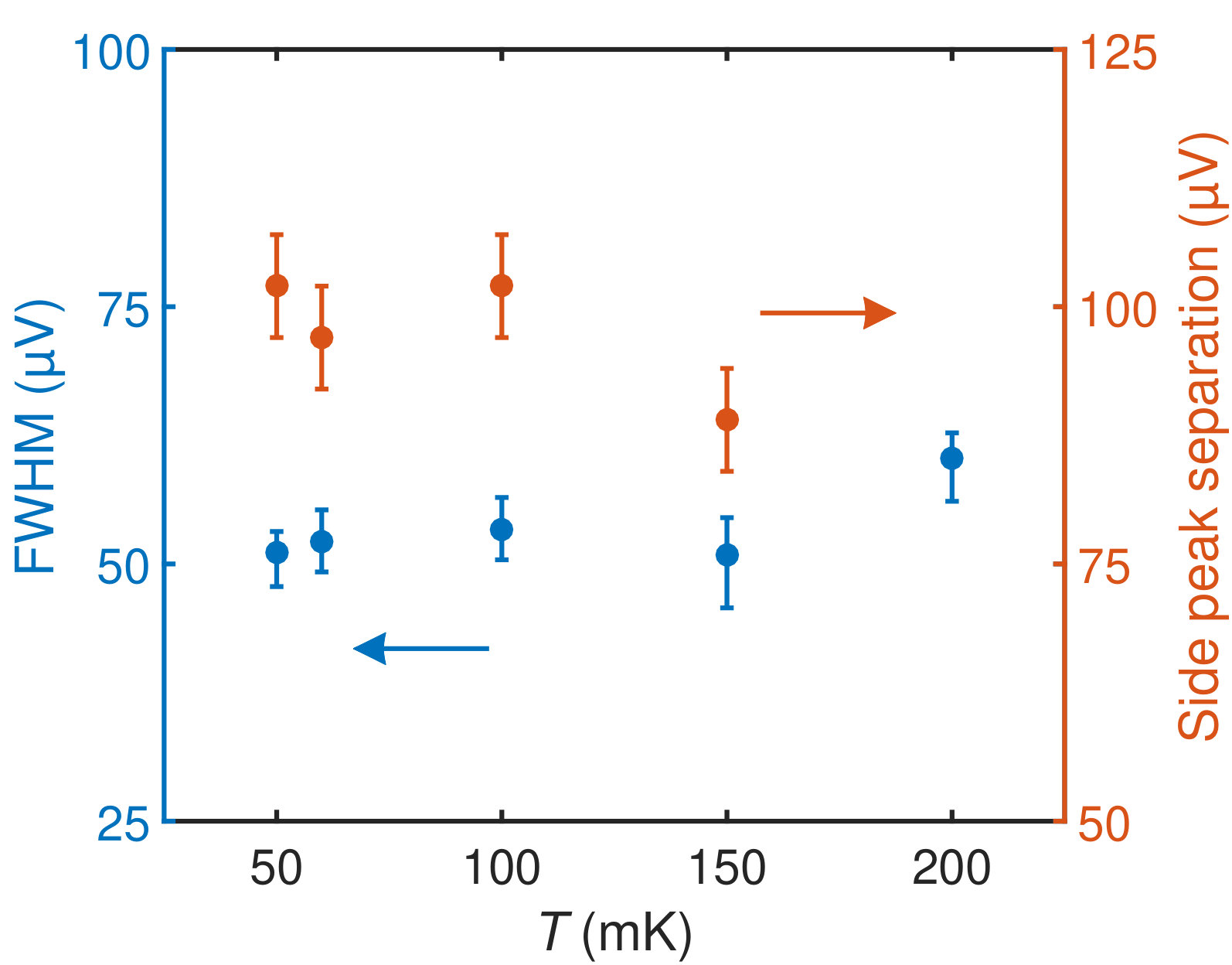 Figure 5
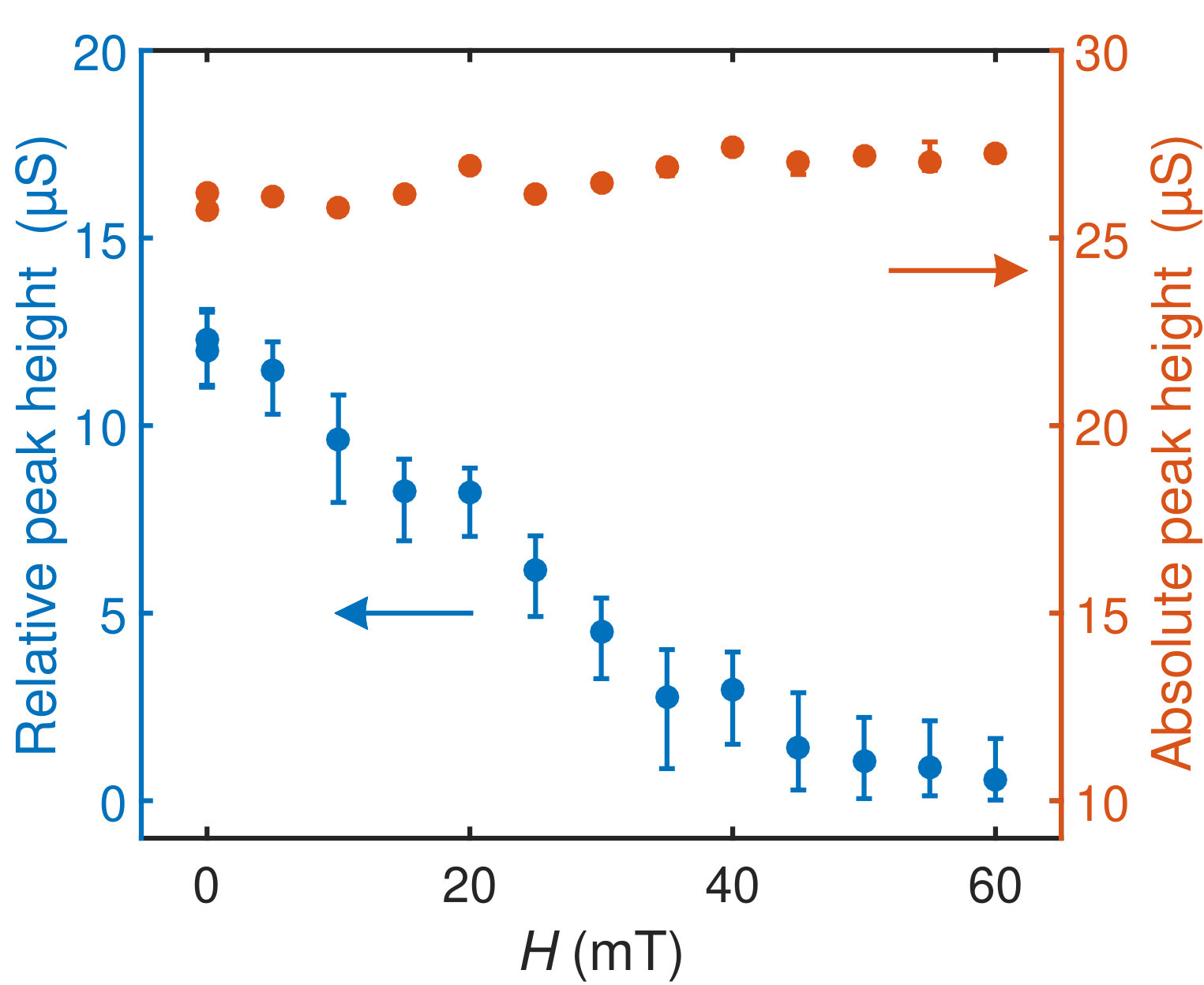 Figure 6
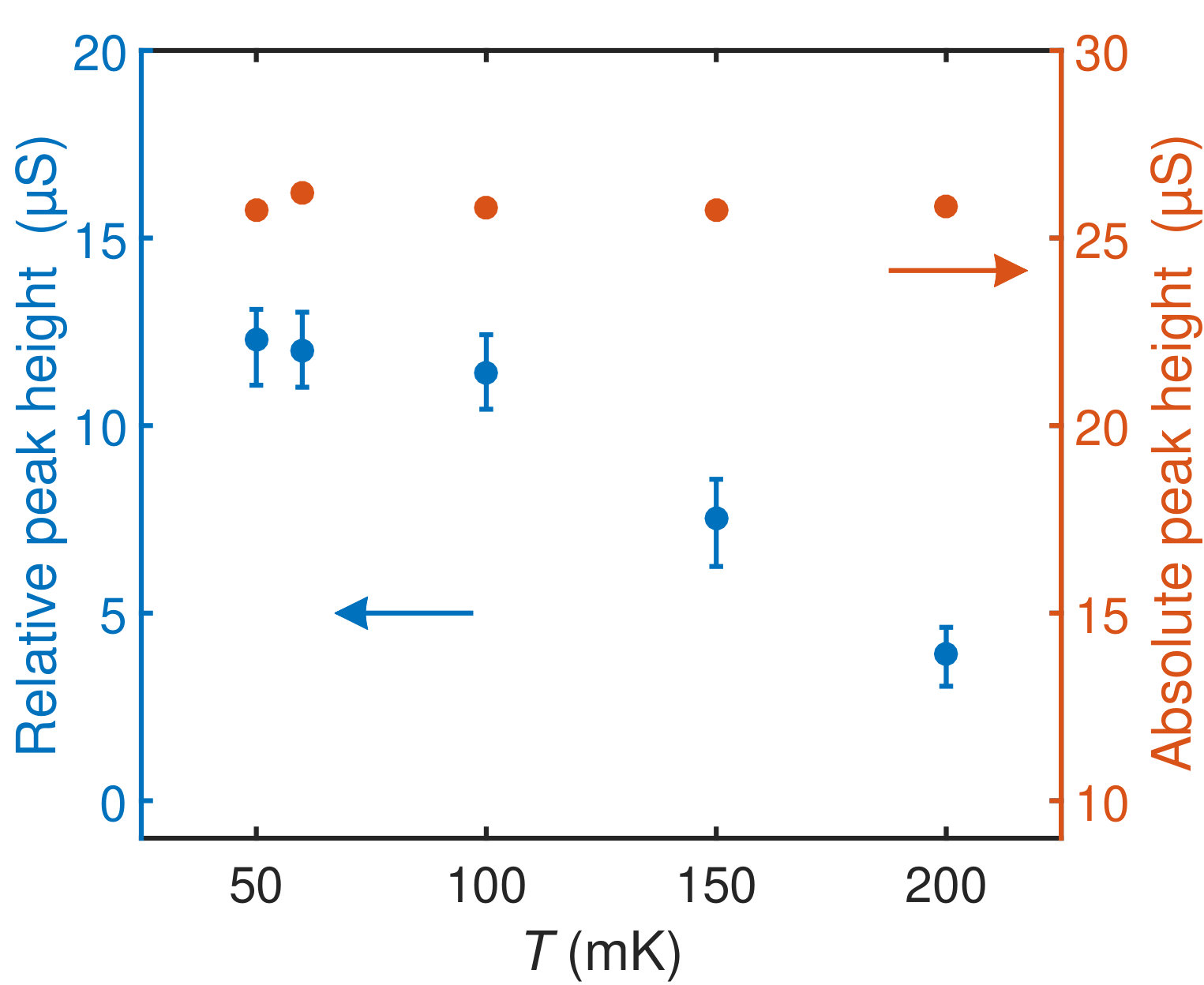 Figure 7
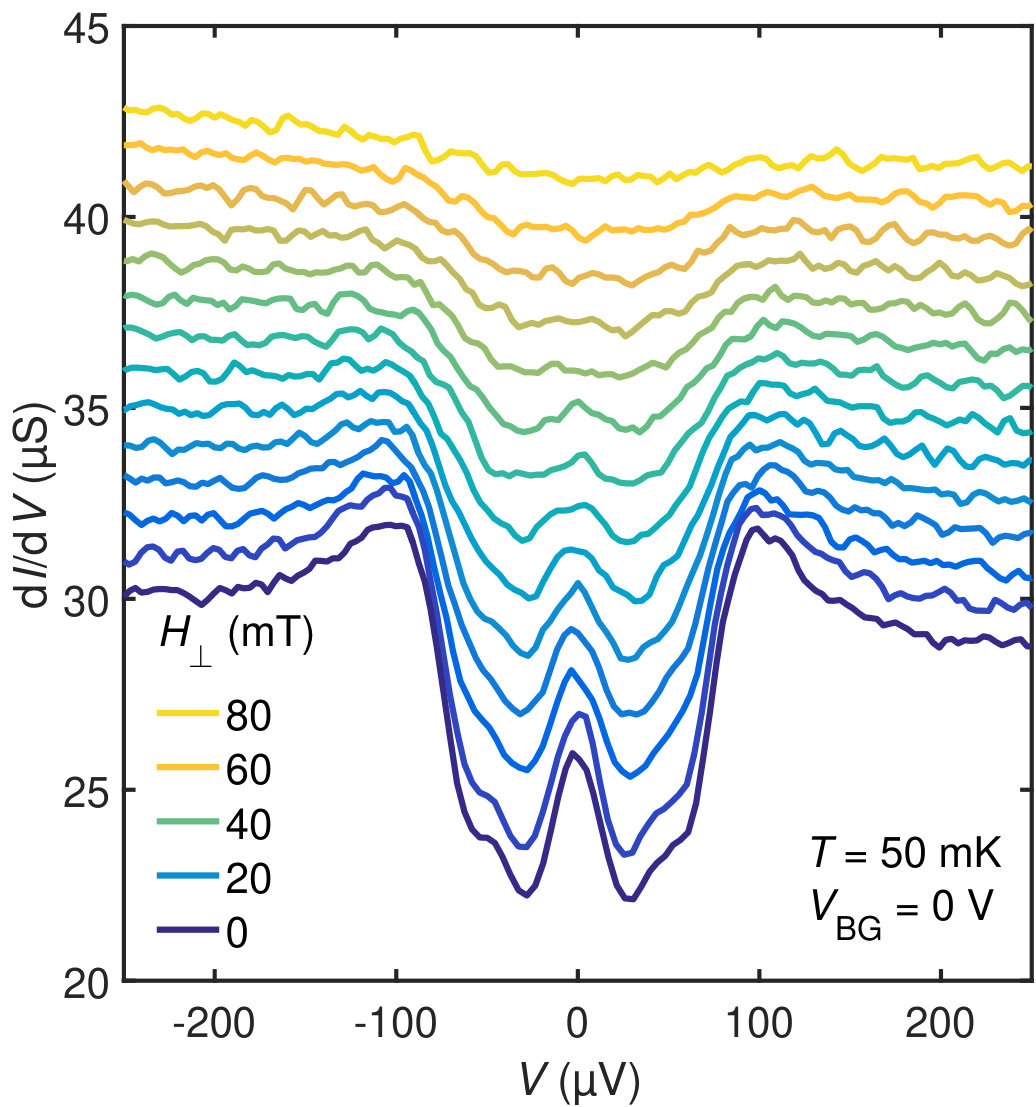 Figure 8
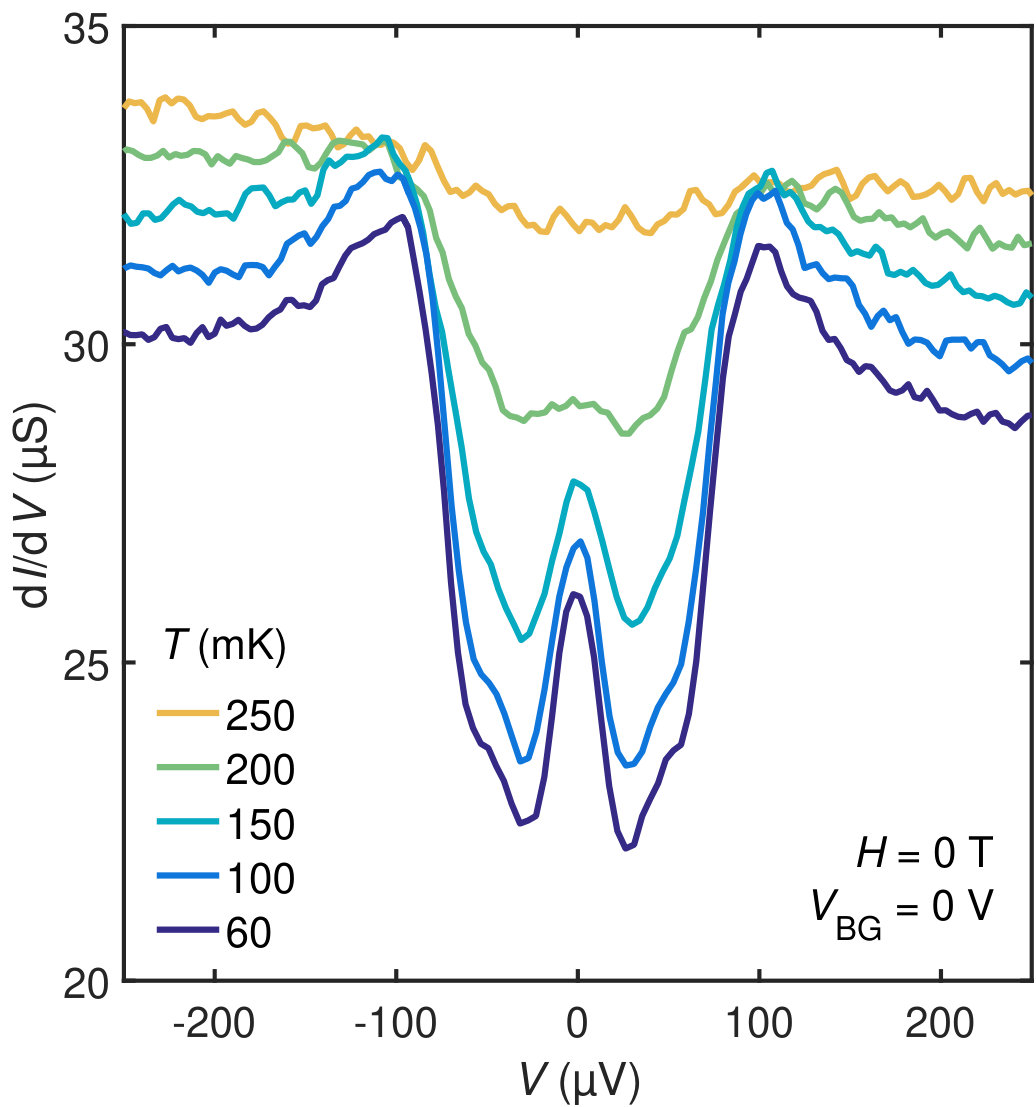 Figure 9
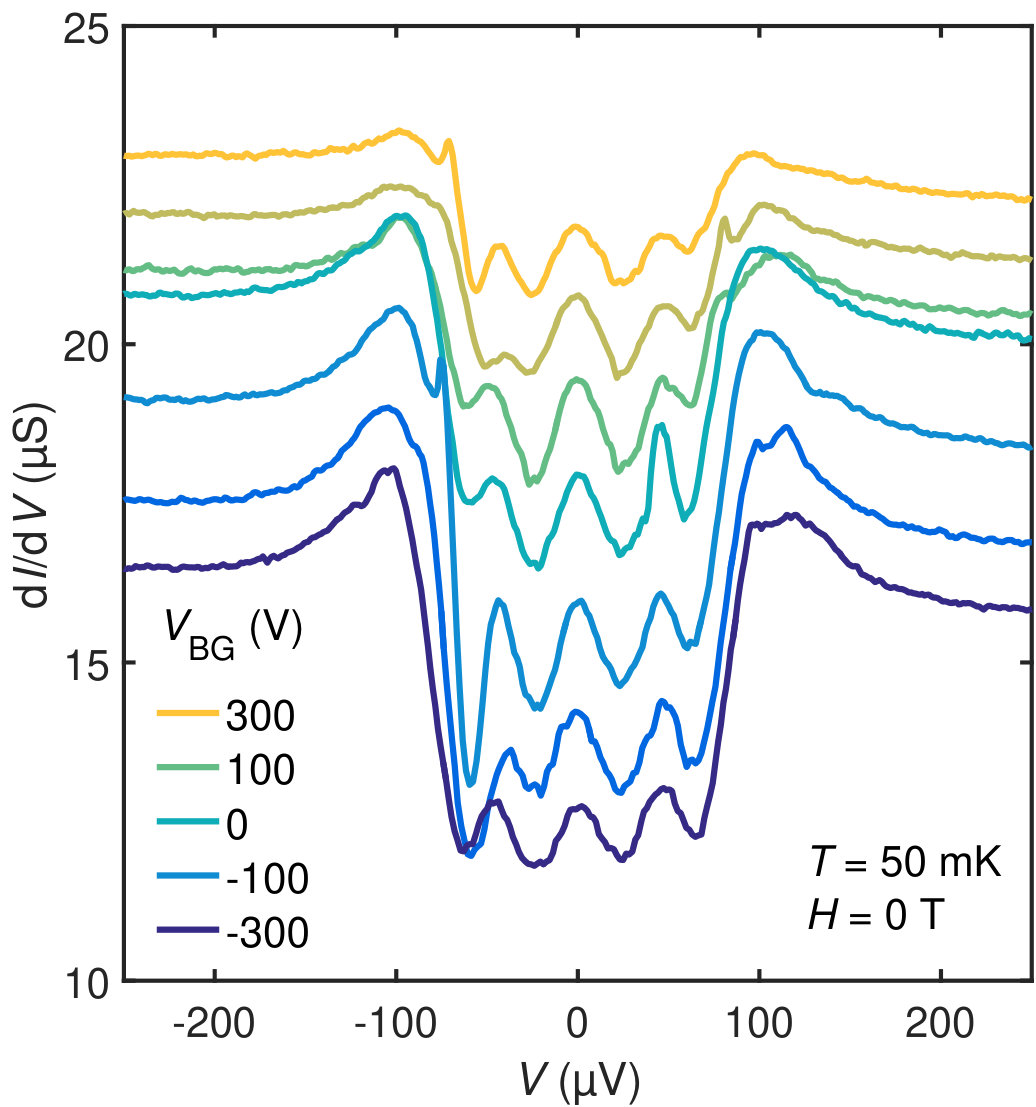 Figure 10
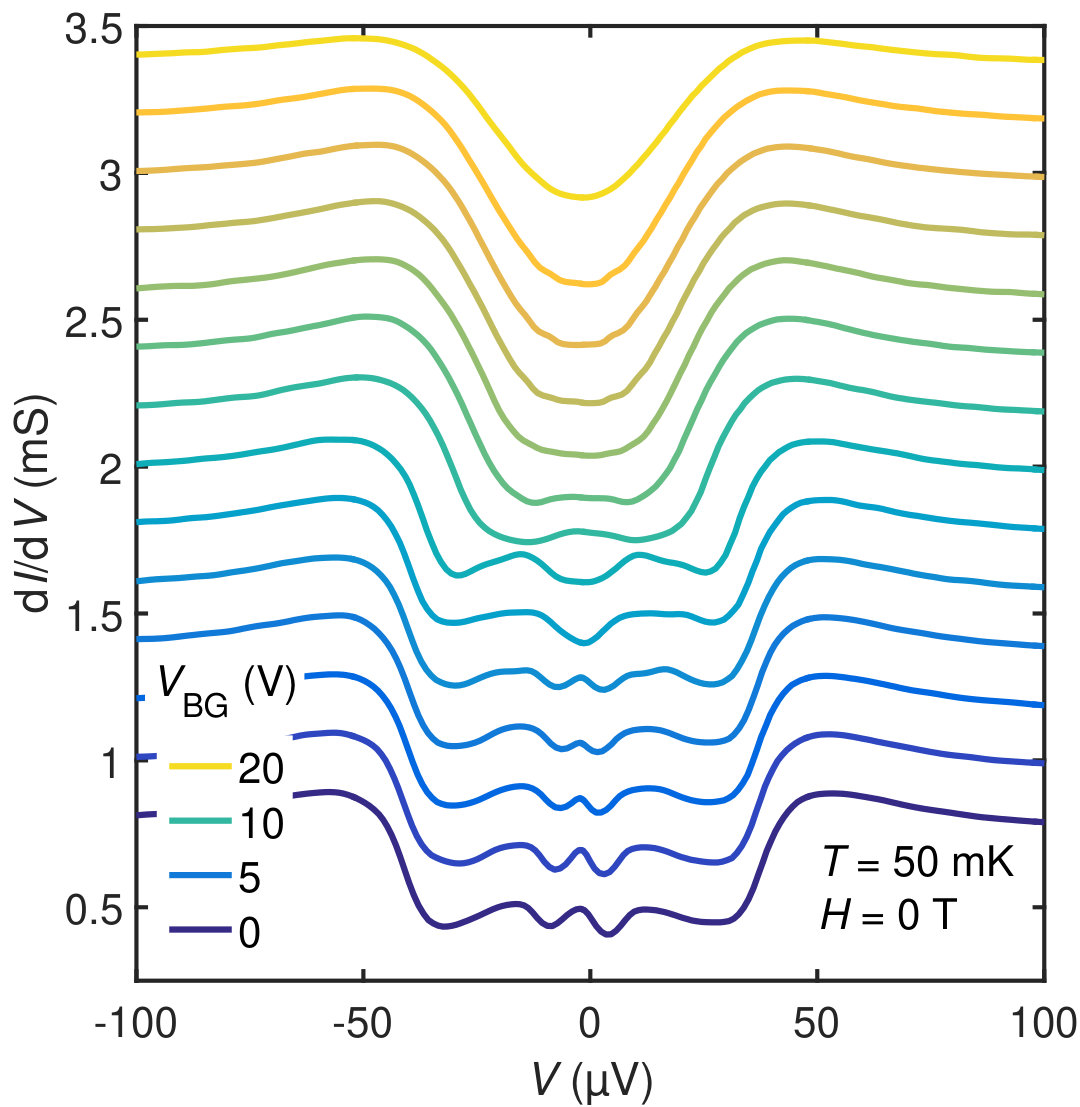 Figure 11
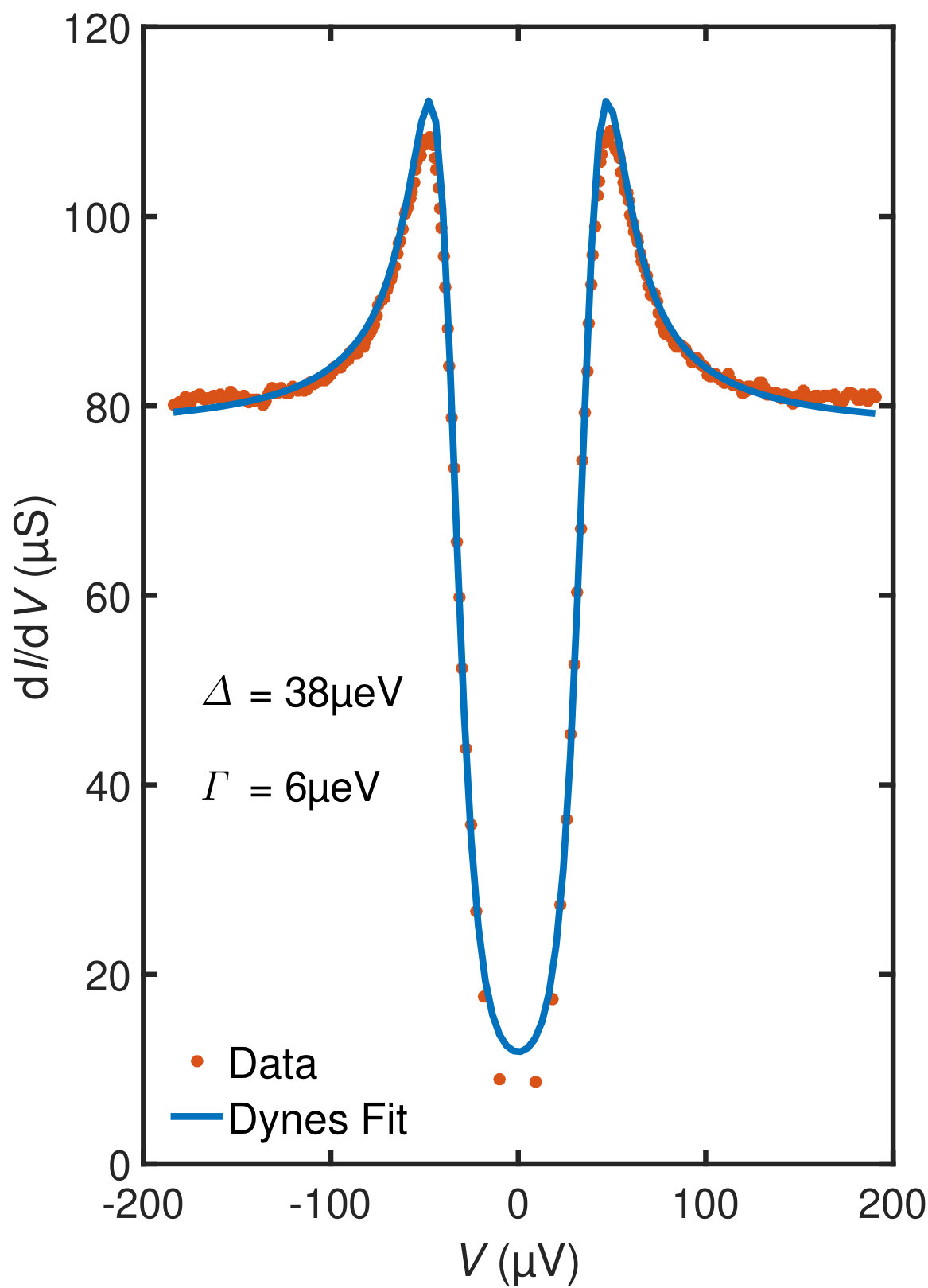 Figure 12
| Name | Properties |
| Origin | |
| Kondo resonance Kondo (1964) | Resonance effects observable as peaks in conductivity. Zero-bias peak splits in a finite magnetic field. Side-peak separation varies linearly with external magnetic field. Does not require superconductivity |
| Resonance at magnetic impurities located inside the conducting host. | |
| Anderson-Appelbaum statesAnderson (1966); Appelbaum (1966, 1967) | Similar to Kondo resonance (see above) |
| Exchange interaction between tunneling electrons and magnetic impurities located inside the tunnel barrier. | |
| Impurity states | Decrease of conductivity at zero bias (barrier states) Giaever and Zeller (1968) Increase of conductivity at zero bias (surface states) Samokhin and Walker (2001). In-gap states are particle-hole asymmetric. |
| Tunneling via intermediate impurity states in barrier or surface. | |
| Josephson junction characteristics | Gap of size . Cooper-pair tunneling DC Josephson current at zero bias. Peaks inside the larger gap at the gap difference . |
| Tunneling from to . | |
| Multiband SuperconductivityBinnig et al. (1980) | Two gaps inside one another. Two pairs of coherence peaks. |
| SC pairing in multiple bands. | |
| Caroli-de Gennes-Matricon states Caroli et al. (1964) | States below the gap energy. Bound states which are localized at the core of vortices. Comparable to Andreev Bound states (see below). |
| Andreev reflection at a vortex core. | |
| Yu-Shiba-Rusinov states Yu (1965); Shiba (1968); Rusinov (1969) | Paired peaks symmetric around zero energy. States are localized at the impurity sites. Peak positions move with varying magnetic field Zittartz and Müller-Hartmann (1970). |
| Bound states due to magnetic impurities in SC. | |
| Majorana bound states Kitaev (2001); Fu and Kane (2008) | Zero-energy bound state for well-separated Majoranas. Paired states at finite energies for interacting Majoranas Nilsson et al. (2008); Beenakker (2013); Flensberg (2010). Located at defects at which the SC gap closes. Conductance peak height quantized in units of for specific situations. |
| Emergent states at the boundary of topological superconductors. | |
| Andreev Bound statesDeutscher (2005) | For non--wave NS junction: peak at zero energy. For SNS junction: peaks at finite energies, depending on the phase difference between the SCs. |
| Successive Andreev reflections at NS-interfaces. | |
| Odd-frequency spin triplet pairing | Peaks at zero or finite energies depending on layer thickness and disorder. SanGiorgio et al. (2008); Linder et al. (2010); Boden et al. (2011); Di Bernardo et al. (2015); Eschrig and Löfwander (2008) Two pairs of coherence peaks in density of states. |
| Induced -wave pairing at interfaces between SC and inhomogeneous ferromagnet. |
Peer Reviews
No public reviews on file for this paper yet. If you reviewed it on a platform where reviews are public (OpenReview, ICLR, NeurIPS, ICML), you can paste yours below so the community can read it here.
Videos
No videos yet. Explain this paper in a talk, walkthrough, or lecture? Add one.
In-gap features in superconducting - interfaces observed by tunneling spectroscopy
Lukas Kuerten
Max-Planck-Institute for Solid State Research,
70569 Stuttgart, Germany
Christoph Richter
Narayan Mohanta
Thilo Kopp
Arno Kampf
Center for Electronic Correlations and Magnetism,
Theoretical Physics III and Experimental Physics VI,
Institute of Physics, University of Augsburg, 86135 Augsburg, Germany
Jochen Mannhart
Hans Boschker
Max-Planck-Institute for Solid State Research,
70569 Stuttgart, Germany
Abstract
We identified quasiparticle states at well-defined energies inside the superconducting gap of the electron system at the - interface using tunneling spectroscopy. The states are found only in a number of samples and depend upon the thermal-cycling history of the samples. The states consist of a peak at zero energy and other peaks at finite energies, symmetrically placed around zero energy. These peaks disappear, together with the superconducting gap, with increasing temperature and magnetic field. We discuss the likelihood of various physical mechanisms that are known to cause in-gap states in superconductors and conclude that none of these mechanisms can easily explain the results. The conceivable scenarios are the formation of Majorana bound states, Andreev bound states, or the presence of an odd-frequency spin triplet component in the superconducting order parameter.
††preprint: APS/123-QED
I Introduction
Superconductors are characterized by the opening of a gap in the quasiparticle spectrum at the Fermi energy. The presence of states inside this gap indicates physics beyond conventional superconducting behavior and is, therefore, an exciting topic in science Hall et al. (1960); Rowell and McMillan (1966); Altshuler and Aronov (1979); Buchholtz and Zwicknagl (1981); Blonder et al. (1982); Alff et al. (1998); Kashiwaya et al. (1995); Kashiwaya and Tanaka (2000); Löfwander (2001); Deutscher (2005); SanGiorgio et al. (2008); Linder et al. (2010); Boden et al. (2011); Di Bernardo et al. (2015); Kitaev (2001); Fu and Kane (2008); Alicea (2012); Mourik et al. (2012); Beenakker (2013); Yu (1965); Shiba (1968); Rusinov (1969); Zittartz and Müller-Hartmann (1970); Kirtley and Tafuri (2007). There are different mechanisms that can cause a finite spectral density inside the superconducting gap. For example, for nodal superconductors, only a part of the Fermi surface is gapped, resulting in a smooth variation of the density of quasi-particle states as a function of energy inside the gap. In some cases, however, a peak in the spectral density is present at zero energy, or multiple peaks are present at finite energies. These peaks can be caused by, for example, Andreev bound states at interfaces between unconventional superconductors and normal metals Buchholtz and Zwicknagl (1981); Blonder et al. (1982); Alff et al. (1998); Kashiwaya et al. (1995); Kashiwaya and Tanaka (2000); Löfwander (2001); Deutscher (2005), an odd-frequency spin triplet component of the superconducting order parameter SanGiorgio et al. (2008); Linder et al. (2010); Boden et al. (2011); Di Bernardo et al. (2015), the solid-state analog of Majorana fermions Kitaev (2001); Fu and Kane (2008); Alicea (2012); Mourik et al. (2012); Beenakker (2013), and by bound states due to the presence of magnetic impurities Yu (1965); Shiba (1968); Rusinov (1969); Zittartz and Müller-Hartmann (1970). Zero bias anomalies also frequently appear in tunneling studies on high-temperature cuprate superconductors Kirtley and Tafuri (2007).The study of the in-gap states gives crucial information about the pairing symmetry of a superconductor. Here we report the presence of quasiparticle states inside the superconducting gap of the two-dimensional - interface superconductor.
At the interface of the two insulators and , a conducting two-dimensional electron system (2DES) with fascinating properties exists Ohtomo and Hwang (2004). In contrast to the more conventional 2DESs, which exist, e.g., at semiconductor heterointerfaces where the electrons are dilute and behave like a free electron gas, the conduction electrons at the - interface stem from local Ti 3d orbitals and exhibit unusual and novel properties. Due to correlations, the 2DES is often referred to as a two-dimensional electron liquid (2DEL) Breitschaft et al. (2010). To name only a few of these properties, the interface is gate-tunable Thiel et al. (2006) and exhibits superconductivity Reyren et al. (2007), which is also gate-tunable Caviglia et al. (2008). In addition, it is reported to be a host to a large number of other interesting phenomena, such as (gate-tunable) Rashba spin-orbit coupling Caviglia et al. (2010); Ben Shalom et al. (2010); Zhong et al. (2013) and the coexistence of superconductivity and magnetism Li et al. (2011); Bert et al. (2011). More aspects of the --interface 2DEL can be found in several review articles Hwang et al. (2012); Gariglio et al. (2016); Boschker and Mannhart (2017).
Recently, we performed tunneling measurements on - interfaces, allowing us to measure the superconducting gap, map the corresponding phase diagram Richter et al. (2013); Fillis-Tsirakis et al. (2016), and to identify electron-phonon coupling as a likely origin of the superconductivity Boschker et al. (2015). Almost all - tunneling samples investigated exhibit superconducting gap spectra with the expected BCS density of states consisting of a full gap and coherence peaks. In some cases, however, we observed spectra which exhibit distinct peaks inside the superconducting gap. The in-gap features appear and disappear non-deterministically upon different thermal cycles and gate-voltage sweeps. In this manuscript, we describe the structure and occurrence of these states and discuss the most likely scenarios of their origin.
II In-gap states
We give an overview over a selection of various in-gap states that can be observed in superconducting tunnel junctions and briefly explain their origins and properties. These states are summarized in Table II.
The reference list from the paper itself. Each links out to its DOI / PubMed record.
- 1Hall et al. (1960) R. N. Hall, J. H. Racette, and H. Ehrenreich, Phys. Rev. Lett. 4 (1960) .
- 2Rowell and Mc Millan (1966) J. M. Rowell and W. L. Mc Millan, Phys. Rev. Lett. 16 , 453 (1966) .
- 3Altshuler and Aronov (1979) B. L. Altshuler and A. G. Aronov, Solid State Commun. 30 , 115 (1979) .
- 4Buchholtz and Zwicknagl (1981) L. J. Buchholtz and G. Zwicknagl, Phys. Rev. B 23 , 5788 (1981) .
- 5Blonder et al. (1982) G. E. Blonder, M. Tinkham, and T. M. Klapwijk, Phys. Rev. B 25 , 4515 (1982) .
- 6Alff et al. (1998) L. Alff, S. Kleefisch, and U. Schoop, Eur. Phys. J. B 438 , 423 (1998) .
- 7Kashiwaya et al. (1995) S. Kashiwaya, Y. Tanaka, M. Koyanagi, and K. Kajimura, Jpn. J. Appl. Phys. 34 (1995) .
- 8Kashiwaya and Tanaka (2000) S. Kashiwaya and Y. Tanaka, Reports Prog. Phys. (2000) .