One-Armed Spiral Instability in Double-Degenerate Post-Merger Accretion Disks
Rahul Kashyap, Robert Fisher, Enrique Garc\'ia-Berro, Gabriela, Aznar-Sigu\'an, Suoqing Ji, Pablo Lor\'en-Aguilar

TL;DR
This study uses 3D simulations to explore the post-merger evolution of binary white dwarf systems, revealing a one-armed spiral instability that influences mass transfer and the potential for supernova detonation.
Contribution
It demonstrates the prevalence of a one-armed spiral instability in double white dwarf mergers and analyzes its impact on mass transfer and detonation potential.
Findings
Spiral instability is common in binary WD mergers with mass ratios > 0.6.
Lower mass ratio systems do not detonate as SNe Ia within the simulated timescales.
Some systems show heating that could lead to delayed detonations.
Abstract
Increasing observational and theoretical evidence points to binary white dwarf mergers as the origin of some if not most normal Type Ia supernovae (SNe Ia). In this paper, we discuss the post-merger evolution of binary white dwarf (WD) mergers, and their relevance to the double-degenerate channel of SNe Ia. We present 3D simulations of carbon-oxygen (C/O) WD binary systems undergoing unstable mass transfer, varying both the total mass and the mass ratio. We demonstrate that these systems generally give rise to a one-armed gravitational spiral instability. The spiral density modes transport mass and angular momentum in the disk even in the absence of a magnetic field, and are most pronounced for secondary-to-primary mass ratios larger than . We further analyze carbon burning in these systems to assess the possibility of detonation. Unlike the case of a C/O WD…
Click any figure to enlarge with its caption.
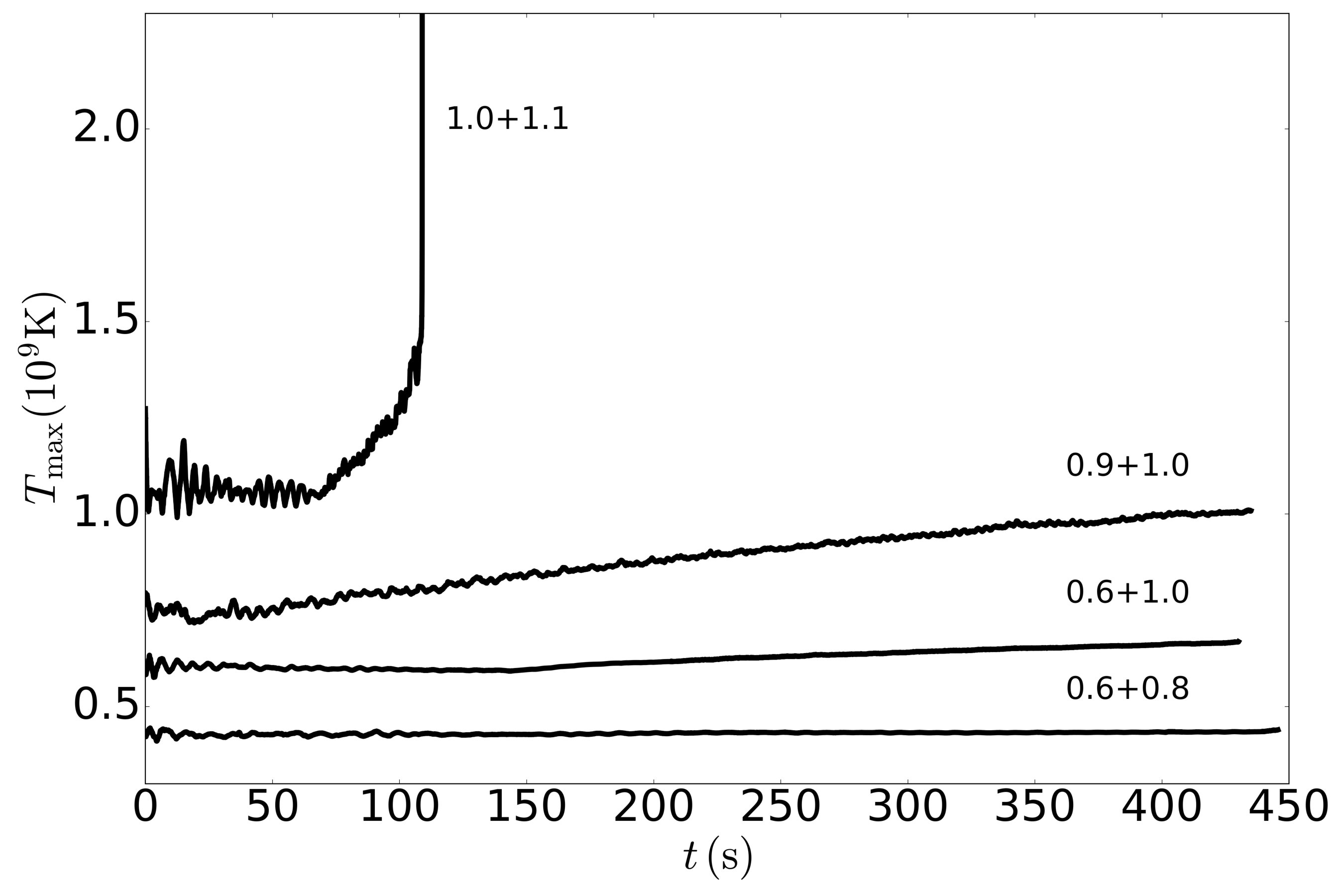 Figure 1
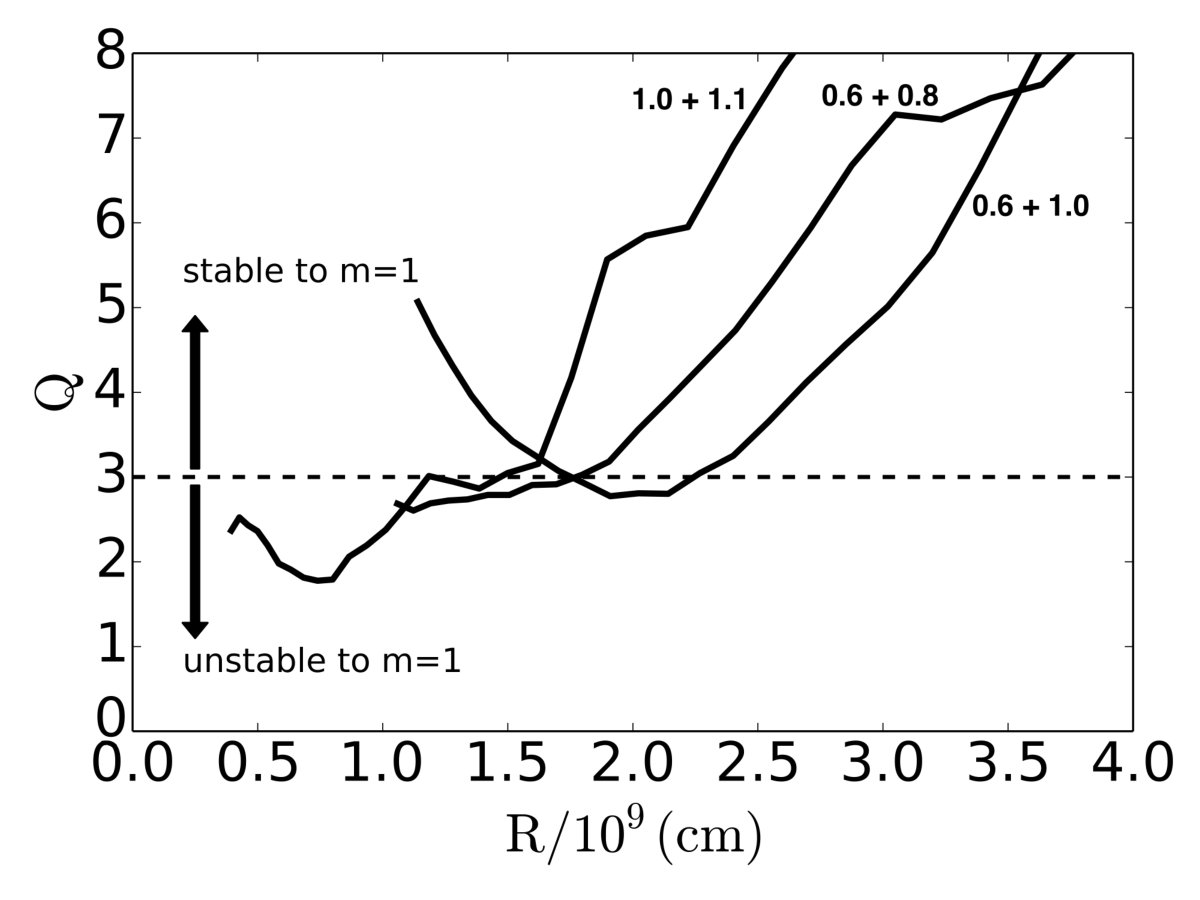 Figure 2
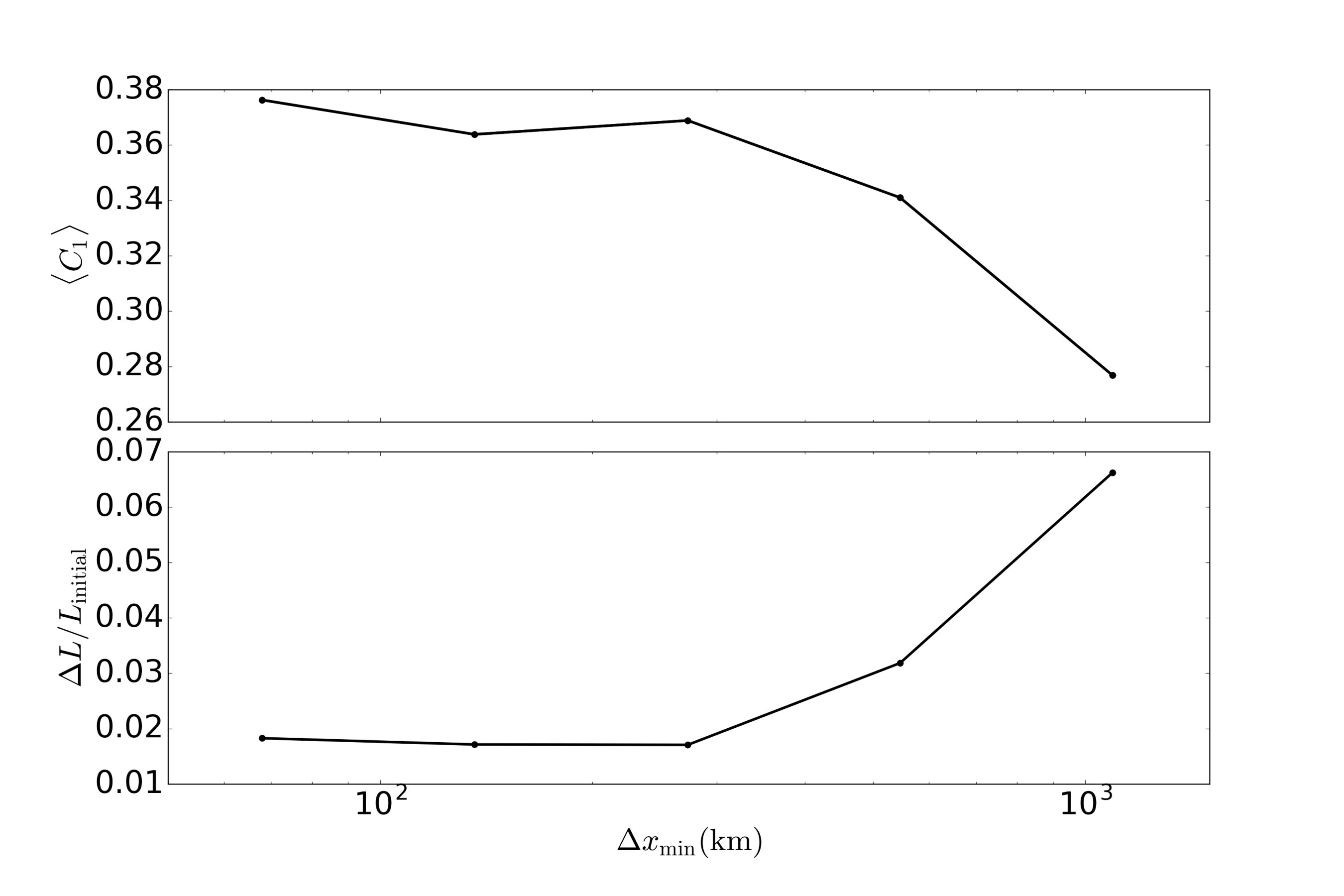 Figure 3
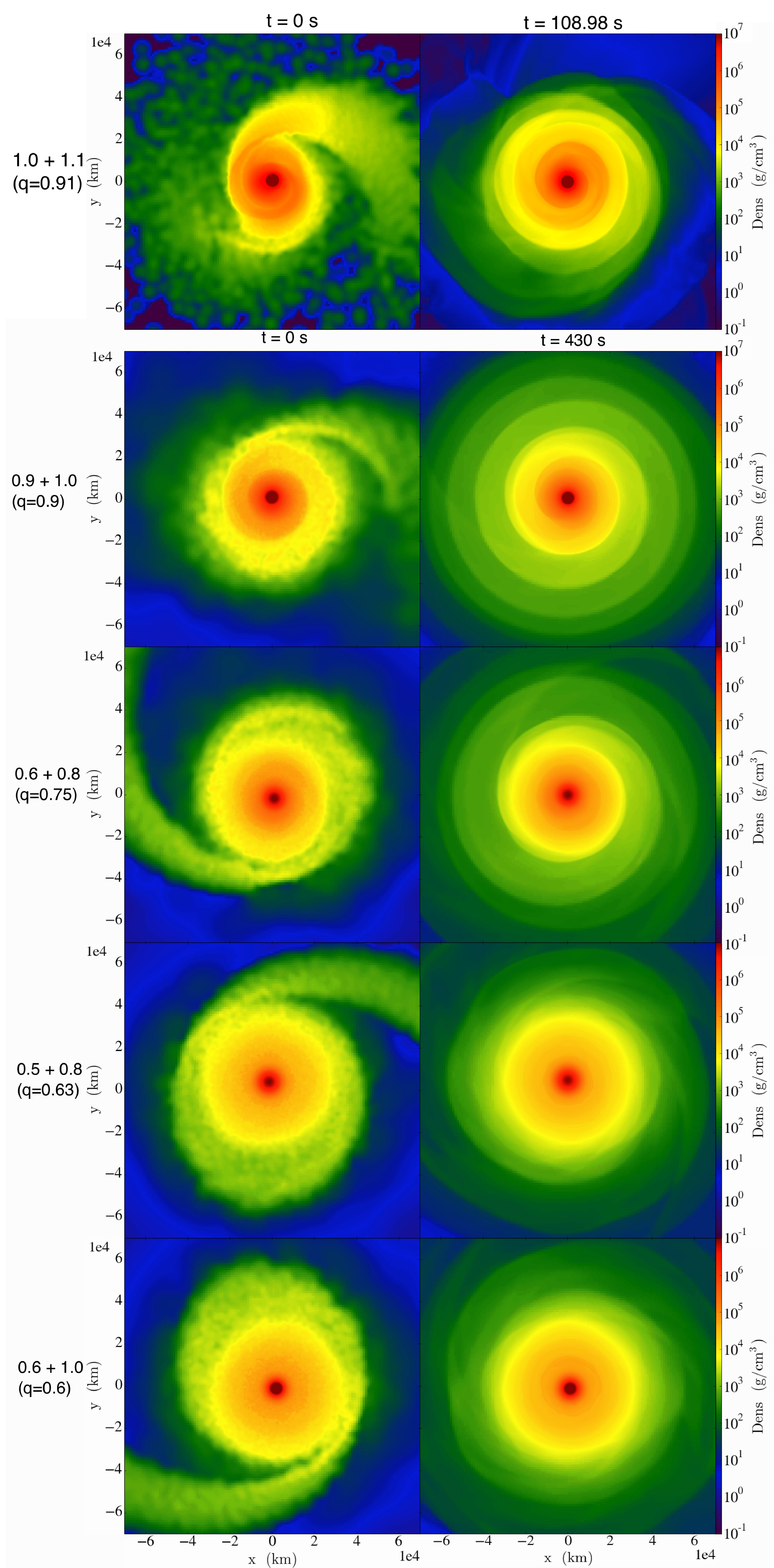 Figure 4
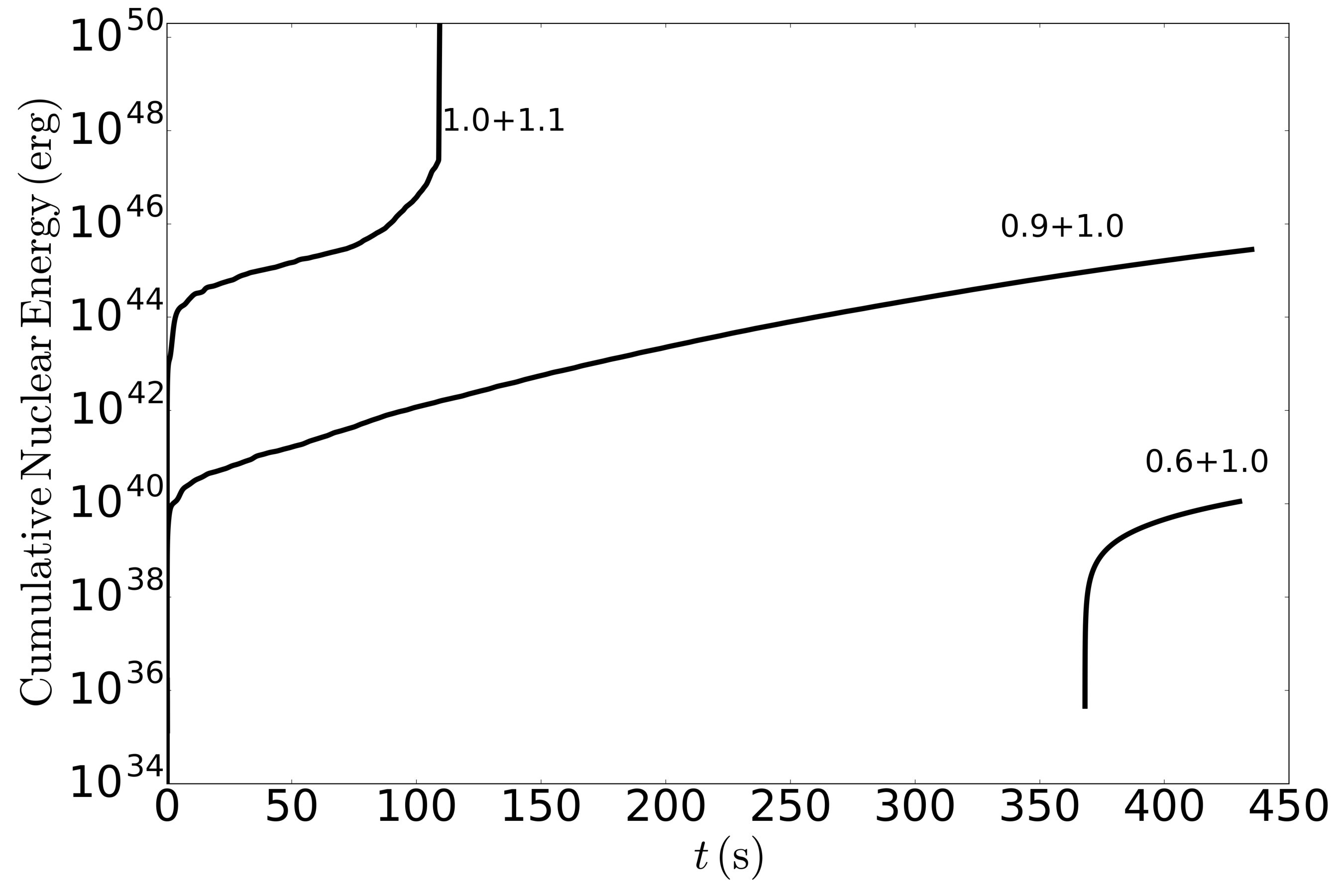 Figure 5
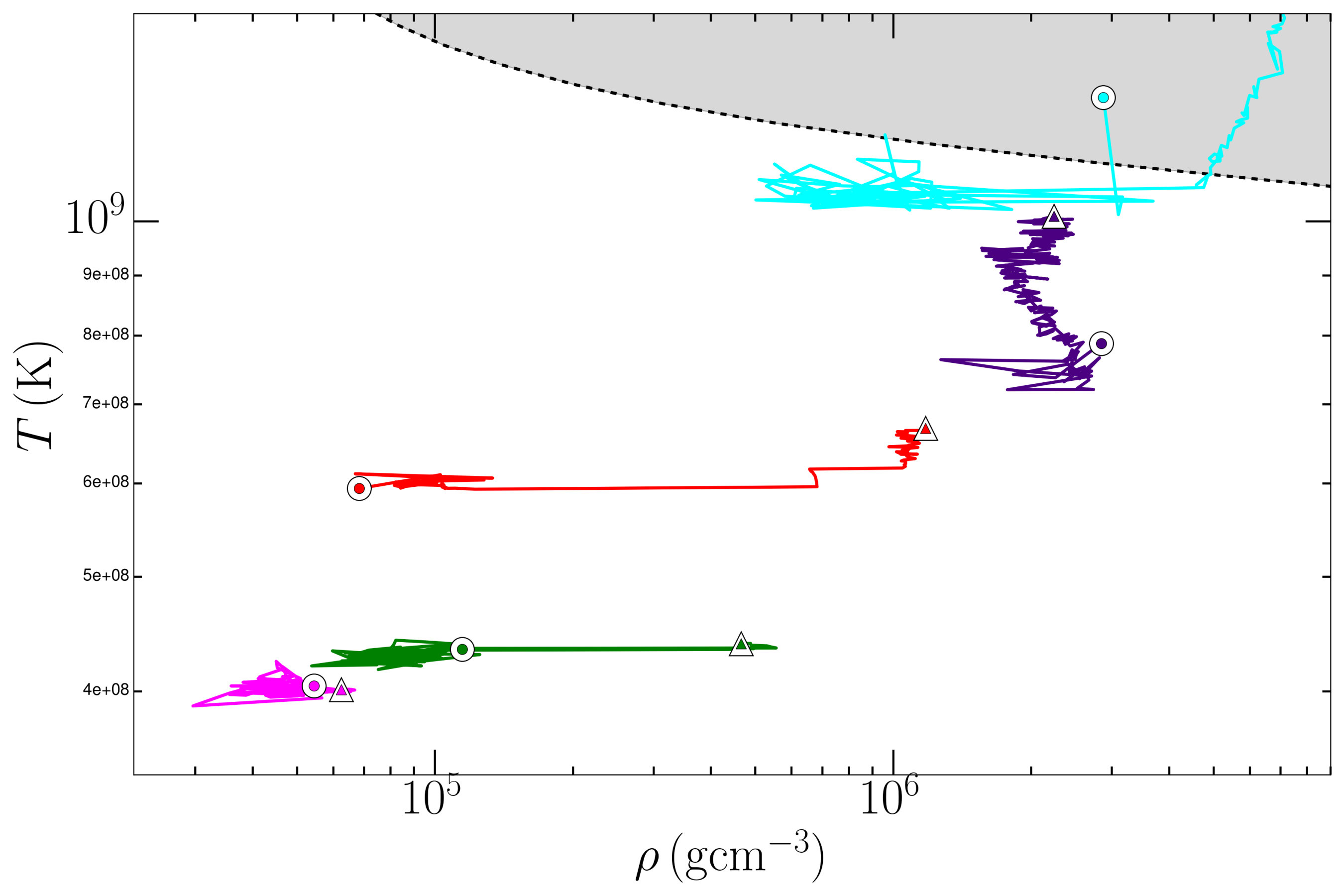 Figure 6
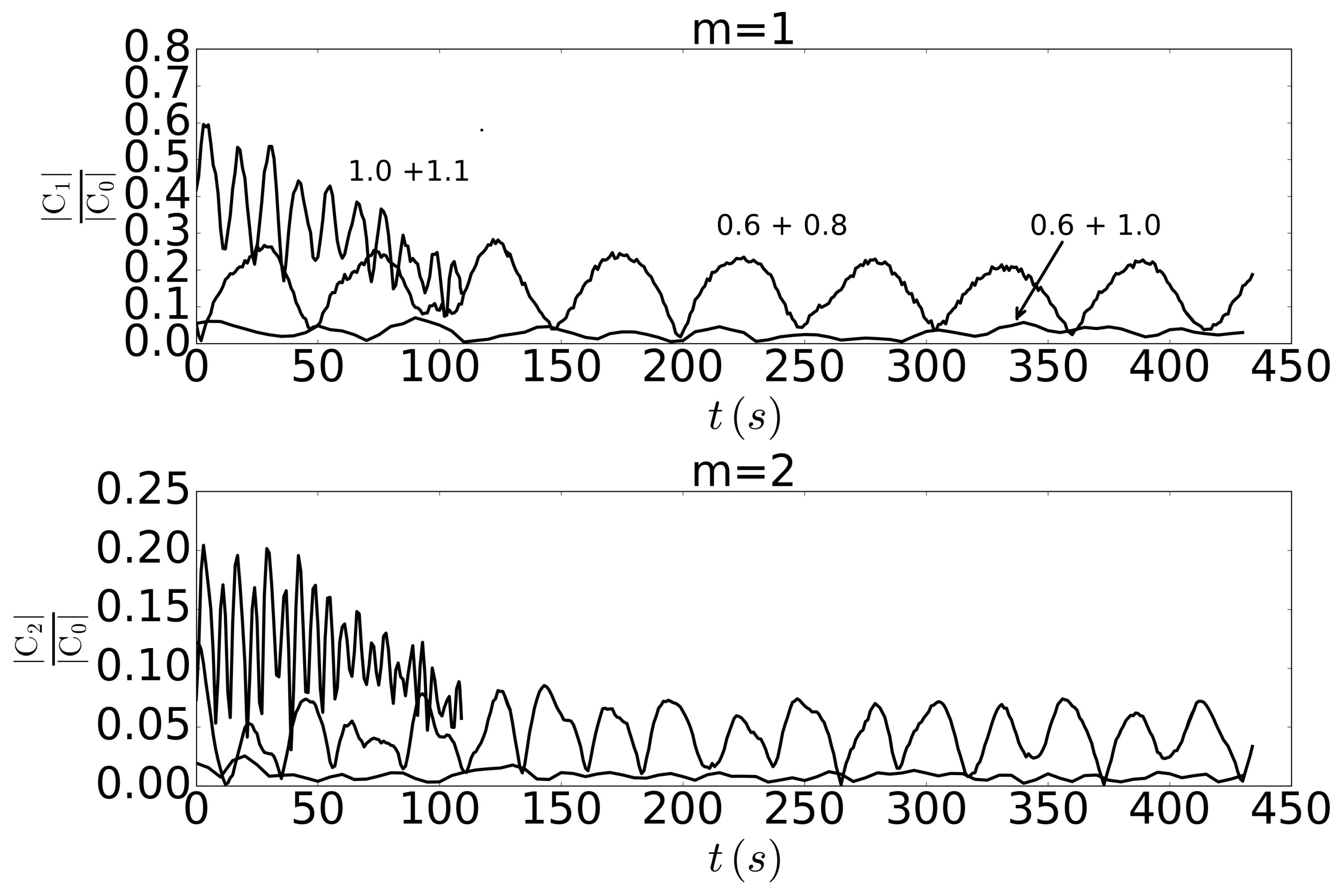 Figure 7
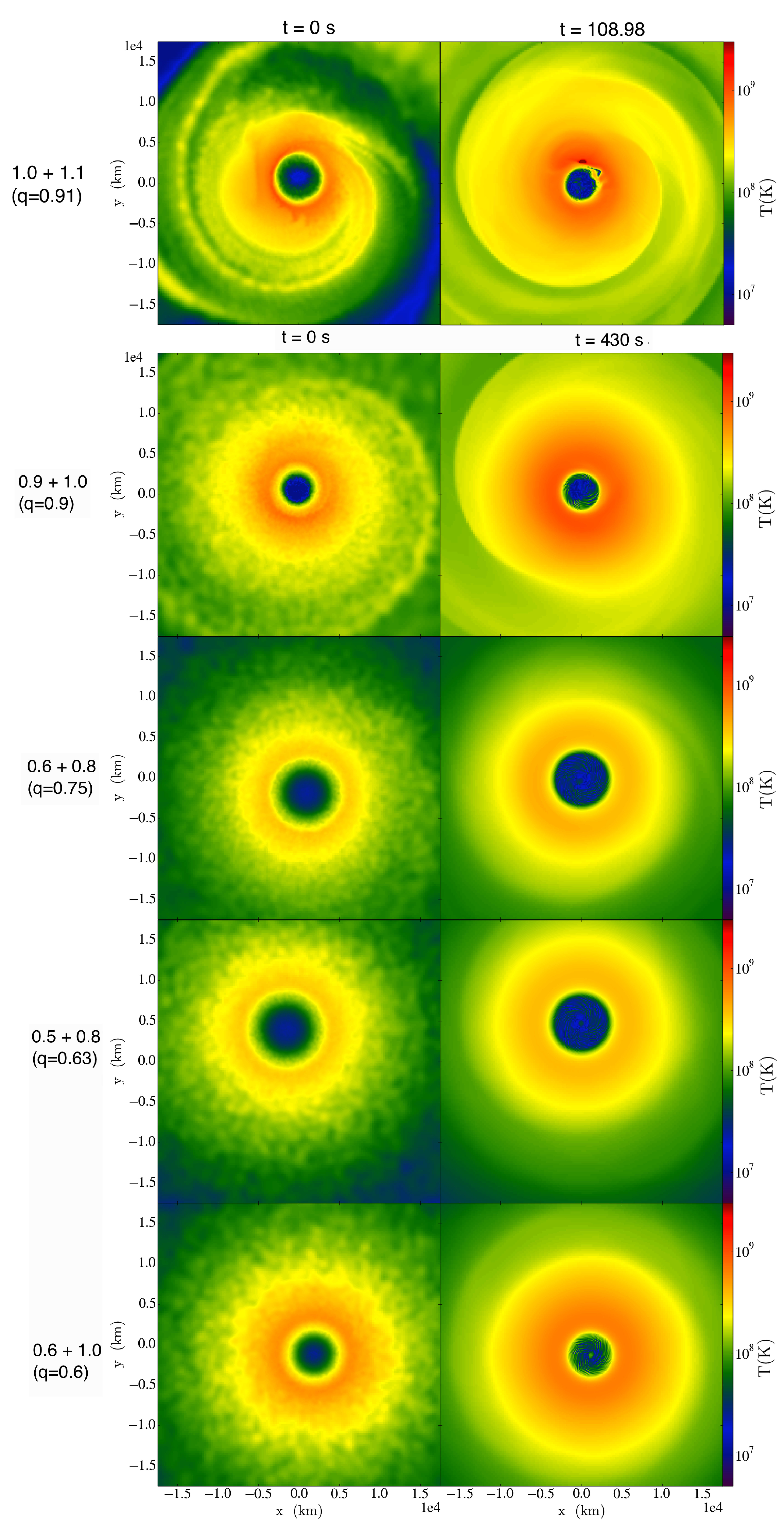 Figure 8
| Primary Mass | Secondary Mass | Mass ratio | at | Initial Distance | |
|---|---|---|---|---|---|
| () | () | (K) | ( gm/cm3) | R⊙ | |
| 1.1 | 1.0 | 0.91 | 3.2 | 6.7 | 2.327 |
| 1.0 | 0.9 | 0.90 | 1.0 | 3.3 | 2.594 |
| 0.8 | 0.6 | 0.75 | 1.3 | 0.7 | 2.561 |
| 0.8 | 0.5 | 0.63 | 0.4 | 0.7 | 3.067 |
| 1.0 | 0.6 | 0.60 | 0.7 | 1.4 | 2.761 |
| Primary Mass | Secondary Mass | Mass ratio | ||||
|---|---|---|---|---|---|---|
| () | () | |||||
| 1.1 | 1.0 | 0.91 | 0.4694 | 0.1865 | 0.0674 | 0.0689 |
| 1.0 | 0.9 | 0.90 | 0.1593 | 0.0570 | 0.0209 | 0.0082 |
| 0.8 | 0.6 | 0.75 | 0.1650 | 0.0494 | 0.0171 | 0.0073 |
| 0.8 | 0.5 | 0.63 | 0.0440 | 0.0121 | 0.0060 | 0.0042 |
| 1.0 | 0.6 | 0.60 | 0.0331 | 0.0097 | 0.0062 | 0.0042 |
Peer Reviews
No public reviews on file for this paper yet. If you reviewed it on a platform where reviews are public (OpenReview, ICLR, NeurIPS, ICML), you can paste yours below so the community can read it here.
Videos
No videos yet. Explain this paper in a talk, walkthrough, or lecture? Add one.
One-Armed Spiral Instability in Double-Degenerate Post-Merger Accretion Disks
Rahul Kashyap11affiliation: Department of Physics, University of Massachusetts Dartmouth, 285 Old Westport Road, North Dartmouth, MA. 02740, USA , Robert Fisher11affiliation: Department of Physics, University of Massachusetts Dartmouth, 285 Old Westport Road, North Dartmouth, MA. 02740, USA 22affiliation: Institute for Theory and Computation, Harvard-Smithsonian Center for Astrophysics, 60 Garden Street, Cambridge, MA 02138, USA 33affiliation: Kavli Institute for Theoretical Physics, Kohn Hall, University of California at Santa Barbara, Santa Barbara, CA 93106, USA , Enrique García-Berro44affiliation: Departament de Física, Universitat Politècnica de Catalunya, c/Esteve Terrades, 5, E-08860 Castelldefels, Spain 55affiliation: Institut d’Estudis Espacials de Catalunya, Ed. Nexus-201, c/Gran Capità 2-4, E-08034 Barcelona, Spain , Gabriela Aznar-Siguán44affiliation: Departament de Física, Universitat Politècnica de Catalunya, c/Esteve Terrades, 5, E-08860 Castelldefels, Spain 55affiliation: Institut d’Estudis Espacials de Catalunya, Ed. Nexus-201, c/Gran Capità 2-4, E-08034 Barcelona, Spain , Suoqing Ji66affiliation: Department of Physics, Broida Hall, University of California Santa Barbara, Santa Barbara, CA. 93106-9530, USA , Pablo Lorén-Aguilar77affiliation: School of Physics, University of Exeter, Stocker Road, Exeter EX4 4QL, UK
Abstract
Increasing observational and theoretical evidence points to binary white dwarf mergers as the origin of some if not most normal Type Ia supernovae (SNe Ia). In this paper, we discuss the post-merger evolution of binary white dwarf (WD) mergers, and their relevance to the double-degenerate channel of SNe Ia. We present 3D simulations of carbon-oxygen (C/O) WD binary systems undergoing unstable mass transfer, varying both the total mass and the mass ratio. We demonstrate that these systems generally give rise to a one-armed gravitational spiral instability. The spiral density modes transport mass and angular momentum in the disk even in the absence of a magnetic field, and are most pronounced for secondary-to-primary mass ratios larger than . We further analyze carbon burning in these systems to assess the possibility of detonation. Unlike the case of a C/O WD binary, we find that WD binary systems with lower mass and smaller mass ratios do not detonate as SNe Ia up to outer dynamical times. Two additional models do however undergo net heating, and their secular increase in temperature could possibly result in a detonation on timescales longer than those considered here.
supernovae: general — hydrodynamics — white dwarfs, double-degerate, sub-Chandrasekhar, spiral instability
\AuthorCallLimit
=5
1 Introduction
Type Ia supernovae (SNe Ia) serve an important role as standardizable cosmological candles (Riess et al., 1998; Perlmutter et al., 1999). However, we still lack an explanation of their origin and progenitors. Hence, the observed homogeneity of their light curves, which play a key role in the determination of the cosmological parameters, is based on purely empirical grounds. Two pathways are frequently discussed as possible progenitors of SNe Ia. Firstly, a white dwarf (WD) may accrete mass from a main sequence or red giant companion until it reaches the Chandrasekhar mass through the single-degenerate (SD) channel (Whelan & Iben, 1973). Secondly, two WDs may merge and give rise to an SN Ia through the double-degenerate (DD) channel (Iben & Tutukov, 1984; Webbink, 1984). Contrary to previous expectations, it now appears likely that the SD scenario may account for a wide range of 56Ni yields, encompassing subluminous through overluminous SNe Ia (Fisher & Jumper, 2015; Childress et al., 2015). A variety of observational constraints, including the delay-time distribution (DTD), favors the DD channel (Maoz & Badenes, 2010). Although progress is rapidly being made both observationally and theoretically, there are still many unresolved questions surrounding both channels (Maoz et al., 2013). For this reason, other evolutionary paths that might produce a SN Ia outburst have been proposed as alternatives to the SD and the DD scenarios. Among these possible channels are the core-degenerate (CD) channel (Sparks & Stecher, 1974; Livio & Riess, 2003; Kashi & Soker, 2011; Ilkov & Soker, 2013; Aznar-Siguán et al., 2015), and the collisional scenario, in which two WDs collide in a dense stellar environment (Raskin et al., 2009; Rosswog et al., 2009; Thompson, 2011; Kushnir et al., 2013; Aznar-Siguán et al., 2013). Additionally, the possibility of developing a double detonation in the carbon-oxygen core of a massive WD through the detonation of a He buffer atop the carbon-oxygen core, and the subsequent shock convergence has also been proposed (Woosley & Weaver, 1994; Livne, 1990; Livne & Arnett, 1995)
About 10% of C/O WD binary mergers have a total system mass which exceeds the Chandrasekhar mass (Badenes & Maoz, 2012). Out of ten such super-Chandrasekhar WD binaries, one will merge within a Hubble time via loss of angular momentum by gravitational waves (Nelemans et al., 2001). Toonen et al. (2012) report super-Chandrasekhar WD binaries to be 1.2% - 4.3% of the total number of WD binaries in their binary population models. These super-Chandrasekhar mass binary mergers have been hypothesized to produce a variety of end states – including SNe Ia (Iben & Tutukov, 1984), accretion-induced collapse (AIC) to neutron stars or anomalous X-ray pulsars (Saio & Nomoto, 1985; Miyaji et al., 1980; Rueda et al., 2013). Some spherically-symmetric models suggested that WD mergers would lead to an off-centered ignition and an AIC (Shen et al., 2012; Yoon et al., 2007). However, multidimensional simulations reveal a more complex picture of the merger – namely, a cold WD core surrounded by a disk generated by the tidal disruption of the secondary (Guerrero et al., 2004; Lorén-Aguilar et al., 2009; Pakmor et al., 2012a; Raskin et al., 2012a; Schwab et al., 2012), which may possibly lead to a SN Ia. In the most thoroughly-explored scenario, two C/O WDs of nearly equal mass generate sufficient tidal heating to ignite carbon and detonate a sufficiently massive primary (Pakmor et al., 2010, 2012b, 2013). In the violent merger scenario, a carbon detonation is argued to arise shortly after the tidal disruption of the secondary. The detonation conditions in this case are typically assumed to arise at the location of the maximum temperature in a smoothed particle hydrodynamics (SPH) simulation following the binary through merger, and introduced artificially in a subsequent evolution on an Eulerian grid simulation. However, other authors (Raskin et al., 2012b) do not find detonation conditions under similar circumstances. Moreover, synthetic light curves and spectra obtained from these violent mergers show a strong dependence upon viewing angle, in tension with observations (Moll et al., 2014).
In a previous paper (Kashyap et al., 2015), we followed the evolution of a C/O WD binary beyond the initial stages of evolution resulting from a violent merger. In that paper we found that gravitational instability becomes possible in the disk formed by the tidally-disrupted material of the secondary star that surrounds the primary. Using both analytic arguments and numerical simulations, we demonstrated that the disk is particularly susceptible to a one-armed spiral mode instability. This spiral gravitational instability gives rise to spiral shocks, which carry angular momentum outward, and matter inwards (Blaes & Hawley, 1988). The accreted matter in turn drives a detonation front through the primary WD. More recent work has similarly found spiral shocks contribute significantly to the angular momentum transport in CVs, even when the magnetorotational instability is active (Ju et al., 2016).
In the linear regime, an axisymmetric perturbation analysis yields the classic criterion that the disk becomes unstable when the Toomre parameter . In this expression, is the sound speed, is the epicyclic frequency with being angular velocity and is the cylindrical radial distance, is the disk surface density, and is the gravitational constant. Previous numerical and analytic studies have extended the classic axisymmetric Toomre condition to non-axisymmetric perturbations. For instance, in a pioneering study, Adams et al. (1989) and Shu et al. (1990) demonstrated that the criterion for the instability to develop the spiral mode is that the Toomre parameter should be smaller than 3 at corotation. Two key questions to be addressed in this paper are the following ones. To what extent is the development of the eccentric one-armed spiral instability a general outcome of binary WD mergers? Under what circumstances may this instability lead to detonation of the C/O WD core? In our previous paper, we argued from general principles that the inner portion of the WD disk is marginally susceptible to gravitational instability over a wide range of mass ratios, and completely independent of the total system mass. However, while we conducted a careful set of simulations varying the numerical resolution and timestep criteria in Kashyap et al. (2015), we studied just one WD merger model of a C/O WD binary. In this paper, we present the hydrodynamical evolution of several C/O WD mergers with different masses and mass ratios over several outer dynamical timescales, with the goal of analyzing the development of the spiral mode instability in these systems, and investigating their prospects to produce SN Ia.
The plan of the paper is as follows. In §2, we present our numerical methodology and suite of binary WD models. In §3, we present and discuss the results of the full nonlinear numerical evolution of these binary WD mergers. We then consider the possibility of carbon ignition with the set of initial conditions of the models considered. Lastly, in §4, we summarize our findings and elaborate our conclusions.
2 Methodology
We conducted a suite of simulations of merging C/O WDs, which initially had equal abundances of carbon and oxygen, and with masses , , , and . For these simulations, we used the SPH code employed in our previous studies (Lorén-Aguilar et al., 2010), with a resolution of SPH particles. The SPH simulations utilizes a nuclear -network which incorporates 14 nuclei: He, C, O, Ne, Mg, Si, S, Ar, Ca, Ti, Cr, Fe, Ni, and Zn. The reactions considered are captures and their associated back reactions, C-C and C-O fusion reactions, and a quasi-equilibrium reduced -network for temperatures higher than K (Hix et al., 1998). All reaction rates are taken from the REACLIB database (Cyburt et al., 2010). Neutrino losses are also taken into account, using Itoh et al. (1996).
The initial SPH conditions to simulate the merger of the two white dwarfs in a synchronized binary orbit closely follow the procedure outlined in Dan et al. (2011). In particular, we first set the coalescing white dwarfs in the co-rotating frame at a sufficiently large distance, to avoid premature mass transfer. Afterwards, the orbital separation is slowly decreased in such a way that the orbital shrinkage time is always substantially longer than the dynamical timescale of the secondary. As soon as the first SPH particle of the secondary white dwarf reaches the inner Lagrangian point (or, equivalently, the secondary fills its Roche lobe) the relaxation process is stopped, and the simulation of the merger starts. In this way we obtain accurate initial separations for our simulations. The distances between the centers of mass of the merging white dwarfs when mass transfer begins, as well as some other details, are listed in Table 1.
We introduce a lower limit for the density ( g cm), corresponding to a maximum smoothing length of km. This density limit was introduced into our SPH code in order to prevent large velocity dispersions in particles being ejected during the merging process, and a consequent greatly-reduced timestep. This maximum smoothing length is in a sense analogous to the base level grid of an adaptive mesh refinement code, which imposes a coarsest possible mesh size to a grid-based calculation. The amount of matter affected by the density limit is extremely small when compared with the mass present in the main body of the merger, so its impact on the development of the spiral instability is minimal. However, one must be cautious when interpreting the outermost regions of each disk, since the density profile inevitably becomes underresolved at some radius.
Our SPH simulation results are in good overall agreement with other similar models up to the point of merger (Lorén-Aguilar et al., 2009) although our peak temperatures are somewhat higher than those of Dan et al. (2011). Most previous SPH calculations of the coalescence of white dwarfs obtain the temperature following the evolution of the internal energy. From the newly-computed internal energy, the temperature can be obtained by inverting the equation of state. However, since a large portion of the merging white dwarfs is degenerate, this procedure can produce poor results in some cases. To avoid such spurious results we follow the evolution of the temperature simultaneously using the specific heat – see Eqs. (5) and (6) of Aznar-Siguán et al. (2013). Specifically, we always evolve the temperature using both prescriptions, and if the difference between the temperatures is larger than 5%, and the degeneracy parameter is sufficiently large so that the electrons can be considered as partially degenerate, we consider that the temperature determination obtained employing the specific heat is more reliable, and we adopt this value. Otherwise, if this is not the case, we compute the temperature in the standard way: that is, inverting the equation of state. Using this dual energy description, total energy is best conserved, and the numerical results are more reliable than an internal energy description.
The reference list from the paper itself. Each links out to its DOI / PubMed record.
- 1Adams et al. (1989) Adams, F. C., Ruden, S. P., & Shu, F. H. 1989, Ap J, 347, 959
- 2Aznar-Siguán et al. (2013) Aznar-Siguán, G., García-Berro, E., Lorén-Aguilar, P., José, J., & Isern, J. 2013, MNRAS, 434, 2539
- 3Aznar-Siguán et al. (2015) Aznar-Siguán, G., García-Berro, E., Lorén-Aguilar, P., Soker, N., & Kashi, A. 2015, MNRAS, 450, 2948
- 4Badenes & Maoz (2012) Badenes, C., & Maoz, D. 2012, Ap J, 749, L 11
- 5Blaes & Hawley (1988) Blaes, O. M., & Hawley, J. F. 1988, Ap J, 326, 277
- 6Blinnikov & Khokhlov (1987) Blinnikov, S. I., & Khokhlov, A. M. 1987, Pisma v Astronomicheskii Zhurnal, 13, 868
- 7Calder et al. (2002) Calder, A. C., Fryxell, B., Plewa, T., et al. 2002, Ap JS, 143, 201
- 8Caughlan & Fowler (1988) Caughlan, G. R., & Fowler, W. A. 1988, Atomic Data and Nuclear Data Tables, 40, 283