Radiative Light Dark Matter
Athanasios Dedes, Dimitrios Karamitros, Apostolos Pilaftsis

TL;DR
This paper proposes a PQ-symmetric two-Higgs doublet model that naturally produces a light fermionic dark matter candidate through radiative mechanisms, with potential implications for cosmology and collider physics.
Contribution
It introduces a novel radiative mechanism for generating light fermionic dark matter within a PQ-symmetric two-Higgs doublet framework, connecting dark matter, the strong CP problem, and collider phenomenology.
Findings
Dark matter mass generated at one-loop level.
Dark matter produced via freeze-in mechanism.
Model has implications for LHC phenomenology.
Abstract
We present a Peccei-Quinn (PQ)-symmetric two-Higgs doublet model that naturally predicts a fermionic singlet dark matter in the mass range 10 keV-1 GeV. The origin of the smallness of the mass of this light singlet fermion arises predominantly at the one-loop level, upon soft or spontaneous breakdown of the PQ symmetry via a complex scalar field in a fashion similar to the so-called Dine-Fischler-Sredniki-Zhitnitsky axion model. The mass generation of this fermionic Radiative Light Dark Matter (RLDM) requires the existence of two heavy vector-like SU(2) isodoublets, which are not charged under the PQ symmetry. We show how the RLDM can be produced via the freeze-in mechanism, thus accounting for the missing matter in the Universe. Finally, we briefly discuss possible theoretical and phenomenological implications of the RLDM model for the strong CP problem and the CERN Large Hadron…
Click any figure to enlarge with its caption.
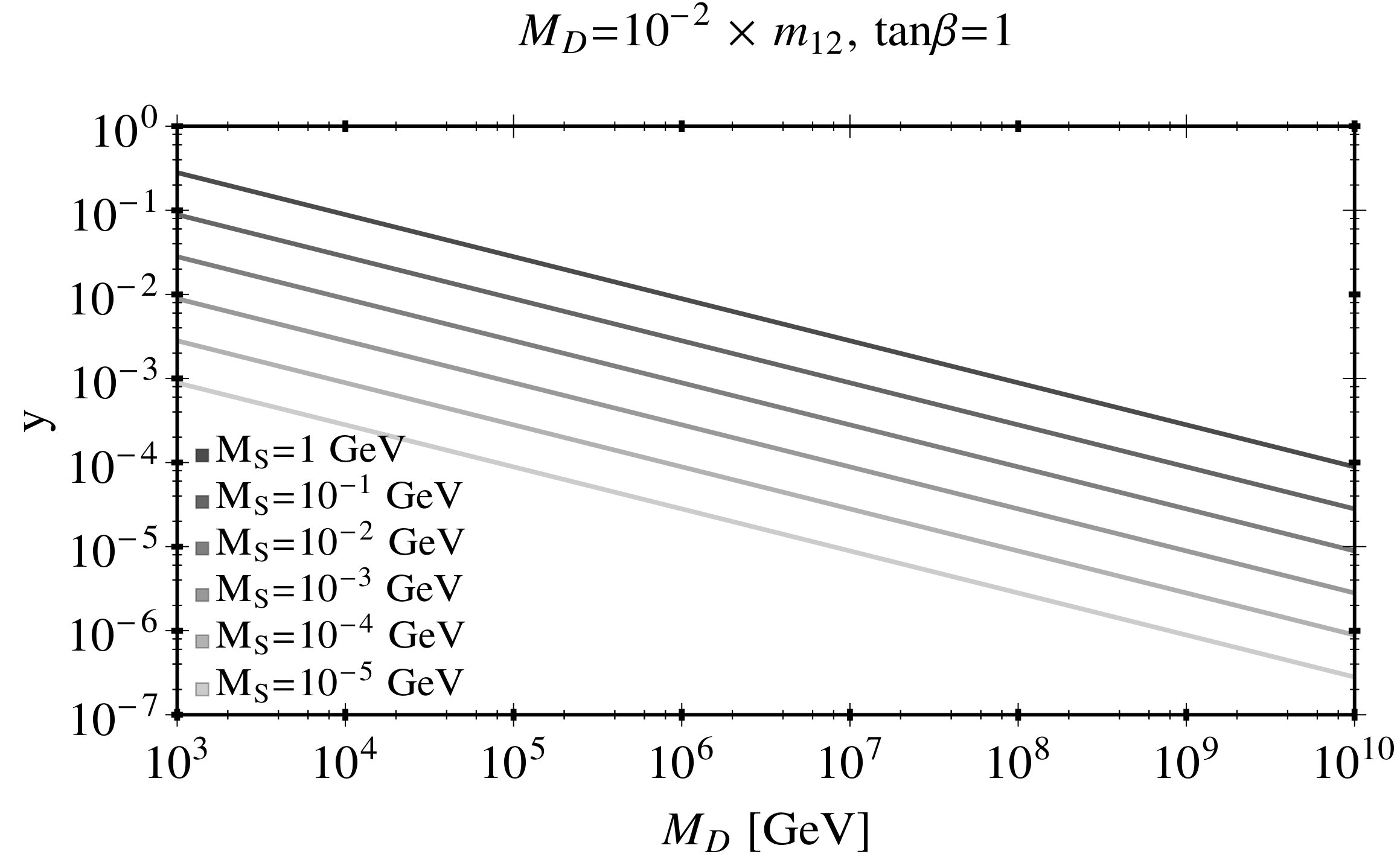 Figure 1
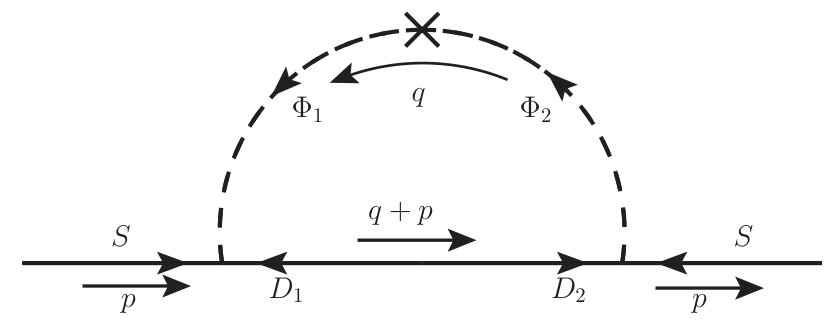 Figure 2
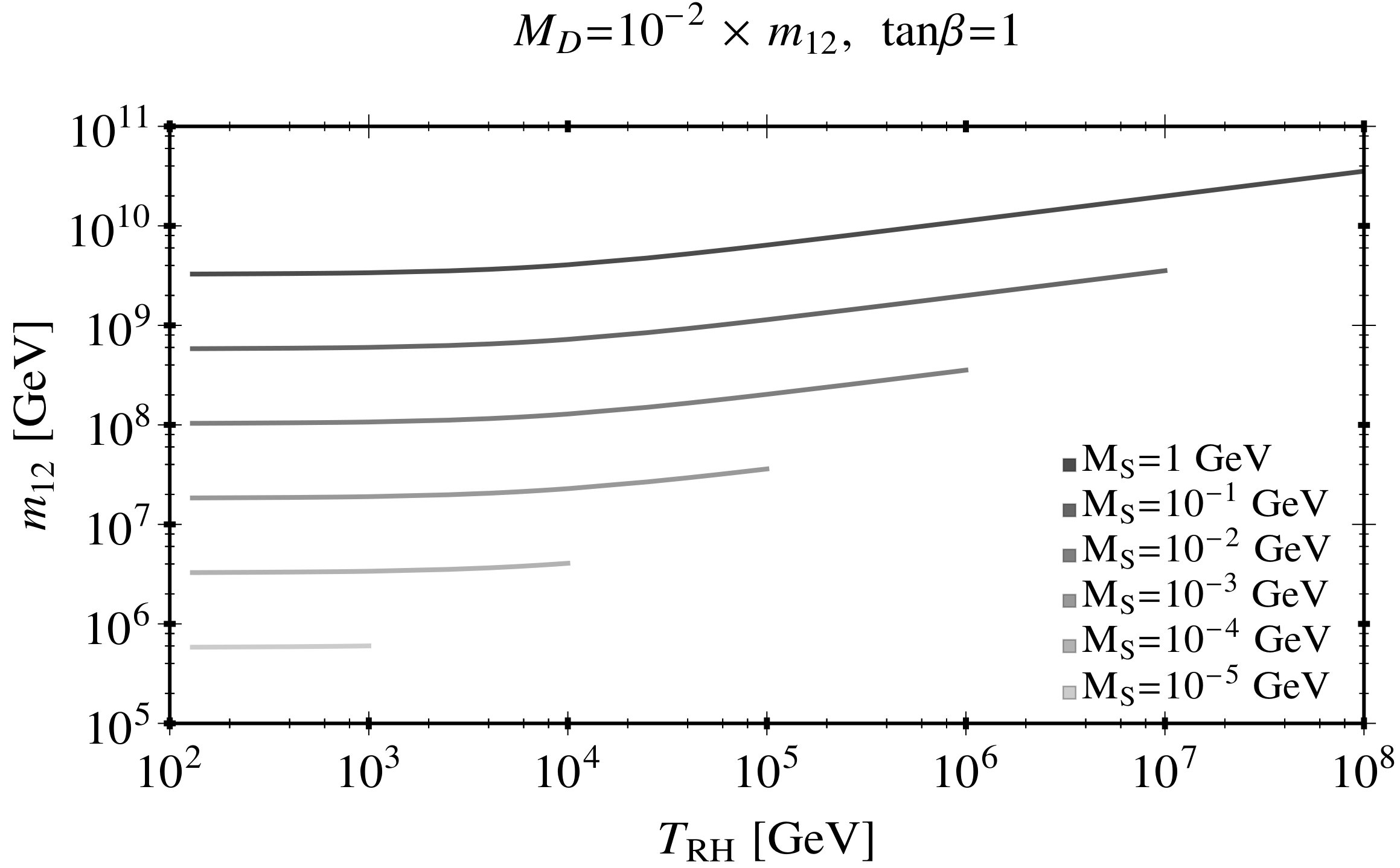 Figure 3
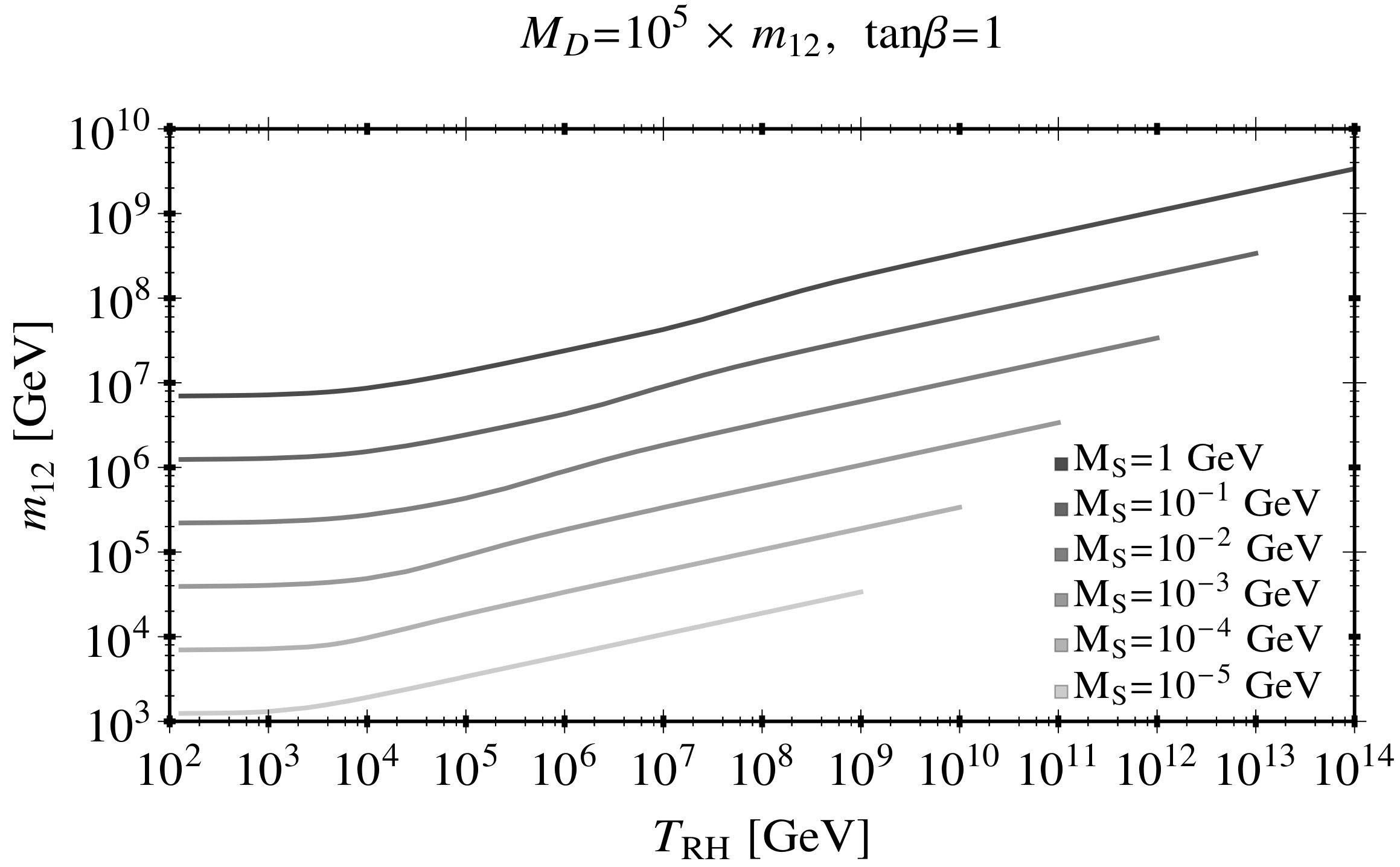 Figure 4
| 1 | 0 | odd | ||
| 2 | 0 | odd | ||
| 2 | 1 | 0 | odd | |
| 2 | 1 | 1 | even | |
| 2 | 1 | even |
Peer Reviews
No public reviews on file for this paper yet. If you reviewed it on a platform where reviews are public (OpenReview, ICLR, NeurIPS, ICML), you can paste yours below so the community can read it here.
Videos
No videos yet. Explain this paper in a talk, walkthrough, or lecture? Add one.
MAN/HEP/2017/06
April 2017
Radiative Light Dark Matter
A. Dedes1111email: [email protected]
1Department of Physics, Division of Theoretical Physics,
University of Ioannina, GR 45110, Greece
D. Karamitros1222email: [email protected] and A. Pilaftsis2333email: [email protected]
1Department of Physics, Division of Theoretical Physics,
University of Ioannina, GR 45110, Greece
Abstract
We present a Peccei–Quinn (PQ)-symmetric two-Higgs doublet model that naturally predicts a fermionic singlet dark matter in the mass range 10 keV–1 GeV. The origin of the smallness of the mass of this light singlet fermion arises predominantly at the one-loop level, upon soft or spontaneous breakdown of the PQ symmetry via a complex scalar field in a fashion similar to the so-called Dine–Fischler–Sredniki–Zhitnitsky axion model. The mass generation of this fermionic Radiative Light Dark Matter (RLDM) requires the existence of two heavy vector-like SU(2) isodoublets, which are not charged under the PQ symmetry. We show how the RLDM can be produced via the freeze-in mechanism, thus accounting for the missing matter in the Universe. Finally, we briefly discuss possible theoretical and phenomenological implications of the RLDM model for the strong CP problem and the CERN Large Hadron Collider (LHC).
1 Introduction
Ongoing searches for the elusive missing matter component of the Universe, the so-called Dark Matter (DM), have offered no conclusive evidence so far. From analyses of the CMB power spectrum and from pertinent astronomical studies, we now know that about one quarter of the energy budget of our Universe should be in the form of DM, and so many candidate theories have been put forward to address this well-known DM problem [1]. Among the suggested scenarios, those predicting Weakly Interactive Massive Particles (WIMPs) constitute one class of popular models that may not only account for the DM itself, but also leave their footprints in low-energy experiments, or even at high-energy colliders, such as the LHC [2]. In particular, for WIMPs near the electroweak scale, the WIMP-nucleon scattering cross section is estimated to be somewhat below as measured by LUX [3].
Projected experiments that lie not very far ahead in future will be capable of reaching sensitivity in the ballpark – [4], and so they will be getting closer to the neutrino-nucleon background cross section, the infamous “neutrino floor,” where disentangling neutrino signals from those of WIMPs will become almost an impossible task [5]. Therefore, DM models have to be constructed (or revisited) to avoid such severe constraints, e.g. by contemplating scenarios that either sufficiently suppress the WIMP-nucleon interaction, or move the DM mass to the sub-GeV or ultra-TeV region.
Several models have been proposed featuring a light DM in the mass range (keV)–(GeV), such as sterile neutrino DM [6, 7, 8, 9, 10], light scalar DM [11] and milli-charged DM [12], including their possible implications for future DM searches [13, 14]. However, one central problem of such models is the actual origin of the small mass for the light DM, which could be more than six orders of magnitude below the electroweak scale.
In this paper we address this mass hierarchy problem, by presenting a new radiative mechanism that can predominantly account for the smallness in mass for the light DM. The so-generated Radiative Light Dark Matter (RLDM) is a fermionic singlet and can naturally acquire a mass in the desired range: 10 keV–1 GeV. A minimal realization of this radiative mechanism requires the extension of the Standard Model (SM) by one extra scalar doublet, resulting in a Peccei–Quinn (PQ)-symmetric two-Higgs doublet model [15, 16], augmented by two fermionic heavy vector-like SU(2) isodoublets and , which are not charged under the PQ symmetry. The mass of the RLDM is predominantly generated at the one-loop level, upon soft or spontaneous breakdown of the PQ symmetry via a complex scalar field, e.g. , in close analogy to the so-called Dine–Fischler–Sredniki–Zhitnitsky (DFSZ) axion model that addresses the strong CP problem [17, 18].
We analyse the production mechanisms of the RLDM in the early Universe, and show that it can account for its missing matter component via the so-called freeze-in mechanism [19]. In fact, we illustrate how the freeze-in mechanism remains effective in the RLDM model, without the need to resort to suppressed Yukawa couplings. In this context, we investigate two possible scenarios of both theoretical and phenomenological interest. In the first scenario, we consider the breaking of the PQ scale to be comparable to the one required for the DFSZ model to solve the strong CP problem, i.e. GeV. We find that such PQ scale can exist within this realization, provided an appropriate isodoublet mass and reheating temperature is considered. In the second scenario, we relax the constraint of the strong CP problem on , and investigate its possible lower limit, with the only requirement that be larger than the critical temperature of the SM electroweak phase transition, thus allowing for the -violating sphaleron processes to be in thermal equilibrium. This requirement is introduced here, so as to leave open the possibility of explaining the cosmological baryon-to-photon ratio via low-scale baryogenesis mechanisms, such as electroweak baryogenesis [20, 21] and resonant leptogenesis [22, 23, 24, 25]. In this second scenario, we find that the heavy Higgs bosons of the two-Higgs doublet model (2HDM) may have masses as low as a few TeV, which are well within reach of the LHC.
The layout of the paper is as follows. In Section 2, we first introduce the PQ-symmetric 2HDM, augmented with a singlet fermion and a fermionic pair of vector-like doublets . Then, we describe the radiative mechanism for the RLDM, once the PQ symmetry is broken softly, and show that a radiative mass in the range 10 keV–1 GeV can be naturally generated. In Section 3, we outline the relevant Boltzmann equation for computing the relic abundance of the RLDM. Utilising the freeze-in mechanism, we present in Section 4 numerical estimates for the allowed parameter space of our RLDM model. Based on these results, we explore the possibility whether our model can account for the strong CP problem within a scenario similar to the DFSZ axion model. Moreover, we investigate whether an absolute lower limit exists for the heavy Higgs-boson masses in our effective 2HDM. Indeed, we find that our RLDM model may allow for heavy Higgs bosons at the TeV scale, whose existence can be probed at the LHC. Finally, Section 5 summarises our conclusions and outlines possible new directions for further research.
2 Radiative Mechanism
In this section we present a minimal extension of the SM, in which the small mass of the light DM, in the region –, can have a radiative origin, generated at the one-loop level. This radiative mechanism is minimally realised within the context of a constrained 2HDM obeying a Peccei–Quinn symmetry. In addition, the model under study contains a singlet fermion charged under the PQ symmetry and a fermionic pair of massive isodoublets with zero PQ charges. Finally, we delineate the parameter space for which a viable scenario of Radiative Light Dark Matter can be obtained consistent with the observed relic abundance.
2.1 The Model
In the 2HDM under consideration, we impose a global PQ symmetry , which forbids the appearance of a bare mass term for the singlet fermion at the tree level. This PQ symmetry will be broken softly or spontaneously which in turn triggers a radiative mass for at the one-loop level. The fermion is stable and receives naturally a small sub-GeV mass, leading to a RLDM scenario. On the other hand, we note that a candidate for a light DM would probably be relativistic at its freeze-out, resulting in an extremely large relic abundance (similar to [26]) for the allowed range of DM masses that are larger than about 3 keV, e.g. see [27, 28]. Therefore, the DM should be produced out of thermal equilibrium in the early Universe. The mechanism that we will be utilising here is the so-called freeze-in mechanism[19], which assumes that the DM particles were absent initially and are produced only later from the plasma.
The relevant Yukawa and potential terms of our model are given by
[TABLE]
where are -group indices (with ), is a Weyl-fermion SM singlet, are two Weyl-fermion -doublets, and are two scalar -doublets. A complete list of the PQ and hypercharge quantum numbers of the aforementioned particles is given in Table 1, including a -parity which excludes the mixing of dark-sector particles with those of the SM. For simplicity, we assume that the new dark-sector interactions are CP invariant and so take their respective couplings to be real in the physical mass basis.
As can be seen from (2), we have assumed that the PQ symmetry is broken by the lowest dimensionally possible mass operator in the scalar potential , namely by allowing only the dimension-2 mixing term between and . This dimension-2 operator breaks softly the -symmetry in the potential, but could result from spontaneous breaking of the by a scalar , which acquires a vacuum expectation value (VEV) (see section 4). If the PQ-breaking scale is high enough, one may neglect, to a good approximation, the potential quartic couplings , as they do not affect much the radiative mass mechanism and the DM production rates which we will be discussing in the next section.
The mass parameters and of the scalar potential in eq. (2) may be eliminated in favour of the VEVs of the Higgs doublets , by virtue of the minimization conditions on (for a review on 2HDMs, see [29]). These VEVs are related to the SM Higgs VEV , through: . In the kinematic region where , the mass parameters and are approximately given by
[TABLE]
where .
2.2 One-Loop Radiative Mass
Having introduced the minimal model under investigation, we can now discuss the radiative mechanism responsible for the generation of a mass of dimension-3 for the singlet fermion . We assume that , such that the main contribution to the mass of the particle comes from the diagram shown in Fig. 1. In addition, there will be a tree-level mass generated after the SM electroweak phase transition, given by . Under the assumption that is very large, i.e. , the tree-level contribution turns out to be sub-dominant compared to the radiatively induced mass , and hence it can be ignored for most of the parameter space. We will return to this point at the end of this section.
After evaluating the relevant one-loop self-energy graph shown in Fig. 1 at zero external momentum (), we obtain
[TABLE]
where
[TABLE]
Employing the approximate relations given in (3) and (4), the one-loop radiative mass of is finite and may conveniently be expressed as follows:
[TABLE]
with and . Observe that the interchange leaves unchanged. Assuming that for different kinematic regimes of the ratio , the following simplified forms for are obtained:
[TABLE]
Note that for (corresponding to ), the radiative mass of the singlet fermion is suppressed by the square of the hierarchy factor . The latter allows for scenarios, for which the Yukawa couplings are of order 1, i.e. , for . On the other hand, for and , one needs either a low of order TeV and , or – and –.
In Fig. 2, we display the values of the coupling parameter , as a function of , which yield a radiatively induced mass for the singlet fermion in the region , for and . In particular, we see that for every set of , there is an acceptable range of perturbative values for . However, if , the desirable value of may exceed 10 according to (10), and our perturbative results do no longer apply. Such non-perturbative values of are excluded from our numerical estimates for the determination of the relic abundance of which we perform in the next section.
In a similar context, we note that a large mass for , and might seem to be a huge fine tuning for generating a light sub-GeV radiative mass for . However, we may easily convince ourselves that this is not the case. The absence of fine tuning can be seen in an easier way, if we rotate from the general weak basis spanned by and to the so called Higgs basis [30, 29], and , where contains the SM VEV and has exactly no VEV. Note that in the Higgs basis, the assignment of the PQ charges to the fields and is not canonical. Moreover, in this rotated Higgs basis, one has that the new Higgs-mass parameters obey the relation: . In addition, the analogue of the diagram in Fig. 1 is now represented by a set of two self-energy graphs, where the fields and are circulating in the loop. The ultraviolet (UV) infinities cancel, after the contributions from these two diagrams are added. For and , we then obtain the same result as the one stated in (9). Hence, we observe that a small mass for the singlet fermion arises naturally in an SM+ effective field theory. This effective field theory results from integrating out the heavy and fields from (1) in the Higgs basis.
Besides the radiative mass of which violates the PQ symmetry by two units (cf. Table 1), there will be a tree-level contribution to the mass of after the SM electroweak phase transition. For most values of interest here, the relative size of the two contributions can naively be estimated to be
[TABLE]
Thus, for , the tree-level contribution can be safely ignored. In our numerical estimates, the tree-level mass term is always less than 10% of the radiative mass term . Hence, the total mass of the stable fermion is given predominantly by the radiative mass term, implying that to a very good approximation.
We conclude this section by commenting on the possibility of considering a radiative model alternative to the one discussed here. For instance, one may envisage a scenario that instead of the single , one of the neutral components of the doublets becomes the RLDM. In this case, however, the charged component from will be almost degenerate with the light sub-GeV DM particle, which is excluded experimentally. The general SM+ effective theory has been studied in [31].
3 Dark Matter Abundance
In this section we first describe the relevant effective Lagrangian that governs the production of the stable fermions in the early Universe. We then solve numerically the Boltzmann equation that determines the yield of these fermions , where is the number density of particles and is the entropy density of the plasma. Having thus estimated the value of , we can then use it to deduce the respective relic abundance of the particles in the present epoch. Finally, we present approximate analytic results for and compare these with the observationally favoured value: .
As mentioned in the previous section, the stable fermions will play the role of the DM, which are produced via the freeze-in mechanism[19]. The key assumption is that the DM fermions were absent (i.e. their number density was suppressed) in the early Universe and were produced later from annihilations and decays of plasma particles, e.g. from and , according to the model discussed in Section 2. Furthermore, we will assume that were also absent in the early Universe, so as to avoid over-closure of the Universe, unless the Yukawa couplings are taken to be extremely suppressed, such that decays of the sort are made slow and inefficient. The latter results in a contrived scenario, in which obtaining a viable DM parameter space requires a good degree of fine tuning. In order for the -doublet fermions to be absent, we take their bare mass to be above the reheating temperature of the Universe. This simplifies considerably our analysis, as the heavy fermions can be integrated out.
The effective Lagrangian that determines the production rate of particles after reheating is given by
[TABLE]
where and denote the Wilson coefficients of the dimension-5 operators. The calculation of the relic abundance is not straightforward in this basis, since mix and the identification of the physical fields is obscured, especially after SSB where further mixing between the scalar fields is introduced. Therefore, according to our discussion at the end of Section 2.2, it would be more convenient to rotate the scalars to the so-called Higgs basis [29], where only one doublet develops a VEV and is identified with the SM Higgs doublet. To further simplify calculations, and without much loss of generality, we assume that the Higgs basis is also the mass eigenstate basis. This assumption is well justified for relatively large values of , as it leads to the so-called alignment limit of the 2HDM [32, 33, 34, 35, 36], which is favoured in the light of global analyses of experimental constraints [37, 38]. In the Higgs basis, the dimension-5 effective Lagrangian reads
[TABLE]
where is the SM Higgs doublet and is the heavy scalar doublet with .
3.1 Boltzmann Equation for
In order to determine the relic abundance of particles, we need to solve the Boltzmann equation for their yield . Since we assume that the singlets remained out of equilibrium throughout the history of the Universe (at least up to the phase of reheating), our only concern will then be their production. The main production channels, depending on the plasma temperature , are the following:
[TABLE]
where is the Higgs field with mass and GeV is the critical temperature of the SM electroweak phase transition. For , one has to add new channels, for instance , but their contribution to the production of the DM particles is negligible compared to .
Following [19], the Boltzmann equation for the yield becomes
[TABLE]
where is the temperature of the plasma, is the Hubble parameter, is the first modified Bessel function of the second kind, is a kinematic factor, and is the squared matrix element, summed over internal degrees of freedom, for the annihilation processes: . The last term on the RHS of (15) arises from the decay , upon ignoring the mass of the particles. Also, upon ignoring , the squared matrix elements for the various processes are
[TABLE]
The solution to the Boltzmann equation is obtained by integrating (15) over the temperature . The limits of integration for the various channels are the ones shown in (3.1). However, before doing that, we have to make an assumption for the critical temperature and the thermal corrections to the masses of the scalar fields. In what follows, we assume that the critical temperature and the thermal effects on the masses (for ) are similar to the pure SM Higgs sector and they are given by [39]
[TABLE]
Under these assumptions and restricting to be above , we can compute the yield at , which in turn implies the relic abundance [40]
[TABLE]
3.2 Approximate Results for
In general, the yield cannot be calculated analytically, but depending on the reheating temperature , we are able to present approximate analytic results. We find that for decoupled , i.e. , the relic abundance derived from in (18) takes on the form
[TABLE]
for , and
[TABLE]
for . Equations (19 and 20) are accurate up to , except for , where the deviation from the exact result is about . Note that in both the regimes of , there are two contributions to , given by the two terms contained in the last factors of (19) and (20). The first contribution does not depend on the reheating temperature and arises from the decay , while the second one is proportional to . This second contribution is a result of the decoupling of the heavy fermionic doublets and indicates that for , the production of particles is dominated by annihilation processes given in (3.1). As discussed in [19, 41], the latter is a general result for the freeze-in production mechanism via non-renormalizable operators. Finally, it is worth pointing out that is symmetric under , as is the expression for in (7).
4 Results
In Section 2.2, we have shown that the mass of the singlet can be generated at the one-loop level, if the PQ symmetry is softly broken, and in Section 3 we have calculated the relic abundance of the particles. In this section, we will be exploring the validity of the parameter space of our minimal model. To this end, one may consider the parameters,
[TABLE]
as being independent. However, we prefer to solve the mass formula in (7) for and replace it with a physical observable, the -particle mass which is taken in our numerical estimates to be in the region: . Consequently, the parameters that we allow to vary independently are
[TABLE]
We perform a scan over this parameter space, while imposing the perturbativity constraint on the Yukawa couplings: . In this way, we find the values of these parameters that satisfy the observed DM relic abundance [42]:
[TABLE]
In Fig. 3 we present contour lines on the – plane for discrete values of the -particle mass in the region: , for and , which give the DM relic abundance (22). For , the reheating temperature can vary between the critical temperature GeV and GeV. This upper bound on may be as high as , if the parameter is increased to the value , as depicted in Fig. 4. Yet, at the same time, increases by one order of magnitude or so. On the other hand, for , an acceptable DM relic abundance is reached only for large and for , as can be seen from Fig. 4. Most remarkably, we notice that the predicted values for are compatible with the observed DM relic abundance , for a wide range of values for the parameters , and . Interestingly enough, the required Yukawa couplings for a viable RLDM are sizeable, and always larger than the electron Yukawa coupling.
We recall here that we explore only regions where the fermion doublets are decoupled after the reheating of the Universe, i.e. we assume . As a working hypothesis, we assume the decoupling condition: . This condition is motivated by the fact for , the particles become non-relativistic and, as a consequence, its number density is exponentially suppressed by a Boltzmann factor. Correspondingly, for the scenario considered in Fig. 3, the heavy scalar will be also decoupled, because .
Furthermore, we observe that for , becomes linearly dependent on the reheating temperature, as expected from the approximate analytic expression in (20). We also obtain a similar behaviour in Fig. 4. In this case, however, the heavy scalar doublet is no longer constrained to be decoupled. As a result, there is an interface region at that lies between the two linear regimes, and . At the interface region, there is a transition caused by the contribution of the heavy scalar doublet to the production of singlet fermions [cf. (3.1)], which can reach equilibrium with the plasma when .
4.1 Solving the Strong CP Problem
It is known that in the SM there is an explicit breaking of CP (and P) discrete symmetry due to the instanton-induced term
[TABLE]
In the above, is a CP-odd parameter which can be absorbed into the quark masses. However, this -parameter cannot be fully eliminated, since the combination: , where is the quark mass matrix, becomes a physical observable. It contributes to the neutron dipole moment and experimentally, it is severely bounded to be: [43]. The problem of why is much smaller than all other CP-violating parameters, such as the well-known parameter from the system, introduces another hierarchy problem in the SM known as the strong CP problem. A possible solution, suggested by Peccei and Quinn [16, 15], is to promote the -parameter into a dynamical field which naturally minimizes the energy. This dynamical field, called the axion [44, 45], is a pseudo-Goldstone boson of the global anomalous PQ symmetry.
The SM has no global anomalous -symmetry. One possible way to realise such a symmetry is to non-trivially extend its Higgs sector by adding a second Higgs doublet, resulting in the PQ-symmetric 2HDM. However, charging simply the field doublets and under the PQ symmetry as done in Table 1 does not lead to a healthy model. Such a model predicts a visible keV-axion with PQ-breaking scale , which is already excluded by the experiment. A minimal extension suggested by Dine–Fischler–Sredniki[18]–Zhitnitsky [17] (DFSZ) is to add a SM singlet with charge +1 under -symmetry such that the scalar potential term,
[TABLE]
is invariant. Then, such a -dependent term that occurs in the DFSZ potential breaks the PQ symmetry spontaneously, when the electroweak singlet field receives a large VEV which is not necessarily tied in with that of the electroweak scale . For this reason, in this paper we have made the identification
[TABLE]
with . From experimental constraints and astrophysical considerations, the PQ-breaking scale must be typically larger than [46]. Interestingly, within the RLDM scenario, there are values for satisfying this constraint and at the same time are compatible with the observed , as discussed in the previous section. An example is shown in Fig. 3 for and . In addition, values where can be also obtained for other hierarchies e.g. and , as shown in Fig 4. This seems to be a rather generic feature of the RLDM realization.
Although the above is a strong indication that the DFSZ solution to the strong CP problem is consistent with the RLDM scenario, a detailed analysis of the UV-complete DSFZ-extended model lies beyond the scope of this article. In particular, for [47], the axion becomes a sizeable DM component resulting in a two-component DM, consisting of the axion and the particle, and so a more careful treatment will be required.
4.2 Detection of RLDM
We observe that for small enough reheating temperatures, , the fermion doublets , as well as the heavy scalar doublet , can lie at the TeV scale, provided that is of order (10 keV). This is shown in Figs. 3 and 4 for light , where and lie in the vicinity of the TeV scale. As a result, the DM particle can be probed indirectly by looking for its associated “partners” of the heavy Higgs doublet . In general, we expect that at the LHC, the heavy sector of the 2HDM will be efficiently explored up to the TeV scale [34, 48]. For the RLDM scenario at hand, however, such exploration may be somehow challenging, when looking for charged Higgs bosons with masses larger than for a wide range of values [34, 48].
On the other hand, direct detection experiments for sub-GeV DM particles focus on their interactions with atomic electrons, e.g. see [49, 50]. However, in the RLDM scenario, such a detection of particles is practically unattainable, because interacts feebly with the SM Higgs boson with a coupling proportional to yielding a cross section for , which is highly suppressed by fourth powers of the electron-to-Higgs-mass ratio, i.e.
[TABLE]
Hence, a simple estimate shows that is much smaller than its current experimental reach: .
Another potentially observable effect could originate from the invisible Higgs boson decay, . Current LHC analyses report the upper bound [51]: , which for the RLDM scenario translates into
[TABLE]
Note that this constraint is comfortably satisfied for the entire range of our parameter space.
In summary, at least for the foreseeable future, the RLDM particle proposed here will remain elusive. This leaves only a window for the LHC to find indirectly a second heavy Higgs doublet and/or a pair of heavy fermion doublets .
5 Conclusions
One central problem of most electroweak scenarios that require the existence of very light DM particles in the keV-to-GeV mass range is the actual origin of this sub-GeV scale. To address the origin of such a small scale, we have presented a novel radiative mechanism that can naturally generate a sub-GeV mass for a light singlet fermion , which is stable and can successfully play the role of the DM.
In order to minimally realize such a Radiative Light Dark Matter, we have considered a Peccei–Quinn symmetric two-Higgs doublet model, which was extended with the addition of a singlet fermion and a pair of massive vector-like SU(2) isodoublets that are not charged under the PQ symmetry. Instead, the singlet fermion is charged under the PQ symmetry and so it has no bare mass at the tree level. However, upon soft breaking of the PQ symmetry, we have shown how the singlet fermion receives a non-zero mass at the one-loop level. The so-generated radiative mass for the singlet fermion lies naturally in the cosmologically allowed region of keV–1 GeV.
We have computed the relic abundance of the RLDM , for different plausible heavy mass scenarios. Specifically, for all scenarios we have been studying, we have assumed that the particles were absent in the early Universe, whilst the fermion isodoublets stay out of equilibrium through the entire thermal history of the Universe, because their gauge-invariant mass is taken to be well above the reheating temperature . Then, we have found that the observationally required relic abundance for the RLDM can be produced via decays and annihilations of Higgs-sector particles.
We have analyzed a heavy mass scenario where the PQ-breaking scale can reach values GeV as required by the Dine–Fischler–Sredniki–Zhitnitsky axion model to explain the strong CP problem. We have found that for appropriate isodoublet masses (e.g. in Fig. 3 ), the RLDM particle in such a scenario can successfully account for the missing matter component of the Universe. In addition, we have investigated whether a lower mass limit exists for the heavy Higgs scalars, within the context of a viable RLDM scenario. We have found that the masses of the heavy scalars can be as low as TeV, which allows for their possible detection at the LHC in the near future.
The PQ-symmetric scenario we have studied here generates a viable RLDM at the one-loop level. However, one may envisage other extensions of the SM, in which the required small mass for the light DM could be produced at two or higher loops. For instance, if the SM is extended by two scalar triplets, a small DM mass can be generated through their mixing at the two-loop level, in a fashion similar to the Zee model. In this context, it would be interesting to explore possible models where both the tiny mass of the SM neutrinos and the small mass of the light DM have a common radiative origin and study their phenomenological implications.
Acknowledgements
The work of AP is supported in part by the Lancaster–Manchester–Sheffield Consortium for Fundamental Physics, under STFC research grant ST/L000520/1.
The reference list from the paper itself. Each links out to its DOI / PubMed record.
- 1[1] G. Bertone, D. Hooper, and J. Silk, Particle dark matter: Evidence, candidates and constraints , Phys. Rept. 405 (2005) 279–390, [ hep-ph/0404175 ].
- 2[2] F. Kahlhoefer, Review of LHC Dark Matter Searches , Int. J. Mod. Phys. A 32 (2017) 1730006, [ ar Xiv:1702.02430 ].
- 3[3] LUX Collaboration, D. S. Akerib et al., Results from a search for dark matter in the complete LUX exposure , Phys. Rev. Lett. 118 (2017), no. 2 021303, [ ar Xiv:1608.07648 ].
- 4[4] XENON Collaboration, E. Aprile et al., Physics reach of the XENON 1T dark matter experiment , JCAP 1604 (2016), no. 04 027, [ ar Xiv:1512.07501 ].
- 5[5] J. Billard, L. Strigari, and E. Figueroa-Feliciano, Implication of neutrino backgrounds on the reach of next generation dark matter direct detection experiments , Phys. Rev. D 89 (2014), no. 2 023524, [ ar Xiv:1307.5458 ].
- 6[6] T. Asaka, S. Blanchet, and M. Shaposhnikov, The nu MSM, dark matter and neutrino masses , Phys. Lett. B 631 (2005) 151–156, [ hep-ph/0503065 ].
- 7[7] A. Kusenko, Sterile neutrinos: The Dark side of the light fermions , Phys. Rept. 481 (2009) 1–28, [ ar Xiv:0906.2968 ].
- 8[8] N. E. Mavromatos and A. Pilaftsis, Anomalous Majorana Neutrino Masses from Torsionful Quantum Gravity , Phys. Rev. D 86 (2012) 124038, [ ar Xiv:1209.6387 ].