Exact helicoidal and catenoidal solutions in Einstein-Maxwell theory
A. M. Ghezelbash, V. Kumar

TL;DR
This paper introduces new exact solutions in higher-dimensional Einstein-Maxwell theory, including wormhole-like structures, by embedding Nutku instantons and exploring nonstationary convoluted solutions with a cosmological constant.
Contribution
It provides novel exact solutions in five and higher dimensions, expanding the understanding of Einstein-Maxwell configurations with complex geometries.
Findings
Solutions are regular almost everywhere.
Some solutions describe wormhole handles.
Includes nonstationary solutions with cosmological constant.
Abstract
We present several new exact solutions in five and higher dimensional Einstein-Maxwell theory by embedding the Nutku instanton. The metric functions for the five-dimensional solutions depend only on a radial coordinate and on two spatial coordinates for the six and higher dimensional solutions. The six and higher dimensional metric functions are convoluted-like integrals of two special functions. We find that the solutions are regular almost everywhere and some spatial sections of the solution describe wormhole handles. We also find a class of exact and nonstationary convoluted-like solutions to the Einstein-Maxwell theory with a cosmological constant.
Click any figure to enlarge with its caption.
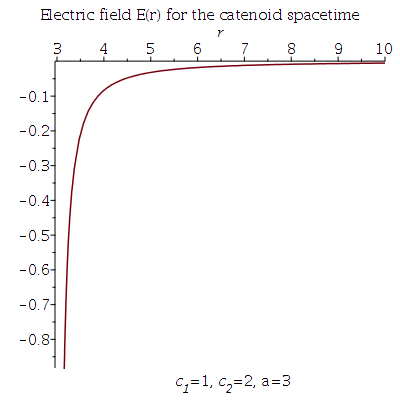 Figure 1
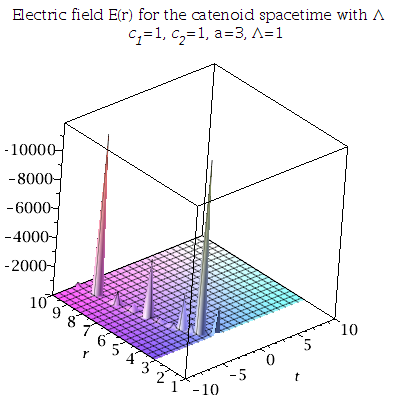 Figure 2
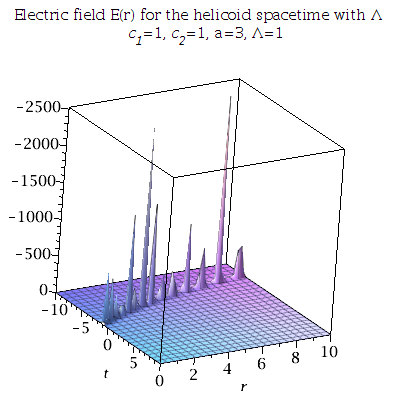 Figure 3
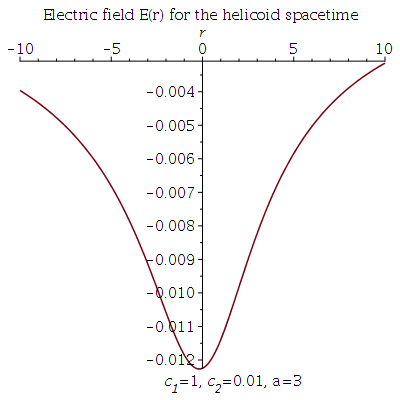 Figure 4
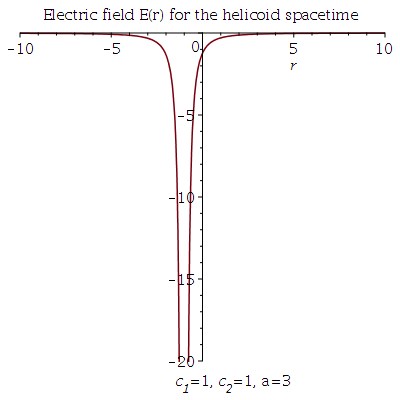 Figure 5
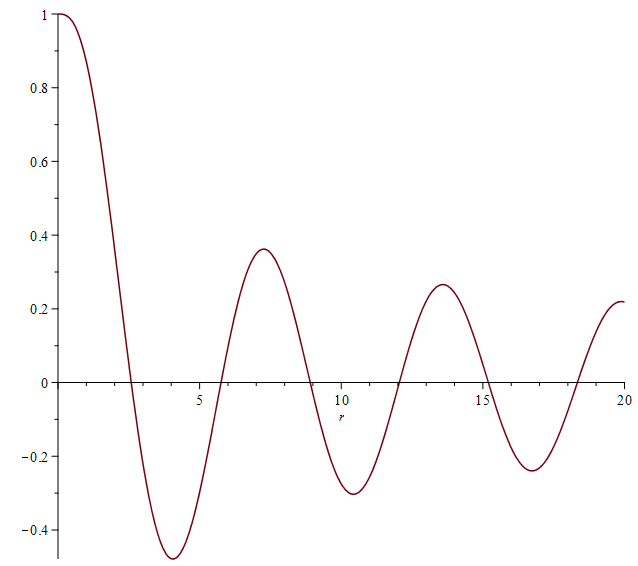 Figure 1
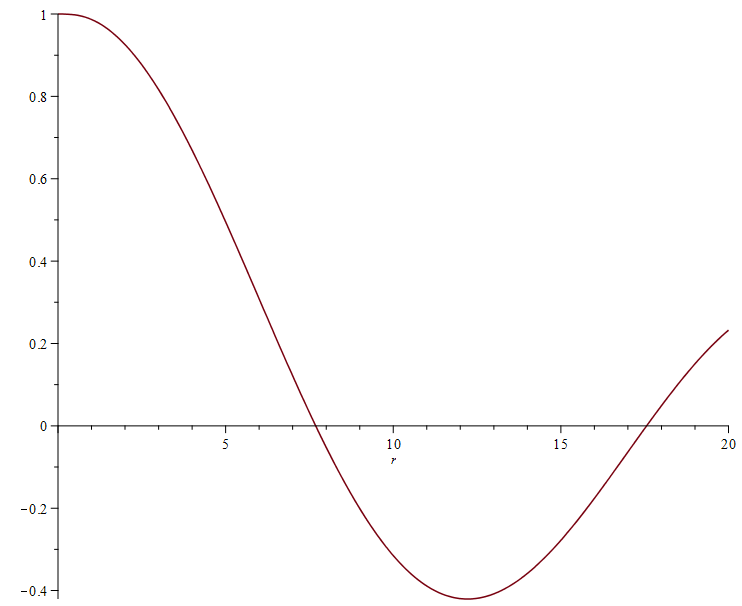 Figure 2
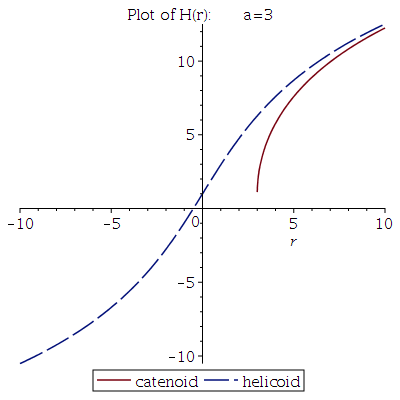 Figure 8
Peer Reviews
No public reviews on file for this paper yet. If you reviewed it on a platform where reviews are public (OpenReview, ICLR, NeurIPS, ICML), you can paste yours below so the community can read it here.
Videos
No videos yet. Explain this paper in a talk, walkthrough, or lecture? Add one.
**Exact helicoidal and catenoidal solutions in Einstein-Maxwell theory
**
A.M. Ghezelbash 111 E-Mail: [email protected], Vineet Kumar 222E-Mail: [email protected]
Department of Physics and Engineering Physics,
University of Saskatchewan,
Saskatoon, Saskatchewan S7N 5E2, Canada
We present several new exact solutions in five and higher dimensional Einstein-Maxwell theory by embedding the Nutku instanton. The metric functions for the five-dimensional solutions depend only on a radial coordinate and on two spatial coordinates for the six and higher dimensional solutions. The six and higher dimensional metric functions are convoluted-like integrals of two special functions. We find that the solutions are regular almost everywhere and some spatial sections of the solution describe wormhole handles. We also find a class of exact and nonstationary convoluted-like solutions to the Einstein-Maxwell theory with a cosmological constant.
1 Introduction
Gravitational instantons are the regular and complete Euclidean signature solutions, with self-dual curvature two-form, to the Einstein field equations in vacuum [1] or with a cosmological constant term [2]. There are several well known solutions such as Taub-NUT [3], Eguchi-Hanson [4] and Atiyah-Hitchin metrics [5]. The instanton solutions, in general, are the result of reduction the complex elliptic Monge-Ampère equation [6] on a complex manifold of dimension 2 to only one real variable. These solutions play an important role in construction of higher-dimensional solutions to extended theories of gravity [7] and supergravity [8], [9] as well as quantum properties of the black holes [10]. In fact, these self-dual geometries have been used in [11] to construct the M-theory realizations of the fully localized D2 branes in type IIA string theory that intersect the D6 branes. The M-theory solutions involve the convoluted-like integrals of two special functions and upon compactification over a compact coordinate of the transverse self-dual geometry, yield the supersymmetric solutions for the fully localized intersecting branes. One main feature of the solutions is that they are valid near and far from the core of D6 branes. Moreover, inspired by the convoluted-like structure of membrane solutions, some new convoluted solutions to the six and higher dimensional Einstein-Maxwell theory were constructed and studied in [12]. The convoluted solutions even can be generalized to include the cosmological constant in six and higher-dimensional Einstein-Maxwell theory.
The gravitational instantons also are the dominant metrics in path-integral formulation of Euclidean quantum gravity and are closely related to minimal surfaces in Eulidean space [13]. In fact, the equations for any 2-dimensional minimal surfaces, provide a solution to the real elliptic Monge-Ampère equation on a real manifold of 2 dimensions. These solutions then lead to the Kähler metrics for some gravitational instantons beside the aforementioned well-known solutions.
Almost all research in gravitational instantons and Einstein-Maxwell theory has been focused exclusively on spherically symmetric solutions so far. In this article, we draw attention to gravitational instantons of novel geometries constructed from minimal surfaces by Nutku [13] and embed them to generate a new class of exact helicoidal and catenoidal solutions in Einstein-Maxwell Theory. Inspired by the existence of such gravitational instantons in four dimensions and the well-known methods to construct the higher-dimensional convoluted solutions to the Einstein-Maxwell theory, in this article, we construct and study new class of exact helicoidal and catenoidal solutions in Einstein-Maxwell theory. We note that to our knowledge, these solutions which are generated from helicoid and catenoid minimal surfaces, have not been studied before in Einstein-Maxwell Theory.
The article is organized as follows. We begin with a brief overview of minimal surfaces and instantons and present the metric for the Nutku gravitational instantons in section 2. In section 3, we embed the Nutku metrics corresponding to helicoid and catenoid cases to get exact solutions in 5 dimensions. In section 4, we construct convolution-like general solutions for the Einstein-Maxwell theory in six dimensions and discuss the solutions. In section 5, we generalize the convoluted-like solutionst for the Einstein-Maxwell theory in any dimensions greater than six and discuss the solutions. Finally in section 6, by using a very special separation of variables in the metric function, we find the most general cosmological solutions to the Einstein-Maxwell theory in presence of a cosmological constant. We wrap up the article by concluding remarks.
2 Minimal surfaces and the four dimensional Nutku instantons
The study of minimal surfaces began with Lagrange’s question on the existence of surfaces that minimize the area, subject to some boundary constraints. Physically, they represent soap films on wire frames. There are several equivalent mathematical definitions of minimal surfaces. We state two important ones [14]:
- A surface is minimal if and only if its mean curvature vanishes identically. 2) A surface is minimal if and only if it is a critical point of the area functional for all compactly supported versions. The plane, the helicoid, the catenoid, the gyroid, Scherk surface, Enneper surface and Costa’s surface are some examples [15]. In , the helicoid and the plane are the only ruled 2-surfaces [14], i.e. surfaces generated by the rotation of a line. The helicoid and the catenoid are locally isometric [16] and are conjugates of each other [14].333Conjugate surfaces have the interesting property that a straight line in one surface can be mapped to a geodesic in the other and vice-versa.
Observing that nearly all well-known solutions in Einstein-Maxwell theory have spherical symmetry, this article highlights the role of minimal surfaces and instantons in constructing new solutions of novel geometries. Instantons are pseudo-particles which first appeared in Yang-Mills theory as minimum-action, classical solutions in Euclidean444Curiously, Wick rotation () plays an important role in instanton physics in both quantum theory and general relativity. spacetime [17]. Their discovery inspired the notion of gravitational instantons, which soon found use in Schwarzschild black hole radiance calculations through Euclideanization [18]. In 1978, Comtet [19] showed that the multi-BPST-instanton solution of Witten [20] corresponds to minimal surfaces. In a similar vein, Nutku [13] proved that for every minimal surface in , there is a gravitational instanton with anti-self-dual curvature and gave some explicit metrics which we will embed in higher dimensions.
A class of gravitational instantons may be representated by the metric
[TABLE]
where , and , if the function satisfies the quasi-linear, elliptic-hyperbolic partial differential equation
[TABLE]
The “Lagrange equation” (2.2) with defines minimal surfaces in . For , it reduces to the Born-Infeld equation [13], which arises in a non-linear generalization of Maxwell electrodynamics. These two cases are also related through a Wick rotation () [21]. Interestingly, the Born-Infeld equation is also related to the maximal surface equation in Lorentz-Minkowski space by a Wick rotation [22]. Since the general metric above provides a large class of solutions, we will restrict our attention to the helicoid-catenoid solutions. Noting that the helicoid represented by is a solution to equation (2.2), after substitution and subsequent coordinate transformations and , we obtain the Nutku helicoid instanton as
[TABLE]
where we consider , and and could be considered the periodic coordinates on the 2-torus [23]. In [24], the authors studied the solutions of the Dirac equation in the background of the metric (2.3) and its singularities. The metric (2.3) is asymptotically Euclidean and would correspond to a catenoidal solution if is replaced with . From here on, we will use to differentiate between the helicoid () and catenoid () cases, respectively.
[TABLE]
The Kretchmann invariant of the helicoid or catenoid instanton is given by
[TABLE]
The helicoid has only a curvature singularity at , while for the catenoid, there is another singularity at .
3 Helicoid and catenoid solutions in 5-dimensional Einstein-Maxwell theory
We consider the source-free Einstein-Maxwell equations with geometrized units in -dimensions that are given by
[TABLE]
where the electromagnetic field tensor is given by
[TABLE]
in terms of the electromagnetic potential . We will take its only non-zero component as
[TABLE]
In 5 dimensions, we consider the following ansatz by adding a time coordinate to the Nutku helicoid or catenoid instanton
[TABLE]
We find that all Einstein and Maxwell equations are satisfied if the metric function satisfies the differential equation
[TABLE]
The solutions to (3.6) are given by
[TABLE]
where and are two constants.
The logarithmic solutions above correspond to and functions. Interestingly, these functions appear in the study of collapsing catenoidal soap films [25] and in the embedding of wormhole handles [26]. We note that a submanifold of the helicoidal spacetime is conformally equivalent to a wormhole handle () [26][27].
Inspired by the soap film solutions [25], we set and ,555In fact, we may even get rid of the constant parameter by setting it to be in order to match the height function for a catenoidal soap film. It is useful to keep for now to illustrate what it may do to the electric field. so that in the limit , the metric (3.5) becomes Minkowski spacetime. Thus, we have
[TABLE]
for the helicoid and the catenoid solutions, respectively. Figure 3.1 shows the typical behaviour of the metric functions for helicoid and catenoid solutions. It is important to note here that in case of the helicoid, the function can become negative and hence change the metric signature from Lorentzian to Riemannian at some radial coordinate . Although such signature changes are of interest in quantum cosmology [28], and may be dealt with through a Wick rotation, we wish to keep the metric well-behaved and thus require and .
Figure 3.2 shows how the electric field may or may not diverge in the helicoid spacetime, depending on the choice of constants. The region is included in the plots only to illustrate this behaviour.
The electric field for the catenoid spacetime () is shown in Figure 3.3.
If we replace with in the metric ansatz (3.5), we can get a dynamic solution to the Einstein-Maxwell equations with a cosmological constant , which is given by
[TABLE]
Again, if we are to avoid the metric signature change while keeping and positive, we should only consider the solution. Figure 3.4 illustrates the electric field as a function of r and t for the helicoid and catenoid spacetimes with a cosmological constant.
4 The convoluted solutions in six dimensional Einstein-Maxwel theory based on embedded Nutku instantons
We consider the six-dimensional metric ansatz
[TABLE]
where is the four-dimensional Nutku space with parameter which is given by (2.4). We also consider the Maxwell gauge field as
[TABLE]
The gravitational Einstein’s field equations and the Maxwell equations provide that the metric function must satisfy the partial differential equation
[TABLE]
We can solve the partial differential equation (4.3) by separating the variables as . We find two ordinary differential equations for and that are given by
[TABLE]
and
[TABLE]
respectively. We first consider , where the the solutions to (4.4) are given by
[TABLE]
in terms of Heun- functions and and are two constants. We note that the Heun- functions are the solutions to the Heun double confluent equation
[TABLE]
with the boundary conditions , . In figure 4.1, we show the typical behaviour of the Heun- function for a few different values of the separation constant .
The solutions to (4.5) with for are given by
[TABLE]
where and are two constants. We can superimpose all the solutions (4.6) (where we choose ) and (4.8) with different values for the separation constant , to construct the most general convoluted solutions to the partial differential equation (4.3), in the form
[TABLE]
where and are two arbitrary functions in terms of separation constant . To fix the arbitrary functions and , we note that in the limit of , the Nutku space describes a four-dimensional space with the line element
[TABLE]
Quite interestingly, in this limit, we find an exact analytical solution to six-dimensional Einstein-Maxwell theory with the line element
[TABLE]
and the Maxwell gauge field
[TABLE]
where the exact analytic metric function is
[TABLE]
and is a constant. We can now fix the functions and by requiring that the metric (4.1) and the gauge field (4.2), must approach to the exact analytical metric (4.11) and the gauge field (4.12), respectively, in the limit of . These requirements imply that the convoluted metric function in equation (4.9), must be equal to the exact analytic metric function in equation (4.13), in the limit of . The integrand of the convoluted metric function in equation (4.9) contains the Heun- function which is the solution to the differential equation (4.4) with . This equation in the limit of reduces to
[TABLE]
for which the solutions are given by the Bessel functions and . The Bessel function does not provide an oscillatory decaying behaviour similar to that of Heun- functions. However, the Bessel function provides such a desired behaviour.
So, we find an integral equation for the functions and which is
[TABLE]
We find that the unique solutions to this integral equation for the functions and are given by
[TABLE]
where and are constants and . Furnished by all the necessary results, we have the most general solution for the convoluted metric function which is given by
[TABLE]
where and are two constants.
5 The convoluted solutions in higher dimensional Einstein-Maxwell theory based on embedded Nutku instantons
In this section, we find the general convoluted solutions for the embedding of Nutku geometry in higher than six dimensional Einstein-Maxwell theory. We consider the metric in -dimensions as
[TABLE]
where shows the metric on a -dimensional unit sphere. We consider the gauge field with the non-zero component
[TABLE]
We find that all the -dimensional Einstein and Maxwell equations are satisfied if the metric function provides a solution to the partial differential equation
[TABLE]
As in the six-dimensional case, we separate the coordinates in by . The partial differential equation (5.3) then separates into two ordinary differential equations for and . The differential equation for the radial function is given by (4.4) where the solutions are given in terms of Heun- functions and the differential equation for is
[TABLE]
The solutions to (5.4) with for are given by
[TABLE]
in terms of modified Bessel functions. As a result, we can write the most convoluted solution for the metric function in dimensions as
[TABLE]
where and are two arbitrary functions in terms of separation constant . We need to fix these two arbitrary functions to find a closed form for the metric function in -dimensions. As in the case of six-dimensional theory, we consider the limit of , where the Nutku space reduces to , with the line element (4.10). In this limit, we find an exact analytical solutions to -dimensional Einstein-Maxwell theory with the line element
[TABLE]
and the Maxwell gauge field
[TABLE]
where the exact analytic metric function is
[TABLE]
where is a constant. To fix the functions and , we demand that the metric (5.1) and the gauge field (5.2), must reduce to the exact analytical metric (5.7) and the gauge field (5.8), respectively, in the limit of . In other words, these requirements imply that the convoluted metric function in equation (5.6), must be equal to the exact analytic metric function in equation (5.9), in the limit of . As in the case of six-dimensional solutions, the integrand of the convoluted metric function in equation (5.6) contains the Heun- function which is the solution to the differential equation (4.4) with . This equation in the limit of reduces to equation (4.14) for which the solutions are given by the Bessel functions and .
As a result, we find an integral equation for the functions and which is
[TABLE]
After lengthy calculations, we find that the unique solutions to this integral equation for the functions and are given by
[TABLE]
where ’s are given by . So, we can write the most general solution for the convoluted metric function which is given by
[TABLE]
We also note that asymptotically, a two-dimensional submanifold of our solutions (4.1) and (5.1) represents the handle of an Ellis wormhole [27].
6 The cosmological convoluted solutions to the Einstein-Maxwell theory with a cosmological constant
We consider the Einstein-Maxwell theory with a cosmological constant in six dimensions, where the metric function also depends explicitly on time coordinate
[TABLE]
We also consider the Maxwell gauge field as
[TABLE]
The Einstein equations and Maxwell equations in presence of cosmological constant lead to a second order partial differential equation for , which is given by
[TABLE]
The form of partial differential equation (6.3) leads us to separate the coordinates as
[TABLE]
We find three ordinary uncoupled differential equations for , and functions. The partial differential equations for and are given by (4.4) and (4.5) and the solutions to the differential equation for are
[TABLE]
where and is an arbitrary constant. Requiring in the limit of , the solution (6.4) for the metric function approaches to the metric function in asymptotically flat spacetime, yields . Moreover, we find the following exact analytical non-stationary solutions to Einstein-Maxell theory with a cosmological constant
[TABLE]
and the time-dependent Maxwell gauge field
[TABLE]
where the exact analytic metric function is given by
[TABLE]
and is a constant. We note that in (6.6) is given by (4.10). We then can find the most general convoluted cosmological non-stationary solutions in six-dimensional Einstein-Maxwell theory with a cosmological constant where the metric function approaches to in the limit of . The metric function is equal to
[TABLE]
where and are two constants. The result (6.9) for the metric function in six-dimensions can simply be generalized to solutions in -dimensions, where we get
[TABLE]
As we notice, the general solutions for the metric functions (6.9) and (6.10) describe the asymptotically dS spacetime. We can find the cosmological -function for the solutions in the context of dS/CFT correspondence. As it is well known, for any -dimensional asymptotically dS spacetime, one may define the c-function [29]
[TABLE]
where is the unit vector along the time coordinate. If we have an expanding patch of dS, the flow of the renormalization group is towards the high energy region and the -function is a monotonically increasing function in terms of the time coordinate. On the other hand, a contracting patch of dS, the flow of the renormalization group is towards the low energy region and the -function is then a monotonically decreasing function in terms of the time coordinate. For example, the -function for the -dimensional solutions, given by the metric function (6.10), describes expanding patches of dS in different dimensions.
7 Concluding remarks
Inspired by the existence of helicoid-catenoid instantons in four dimensions, we constructed exact solutions to the five and higher dimensional Einstein-Maxwell theory with and without a cosmological constant. The solutions in five dimensions are given by the line element (3.5), gauge field (3.4) and the metric functions (3.7). We discussed the physical properties of the solution. We also found exact convoluted-like solutions to six and higher dimensional Einstein-Maxwell theory in which the metric functions are convoluted integrals of two special function with some measure functions. We fix the measure functions for all the solutions by considering the solutions in some appropriate limits and comparing them with some other exact solutions in -dimensions that are given by (4.1) and (5.7) with the metric functions (4.17) and (5.9), respectively. We used a special separation of variables to construct the solutions to Einstein-Maxwell theory with positive cosmological constant. In this case, the metric function depends on time and two spatial directions. The solutions are given by the metric (6.1) and gauge field (6.2) where the cosmological metric functions in six and higher than six dimensions are given by (6.9) and (6.10), respectively. We constructed the -functions and notice that for all the cosmological convoluted solutions, the -function is a monotonically increasing function in agreement with the -theorem for asymptotically dS spacetimes. As noted in [23], the issue of singularities remains unresolved and needs further analysis.
Acknowledgements
This work was supported by the Natural Sciences and Engineering Research Council of Canada.
The reference list from the paper itself. Each links out to its DOI / PubMed record.
- 1[1] H. Nishino, Phys. Lett. B 307 339 (1993); J. Hoppe and Q-H. Park, Phys. Lett. B 321 333 (1994); M. Abe and A. Nakamichi and T. Ueno, Phys. Rev. D 50 7323 (1995); M. Bouhmadi-Lopez, P.F. Gonzalez-Diaz and A. Zhuk, Class. Quant. Grav. 19 4863 (2002); G. Etesi, Nucl. Phys. B 662 511 (2003); H. S. Yang and M. Salizzoni, Phys. Rev. Lett. 96 201602 (2006); G. Giribet and O. P. Santillan, Commun. Math. Phys 275 373 (2007); F. Bourliot, J. Estes, P.M. Petropoulos
- 2[2] G. W. Gibbons and S. W. Hawking, Phys. Lett. 78B , 430 (1978).
- 3[3] K. Zoubos, J. High Energy Phys. 12 (2002) 037; D. Bini, C. Cherubini and R. T. Jantzen, Class. Quant. Grav. 19 5481 (2002); I. Bena, P. Kraus and N. P. Warner, Phys. Rev. D 72 084019 (2005); J. Jezierski and M. Lukasik, Class. Quant. Grav. 24 1331 (2007); M. D. Yonge, J. High Energy Phys. 07 (2007) 004; S. A. Cherkis, Commun. Math. Phys 290 719 (2009); J. Camps, R. Emparan, P. Figueras, S. Giusto and A. Saxena, J. High Energy Phys. 02 (2009) 021; M. Lipert, Clas
- 4[4] H. Ishihara, M. Kimura, K. Matsuno and S. Tomizawa, Phys. Rev. D 74 047501 (2006); K. Matsuno, H. Ishihara, M. Kimura and S. Tomizawa, Phys. Rev. D 76 104037 (2007); L. Carlevaro and S. G. Nibbelink, J. High Energy Phys. 10 (2013) 097.
- 5[5] I. T. Ivanov and M. Rocek, Commun. Math. Phys 182 291 (1996); N. Dorey, V. V. Khoze, M. P. Mattis, D. Tong and S. Vandoren, Nucl. Phys. B 502 59 (1997); G. Chalmers, Phys. Rev. D 58 125011 (1998); I. Bakas, Fortsch. Phys. 48 9 (2000); A. Hanany and B. Pioline, J. High Energy Phys. 07 (2000) 001; K. Vaninsky, Jour. Geometry and Physics 46 283 (2003); A. M. Ghezelbash, R. B. Mann, J. High Energy Phys. 10 (2004) 012; A. M. Ghezelbash, Phys. Rev. D 79 06401
- 6[6] D. N. Page, Phys. Lett. B 80 55 (1978); A. Volovich, Phys. Rev. D 59 065005 (1999); Y. Nutku, Phys. Lett. A 268 293 (2000); J. Gutowski and G. Papadopoulos, J. High Energy Phys. 10 (2010) 084; C. M. Hull, U. Lindstrom, M. Rocek, R. von Unge and M. Zabzine, J. High Energy Phys. 08 (2010) 060; P. Kersten, I. Krasil’shchik, A. Verbovetsky and R. Vitolo, Theor. Math. Phys. 171 600 (2012).
- 7[7] H. Ishihara, M. Kimura, K. Matsuno and S. Tomizawa, Phys. Rev. D 74 047501 (2006); J. Kunz and F. Navarro-Lerida, Phys. Rev. Lett. 96 081101 (2006); H. Ishihara, M. Kimura and S. Tomizawa, Class. Quant. Grav. 23 L 89 (2006); A. M. Ghezelbash, Phys. Rev. D 74 126004 (2006) ; G. Clement, J. C. Fabris and M. E. Rodrigues, Phys. Rev. D 79 064021 (2009); A. N. Aliev and D. K. Ciftci, Phys. Rev. D 79 044004 (2009); A. M. Ghezelbash, Class. Quant. Grav. 27 245025 (2010); M
- 8[8] S. S. Yazadjiev, Phys. Rev. D 78 064032 (2008); T. Azuma and T. Koikawa, Prog. Theor. Phys. 121 627 (2009); A. M. Ghezelbash, Phys, Rev. D 81 044027 (2010).