Three-body nuclei and their astrophysical implications: the case of $^6$He
J. Casal, M. Rodr\'iguez-Gallardo, J. M. Arias

TL;DR
This paper extends the analytic THO method to study three-body nuclei like $^6$He, providing results consistent with prior research and experimental data, with implications for astrophysics.
Contribution
The paper generalizes the analytic THO method for three-body nuclei and applies it to $^6$He, enhancing understanding of its structure and astrophysical relevance.
Findings
Results align with previous studies and experimental data.
The generalized method effectively models three-body nuclei.
Implications for astrophysical processes involving $^6$He.
Abstract
The analytic THO method is generalized to study three-body nuclei of astrophysical interest, and applied to He. Results are consistent with previous publications and experimental data.
Click any figure to enlarge with its caption.
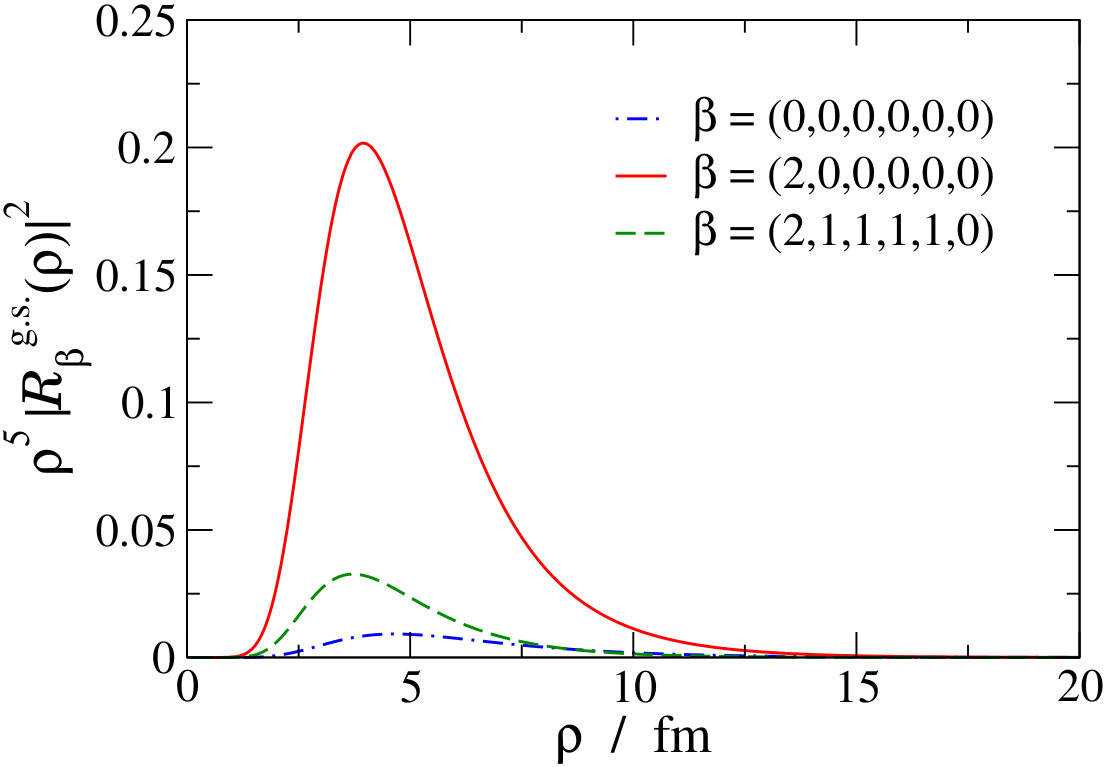 Figure 1
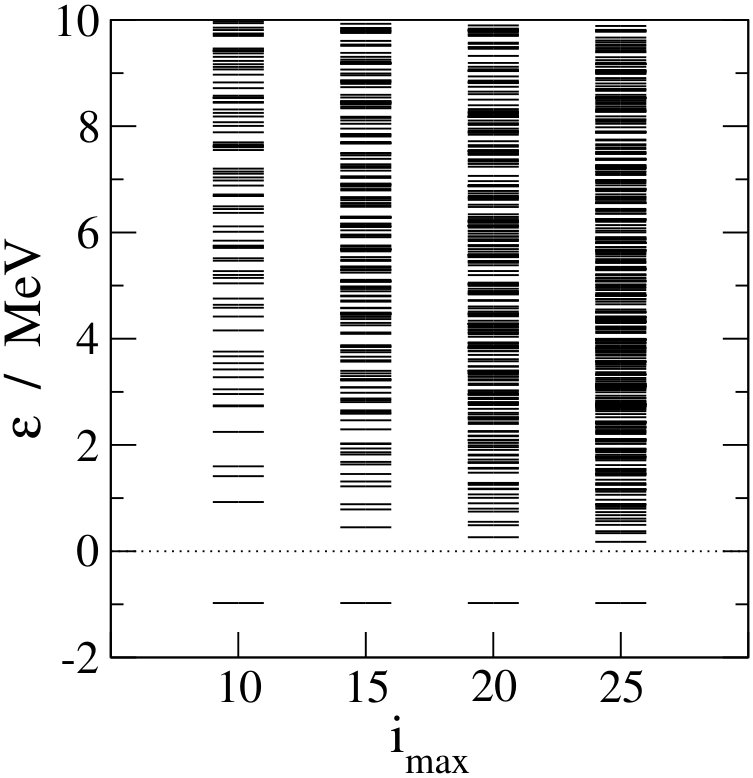 Figure 2
Peer Reviews
No public reviews on file for this paper yet. If you reviewed it on a platform where reviews are public (OpenReview, ICLR, NeurIPS, ICML), you can paste yours below so the community can read it here.
Videos
No videos yet. Explain this paper in a talk, walkthrough, or lecture? Add one.
Three-body nuclei and their astrophysical implications: the case of 6He
J. Casal
M. Rodríguez-Gallardo
J. M. Arias
Abstract
The analytic THO method 1 (2009) is generalized to study three-body nuclei of astrophysical interest, and applied to 6He. Results are consistent with previous publications and experimental data 2 (2005); 3 (2005).
Keywords:
Few-body systems. Halo nuclei. Borromean nuclei.6He. Nucleosynthesis reaction rate.
:
21.45.-v,26.20.-f,26.30.-k
1 INTRODUCTION
Understanding the structure and reaction mechanisms of atomic nuclei is essential to shed light on various astrophysical questions such as stellar nucleosynthesis. One of the processes which has attracted more interest is the “triple alpha process”, in which three alpha particles fuse to produce a 12C nucleus. The production rate of such process has not yet been determined accurately for the entire temperature range relevant in Astrophysics. Other important processes appear after the explosion of a supernova or in a binary star. The first one is an ideal medium for nucleosynthesis by rapid neutron capture (r-process) such as 9Be (++) or 6He (++). The second one is an ideal medium for nucleosynthesis by rapid proton capture (rp-process) such as 17Ne (15O++). All these nuclei are Borromean systems, i.e. three-body systems whose binary sub-systems are unbound. Some of them are also halo nuclei such as 6He or 17Ne. To study such systems we use a Pseudo-State (PS) method 4 (2008). It consists in diagonalizing the three-body Hamiltonian in a Transformed Harmonic Oscillator (THO) basis, obtaining a discrete set of wave functions to describe the continuum states of the system. THO functions are based on an analytic local scaling transformation (LST) of the HO basis 5 (2010). In this work we apply the formalism to 6He in order to show that the analytic THO method is valid to study three-body nuclei.
2 FORMALISM: Application to He
The wave-functions of the three-body system are expanded in hyperspherical harmonics (HH) 4 (2008); 6 (1993), each corresponding to a set of quantum numbers (that is, a channel) . Then, the analytic THO method is applied to generate the hyperradial functions using a LST with the parametric form from Ref. 7 (2005). The parameters of the transformation govern the radial extension of the THO functions 5 (2010), and determine the density of PSs as a function of the excitation energy. Eigenstates are calculated by diagonalization of the three-body Hamiltonian in a truncated THO basis.
For the nucleus of 6He, the three-body Hamiltonian is diagonalized in a THO basis truncated at maximun hypermomentum and an increasing number of hyperradial excitations . The parameters of the transformation 7 (2005) are chosen as: fm, and . Details about the 6He Hamiltonian used are given in Ref. 4 (2008); 8 (2004). In Fig. 1 we show the 0+ spectrum for 6He as a function of (left panel) and the hyperradial ground state wave function (right panel). The calculations converge fast as increases, obtaining a ground state energy of -0.9749 MeV and a rms point nucleon matter radius of 2.554 fm, in good agreement with previous publications and experimental data 2 (2005); 3 (2005). Once the 0+ and 1- eigenstates of the system are obtained, the dipolar transition probabilities can be calculated. These probabilities are related to the reaction and production rates of 6He, which are of astrophysical interest 9 (2010).
FIGURE 1. (color online) On the left side, eigenvalues of 0+ states below 10 MeV as a function of the number of hyperradial excitations. The hyperradial wave functions for the three most important channels are shown on the right side for .
This work was partially supported by the spanish Ministerio de Economía y Competitividad under Projects FPA2009-07653 and FIS2011-28738-c02-01, by Junta de Andalucía under Project FQM-7632, and by the Consolider-Ingenio 2010 Programme CPAN (CSD2007-00042). J. Casal acknowledges a FPU research grant from the Ministerio de Educación, Cultura y Deporte.
The reference list from the paper itself. Each links out to its DOI / PubMed record.
- 11 (2009) A.M. Moro et al., Phys. Rev. C 80, 054605 (2009).
- 22 (2005) M. Rodríguez-Gallardo et al., Phys. Rev. C 72, 024007 (2005).
- 33 (2005) B.V. Danilin et al., Phys. Rev. C 71, 057301 (2005).
- 44 (2008) M. Rodríguez-Gallardo et al., Phys. Rev C 77, 064609 (2008); Eur. Phys. J. S-T 150, 51 (2007).
- 55 (2010) J.A. Lay et al., Phys. Rev. C 82, 024605 (2010).
- 66 (1993) M.V. Zhukov et al. Phys. Rep. 231, 151 (1993).
- 77 (2005) S. Karataglidis et al., Phys. Rev. C 71 064601 (2005).
- 88 (2004) I. J. Thompson et al., Phys. Rev. C 61 24318 (2000); Comput. Phys. Commun. 161 87 (2004).