Nearly Equal Distributions of the Rank and the Crank of Partitions
William Y.C. Chen, Kathy Q. Ji, and Wenston J.T. Zang

TL;DR
This paper proves the near-equality of the distributions of rank and crank of partitions, confirms a conjecture related to the spt-function, and introduces a new combinatorial interpretation of ospt(n).
Contribution
It establishes the inequality between rank and crank distributions for partitions and introduces a re-ordering that explains their nearly equal distributions.
Findings
Proved the inequality $N( ext{≤}m,n) ext{≤} M( ext{≤}m,n)$ for $m<0$, $n ext{≥}1$.
Defined a re-ordering $ au_n$ that demonstrates the nearly equal distribution of rank and crank.
Provided a new combinatorial interpretation of ospt(n) leading to an upper bound.
Abstract
Let denote the number of partitions of with rank not greater than , and let denote the number of partitions of with crank not greater than . Bringmann and Mahlburg observed that for and . They also pointed out that these inequalities can be restated as the existence of a re-ordering on the set of partitions of such that or for all partitions of , that is, the rank and the crank are nearly equal distributions over partitions of . In the study of the spt-function, Andrews, Dyson and Rhoades proposed a conjecture on the unimodality of the spt-crank, and they showed that this conjecture is equivalent to the inequality for and . We proved this…
Click any figure to enlarge with its caption.
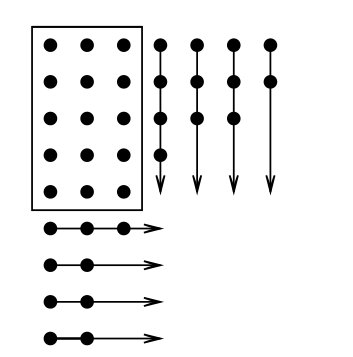 Figure 1
|
Peer Reviews
No public reviews on file for this paper yet. If you reviewed it on a platform where reviews are public (OpenReview, ICLR, NeurIPS, ICML), you can paste yours below so the community can read it here.
Videos
No videos yet. Explain this paper in a talk, walkthrough, or lecture? Add one.
Nearly Equal Distributions of
the Rank and the Crank of Partitions
William Y.C. Chen1, Kathy Q. Ji2 and Wenston J.T. Zang3
1,2Center for Applied Mathematics
Tianjin University, Tianjin 300072, P. R. China
3Center for Combinatorics, LPMC
Nankai University, Tianjin 300071, P. R. China
[email protected], [email protected], [email protected]
Dedicated to Professor Krishna Alladi on the Occasion of His Sixtieth Birthday
Abstract.
Let denote the number of partitions of with rank not greater than , and let denote the number of partitions of with crank not greater than . Bringmann and Mahlburg observed that for and . They also pointed out that these inequalities can be restated as the existence of a re-ordering on the set of partitions of such that or for all partitions of , that is, the rank and the crank are nearly equal distributions over partitions of . In the study of the spt-function, Andrews, Dyson and Rhoades proposed a conjecture on the unimodality of the spt-crank, and they showed that this conjecture is equivalent to the inequality for and . We proved this conjecture by combiantorial arguments. In this paper, we prove the inequality for and . Furthermore, we define a re-ordering of the partitions of and show that this re-ordering leads to the nearly equal distribution of the rank and the crank. Using the re-ordering , we give a new combinatorial interpretation of the function defined by Andrews, Chan and Kim, which immediately leads to an upper bound for due to Chan and Mao.
1 Introduction
The objective of this paper is to confirm an observation of Bringmann and Mahlburg [9] on the nearly equal distribution of the rank and crank of partitions. Recall that the rank of a partition was introduced by Dyson [12] as the largest part of the partition minus the number of parts. The crank of a partition was defined by Andrews and Garvan [6] as the largest part if the partition contains no ones, and otherwise as the number of parts larger than the number of ones minus the number of ones.
Let be an integer. For , let denote the number of partitions of with rank , and for , let denote the number of partitions of with crank . For , set
[TABLE]
and for and , set
[TABLE]
Define the rank and the crank cumulation functions by
[TABLE]
and
[TABLE]
Bringmann and Mahlburg [9] observed that for and ,
[TABLE]
For , an equivalent form of the inequality for was conjectured by Kaavya [17]. Bringmann and Mahlburg [9] pointed out that this observation may also be stated in terms of ordered lists of partitions. More precisely, for , there must be some re-ordering of partitions of such that
[TABLE]
Moreover, they noticed that using (1.4), one can deduce the following inequality on the spt-function :
[TABLE]
where is the spt-function defined by Andrews [3] as the total number of smallest parts in all partitions of . It should be noted that Chan and Mao [10] conjectured that for ,
[TABLE]
In the study of the spt-crank, Andrews, Dyson and Rhoades [5] conjectured that the sequence is unimodal for , where is the number of -partitions of size with spt-crank . They showed that this conjecture is equivalent to the inequality for and . They obtained the following asymptotic formula for , which implies that the inequality holds for fixed and sufficiently large .
Theorem 1.1** (Andrews, Dyson and Rhoades).**
For any given , we have
[TABLE]
We have shown this inequality holds for all and by constructing an injection in [11]. More precisely,
Theorem 1.2**.**
[11]* For and ,*
[TABLE]
It turns out that our constructive approach in [11] also applies to the inequality
[TABLE]
for and . It should be noted that Mao [18] obtained the following asymptotic formula for which implies that the inequality (1.9) holds for any fixed and sufficiently large .
Theorem 1.3** (Mao).**
For any given , we have
[TABLE]
In this paper, we show that the inequality (1.9) holds for and .
Theorem 1.4**.**
For and ,
[TABLE]
If we list the set of partitions of in two ways, one by the ranks, and the other by cranks, then we are led to a re-ordering of the partitions of . Using the inequalities (1.3) for and , we show that the rank and the crank are nearly equidistributed over partitions of . Since there may be more than one partition with the same rank or crank, the aforementioned listings may not be unique. Nevertheless, this does not affect the required property of the re-ordering . It should be noted that the above description of relies on the two orders of partitions of , it would be interesting to find a definition of directly on a partition of .
Theorem 1.5**.**
For , let be a re-ordering on the set of partitions of as defined above. Then for any partition of , we have
[TABLE]
Clearly, the above theorem implies relation (1.4). For example, for , a re-ordering is illustrated in Table 1.
We find that the map is related to the function defined by Andrews, Chan and Kim [4] as the difference between the first positive crank moment and the first positive rank moment, namely,
[TABLE]
Andrews, Chan and Kim [4] derived the following generating function of .
Theorem 1.6** (Andrews, Chan and Kim).**
We have
[TABLE]
Based on the above generating function, Andrews, Chan and Kim [4] proved the positivity of .
Theorem 1.7** (Andrews, Chan and Kim).**
For , .
They also found a combinatorial interpretation of in terms of even strings and odd strings of a partition. The following theorem shows that the function is related to the re-ordering .
Theorem 1.8**.**
For , equals the number of partitions of such that .
It can be seen that for , since the partition has the largest rank and the largest crank among all partitions of . It follows that when . Thus Theorem 1.8 implies that for .
The following upper bound of can be derived from Theorem 1.8.
Corollary 1.9**.**
For ,
[TABLE]
It is easily seen that for since . Hence Corollary 1.9 implies the following inequality due to Chan and Mao [10]: For ,
[TABLE]
This paper is organized as follows. In Section 2, we give a proof of Theorem 1.4 with the aid of the combinatorial construction in [11]. In Section 3, we demonstrate that Theorem 1.5 follows from Theorem 1.4. Section 4 provides proofs of Theorem 1.8 and Corollary 1.9. For completeness, we include a derivation of inequality (1.5).
2 Proof of Theorem 1.4
In this section, we give a proof of Theorem 1.4. To this end, we first reformulate the inequality for and in terms of the rank-set. Let be a partition. Recall that the rank-set of introduced by Dyson [14] is the infinite sequence
[TABLE]
Let denote the number of partitions of such that appears in the rank-set of . Dyson [14] established the following relation: For ,
[TABLE]
see also Berkovich and Garvan [8, (3.5)].
Let denote the number of partitions of with rank larger than or equal to , namely,
[TABLE]
By establishing the relation
[TABLE]
for and , we see that is equivalent to the inequality . This was justified by a number of injections in [11].
Similarly, to prove for and , we need the following relation.
Theorem 2.1**.**
For and ,
[TABLE]
Proof. Since
[TABLE]
and
[TABLE]
we get
[TABLE]
In fact,
[TABLE]
so that (2.4) takes the form
[TABLE]
On the other hand, owing to the symmetry
[TABLE]
due to Dyson [14], (2.1) becomes
[TABLE]
Hence
[TABLE]
But
[TABLE]
we arrive at
[TABLE]
Substracting (2.7) from (2.5) gives (2.3). This completes the proof.
In view of Theorem 2.1, we see that Theorem 1.4 is equivalent to the following assertion.
Theorem 2.2**.**
For and ,
[TABLE]
Let denote the set of partitions counted by , that is, the set of partitions of with rank not less than , and let denote the set of partitions counted by , that is, the set of partitions of such that appears in the rank-set of . Then Theorem 2.2 can be interpreted as the existence of an injection from the set to the set for and .
In [11], we have constructed an injection from the set to for and . It turns out that the injection in this paper is less involved than the injection in [11]. More specifically, to construct the injection , the set is divided into six disjoint subsets () and the set is divided into eight disjoint subsets (). For , the injection consists of six injections from the set to the set , where . When , the injection requires considerations of more cases. For the purpose of this paper, the set will be divided into three disjoint subsets and the set will be divided into three disjoint subsets . For , the injection consists of three injections , and , where is the identity map, and for , is an injection from to .
To describe the injection , we shall represent the partitions in and in terms of -Durfee rectangle symbols. As a generalization of a Durfee symbol defined by Andrews [2], an -Durfee rectangle symbol of a partition is defined in [11]. Let be a partition of . The -Durfee rectangle symbol of is defined as follows:
[TABLE]
where is the -Durfee rectangle of the Ferrers diagram of and consists of columns to the right of the -Durfee rectangle and consists of rows below the -Durfee rectangle, see Figure 2.1. Clearly, we have
[TABLE]
and
[TABLE]
When , an -Durfee rectangle symbol reduces to a Durfee symbol. For the partition in Figure 2.1, the -Durfee rectangle symbol of is
[TABLE]
Notice that for a partition with , where denotes the number of parts of , it has no -Durfee rectangle. In this case, we adopt the convention that the -Durfee rectangle has no columns, that is, , and so the -Durfee rectangle symbol of is defined to be where is the conjugate of . For example, the -Durfee rectangle symbol of is
[TABLE]
The partitions in can be characterized in terms of -Durfee rectangle symbols.
Proposition 2.3**.**
Assume that and . Let be a partition of and let be the -Durfee rectangle symbol of . Then the rank of is not less than if and only if either or and
Proof. The proof is substantially the same as that of [11, Proposition 3.1]. Assume that the rank of is not less than . We are going to show that either or and There are two cases:
Case 1: . We have .
Case 2: . We have , and . It follows that
[TABLE]
Since , we have , that is,
Conversely, we assume that or and . We proceed to show that the rank of is not less than . There are two cases:
Case 1: . Clearly, , which implies that the rank of is not less than .
Case 2: and . Thus we have and . It follows that
[TABLE]
Since , by (2.10), we obtain that . This completes the proof.
The following proposition will be used to describe partitions in in terms of -Durfee rectangle symbols.
Proposition 2.4**.**
[11, Proposition 3.1]* Assume that and . Let be a partition of and let be the -Durfee rectangle symbol of . Then appears in the rank-set of if and only if either or and *
If no confusion arises, we do not distinguish the partition and its -Durfee rectangle symbol representation. We shall divide the -Durfee rectangle symbols in into three disjoint subsets , and . More precisely,
- (1)
is the set of -Durfee rectangle symbols in for which either of the following conditions holds:
(i) ;
(ii) and ;
- (2)
is the set of -Durfee rectangle symbols in such that and ;
- (3)
is the set of -Durfee rectangle symbols in such that and .
The set of will be divided into the following three subsets , and :
- (1)
is the set of -Durfee rectangle symbols in such that either of the following conditions holds:
(i) ;
(ii) and ;
- (2)
is the set of -Durfee rectangle symbols in such that , and ;
- (3)
is the set of -Durfee rectangle symbols in such that , and .
We are now ready to define the injections from the set to the set , where . Since coincides with , we set to the identity map. The following lemma gives an injection from to .
Lemma 2.5**.**
For and , there is an injection from to .
Proof. To define the map , let
[TABLE]
be an -Durfee rectangle symbol in . From the definition of , we see that , , and .
Set
[TABLE]
Clearly, is an -Durfee rectangle symbol of . Furthermore, , . Since , we see that . Noting that , we get . Moreover, since . This proves that is in
To prove that is an injection, define
[TABLE]
Let
[TABLE]
be an -Durfee rectangle symbol in . Since , we have , and . According to the construction of , . Define
[TABLE]
Clearly, since , so that . Moreover, since and , we see that . It is easily checked that for any in . Hence the map is an injection from to . This completes the proof.
For example, for and , consider the following -Durfee rectangle symbol in :
[TABLE]
Applying the injection to , we obtain
[TABLE]
which is in . Applying to , we recover .
The following lemma gives an injection from to .
Lemma 2.6**.**
For and , there is an injection from to .
Proof. Let
[TABLE]
be an -Durfee rectangle symbol in . By definition, , and .
Define
[TABLE]
Evidently, and , and so . Moreover, we have , and
[TABLE]
This yields that is in In particular, since , we see that
[TABLE]
To prove that the map is an injection, define
[TABLE]
Let
[TABLE]
be an -Durfee rectangle symbol in . Since , we have , and . By the construction of , . Define
[TABLE]
It follows from (2.11) that and . Therefore, and , so that is in . Moreover, it can be checked that for any in . This proves that the map is an injection from to .
For example, for and , consider the following -Durfee rectangle symbol in :
[TABLE]
Applying the injection to , we obtain
[TABLE]
which is in . Applying to , we recover .
Combining the bijection and the injections and , we are led to an injection from to , and hence the proof of Theorem 2.2 is complete. More precisely, for a partition , define
[TABLE]
3 Proof of Theorem 1.5
In this section, with the aid of the inequalities (1.8) in Theorem 1.2 and (1.11) in Theorem 1.4 for and , we show that it is indeed the case that the re-ordering leads to nearly equal distributions of the rank and the crank. For the sake of presentation, the inequalities in Theorem 1.2 and Theorem 1.4 for can be recast for .
Theorem 3.1**.**
For and ,
[TABLE]
To see that the inequalities (3.1) for can be derived from (1.8) and (1.11) for , we assume that , so that (1.8) and (1.11) take the following forms
[TABLE]
and hence
[TABLE]
It follows that
[TABLE]
Now, by the symmetry , see [13], we have
[TABLE]
Similarly, the symmetry , see [14], leads to
[TABLE]
Substituting (3.5) and (3.6) into (3.4), we obtain (3.1). Conversely, one can reverse the above steps to derive (1.8) and (1.11) for from (3.1) for . This yields that the inequalities (3.1) for are equivalent to the inequalities (1.8) and (1.11) for .
We are now ready to prove Theorem 1.5.
Proof of Theorem 1.5. Let be a partition of , and let . Suppose that is the -th partition of when the partitions of are listed in the increasing order of their cranks. Meanwhile, is also the -th partition in the list of partitions of in the increasing order of ranks. Let and , so that
[TABLE]
and
[TABLE]
We now consider three cases:
Case 1: . We aim to show that . Assume to the contrary that . There are two subcases:
Subcase 1.1: . From (3.7) and (3.8), we have
[TABLE]
which contradicts the inequality in (1.3) with .
Subcase 1.2: . From (3.7) and (3.8), we see that
[TABLE]
which contradicts the inequality in (3.1) with . This completes the proof of Case 1.
Case 2: . We proceed to show that or By (3.7) and the inequality in (1.3) with , we see that
[TABLE]
Combining (3.8) and (3.9), we deduce that
[TABLE]
and thus
[TABLE]
On the other hand, by (3.7) and the inequality in (1.3) with , we find that
[TABLE]
Together with (3.8), this gives
[TABLE]
so that . In view of (3.10), we obtain that or . This completes the proof of Case 2.
Case 3: . We claim that or Combining the inequality in (3.1) with and the inequality in (3.7), we get
[TABLE]
By means of (3.8) and (3.11), we find that
[TABLE]
whence
[TABLE]
On the other hand, combining the inequality in (3.1) with and the inequality in (3.7), we are led to
[TABLE]
which together with (3.8) yields that
[TABLE]
and hence But it has been shown that , whence the conclusion that or .
4 Proofs of Theorem 1.8 and Corollary 1.9
In this section, we give a proof of Theorem 1.8 on the interpretation of the -function. Then we use Theorem 1.8 to deduce Corollary 1.9, which gives an upper bound of the -function. Finally, for completeness, we include a derivation of (1.5) from (1.4), as suggested by Bringmann and Mahlburg.
Proof of Theorem 1.8. Let denote the set of partitions of . By the definition (1.13) of , we see that
[TABLE]
We claim that
[TABLE]
From Theorem 1.5, we see that if then . This implies that
[TABLE]
Therefore,
[TABLE]
From Theorem 1.5, we also see that if then , and if then . Now,
[TABLE]
Hence by (4.3),
[TABLE]
Since
[TABLE]
from (4.4) and (4.6), we infer that
[TABLE]
But,
[TABLE]
Thus we arrive at (4.2), and so the claim is justified.
Substituting (4.2) into (4.1), we get
[TABLE]
Appealing to Theorem 1.5, we see that if , then
[TABLE]
By (4.9),
[TABLE]
Also, by Theorem 1.5, we see that if , then . Consequently,
[TABLE]
as desired.
As an application of Theorem 1.8, we give a direct proof of Corollary 1.9.
Proof of Corollary 1.9. From the symmetry , we see that
[TABLE]
Hence
[TABLE]
In virtue of Theorem 1.5, if , then , and hence
[TABLE]
This, combined with Theorem 1.8, leads to
[TABLE]
Substituting (4.13) into (4.15), we obtain that
[TABLE]
as desired.
We conclude by providing a derivation of inequality (1.5), that is, Recall that the -th moment of ranks and the -th moment of cranks were defined by Atkin and Garvan [7] as follows:
[TABLE]
Andrews [3] showed that the spt-function can be expressed in terms of the second moment of ranks, namely,
[TABLE]
Employing the following relation due to Dyson [14],
[TABLE]
Garvan [15] observed that the following expression
[TABLE]
implies that for . In general, he conjectured and later proved that for and , see [16].
Bringmann and Mahlburg [9] pointed out that the inequality (1.5) can be derived by combining the re-ordering and the Cauchy-Schwarz inequality. By (4.20), we see that
[TABLE]
Since
[TABLE]
(4.21) can be rewritten as
[TABLE]
By (1.4), we find that
[TABLE]
and
[TABLE]
Thus (4.22) gives
[TABLE]
Applying the inequality on the arithmetic and quadratic means
[TABLE]
for nonnegative real numbers to the numbers , where ranges over partitions of , we are led to
[TABLE]
In light of Dyson’s identity (4.19), this becomes
[TABLE]
Combining (4.23) and (4.26) completes the proof.
Acknowledgments. This work was supported by the 973 Project and the National Science Foundation of China.
The reference list from the paper itself. Each links out to its DOI / PubMed record.
- 1[1]
- 2[2] G.E. Andrews, Partitions, Durfee symbols, and the Atkin-Garvan moments of ranks, Invent. Math. 169 (2007) 37–73.
- 3[3] G.E. Andrews, The number of smallest parts in the partitions of n 𝑛 n , J. Reine Angew. Math. 624 (2008) 133–142.
- 4[4] G.E. Andrews, S.H. Chan and B. Kim, The odd moments of ranks and cranks, J. Combin. Theory A 120 (2013) 77–91.
- 5[5] G.E. Andrews, F.J. Dyson and R.C. Rhoades, On the distribution of the s p t 𝑠 𝑝 𝑡 spt -crank, Mathematics 1 (2013) 76–88.
- 6[6] G.E. Andrews and F.G. Garvan, Dyson’s crank of a partition, Bull. Amer. Math. Soc. 18 (2) (1988) 167–171.
- 7[7] A.O.L. Atkin and F. Garvan, Relations between the ranks and cranks of partitions, Ramanujan J. 7 (2003) 343–366.
- 8[8] A. Berkovich and F.G. Garvan, Some observations on Dyson’s new symmetries of partitions, J. Combin. Theory A 100 (2002) 61–93.