A Fermionic bi-Doublet Effective Field Theory for Dark Matter
Dimitrios Karamitros

TL;DR
This paper develops an effective field theory with two fermionic doublets in the dark sector, showing that a WIMP at the electroweak scale can be consistent with data if it has magnetic dipole interactions.
Contribution
It introduces a fermionic bi-doublet effective field theory for dark matter, highlighting the importance of magnetic dipole interactions for collider and astrophysical consistency.
Findings
Electroweak scale WIMP is viable with magnetic dipole interactions.
Dark sector interacts via renormalizable and non-renormalizable operators.
Compatibility with collider and astrophysical data depends on dipole interactions.
Abstract
We study an effective field theory which includes the Standard Model extended by a Dark Sector consisting of two fermionic -doublets. A parity guarantees that, after electroweak symmetry breaking, the lightest neutral particle is stable, acting as a WIMP. The dark sector interacts with the Higgs and gauge bosons through renormalizable and non-renormalizable operators. We find that a WIMP with a mass around the electroweak scale, i.e. accessible at the LHC, is consistent with collider and astrophysical data only when non-trivial magnetic dipole interactions with the gauge bosons exist.
Click any figure to enlarge with its caption.
 Figure 1
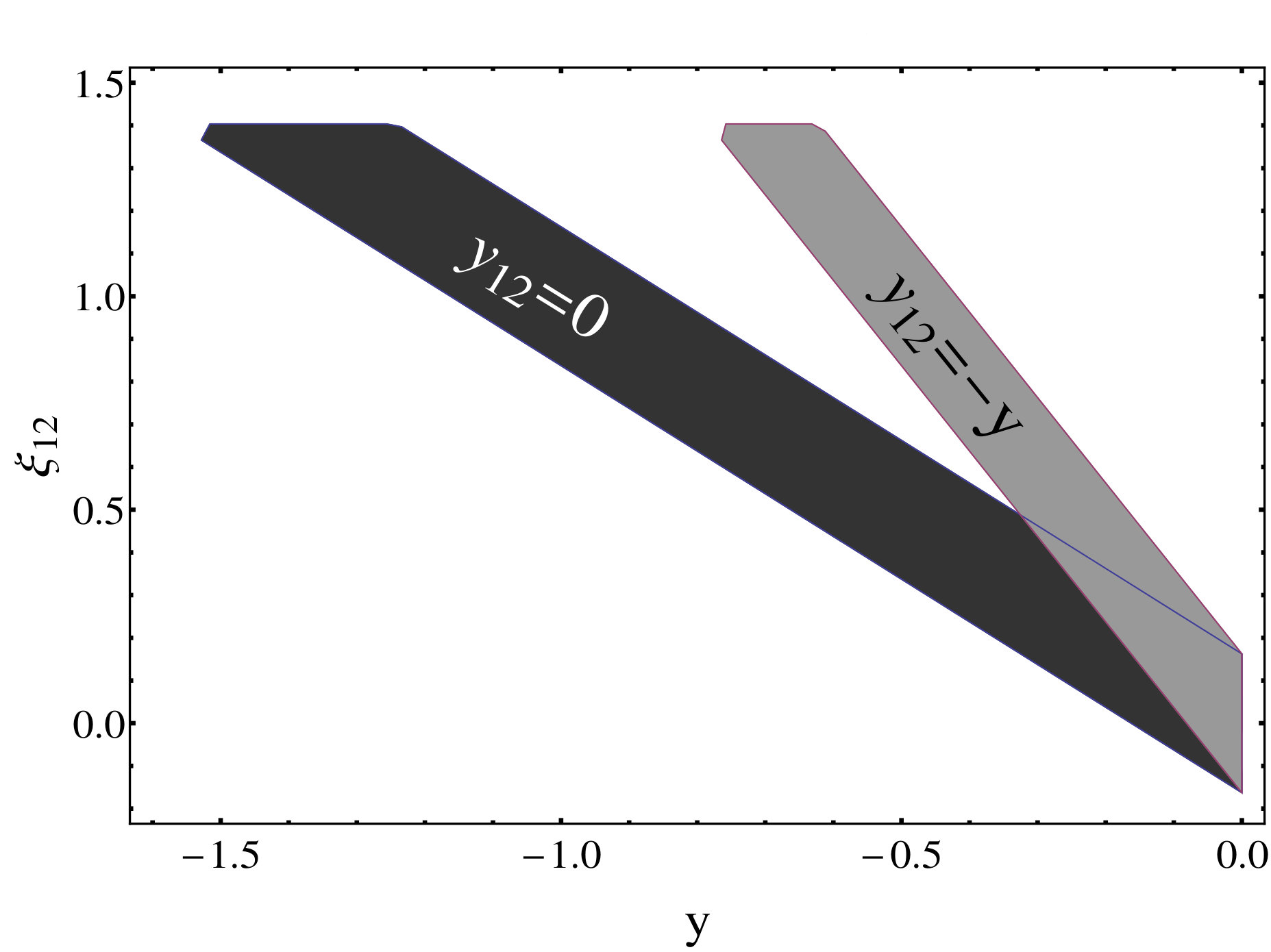 Figure 2
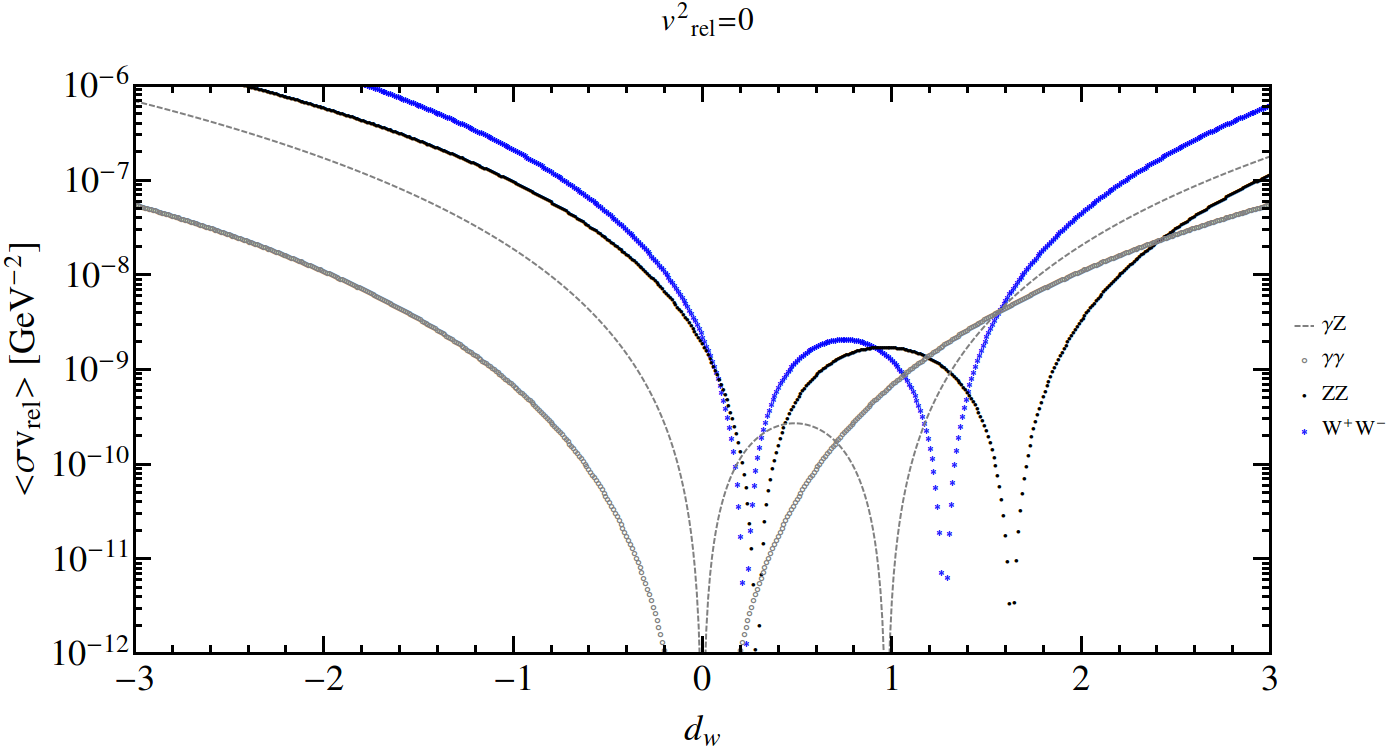 Figure 3
 Figure 4
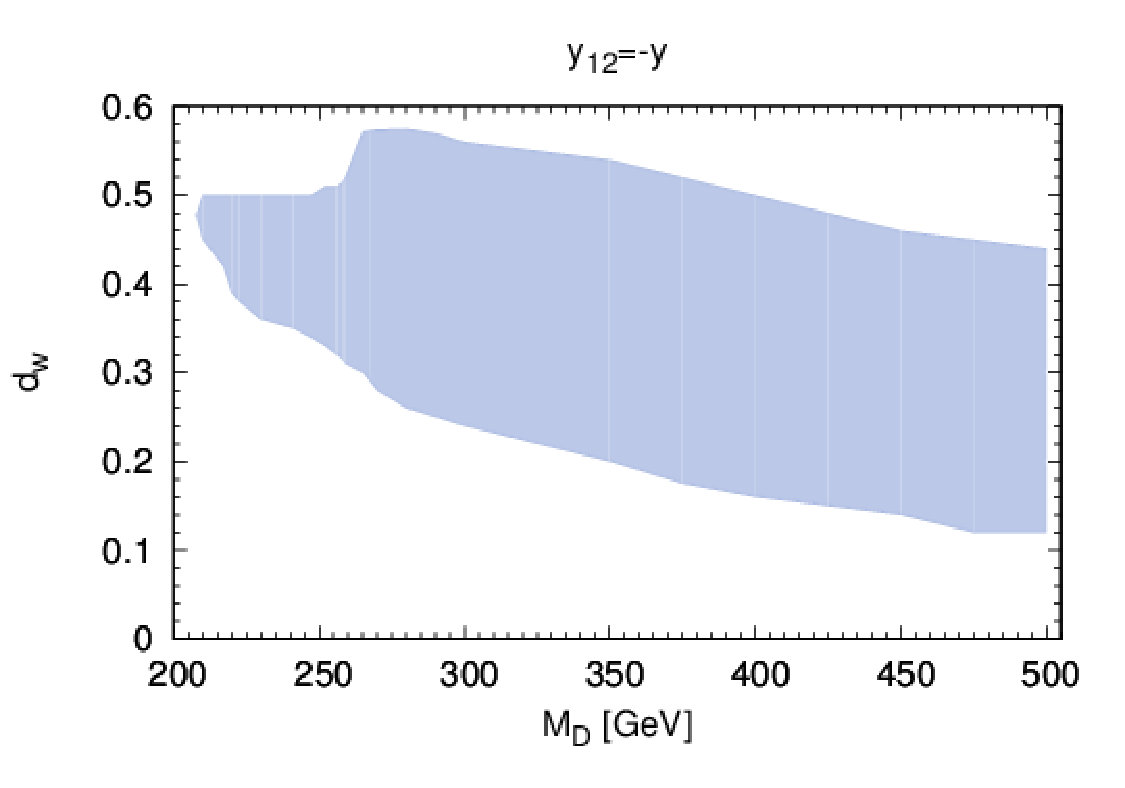 Figure 5
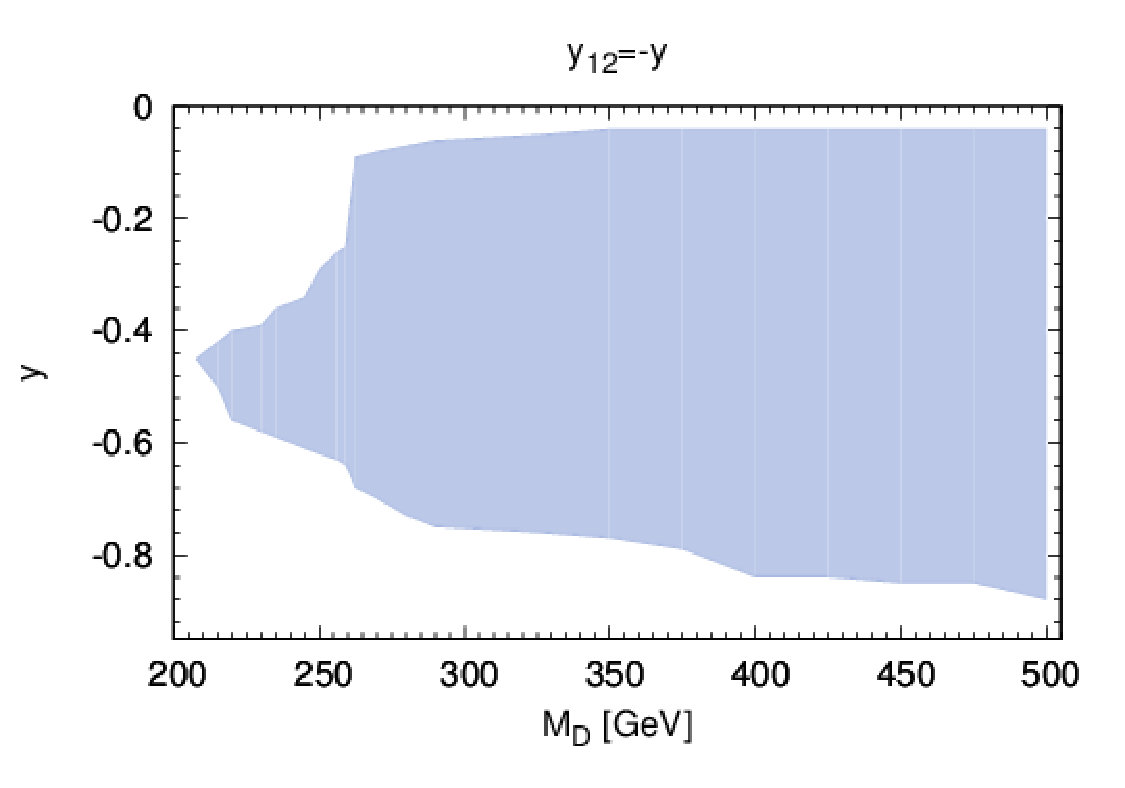 Figure 6
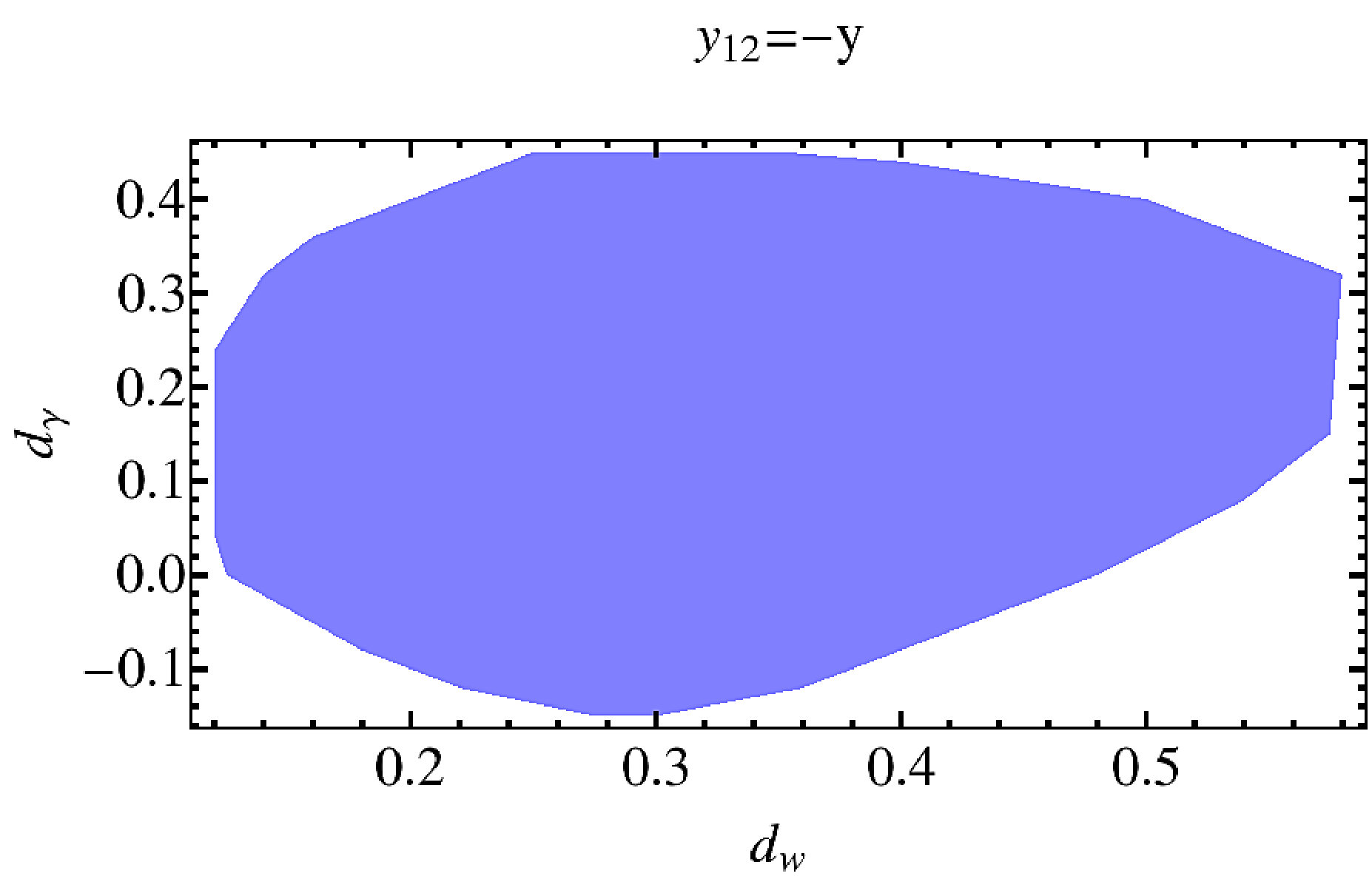 Figure 7
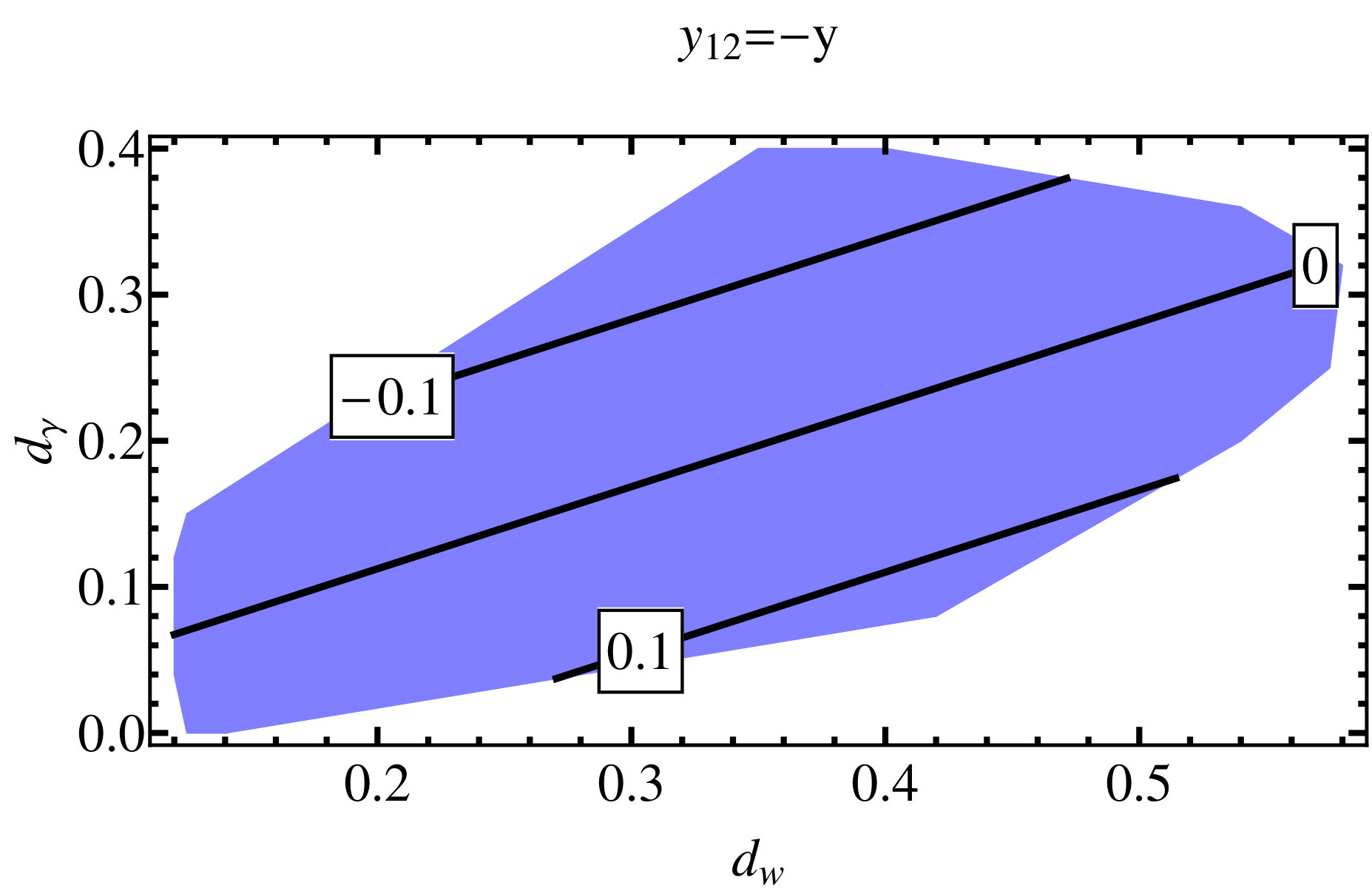 Figure 8
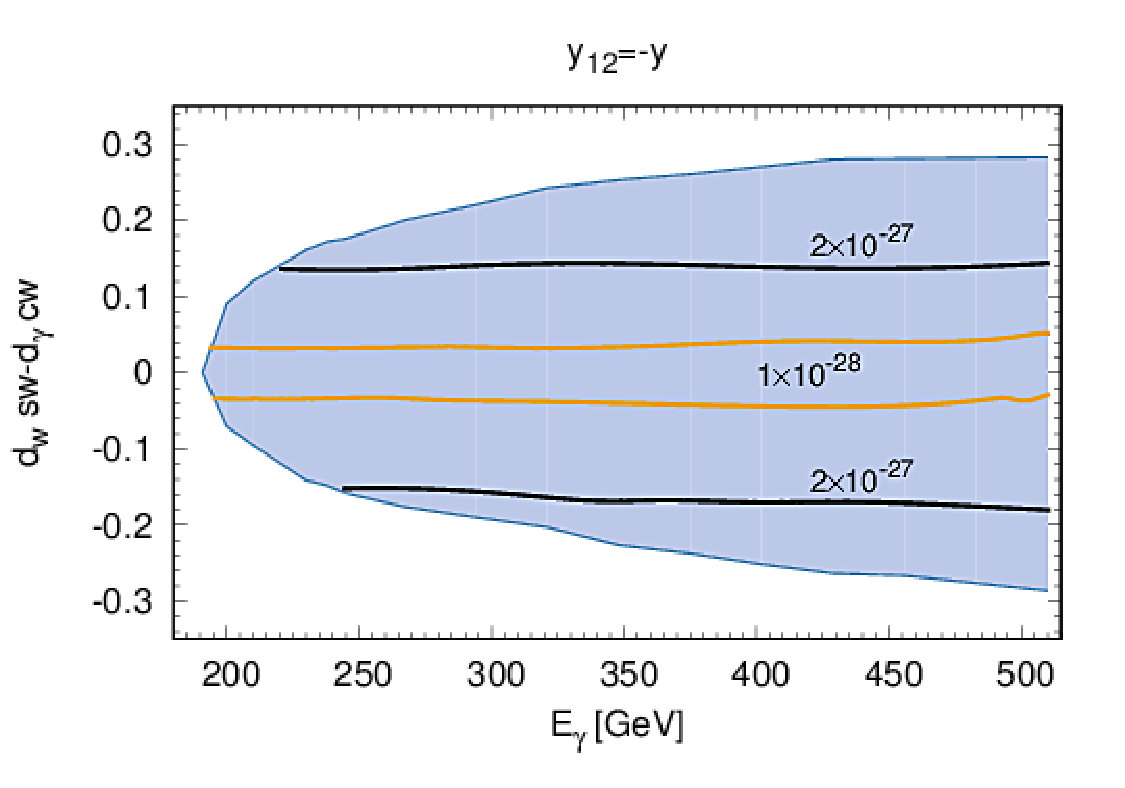 Figure 9
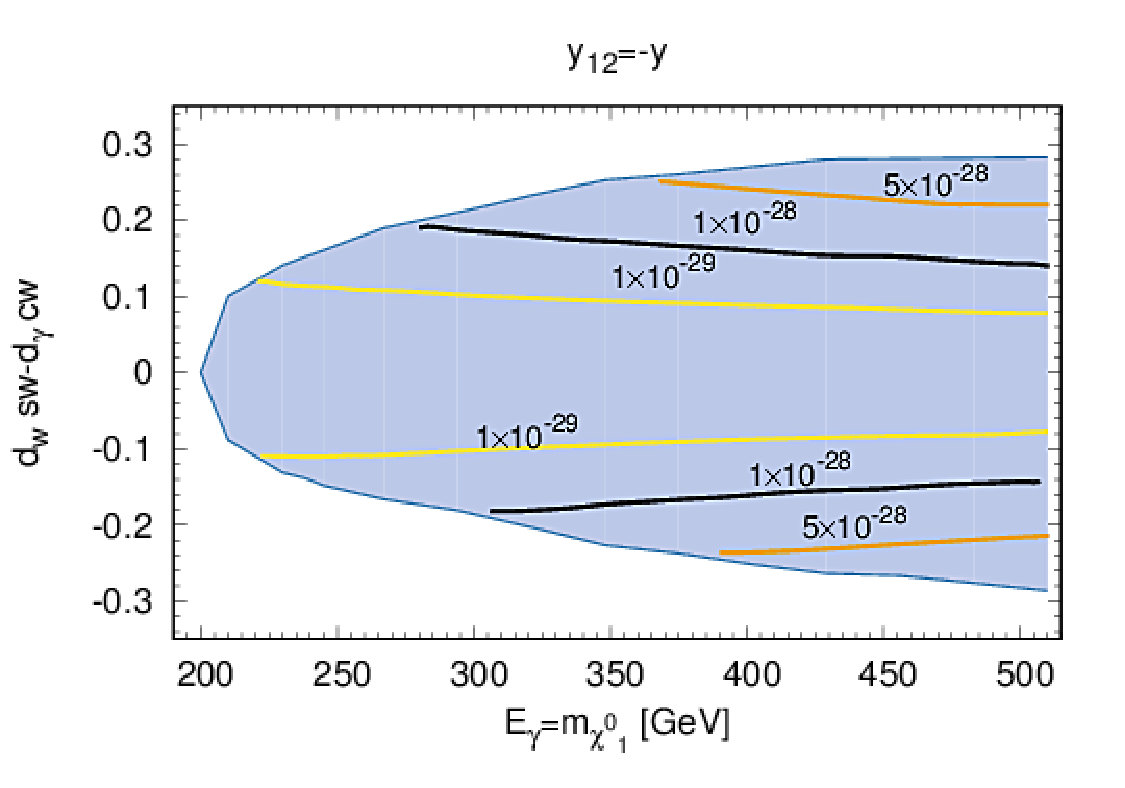 Figure 10
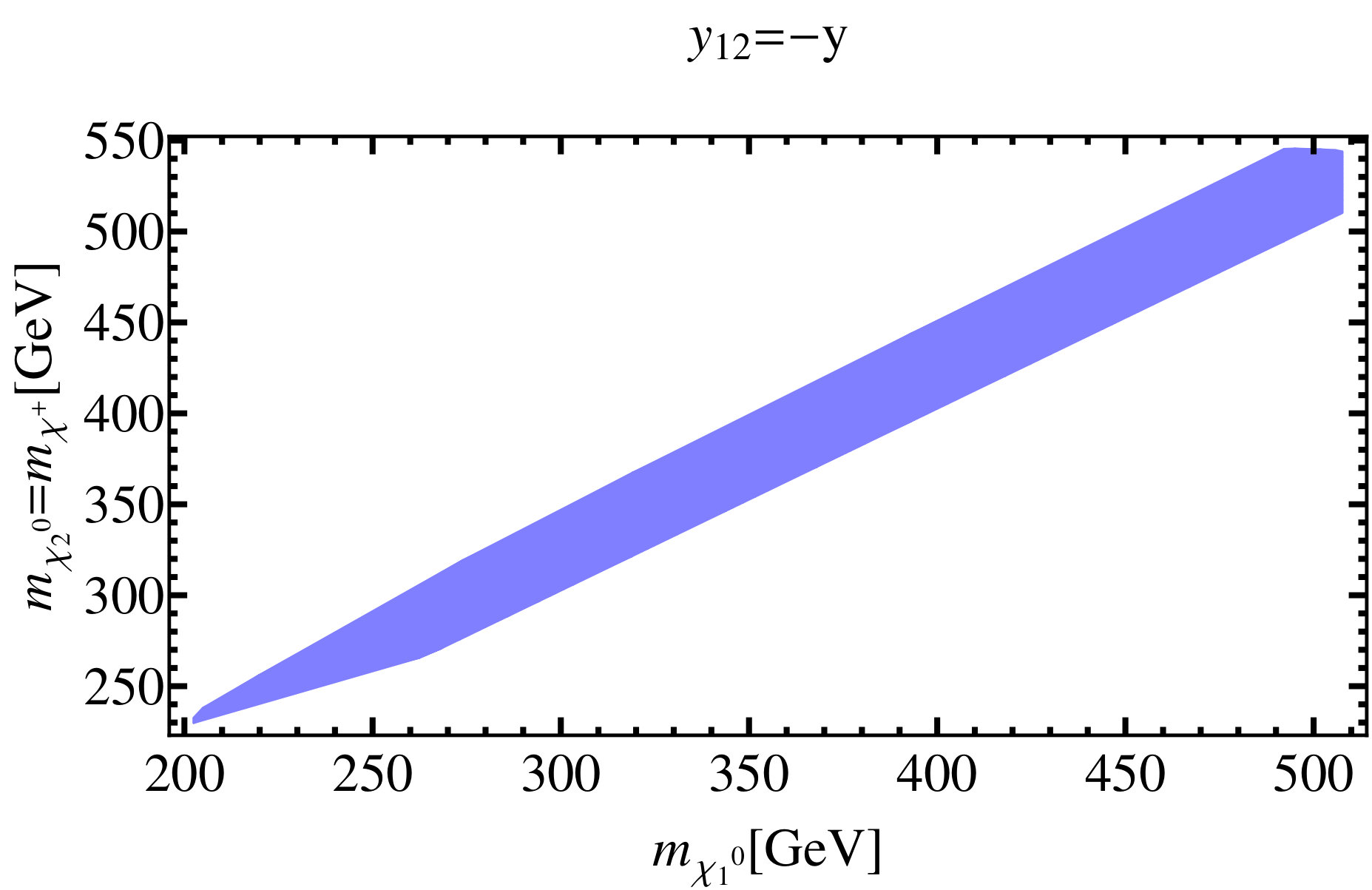 Figure 11
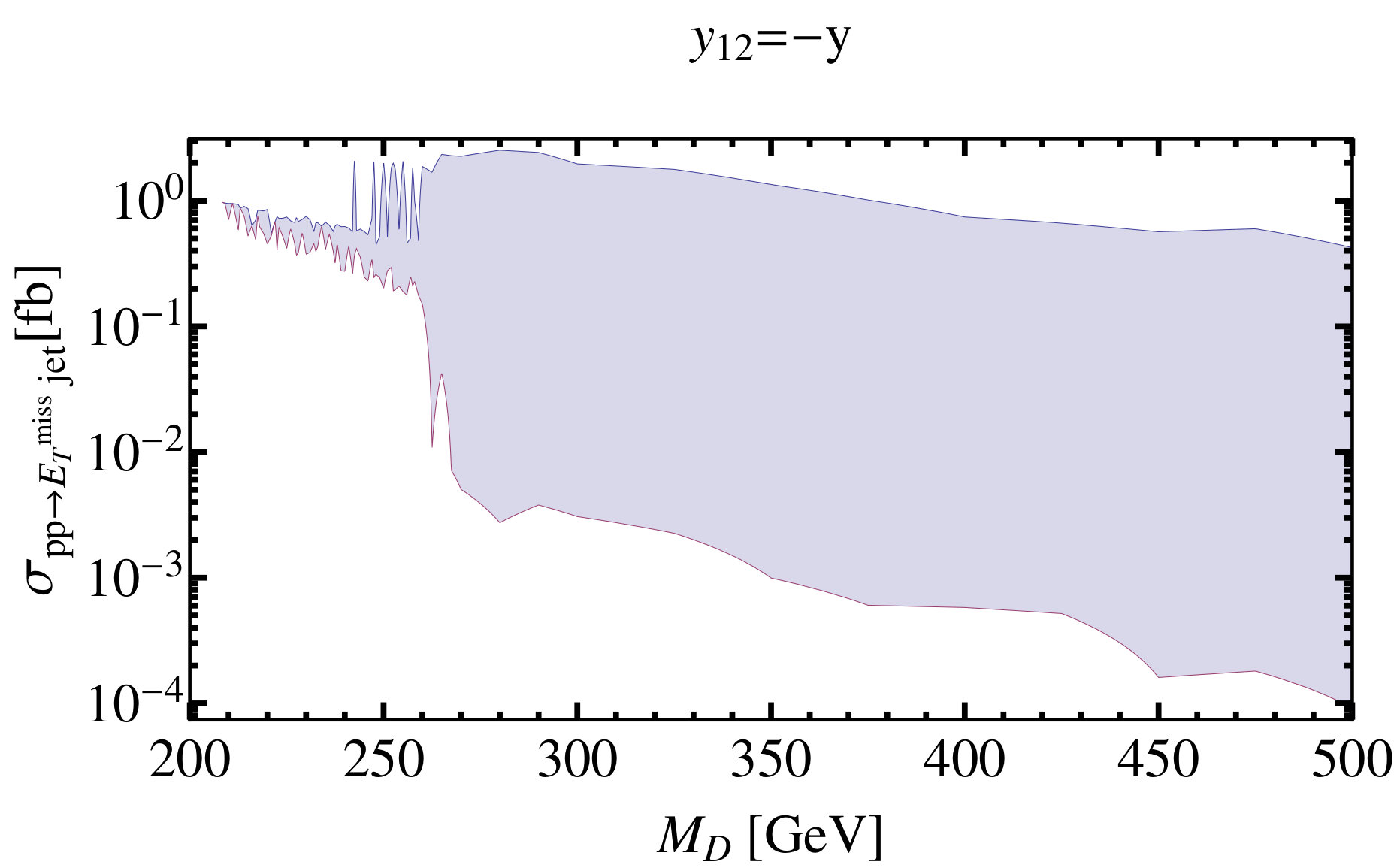 Figure 12
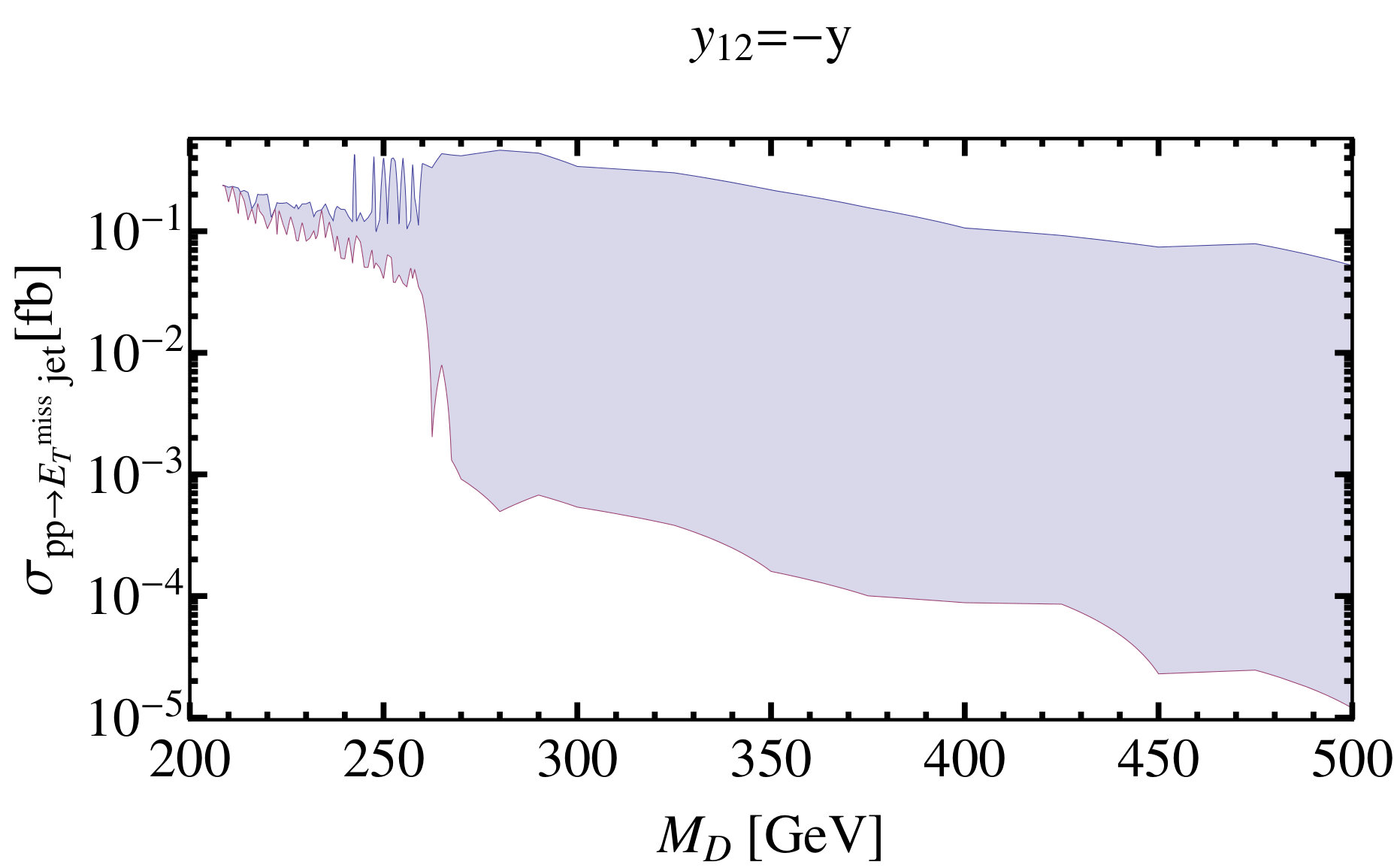 Figure 13
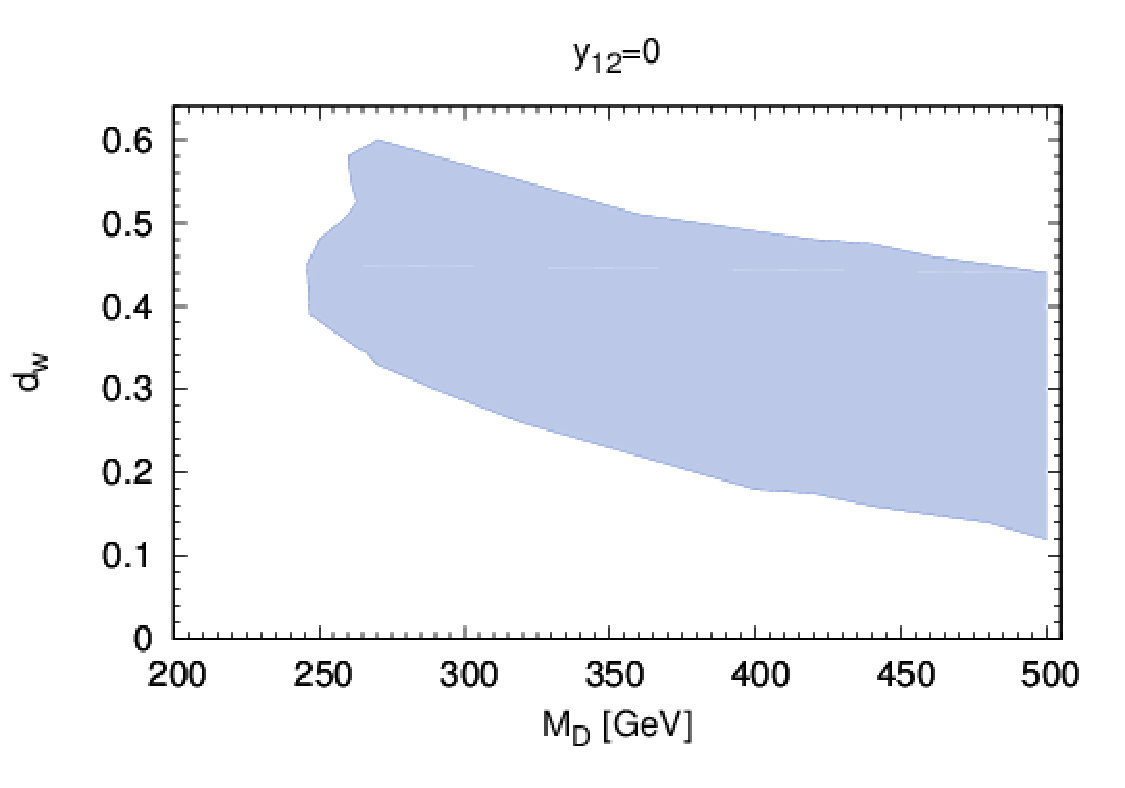 Figure 14
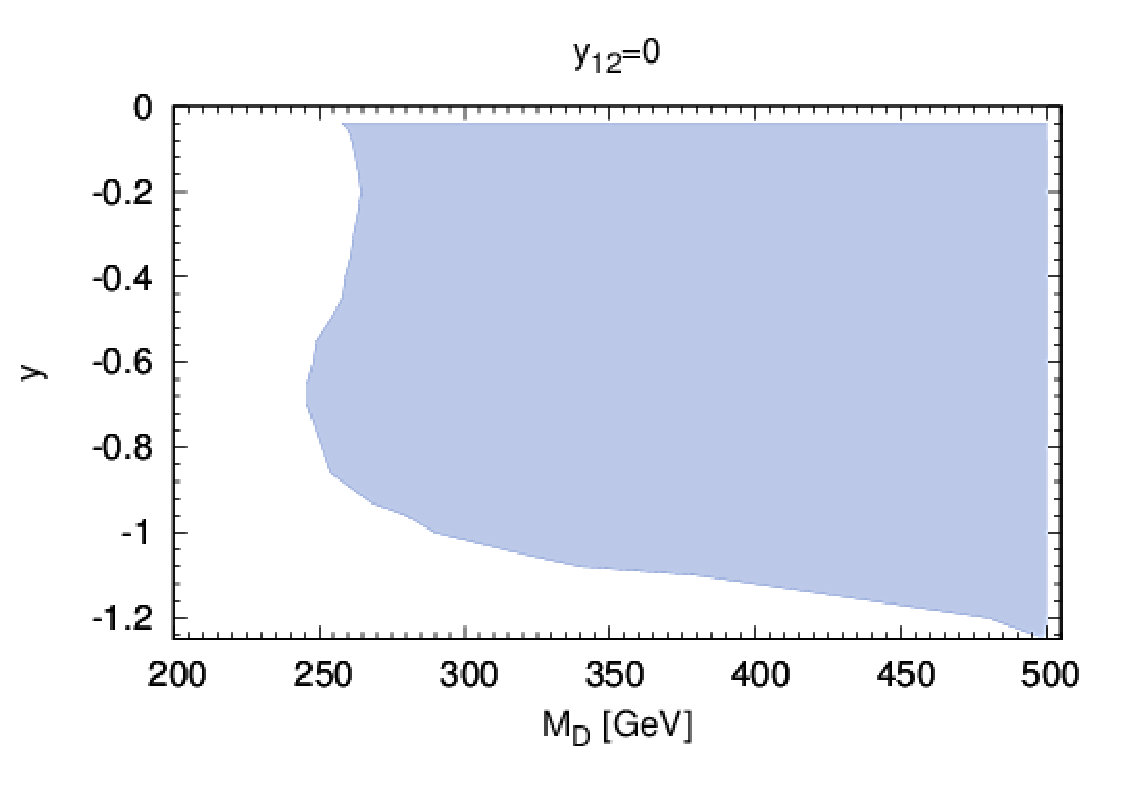 Figure 15
Peer Reviews
No public reviews on file for this paper yet. If you reviewed it on a platform where reviews are public (OpenReview, ICLR, NeurIPS, ICML), you can paste yours below so the community can read it here.
Videos
No videos yet. Explain this paper in a talk, walkthrough, or lecture? Add one.
Taxonomy
TopicsDark Matter and Cosmic Phenomena · Particle physics theoretical and experimental studies · Cosmology and Gravitation Theories
A Fermionic bi-Doublet Effective Field Theory for Dark Matter
University of Ioannina, Greece
Abstract:
We study an effective field theory which includes the Standard Model extended by a Dark Sector consisting of two fermionic -doublets. A parity guarantees that, after electroweak symmetry breaking, the lightest neutral particle is stable, acting as a WIMP. The dark sector interacts with the Higgs and gauge bosons through renormalizable and non-renormalizable operators. We find that a WIMP with a mass around the electroweak scale, i.e. accessible at the LHC, is consistent with collider and astrophysical data only when non-trivial magnetic dipole interactions with the gauge bosons exist.
1 Introduction
There is a number of evidence suggesting that the mass content of the universe is dominated by Dark Matter (DM). From CMB measurements, the DM seems to account for about 25% of the total energy of the universe[1]. One of the most promising DM candidates is the so-called Weakly Interacting Massive Particle (WIMP). The WIMP is assumed to be a massive electrically neutral stable particle interacting weakly with the Standard Model (SM). Under these assumptions, the mass of the WIMP seems to lie naturally at the electroweak scale, due to the so-called WIMP-miracle [2]. This makes the WIMP accessible at LHC as well as direct detection experiments.
Here we present the work of [3], where the SM is extended by a pair of fermionic -doublets, which constitutes the Dark Sector (DS). Assuming that the SM and the DS do not mix, due to a parity, the complete set of non-renormalizable operators is introduced. We show that after electroweak (EW) symmetry breaking there is a stable neutral particle, which can act as a WIMP. The EFT at hand generalises the discussion on the bi-doublet DM scenario. Among the models incorporating a pair of fermion doublets in their low-energy spectrum, one finds the higgsino DM case [4], some simplified models such as the doublet-triplet DM [5], non-supersymmetric SO(10) GUTs [6] and its left-right symmetric subgroup [7].
Performing a phenomenological analysis, we show that a viable WIMP with a mass close to the EW scale, i.e. suitable for LHC searches, acquires sizeable magnetic dipole moments with the gauge bosons.
2 The EFT content
In the SM we add a pair of fermion -doublets, , with opposite hypercharges, . We impose a parity which separates the DS from the SM and ensures that the lightest neutral particle is stable and thus a WIMP candidate. Apart from the renormalizable interactions, we also introduce the complete set of non-renormalizable operators, which are responsible for the dipole interactions between the DS fermions and the SM gauge bosons, the Yukawa interactions and the mass splitting between the components of the doublets.
2.1 The Yukawa interactions
Since there are no renormalizable interactions between the Higgs boson and , they appear at the level. The Yukawa along with the mass terms are111The spinor and gauge indices are suppressed for simplicity.
[TABLE]
where is the cut-off of the EFT and is the anti-symmetric tensor (in the fundamental representation). Also, for simplicity we assume that the parameters are real numbers, while the mass parameter can be redefined to be positive. Finally, as it can be seen from eq.(1), there are four independent operators with their respective Wilson coefficients and .
2.2 The dipole interactions
Apart from the operators of eq. 1, there are also interactions with the gauge bosons at level. These are
[TABLE]
() the () gauge boson, and are real numbers. Additionally, since we are not concerned about violation, .
2.3 Symmetries of the Dark sector
The custodial symmetry
It is known [8] that, the SM Higgs sector is invariant under a global (custodial) symmetry. defining
[TABLE]
the the SM Higgs sector is invariant under with the transformation rule . It turns out that in the EFT at hand the Yukawa sector exhibits the same symmetry, when
[TABLE]
This can be seen by defining and
[TABLE]
which transforms as . Then the equation 1 obtains the form:
[TABLE]
which is clearly invariant under .
The charge conjugation symmetry
In addition to the custodial symmetry, there is also a charge conjugation (c.c.) symmetry, which is a symmetry of the entire set of operators. For (and ), the interactions 1 and 2 are invariant under exchanging according to222In general the Higgs field is transformed as , but in the Kibble parametrization remains unaffected.
[TABLE]
This symmetry, basically, exchanges the columns of the matrix 5.
Finally, we should point out that in our phenomenological analysis we are going to study two Benchmark scenarios in the the c.c. symmetric limit i.e. . These two case are:
[TABLE]
The first one is the symmetric limit, while the second violates the custodial symmetry, but is employed since it gives us a distinct mass spectrum.
3 The physical states
3.1 Mass spectrum
After EW symmetry breaking, the Higgs field is shifted by its vacuum expectation value (vev), , resulting to mixing between the components of . After rotating to the mass basis, physical states are
[TABLE]
For these particles the mass terms become
[TABLE]
where the masses are
[TABLE]
As stated in the previous section, we consider the two Benchmark scenarios shown in 8. These produce two distinct hierarchies for the masses .
The hierarchies are shown in Fig. 1. We note that for the lightest particle is always , while for , the lightest particle becomes without changing the phenomenology. Therefore, for the following analysis we are going to restrict to be negative, which makes our WIMP candidate. The masses of the particles for the two cases under study are:
(a) . In this case, the heavy fermion is degenerate with the charged one, where the various masses are given by
[TABLE]
(b) . There is no degeneracy between the particles and the various masses are
[TABLE]
3.2 Interactions
We calculate the Yukawa interactions for the rotated fields. The Lagrangian describing the 3-point DS-Higgs interactions333The 4-point interactions are not shown for simplicity. is
[TABLE]
with
[TABLE]
Interestingly, due to the c.c. symmetry, the interaction of the WIMP () with the Higgs follows . Thus current Direct Detection experimental constraints (discussed later) can be avoided easily without the need for parameter fine tuning.
Since are charged under , there are renormalizable interactions between them and the corresponding gauge bosons. The neutral ones are given by
[TABLE]
where
[TABLE]
with and being the weak mixing angle. Notably, the interaction vanishes due to the charge conjugation symmetry.
Furthermore, the non-renormalizable operators of eq. 2 also contribute to the neutral interactions, where the 3-point ones are:
[TABLE]
where and are the field strength tensors of the photon and , respectively. Interestingly, the dipole operators which arise at level, generate interactions between the neutral dark particles and the photon proportional to . There are also other interactions between and the Dark Sector. The renormalizable ones are:
[TABLE]
with
[TABLE]
From eq. 2, the 3-point interactions between and the dark fermions become
[TABLE]
Finally, we should point out that, due to an alignment of couplings in eqs. 14 and 17 with the those in eqs. 3.2 and 23, a “natural” cancellation of the d=4 and contributions in the annihilation cross-section (with V being W and Z) can be achieved. This, as we shall see later, will be important in obtaining the observed relic abundance for WIMP masses at the electroweak scale.
4 “Earth constraints”
In this section we study constraints, from WIMP()-nucleon scattering experiments, searches for heavy charged fermions at LEP and from the LHC data for the Higgs boson decay to two photons. We collectively refer to these as “Earth constraints”.
Nucleon-WIMP direct detection bounds
For the Spin-Independent cross-section the current limit set by the LUX Collaboration [9, 10] is , for . This translates to
[TABLE]
LEP bounds
We next examine constrains for heavy charged fermions from LEP. From Fig. 1 we observe the next-to-lightest particle is the charged dark fermion, , with mass that is assumed to be positive.
The bound on from such experiments is [11] , which in terms of , and becomes .
Bound from measurements
From the interactions 1 and 3.2, the ratio is given by [5]
[TABLE]
where for GeV, and is the well known function given in Ref. [12]. The ratio is currently under experimental scrutiny at LHC. The current value is [13]. From eq. 13 we expect that would be restricted to small values from the loop induced bound. This would also result to a lower bound on at .
Combined “Earth constraints”
A numerical example of the combination of the “Earth constraints” is shown in Fig. 2. Generally, combining all the aforementioned bounds, results to a lower allowed value for the doublet mass parameter () at . Furthermore, is restricted to (relatively) small values. Also the allowed Yukawa couplings follow the relation , for (). This relation, then, also restricts to small values.
5 Cosmological and astrophysical constraints
Having examined the constraints imposed from earth-based experiments, we now can the calculate the relic abundance of the lightest particle () of this model and delineate the parameter space in which the observed one. After that, various others astrophysical constraints are going to be considered.
The role of the dipoles
Before moving on, we should remind that the dipole operators (2) are essential in our study. This is because acts as a regulator that minimizes the total annihilation cross-section as the desired EW WIMP mass tends to amplify it444Generally the cross section scales as at the renormalizable level.. Thus this minimization is vital for obtaining cosmologically acceptable relic abundance for at the electroweak scale.
The behaviour of the annihilation cross sections of Fig. 3 shows that there are two minima for the channels (channel) (channel) and (channel) and one minimum for (channel). The first minimum of the annihilations to and coincides with () which gives small cross-sections for the and channels. On the other hand, the second minimum of the and channels is in a region where the annihilation to and blows up. Furthermore, for negative , there are no minima and every cross section becomes quite large. Therefore, if the minimization of the cross section is indeed needed, we expect to be bounded to non-vanishing positive values close to .
5.1 Relic abundance constraints
Since the role of the dipole operators is pointed out, we can calculate the relic abundance and set further constraints on the parameter space.
In Fig. 4 we show the plane of the parameter space that is compatible with the observed DM relic density, varying all the other parameters, while keeping and . The parameter () is bounded to be (mostly) positive in order to explain the DM relic abundance for a WIMP mass at electroweak scale, as expected from the minimization of the annihilation cross section discussed in the previous paragraph.
From Fig. 5 we observe that vastly affects the allowed values for for which we obtain the observed relic abundance. This is mainly due to the dependence of the minimum of the total annihilation cross section on . Additionally, as increases, moves to lower values, since for larger WIMP masses the minimization of the cross section is less needed (we can obtain the desired relic abundance at the renormalizable level). Also the allowed values of are shown in Fig. 6.
Finally, the Yukawa couplings and the mass parameter showed above, fix the masses and their differences, as expected from eq. 11. These masses are shown in Fig. 7 for (similar region holds also for ). We observe that the WIMP can be at the EW scale and its mass, as expected, is dominated by .
5.2 Constraints from Gamma-ray monochromatic spectrum
In this paragraph, we calculate the cross-sections for processes that could give gamma-ray lines from the Galactic Center (GC). As input, we use the parameter space that evade all the other, previously examined, restrictions and use the results from Fermi-LAT [14] to set additional bounds to the parameters of this model.
Fro observations of gamma-ray lines from the GC show that the annihilation cross-section for cannot be above for photon energy () at up to for . For the photon production channel , we need to rescale this bound by a factor of two. This process also results to different value for the photon energy given by .
The values of the relevant cross sections in the allowed region of the parameter space are shown in Fig. 8. Applying the bounds discussed above, the parameter space remains virtually unaffected, apart from the plane shown in figure 4.
The values of which respect the bounds discussed here are shown in Fig. 9 along with (contours). We observe that the allowed values of are concentrated around zero, which forces and to have the same sign. Thus the latter is restricted to positive values, while accepted range of remains as in Fig. 4.
6 LHC searches
Having found the viable area in the parameter space, in which the observed DM relic abundance is obtained while avoiding all the other experimental and observational constraints, we move on to discuss possible observational effects at the LHC.
In Fig. 10 we show the mono-jet channel cross section, which seems to be the most promising one, at least for this model. The current bound [15] on at center of mass energy is . It is apparent that this bound is easily evaded in the allowed parameter space. For LHC (RunII) at , the mono-jet channel can provide us with a relatively large number of events. From Fig. 10(b), we observe that the production of a jet accompanied with missing , can reach cross sections up to . Therefore the number of events that can, in principle, be observed is around for LHC expected luminosity reach of .
7 Conclusions
We have extended the SM particle spectrum by a fermionic pair of doublets, , with opposite hypercharges. In addition, we have assumed a discrete -symmetry that distinguishes this Dark Sector from the SM fields. At the renormalizable level there are a neutral, and a charged Dirac, fermion. After EW symmetry breaking, due the presence of operators, the neutral Dirac fermion splits to two Majorana states. The lightest of them (), which is the WIMP candidate and a heavier neutral state, . Moreover, the operators include magnetic dipole operators which are, in principle, generated by a UV-complete model, at the TeV scale. The question we ask here is whether the WIMP, with a mass around the EW scale, is compatible to the various experimental and observational data.
In order to reduce fine tuning and further simplify the parameter space, in section 2, we adopted two scenarios based on a charge conjugation symmetric limit. Then, in section 3 we showed the mass spectrum of the physical states.
In section 4, we performed an analysis based a) on scattering WIMP-nucleus scattering experiments, b) LEP searches for heavy charged fermions, as well as c) on LHC searches for the decay . We found the collective bounds showed in Fig. 2.
In section 5 we calculated for our WIMP candidate. In the presence of non-vanishing dipole interactions, the WIMP annihilation cross sections acquire minima, which allow for the WIMP mass to be as low as . Following this we also considered constraints based of monochromatic gamma-ray spectrum observations from the Galactic Center. These set the final restrictions on the parameter space, which confined the photon dipole coupling () to be .
Since our main goal was to be able to produce a WIMP at the electroweak scale, in order to be accessible at the LHC, in section 6 we estimated the cross section for producing in association with a jet (monojet) with center of mass energy TeV. Although current bounds are weak, we found that the monojet channel, can produce few hundred of events at TeV and with (see Fig. 10).
The reference list from the paper itself. Each links out to its DOI / PubMed record.
- 1[1] Planck Collaboration, P. A. R. Ade et al., Planck 2015 results. XIII. Cosmological parameters , Astron. Astrophys. 594 (2016) A 13, [ ar Xiv:1502.01589 ].
- 2[2] D. Hooper, Particle Dark Matter , in Proceedings of Theoretical Advanced Study Institute in Elementary Particle Physics on The dawn of the LHC era (TASI 2008): Boulder, USA, June 2-27, 2008 , pp. 709–764, 2010. ar Xiv:0901.4090 .
- 3[3] A. Dedes, D. Karamitros, and V. C. Spanos, Effective Theory for Electroweak Doublet Dark Matter , Phys. Rev. D 94 (2016), no. 9 095008, [ ar Xiv:1607.05040 ].
- 4[4] L. Roszkowski, Light neutralino as dark matter , Phys. Lett. B 262 (1991) 59–67.
- 5[5] A. Dedes and D. Karamitros, Doublet-Triplet Fermionic Dark Matter , Phys. Rev. D 89 (2014), no. 11 115002, [ ar Xiv:1403.7744 ].
- 6[6] N. Nagata, K. A. Olive, and J. Zheng, Weakly-Interacting Massive Particles in Non-supersymmetric SO(10) Grand Unified Models , JHEP 10 (2015) 193, [ ar Xiv:1509.00809 ].
- 7[7] C. Garcia-Cely and J. Heeck, Phenomenology of left-right symmetric dark matter , ar Xiv:1512.03332 . [JCAP 1603,021(2016)].
- 8[8] P. Sikivie, L. Susskind, M. B. Voloshin, and V. I. Zakharov, Isospin Breaking in Technicolor Models , Nucl. Phys. B 173 (1980) 189–207.