Probabilistic properties of the elliptic motion
Uwe B\"asel

TL;DR
This paper analyzes the probabilistic properties of ellipses generated by random points within a disk attached to a moving circle in an elliptic motion, deriving their moments and distributions.
Contribution
It introduces a novel probabilistic analysis of the geometric properties of ellipses generated in elliptic motion, including distribution and moments of area and perimeter.
Findings
Derived the distribution of ellipse area and perimeter for random points.
Calculated moments of these geometric variables.
Provided probabilistic descriptions for the elliptic motion scenario.
Abstract
In this paper we consider the plane elliptic motion which occurs if the moving centrode is a circle of radius and the fixed centrode a circle of radius . Every point of the moving plane generates an ellipse in the fixed plane. Let a disk of radius , , concentric to the moving centrode be attached to the moving plane. If a point is chosen at random from this disk, then the area and the perimeter of the ellipse generated by are random variables. We determine the moments and the distributions of these random variables for the case that is uniformly distributed over the area of the disk.
Click any figure to enlarge with its caption.
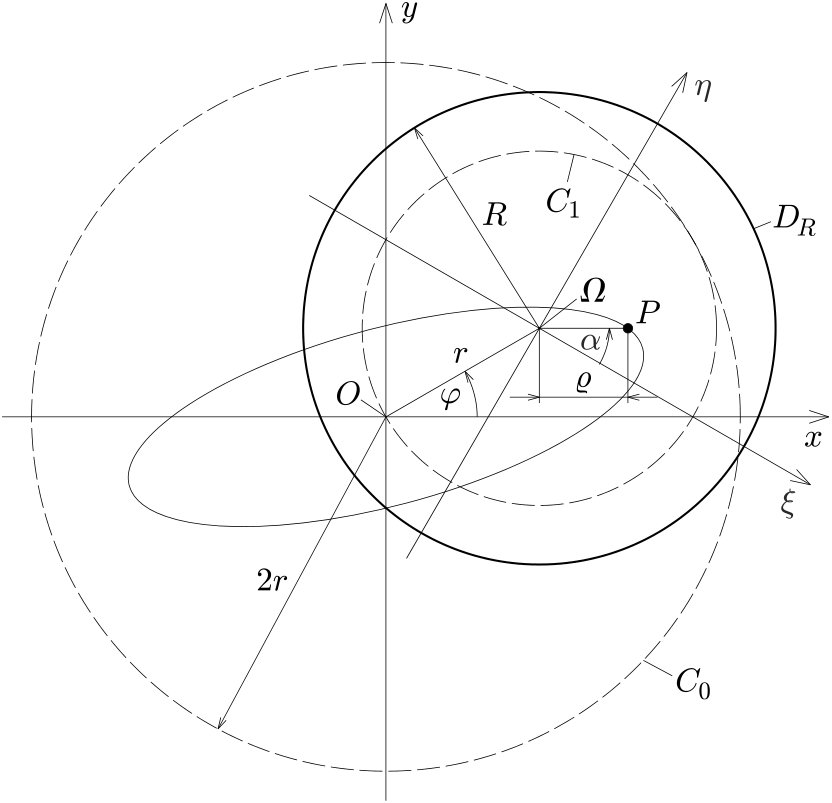 Figure 1
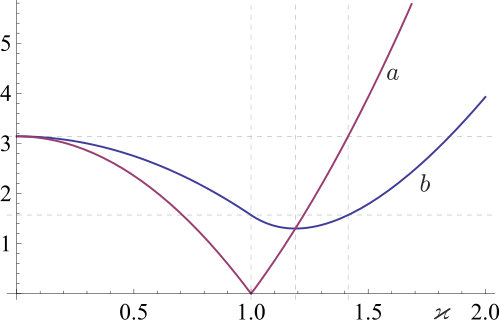 Figure 2
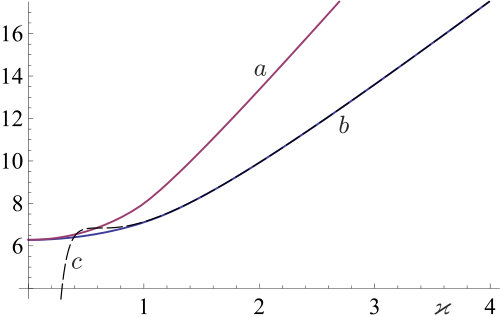 Figure 3
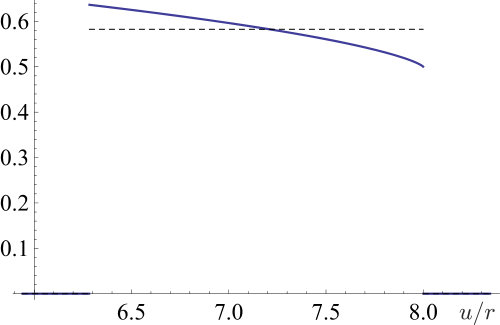 Figure 4
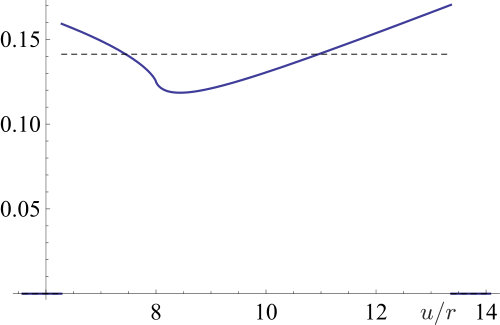 Figure 5
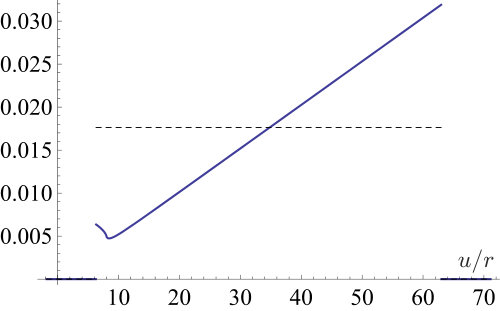 Figure 6
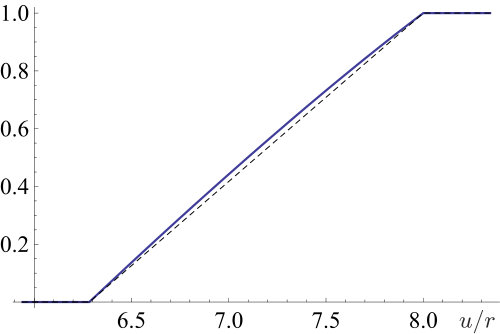 Figure 7
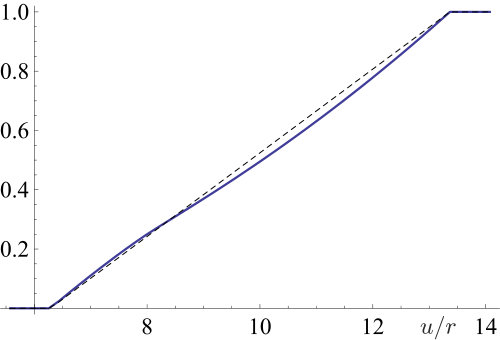 Figure 8
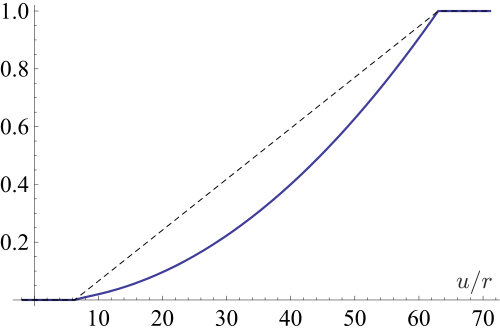 Figure 9
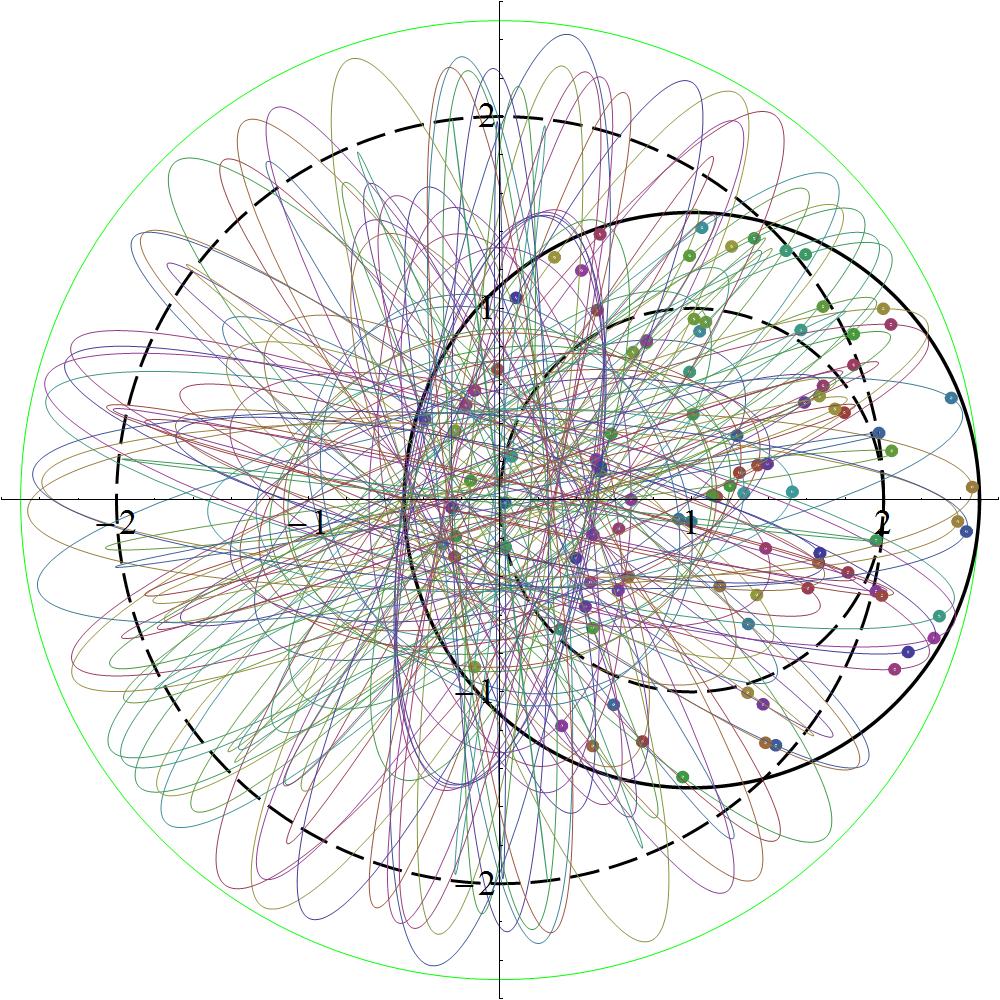 Figure 10
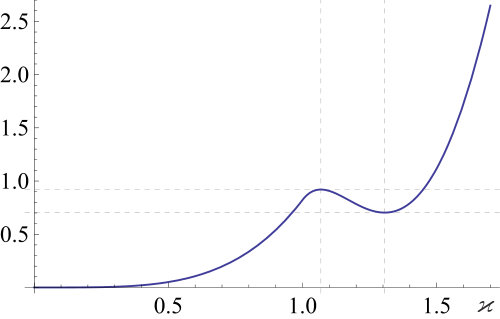 Figure 11
| 1 | 9.9232888058187711084 | 13.606226799878091189 |
|---|---|---|
| 2 | 102.96648551991466206 | 199.63369601685873413 |
| 3 | 1110.1715673108248830 | 3094.8106779481943393 |
| 4 | 12355.455260295394611 | 49903.060116964320575 |
| 5 | 141074.96324382298144 | 827860.92690590516817 |
| 6 | ||
| 7 | ||
| 8 | ||
| 9 | ||
| 10 |
Peer Reviews
No public reviews on file for this paper yet. If you reviewed it on a platform where reviews are public (OpenReview, ICLR, NeurIPS, ICML), you can paste yours below so the community can read it here.
Videos
No videos yet. Explain this paper in a talk, walkthrough, or lecture? Add one.
Taxonomy
TopicsMorphological variations and asymmetry · Point processes and geometric inequalities
Probabilistic properties of the elliptic motion
Uwe Bäsel
Abstract
In this paper we consider the plane elliptic motion which occurs if the moving centrode is a circle of radius and the fixed centrode a circle of radius . Every point of the moving plane generates an ellipse in the fixed plane. Let a disk of radius , , concentric to the moving centrode be attached to the moving plane. If a point is chosen at random from this disk, then the area and the perimeter of the ellipse generated by are random variables. We determine the moments and the distributions of these random variables for the case that is uniformly distributed over the area of the disk.
2010 Mathematics Subject Classification: 52A22, 53C65, 60D05, 53A17, 51N20, 33E05
Keywords: elliptic motion, random ellipses, area moments, area distribution, perimeter moments, perimeter distribution, centrode, elliptic integrals
1 Introduction
We consider a fixed Euclidean plane with a Cartesian frame of origin and axes, and a moving Euclidean plane with a Cartesian frame of origin and axes. To we attach a circle with centre and radius ; to we attach a circle with centre and radius (see Fig. 2).
If rolls inside , then every point fixed in generates an ellipse in . Therefore, this motion is called elliptic motion. If , then the ellipse is a circle with centre and radius ; if , then the ellipse degenerates to a (double) line segment of length which is one diameter of . [4, pp. 2-3, 8-9], [1, pp. 14-15]
We denote by the angle between the -axis and the line segment . W.l.o.g. we assume that for the -axis lies on the -axis and both axes have equal direction. Then the equation in complex form of the ellipse generated by is given by
[TABLE]
with
, where , are the polar coordinates of with respect to the -frame, or
- 2)
, where , are the Cartesian coordinates of with respect to the -frame.
In the first case, from (1.1) we get
[TABLE]
as parametric representation of the ellipse, and in the second case,
[TABLE]
From (1.2) one finds that the length of the semi-major axis is equal to , and the length of the semi-minor axis equal to . Hence all points with equal distance from generate congruent ellipses. The centres of all ellipses lie in . The angle between the -axis and the major-axis of an ellipse is equal to .
is the fixed centrode and the moving centrode of the elliptic motion. It is possible to get the equations of and backwards from the equation(s) of the motion (1.1), (1.2) or (1.3). [4, p. 8-9], [1, p. 14-15] (For the notions of the fixed and the moving centrode see e. g [2, pp. 257-259].)
Now we consider a disk
[TABLE]
If is chosen at random from , then the area and the perimeter of the ellipse generated by are random variables which we denote by and , respectively. In this paper we determine the moments and the distributions of these random variables for the case that is uniformly distributed over the area of . Since is no essential parameter, we identify and , where
Fig. 2 shows the result of a simulation with 100 random points and ellipses.
2 Moments of the area
The moments of the random area enclosed by the ellipse generated by a random point (see (1.4)) are given by
[TABLE]
where is the area of the ellipse generated by the point , and is the density for sets of points in the plane. Up to a constant factor this density is the only one that is invariant under motions [5, p. 13]. Due to the point symmetry we use the polar coordinates . With , we get
[TABLE]
and
[TABLE]
hence
[TABLE]
The area enclosed by an ellipse generated by a point with distance from is given by
[TABLE]
With , the area (2.2) function may be written as
[TABLE]
Theorem 2.1**.**
The -th moment, , of the random area , , of an ellipse generated by a random point ( uniformly distributed over the area of the disk ) is given by
[TABLE]
Proof.
First, we consider the case (). Eq. (2.1) becomes
[TABLE]
The substitution gives
[TABLE]
which, with may also be written as
[TABLE]
The substitution
[TABLE]
yields
[TABLE]
Applying L’Hôpital’s rule we get
[TABLE]
hence
[TABLE]
Now we consider the case (). Here we have
[TABLE]
hence
[TABLE]
The graph of is shown in Fig. 4. For we have
[TABLE]
It follows that the expectation has its global minimum at point with value
[TABLE]
Furthermore one finds that
[TABLE]
For the variance of , , we get
[TABLE]
if , and
[TABLE]
if . One finds that has local extrema at
[TABLE]
with values
[TABLE]
respectively (see Fig. 4).
3 Distribution of the area
Now we determine the distribution function
[TABLE]
of the random variable . We have to distinguish the following three cases.
(): The smallest area of an ellipse is equal to and the biggest area equal to . We have if lies in an open disk with area . From the first equation in (2.2), with we get
[TABLE]
It follows that
[TABLE]
and
[TABLE]
So we have
[TABLE]
- 2)
(): For we have if lies
- a)
in an open disk with area or
- b)
in an open annulus with area , where is the in the second equation in (2.2).
It follows that
[TABLE]
hence
[TABLE]
For we have if lies in an open disk with area . Therefore, the distribution function is given by
[TABLE]
- 3)
(): One easily finds
[TABLE]
Now we determine the moments of the random variabe in an alternative way:
: The density function is given by if , and if the area is outside this interval. So we have
[TABLE]
- 2)
: The resctriction of the density function to the interval is given by
[TABLE]
It follows that
[TABLE]
- 3)
: One finds
[TABLE]
4 Moments of the perimeter
By analogy to the determination of \mathbb{E}\big{[}A_{R}^{k}\big{]}, we get the moments of the perimeter with
[TABLE]
where is the perimeter of an ellipse generated by a point with distance from . The length of the semi-major axis is given by , and the length of the semi-minor axis by or . In both cases we have
[TABLE]
where
[TABLE]
is the complete elliptic integral of the second kind with modulus , . So we have
[TABLE]
By substituting , the perimeter (4.1) may be written as
[TABLE]
and, with , , the integral (4.2) becomes
[TABLE]
Theorem 4.1**.**
The expectation of the random perimeter , , of an ellipse generated by a random point ( uniformly distributed over the area of the disk ) is given by
[TABLE]
where
[TABLE]
is the complete elliptic integral of the first kind with modulus , . The expectations for the cases and can be subsumed in the formula
[TABLE]
Proof.
First, we consider the case . Using the relation
[TABLE]
([3, Vol. 2, p. 299], Eq. (8.126.4)), (4.4) becomes
[TABLE]
With
[TABLE]
(Equations (5.112.4), (5.112.3), (5.112.5) in [3, Vol. 2, p. 13]) we get
[TABLE]
For we have , hence
[TABLE]
So has the indeterminate form . Taking
[TABLE]
(Equations (8.123.4), (8.123.2) in [3, Vol. 2, p. 298]) into account, applying L’Hôpital’s rule twice gives
[TABLE]
Now we consider the limit of (4.6) for (and hence ). We have , . For ,
[TABLE]
has the indeterminate form . Mathematica finds
[TABLE]
It follows that
[TABLE]
Now we consider the case . Here we have
[TABLE]
The substitution
[TABLE]
gives
[TABLE]
Applying (4.5), we get
[TABLE]
From [3, Vol. 2, pp. 13-14], Equations (5.112.12), (5.112.9), we know that
[TABLE]
Mathematica finds
[TABLE]
So we get
[TABLE]
For ,
[TABLE]
has the indeterminate form . Mathematica finds
[TABLE]
It follows that
[TABLE]
Using the relations (4.5) and
[TABLE]
[3, Vol. 2, p. 299], Eq. (8.126.3), for we get
[TABLE]
For we have
[TABLE]
and
[TABLE]
It follows that
[TABLE]
For ,
[TABLE]
hence has the indeterminate form . For ,
[TABLE]
has the indeterminate form . Mathematica finds
[TABLE]
The graph of is shown in Fig. 5. Mathematica finds the series expansion
[TABLE]
about the point . For abbreviation we put
[TABLE]
provides a very good approximation for even for relatively small values of (see Fig. 5). One finds that
[TABLE]
5 Distribution of the perimeter
With (4.3) the maximum perimeter in the disk of radius is given by
[TABLE]
Let be the distribution function of the random variable . One easliy finds from geometrical considerations
[TABLE]
where is the solution of
[TABLE]
The Figures 7-11 show examples for graphs of distribution functions and corresponding density functions (multiplied with ). The density functions are obtained by numerical differentiation of the distribution functions. For comparison the distribution function and the density function (multiplied with ) of the uniform distribution with support interval are shown (dashed lines).
For the -th moment of the perimeter we have the Stieltjes integral
[TABLE]
Integration by parts yields
[TABLE]
From (5.1) it follows that
[TABLE]
The substitution gives
[TABLE]
where is the solution of the equation
[TABLE]
for given value of .
Table 1 shows examples for numerical values of \mathbb{E}\big{[}U_{\varkappa}^{k}\big{]}/r^{k} which are obtained by numerical integration of (4.4) and (5.2) using Mathematica. The values for also directly follow from Theorem 4.1.
The reference list from the paper itself. Each links out to its DOI / PubMed record.
- 1[1] Wilhelm Blaschke, Hans Robert Müller: Ebene Kinematik , R. Oldenbourg Verlag, München, 1956.
- 2[2] Oene Bottema, Bernard Roth: Theoretical Kinematics , Dover Publications, New York, 1990.
- 3[3] Israel S. Gradstein, Jossif M. Ryshik: Tables of Series, Products, and Integrals , 2 Volumes, Verlag Harri Deutsch, Thun/Frankfurt a. M., 1981.
- 4[4] Martin Krause, Alexander Carl: Analysis der ebenen Bewegung , VWV Walter de Gruyter & Co., Berlin/Leipzig, 1920.
- 5[5] Luis A. Santaló: Integral Geometry and Geometric Probability , Addison-Wesley, London, 1976.