Final state multiplicity and particle correlation in small systems
Valentina Mariani

TL;DR
This paper discusses how final state variables and particle correlations in small systems can be understood through Multiple Parton Interaction models, highlighting recent CMS results on long-range correlations and the importance of event multiplicity.
Contribution
It provides an overview of the latest experimental results on particle correlations in small systems and emphasizes the role of event multiplicity within the MPI framework.
Findings
Recent CMS results show significant long-range near-side correlations.
Event multiplicity is crucial for understanding particle correlation patterns.
MPI interpretation helps explain the observed phenomena in small systems.
Abstract
Final state variables and particle correlation will be discussed under a Multiple Parton Interaction (MPI) interpretation. The state of the art about the latest results on such variables will be provided. Furthermore the role played by event multiplicity in the deep understanding of particle correlation, in particular concerning the new results on the Long-Range Near-Side two particle correlations by the CMS Collaboration, will be discussed.
Click any figure to enlarge with its caption.
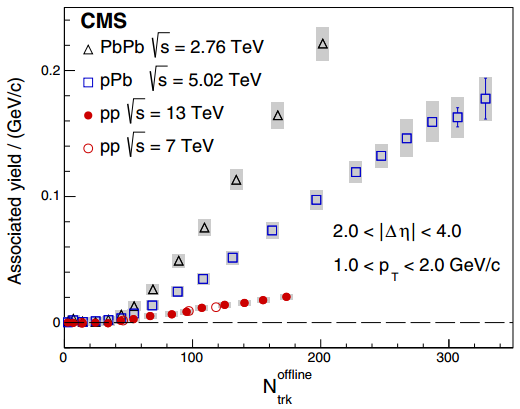 Figure 1
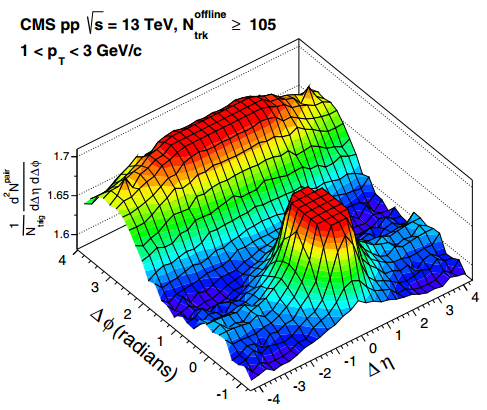 Figure 2
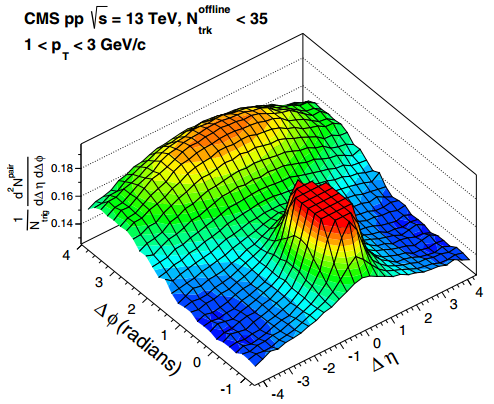 Figure 3
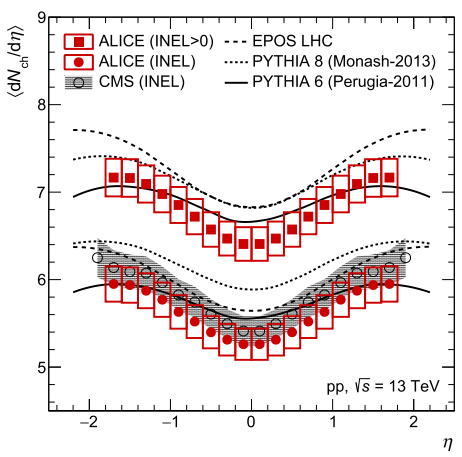 Figure 4
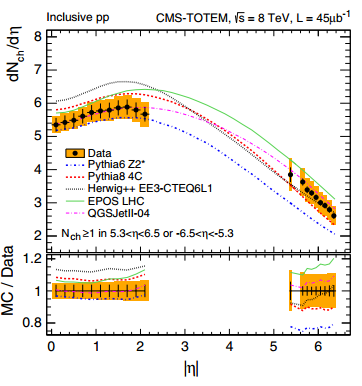 Figure 5
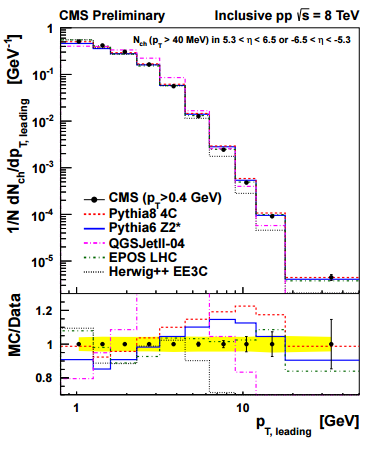 Figure 6
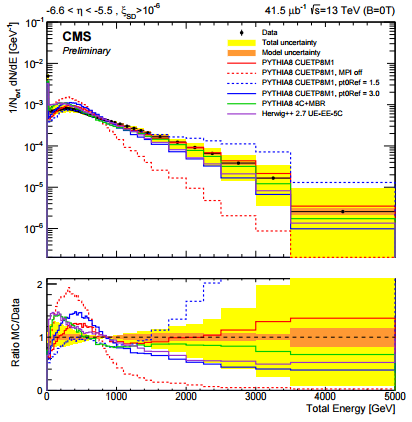 Figure 7
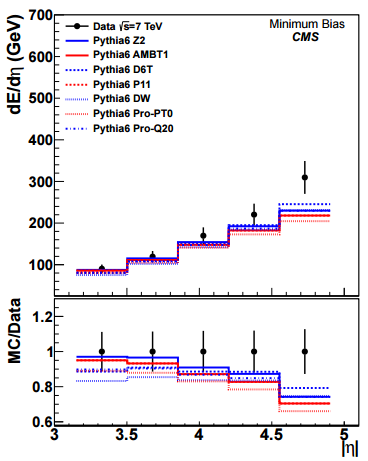 Figure 8
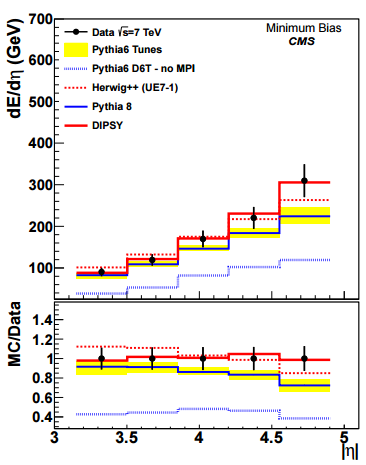 Figure 9
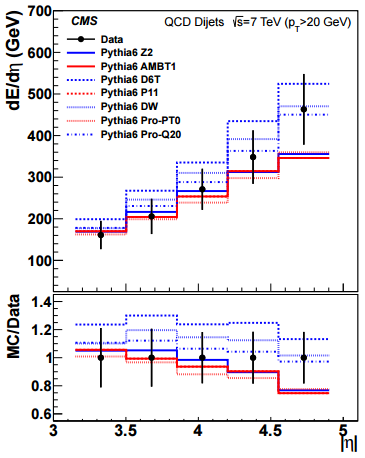 Figure 10
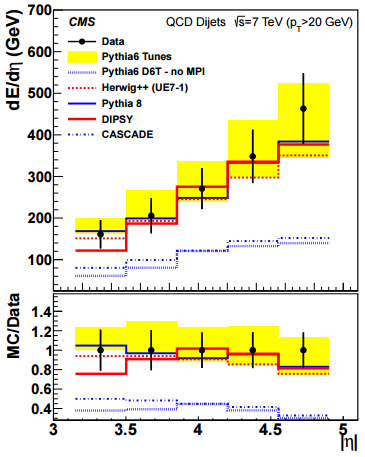 Figure 11
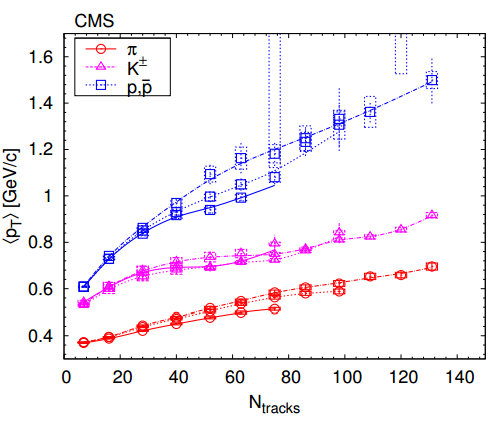 Figure 12
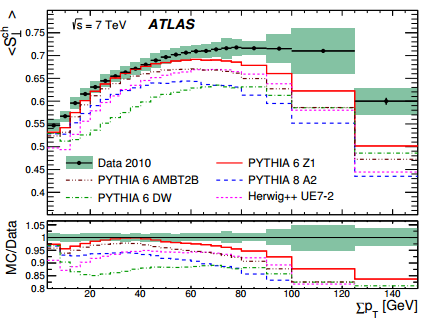 Figure 13
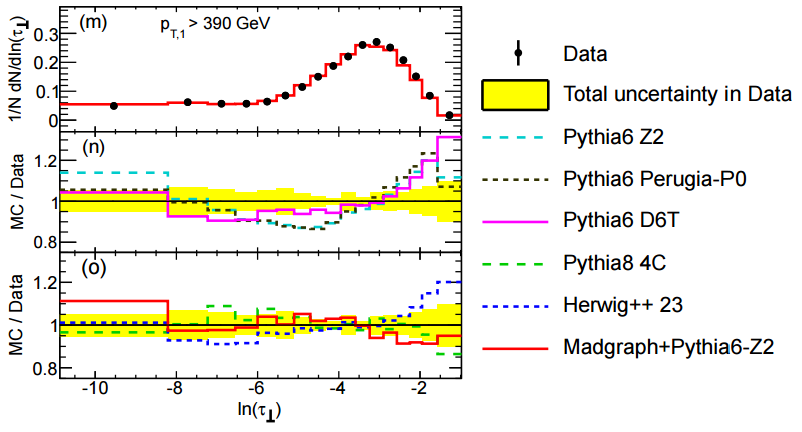 Figure 14
Peer Reviews
No public reviews on file for this paper yet. If you reviewed it on a platform where reviews are public (OpenReview, ICLR, NeurIPS, ICML), you can paste yours below so the community can read it here.
Videos
No videos yet. Explain this paper in a talk, walkthrough, or lecture? Add one.
Taxonomy
TopicsQuantum Mechanics and Applications · High-Energy Particle Collisions Research · Spectroscopy and Quantum Chemical Studies
Abstract
Final state variables and particle correlation will be discussed under a Multiple Parton Interaction (MPI) interpretation. The state of the art about the latest results on such variables will be provided. Furthermore the role played by event multiplicity in the deep understanding of particle correlation, in particular concerning the new results on the Long-Range Near-Side two particle correlations by the CMS Collaboration, will be discussed.
Chapter 0 Final state multiplicity and particle correlation in small systems
\body
1 Introduction
Historically the final state multiplicity plays a key role in Multiple Parton Correlation studies. Most of the Monte Carlo (MC) generators in fact are not able to describe simultaneously both energy evolution as a function of pseudorapidity, , and transverse momentum, . Only when the hypothesis of Multiple Parton Interactions (MPIs) is introduced in the models a better description of data is performed. In order to have a complete picture of the current MC modelling status, in section 2 the most recent analysis about pseudorapidity and transverse momentum distributions for charged particles, hadronic event shape and forward energy measurement will be shown and discussed with a comparison between different collaboration results and center of mass energy values. Since multiplicity plays a key role in the Long-Range Near-Side (LRNS) correlation, in section 3 the results from the CMS Collaboration show that a ridge-like structure, seen previously in proton-nuclei (p-A) and nuclei-nuclei (A-A) collisions, appears in proton-proton (p-p) collision events only when we look at high multiplicity events.
2 Final State Multiplicity
A description of the most characteristic final state multiplicity variables will follow.
1 Pseudorapidity and Transverse Momentum distributions of charged particles
The measurements of the charged particle yields and kinematic distributions are essential in exploiting the energy regimes of particle collisions at the LHC. The charged particles pseudorapidity distribution and the charged particles distribution can be defined as in [1].
In Fig.1 (left) one can see the pseudorapidity distribution () obtained at TeV by the CMS and TOTEM collaborations [2] analysing the pseudorapidity ranges and . In Fig.1 (right) the momentum distribution () from the CMS Collaboration [1] for charged particles in the pseudorapidity ranges is shown.
Monte Carlo models tuned to Underlying Event observables provide the best description of data for both the observables in Fig.1.
An interesting analysis on the pseudorapidity distribution of charged particles was done by the ALICE Collaboration at 13 TeV [3]. The pseudorapidity distribution is measured at central rapidity in . The measurements reported have been obtained for inelastic events (INEL) and events having at least one charged particle produced with 0 in the pseudorapidity interval (INEL 0). They compare their results to the CMS ones [4] and to different Monte Carlo models as shown in Fig.2.
The results from the two collaborations agree within the uncertainties; it is shown that PYTHIA 6 (with Perugia tune [5] based on MPIs) calculations is in better agreement with data than PYTHIA 8 for both selections.
The CMS Collaboration also studied the dependence of the average of the from the event charged-particle multiplicity for different identified particles at = 0.9, 2.76, and 7 TeV [6]: pions, kaons and protons. The distribution in Fig.3 shows that the correlation between and the event multiplicity is not negligible.
Assuming MPI can help the interpretation: a higher multiplicity is correlated with more multiple parton interactions, hence, an higher average value is expected.
2 Hadronic Event Shape
A hadronic event shape can be described by three common variables.
- •
Transverse thrust: , = 0 for perfectly balanced two-jet events and in isotropic multijet events
- •
Sphericity and Transverse Sphericity: and where , and are the normalized eigenvalues () of the momentum tensor.
In Fig.4 the transverse thrust distribution and the sphericity are shown by the CMS [7] and ATLAS [8] collaborations respectively.
Events with a large number of MPIs are expected to be isotropic, i.e. should appear with a spherical shape, especially for high multiplicity regime. MPIs are correlated to the multiplicity, in this sense final states with higher are produced. In fact from these distributions it is shown that transverse thrust describes an higher isotropic contribution than expected in jet events and the sphericity is higher in high (and high multiplicity) events than expected. The disagreement between data and Monte Carlo increases at large values.
3 Forward Energy Measurement
In order to factorize the UE observables from the Beam-Beam Remnant (BBR) contribution it is useful to study the MPI in the forward region. The last important measurement concerning the final state multiplicity variables to point out is the forward energy spectrum done by the CMS Collaboration at 7 [9] and 13 TeV [10], [11]; the two analysis can be considered complementary hence it is interesting to mention both of them. The former measures the energy flow with the hadronic forward calorimeters in , for events selected with different triggers. In Fig.5 distributions are shown for 7 TeV data selected with Minimum Bias trigger (top) and di-jet trigger (bottom) with a comparison to several Monte Carlo models.
The energy flow increases with the pseudorapidity, as expected, and the comparison between these two samples is needed to outline the role played by the event multiplicity. In the events triggered by a Jet trigger, where the track multiplicity is higher, the energy flow is significantly higher than the Minimum Bias events and the discrepancy between data and MC models is larger. It is important to underline that MPI are unavoidable to best reproduce data in the forward region.
The analysis done at 13 TeV [10] measures the event-by-event energy deposition into the very forward acceptance, , using data from the electromagnetic and hadronic sections of the CASTOR calorimeter (a wider pseudorapidity range is studied in [11]). Results are shown in Fig.6 where data are compared to several MC models and tunes. None of these models consistently describes the shape in both low and high multiplicity. PYTHIA8 CUETP8M1, based on Underlying Event observables and MPI theory, seems to provide the best description. Even in this case the prediction of models that not include MPI is ruled out by the data. Furthermore it is shown that data are very sensitive to the MPI cut-off.
3 Particle Correlation
The two-particle angular correlations for charged particles are studied in both short range, , and long range, . Defining:
- •
Signal function as two-particle pair correlated in the same events
- •
Background function as the distribution of uncorrelated particle pairs from two randomly selected events
the correlation function is defined as
[TABLE]
1 Long-Range Near-Side Two particle angular correlation at 13 TeV
The latest results on the Long-Range Near-Side two-particle correlation by the CMS Collaboration are reported in the paper [12]. It is shown that analysing charged particles in the range GeV two very different behaviours appear depending on the multiplicity. For a low multiplicity sample, i.e. , the dominant features are the peak near for particle pairs within the same jet and the elongated structure at for recoiling activity as show in Fig.7 (left). Looking at high multiplicity events, i.e. , in addition to these jet-like correlation structures, a ”ridge”-like structure appears at extending over a range of at least 4 units in , see Fig.7 (right).
This evidence confirms what was already observed at TeV [13] for the first time in proton-proton collisions, even if no such long-range correlations are predicted by PYTHIA.
A yield can be associated to the LRNS structure as discussed in [12]; this corresponding yield has been measured for proton-proton (p-p), proton-lead (p-Pb) and lead-lead (Pb-Pb) collisions in CMS, in Fig.8 the associated yield is reported as a function of the track multiplicity.
The ridge-like correlations become significant at a multiplicity value of about 40 in all the three systems and exhibit a nearly linear increase for higher value. For a given multiplicity value the associated yield in pp collision is roughly 10 and 25 of those observed in pPb and PbPb collisions respectively. There is a strong collision system size dependence of the correlations while the dependence of the center of mass energy seems to be negligible.
There are many interpretations available to explain the ridge-effect, in particular:
- •
Hydrodynamic models two- and multi-particle angular correlations in pp collisions have been studied as a function of charged-particle multiplicity by the CMS Collaboration [14]. The second-order (v2) and third-order (v3) azimuthal anisotropy harmonics of unidentified charged particles, as well as v2 of and particles, are extracted from long-range two-particle correlations as functions of particle multiplicity and transverse momentum. For high-multiplicity pp events, a mass ordering is observed for the v2 values of charged hadrons (mostly pions), , and , with lighter particle species exhibiting a stronger azimuthal anisotropy signal below 2 GeV/c. For 13 TeV data, the v2 signals are also extracted from four- and six-particle correlations for the first time in pp collisions, with comparable magnitude to those from two-particle correlations. These observations are similar to those seen in pPb and PbPb collisions, and support the interpretation of a collective origin for the observed long range correlations in high-multiplicity pp collisions.
- •
MPIs since Pythia models can’t reproduce the ridge-like structure, in [15] a modification of Pythia6 has been proposed, explaining the ridge effect with Multiple Parton Interactions. The model introduces a correlation between the azimuth of the event planes of individual MPI and the event plane of the hardest interaction. This correlation can be naturally explained in a physical picture based on the impact parameter between the protons. The two main implications of this modification are the appearance of the near-side ridge in high-multiplicity moderate- events and a shift in the activity in the transverse region.
4 Conclusion
The latest results on final state variables and particle correlation studies have been presented under a Multiple Parton Interaction (MPI) interpretation. MPI models are unavoidable to have a complete description of the LHC final states and to explain the high multiplicity events in the correlation effects. It is also clear that multiplicity plays a key role in the final state, but this is still not completely understood, as shown by the large deviations between data and MC in several results in high multiplicity events, and in the particle correlation as well. There are many hypotheses to explain the origin of the LRNS correlation (hydronamic model, MPI, Colour Glass Condensate etc..) but a deep investigation is still needed.
The reference list from the paper itself. Each links out to its DOI / PubMed record.
- 1[1] Pseudorapidity and leading transverse momentum distributions of charged particles in pp collisions at s 𝑠 \sqrt{s} = 8 Te V , CMS Collaboration, CMS PAS FSQ-12-026
- 2[2] Measurement of pseudorapidity distributions of charged particles in proton-proton collisions at s 𝑠 \sqrt{s} = 8 Te V by the CMS and TOTEM experiments , CMS and TOTEM Collaborations, Eur. Phys. J. C (2014) 74: 3053. doi:10.1140/epjc/s 10052-014-3053-6
- 3[3] Pseudorapidity and transverse-momentum distributions of charged particles in proton-proton collisions at s 𝑠 \sqrt{s} = 13 Te V , Alice Collaboration, Physics Letters B 753 (2016) 319–329
- 4[4] Pseudorapidity distribution of charged hadrons in proton proton collisions at s 𝑠 \sqrt{s} = 13 Te V , CMS Collaboration, Phys. Lett. B 751 (2015) 143–163, ar Xiv:1507.05915 [hep-ex].
- 5[5] Proceedings, 1st International Workshop on Multiple Partonic Interactions at the LHC (MPI 08): Perugia, Italy, October 27-31, 2008 , Bartalini Paolo and Livio Fano, DESY-PROC-2009-06, ar Xiv:1003.4220
- 6[6] Study of the inclusive production of charged pions, kaons, and protons in pp collisions at s 𝑠 \sqrt{s} = 0.9, 2.76, and 7 Te V , CMS Collaboration, Eur. Phys. J. C 72 (2012) 2164, ar Xiv:1207.4724 v 2 [hep-ex]
- 7[7] Study of hadronic event-shape variables in multijet final states in pp collisions at s 𝑠 \sqrt{s} = 7 Te V , CMS Collaboration, JHEP 10(2014)087 ar Xiv:1407.2856 v 2 [hep-ex]
- 8[8] Measurement of charged-particle event shape variables in inclusive s 𝑠 \sqrt{s} = 7 Te V proton–proton interactions with the ATLAS detector , Atlas Collaboration, Phys. Rev. D 88, 032004 (2013), ar Xiv:1207.6915 v 4 [hep-ex]