TL;DR
This paper investigates how TCP performs over 5G mmWave networks, emphasizing the importance of link-layer retransmissions and analyzing the effectiveness of Multipath TCP across LTE and mmWave links using real-world channel data.
Contribution
It provides a detailed analysis of TCP performance in 5G mmWave environments, highlighting the significance of link-layer retransmissions and optimal MP-TCP configurations based on real measurements.
Findings
Link-layer retransmissions are crucial for high TCP throughput in mmWave links.
MP-TCP performance depends on the choice of secondary paths and congestion control algorithms.
Optimal configurations vary with network conditions and link characteristics.
Abstract
MmWave communications, one of the cornerstones of future 5G mobile networks, are characterized at the same time by a potential multi-gigabit capacity and by a very dynamic channel, sensitive to blockage, wide fluctuations in the received signal quality, and possibly also sudden link disruption. While the performance of physical and MAC layer schemes that address these issues has been thoroughly investigated in the literature, the complex interactions between mmWave links and transport layer protocols such as TCP are still relatively unexplored. This paper uses the ns-3 mmWave module, with its channel model based on real measurements in New York City, to analyze the performance of the Linux TCP/IP stack (i) with and without link-layer retransmissions, showing that they are fundamental to reach a high TCP throughput on mmWave links and (ii) with Multipath TCP (MP-TCP) over multiple LTE…
Click any figure to enlarge with its caption.
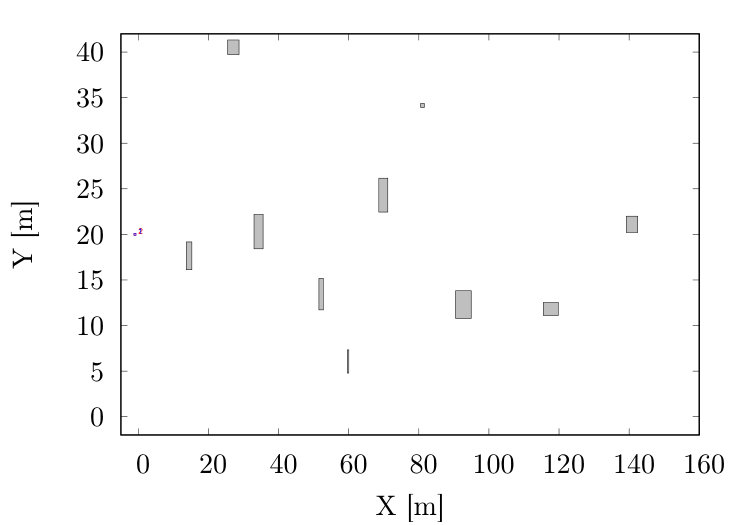 Figure 1
Peer Reviews
No public reviews on file for this paper yet. If you reviewed it on a platform where reviews are public (OpenReview, ICLR, NeurIPS, ICML), you can paste yours below so the community can read it here.
Code & Models
Videos
No videos yet. Explain this paper in a talk, walkthrough, or lecture? Add one.
