Edge states in dynamical superlattices
Yiqi Zhang, Yaroslav V. Kartashov, Feng Li, Zhaoyang Zhang, Yanpeng, Zhang, Milivoj R. Beli\'c, and Min Xiao

TL;DR
This paper explores the unique edge states and localization phenomena in one-dimensional dynamically modulated superlattices, revealing their topological properties and potential for robust edge transport.
Contribution
It introduces the concept of edge states in dynamically modulated superlattices and analyzes their topological origin and localization behavior.
Findings
Edge states exist within specific coupling constant intervals.
Dynamical localization occurs due to quasi-energy band collapse.
Edge states show enhanced robustness and unique transport properties.
Abstract
We address edge states and rich localization regimes available in the one-dimensional (1D) dynamically modulated superlattices, both theoretically and numerically. In contrast to conventional lattices with straight waveguides, the quasi-energy band of infinite modulated superlattice is periodic not only in the transverse Bloch momentum, but it also changes periodically with increase of the coupling strength between waveguides. Due to collapse of quasi-energy bands dynamical superlattices admit known dynamical localization effect. If, however, such a lattice is truncated, periodic longitudinal modulation leads to appearance of specific edge states that exist within certain periodically spaced intervals of coupling constants. We discuss unusual transport properties of such truncated superlattices and illustrate different excitation regimes and enhanced robustness of edge states in them,…
Click any figure to enlarge with its caption.
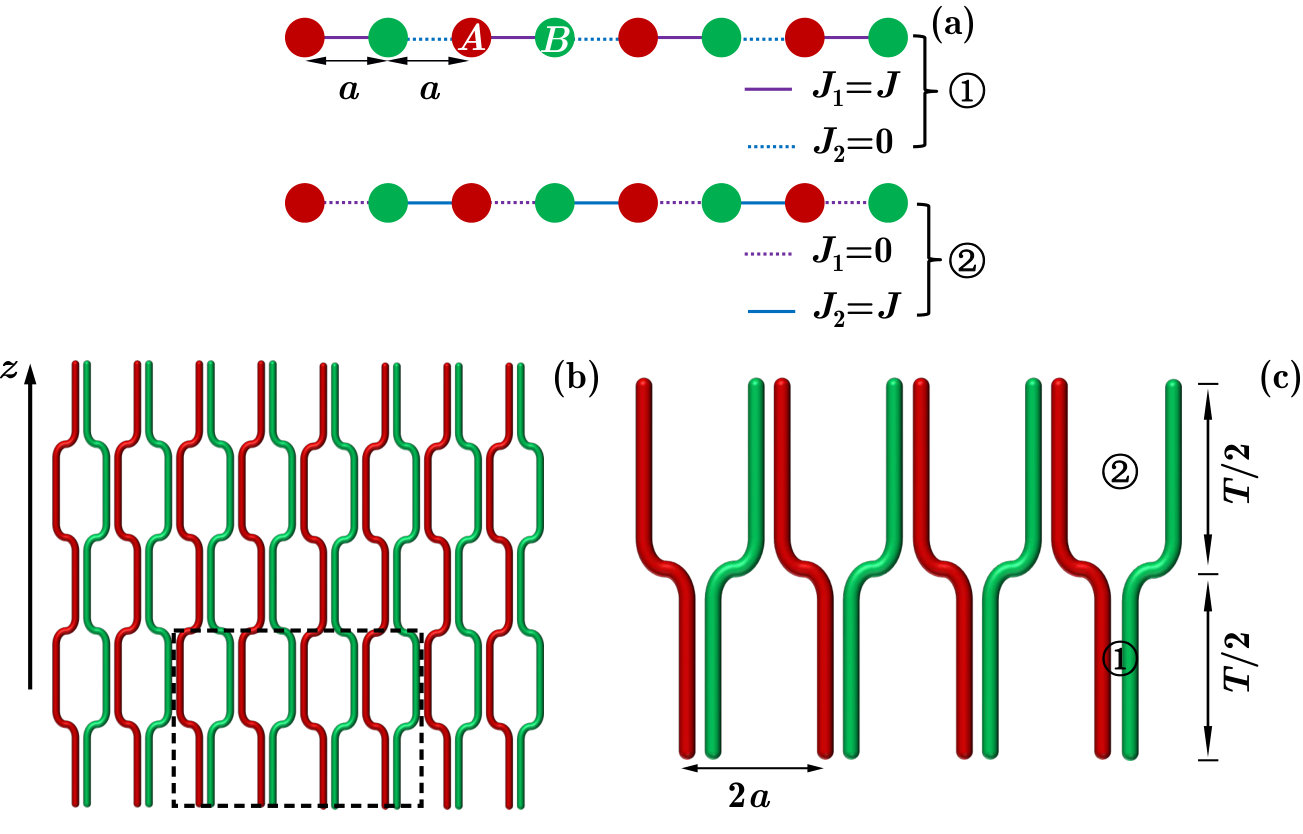 Figure 1
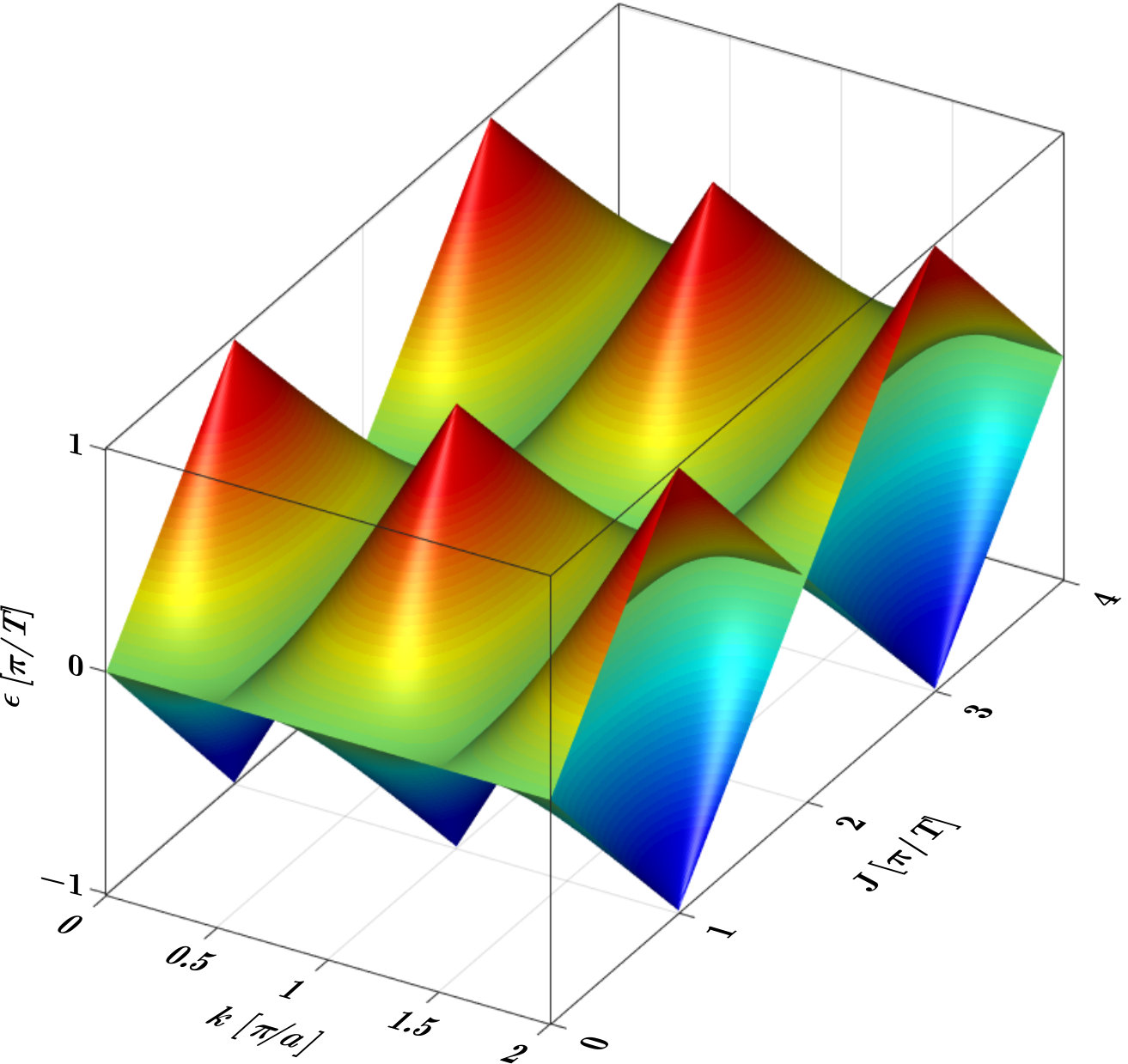 Figure 2
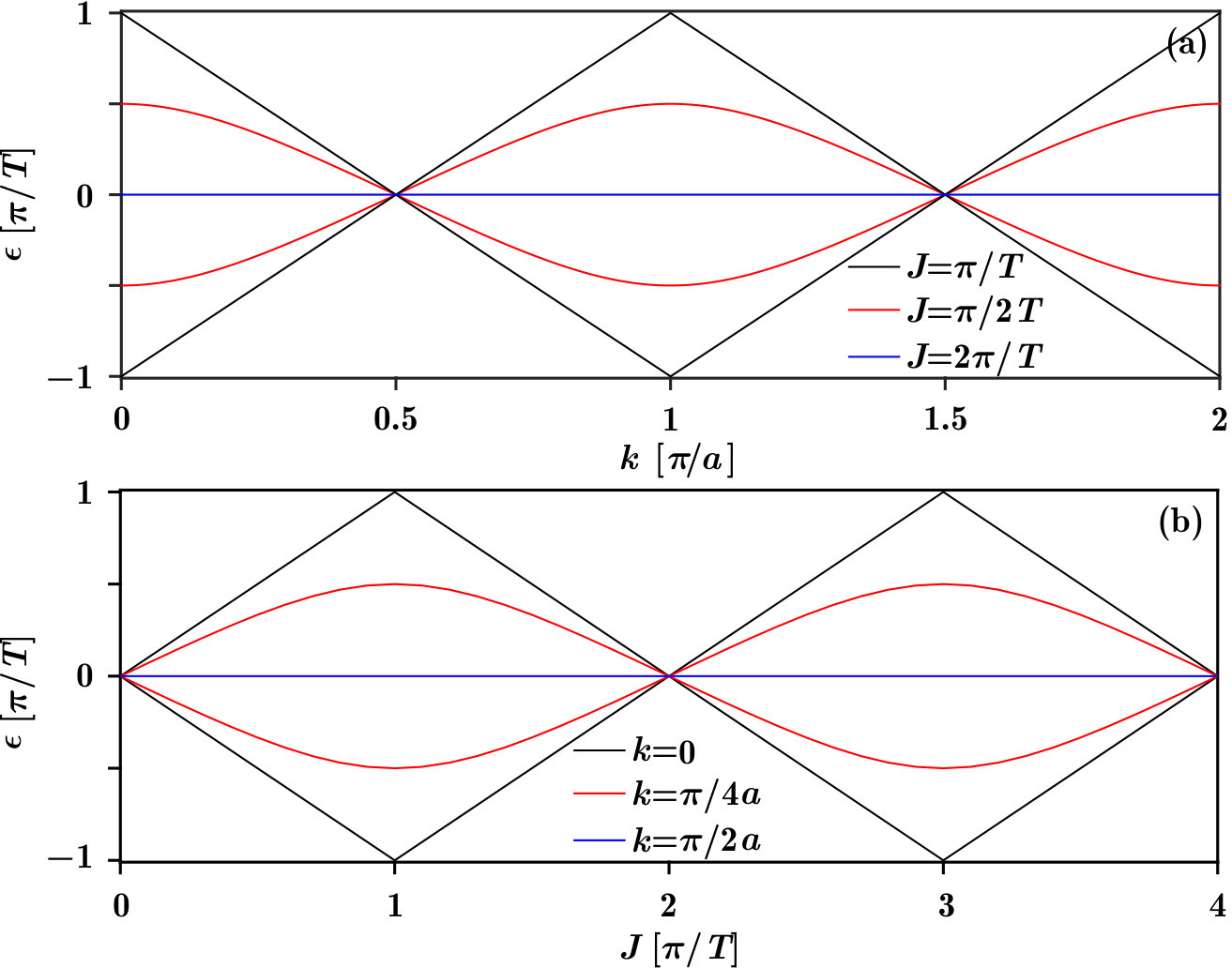 Figure 3
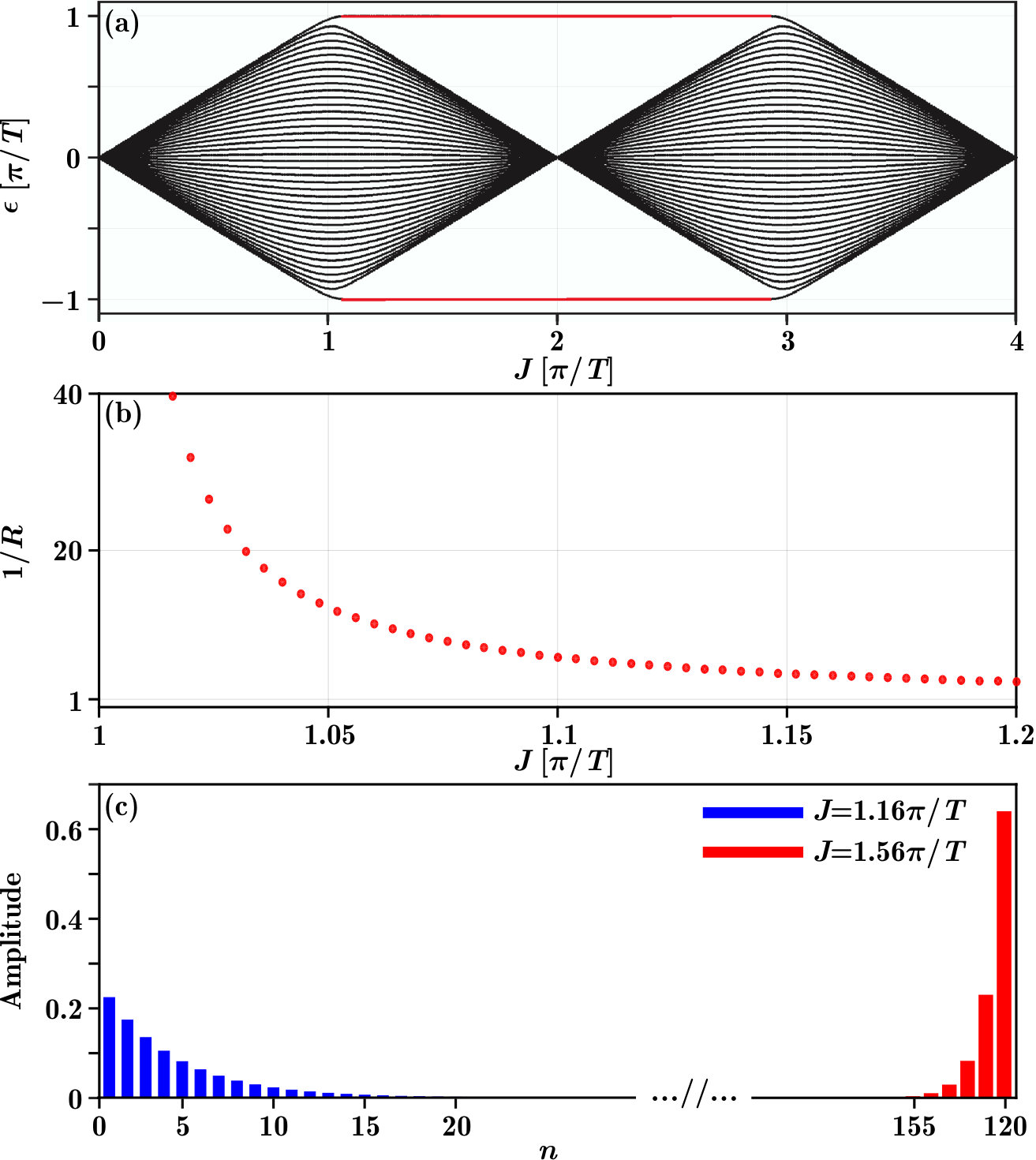 Figure 4
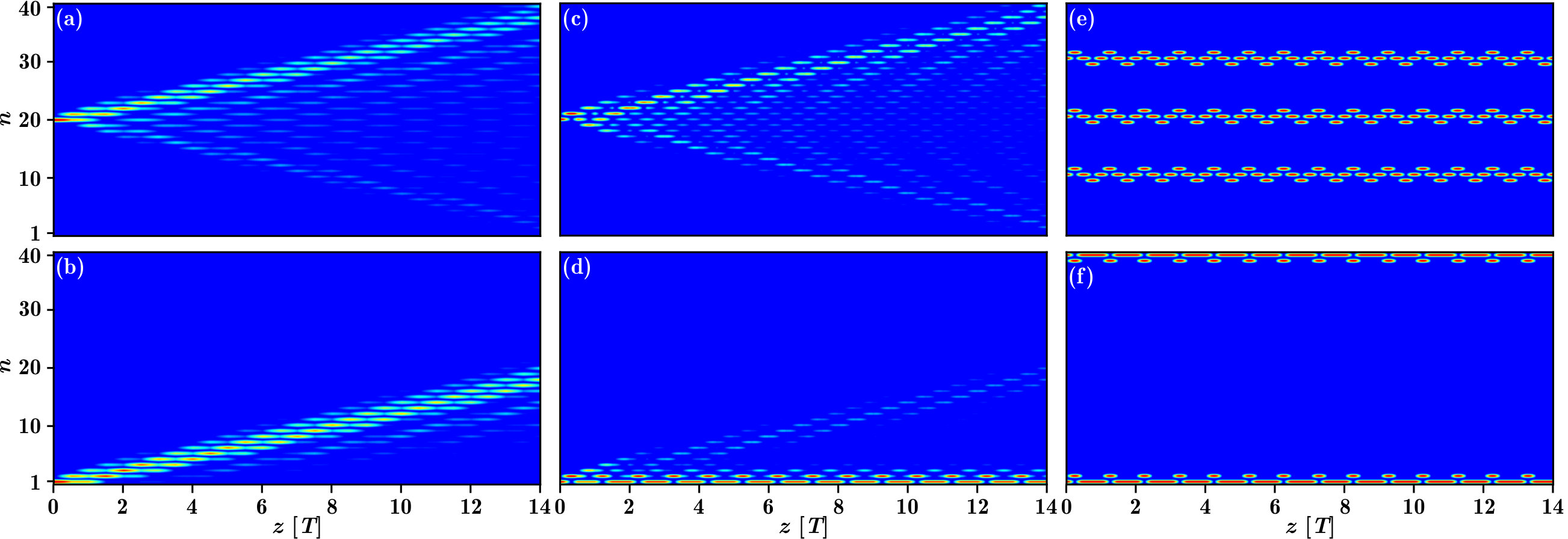 Figure 5
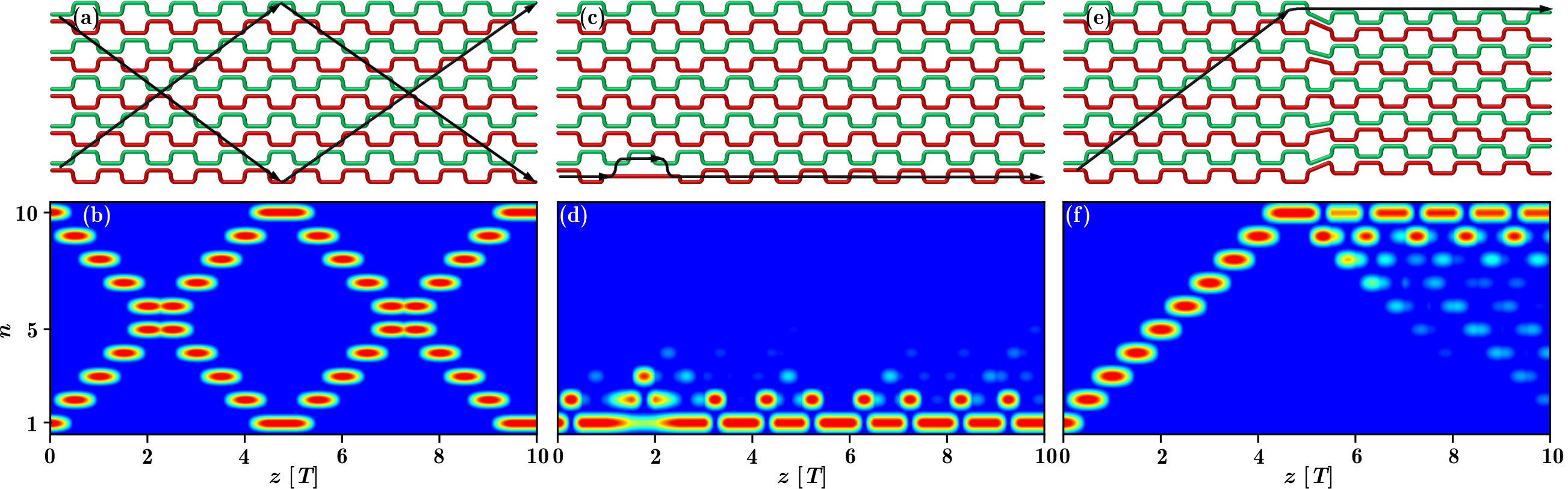 Figure 6
Peer Reviews
No public reviews on file for this paper yet. If you reviewed it on a platform where reviews are public (OpenReview, ICLR, NeurIPS, ICML), you can paste yours below so the community can read it here.
Videos
No videos yet. Explain this paper in a talk, walkthrough, or lecture? Add one.
Edge states in dynamical superlattices
Yiqi Zhang1
Yaroslav V. Kartashov3,4,5
Feng Li1
Zhaoyang Zhang1,2
Yanpeng Zhang1
Milivoj R. Belić6
Min Xiao7,8
1Key Laboratory for Physical Electronics and Devices of the Ministry of Education & Shaanxi Key Lab of Information Photonic Technique, Xi’an Jiaotong University, Xi’an 710049, China
2Department of Applied Physics, School of Science, Xi’an Jiaotong University, Xi’an 710049, China
3ICFO-Institut de Ciencies Fotoniques, The Barcelona Institute of Science and Technology, 08860 Castelldefels (Barcelona), Spain
4Institute of Spectroscopy, Russian Academy of Sciences, Troitsk, Moscow Region 142190, Russia
5Department of Physics, University of Bath, Bath BA2 7AY, United Kingdom
6Science Program, Texas A&M University at Qatar, P.O. Box 23874 Doha, Qatar
7Department of Physics, University of Arkansas, Fayetteville, Arkansas, 72701, USA
8National Laboratory of Solid State Microstructures and School of Physics, Nanjing University, Nanjing 210093, China
Abstract
We address edge states and rich localization regimes available in the one-dimensional (1D) dynamically modulated superlattices, both theoretically and numerically. In contrast to conventional lattices with straight waveguides, the quasi-energy band of infinite modulated superlattice is periodic not only in the transverse Bloch momentum, but it also changes periodically with increase of the coupling strength between waveguides. Due to collapse of quasi-energy bands dynamical superlattices admit known dynamical localization effect. If, however, such a lattice is truncated, periodic longitudinal modulation leads to appearance of specific edge states that exist within certain periodically spaced intervals of coupling constants. We discuss unusual transport properties of such truncated superlattices and illustrate different excitation regimes and enhanced robustness of edge states in them, that is associated with topology of the quasi-energy band.
pacs:
03.65.Vf, 42.25.Gy, 78.67.–n
††preprint: APS/123-QED
I Introduction
Periodically modulated lattice systems attract considerable attention in diverse areas of physics, including condensed matter physics Oka and Aoki (2009); Kitagawa et al. (2010); Lindner et al. (2011); Rudner et al. (2013); Gómez-León and Platero (2013); Goldman and Dalibard (2014); Asboth and Edge (2015); Xiong et al. (2016); Titum et al. (2016) and photonics Yu and Fan (2009); Fang et al. (2012); Kitagawa et al. (2012); Khanikaev et al. (2012); Liang and Chong (2013); Rechtsman et al. (2013); Chen et al. (2014); Leykam et al. (2016); Leykam and Chong (2016); Weimann et al. (2017). One of the main reasons behing interest to such systems is that due to variation of parameters of the system along the evolution coordinate (time in condensed matter physis or propagation distance in photonics) not only rich variety of resonant dynamical effects associated with specific deformations of quasi-energy bands appears (for an overview of such dynamical effects see Longhi (2009a); Garanovich et al. (2012)), but one may also encounter the effects of purely topological origin. One of the manifestations of such effects is the appearance of topologically protected edge states that are typically unidirectional (in the 2D systems) and that demonstrate immunity to backscattering on disorder and other structural lattice defects due to topological protection. In modulated periodic photonic systems, frequently called Floquet insulators Lindner et al. (2011); Rechtsman et al. (2013); Zhang et al. (2015); Maczewsky et al. (2017), longitudinal variations of underlying potential were shown to lead to appearance of the effective external time-dependent “magnetic fields” that qualitatively change the behaviour of the system and allow to design a new class of devices employing topologically protected transport, including photonic interconnects, delay lines, isolators, couplers, and other structures Maczewsky et al. (2017). Periodically modulated photonic lattices were employed for realization of discrete quantum walks Broome et al. (2010); Sansoni et al. (2012), and allowed observation of Floquet topological transitions with matter waves Asbóth et al. (2014); Dal Lago et al. (2015).
Previous investigations of modulated lattices were mainly focused on the 2D and 3D geometries, and less attention was paid to the 1D settings. Moreover, upon consideration of bulk and surface effects in the modulated photonic 1D systems only simplest lattices were utilized with identical coupling strength between all channels and with identical (usually sinusoidal) laws of their longitudinal variation Longhi et al. (2006); Garanovich et al. (2008); Szameit et al. (2008); Longhi and Staliunas (2008); Szameit et al. (2009); Longhi (2009b); Kartashov et al. (2009). Only recently dynamical superlattices with specially designed periodically varying separation between channels belonging to two different sublattices were introduced that allowed observation of intriguing new resonant phenomena, such as light rectification Longhi (2009c); Dreisow et al. (2013); Kartashov et al. (2016). Previously only bulk modulated superlattices were considered and no surface effects in such structures were addressed. Therefore, main aim of this work is the exploration of new phenomena stemming from the interplay between superlattice truncation and its longitudinal modulation. We aim to show that dynamically modulated truncated superlattices exhibit topological transition manifested in qualiative modification of the quasi-energy spectrum upon variation of the coupling strength between waveguides forming the lattice. Namely, within proper intervals of coupling strength the isolated eigenvalues appear that are associated with nonresonant (i.e. existing within continuous intervals of coupling strengths) edge states. Interestingly, such edge states persist even when conditions for collapse of bulk quasi-energy band are met. We discuss specific propagation dynamics in the regime, where edge states exist. We believe that these findings substantially enrich the approaches for control of propagation paths of light beams in periodic media.
As an example of the dynamical superlattice we consider discrete structure depicted in Fig. 1, which is somewhat similar to the Su-Schrieffer-Heeger lattice Asbóth et al. (2016). The superlattice is composed of two sublattices, denoted as and (red and green channels in Fig. 1). The single-mode waveguides in individual sublattices are curved such that coupling strength between nearest neighbours belonging to different sublattices changes with propagation distance in a step-like fashion, as shematically shown in Fig. 1(a) [since there are two sublattices, one can introduce two coupling strengths and describing coupling between waveguides with equal or with different indices from two sublattices]. We assume that the coupling strength increases to maximal value when two waveguides are close and drops down nearly to zero when they are well separated, due to exponential decrease of the overlap integrals between modal fields with increase of the distance between waveguides. The longitudinal period of the structure is given by , while transverse period is given by . In Fig. 1(c) we display one longitudinal period of the structure indicated by a dashed box in Fig. 1(b). Coupling constants on two different segments of the lattice are indicated in Fig. 1(a). Such a lattice can be easily fabricated with femtosecond-laser writing technique Dreisow et al. (2013); Rechtsman et al. (2013); Plotnik et al. (2014); Vicencio et al. (2015); Mukherjee et al. (2015); Diebel et al. (2016).
II Theoretical model and band structure
We describe propagation of light in the infinite superlattice depicted in Fig. 1 using discrete model Szameit et al. (2011); Weimann et al. (2016)
[TABLE]
where coupling constants are step-like periodic functions of the propagation distance , while stand for the field amplitudes on sites of sublattices and . According to the Floquet theory, the evolution of excitations in longitudinally modulated lattice governed by the Hamiltonian (here is the period of longitudinal modulation and is the transverse Bloch momentum), can be described by the Floquet evolution operator where is the time-ordering operator. Defining evolution operator for one longitudinal period of the structure [i.e. , where is the Floquet eigenstate of the system] and using adiabatic approximation, one can introduce effective Hamiltonian of the modulated lattice in accordance with definition In contrast to instantaneous Hamiltonian , the effective Hamiltonian is -independent, and it offers “stroboscopic” description of the propagation dynamics over complete longitudinal period. The spectrum of the system can be described by quasi-energies — eigenvalues of the effective Hamiltonian Shirley (1965); Sambe (1973) — that can be obtained from the expression . Using this approach in the case of infinite discrete lattice we search for solutions of Eq. (1) in the form of periodic Bloch waves and , where is the discrete transverse coordinate, and is the Bloch momentum in the first Brillouin zone. Substituting these expressions into Eq. (1), one obtains
[TABLE]
Thus, Floquet evolution operator over one period can be represented asKitagawa et al. (2010); Rudner et al. (2013); Maczewsky et al. (2017)
[TABLE]
where Hamiltonians on the first and second half-periods are given by
[TABLE]
One can see from Eq. (3) that Floquet evolution operator is a periodic function of transverse momentum with a period and of the coupling strength with a period . Similarly, by introducing the effective Hamiltonian through and calculating its eigenvalues (quasi-energies ), one obtains that the latter are also periodic functions of and . In Fig. 2, we depict the dependence . Quasi-energy band is symmetric with respect to the plane (it is periodic also in the vertical direction with a period because eigenvalues of periodic system are defined modulo ). The maxima of quasi-energies within vertical interval shown in Fig. 2 are located at and , where is an integer and is a non-negative integer. To highlight the details of this dependence we show quasi-energies in Figs. 3(a) and 3(b) for certain fixed values of coupling strength and Bloch momentum , respectively. Importantly, it follows from Fig. 3(a) that the quasi-energy band is dispersive at (see red curves), so for this coupling strength any localized wavepacket launched into system will diffract. When increases up to the dependence becomes linear Della Valle and Longhi (2013) (see black lines). This means that effective dispersion coefficient vanishes and excitations in such a lattice will propagate without diffraction, but with nonzero transverse velocity — this is the rectification regime. Further increase of the coupling strength makes quasi-energy band dispersive again. Finally, quasi-energy band collapses to a line at (see the blue line). In this regime of dynamical localization the shape of any wavepacket launched into system will be exactly reproduced after one longitudinal period. Very similar transformations can be observed for different Bloch momenta, when quasi-energy is plotted as a function of coupling constant , as shown in Fig. 3(b).
The situation changes qualitatively when the superlattice is truncated in the transverse direction. In this case one cannot introduce Bloch momentum anymore, so evolution dynamics is described by the system (1), where equations for amplitudes in the edge sites and are replaced by the equations One should stress that the properties of the system do not change qualitatively if superlattice is truncated on the site belonging to sublattice on the left side, and on the site belonging to sublattice on the right side. By introducing effective Hamiltonian for the finite longitudinally modulated superlattice, one can determine its quasi-energies that can be plotted as a function of the coupling strength . In Fig. 4(a) we display corresponding dependence. One can see that this dependence inherits some features of dependence of the infinite lattice [compare Figs. 4(a) and 3(b)]. Among them is the (partial) collapse of the quasi-energy band for specific values of the coupling constant . At the same time, there are two qualitative differences. First, within the interval of coupling constants the isolated quasi-energies emerged (see red lines) that are associated with edge states. In fact, such edge states appear periodically in the intervals , where is an integer. The second difference is that the period of the dependence is doubled in comparison with dependence in the infinite lattice. Qualitative modification of the quasi-energy spectrum indicates on the topological transition that occurs in finite modulated superlattice upon variation of coupling strength between waveguides. Interestingly, the collapse of quasi-energy band at indicating on the presence of dynamic localization in the system coexists with the fact of formation of edge states, so for this particular value of two qualitative different localization mechanisms are simultaneously available.
The width of emerging edge states strongly depends on the coupling constant. To illustrate this we introduce the participation ratio , where stands for light amplitudes on sites of sublattices and . The width of the mode is inversely proportional to participation ratio. In Fig. 4(b), we show the width of the edge state versus coupling constant . Localization increases with increase of coupling constant, so that already at the edge state occupies less than ten sites of the lattice. Maximal localization in nearly single surface channel occurs at , and further increase of the coupling constant leads to gradual delocalization of the edge state. Examples of profiles of edge states (absolute value) with notably different localization degrees at and are shown in Fig. 4(c) .
III Transport properties
Topological transition that occurs in finite longitudinally modulated superlattice suggests the existence of novel propagation scenarios in this system. To study transport properties in such structures we simultaneously consider excitations of the internal and edge sites and use three representative values of the coupling constant. In the particular realization of the lattice, that we use to study propagation dynamics (see Fig. 5) two edge sites belong to different sublattices, i.e. the “bottom” site belongs to sublattice , while the “top” site belongs to sublattice . First, we consider the case , where quasi-energy band has finite width, while edge states do not appear. In Fig. 5(a), we excite the internal waveguide and find that the beam diffracts during propagation. Similarly, the excitation of the edge waveguide shown in Fig. 5(b) is also accompanied by rapid diffraction without any signatures of localization. Second, we turn to the system with the coupling strength . For this coupling constant according to Fig. 4(a), the width of the quasi-energy band is still finite, but edge states already emerge. Therefore, if an internal site is excited, discrete diffraction will be observed as shown in Fig. 5(c). In contrast, excitation of the edge site leads to the formation of well-localized edge state and only weak radiation can be detected, as shown in Fig. 5(d). The reason for small radiation is that we use excitation that does not match directly the shape of the edge state, hence delocalized bulk modes are excited too, but with small weights. Finally, we consider the case with , where quasi-energy band collapses [Fig. 4(a)]. In this particular case dynamic localization occurs irrespectively of the location of the excited site. In Fig. 5(e), we show such a localization for excitations of sites number 10, 20, and 30. In addition, we also excite the edge waveguides in Fig. 5(f), where one can see that light beam does not experience expansion and remains confined in two near-surface sites. This is the regime where two distinct localization mechanisms coexist.
The propagation dynamics in this system is specific at and it deserves separate discussion. In the infinite lattice this coupling constant corresponds to linear dependence of quasi-energy on Bloch momentum , i.e. the absence of diffraction (rectification regime). Finite superlattice inherits this property to some extent, i.e. localized excitations in finite lattice also do not diffract, but move with constant transverse velocity. Interestingly, despite the absence of diffraction, the excitation of edge states in this regime does not occur, since moving excitations just change their propagation direction when they hit edge sites. This is illustrated in Figs. 6(a) and 6(b), where we simultaneously excite two opposite edge waveguides. In this particular case we excited sites belonging to different sublattices, as before, but dynamics does not change qualitatively if sites from one sublattice are excited. Notice that in this interesting regime the transverse confinement occurs without any nonlinearity, and at the same time the propagation trajectory of the beam and its output position can be flexibly controlled that is advantageous for practical applications. To illustrate enhanced robustness of edge states introduced here we deliberately introduce considerable deformation at the surface of the lattice, by replacing the whole section of the edge waveguide between and with a straight section, as shown schematically in Fig. 6(c). The coupling constant for internal waveguides is selected as , i.e. it corresponds to situation when edge states form at the surface. The corresponding propagation dynamics in this deformed structure is shown in Fig. 6(d). Despite considerable deformation of the structure the edge excitation passes the defect without noticable scattering into the bulk of the lattice. However, it should be mentioned that if surface defect is too long and extends over three or more periods of the structure, the edge state may be destroyed and light will penetrate into the depth of the lattice. Finally, we design a structure that is composed of two parts with different coupling strengths between waveguides: in the first part of the lattice for closely spaced waveguides, while in the second part of the lattice . Such variation in the coupling strength can be achieved by reduction of the transverse period at certain distance , as shown in Fig. 6(e). Since in the first part of the lattice the coupling constant is selected such that no edge states can form, but diffractionless propagation is possible, the input beam will propagate from one edge of the lattice towards opposite edge. If it arrives to opposite edge in the point, where coupling constant changes and edge states become possible, the beam may excite the edge state and stay near the surface of the structure, as shown in Fig. 6(f). If, however, the beam hits the opposite edge before the point where coupling constant increases, it will be bounced back and enter into right half of the lattice in one of the internal waveguides. This will lead to fast diffraction of the beam without excitation of edge states. This setting can be considered as a kind of optical switch, where the presence of signal in the output edge channel depends on the position of the input excitation.
IV Conclusions
Summarizing, we investigated transport properties in the one-dimensional dynamical superlattices. We have shown that in finite modulated superlattices topological transition may occur that leads to appearance of edge states, whose degree of localization depends on the coupling constant between lattice sites. This localization mechanism may coexist with dynamic localization due to collapse of quasi-energy bands.
Acknowledgement
This work was supported by China Postdoctoral Science Foundation (2016M600777, 2016M600776, 2016M590935), the National Natural Science Foundation of China (11474228, 61605154), and Qatar National Research Fund (NPRP 6-021-1-005, 8-028-1-001).
The reference list from the paper itself. Each links out to its DOI / PubMed record.
- 1Oka and Aoki (2009) T. Oka and H. Aoki, Photovoltaic Hall effect in graphene , Phys. Rev. B 79 , 081406 (2009) . · doi ↗
- 2Kitagawa et al. (2010) T. Kitagawa, E. Berg, M. Rudner, and E. Demler, Topological characterization of periodically driven quantum systems , Phys. Rev. B 82 , 235114 (2010) . · doi ↗
- 3Lindner et al. (2011) N. H. Lindner, G. Refael, and V. Galitski, Floquet topological insulator in semiconductor quantum wells , Nat. Phys. 7 , 490 (2011) . · doi ↗
- 4Rudner et al. (2013) M. S. Rudner, N. H. Lindner, E. Berg, and M. Levin, Anomalous Edge States and the Bulk-Edge Correspondence for Periodically Driven Two-Dimensional Systems , Phys. Rev. X 3 , 031005 (2013) . · doi ↗
- 5Gómez-León and Platero (2013) A. Gómez-León and G. Platero, Floquet-Bloch Theory and Topology in Periodically Driven Lattices , Phys. Rev. Lett. 110 , 200403 (2013) . · doi ↗
- 6Goldman and Dalibard (2014) N. Goldman and J. Dalibard, Periodically Driven Quantum Systems: Effective Hamiltonians and Engineered Gauge Fields , Phys. Rev. X 4 , 031027 (2014) . · doi ↗
- 7Asboth and Edge (2015) J. K. Asboth and J. M. Edge, Edge-state-enhanced transport in a two-dimensional quantum walk , Phys. Rev. A 91 , 022324 (2015) . · doi ↗
- 8Xiong et al. (2016) T.-S. Xiong, J. Gong, and J.-H. An, Towards large-Chern-number topological phases by periodic quenching , Phys. Rev. B 93 , 184306 (2016) . · doi ↗