Heavy-flavour measurements in p-Pb collisions with ALICE at the LHC
Jitendra Kumar (for the ALICE collaboration)

TL;DR
This paper reports on measurements of open heavy-flavour particles in proton-lead collisions at the LHC using ALICE, comparing results to models that include cold nuclear matter effects.
Contribution
It provides new experimental data on heavy-flavour production in p-Pb collisions and compares these results to theoretical models.
Findings
Measurements of D mesons and leptons from charm and beauty decays at various rapidities.
Comparison of experimental results with model predictions including cold nuclear matter effects.
Insights into the behavior of heavy-flavour particles in nuclear environments.
Abstract
The measurements of open heavy-flavours, i.e. D mesons at central rapidity and leptons from charm and beauty decays at central and forward rapidity was studied in p-Pb collisions at = 5.02 TeV using the ALICE detector. The results are presented and compared to model predictions including cold nuclear matter effects.
Click any figure to enlarge with its caption.
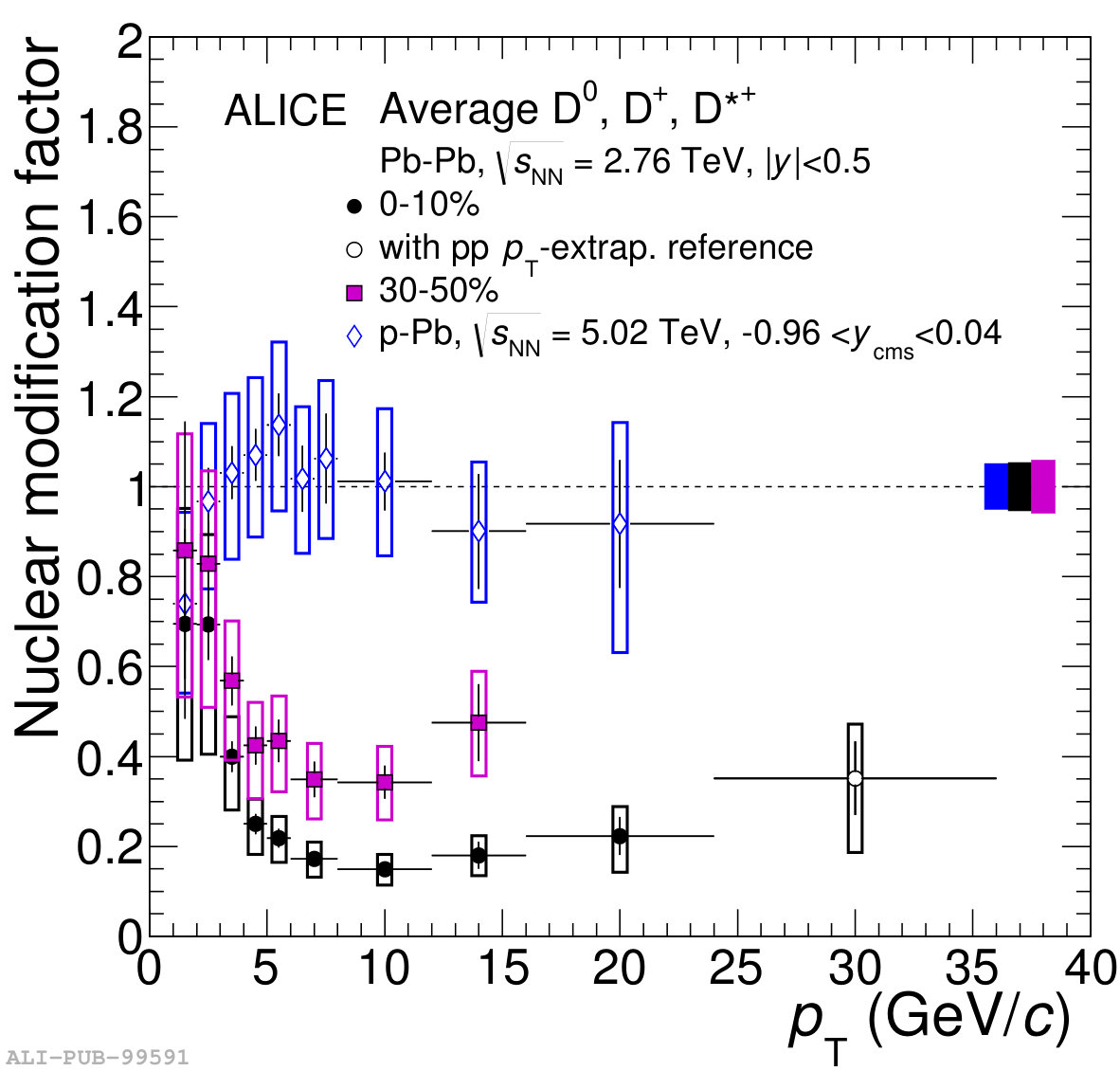 Figure 1
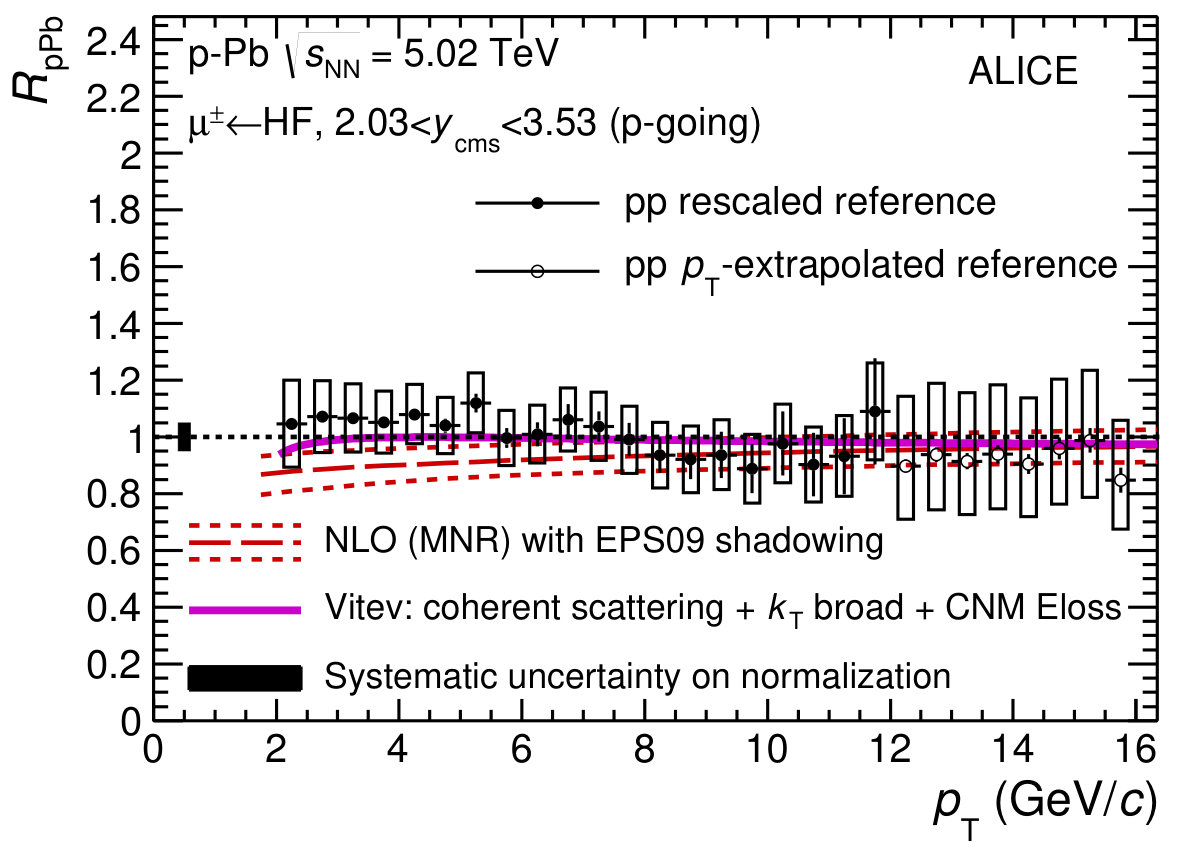 Figure 2
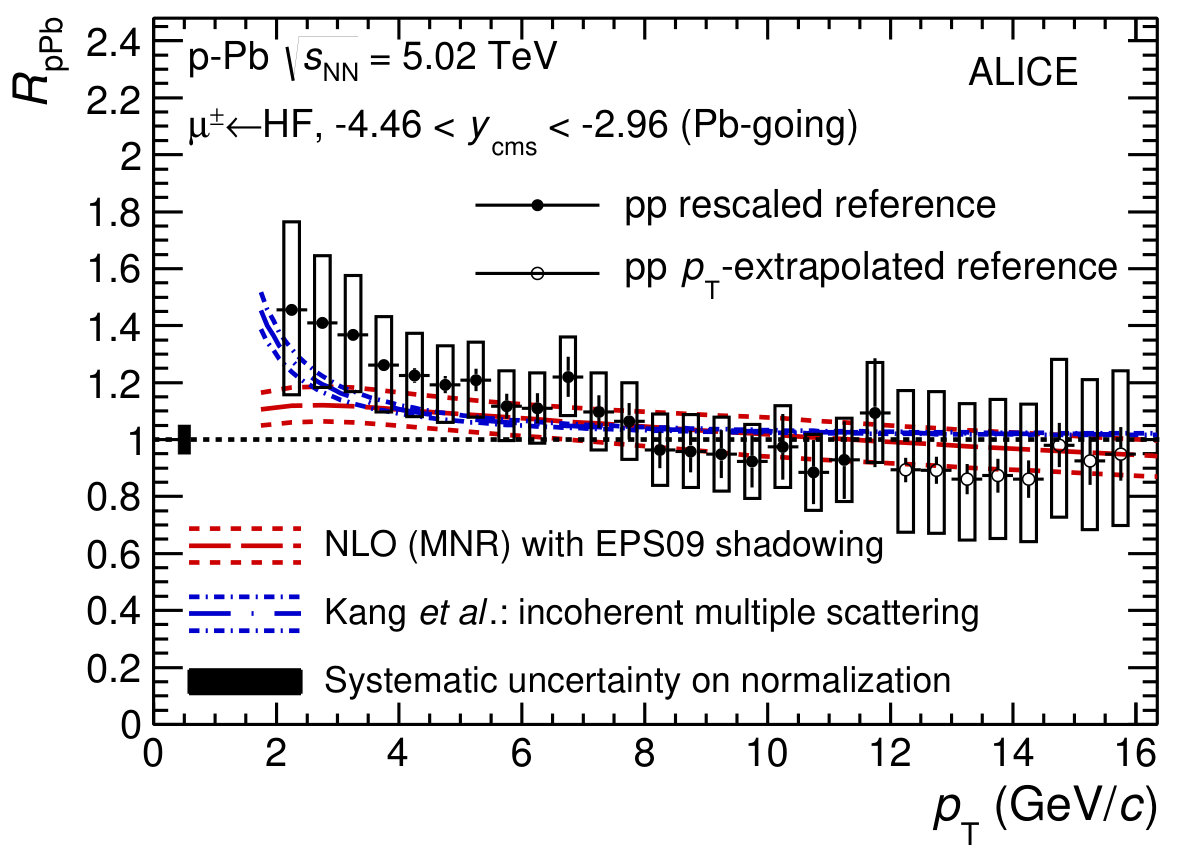 Figure 2
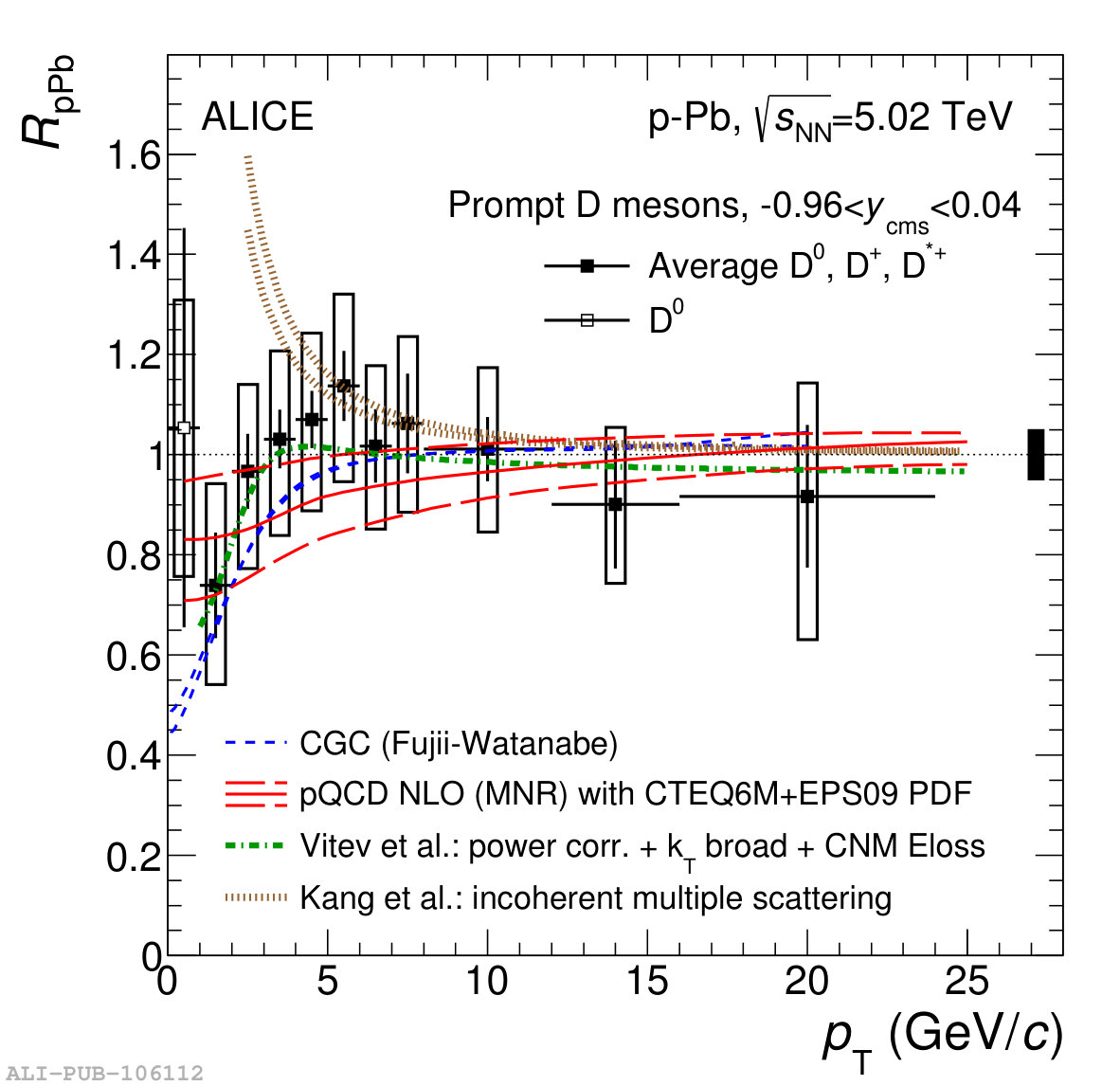 Figure 4
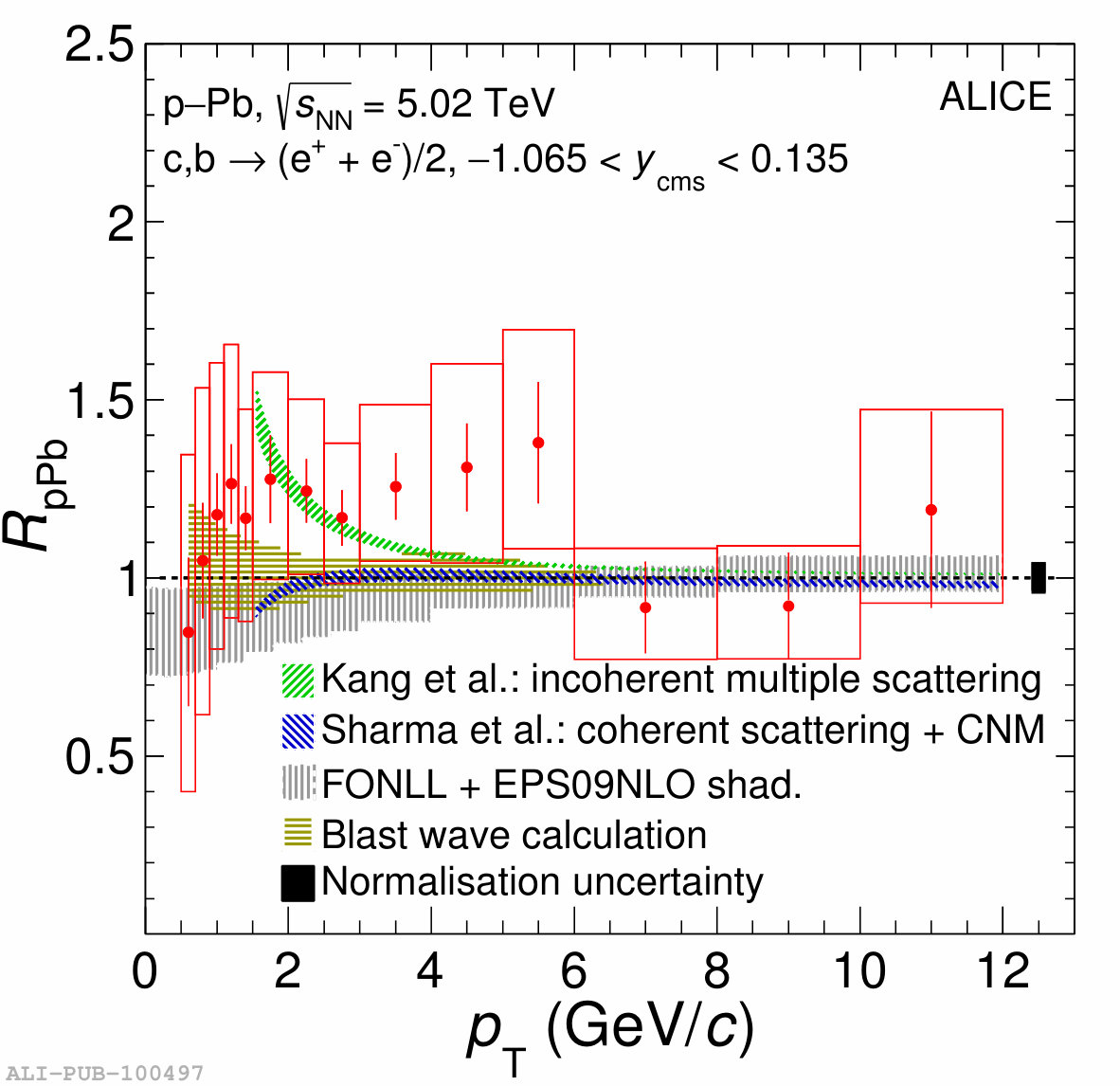 Figure 5
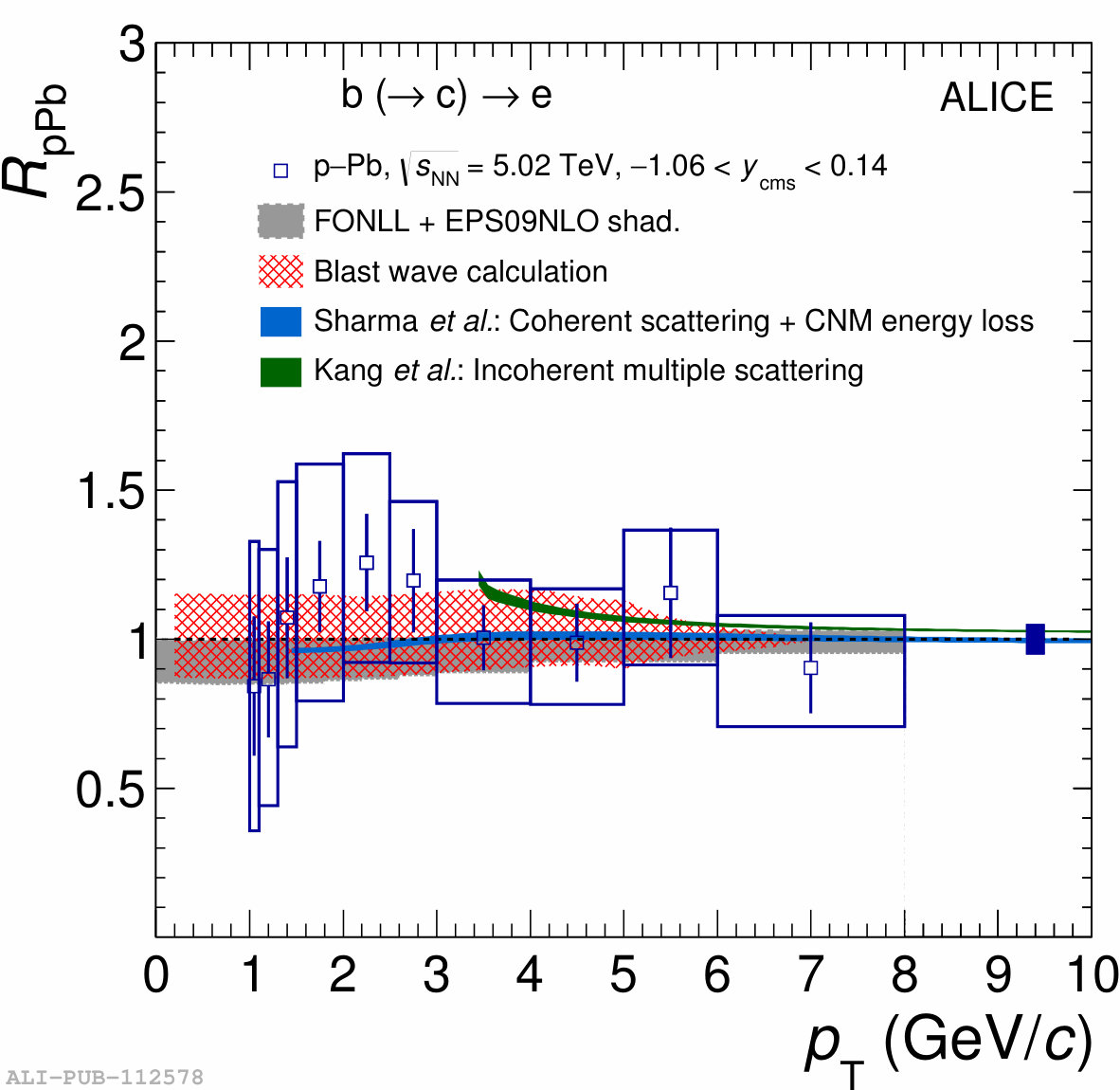 Figure 6
Peer Reviews
No public reviews on file for this paper yet. If you reviewed it on a platform where reviews are public (OpenReview, ICLR, NeurIPS, ICML), you can paste yours below so the community can read it here.
Videos
No videos yet. Explain this paper in a talk, walkthrough, or lecture? Add one.
Taxonomy
TopicsHigh-Energy Particle Collisions Research · Particle physics theoretical and experimental studies · Quantum Chromodynamics and Particle Interactions
11institutetext: Indian Institute of Technology Bombay, Mumbai, India,
11email: [email protected]
Heavy-flavour measurements in p-Pb collisions with ALICE at the LHC
Jitendra Kumar
for the ALICE collaboration
Abstract
The measurements of open heavy-flavours, i.e. D mesons at central rapidity and leptons from charm and beauty decays at central and forward rapidity was studied in p-Pb collisions at = 5.02 TeV using the ALICE detector. The results are presented and compared to model predictions including cold nuclear matter effects.
keywords:
Heavy-flavour, QGP, Cold Nuclear Matter effect
1 Introduction
Heavy quarks (charm and beauty) due to their large masses are predominantly produced in hard-scattering processes in the initial phase of hadronic collisions. Therefore, they are excellent probes to study the properties of the Quark-Gluon Plasma created in relativistic heavy-ion collisions. The measurement of their production in p-Pb collisions is important to disentangle the hot nuclear matter effects present in heavy-ion collisions from cold nuclear matter (CNM) effects, such as transverse momentum broadening, nuclear modification of the parton distribution functions, initial-state multiple scatterings and energy loss. These effects can be investigated by measuring the nuclear modification factor , defined as the ratio of particle cross section d/d measured in p-Pb collisions to that measured in pp collisions scaled by the atomic mass number of Pb nuclei. In the absence of CNM effects is expected to be unity. The of D mesons and leptons from charm and beauty hadron decays at central and forward rapidities was studied in p-Pb collisions at = 5.02 TeV with ALICE.
2 Analysis details
Prompt D mesons and their charge conjugates are reconstructed via their hadronic decay channels: , and [1]. The extraction of the signal is based on an invariant mass analysis of reconstructed decay vertices displaced from the primary vertex by few hundred microns. The necessary spatial resolution on the track position is guaranteed by the Inner Tracking System (ITS) and the Time Projection Chamber (TPC) covering a pseudorapidity region . Particle identification (PID) of the decay particle species is also exploiting using the measurement of specific energy loss () in the TPC and of the time of flight with the Time-Of-Flight (TOF) detector. Kaons and pions are identified up to pT = 2 GeV/. The electrons from heavy-flavour (HF) hadron decays are identified using ITS, TPC and TOF detectors in the range 0.5 6 GeV/ and using the TPC and the Electromagnetic Calorimeter (EMCal) for 6 GeV/ [2]. The background from and Dalitz decay and from photon conversions is subtracted via the invariant mass method, and the hadron contamination decays is statistically subtracted [2]. The muons from heavy-flavour hadron decays are measured with the muon spectrometer in pseudorapidity range, 2.5 4 [3] (additional information in [4]). The background from and K decays is subtracted using a data-tuned Monte Carlo cocktail.
3 Results
The of prompt D mesons (D0, D*+* , and D*∗+* average) is found compatible with unity, as shown in Figure 1 (left plot), and described by models which include CNM effects [5]. The comparison to the nuclear modification factor in Pb-Pb collisions, , is reported in Figure 1 (right plot) and highlights a strong suppression for 3 GeV/ in central (0-10) and semi-central Pb-Pb collisions (30-50) [6]. This comparison allows to conclude that the suppression observed in Pb–Pb collisions is due to final-state effects induced by the interaction of heavy quarks with the QGP produced in these collisions. The of HF-hadron decay electrons shown in Figure 2 (left plot) is consistent with unity and also described by various models considering CNM effects [2]. The impact parameter distributions of beauty decay electrons is expected to be broader than that of charm decay electrons due to the larger separation between the primary and decay vertices. Therefore, one can separate the contributions of charm and beauty production. The of beauty decay electrons is shown in the right panel of Figure 2 [7]. The results are similar and consistent with unity within the uncertainties.
Figure 3 shows the of heavy-flavour hadron decay muons, which is also consistent with unity at both forward (2.03 3.53, left panel) and backward (-4.46 -2.96, right panel) rapidities. However an enhancement is observed above unity at backward rapidity for 2 4 GeV/ [3]. The results in both rapidity ranges are described within uncertainties by model calculations that include CNM effects.
The reference list from the paper itself. Each links out to its DOI / PubMed record.
- 1[1] ALICE Collaboration, Phys. Rev. Lett. 113 (23) (2014) 232301.
- 2[2] ALICE Collaboration, Phys. Lett. B 754 (2016) 81.
- 3[3] ALICE Collaboration, ar Xiv:1702.01479 [nucl-ex].
- 4[4] ALICE Collaboration, Int. J. Mod. Phys. A 29 (2014) 1430044.
- 5[5] ALICE Collaboration, Phys. Rev. C 94 (2016) 054908.
- 6[6] ALICE Collaboration, JHEP 1603 (2016) 081.
- 7[7] ALICE Collaboration, ar Xiv:1609.03898 [nucl-ex].