Ultracold atoms in quasi-1D traps: a step beyond the Lieb-Liniger model
Krzysztof Jachymski, Florian Meinert, Hagar Veksler, Paul S. Julienne, and Shmuel Fishman

TL;DR
This paper extends the Lieb-Liniger model for ultracold atoms in quasi-1D traps by including van der Waals interactions, revealing significant corrections near narrow Feshbach resonances and potential experimental detection methods.
Contribution
It introduces a model extension that accounts for finite-range interactions, providing new insights into the behavior of ultracold atoms in confined geometries.
Findings
Finite-range interactions significantly affect the system near narrow Feshbach resonances.
Confinement and interactions can create effective transparency with weak 1D interactions.
Proposes experimental schemes to detect these interaction corrections.
Abstract
Ultracold atoms placed in a tight cigar-shaped trap are usually described in terms of the Lieb-Liniger model. We study the extensions of this model which arise when van der Waals interaction between atoms is taken into account. We find that the corrections induced by the finite range of interactions can become especially important in the vicinity of narrow Feshbach resonances and suggest realistic schemes of their experimental detection. The interplay of confinement and interactions can lead to effective transparency where the one-dimensional interactions are weak in a wide range of parameters.
Click any figure to enlarge with its caption.
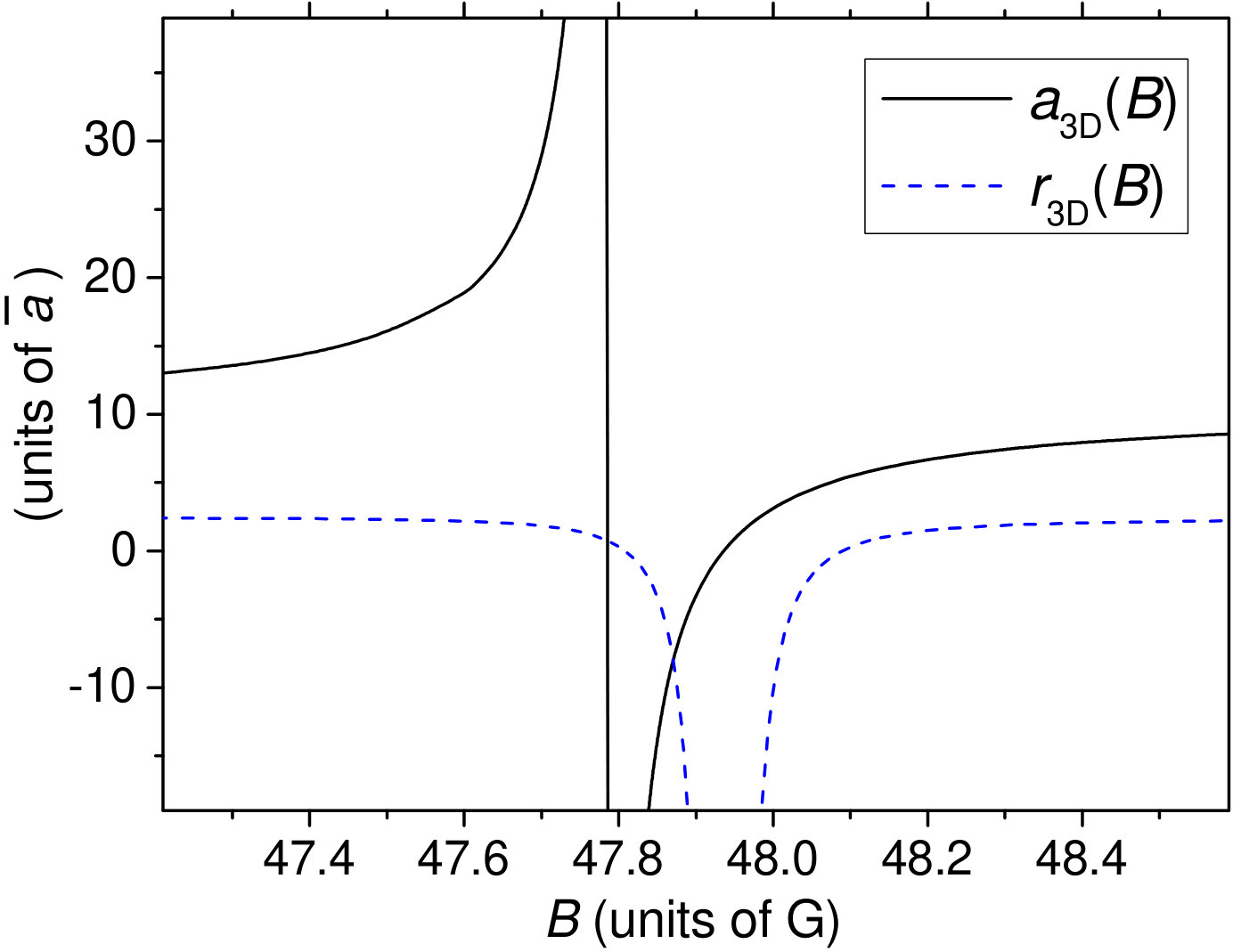 Figure 1
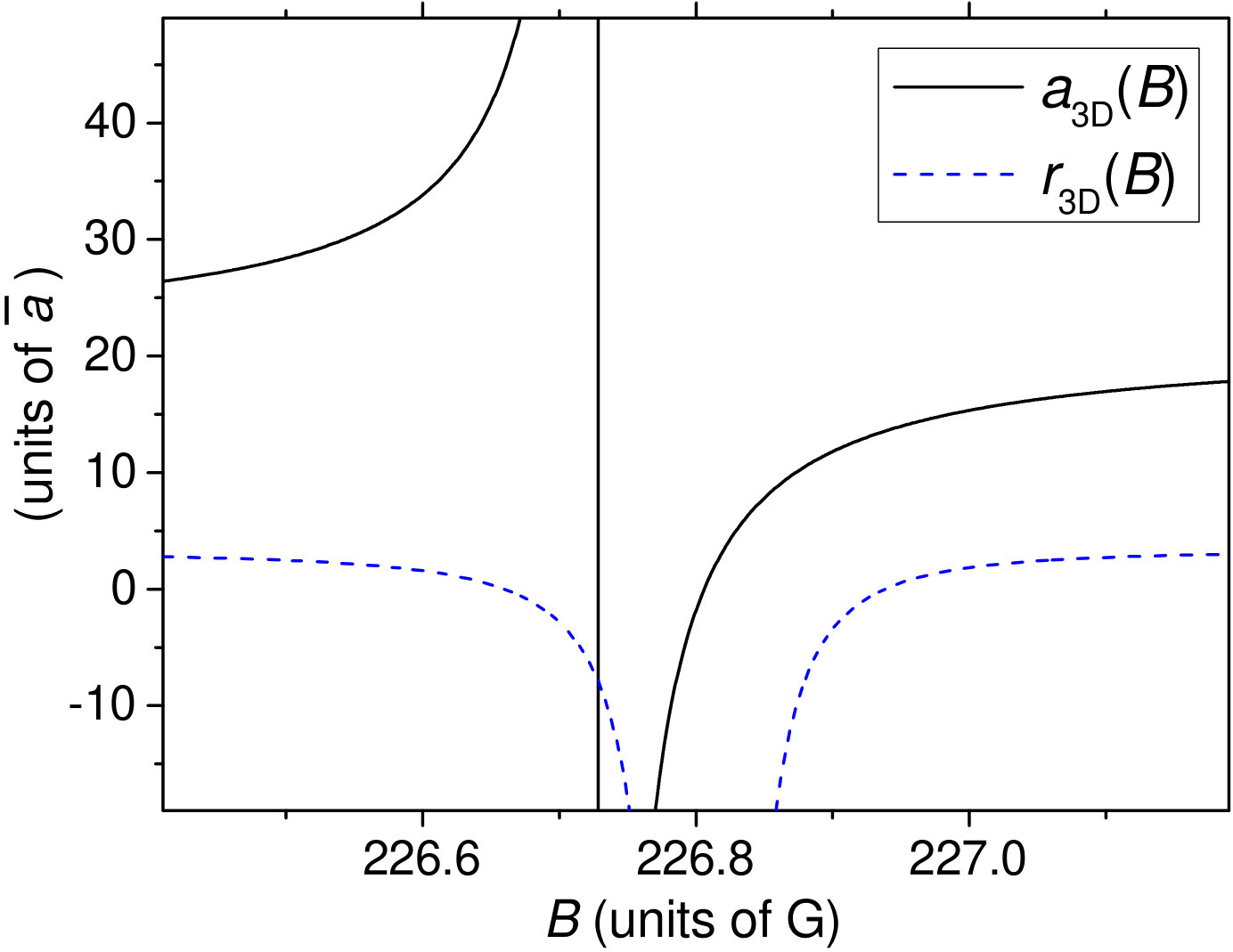 Figure 1
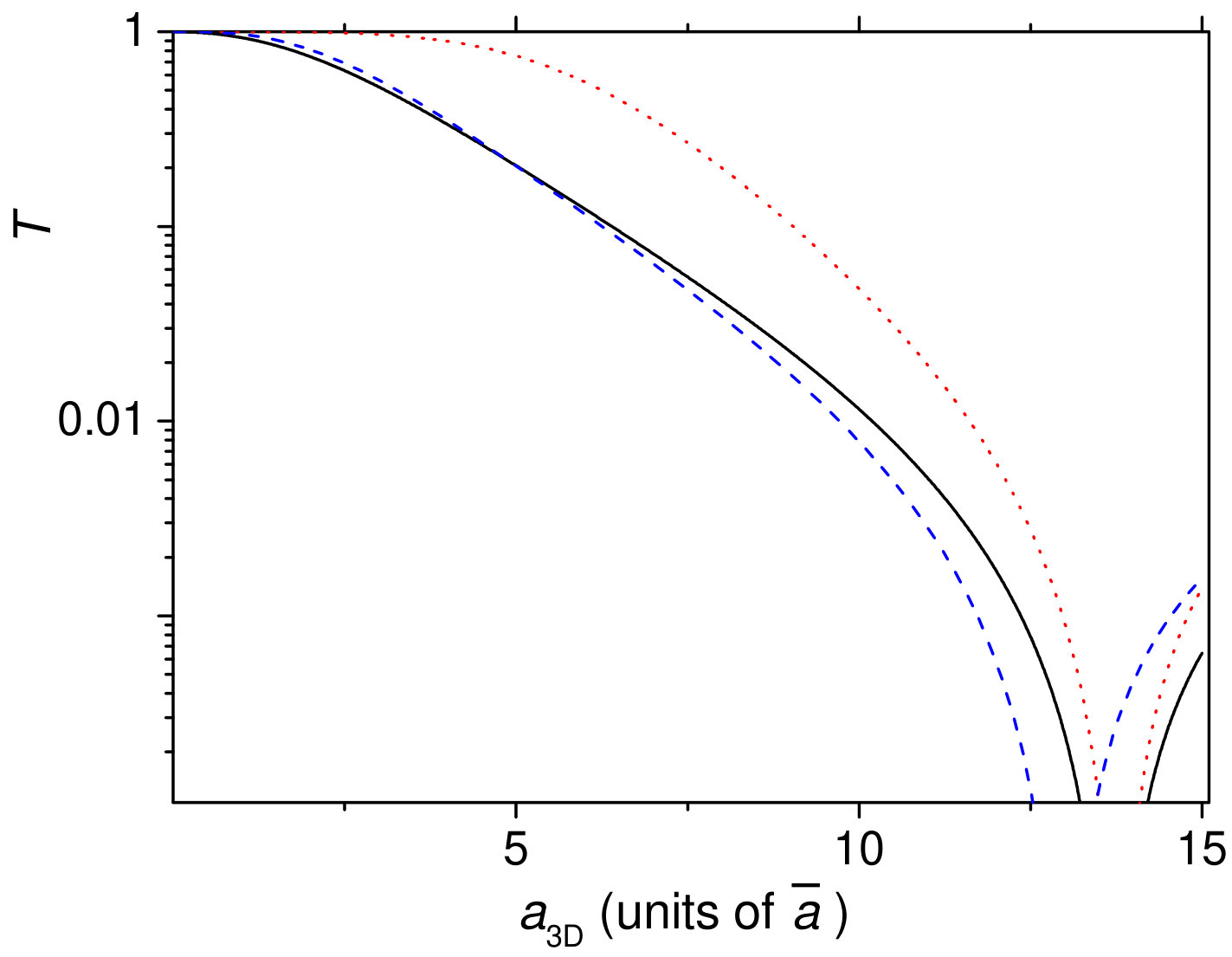 Figure 2
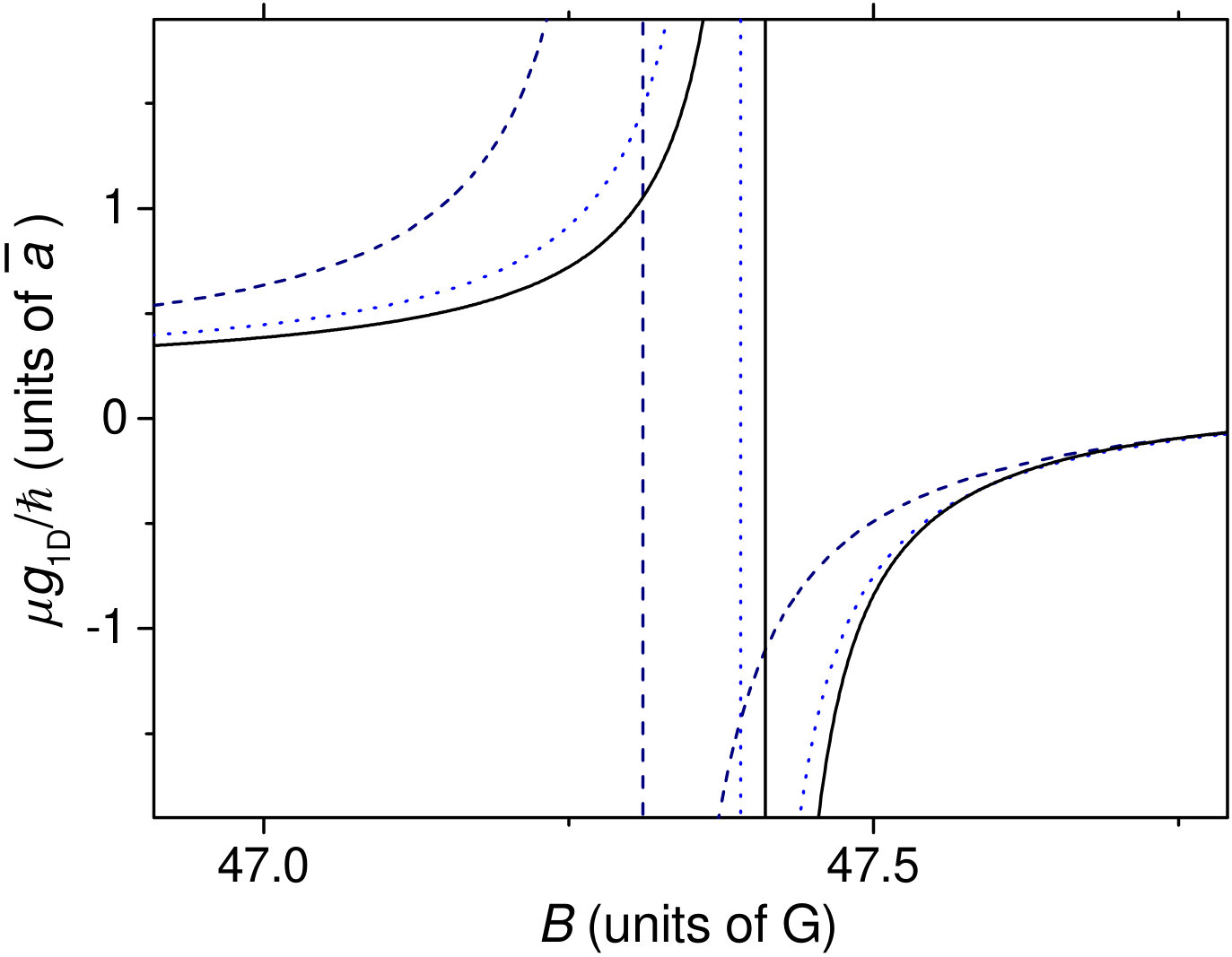 Figure 3
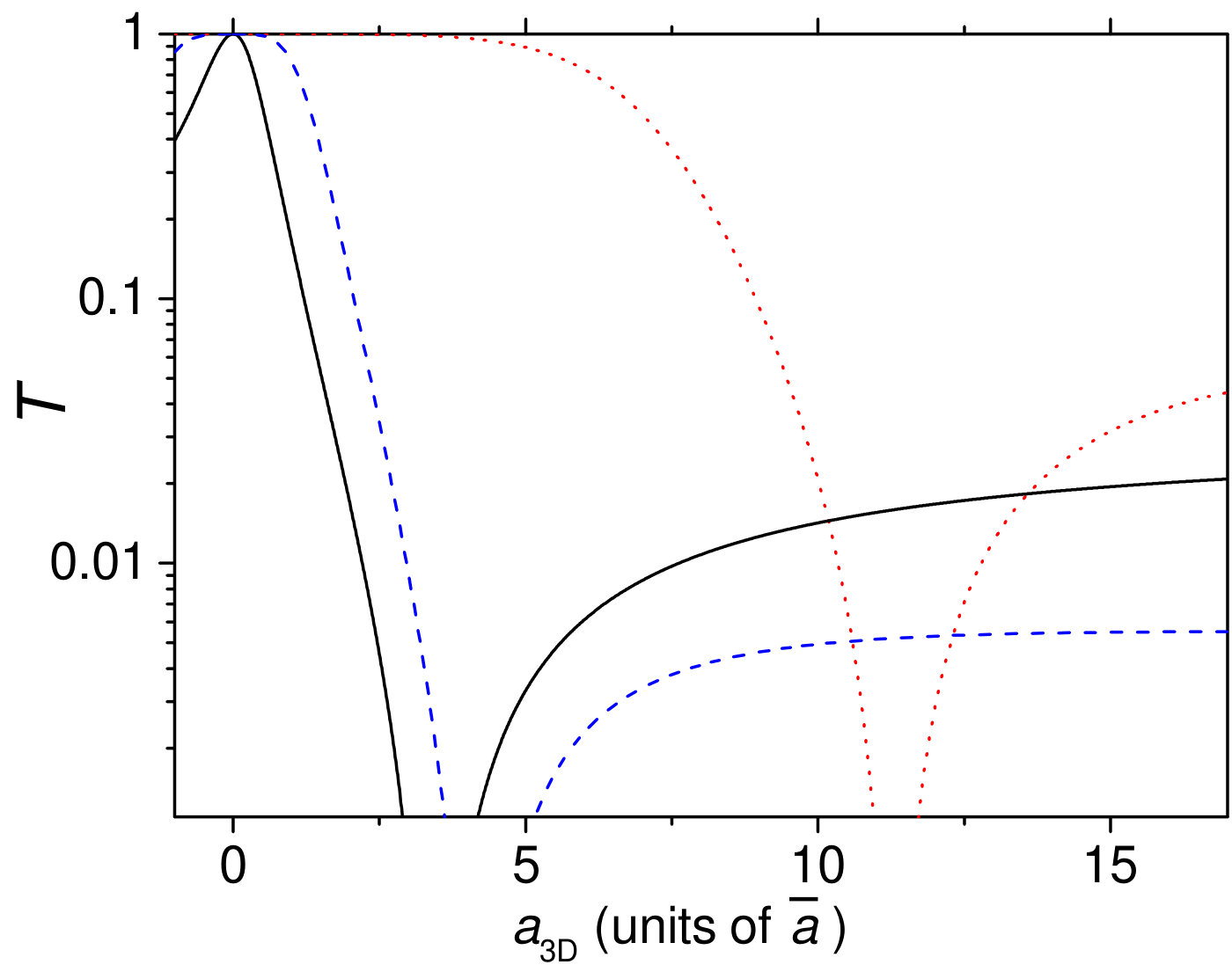 Figure 4
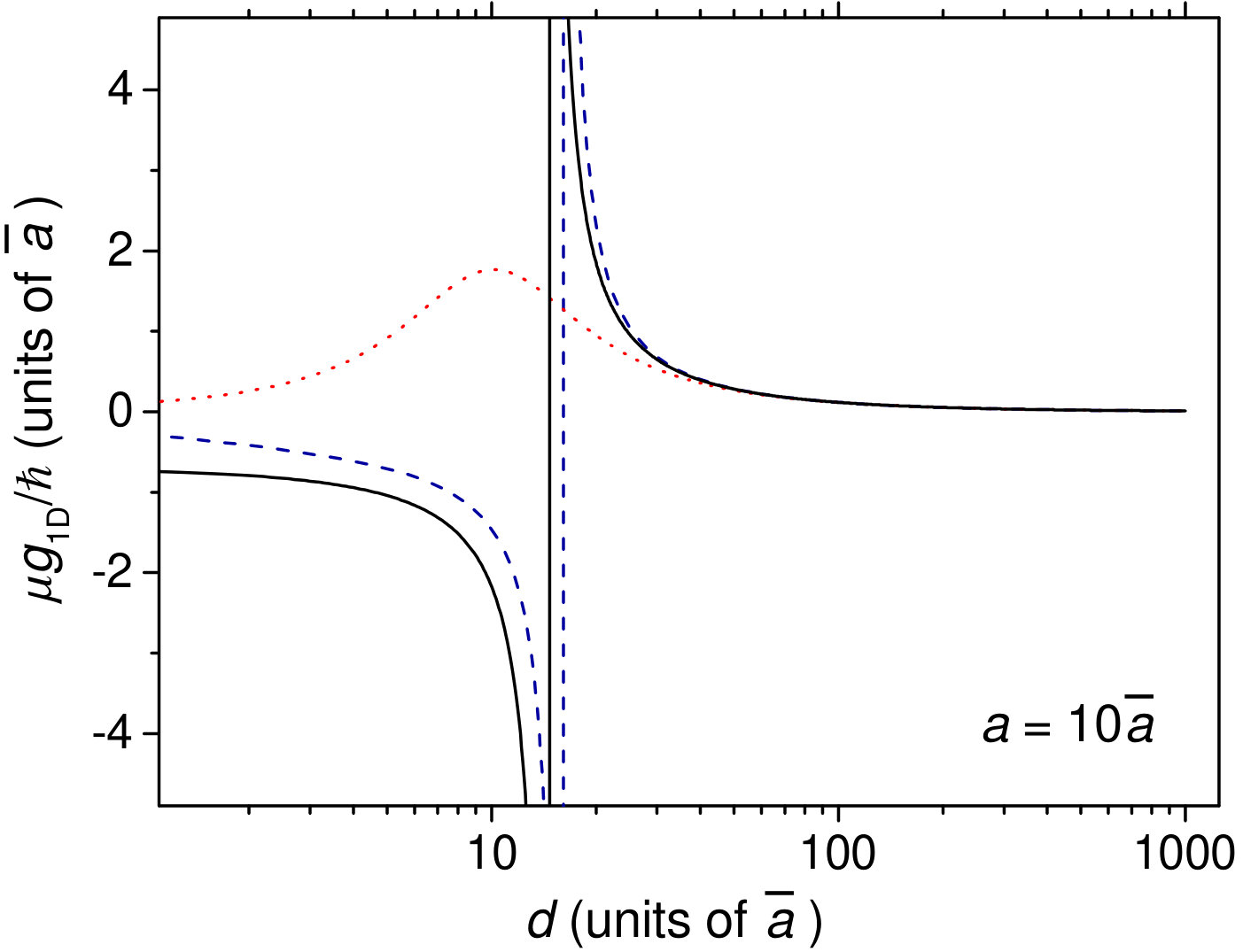 Figure 5
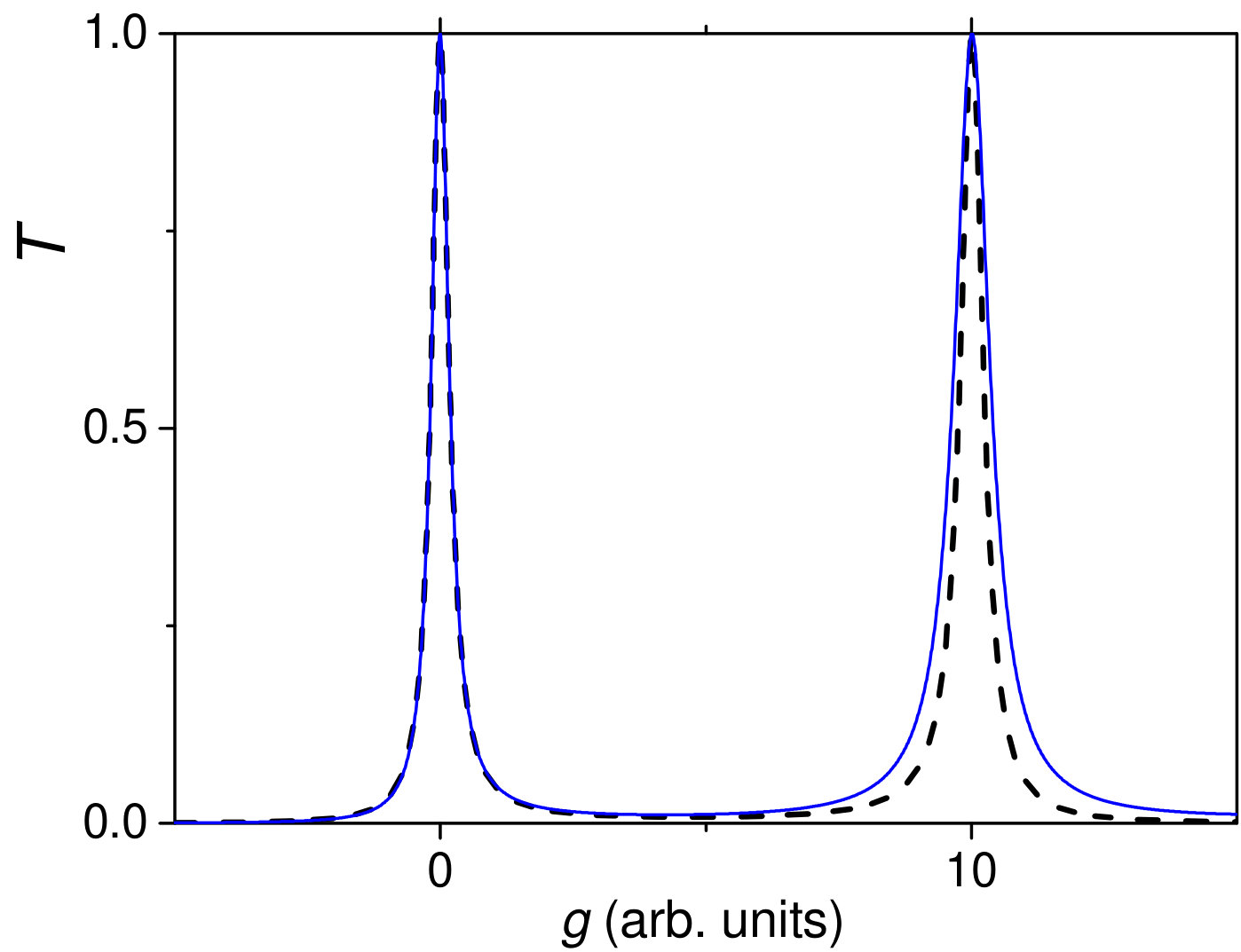 Figure 6
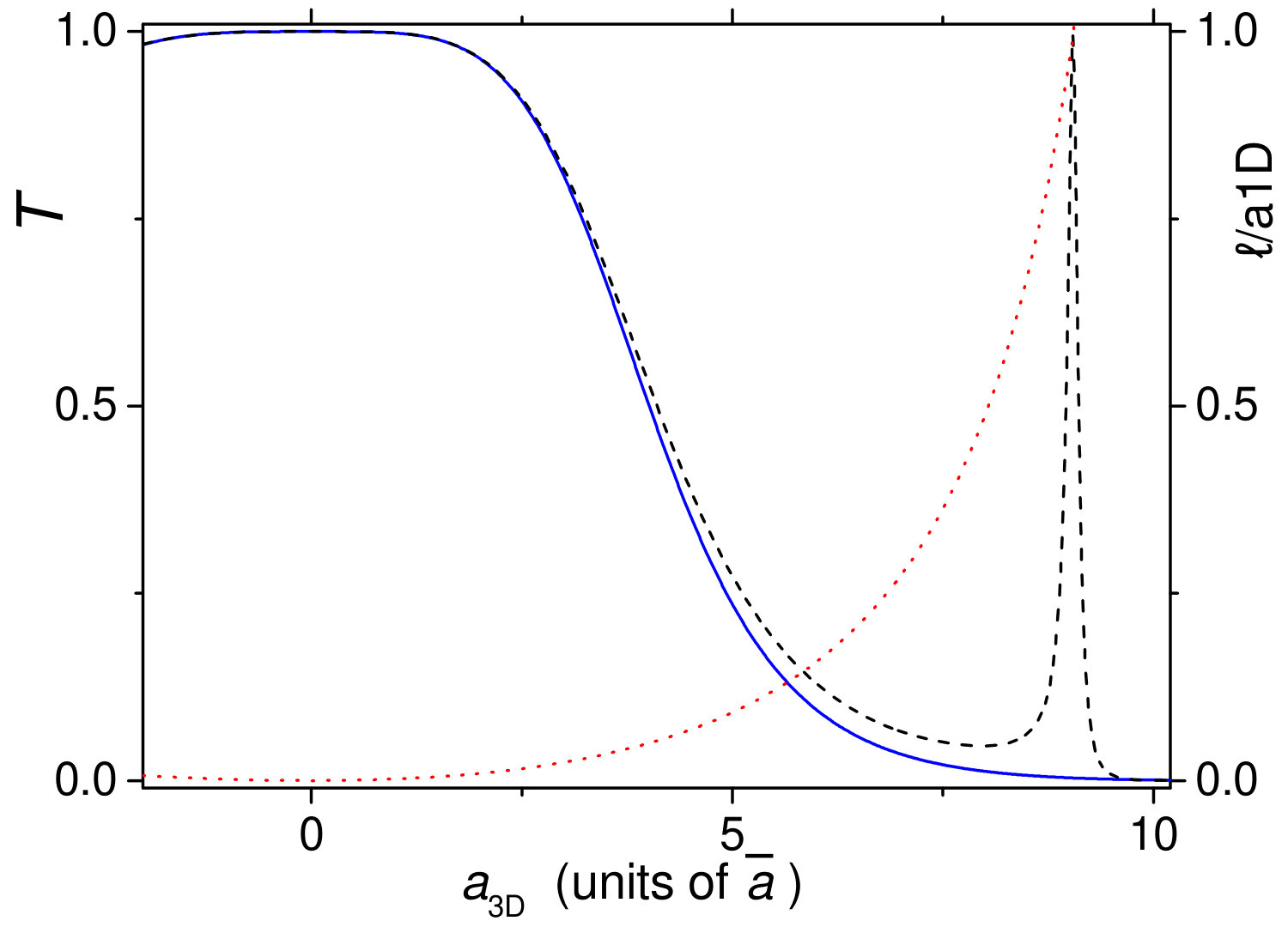 Figure 7
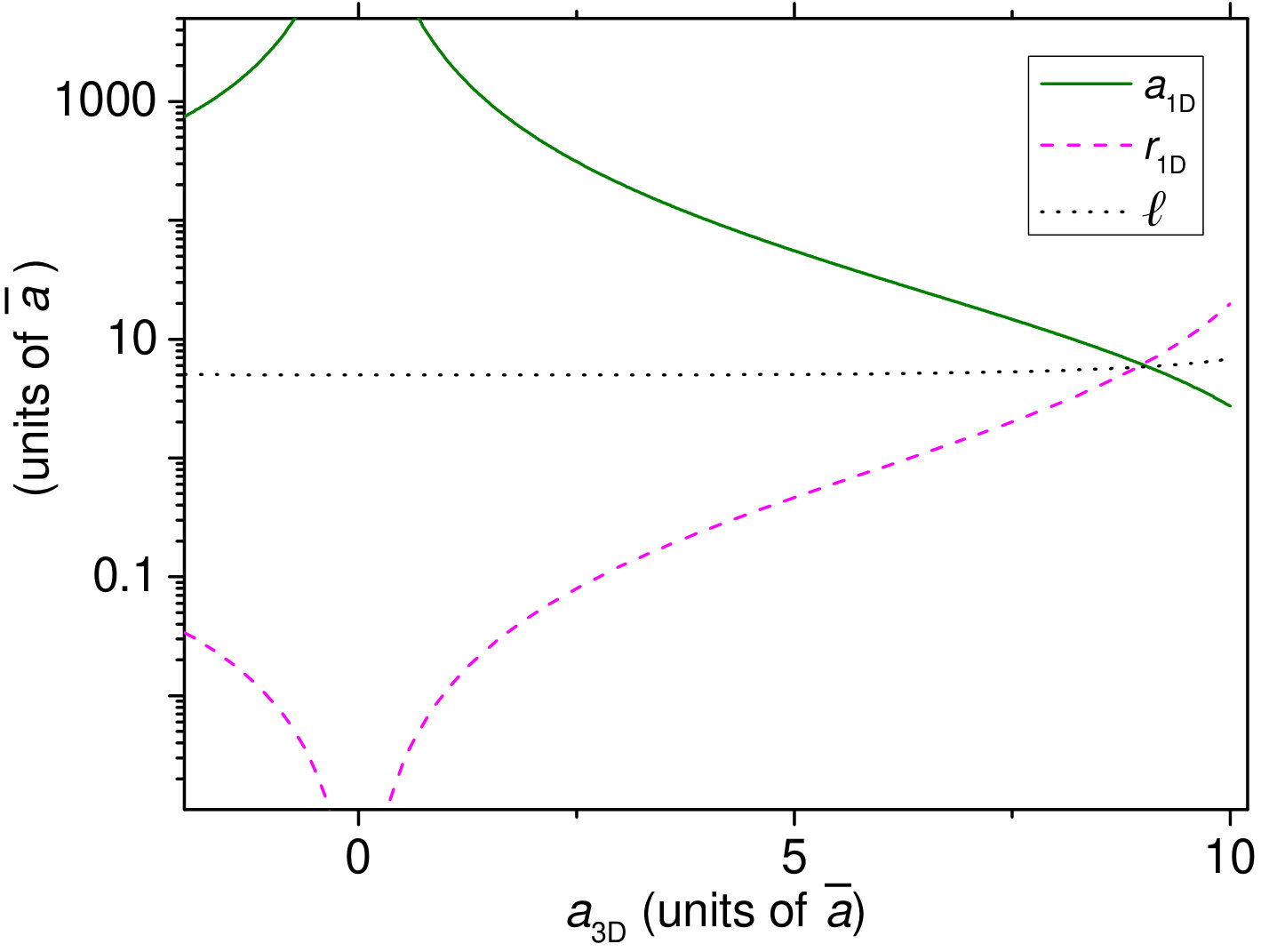 Figure 7
Peer Reviews
No public reviews on file for this paper yet. If you reviewed it on a platform where reviews are public (OpenReview, ICLR, NeurIPS, ICML), you can paste yours below so the community can read it here.
Videos
No videos yet. Explain this paper in a talk, walkthrough, or lecture? Add one.
Ultracold atoms in quasi-1D traps: a step beyond the Lieb-Liniger model
Krzysztof Jachymski1
Florian Meinert2
Hagar Veksler3
Paul S. Julienne4
Shmuel Fishman3
1 Institute for Theoretical Physics III, University of Stuttgart, Pfaffenwaldring 57, 70569 Stuttgart, Germany
2 5. Physikalisches Institut and Center for Integrated Quantum Science and Technology (IQST), University of Stuttgart, Pfaffenwaldring 57, 70569 Stuttgart, Germany
3 Physics Department, Technion - Israel Institute of Technology, Haifa 3200, Israel
4 Joint Quantum Institute, University of Maryland and National Institute of Standards and Technology, College Park, Maryland 20742, USA
Abstract
Ultracold atoms placed in a tight cigar-shaped trap are usually described in terms of the Lieb-Liniger model. We study the extensions of this model which arise when van der Waals interaction between atoms is taken into account. We find that the corrections induced by the finite range of interactions can become especially important in the vicinity of narrow Feshbach resonances and suggest realistic schemes of their experimental detection. The interplay of confinement and interactions can lead to effective transparency where the one-dimensional interactions are weak in a wide range of parameters.
I Introduction
Interacting quantum systems are the subject of great general interest, but they are very hard to treat analytically. The Lieb-Liniger model Lieb and Liniger (1963) is one of the rare examples of the exactly solvable case. It describes identical bosons on a ring of circumference interacting via the delta function potential
[TABLE]
where is the interparticle distance. In the limit the problem can be mapped onto noninteracting fermions and the system forms the Tonks-Girardeau gas Tonks (1936); Girardeau (1960); Cazalilla et al. (2011). This phenomenon has been observed experimentally using a tightly confined gas of ultracold neutral atoms Kinoshita et al. (2004); Paredes et al. (2004). This was possible due to excellent experimental control of the external trapping potential as well as interatomic interactions, which is a unique feature of cold atomic systems Bloch et al. (2008); Chin et al. (2010). Further studies of quasi-one-dimensional (Q1D) bosons included e.g. measurements of two- and three-body correlation functions Kinoshita et al. (2005); Haller et al. (2011), creation of a metastable, strongly correlated gas with attractive interactions Haller et al. (2009), studying the gas out of equilibrium Gring et al. (2012); Trotzky et al. (2012), probing the excitation spectrum of the system Meinert et al. (2015), and investigating impurity dynamics Catani et al. (2012); Meinert et al. (2016).
For the Lieb-Liniger model an exact solution has been presented and its properties could be studied in the thermodynamic limit. This was possible due to the simple form of the interaction. The purpose of the present paper is to study situations in which the assumption of point-like particles is not correct. With this motivation in mind, some of us Veksler et al. (2014); Veksler and Fishman (2016) introduced the modified Lieb-Liniger model in which the interaction potential (1) is replaced by a more complex term
[TABLE]
which aims to account for the finite range of the realistic interactions between atoms. Here, we will study what are the corrections to the simple model (1) for the system of ultracold atoms placed in a Q1D trap and to what extent their properties can be captured by the model (2). We find that while the extension of the form proposed in (2) describes the properties of cold atoms only for relatively weak interactions, finite range corrections can indeed become crucially important. In general, the first-order correction results in the effective interaction of the form Collin et al. (2007)
[TABLE]
where is the 1D momentum. Formula (2) can then be interpreted as a discretized version of (3).
The two-body problem in the presence of quasi-1D confinement has been the subject of experimental and theoretical interest for many years Olshanii (1998); Bergeman et al. (2003); Bolda et al. (2003); Idziaszek and Calarco (2006); Moritz et al. (2005); Naidon et al. (2007); Yurovsky and Band (2007); Yurovsky et al. (2008); Haller et al. (2010); Giannakeas et al. (2012); Sala et al. (2012, 2013); Heß et al. (2014, 2015). It has been discovered Olshanii (1998) that the effective 1D interaction strength is strongly affected by the presence of the external trap. Surprisingly, the transmission coefficient can become zero at finite 3D interaction strength, meaning that the 1D interaction becomes divergent although the 3D one does not. This phenomenon is called confinement-induced resonance (CIR) and can be studied experimentally by tuning the 3D scattering length of the atoms using Feshbach resonances Chin et al. (2010).
Most previous works examined the case for which the finite energy corrections do not significantly affect the properties of the CIR. This is the case for relatively weak transverse confinement and open-channel dominated Feshbach resonances. Here we show that for closed-channel dominated resonances the scattering properties of the atoms and consequently the effective pseudopotential describing their many-body properties can become strongly energy-dependent. We provide a simple framework which allows for an analytic description of the corrections in terms of the effective range Naidon et al. (2007). Focusing on the case of Cs atoms, which feature a number of both broad and narrow Feshbach resonances, we discuss how to demonstrate the role of energy dependence using readily accessible experimental setups.
This work is organized as follows. In Section II we review the properties of the generalized Lieb-Liniger model introduced in Veksler and Fishman (2016). In Section III we provide the solution to the two-particle problem in the presence of transverse confinement using an energy-dependent pseudopotential. Section IV discusses the corrections to the properties of CIR resulting from energy dependence and the role of effective range. Section V provides the comparison of the realistic atomic scattering results to the predictions of the generalized Lieb-Liniger model and studies the limits of its applicability. The results are discussed and future directions are proposed in Section VI.
II Generalized Lieb-Liniger model
Let us consider a gas of atoms interacting via the three-delta potential (2). We will concentrate on the low-energy and low-density () limit. In this case the model is well approximated by a single delta function potential (1) with effective coefficient given by Veksler and Fishman (2016)
[TABLE]
A possible choice of the parameters , is and , such that the sum of the three coefficients . In the limit we have , which is an intuitive result expected to hold in the long wavelength limit. Surprisingly, eq. (4) implies that when the parameter is of the order of unity, the coefficient strongly deviates from the naive expectation and can change its sign (see Fig. 1 of Veksler and Fishman (2016)). When the particles are effectively noninteracting.
For a realistic system of atoms one can argue that the generalized Lieb-Liniger model (GLL) can provide a first order correction beyond the standard delta-function interaction (1). In the following, we will study the atomic scattering problem in a harmonic trap and derive the expressions for and in terms of the 3D scattering length, effective range and confinement strength and compare the results with the prediction of formula (4).
III Atomic scattering in a quasi-1D waveguide
We now consider an experimentally realistic system of ultracold atoms interacting with a van der Waals potential . The characteristic range of this interaction can be defined as , where is the reduced mass of the atomic pair Gribakin and Flambaum (1993). As is much smaller than typical interatomic distances in the gas and the de Broglie wavelength, and the collision energies are typically in the nK regime such that only -wave interacions are relevant, it is justified to describe the interaction using the Fermi pseudopotential
[TABLE]
where is the kinetic energy of the relative motion and the essential quantity is the scattering length of the potential related to the phase shift via . This approach leads to the well-known Fermi-Huang pseudopotential with the coupling constant .
In the presence of an external trap, one should take into account that the scattering phase shift is in fact weakly energy dependent and use the corrected pseudopotential
[TABLE]
which leads to much better agreement with numerical calculations in which the Schrödinger equation was solved with a model potential and compared to the constant pseudopotential (5) predictions Bolda et al. (2002); Blume and Greene (2002); Idziaszek and Calarco (2006); Naidon et al. (2007); Kalas and Blume (2008); Yu et al. (2011). This is equivalent to replacing the scattering length by its energy-dependent generalization
[TABLE]
A similar correction can be introduced in free space, where in the mean-field approach one has to include first-order corrections to the scattering amplitude in order to obtain an extended Gross-Pitaevskii equation Fu et al. (2003); Collin et al. (2007).
We now assume that the atoms are subject to strong radial harmonic confinement ( is the free direction, while the motion in is restricted) characterized by trapping frequency . The center of mass motion in the harmonic trap can be separated out and the relative part of the wave function for two atoms fulfills the Schrödinger equation
[TABLE]
The characteristic length scale for the trapping potential can be defined as . At large separations where the interaction potential can be neglected, the wave function can be decomposed into the incoming and scattered part, following
[TABLE]
Here denotes the even part of the 1D scattering amplitude and denote the transverse harmonic oscillator states. For identical bosons the odd part of the scattering amplitude vanishes due to symmetry requirements. The total energy consists of the transverse harmonic oscillator part and the plane wave in the longitudinal direction
[TABLE]
It is important to note that at short interparticle distances the trapping potential is almost constant and the collision is essentially three-dimensional. Therefore the 1D and 3D momenta ( and , respectively) are not the same even in the ground state of the transverse trap due to the zero-point motion associated with the harmonic potential. Namely, . This can become relevant when cannot be neglected compared to .
By solving the Schrödinger equation with the pseudopotential (6) and boundary conditions (9), we obtain Bergeman et al. (2003); Idziaszek et al. (2015)
[TABLE]
where is the Hurwitz zeta function. Due to the properties of harmonic oscillator states, only terms with do not vanish. We stress that the distribution of the total energy among the transverse and longitudinal degrees of freedom at long range does not affect . In the following, we will restrict to the case where only the lowest transverse mode is occupied and denote as for simplicity.
The 1D scattering amplitude can be connected to the 1D phase shift via Olshanii (1998); Bergeman et al. (2003)
[TABLE]
and the 1D energy-dependent scattering length can be defined as
[TABLE]
The scattering length obtained this way from (11) may at first sight appear to be imaginary due to arising term. However, this term is exactly cancelled by the imaginary part of the zeta function, and we get
[TABLE]
Here, is the real part of . We note that in the limit reduces to the well-known expression Olshanii (1998)
[TABLE]
where .
Here, we are interested in the leading-order finite energy corrections, for which it is sufficient to use the effective range expansion for the scattering length
[TABLE]
which gives
[TABLE]
The possible forms of the effective range for realistic van der Waals interactions will be discussed below.
The effective 1D pseudopotential contains the coupling strength parameter proportional to the inverse of Olshanii (1998); Bolda et al. (2003)
[TABLE]
When expanding this quantity in power series of we have to also expand the term using . Up to the second-order term, we then have
[TABLE]
with
[TABLE]
and
[TABLE]
where comes from the expansion of .
Let us now introduce another important quantity, the transmission coefficient , which describes the part of the flux that goes through the potential barrier in relative coordinates. By definition it is related to scattering amplitude via Olshanii (1998). It can also be rewritten in terms of the phase shift as
[TABLE]
If reaches unity, this means that is zero and the particles are effectively noninteracting. The position of the CIR can be found by identifying the parameter values at which diverges and the transmission coefficient becomes zero.
In our derivation we assumed the knowledge about the energy dependence of the scattering length, which for realistic systems has to be obtained by multichannel scattering calculations. It is also possible to formulate the problem in a different way by using quantum-defect theory Granger and Blume (2004); Giannakeas et al. (2012); Heß et al. (2014, 2015); Wang et al. (2016). In this treatment one calculates the short-range 3D matrix , which contains all the information about the free-space scattering properties, and then uses frame transformation technique to obtain the 1D scattering quantities via the long-range 1D matrix . This powerful method allows for multichannel, energy-dependent calculations including higher partial waves, which lead to additional narrow resonances.
IV Role of effective range corrections
Formulas (20)-(21) suggest that energy-dependent corrections do not only introduce a term, but are also crucially important for determining the value of due to zero-point motion associated with the transverse mode. One immediate consequence of the higher-order terms is that the position of the CIR shifts with respect to the zero-range prediction and becomes energy dependent. We will now estimate the potential importance of the corrections.
For atoms interacting via a single-channel van der Waals potential the 3D effective range can be calculated analytically and has a universal form depending only on the scattering length Gao (1998); Blackley et al. (2014)
[TABLE]
Numerical multichannel scattering calculations have verified that this expression holds close to open-channel Feshbach resonances, but can fail on the closed-channel dominated ones Blackley et al. (2014). However, an effective formula for the effective range as a function of magnetic field in the vicinity of the resonance can be given as Blackley et al. (2014)
[TABLE]
with , and being fit parameters depending on a particular resonance. From this expression we observe that the effective range diverges at the zero crossing of .
Werner and Castin Werner and Castin (2012) proposed an extension of formula (23) to the case of a Feshbach resonance by adding the term which accounts for the Feshbach resonance. Here , is the background scattering length away from resonance, is the resonance width and is the magnetic moment difference between the channels. This term shows that can take negative values, and vanishes when the parameter becomes large, which is the case for open-channel dominated resonances Chin et al. (2010) (a similar result close to the resonance has been derived in Jachymski et al. (2013)). We then expect that the effective range corrections can be much more important for narrow resonances since the and parameters can take very large values.
We will focus on the case of Cs atoms, which have been used by the Innsbruck group to experimentally demonstrate the existence of CIR Haller et al. (2010) and to study different aspects of 1D many-body systems Meinert et al. (2015, 2016). Cs displays a variety of both broad and narrow resonances which have been extensively studied Berninger et al. (2013). We will study the case of a narrow resonance situated at a magnetic field of G, and an even more narrow one at G. The scattering length and effective range for these two cases obtained by fitting formula (24) to the results of multichannel scattering calculations of Berninger et al. (2013) are shown on Fig. 1.
So far in typical experiments the transverse trapping frequency was in the few kHz range. We will assume a typical value kHz which gives . As the mean van der Waals length for Cs , the ratio of the length scales is .
Figure 2 shows the transmission coefficient for different resonances as a function of the scattering length for the case. We observe that the curves corresponding to the single-channel case (23) and to the G resonance are not much different. On the other hand, for the G resonance the transmission is much closer to unity in a wide range of the scattering length values. This is because the effective range term in (20) can take very large values in a broad range of magnetic field, making the term in the denominator large and reducing the value of even for considerably large scattering lengths.
The G resonance was used to study the CIR phenomenon Haller et al. (2010). Its position has been identified via increased three-body loss close to the pole of . A shift of the loss maximum to smaller values of was identified when increasing the confinement strength. Specifically, was scanned in a range leading to a well detectable shift of the loss feature by in magnetic field, which was found in agreement with the simplest formula (15). The predicted shift due to the finite range correction shown in Figure 3 is of the same order for reasonable temperatures. However, the non-trivial shape of the experimentally observed loss resonance, which lacks a detailed theoretical model, makes it difficult to unambiguously identify the absolute position of the pole of .
Observing large shifts in the position of CIR and magnitude of would require going to stronger transverse confinement. In order to achieve it would be beneficial to use an optical lattice with shorter wavelength, e.g. 532 nm instead of 1064 nm. This is demonstrated in Figure 4, which shows that for the position of the CIR related to the resonance is moved to much higher values of the 3D scattering length. However, the position of the CIR associated with the G resonance is still not affected significantly. Figure 5 shows that the two narrow resonances display completely different behavior when the confinement strength is varied and the scattering length is kept constant.
The energy dependence of the resonance position can be readily investigated experimentally by varying the temperature of the trapped sample in a controlled way. Alternatively, one may study the CIR of a single impurity interacting with the 1D gas, e.g. by using different Zeeman substates Meinert et al. (2016). As the impurity is accelerated by gravity or some other external force, its interaction with the background will change due to energy dependence and it might be possible to detect the modified transmission coefficient.
As has been shown in this section, effective range corrections and energy dependence are most pronounced in the vicinity of very narrow resonances and in tightly confined systems. In previous works the many-body properties of the quasi-1D gas were studied at moderate confinement strengths using a rather broad resonance, when for all practical purposes one could safely omit the energy dependence in the analysis of experimental results.
V Relation to the generalized Lieb-Liniger model
As shown in the previous section, the 1D energy shift resulting from interactions between two particles can be written as . The correction is proportional to , which in real space becomes the second derivative: . Thus, in real space we can write the effective pseudopotential in the following form
[TABLE]
Connection to the generalized Lieb-Liniger model can be made by discretizing the second derivative, which leads to the interaction potential (2) Veksler et al. (2014); Veksler and Fishman (2016). However, there are two possible results for and parameters. When , one can define a new length scale . Then after discretization the pseudopotential becomes
[TABLE]
In the case , we instead have , which then gives
[TABLE]
For both potentials reduce to the standard result (1) with strength . By comparing the results with (2), we find that for we have and , while for we obtain and . Equation (4) becomes then
[TABLE]
and
[TABLE]
where we have introduced . The validity of the approximation utilizing given by (4) compared to the actual potential (2) is shown in Figure 6. However, the discretization procedure can only be justified if the introduced length scale is small enough. As the 1D scattering length is connected to via (18), we have . Consequently, one can expect that the predictions of GLL are valid for cold atoms only at . This conjecture is confirmed by a direct comparison of the GLL results with the full solution (18) given in Figure 7, which shows that the agreement is lost exactly when the value of starts being comparable to one. In order to check that this is the only necessary condition of GLL applicability, we also investigated the behavior of the 1D effective range , which is given by expanding in in an analogous manner as done for the 3D case (16). The exemplary behaviour of all effective 1D length scales is shown in the lower panel of Fig. 7. We find that is much smaller than for small scattering lengths where and GLL is a good approximation for real systems. It grows considerably close to the CIR. Interestingly, all involved length scales , and become comparable at the position of the spurious unit transmisison peak predicted by GLL (dashed black line in Fig. 7).
VI Discussion and conclusions
We have investigated how the atomic interactions in quasi-1D waveguides are affected by their realistic scattering properties. We found that the corrections manifest by the shift of the confinement-induced resonance and that the energy dependence of the effective interaction strength is especially important in the vicinity of narrow Feshbach resonances, and we demonstrated that using the example of Cs atoms. Although the strength of the corrections can differ depending on the particular resonance, they can still be cast in a universal analytic form using effective range expansion, as summarized by formulas (18)-(21). In the future it would be useful to extend the analysis by setting up a truly multichannel model to take into account subtle effects such as differential polarizabilities of the bound states which may lead to further shifts in the resonance positions in the presence of the trapping light, and to study parameter regimes in which the effective range expansion is no longer sufficient.
The applicability of the generalized Lieb-Liniger model to the case of ultracold trapped atoms turned out to be limited. The necessary condition for this was determined to be , otherwise the discretization of the second derivative is not justified. However, despite the lack of quantitative agreement, the prediction of a strong dependence of the interactions on the effective range is indeed confirmed by realistic calculations. In both cases we have found regions of effective transparency, although the origin of this effect is different in each case. The GLL thus served as a useful simple model and as a motivation to perform the more detailed analysis.
It would be interesting to look for systems for which the GLL model would provide a quantitatively correct description in the regime of unit transmission (where , although ). This might be the case for more complex (e.g. molecular) systems.
In this paper we focused on scattering. An interesting future direction may be to consider the impact of finite energy corrections on the thermodynamics of the many-body system. A potentially very interesting regime for experimental studies is the case with . For the narrow Cs resonance that we studied here, it is possible to realize the case in which the effective 1D interactions are attractive although , as one can see from Figs. 3 and 5. If the attraction is sufficiently weak (1D scattering length is large and negative), the magnitude of may be much smaller than so that that the approximation of the real system by the GLL holds. In such a situation, the ordinary Lieb-Liniger model (1) with an effective strength that turns out to be negative provides a good description of the interactions. It has been shown rigorously Lieb and Liniger (1963) that in this case the ground state energy scales with the number of particles as , so there is no thermodynamic limit and the system might be expected to collapse. Then the dynamics cannot be described by the Gross-Pitaevskii equation. Since numerical calculations of the dynamics are generally limited to a small number of particles, this issue should be tested by experiments.
We would like to thank Immanuel Bloch for inspiring this collaboration and Panagiotis Giannakeas and Doron Cohen for fruitful discussions. This work was supported in part by the Alexander von Humboldt Foundation, Polish National Science Center project 2014/14/M/ST2/00015, Israel Science Foundation (ISF) grants 1028/12 and 931/16, US-Israel Binational Science Foundation (BSF) grant number 2010132, Shlomo Kaplansky academic chair and by the US National Science Foundation under Grant No. NSF PHY-1125915. SF, KJ and PSJ are grateful for the hospitality of the Kavli Institute for Theoretical Physics in Santa Barbara, where part of this research was conducted. F.M. acknowledges support from Deutsche Forschungsgemeinschaft (DFG) within the SFB/TRR21 and the project PF 381/13-1.
The reference list from the paper itself. Each links out to its DOI / PubMed record.
- 1Lieb and Liniger (1963) E. H. Lieb and W. Liniger, Phys. Rev. 130 , 1605 (1963).
- 2Tonks (1936) L. Tonks, Phys. Rev. 50 , 955 (1936) . · doi ↗
- 3Girardeau (1960) M. Girardeau, Journal of Mathematical Physics 1 , 516 (1960).
- 4Cazalilla et al. (2011) M. Cazalilla, R. Citro, T. Giamarchi, E. Orignac, and M. Rigol, Rev. Mod. Phys. 83 , 1405 (2011).
- 5Kinoshita et al. (2004) T. Kinoshita, T. Wenger, and D. S. Weiss, Science 305 , 1125 (2004).
- 6Paredes et al. (2004) B. Paredes, A. Widera, V. Murg, O. Mandel, S. Fölling, I. Cirac, G. V. Shlyapnikov, T. W. Hänsch, and I. Bloch, Nature 429 , 277 (2004).
- 7Bloch et al. (2008) I. Bloch, J. Dalibard, and W. Zwerger, Rev. Mod. Phys. 80 , 885 (2008).
- 8Chin et al. (2010) C. Chin, R. Grimm, P. Julienne, and E. Tiesinga, Rev. Mod. Phys. 82 , 1225 (2010).