Anderson localization of a Rydberg electron along a classical orbit
Krzysztof Giergiel, Krzysztof Sacha

TL;DR
This paper demonstrates that a Rydberg electron subjected to a fluctuating microwave field exhibits Anderson localization along a classical orbit, with exponential localization in time, linking quantum effects to classical trajectories.
Contribution
It introduces the concept of Anderson localization in the time domain for a Rydberg electron, showing localization along classical orbits due to temporal disorder.
Findings
Electron localizes along classical orbit in a Rydberg atom
Localization occurs in the time domain with exponential decay
Phenomenon is experimentally observable
Abstract
Anderson localization is related to exponential localization of a particle in the configuration space in the presence of a disorder potential. Anderson localization can be also observed in the momentum space and corresponds to quantum suppression of classical diffusion in systems that are classically chaotic. Another kind of Anderson localization has been recently proposed, i.e. localization in the time domain due to the presence of {\it disorder} in time. That is, the probability density for the detection of a system at a fixed position in the configuration space is localized exponentially around a certain moment of time if a system is driven by a force that fluctuates in time. We show that an electron in a Rydberg atom, perturbed by a fluctuating microwave field, Anderson localizes along a classical periodic orbit. In other words the probability density for the detection of an…
Click any figure to enlarge with its caption.
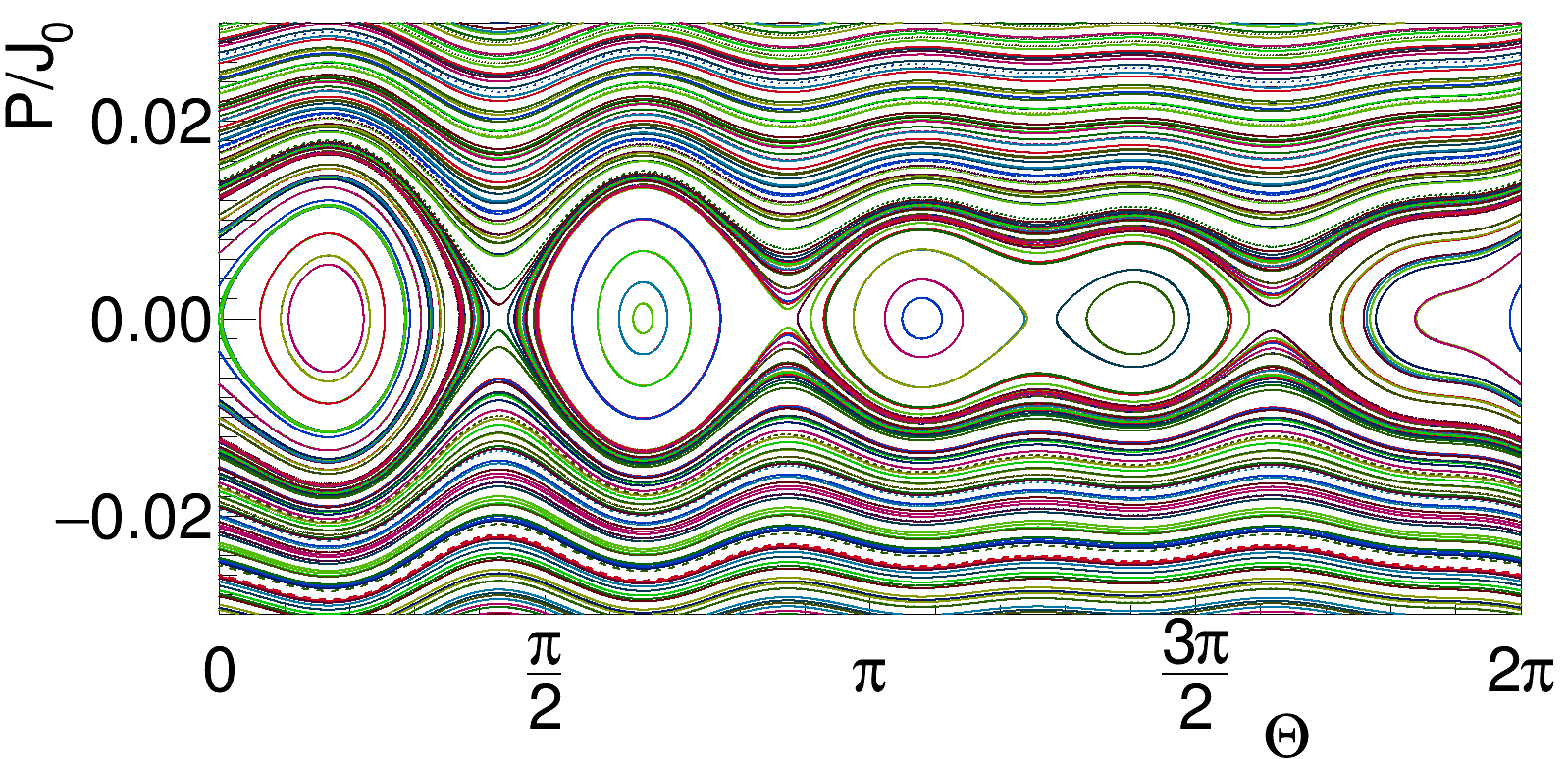 Figure 1
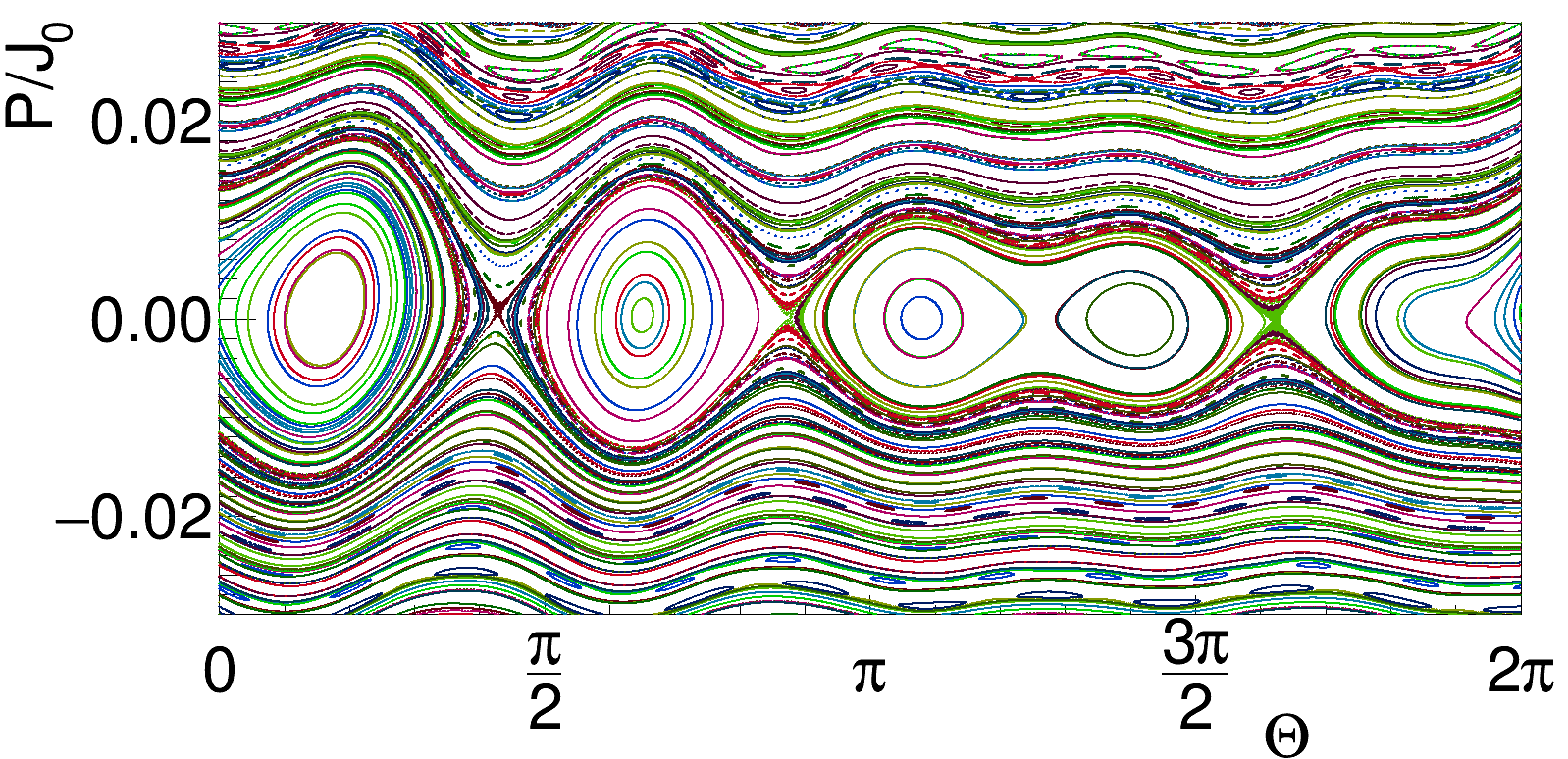 Figure 2
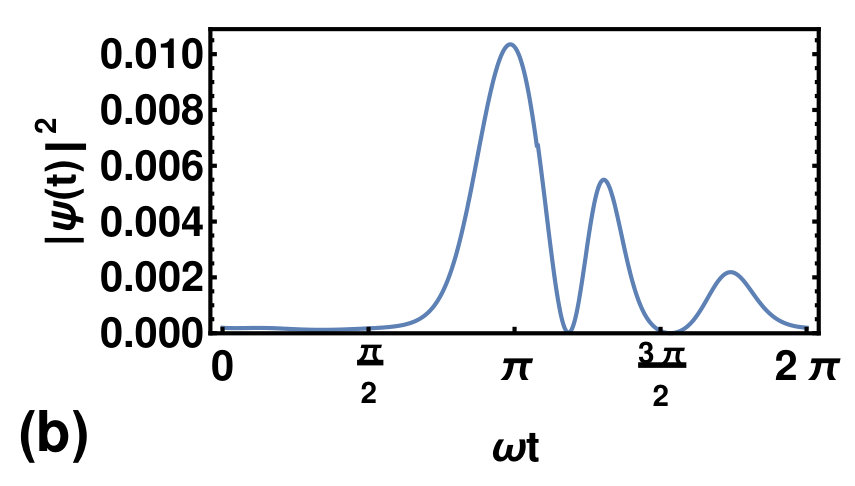 Figure 3
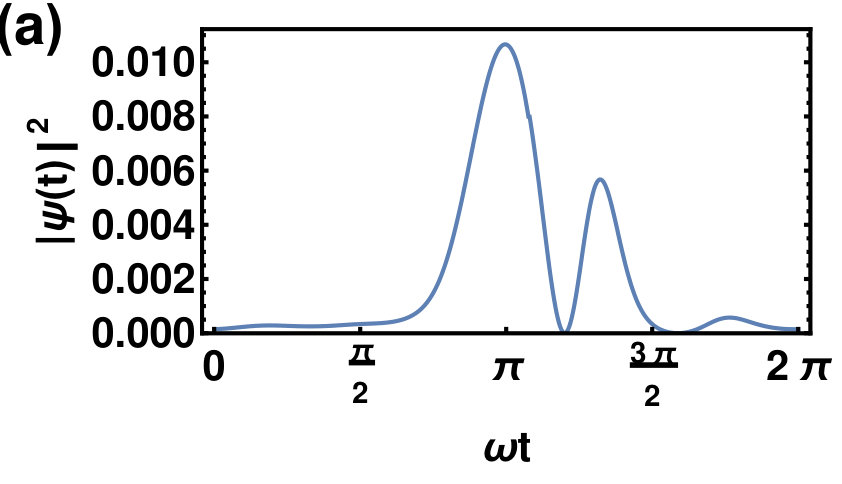 Figure 4
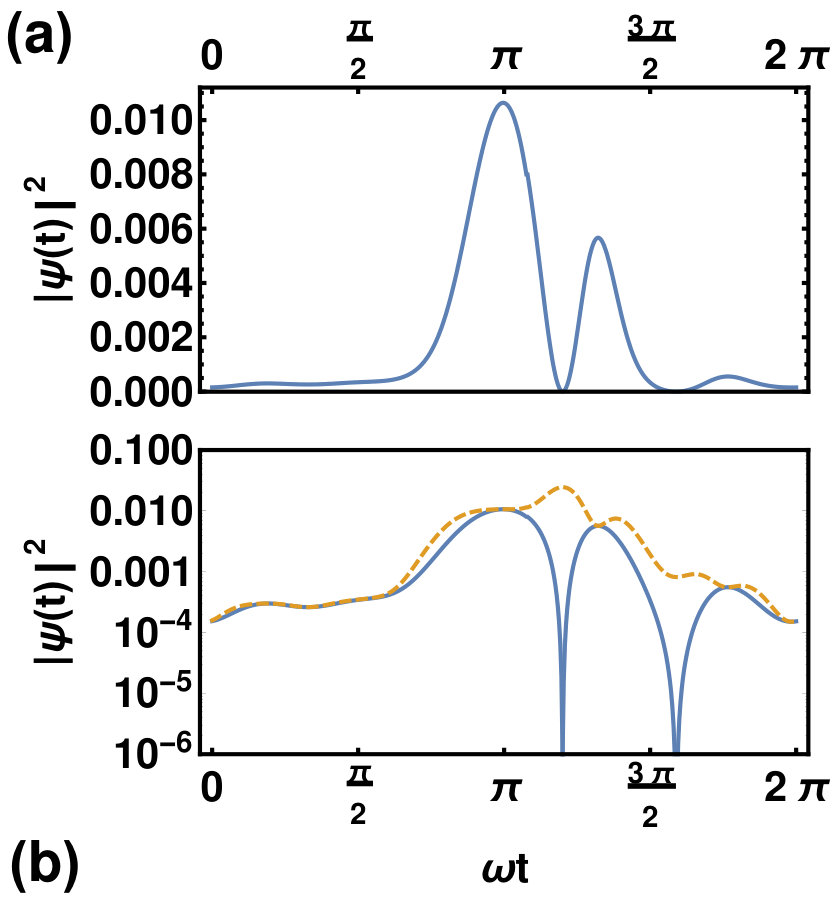 Figure 5
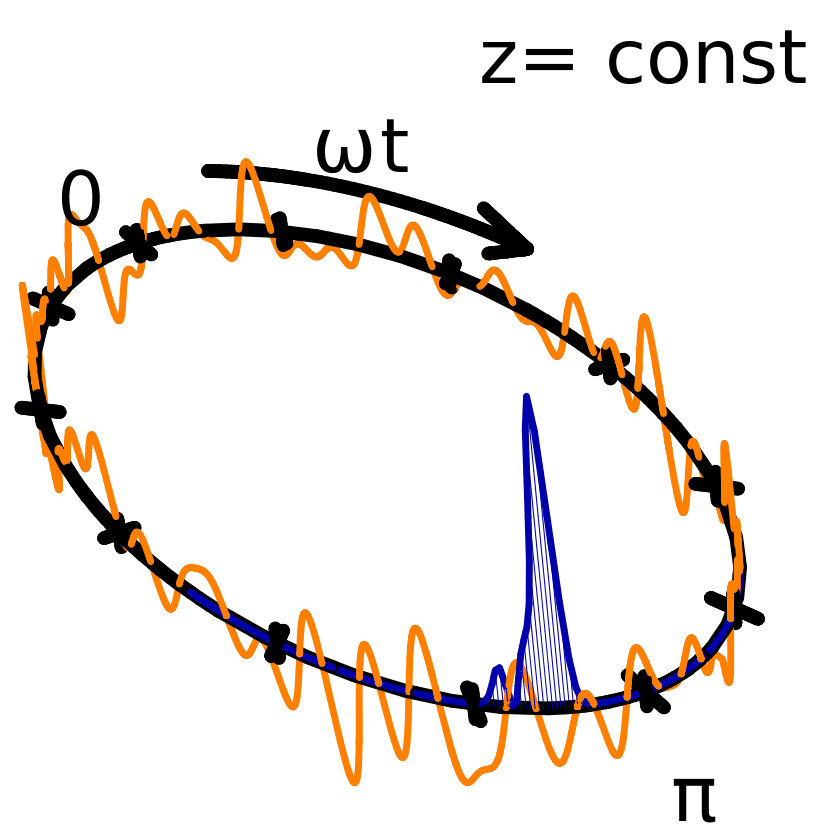 Figure 6
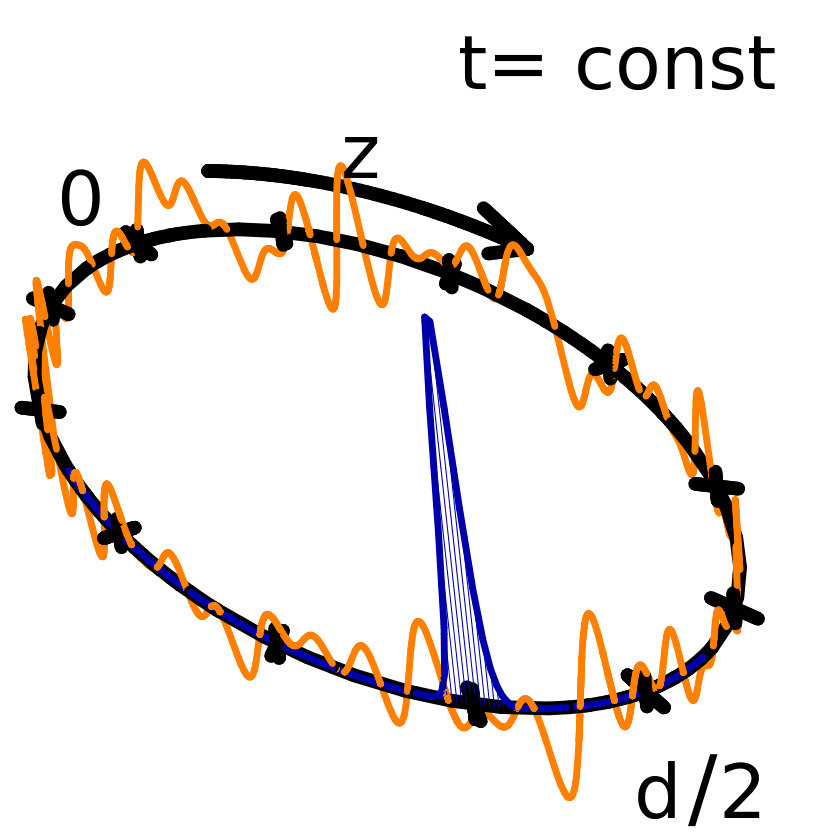 Figure 7
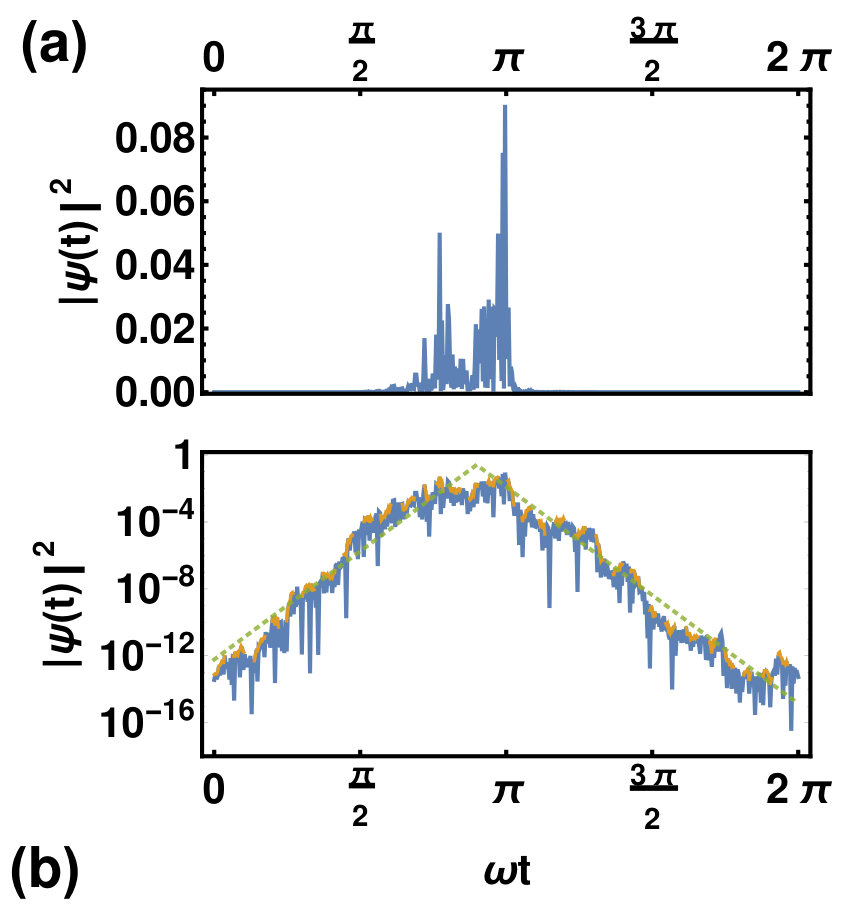 Figure 8
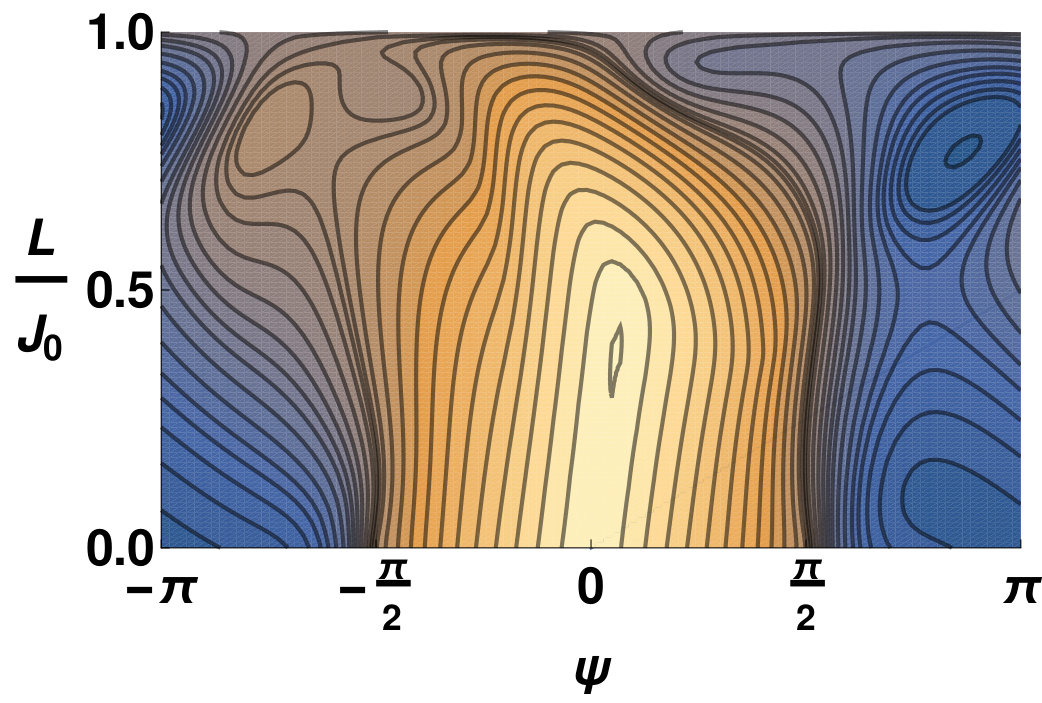 Figure 9
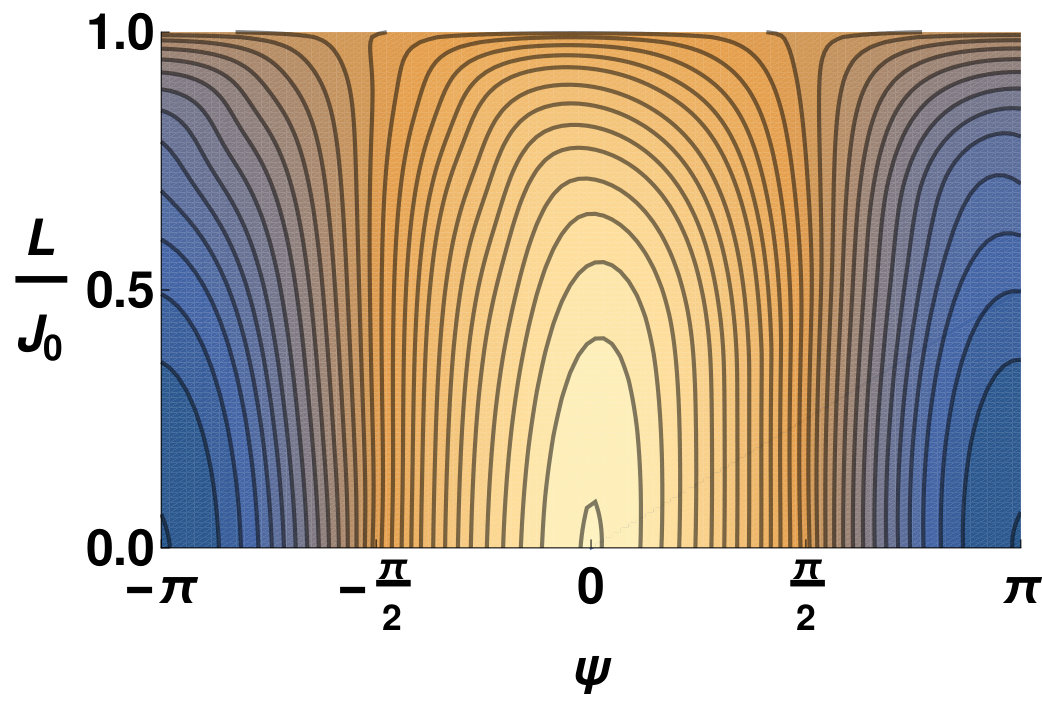 Figure 10
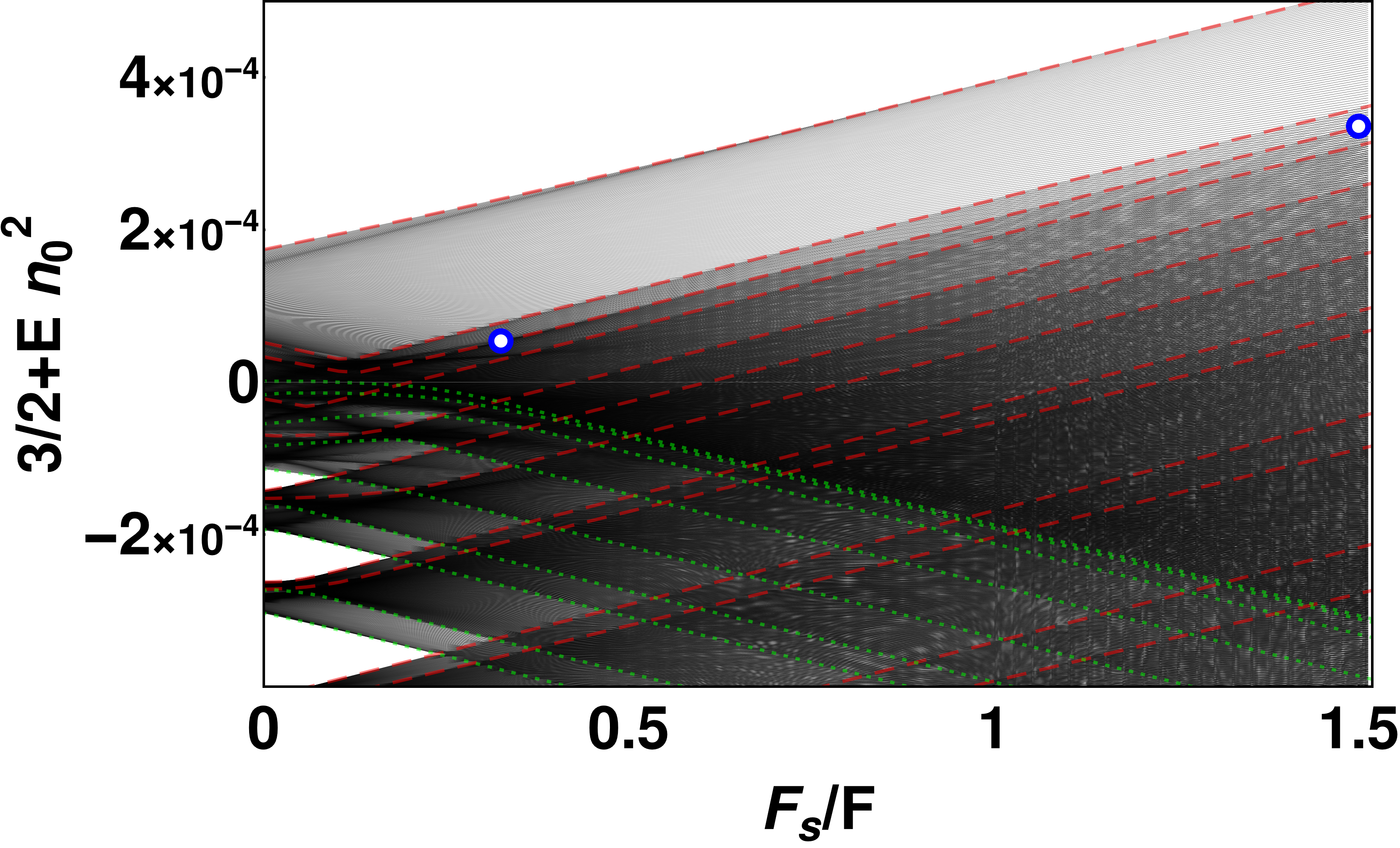 Figure 11
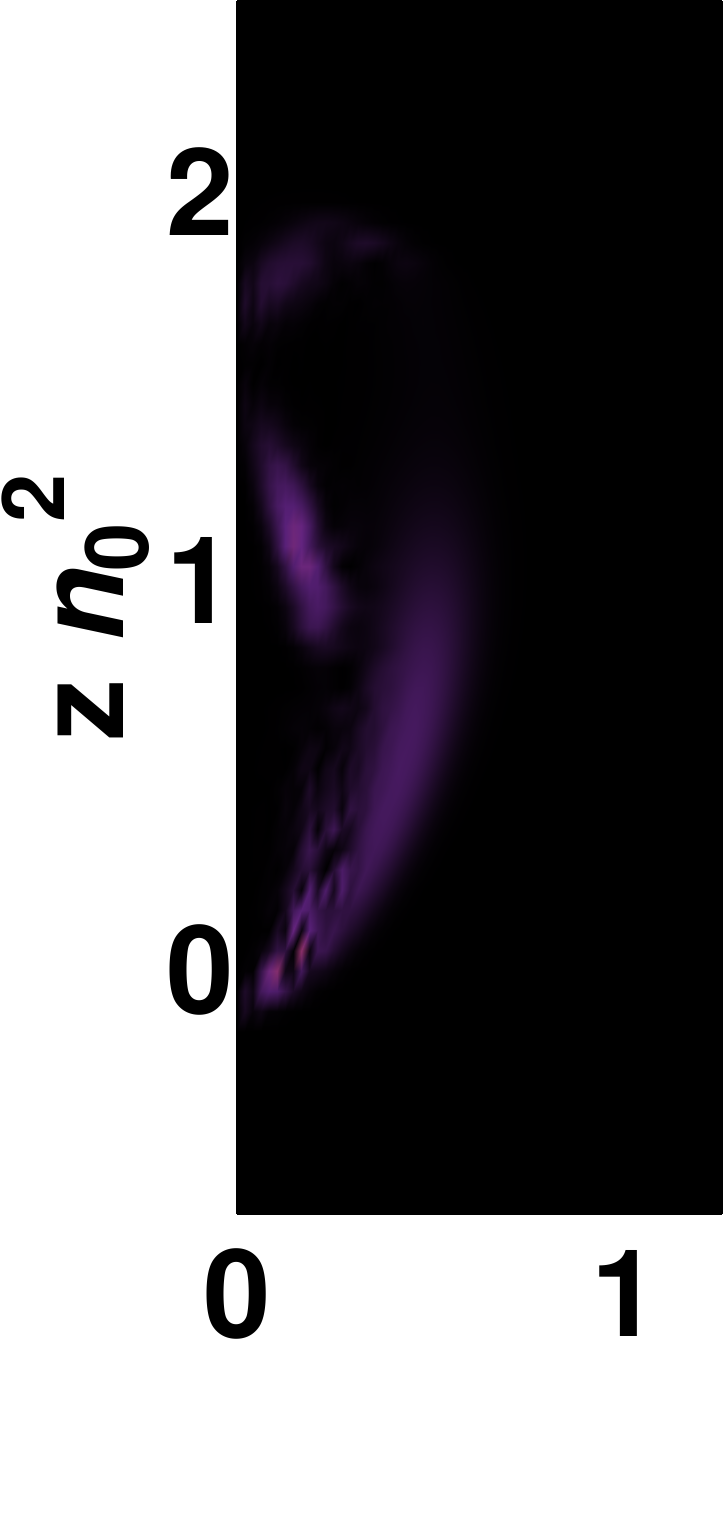 Figure 12
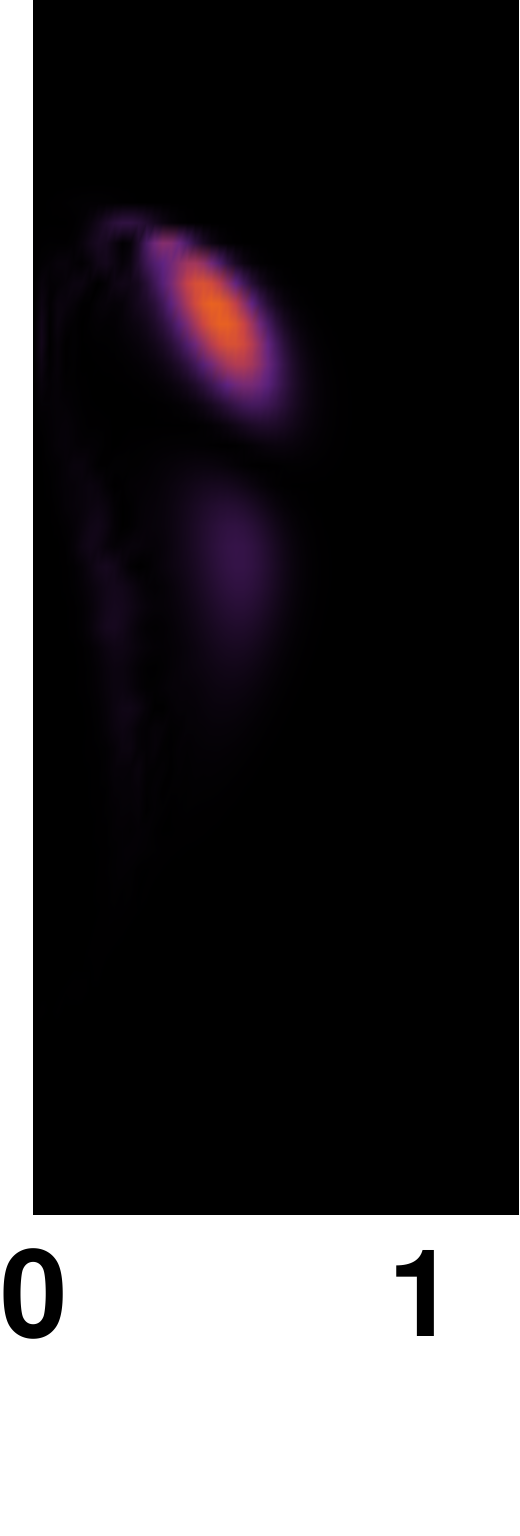 Figure 13
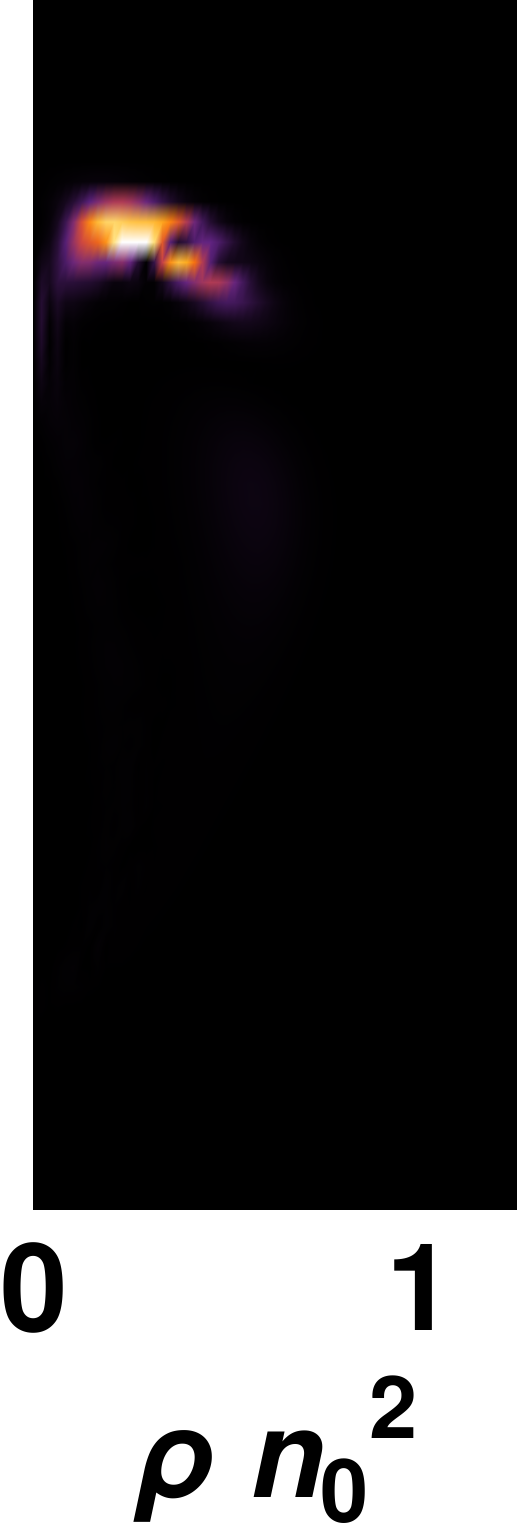 Figure 14
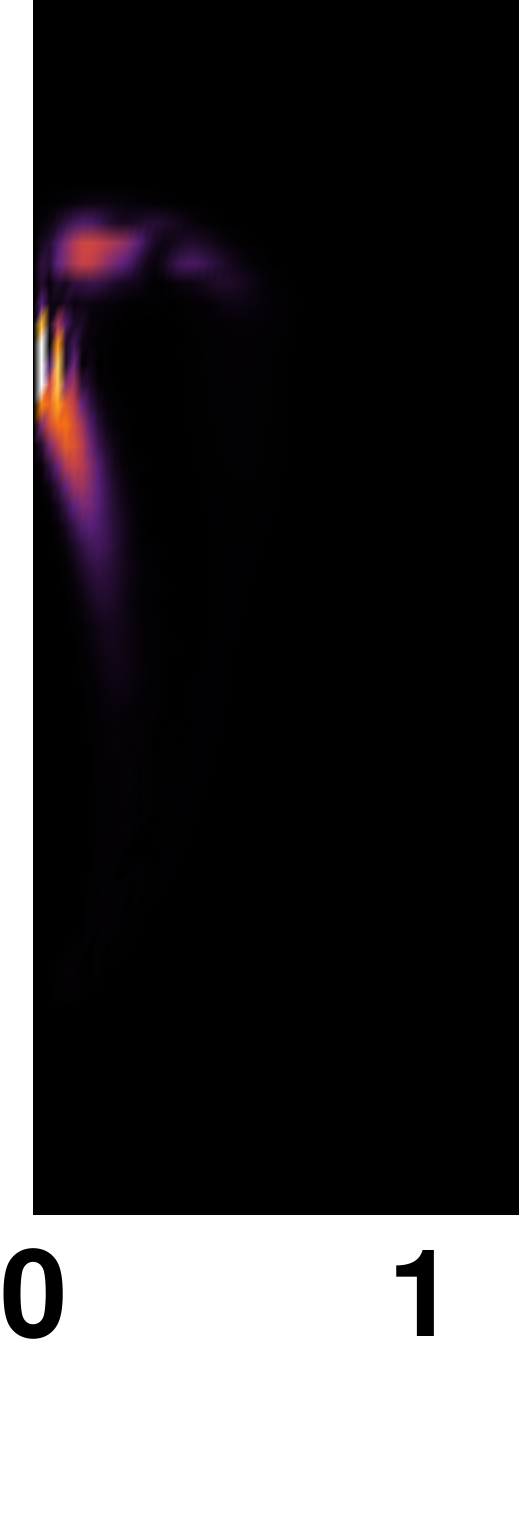 Figure 15
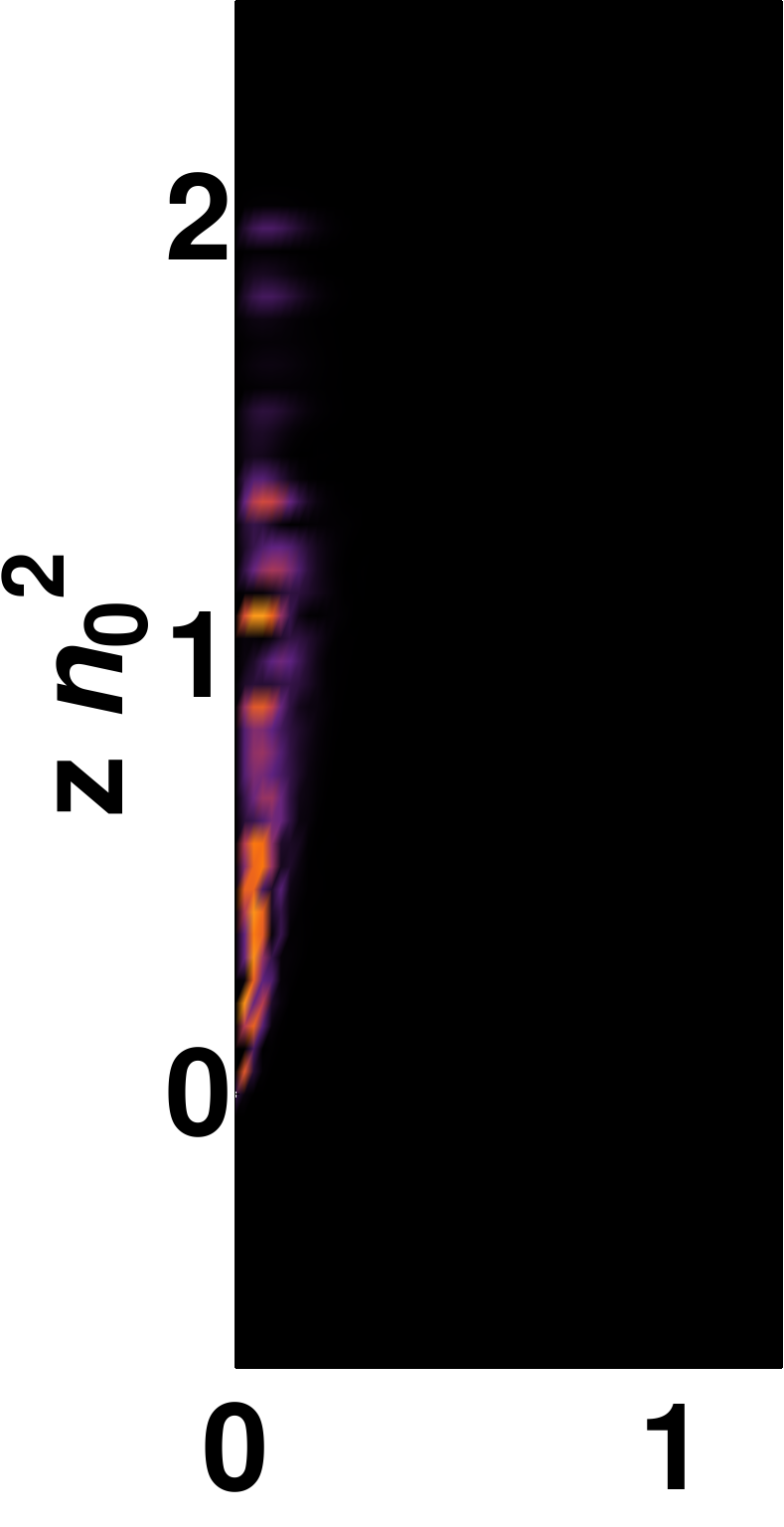 Figure 16
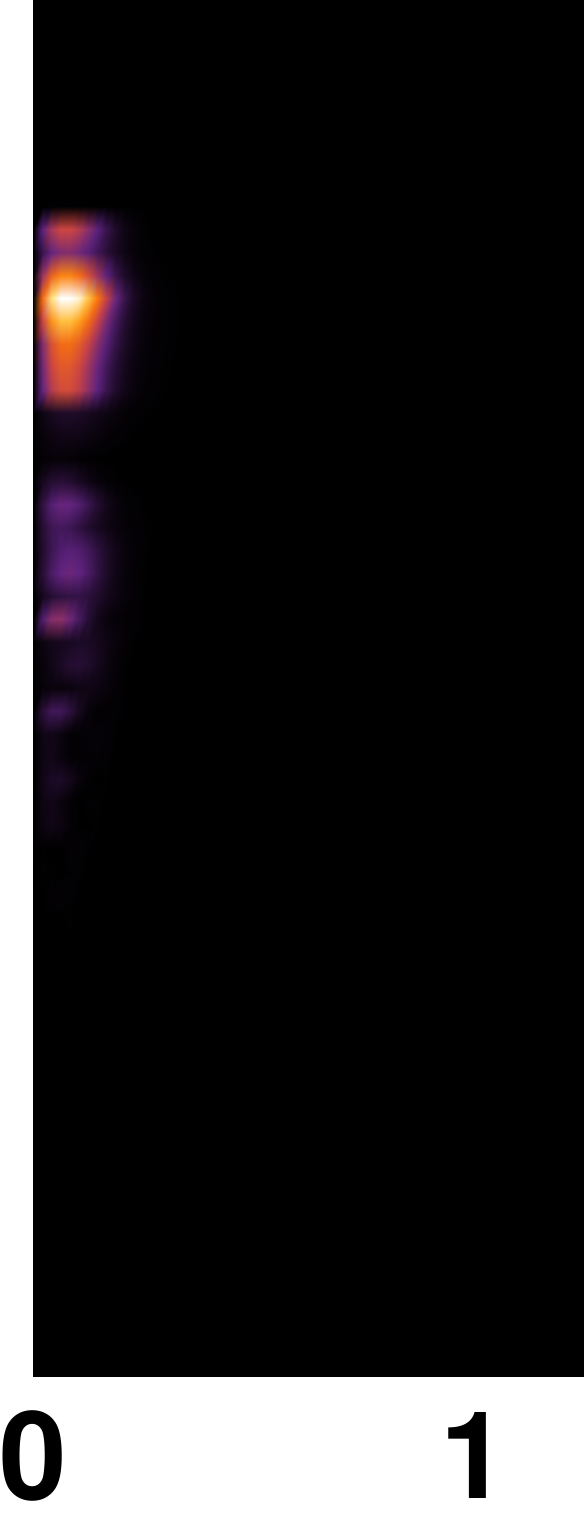 Figure 17
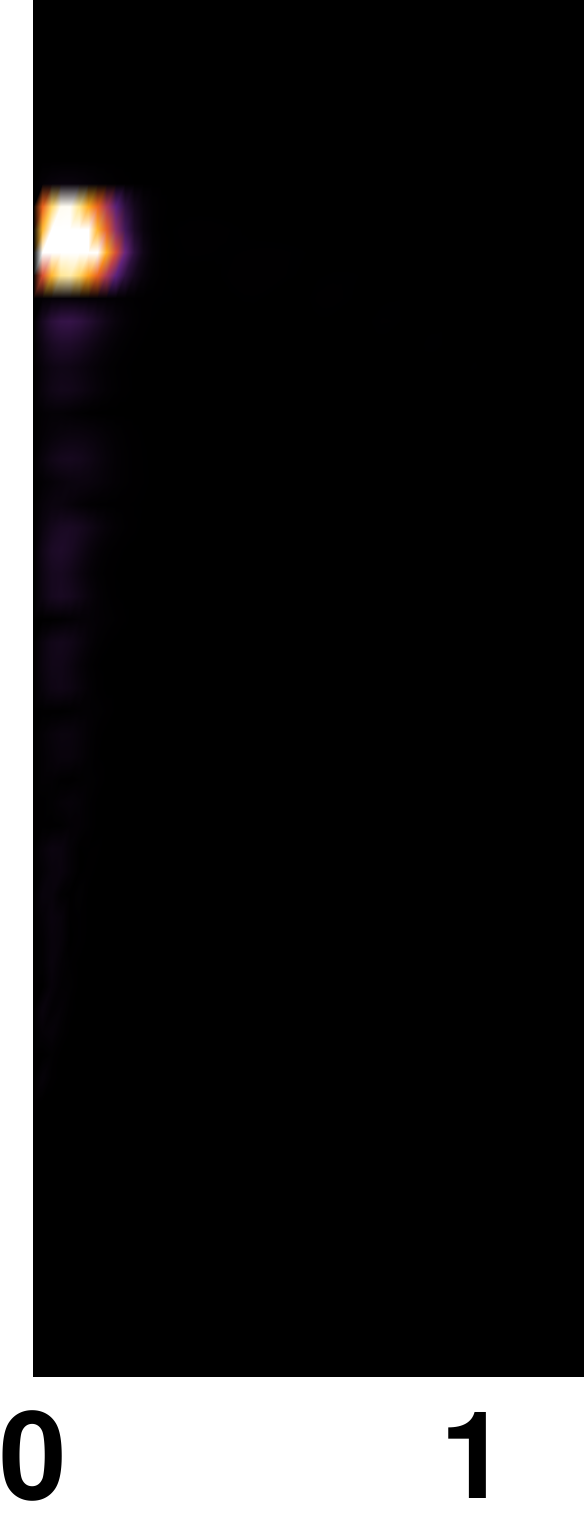 Figure 18
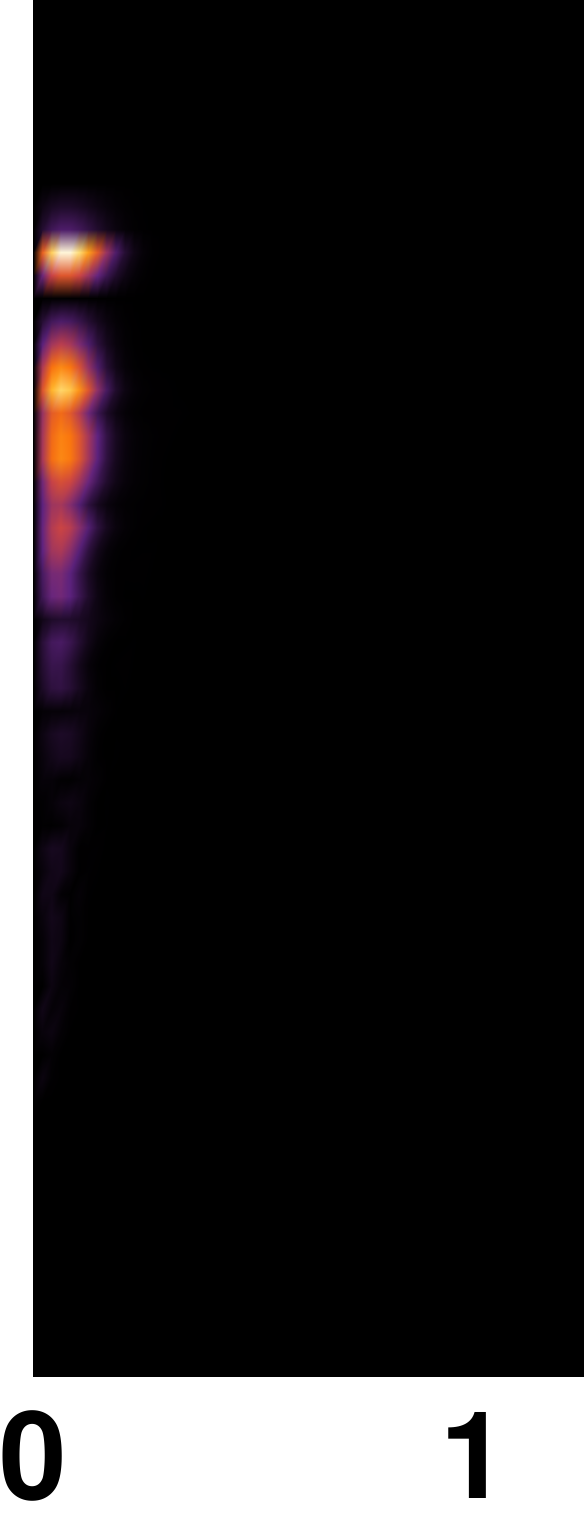 Figure 19
Peer Reviews
No public reviews on file for this paper yet. If you reviewed it on a platform where reviews are public (OpenReview, ICLR, NeurIPS, ICML), you can paste yours below so the community can read it here.
Videos
No videos yet. Explain this paper in a talk, walkthrough, or lecture? Add one.
Anderson localization of a Rydberg electron along a classical orbit
Krzysztof Giergiel
Instytut Fizyki imienia Mariana Smoluchowskiego, Uniwersytet Jagielloński, ulica Profesora Stanisława Łojasiewicza 11, PL-30-348 Kraków, Poland
Krzysztof Sacha
Instytut Fizyki imienia Mariana Smoluchowskiego, Uniwersytet Jagielloński, ulica Profesora Stanisława Łojasiewicza 11, PL-30-348 Kraków, Poland
Mark Kac Complex Systems Research Center, Uniwersytet Jagielloński, ulica Profesora Stanisława Łojasiewicza 11, PL-30-348 Kraków, Poland
Abstract
Anderson localization is related to exponential localization of a particle in the configuration space in the presence of a disorder potential. Anderson localization can be also observed in the momentum space and corresponds to quantum suppression of classical diffusion in systems that are classically chaotic. Another kind of Anderson localization has been recently proposed, i.e. localization in the time domain due to the presence of disorder in time. That is, the probability density for the detection of a system at a fixed position in the configuration space is localized exponentially around a certain moment of time if a system is driven by a force that fluctuates in time. We show that an electron in a Rydberg atom, perturbed by a fluctuating microwave field, Anderson localizes along a classical periodic orbit. In other words the probability density for the detection of an electron at a fixed position on an orbit is exponentially localized around a certain time moment. This phenomenon can be experimentally observed.
pacs:
71.23.An, 32.80.Rm
I Introduction
Transport of a particle in the presence of a disorder potential can stop totally due destructive interference effects. This phenomenon, which is accompanied by exponential localization of eigenstates of a system in the configuration space, is the famous Anderson localization Anderson (1958). It can occur in a variety of different disordered systems ranging from acoustic waves to matter waves of ultra-cold atomic gases tiggelen99 ; Lagendijk2009 ; Müller and Delande (2011).
Classical particle can perform diffusive motion in the phase space if dynamics of a system is chaotic. In the quantum description one can observe Anderson localization in the momentum space that is induced not by external disorder but by underlying chaotic classical dynamics. Such a dynamical Anderson localization, predicted in the kicked rotor system, is extensively investigated both theoretically and experimentally Moore et al. (1995); Fishman et al. (1982); Casati et al. (1989); Lemarié et al. (2009); Manai et al. (2015).
Recently it has been shown that Anderson localization can also occur in the time domain in systems that are perturbed by a force fluctuating in time Sacha (2015b); sacha_delande16 ; DelandeMoralesSacha . This phenomenon is related to time crystals, i.e. systems which can spontaneously switch to periodic motion Wilczek (2012); Li et al. (2012a). While it is not easy to find a system that spontaneously moves when it is prepared in the ground state, models of time crystals with the help of periodically driven systems are interesting and can reveal new phenomena Chernodub (2013); Wilczek (2013a); Bruno (2013a); Wilczek (2013b); Bruno (2013b); Li et al. (2012b); Bruno (2013c); Guo2013 ; Watanabe and Oshikawa (2015); Sacha (2015a); khemani16 ; else16 ; Keyserlingk16 ; yao17 ; Weidinger16 ; zhang16 ; choi16 ; Syrwid17 . If a periodic perturbation starts fluctuating in time, then, in analogy to space crystals with disorder, Anderson localization of a system in the time domain can be observed. In other words, a detector situated at a certain position clicks with a probability that is localized exponentially around a certain moment in time. Anderson localization in the time domain is a general phenomenon that can be observed in many different systems where periodic driving starts behaving randomly sacha_delande16 . Despite the fact the time degree of freedom forms a one-dimensional space, it is possible to realize Anderson localization in the time domain with properties of multi-dimensional disorder systems where phase transition between localized and de-localized states can be observed DelandeMoralesSacha .
In the present paper we investigate Anderson localization in the time domain in a Rydberg atom perturbed by a fluctuating microwave field. Rydberg atom driven by a monochromatic microwave field can reveal non-spreading wave-packet motion where a resonantly driven electron is represented by a localized wave-packet that moves periodically along a classical orbit and does not spread. This phenomenon, discovered some time ago zas ; hen+92 ; hol95 ; del+94 ; ibb ; buch+95 ; dzb95 ; zdb95 ; sacha98 ; delande02 and observed in experiments maeda04 ; maeda07 ; maeda09 ; wyker12 , can be realized in different dynamical systems if non-linear classical resonances can form Buchleitner et al. (2002). Switching from a monochromatic microwave field to a randomly fluctuating field we show that, in the frame moving with an electron along a classical orbit, Anderson localization takes place. In the laboratory frame, probability for detection of an electron at a given point on the orbit is localized exponentially around a certain moment of time. Such a behavior is repeated periodically in analogy to Anderson localization of a particle in a space crystal with disorder and with periodic boundary conditions where by traveling periodically around the ring, one observes periodically an exponentially localized density profile.
The paper is organized as follows. In Sec. II we explain the phenomenon of the Anderson localization in the time domain in a one-dimensional (1D) model of an Hydrogen atom. Then, in Sec. III we switch to the 3D case and analyze realistic description of the system. Sec. IV is devoted to conclusions.
II 1D model
Let us consider an Hydrogen atom perturbed by a linearly polarized microwave field in the 1D model Buchleitner et al. (2002). The classical Hamiltonian of the system, in the dipole approximation and in the atomic units, reads
[TABLE]
where . Such a 1D model can describe classical elliptical orbits degenerated to a line along the field polarization axis. is a parameter that allows one to change the amplitude of the perturbation and is a periodic function which describes time dependance of the electric field. The electric field is assumed to oscillate with a frequency but between and it performs random fluctuations, i.e.,
[TABLE]
where Fourier components are random numbers.
We are interested in a resonant driving of the atom when the frequency matches the frequency of electron motion on an unperturbed orbit. The description of the system close to the resonant trajectory can be significantly simplified if we employ the secular perturbation theory Buchleitner et al. (2002); Lichtenberg_s . First, we switch to the action-angle variables, and , of the unperturbed H atom that results in the following form of the Hamiltonian
[TABLE]
where ’s are the derivatives of the ordinary Bessel functions. The resonant condition means that
[TABLE]
In the moving frame, the position of an electron is a slow variable if we choose the conjugate momentum close to the resonant value . Then, averaging the Hamiltonian over time leads to the effective time-independent Hamiltonian
[TABLE]
where the constant term has been omitted. The first order secular approximation (8) is the accurate description of the system provided the second order contribution (that scales like ) is small as compared to the first order term Lichtenberg_s . It implies we may restrict ourselves to the first order effective Hamiltonian if — for discussion of the validity of the secular approximation in the context of the Anderson localization in time see appendix in sacha_delande16 .
Before we move on, we would like to discuss the secular Hamiltonian (8) and conditions necessary to observe Anderson localization we are interested in. If was a simple single harmonic function like , then we would deal with a monochromatic resonant driving and well known non-spreading wave-packets can be realized Buchleitner et al. (2002). That is, for we would deal with a single localized wave-packet moving along a Kepler orbit with the period — classically, in the laboratory frame, an electron would move along a Kepler orbit with small oscillations around it if the initial momentum . For , superposition of such wave-packets would move along a Kepler orbit — each wave-packet evolves with a period but each of them is delayed with respect to its neighbor by Buchleitner et al. (2002). We will see that in order to observe the Anderson localization we need to consist of many harmonics at the same time. Then, the secular Hamiltonian (8) is the result of the coherent addition of resonant terms between the spatial harmonics of an unperturbed electronic motion and the corresponding temporal harmonics of the disordered driving amplitude. It also indicates that the electric dipole moment expressed in terms of the action-angle variables must possess many spatial harmonics, cf. Eq. (6). It is possible provided an electron moves along an elliptical orbit and approaches closely to the nucleus. Thus, circular Kepler orbits are not suitable for realization of the Anderson localization in the time domain.
Harmonics of an unperturbed motion of an electron decrease with like , cf. Eq. (6). If the fluctuations of the microwave field are engineered so that the components fulfill
[TABLE]
for and zero otherwise, and are random numbers chosen uniformly from the interval , we end up with the effective Hamiltonian,
[TABLE]
that describes a particle with the negative effective mass in the disorder potential characterized by the variance and the finite correlation length sacha_delande16 . Note, that is not the amplitude of the electric field because the microwave field is not monochromatic and . The intensity of the microwave field reads
[TABLE]
In the present paper we have chosen the fluctuations of the microwave field that lead to the disorder potential (11) as an example. By a proper choice of one can realize many different effective disorder potentials.
In the case of the quantum version of the Hamiltonian (10), i.e. quantizing the action angle variables (where becomes the principal quantum number of an H atom), we can expect Anderson localization. In 1D systems the presence of a disorder results in Anderson localization regardless how weak the disorder is. In the present case, the configuration space extends from to due to the periodic boundary conditions. Therefore, Anderson localization can be observed if the localization length . In the weak disorder limit, i.e. when where is an energy eigenvalue and is the so-called correlation energy, can be calculated by means of the Born approximation Müller and Delande (2011); Kuhn et al. (2007) and it reads
[TABLE]
for . Note, that the effective mass is negative, thus, the Hamiltonian (10) is bounded from above not from below as in a usual case. Consequently, the greatest eigenvalue of (10) corresponds to the strongest localization. The localization length increases with a decrease of . The validity of the Born approximation requires the localization length to be much greater than the correlation length that, together with the requirement , can be easily fulfilled for sufficiently large and with an appropriate choice of .
Anderson localization in the moving frame that is predicted with the help of the Hamiltonian (10) means an exponential localization in the time domain when we switch to the laboratory frame Sacha (2015b); sacha_delande16 ; DelandeMoralesSacha . Indeed, in the laboratory frame a localized wavepacket will move along an unperturbed classical orbit. If we ask how the probability for the detection of an electron, at a fixed position on an orbit, changes in time, it will turn out that the exponential localization in the space translates into an exponential localization in time around a certain because for a fixed position in the laboratory frame the relation between and is linear, i.e. . However, if we fix and ask whether an electron is also exponentially localized in the configuration space, the answer is no because the transformation from the space to the Cartesian space is nonlinear, cf. (3) and (6). In Fig. 1 we illustrate schematically the idea of Anderson localization in the time domain and compare it to the standard Anderson localization in the configuration space in systems with spatially disordered potentials and periodic boundary conditions.
We have obtained the prediction for Anderson localization in the time domain by means of the effective classical Hamiltonian and subsequent quantization of the classical action angle variables. However, the same results can be obtained starting with the full quantum Hamiltonian and applying a quantum version of the secular approach zas . The Hamiltonian (1) is time periodic which means that although there are no energy eigenstates, one can find a kind of stationary states that are time periodic eigenfunctions of the so-called Floquet Hamiltonian Buchleitner et al. (2002),
[TABLE]
where are real eigenvalues which are called quasi-energies of a system. The Floquet theorem shirley65 , that is used here, is in a full analogy to the Bloch theorem known in condensed matter physics but we deal with a system periodic in time not in space.
Performing time-dependent unitary transformation , where is the operator of the principal quantum number of an Hydrogen atom, we switch to the moving frame similarly as in the classical approach. Then, the matrix elements of the resulting Floquet Hamiltonian in the hydrogenic eigenbasis read,
[TABLE]
Averaging the last term of (18) over time we obtain the quantum version of the effective Hamiltonian zas ,
[TABLE]
where the operator has been omitted because for the time-independent effective Hamiltonian it would only introduce a shift of energy eigenvalues. The effective Hamiltonian (19) corresponds to a single block of the matrix of the Floquet Hamiltonian in the basis spanned by the hydrogenic eigenvectors and the Fourier functions , i.e. to the block with . The omission of couplings between the chosen block and other blocks is valid if we want to describe the Hilbert subspace of states with principal quantum numbers close to the resonant value , where , and if .
Numerical diagonalization of (19) allows us to obtain Floquet eigenstates of the system in the moving frame within the secular approximation. Switching to the laboratory frame, , we expect that time evolution of the probability density for the detection of an electron at a fixed position will reveal exponential localization in time if Anderson localization takes place.
In Figs. 2-3 we show how the probability for the detection of an electron at the position of the nucleus of an H atom changes in time for two different sets of the parameters. Figure 2 presents the results for the case of where the Anderson localization can be described with the help of the Born approximation while in Fig. 3 we have used values of the parameters that are attainable in present-day laboratories. In order to afford small correlation length of the effective disordered potential, , a big value of is needed. Then, however, the value of must be decreased to stay in the validity range of the effective Hamiltonian because the intensity (13) increases with . As the result, high excitation of a Hydrogen atom is necessary in order to observe the Anderson localization in time. In Fig. 3 we have chosen an experimentally attainable value . Then for and suitable choice of the effective Hamiltonian is valid and we can see signatures of Anderson localization in the time domain.
We would like to note that the spectra obtained in diagonalization of the quantum secular Hamiltonian (19) and the quantized version of the classical secular Hamiltonian (10) are identical and the same is true for the time evolution of the probabilities for the detection of an electron at the nucleus that are shown in Figs. 2-3.
III 3D description
The 1D model allowed us to present the idea of Anderson localization in the time domain in a Rydberg atom and to explain the classical and quantum secular approximation methods. In this section we show that the Anderson localization predicted in Sec. II survives when we switch to the 3D description. Moreover, the 3D case allows also for observation of Anderson localization of an electron not only on an alongated one-dimensional orbit but also on an elliptical trajectory.
We consider an H atom perturbed by a linearly polarized microwave field, similarly as in Sec. II, but now we add also a static electric field along the polarization axis of the microwave field, i.e. the Hamiltonian of the system reads with
[TABLE]
where fulfills (4) and stands for the static electric field amplitude. Projection of the angular momentum of an electron on the axis is conserved and in the following we assume it is zero.
Let us begin with the classical description and perform the canonical transformation to the action angle variables . The canonically conjugate variables and are the same as in the 1D model, i.e. they describe the energy of an unperturbed electron and its position on a Kepler ellipse, respectively. The total angular momentum is conjugate to and the latter is the angle between the major axis of a Kepler ellipse and the axis sacha98 . In the frame moving with an electron, i.e. and where , and vary slowly in the vicinity of a resonant orbit, i.e. when . The total angular momentum and the angle are also slowly varying variables if and delande02 . Thus, similarly as in the 1D model, we may apply the secular approximation and obtain the classical effective Hamiltonian in the rotating frame by averaging the original Hamiltonian over time that yields
[TABLE]
where
[TABLE]
and is the eccentricity of a Kepler ellipse. Similarly as in (8) the constant term has been omitted.
The Hamiltonian (22) describes electronic motion on a resonant Kepler orbit and a slow precession of the orbit itself, i.e. slow changes of the variables and . The motion in the space effectively decouples from the slow motion in the space and the semiclassical quantization of the system can be performed in the spirit of the Born-Oppenheimer approximation sacha98 ; delande02 . That is, first quantize the and variables, for frozen and , and then use the results to construct an effective Hamiltonian for and which are subsequently qunatized. This procedure is particularly simple if we are interested in eigenstates which are concentrated, in the semiclassical picture, around a stable fixed point in the phase space. Then, we may treat (22) as a 1D Hamiltonian where and are fixed parameters.
In Sec. II we have analyzed Anderson localization of an electron on an orbit degenerated into a line within the 1D model. However, such an orbit is not stable in the 3D description if only a linearly polarized microwave field is applied. In order to change the structure of the classical phase space and make a stable fixed point we have included the static electric field in (20). If is sufficiently big the orbit with oriented along the microwave field polarization axis does not precess and it keeps its shape in time sacha98 ; delande02 , see Fig. 4. Then, the coefficients (24) become
[TABLE]
and the Hamiltonian (22) reduces to the 1D effective Hamiltonian (8). With like in (9) we reproduce the previous 1D predictions. This is illustrated in Fig. 5 where we present the phase space portrait generated by the 1D secular Hamiltonian (10) and the stroboscopic picture of the phase space obtained in the full 3D classical evolution.
Quantum results that we will present in the following are achieved by means of the quantum version of the 3D secular Hamiltonian,
[TABLE]
where is a hydrogenic eigenstate with the principal quantum number , total angular momentum and the projection of the angular momentum on the axis equal zero, cf. the 1D counterpart (19). Diagonalization of (LABEL:qheff_3d) results in a bunch of quasi-energy levels as presented in Fig. 6 versus . In order to identify desired eigenstates it is very helpful to perform semiclassical quantization of the Hamiltonian (22) within the Born-Oppenheimer approximation — the obtained quasi-energy levels follow very closely desire levels of the Hamiltonian (LABEL:qheff_3d), see Fig. 6.
In Fig. 7 we present time evolution of the probability density for the detection of an electron at the position of a nucleus of an H atom for two different Floquet eigenstates related to two different values of the static electric field amplitude . Panel (a) corresponds to the parameters for which an electron Anderson localizes along an orbit degenerated into a line which is the 3D counterpart of the case described in Sec. II in the 1D model, cf. Fig. 3. Panel (b) is related to the case where the classical fixed point is located at , see Fig. 4. Then, an electron localizes along an elliptical trajectory. Evolution of the probability densities in the configuration space is illustrated in Fig. 8 where one can see different shapes of the orbits a localized electron moves on. The major axis of an elliptical orbit visible in bottom panels of Fig. 8 is not exactly oriented along the axis. Therefore, due to the axial symmetry, one can see two parts of an ellipse, i.e. a part corresponding to, e.g., and a part related to but reflected with respect to plane.
IV Conclusions
Anderson localization in the time domain is a localization phenomenon that can be observed in time evolution of a system exposed to a fluctuating force. Probability density for detection of a system at a fixed position in the configuration space becomes exponentially localized around a certain moment of time due to the presence of disorder in time Sacha (2015b); sacha_delande16 ; DelandeMoralesSacha .
In the present publication we show that a Rydberg atom perturbed by a fluctuating microwave field constitutes a suitable system for realization of Anderson localization in the time domain. Driving of a Rydberg electron by a superposition of a monochromatic microwave field and its few harmonics with random relative phases leads to Anderson localization of an electron along a classical Kepler orbit. That is, the probability for measurement of the electron, e.g., close to the nucleus is exponentially localized around a certain moment of time.
We analyze a Rydberg atom and present a range of parameters for which Anderson localization in the time domain can be observed experimentally. It seems that the phenomenon can be realized in a laboratory very soon. There are two groups which succeeded in creation of the so-called non-spreading wavepackets in Rydberg atoms driven by microwave fields maeda04 ; maeda07 ; maeda09 ; wyker12 . Realization of the Anderson localization in time requires modification of the microwave fields only, i.e., switching from the monochromatic fields to fields that fluctuate in time. It would be the first experimental demonstration of Anderson localization in the time domain.
Acknowledgments
Support of the National Science Centre, Poland via project No.2016/20/W/ST4/00314 is acknowledged.
The reference list from the paper itself. Each links out to its DOI / PubMed record.
- 1Anderson (1958) P. W. Anderson, Phys. Rev. 109 , 1492 (1958) . · doi ↗
- 2(2) van Tiggelen, B.A. in Diffuse Waves in Complex Media , edited by J.-P. Fouque, NATO Advanced Study Institutes, Ser. C, Vol. 531 (Kluwer, Dordrecht, 1999).
- 3(3) Lagendijk, A., van Tiggelen, B.A. and Wiersma, D.S. Fifty years of Anderson localization. Phys. Today 62 , 24 (2009).
- 4Müller and Delande (2011) C. A. Müller and D. Delande, “Disorder and interference: localization phenomena,” in Lecture Notes of the Les Houches Summer School in Singapore: Ultracold Gases and Quantum Information , Vol. 91 (Oxford Scholarship, 2011) Chap. 9, ar Xiv:1005.0915 . · doi ↗
- 5Moore et al. (1995) F. L. Moore, J. C. Robinson, C. F. Bharucha, B. Sundaram, and M. G. Raizen, Phys. Rev. Lett. 75 , 4598 (1995) . · doi ↗
- 6Fishman et al. (1982) S. Fishman, D. R. Grempel, and R. E. Prange, Phys. Rev. Lett. 49 , 509 (1982) . · doi ↗
- 7Casati et al. (1989) G. Casati, I. Guarneri, and D. L. Shepelyansky, Phys. Rev. Lett. 62 , 345 (1989) . · doi ↗
- 8Lemarié et al. (2009) G. Lemarié, J. Chabé, P. Szriftgiser, J. C. Garreau, B. Grémaud, and D. Delande, Phys. Rev. A 80 , 043626 (2009) , ar Xiv:0907.3411 [quant-ph] . · doi ↗