Non-Unitary Quantum Computation in the Ground Space of Local Hamiltonians
Na\"iri Usher, Matty J. Hoban, Dan E. Browne

TL;DR
This paper extends Kitaev's Hamiltonian construction to include non-unitary evolution and post-selection, exploring the complexity and spectral gap implications of these modifications in quantum Hamiltonian problems.
Contribution
It generalizes Kitaev's construction to non-unitary and post-selected quantum processes, analyzing their impact on computational complexity and spectral gaps.
Findings
Post-selection probability can be exponentially small while the spectral gap decreases polynomially.
The generalized construction remains consistent under tame post-selection.
Numerical evidence shows no immediate relation between post-selection probability and spectral gap size.
Abstract
A central result in the study of Quantum Hamiltonian Complexity is that the k-Local hamiltonian problem is QMA-complete. In that problem, we must decide if the lowest eigenvalue of a Hamiltonian is bounded below some value, or above another, promised one of these is true. Given the ground state of the Hamiltonian, a quantum computer can determine this question, even if the ground state itself may not be efficiently quantum preparable. Kitaev's proof of QMA-completeness encodes a unitary quantum circuit in QMA into the ground space of a Hamiltonian. However, we now have quantum computing models based on measurement instead of unitary evolution, furthermore we can use post-selected measurement as an additional computational tool. In this work, we generalise Kitaev's construction to allow for non-unitary evolution including post-selection. Furthermore, we consider a type of post-selection…
Click any figure to enlarge with its caption.
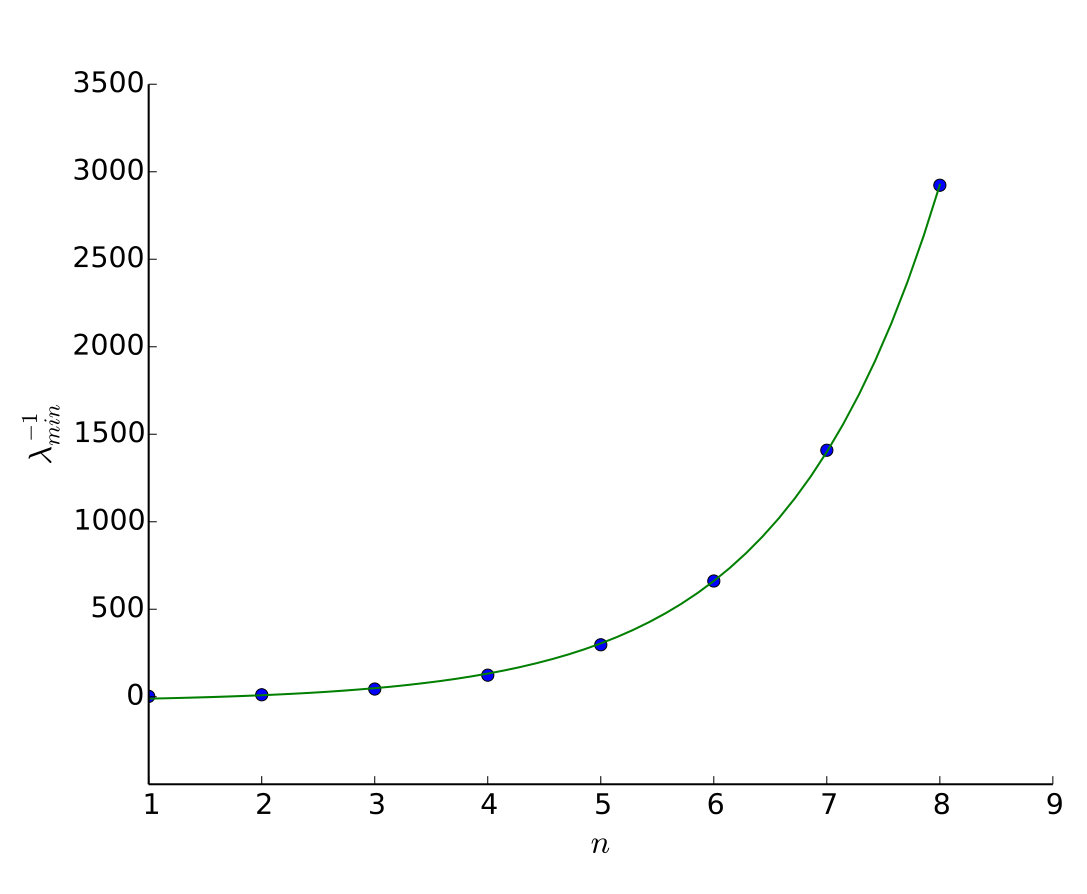 Figure 1
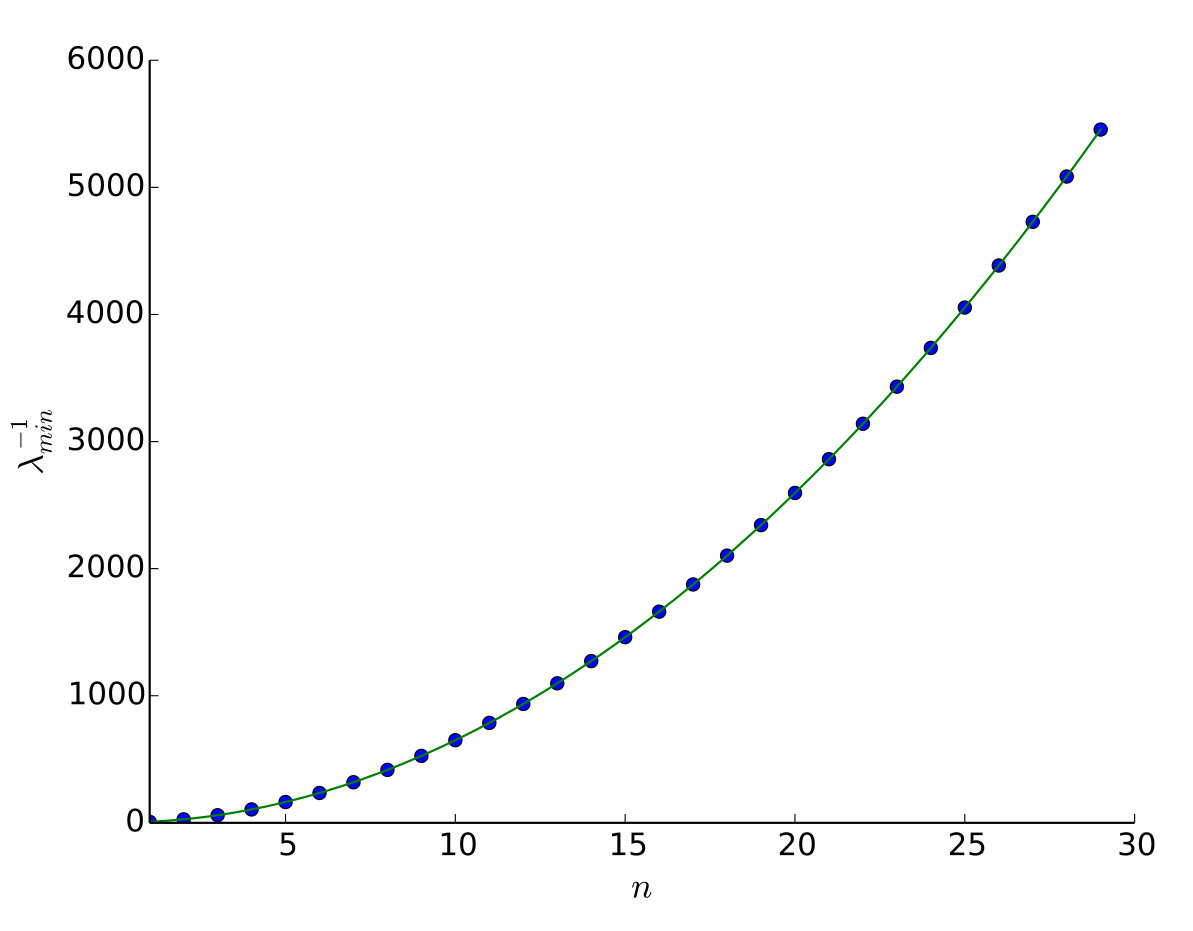 Figure 2
Peer Reviews
No public reviews on file for this paper yet. If you reviewed it on a platform where reviews are public (OpenReview, ICLR, NeurIPS, ICML), you can paste yours below so the community can read it here.
Videos
No videos yet. Explain this paper in a talk, walkthrough, or lecture? Add one.