A distance formula related to a family of projections orthogonal to their symmetries
Ilya M. Spitkovsky

TL;DR
This paper derives an exact formula for the distance between a projection and a specific set of projections related to a hermitian involution in a Hilbert space, expanding understanding of projection distances in operator algebras.
Contribution
It introduces a precise distance formula involving the norm of eue for projections orthogonal to symmetries, within the algebra generated by e and u.
Findings
Derived an exact formula for the projection distance
Connected the distance to the norm of eue
Enhanced understanding of projection relations in operator algebras
Abstract
Let u be a hermitian involution, and e an orthogonal projection, acting on the same Hilbert space. We establish the exact formula, in terms of the norm of eue, for the distance from e to the set of all orthogonal projections q from the algebra generated by e,u, and such that quq=0.
Click any figure to enlarge with its caption.
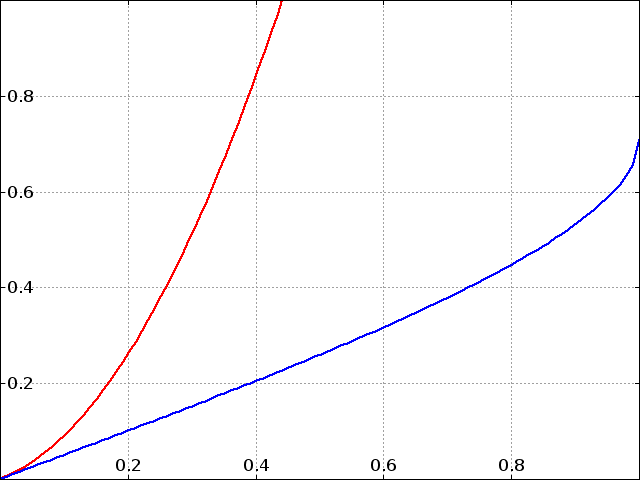 Figure 1
Peer Reviews
No public reviews on file for this paper yet. If you reviewed it on a platform where reviews are public (OpenReview, ICLR, NeurIPS, ICML), you can paste yours below so the community can read it here.
Videos
No videos yet. Explain this paper in a talk, walkthrough, or lecture? Add one.
Taxonomy
TopicsMatrix Theory and Algorithms · Mathematical Inequalities and Applications · Advanced Optimization Algorithms Research
A distance formula related to a family of projections orthogonal to their symmetries
Ilya M. Spitkovsky
Division of Science, New York University Abu Dhabi (NYUAD)
Saadiyat Island, P.O. Box 129188 Abu Dhabi, UAE
Abstract
Let be a hermitian involution, and an orthogonal projection, acting on the same Hilbert space . We establish the exact formula, in terms of , for the distance from to the set of all orthogonal projections from the algebra generated by , and such that .
keywords:
orthogonal projection , involution , -algebra , -algebra
MSC:
[2010] 47A05 , 47A30
\definecolor
refkeyrgb0,1,1 \definecolorlabelkeyrgb1,0,0
1 Introduction
Let be a Hilbert space and let stand for the -algebra of all bounded linear operators acting on . Given a hermitian involution , denote by the set of all orthogonal projections for which .
Theorem 1.2 of [1] can be stated as follows:
Theorem 1
Let be an orthogonal projection such that
[TABLE]
Then there exists for which
[TABLE]
Further, is in the -subalgebra of generated by .
Note that the distance between any two orthogonal projections does not exceed one. So, estimate (1) is useful only when is smaller than the positive root of , that is, approximately .
We will provide an explicit formula for the distance from to the intersection of with the -algebra generated by , as well as for the element on which this distance is attained. No a priori restriction on is needed, and the respective indeed lies in the -algebra generated by whenever .
Theorem 2
Let be, respectively, an orthogonal projection and a hermitian involution. Denote by the eigenspace of corresponding to its eigenvalue . Then the distance from to is one if the range of has a non-trivial intersection with or , and is given by the formula
[TABLE]
otherwise.
For small values of , it is instructive to compare (1) with the Taylor expansion of (2):
[TABLE]
2 Proof of the main result
Using the canonical representation [2] (see also [3] or a more recent survey [4]) of the pair of orthogonal projections, we can find an orthogonal decomposition of into six summands,
[TABLE]
with respect to which
[TABLE]
(Here and in what follows we use the notation for block diagonal matrices with as their diagonal blocks.) Note that in (3) the subspaces and (resp, and ) are the intersections of the range (resp, the kernel) of with and . The (hermitian) operator is the compression of onto . By construction, has its spectrum lying in and are not its eigenvalues.
Elements of with respect to the same decomposition (3) look as
[TABLE]
where , , and the functions are Borel-measurable and essentially bounded on , in the sense of the spectral measure of ([5], see also [3, 4]). Consequently, is an orthogonal projection if and only if , the functions are real-valued, while are complex conjugate, and
[TABLE]
On the other hand, direct computations immediately reveal that condition is equivalent to
[TABLE]
Solving the system of equations (6)–(7) yields
[TABLE]
with being a characteristic function of some subset of and unimodular .
So, elements of have the form
[TABLE]
The rest of the reasoning depends on whether or not the subspaces , are actually present in the decomposition (3).
Case 1. At least one of the subspaces , is different from zero, that is, the range of contains some eigenvectors of .
Since for any of the form (8) the restriction of on is the identity, we then have . Consequently, . Note that in this case also .
Case 2. . Since both given by (4) and given by (8) have zero restrictions onto , we may without loss of generality suppose that in place of (3) simply , and respectively
[TABLE]
So, , where
[TABLE]
Consequently,
[TABLE]
where is the positive eigenvalue of , and ess is understood in the sense of the spectral measure of .
If for some , then the respective equals one, guaranteeing . We should concentrate therefore on elements with . Then we have
[TABLE]
and
[TABLE]
Since is unimodular, to minimize for any given we should take . The respective element is simply
[TABLE]
, and
[TABLE]
In order to justify (2), it remains only to observe that
[TABLE]
But this is indeed the case, since with the matrix
[TABLE]
the eigenvalues of which are zero and .
3 Additional comments
1
Recall [6] that elements of -algebra generated by and are those of the form (5) for which the functions are continuous on and such that , if (). From (10) we therefore conclude that the element on which the distance from to is attained does not lie in if the spectrum of contains [math] or .
On the other hand, due to (11) condition guarantees that , and thus the invertibility of the operator . Moreover, , as was observed in Section 2. So, without loss of generality is given by the first formula in (9), while . From here:
[TABLE]
is positive definite and also lies in , and therefore so does . Along with and , the algebra contains their product
[TABLE]
We conclude from (10) that .
2
The distances from to the sets and may not coincide. To illustrate, consider , and . Then consists of zero and all matrices of the form
[TABLE]
with the parameters satisfying . An easy computation shows that
[TABLE]
So, the distance from to equals and is attained on all the matrices with , that is, having the form
[TABLE]
On the other hand, the algebra generated by and consists simply of all -by- diagonal matrices. The only diagonal matrix lying in is [math], and in full agreement with Theorem 2.
4 Acknowledgments
The author was supported in part by Faculty Research funding from the Division of Science and Mathematics, New York University Abu Dhabi.
The reference list from the paper itself. Each links out to its DOI / PubMed record.
- 1[1] S. Walters, Projection operators nearly orthogonal to their symmetries, J. Math. Anal. Appl. 446 (2) (2017) 1356–1361.
- 2[2] P. L. Halmos, Two subspaces, Trans. Amer. Math. Soc. 144 (1969) 381–389.
- 3[3] I. M. Spitkovsky, Once more on algebras generated by two projections, Linear Algebra Appl. 208/209 (1994) 377–395.
- 4[4] A. Böttcher, I. M. Spitkovsky, A gentle guide to the basics of two projections theory, Linear Algebra Appl. 432 (6) (2010) 1412–1459.
- 5[5] R. Giles, H. Kummer, A matrix representation of a pair of projections in a Hilbert space, Canad. Math. Bull. 14 (1) (1971) 35–44.
- 6[6] N. Vasilevsky, I. Spitkovsky, On the algebra generated by two projections, Doklady Akad. Nauk Ukrain. SSR, Ser. A 8 (1981) 10–13.