The realization problem for J{\o}rgensen numbers
Yasushi Yamashita, Ryosuke Yamazaki

TL;DR
This paper investigates the Jørgensen number for non-elementary Kleinian groups, proving that any value greater than or equal to 1 can be realized, and provides computational visualizations of these numbers.
Contribution
It demonstrates that for any r >= 1, there exists a non-elementary Kleinian group with Jørgensen number r, answering a previously posed question.
Findings
Existence of Kleinian groups with any Jørgensen number >= 1
Computational estimates of Jørgensen numbers in Schottky space
Visualization of Jørgensen numbers through computer-generated images
Abstract
Let G be a two generator subgroup of PSL(2,C). The Jorgensen number J(G) of G is defined by J(G)=inf{ |tr^2 A-4|+|tr[A,B]-2| ; G=<A,B>}. If G is a non-elementary Kleinian group, then J(G) >= 1. This inequality is called Jorgensen's inequality. In this paper, we show that, for any r >= 1, there exists a non-elementary Kleinian group whose Jorgensen number is equal to r. This answers a question posed by Oichi and Sato. We also present our computer generated picture which estimates Jorgensen numbers from above in the diagonal slice of Schottky space.
Click any figure to enlarge with its caption.
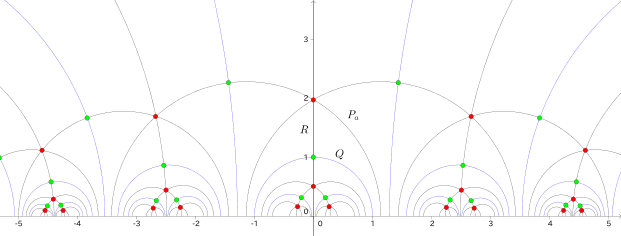 Figure 1
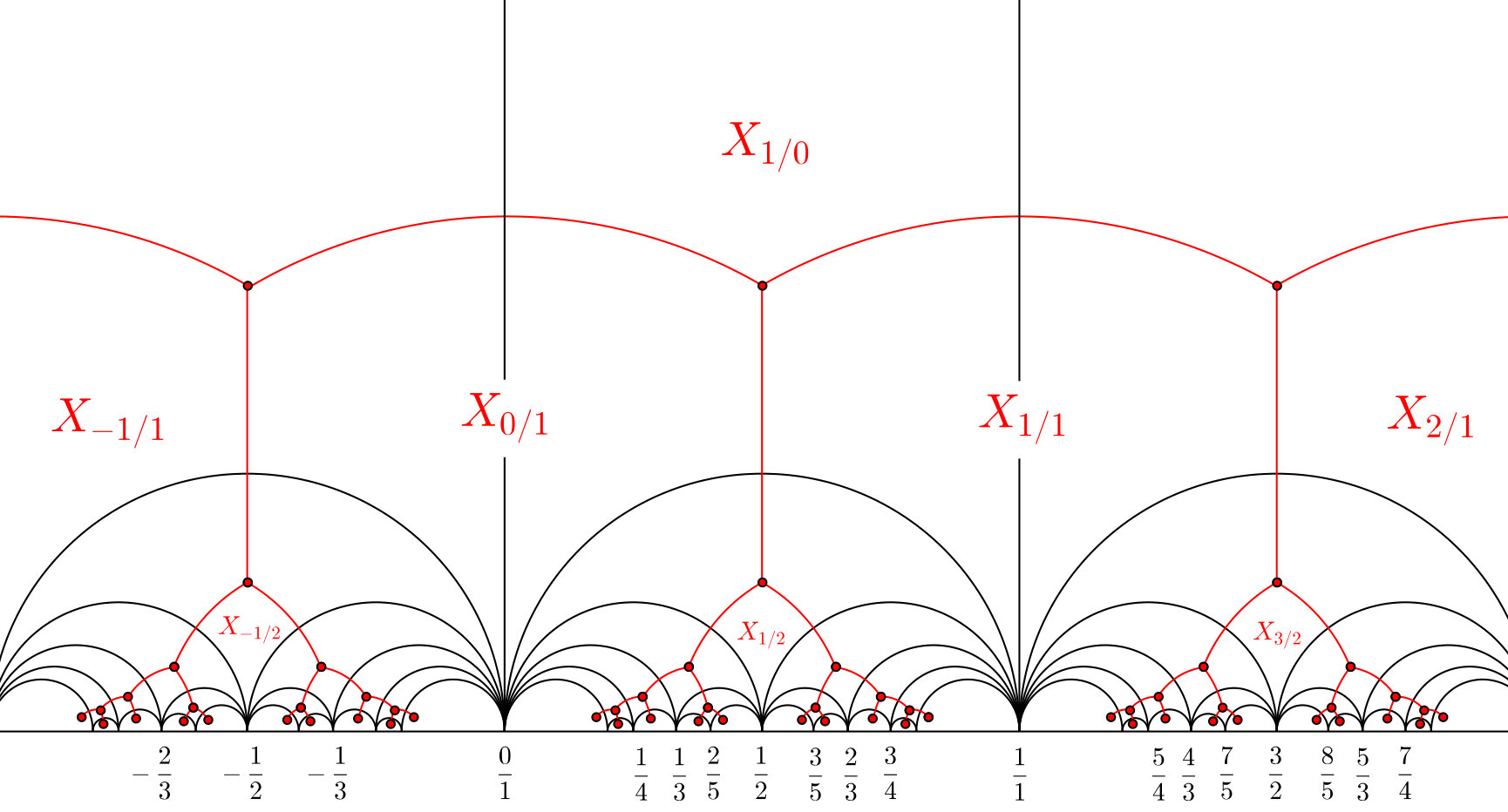 Figure 2
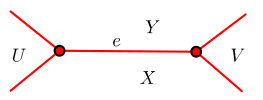 Figure 3
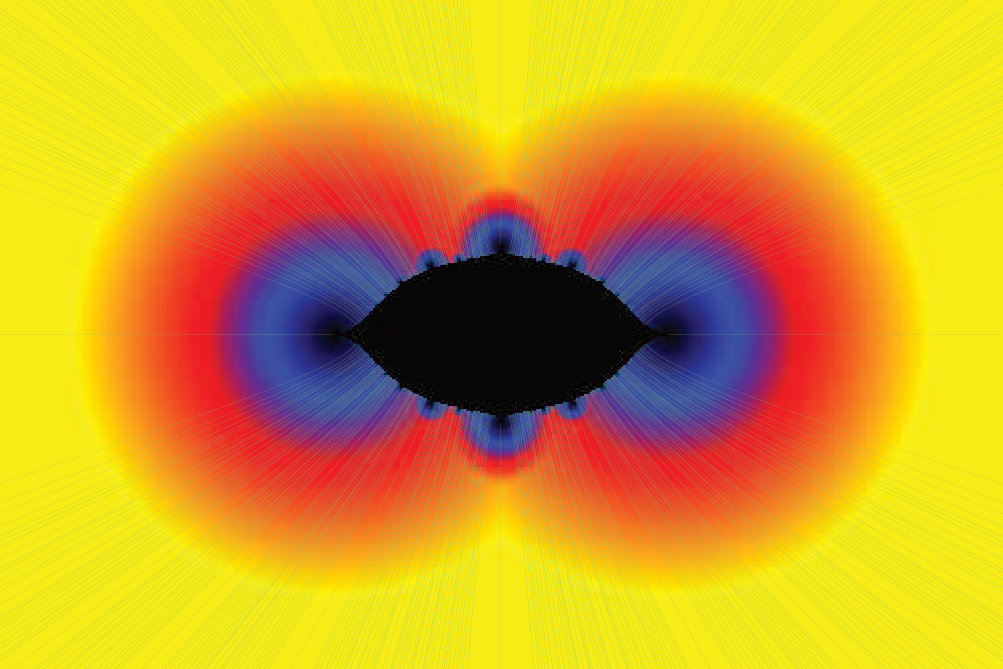 Figure 4
 Figure 4
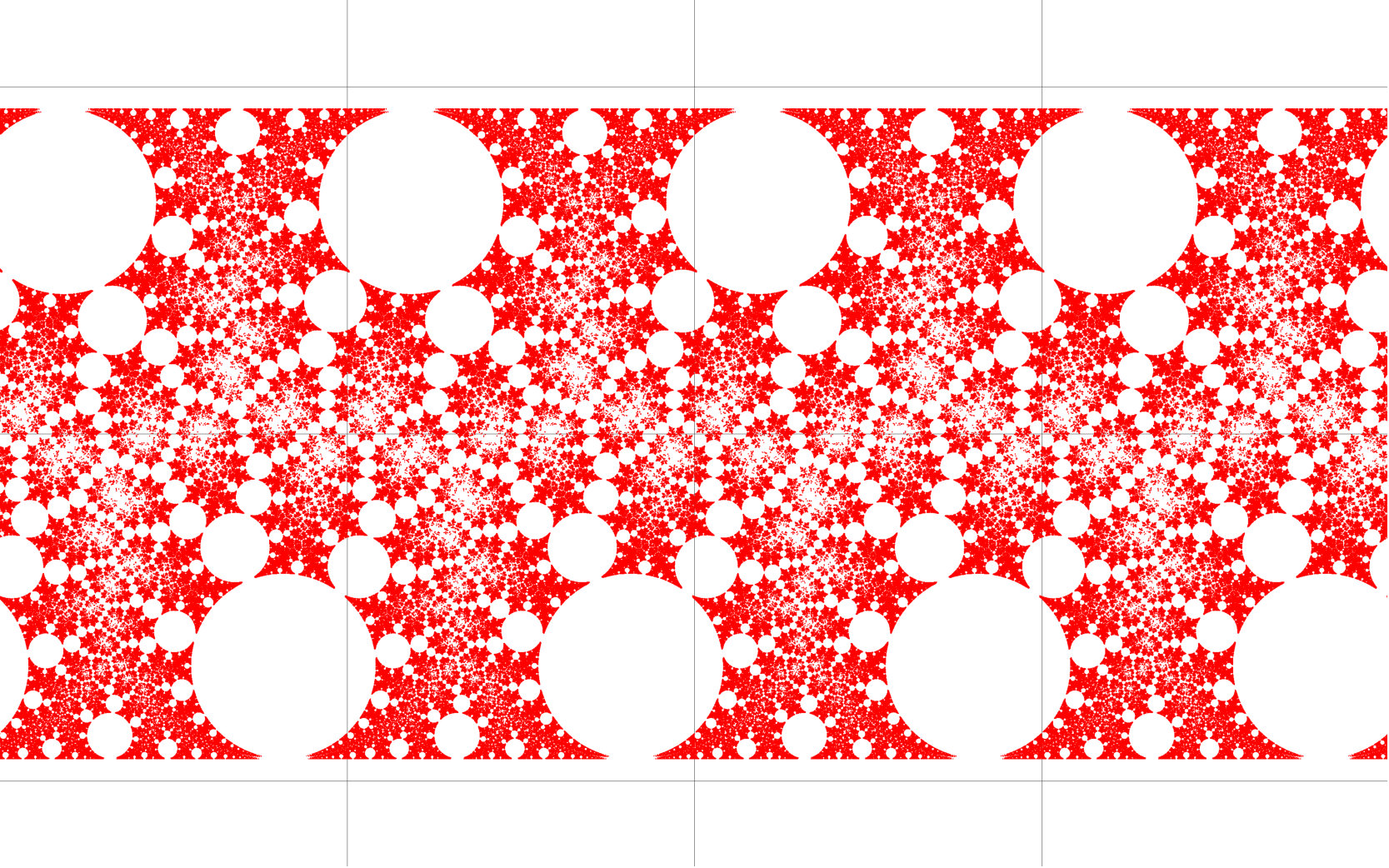 Figure 5
Peer Reviews
No public reviews on file for this paper yet. If you reviewed it on a platform where reviews are public (OpenReview, ICLR, NeurIPS, ICML), you can paste yours below so the community can read it here.
Videos
No videos yet. Explain this paper in a talk, walkthrough, or lecture? Add one.
Taxonomy
TopicsAdvanced Mathematical Identities · Mathematical functions and polynomials · Analytic Number Theory Research
The realization problem for Jørgensen numbers
Yasushi Yamashita
Nara Women’s University, Kitauoyanishi-machi, Nara-shi, Nara 630-8506, Japan
and
Ryosuke Yamazaki
Gakushuin Boys’ Senior High School, 1-5-1 Mejiro, Toshima-ku, Tokyo 171-8588 Japan
Abstract.
Let be a two generator subgroup of . The Jørgensen number of is defined by
[TABLE]
If is a non-elementary Kleinian group, then . This inequality is called Jørgensen’s inequality. In this paper, we show that, for any , there exists a non-elementary Kleinian group whose Jørgensen number is equal to . This answers a question posed by Oichi and Sato. We also present our computer generated picture which estimates Jørgensen numbers from above in the diagonal slice of Schottky space.
Key words and phrases:
Jørgensen’s inequality, Jørgensen number, Kleinian groups
2010 Mathematics Subject Classification:
30F40, 57M50
This work was supported by JSPS KAKENHI Grant Number 26400088.
1. Introduction
Let be a two generator subgroup of . Determining whether or not is discrete is an important problem in Kleinian group theory. In 1976, Jørgensen [7] showed that if is a rank two non-elementary discrete subgroup of (Kleinian group), then
[TABLE]
where . The Jørgensen number of an ordered pair is defined as
[TABLE]
and the Jørgensen number of a rank two non-elementary Kleinian group is defined as
[TABLE]
By (1), we have . We can think of Jørgensen number as measuring how far from being indiscrete. Jørgensen’s inequality is sharp, and if , is called a Jørgensen group, There are many results on Jørgensen groups in the literature [5, 8, 10, 11, 12, 15, 18, 19, 23]. Also, calculating Jørgensen numbers can be difficult and interesting challenge [3, 6, 20]. Oichi-Sato [16] asked the following natural question:
Question 1.1** (The realization problem).**
Let be a real number with . When is there a non-elementary Kleinian group whose Jorgensen number is equal to ?
Oichi-Sato [16] claimed that if or , then there is a non-elementary Kleinian group whose Jørgensen number is equal to . (See also [3, 23, 24].) Though Jørgensen’s inequality is sharp, constructing a Kleinian group with small Jørgensen number (in particular, less than ) is not easy. To the best of our knowledge, there is no known example of a classical Schottky group whose Jørgensen number is less than . In this paper, we solve this realization problem.
Theorem 1.2**.**
For any real number , there is a rank two non-elementary discrete subgroup of whose Jørgensen number is .
The Jørgensen numbers can be studied by computer experiments. We will present a computer generated picture of the estimates of Jørgensen numbers from above in the diagonal slice of Schottky space. At the end of the paper, we present some Jørgensen groups, and we conjecture that they are counter examples of Li-Oichi-Sato’s conjecture.
In section 2, we give a proof of Theorem 1.2 for the case . In section 3, we give a proof for the case . In section 4, we present our computer generated picture, and describe our calculation.
2. The proof for the case
In this section, we give a proof for the case . For simplicity, we use the same notation for a matrix in and its equivalence class in .
2.1. The basic configuration
Let , and be the oriented line from to in . Following [4], we define the line matrix associated with as
[TABLE]
See [4], p. 64, equation (1). It is the order two rotation about .
For , set
[TABLE]
Let be a subgroup of generated by and . The axes of the generators are contained in the vertical plane . Since we assumed that , and do not intersect in . The angle between and is , and the angle between and is .
See Figure 1. Hence, as an abstract group, has a presentation
[TABLE]
for any and is isomorphic to a hyperbolic (full) triangle group in . (Note that hyperbolic (full) triangle groups are defined as groups generated by reflections, but is generated by rotations in .) Hence, is non-elementary and discrete. For later purpose, we classify non-trivial elements of into three types:
- (i)
elliptic elements 2. (ii)
loxodromic elements which can be conjugated into 3. (iii)
loxodromic elements which can not be conjugated into
When , we define that the parabolic elements are of type (ii).
Remark 2.1*.*
Groups similar to were studied by C. Series, S. P. Tan and the first author in [21].
Lemma 2.2**.**
Let be an element of type (iii) in . Then, we have
[TABLE]
Proof.
We begin by considering the case . Set
[TABLE]
Then, we have
[TABLE]
Hence, for any element , or for some integer . Let be an element of type (iii) in . Since is loxodromic,
[TABLE]
Now, we consider the general case. For , let be a type (iii) element of . Since is loxodromic and preserves the vertical plane , or is conjugate to
[TABLE]
where is the translation length of . Thus, we have
[TABLE]
Note that the region in the vertical plane bounded by the axes of , , is a fundamental region for in . Since is monotonically increasing in , is also monotonically increasing in . Combining (2), we see that
[TABLE]
and the lemma is proved. ∎
Remark 2.3*.*
By this proof, we see that is a conjugate of a subgroup of Picard group. Sato [20] showed that Picard group is a Jorgensen group. González-Acuña and Ramírez [6] described all Jørgensen subgroups of Picard group.
2.2. The singular solid torus
We define
[TABLE]
Since , the rank of is two and is a generating pair of . As an abstract group, by Tietze transformation, we have
[TABLE]
Remark 2.4*.*
Generating pairs similar to and were studied in [21], and called the singular solid torus.
Lemma 2.5**.**
In , any element of order three can not be a part of minimal generating system.
Proof.
Let be the natural projection from the free group of rank two to . Since
[TABLE]
is well-defined on . We denote the set by . is not empty set for .
Let be an element of such that . Then, . (Otherwise, we have (mod 2), which is a contradiction.) Hence, for any , we have
[TABLE]
and the lemma is proved. ∎
2.3. The Jørgensen number
Finally, we calculate the Jørgensen number.
Proposition 2.6**.**
For any , where , we have
[TABLE]
In particular, and . For any , the Jørgensen number is realized.
Proof.
Since and , for , we have
[TABLE]
Since satisfies the equation , if , we have . To prove this proposition by contradiction, suppose that there exist such that and . Since is non-elementary, . (See p.68 in [1].)
Case 1 is of type (i). If is an elliptic element of order two, then and , and this can not happen. If is an elliptic element of order three, since can not be a part of minimal generating system by Lemma 2.5, this can not happen.
Case 2 is of type (ii). Let be an element of which is conjugate to . Since is isomorphic to the infinite dihedral group, can be written as or . If the word length is odd, then is conjugate to or and is not loxodromic. Thus, the word length is even, and or for some .
Case 2-1 . We claim that . To see this, consider the Coxeter group
[TABLE]
and let be the natural surjection. Since , we have
[TABLE]
because is not cyclic when . It follows that and the claim is proved.
Case 2-2 . In this case, .
Case 2-2-1 is of type (i). If is elliptic of order two, then
[TABLE]
If is elliptic of order three, then , and
[TABLE]
Case 2-2-2 is of type (ii). Let be an element of which is conjugate to . Then, for some . (Recall the first paragraph of Case 2.) We have or . For , we denote the elements in which corresponds to and by and .
If , then is close to [math] when is close to , which contradicts Jørgensen’s inequality, because is non-elementary and discrete.
If , then and
[TABLE]
Case 2-2-3 is of type (iii). By Lemma 2.2, we have
[TABLE]
Case 3 is of type (iii). By lemma 2.2, we have
[TABLE]
Hence, for , and the proposition is proved. ∎
3. The proof for the case
Oichi and Sato [16] claimed that, for every real number , there is a subgroup of such that . But the proof was not written. For completeness, we give a proof of this fact by calculating the Jørgensen number of some Kleinian groups.
3.1. Markoff maps
First, we recall Bowditch, Tan-Wong-Zhang theory [2, 22] on Markoff maps very briefly. See section 3 in [22] for detail.
We denote the set by . Let be the Farey triangulation of the upper half plane . Recall that the vertex set of is , and two vertices and are connected by a geodesic in if . Let be the binary tree dual to . See Figure 2.
A complementary region of is the closure of a connected component of the complement of . The set of complementary regions of is denoted by . Since each complementary region corresponds to a vertex in , we can identify with , and we denote the complementary region which corresponds to by . Let be an edge of with end points and . Then, there exist such that , and . See Figure 3.
We write to indicate these regions. A Markoff map is a map from to such that, for every edge in , we have
[TABLE]
This condition is called the edge relation. Given , the set is defined by . We will need the following lemma.
Lemma 3.1** (Theorem 3.1 (2), [22]).**
Let be a Markoff map. For any , the union is connected as a subset of .
Let be the free group on and . An element of is called primitive if there exists an element such that , and and are called associated primitives. Let be the abelianization homomorphism from onto (). Let be an representation of . Then, the next map is well-defined:
[TABLE]
where is a primitive element such that . See Corollary 3.2, [17]. For example, we have
[TABLE]
By Theorem 1.2 and 1.3 in [17] and the trace identity in
[TABLE]
we have the next lemma. (See Section 3, Natural correspondence [22].)
Lemma 3.2**.**
* is a Markoff map.*
For any associated primitives and of , the commutator is conjugate to or . (See Theorem 3.9 in [13].) Thus, we have . It follows that
Lemma 3.3**.**
If is a subgroup of isomorphic to , then the trace of the commutator of associated primitives of does not depend on the choice of associated primitives.
Recall that, if is in the Maskit slice [9, 14], then it is discrete and isomorphic to and can be normalized as , where
[TABLE]
Corollary 3.4**.**
If is in the Maskit slice, then .
Proof.
Since , by Lemma 3.3, we have .. ∎
3.2. Kissing Schottky groups
We consider kissing Schottky groups studied in [14]. For a positive real number , let be the representation of given by
[TABLE]
where are positive real numbers with and . (See chapter 6, p.170 [14].) The first condition guarantees that and have determinant . The second condition guarantees that . See Figure 6.8 in [14]. For the sake of simplicity, we denote the Markoff map of the representation by .
Lemma 3.5**.**
We have .
Proof.
Since and , by definition, we have .
Complementary regions which meet are
[TABLE]
See Figure 2. Put for . Then, we have
[TABLE]
By the edge relation, we have
[TABLE]
for any . Observe that for any . First, direct calculation shows that . Then, since , the edge relation implies that . We also see that for any . (In fact, .) Hence, is the only region in which meets .
Complementary regions which meet are
[TABLE]
By the edge relation, we have . Hence, is the only region in which meets ,
Since , by Lemma 3.1, is connected. Hence, , and the lemma is proved. ∎
By this lemma, we have for any primitive element . Since is real and greater than , we have . Since is isomorphic to , by Lemma 3.3, we have the following.
Proposition 3.6**.**
For any kissing Schottky group (representation) , we have
[TABLE]
In particular, we have , and , For any real with , the Jørgensen number is realized by a kissing Schottky group.
3.3. -Schottky groups
Here, we consider Fuchsian Schottky groups described in Project 4.2, p.118 in [14]. For , let be the representation of given by
[TABLE]
See Figure 4.10 in [14]. We denote the Markoff map by .
Lemma 3.7**.**
We have .
Proof.
Note that
[TABLE]
Then, the rest of the proof is the same as for Lemma 3.5. ∎
Hence, for any primitive . Since is isomorphic to , by Lemma 3.3:
Proposition 3.8**.**
For any -Schottky group (representation) , we have
[TABLE]
In particular, we have , and , For any real with , the Jørgensen number is realized by a -Schottky group.
Remark 3.9*.*
() in this subsection and () in the last subsection are the same representation.
4. The diagonal slice of Schottky space
Jørgensen numbers can be studied by computer experiments. In this section, we present a computer generated picture (Figure 4) which estimates Jørgensen numbers in the diagonal slice of Schottky space.
4.1. The diagonal slice of Schottky space
Let us go back to the singular solid torus in section 2. Recall that
[TABLE]
In this section, we consider that . We denote by . Set
[TABLE]
Then, by the trace identity (6), we have
[TABLE]
See section 5.0.2 (in particular, Remark 5.4 for the sign of the square roots) in [21]. From now on, we consider that is a complex parameter. The locus in the -plane of discrete and faithful representations was fully determined by computing Keen-Series pleating rays [21]. (Here, “faithful” means that is isomorphic to as an abstract group.) is called the diagonal slice of Schottky space. See Figure 4.
The outside of the center black eye corresponds to . is foliated by pleating rays. We will describe pleating rays briefly in the next subsection.
Let be a complex number such that . We denote the representation from to which sends to and to by . Let be the Markoff map associated with :
[TABLE]
If and are associated primitives of , then their images in generate . By Lemma 3.3 and equation (9), . Hence,
[TABLE]
where is determined by the abelianization . Hence,
[TABLE]
gives an estimate of from above. We calculate by computer for . The color outside the black eye in Figure 4 indicates the values of . Since thees groups are discrete and faithful (in particular non-elementary), . Since , we have . Figure 4 suggests that for each , there are many non-elementary Kleinian groups in the diagonal slice with Jørgensen number .
Remark 4.1*.*
In practice, we can not calculate for all , and Figure 4 is an approximation of by calculating for many . But, if is in the Bowditch set, in principle, we can calculate . The key is Lemma 3.24 in [22]. The diagonal slice of Schottky space seems to coincide with the Bowditch set. See Section 2, [21].
Question 4.2**.**
Does the equation hold for each ? Note that, since is not free, there might be generating pairs of which do not come from associated primitives in .
4.2. Jørgensen groups on the boundary of the diagonal slice
We consider the case on . We begin by describing pleating rays very briefly. See [21] for detail.
For , the real trace locus of is . The rational pleating ray is a union of connected non-singular branches of (Corollary 4.11 [21]). The rational pleating rays are indexed by , where if and only if (Proposition 4.8, [21]). (If , then we have .) For example, the condition , in subsection 2.3 corresponds to .
If is not an integer, consists of two components (branches). One is in the upper-half plane, and the other in the lower-half plane. Let be the end point of in the upper-half plane, or on the real axis if is an integer. By construction, we have . Hence, , and the corresponding representation is a Jørgensen group of parabolic type.
In order to describe these groups, we recall the Li-Oichi-Sato normalization:
Lemma 4.3** (Lemma 3.1 [11]).**
Let and be elements of such that is parabolic and is elliptic or loxodromic. Then, can be normalized as
[TABLE]
where and .
Remark 4.4*.*
Li-Oichi-Sato [11] [10] [12] considered the case , . They conjectured that, for any Jørgensen group of parabolic type, there exists a marked group , , , such that is conjugate to . Later, Callahan [3] found counter examples for this conjecture.
Now, we compute some examples. We begin by calculating some Markoff maps and the end point of pleating rays:
[TABLE]
(Note that the equation have many roots, and in order to make the right choice for , we need [21].) Let denote the matrix in (7) such that . Then, for example,
[TABLE]
generate Jørgensen groups of parabolic type. The Li-Oichi-Sato parameters for these groups are as follows:
[TABLE]
We conjecture that groups which correspond to the end points of the rational pleating rays (except and on the real axis) are counter examples for Li-Oichi-Sato’s conjecture in Remark 4.4.
Remark 4.5*.*
Let be an element of such that has a sequence of distinct elements of with . Then and corresponds to a geometrically infinite group with unbounded geometry.
Remark 4.6*.*
The limit set of with is the real line. The limit sets of other examples are complicated and beautiful. For example, see Figure 5 for the limit set of the third case .
The reference list from the paper itself. Each links out to its DOI / PubMed record.
- 1[1] Alan F. Beardon. The geometry of discrete groups , volume 91 of Graduate Texts in Mathematics . Springer-Verlag, New York, 1983.
- 2[2] B. H. Bowditch. Markoff triples and quasi-Fuchsian groups. Proc. London Math. Soc. (3) , 77(3):697–736, 1998.
- 3[3] Jason Callahan. Jørgensen number and arithmeticity. Conform. Geom. Dyn. , 13:160–186, 2009.
- 4[4] Werner Fenchel. Elementary geometry in hyperbolic space , volume 11 of de Gruyter Studies in Mathematics . Walter de Gruyter & Co., Berlin, 1989. With an editorial by Heinz Bauer.
- 5[5] F. W. Gehring and G. J. Martin. Stability and extremality in Jørgensen’s inequality. Complex Variables Theory Appl. , 12(1-4):277–282, 1989.
- 6[6] Francisco González-Acuña and Arturo Ramírez. Jørgensen subgroups of the Picard group. Osaka J. Math. , 44(2):471–482, 2007.
- 7[7] Troels Jørgensen. On discrete groups of Möbius transformations. Amer. J. Math. , 98(3):739–749, 1976.
- 8[8] Troels Jørgensen and Maire Kiikka. Some extreme discrete groups. Ann. Acad. Sci. Fenn. Ser. A I Math. , 1(2):245–248, 1975.