Optical coherence of $^{166}$Er:$^{7}$LiYF$_4$ crystal below 1 Kelvin
Nadezhda Kukharchyk, Dmitriy Sholokhov, Stella L. Korableva, Alexey A., Kalachev, Pavel A. Bushev

TL;DR
This study investigates the spin coherence properties of isotopically purified $^{166}$Er:$^{7}$LiYF$_4$ crystals at sub-Kelvin temperatures and low magnetic fields, revealing potential for quantum memory and quantum circuit interfacing.
Contribution
It demonstrates spin coherence of Er:LYF crystals at low magnetic fields and temperatures, suitable for quantum memory and superconducting circuit integration, which was not achieved before.
Findings
Record-narrow optical linewidths of 16 MHz in Er:LYF crystals.
Spin coherence observed at magnetic fields compatible with quantum applications.
Potential for implementing quantum memory and interfacing with superconducting circuits.
Abstract
We explore spin dynamics of isotopically purified Er:LiYF crystal below 1 Kelvin and at weak magnetic fields 0.3 T. Crystals grown in our lab demonstrate record-narrow inhomogeneous optical broadening down to 16~MHz. Solid state atomic ensembles with such narrow linewidths are very attractive for the implementation of off-resonant Raman quantum memory and for the interfacing of superconducting quantum circuits and telecom C-band optical photons. Both applications require low magnetic field of mT. However, at conventional experimental temperatures K and time scales of s, spin coherence of Er:LYF crystal appears only at magnetic fields above 1 Tesla. In the present work, we demonstrate spin coherence of Er:LYF crystals at the field range compatible with ZEFOZ transitions of Er isotope and with working conditions of superconducting quantum…
Click any figure to enlarge with its caption.
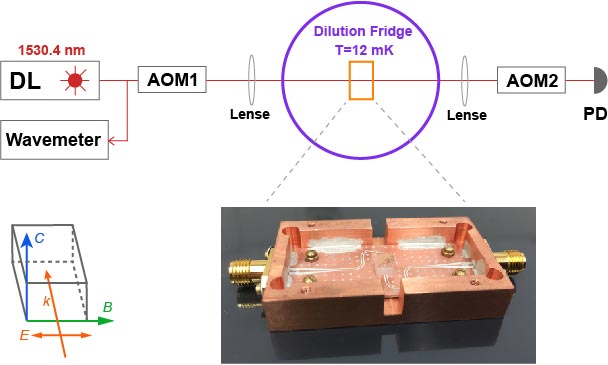 Figure 1
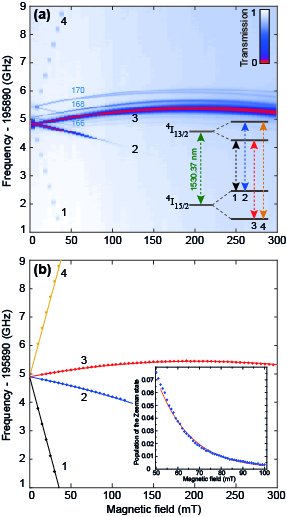 Figure 2
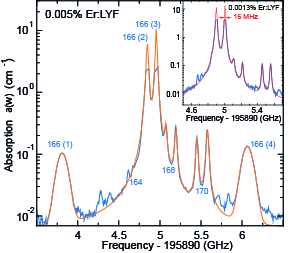 Figure 3
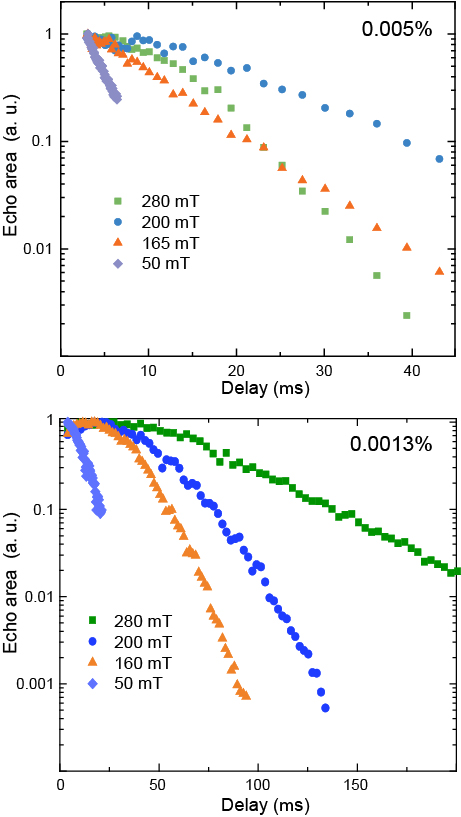 Figure 4
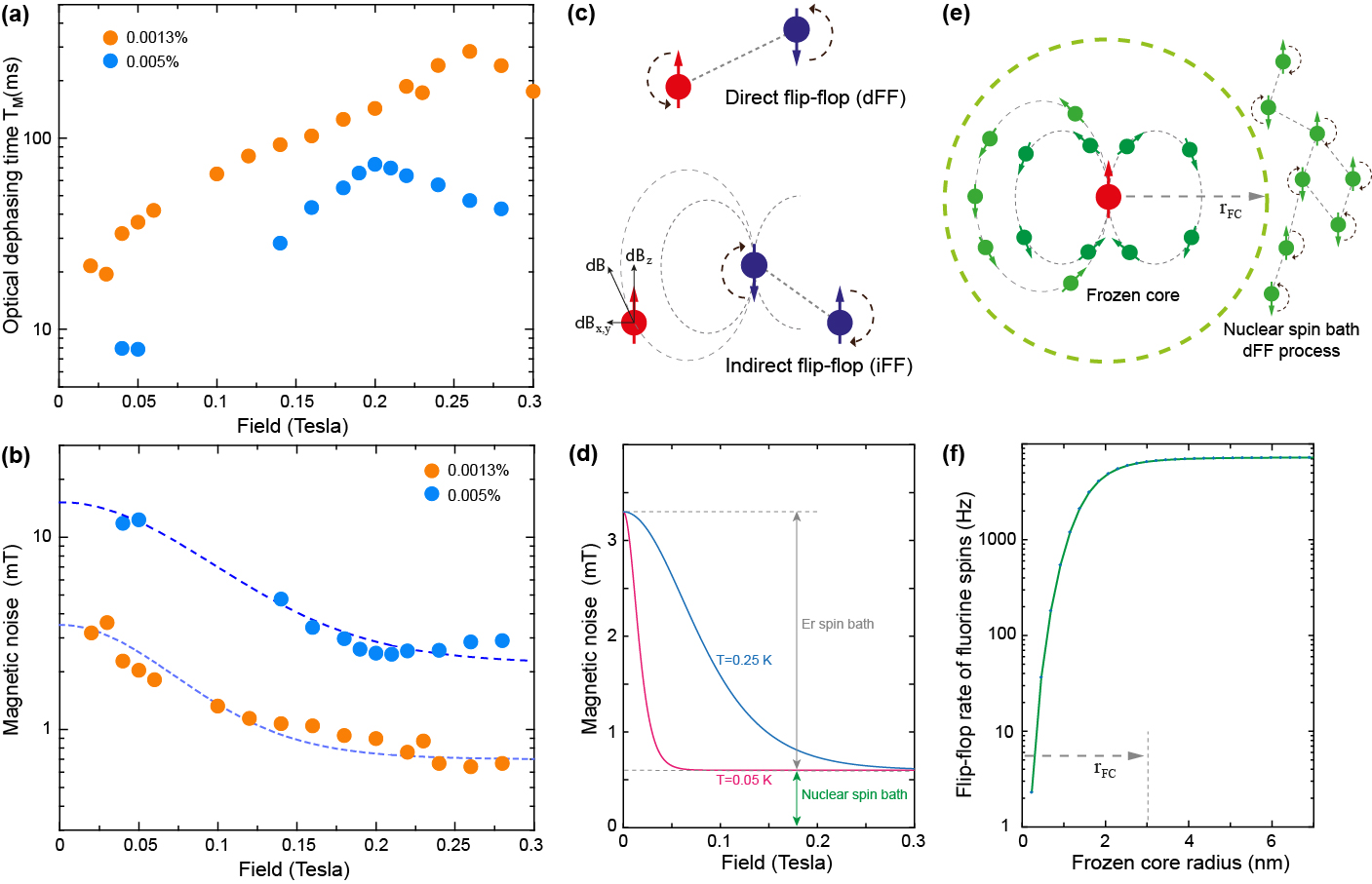 Figure 5
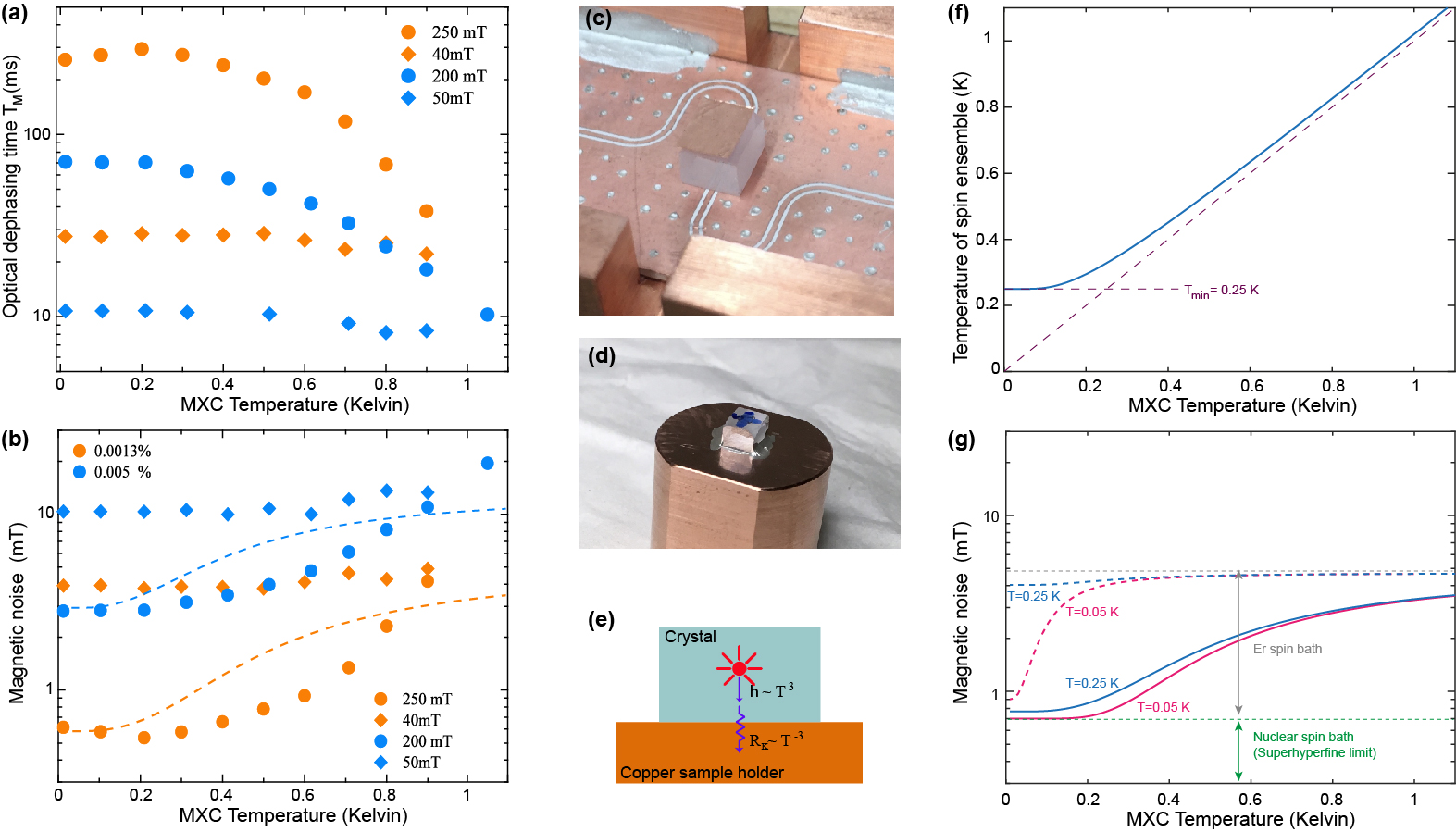 Figure 6
Peer Reviews
No public reviews on file for this paper yet. If you reviewed it on a platform where reviews are public (OpenReview, ICLR, NeurIPS, ICML), you can paste yours below so the community can read it here.
Videos
No videos yet. Explain this paper in a talk, walkthrough, or lecture? Add one.
Optical coherence of 166Er:7LiYF4 crystal below 1 Kelvin
N. Kukharchyk
Experimentalphysik, Universität des Saarlandes, D-66123 Saarbrücken, Germany
D. Sholokhov
Experimentalphysik, Universität des Saarlandes, D-66123 Saarbrücken, Germany
O. Morozov
Kazan Federal University, 420008 Kazan, Russian Federation
S. L. Korableva
Kazan Federal University, 420008 Kazan, Russian Federation
A. A. Kalachev
Zavoisky Physical-Technical Institute, 420029 Kazan, Russian Federation
P. A. Bushev
Experimentalphysik, Universität des Saarlandes, D-66123 Saarbrücken, Germany
Abstract
We explore optical coherence and spin dynamics of isotopically purified 166Er:7LiYF4 crystal below 1 Kelvin and at weak magnetic fields 0.3 T. Crystals were grown in our lab and demonstrate narrow inhomogeneous optical broadening down to 16 MHz. Solid state atomic ensembles with such narrow linewidths are very attractive for implementing of off-resonant Raman quantum memory and for the interfacing of superconducting quantum circuits and telecom C-band optical photons. Both applications require low magnetic field of mT. However, at conventional experimental temperatures K, optical coherence of Er:LYF crystal attains s time scale only at strong magnetic fields above 1.5 Tesla. In the present work, we demonstrate that the deep freezing of Er:LYF crystal below 1 Kelvin results in the increase of optical coherence time to s at weak fields.
I Introduction
Rare-earth (RE) doped solids represent today one of the widely exploited materials for the modern laser and telecommunication industry. Yet, recently, they have raised a strong interest in the field of quantum information storage, signal processing and communication Thiel et al. (2011a). The RE ions possessing a half integer spin are also known as Kramers ions. The exclusive feature of some Kramers ions, such as Nd3+, Yb3+ and Er3+, is the presence of optical transitions within the standard telecommunication bands, which is very attractive for quantum repeater applications Sangouard et al. (2011). There, RE-doped crystals can be used as quantum memory element for a long-lived storage of entangled photons.
One of the main challenge associated with using crystals doped with Kramers ions in memory applications is their quite strong unquenched electronic magnetic moment, which in the case of Er3+ reaches nearly Böttger et al. (2009). At weak magnetic fields and conventional temperatures of K, large electronic spins mediate a rapid spin-lattice relaxation process which limits the spin coherence time. Another contribution to the decoherence is caused by magnetic dipolar interactions with another electronic spins Böttger et al. (2006); Hastings-Simon et al. (2008); Baldit et al. (2010); Thiel et al. (2011b); Cruzeiro et al. (2017). Therefore, in order to attain long coherence time, high magnetic field up to 7 T and low temperatures of 1.5 K are used to polarize an electronic spin bath. By following this prescription the longest optical coherence time of 4.4 ms among solid state systems has been demonstrated for 0.001% Er3+:Y2SiO5 (Er:YSO) Böttger et al. (2006). Also, in the very recent experiments M. Ranĉić et al. demonstrated optically addressable hyperfine states of 167Er:YSO with coherence time of 1.3 second Ranĉić et al. (2016).
In our work, we propose to follow another strategy. The detrimental role of spin-lattice and spin-spin relaxation processes on quantum coherence can be reduced by deep freezing of RE-doped crystals down to ultra-low temperatures, i.e. K. In our previous microwave experiments with erbium doped crystals, it was shown that at sub-Kelvin temperatures substantial polarization of electronic spin bath can be attained already at moderate fields of T. That results in the slowing down of the spin-lattice relaxation rate by orders of magnitude Probst et al. (2013); Tkalčec et al. (2014). We also found that below 1 K spin coherence time is solely determined by the dynamics of electronic spin bath until it completely freezes out and leaves the only decoherence contribution associated with nuclear spins Probst et al. (2015).
Following up our proposal, we investigate optical coherence of isotopically purified 166Er3+:7LiYF4 (Er:LYF) crystal at sub-Kelvin temperatures and in the magnetic field range of T. Since the optical transitions of erbium ions occur between Zeeman sub-levels, the optical coherence is strongly affected by magnetic dipolar interactions with electronic and nuclear spins. Thus, the coherent optical spectroscopy allows us for the exploration of quantum dynamics of erbium spins in a completely new regime, i.e. at sub-Kelvin temperatures and at weak magnetic fields.
Isotopically purified RE-doped LYF crystals are well known for their ultra-narrow optical inhomogeneous broadening 10 MHz limited by superhyperfine interactions between electronic spins of impurity ions and nuclei spins of the host crystal Macfarlane et al. (1992, 1998). Today, Er:LYF crystals are again in the focus of the increasing research interest Popova (2015); Marino et al. (2016); Gerasimov et al. (2016), which is driven by their possible applications in broadband quantum memory based on off-resonant Raman protocols Reim et al. (2010); Moiseev and Tittel (2011); Moiseev (2013); Zhang et al. (2013); Kalachev and Kocharovskaya (2013). The basic idea of such technique is to map the quantum state of incoming optical photon into a long-lived hyperfine spin state, such as coherent spin excitation on a Zero First Order Zeeman (ZEFOZ) transition, which is insensitive to the magnetic field fluctuations McAuslan et al. (2012); Zhong et al. (2015).
However, the application of ZEFOZ technique for 167Er doped LYF is quite challenging, because hyperfine ZEFOZ transitions appears only at weak fields of mT. In the previous works, it was found that Er:LYF crystal requires rather large fields T at conventional temperatures of K for the establishing of optical coherence at s timescale Ganem et al. (1991); Meltzer et al. (1993); Marino et al. (2016). Since the spin coherence of Er:LYF system is determined by dipolar interactions with electronic and nuclear spin baths in the presence of the ”frozen core” effect Wannemacher et al. (1989), the large field was required for the polarization of erbium spin bath. In the present article, we show that the deep freezing of the Er:LYF crystal below 1 Kelvin leads to an increase of spin coherence time at much weaker fields. Particularly, we show how contribution to decoherence of electronic spins depends on magnetic field and temperature.
Another motivation of experimenting with narrowband RE-doped crystals at millikelvins is related to the development of a reversible quantum conversion between microwave and telecom C-band optical photons O’Brien et al. (2014); Williamson et al. (2014); Fernandez-Gonzalvo et al. (2015); Blum et al. (2015). Some conversion schemes are based on coherent manipulation of atomic ensembles by using optical pulses. In that case, using of the narrow-line optical ensemble is more favorable since it requires no optical hole burning technique for the efficient transfer/manipulation of the whole spin ensemble Vivoli et al. (2013). In addition, the integration of RE-doped solid into a superconducting quantum circuit requires temperatures K and weak magnetic fields of mT Kubo et al. (2011). In that respect, we demonstrate coherent optical spectroscopy of solid-state atomic ensemble at operating temperature range of superconducting quantum circuits.
II Experimental setup and sample preparation
The single crystal 166Er3+:7LiYF4 (0,005 at%) was grown in our lab by using Bridgman-Stockbarger method in graphite crucibles in argon atmosphere of high purity (99.998%) at 825 ∘C with a growth rate of 1 mm/h. The source materials 7LiF and YF3 with the purity of 99.99% were produced in Kazan Federal University and were taken with the ratio of 52 mol % (lithium fluoride) and 48 mol % (yttrium fluoride). Lithium fluoride was of 99.7 at% purity of 7Li. Erbium-166 isotope was added to the furnace of 7LiYF4 as oxide 166Er2O3 with the isotope concentration of 98% respectively. The single crystals were grown on a seed crystal with the orientation along the optical axis . After the cleavage and polishing the sample has dimensions of 345 mm.
The sketch of experimental setup is shown in Fig. 1. The crystal is placed on top of the microwave substrate Rogers TMM10i with 50 Ohm transmission line. This line is intended for the future experiments on frequency conversion and long lived spin quantum memory. In order to establish good thermal contact, thin copper plate is located on the top of the crystal and a copper screw presses the crystal to the microwave substrate. In order to preserve good microwave properties of the setup no additional ultra-low temperature thermalization arrangements were made (will be discussed later). The copper sample holder is mounted on the mixing chamber of cryogen-free BlueFors LD-250 dilution refrigerator. The magnetic field up to 0.3 T is created by a pair of superconducting Helmholtz coils and directed perpendicular to the c-axis of the crystal. The field inhomogeneity of our magnet of about 0.3% is estimated from spin linewidth measurements of Er:YSO crystals. The split-coil magnet is thermally anchored to the still stage of the dilution refrigerator and does not harm the performance of the dilution fridge. Our cryostat has an optical access in the horizontal direction which greatly simplifies transmission spectroscopy. Each radiation shield of the cryostat has two optical windows with gradually reducing diameter starting with 1.5 inch at room temperature down to 0.5 inch at the shield anchored to the cold plate (0.1 K). Optical windows are fabricated from Spectrosil 2000 material and AR-coated for the telecom-C wavelength range. The base temperature attainable of the presented cryogenic setup is 12 mK. The full optical setup including laser, pulse preparation and detection setups were installed on the optical breadboard, which was mounted directly on the cryostat’s frame.
III Transmission optical spectroscopy
Transmission optical spectroscopy of 4II13/2 transition at nm (vac) is measured by using a free-running single frequency tunable diode laser Toptica DL-PRO, see Fig. 1. The laser power is mW and it has the linewidth of about 0.2 MHz during 1 sec of integration time. The laser frequency is constantly monitored at wavemeter HighFinesse WS6-600 and referenced across P9 transition of fiber coupled 12C2H2 cell at nm (vac). The laser field is focused with the f=30 cm lens into the crystal, and the beam waist is equal to mm in diameter. The intensity of the transmitted signal is measured with an amplified InGaAs photoreceiver.
Figure 2(a) shows the measured transmission spectrum of 0.005% Er:LYF crystal as a function of the applied magnetic field. The excitation power of the laser field was set to W. Erbium ions are Kramers ions and they possess a half-integer spin. Every electronic state is split into two Zeeman levels if magnetic field is applied. Due to the high symmetry of the LYF crystal erbium ions substitute yttrium ions only in a single position and no magnetic class splitting (as for Er:YSO) is present. The transmission spectrum consists of 4 lines: transitions 2 and 3 with small g-factor g and transitions 1 and 4 with larger one of g. Because the Stark levels I and I of the optical excited state are only GHz apart Marino et al. (2016) they mix at higher fields and result in dependence of g-factors on magnetic field. That mixing yields clock transition (CT) for the transition 3 at T which is clearly visible on the spectrum.
The narrow optical inhomogeneous linewidth of our sample allowed us to resolve an isotopic shift. The weaker lines in the spectrum with the same field dependence are attributed to the traces of 168Er and 170Er isotopes at ppm residual concentration. The transition 3 for 170Er3+ ion is found to split into two lines above 100 mT. This splitting is assumed to arise from the larger distortion of the crystal lattice by this specific isotope. Local distortions may led to the reduction of the local symmetry for erbium ions and appearance of non-equivalent magnetic positions (magnetic classes).
Transition 2 becomes more faint at higher fields due to thermal depopulation of the upper Zeeman sub-level of the optical ground state. Its population is extracted from the absorption coefficients and plot as a function of the applied magnetic field, see the inset in Fig. 2(b). The fit of the experimental data to Boltzman distribution yields the actual temperature of erbium spin ensemble mK. This measurement shows the preparation of the spin ensemble in a single quantum state at weak magnetic fields, which is crucial for some quantum memory protocols.
The inhomogeneous broadening of optical transitions is also extracted from at every recorded field point. Figure 3 displays the absorption coefficient measured at 10 mT. The absorption spectrum consists of many doublets corresponding to optical transitions between Zeeman levels of different isotopes. The orange line shows the fit of the total spectrum to the set of such contributions. Transitions 2, 3 are fit at best with Lorentzians, whereas transitions 1, 4 can be fit well with Gaussians. Full-width-half-maximum (FWHM) linewidth for transitions 2, 3 is MHz and for transitions 1, 4 is MHz. The linewidth of optical transitions is partially determined by super-hyperfine interactions with nuclei spins of the host crystal (mainly with fluorine) and reads as , where stands for the intrinsic linewidth due to the crystal strain, ge,g are g-factors of optical ground or excited states, is the magnitude of the local slow varying magnetic field created by the neighboring nuclei spins, sign stands for transitions 1 and 4, sign stands for transitions 2 and 3 Macfarlane et al. (1992, 1998), and the term describes additional inhomogeneity of the field and samples. Evaluation of the full data set for the measured linewidths yields intrinsic MHz and mT. We also note here, that FWHM linewidth as narrow as MHz is observed with our sample doped with 0.0013% Er3+ ions, see inset in Fig. 3, which is in accordance with the record-narrow linewidth observed by Ch. Thiel, Th. Böttger and R Cone. Thiel et al. (2011a).
IV Coherent optical spectroscopy
We study spin quantum dynamics of Er:LYF crystal by carrying out two-pulse echo (2PE) experiments. The power level of the laser field at the input of the cryostat is about 10 mW. The typical length of the excitation pulses created by acousto-optical modulator (AOM1) is 1 s. The emitted echo signal ( % efficiency) is picked up by the AOM2 and detected by the amplified 200 MHz InGaAs photoreceiver. In order to avoid excess heating of the sample, the echo sequence was repeated with relatively slow rate of 1 Hz. At such rate no increase of the temperature of the mixing chamber was detected. The emitted signal was recorded on digitizing oscilloscope and averaged out by using PC. The averaged echo signal was fit at every delay time with sech function and the echo area was extracted down to the 10*-3* level. The Fig. 4 represents normalized echo decay measured at the base temperature of the dilution refrigerator at different field values for both 0.0013% and 0.005% samples. The displayed signal is normalized to its maximum magnitude. For the entire range of the applied magnetic field the behavior of the echo decay is found to be non-exponential as the consequence of spectral diffusion. Therefore, fit function suggested by W. Mims was used in order to extract phase memory time and exponent factor Mims (1968).
V Magnetic field dependence of optical dephasing
The measured dependence of the phase memory time on the applied magnetic field is shown in Fig. 5(a) for both samples. Each data set is measured in a single experimental sequence during 24 hours of the total interrogation time. At zero field and s no echo signal is detected. In contrast to the earlier works studying similar systems at high magnetic fields and temperatures above 1.5 K Wannemacher et al. (1989); Ganem et al. (1991); Meltzer et al. (1993); Marino et al. (2016), in our experiment, the optical dephasing time attains s already at weak fields. The echo decay signal experiences strong modulation due to the superhyperfine coupling to nuclear spins Mitsunaga et al. (1992) at field ranges mT for 0.005% sample and around 70 mT for 0.0013% sample. Therefore, it is possible to extract dephasing time and exponent only outside these regions.
Around 200 mT for 0.005% crystal and 250 mT for 0.0013% crystal the magnetic field dependence of shows a typical peak feature associated with reduced sensitivity of optical transition frequency to the local magnetic field fluctuations in vicinity of the clock transition Tongning et al. (2015). In order to get insight into dynamical processes of electronic and nuclear spin baths, we determine dependence of on applied field and temperature from the measured dephasing time. For that purpose, we use a simple model describing behavior of the dephasing time in the vicinity of the CT
[TABLE]
where is the gradient and is the curvature of the transition frequency with respect to the magnetic field Lovrić et al. (2011); McAuslan et al. (2012); Zhong et al. (2015); Ranĉić et al. (2016). In our analysis, we neglect term associated with spin-lattice relaxation, because it is strongly suppressed at our experimental temperature range Probst et al. (2013); Tkalčec et al. (2014). Our preliminary relaxation time measurements indicate that sec. Further, we assume, that the fluctuating field is created by magnetic dipoles which are randomly distributed around the coherently prepared ion, see Fig. 5(c). The total noise magnitude is , where is directed along the applied magnetic field, while , are the components of magnetic noise perpendicular to the magnetic field. In addition, is parallel to the c-axis of the crystal. The relation between the components is found by averaging out the dipole-dipole interaction over the uniform angular distribution of magnetic dipoles. Our estimate yields and .
In the case of Er:LYF crystal, is zeroed in directions, i.e. perpendicular to the c-axis. However, along the direction GHz/T. Therefore, it is exactly the magnetic noise component along the which limits maximum around optical clock transition.
The substitution of calculated components into Eq. 1 yields the magnitude of magnetic noise for each experimental point, which is shown in Fig.5(b). For both samples demonstrates similar behavior: magnitude of the noise is reduced with increase of the field and stays constant at T. In the following, we consider and independently estimate contributions to the noise arising from dipolar coupling between electronic spins of Er3+ ions and superhyperfine interaction with nuclear spins of the crystal.
V.1 Dephasing due to electronic spins
There are two main contributions to the decoherence process created by electronic spins, see Fig.5(c). That is namely direct flip-flop process (dFF), which involves the coherently prepared ion and indirect flip-flop (iFF), which involves flips of neighboring spins and thus producing local magnetic field fluctuations at the position of the coherently prepared ion.
The electronic spin flip-flop rate in dFF process is estimated by applying the Fermi’s ”golden rule”, s.f. W.B. Mims in ref. Geschwind (1972), as
[TABLE]
where is the dipolar linewidth of the electronic erbium spins Schweiger and Jeschke (2001), is the concentration of erbium spins and MHz is the inhomogeneous broadening of an erbium spin ensemble in the ground state. The sample with 0.005% doping concentration has cm*-3*, and estimated electronic spins flip-flop time s. Flip-flop time for more diluted sample with cm*-3* is estimated to be s.
The above calculated FF times correspond to the case of the fully unpolarized spin bath or high temperature limit. However, the flip-flop rate rapidly decreases with increase of the magnetic field and scales as , s.f. refs. Böttger et al. (2006); Takahashi et al. (2008); Probst et al. (2015). Therefore, for our diluted samples deeply frozen to temperatures below 1 Kelvin, dFF process seems not to play significant role in the spin dephasing process. The characteristic time scales and inverse linewidths stand in the following order
[TABLE]
The magnitude of the local magnetic noise generated in iFF process is contributed by all the flipping spins around the coherently prepared ion and is estimated from Balasubramanian et al. (2009). The latter yields T for 0.005% sample and T for 0.0013% sample. Such noise level is created by fully unpolarized spin bath, and as in the case with dFF process, the iFF magnetic noise temperature and field dependence is described by, see Böttger et al. (2006); Takahashi et al. (2008); Probst et al. (2015)
[TABLE]
At sufficiently large fields or sufficiently low temperatures the electronic spin bath experiences significant polarization and thus the magnitude of iFF magnetic noise will drop to zero. Contrary to that, our measured data shows a constant offset, below which the noise level does not drop. This offset is associated with the superhyperfine limit, i.e. with the local fluctuating field created by the nuclear spins of the host crystal itself. At our experimental conditions the Zeeman levels of nuclear spins are nearly equally populated, hence, the magnetic noise arising from nuclear spin flip-flops is assumed to stay constant over the experimental field range, see also Fig. 5(d).
The dashed lines in Fig. 5(b) represent the fit with a function, which takes into account electronic and nuclear spin noise contributions
[TABLE]
The fit yields magnitudes of electronic spin noise T, magnitudes of nuclear spin noise T and the actual temperatures of the spin ensembles K for 0.005% and 0.0013% samples respectively. The contribution of electronic spin bath to spin dephasing at weak fields is found to be dominant even for the diluted (0.0013%) sample. The electronic spin noise scales linear with concentration and is in a good agreement with values which is estimated above.
The actual temperatures of spin ensembles in pulsed measurements exceeds the detected in cw measurements. This fact can be explained by a larger heat flow generated by the strong laser pulses when it propagates through the crystal. In order to illustrate the influence of on magnetic noise, we simulate two curves by using Eq. 5 and taking the noise parameters for 0.0013% doped Er:LYF crystal at temperatures of 0.05 K and 0.25 K. The curves are displayed in Fig. 5(d). It is clearly seen, that at mK the superhyperfine limit can be attained already at the field of 50 mT.
V.2 Dephasing due to nuclear spins
Magnetic noise of a nuclear spins arises from the flip-flops inside the ”frozen core” and from the spins in the bulk, see Fig. 5(e). The large magnetic moment of Er3+ ion creates spatially inhomogeneous field which detunes the resonant frequency of neighboring nuclear spins with respect to each other. This results in strong dependence of nuclear flip-flop rate on the distance to the optically active erbium ion. The part of nuclear spins in the direct proximity to the electronic spin will form so called ”frozen core” with inhibited nuclear spin flip-flop rate. By using similar approach as for electronic spins, we calculate the nuclear flip-flop rate at the distance from erbium ion as
[TABLE]
where is the dipolar linewdith of the nuclear spins, and is the inhomogeneous broadening induced by the field gradient such that , where kHz is the linewidth of nuclear spins in the bulk measured in conventional NMR experiment at 2 Kelvin, is the gyromagnetic ratio of nuclear spins and is the mean distance between nuclear spins.
Fig. 5(f) shows calculated flip-flop rate of fluorine ions as a function of erbium-fluorine distance. For the simplicity we assume that erbium ion creates a spherically symmetrical field Balasubramanian et al. (2009). The mean distance between fluorine ions is equal to nm. As it is seen from the considered figure, the flip-flop rate increases nearly by 4 orders of magnitude at the distance of several nanometers and reaches a constant value of 7 kHz above the ”frozen core” radius of nm. There are about 4000 fluorine ions inside the sphere of radius with a strongly suppressed flip-flop dynamics. The radius of the ”frozen” was previously estimated by W. B. Mims, see ref. Geschwind (1972). His estimate yields the same nm, where are the electronic and nuclei gyro-magnetic ratios and is the concentration of nuclear spins.
The local magnetic field created by the nuclear spins sitting at the first coordination sphere is estimated to be around mT, see ref. Macfarlane et al. (1998). The magnitude of field fluctuation within the time interval of s is estimated to be T. The contributions of fluorine ions at the 2-nd and 3-rd coordination spheres are slightly larger and are estimated to be around T. More distant coordination spheres create progressively lower field which scales as with a distance to every erbium ion. In total, the fluorine ”frozen core” is estimated to contribute of T within time interval of s. Our crude estimation of nuclear spin noise is in reasonable agreement with the observed superhyperfine limit for both samples. The noise contributions of ”frozen cores” of Li and Y are significantly lower and therefore are neglected in our consideration.
Another contribution to the superhyperfine magnetic noise arises from nuclear spins in the bulk, i.e. from those which are outside the frozen core. In this case, the bulk nuclear spins relaxes via magnetic dipole-dipole interaction with their neighbors. Nuclear spin-lattice relaxation path can be neglected because at 2 K it is measured to be hours. For the case of a cubic lattice, which is good approximation for the high symmetry LYF crystal, the contribution of the bulk nuclear spins to the phase memory of electronic spins was calculated by I. M. Brown, see ref. Kevan and Schwartz (1980), p.202. Since , for the fluctuating field we get
[TABLE]
Our estimate yields T, T and T for the fluorine, lithium and yttrium spin baths respectively. Although the estimated bulk noise is close to the measured hyperfine noise level, we nevertheless think that the ”frozen core” plays more dominant role in the dephasing process. Such conclusion can be derived by studying the behavior of the exponent factor .
The factor characterizes the shape of an echo decay and its increase above 1 was interpreted as slowing down of nuclear flip-flop rate during the formation of the ”frozen core” around coherently prepared ion Ganem et al. (1991); Meltzer et al. (1993); Szabo (1994). In theoretical work Hu and Hartmann (1974), the increase of is explained by the slowing of flip-flop rare of B-spins such that the condition becomes fulfilled. It was also found that echo decay shows universal characteristic above the certain field regardless of type of the crystal system and doping ions Ganem et al. (1991).
In our experiments with dense ensembles (0.005% doping concentration), exponent factor grows up from 0.8 at 50 mT reaching 2 at 280 mT. At weak fields of T, the electronic spin noise dominates. The condition results in . At fields above T, magnetic field freezes the dynamics of erbium spin bath, and dephasing process is completely determined by the nuclear spins in the ”frozen core”. In this field range and the exponent factor exceeds unity and grows up towards higher fields. For the diluted sample the situation is quite different. Here, for both electronic and nuclear spin baths the condition is fulfilled for the entire range of the applied magnetic field therefore exponent factor is always above 1.5. Thus, our findings also relate the appearance of non-exponential echo decay to the formation of the ”frozen core”, see also Zhong et al. (2015); Ranĉić et al. (2016).
The dependence of nuclear noise on erbium concentration can qualitatively be explained by using ”frozen core” concept. Larger concentration of electronic spins creates larger regions where their dipolar fields are cancelled. In this regions nuclei spins flips much faster thus producing larger magnetic noise. We also note here, that influence of electronic spin concentration on coherence time of nuclear spins inside the ”frozen core” was observed for ruby Szabo et al. (1990).
VI Temperature dependence of optical dephasing
The temperature dependence of optical dephasing time is shown in Fig. 6(a). The corresponding magnetic noise is calculated from the data and plot in Fig. 6(b). For the simplicity we show the data measured at T and T for the 0.005% sample and at T and T for the 0.0013% sample. Above 1.5 K no echo is detected at pulse delay of s for all fields. Knowing the minimal amplitude of the echo, which can be detected in our setup, we estimate s for the temperatures above 1.5 Kelvin. The temperature range K is hardly accessible for the dilution refrigeration because the circulation stability issues of 3He/4He mixture. Therefore, the measurements are carried out only below 1 Kelvin. In this temperature range, measured at higher fields grows up with the temperature decrease and saturates around 0.2 K, so does the stretch factor . For the weak fields stays nearly constant with a gentle decrease towards higher temperatures. In general, and demonstrates similar behavior for both samples.
Since the atomic ensembles stays at relatively high actual temperature of 0.2 K which exceeds the temperature of the mixing chamber , at fields well below mT spin bath is unpolarized. In this case, the local magnetic noise as well as the optical dephasing time are mainly determined by the flip-flop dynamics of unpolarized electronic spins. At higher fields and at temperatures below 1 K, however, the electronic spin bath experiences substantial polarization leaving thus the local magnetic noise due to superhyperfine fields.
In order to develop a deeper insight into the observed temperature dependence, we initially figure out the role of the thermal anchoring of the crystal. Below 1 Kelvin, thermal anchoring of isolators represent a major challenge even under moderate heat flow (W). In our experiment, the cw and pulsed laser illumination generates W of heat inside the crystal. This heat should be transported through the bulk of the crystal and then be dissipated through the metal-isolator interface, see Fig. 6(e). Since the thermal conductivity is extremely low, i.e. at ultra-low temperatures, a quite substantial thermal gradient appears inside the crystal.
We estimate the temperature gradient to be , where is the crystal area. If we assume for our crystal W/cmK at 0.1 K, s.f. Lounasmaa (1974) then the temperature gradient generated by the fraction of W is K/cm. Therefore, it is not a big surprise that the temperature of the atomic ensemble is substantially higher than the temperature of the mixing chamber. In addition to that, thermal boundary resistance, which for the case of He-metal interfaces is the well known Kapitza resistance, impedes further the transport of the heat flow through crystal-metal interface. There, the temperature difference at the isolator-metal boundary is , where is the thermal boundary resistance. However, it is hard to estimate such interface effect because cryogenic heat transport properties of laser crystals are unknown.
To explore which effect plays more important role in the heat transport through the crystal-sample holder, we run experiments with two types of thermal anchoring, as shown in Fig. 6(c),(d). In the first type, the crystal is placed on the microwave copper substrate (also discussed in Introduction). The copper sheet above the crystal is served for the better thermalization of the crystal via a copper screw. In the second type, we have used standard silver conductive paint RS Components. The similar thermal anchoring was made in our another optical experiments with SiV centers in diamonds below 1 Kelvin Becker et al. (2017). Both ways of the crystal thermalization yielded practically the same actual temperature of the crystal. Since the attained temperature was found to be independent on the type of boundary interface, we think that the thermal conductivity in the bulk of the crystal plays major role in the heat transport.
Due to the power dependence of the heat conductivity , the temperature of the spin ensemble largely deviates from the temperature of the mixing chamber only at very low temperatures. At higher temperatures, i.e. above 0.5 K, . In principle, is a function of . We model it’s behavior as , where is the minimal temperature attainable for the spin ensemble. The behavior of is shown in Fig. 6(f) for K. The dashed line in the same plot corresponds to the case of infinite thermal conductivity or .
The influence of the actual temperatures of the spin ensemble on the magnitude of local magnetic noise is illustrated in Fig. 6(g). Here, the magnetic noise is simulated as a function of accordingly to Eq. 5. The dashed lines correspond to the noise calculated for T for K and K, whereas the solid lines correspond to T and to the same temperatures. The noise parameters and are taken for the 0.0013% crystal. Due to the higher degree of polarization of electronic spins at higher fields the noise level attains the superhyperfine limit. At weak fields the superhyperfine limit can only be attained by the deep freezing of the ensemble to tens of millikelvins.
However, the proposed noise function only qualitatively describes the actual temperature dependence. Figure 6(b) displays a rather noticeable deviation of simulated curves from the data points for both samples. At lower temperature the deviation can be caused by the improper choice of the assumed function . However, at higher temperature the magnetic noise rapidly increases and exceeds the limit imposed by the unpolarized electronic spin bath. We think that such additional phase relaxation process may be produced by the thawing of the ”frozen core”. At higher temperature the reduced polarization of each erbium ion would result in a smaller ”frozen core” radius. Nevertheless, we shall admit that a deeper insight into the nuclear spin dynamics in the presence of polarizing electronic spins can be reached only with the developing of specific theoretical models. Quite advanced theoretical models have already been developed for donors in silicon, NV-centers in diamond and quantum dots Witzel et al. (2005, 2012); Guichard et al. (2015). For the case of RE-doped crystals only simple model was numerically studied Meltzer et al. (1993). On the other hand, our model, which describes the influence of the magnetic noise around the clock transition, is oversimplified one, especially in the case of the spectral diffusion. Therefore, stimulated echo experiments are necessary in order to get a deeper insight into all magnetic and spin-lattice contributions Thiel et al. (2011b).
VII Summary and conclusions
In conclusion, we demonstrated cw and time resolved optical spectroscopy of isotopically purified 166Er:7LYF4 crystal below 1 Kelvin. Our fabricated crystals demonstrate narrow optical FWHM linewidths down to 16 MHz. We found that at moderate magnetic field (below 0.3 Tesla), and ultra low temperatures (below 1 Kelvin) optical dephasing time attains s. By measuring the temperature and magnetic field dependence of the optical dephasing time we have studied the electronic and nuclear spin dynamics of Er:LYF system at sub-Kelvin temperatures. We found, that even for the very diluted sample with 0.0013% doping concentration, the electronic spin noise plays the dominant role in the decoherence process at weak magnetic fields. The similar conclusion was derived in previous experiments with Er:YSO crystal at sub-Kelvin temperatures Probst et al. (2015).
During the cw- and coherent spectroscopy, the crystal is heated by a laser radiation to the temperature higher than the temperature of the mixing chamber of the cryostat. For instance, at the base temperature of the fridge of 12 mK, the actual temperature of the spin ensemble is measured to be K. Such thermal effect is associated with extremely low thermal conductivity of the crystal at ultra-low temperatures. Therefore, electronic spin fluctuations can be frozen out only by applying of moderate fields above T. In order to attain superhyperfine limit of local field fluctuations at weak (mT) fields, the crystal has to be cooled down to mK. Technically, such deep cooling of the sample may require fabrication of a crystal in the form of a single mode fiber Sinclair et al. (2017). Owing to its small diameter, optical fibers can be better cooled to much lower temperatures than a large crystal Hegarty et al. (1983); Staudt et al. (2006).
Overall, the presented experiment paves the way towards the implementation of long lived off-resonant Raman quantum memory by using narrowband solid state atomic ensembles at sub-Kelvin temperature range. Also, such atomic ensembles are very attractive for the realization of quantum converters between telecom C-band optical photons and superconducting quantum circuits Fernandez-Gonzalvo et al. (2015); Blum et al. (2015). In this respect, we have demonstrated pulsed optical spectroscopy of erbium doped crystal at telecom C-band wavelength and close to the experimental conditions suitable for the operation of superconducting quantum circuits.
VIII Acknowledgment
We thank M. N. Popova, A. V. Masalov for stimulating discussions, P.B greatly acknowledges discussions with Ch. Thiel, Th. Böttger, W. Tittel, N. Sinclair, A. Tyryshkin and J. J. L. Morton. N.K. acknowledges support of G. Reicherz during NMR measurements. This work is supported by the Saarland University, Land of Saarland and DFG through the grant INST 256/415-1, BU 2510/2-1 and the RSF grant No. 14-12-00806.
The reference list from the paper itself. Each links out to its DOI / PubMed record.
- 1Thiel et al. (2011 a) W. Thiel, T. Böttger, and R. L. Cone, J. Lumin. 131 , 353 (2011 a).
- 2Sangouard et al. (2011) N. Sangouard, C. Simon, H. de Riedmatten, and N. Gisin, Rev. Mod. Phys. 83 , 33 (2011).
- 3Böttger et al. (2009) T. Böttger, C.W.Thiel, R.L.Cone, and Y.Sun, Phys. Rev. B 79 , 115104 (2009).
- 4Böttger et al. (2006) T. Böttger, C. W. Thiel, Y. Sun, and R. L. Cone, Phys. Rev. B 73 , 075101 (2006).
- 5Hastings-Simon et al. (2008) S. R. Hastings-Simon, B. Lauritzen, M. U. Staudt, J. L. M. van Mechelen, C. Simon, H. de Riedmatten, M. Afzelius, and N. Gisin, Phys. Rev. B 78 , 085410 (2008).
- 6Baldit et al. (2010) E. Baldit, K. Bencheikh, P. Monnier, S. Briaudeau, J. Levenson, V. Crozatier, I. Lorgeré, F. Bretenaker, J. Le Gouët, O. Guillot-Noël, et al., Phys. Rev. B 81 , 144303 (2010).
- 7Thiel et al. (2011 b) W. Thiel, R. Macfarlane, T. Böttger, Y.Sun, R. L. Cone, and W.R.Babbitt, J. Lumin. 130 , 1603 (2011 b).
- 8Cruzeiro et al. (2017) E. Z. Cruzeiro, A. Tiranov, I. Usmani, C. Laplane, J. Lavoie, A. Ferrier, P. Goldner, N. Gisin, and M. Afzelius, Phys. Rev. B 95 , 205119 (2017).