High-density quantum sensing with dissipative first order transitions
Meghana Raghunandan, J\"org Wrachtrup, and Hendrik Weimer

TL;DR
This paper proposes leveraging dissipative first order phase transitions in strongly interacting open quantum systems, like nitrogen-vacancy centers, to enhance quantum sensing sensitivity and robustness beyond traditional limits.
Contribution
It introduces a novel approach where strong interactions induce a dissipative phase transition that improves quantum sensor performance, demonstrated through theoretical and numerical analysis.
Findings
Existence of a dissipative first order transition in quantum sensors.
Enhanced robustness against disorder and decoherence.
Feasibility of observing the transition with current technology.
Abstract
The sensing of external fields using quantum systems is a prime example of an emergent quantum technology. Generically, the sensitivity of a quantum sensor consisting of independent particles is proportional to . However, interactions invariably occuring at high densities lead to a breakdown of the assumption of independence between the particles, posing a severe challenge for quantum sensors operating at the nanoscale. Here, we show that interactions in quantum sensors can be transformed from a nuisance into an advantage when strong interactions trigger a dissipative phase transition in an open quantum system. We demonstrate this behavior by analyzing dissipative quantum sensors based upon nitrogen-vacancy defect centers in diamond. Using both a variational method and numerical simulation of the master equation describing the open quantum many-body system, we establish…
Click any figure to enlarge with its caption.
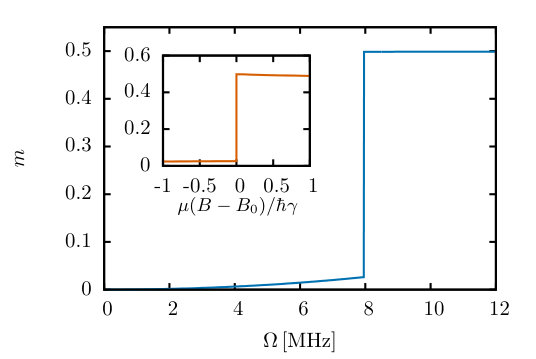 Figure 1
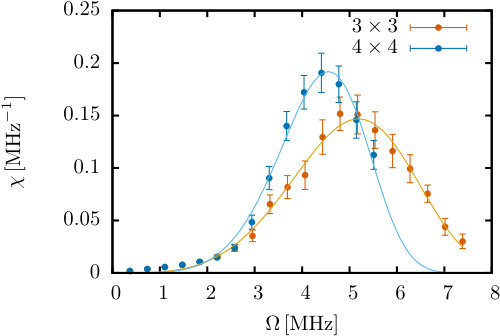 Figure 2
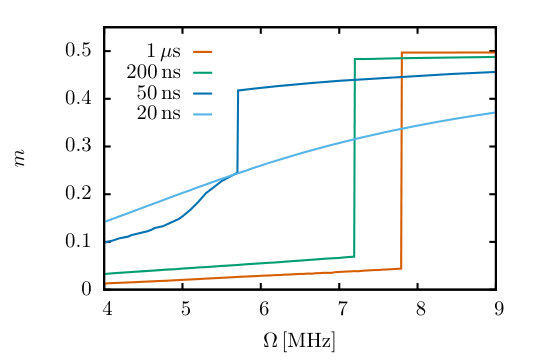 Figure 3
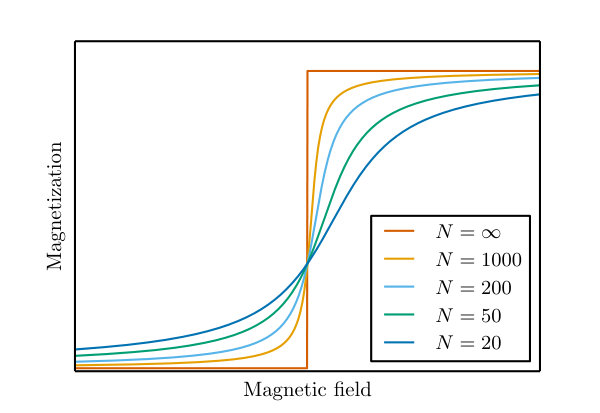 Figure 4
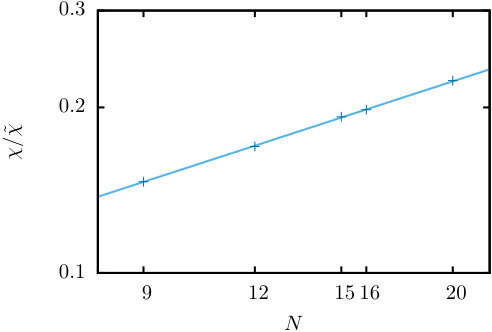 Figure 5
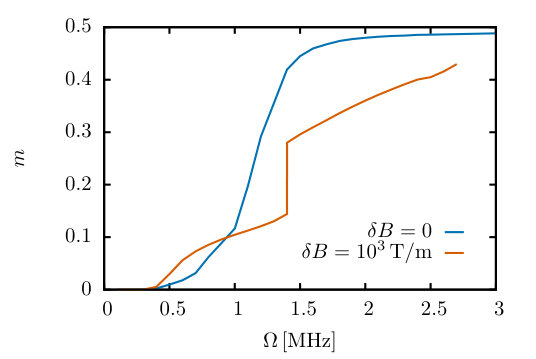 Figure 6
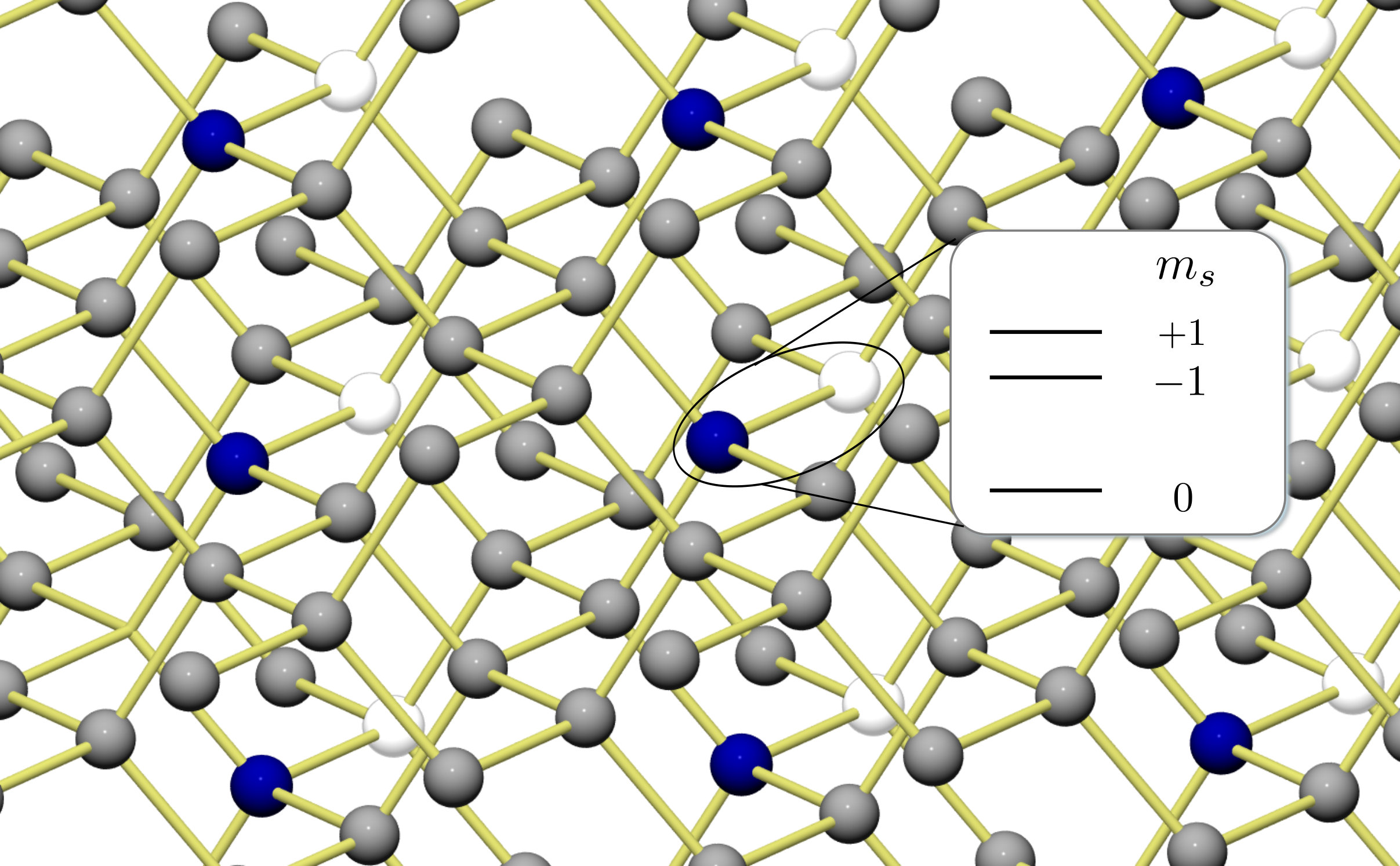 Figure 7
Peer Reviews
No public reviews on file for this paper yet. If you reviewed it on a platform where reviews are public (OpenReview, ICLR, NeurIPS, ICML), you can paste yours below so the community can read it here.
Videos
No videos yet. Explain this paper in a talk, walkthrough, or lecture? Add one.
High-density quantum sensing with dissipative first order transitions
Meghana Raghunandan
Institut für Theoretische Physik, Leibniz Universität Hannover, Appelstraße 2, 30167 Hannover, Germany
Jörg Wrachtrup
3. Physikalisches Institut, Universität Stuttgart, Pfaffenwaldring 57, 70569 Stuttgart
Hendrik Weimer
Institut für Theoretische Physik, Leibniz Universität Hannover, Appelstraße 2, 30167 Hannover, Germany
Abstract
The sensing of external fields using quantum systems is a prime example of an emergent quantum technology. Generically, the sensitivity of a quantum sensor consisting of independent particles is proportional to . However, interactions invariably occuring at high densities lead to a breakdown of the assumption of independence between the particles, posing a severe challenge for quantum sensors operating at the nanoscale. Here, we show that interactions in quantum sensors can be transformed from a nuisance into an advantage when strong interactions trigger a dissipative phase transition in an open quantum system. We demonstrate this behavior by analyzing dissipative quantum sensors based upon nitrogen-vacancy defect centers in diamond. Using both a variational method and numerical simulation of the master equation describing the open quantum many-body system, we establish the existence of a dissipative first order transition that can be used for quantum sensing. We investigate the properties of this phase transition for two- and three-dimensional setups, demonstrating that the transition can be observed using current experimental technology. Finally, we show that quantum sensors based on dissipative phase transitions are particularly robust against imperfections such as disorder or decoherence, with the sensitivity of the sensor not being limited by the coherence time of the device. Our results can readily be applied to other applications in quantum sensing and quantum metrology where interactions are currently a limiting factor.
pacs:
05.30.Rt, 03.65.Yz, 64.60.Kw, 32.80.Ee
The challenges associated with quantum sensing within interacting systems is particularly relevant for magnetic field sensing with nitrogen-vacancy (NV) color centers in diamond, as strong magnetic dipole interactions present a challenge to perform magnetometry at high densities Rondin2014 . For NV centers, performing magnetometry at high densities is particularly important, enabling to study processes inside living cells Kuckso2013 . These challenges imposed by interacting systems are not totally surprising, given that the magnetic dipole moments of NV centers is what enables to measure magnetic fields in the first place. Hence, the effect we are addressing is quite generic and is also found in related applications; for example, uncertainties caused by interactions are currently one of the most important limiting factors for optical lattice clocks Nicholson2015 ; Ushijima2015 .
Building on the tremendous progress in controlling individual Jelezko2004 ; Childress2006 ; Dutt2007 ; Taylor2008 ; Neumann2008 ; Maurer2012 ; Bar-Gill2013 ; Romach2015 and interacting Zhu2011 ; Dolde2013 ; Choi2016 NV centers, combined with the first studies investigating many-body effects Yao2011 ; Weimer2012 ; Kessler2012 ; Weimer2013 ; Cai2013a ; Albrecht2014 ; Choi2016a , we consider large ensembles of microwave-driven NV centers interacting via the magnetic dipole interaction. As an important ingredient, we also incorporate optical pumping of the NV centers towards the spin state, see Fig. 1. Such driven-dissipative spin systems are closely related to dissipative Ising models studied in Rydberg gases Lee2011 ; Marcuzzi2014 , which exhibit a dissipative first order liquid-gas transition at a critical strength of the driving field Weimer2015 ; Weimer2015a ; Kshetrimayum2016 , with the first order transition line ending in a critical point belonging to the Ising universality class Marcuzzi2014 . Crucially, the susceptibility of the system diverges with the number of spins at the transition point, showing a dramatic response of the system that can be used for quantum sensing Gammelmark2011 . A key advantage of turning to the steady state of a driven-dissipative system is that all additional imperfections, such as disorder or decoherence, can be integrated into the sensing process, meaning they only shift the position of the transition without affecting its usefulness for quantum sensing applications.
In this Letter, we demonstrate that the dissipative phase transition is also present in the case of NV centers. Focusing first on the case of two-dimensional arrays of NV centers, we perform a variational analysis of the many-body system in thermodynamic limit. We compare the variational results to wave-function Monte-Carlo simulations for systems containing up to 20 spins, which to our knowledge, is the largest number of spins treated so far in an open quantum many-body systems while retaining the full Hilbert space. We show that in three-dimensional systems, the anisotropy of the dipole-dipole interactions replaces the sharp phase transition by a smooth crossover, however, the transition can easily be restored by applying a magnetic field gradient of modest strength. Finally, we address the role of additional imperfections and decoherence channels within the setup and demonstrate that a finite coherence time does not limit the sensitivity of the quantum sensor.
In our investigations, we consider a system of NV centers in a lattice geometry. Such structures can be implemented using targeted ion implantation at the nanometer scale Scarabelli2016 . Furthermore, the NV centers can be preferentially aligned along the axis of the external magnetic field Karin2014 . We consider an effective two-level description of the NV centers, where the state is off-resonant with respect to the microwave field, see Fig. 1, due to the external bias field . In the rotating frame of the driving, the Hamiltonian is of the form
[TABLE]
where is the detuning from the electron spin resonance and is the Rabi frequency of the microwave driving. The dipole-dipole interaction is given by
[TABLE]
where denotes the position of the NVs, indicates the magnetic dipole moment, and is the angle between the NV axis and the vector connecting sites and . We account for the optical pumping of the spins by considering a quantum master equation in Lindblad form,
[TABLE]
where is the rate of the optical pumping process, which can be controlled by the strength of the green pump laser. In all our calculations, we assume the NV centers to be separated by , and the optical pumping rate to be . Unless we specifically investigate the response to an additional magnetic field, we assume the driving to be on resonance, i.e., .
As in the case of conventional NV sensors Rondin2014 , the system is read out by the fluorescence signal from the NV centers in the state. The only difference is that the dynamics of the system does not follow a Ramsey sequence, but is governed by the dissipative many-body dynamics of the quantum master equation.
Two-dimensional systems.— We first turn to the analysis of two-dimensional square lattices where the dipoles are oriented perpendicular to the plane of the system. We also simplify the analysis by considering only interactions between adjacent lattice sites; taking the full long-range tail into account only slightly modifies our results on a quantitative level, but the qualitative findings will remain unchanged 111See the Supplemental Material for a numerical investigation of the effects of disorder and the full dipolar interaction, as well as a detailed discussion of the sensitivity of the proposed quantum sensor.
As a first step, we investigate the steady state of the quantum master equation based on the variational principle for open quantum systems Weimer2015 . Here, we use product states of the form as our variational basis, with being the reduced density matrix at site . Then, we find a first order transition of the NV magnetization in the driving strength , see Fig. 2. This transition appears to be closely related to what has been predicted for dissipative Ising models discussed in the context of Rydberg gases, where the flip-flop term of Eq. (High-density quantum sensing with dissipative first order transitions) is absent Bernien2017 . Crucially, the first order transition can also be triggered by modifying the external magnetic field, allowing to use this transition for the sensing of static fields.
Wave-function Monte-Carlo simulations.— We perform numerical simulations of the full quantum master equation for systems up to 20 spins. We use the results from the simulations based on a wave-function Monte-Carlo approach Johansson2013 , which we extended to a massively parallelized version, to serve as a benchmark for our variational analysis. In particular, we are interested in the existence of the first order transition predicted by the variational approach. For this, we investigate the magnetic susceptibility , which diverges at a first order transition. Figure 3 shows the numerically obtained susceptibility for different system sizes. Interestingly, we find that the susceptibility data closely follows a Weibull distribution . We note that the Weibull distribution has been discussed in the context of the relaxation from metastable states, with the parameter controlling their relative decay rates Maier1997 ; Adams2010 . Such metastable states also play an important role in dissipative Ising models Rose2016 ; Letscher2016 . To investigate the scaling with the number of spins in detail, we turn to a finite size scaling analysis. For this, we aim to describe the simulation results for the susceptibility peak in terms of a scaling function, from which we can extract how the susceptiblity peak changes with . Here, we also include anisotropic geometries to be able to treat larger system sizes up to 20 spins. Our ansatz for the scaling function is given by
[TABLE]
where is the anisotropy given in terms of the number of spins in the and direction, respectively, while and are numerical constants Binder1989 . Crucially, when the exponent is found to be positive, the susceptibility diverges with , signalling the presence of a first order transition. The reduced scaling function captures the effects of anisotropic system sizes and must satisfy the conditions and . Consequently, we can perform a series expansion according to , which we can truncate for not too large anisotropies. is another numerical constant that can be determined from fitting to the simulation data. Then, the reduced susceptibility should be given by a simple algebraic function. Fig. 4 demonstrates that this is indeed the case, showing that the ansatz of Eq. (4) is correct, confirming the existence of the first order transition. The observed exponent shows that the system exhibits basically the same scaling of the sensitivity for quantum sensing as a noninteracting ensemble ().
Three-dimensional systems.— As the next step, we will study the properties of the system in three spatial dimensions. This will be especially important as controlling the implantation depth of the NV centers will be particularly challenging, making it natural to focus on effectively three-dimensional setups. Here, we turn to a three-dimensional cubic lattice to investigate the consequences. In particular, the anisotropy of the dipole-dipole interaction will now play an important role. Crucially, the dipole-dipole interaction vanishes when integrated over the full solid angle, as the ferromagnetic and antiferromagnetic contributions exactly cancel each other. To capture this property in our nearest-neighbor model, we set the interaction energy within the plane of the dipoles to and to in the third direction.
In three dimensions, the system sizes are prohibitively large for wave-function Monte-Carlo simulations. Therefore, we restrict our analysis to the variational approach, noting that in larger dimensions, the variational solution is even closer to the exact steady state Weimer2017 . Here, we consider a system consisting of three two-dimensional layers, with the central layer being at the zero point of the magnetic field gradient. Within the variational analysis, we find that the other two layers are almost completely polarized in the state, i.e., adding additional layers will not change the results. Additionally, we find that the anisotropy of the dipole-dipole interaction replaces the first order transition by a smooth crossover, see Fig. 5. Nevertheless, it is possible to recover the transition by applying a magnetic field gradient along the NV axis, effectively breaking the symmetry of the dipolar interaction. The first order transition appears already for quite modest field gradients on the order of , which are readily achievable in experiments. For larger values of the gradient, the first order jump in the magnetization will be even more pronounced, eventually recovering the 2D results for very strong gradients. This underlines the usefulness of dissipative quantum sensing even for three-dimensional systems.
Decoherence and other imperfections.— So far, our analysis has been based on a rather idealized setup. In any real diamond sample, there will be several sources of imperfections related to decoherence or to disorder from imperfect positioning of the NV centers. First, we want to point that disorder in the NV interaction energies or missing sites in the lattice due to off-axis NV centers are not going to play an important role. Crucially, these imperfections only affect the strengths of the coupling constants, but cannot reverse their signs. From the analysis of random-bond Ising models Binder1986 , it is known that the underlying phase transition is robust against such a type of disorder, which is consistent with our numerical simulations for disorder in the system Note1 . This leaves decoherence processes caused by residual nitrogen impurities and 13C nuclear spins as the dominant challenge. Hence, we investigate in detail how a limited time caused by these decoherence processes will affect the performance of the dissipative quantum sensor.
Within the variational analysis, we add additional jump operators to the quantum master equation. Importantly, we find that the existence of the first order transition is robust against quite strong decoherence rates, see Fig. 6. Crucially, the phase transition does not merely survive in a regime where the decoherence is perturbatively small compared to the dipole-dipole interaction, but even in a regime where the decoherence rates are several times larger than the coherent interaction strength, which amounts to at a NV distance of in our case. We attribute this strong robustness against decoherence to the steady state being an effective thermal (but non-classical) state Maghrebi2016 . Such a state is diagonal in an appropriate energy eigenbasis, making it less susceptible to decoherence processes. The additional decoherence also leads to a shift in the transition point, requiring to characterize the coherence properties of a device before employing it as a quantum sensor. For more dilute NV samples, the global timescale of the system gets reduced, leading to a stronger susceptibility to decoherence. E.g., for a NV distance of , the phase transition will be replaced by a smooth crossover for at about instead of . We would also like to point out that both the first order transition and the robustness to decoherence remain present without an external bias field Note1 .
Finally, we estimate the sensitivity of the dissipative quantum sensor, which we can extract from the finite size scaling behavior of the susceptibility, as the change in fluorescense from the NV centers is proportional to the magnetic susceptibility Rondin2014 . Within our wave-function Monte-Carlo simulations, we find that the susceptibility for DC fields shows very similar behavior as the AC susceptibility Note1 , so the DC and AC sensitivity of the sensor are essentially the same. This is very different in NV magnetometry using noninteracting ensembles, as there the limited DC sensitivity is generally worse than the limited AC sensitivity since DC sensing does not allow for dynamical decoupling techniques Rondin2014 . As our proposed sensor is not limited by , we expect our approach to be particularly useful for sensing DC fields. We can infer the sensitivity of the dissipative sensor to be for spins and for Note1 . This sensitivity is approximately a factor of three improvement over what has been recently demonstrated using large ensembles of noninteracting NV centers Wolf2015 , while at the same time offering a much smaller sensor size. Additionally, we would like to stress that our dissipative quantum sensor can tolerate large decoherence rates and operate at very small sensor sizes. These unique features makes it extremely promising to use dissipative NV sensors in NV-rich nanodiamonds Su2013 , e.g., for the investigation of biological processes inside living cells.
In summary, we have established a quantum sensing protocol based on dissipative phase transitions. We have demonstrated the usefulness of our approach for quantum sensing with nitrogen-vacancy defect centers in diamond, finding a strong resilience of our protocol against decoherence processes. Finally, our protocol does not depend on the microscopic details of the sensing process, allowing for an immediate transfer to other applications in quantum sensing (see Wade2017 for a concrete example) and quantum metrology.
Acknowledgements.
We thank D. D. B. Rao for fruitful discussions. This work was funded by the Volkswagen Foundation and the DFG within SFB 1227 (DQ-mat).
The reference list from the paper itself. Each links out to its DOI / PubMed record.
- 1(1) L. Rondin, J.-P. Tetienne, T. Hingant, J.-F. Roch, P. Maletinsky, and V. Jacques, Magnetometry with nitrogen-vacancy defects in diamond, Rep. Prog. Phys. 77 , 056503 (2014).
- 2(2) G. Kucsko, P. C. Maurer, N. Y. Yao, M. Kubo, H. J. Noh, P. K. Lo, H. Park, and M. D. Lukin, Nanometre-scale thermometry in a living cell, Nature 500 , 54 (2013).
- 3(3) T. L. Nicholson, S. L. Campbell, R. B. Hutson, G. E. Marti, B. J. Bloom, R. L. Mc Nally, W. Zhang, M. D. Barrett, M. S. Safronova, G. F. Strouse, W. L. Tew, and J. Ye, Systematic evaluation of an atomic clock at 2 × 10 − 18 2 superscript 10 18 2{\times}10^{-18} total uncertainty, Nature Commun. 6 , 6896 (2015).
- 4(4) I. Ushijima, M. Takamoto, M. Das, T. Ohkubo, and H. Katori, Cryogenic optical lattice clocks, Nature Photon. 9 , 185 (2015).
- 5(5) F. Jelezko, T. Gaebel, I. Popa, A. Gruber, and J. Wrachtrup, Observation of Coherent Oscillations in a Single Electron Spin, Phys. Rev. Lett. 92 , 076401 (2004).
- 6(6) L. Childress, M. V. Gurudev Dutt, J. M. Taylor, A. S. Zibrov, F. Jelezko, J. Wrachtrup, P. R. Hemmer, and M. D. Lukin, Coherent Dynamics of Coupled Electron and Nuclear Spin Qubits in Diamond, Science 314 , 281 (2006).
- 7(7) M. V. G. Dutt, L. Childress, L. Jiang, E. Togan, J. Maze, F. Jelezko, A. S. Zibrov, P. R. Hemmer, and M. D. Lukin, Quantum Register Based on Individual Electronic and Nuclear Spin Qubits in Diamond, Science 316 , 1312 (2007).
- 8(8) J. M. Taylor, P. Cappellaro, L. Childress, L. Jiang, D. Budker, P. R. Hemmer, A. Yacoby, R. Walsworth, and M. D. Lukin, High-sensitivity diamond magnetometer with nanoscale resolution, Nature Phys 4 , 810 (2008).