General Galilei Covariant Gaussian Maps
Giulio Gasbarri, Marko Toro\v{s}, Angelo Bassi

TL;DR
This paper characterizes non-Markovian Gaussian maps that are covariant under Galilean transformations, extending known results and applying them to measures of macroscopicity in quantum systems.
Contribution
It provides a comprehensive characterization of Galilei covariant Gaussian maps, including non-Markovian cases, and discusses their implications for measures of macroscopicity.
Findings
Reduction to Holevo's Markovian result in the limit
Extension of macroscopicity measures to non-Markovian maps
Analysis of dissipation and covariance in quantum maps
Abstract
We characterize general non-Markovian Gaussian maps which are covariant under Galilean transformations. In particular, we characterize translational and Galilean covariant maps and show that they reduce to the known Holevo result in the Markovian limit. We apply the results to discuss measures of macroscopicity based on classicalization maps, specifically addressing dissipation, Galilean covariance and non-Markovianity. We further suggest a possible generalization of the macroscopicity measure defined in Nimmrichter and Hornbergerl. [Phys. Rev. Lett. 110, 16 (2013)].
Click any figure to enlarge with its caption.
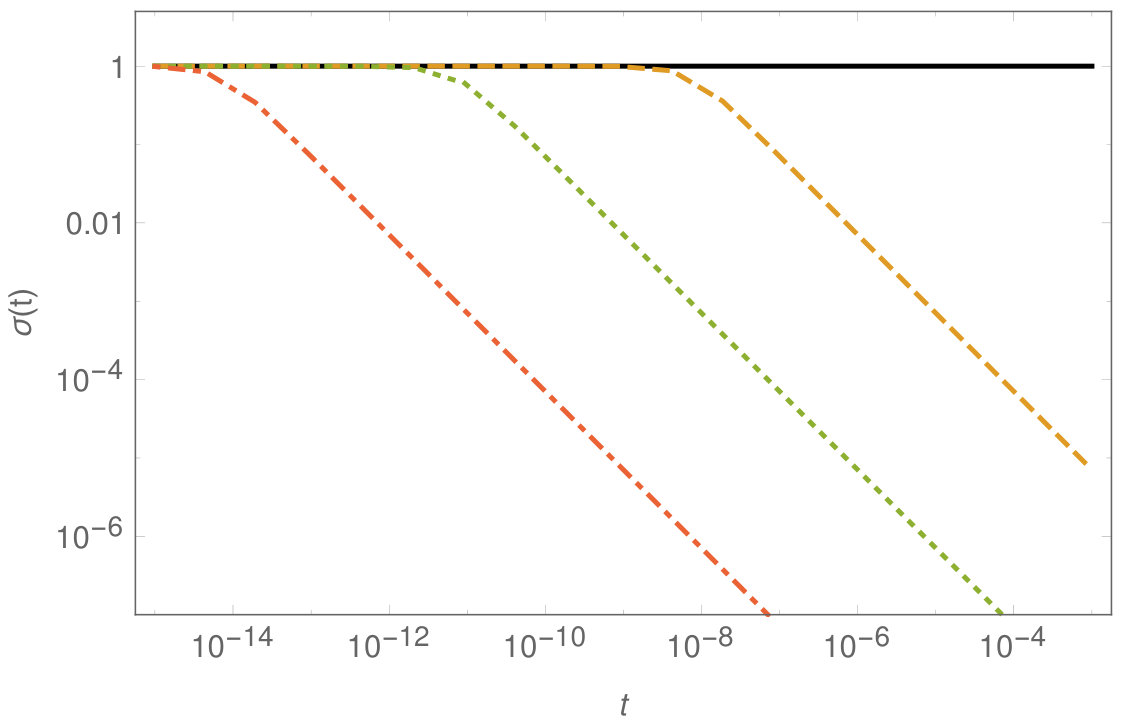 Figure 1
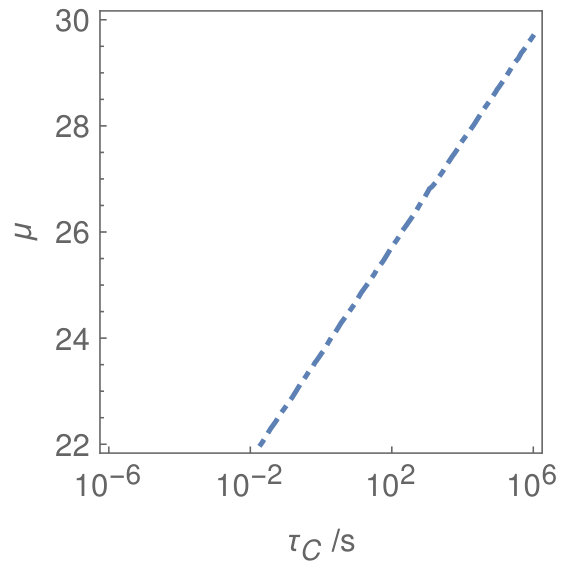 Figure 2
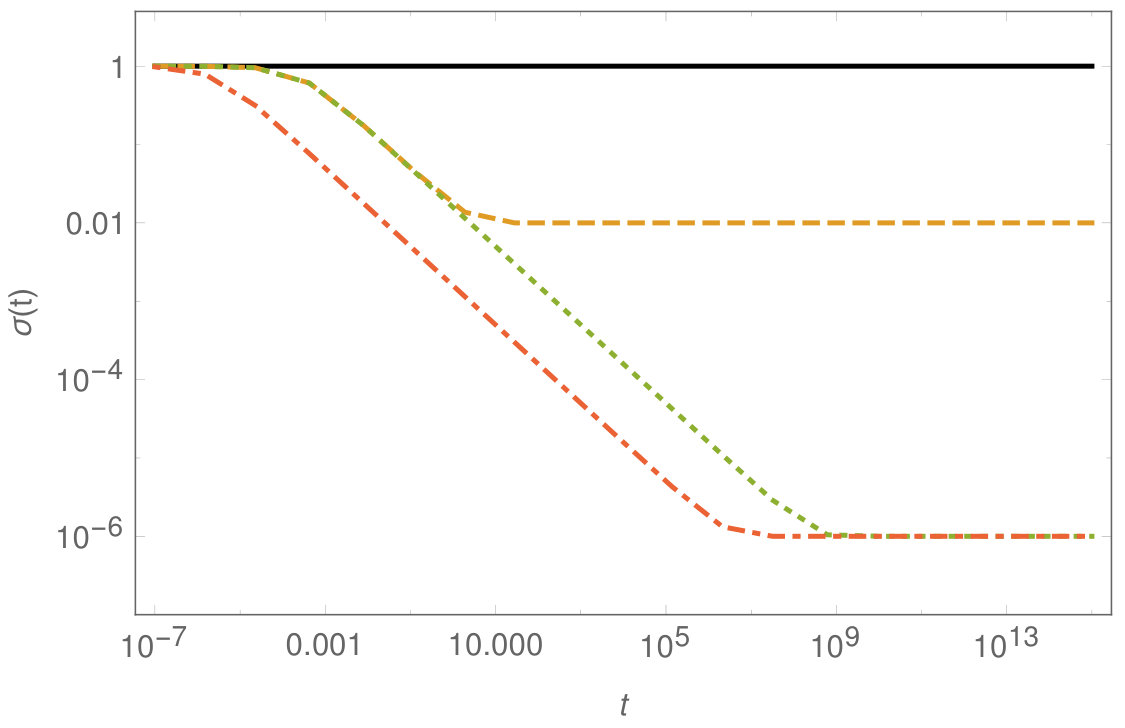 Figure 3
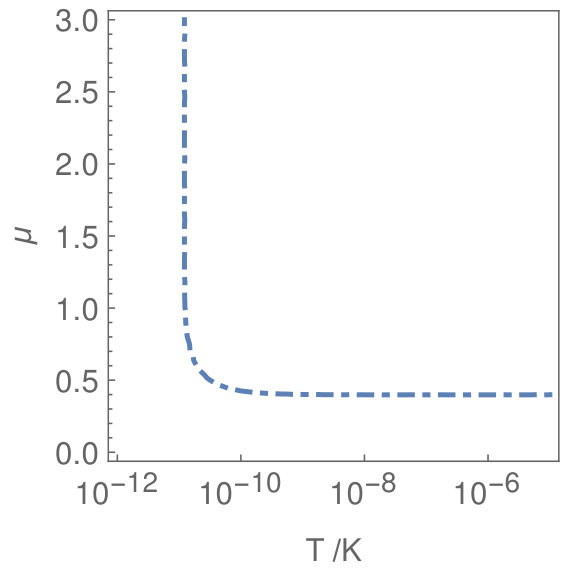 Figure 4
Peer Reviews
No public reviews on file for this paper yet. If you reviewed it on a platform where reviews are public (OpenReview, ICLR, NeurIPS, ICML), you can paste yours below so the community can read it here.
Videos
No videos yet. Explain this paper in a talk, walkthrough, or lecture? Add one.
General Galilei Covariant Gaussian Maps
Giulio Gasbarri
Abdus Salam ICTP, Strada Costiera 11, I-34151 Trieste, Italy
Department of Physics, University of Trieste, Strada Costiera 11, 34151 Trieste, Italy
Istituto Nazionale di Fisica Nucleare, Trieste Section, Via Valerio 2, 34127 Trieste, Italy
Marko Toroš
Department of Physics, University of Trieste, Strada Costiera 11, 34151 Trieste, Italy
Istituto Nazionale di Fisica Nucleare, Trieste Section, Via Valerio 2, 34127 Trieste, Italy
Angelo Bassi
Department of Physics, University of Trieste, Strada Costiera 11, 34151 Trieste, Italy
Istituto Nazionale di Fisica Nucleare, Trieste Section, Via Valerio 2, 34127 Trieste, Italy
Abstract
We characterize general non-Markovian Gaussian maps which are covariant under Galilean transformations. In particular, we consider translational and Galilean covariant maps and show that they reduce to the known Holevo result in the Markovian limit. We apply the results to discuss measures of macroscopicity based on classicalization maps, specifically addressing dissipation, Galilean covariance and non-Markovianity. We further suggest a possible generalization of the macroscopicity measure defined in Nimmrichter and Hornberger [Phys. Rev. Lett. 110, 16 (2013)].
Introduction.— Symmetries have always played a central role in modern physics, especially after their mathematical formulation with the advent of group theory: they underlie the simplicity of nature and manifest the beauty of physical laws. They also serve as a guideline principle for deciding the form of the dynamics feynman1966feynman ; peskin1996introduction . Here we are interested in the role of space-time symmetries in non-relativistic quantum mechanics.
The covariance of the Schrödinger equation, and of the corresponding Liouville-von Neumann equation, under the action of the Galielan group, has been extensively discussed bargmann1954unitary ; ballentine1998quantum ; pereira2015galilei . On the other hand, the investigation of Galilean covariance within the context of open quantum systems is still an area of active research breuer2002theory . The exact quantum dynamics of a system interacting with the surrounding environment can be very complicated: in general, heavy approximations and heuristical arguments are needed in order to arrive at an explicit useful expression for the system’s effective dynamics. In this case, symmetries can be a guiding principle in constructing the effective dynamics, bypassing at least partially the complexity (or impossibility) of a direct calculation by imposing constraints, which are expected to hold not only at the fundamental level, but also at the effective level vacchini2001translation ; de2013derivation ; yan2000unified ; yan2000unified1 ; Sandulescu1987277 ; 474887 ; vacchini2009quantum ; 6b00498 ; ferialdi2016exact .
Space-time symmetries in open quantum systems have been fully analyzed only in the special, but very important, case of a Markovian, completely positive (CP) and trace preserving (TP) dynamics. This dynamics, discussed in the seminal works of Gorini, Kossakowski, Sudarshan and independently by Lindblad gorini1976completely ; lindblad1976generators , is known as the quantum dynamical semigroup: it is generated by the Lindblad superoperator and can be written as a first order differential equation, called the Lindblad master equation. By imposing the additional request of covariance under the action of the Galilei group, Holevo in a series of works holevo1993note ; holevo1993conservativity ; holevo1995translation ; holevo1996covariant , completely characterized translational and Galilei covariant Lindblad master equations, by giving the explicit form of the Lindblad superoperators 111The characterization is unique up to a unitary transformation (the same applies also for non-Markovian Gaussian maps discussed in this text)..
The Holevo characterizations play a major role in the description of several important physical phenomena such as environmental decoherence and relaxation phenomena vacchini2001translation ; de2013derivation ; yan2000unified ; yan2000unified1 ; Sandulescu1987277 ; 474887 ; vacchini2009quantum ; 6b00498 . Furthermore, they are also relevant for the foundation of quantum mechanics, where an intrinsic non-unitary dynamics is postulated to solve the measurement problem bassi2003dynamical ; bassi2013models ; weinberg2016happens , the black hole information paradox hawking1976breakdown , or to combine principles of general relativity with quantum mechanics penrose1996gravity .
Although the assumption of Markovianity is often well justified, recent technological advances have lead to investigating several phenomena exhibiting memory effects breuer2016colloquium , e.g., ultrafast chemical reactions plotkin1998non ; burshtein2004non ; pomyalov2005non ; gindensperger2006short ; guerin2012non ; chiarugi2015modelling , side band cooling triana2016ultrafast and light harvesting in photosynthesis pachon2012computational ; pachon2011physical ; schroder2006calculation ; plenio2008dephasing ; thorwart2009enhanced ; nalbach2011exciton . This is of little surprise, as the time resolution of experimental apparatuses has increased severalfold in the last decades. It is therefore now clear that non-Markovian dynamics will acquire a more prominent role in the near future: the theoretical investigations are pressed by practical necessity.
In this letter we will derive the general structure of non-Markovian Galilei covariant Gaussian maps. More specifically, we will consider the non-Markovian Gaussian map introduced in Ref. diosi2014general , and we will impose covariance under Galilean space-time symmetries (translations, boosts and rotations). In this way we will obtain a generalization of the Holevo generators holevo1993note ; holevo1993conservativity ; holevo1995translation ; holevo1996covariant to the non-Markovian Gaussian case. Using these results, we will discuss measures of macroscopicity based on classicalization maps. Specifically, we will address the role of non-Markovian and dissipative effects, which limit the validity of the macroscopicity measure proposed in Ref. nimmrichter2013macroscopicity .
General framework of Gaussian maps.— Non-Markovian dynamics are in general difficult to analyze: the system and environment form a complicated many-body problem which, without some additional simplifying assumption, remains intractable. On the other hand, the subclass of (non-Markovian) Gaussian maps, still appropriate for the description of a vast spectrum of phenomena tavis1968exact ; leggett1987dynamics ; hu1992quantum ; diosi1998non ; greentree2006 ; adler2007collapse ; pachon2010nonclassical ; diosi2012non ; guo2012critical ; pachon2013mechanisms ; wang2015nonequilibrium ; estrada2015quantum ; tilloy2017interacting , can be analyzed both analytically diosi2014general and numerically stockburger2002exact ; tilloy2017markovian .
The starting point of our analysis is the most general trace-preserving, completely positive Gaussian map derived in Ref. diosi2014general (we work in interaction picture and adopt Einstein’s summation convention):
[TABLE]
where denotes the time-ordered exponential, is a complex valued positive semi-definite matrix, are bounded Hermitian operators and the subscript () denotes operators acting on the statistical operator from the left (right), e.g. with Hermitian operators. The correlation matrix and the operators are supposed to encode, phenomenologically, the action of the bath on the system. We note that, by imposing the request of Markovianity:
[TABLE]
where is a complex valued positive semi-definite matrix, the exponent in Eq. (General Galilei Covariant Gaussian Maps) takes the well-known Lindblad form.
Since we are interested in space-time symmetries, we now explicitly assume that the Hilbert space is (the generalization to the -particle Hilbert space is straightforward). In this case it is convenient to decompose the operators in Eq. (General Galilei Covariant Gaussian Maps) by using the Weyl-Wigner decomposition (in Schrödinger picture) weyl1927quantenmechanik :
[TABLE]
where may depend explicitly on time, which is encoded in the time-dependency of , and and are the standard position and momentum operators. It is then straightforward to show that the map in Eq. (General Galilei Covariant Gaussian Maps) becomes (in the interaction picture):
[TABLE]
where , , the integration domains, which we omit to simplify the notation, are and for the and integrals, respectively, is the position operator in the interaction picture at time , and denote or (left or right operators), , , and
[TABLE]
is a kernel that satisfies the following symmetry property 222From the definition of in diosi2014general we have .:
[TABLE]
We now impose the relevant Galilei symmetry on the system, constraining the form of the dynamics given by Eq. (4).
Covariance.— Let us consider a locally compact Lie group and a unitary representation , with , on the Hilbert space of the system. Following davies1970d ; holevo1973statistical a quantum dynamical map is said to be G-covariant if it commutes with the linear transformation :
[TABLE]
With reference to the single particle Hilbert space we assume that the Hamiltonian is covariant under the relevant symmetry of the Galilei group 333In the one particle case considered here it means that the Hamiltonian is . The many particle case, which is physically richer, as particle-particle interactions are allowed, can be treated in a similar way. See the discussion in bargmann1954unitary ; ballentine1998quantum ; pereira2015galilei for a general discussion of the covariance of the dynamics (of isolated systems), as well as foldy1961relativistic , for the covariance of the center of mass dynamics.: specifically, we consider the centrally extended unitary representation () of the Galilei group () on . The generators of infinitesimal translations, boosts and rotations are (in the interaction picture):
[TABLE]
respectively, where is the mass of the particle. Exploiting Eq. (4), and the fact that we are considering a unitary representation, it is straightforward to show that Eq. (7) is satisfied if and only if the following condition is satisfied:
[TABLE]
This equation constrains the structure of the dynamical map under the Galilean symmetry . In particular, we will now see how the request of translation (boost) covariance characterizes the structure of the dynamical map.
Translational-covariance.— Restricting to the subgroup of translations we have that:
[TABLE]
where is the position operator in the interaction picture at time , is a translation vector and denotes the corresponding linear transformation (see Eq. (7)). Using Eqs. (12), (13) we obtain from Eq. (11):
[TABLE]
Since this relation must hold , it follows that Eq. (14) is satisfied if and only if the following equality holds
[TABLE]
where is a complex valued function, which we rewrite as:
[TABLE]
We then insert Eq. (15) into Eq. (4), use Eq. (16), integrate over and relabel as to obtain:
[TABLE]
where
[TABLE]
is a completely general operator valued function of the operator . Equation (17) fully characterizes translation covariant CP Gaussian maps.
Boost-covariance.— Restricting to the subgroup of boosts we have that:
[TABLE]
where is a momentum vector (a particle of mass boosted with velocity ) and denotes the corresponding linear transformation (see Eq. (7)). Imposing boost covariance, and following the analogous steps as for the characterization of translational covariance, we obtain the following equality:
[TABLE]
where is a complex valued function. Performing the following change of variables: and , using Eq. (21), we can then rewrite Eq. (4) as:
[TABLE]
where
[TABLE]
is a completely general operator valued function of the operator . This equation completely characterizes boost covariant CP Gaussian maps.
Translation-boost Covariance.— We now require both translation and boost covariance. The dynamical map must satisfy condition Eq. (15) as well as condition Eq. (21), i.e.,
[TABLE]
Replacing Eq. (24) in Eq. (4), performing again the following change of variables: and , one obtains
[TABLE]
where is a completely general real valued function. In this case the functional dependence of the map on the position and momentum operator is fixed 444Clearly, Eq. (25) can be written in many different but equivalent ways by using unitary transformation on the operators.. This equation fully characterizes translation and boost covariant CP Gaussian maps.
Rotation Covariance.— For completeness, we also discuss rotation covariance. Restricting to the subgroup of rotations we have:
[TABLE]
where is a generic rotation matrix and the corresponding linear transformation (see Eq. (7)). Using the relation , where , are generic vectors, and recalling that the integral measure is invariant under rotations, we perform the change of variables , in Eq. (11), which gives the condition:
[TABLE]
Equation (4), with the function satisfying the symmetry given by Eq. (28), characterizes rotational covariant CP Gaussian maps. This concludes the characterization of CP Gaussian maps covariant under Galilean symmetries.
Markovian limits.— The CP Gaussian covariant maps derived here above reduce to the well-known Markovian CP Gaussian covariant maps in the Markovian limit. In particular, we immediately re-obtain the Holevo structures for the generators of the covariant quantum dynamical semigroup by imposing the request of Markovianity as given by Eq. (2). Under this assumption it is straightforward to show that Eq. (17) reduces to , where
[TABLE]
is the generator of the translational covariant semigroup.
Analogously, by considering the Markovian limit of the boost and translation covariant map derived in Eq. (25), we obtain the following generator:
[TABLE]
where is a positive valued function. Equations. (29), and (30) correspond to the Holevo results for covariance under translation and boost-translation, respectively holevo1995translation ; holevo1996covariant .
Macroscopicity measure.— More and more experiments are nowadays probing quantum mechanics in novel regimes, exploring in particular the boundary between quantum and classical curceanu2015x ; torovs2017bounds ; carlesso2016experimental ; bilardello2016bounds ; belli2016entangling . It becomes relevant to define a measure that quantifies how far a given experiment pushes this boundary. This is a nontrivial task: what is the measure of macroscopicity that correctly accounts for complexity, size, mass or some other feature of the system being explored?
Beginning with Leggett leggett1980macroscopic ; leggett2002testing several measures of macroscopicity have been proposed dur2002effective ; bjork2004size ; korsbakken2007measurement ; marquardt2008measuring ; lee2011quantification ; nimmrichter2013macroscopicity ; nimmrichter2014macroscopic . Among them, the one given by Nimmrichter and Hornberger in Ref. nimmrichter2014macroscopic has become quite popular in the matter-wave interferometry community because of its simplicity and versatility: they define as a macroscopicity measure a real number that quantifies how well an experiment tests a minimal modification of quantum mechanics. Specifically, they suggest the following measure:
[TABLE]
with the biggest excluded time scale in which quantum superpositions are suppressed by the minimal modification of quantum mechanics.
They further assume that the minimal modification of quantum mechanics, for a single particle with mass , is described by a Markovian non-unitary TP, CP, Galilean covariant (translations, boosts and rotations) and time translation invariant map. This amounts to the non-unitary map generated by Eq. (30), where they choose the following parametrization of the correlation function:
[TABLE]
where is a positive, isotropic phase-space distribution normalized to unity (a Gaussian function with variances , ) and gives the time scale in which superpositions are suppressed by the minimal modification (for further details see Refs. nimmrichter2013macroscopicity ; nimmrichter2014macroscopic ).
The measure defined in Eq. (31) thus relies on the assumptions characterizing the minimal modification. Among these, Markovianity and Galilei covariance are usually taken for granted as they are a building block of the most successful non-relativistic theories: quantum and classical mechanics. However, technological advances have come to the point of questioning the validity of these two assumptions; on top of this, minimal modifications need not satisfy them a priori. We take an example from the literature of collapse models, which can be seen as instances of minimal modifications of quantum mechanics in the spirit of nimmrichter2013macroscopicity . X-ray measurements PhysRevC.59.2108 pose rather strong bounds on the collapse parameters curceanu2015x however the strength of the bounds depends critically on whether the collapse model is Markovian or not adler2009photon ; donadi2014emission . The reason is that such experiments explore the Hz region of the spectrum, meaning that the time resolution which is probed is . Any cutoff in the spectrum of the collapse noise smaller than such frequencies weakens significantly the bound. A similar behavior is expected to occur for a macroscopicity measure that correctly includes non-Markovian effects. Markovianity might be verified only under a suitable temporal coarse graining of the underlying dynamics. In general if the time resolution of the experiment is longer than the correlation times associated to the modifications of the theory, then the Markovian assumption is justified, as any non-Markovian dynamics with finite correlation times may be approximated by its Markovian limit 555see Supplemental Material S1, for the discussion on the long time behavior of the statistical operator under the a generic Gaussian evolution in Eq. (General Galilei Covariant Gaussian Maps).
The assumption of Galilean covariance (translation and boost), even if it seems an innocent assumption, forces the non-unitary dynamics to produce an infinite growth of the system’s energy on long time scales 666see Supplemental Material S2, for a study on the asymptotic behavior of the energy for the Galilei-Covariant dynamic in Eq. (4). Galilean covariant maps must be then understood only as a good approximation that can be used in experiments that run for sufficiently short times, such that dissipative phenomena are negligible. In experiments with a long running time, the results could be influenced by dissipative phenomena and consequently the assumption of Galilean covariant dynamics is too restrictive. We consider a second example taken from collapse models. A recent experiment succeeded to cool a cloud of cold atoms to temperature less than pK kovachy2015matter . They measured the spreading of the cloud over time, which would be affected by modification of quantum mechanics. The analysis performed in Ref. bilardello2016bounds shows that the predictions of collapse models depend on whether dissipative effects are taken into account (Fig. (8) of Ref.bilardello2016bounds shows that the bounds on the collapse model drastically change with the thermalization temperature , which quantifies the dissipation in the model). Again, a similar dependence on dissipation is expected by a macroscopicity measure, which takes dissipative effects into account.
To summarize, although is a reasonable choice for the measure of macroscopicity in many instances, novel experiments probing the very short and very long time scales need a different measure of macroscopicity due to non-Markovian and dissipative effects, respectively. For such cases we propose to use the (translational covariant and non-Markovian) map given in Eq. (17) as the minimal modification, with an appropriately chosen correlation function and operators , where for simplicity we consider that the sum over , contains only one term. We can still use Eq. (31) to define the measure of macroscopicity, where now is the biggest excluded time scale, for fixed parameters , in which quantum superposition are suppressed by the minimal modification. Here is the correlation time of the correlation function and is the temperature measuring dissipative effects.
To be more concrete we suggest the exponential correlation function
[TABLE]
and the Gaussian operators
[TABLE]
where , amu is a reference mass, is Boltzmann’s constant, is a free length parameter analogous to the spread in Eq. (32) and gives the time scale in which the superpositions of a reference object with mass m are suppressed. In the Markovian () and non-dissipative () limit, we reobtain the measure of macroscopicity proposed by Nimmrichter and Hornberger with (see Eqs. (31), (32)).
This new measure depends critically on the values of and . To illustrate this, we have studied the classicalization map in the regime of small distances and low momentum transfer in one spatial dimension 777We Taylor expand the operators in the time ordered exponential up to quadratic order in position and momentum operators, i.e. we keep only the terms proportional to , , , , , .. Specifically, we have considered a simple ideal experiment capable of resolving the time evolution of the spread of the wave-packet of a freely evolving particle. The associated macroscopicity measure is investigated in the non-Markovian and dissipative regimes (cf. Supplemental Material S4 and Fig. S2), showing how it depends on the correlation time and temperature .
Summary.— We have analyzed Galilean symmetries in non-Markovian Gaussian CP maps. The two main results of this letter are the characterization of translational and of Galilei (translation-boost) covariant non-Markovian CP Gaussian maps given by Eqs. (17) and (25), respectively. These maps are a generalization of the well known Holevo results, which we reobtain in the Markovian limit. We have also provided the corresponding unravelling given by stochastic Schrödinger equations in a form suitable for non-perturbative numerical analysis 888see Supplemental Material S3 for the study on the stochastic unraveling that leads to CP gaussian maps satisfying translation, boost, boost-translation or rotation symmetry As mentioned in the introduction, these results can find applications in several fields of research vacchini2001translation ; de2013derivation ; yan2000unified ; yan2000unified1 ; Sandulescu1987277 ; 474887 ; vacchini2009quantum ; 6b00498 . We have also analyzed the role that non-Markovian and dissipative effects play in the construction of a macroscopicity measure. We have shown that experiments probing the quantum-to-classical boundary on very short or very long time scales might not be adequately described by the macroscopicity measure in Ref. nimmrichter2013macroscopicity , and a more general definition is needed, as the one we propose, based on Eqs. (17), (33), and (34).
Acknowledgements.— The authors acknowledge A. Smirne, and A. Tilloy for insightful discussions. They also thank L. Ferialdi for insightful discussions and for the Mathematica codes of the CDQMUPL dynamics and gratefully acknowledge financial support from the University of Trieste (grant FRA 2016) and INFN. G.G. acknowledges financial support from ICTP Trieste. G.G. and M.T. contributed equally to this work.
The reference list from the paper itself. Each links out to its DOI / PubMed record.
- 1[1] Richard P Feynman, Robert B Leighton, and Matthew Sands. The feynman lectures on physics, vol. 3: Quantum mechanics, 1966.
- 2[2] Michael E Peskin, Daniel V Schroeder, and Emil Martinec. An introduction to quantum field theory, 1996.
- 3[3] Valentine Bargmann. On unitary ray representations of continuous groups. Annals of Mathematics , pages 1–46, 1954.
- 4[4] Leslie E Ballentine. Quantum mechanics: A modern development . World scientific, 1998.
- 5[5] ST Pereira and Renato M Angelo. Galilei covariance and einstein’s equivalence principle in quantum reference frames. Physical Review A , 91(2):022107, 2015.
- 6[6] Heinz-Peter Breuer and Francesco Petruccione. The theory of open quantum systems . Oxford University Press on Demand, 2002.
- 7[7] Bassano Vacchini. Translation-covariant markovian master equation for a test particle in a quantum fluid. Journal of Mathematical Physics , 42(9):4291–4312, 2001.
- 8[8] Wojciech De Roeck and Dominique Spehner. Derivation of some translation-invariant lindblad equations for a quantum brownian particle. Journal of Statistical Physics , 150(2):320–352, 2013.