Sensitivity of CLIC at 380 GeV to the top FCNC decay $t\rightarrow cH$
Aleksander Filip \.Zarnecki

TL;DR
This study evaluates CLIC's sensitivity to the rare top quark decay $t ightarrow cH$ within the 2HDM(III) model, considering realistic beam effects and background, and estimates the potential to detect or constrain this flavor-changing neutral current process.
Contribution
It provides a detailed simulation-based analysis of CLIC's capability to observe or limit the $t ightarrow cH$ decay, incorporating beam polarization and background effects.
Findings
Signal selection efficiency around 10%.
Expected limits on $BR(t ightarrow cH)\times BR(H\rightarrow b\bar{b})$ are established.
Comparison with previous parton-level results shows realistic sensitivity estimates.
Abstract
In the Standard Model (SM), flavour changing neutral current (FCNC) top decays, possible at loop level only, are very strongly suppressed. Observation of any such decay would be a direct signature of physics beyond the SM. Large enhancements are possible in many "new physics" scenarios and the largest enhancement is in most cases expected for the decay. A full study for CLIC was based on the WHIZARD simulation of FCNC top decays within the 2HDM(III) model. Beam polarization and beam-induced background were taken into account. Top pair production events with the FCNC decay can be identified based on kinematic constrains and flavour tagging information. Due to a large overlap in the kinematic space with standard top pair events, the final signal selection-efficiency is small, at the 10% level. Expected limits on $BR(t\rightarrow cH)\times…
Click any figure to enlarge with its caption.
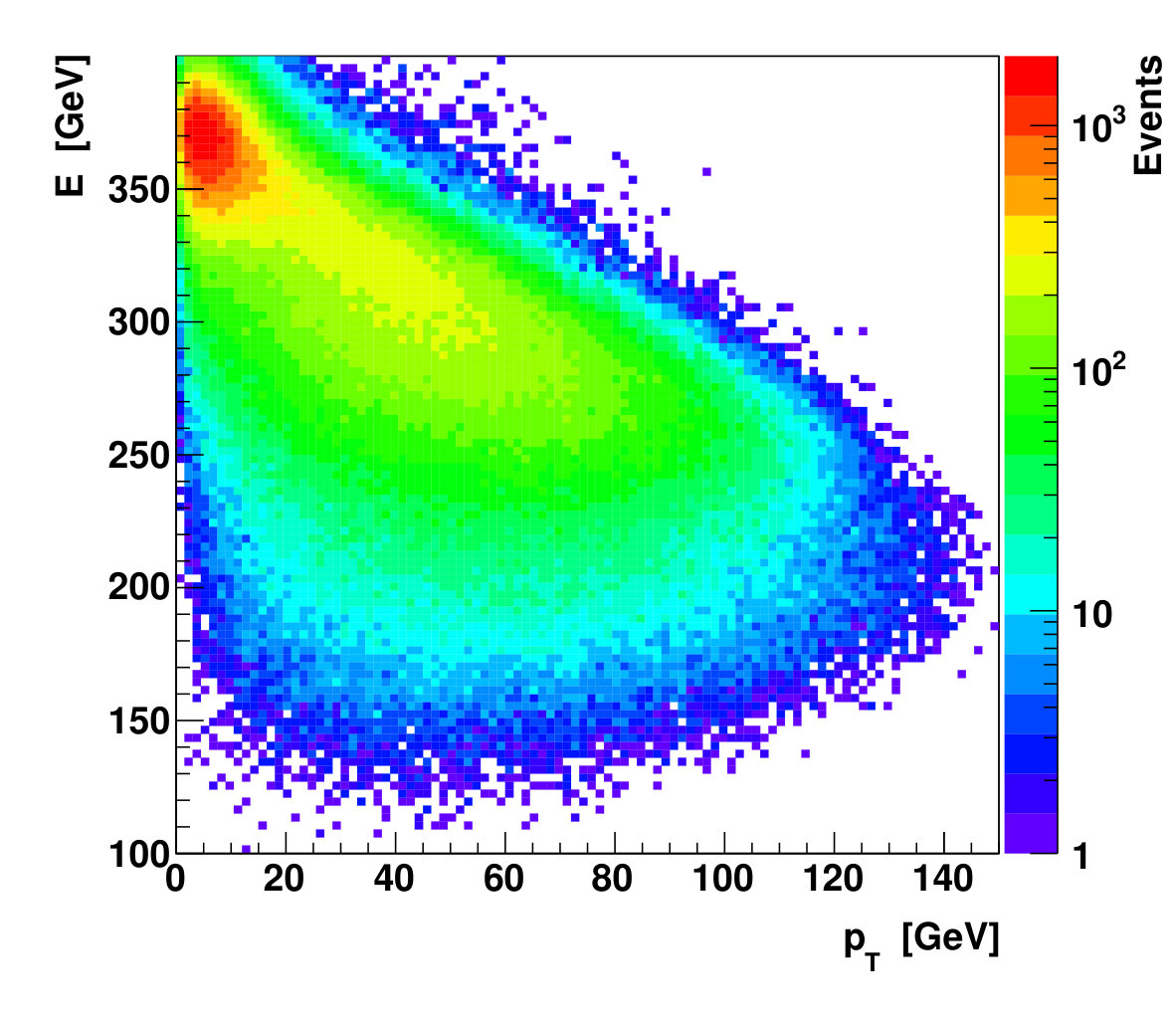 Figure 1
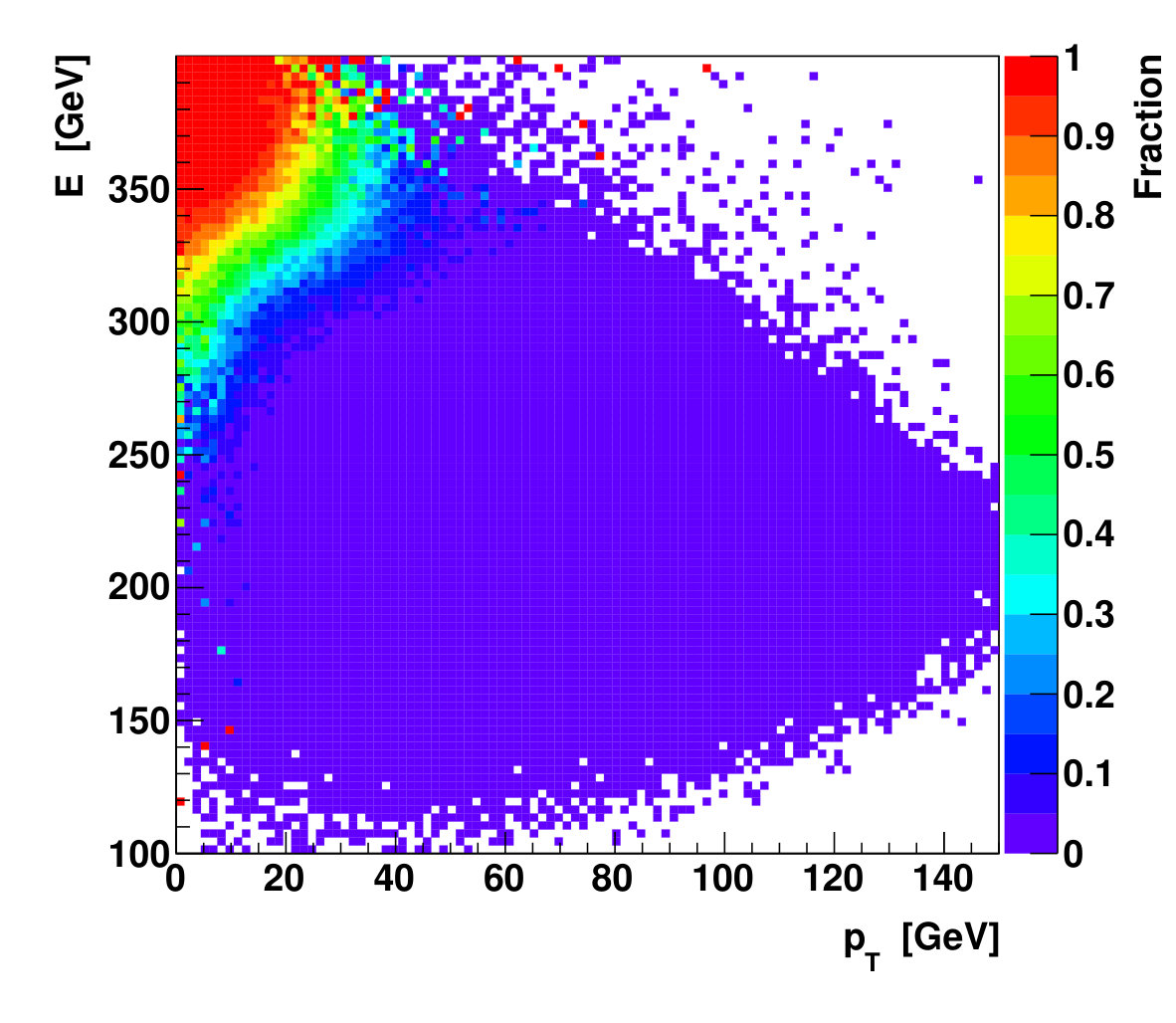 Figure 2
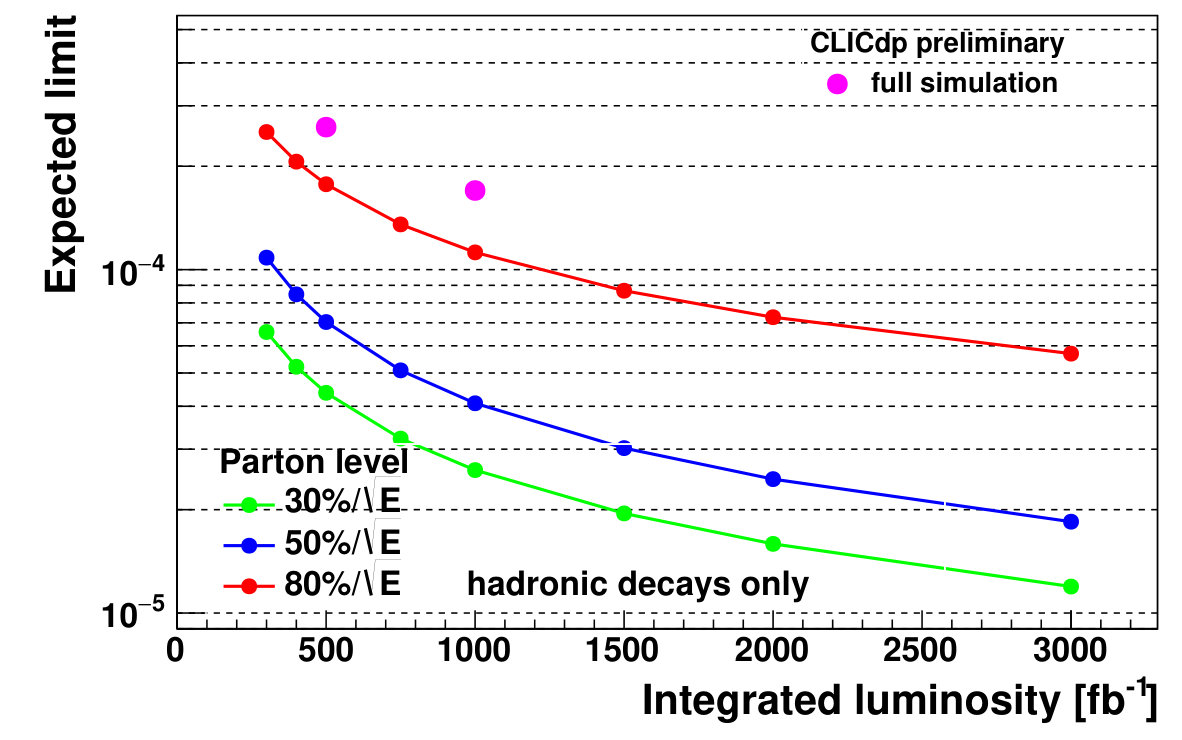 Figure 3
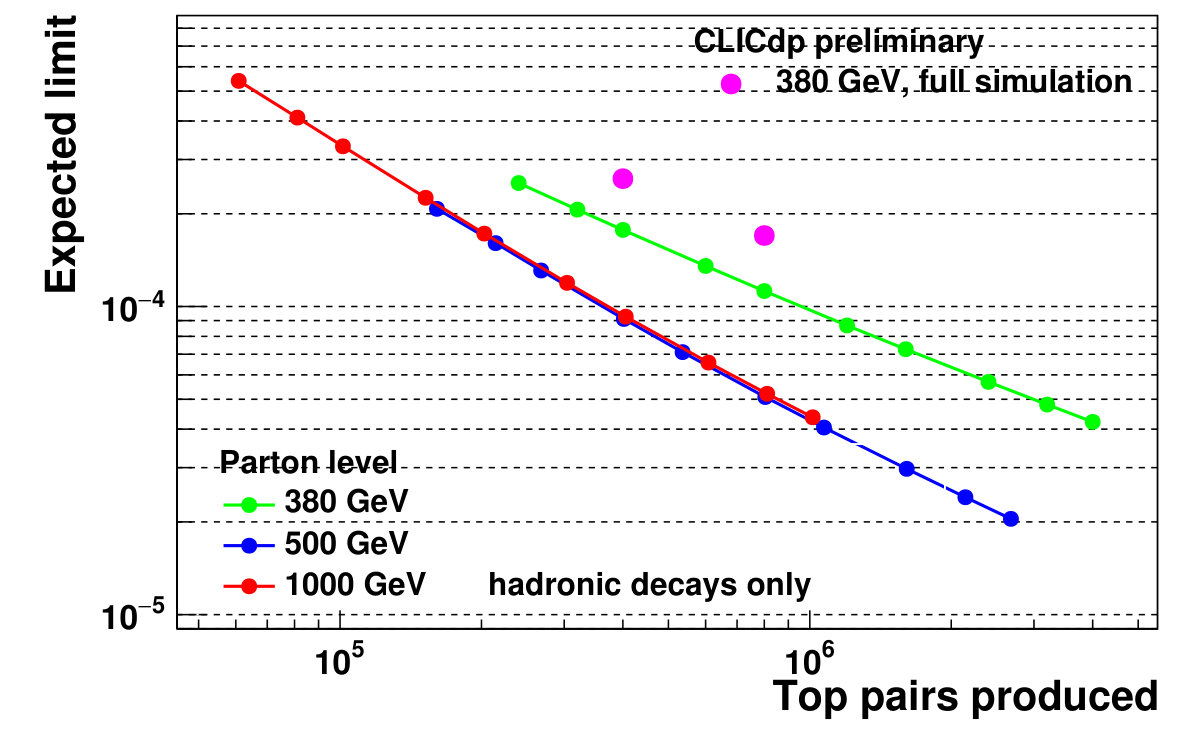 Figure 4
 Figure 5
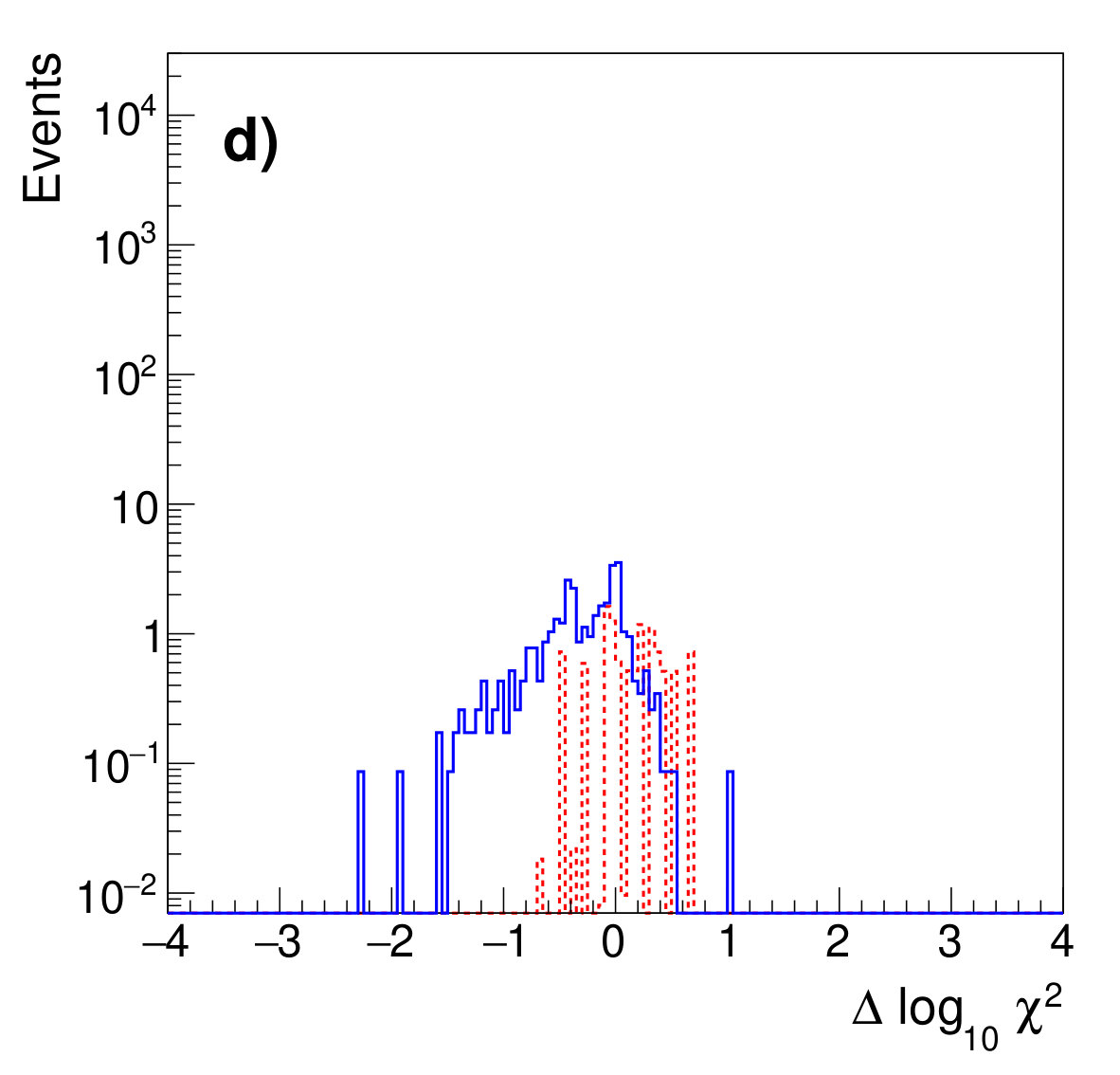 Figure 6
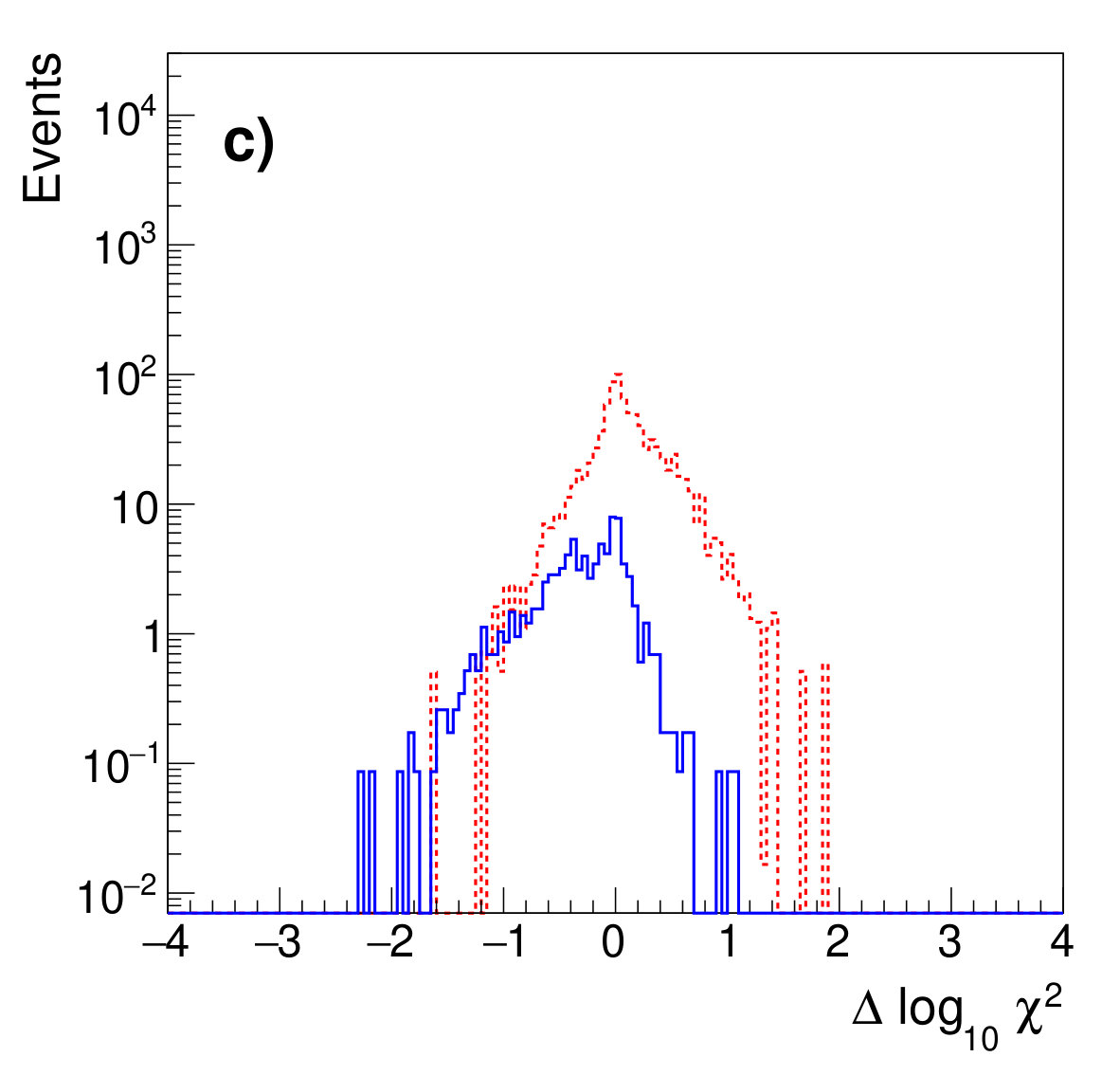 Figure 7
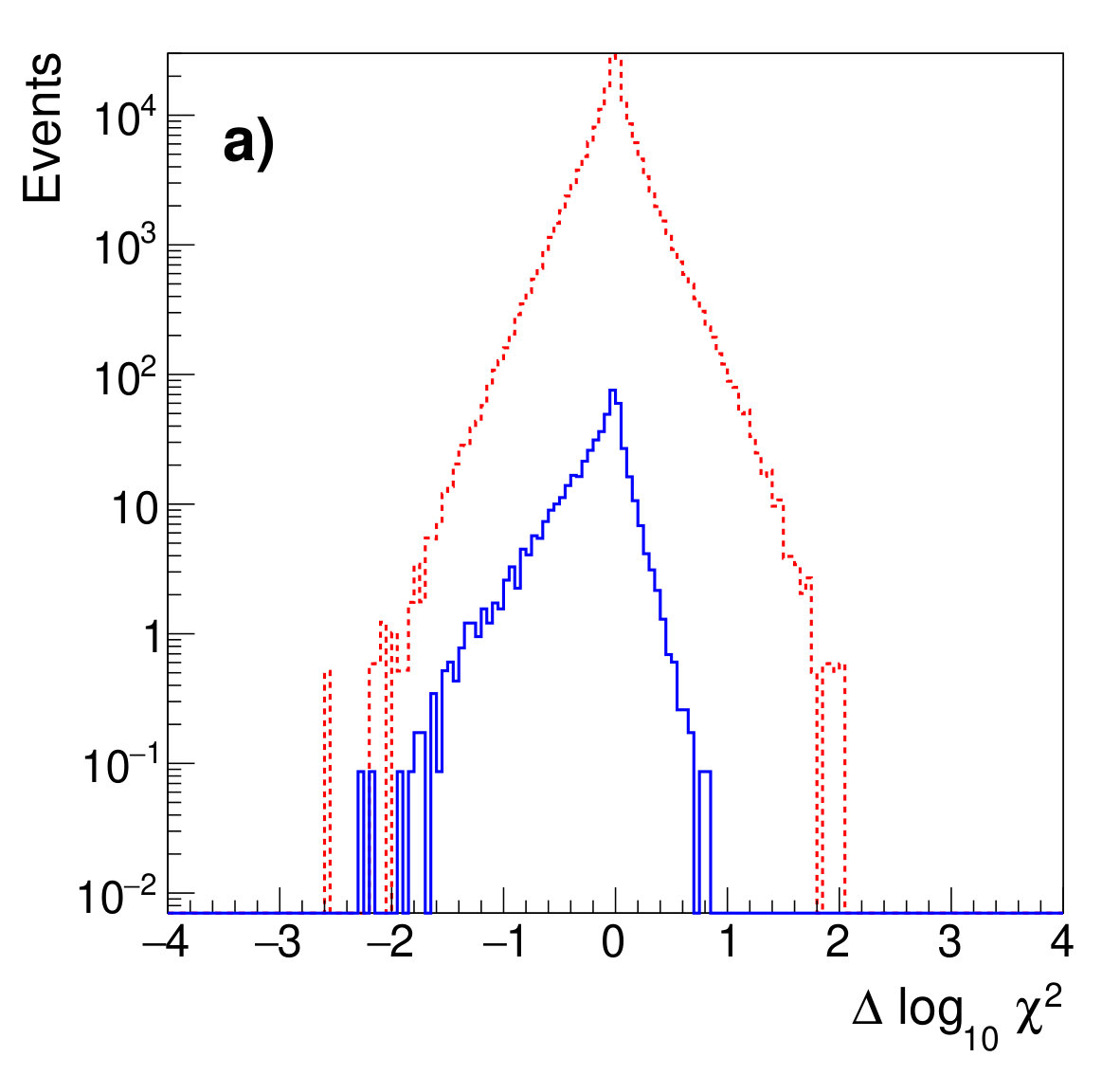 Figure 8
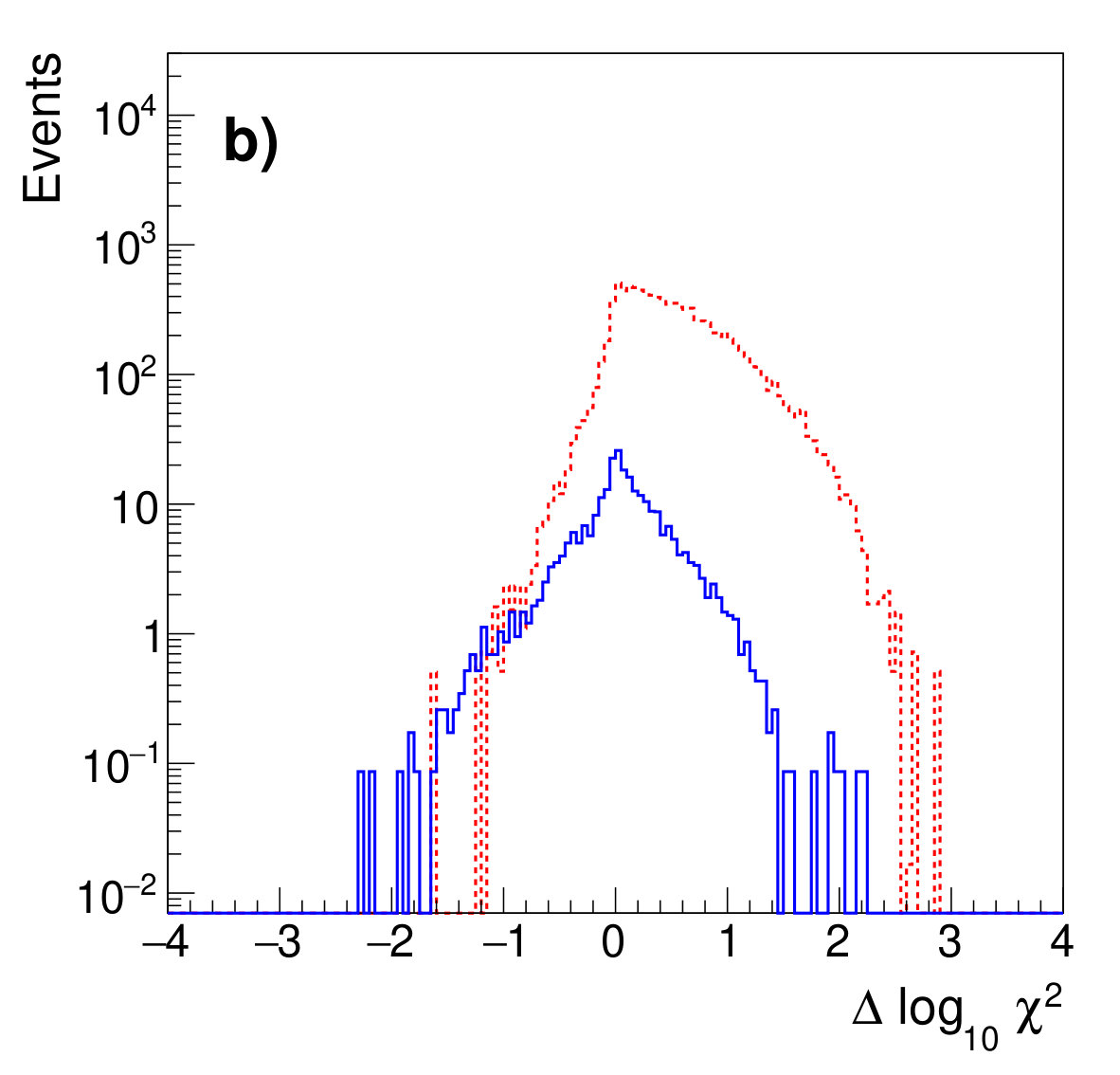 Figure 9
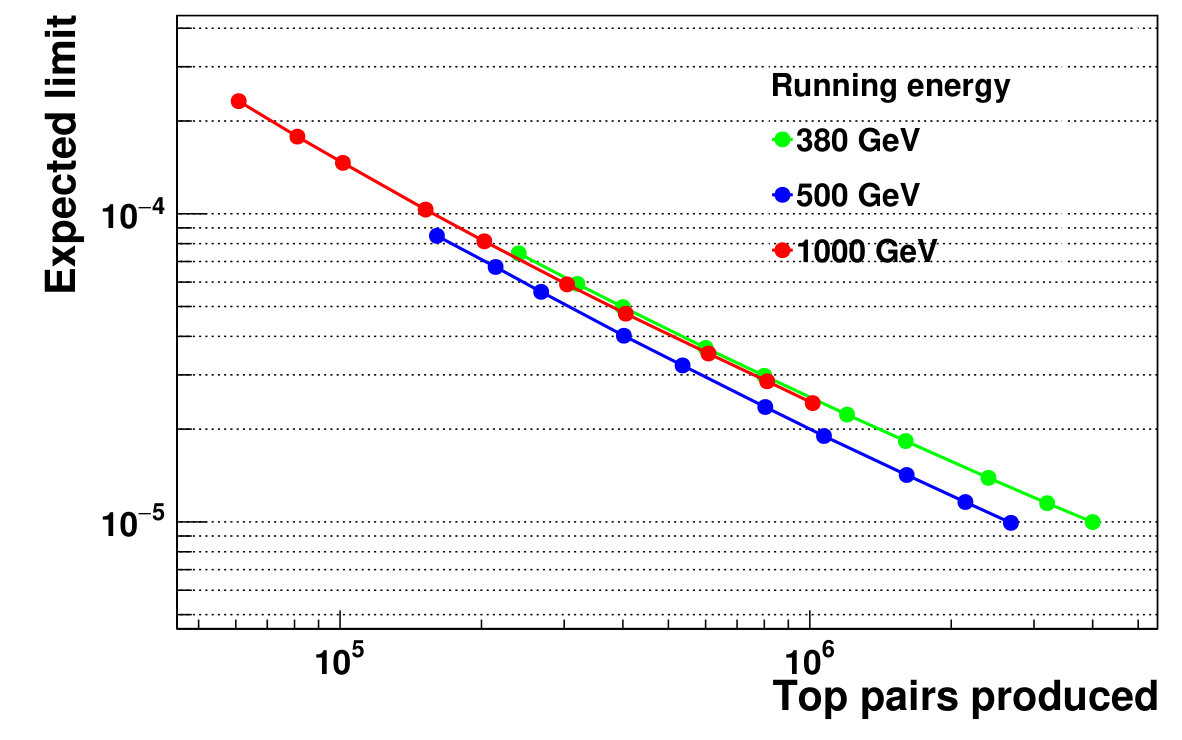 Figure 10
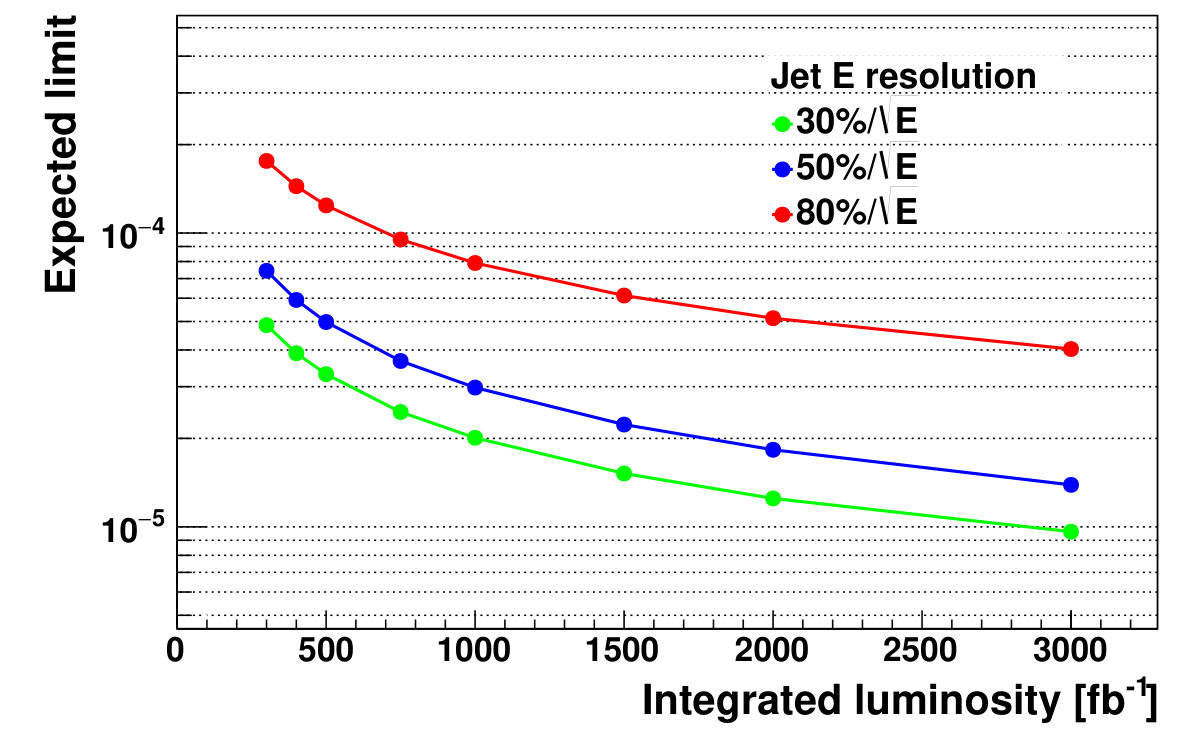 Figure 11
| Analysis level | Expected events | Efficiency | |||
| Selection cut | (SM) | Signal | (SM) | Signal | |
| Input sample | |||||
| Before any selection cut | 410’000 | 819 | 100% | 100% | |
| Preselection cuts (before kinematic fit) | |||||
| GeV | 167’000 | 499 | 40.6% | 60.9% | |
| 3 jets tagged () | 13’280 | 300 | 3.24% | 36.6% | |
| jet tagged () | 9640 | 276 | 2.35% | 33.8% | |
| Final selection cuts (after kinematic fit) | |||||
| Good fit (, GeV) | 894 | 87 | 0.22% | 10.7% | |
| -tag for higgs jets () | 89.5 | 50.8 | 0.022% | 6.2% | |
| and tags (, ) | 10.7 | 34.1 | 4.2% | ||
| 4.89 | 31.8 | 3.9% | |||
Peer Reviews
No public reviews on file for this paper yet. If you reviewed it on a platform where reviews are public (OpenReview, ICLR, NeurIPS, ICML), you can paste yours below so the community can read it here.
Videos
No videos yet. Explain this paper in a talk, walkthrough, or lecture? Add one.
Taxonomy
TopicsParticle physics theoretical and experimental studies · Particle Detector Development and Performance · Quantum Chromodynamics and Particle Interactions
Abstract
In the Standard Model (SM), flavour changing neutral current (FCNC) top decays, possible at loop level only, are very strongly suppressed. Observation of any such decay would be a direct signature of physics beyond the SM. Large enhancements are possible in many "new physics" scenarios and the largest enhancement is in most cases expected for the decay. A full study for CLIC was based on the WHIZARD simulation of FCNC top decays within the 2HDM(III) model. Beam polarization and beam-induced background were taken into account. Top pair production events with the FCNC decay can be identified based on kinematic constrains and flavour tagging information. Due to a large overlap in the kinematic space with standard top pair events, the final signal selection-efficiency is small, at the 10% level. Expected limits on are compared with earlier results based on parton level simulation.
1 Introduction
Top physics, together with Higgs boson studies and searches for Beyond the Standard Model (BSM) phenomena, is one of the three pillars of the research program for future high energy colliders. As the top quark is the heaviest known elementary particle, with an expected value of the Yukawa coupling of the order of one, the precise determination of its properties is a key to the understanding of electroweak symmetry breaking. Determination of top properties is also essential for many “new physics” searches, as the top quark gives large loop contributions to many precision measurements sensitive to BSM effects. Stringent constraints on the “new physics” scenarios are also expected from direct searches for rare top decays. Both future linear colliders, the International Linear Collider (ILC) and the Compact Linear Collider (CLIC), provide an opportunity to study the top quark with unprecedented precision via direct production of pairs in collisions. Presented in this contribution are prospects of constraining the branching ratio for the flavour changing top decay with CLIC running at GeV.
2 Experimental conditions
The Conceptual Design Report (CDR) for CLIC was presented in 2012 [1]. CLIC is based on a two-beam acceleration scheme, required to generate a high RF gradient of about 100 MV/m. In the recently updated implementation plan for CLIC [2], a construction in three stages is proposed, with 5 to 7 years of data taking at each stage. The first stage with a footprint of 11 km will allow one to reach a center-of-mass energy of 380 GeV, giving access to most Higgs boson and top quark measurements. The plan assumes collecting 500 fb*-1* at 380 GeV with additional 100 fb*-1* collected at the threshold. The CLIC baseline design includes polarisation for the electron beam, while positron polarisation is considered as a possible upgrade.
The detector concepts proposed for CLIC are based on jet reconstruction and jet energy measurements with the “Particle Flow” approach [3]. Single particle reconstruction and identification exploits high calorimeter granularity, and the best possible jet energy estimate is obtained by combining calorimetric measurements of neutral particles with precise track momentum measurements for the charged ones. Very efficient flavour tagging is possible with a high precision pixel vertex detector placed very close to the interaction point. The background to processes with missing energy can be strongly suppressed thanks to very good detector hermeticity, with instrumentation extending down to a minimum angle of mrad. Presented in this contribution are detailed simulation results based on the ILD detector concept adopted for CLIC [4].
3 Theoretical expectations
3.1 Standard Model
Flavour-Changing Neutral Current (FCNC) top quark decays, (), are strongly suppressed in the Standard Model. Only charged current decays are allowed at the tree level and the loop level contributions are suppressed by the Glashow-Iliopoulos-Maiani (GIM) mechanism [5]. The cancellation is not perfect because of the non-zero down-quark masses and the dominant contribution to the FCNC decays comes from diagrams including a quark in the loop. The corresponding partial widths are proportional to the square of the element of the Cabibbo-Kobayashi-Maskawa (CKM) quark-mixing matrix [6, 7] and to the fourth power of the quark to the boson mass ratio. These two suppression factors result in extremely small branching ratios expected [8] for the Standard Model:
[TABLE]
Observation of any such decay would be a direct signature for “new physics”.
One should note that for one of the diagrams contributing to the channel the GIM mechanism is not strictly applicable due to the Higgs coupling being proportional to the quark mass. But the contribution of this diagram is suppressed by the quark to boson mass ratio, resulting from the Higgs coupling. So, in spite of the GIM mechanism violation, the expected FCNC branching ratio for this channel is smallest in the Standard Model.
3.2 Beyond the Standard Model
Many extensions of the Standard Model predict significant enhancement of the FCNC top decays [8]. The enhancement can be due to the direct tree level FCNC coupling, but in most models it is observed at the loop level and results from contributions of new particles or from the modified particle couplings. The decay seems to be the most promising channel, as most BSM scenarios predict significant deviation in the (light) Higgs boson couplings or contributions from the additional Higgs bosons to the loop diagrams. For the Two Higgs Doublet Model (2HDM), which is one of the simplest extensions of the Standard Model, loop contributions can be enhanced up to the level of [9]. For the “non standard” scenarios, 2HDM(III) or “Top 2HDM”, where one of the Higgs doublets couples to the top quark only, tree level FCNC couplings are also allowed and an enhancement up to is possible [10]. The decay is also difficult to constrain at the LHC, because of the high QCD background to the dominating Higgs boson decay channels. The expected limit from HL-LHC is [8, 11].
3.3 Parton level study
Before a detailed analysis based on the full detector simulation results could be started, a feasibility study was performed at the parton level, with very coarse modeling of detector effects. Signal and background event samples were generated with WHIZARD [12, 13] using an internal CIRCE1 option for modeling the beam energy spectra. Signal events were generated using the dedicated implementation of 2HDM(III) in SARAH [14]. Model parameters were tuned to obtain for the assumed Higgs boson mass GeV. The analysis was based on the 6-fermion final state generated by WHIZARD, with only the decay channel considered for the signal. As a sample can be selected at colliders with high purity, it was also assumed that the dominant background to FCNC events comes from the standard top quark decay channels.
Top pair production events with the FCNC decay can be identified based on the kinematic constrains and flavour tagging information. To model the detector performance, a very simplified parametrisation was used:
- •
detector acceptance for leptons: ;
- •
detector acceptance for jets: ;
- •
jet energy smearing: (or for jet energy GeV);
- •
no energy smearing for reconstructed final state leptons (electrons and muons);
- •
fixed quark tagging efficiency , and light quark misstagging efficiencies, and .
For the jet energy resolution, three scenarios were considered: (optimistic scenario), (realistic scenario) and (pessimistic scenario). For the tagging efficiencies, two scenarios, based on LCFI+ [15] results, were eventually used: , and (looser quark selection) or , and (tighter selection).
Both fully-hadronic and semi-leptonic decay channels of the produced top pairs were considered. After imposing the -tagging criteria (three tagged jets required: two from the Higgs boson decay and one from the “spectator” top quark, the one with charged current decay), a kinematic fit was performed for each event, for both signal and background hypothesis. The formula for both cases included constraints on the masses of two top candidates, mass constraint and the Higgs boson or second mass constraint. The final selection was based on the ratio of the values for best signal and best background hypothesis. The selection was optimised so as to obtain the highest sensitivity to the FCNC decays. For jet energy resolution given by or , loose -tagging settings were chosen while for the worst resolution (), tighter flavour selection is required. Expected limits on , for collisions at GeV, as a function of the integrated luminosity are shown in figure 1.
Although the signal selection efficiency is small, limited by a large overlap in the kinematic space with standard top pair events, results indicate that with high integrated luminosity this decay can be probed down to [16]. The sensitivity of the linear collider experiments to the top quark FCNC decays is primarily determined by the available statistics of the top quark pairs. Except for the top pair production cross section, the running energy has only a marginal influence on the expected branching ratio limit, as illustrated in figure 2.
4 Event simulation and reconstruction
Detailed detector level analysis was performed for collisions at CLIC, for GeV. As for the parton level study, signal event samples were generated using the 2HDM(III) model implemented in SARAH. However, to improve the description of the energy distribution, a dedicated CLIC beam spectra file was used. An electron beam polarisation of 80% was also taken into account. Events generated with WHIZARD 2.2.8 were passed to PYTHIA 6.4 for hadronisation with quark masses and other settings adjusted to the configuration used previously in CLIC CDR studies [4]. The generated signal sample was then processed with a standard event simulation and reconstruction chain of the CLICdp collaboration using the CLIC_ILD_CDR500 detector configuration. The background sample considered in the analysis included a full set of six-fermion event samples produced previously for CLICdp studies of top pair production at GeV. All sub-samples corresponded to an integrated luminosity of at least 500 fb*-1*. The procedure used for signal event generation was also used to generate an additional “test” sample of Standard Model top pair-production events, which was then used to validate the consistency of simulation settings between old (background) and new (signal and test) samples.
In the final step, a dedicated event analysis procedure was applied to all signal and background events. Because of the large event sample considered, iLCDirac [17] was used as an interface to grid resources, and the processing was based on the MARLIN [18] framework with the ilcsoft version v01-17-09. The reconstructed object collection resulting from loose background rejection cuts (LooseSelectedPandoraPFANewPFOs) was used as an input for jet reconstruction with the Valencia algorithm [19] as well as for primary and secondary vertex (re)reconstruction, and flavour tagging with LCFI+.
5 Selection of signal events
Results presented in this contribution were based on the analysis of hadronic top decays only, i.e. events with all bosons decaying to two quarks (six jet final state). Hadronic events can be selected by looking at the correlation of the measured transverse momentum, , and the total energy of the event, , as shown for the considered background sample in figure 3 (left). Shown in figure 3 (right) is the probability that the considered and values resulted from the hadronic top pair decay. It shows that an efficient selection of hadronic events in this plane can be made with a single cut on the value. The selection efficiency can be still improved slightly by considering also the total longitudinal momentum of an event, . We defined the effective variable describing the energy balance in the event as
[TABLE]
and for hadronic events, GeV was required.
Before the kinematic fit was used to test the signal vs. background hypothesis, additional preselection cuts were applied to select candidate events. We required that at least three out of six jets reconstructed with the Valencia algorithm were tagged as -quark jets (with tag probability of at least 0.4) and the fourth jet was tagged as a or quark (corresponding to quark from decay). The estimated efficiency of the described preselection cuts is about 34% for signal events and about 2.4% for background events (including the hadronic branching fraction).
The best signal hypothesis was then selected by comparing values for different jet assignments. As significant correlations were observed between the reconstructed Higgs boson mass and the “signal” top quark mass (the one decaying to ), and between the reconstructed boson mass and the “spectator” top quark mass, these measurements should not be treated as independent. Therefore the function is defined based on the measured values of the following parameters:
- •
“signal” and “spectator” top quark masses;
- •
“signal” and “spectator” top quark boosts (energy to mass ratios);
- •
the ratio of the Higgs boson mass to the “signal” top quark mass;
- •
the ratio of the boson mass to the “spectator” top quark mass.
A similar approach was used to select the best background hypothesis (replacing the Higgs boson by another and requiring a -tag only for two jets).
After the kinematic fit, additional selection criteria were imposed to optimise signal event selection:
- •
signal hypothesis fit resulting in ;
- •
difference of two reconstructed top masses GeV;
- •
product of -tag probabilities for two jets from Higgs decay ;
- •
-tag probability for the jet from spectator top decay ;
- •
sum of -tag and -tag probabilities for quark from Higgs decay .
A final cut was then applied on the ratio of values for the best signal and background hypothesis, .
6 Results
To discriminate between the background and the signal hypothesis the ratio of the values of the two hypotheses was considered. Shown in figure 4 are the distributions of this ratio (in logarithmic scale; ), for signal and background samples corresponding to the integrated luminosity of 500 fb*-1*. Before any selection cuts (figure 4a), the background level is three orders of magnitude higher than the signal one (which corresponds to the assumed branching ratio for the FCNC decays). Preselection cuts (figure 4b) and the kinematic fit (figure 4c) allow for background suppression by over two orders of magnitude, but it is still not sufficient to identify the signal. Also, the shape of the distribution is very similar for signal and background samples, showing that the kinematic fit itself is not sufficient for signal identification. The kinematic reconstruction is clearly not precise enough. Only after very tight cuts on the flavour tagging probabilities for the three -quark jets and jet, signal events can be selected with a reasonable purity (figure 4d). The final cut on was then optimised to obtain the best expected limit on the FCNC branching ratio.
For 500 fb*-1* of integrated luminosity and the optimised cut value , the expected 95% C.L. limit is
[TABLE]
The Standard Model background passing final selection cuts is estimated to be about 4.9 events while 31.8 events are expected for the signal (assuming ). The corresponding selection efficiencies are 3.9% for signal events and for the background sample. Numbers of signal and background events expected, and corresponding selection efficiencies after subsequent analysis cuts are summarised in table 1. All efficiencies are normalised to the total number of decays (including leptonic and semi-leptonic decays).
Results from the detailed simulation study described in this contribution are compared to the earlier estimates from the parton level study in figures 5 and 6. For consistency, parton level results presented on these figures were obtained considering the hadronic decay channel only. The sensitivity of CLIC running at 380 GeV to FCNC top decays turns out to be significantly weaker than the one estimated from the parton level study, even assuming the worst (pessimistic) jet energy resolution. This is due to the much weaker discrimination power of the kinematic fit. Invariant mass resolutions for two- and three-jet configurations in the final state ( and top candiates), as obtained from the full simulation study, are not well described by the Gaussian distributions. Deterioration of the energy and mass resolution for the hadronic final state can be due to the large fraction of jets in the considered sample as well as to the influence of the overlaid beam background. With the required background suppression factor of the order of , tails of the mass distributions become very important and result in a significant fraction of background events fitting signal hypothesis better (two jets from decay looking like candidate). These events can only be suppressed by very tight flavour tagging cuts, but this reduces also the signal selection efficiency significantly. A comparison of parton level results obtained for different running energies, as shown in figure 6, indicates that the performance of the kinematic fit should improve when going to higher centre-of-mass energies. At GeV, top quarks are produced almost at rest and their decay products can easily mix. At higher energies, a larger boost should result in better separation of two top candidates and unambiguous result of the kinematic fit.
7 Conclusions
Considered in this contribution is the feasibility of measuring the FCNC top decay at CLIC running at 380 GeV. Preliminary results based on the full detector simulation are presented. The main focus of the analysis was on the optimization of the kinematic event reconstruction in the hadronic channel. After optimisation of the event selection criteria, the expected 95% C.L. limit on the FCNC branching ratio, assuming an integrated luminosity of 500 fb*-1*, is . This limit is significantly worse than the initial estimates based on the parton level analysis, which is most likely due to the non-Gaussian tails of the mass resolution distributions. The analysis is ongoing and different options will be studied to improve signal to background discrimination and resulting limits. This includes optimization of the LCFI+ performance, analysis of the semi-leptonic decay channel and possible use of MultiVariate Analysis tools to optimise event selection. Finally, measurements at higher collision energies should be also considered.
Acknowledgments
This work benefited from services provided by the ILC Virtual Organisation, supported by the national resource providers of the EGI Federation.
The reference list from the paper itself. Each links out to its DOI / PubMed record.
- 1[1] M Aicheler “A Multi-Te V Linear Collider Based on CLIC Technology”, CERN-2012-007, SLAC-R-985, KEK-Report-2012-1, PSI-12-01, JAI-2012-001, 2012 DOI: 10.5170/CERN-2012-007 · doi ↗
- 2[2] M J Boland “Updated baseline for a staged Compact Linear Collider”, CERN-2016-004, 2016 DOI: 10.5170/CERN-2016-004 · doi ↗
- 3[3] M.. Thomson “Particle Flow Calorimetry and the Pandora PFA Algorithm” In Nucl. Instrum. Meth. A 611 , 2009, pp. 25–40 DOI: 10.1016/j.nima.2009.09.009 · doi ↗
- 4[4] Lucie Linssen, Akiya Miyamoto, Marcel Stanitzki and Harry Weerts “Physics and Detectors at CLIC: CLIC Conceptual Design Report”, CERN-2012-003, ANL-HEP-TR-12-01, DESY-12-008, KEK-REPORT-2011-7, 2012 DOI: 10.5170/CERN-2012-003 · doi ↗
- 5[5] S.. Glashow, J. Iliopoulos and L. Maiani “Weak Interactions with Lepton-Hadron Symmetry” In Meeting of the Italian School of Physics and Weak Interactions Bologna, Italy, April 26-28, 1984 D 2 , 1970, pp. 1285–1292 DOI: 10.1103/Phys Rev D.2.1285 · doi ↗
- 6[6] Nicola Cabibbo “Unitary Symmetry and Leptonic Decays” In Meeting of the Italian School of Physics and Weak Interactions Bologna, Italy, April 26-28, 1984 10 , 1963, pp. 531–533 DOI: 10.1103/Phys Rev Lett.10.531 · doi ↗
- 7[7] Makoto Kobayashi and Toshihide Maskawa “CP Violation in the Renormalizable Theory of Weak Interaction” In Prog. Theor. Phys. 49 , 1973, pp. 652–657 DOI: 10.1143/PTP.49.652 · doi ↗
- 8[8] K. Agashe “Working Group Report: Top Quark” In Proc. Community Summer Study 2013: Snowmass on the Mississippi (CSS 2013): Minneapolis, MN, USA, July 29-August 6, 2013 , 2013 ar Xiv: 1311.2028 [hep-ph]