Charge asymmetry measurements in $t\bar{t}$ events at the LHC
Mohsen Naseri

TL;DR
This paper reviews recent measurements of top quark charge asymmetry in top pair production at the LHC, showing results consistent with the Standard Model and no evidence of new physics.
Contribution
It provides a comprehensive overview of the latest experimental results on top quark charge asymmetry from ATLAS and CMS at 8 TeV.
Findings
Measurements agree with Standard Model predictions
No evidence of new physics observed
Results are based on dileptonic and semileptonic decay channels
Abstract
An overview of the most recent measurements on top quark charge asymmetry in top quark pair production is presented. The results are obtained using data collected with ATLAS and CMS detectors in proton-proton collisions at centre-of-mass energies of 8 TeV. In these studies, either dileptonic or semileptonic top pair decays are analyzed. All measurements are comparable with the standard model prediction and no sign of new physics is observed.
Click any figure to enlarge with its caption.
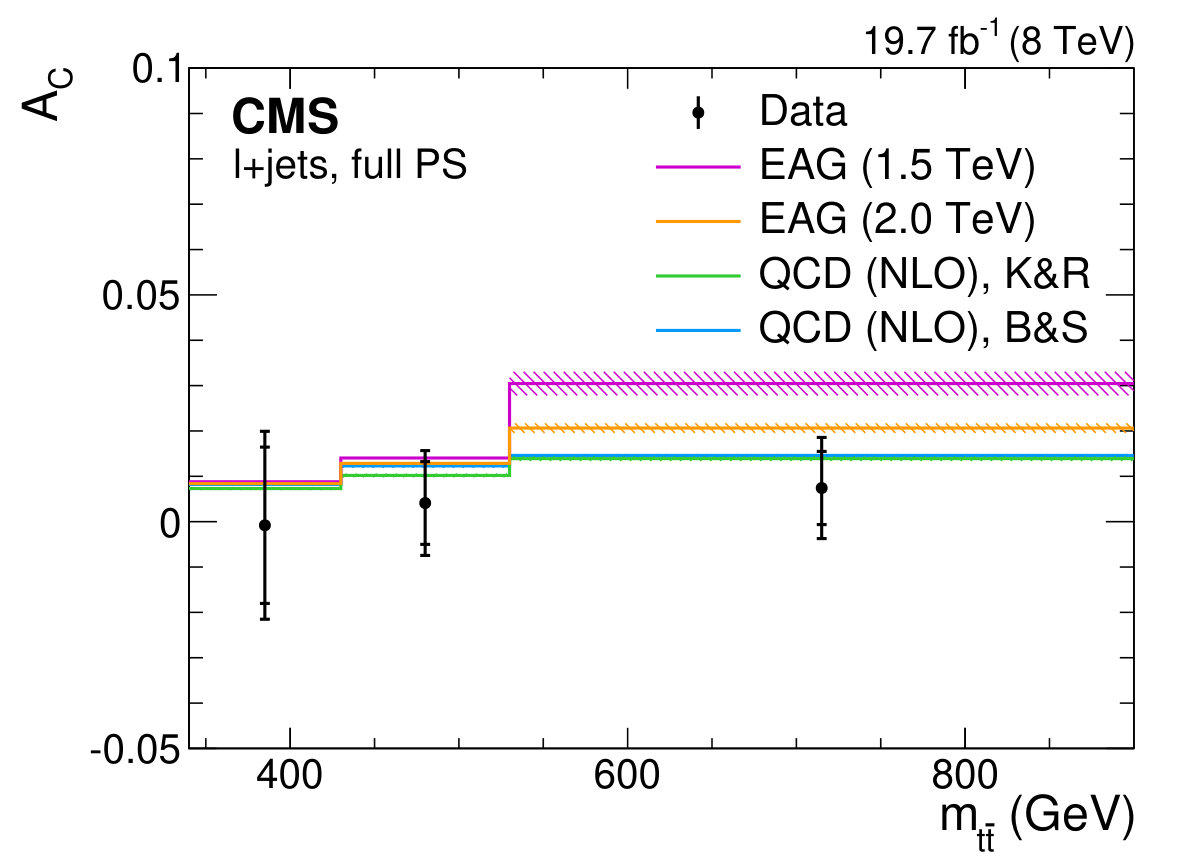 Figure 1
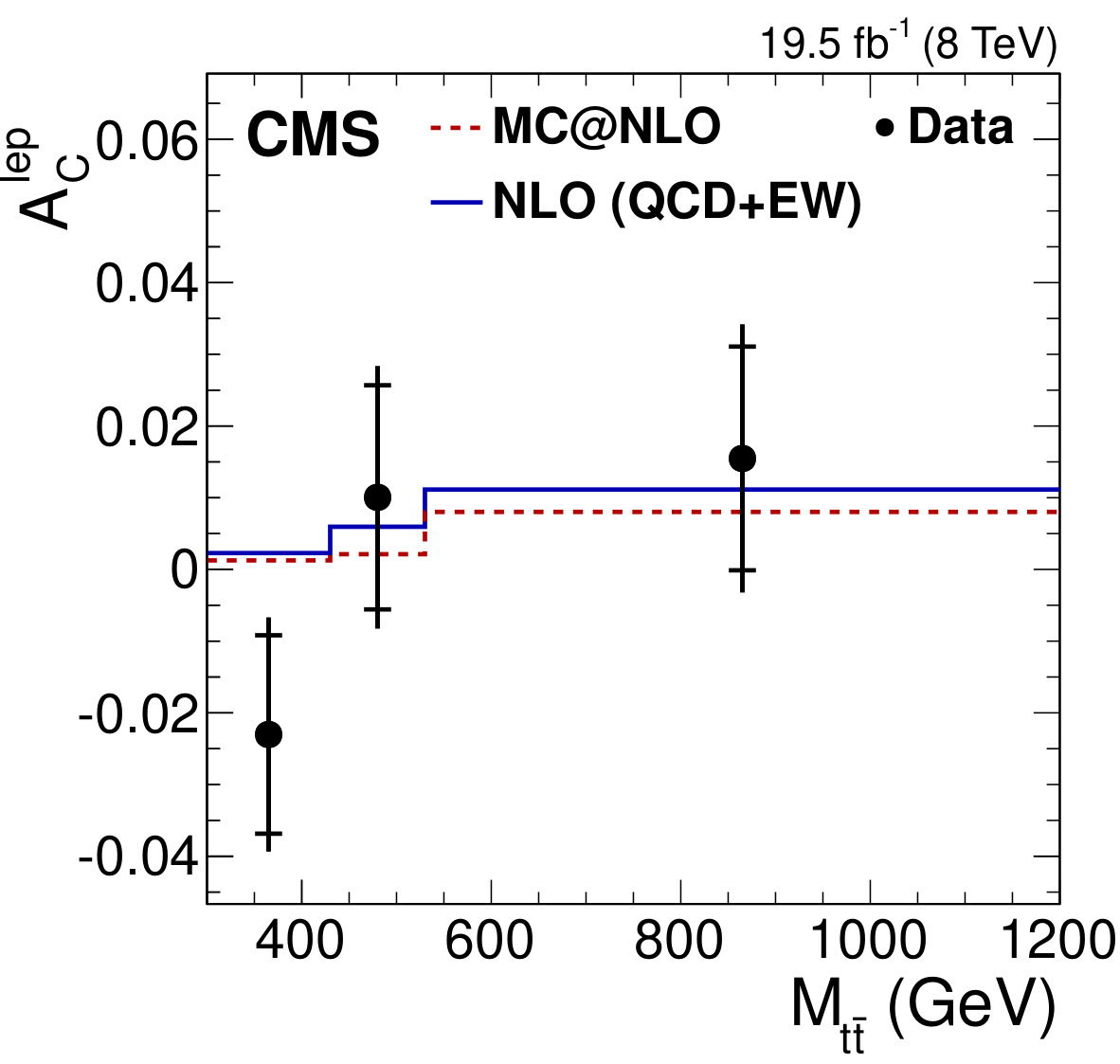 Figure 2
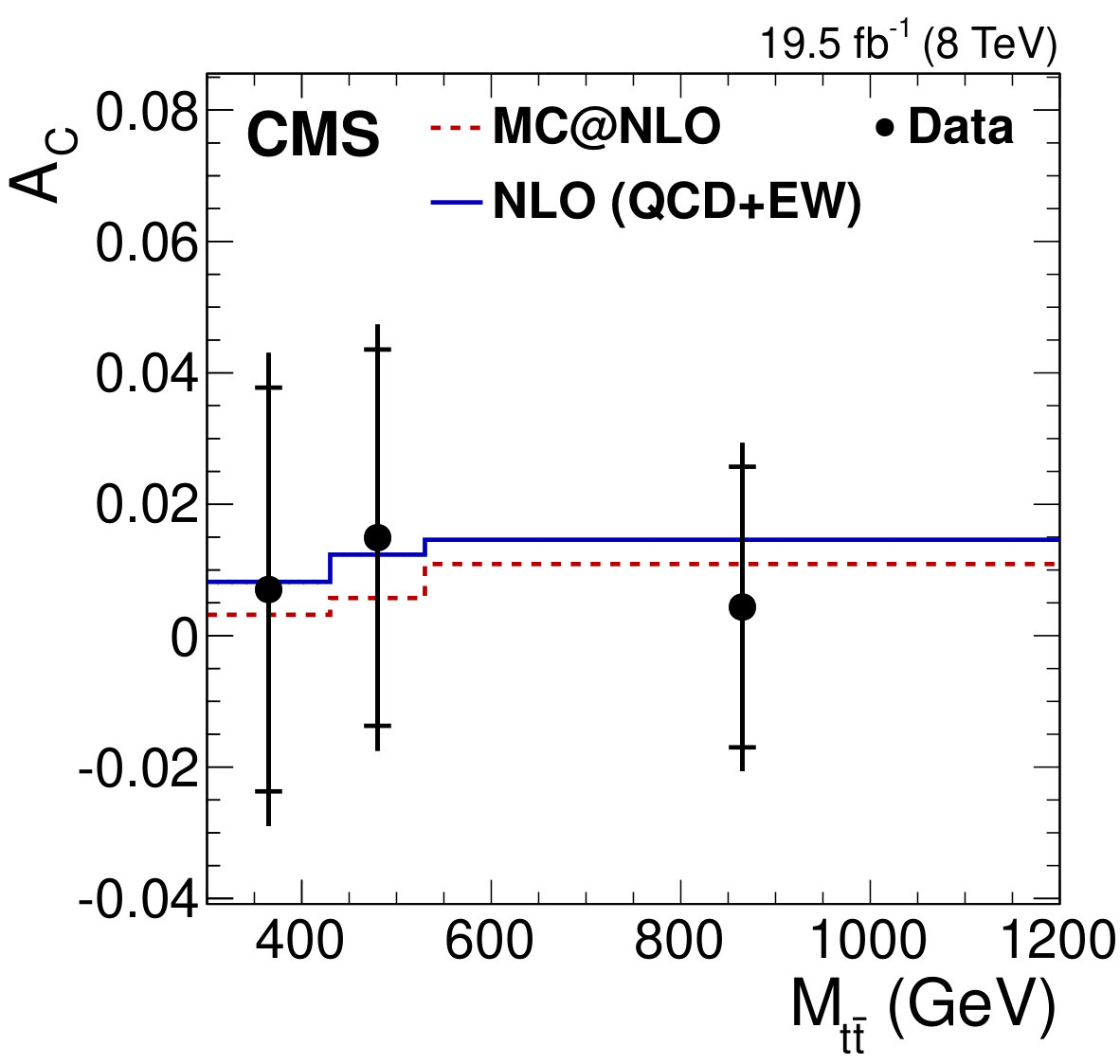 Figure 3
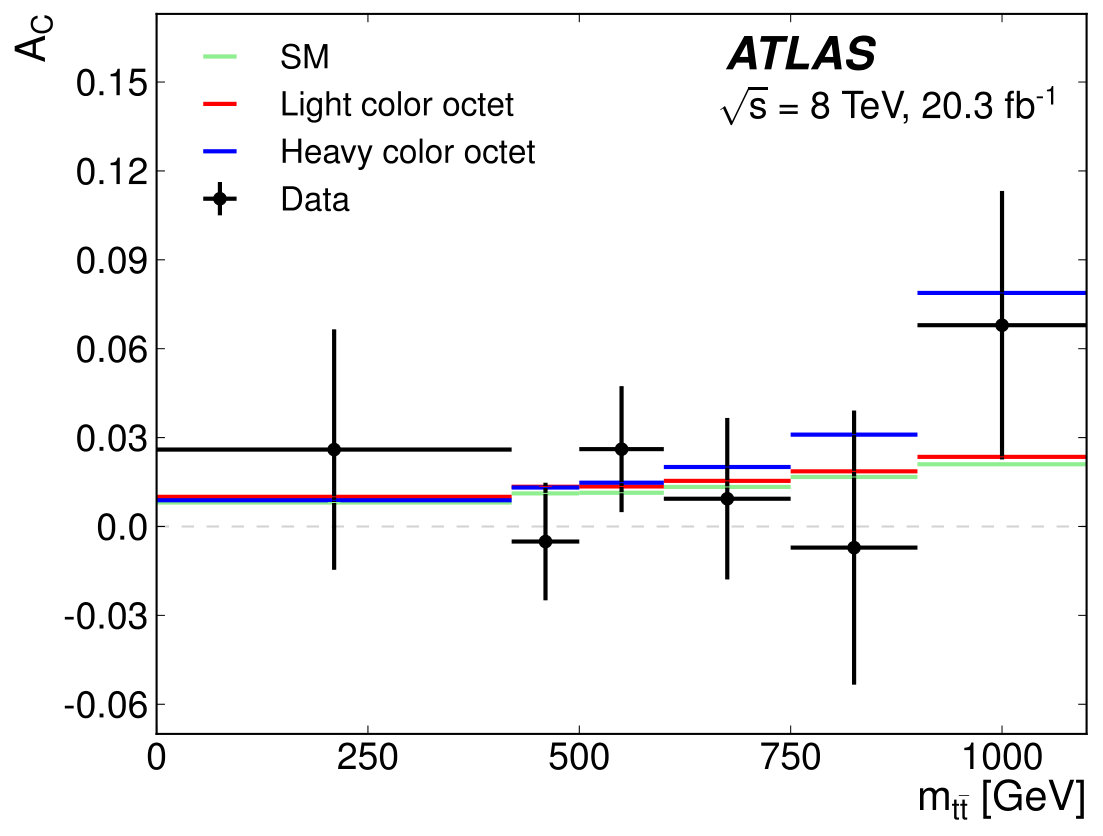 Figure 4
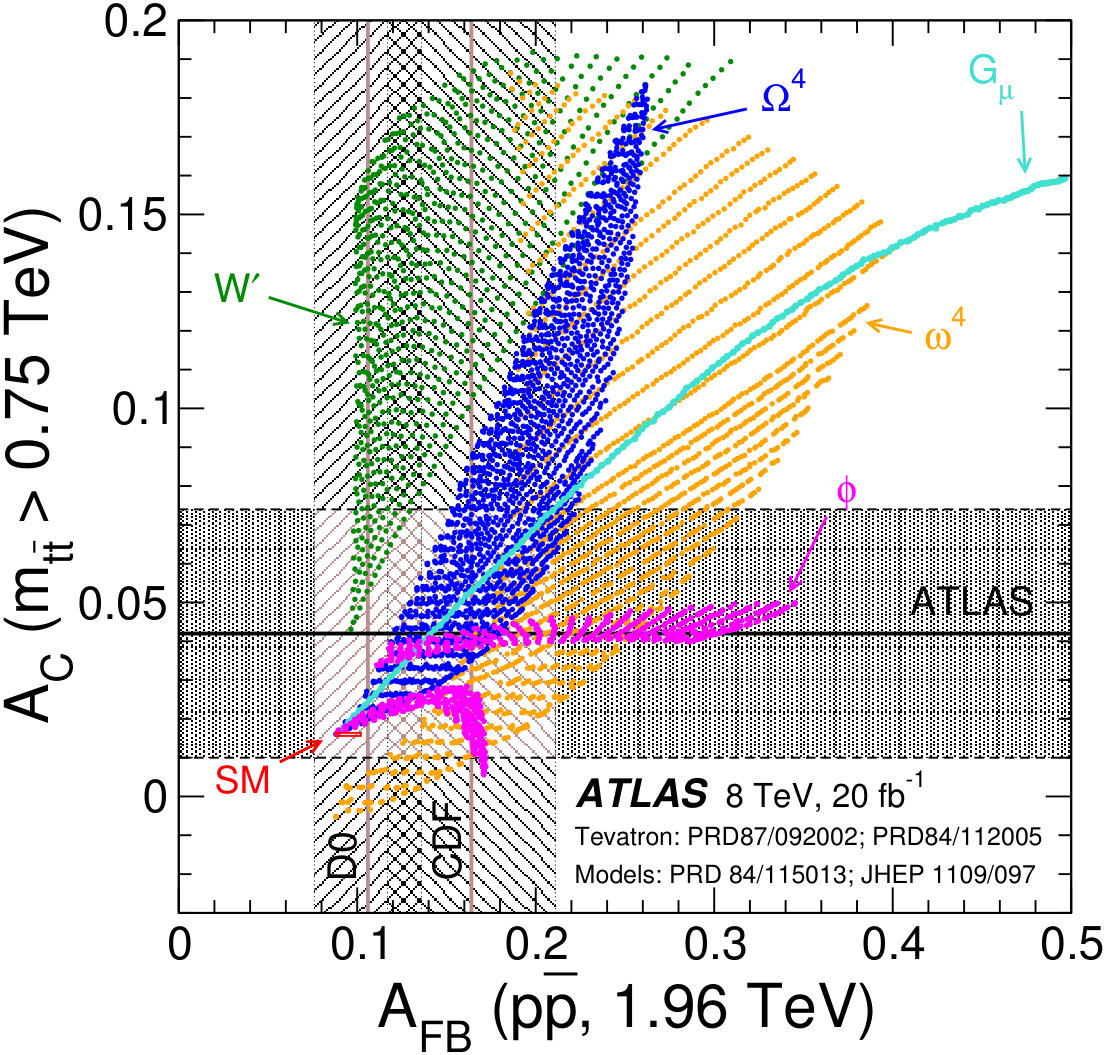 Figure 5
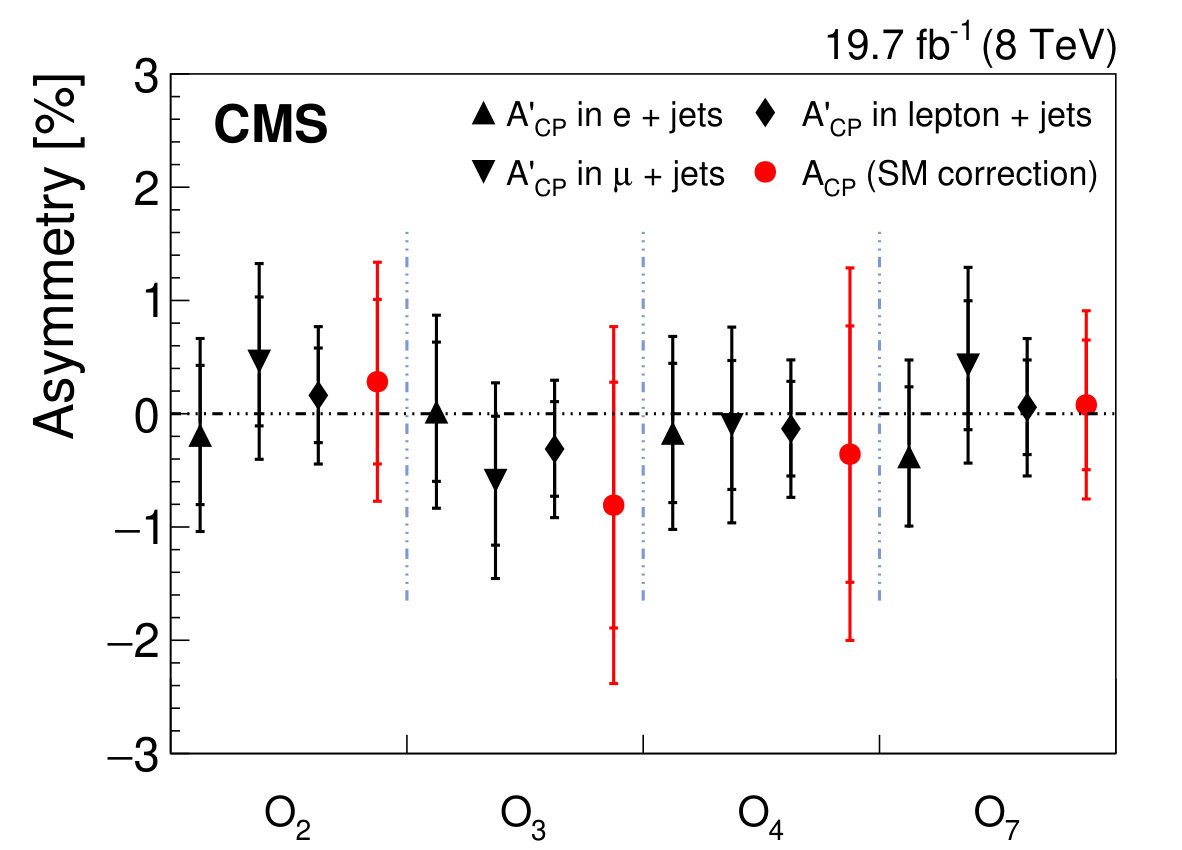 Figure 5
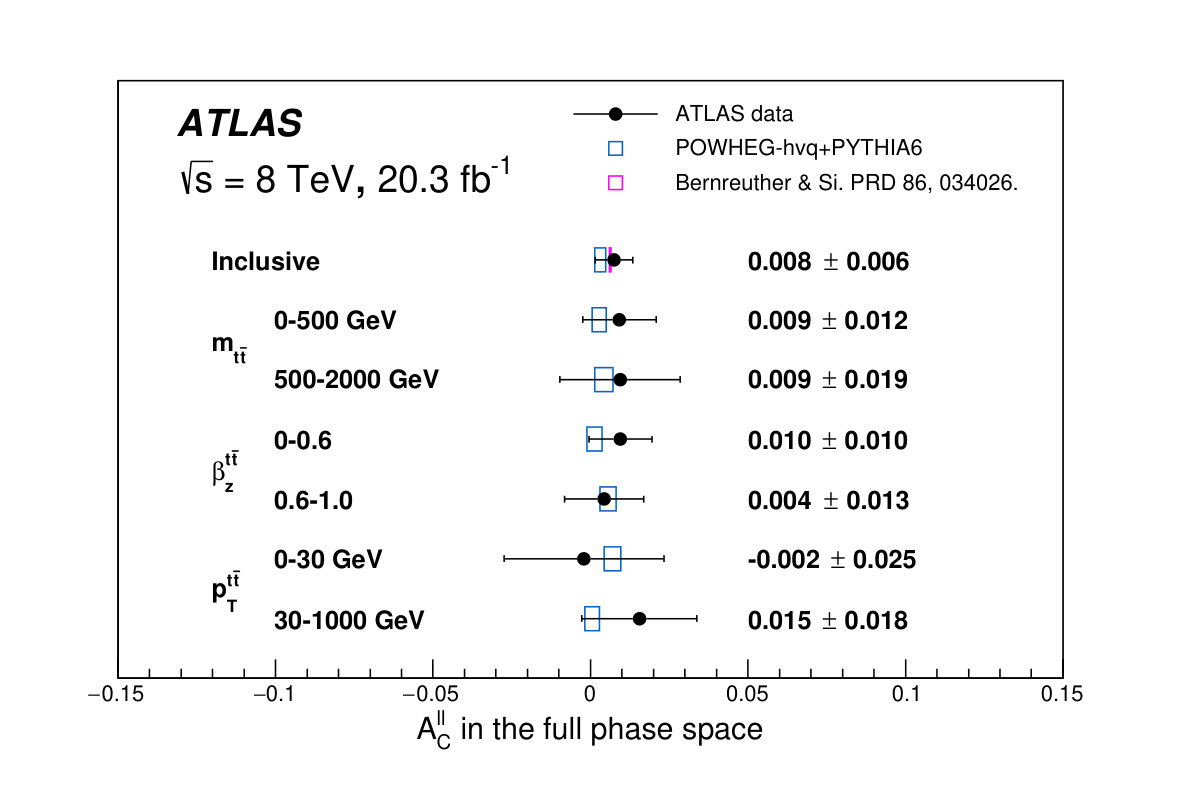 Figure 5
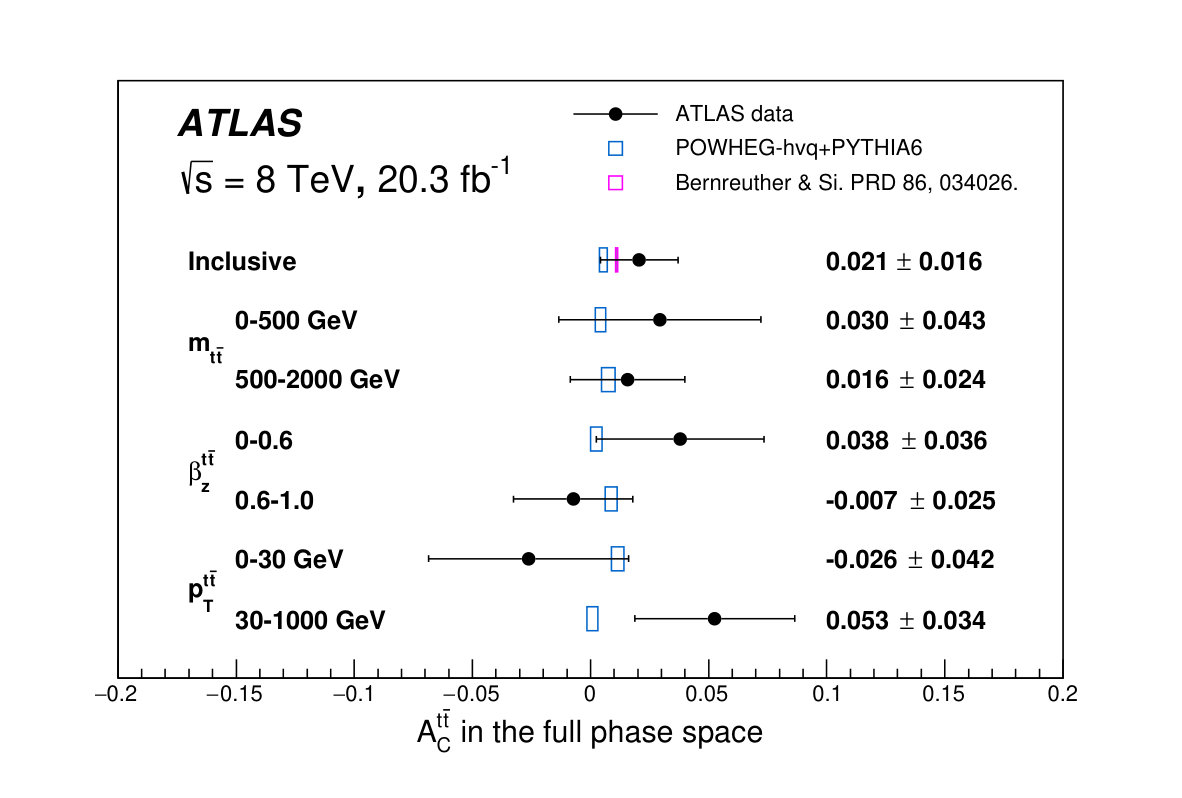 Figure 6
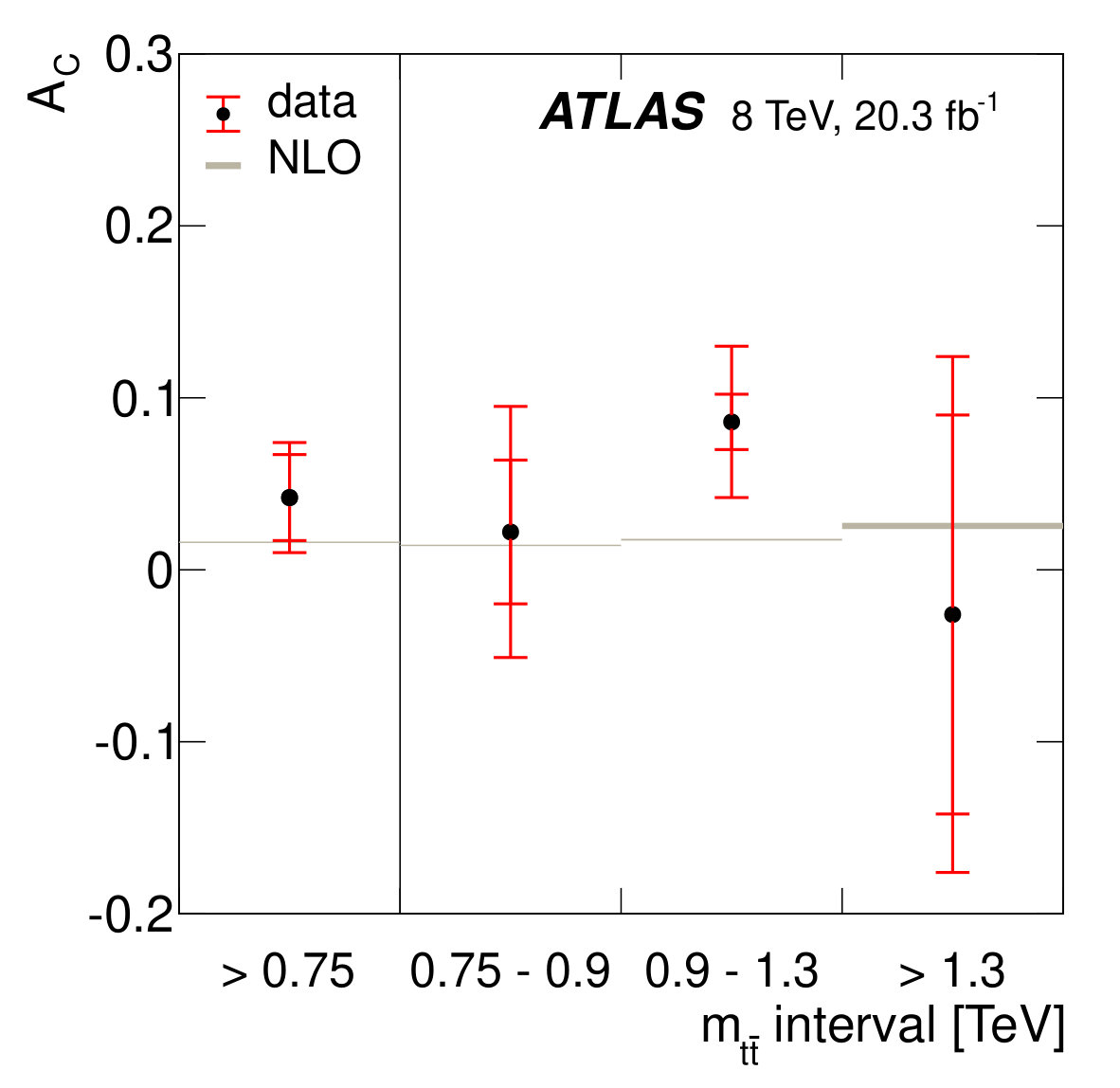 Figure 9
Peer Reviews
No public reviews on file for this paper yet. If you reviewed it on a platform where reviews are public (OpenReview, ICLR, NeurIPS, ICML), you can paste yours below so the community can read it here.
Videos
No videos yet. Explain this paper in a talk, walkthrough, or lecture? Add one.
Taxonomy
TopicsParticle physics theoretical and experimental studies · High-Energy Particle Collisions Research · Quantum Chromodynamics and Particle Interactions
SNSN-323-63
Charge asymmetry measurements in events at the LHC
Mohsen Naseri
on behalf of the ATLAS and CMS Collaborations
*School of Particles and Accelerators, Institute for Research in Fundamental
Sciences(IPM),
P. O. Box 19 56 83 66 81, Tehran, Iran *
An overview of the most recent measurements on top quark charge asymmetry in top quark pair production is presented. The results are obtained using data collected with ATLAS and CMS detectors in proton-proton collisions at centre-of-mass energies of 8 TeV. In these studies, either dileptonic or semileptonic top pair decays are analyzed. All measurements are comparable with the standard model prediction and no sign of new physics is observed.
PRESENTED AT
International Workshop on Top Quark Physics
Olomouc, Czech Republic, September 19–23, 2016
1 Introduction
Top quarks are produced in pairs via the strong interaction either from the fusion of two incoming gluons or from the annihilation of an incoming quark and anti-quark at leading order (LO). The interference effects between the Born diagram and the box diagram at next-to-leading order (NLO), as well as between initial- and final-state radiation, correlates the direction of the produced top quarks(antiquarks) to the direction of the incoming quarks(antiquarks).
At the LHC, quarks in the initial state are mostly valence quarks while the initial state antiquarks are always from the sea quarks. As valence quarks on average carry a harder momentum spectrum than sea-quarks, top quarks have a preference to be produced in forward directions. The rapidity distribution of top quarks is therefore predicted to be broader than that of the more centrally produced top antiquarks. The difference of the absolute values of the rapidity of top quark and antiquark in an event, , can be used to measure the asymmetry effect.
2 The charge asymmetry in lepton+jets events
The CMS collaboration[1] performs the inclusive and differential measurements of the charge asymmetry in lepton+jets events using the data corresponds to an integrated luminosity of 19.7 fb*-1* [2]. The observed distributions of are corrected back to parton level by imposing an unfolding technique to allow for a comparison of the measurement and the prediction from theory. The differential charge asymmetry is also measured as function of kinematic variables of the system, the invariant mass , the absolute value of the rapidity , and the transverse momentum of the system. Figure 1 shows the differential results as a function of . The inclusive measurement yields an asymmetry of AC = 0.0010 0.0068(stat.) 0.0037(syst.). As an alternative, the measurements are also performed in a fiducial phase space, yielding an integrated result of -0.0035 0.0072 (stat.) 0.0031 (syst.).
The CMS collaboration also reports the most precise measurement of the inclusive charge asymmetry using a template fit to , as sensitive variable [3]. The measured charge asymmetry is AC = 0.0033 0.0026(stat.) 0.0033(syst.), which is consistent with SM predictions.
The ATLAS collaboration[4] analyzes data corresponding to an integrated luminosity of 20.3 fb*-1* [5]. To measure the charge asymmetry, the observed distribution is unfolded to parton level using the Fully Bayesian Unfolding(FBU) technique. In addition to the inclusive measurement, the differential measurements are performed as a function of the invariant mass, transverse momentum and longitudinal boost of the system. The inclusive charge asymmetry is found to be AC = 0.009 0.005.
3 The charge asymmetry in dilepton events
The CMS performs the same unfolding approach as smileptonic to measure the charge asymmetry in dilepton events with 19.7 fb*-1* accumulated data [6]. The main benefit of lepton based asymmetry measurement is the absence of distorting effects in the reconstruction, yielding a smaller uncertainty after unfolding procedure. The lepton asymmetry is measured using of the two leptons. Figure 2(upper row) shows the charge asymmetry (right) and the lepton asymmetry (left) as a function of the invariant mass of the system. The measured inclusive asymmetries are AC = 0.011 0.011(stat.) 0.007(syst.) and A = 0.003 0.006(stat.) 0.003(syst.).
The ATLAS collaboration reports inclusive, and differential asymmetry as a function of the invariant mass, transverse momentum and longitudinal boost of the system(Figure 2 lower row) [7]. The inclusive asymmetry are measured to be AC = 0.008 0.006 for the lepton asymmetry and AC = 0.021 0.016 for the asymmetry.
4 The charge asymmetry in boosted events
Apart from previous measurements, the ATLAS Collaboration analyzes lepton+jets events with a boosted topology, where the hadronic top-quark decay is reconstructed as a single large-radius jet [8]. The charge asymmetry is measured in a fiducial region with 0.75 TeV and an absolute rapidity difference within .
The measured inclusive asymmetry is AC = 0.042 0.032(stat syst). Results of a differential measurement performed in three bins are shown in Figure 3(left). Figure 3 (right) compares the results of measurements of the asymmetry at Tevatron and LHC with their uncertainties.
5 The CP violation asymmetry at CMS
The first measurement of CP violation asymmetries in top quark pair production and decay are performed in CMS with lepton+jets events [9]. The analysis uses data from 8 TeV pp collisions corresponding to a total integrated luminosity of 19.7 fb*-1*. Several new observables, as proposed in [9], are included to measure the CP violation asymmetries. These observables are odd under T transformation, i.e. CP(Oi) = -Oi. The ACP is found to be consistent with zero, within its uncertainty, in agreement with the standard model prediction as shown in Figure 4.
6 Charge and CP asymmetries in b-hadron decays
The ATLAS collaboration measures the same- and opposite-sign charge asymmetries in lepton+jets events where a b-hadron decays semileptonically to a soft muon [10]. The charge asymmetries are formed based on the charge of the lepton from the top-quark decay and the charge of the soft muon from the semileptonic decay of a b-hadron. These asymmetries are measured in a fiducial region corresponding to the experimental acceptance. The data are categorized into same- and different-top-like SMT muons by a kinematic likelihood fitter (KLFitter) [11]. Given the charge asymmetries, four CP asymmetries (one mixing and three direct) are also measured.
7 Summary
The latest results of asymmetry measurements performed by the CMS and ATLAS collaborations are presented. All results are comparable with the predictions by the SM and no hint that point to new physics beyond the standard model is found.
The reference list from the paper itself. Each links out to its DOI / PubMed record.
- 1[1] S. Chatrchyan et al. [CMS Collaboration], JINST 3 , S 08004 (2008). doi:10.1088/1748-0221/3/08/S 08004
- 2[2] V. Khachatryan et al. [CMS Collaboration], Phys. Lett. B 757 , 154 (2016) doi:10.1016/j.physletb.2016.03.060 [ar Xiv:1507.03119 [hep-ex]].
- 3[3] V. Khachatryan et al. [CMS Collaboration], Phys. Rev. D 93 , no. 3, 034014 (2016) doi:10.1103/Phys Rev D.93.034014 [ar Xiv:1508.03862 [hep-ex]].
- 4[4] G. Aad et al. [ATLAS Collaboration], JINST 3 , S 08003 (2008). doi:10.1088/1748-0221/3/08/S 08003
- 5[5] G. Aad et al. [ATLAS Collaboration], Eur. Phys. J. C 76 , no. 2, 87 (2016) doi:10.1140/epjc/s 10052-016-3910-6 [ar Xiv:1509.02358 [hep-ex]].
- 6[6] V. Khachatryan et al. [CMS Collaboration], Phys. Lett. B 760 , 365 (2016) doi:10.1016/j.physletb.2016.07.006 [ar Xiv:1603.06221 [hep-ex]].
- 7[7] G. Aad et al. [ATLAS Collaboration], Phys. Rev. D 94 , no. 3, 032006 (2016) doi:10.1103/Phys Rev D.94.032006 [ar Xiv:1604.05538 [hep-ex]].
- 8[8] G. Aad et al. [ATLAS Collaboration], Phys. Lett. B 756 , 52 (2016) doi:10.1016/j.physletb.2016.02.055 [ar Xiv:1512.06092 [hep-ex]].