Gravitational waves from dark first order phase transitions and dark photons
Andrea Addazi, Antonino Marciano

TL;DR
This paper explores how a dark photon model with a first order phase transition in the early universe can produce gravitational waves, offering multiple experimental avenues for detection and parameter constraints.
Contribution
It introduces a dark photon model with a scalar singlet that induces a first order phase transition, linking gravitational wave signals to dark matter phenomenology.
Findings
Gravitational wave signals can constrain dark photon parameters.
The model predicts detectable signals for future interferometers.
Cross-disciplinary experimental strategies are highly motivated.
Abstract
Cold Dark Matter particles may interact with ordinary particles through a dark photon, which acquires a mass thanks to a spontaneous symmetry breaking mechanism. We discuss a dark photon model in which the scalar singlet associated to the spontaneous symmetry breaking has an effective potential that induces a first order phase transition in the early Universe. Such a scenario provides a rich phenomenology for electron-positron colliders and gravitational waves interferometers, and may be tested in several different channels. The hidden first order phase transition implies the emission of gravitational waves signals, which may constrain the dark photon's space of parameters. Compared limits from electron-positron colliders, astrophysics, cosmology and future gravitational waves interferometers such as eLISA, U-DECIGO and BBO are discussed. This highly motivates a {\it cross-checking…
Click any figure to enlarge with its caption.
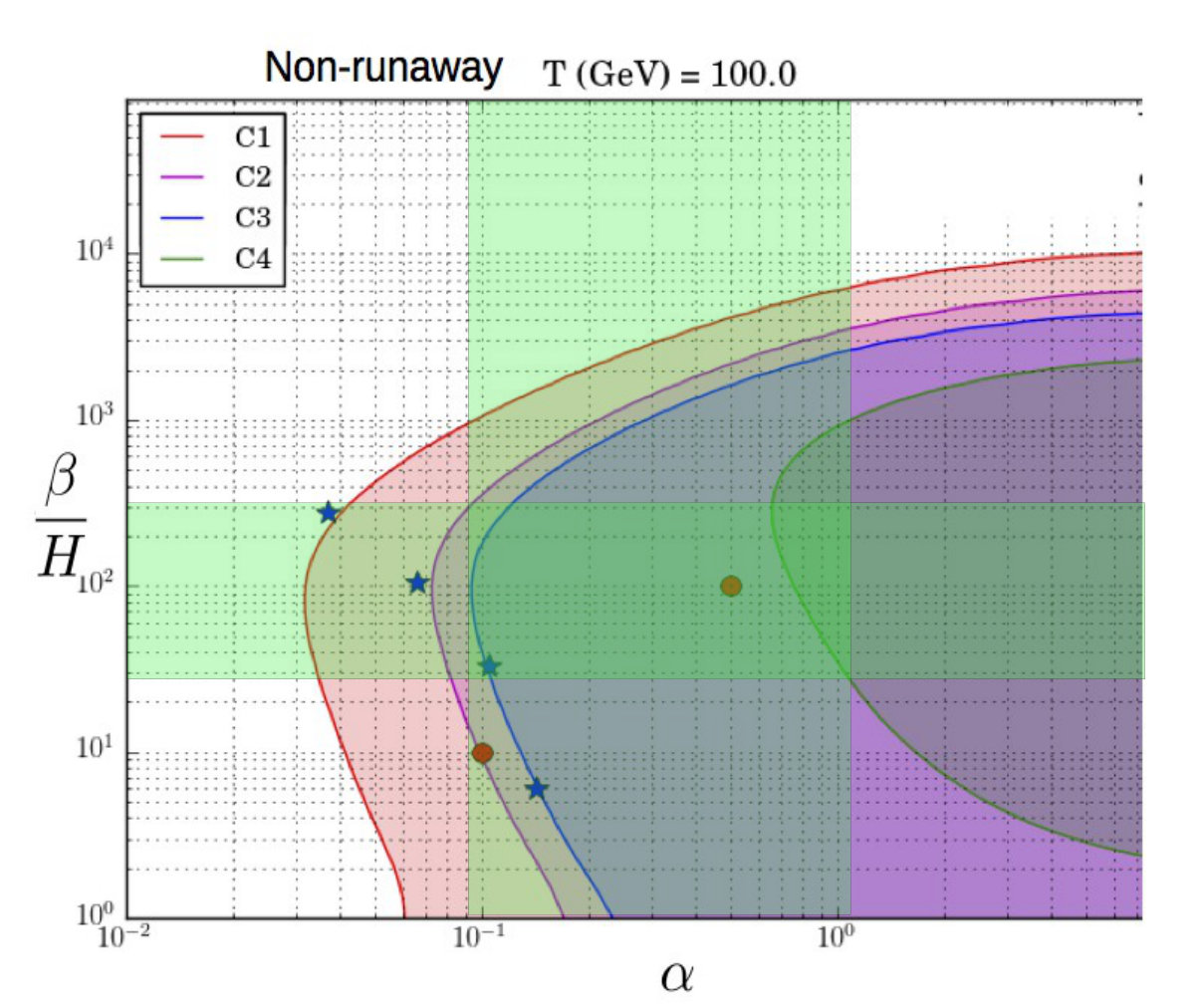 Figure 1
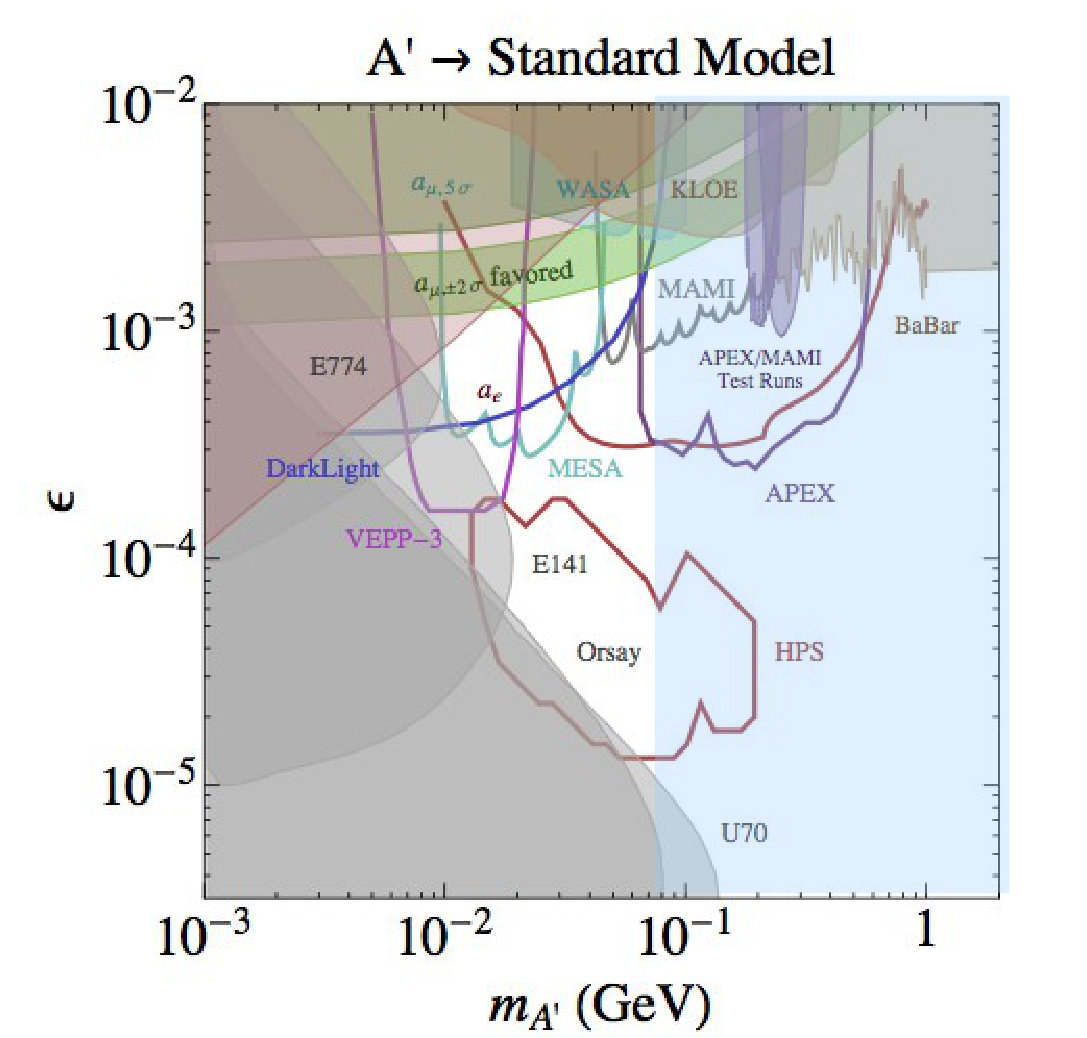 Figure 2
Peer Reviews
No public reviews on file for this paper yet. If you reviewed it on a platform where reviews are public (OpenReview, ICLR, NeurIPS, ICML), you can paste yours below so the community can read it here.
Videos
No videos yet. Explain this paper in a talk, walkthrough, or lecture? Add one.
Gravitational waves from dark first order phase transitions and dark photons
Andrea Addazi
Department of Physics & Center for Field Theory and Particle Physics, Fudan University, 200433 Shanghai, China
Dipartimento di Fisica, Università di L’Aquila, 67010 Coppito AQ, Italy, EU
LNGS, Laboratori Nazionali del Gran Sasso, 67010 Assergi AQ, Italy, EU
Antonino Marcianò
Department of Physics & Center for Field Theory and Particle Physics, Fudan University, 200433 Shanghai, China
Abstract
Cold Dark Matter particles may interact with ordinary particles through a dark photon, which acquires a mass thanks to a spontaneous symmetry breaking mechanism. We discuss a dark photon model in which the scalar singlet associated to the spontaneous symmetry breaking has an effective potential that induces a first order phase transition in the early Universe. Such a scenario provides a rich phenomenology for electron-positron colliders and gravitational waves interferometers, and may be tested in several different channels. The hidden first order phase transition implies the emission of gravitational waves signals, which may constrain the dark photon’s space of parameters. Compared limits from electron-positron colliders, astrophysics, cosmology and future gravitational waves interferometers such as eLISA, U-DECIGO and BBO are discussed. This highly motivates a cross-checking strategy of data arising from experiments dedicated to gravitational waves, meson factories, the International Linear Collider (ILC), the Circular Electron Positron Collider (CEPC) and other underground direct detection experiments of cold dark matter candidates.
I Introduction
The possibility of testing first order phase transitions (FOPT) in the early Universe seems to be more promising after the recent discovery of gravitational waves (GW) in LIGO experiment Caprini:2015zlo ; Kudoh:2005as . In particular, next generations of interferometers like eLISA and U-DECIGO will be also fundamentally important to test gravitational signal produced by Coleman bubbles from FOPT. The production of GW from bubble collisions was first suggested in Refs. Witten:1984rs ; Turner:1990rc ; Hogan:1986qda ; Kosowsky:1991ua ; Kamionkowski:1993fg .
New experimental prospectives in GW experiments have motivated a revival of these ideas in context of new extensions of the Standard Model Schwaller:2015tja ; Huang:2016odd ; Artymowski:2016tme ; Dev:2016feu ; Katz:2016adq ; Huang:2017laj ; Baldes:2017rcu ; Chao:2017vrq ; Addazi:2016fbj . In other words, the GW data may be used to test new models of particle physics beyond the standard model.
In particular, contrary to electroweak FOPT, the presence of FOPT from a dark sector remains practically unconstrained.
In this paper, we suggest to test/limit with GW experiments a minimal model of dark matter arising from a dark sector. Our proposal is based on the dark photon theory, first proposed by Holdom Holdom:1985ag . In particular, we consider a hidden sector of a massive dark photon coupled to a massive dark fermion and a massive scalar field. The massive scalar spontaneously breaks the hidden electromagnetic symmetry, inducing a mass term for the dark photon. Now, the hidden scalar may undergo a violent first order phase transition for a large class of its effective self-interaction potentials. The spontaneously symmetry breaking process giving mass to the dark photon is highly motivated by the strong constraints on long-range massless dark photons from orthopositronium experiments — as first pointed out by Glashow G1 ; G2 .
Our paper is organized as follows: in section II we will review some basics aspects of the massive dark photon model; in section III we will discuss the phenomenology of the model in GW interferometers and laboratory physics; in section IV we will spell out conclusions and remarks.
II Dark photons model and first order phase transitions
Let us consider the Standard Model extension with an extra abelian (non-anomalous) gauge , dubbed , i.e. . The SM particles are assumed to be not charged with respect to such an extra . Thus this latter singles out a dark abelian sector. Let us introduce a scalar singlet field and a Dirac fermion particle , which are supposed to have a charge with respect to , while the same are not charged — thus are singlets — with respect to the SM gauge group. In other words, the fermion and scalar are introduced as hidden particles. The dark gauge boson, dubbed dark photon , associated to , may mix with the SM hypercharge boson through a renormalizable kinetic mixing term — where are respectively the field curvatures of the gauge bosons and . The Lagrangian of the hidden sector reads
[TABLE]
where
[TABLE]
are hidden matter kinetic terms, being the covariant derivative associated to the dark photon; encodes the interactions of the hidden scalar and fermion fields:
[TABLE]
where is a Yukawa-like free parameter and is the singlet scalar self-interaction potential. In principle, the scalar singlet may interact with the SM Higgs field via the renormalizable interaction . Such an interaction term may certainly provide an interesting portal to dark matter. However, the cannot be , otherwise the scalar singlet would not be hidden. Thus we will assume that the mixing term is highly suppressed.
The next main assumption of our model concerns the scalar singlet self-interaction potential. We assume that drives the scalar field to get a VEV . In particular, we assume a double wells potential. On the other hand, we demand that the wall dividing the minima in the radial direction in the internal field space is lower than the standard quartic potential. In this way a highly unsuppressed first order phase transition is expected in the early Universe, as we will quantify in the following section. In particular, we will assume a simple effective potential of the form
[TABLE]
The main consequences of such a potential are the following:
i) The potential spontaneously breaks the , giving a mass term to the dark photon , where .
ii) The potential will undergo a first order phase transition in temperature . This may generate Coleman’s bubbles, and bubbles-bubbles collisions generate a GW signal controlled by the scalar VEV-scale and the new physics scale .
iii) The dark matter particle is renormalized as . Eventually, we may assume that the bare mass is just zero and the dark matter mass is totally controlled by the singlet’s VEV.
III Phenomenology
This simple minimal model leads to a rich phenomenology in several different channels. For instance, it allows multiple tests from particle physics experiments and gravitational waves interferometers. In the next section, we will start with a discussion of the GW signals that originate from the dark first order phase transition. Then, we will discuss how GW may test a region of parameters which may be confronted with limits from meson factories, electron-positron colliders and corrections to the magnetic moment of the electrons.
III.1 Gravitational waves signal
Let us remark that the frequency of the GW signal is controlled by the VEV scale of the first order phase transition. The frequency and the intensity of the gravitational waves signal have well known expressions, in which the model dependence enters only in the specification of the effective scalar field potential of the particular model considered111Recently, further numerical discussions of GW productions from bubbles were shown in Refs. Hindmarsh:2013xza ; Hindmarsh:2015qta . Kamionkowski:1993fg .
The peak frequency of the GW signal produced by bubble collision has a value
[TABLE]
with corresponding intensity
[TABLE]
[TABLE]
In the latter relation we introduced ,
[TABLE]
[TABLE]
In eq. (5) stands for the radiation energy density, while denotes the first order phase transition temperature, defined by
[TABLE]
in which
[TABLE]
[TABLE]
The size of the bubble wall , entering the definition in eq. (6), is connected to the velocity of the bubble by the relation
[TABLE]
The tree-level effective potential is corrected by one-loop quantum corrections and thermal field theory corrections to
[TABLE]
in which
[TABLE]
is the one-loop Coleman-Weinberg potential, while encodes thermal field theory contributions. The effective potential with a finite temperature — similarly to the sixth order Higgs potential case studied in Delaunay:2007wb — can be approximated by
[TABLE]
where
[TABLE]
having introduced .
Further contributions are expected that arise from turbulence and sonic waves generated from the bubbles’ expansion into the primordial plasma. Nonetheless these would only contribute for numerical prefactors in the estimate of the scale of the new physics involved, as shown in the following considerations.
Assuming , the turbulence on the plasma induce by the bubble expansion may be estimated (see e.g. Refs. Hindmarsh:2013xza ; Hindmarsh:2015qta ) to have an expression
[TABLE]
[TABLE]
where is the average ordinary and dark plasma velocity. We left a numerical prefactor undetermined, which traces back to an order prefactor in the .
We can now provide few estimates of orders of magnitude. In order to have a strong GW signal reachable by eLISA, U-DECIGO and BBO
[TABLE]
assuming . In particular GW frequencies scale with , while the strain amplitudes scale as the inverse of . Thus with corresponds to (eLISA). The mass of the dark photon may be lowered with naturality by the gauge coupling of , in the interesting regime of dark photons . Frequencies of correspond to scales of ). A scale is elusive to be detected in the minimal scenario.
III.2 Constraints on the dark photon
Typically, the massive dark photon may have a mass . Outside this range, the dark photon is very constrained by data. For instance, for a massless dark photon the kinetic mixing is from orthopositronium data with G1 ; G2 . Also in a mass window the dark photon is very constrained. On the other hand, from , may be high as . In Fig.1 compared constraints are displayed. Limits are mainly recovered from high luminosity low energy electron-positron colliders and astrophysics.
In the window of mass, the dark photon can be constrained by GW data in the framework of our model of a dark FOPT catalyzing the generation of the dark photon mass. Fixing various levels of the cutoff scale , we can then superimpose the region in dark photon mass. The free relevant parameters for this model are . The strategy may be then to fix , and further impose constraints on the dark photon mass in the parameters’ space. As a result, GW tests result to be crucially important in order to get information on the dark Higgs sector generating the dark photon mass.
IV Conclusions and remarks
We discussed the possibility to test dark photon models from GW interferometers. In particular, the dark photon mass can be connected to a Higgs mechanism that undergoes to a FOPT in early Universe. We show that for dark photons of masses , eLISA, U-DECIGO and BBO interferometers may detect or rule-out dark FOPT related to it.
We remark that our model leads also to an interesting phenomenology in Dark Matter direct detection experiments and new colliders. For example, a MeV-ish dark matter particle with a massive dark photon portal may interact mostly with electrons on DAMA detectors 222See also Addazi:2015cua ; Cerulli:2017jzz for other recent discussions of DAMA signal within the framework of dark gauge sectors. Bernabei:2007gr ; Foot:2015vva ; Lee:2015qva ; Chen:2015pha . So that the DAMA signal should be explained by energy recoils to electrons despite of nuclei, avoiding any detection by detectors like XENON and LUX — these are not sensitive to those mass scales since electrons’ signals are cut in XENON/LUX double Xenon phase experiments.
Another opportunity to detect over-GeV-ish dark photons might arise from the International Linear Collider (ILC) and Circular Electron Positron Collider (CEPC). In particular, they may be detected in missing transverse energy channels, which should be testable because of their high luminosity.
Acknowledgements.
We thank USTC University for hospitality during the preparation of this paper. We are grateful to Arthur Kosowsky and Germano Nardini for enlightening discussions and remarks on these subjects. AM wishes to acknowledge support by the Shanghai Municipality, through the grant No. KBH1512299, and by Fudan University, through the grant No. JJH1512105.
The reference list from the paper itself. Each links out to its DOI / PubMed record.
- 1(1) C. Caprini et al. , JCAP 1604 (2016) no.04, 001 doi:10.1088/1475-7516/2016/04/001 [ar Xiv:1512.06239 [astro-ph.CO]].
- 2(2) H. Kudoh, A. Taruya, T. Hiramatsu and Y. Himemoto, Phys. Rev. D 73 (2006) 064006 doi:10.1103/Phys Rev D.73.064006 [gr-qc/0511145].
- 3(3) H. Audley et al. , ar Xiv:1702.00786 [astro-ph.IM].
- 4(4) E. Witten, Phys. Rev. D 30 (1984) 272. doi:10.1103/Phys Rev D.30.272
- 5(5) M. S. Turner and F. Wilczek, Phys. Rev. Lett. 65 (1990) 3080. doi:10.1103/Phys Rev Lett.65.3080
- 6(6) C. J. Hogan, Mon. Not. Roy. Astron. Soc. 218 (1986) 629.
- 7(7) A. Kosowsky, M. S. Turner and R. Watkins, Phys. Rev. D 45 (1992) 4514. doi:10.1103/Phys Rev D.45.4514
- 8(8) M. Kamionkowski, A. Kosowsky and M. S. Turner, Phys. Rev. D 49 (1994) 2837 doi:10.1103/Phys Rev D.49.2837 [astro-ph/9310044].