High-fidelity single-shot readout for a spin qubit via an enhanced latching mechanism
Patrick Harvey-Collard, Benjamin D'Anjou, Martin Rudolph, N. Tobias, Jacobson, Jason Dominguez, Gregory A. Ten Eyck, Joel R. Wendt, Tammy Pluym,, Michael P. Lilly, William A. Coish, Michel Pioro-Ladri\`ere, Malcolm S., Carroll

TL;DR
This paper presents an enhanced latching readout method for spin qubits that achieves record high single-shot fidelity over 99.86%, with improved signal amplitude and relaxed layout constraints, advancing quantum measurement technology.
Contribution
It introduces a novel enhanced latching readout technique that significantly improves fidelity and signal strength for spin qubits, surpassing previous methods.
Findings
Achieved >99.86% single-shot fidelity with enhanced readout.
Enhanced signal amplitude to a full one-electron signal.
Relaxed layout constraints due to dipole insensitivity.
Abstract
The readout of semiconductor spin qubits based on spin blockade is fast but suffers from a small charge signal. Previous work suggested large benefits from additional charge mapping processes, however uncertainties remain about the underlying mechanisms and achievable fidelity. In this work, we study the single-shot fidelity and limiting mechanisms for two variations of an enhanced latching readout. We achieve average single-shot readout fidelities > 99.3% and > 99.86% for the conventional and enhanced readout respectively, the latter being the highest to date for spin blockade. The signal amplitude is enhanced to a full one-electron signal while preserving the readout speed. Furthermore, layout constraints are relaxed because the charge sensor signal is no longer dependent on being aligned with the conventional (2, 0) - (1, 1) charge dipole. Silicon donor-quantum-dot qubits are used…
Click any figure to enlarge with its caption.
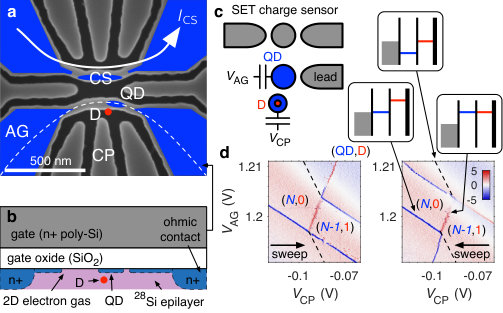 Figure 1
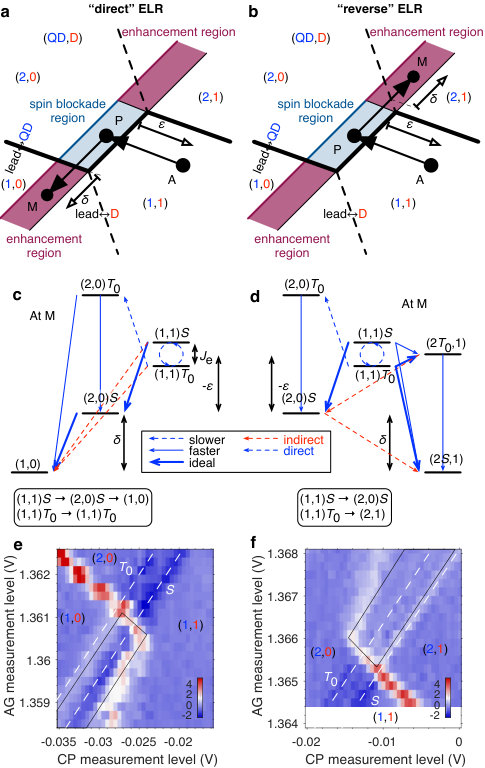 Figure 2
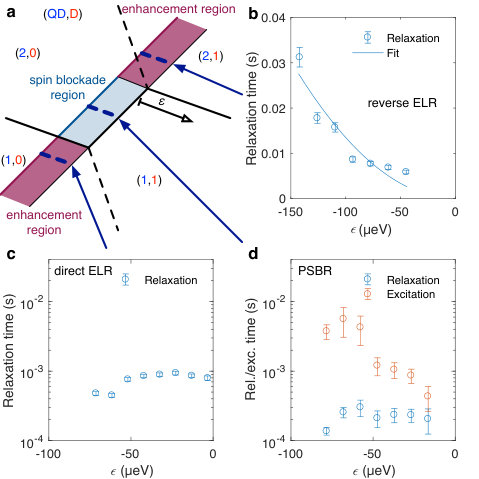 Figure 3
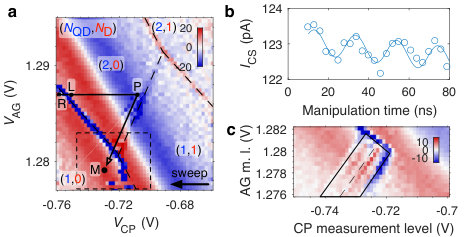 Figure 4
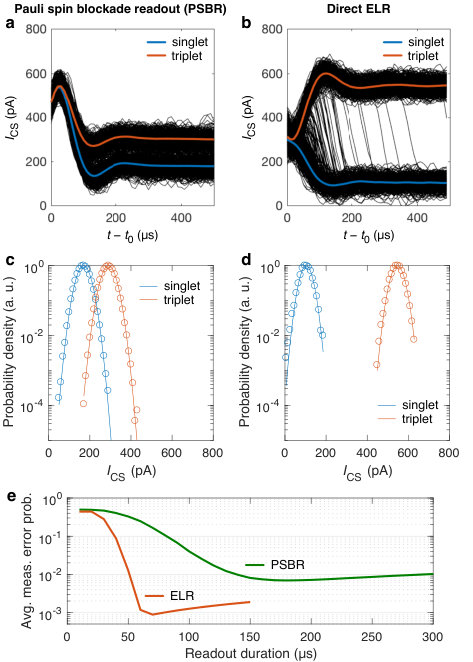 Figure 5
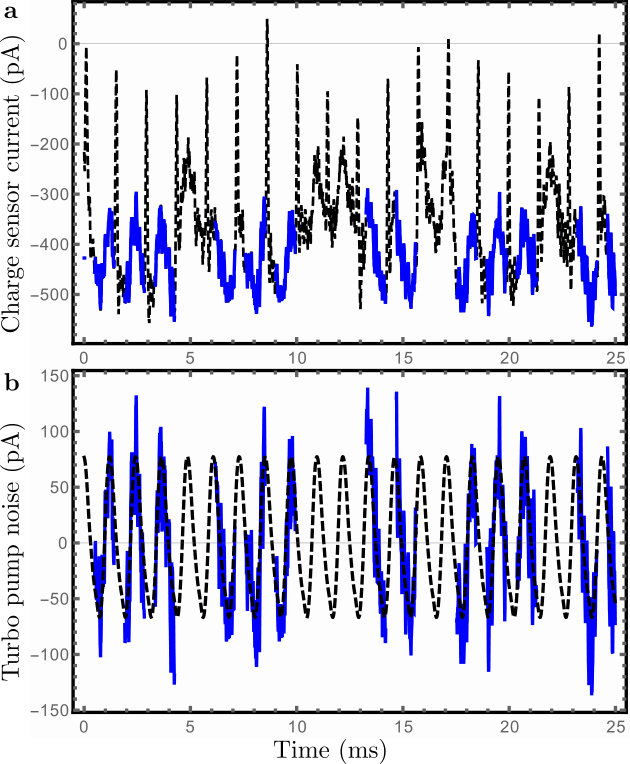 Figure 6
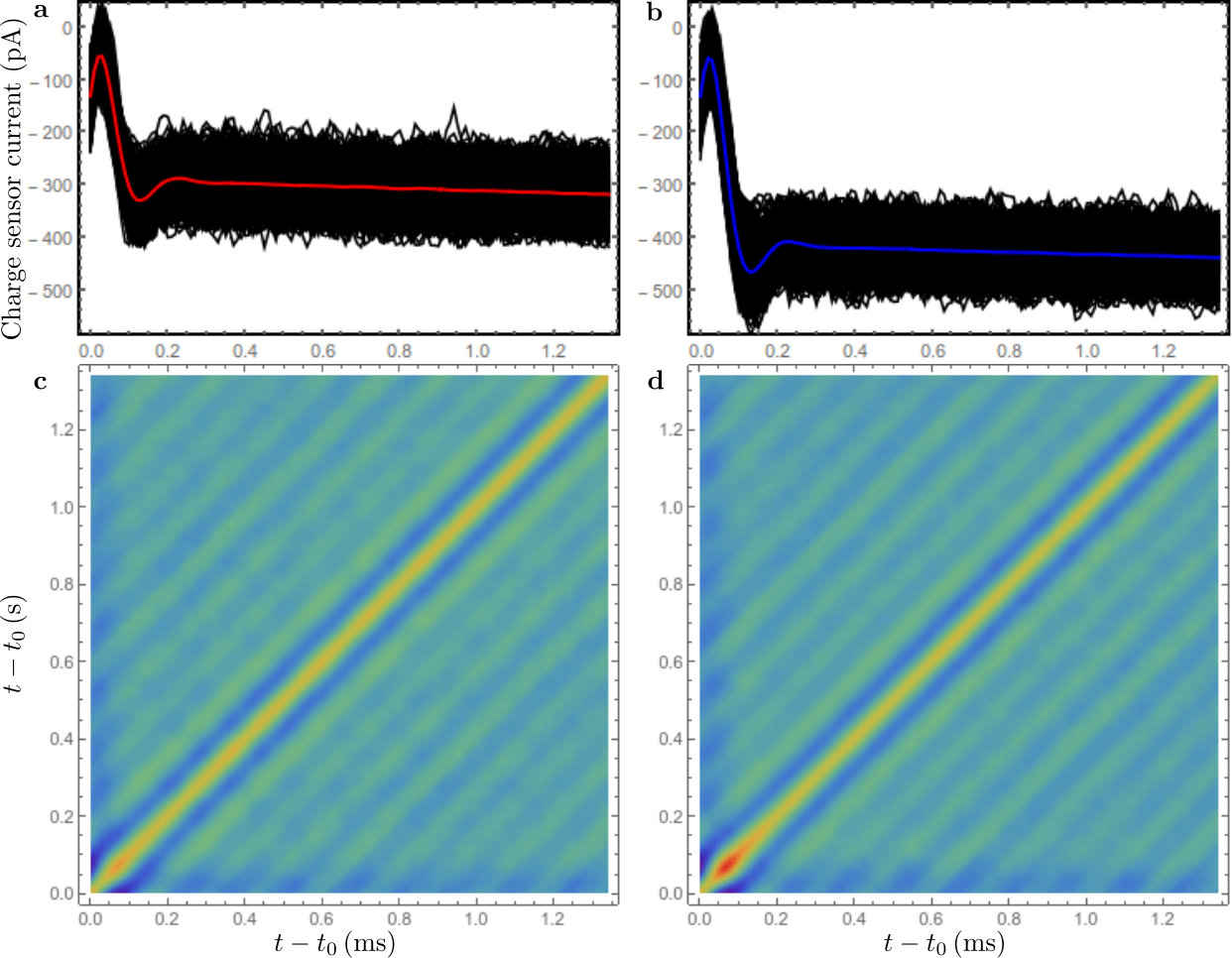 Figure 7
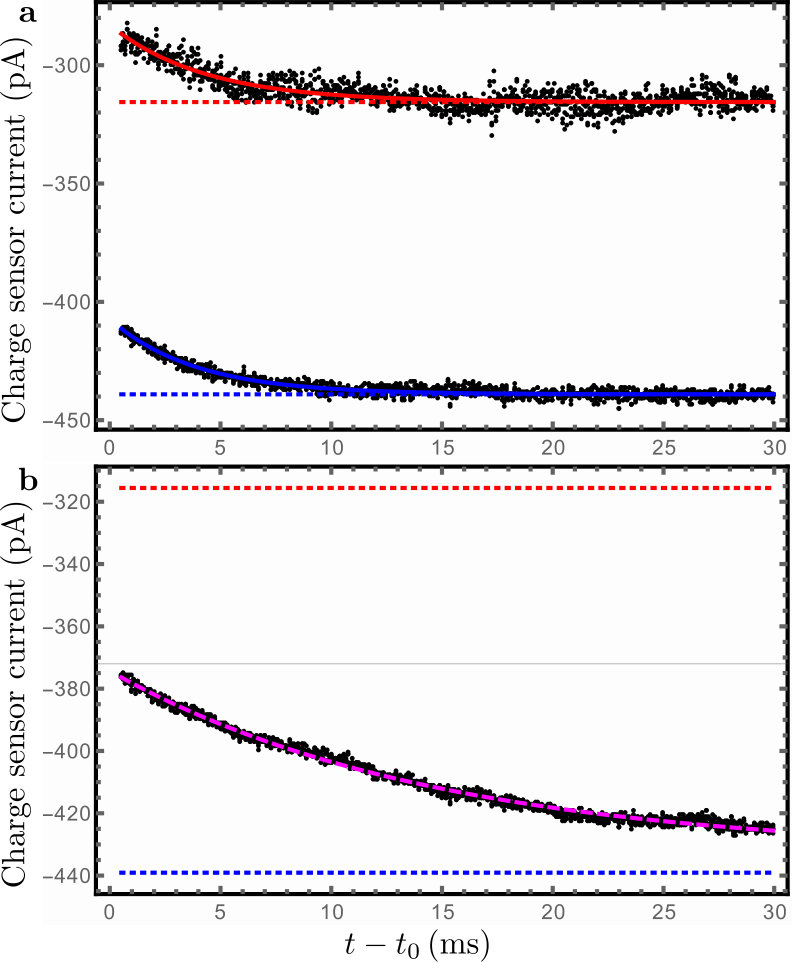 Figure 8
Peer Reviews
No public reviews on file for this paper yet. If you reviewed it on a platform where reviews are public (OpenReview, ICLR, NeurIPS, ICML), you can paste yours below so the community can read it here.
Videos
No videos yet. Explain this paper in a talk, walkthrough, or lecture? Add one.