ASAP: Prioritizing Attention via Time Series Smoothing
Kexin Rong, Peter Bailis

TL;DR
This paper introduces ASAP, a novel adaptive smoothing technique for streaming time series visualization that enhances trend visibility and user accuracy while significantly reducing response times.
Contribution
ASAP is the first method to automatically optimize smoothing in streaming time series visualizations, balancing noise reduction and trend retention with an efficient search strategy.
Findings
Improves user accuracy in detecting deviations by up to 38.4%.
Reduces response times by up to 44.3%.
Operates several orders of magnitude faster than alternatives.
Abstract
Time series visualization of streaming telemetry (i.e., charting of key metrics such as server load over time) is increasingly prevalent in modern data platforms and applications. However, many existing systems simply plot the raw data streams as they arrive, often obscuring large-scale trends due to small-scale noise. We propose an alternative: to better prioritize end users' attention, smooth time series visualizations as much as possible to remove noise, while retaining large-scale structure to highlight significant deviations. We develop a new analytics operator called ASAP that automatically smooths streaming time series by adaptively optimizing the trade-off between noise reduction (i.e., variance) and trend retention (i.e., kurtosis). We introduce metrics to quantitatively assess the quality of smoothed plots and provide an efficient search strategy for optimizing these metrics…
Click any figure to enlarge with its caption.
 Figure 1
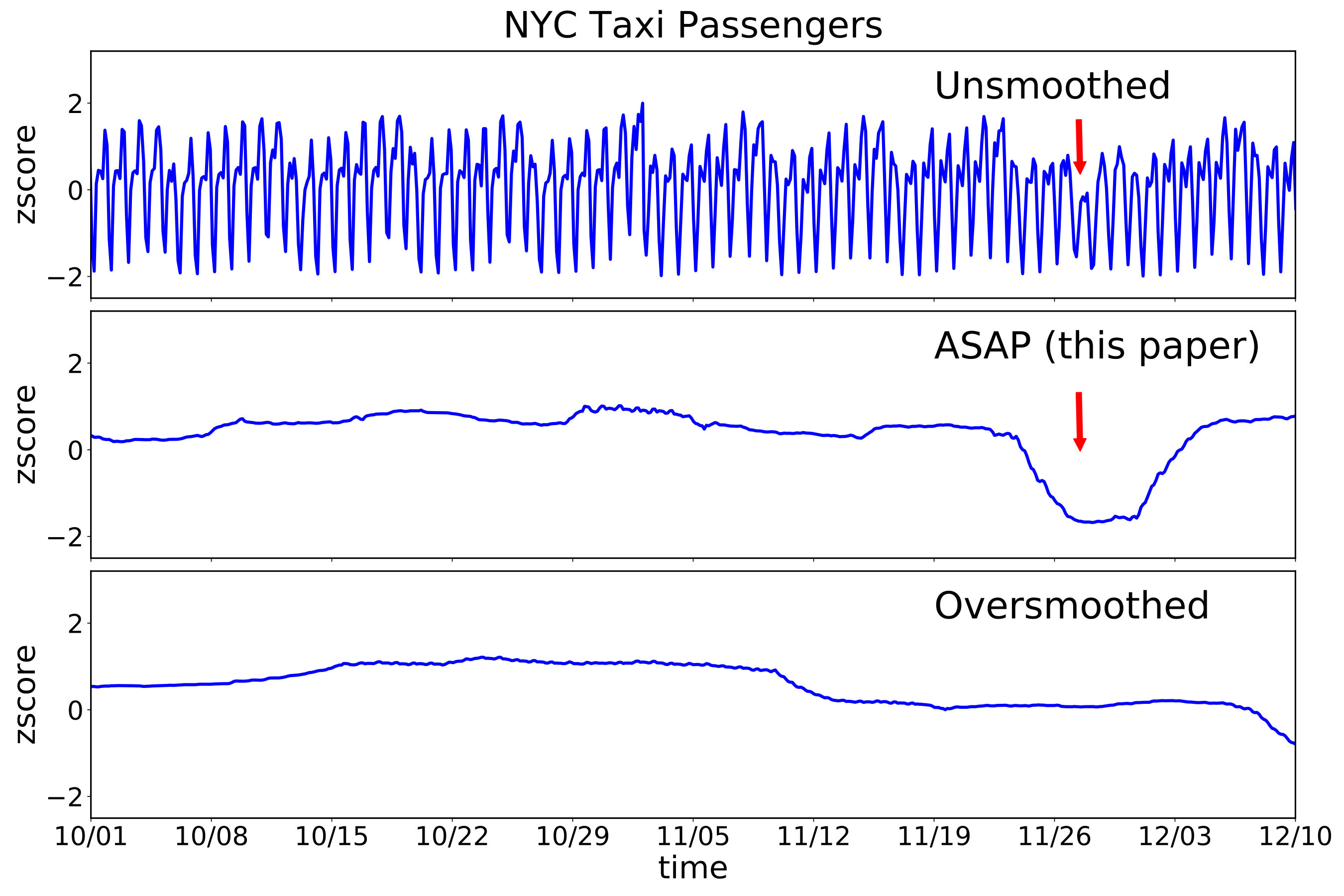 Figure 2
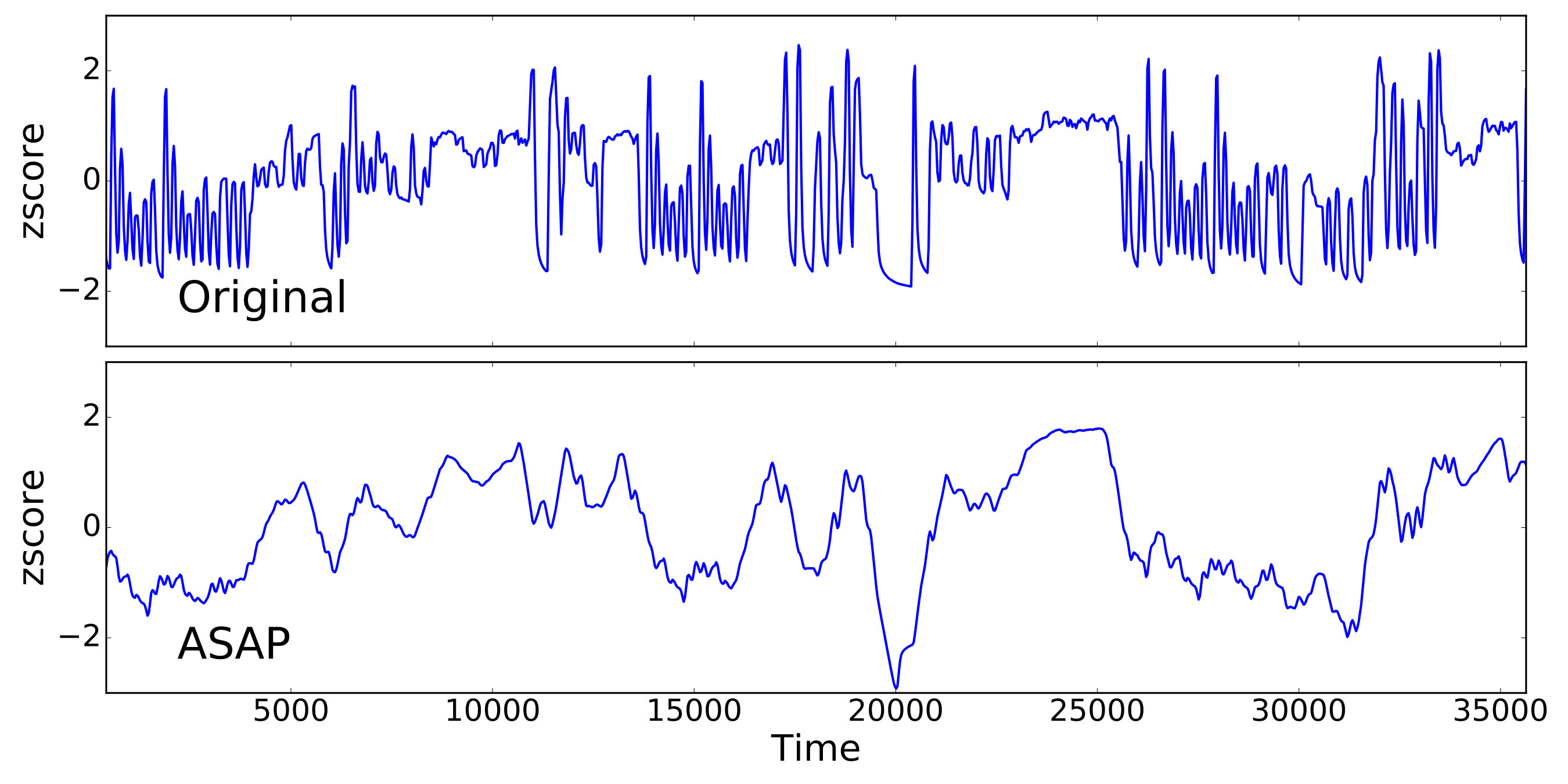 Figure 3
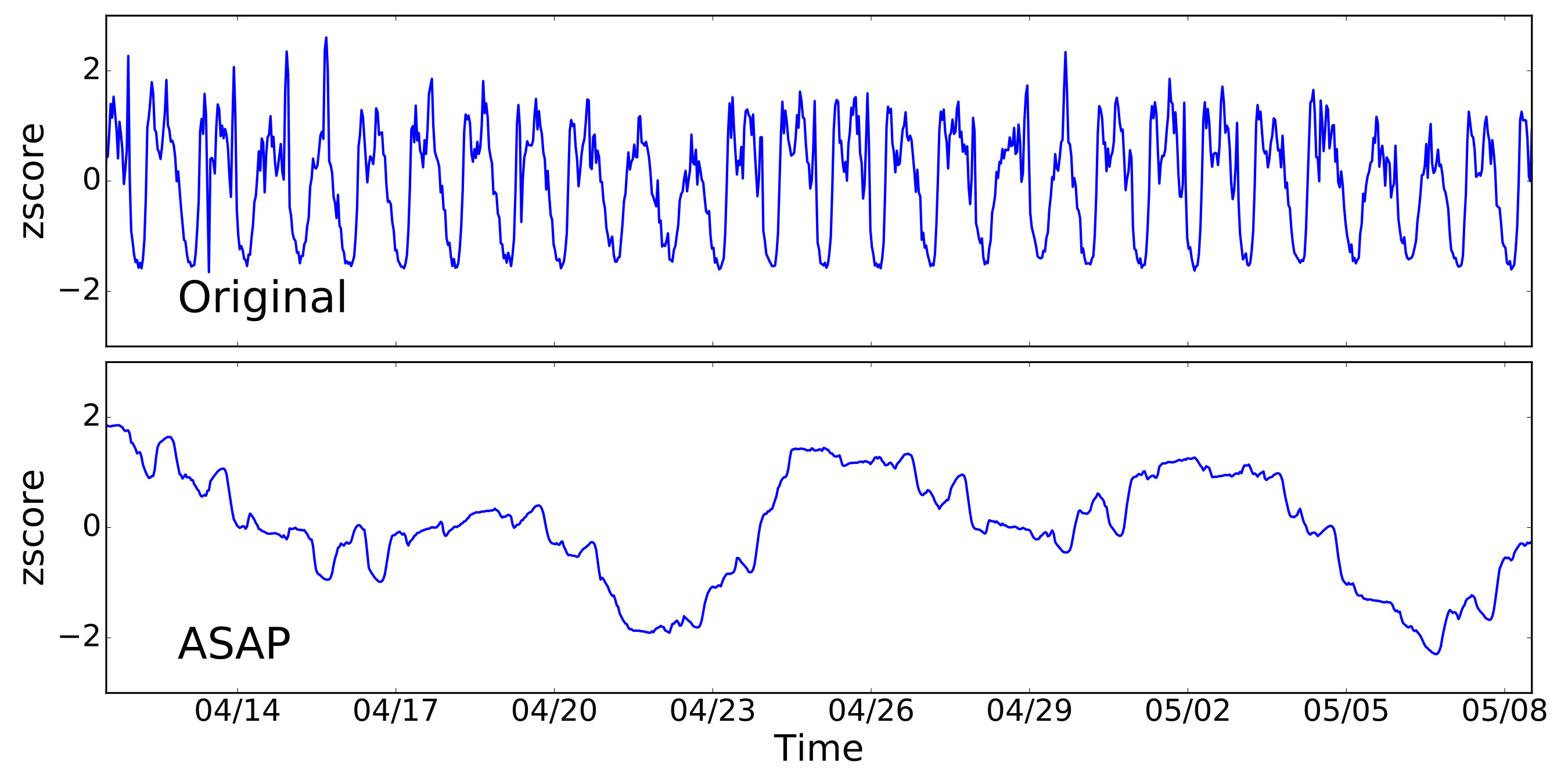 Figure 4
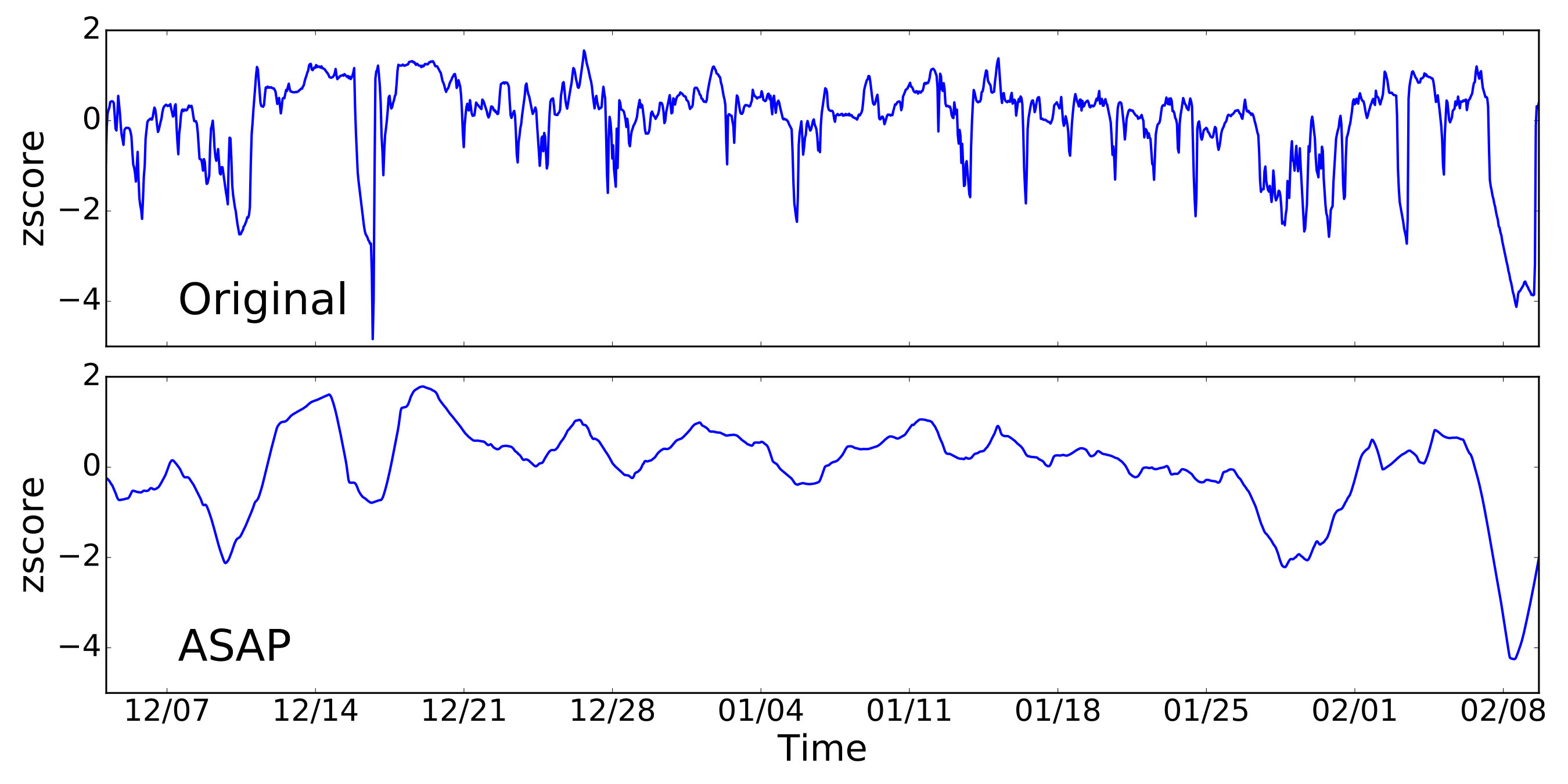 Figure 5
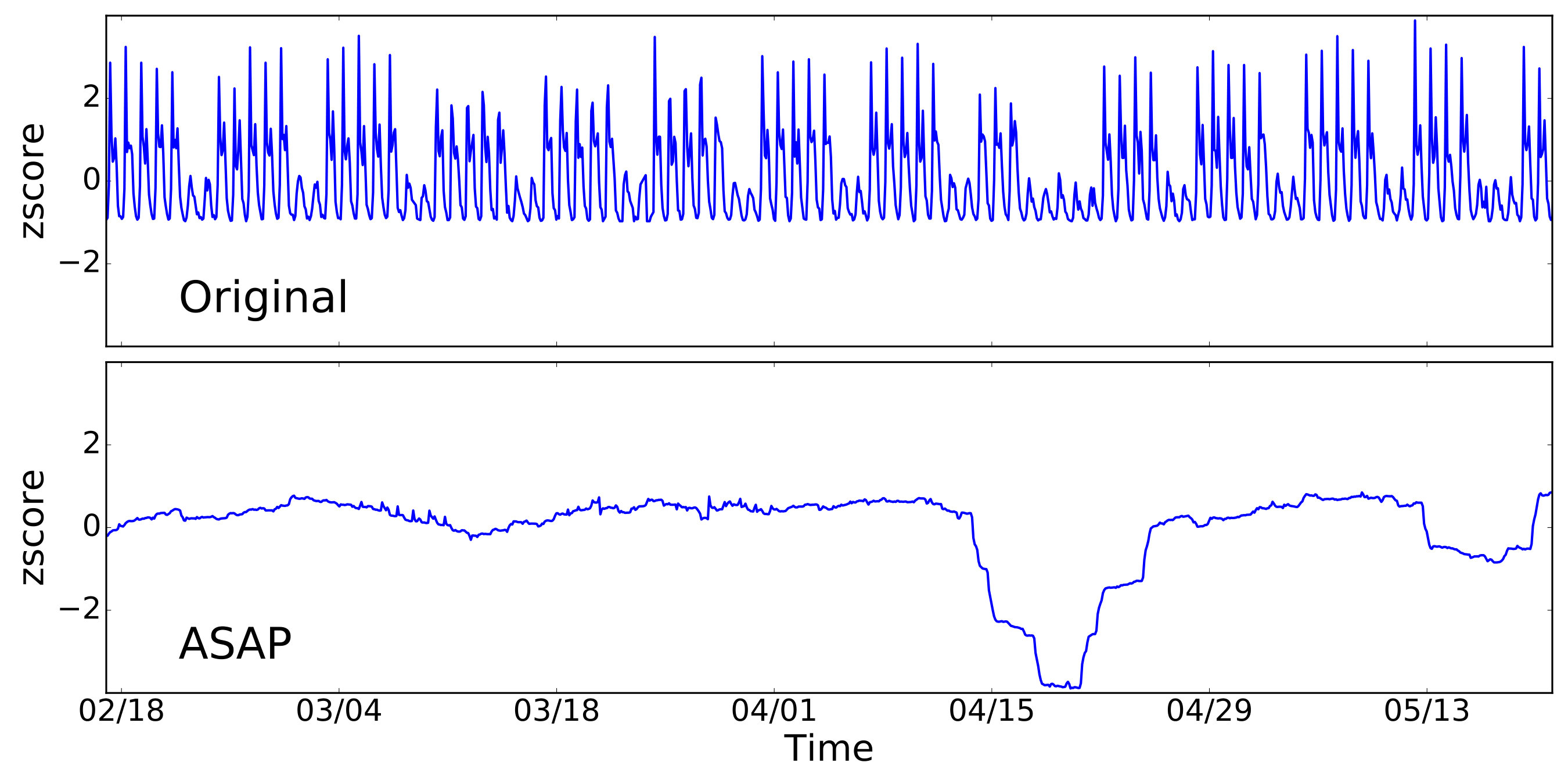 Figure 6
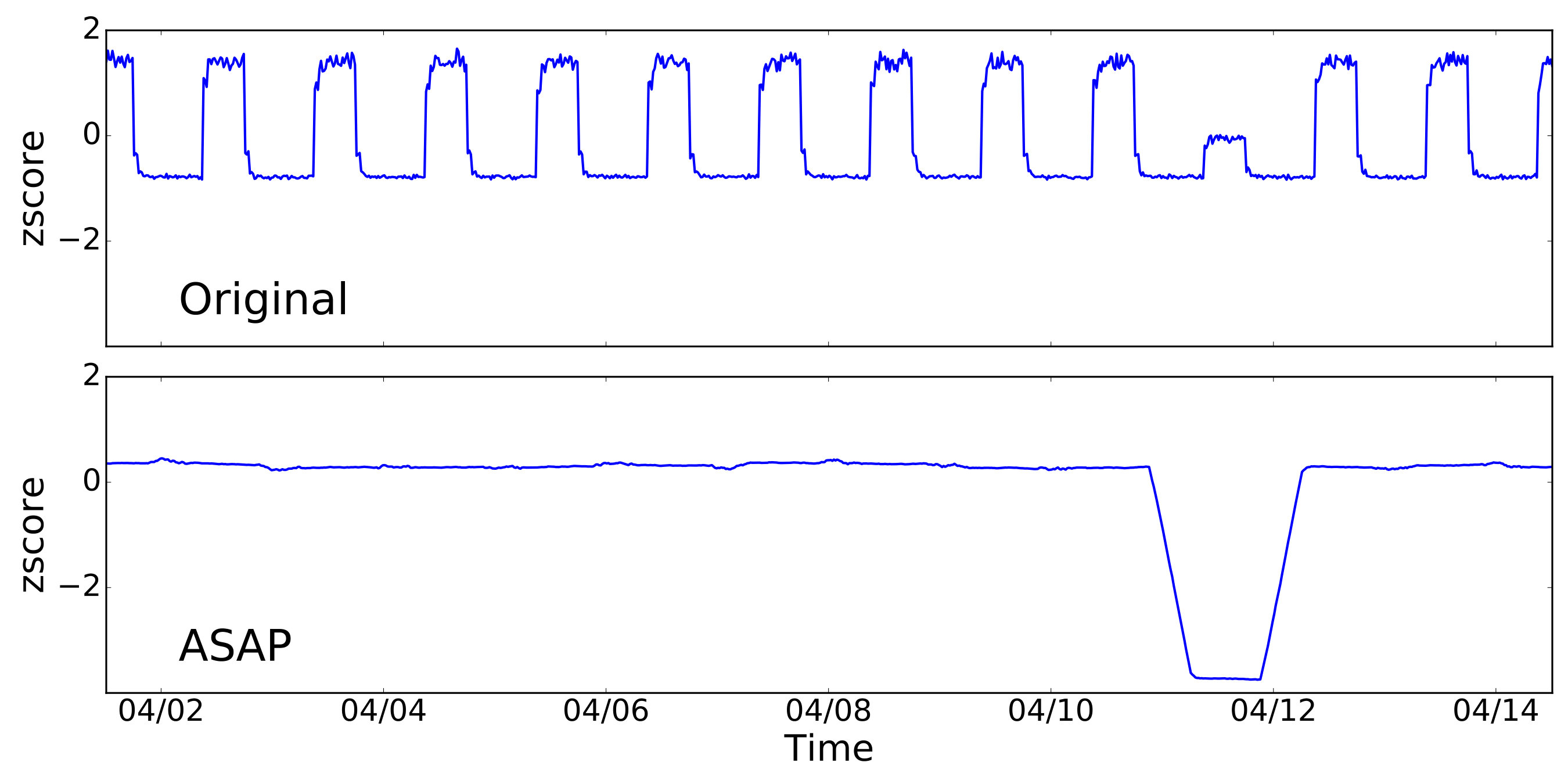 Figure 7
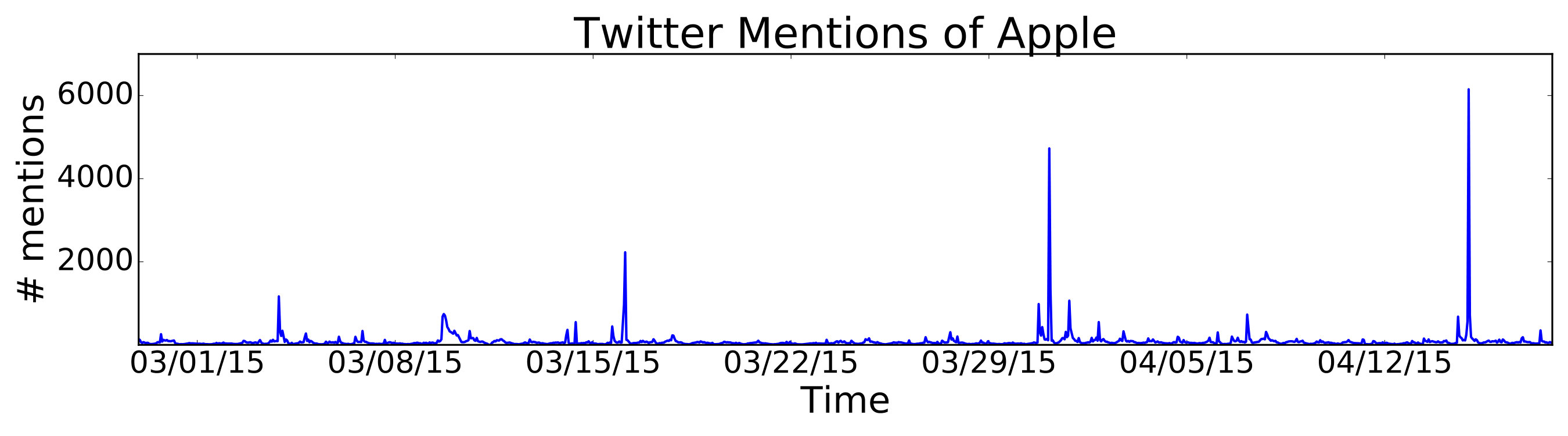 Figure 8
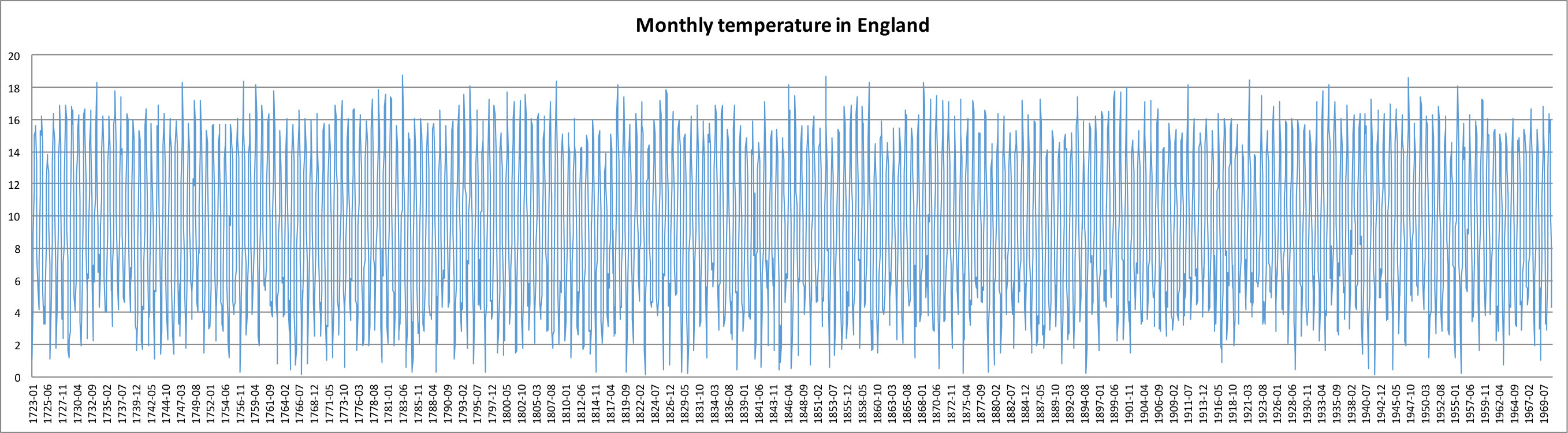 Figure 9
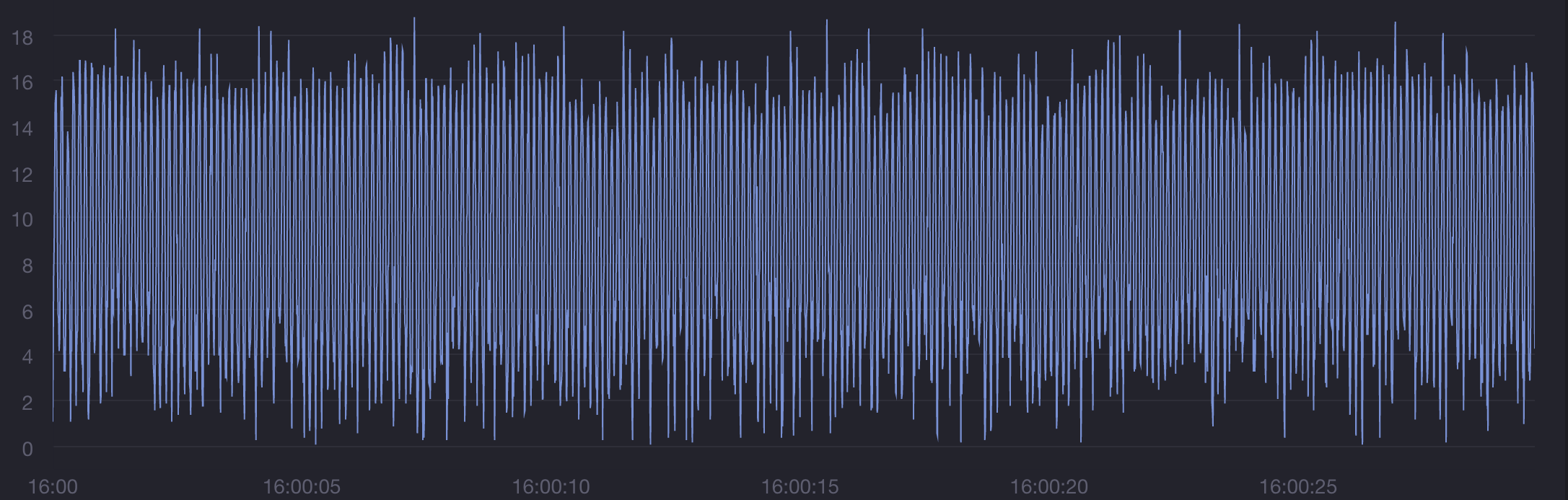 Figure 10
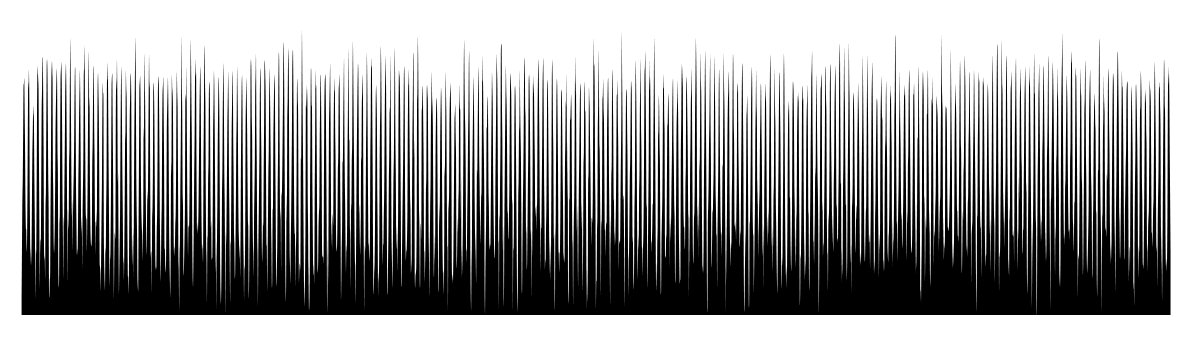 Figure 11
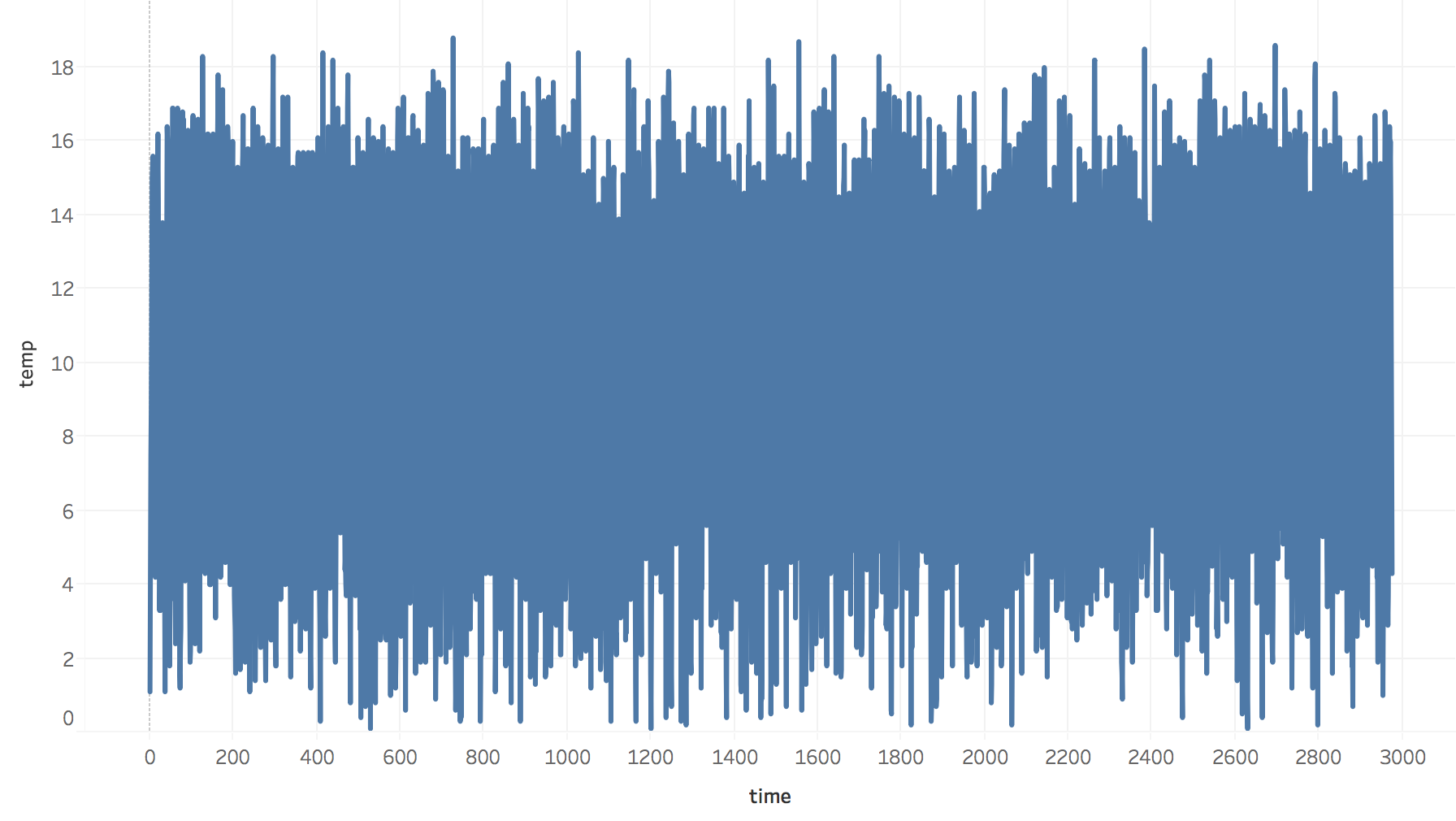 Figure 12
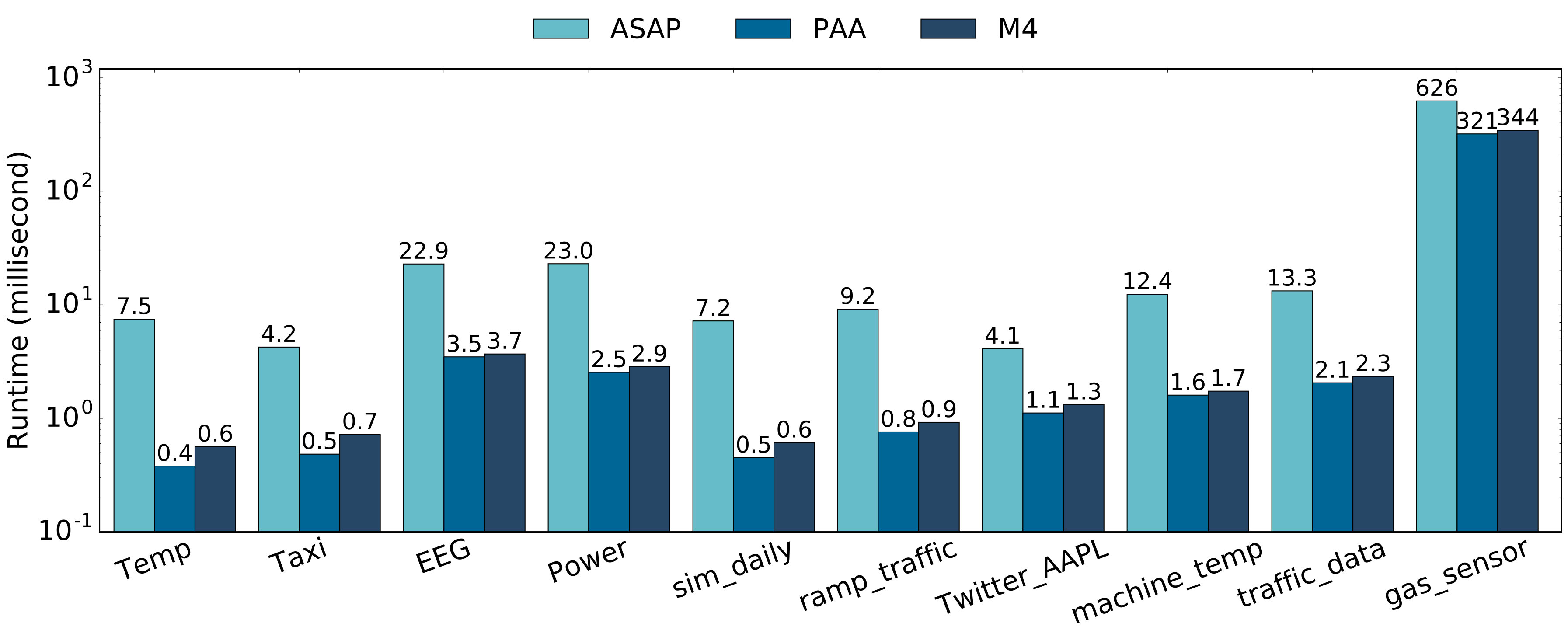 Figure 13
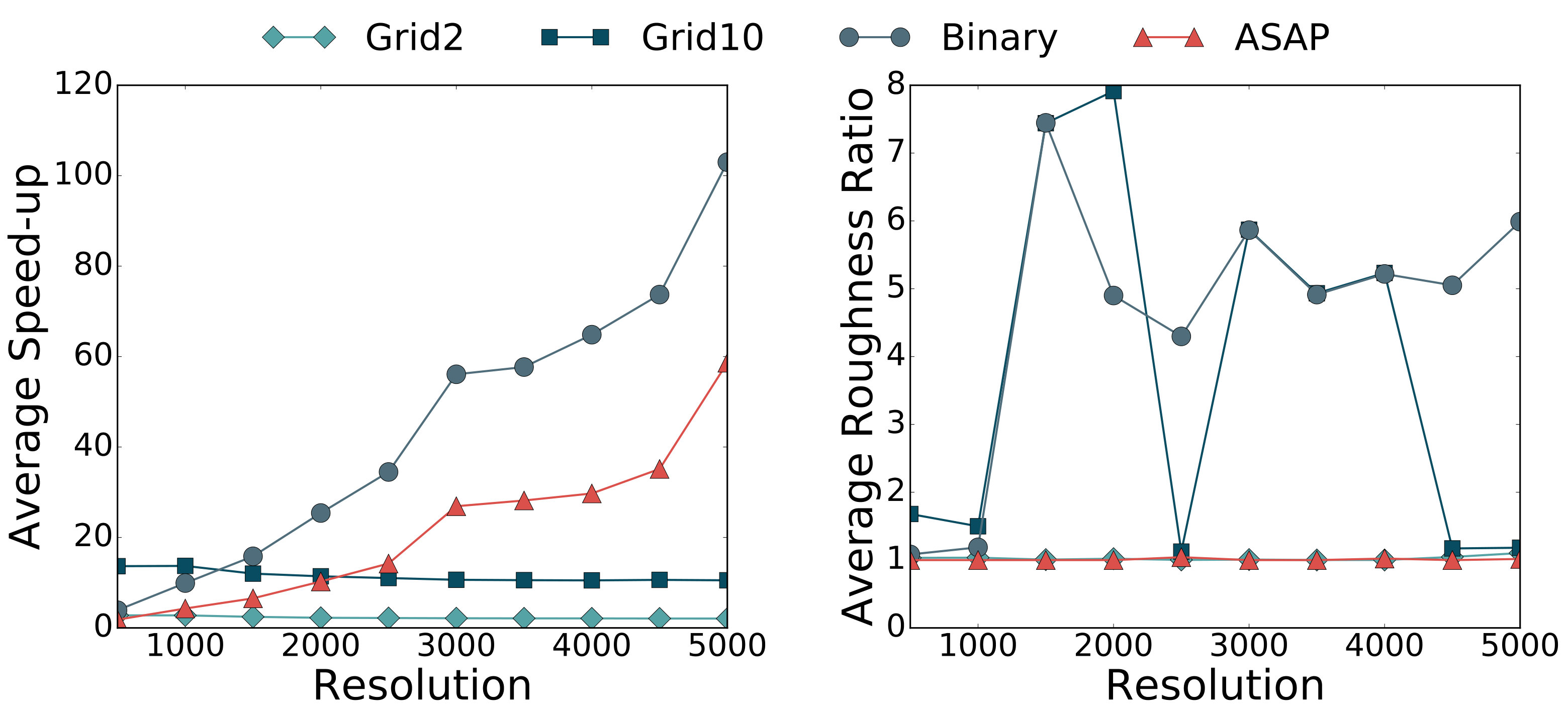 Figure 14
 Figure 15
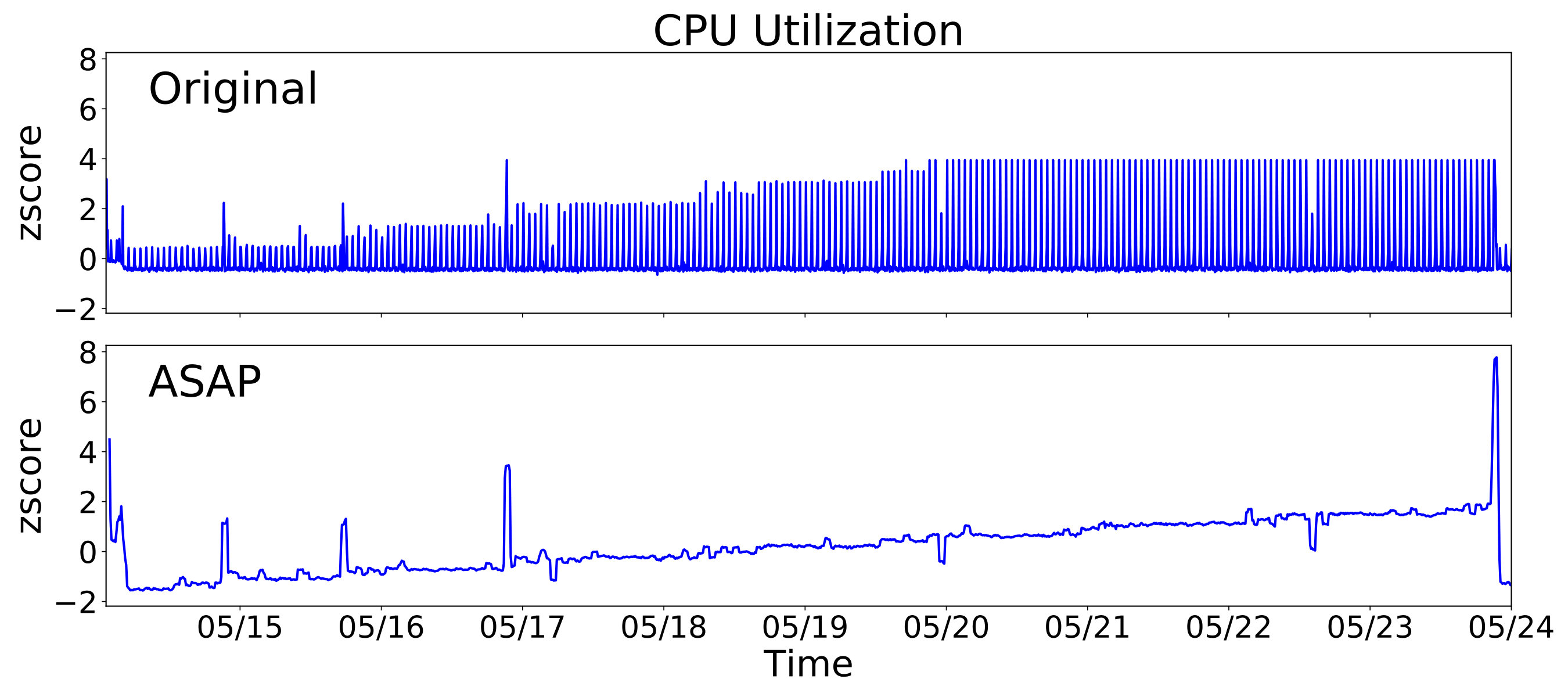 Figure 16
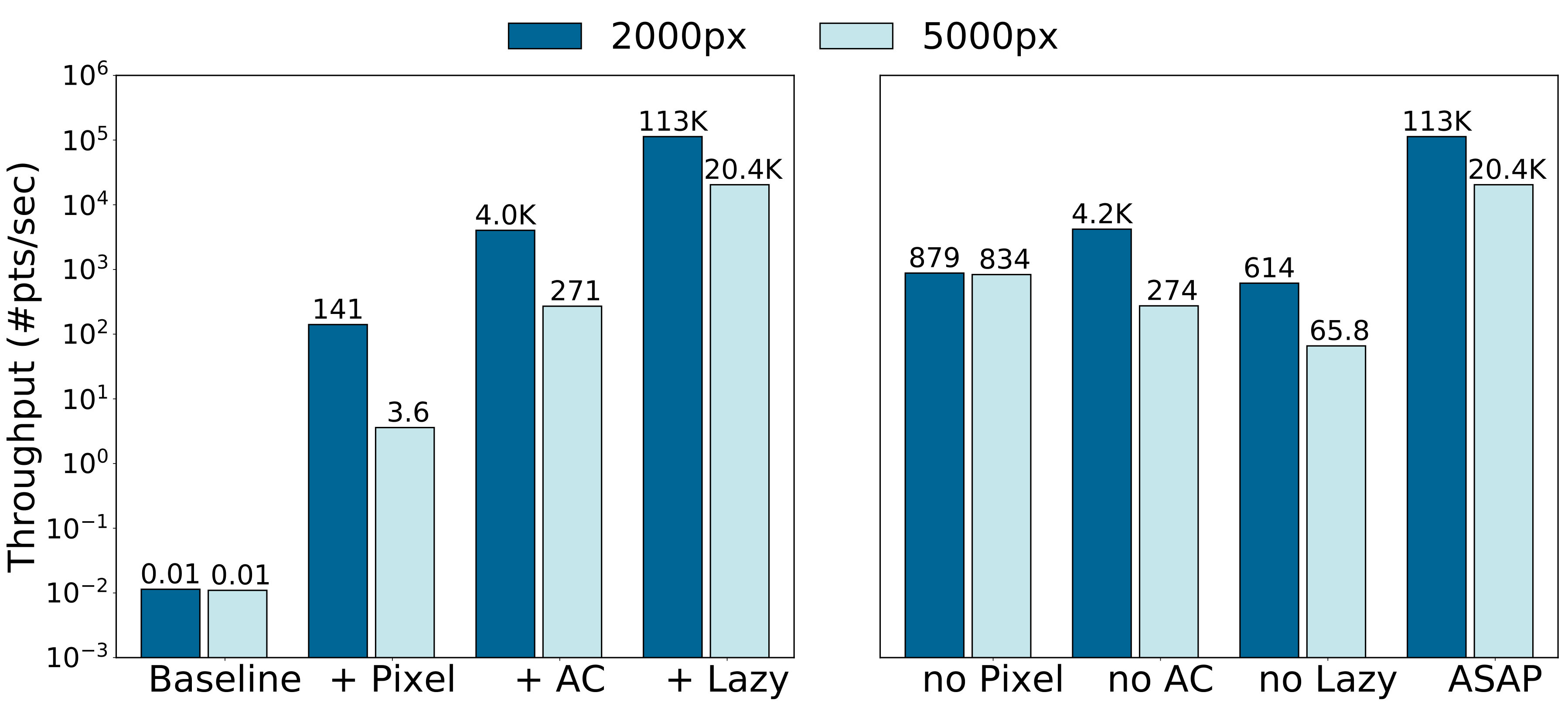 Figure 17
 Figure 18
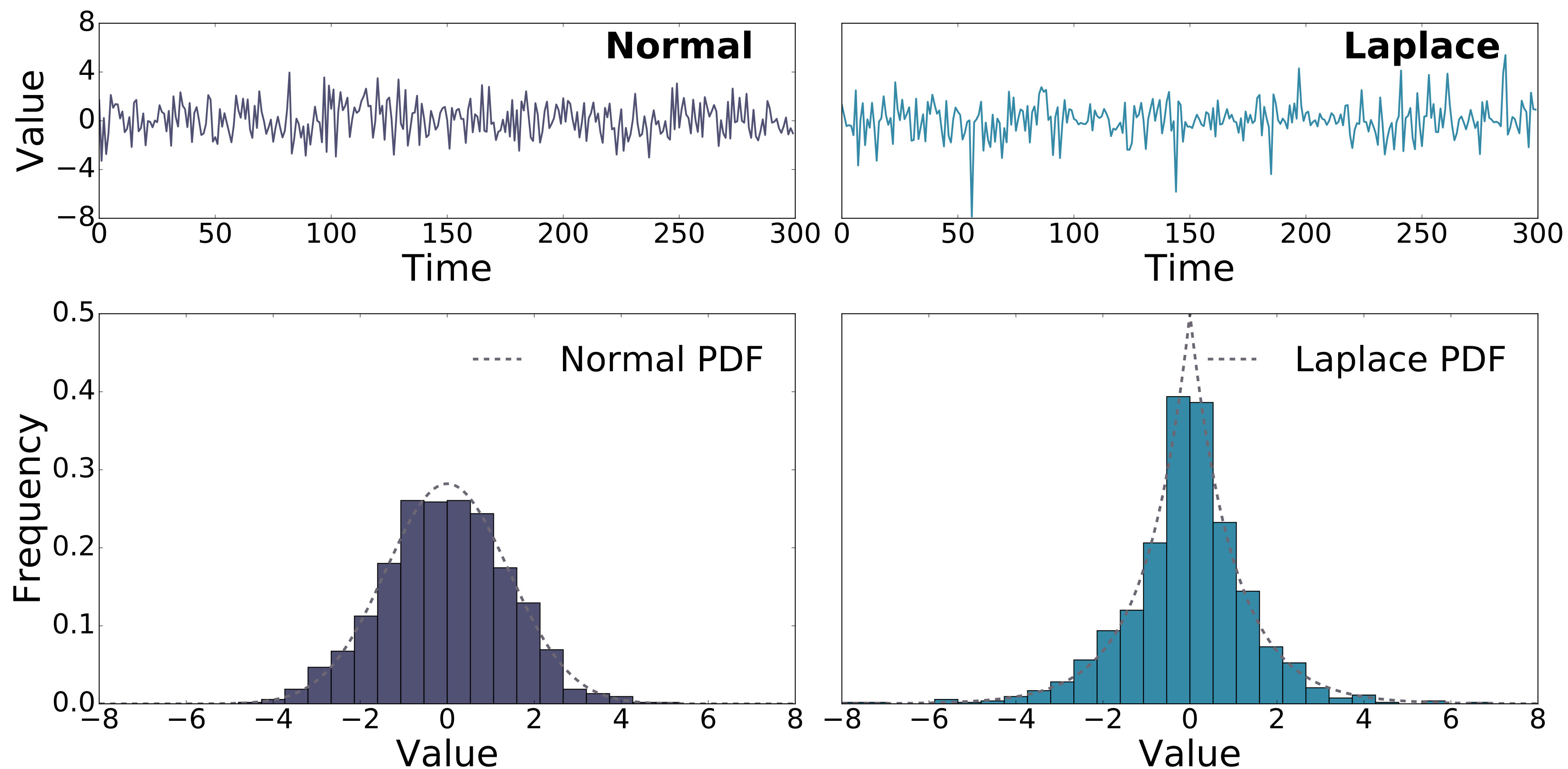 Figure 19
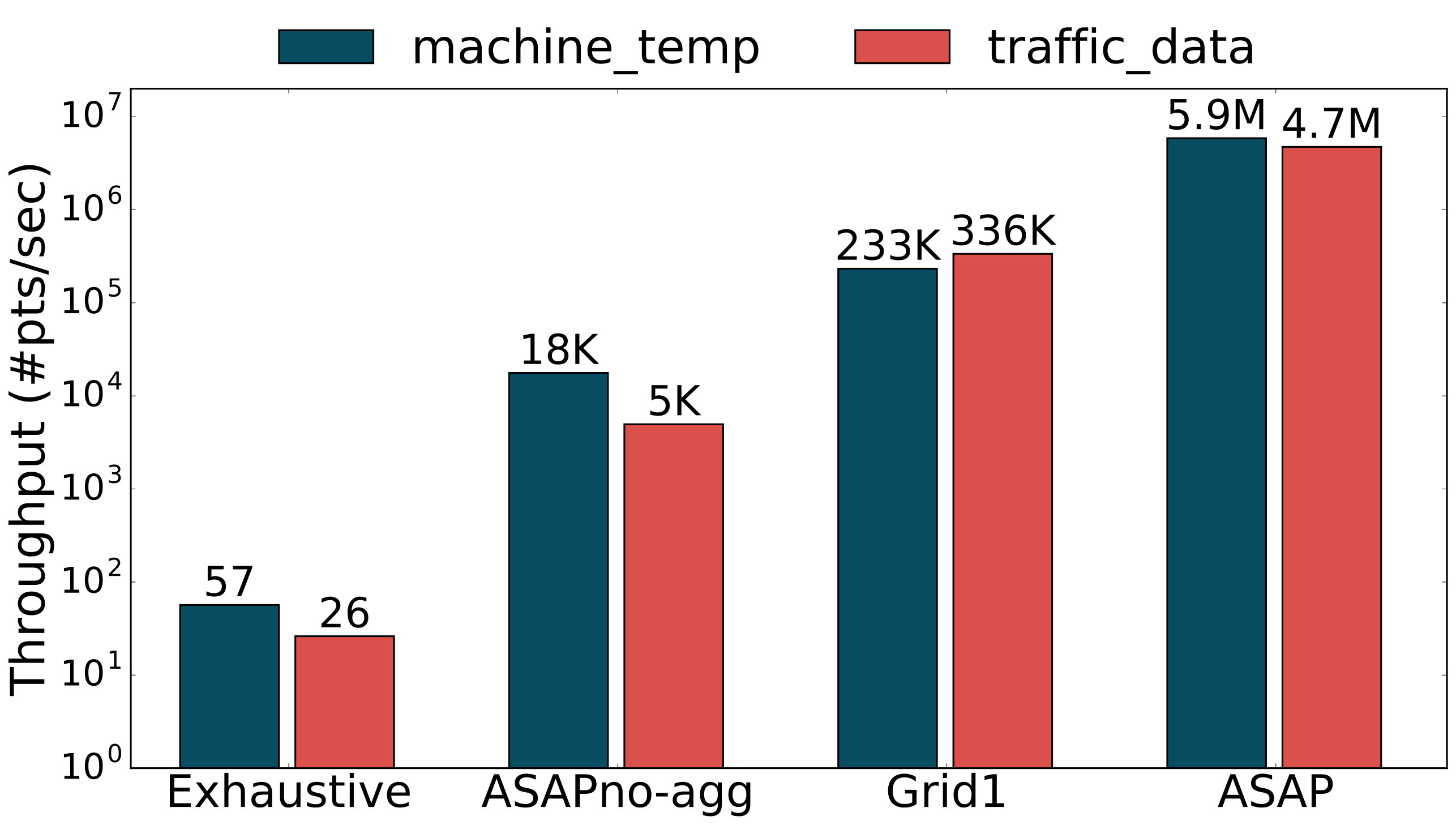 Figure 20
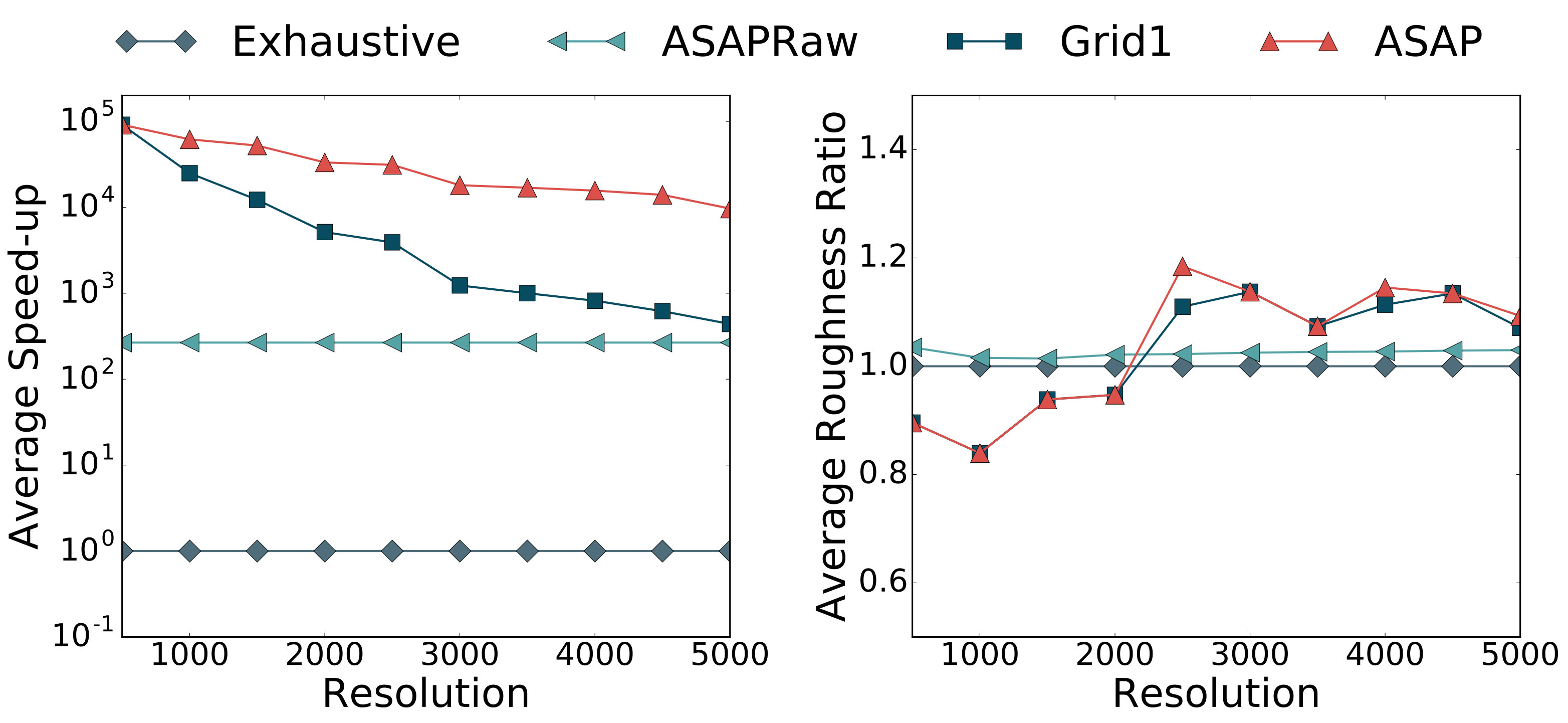 Figure 21
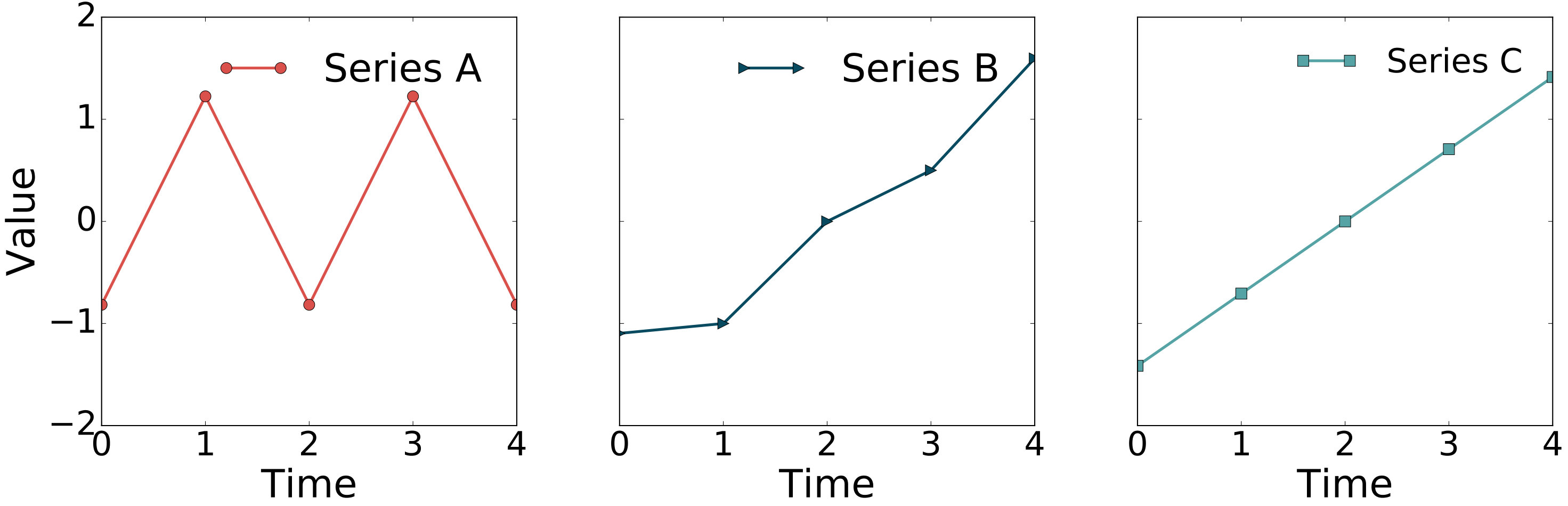 Figure 22
 Figure 23
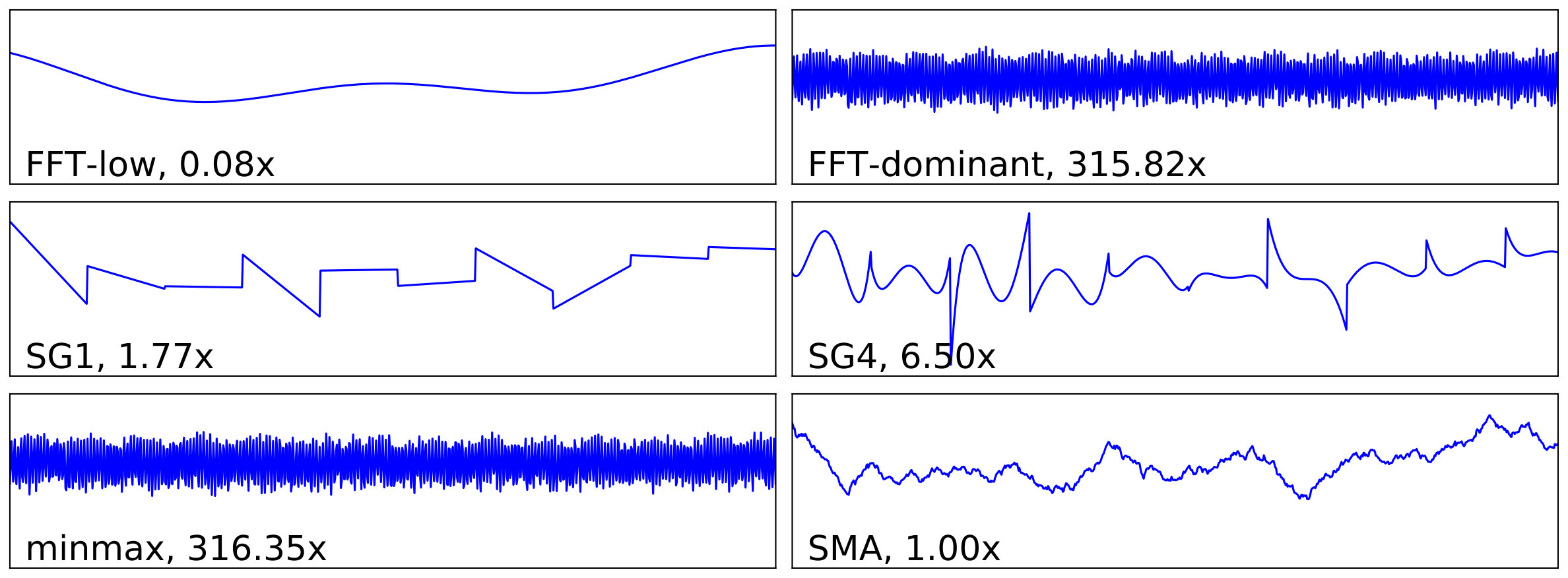 Figure 24
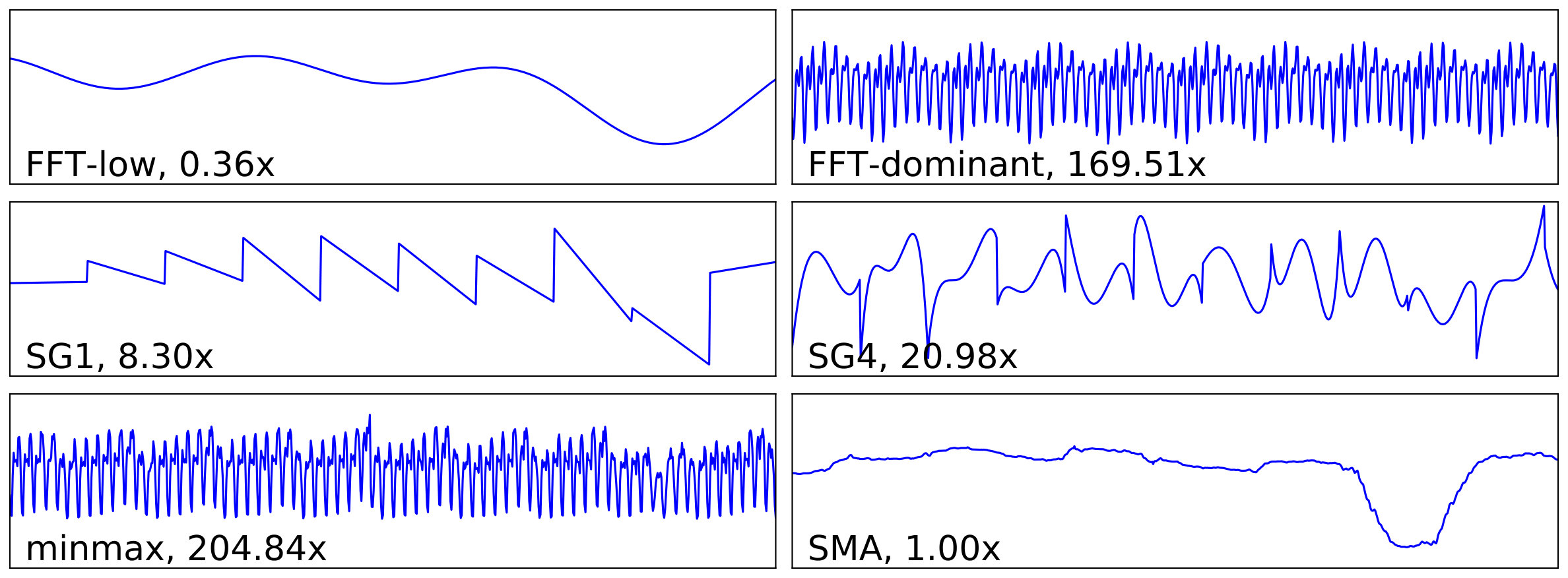 Figure 25
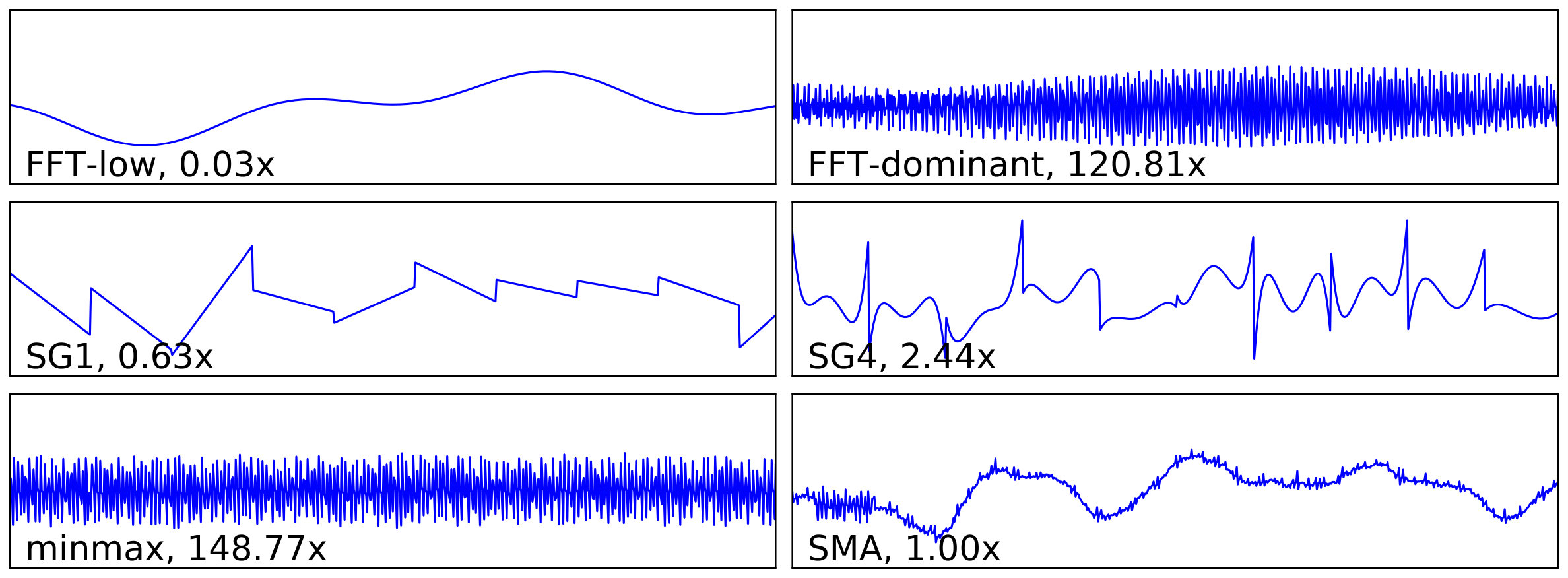 Figure 26
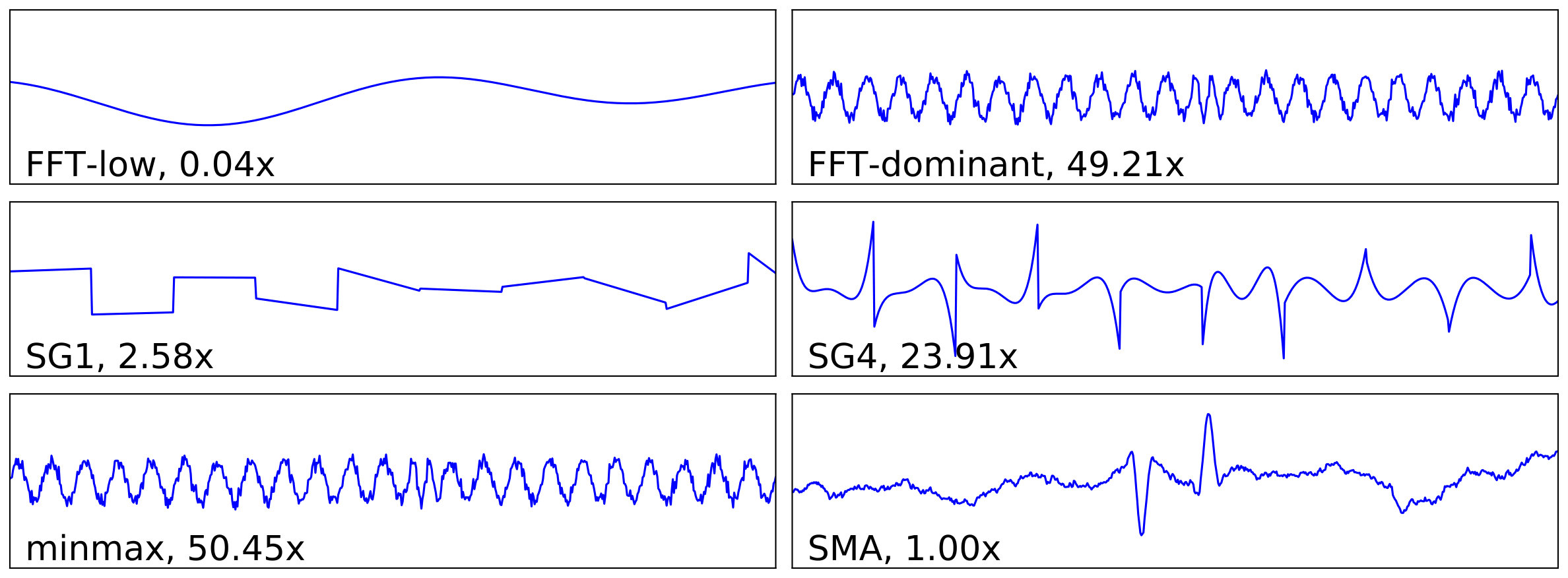 Figure 27
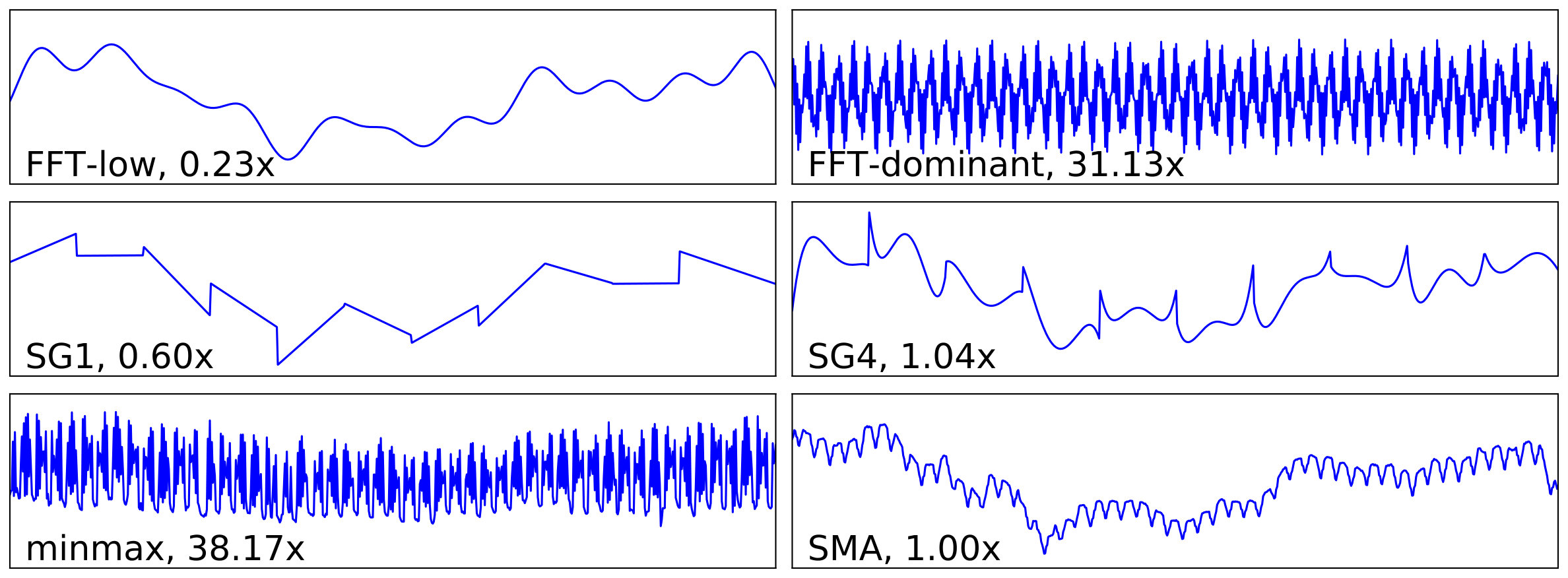 Figure 28
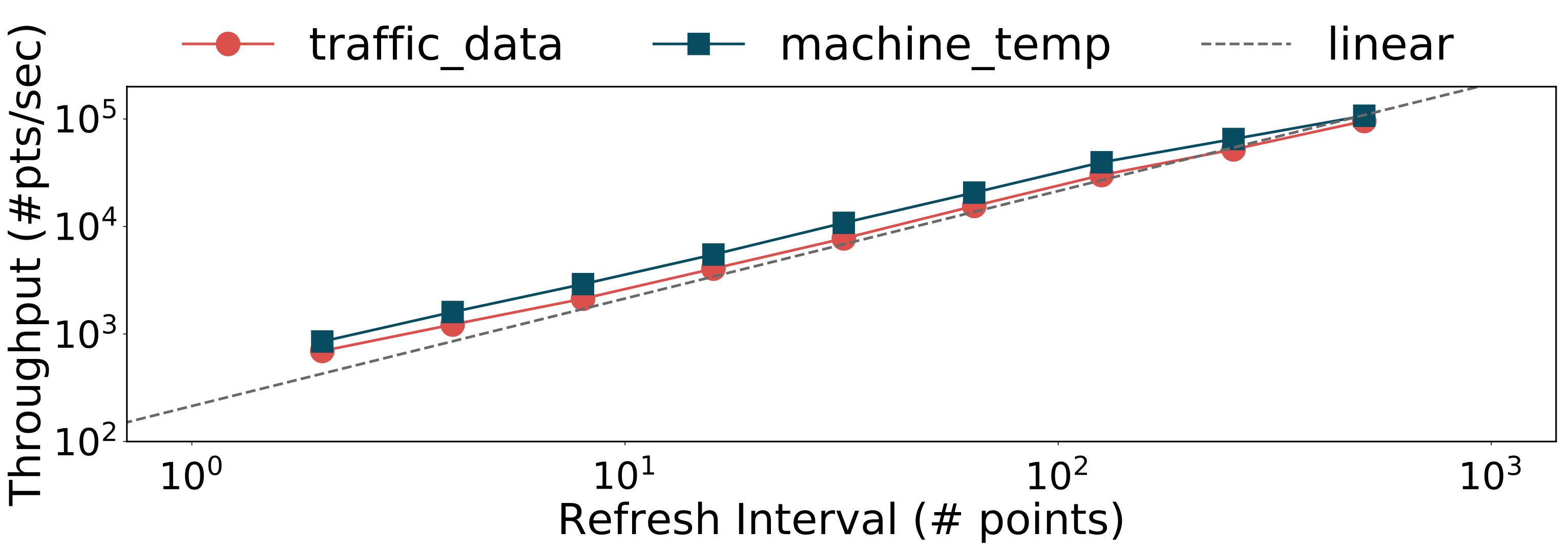 Figure 29
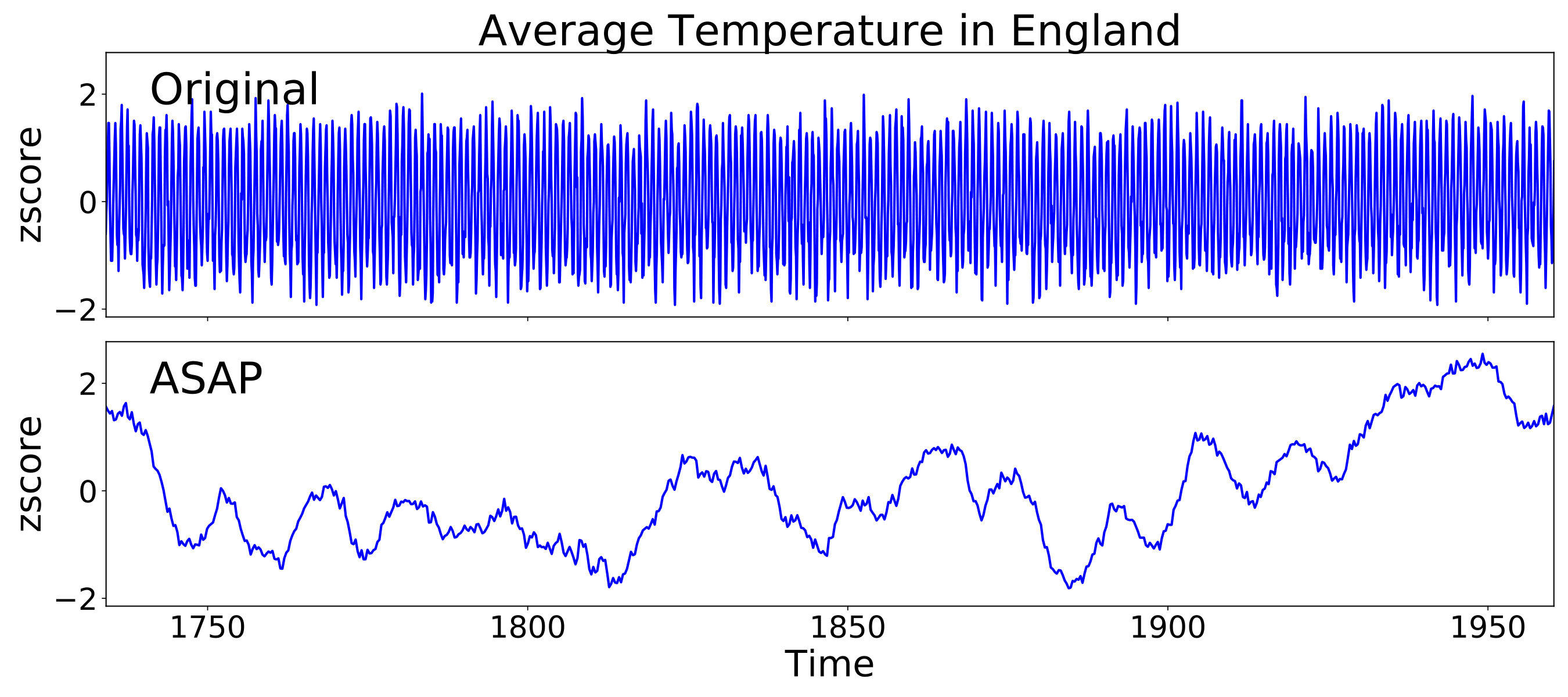 Figure 30
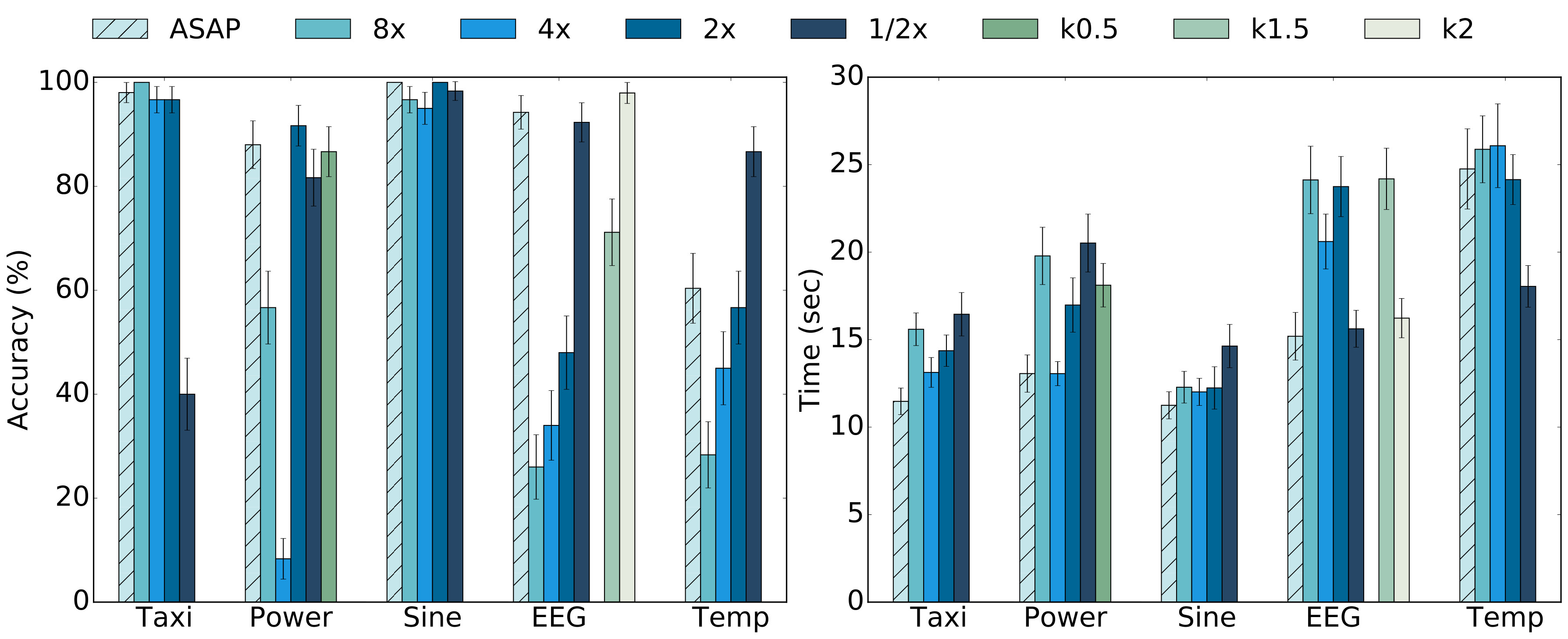 Figure 31
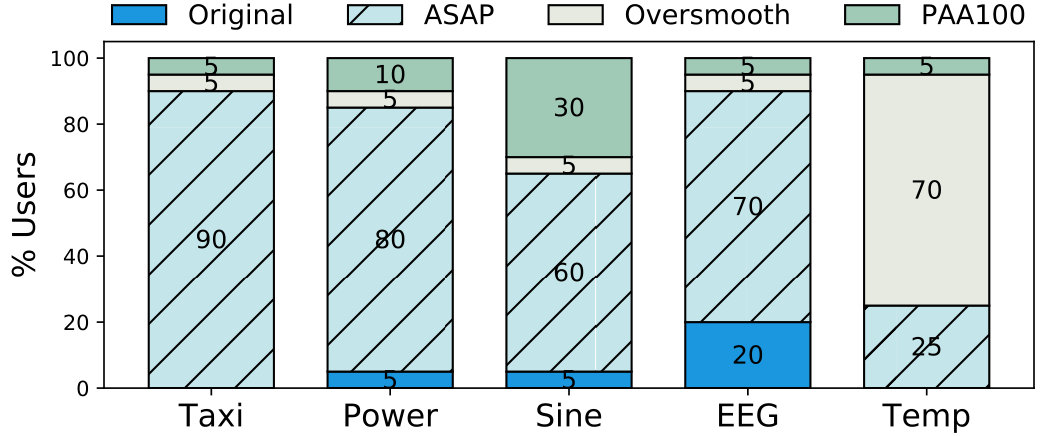 Figure 32
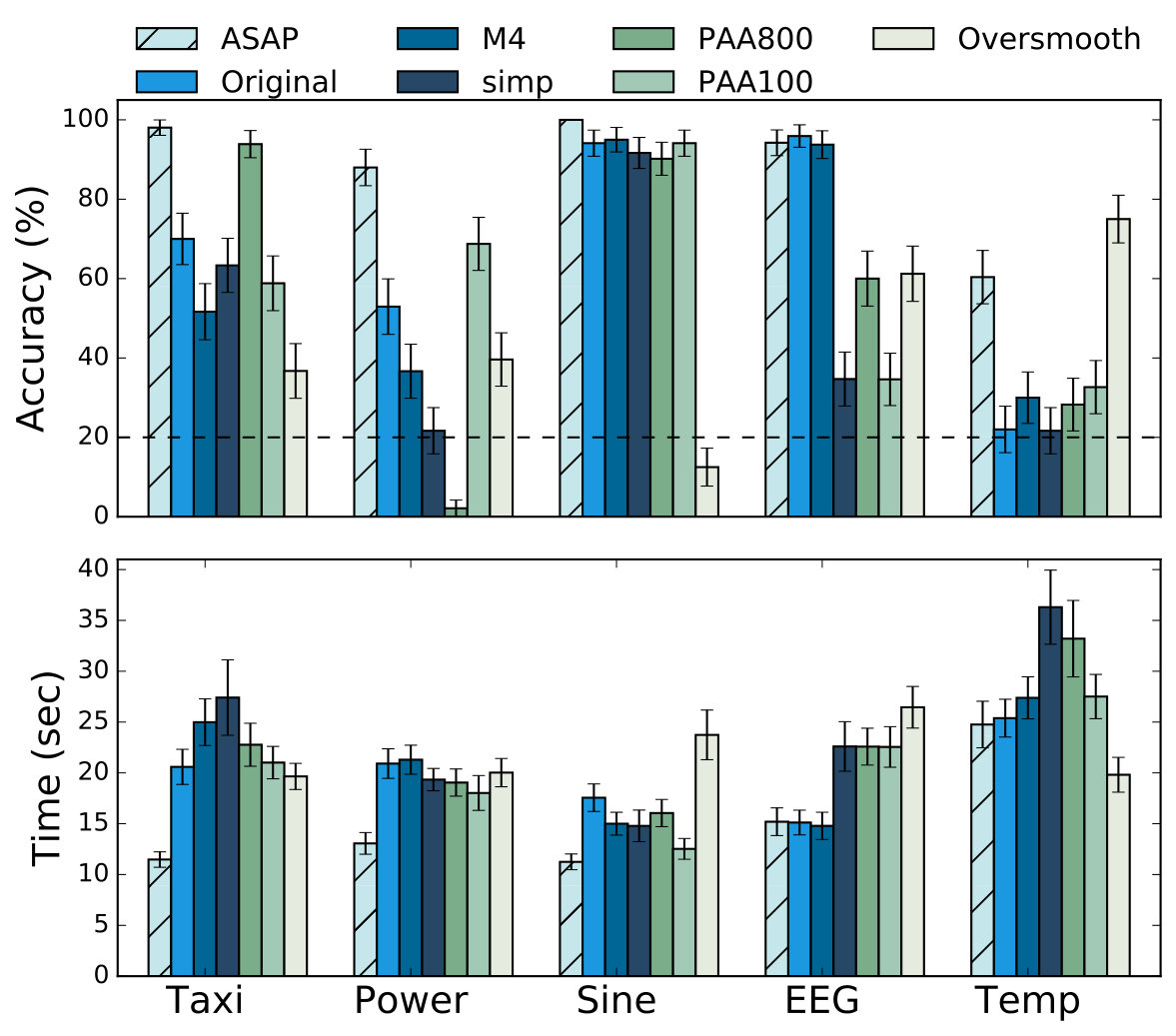 Figure 33
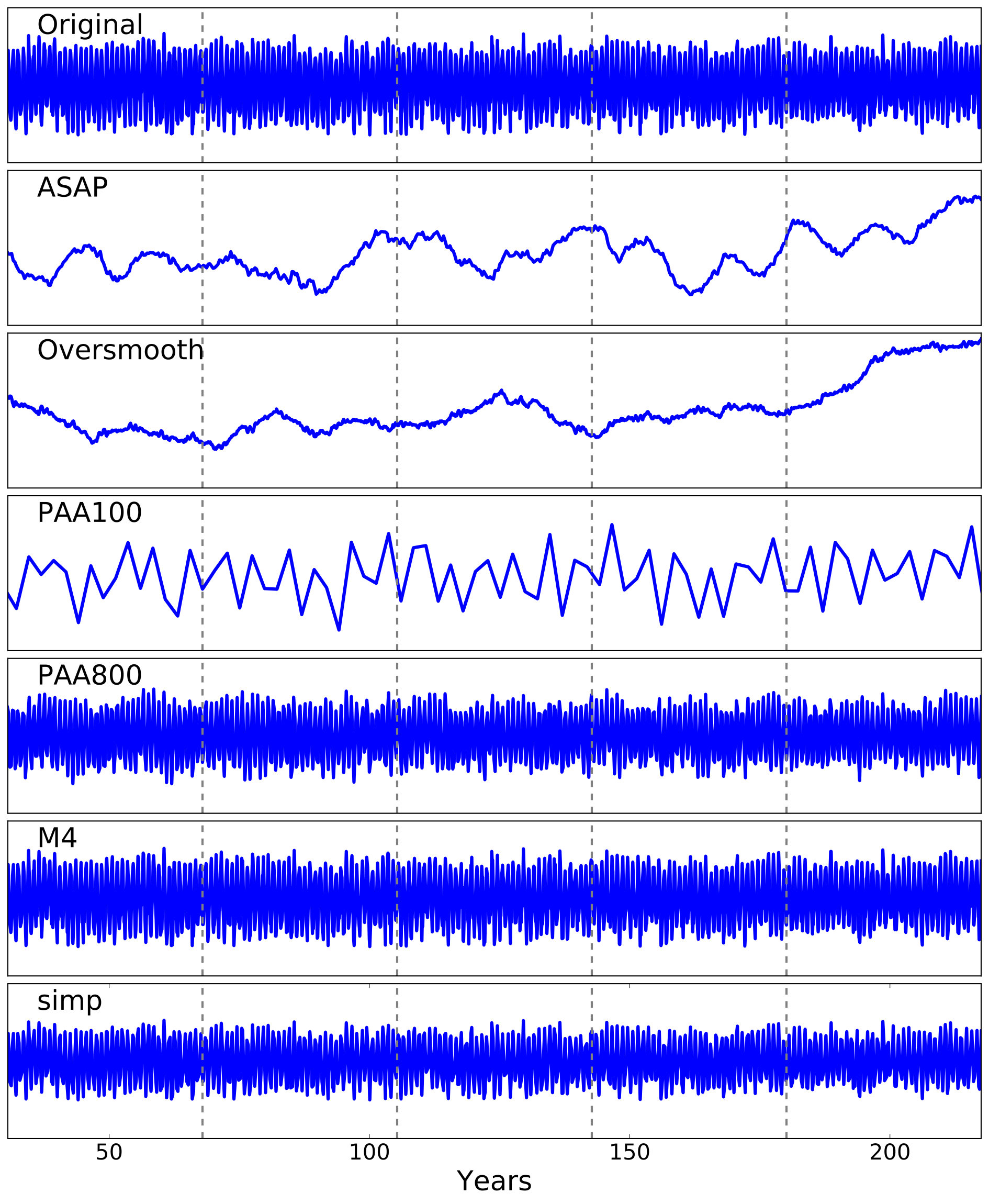 Figure 34
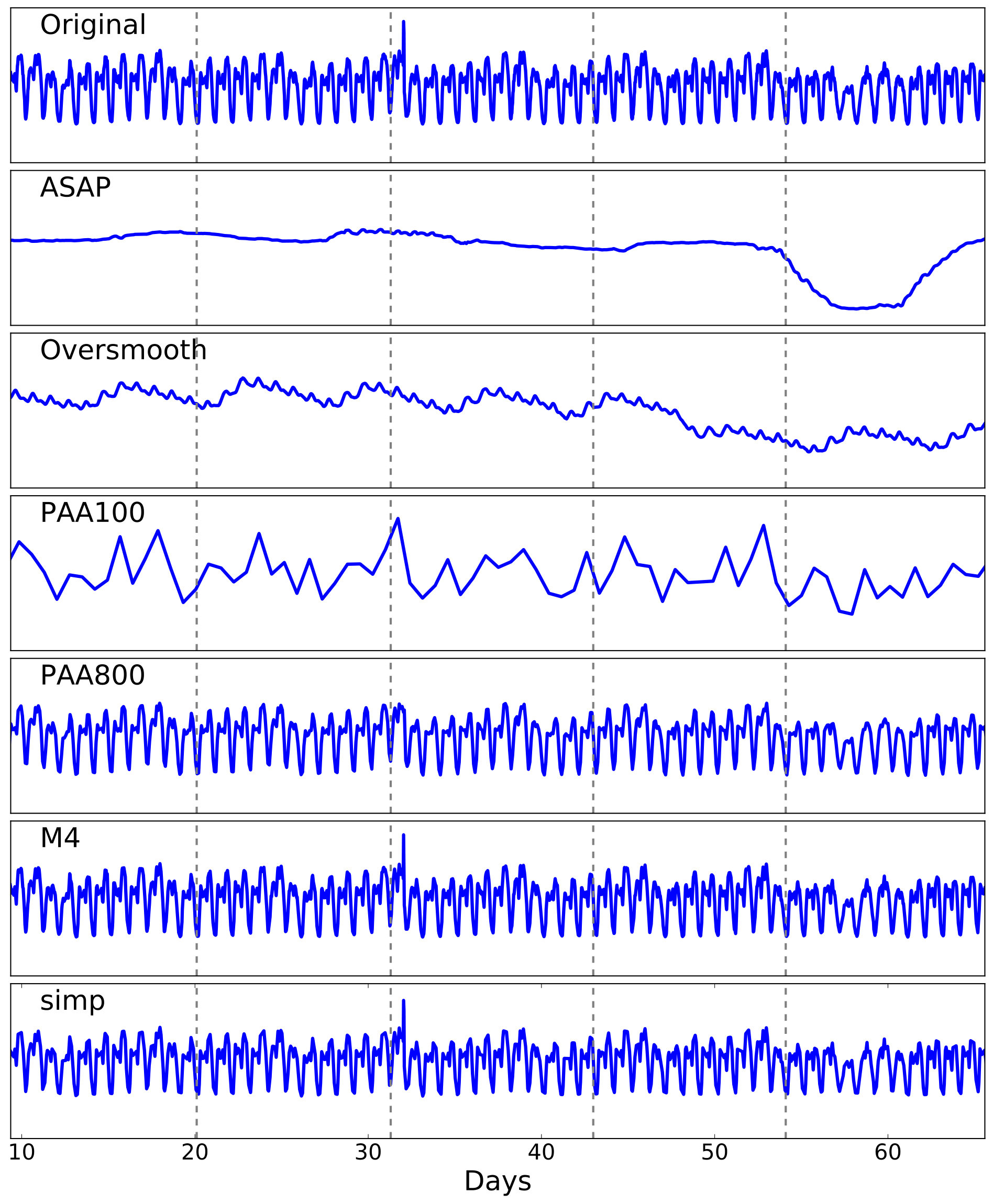 Figure 35
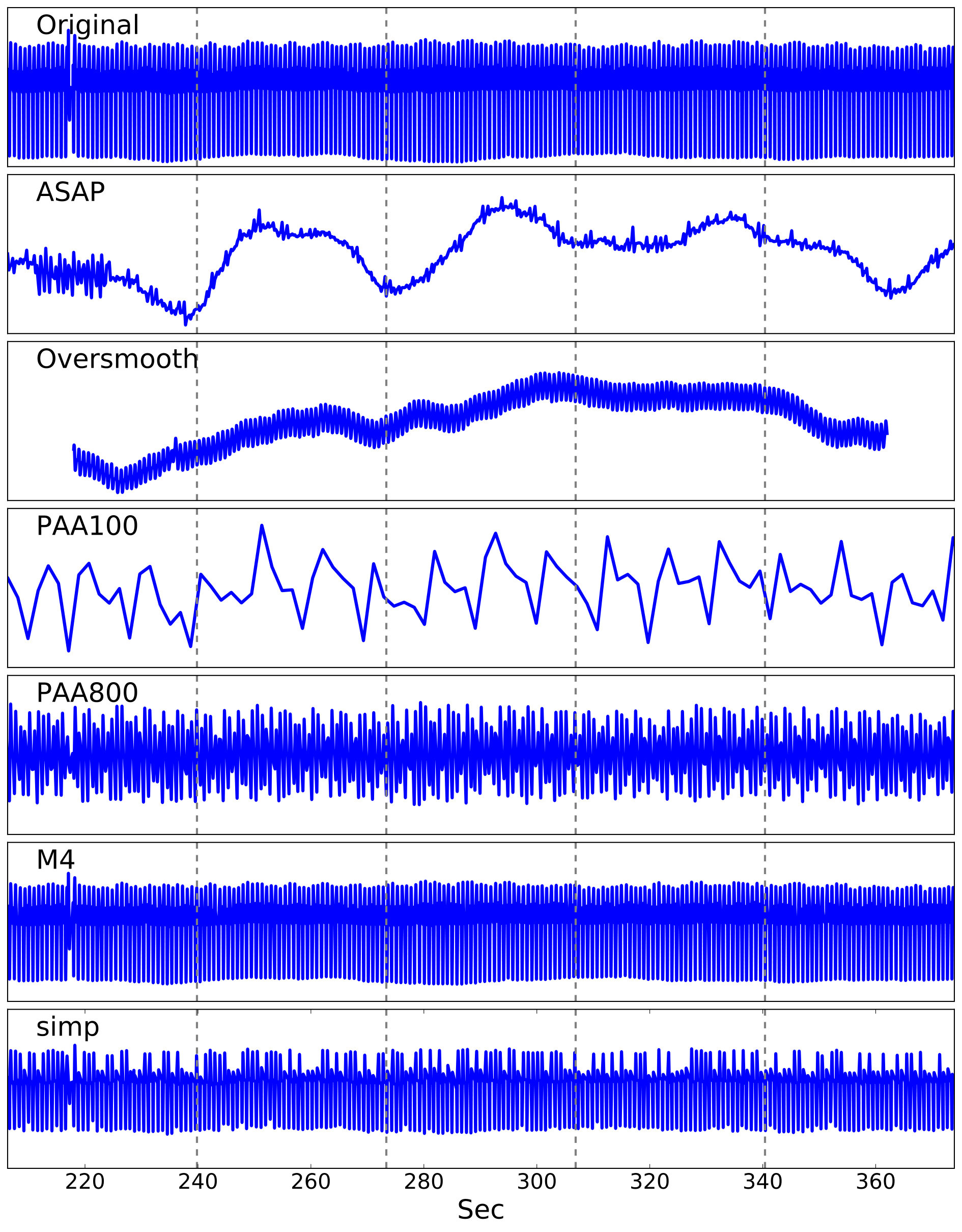 Figure 36
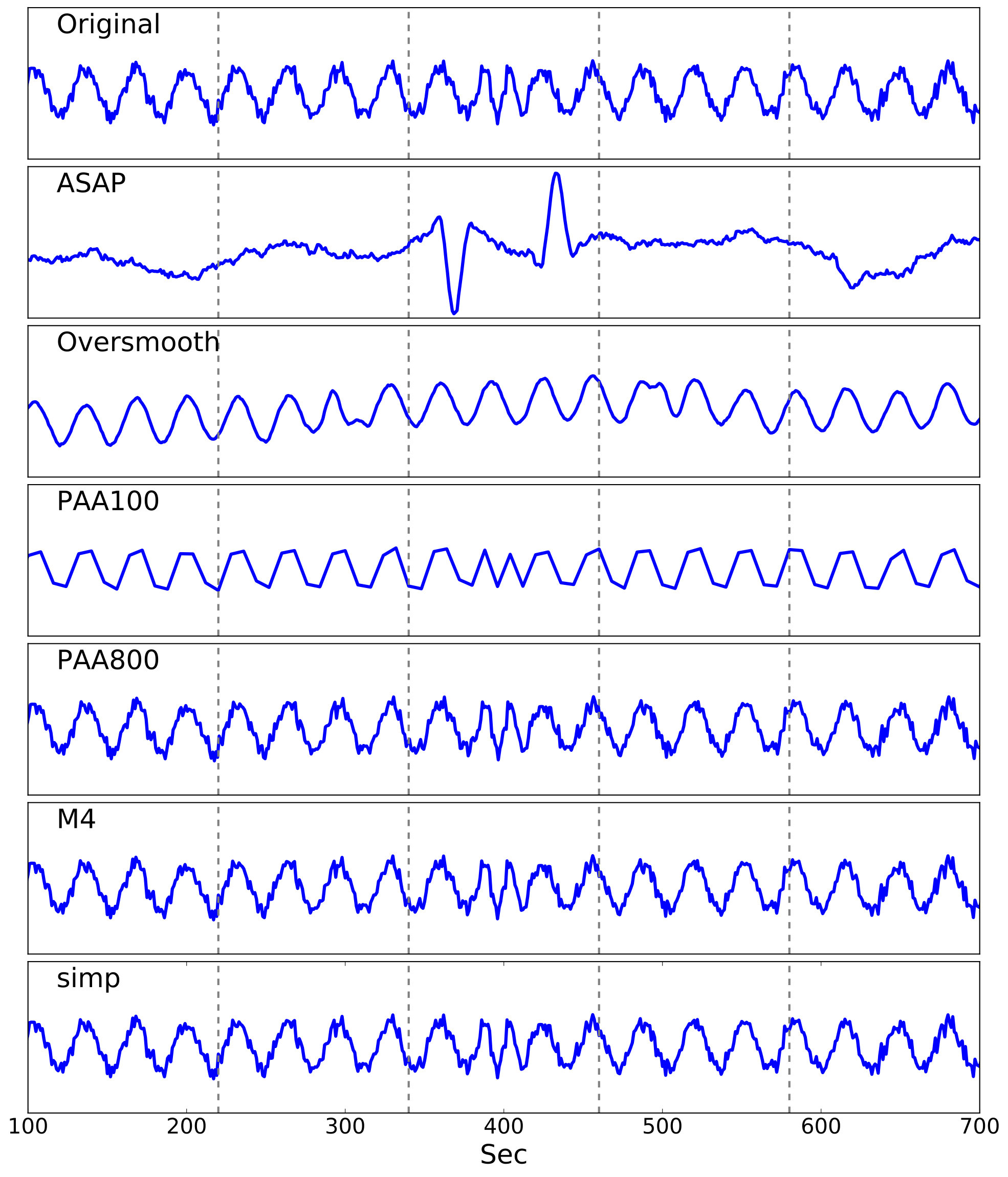 Figure 37
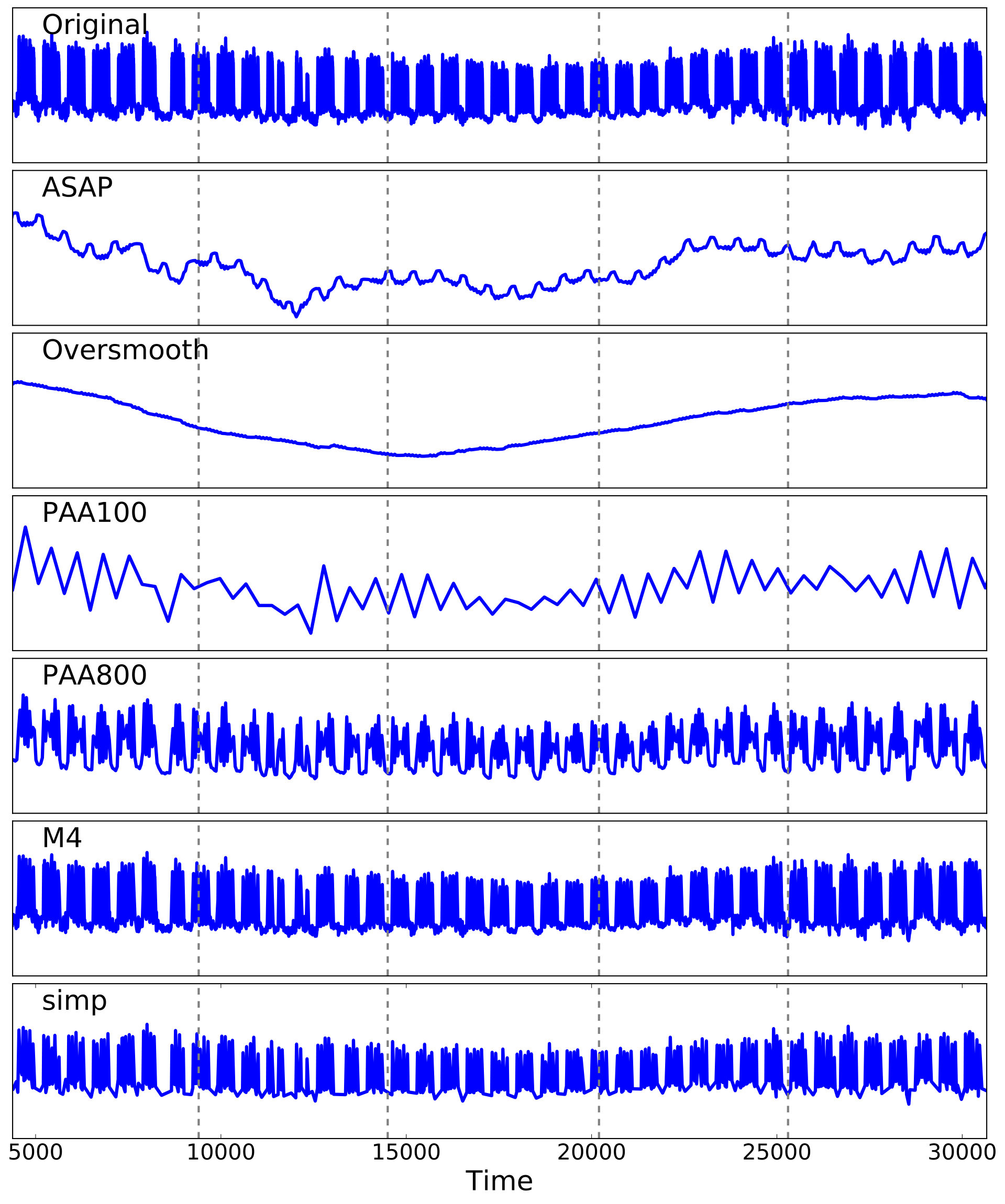 Figure 38
Peer Reviews
No public reviews on file for this paper yet. If you reviewed it on a platform where reviews are public (OpenReview, ICLR, NeurIPS, ICML), you can paste yours below so the community can read it here.
Videos
No videos yet. Explain this paper in a talk, walkthrough, or lecture? Add one.