Multi-Messenger Signatures of PeV-ZeV Cosmic Ray Sources
Peter M\'esz\'aros, Kohta Murase, Katsuaki Asano, Nicholas Senno and, Di Xiao

TL;DR
This paper explores potential cosmic ray sources in the PeV-ZeV range and their associated neutrino and gamma-ray signals, aiming to identify sources and understand their physics through multi-messenger observations.
Contribution
It provides an overview of candidate sources and discusses the role of multi-messenger detection efforts like the AMON program in identifying these sources.
Findings
Identification of low luminosity gamma-ray bursts as potential sources
Discussion of neutrino and gamma-ray signatures for source detection
Analysis of multi-messenger detection strategies
Abstract
We discuss likely sources of cosmic rays in the eV range and their possible very high energy neutrino and gamma-ray signatures which could serve to identify these sources and constrain their physics. Among these sources we discuss in particular low luminosity gamma-ray bursts, including choked and shock-breakout objects, tidal disruption events and white dwarf mergers. Among efforts aimed at simultaneous secondary multi-messenger detections we discuss the AMON program.
Click any figure to enlarge with its caption.
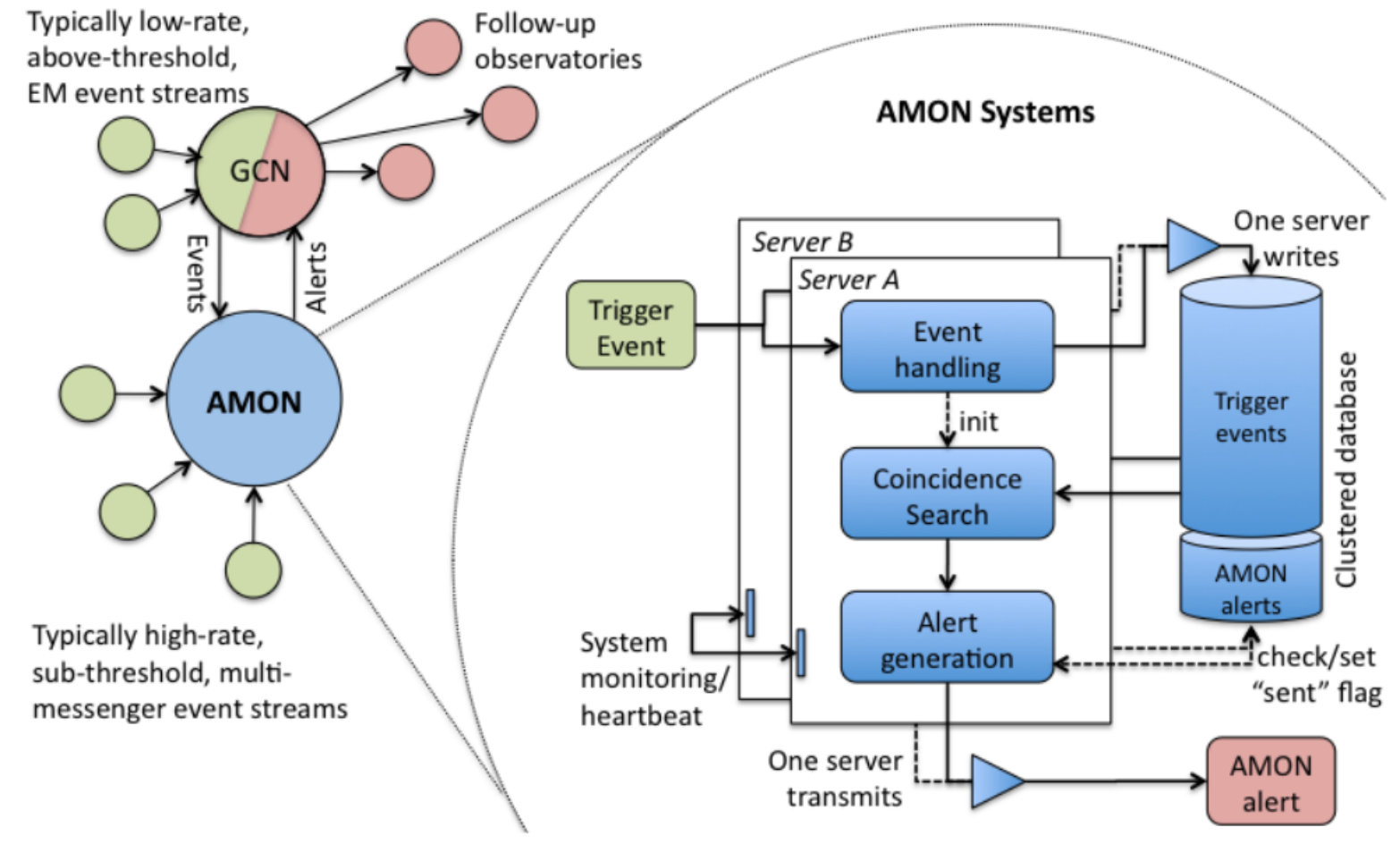 Figure 1
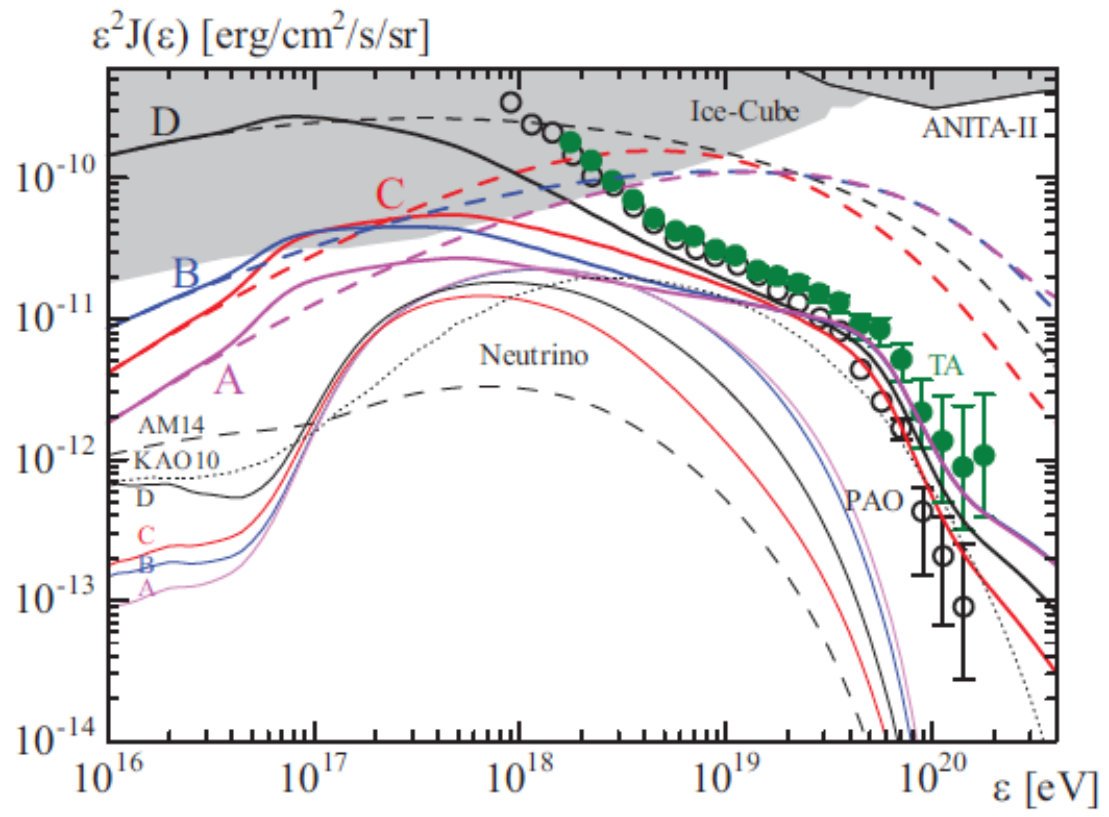 Figure 2
 Figure 3
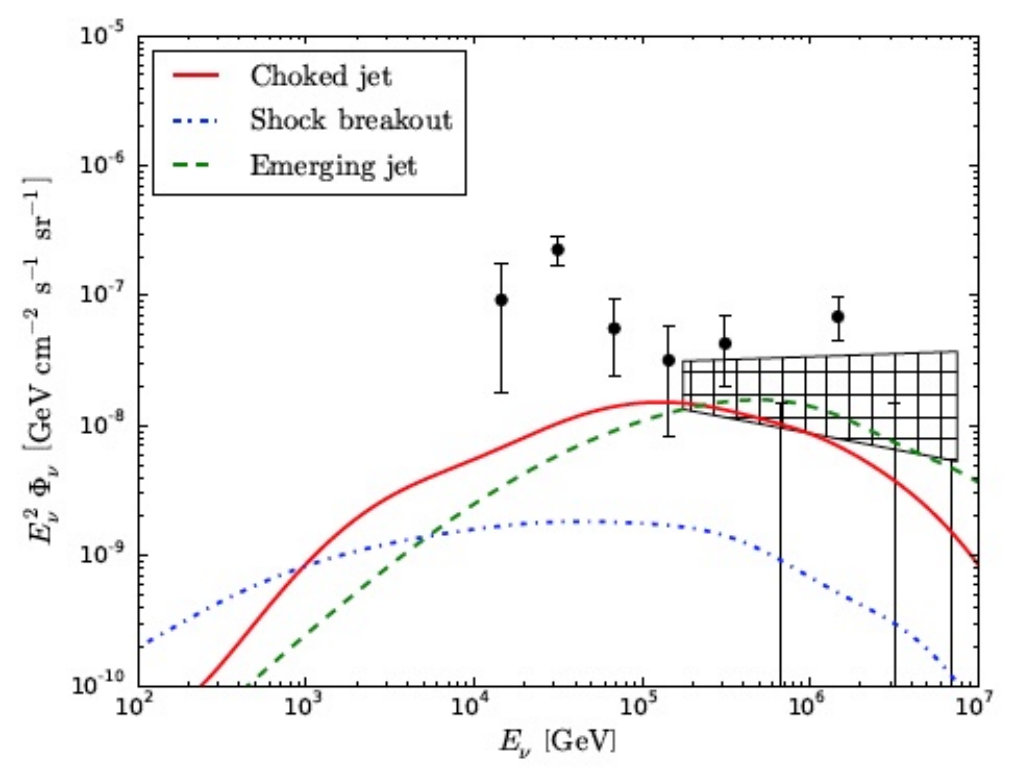 Figure 4
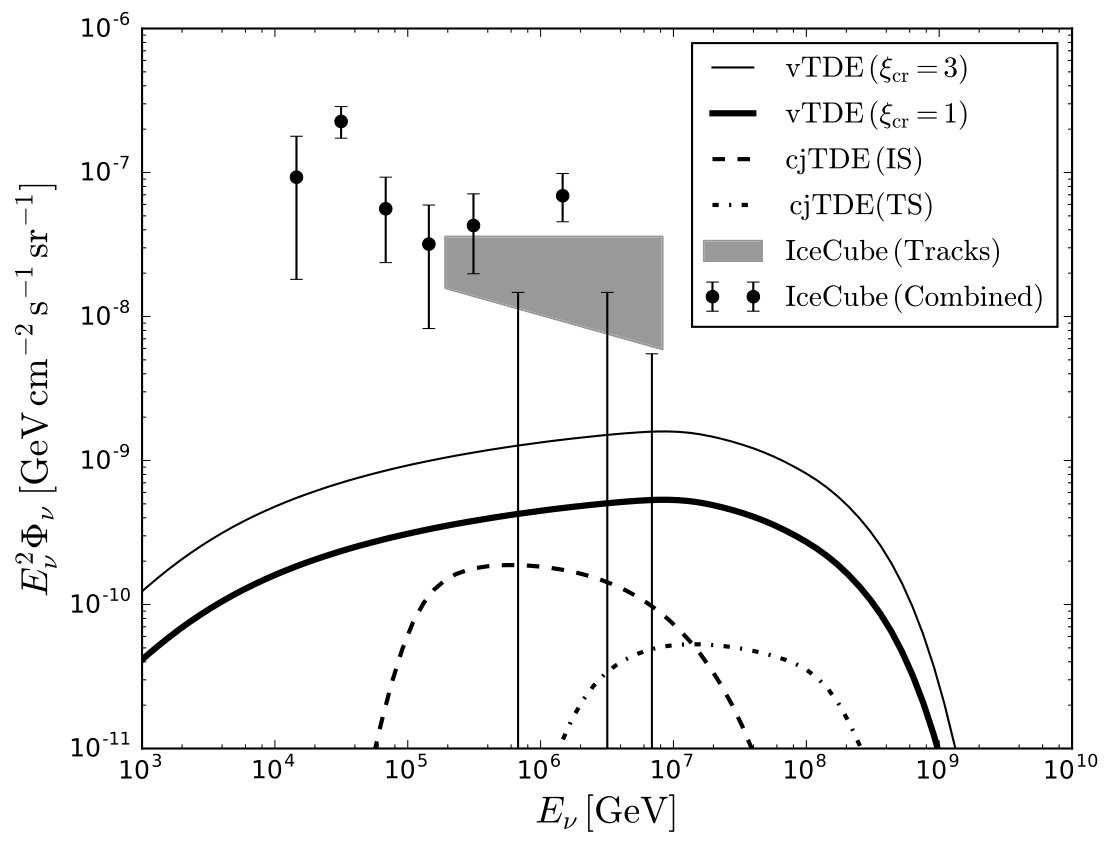 Figure 5
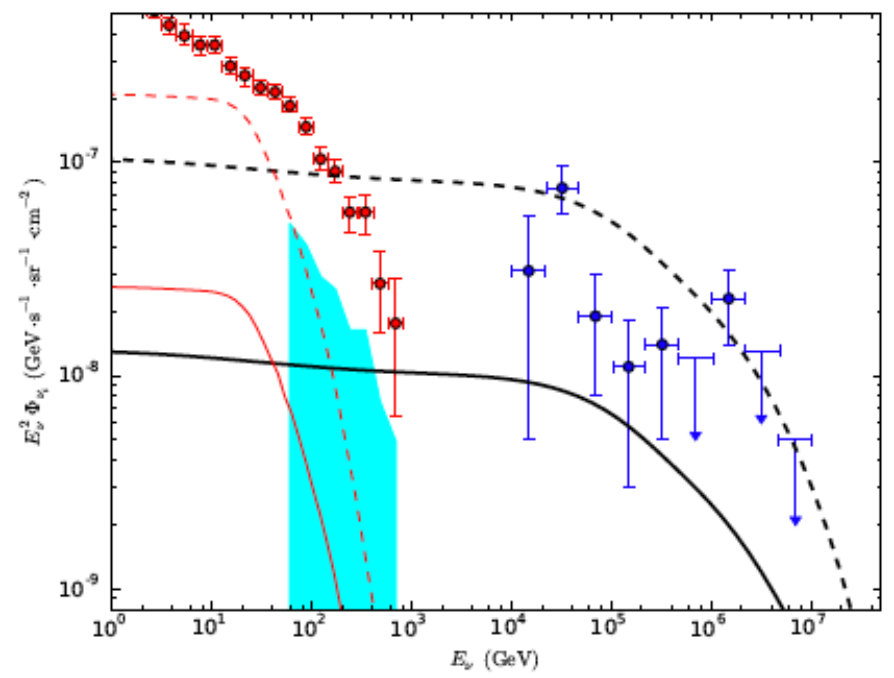 Figure 6
 Figure 7
 Figure 8
Peer Reviews
No public reviews on file for this paper yet. If you reviewed it on a platform where reviews are public (OpenReview, ICLR, NeurIPS, ICML), you can paste yours below so the community can read it here.
Videos
No videos yet. Explain this paper in a talk, walkthrough, or lecture? Add one.
Multi-Messenger Signatures of
PeV-ZeV Cosmic Ray Sources
Peter Mészáros
Kohta Murase
Katsuaki Asano
Nicholas Senno
Di Xiao
Center for Particle and Gravitational Astrophysics, Pennsylvania State University, University Park, PA 16802, U.S.A.
Dept. of Astronomy & Astrophysics, 525 Davey Laboratory, Pennsylvania State University, University Park, PA 16802, U.S.A.
Dept. of Physics, 102 Davey Laboratory, Pennsylvania State University, University Park, PA 16802, U.S.A.
Institute for Cosmic Ray Research, The University of Tokyo, 5-1-5 Kashiwanoha, Kashiwa, Chiba 277-8582, Japan
School of Astronomy and Space Science, Nanjing University, Nanjing 210093, China
Key Laboratory of Modern Astronomy and Astrophysics (Nanjing University), Ministry of Education, China
Abstract
We discuss likely sources of cosmic rays in the range and their possible very high energy neutrino and gamma-ray signatures which could serve to identify these sources and constrain their physics. Among these sources we discuss in particular low luminosity gamma-ray bursts, including choked and shock-breakout objects, tidal disruption events and white dwarf mergers. Among efforts aimed at simultaneous secondary multi-messenger detections we discuss the AMON program.
keywords:
Cosmic rays , Neutrinos ,
1 Introduction
Cosmic rays (CRs) up to ZeV are being detected by the Pierre Auger Observatory and the Telescope Array. Being mainly charged particles, they are very hard to trace back to their original sources, since they are scattered by intergalactic and interstellar magnetic fields and loose their original directional information. Even for ultra-high energy cosmic rays (UHECRs) in the Greisen-Zatsepin-Kuz’min (GZK) range \mathrel{\mathchoice{\lower 0.5pt\vbox{\halign{\mathnew\displaystyle\hfil#\hfil\cr>\crcr\sim\crcr}}}{\lower 0.5pt\vbox{\halign{\mathnew\textstyle\hfil#\hfil\cr>\crcr\sim\crcr}}}{\lower 0.5pt\vbox{\halign{\mathnew\scriptstyle\hfil#\hfil\cr>\crcr\sim\crcr}}}{\lower 0.5pt\vbox{\halign{\mathnew\scriptscriptstyle\hfil#\hfil\cr>\crcr\sim\crcr}}}}6\times 10^{19}\hbox{~{}eV}, the error circles are of the order of a degree for protons, and more for heavier elements. On the other hand, CRs are relativistic hadrons, and colliding with low energy or thermal protons and photons in their sources of origin, or along their path to the observer, they produce copious numbers of secondary particles, which end up as neutrinos, -rays and . The end up producing -rays or lower energy photons of degraded directionality, while the secondary -rays whose initial energy exceeds the pair-formation threshold against the diffuse external background light (EBL) also loose most of their directionality, producing a lower energy isotropic gamma-ray background (IGB) with a universal spectral shape [1], mostly in the \mathrel{\mathchoice{\lower 0.5pt\vbox{\halign{\mathnew\displaystyle\hfil#\hfil\cr<\crcr\sim\crcr}}}{\lower 0.5pt\vbox{\halign{\mathnew\textstyle\hfil#\hfil\cr<\crcr\sim\crcr}}}{\lower 0.5pt\vbox{\halign{\mathnew\scriptstyle\hfil#\hfil\cr<\crcr\sim\crcr}}}{\lower 0.5pt\vbox{\halign{\mathnew\scriptscriptstyle\hfil#\hfil\cr<\crcr\sim\crcr}}}}\hbox{~{}TeV} gamma-ray range.
Any direct CR secondary -rays of energy E_{\gamma}\mathrel{\mathchoice{\lower 0.5pt\vbox{\halign{\mathnew\displaystyle\hfil#\hfil\cr<\crcr\sim\crcr}}}{\lower 0.5pt\vbox{\halign{\mathnew\textstyle\hfil#\hfil\cr<\crcr\sim\crcr}}}{\lower 0.5pt\vbox{\halign{\mathnew\scriptstyle\hfil#\hfil\cr<\crcr\sim\crcr}}}{\lower 0.5pt\vbox{\halign{\mathnew\scriptscriptstyle\hfil#\hfil\cr<\crcr\sim\crcr}}}}0.5-1\hbox{~{}TeV}, however, depending on the redshift of the source, can travel directly to the observer. Also CR-secondary neutrinos of any energy (and neutrinos in general) can travel directly to the observer, with negligible interaction along the way, even from the highest redshift sources. Such direct CR secondary -rays (or lower energy photons) and neutrinos are therefore a prime tool, and perhaps the main if not only tool, to infer the source locations and allow follow-up observations with other instruments, such as X-ray, optical or radio telescopes. Another possible channel is gravitational waves (GWs), recently discovered form stellar mass binary black hole mergers [2, 3], but the GW localization error boxes are extremely large for the foreseeable future, and so far it is unclear whether CRs are expected from such mergers. On the other hand, binary neutron star mergers are also expected to emit GWs which should be discovered by LIGO/VIRGO anytime soon, and these are thought to be related to short gamma-ray bursts (SGRBs), which could accelerate cosmic rays, e.g. [4]. Thus, there is a rich trove of different messenger (multi-messenger) particles which can provide information about not only the sources of cosmic rays, but also about the physics of the sources, providing clues or constraints about the acceleration process, the source and its direct environment, and the intervening medium between the source host and the observer.
2 GZK UHECRs and below: Classical GRBs?
The UHECR spectrum has been measured by Auger [5] and TA in the range . Above the CRs cannot be contained in typical galaxies such as ours, which means that these are guaranteed to be extragalactic, and also that it is likely that the spectrum at these energies reflects the spectrum as they escaped form the accelerator. The spectrum in this range is roughly compatible with a slope close to , aside from the feature called the ankle, one possible explanation for which might be a Bethe-Heitler absorption, e.g. [6]. Below the observed spectrum is down to PeV, and below that it is , significantly steeper. However, below the ankle the CRs can be trapped in galaxies for long times, and judging from our own galaxy’s energy dependence of the diffusion coefficient, one would expect the observed spectral slope to be significantly steeper than that of the produced spectrum, roughly in accordance with observations if the produced spectrum were of slope roughly -2 at all energies, e.g. [7]. In fact, the energy production rate per unit volume in the universe per decade of energy, at all energies between and has been estimated by [8] to be approximately constant over these 11 decades of energy, , which is comparable to the CR flux resulting in the Waxman-Bahcall neutrino upper bound [9].
IceCube has found a diffuse extragalactic neutrino background flux in the TeV-PeV range at the WB level [10, 11], which however cannot be explained by “classical” GRB internal shocks or other models [12, 13], both due to time and location window non-agreements with electromagnetic detections, and due to over-predicted fluxes. It is worth noting however that the original (also approximate) original calculation of VHE neutrinos from classical GRB internal shocks [14] predicted flux levels a factor below that later measured by IceCube, i.e. not in conflict, although later approximate estimates by other groups from similar models obtained higher values. More exact neutrino calculations [15, 16, 17] resulted in classical internal shock [15, 16, 17] and photospheric [18, 19, 20, 21] GRB flux levels significantly below the IceCube measured flux levels. This, however, does not preclude the possibility that classical GRBs could still be sources UHECRs. This could plausibly be the case in the above models if the pion production (i.e. ) efficiency were low, e.g. if the shocks or dissipation regions accelerating the CRs were moderately larger than usually assumed, e.g. [22, 23].
Alternatively, it may be that classical GRBs provide a solution only for part of the PeV-ZeV spectrum For example, one can show [24] that even if classical GRBs do not explain the IceCube neutrinos they could be the sources of the GZK cosmic rays. In this particular twist of the classical GRB model, it is assumed that the MeV gamma-rays of GRBs arise in the GRB photosphere (as recent models argue, e.g. [25, 26]). Shocks must inevitably occur outside the photosphere, if nothing else then when the ejecta is decelerated by the external medium. These shocks can accelerate cosmic rays, and if this occurs via a 2nd order Fermi process (since there is turbulence behind the shocks, e.g. [27]), this process produces a CR energy spectrum which is flatter than the conventional -2 slope of 1st order Fermi.
With this, the Auger cosmic ray spectrum in the eV range can be explained without violating the IceCube limits, see Fig. 1. This is because the CR energy is mostly concentrated at the upper end of the spectrum (above the ankle, which is thus explained). And, since the slope is flatter than -2, there is significantly less CR energy in the 10-100 PeV range, which thus produces a PeV neutrino flux below that observed by IceCube. Also, since the MeV photons coming from much further below than where the CRs are accelerated, the efficiency is much lower, since the photon flux is much more diluted than in one-zone models. The flatter spectral slope also eases considerably the baryon load needs, which thus is easily compatible with the total energetic budget of GRBs.
3 PeV-EeV CRs from Not-so-Classical GRBs?
There is a class of so-called low luminosity GRBs (LLGRBs) which, because of its lower photon luminosity has much fewer well-studied examples, all of them so far at low redshifts. Their general characteristics appear similar to those of classical high luminosity GRBs, in the sense that their MeV photons spectrum indicates that electrons are accelerated to non-thermal relativist energies, presumably by shocks or dissipation in a relativistic outflow, albeit probably of lower Lorentz factor. However, their occurrence rate per unit volume appears to be at least an order of magnitude higher than for their classical counterparts [28], and if they accelerate CRs they could be a significant contributor to the TeV-PeV neutrino flux, e.g. [29, 30, 31]. The CRs responsible for this would be at least in the \mathrel{\mathchoice{\lower 0.5pt\vbox{\halign{\mathnew\displaystyle\hfil#\hfil\cr<\crcr\sim\crcr}}}{\lower 0.5pt\vbox{\halign{\mathnew\textstyle\hfil#\hfil\cr<\crcr\sim\crcr}}}{\lower 0.5pt\vbox{\halign{\mathnew\scriptstyle\hfil#\hfil\cr<\crcr\sim\crcr}}}{\lower 0.5pt\vbox{\halign{\mathnew\scriptscriptstyle\hfil#\hfil\cr<\crcr\sim\crcr}}}}100\hbox{PeV} energy range.
One can think of three possible GRB life histories which could give rise to LLGRBs, depending on how much energy the relativistic jet received in its infancy, and for how long, in the basic collapsar scenario. That is, a massive star’s core collapses, a black hole (or perhaps temporarily a magnetar) forms, infall matter accretes and is ejected in a relativistic jet.
(1) If the jet is accretion-fed, but not generously enough, or for not long enough, it stalls before it can emerge from the envelope: it is a choked jet [32].
(2) If the jet is fed a little longer, or a little more momentum is pumped into it so that it can just reach the stellar envelope surface or a bit beyond, the shock ahead of the jet may break out of the envelope and the surrounding wind (a shock-breakout), producing a weak, soft GRB-like EM radiation, e.g. [33, 34].
(3) If the jet is fed just enough and for long enough that it can emerge completely from the stellar envelope and wind, it appears as an emergent, EM-manifest LLGRB, again with a weaker, softer gamma-ray spectrum111 The original case is of course the well- and long-enough fed classical high luminosity GRB discussed in the previous section, of which thousands have been observed, and which may seem pushy, flashy and overfed, compared to their more modest and underfed but more abundant LLGRB relatives.
Of these three LLGRBs, the first is expected to be only detectable through VHE neutrinos produced by internal shocks or dissipation in the stalled, sub-surface jet, e.g. [32, 35, 36, 37, 38]. The second and third sub-scenarios could have a neutrino precursor from sub-surface shocks before the jet emerges [32], followed by a LLGRB EM burst. The -ray and optical-UV light-curves and spectral properties of the shock breakout LLGRBs have been discussed, e.g. by [34, 39, 40, 41, 42, 43, 44], and the neutrino properties by, e.g. [41, 45, 46], general reviews of shock breakout theory being given in, e.g. [44, 47].
A recent comparative study of the neutrino properties and the expected diffuse neutrino background from all three types of LLGRBs is in [48], see Fig. 2.
This calculation [48] shows that a combination of choked jet, shock-breakout and emergent LLGRBs is able, for conservative parameters, to explain the observed IceCube diffuse neutrino flux. Furthermore, it does so without violating either the Fermi observations nor the (classical GRB) stacked neutrino analyses, because the low luminosity of the breakout or emergent LLGRBs (the majority of whom are at high redshifts) is too low to trigger Swift or Fermi, while the choked jets are by definition gamma-silent. Thus, they are EM-hidden sources, a property which seems necessary [50] for explaining the neutrino background while satisfying the Fermi isotropic gamma-ray background,
4 Tidal Disruption, UHECRs and Neutrinos
Most if not all typical galaxies have a massive black hole (MBH) at the center, e.g. in our Milky Way the MBH mass is , and in the much rarer AGNs the masses can reach \mathrel{\mathchoice{\lower 0.5pt\vbox{\halign{\mathnew\displaystyle\hfil#\hfil\cr>\crcr\sim\crcr}}}{\lower 0.5pt\vbox{\halign{\mathnew\textstyle\hfil#\hfil\cr>\crcr\sim\crcr}}}{\lower 0.5pt\vbox{\halign{\mathnew\scriptstyle\hfil#\hfil\cr>\crcr\sim\crcr}}}{\lower 0.5pt\vbox{\halign{\mathnew\scriptscriptstyle\hfil#\hfil\cr>\crcr\sim\crcr}}}}10^{9}M_{\odot}. The number density of stars in the central parsec around the MBH in typical galactic nuclei is much larger than the average density in the disk, and occasionally the stellar orbits can pass so close to the MBH that, if the star is not directly swallowed, it is disrupted, a phenomenon known as a tidal disruption event (TDE). For a star of mass and radius in the field of a BH of mass and Schwarzschild radius there is a tidal radius . For MBHs more massive than about , solar type stars are swallowed whole (since their tidal radius falls inside the MBH Schwarzschild radius), but for lower mass MBHs stars smaller than solar type and white dwarfs are disrupted before being swallowed. In these cases, about half the material disrupted near the periastron goes out on parabolic orbits, while the other half remains bound, falling back towards the MBH [51]. In such TDEs, the stellar compression and shock during the initial passage around the periastron produces a prompt X-ray and gravitational wave signal, e.g. [52], while the subsequent fall-back material gives rise to further shocks leading to an optical and X-ray light curve of luminosity scaling with the mass accretion rate, . Many such TDEs are detected as transient X-ray and optical events, e.g. [53]. The fall-back is in fact complicated, although retaining an approximate overall behavior. There are multiple intersecting stream shocks followed by a slow circularization of the settling material [54, 55]. Even ignoring such complications, it was realized that in any case the gas must undergo shocks, if nothing else as it joins an accumulating accretion disk, and such shocks may result in UHECR acceleration [56, 57]. The rate, while poorly known, is approximately right for explaining the Auger UHECR flux if the CR acceleration efficiency is significant.
In some TDE events one detects an initial GRB-like -ray transient, followed by a much longer X-ray decay which, at least in part, follows roughly the expected law. The properties of the initial GRB-like behavior followed by the TDE-like behavior suggest that in a fraction of TDEs the accretion results initially in a relativistic jet [58]. Since the galactic bulge environments can be very gas-rich, and the disruption may be preceded by initial, gradually shrinking, matter-shedding periastron passages, an optically thick wind may be created before the jet is launched, which would thus be obscured by this pre-ejected wind [59].
Relativistic jets launched under such an umbrella of a dense gaseous outflow resemble the GRB jets propagating initially into the dense progenitor stellar envelope. This could result in a choked jet type of phenomenon, with internal and termination shocks in the jet leading to electron and proton acceleration, from which the neutrinos could escape [60], while the GRB-like leptonic radiation could be absorbed or thermalized by the dense wind. Thus. these sources would not be expected to trigger Swift or Fermi, i.e. for practical purposes they would be EM-hidden neutrino sources.
A more detailed consideration of the jet and wind conditions [61] indicates that both choked jet and shock breakouts are expected, numerical calculations of the resulting diffuse neutrino spectra from such TDE jets in dense galactic bulge winds being shown in Fig. 3, where choked jets and breakouts are plotted separately. The total predicted diffuse flux is below the current IceCube detection threshold, although there are substantial uncertainties in the rates. Even so, above 10 PeV such TDEs could start being substantial contributors to the neutrino spectrum, the corresponding CRs being in the \mathrel{\mathchoice{\lower 0.5pt\vbox{\halign{\mathnew\displaystyle\hfil#\hfil\cr>\crcr\sim\crcr}}}{\lower 0.5pt\vbox{\halign{\mathnew\textstyle\hfil#\hfil\cr>\crcr\sim\crcr}}}{\lower 0.5pt\vbox{\halign{\mathnew\scriptstyle\hfil#\hfil\cr>\crcr\sim\crcr}}}{\lower 0.5pt\vbox{\halign{\mathnew\scriptscriptstyle\hfil#\hfil\cr>\crcr\sim\crcr}}}}0.2 EeV. Similar calculations appearing almost simultaneously are [62, 63].
5 White Dwarf Mergers as CR/ Sources
White dwarf (WD) binaries are a common occurrence, and the tighter binaries will eventually merge in less than a Hubble time, initially under the action of magnetic and tidal torques, and later due to gravitational wave emission. The merger rate has been estimated to be close to that of SN Ia, and in fact they have been proposed as a possible mechanism for SN Ia explosions. The conditions for such mergers to result in SNe Ia are debated, and not all mergers may lead to such explosions. Even so, WD mergers should result in optically thick magnetic outflows, which could lead to interesting bright optical transients [64]. Numerical simulations indicate that the merger is expected to result in a central core and a surrounding disk with a viscous accretion time and strong magnetic fields of order .
The resulting magnetically dominated outflows could have a luminosity with a total energy output of [65]. The flow initially is very optically thick, expanding at the escape velocity, and magnetic reconnection is inhibited until a radius where the photon diffusion time becomes shorter than the dynamic time, where photons start to diffuse out, and magnetic reconnection can begin occurring. Reconnection can lead to particle acceleration on a timescale comparable to that of Fermi processes, and in the magnetic fields beyond the diffusion radius this can accelerate protons to energies E_{p}\mathrel{\mathchoice{\lower 0.5pt\vbox{\halign{\mathnew\displaystyle\hfil#\hfil\cr>\crcr\sim\crcr}}}{\lower 0.5pt\vbox{\halign{\mathnew\textstyle\hfil#\hfil\cr>\crcr\sim\crcr}}}{\lower 0.5pt\vbox{\halign{\mathnew\scriptstyle\hfil#\hfil\cr>\crcr\sim\crcr}}}{\lower 0.5pt\vbox{\halign{\mathnew\scriptscriptstyle\hfil#\hfil\cr>\crcr\sim\crcr}}}}100\hbox{PeV}. The interactions with the flow’s thermal and synchrotron photons as well as interactions lead to VHE neutrinos in the \mathrel{\mathchoice{\lower 0.5pt\vbox{\halign{\mathnew\displaystyle\hfil#\hfil\cr<\crcr\sim\crcr}}}{\lower 0.5pt\vbox{\halign{\mathnew\textstyle\hfil#\hfil\cr<\crcr\sim\crcr}}}{\lower 0.5pt\vbox{\halign{\mathnew\scriptstyle\hfil#\hfil\cr<\crcr\sim\crcr}}}{\lower 0.5pt\vbox{\halign{\mathnew\scriptscriptstyle\hfil#\hfil\cr<\crcr\sim\crcr}}}} few PeV range. The merger rates have uncertainties, as well as the physics of the outflow and reconnection. Bracketing these uncertainties between an optimistic and a pessimistic case, the predicted diffuse neutrinos fluxes [65] are shown in Fig. 4.
While the Thomson scattering optical depth at the diffusion radius is still large, , the high energy -rays see a lower Compton cross section, but they are also subjected to annihilation and Bethe-Heitler matter absorption. The resulting net effect gives and upper limit to the WD merger contribution to the diffuse isotropic gamma-ray background, also shown in Fig. 4 for the optimistic and pessimistic cases. It is seen that these upper limits fall well inside the level permitted by Fermi observations after subtracting contributions from unresolved blazars. Thus, these WD mergers can be considered another case of effectively EM-dark sources, as far as not triggering satellite detectors looking for sudden increases of \mathrel{\mathchoice{\lower 0.5pt\vbox{\halign{\mathnew\displaystyle\hfil#\hfil\cr>\crcr\sim\crcr}}}{\lower 0.5pt\vbox{\halign{\mathnew\textstyle\hfil#\hfil\cr>\crcr\sim\crcr}}}{\lower 0.5pt\vbox{\halign{\mathnew\scriptstyle\hfil#\hfil\cr>\crcr\sim\crcr}}}{\lower 0.5pt\vbox{\halign{\mathnew\scriptscriptstyle\hfil#\hfil\cr>\crcr\sim\crcr}}}}\hbox{~{}MeV} photons.
Even for the pessimistic rate estimate, the detection of nearby individual WD mergers would be of significant interest for understanding their physics and constraining the merger rates. On the other hand, depending on the uncertainties, they could be a significant contribution to the diffuse neutrino background observed by IceCube in the range of to several PeV.
6 Multi-Messenger Detection Programs: AMON
Since charged cosmic rays arrive to us via a diffusive motion caused by scattering in the turbulent intergalactic and galactic magnetic field, their directionality is largely lost, and the corresponding time delays make it impossible to rely on time coincidences with any time variability in the electromagnetic luminosity of the presumed sources. Thus, the use of secondary radiations produced by the interactions of the cosmic rays, such as neutrinos or gamma-rays, provide an attractive, and perhaps the most immediate, way to identify and study the CR sources.
There are numerous bi-lateral agreements between observatories which detect one or the other of these possible secondary messengers at different energies, such as between IceCube and Swift, HAWC and Fermi, etc. There is however an ambitious observational program which serves as a centralized, multi-lateral hub between a large number of disparate observing facilities, called AMON [66], see Fig. 5.
The AMON facility is a multi-institution program which has developed algorithms and codes for interpreting triggers from simultaneous live alerts in two or more disparate messenger types supplied by different observatories and detectors. The observatories that participate in AMON so far are ANTARES, FACT, Fermi LAT, Fermi GBM, HAWC, IceCube, LIGO, LMT, MASTER, Pierre Auger, PTF, Swift BAT, Swift XRT, Swift UVOT and VERITAS. The algorithms are designed for exploiting signals which are sub-threshold in individual observatories, but which can above-threshold signals when considered together with concurrent sub-threshold signals from other observatories. This generates an alert which is then re-distributed via internet to the participating observatories and observers.
The system has transitioned in 2016 to real-time operations [67] and has now been online for several months. In the near future, it is hoped that such efforts may lead to important clues about the sources of UHECRs, very high energy neutrinos, very high energy gamma-rays and gravitational waves.
7 Discussion
The origin of the highest energy cosmic rays remains the subject of intense debate, as does, for that matter, the origin of the CR spectrum down to at least . An interesting case can be made that the energy input rate per decade of energy into the Universe is approximately constant from GeV to [8]. This would imply an approximate spectrum at all energies, suggesting a single type of source responsible for it, although the nature of these sources is not known. As discussed in §2, GRBs could be responsible at least for the range, and indeed, if below the diffusion out of the host structures (galaxies, galaxy clusters, etc) results in a steepening of the spectrum observed at Earth, GRBs might perhaps account for the whole range down to TeV (the jet bulk Lorentz factor resulting in an observed lower limit around that energy). However other sources may also come into consideration, including AGNs, or, if the highest energy CRs are mainly heavy elements, hypernovae or galactic shocks. For the highest energies, however, the lack of steady and energetic enough sources within the GZK radius is an argument in favor of transient sources.
For cosmic rays in the , a connection with the observed diffuse neutrino background observed by IceCube and the residual isotropic gamma-ray background observed by Fermi imposes constraints on possible models, as discussed in §§3, 4 and 5. While the astrophysical uncertainties about the rates are substantial, electromagnetically dim (“hidden”) sources such as choked GRBs (§2) could satisfy simultaneously the IceCube observations and the Fermi constraints; and for more optimistic assumptions, tidal disruption events (§4) or white dwarf mergers (§5) may also contribute. Interestingly, the cosmic ray energy corresponding to the few PeV upper end of the observed neutrino energy is a few times , roughly corresponding to the second knee in the CR spectrum, and roughly in the energy range of a hypothesized (e.g. [68]) “third” spectral component” of CR sources.
In summary, while cosmic rays and neutrinos are notoriously elusive preys, new observations throughout the next decade can be expected to lead to significant advances in our understanding of both UHECRs and their multi-messenger secondaries, as well as in the implications they bear for the physical nature of their sources.
Acknowledgments: P.M. is grateful to the organizers of the 2nd “Cosmic Ray Origin - Beyond the Standard Models” conference in San Vito di Cadore, Dolomites, Italy (2016); and to NASA NNX 13AH50G for partial support.
The reference list from the paper itself. Each links out to its DOI / PubMed record.
- 1[1] V. S. Berezinskii, A. I. Smirnov, Cosmic neutrinos of ultra-high energies and detection possibility, Astrophys.Space.Sci. 32 (1975) 461–482. doi:10.1007/BF 00643157 . · doi ↗
- 2[2] B. P. Abbott, R. Abbott, T. D. Abbott, M. R. Abernathy, F. Acernese, K. Ackley, C. Adams, T. Adams, P. Addesso, R. X. Adhikari, et al., Observation of Gravitational Waves from a Binary Black Hole Merger, Physical Review Letters 116 (6) (2016) 061102. ar Xiv:1602.03837 , doi:10.1103/Phys Rev Lett.116.061102 . · doi ↗
- 3[3] B. P. Abbott, the LIGO-VIRGO collaboration, Gw 151226: Observation of gravitational waves from a 22-solar-mass binary black hole coalescence , Phys. Rev. Lett. 116 (2016) 241103. doi:10.1103/Phys Rev Lett.116.241103 . · doi ↗
- 4[4] P. Mészáros, Gamma ray bursts, Astroparticle Physics 43 (2013) 134–141. ar Xiv:1204.1897 , doi:10.1016/j.astropartphys.2012.03.009 . · doi ↗
- 5[5] Pierre Auger Collaboration, Measurement of the cosmic ray spectrum above 4 × 10 18 4 superscript 10 18 4\times 10^{18} e V using inclined events detected with the Pierre Auger Observatory, Jour. Cosmology and Astro-Particle Phys. 8 (2015) 049. ar Xiv:1503.07786 , doi:10.1088/1475-7516/2015/08/049 . · doi ↗
- 6[6] R. Aloisio, V. Berezinsky, A. Gazizov, Transition from galactic to extragalactic cosmic rays, Ar Xiv e-prints ar Xiv:1211.0494 .
- 7[7] S. D. Wick, C. D. Dermer, A. Atoyan, High-energy cosmic rays from gamma-ray bursts, Astropart. Phys. 21 (2004) 125–148. ar Xiv:astro-ph/0310667 , doi:10.1016/j.astropartphys.2003.12.008 . · doi ↗
- 8[8] B. Katz, E. Waxman, T. Thompson, A. Loeb, The energy production rate density of cosmic rays in the local universe is $ \ \ \backslash sim 10^ { { \{ 44-45 } } \} \ \ \backslash rm erg~Mpc^ { { \{ -3 } } \} ~yr^ { { \{ -1 } } \} $ at all particle energies, Ar Xiv e-prints 1311.0287. ar Xiv:1311.0287 .