Non-prime 3-Manifolds with Open Book Genus Two
Mustafa Cengiz

TL;DR
This paper characterizes non-prime 3-manifolds with open book genus two, showing they are connected sums of lens spaces with open book genus one, supporting the conjecture that open book genus is additive under connected sum.
Contribution
It proves that non-prime 3-manifolds with open book genus two are decomposable into prime pieces of open book genus one, confirming additivity in this case.
Findings
Non-prime 3-manifolds with open book genus 2 are connected sums of lens spaces with genus 1.
Supports Ozbagci's conjecture on the additivity of open book genus.
No counterexamples exist with connected sum of open book genus 2.
Abstract
An open book decomposition of a 3-manifold induces a Heegaard splitting for , and the minimal genus among all Heegaard splittings induced by open book decompositions is called the \emph{open book genus} of . It is conjectured by Ozbagci \cite{O} that the open book genus is additive under the connected sum of 3-manifolds. In this paper, we prove that a non-prime 3-manifold which has open book genus 2 is homeomorphic to for some integers , that is, it has non-trivial prime pieces of open book genus 1. In particular, there cannot be a counter-example to additivity of the open book genus such that the connected sum has open book genus 2.
Click any figure to enlarge with its caption.
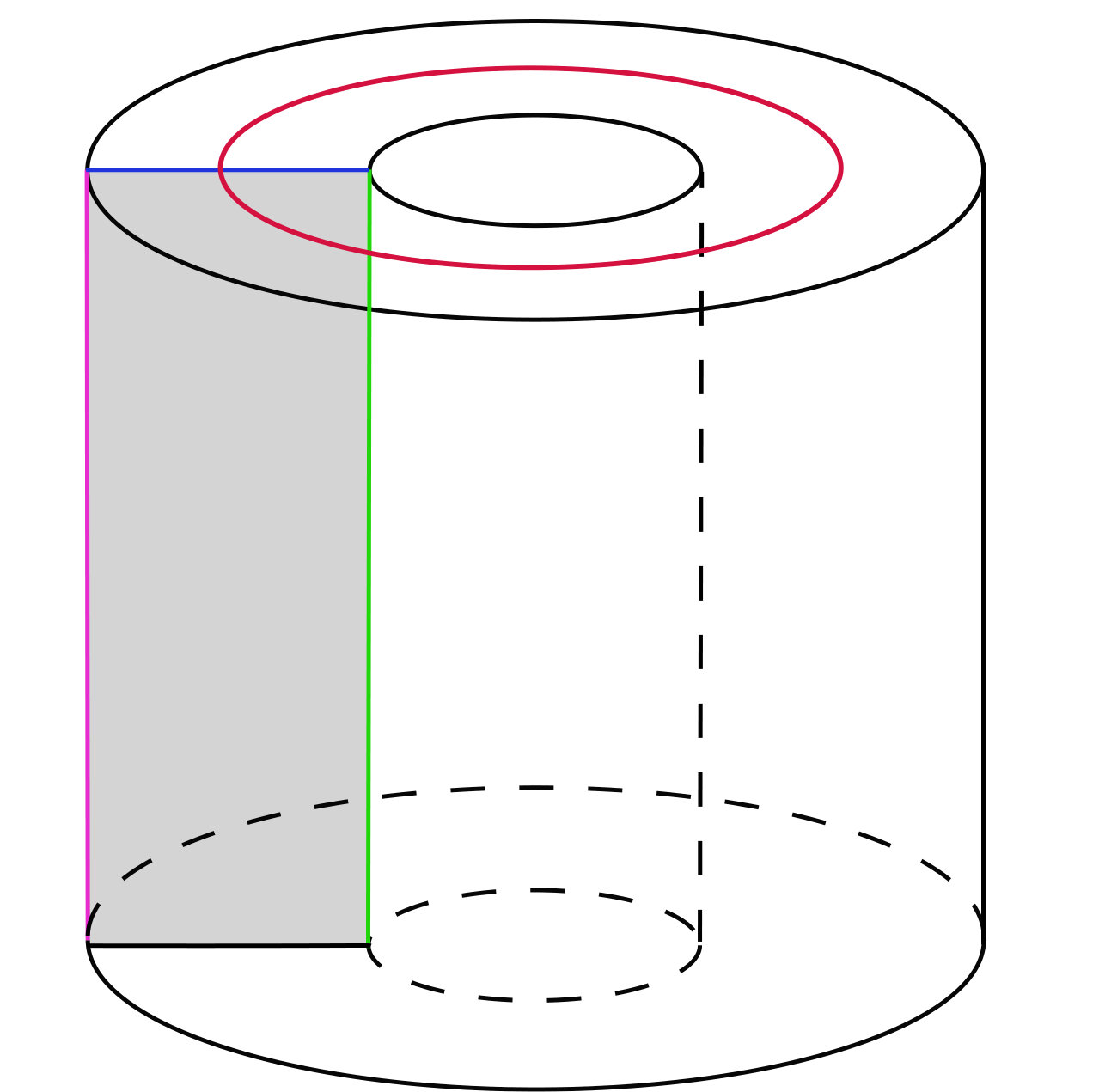 Figure 1
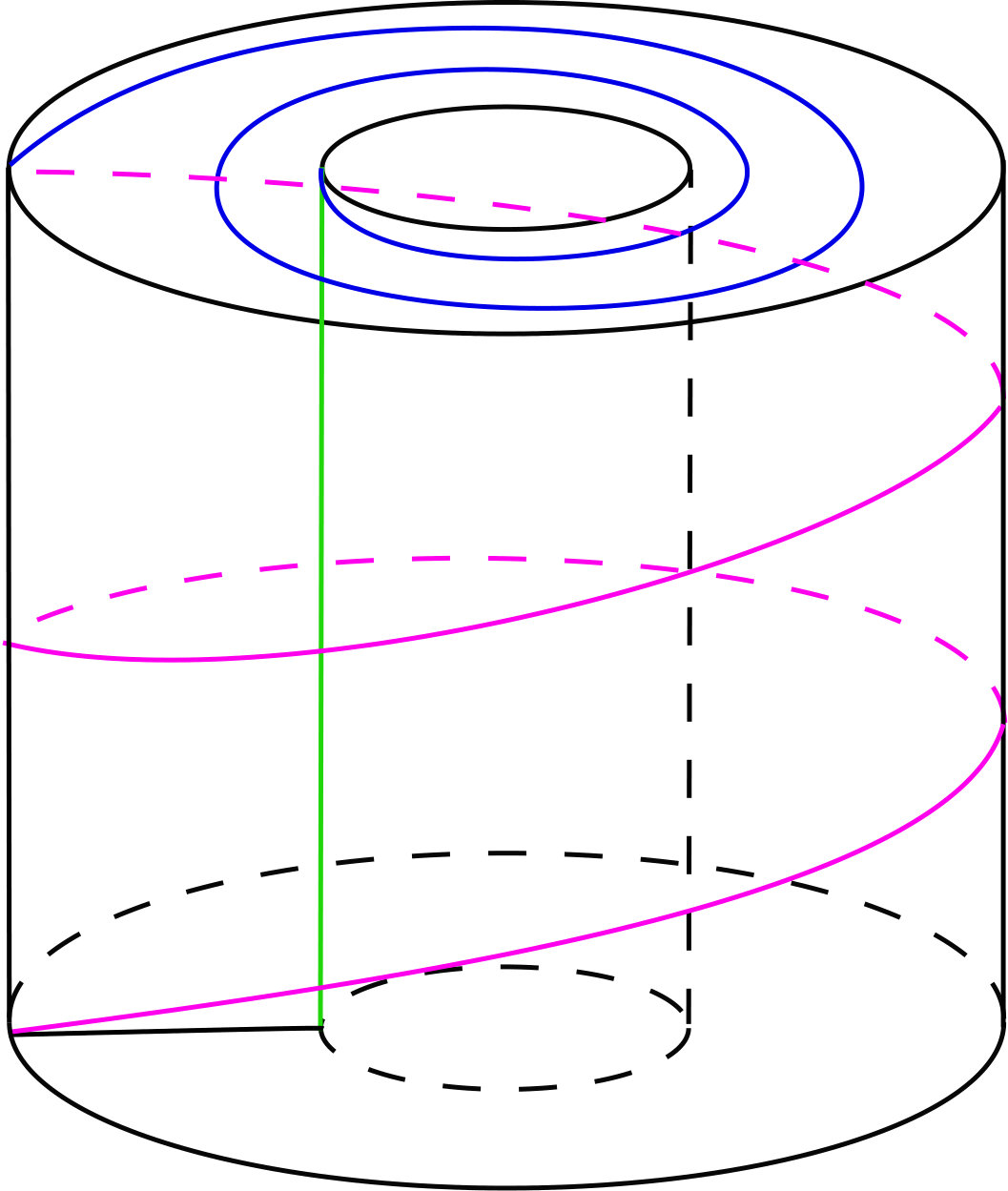 Figure 2
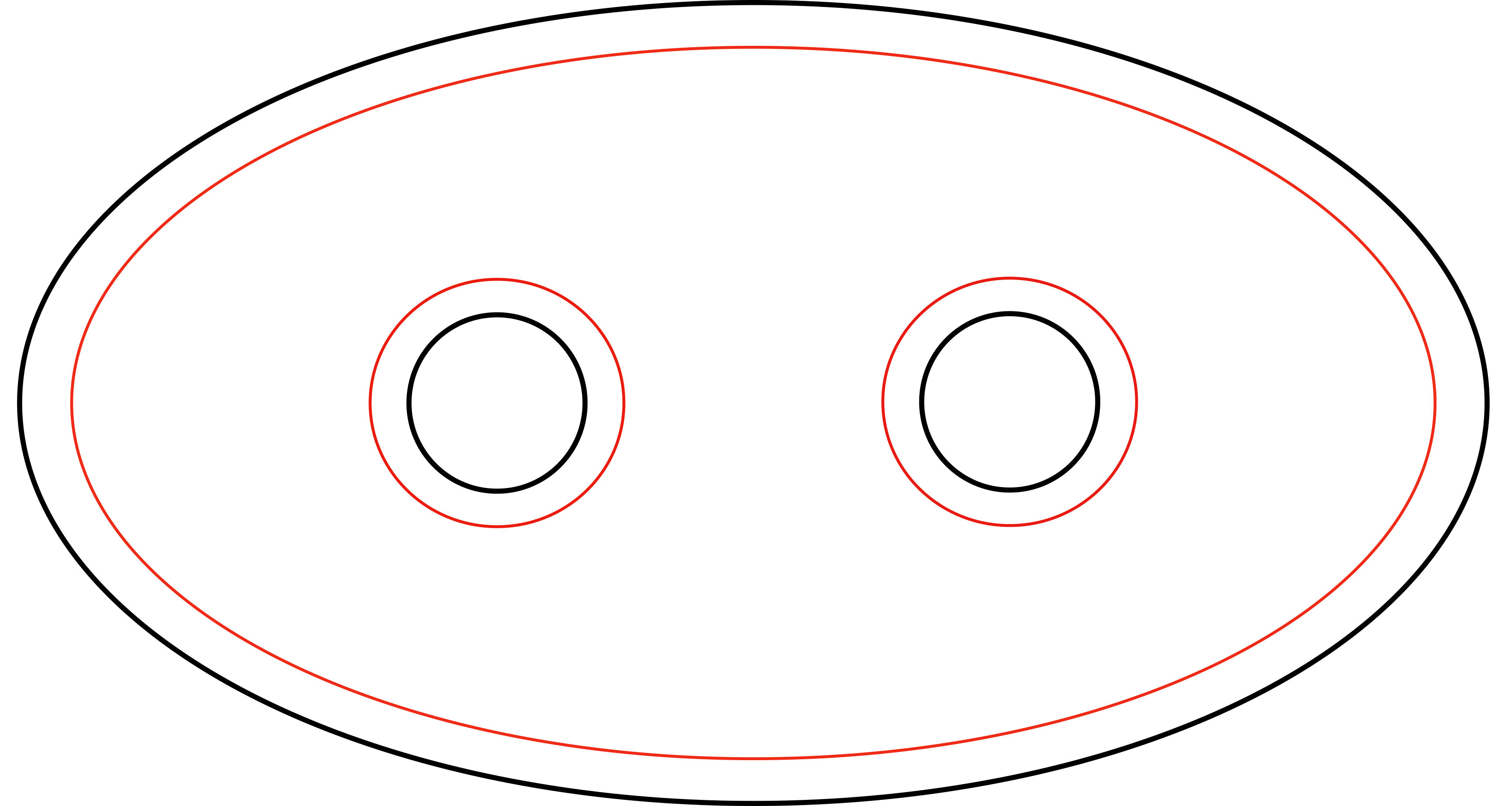 Figure 3
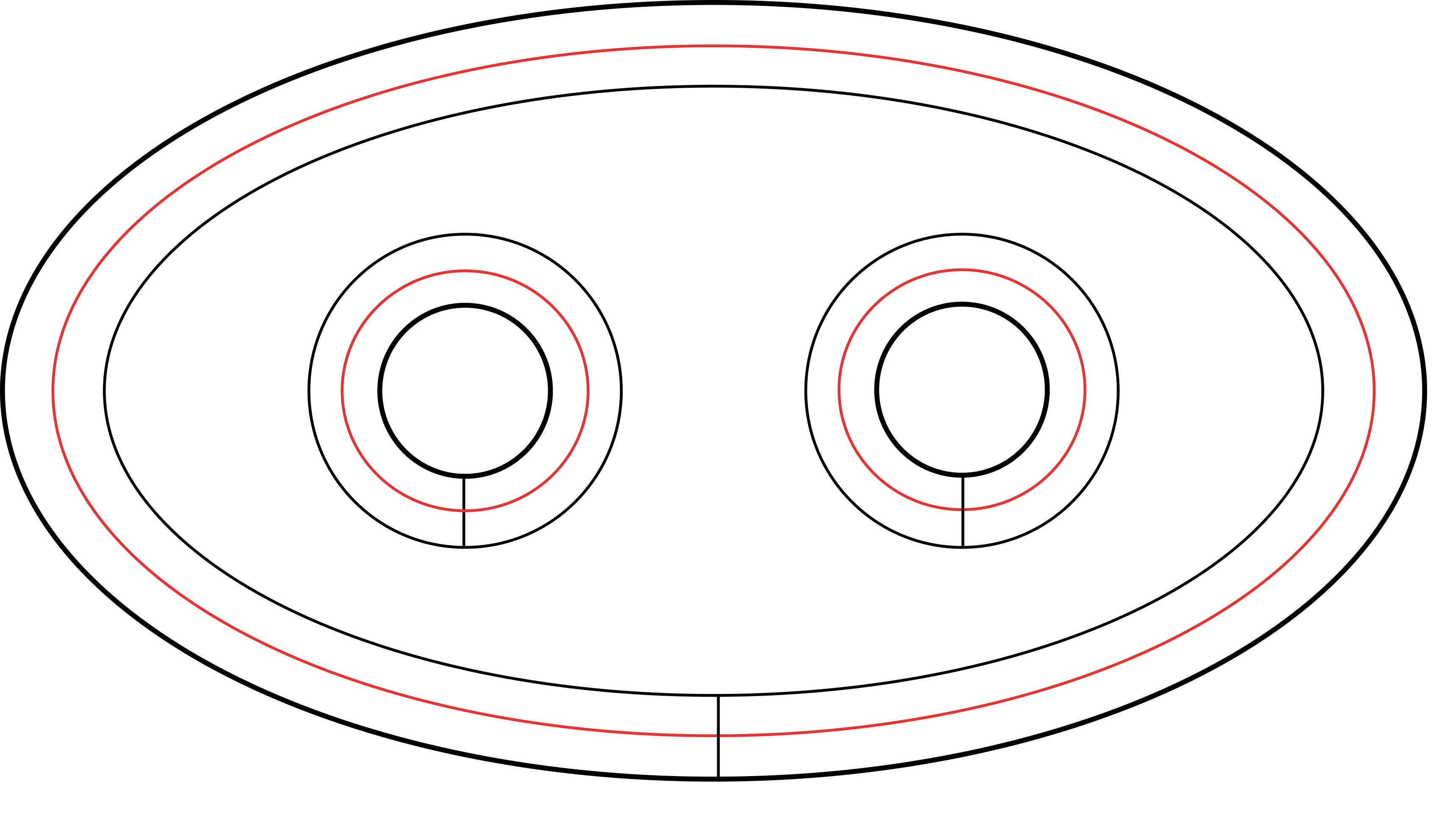 Figure 4
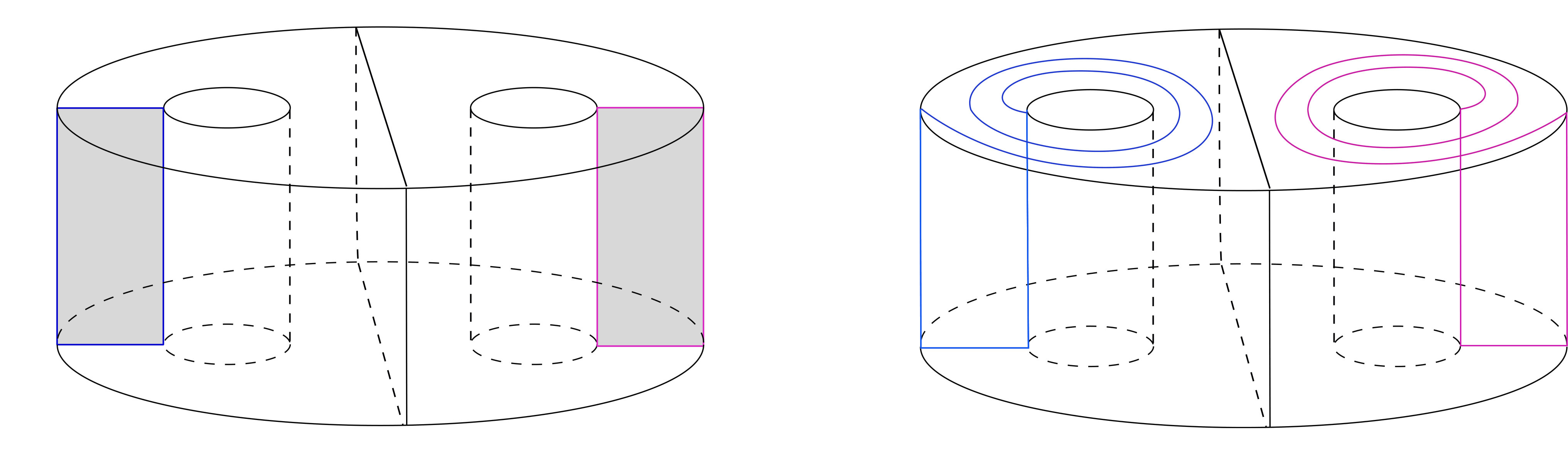 Figure 5
Peer Reviews
No public reviews on file for this paper yet. If you reviewed it on a platform where reviews are public (OpenReview, ICLR, NeurIPS, ICML), you can paste yours below so the community can read it here.
Videos
No videos yet. Explain this paper in a talk, walkthrough, or lecture? Add one.
Taxonomy
TopicsGeometric and Algebraic Topology · semigroups and automata theory · Homotopy and Cohomology in Algebraic Topology
Non-prime 3-Manifolds with Open Book Genus Two
Mustafa Cengiz
Department of Mathematics
Boston College
Chestnut Hill, Massachusetts, USA
Abstract.
An open book decomposition of a 3-manifold induces a Heegaard splitting for , and the minimal genus among all Heegaard splittings induced by open book decompositions is called the open book genus of . It is conjectured by Ozbagci [8] that the open book genus is additive under the connected sum of 3-manifolds. In this paper, we prove that a non-prime 3-manifold which has open book genus 2 is homeomorphic to for some integers , that is, it has non-trivial prime pieces of open book genus 1. In particular, there cannot be a counter-example to additivity of the open book genus such that the connected sum has open book genus 2.
Introduction
Throughout this paper, any 3-manifold is closed, connected and orientable. A pair is called an (embedded) open book decomposition of a 3-manifold if is a link in and is a fibration with fibers realizing as boundary. The link is called the binding of the open book, and the closure of each fiber of in is called a page of the open book. Note that the pages have the homeomorphism type of a compact surface . If is an open book decomposition of , then and are handlebodies homeomorphic to embedded in . Moreover, defines a Heegaard splitting of genus for . The open book genus of a -manifold , denoted by , is the minimum genus over all Heegaard splittings of induced by open book decompositions. It immediately follows from the definition that for any 3-manifold , where is the Heegaard genus of . A Heegaard splitting is not necessarily induced by an open book decomposition. Furthermore, does not necessarily equal . For example, “most” 3-manifolds of Heegaard genus 2 have greater open book genus [10]. We also have the following classification of -manifolds with open book genus 0 and 1 (see [8]).
Proposition 1**.**
Let be a 3-manifold. Then if and only if , and if and only if for some integer .
A well-known corollary of Haken’s Lemma is that the Heegaard genus is additive under the connected sum of 3-manifolds. The following conjecture is stated by Ozbagci [8].
Conjecture 2**.**
The open book genus is additive under the connected sum of 3-manifolds.
For , proving that is straightforward. For , take open book decompositions of with pages of homeomorphism type inducing Heegaard splittings of genus . A plumbing of these open book decompositions is an open book decomposition for with pages homeomorphic to , which is obtained by gluing closed rectangles in a certain way (see [4] for details). It follows that . Since a plumbing of the open books induces a Heegaard splitting of genus for , we get
[TABLE]
However, it is still unknown whether the is super-additive, equivalently additive, or not. In this paper, we prove that there cannot be a counter-example to the Conjecture 2 such that the connected sum has open book genus 2. More precisely, we prove the following.
Theorem 3**.**
A non-prime 3-manifold has open book genus 2 if and only if each non-trivial connected summand of has open book genus 1, that is, for some integers .
An open book decomposition induces a genus 2 Heegaard splitting if and only if it has pages of Euler characteristic . Therefore, the pages are either once-punctured tori or pairs of pants. We will use different tools to deal with each case. In section 1, we recall the fact that a 3-manifold that has an open book decomposition with once-punctured torus pages is a double branced cover of along a 3-braid link, and we list some known facts about double branched covers and braid closures. In section 2, we analyze 3-manifolds which possess open book decompositions with pair of pants pages. We argue that if such a manifold is not prime, then the open book decomposition should be “simple”. Our tool in section 2 is the theory of Seifert fibered spaces. Finally, we prove Theorem 3 in section 3.
Note that the author of [8] refers to the open book genus as the contact genus to draw attention to the strong relation between open book decompositions and contact structures, namely the Giroux correspondence. However, we do not benefit from this relation and use classical tools from 3-manifolds topology.
Acknowledgements. The author is grateful to Tao Li for numerous helpful discussions. He also would like to thank Kyle Hayden and Mike Miller for pointing out useful facts from Knot Theory.
1. Open Book Decompositions of Double Branched Covers
In this section, we recollect useful facts from classical Knot Theory. Let us denote the double branched cover of along a link by . See [9] for definition and details. The topology of is strongly related to properties of . It is known that every link can be represented as a braid closure [1]. The minimum number of strands required to represent as a braid closure is called the braid index of , denoted by . Assume that is represented as a braid closure along strands with braid axis . Since is the unknot, it is the binding of an open book decomposition of , where is the projection map . Let be the open disk and the branched covering map. Define and . It follows that is a fibration with fibers realizing as boundary, i.e., is an open book decomposition of . On the other hand, the braid representation of on strands intersects each page in points, and is a double branched cover of along these points. In other words, the pages of are homeomorphic to a surface , which is a double branched cover of along points. It follows that , and hence the induced open book decomposition of induces a Heegaard splitting of genus . This proves the following.
Proposition 4**.**
If is a link in with , then .
Since the braid index of a link suggests an upper bound for the open book genus of , it is worth stating the following result concerning the additivity of the braid index under connected sum.
Theorem 5** ([3], The Braid Index Theorem).**
The braid index is minus one additive under the connected sum operation, that is, .
In the discussion above, since is a double branched cover of along points, it is a compact genus surface with boundary components, where
[TABLE]
In particular, if is a 3-braid (respectively 2-braid) link, then has an open book decomposition with once-punctured torus (respectively annulus) pages. On the other hand, any 3-manifold that has an open book with once-punctured torus pages is homeomorphic to for some 3-braid link (see [2], section 2). Thus, we have the following.
Theorem 6**.**
A 3-manifold has an open book decomposition with once-punctured torus pages if and only if it is homeomorphic to a double branched cover of along a 3-braid link .
Remark 7**.**
This statement does not generalize for -braid links when . In particular, there are open book decompositions with connected bindings which are not obtained as double branched covers along braids. This can be argued more carefully, but we simply note that every 3-manifold has an open book with connected binding, whereas there are 3-manifolds, e.g. , which are not double branched covers of [9].
We can say more about the topology of looking at the link . For example, it is known that because a sphere that realizes the connected sum in lifts to a sphere in that realizes the connected sum . It is also known that if and only if is the unknot [7]. These two facts imply that is a non-prime manifold whenever is a composite link since if for non-trivial links , then for non-trivial 3-manifolds . The converse is also true.
Theorem 8** ([6], Corollary 4).**
A (non-split) link is prime if and only if is prime.
2. Open Book Decompositions with Pair of Pants Pages
We can define open book decompositions in an abstract way. Let be a compact surface with boundary and an orientation-preserving self-homeomorphism of , called a monodromy, such that is the identity map. Take the mapping torus and perform vertical Dehn fillings on , i.e., glue a solid torus to each torus component of via a homeomorphism identifying a meridian to for some . The resulting space forms a 3-manifold with an embedded open book decomposition such that the binding is the cores of the glued solid tori, and the pages are homeomorphic to . The pair is called an abstract open book decomposition of . Every embedded open book decomposition of a 3-manifold can be viewed as an abstract open book decompostion as well [4]. We use the notation . Note that isotoping or conjugating does not change the homeomorphism type of .
An abstract open book decomposition of a 3-manifold defines an extrinsic Heegaard splitting for . Namely, we take two copies of the handlebody and glue them along their boundaries via the homeomorphism defined by , and , where denotes . This can be seen as follows. When we glue ’s via the map, we obtain the trivial interval bundle over . Then, gluing ’s via , we obtain the mapping torus . Finally, vertical Dehn fillings on can be recovered by identifying ’s via the identity map. Hence, the open book decomposition and the Heegaard splitting form homeomorphic 3-manifolds.
Some 3-manifolds with open book genus 2 can be obtained as abstract open book decompositions with pages homeomorphic to a pair of pants . The mapping class group of is homomorphic to , where the generators are the Dehn twists about the curves in Figure 1. Therefore, any given monodoromy of can be written as a product of powers of up to isotopy, that is, can be taken to be for some integers . In this section, we will argue that possible values of are pretty restricted if the 3-manifold is not prime.
Lemma 9**.**
If no equals 0, then is a Seifert fibered space.
Apparently, this lemma is known to experts (see [8]), however, the author could not find a proof in the literature. We present a proof here.
Proof.
Let be the boundary components of parallel to the curves in Figure 1. For , let be an embedded curve in so that and bound an annulus with core . Finally, let be a spanning arc for , and the endpoint of on as in Figure 2.
When we remove the annuli from , we obtain another pair of pants . Notice that is the identity map, and so is embedded in the mapping torus . We will analyze how the vertical Dehn fillings on the boundary components of are realized on the boundary components of . Let be the component of with boundary . In other words, is the mapping torus of the monodromy on the annulus , where is the Dehn twist about .
Claim. There is a properly embedded annulus in such that and is an -curve on the torus .
Proof of the claim. Take the rectangle in , and let be the vertex of . Rotate on for times in the positive (negative) direction if is positive (negative), while keeping the other vertices of fixed. In Figure 3(a), we show before rotation, and in Figure 3(b), we depict after rotation in the case. In particular, is the image of under the monodromy , and is the itself. Since is obtained from by identifying with , then turns into a properly embedded annulus in . By construction, the boundary of on is , and the boundary of on is an -curve. This completes the proof of the claim.
Now, when we perform vertical Dehn fillings on , we glue a solid torus to each boundary component by attaching a meridional disk of the solid torus to . On the boundary component of , this is realized as attaching the disk to the non-infinity slope . Since the result of Dehn fillings along non-infinity slopes on the components of is the Seifert fibered space , the result follows. ∎
The proof suggests that when no is zero, has a Seifert fibration over the base space with three cone points of multiplicities , possibly 1. We can prove the following statement using the theory of Seifert fibered spaces.
Lemma 10**.**
If is not prime for , one of the ’s should be 0.
Proof.
Assume that no equals 0, so is Seifert fibred as above. Let be the projection map of this fibration. We will prove that is either irreducible or homeomorphic to , hence it is prime. If is reducible, then there exists an essential sphere in which intersects each Seifert fiber transversely, and hence is a branched cover along three cone points with multiplicities [5]. Hence, we obtain for the degree of the cover. As , we get for each , and . This implies that intersects each fiber once, and is homeomorphic to . In other words, is an orientable bundle over , and thus is homeomorphic to . ∎
3. Proof of Theorem 3
The if direction of Theorem 3 is straightforward. If are 3-manifolds with open book genus 1, then they have Heegaard genus 1. Hence, for . It follows that , by the subadditivity of the open book genus. Therefore, we obtain .
For the only if direction of Theorem 3, let be a non-prime 3-manifold with open book genus . Pick an open book decomposition of inducing a genus 2 Heegaard splitting. The pages of such an open book have Euler characteristic , hence they are either once-punctured tori or pairs of pants. We analyze each case separately.
Case 1. has an open book decomposition with once-punctured torus pages.
By Theorem 6, is homeomorphic to a double branched cover of along a 3-braid link . Theorem 8 implies that is a composite link, that is, for some non-trivial links , since is not prime. On the other hand, by Proposition 4, must be 3 since otherwise would be less than 2. Finally, it follows from Theorem 5 that for braid indices, so . Therefore, we get , which implies that the prime pieces of are double branched covers of along 2-braid links. The coverings suggest open book decompositions with annulus pages inducing genus 1 Heegaard splittings for and . Hence, the result follows.
Case 2. has an open book decomposition with pair of pants pages.
We can see as an abstract open book for the pair of pants with monodromy , where are the Dehn twists about the curves in Figure 1. By Lemma 10, one of the ’s is zero because is not prime. Assume that , so . We now analyze the Heegaard splitting induced by .
Take two distinct copies of . Let be a properly embedded essential arc with endpoints in such that intersects neither nor , hence fixes pointwise. Let be properly embedded non-separating arcs which do not intersect and cut into a disk. Now take the vertical disks , and in as in Figure 4. The disks cut into a 3-ball, and hence the resulting 3-manifold is uniquely determined by where are mapped in under the Heegaard map defined by , and , where . In Figure 4, we depict in the case and . Figure 4 is suggestive, and in general, two distinct copies of glue along their boundaries to form a sphere that realizes the connected sum . Finally, note that . Otherwise, one of would be , and would be homeomorphic to either , , or a lens space. Thus, the connected summands of have open book genus 1. ∎
The reference list from the paper itself. Each links out to its DOI / PubMed record.
- 1[1] J. W. Alexander, A lemma on systems of knotted curves , Proc. Nat. Acad. Sci. U.S.A. 9 (1923), 93-95.
- 2[2] J. A. Baldwin, Heegaard Floer homology and genus one, one-boundary component open books , J. Topol., 1(4), 2008, 963-992.
- 3[3] J. S. Birman and W. W. Menasco, Studying links via closed braids IV: composite links and split links , Invent. math. 102 (1990), 115-139.
- 4[4] J. B. Etnyre, Notes on open book decompositions and contact structures , Lecture notes for Clay Summer School at the Alfred Renyi Institute of Mathematics (Hungarian Academy of Sciences) Budapest, Hungary, 2004.
- 5[5] A. Hatcher, Notes on basic 3-manifold topology , available at http://www.math.cornell.edu/ hatcher/.
- 6[6] P. K. Kim and J. L. Tollefson, Splitting the PL involutions of nonprime 3 3 3 -manifolds . Michigan Math. J. 27 (1980), no. 3, 259-274.
- 7[7] J. W. Morgan and H. Bass, The Smith Conjecture, Papers Presented at the Symposium Held at Columbia University , New York, 1979. Orlando, FL: Academic Press, 1984.
- 8[8] B. Ozbagci, On the Heegaard genus of contact 3-Manifolds , Cent. Eur. J. Math., 9(4), 2011, 752-756.