Dynamic Mode Decomposition for Plasma Diagnostics and Validation
Roy Taylor, J. Nathan Kutz, Kyle Morgan, Brian Nelson

TL;DR
This paper applies Dynamic Mode Decomposition to analyze and model nonlinear plasma dynamics, enabling efficient data-driven predictions and interpretation of dominant modes in magnetohydrodynamics.
Contribution
It introduces the use of DMD for plasma diagnostics, providing low-rank models that accurately reconstruct and predict plasma behavior from sparse data.
Findings
DMD successfully characterizes plasma modes including spheromak and injector-driven modes
The 3-mode DMD model achieves high-fidelity dynamic reconstructions
DMD reduces computational costs while maintaining accuracy
Abstract
We demonstrate the application of the Dynamic Mode Decomposition (DMD) for the diagnostic analysis of the nonlinear dynamics of a magnetized plasma in resistive magnetohydrodynamics. The DMD method is an ideal spatio-temporal matrix decomposition that correlates spatial features of computational or experimental data while simultaneously associating the spatial activity with periodic temporal behavior. DMD can produce low-rank, reduced order surrogate models that can be used to reconstruct the state of the system and produce high-fidelity future state predictions. This allows for a reduction in the computational cost, and, at the same time, accurate approximations of the problem, even if the data are sparsely sampled. We demonstrate the use of the method on both numerical and experimental data, showing that it is a successful mathematical architecture for characterizing the HIT-IS…
Click any figure to enlarge with its caption.
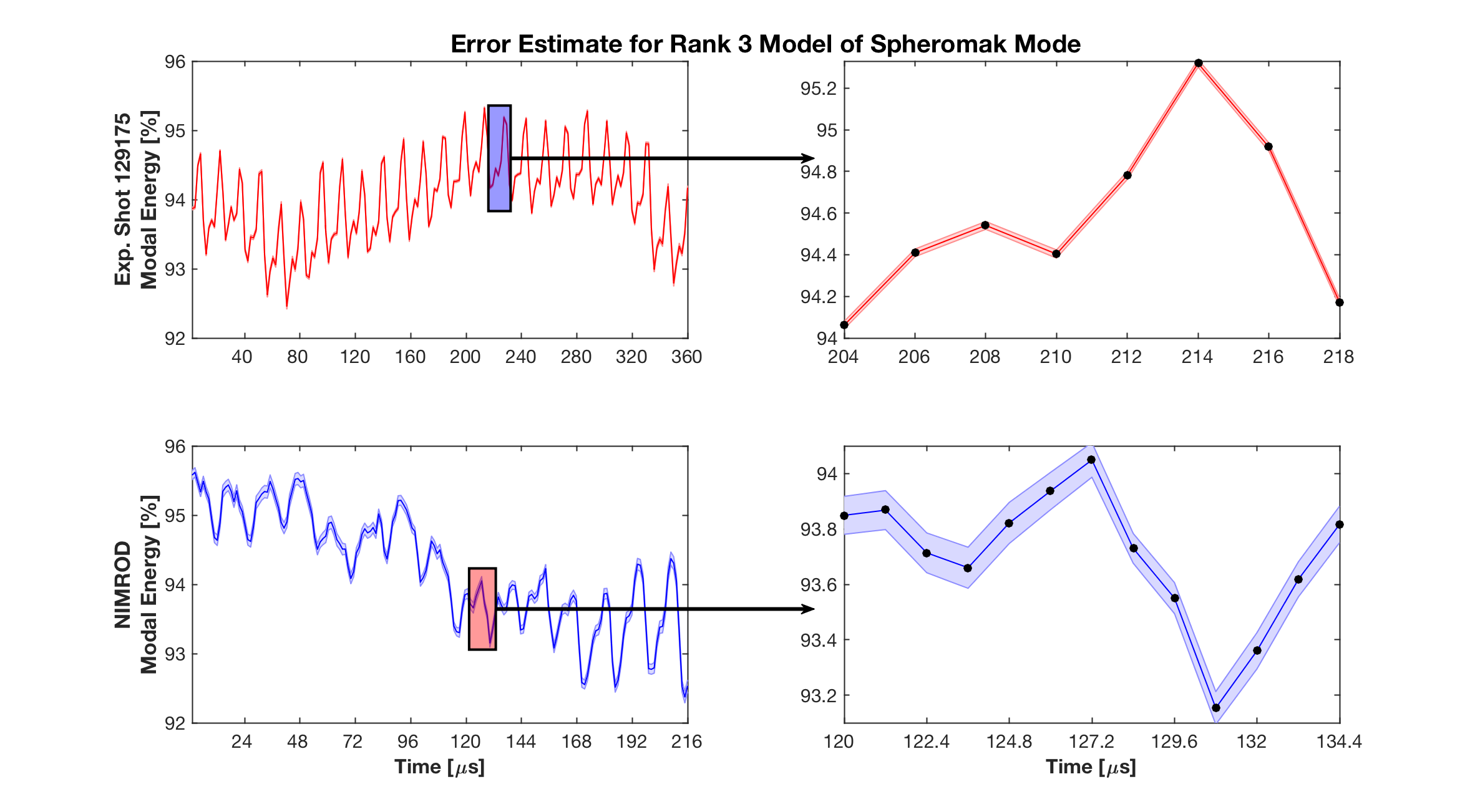 Figure 6
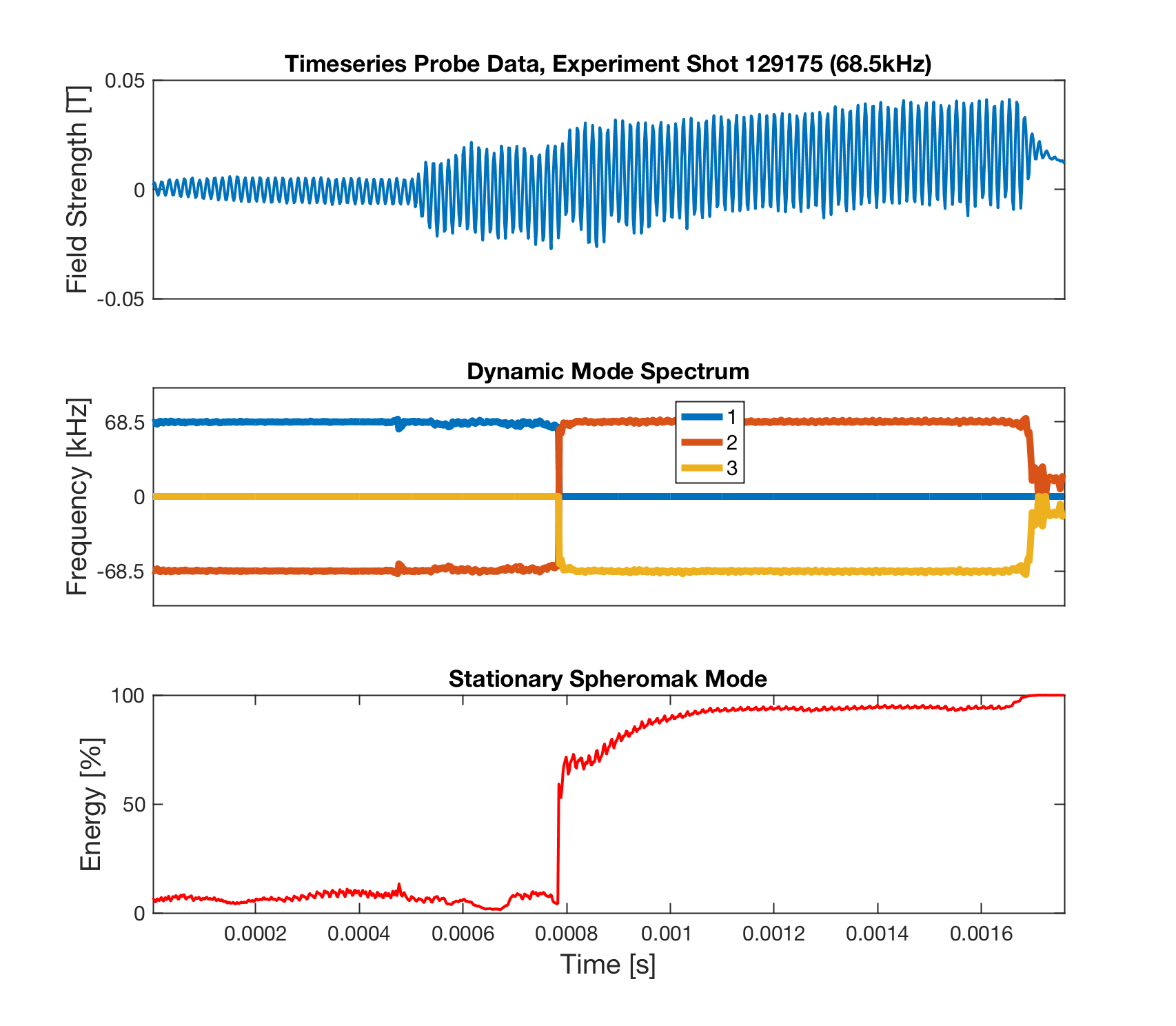 Figure 1
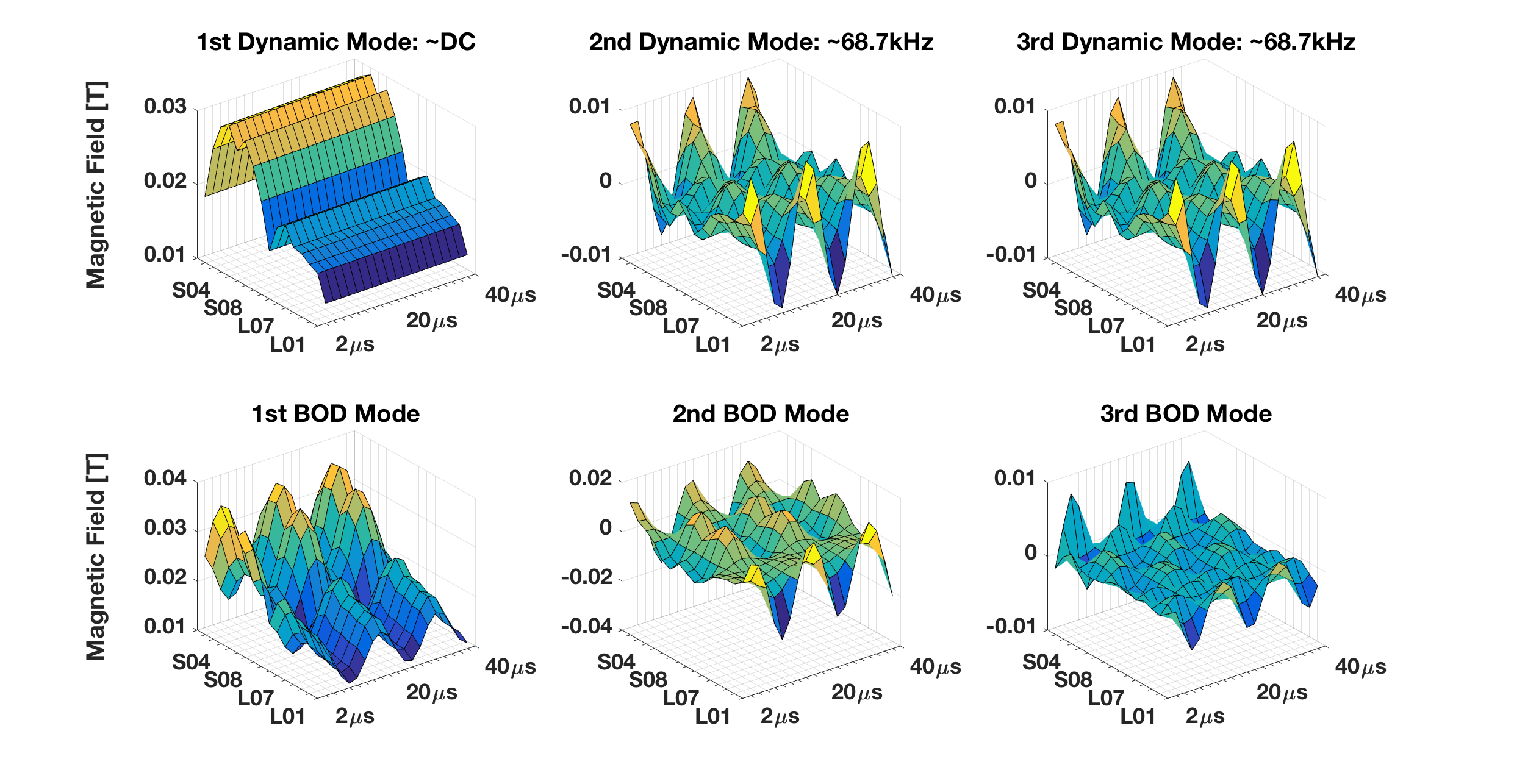 Figure 2
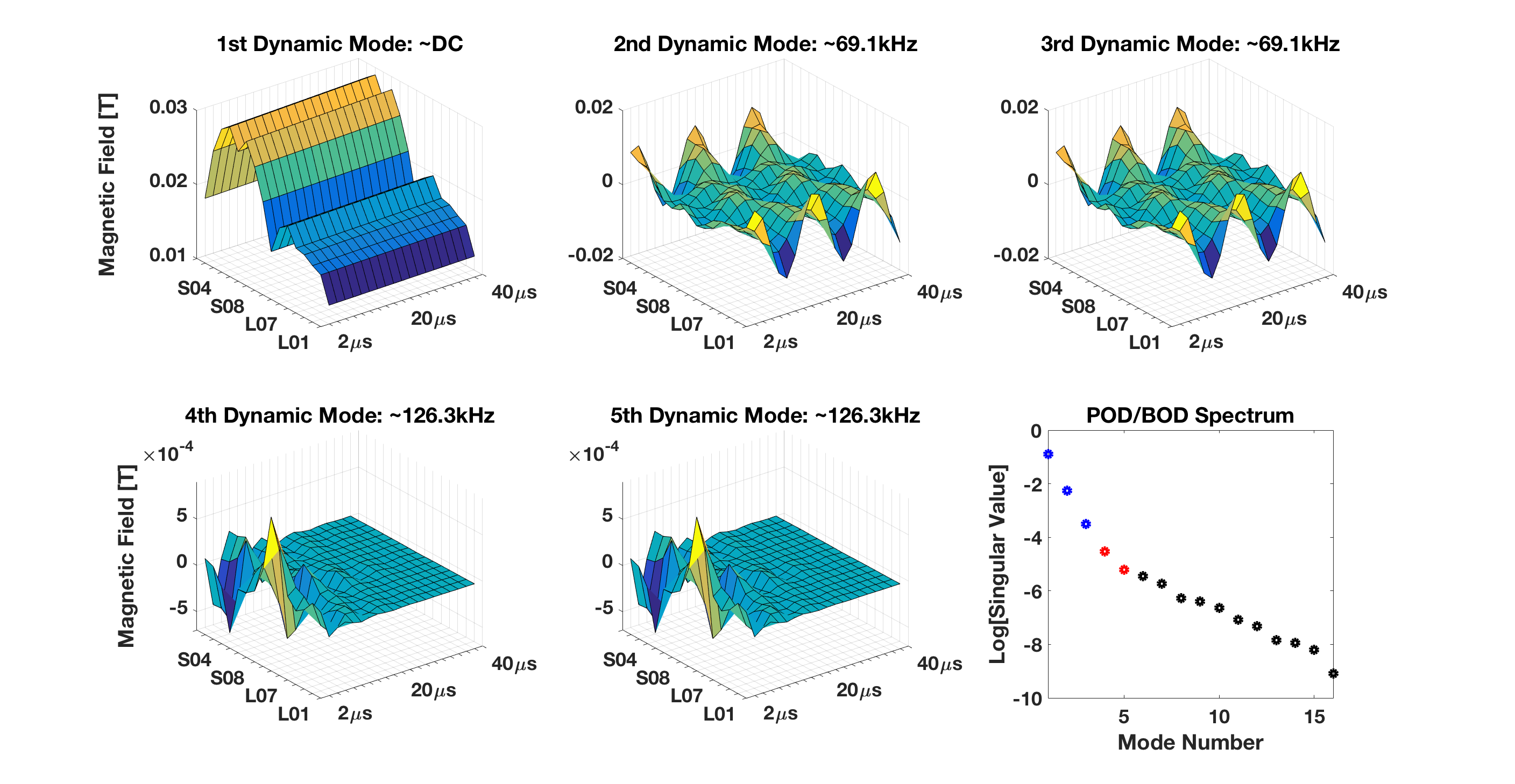 Figure 3
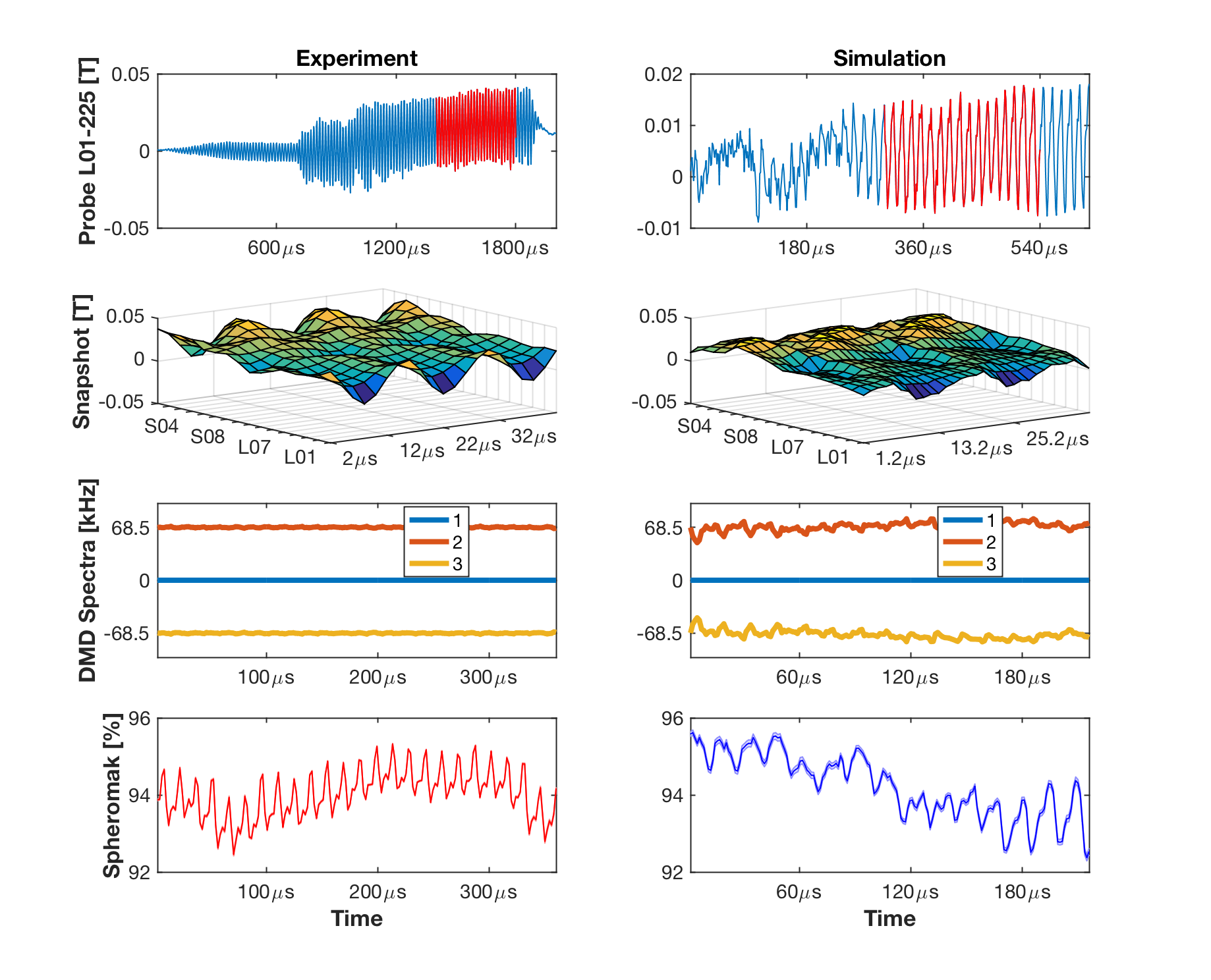 Figure 40
 Figure 1
 Figure 1
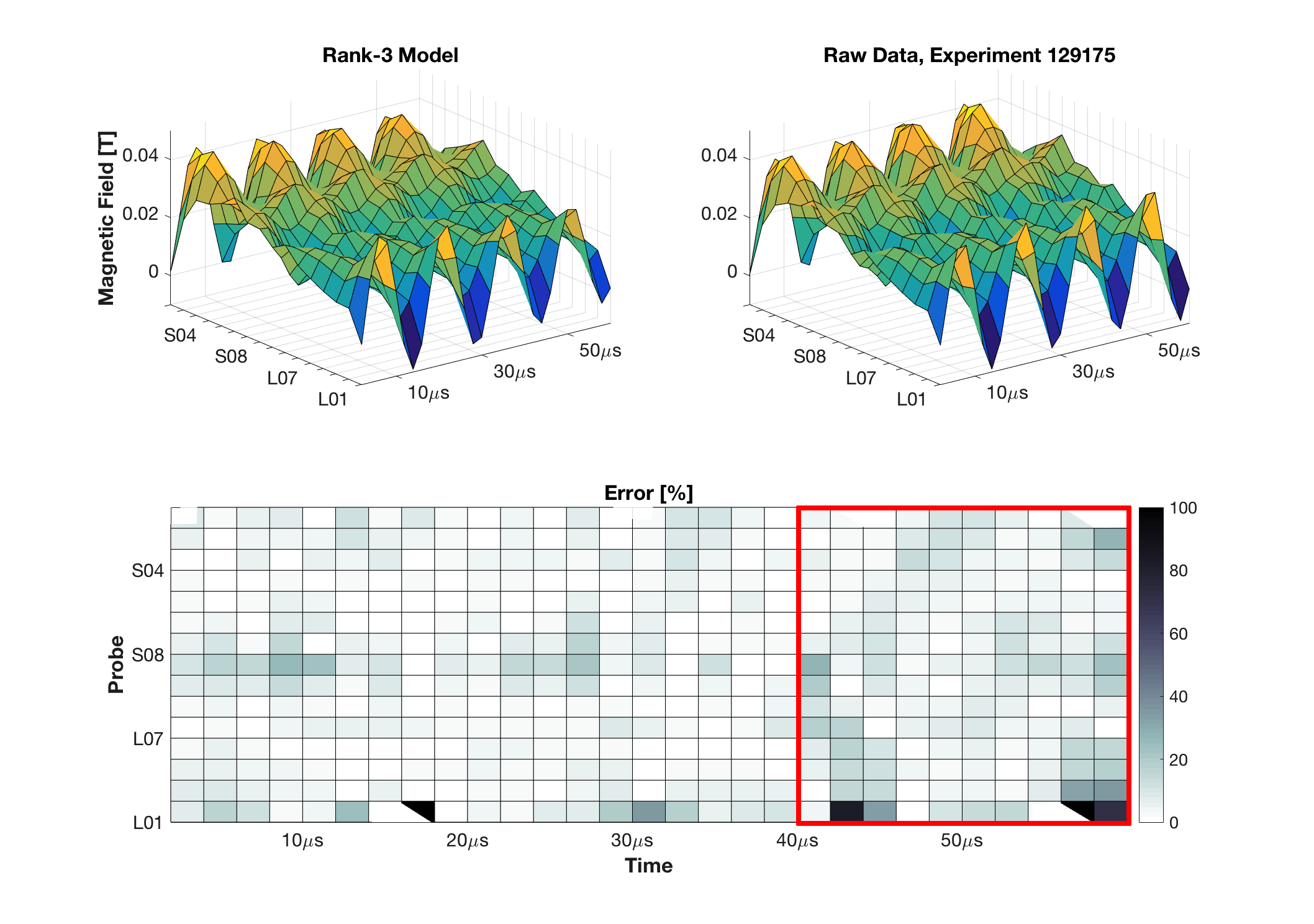 Figure 55
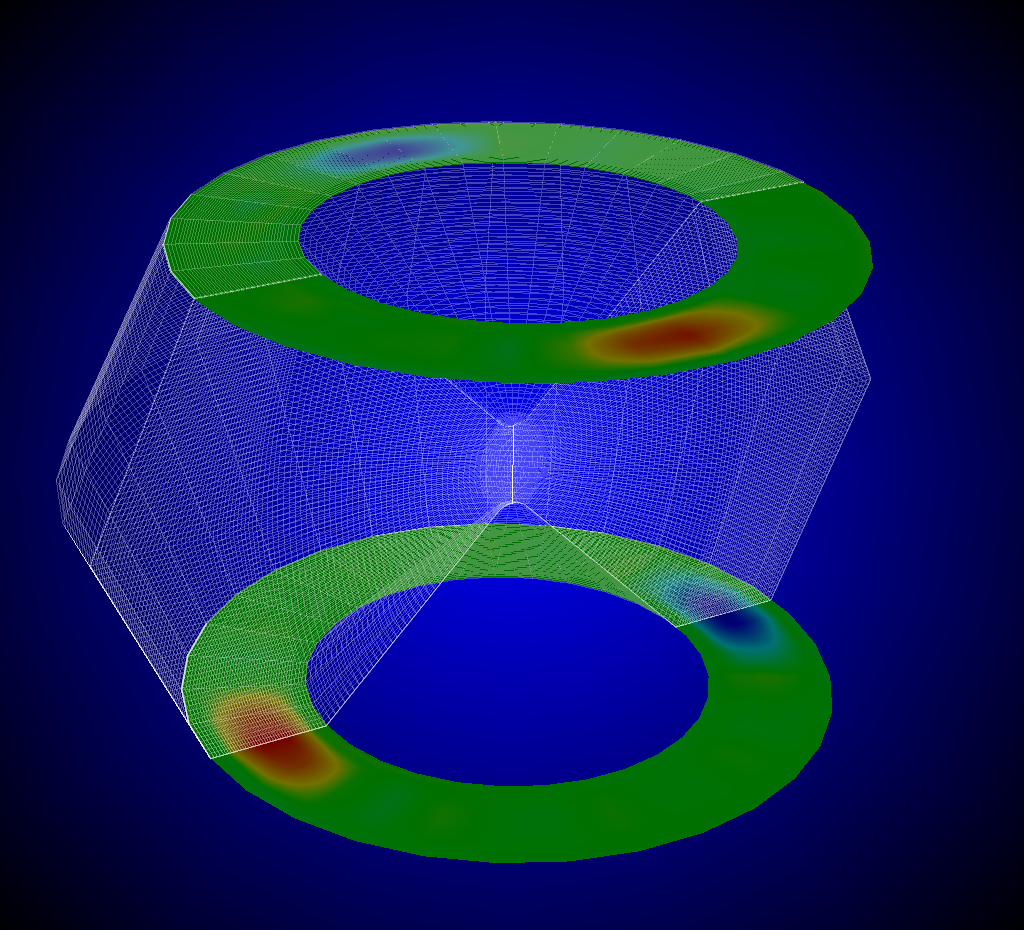 Figure 9
Peer Reviews
No public reviews on file for this paper yet. If you reviewed it on a platform where reviews are public (OpenReview, ICLR, NeurIPS, ICML), you can paste yours below so the community can read it here.
Videos
No videos yet. Explain this paper in a talk, walkthrough, or lecture? Add one.