Fast Algorithms for Designing Multiple Unimodular Waveforms With Good Correlation Properties
Yongzhe Li, Sergiy A. Vorobyov

TL;DR
This paper introduces fast, scalable algorithms for designing multiple unimodular waveforms with optimized correlation properties, crucial for radar and communication systems, by transforming complex non-convex problems into manageable quadratic forms.
Contribution
The paper presents novel algorithms that efficiently solve large-scale non-convex waveform design problems using majorization-minimization and algebraic structure exploitation, outperforming existing methods.
Findings
Algorithms have lower or comparable computational burden.
Faster convergence confirmed by simulations.
Designed waveforms exhibit superior correlation properties.
Abstract
In this paper, we develop new fast and efficient algorithms for designing single/multiple unimodular waveforms/codes with good auto- and cross-correlation or weighted correlation properties, which are highly desired in radar and communication systems. The waveform design is based on the minimization of the integrated sidelobe level (ISL) and weighted ISL (WISL) of waveforms. As the corresponding optimization problems can quickly grow to large scale with increasing the code length and number of waveforms, the main issue turns to be the development of fast large-scale optimization techniques. The difficulty is also that the corresponding optimization problems are non-convex, but the required accuracy is high. Therefore, we formulate the ISL and WISL minimization problems as non-convex quartic optimization problems in frequency domain, and then simplify them into quadratic problems by…
Click any figure to enlarge with its caption.
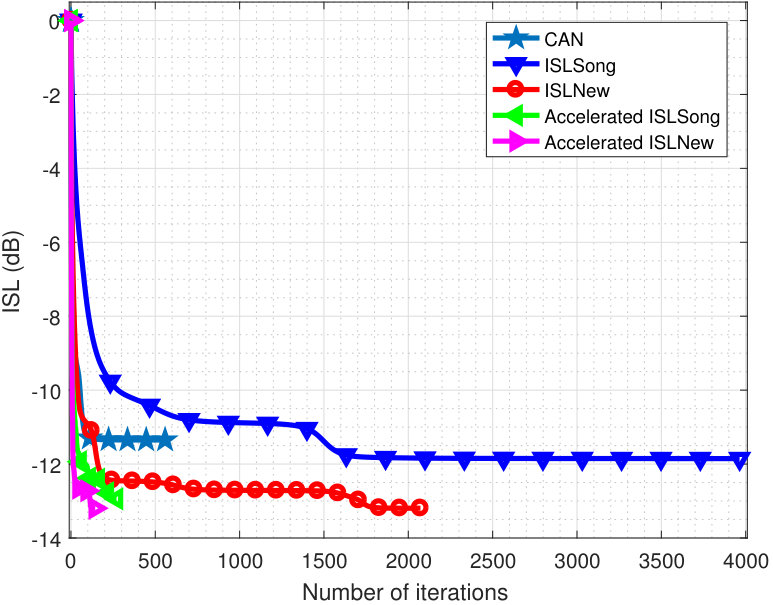 Figure 1
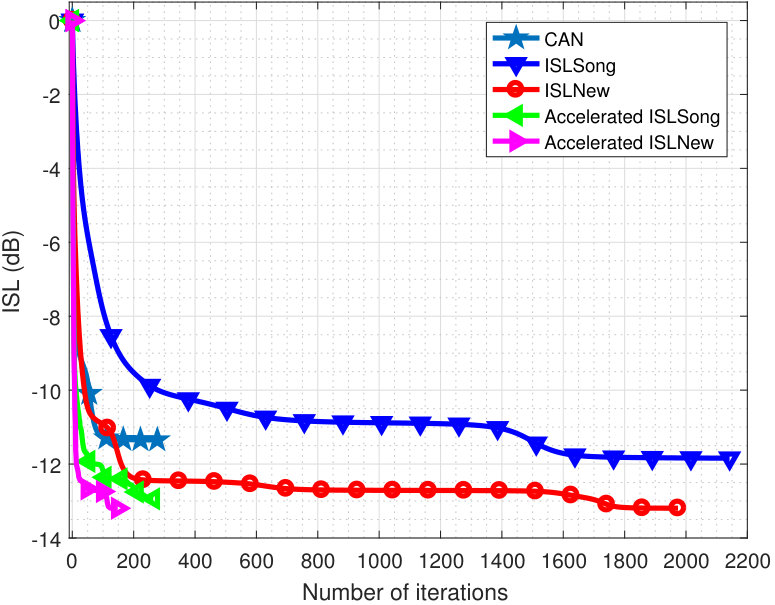 Figure 1
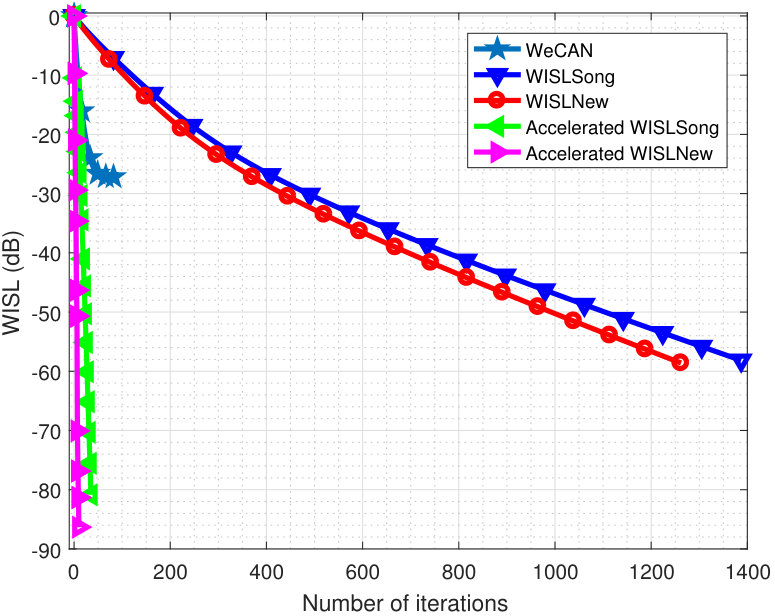 Figure 2
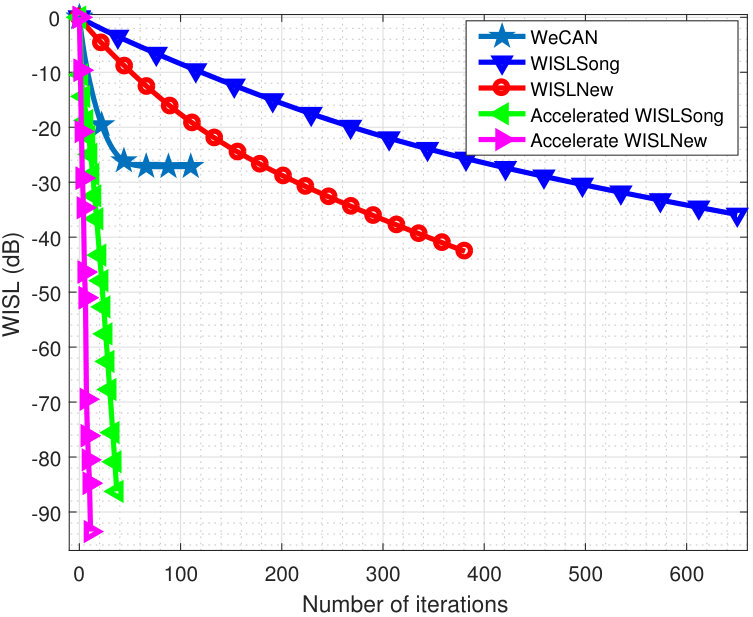 Figure 2
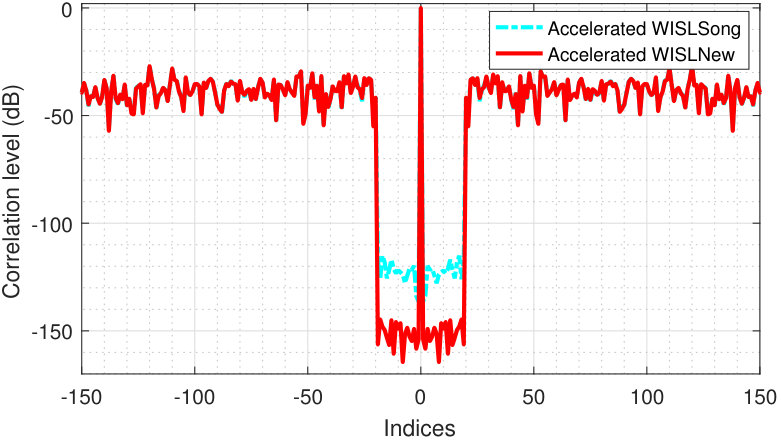 Figure 3
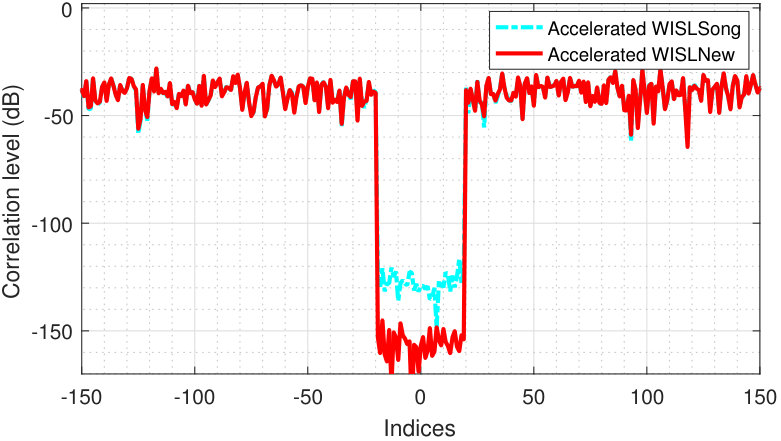 Figure 3
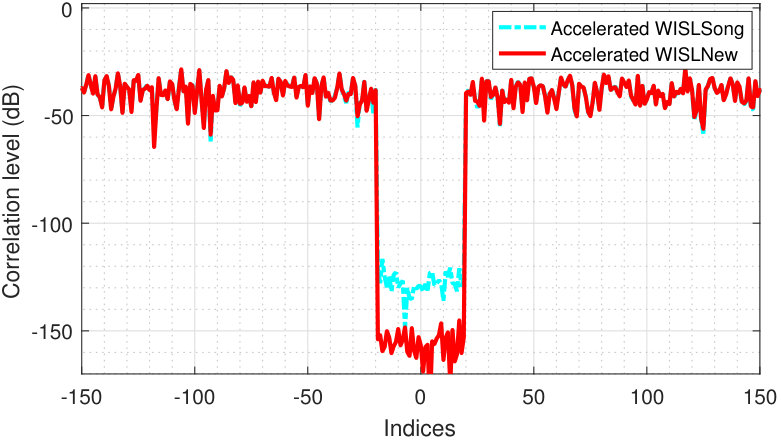 Figure 3
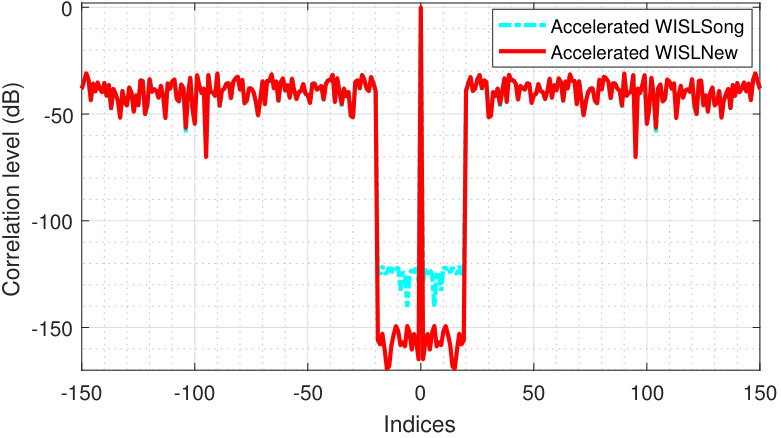 Figure 3
Peer Reviews
No public reviews on file for this paper yet. If you reviewed it on a platform where reviews are public (OpenReview, ICLR, NeurIPS, ICML), you can paste yours below so the community can read it here.
Videos
No videos yet. Explain this paper in a talk, walkthrough, or lecture? Add one.