Cohomological Tautness of Singular Riemannian Foliations
Jos\'e Ignacio Royo Prieto, Martintxo Saralegi-Aranguren, Robert Wolak

TL;DR
This paper extends the concept of geometrical tautness characterized by basic cohomology classes from regular to singular Riemannian foliations on compact manifolds, establishing a global Alvarez class and implications for simply connected spaces.
Contribution
It generalizes Alvarez López's result to singular foliations by defining a unique global Alvarez class from strata and shows tautness in simply connected cases.
Findings
Existence of a unique global Alvarez class for singular Riemannian foliations.
In simply connected manifolds, the foliation's restriction to each stratum is geometrically taut.
Generalization of Ghys's result to singular foliations.
Abstract
For a Riemannian foliation F on a compact manifold M , J. A. \'Alvarez L\'opez proved that the geometrical tautness of F , that is, the existence of a Riemannian metric making all the leaves minimal submanifolds of M, can be characterized by the vanishing of a basic cohomology class (the \'Alvarez class). In this work we generalize this result to the case of a singular Riemannian foliation K on a compact manifold X. In the singular case, no bundle-like metric on X can make all the leaves of K minimal. In this work, we prove that the \'Alvarez classes of the strata can be glued in a unique global \'Alvarez class. As a corollary, if X is simply connected, then the restriction of K to each stratum is geometrically taut, thus generalizing a celebrated result of E. Ghys for the regular case.
Click any figure to enlarge with its caption.
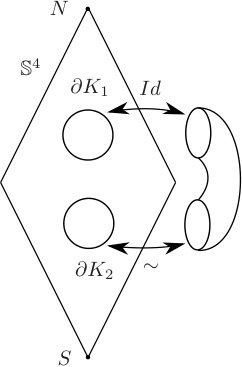 Figure 1
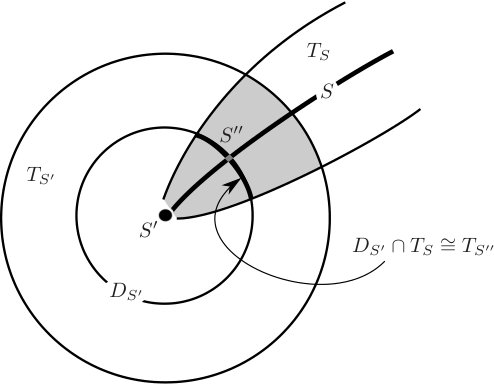 Figure 2
Peer Reviews
No public reviews on file for this paper yet. If you reviewed it on a platform where reviews are public (OpenReview, ICLR, NeurIPS, ICML), you can paste yours below so the community can read it here.
Videos
No videos yet. Explain this paper in a talk, walkthrough, or lecture? Add one.
Cohomological Tautness of Singular Riemannian Foliations
José Ignacio Royo Prieto
Department of Applied Mathematics
University of the Basque Country UPV/EHU
Pza. Ingeniero Torres Quevedo n. 1
48013 Bilbao, Spain.
,
Martintxo Saralegi-Aranguren
Fèdèration CNRS
Nord-Pas-de-Calais FR 2956
UPRES-EA 2462 LML
Faculté Jean Perrin
Université d’Artois
Rue Jean Souvraz SP 18
62 307 Lens Cedex, France.
and
Robert Wolak
Instytut Matematyki
Uniwersytet Jagiellonski
ul. prof. Stanisława Łojasiewicza 6 30-348 Kraków, Poland.
Abstract.
For a Riemannian foliation on a compact manifold , J. A. Álvarez López proved that the geometrical tautness of , that is, the existence of a Riemannian metric making all the leaves minimal submanifolds of , can be characterized by the vanishing of a basic cohomology class \hbox{\boldmath{\kappa}}_{M}\in H^{1}(M/\mathcal{F}) (the Álvarez class). In this work we generalize this result to the case of a singular Riemannian foliation on a compact manifold . In the singular case, no bundle-like metric on can make all the leaves of minimal. In this work, we prove that the Álvarez classes of the strata can be glued in a unique global Álvarez class \hbox{\boldmath{\kappa}}_{X}\in H^{1}(X/\mathcal{K}). As a corollary, if is simply connected, then the restriction of to each stratum is geometrically taut, thus generalizing a celebrated result of E. Ghys for the regular case.
Key words and phrases:
Singular Riemannian foliations, foliations, tautness
2010 Mathematics Subject Classification:
53C12, 57R30, 37C85
The first author was partially supported by the Spanish MINECO grant MTM2016-77642-C2-1-P and the Gobierno Vasco/Eusko Jaurlaritza Grant IT1094-16
The second author was partially supported by the Spanish MINECO grant MTM2016-77642-C2-1-P
Dedicated to Professor Felipe Cano on his 60th birthday.
Contents
- 1 Introduction
- 2 Singular Riemannian Foliations
- 3 Tautness of Riemannian Foliations
- 4 Thick foliated bundles
- 5 Local structure of SRFs
- 6 Tautness of Singular Riemannian Foliations
- 7 Appendix
1. Introduction
1.1. Tautness and cohomology
A foliation on a manifold is said to be (geometrically) taut if there exists a metric such that every leaf of is a minimal submanifold of . Tautness is a relevant property of foliations, which has been extensively studied since the eighties and nineties of the last century. It is essentially a transverse property: A. Haefliger proved that if is compact, the tautness of depends only on its transverse structure, namely, on the holonomy pseudogroup of (see [Hae80, Theorem 4.1]).
In the case of Riemannian foliations (those admitting a bundle-like metric, that is, a metric whose orthogonal component is holonomy invariant), tautness is remarkably of topological nature, as the following results show. In [Mas92], X. Masa proved that if is an oriented and transversally oriented Riemannian foliation, then it is taut if and only if the top degree group of the basic cohomology is isomorphic to , as conjectured by Y. Carrière in his Ph.D. Thesis. In [AL92], J.A. Álvarez López defined the so-called Álvarez class (or tautness class) \hbox{\boldmath{\kappa}}_{M}\in H^{1}(M/\mathcal{F}) whose vanishing characterizes the tautness of a Riemannian foliation on a compact manifold . As a corollary, he removed the assumption of orientability of Masa’s characterization. Another immediate consequence of Álvarez’s result is that any Riemannian foliation on a simply connected and compact manifold is taut, which was proven previously by E. Ghys in [Ghy84, Théorème B]. One more characterization is obtained by combining these results with F. Kamber and Ph. Tondeur’s Poincaré duality property for the basic cohomology [KT84, Theorem 3.1]:
[TABLE]
where is the codimension of and the -twisted basic cohomology stands for the cohomology of the basic de Rham complex with the twisted differential . It follows that, under the assumptions of Masa’s theorem, is taut if and only if . For an account of the history of tautness and cohomology of Riemannian foliations see [RPSAW09] and V. Sergiescu’s Appendix in [Mol88].
1.2. Tautness of strata of singular Riemannian foliations
We are interested in finding the singular version of those results in the less explored framework of a singular Riemannian foliation (SRF, for short) on a compact manifold . We now summarize some results we have obtained in this direction.
One major difference with the regular case is that, in an SRF, geometrical tautness is not to be achieved globally: there exists no bundle-like metric on making all the leaves of minimal submanifolds of (essentially, because they are of different dimensions, see [RPSAW08, p. 186] and [MW06]). It is natural, then, to focus on the foliations induced by on each stratum , which are regular. Notice that strata may not be compact submanifolds of . The mean curvature form for non-compact manifolds has a different behavior: Example 2.4 of [CE97] describes a Riemannian foliation on a non-compact manifold whose mean curvature form is basic, but not closed, showing that the Álvarez class may not even be defined if is not compact.
Nevertheless, in [RPSAW08] and [RPSAW09] we proved that, for a certain class of foliations called CERFs, the Álvarez class is well defined and the characterizations of tautness described above hold. CERFs are regular Riemannian foliations on possibly non-compact manifolds that can be suitably embedded in a regular Riemannian foliation on a compact manifold called zipper, and whose basic cohomology is computed by a compact saturated subset called reppiz.
The main point is that the singular strata of an SRF are CERFs. Although the compactness of does not imply the compactness of the strata, each stratum will inherit the cohomological behavior of tautness from its zipper. Hence, the rich classical cohomological study of tautness applies to each stratum of any SRF defined on a compact manifold.
1.3. Main result
In this work we intend to understand the tautness character of all strata globally, by showing that the topology of has, indeed, a strong influence on the tautness of each stratum, individually. Our main result is the following:
Theorem 1.1**.**
Let be an SRF on a closed manifold . Then there exists a unique class \hbox{\boldmath{\kappa}}_{X}\in H^{1}(X/\mathcal{K}) that contains the Álvarez class of each stratum. More precisely, the restriction of \hbox{\boldmath{\kappa}}_{X} to each stratum is the Álvarez class of .
We will say that \hbox{\boldmath{\kappa}}_{X} is the Álvarez class of , and that is cohomologically taut if its Álvarez class vanishes. To prove Theorem 1.1 we shall need to exploit the local description of the neighbourhood of a stratum of an SRF, and use strongly the fact that its associated sphere bundle admits a compact structure group. The key technical point needed to patch up the Álvarez classes of all strata together is Proposition 4.7, which establishes that the Álvarez class of a singular stratum is induced by the Álvarez class of a tube along . As a consequence, although taut and non-taut strata may coexist in an SRF (as it happens in Example 6.9), all strata below a taut stratum must be taut. As an application, we retrieve a singular version of the classical result by E. Ghys referred to above:
Corollary 1.2**.**
Every SRF on a compact simply connected manifold is cohomologically taut.
Organization of the article*.*
In Sections 2 and 3 we recall some known facts about SRFs and CERFs, respectively, and prove that certain bundles of singular strata are CERFs. In Section 4 we introduce the notion of thick foliated bundle and study the interplay between the Álvarez classes of their components. We apply this study in Section 5, as thick foliated bundles appear in the local structure of an SRF, which we shall use to prove the main results in Section 6. The Appendix is devoted to the reduction of the structure group of the sphere bundle of a stratum.
The authors wish to thank the referees for their useful remarks and suggestions.
2. Singular Riemannian Foliations
In this section we present the class of foliations we are going to study in this paper, which were introduced by P. Molino in [Mol88, Chapter 6]. They are essentially Riemannian foliations whose leaves may have different dimensions.
2.1. SRFs
A Singular Riemannian Foliation (SRF, for short) on a connected manifold is a partition by connected immersed submanifolds, called leaves, satisfying the following properties:
- i)
the module of smooth vector fields tangent to the leaves is transitive on each leaf; 2. ii)
there exists a Riemannian metric on , called adapted metric, such that each geodesic that is perpendicular at one point to a leaf remains perpendicular to every leaf it meets.
The first condition implies that is a singular foliation in the sense of [Ste74] and [Sus73]. Notice that the restriction of to a saturated open subset induces an SRF in , which we shall denote by . Any regular Riemannian foliation (RF for short) is an SRF, but the first interesting examples of SRFs are the following:
- •
the partition defined by the orbits of an action by isometries of a connected Lie group;
- •
the partition defined by the closures of the leaves of a regular Riemannian foliation;
- •
the partition defined by the closures of the leaves of a singular Riemannian foliation (this is Molino’s conjecture, recently proved in [AR17]).
2.2. Stratification
Let denote the union of all the leaves of of dimension . We denote by the stratification of whose elements, called strata, are the connected components of the subsets , for every . The restriction of to a stratum is an RF . The strata are partially ordered by: . Denote by the corresponding strict partial order. For every stratum , we have . Thus, the minimal strata are the only closed strata. The maximal stratum, called the regular stratum, is an open dense subset of , and shall be denoted by . The other strata will be called singular strata. Recall that two strata and are comparable if either or holds.
The depth of a stratum , written , is defined to be the largest for which there exists a chain of strata . So, if and only if is a closed stratum. The depth of is defined as the depth of its regular stratum, and will be denoted by . Notice that if and only if is regular.
We now recall some geometrical tools which we shall use for the study of the SRF .
2.3. Foliated tubular neighbourhoods
Since a singular stratum is a proper submanifold of , we can consider a tubular neighbourhood with fibre the open disk . The following smooth maps are associated with this neighbourhood:
- •
The radius map defined fibrewise by . Each is a regular value of , and we have .
- •
The contraction defined fibrewise by . The restriction is an embedding for each and .
These maps satisfy . This tubular neighbourhood can be chosen to satisfy the two following important properties (see [Mol88, Lemma 6.1] and [BM93, Lemme 1]):
- •
Each is an SRF, and
- •
Each is a foliated map.
We shall say that is a foliated tubular neighbourhood of . The core of is the hypersurface . The following map
[TABLE]
defined by , is a foliated diffeomorphism, where stands for the foliation of by points.
2.4. Thom–Mather System
In Section 5 we shall need the foliated tubular neighbourhoods of the strata satisfying certain compatibility conditions. We introduce the following notion, inspired by the abstract stratified objects of [Mat12, Tho69].
A family of foliated tubular neighbourhoods singular stratum is a foliated Thom–Mather system of if the following conditions are satisfied:
-
- (TM1)
For each pair of singular strata we have
[TABLE]
Let us suppose that . The other conditions are:
-
- (TM2)
.
- (TM3)
\rho_{S^{\prime}}=\rho_{S^{\prime}}\hbox{\footnotesize\circ}\tau_{S}\hbox{ on }{T}_{S}\cap T_{S^{\prime}}.
- (TM4)
{\rho}_{S}\hbox{\footnotesize\circ}({H}_{S^{\prime}})_{t}={\rho}_{S}, and {\rho}_{S^{\prime}}\hbox{\footnotesize\circ}({H}_{S})_{t}={\rho}_{S^{\prime}} on , for all .
This notion was already defined in [RPSAW08, Appendix], but without the condition (TM4). In that paper we constructed a collection of tubular neighbourhoods satisfying (TM1), (TM2) and (TM3). Let’s show that, in turn, it also satisfies the condition (TM4).
Proposition 2.1**.**
Let be an SRF defined on a compact manifold . Then there exists a foliated Thom–Mather system of .
Proof.
Consider the collection of foliated tubular neighbourhoods constructed in [RPSAW08, Appendix], where it is proven to satisfy (TM1), (TM2) and (TM3). Let’s see (TM4).
Consider two singular strata . For every , we have
[TABLE]
and so, the latter part of (TM4) follows.
To prove the first part of (TM4) we recall the description of shown in [RPSAW08, 3.2]. Consider the SRF and notice that is a stratum of that SRF. The following restriction of (2.1) is, in fact, an isometry:
[TABLE]
Using we can take a foliated tubular neighbourhood of in (see Figure 1). In fact, .
Now, to prove the first part of (TM4), take and such that . On one hand, notice that (2.2) implies that for any , and thus, we have . On the other hand,
[TABLE]
and (TM4) follows.
∎
Notice that (TM4) does not hold for since . We fix for the rest of this paper a such foliated Thom–Mather system .
Remark 2.2*.*
Given two singular strata and , using (TM1) and (TM4), we have:
[TABLE]
2.5. Structure group
We can take an atlas of the bundle whose cocycle takes values in the structure group . By [Mol88], we have that the fibres of this bundle are modelled on an SRF on the open disk . Moreover, this foliation is invariant by homotheties and the origin is the only [math]-dimensional leaf. This implies that the sphere bundle which is, indeed, a restriction of , satisfies .
P. Molino and H. Boualem ([BM93]) prove that there exists a foliated atlas
[TABLE]
of whose cocycle takes values in the following structure group
[TABLE]
We do not know whether this structure group can be reduced to the compact Lie group but the following lemma shows that the sphere bundle has a richer structure group than that of .
Lemma 2.3**.**
The sphere bundle admits an atlas with values in the compact Lie group
[TABLE]
where is an SRF on the fibre with no [math]-dimensional leaves.
Proof.
See Appendix. ∎
3. Tautness of Riemannian Foliations
In this section we recall that, although a stratum of an SRF is, in general, not compact, the tautness of can be characterized cohomologically. More precisely, the classical study of tautness applies to a class of RF on possibly non-compact manifolds called CERFs, and is a CERF.
3.1. Differential forms
Let be an oriented foliation of dimension on the Riemannian manifold . The characteristic form is defined by
[TABLE]
where is a local oriented orthonormal frame of . The mean curvature form is determined by for all and Rummler’s formula [Rum79]:
[TABLE]
Notice that both and are determined by the orthogonal subbundle and the volume form along the leaves. Notice also that is defined even if no orientation assumptions are made, and it is determined by (3.2) in an open set where orientation conditions are satisfied.
We say that is taut (it is also called minimal or harmonic in the literature) if every leaf of is a minimal submanifold of , which is tantamount to saying that its mean curvature form is zero. We shall say that is taut if admits a taut metric with respect to . If is oriented, tautness is characterized by Rummler-Sullivan’s criterion [Sul79, Remark in p. 219], which says that is taut if and only if there exists a form whose restriction to is positive and such that it is -closed; namely, for any vector fields and .
We say that is tense if its mean curvature form is basic. We shall say that a tense metric is strongly tense if is also closed (see [NRP14, Def. 2.4]; in [RPSAW08] and [RPSAW09] it is called a D-metric).
If is an RF on a compact manifold , then there exists a tense metric ([Dom98, Tenseness Theorem in p. 1239]). As is compact, any tense metric must also be strongly tense by [KT83, Eq.4.4].
Strong tenseness is not guaranteed if is not compact. Example 2.4 of [CE97] shows an RF of dimension 2 on a noncompact manifold with a tense metric that is not strongly tense. Nevertheless, in [NRP14, Theorem 1.1] it is shown that any transversely complete RF of dimension 1 on a possibly non-compact manifold admits a strongly tense metric. In [Noz12, Corollary 1.9] the result is extended to any uniform complete RF.
3.2. The CERFs
Let be a manifold endowed with an RF . A zipper of is a compact manifold endowed with an RF satisfying the following property:
- (a)
The manifold is a saturated open subset of and .
A reppiz of is a saturated open subset of satisfying the following properties:
- (b)
the closure in is compact;
- (c)
the inclusion induces the isomorphism ,
where stands for the basic cohomology, that is, the cohomology of the complex of basic forms . We shall also use the notation to denote a quasi-isomorphism in basic cohomology.
We say that is a C*ompactly Embeddable Riemannian Foliation * (or CERF ) if admits a zipper and a reppiz. We have shown in [RPSAW09, Proposition 2.4] that, for any stratum of an SRF defined on a compact manifold, the foliation is a CERF.
3.3. Tautness of CERFs
In [RPSAW09, section 3] we prove that for a CERF on a possibly non-compact manifold the classical study of cohomology and tautness holds. We summarize the main results here:
- (i)
The CERF admits a strongly tense metric . 2. (ii)
The class does not depend on the choice of the strongly tense metric . We shall call it the Álvarez class of , and denote it by \hbox{\boldmath{\kappa}}_{\mathcal{F}}. 3. (iii)
If is a saturated open subset of , then the Álvarez class of is the restriction of the Álvarez class of . 4. (iv)
The tautness of is equivalent to any of the following statements:
- (a)
\hbox{\boldmath{\kappa}}_{\mathcal{F}}=0, 2. (b)
(when is transversally oriented), 3. (c)
(when is oriented and is transversally oriented),
where and the -twisted cohomology is the cohomology of the complex of basic forms with the twisted differential , being any representative of the Álvarez class of .
4. Thick foliated bundles
In this section we slightly generalize the notion of a foliated bundle. Principal foliated bundles were introduced by Molino (see [Mol88, section 2.6]) to study objects such as the lifted foliation to the transverse frames bundle (see [Mol88, Proposition 2.4]). In such bundles, if a vector is tangent to a leaf, then it cannot be tangent to the fibre of the bundle The fibres of a thick foliated bundle may carry a richer foliated structure. All foliations considered in this section are regular, unless otherwise stated.
Definition 4.1**.**
Let , and be foliations on the manifolds , and , respectively. A fibre bundle with fibre and structure group is a thick foliated bundle if and there exists an atlas of the bundle such that the charts
[TABLE]
are foliated diffeomorphisms.
Example 4.2**.**
Let be an SRF over a compact space and be the sphere bundle of a singular stratum , for some Thom–Mather system. The restriction of to the regular part is a thick foliated bundle over whose fibre is the regular part of the model SRF on a sphere (see section 2.5). The foliations and are the corresponding restrictions of .
Examples 4.3**.**
The following classical structures are particular cases of thick foliated bundles:
- (i)
If , is principal and is the pointwise foliation, then is a principal foliated bundle. 2. (ii)
If is the one leaf foliation and is the pointwise foliation, then is a foliated bundle in the sense of [Hae73]. 3. (iii)
If is the pointwise foliation, is compact and is the one leaf foliation, then is a Seifert bundle.
If is a thick foliated bundle of fibre , the condition allows us to define a fibrewise foliation on , just considering
[TABLE]
as foliated diffeomorphisms. We will say that is the fibrewise foliation associated to . The following Lemma shows the interplay between the mean curvature forms of the foliations involved in a thick foliation bundle. The proof is similar to the first part of the proof of [Noz10, Lemma 7].
Lemma 4.4**.**
Let be a thick foliated bundle. Let be a metric on and denote by the mean curvature form of , where is the associated fibrewise foliation. Then for any metric on , there exists a metric on such that the mean curvature form of is
[TABLE]
where the bigrading is associated to .
Proof.
We consider a bundle decomposition
[TABLE]
To construct such a decomposition, first, take , which gives (i). Take any supplementary of in , thus satisfying (ii). As is surjective and , for degree reasons we have (iv). Now, consider a supplementary of in . Notice that is an isomorphism. Finally, we take , which gives (iii) and (v).
Now, we define the metric so that the four summands of the previous decomposition are -orthogonal. To prove formula (4.2) it suffices to check it locally; namely, for any neighbourhood small enough so that both and are oriented (and thus, ). We now claim that, in , we have
[TABLE]
where is the characteristic form of . By definition (see (3.1)) is the form that vanishes when applied to any vector orthogonal to and whose restriction to its leaves is a volume form of norm one.
So consider a -orthonormal and positively oriented parallelism of and a -orthonormal and positively oriented parallelism of , which are -related to the -orthonormal parallelism of . As for , we have:
[TABLE]
Now, take a section of . By (iii), we have , and thus, . We also have , because (due to (iii) and (v)). So (4.3) follows.
To prove (4.2), first take a section of . We have , because , and because of the bigrading. So (4.2) holds for .
It remains to check (4.2) for a section of . Notice that and . So we finally have:
[TABLE]
Lemma 4.5**.**
Let be a thick foliated bundle with taut fibre and compact structure group . Then there exists a foliated Galois -covering map such that is a thick foliated bundle whose fibre is taut, and admitting as structure group, which preserves a given orientation in .
Proof.
Consider the tangent orientation covering (see [HH86, p. 162]) of , which is a Galois -covering space such that is orientable. Notice that is taut for the pullback of a taut metric on . For any , we can define as the only lifting of which preserves a given orientation of . This unicity gives and . So, we have defined an algebraic group action .
Let’s prove that is, indeed, a smooth Lie group action. It suffices to see that it is continuous, which we will show from its local expression. Without loss of generality, we can take and two foliated charts of satisfying . We then have
[TABLE]
where the vertical maps are just the projection on the first factor. We have , being
[TABLE]
We thus get that the correspondence is continuous, and thus is continuous, hence smooth. We just have to change the fibre by in the thick foliated bundle to get as desired. ∎
The proof of the following Lemma is partially similar to that of [Ghy84, Theorem 3.1]:
Lemma 4.6**.**
The fibrewise foliation associated to a thick foliated bundle with taut fibre and compact structure group is taut.
Proof.
In [AL92, Lemma 6.3] it is proven that the tautness character of a foliation is preserved by finite coverings (that result is established for Riemannian foliations on compact manifolds, but the proof does not use those assumptions). So by Lemma 4.5, we can assume that the fibre is tangentially oriented and that the structure group preserves a given orientation on to prove that is taut.
Take \raise 2.0pt\hbox{\chi}\in\Omega^{p}(F) a -closed characteristic form, and consider its averaged form
[TABLE]
where . We have that \overline{\raise 2.0pt\hbox{\chi}} is also -closed because the elements of preserve . As they also preserve the orientation of , then the restriction \overline{\raise 2.0pt\hbox{\chi}}|_{T\mathscr{F}} is positive.
We can take an atlas of the thick fibre bundle whose cocycle belongs to , and a partition of unity . For all , define and so that the following diagrams are commutative:
[TABLE]
where and are the projections onto each factor. Now, we define
[TABLE]
being the total space of the thick fibre bundle. We now prove that the associated fibrewise foliation is taut by showing that satisfies the conditions of the Rummler-Sullivan criterion. First, we have that is positive because is positive and the maps are foliated (see (4.1)). It remains to see that is -closed. Take and . On one hand, for all and , we have
[TABLE]
because is constant along the leaves of . On the other hand, for all , we have that , because and is -invariant. Thus, fixing , we have
[TABLE]
because \sum\limits_{i\in I}dr_{i}(Y)=d\bigl{(}\sum\limits_{i\in I}r_{i}\bigr{)}(Y)=d(1)(Y)=0. Now, (4.4) and (4.5) yield
[TABLE]
which, finally, leads to
[TABLE]
because is -closed and for all and . ∎
Proposition 4.7**.**
Let be a thick foliated bundle of CERFs with taut fibre and compact structure group. Then the Álvarez classes of and satisfy
[TABLE]
Proof.
The associated fibrewise foliation is taut by Lemma 4.6. Take a taut metric on , that is, satisfying , and take a strongly tense metric on . By Lemma 4.4, we get a metric such that . Notice that is a closed -basic form, and thus, is strongly tense. By 3.3(ii), we get \hbox{\boldmath{\kappa}}_{\mathscr{E}}=\pi^{*}\hbox{\boldmath{\kappa}}_{\mathscr{B}}. ∎
We finish this section with two illustrations of Proposition 4.7.
Remark 4.8*.*
Denote by the transverse orthonormal frame bundle of the RF . Then is a thick foliated principal bundle. The fibre carries the pointwise foliation, which is trivially taut. Then by Proposition 4.7 we get that their Álvarez classes satisfy \hbox{\boldmath{\kappa}}_{\mathcal{F}^{1}}=\pi^{*}\hbox{\boldmath{\kappa}}_{\mathcal{F}}. This result was proven in [Noz10, Lemma 7] without using Domínguez’s Theorem. This remark applies for any other foliated principal bundle with compact structure group.
As an application, if we want to study the tautness of the foliation induced by the action of the product of some groups on a manifold, we can drop the compact factors in the sense precised by the following result.
Corollary 4.9**.**
Let be a compact Lie group and be another Lie group, with acting freely on . Denote by and the foliations induced on by and , respectively, and by the foliation induced by on . Suppose that those foliations are also CERFs. Then, the following statements are equivalent:
- (i)
* is taut;* 2. (ii)
* is taut;* 3. (iii)
* is taut.*
Proof.
Consider or . Then the principal bundle is a thick foliated bundle whose compact fibre carries either the one leaf foliation or the pointwise foliation, respectively. As both foliations on are taut, the hypothesis of Proposition 4.7 are satisfied and the equivalence holds.∎
5. Local structure of SRFs
Let be an SRF on the compact manifold . In this section we prove that the Álvarez class of a stratum of induces the Álvarez class of its corresponding sphere bundle, which will be a key step to extend the Álvarez class to the whole manifold in the next section.
We first show that the regular part of the sphere bundle of a singular stratum is a CERF. Recall the quasi-isomorphism notation used in 3.2 (c).
Lemma 5.1**.**
Let be an SRF with a foliated Thom–Mather system. Consider and two singular strata and take . Consider the regular part of the sphere bundle , and the subset . Then we have .
Proof.
First notice that if , then , and hence, . If and are not comparable, then by Remark 2.2 we also have . So in both cases, the lemma follows trivially.
Suppose that either or holds. The restriction of the map (2.1)
[TABLE]
to the regular part is the foliated diffeomorphism:
[TABLE]
We now prove the following identity by double inclusion:
[TABLE]
For the “” part, take and . Then
[TABLE]
which implies , and by (5.1), we are done. For the reciprocal, take . As , there exists such that
[TABLE]
that is, , which proves the “” part.
We now define the covering , where . We have the following chain of foliated diffeomorphisms:
[TABLE]
and thus the Mayer-Vietoris sequence for basic cohomology yields . ∎
Remark 5.2*.*
Notice that we need both parts of (TM4) to prove (5.3) and (5.4) because we are considering both cases ( and ).
We now fix some notation for the rest of this article. For each we shall write:
- •
and, for , where ,
- •
- •
;
- •
its radius function, and
- •
the core of .
Notice that both and have a finite number of connected components. The proof of the next proposition is similar to that of [RPSAW09, Proposition 2.4]:
Proposition 5.3**.**
Let be a singular stratum of , denote by its tubular neighbourhood in and its corresponding core. Then the restrictions of to both and are CERFs.
Proof.
The foliated diffeomorphism (5.1) implies that it suffices to show that is a CERF to prove the proposition. Notice that any zipper of the CERF is a zipper for , which yields property (a) of 3.2. So it suffices to construct a reppiz of by removing a small neighbourhood of each singular stratum.
Take and consider for all . Notice that . We now show that is a reppiz of , i.e., satisfies properties (b) and (c) of 3.2.
We define, for :
- •
the subset ;
- •
the space ;
- •
the collection ;
- •
the statement
“ is a foliated Thom–Mather system of the SRF , and .”
We now prove by induction on , which implies 3.2 (b).
As is a union of minimal (closed) strata of , then is a saturated closed subset of , and the first part of follows. Now by repeatedly applying Lemma 5.1 with and each connected component of , we get the second part, that is, .
Suppose now that is true, and let’s prove . We have
[TABLE]
Notice that, for every we have that is a minimal (hence, closed) stratum of . So is a saturated closed subset of and as a consequence, we get the first part of . By repeatedly applying Lemma 5.1 with and each connected component of , we get . By induction hypothesis, we have , and hence, holds. So we get and the induction proof is completed.
We have proven , which implies that satisfies 3.2 (b).
We now have to prove that the closure of in is compact (property (c) of 3.2).
Consider the union of open tubes , where stands for the interior operator. We define , which is a subset of containing . Let’s compute its closure in :
[TABLE]
So is closed in , and thus, compact. Hence, is compact, and 3.2 (b) is satisfied. To justify step , it suffices to see , because in that case, By construction, the core is a closed subset of , being . So we get and therefore:
[TABLE]
which ends the proof.∎
We get that the Álvarez class of a singular stratum induces that of its sphere bundle.
Proposition 5.4**.**
Let be a minimal stratum of an SRF , and let be its associated sphere bundle. Suppose that the foliation of the fibre is taut. Then the Álvarez classes of and satisfy \hbox{\boldmath{\kappa}}_{D_{S}\cap R}=\pi^{*}\hbox{\boldmath{\kappa}}_{S}.
Proof.
From Proposition 5.3, is a CERF. From Lemma 2.3, is a thick foliated bundle with compact structure group and taut fibre. Proposition 4.7 gives the result. ∎
6. Tautness of Singular Riemannian Foliations
Let be an SRF on the compact connected manifold . In Proposition 5.4 we proved that the Álvarez class of each stratum is related to that of the regular part of a tube around it. This resembles a lot Verona’s approach to differential forms on stratified spaces, cf. [Ver71]. In this section we shall follow that approach to patch up the Álvarez classes of all the strata into a unique cohomology class.
Notice that the definition of the basic forms (see Section 3.2) in the context of a regular foliation makes sense when the foliation is singular. We shall thus use the same notation and denote the basic cohomology of by . The existence of basic partitions of unity implies the existence of Mayer-Vietoris sequences for the basic cohomology of open -saturated subsets of (see [Wol89, Lemma 3]).
Remark 6.1*.*
By degree reasons, the inclusion induces a monomorphism in cohomology .
The following example will be used in the proof of the main theorem:
Lemma 6.2**.**
Let be an SRF on the sphere without 0-dimensional leaves. Then .
Proof.
If , since there are no 0-dimensional leaves, must be a regular foliation of dimension 1, that is, the one leaf foliation, and the statement holds trivially. If , then the lemma follows by Remark 6.1, because . ∎
Assume the notation used in Section 5, and put . We have the following compact saturated subsets of :
[TABLE]
We also consider the open saturated subsets and the inclusions
[TABLE]
Proposition 6.3**.**
Let be an SRF on , and denote by its regular part. Then the inclusion induces a monomorphism in basic cohomology
[TABLE]
Proof.
We consider, for the following statement:
[TABLE]
We shall show that holds for every , thus proving the Proposition. holds trivially. Take, for short, , which is a tube of the singular strata forming . From the saturated open covering of , we have the Mayer-Vietoris exact sequence for basic cohomology, which begins:
[TABLE]
By (6.1), and , we get the exact sequence:
[TABLE]
If we prove that is injective, we get that is injective and thus . As , it suffices to prove that, for each singular stratum , the inclusion induces a monomorphism in basic cohomology. We have
[TABLE]
where is induced by the inclusion and . As is an isomorphism we just have to prove that is injective. Take so that , with a basic function on . As for every , we have that is -basic, and so there exists so that . Hence , which yields , because is a submersion. By degree reasons, we have that is -basic and thus in . We get that is injective, which ends the proof. ∎
Theorem 1.1** (bis.).**
Let be an SRF on a closed manifold . Then there exists a unique class \hbox{\boldmath{\kappa}}_{X}\in H^{1}(X/\mathcal{K}) that contains the Álvarez class of each stratum. More precisely, the restriction of \hbox{\boldmath{\kappa}}_{X} to each stratum is the Álvarez class of .
Proof.
First notice that the unicity of \hbox{\boldmath{\kappa}}_{X} comes from the fact that it induces the Álvarez class of the regular part and from Proposition 6.3. For the existence, we proceed by complete induction on . When the SRF is indeed an RF and the result follows trivially. If , we assume that the theorem is true for and prove it for . We shall construct inductively on a form \hbox{\boldmath{\kappa}}_{i}\in H^{1}(R_{i}/\mathcal{K}) satisfying
[TABLE]
and finish the proof by taking \hbox{\boldmath{\kappa}}_{X}=\hbox{\boldmath{\kappa}}_{r+1}. Suppose that we have constructed the classes 0=\hbox{\boldmath{\kappa}}_{0},\hbox{\boldmath{\kappa}}_{1},\dots,\hbox{\boldmath{\kappa}}_{i-1} and let’s construct \hbox{\boldmath{\kappa}}_{i}. As in the proof of Proposition 6.3 we take the open covering of , which yields the exact sequence (6.2). We shall prove that \rho(\hbox{\boldmath{\kappa}}_{i-1},\tau^{*}\hbox{\boldmath{\kappa}}_{S})=0 for each singular stratum , which would give \hbox{\boldmath{\kappa}}_{i} by the exactness of 6.3, thus completing the induction. By Proposition 6.3, is a monomorphism. So, if we prove that \iota_{i}\circ\rho(\hbox{\boldmath{\kappa}}_{i-1},\tau^{*}\hbox{\boldmath{\kappa}}_{S})=0, we are done. We have
[TABLE]
where \hbox{\boldmath{\kappa}}_{R} is the Álvarez class of . Notice that the nullity of (6.4) can be checked on via the isomorphism of (6.3). There only remains to prove that
[TABLE]
Let be the fibre of the bundle . Then , and by induction hypothesis, there exists a class \hbox{\boldmath{\kappa}}_{\mathbb{S}}\in H^{1}(\mathbb{S}^{n_{S}}/\mathcal{G}) whose restriction to the regular part of is the Álvarez class of . By Lemma 6.2, we have that \hbox{\boldmath{\kappa}}_{\mathbb{S}}=0, which yields \hbox{\boldmath{\kappa}}_{R_{\mathbb{S}}}=0 and thus is a taut CERF. Then by Proposition 5.4 we get (6.5) and the proof is complete. ∎
This theorem leads us to the following natural definitions:
Definition 6.4**.**
Let be an SRF on a compact connected manifold . Then the Álvarez class of is the unique class \hbox{\boldmath{\kappa}}_{X}\in H^{1}(X/\mathcal{K}) which induces the Álvarez class of every stratum of . We shall say that an SRF is cohomologically taut if its Álvarez class is zero.
Notice that although geometrical tautness cannot be achieved globally for an SRF (see 1.1), we have been able to define cohomological tautness by means of a basic class (which may be regarded as a class in , by Remark 6.1). The geometrical meaning of the cohomological tautness of an SRF must be interpretated individually on each stratum, as we summarize in the following theorem:
Theorem 6.5**.**
Let be an SRF on a compact manifold . Then, the following three statements are equivalent:
- (a)
The foliation is cohomologically taut; 2. (b)
The foliation is taut for each stratum ; 3. (c)
The foliation is taut.
Proof.
The only nontrivial implication is , which follows because \iota_{R}(\kappa_{X})=\hbox{\boldmath{\kappa}}_{R}=0 and Proposition 6.3. ∎
The following Corollary generalizes E. Ghys’ celebrated result about tautness of Riemannian foliations on simply connected spaces (see [Ghy84, Théorème B]:
Corollary 1.2** (bis.).**
Every SRF on a compact simply connected manifold is cohomologically taut.
Proof.
By Remark 6.1 we have , and thus \hbox{\boldmath{\kappa}}_{X}=0. ∎
Remark 6.6*.*
Recall that Molino’s desingularization of is an RF that is taut if and only if is taut [RPSAW08, Remark 2.4.3]. Nevertheless, Corollary 1.2 cannot be proved directly from that fact, because the desingularization of a simply connected manifold may not be simply connected. Notice also, that, as a consequence of Theorem 6.5 and Corollary 1.2, the foliation induced on each stratum of a SRF on a simply connected compact manifold is a geometrically taut RF, which is not evident a priori.
As in the regular case, cohomological tautness can be detected by using some other cohomological groups. The first one is the twisted cohomology where is any representative of the Álvarez class {\hbox{\boldmath{\kappa}}}_{X}.
Proposition 6.7**.**
Let be a connected compact manifold endowed with an SRF . The following two statements are equivalent:
- (a)
The foliation is cohomologically taut. 2. (b)
The cohomology group is isomorphic to .
Otherwise,
Proof.
We proceed in two steps.
. If is cohomologically taut then \hbox{\boldmath{\kappa}}_{X}=[\kappa]=0. So, .
. From Theorem 6.5 it suffices to prove that is a taut foliation; that is, that (cf. [RPSAW09, Theorem 3.5]). Proceeding as in Proposition 6.3, we get that the restriction is a monomorphism. This gives (a).
Since (cf. [RPSAW09, Theorem 3.5]) then we get . ∎
The second one has been proved in [RPSAW05, Corollary 3.5]. Recall that a singular stratum is a boundary stratum111In [RPSAW05, p. 431] there’s a typo in one sign of the formula of the definition, which says . if there exists a stratum satisfying and . The union of boundary strata of is denoted by .
Proposition 6.8**.**
Let be a connected compact manifold endowed with a CERF such that is transversally oriented. Put . Then, the following three statements are equivalent:
- (a)
The foliation is cohomologically taut. 2. (b)
The cohomology group is isomorphic to . 3. (c)
The intersection cohomology group is isomorphic to , for any perversity .
The inductive construction of the Álvarez classes \hbox{\boldmath{\kappa}}_{i} in the proof of Theorem 1.1 implies that if and is cohomologically taut, then must be cohomologically taut. In fact, the Álvarez class is an obstruction to foliatedly embed Riemannian foliations: it is not possible to foliatedly embed a non-taut RF in a taut SRF. As an application of Corollary 1.2, we can, for example, get that Carrière’s well-known non-taut Riemannian flow on the manifold (see [Car84, Exemple I. D. 6]) cannot be foliatedly embedded in any sphere with a SRF.
Nevertheless, both taut and non-taut strata can coexist in the same SRF, as the following example shows.
Example 6.9**.**
([RP, Section 3.5]) Consider the unimodular matrix and one of its irrational slope eigenvectors. Denote by the Kronecker flow induced on the torus , which can be naturally extended to the linear flow on corresponding to the -action . We consider the suspension of this action, that is, the -action on , given by . Its orbits define an SRF whose singular part consists of two fixed points: the North and South poles of . By Corollary 1.2, is a cohomologically taut singular Riemannian flow.
The closures of the generic leaves of are tori of dimensions 1 and 2. Take two leaves and whose disjoint closures are foliated diffeomorphic to , and consider disjoint compact saturated neighbourhoods of and . Then is foliated diffeomorphic to for (see [Car84, Proposition 3]). Notice that , and denote by the interior of for . We construct the manifold , where we have identified and by for . Equivalently, we can glue the boundaries of a handle to using the identification and the identity, respectively, for (see Figure 2).
Notice that the described surgery is compatible with and denote by the singular Riemannian flow induced in . By construction, has two singular strata, both of them fixed points, and thus, trivially endowed with taut foliations. None of them are boundary strata, and then . A straightforward Mayer-Vietoris computation gives , and by (b) of Proposition 6.8 we have that is not cohomologically taut.
The described surgery can be easily generalized to generate cohomologically non-taut singular Riemannian flows from cohomologically taut singular Riemannian flows.
7. Appendix
This appendix is devoted to proving Lemma 2.3.
7.1. Some geometrical facts
The following two lemmas will be useful to describe the local foliated structure of the charts of a tubular neighbourhood of a stratum.
Lemma 7.1**.**
Let and be two manifolds, respectively endowed with the SRFs and . Consider an embedding . If the restriction
[TABLE]
is foliated then
[TABLE]
is also foliated.
Proof.
Notice, on one hand, that when and are regular, the result follows directly from the local description of .
Consider, on the other hand, a minimal stratum. From (7.1) there exists with and therefore . We claim that
[TABLE]
For that purpose, let us suppose that there exists with and . Since is an open subset of then . But this is not possible since the map is a foliated diffeomorphism and a minimal stratum of .
We proceed now by induction on . If , then is a regular foliation and the above considerations yield , where is a regular stratum of . We get the result since the two foliations are regular.
Now, if , denote the union of closed strata of . By induction hypothesis, the restriction
[TABLE]
is a foliated map. Consider now a singular stratum. We have seen that there exists with . It remains to prove that
[TABLE]
is a foliated map. It follows, since and are regular. ∎
Lemma 7.2**.**
Let and be two manifolds, respectively endowed with the SRFs and . Consider an embedding with . Then there exists a unique embedding
[TABLE]
making the following diagram commutative
[TABLE]
where the smooth map is defined by . Moreover, consider SRFs and on and , respectively, such that defined by , is a foliated diffeomorphism and denotes the foliation by points. Suppose that the embedding is foliated. Then
[TABLE]
is a foliated embedding.
Proof.
We proceed in several steps.
Uniqueness. It follows from the density of in and from the fact that the restriction is a diffemorphism.
Existence. Write . The components and are smooth with . So the map defined by is smooth and without zeroes. Finally, we define
[TABLE]
Embedding. Since is an embedding with , then each restriction is an embedding. Put its differential at 0, which is an isomorphism. By construction we have . So each restriction is a diffeomorphism.
Now, consider for such that . Since is an embedding both live on the same fibre . Since is an isomorphism, we get that is an embedding.
Foliated. The restriction is a foliated embedding since the restriction is a foliated diffeomorphism. Now, it suffices to apply Lemma 7.1 to .∎
7.2. Lifting of charts
Assume the notation of Sections 2.3-2.5, some of which we recall now. As the foliation of is invariant by homotheties, there exists a foliation on the sphere such that the map where denotes the 0-dimensional foliation, is a foliated diffeomorphism. The foliation is an SRF (see [Mol88]).
We put and two atlases of the tubular neighbourhood whose structure groups are, respectively, and . Recall the foliated smooth map defined by . The restriction is a foliated diffeomorphism. Notice that any chart satisfies and induces a lifted diffeomorphism that makes the following diagram commute:
[TABLE]
where The following lemma proves that the same lifting property holds for the charts of .
Lemma 7.3**.**
Let (U,{\raise 2.0pt\hbox{\varphi}}) be a chart of . Then there exists a foliated embedding \overline{{\raise 2.0pt\hbox{\varphi}}}\colon(U\times\mathbb{S}^{n_{S}}\times[0,1),\mathcal{K}\times{\mathcal{G}}_{S}\times\mathcal{I})\to(D_{S}\times[0,1),\mathcal{K}\times\mathcal{I}) making the following diagram commute:
[TABLE]
Proof.
Take a chart . Notice that the lifted map (see (7.2)) is an embedding and the composition h=\psi^{-1}\circ{\raise 2.0pt\hbox{\varphi}} is a diffeomorphism. By the first part of Lemma 7.2, can be lifted to the diffeomorphism and defining \overline{{\raise 2.0pt\hbox{\varphi}}}=\overline{\psi}\hbox{\footnotesize\circ}H we get the following commutative diagram:
[TABLE]
The restriction \overline{{\raise 2.0pt\hbox{\varphi}}}\colon(U\times\mathbb{S}^{n_{S}}\times(0,1),\mathcal{K}\times{\mathcal{G}}_{S}\times\mathcal{I})\to(D_{S}\times(0,1),\mathcal{K}\times\mathcal{I}) is a foliated embedding since the restrictions and are foliated diffeomorphisms (cf. 6.1). Now, it suffices to apply the Lemma 7.1 to \overline{{\raise 2.0pt\hbox{\varphi}}}. The uniqueness of \overline{{\raise 2.0pt\hbox{\varphi}}} follows by density. ∎
7.3. Proof of Proposition 2.3
For each (U,{\raise 2.0pt\hbox{\varphi}})\in\mathcal{B} we define
[TABLE]
by \overline{\overline{{\raise 2.0pt\hbox{\varphi}}}}(u,\theta)=\mathop{\rm pr}\overline{{\raise 2.0pt\hbox{\varphi}}}(u,\theta,0), where is the canonical projection and \overline{{\raise 2.0pt\hbox{\varphi}}} comes from Lemma 7.3. Notice that \overline{\overline{{\raise 2.0pt\hbox{\varphi}}}} is a foliated embedding. Since for each , we have
[TABLE]
We conclude that \mathcal{C}=\{(U,\overline{\overline{{\raise 2.0pt\hbox{\varphi}}}})\ |\ (U,{\raise 2.0pt\hbox{\varphi}})\in\mathcal{B})\} is an atlas of the sphere bundle . By construction, the structure group preserves . It remains to prove that it also belongs to the orthogonal group
Consider (U_{i},\overline{\overline{{\raise 2.0pt\hbox{\varphi}}_{i}}}),(U_{j},\overline{\overline{{\raise 2.0pt\hbox{\varphi}}_{j}}})\in\mathcal{C}. In the commutative diagram
[TABLE]
(cf. Lemma 7.3) the two horizontal rows are foliated diffeomorphisms. The top map is determined by the bottom map as described in the proof of Lemma 7.2. So for each we get
[TABLE]
This equality yields
[TABLE]
The linear map is the differential of the smooth map where {\raise 2.0pt\hbox{\varphi}}_{i}^{-1}\hbox{\footnotesize\circ}{\raise 2.0pt\hbox{\varphi}}_{j}(u,\theta)=(u,f_{i,j}(u,\theta)). Since (U_{i},{\raise 2.0pt\hbox{\varphi}}_{i})\in\mathcal{B} then |{\raise 2.0pt\hbox{\varphi}}_{i}(u,v)|=|v| for each . So we get that . We have finished, since
[TABLE]
The reference list from the paper itself. Each links out to its DOI / PubMed record.
- 1[AL 92] J. A. Alvarez López, The basic component of the mean curvature of Riemannian foliations , Ann. Global Anal. Geom. 10 (1992), no. 2, 179–194. MR 1175918 (93h:53027)
- 2[AR 17] M. M. Alexandrino and M. Radeschi, Closure of singular foliations: the proof of Molino’s conjecture , Compos. Math. 153 (2017), no. 12, 2577–2590. MR 3705298
- 3[BM 93] H. Boualem and P. Molino, Modèles locaux saturés de feuilletages riemanniens singuliers , C. R. Acad. Sci. Paris Sér. I Math. 316 (1993), no. 9, 913–916. MR 1218287 (94b:53058)
- 4[Car 84] Y. Carrière, Flots riemanniens , Astérisque (1984), no. 116, 31–52, Transversal structure of foliations (Toulouse, 1982). MR 755161
- 5[CE 97] G. Cairns and R. H. Escobales, Jr., Further geometry of the mean curvature one-form and the normal plane field one-form on a foliated Riemannian manifold , J. Austral. Math. Soc. Ser. A 62 (1997), no. 1, 46–63. MR 1427628 (97m:53050)
- 6[Dom 98] D. Domínguez, Finiteness and tenseness theorems for Riemannian foliations , Amer. J. Math. 120 (1998), no. 6, 1237–1276. MR 1657170 (99k:53045)
- 7[Ghy 84] É. Ghys, Feuilletages riemanniens sur les variétés simplement connexes , Ann. Inst. Fourier (Grenoble) 34 (1984), no. 4, 203–223. MR 766280 (86c:57025)
- 8[Hae 73] A. Haefliger, Sur les classes caractéristiques des feuilletages , Séminaire Bourbaki, 24ème année (1971/1972), Exp. No. 412, Springer, Berlin, 1973, pp. 239–260. Lecture Notes in Math., Vol. 317. MR 0420655