Polygons pulled from an adsorbing surface
AJ Guttmann, EJ Janse van Rensburg, I Jensen, SG Whittington

TL;DR
This paper studies self-avoiding polygons as models of ring polymers near surfaces, analyzing their phase behavior under forces and surface interactions using computational and analytical methods.
Contribution
It provides a comprehensive characterization of the phase diagram for adsorbed polygons under force, including the critical force-temperature relationship and evidence of a mixed phase.
Findings
Response to force is identical in two application methods without surface interaction.
Complete characterization of the critical force-temperature curve in 3D with surface attraction.
Evidence of a mixed phase in 2D where free energy depends on interaction and force.
Abstract
We consider self-avoiding lattice polygons, in the hypercubic lattice, as a model of a ring polymer adsorbed at a surface and either being desorbed by the action of a force, or pushed towards the surface. We show that, when there is no interaction with the surface, then the response of the polygon to the applied force is identical (in the thermodynamic limit) for two ways in which we apply the force. When the polygon is attracted to the surface then, when the dimension is at least 3, we have a complete characterization of the critical force--temperature curve in terms of the behaviour, (a) when there is no force, and, (b) when there is no surface interaction. For the 2-dimensional case we have upper and lower bounds on the free energy. We use both Monte Carlo and exact enumeration and series analysis methods to investigate the form of the phase diagram in two dimensions. We find…
Click any figure to enlarge with its caption.
 Figure 1
 Figure 2
 Figure 3
 Figure 4
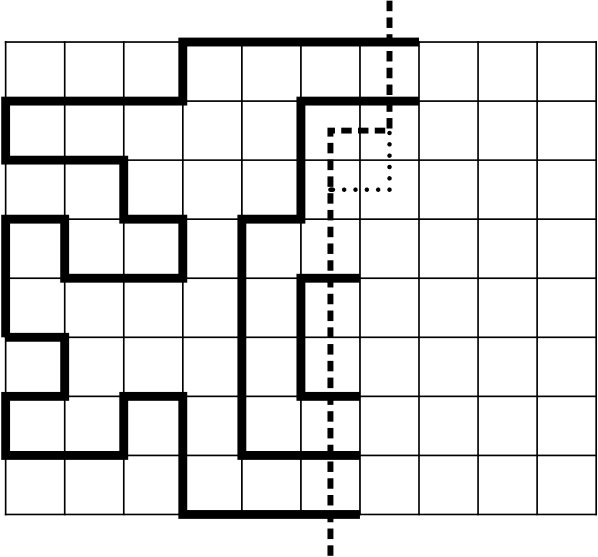 Figure 5
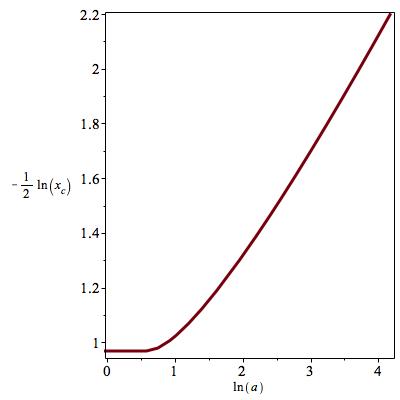 Figure 6
Peer Reviews
No public reviews on file for this paper yet. If you reviewed it on a platform where reviews are public (OpenReview, ICLR, NeurIPS, ICML), you can paste yours below so the community can read it here.
Videos
No videos yet. Explain this paper in a talk, walkthrough, or lecture? Add one.