This paper develops a theory of intertwining operators among twisted modules of vertex operator algebras with non-commuting automorphisms, establishing conditions for their existence and constructing key isomorphisms.
Contribution
It introduces and analyzes twisted intertwining operators for non-commuting automorphisms, extending the structure theory of vertex operator algebras.
Findings
01
Proves that the automorphism associated with a twisted module equals the product of two automorphisms under certain conditions.
02
Constructs skew-symmetry and contragredient isomorphisms for twisted intertwining operators.
03
Analyzes analytic extensions related to non-commuting automorphisms.
Abstract
We introduce intertwining operators among twisted modules or twisted intertwining operators associated to not-necessarily-commuting automorphisms of a vertex operator algebra. Let V be a vertex operator algebra and let g1, g2 and g3 be automorphisms of V. We prove that for g1-, g2- and g3-twisted V-modules W1, W2 and W3, respectively, such that the vertex operator map for W3 is injective, if there exists a twisted intertwining operator of type (W1W2W3) such that the images of its component operators span W3, then g3=g1g2. We also construct what we call the skew-symmetry and contragredient isomorphisms between spaces of twisted intertwining operators among twisted modules of suitable types. The proofs of these results involve careful analysis of the analytic extensions corresponding to the actions…
No public reviews on file for this paper yet. If you reviewed it on a platform where reviews are public (OpenReview, ICLR, NeurIPS, ICML), you can paste yours below so the community can read it here.
Videos
No videos yet. Explain this paper in a talk, walkthrough, or lecture? Add one.
Taxonomy
TopicsAlgebraic structures and combinatorial models · Advanced Topics in Algebra · Nonlinear Waves and Solitons
Full text
Intertwining operators among twisted modules associated to
not-necessarily-commuting automorphisms
Yi-Zhi Huang
Abstract
We introduce intertwining operators among twisted modules or twisted intertwining operators
associated to not-necessarily-commuting automorphisms
of a vertex operator algebra. Let V be a vertex operator algebra and let g1, g2 and g3 be automorphisms
of V.
We prove that for g1-, g2- and g3-twisted V-modules
W1, W2 and W3, respectively, such that the vertex operator map for W3 is injective,
if there exists a twisted intertwining
operator of type (W1W2W3) such that the images of its component
operators span W3, then g3=g1g2.
We also construct what we call the skew-symmetry
and contragredient isomorphisms between spaces of twisted intertwining operators among twisted modules of suitable types.
The proofs of these results involve careful
analysis of the analytic extensions corresponding to
the actions of the not-necessarily-commuting automorphisms of the vertex operator algebra.
1 Introduction
In the present paper, we initiate the study of intertwining operators among twisted modules
associated to not-necessarily-commuting automorphisms of a vertex operator algebra.
Here by twisted modules we mean (generalized or logarithmic) twisted modules introduced in [H7]. For simplicity
and to avoid confusion, when twisted modules are not mentioned,
we shall call such intertwining operators
“twisted intertwining operators,” although these intertwining
operators are not twisted directly, but are twisted instead in a suitable sense through twisted modules.
Intertwining operators
among (untwisted) modules for a vertex operator algebra
were first introduced mathematically by Frenkel, Lepowsky and the author
in [FHL] and correspond to chiral vertex operators in physics
(see [MS]). They have been studied systematically in the papers [HL], [H1]–[H6],
[HLZ1]–[HLZ4], [Y], [Ch1]–[Ch2] and [Fi1]–[Fi2]. Intertwining operators give
chiral three-point correlation functions in two-dimensional conformal field theories and are
the building blocks of multi-point correlation functions on Riemann surfaces of arbitrary genus. They
are the main objects of interest in the representation theory of vertex operator algebras and
two-dimensional conformal field theory. Almost all important results in these theories are in fact
properties of intertwining operators.
Intertwining operators among twisted modules associated
to commuting automorphisms of finite orders appeared implicitly in the work [FFR] of Feingold, Frenkel and Ries
and were introduced explicitly by Xu in [X] in terms of a generalization of the Jacobi identity for twisted modules.
However, there is still no definition of intertwining operators among twisted modules associated to noncommuting
automorphisms in the literature. To construct orbifold conformal field theories associated to a noncommutative
group of automorphisms of a vertex operator algebra, it is necessary to study these intertwining operators.
In [H8], the author formulated the following conjecture:
Assume that V is a simple vertex operator algebra
satisfying the following conditions:
V(0)=C1, V(n)=0
for n<0 and the contragredient V′, as a V-module, is equivalent to V.
2. 2.
Every grading-restricted generalized V-module is completely reducible
3. 3.
V* is C2-cofinite, that is, dimV/C2(V)<∞, where C2(V) is the subspace of
V spanned by the elements of the form \mboxResxx−2Y(u,x)v for u,v∈V and Y:V⊗V→V[[x,x−1]]
is the vertex operator map for V.*
Let G be a finite group
of automorphisms of V. Then the twisted intertwining operators among the g-twisted V-modules for all g∈G
satisfy the associativity, commutativity and modular invariance properties.
If this conjecture is proved, then we obtain the genus-zero and genus-one parts of the chiral
orbifold conformal field theory associated with the vertex operator algebra V and the group
G of automorphisms of V.
One consequence of Conjecture 1.1 is that the category of g-twisted modules for all
all g∈G has a natural structure of G-crossed braided tensor category satisfying additional properties.
To even formulate this conjecture precisely, we have to first introduce twisted intertwining operators or intertwining operators
among twisted modules associated to general automorphisms and study their basic properties.
In this paper, we give a definition of such twisted intertwining operators.
Let V be a vertex operator algebra and let g1, g2 and g3 be automorphisms
of V.
We prove that for g1-, g2- and g3-twisted V-modules
W1, W2 and W3, respectively, such that the vertex operator map for W3 is injective,
if there exists a twisted intertwining
operator of type (W1W2W3) such that the images of its component
operators span W3, then g3=g1g2.
We also construct what we call the skew-symmetry
and contragredient isomorphisms between spaces of twisted intertwining operators among twisted modules of suitable types.
The proofs of these results are much more subtle and delicate than those for the corresponding results in [FHL], [HL],
[X] and [HLZ1] because they involve careful
analysis of the analytic extensions corresponding to
the actions of the not-necessarily-commuting automorphisms of the vertex operator algebra.
The motivation for the study of twisted intertwining operators does not just come from orbifold
conformal field theories and their potential applications in geometry and physics.
It in fact also comes intrinsically from the study of the uniqueness conjecture
of the moonshine module vertex operator algebra proposed by Frenkel, Lepowsky and Meurman [FLM].
This conjecture was obtained by using the analogy among the Golay code, the Leech lattice and
the moonshine module vertex operator algebra. In Conway’s proof of the uniqueness of the Leech lattice
[Co], the 24-dimensional vector space R24 plays a fundamental role.
For the uniqueness conjecture for the moonshine module vertex operator algebra, the first difficulty
is that there is no analogue of R24. But we still
need a structure large enough such that all the works can be done in this structure.
If the vertex operator subalgebra fixed by the automorphism group of a vertex operator algebra
satisfy suitable conditions (for example, the three conditions in Conjecture 1.1),
then one possible choice of such a structure large enough for our purpose
is the intertwining operator algebra formed by the modules and intertwining operators for the fixed-point vertex operator
subalgebra. However, the assumption that these suitable conditions hold
is in fact a main difficult conjecture that we have to prove first. Because of this,
instead of assuming these conditions, we have to develop a
theory that will lead us to a proof of these conditions and a construction of
the intertwining operator algebra.
Since in this area, conjectures are sometimes claimed to have been proved in some books, papers, preprints
or unpublished manuscripts without the evidence that the proofs indeed exist, the author would like to comment that
the mathematics for obtaining conjectures and the mathematics for finding proofs are often very different.
To obtain conjectures, one can assume what one believes to be true and derive the consequences. But to
prove conjectures, the assumptions used to derive the conjectures are often themselves the most difficult parts of the
conjectures. Thus one might need different mathematical approaches and theories to prove these assumptions first.
The theory of twisted intertwining operators initiated in this paper is what the author believes to be needed
in the proofs of the conjectures mentioned above, including
Conjecture 1.1 and the conjecture that suitable conditions hold for the fixed-point vertex operator
subalgebra. We expect that this theory will
play an important role in the study of orbifold conformal field theory and, in particular,
in the study of the uniqueness conjecture of the moonshine module vertex operator algebra.
In this paper, we use the approach based on multivalued analytic functions with preferred branches developed
and used in [H1], [H3], [H6], [HLZ2]–[HLZ3] and [Ch1]–[Ch2]. Intertwining operators among (untwisted) modules
can be defined using either such multivalued analytic functions or formal variables. But to study products and iterates
of intertwining operators, it is necessary to use the approach based on such multivalued analytic functions.
For twisted intertwining operators introduced and studied in this paper, even for the definition and the properties involving only
one twisted intertwining operator, we need the approach based on such multivalued analytic functions, because the vertex operators
for twisted modules contain nonintegral powers and logarithm of the variable and, more importantly,
because the automorphisms associated to different twisted modules do not necessarily commute with each other.
In Section 2, we discuss the notations and conventions used in this paper,
especially those involving multivalued analytic functions with preferred branches.
In Section 3, we recall the notion of twisted module introduced in [H7]. We also discuss
in this section the functors
associated to automorphisms of the vertex operator algebra and the contragredient
functor on the category of twisted modules. Twisted intertwining
operators are introduced in Section 4. In the same section,
we prove the result that for g1-, g2- and g3-twisted V-modules
W1, W2 and W3, respectively, such that the vertex operator map for W3 is injective,
if there exists a twisted intertwining
operator of type (W1W2W3) such that the images of its component
operators span W3, then g3=g1g2.
The skew-symmetry isomorphisms
and contragredient isomorphisms are constructed in Section 5 and Section 6, respectively.
2 Notations and conventions
To study intertwining operators, we have to work with multivalued analytic functions with preferred branches.
The approach that we use in this paper is the same as the one used in [H1], [H3], [H6],
[HLZ2]–[HLZ3] and [Ch1]–[Ch2]. In this section, we recall and introduce
some notations and conventions.
We shall use i to denote −1.
For z∈C×, we choose the value argz of the argument of z to be
the one satisfying 0≤argz<2π. We shall not use logz to denote the particular
value log∣z∣+(argz)i of the logarithm of z as in [H1], [H3],
[HLZ2]–[HLZ3] and [Ch1]–[Ch2]. Instead, we shall always use
lp(z) to denote the value log∣z∣+(argz+2pπ)i of the logarithm of z for
p∈Z.
Intertwining operators defined using formal variables in fact give multivalued analytic
functions with preferred branches.
We shall use logz to denote the multivalued logarithm function of the
variable z with the preferred branch l0(z)=log∣z∣+(argz)i. For n∈C, we shall
use zn to denote the multivalued analytic function enlogz with the
preferred branch enl0(z). Multivalued analytic functions with preferred
branch on a region form a commutative associative algebra and can also be
divided by such functions on the same region to obtain such functions on possibly smaller regions. In particular,
[TABLE]
for aijklmn,ri,sj,tk∈C is a multivalued analytic function with preferred branch
on the region given by z1,z2=0, z1=z2.
For p1,p2,p12∈Z, we shall use
fp1,p2,p12(z1,z2)
to denote the single-valued branch
[TABLE]
of f(z1,z2).
For a C-graded vector space W=∐n∈CW[n], let W′=∐n∈CW[n]∗ be the
graded dual of W and W=∏n∈CW[n] the algebraic completion of W.
For n∈C, we use πn to denote the the projection from W or W to W[n] .
Let W be a vector space and
[TABLE]
For z∈C×, we shall use
Xp(z) to denote the series
[TABLE]
with terms in EndW. When W=∐n∈CW[n] is a C-graded vector space and an,k
for different n are homogeneous operators of different degrees,
Xp(z)∈Hom(W,W). When z changes in C×, Xp(z) can be viewed as a
function on C× valued in the space of series in W.
We call this function Xp(z) the p-th analytic branch of X(x).
3 Twisted modules
In this paper, we fix a vertex operator algebra (V,YV,1V,ωV).
In fact, the results of the present paper hold for
a grading-restricted Möbius vertex algebra, that is, a Z-graded vertex algebra V=∐n∈ZV(n)
equipped with operators LV(−1), LV(0) and LV(1)
such that V(n)=0 when n is sufficiently negative, dimV(n)<∞ for n∈Z,
the usual sl(2,C) commutator relations for LV(−1), LV(0) and LV(1) hold and
the usual commutator relations between LV(−1), LV(0) and LV(1) and vertex operators
hold. But for what we want to prove in the future, it is necessary for V to be a vertex operator
algebra with the additional data of a conformal element satisfying some additional conditions.
Let g be an automorphism of V.
We first recall the definition of generalized g-twisted V-module first introduced in [H7]. But for simplicity,
we shall omit the word “generalized.” In particular, in this paper, the vertex operator map for a g-twisted V-module
in general contain the logarithm of the variable and the operator L(0) in general does not have to act semisimply.
Definition 3.1
A g-twisted
V-module is a C×C/Z-graded
vector space W=∐n∈C,α∈C/ZW[n][α] (graded by weights and g-weights)
equipped with a linear map
[TABLE]
satisfying the following conditions:
The equivariance property: For p∈Z, z∈C×, v∈V and w∈W,
[TABLE]
where for p∈Z, (YWg)p(v,z)
is the p-th analytic branch of YWg(v,x).
2. 2.
The identity property: For w∈W, Yg(1,x)w=w.
3. 3.
The duality property: For
any u,v∈V, w∈W and w′∈W′, there exists a
multivalued analytic function with preferred branch of the form
[TABLE]
for N∈N, m1,…,mN, n1,…,nN∈C and t∈Z+,
such that the series
[TABLE]
[TABLE]
[TABLE]
are absolutely convergent in
the regions ∣z1∣>∣z2∣>0, ∣z2∣>∣z1∣>0, ∣z2∣>∣z1−z2∣>0, respectively, and their sums are equal to the branch
[TABLE]
of f(z1,z2) in the region ∣z1∣>∣z2∣>0, the region ∣z2∣>∣z1∣>0,
the region given by ∣z2∣>∣z1−z2∣>0 and ∣argz1−argz2∣<2π, respectively.
4. 4.
The L(0)-grading condition and g-grading condition:
Let LWg(0)=\mboxResxxYWg(ω,x). Then for n∈C and α∈C/Z,
w∈W[n][α],
there exists K,Λ∈Z+ such that (LWg(0)−n)Kw=(g−e2παi)Λw=0. Moreover,
gYWg(u,x)v=YWg(gu,x)gv.
5. 5.
The L(−1)-derivative property: For v∈V,
[TABLE]
A lower-bounded generalized g-twisted V-module
is a g-twisted
V-module W such that
for each n∈C, W[n+l]=0 for
sufficiently negative real number l. A g-twisted V-module W
is said to be grading-restricted if it is lower
bounded and for each n∈C, dimW[n]<∞.
**
We shall denote the g-twisted
V-module just defined by (W,YWg) or simply by W when
YWg is clear.
Let (W,YWg) be a g-twisted
V-module. Using the notation introduced in Section 2, we have the p-th analytic branch (YWg)p(ω,z) of
the formal series YWg(ω,x) for p∈Z. Since gω=ω,
[TABLE]
for p∈Z. Thus YWg(ω,x) involves only integral powers of x.
Let
[TABLE]
Then the same argument deriving the Virasoro relations for (untwisted) modules from
axioms other than those for the Virasoro operators give
[TABLE]
for m,n∈Z, where c is the central charge of V.
Let (W,YWg) be a g-twisted
V-module. Let h be an automorphism of V and let
[TABLE]
be the linear map defined by
[TABLE]
The following result can be proved by a straightforward use of the axioms:
Proposition 3.2
The pair (W,ϕh(Yg)) is an hgh−1-twisted
V-module.
We shall denote the hgh−1-twisted
V-module in the proposition above by ϕh(W).
We also need contragredient twisted V-modules.
Let (W,YWg) be a g-twisted V-module relative to G.
Let W′ be the graded dual of W. Define
a linear map
[TABLE]
by
[TABLE]
for v∈V, w∈W and w′∈W′.
Proposition 3.3
The pair (W′,(YWg)′) is a g−1-twisted V-module.
The proof of this result is a special case of the proof of Theorem 6.1 in Section 6 with
W1=V, g1=1V, g2=g and W2=W3=W (see also Remark 4.2
in Section 4 below). Since the proof
of Theorem 6.1 uses only the definition of (YWg)′, quoting the proof of Theorem 6.1
to give a proof of Proposition 3.3 does not constitute circular reasoning.
The g−1-twisted V-module (W′,(YWg)′) is called the
contragredient twisted V-module of (W,Yg).
4 Twisted intertwining operators
We introduce the notion of twisted
intertwining operator or intertwining operator among twisted modules in this section.
Twisted intertwining operators
in this paper in general involve the logarithm of the variable. Such intertwining
operators are usually called logarithmic intertwining operators. For simplicity,
we omit the word “logarithm,” unless there is a need to emphasize that
the intertwining operator indeed involve the logarithm of the variable.
Definition 4.1
Let g1,g2,g3 be automorphisms of V and let W1, W2 and W3 be g1-, g2-
and g3-twisted
V-modules, respectively. A twisted intertwining operator of type (W1W2W3) is a
linear map
[TABLE]
satisfying the following conditions:
The lower truncation property: For w1∈W1 and w2∈W2, n∈C and k=0,…,K,
Yn+l,k(w1)w2=0 for l∈N sufficiently large.
2. 2.
The duality property: For u∈V, w1∈W1, w2∈W2
and w3′∈W3′, there exists a
multivalued analytic function with preferred branch
[TABLE]
for N∈N, ri,sj,tk,aijklmn∈C,
such that for p1,p2,p12∈Z, the series
[TABLE]
are absolutely convergent in the regions
∣z1∣>∣z2∣>0,
∣z2∣>∣z1∣>0, ∣z2∣>∣z1−z2∣>0, respectively. Moreover, their sums are equal
to the branches
[TABLE]
respectively, of f(z1,z2;u,w1,w2,w3′) (recall the notations and convention in Section 2) in the region given by
∣z1∣>∣z2∣>0 and ∣arg(z1−z2)−argz1∣<2π,
the region given by ∣z2∣>∣z1∣>0 and −23π<arg(z1−z2)−argz2<−2π,
the region given by ∣z2∣>∣z1−z2∣>0 and ∣argz1−argz2∣<2π, respectively.
3. 3.
The L(−1)-derivative property:
[TABLE]
Remark 4.2
Let (W,YWg) be a g-twisted V-module. Then by definition,
the vertex operator map YWg
is a twisted intertwining operator of type (VWW).**
Remark 4.3
Let g1, g2 and g3 be automorphisms of V, let V⟨g1,g2,g3⟩ be the
vertex operator subalgebra of V consisting of elements of V fixed under the actions of g1,g2
and g3.
Let W1, W2 and W3 be g1-, g2-
and g3-twisted
V-modules and let Y be a twisted intertwining operator of type (W1W2W3).
Then W1, W2 and W3 are V⟨g1,g2,g3⟩-modules and
Y is an (untwisted) intertwining operator of type (W1W2W3) when
W1, W2 and W3 are viewed as V⟨g1,g2,g3⟩-modules.
But in general, an (untwisted) intertwining operator of type (W1W2W3) when
W1, W2 and W3 are viewed as V⟨g1,g2,g3⟩-modules
might not be a twisted intertwining operator of type (W1W2W3). In fact, an (untwisted) intertwining operator of type (W1W2W3) when
W1, W2 and W3 are viewed as V⟨g1,g2,g3⟩-modules
is required to satisfy only the duality property for vertex operators associated to elements in V⟨g1,g2,g3⟩
while a twisted intertwining operator of type (W1W2W3)
must satisfy the more restrictive duality property in Definition 4.1.
This is the reason why even when W1, W2 and W3 are known to be twisted V-modules, we still
want to add the word “twisted” in front of “intertwining operator” to call an intertwining
operator of type (W1W2W3) in Definition 4.1
a twisted intertwining operator.**
Remark 4.4
In the duality property in the definition above, we require that the sum of (4.2)
is equal to fp1,p2,p2(z1,z2;u,w1,w2,w3′) in the region given by
∣z2∣>∣z1∣>0 and −23π<arg(z1−z2)−argz2<−2π.
The choice of this region in fact gives an order of W1 and W2 to be W1 first and W2 second.
See Theorem 4.7 and especially its proof below.
The other region is the region given by
∣z2∣>∣z1∣>0 and 2π<arg(z1−z2)−argz2<23π. If we require
the sum of (4.2)
is equal to fp1,p2,p2(z1,z2;u,w1,w2,w3′) in this region, then
the order of W1 and W2 is chosen to be W2 first and W1 second.
We choose the more natural order. **
We shall need the following two lemmas:
Lemma 4.5
In Definition 4.1, the requirement in the duality property
that the sum of (4.2)
be equal to fp1,p2,p2(z1,z2;u,w1,w2,w3′) in the region given
by ∣z2∣>∣z1∣>0 and −23π<arg(z1−z2)−argz2<−2π
can be replaced by the requirement that the sum of (4.2)
be equal to fp1,p2,p2−1(z1,z2;u,w1,w2,w3′) in the region given
by ∣z2∣>∣z1∣>0 and 2π<arg(z1−z2)−argz2<23π.
In the same definition, the requirement in the duality property that the sum of (4.1)
be equal to fp1,p2,p1(z1,z2;u,w1,w2,w3′) in the region given
by ∣z1∣>∣z2∣>0 and ∣arg(z1−z2)−argz2∣<2π
can be replaced by the requirement that the sum of (4.1)
be equal to fp1,p2,p1−1(z1,z2;u,w1,w2,w3′) in the region given
by ∣z2∣>∣z1∣>0 and −2π<arg(z1−z2)−argz2<−23π and to
fp1,p2,p1+1(z1,z2;u,w1,w2,w3′) in the region given
by ∣z2∣>∣z1∣>0 and 23π<arg(z1−z2)−argz2<2π.
Proof. We prove only the first part. The second part can be proved similarly.
Assume that Y is a twisted intertwining operator satisfying Definition 4.1.
We choose a path l in the region given by ∣z1∣>∣z2∣>0
from a point (z1(1),z2(0)) in the subregion given by
∣z2∣>∣z1∣>0 and −23π<arg(z1−z2)−argz2<−2π
to a point (z1(2),z2(0)) in the subregion given by
∣z2∣>∣z1∣>0 and 2π<arg(z1−z2)−argz2<23π
by letting z1 pass through the set given by arg(z1−z2)=0 in the counter clockwise
direction for the variable z1−z2 but keeping argz1 between [math] and 2π and
fixing z2=z2(0). See Figure 1.
The sum of the series (4.2) is an analytic function of z1 and z2 and thus we can analytically
extend its value at (z1(1),z2(0)) through the path l to its value at (z1(2),z2(0)).
At (z1(1),z2(0)), its value is given by fp1,p2,p2(z1(1),z2(0);u,w1,w2,w3′). When the path l pass the point at which arg(z1−z2)=0, there is a
jump of arg(z1−z2) from [math] to 2π. When arg(z1−z2)=0, its value (at z1,z2) is still
fp1,p2,p2(z1,z2;u,w1,w2,w3′). But after the jump, since the sum is analytic and in particular is continuous,
its value at (z1,z2) must be fp1,p2,p2−1(z1,z2;u,w1,w2,w3′). In particular,
its value at the arbitrary point (z1(2),z2(0)) in the region given by
∣z2∣>∣z1∣>0 and 2π<arg(z1−z2)−argz2<23π must be
fp1,p2,p2−1(z1(2),z2(0);u,w1,w2,w3′).
If we assume that Y satisfies the
requirement that the sum of (4.2)
be equal to
[TABLE]
in the region given
by ∣z2∣>∣z1∣>0 and 2π<arg(z1−z2)−argz2<23π and all
the other axioms in Definition 4.1, a completely analogous argument shows
that the sum of (4.2)
be equal to fp1,p2,p2(z1,z2;u,w1,w2,w3′) in the region given
by ∣z2∣>∣z1∣>0 and −23π<arg(z1−z2)−argz2<−2π.
Lemma 4.6
For p1,p2,p12∈Z, u∈V, w1∈W1, w2∈W2
and w3′∈W3′, we have
[TABLE]
and
[TABLE]
where fp1,p2,p12(z1,z2;u,w1,w2,w3′)
for p1,p2,p12∈Z is the branch given by p1,p2,p12
of the multivalued analytic function f(z1,z2;u,w1,w2,w3′)
with preferred branch in
Definition 4.1.
Proof. By the duality property for Y, when ∣z2∣>∣z1−z2∣>0 and
∣argz1−argz2∣<2π,
[TABLE]
converges absolutely to
fp2,p2,p12+1(z1,z2;g1u,w1,w2,w3′)
and
[TABLE]
converges absolutely to
fp2,p2,p12(z1,z2;u,w1,w2,w3′).
But
[TABLE]
Thus we have
[TABLE]
For general p1,p2,p12∈Z, we obtain (4.4) by analytic extensions.
On the other hand, by the duality property for Y, when ∣z2∣>∣z1∣>0 and
−23π<argz1−arg(−z2)<−2π,
[TABLE]
converges absolutely to
fp1+1,p2,p2(z1,z2;g2u,w1,w2,w3′)
and
[TABLE]
converges absolutely to
fp1,p2,p2(z1,z2;u,w1,w2,w3′).
But
[TABLE]
Thus we have
[TABLE]
For general p1,p2,p12∈Z, we obtain (4.5) by analytic extensions.
We now prove that under suitable minor conditions, g3=g1g2 for the twisted intertwining
operator defined in Definition 4.1.
Theorem 4.7
Let g1,g2,g3 be automorphisms of V and let W1, W2 and W3 be g1-, g2-
and g3-twisted
V-modules, respectively.
Assume that the vertex operator map for W3 given by u↦YW3g3(u,x)
is injective. If there exists a twisted intertwining operator Y of type (W1W2W3) such that
the coefficients of the series Y(w1,x)w2 for w1∈W1 and w2∈W2 span
W3,
then g3=g1g2.
Proof. Let Y be a twisted intertwining operator of type (W1W2W3) such that
the coefficients of Y(w1,x)w2 for w1∈W1 and w2∈W2 span
W3.
For u∈V, w1∈W1, w2∈W2
and w3′∈W3′, consider the multivalued analytic function f(z1,z2;u,w1,w2,w3′)
with preferred branch for the twisted intertwining operator Y (see Definition 4.1).
Fix z2 to be a nonzero negative real number −a2 where
a2∈R+.
Then for any p∈Z, we have an analytic function
[TABLE]
of z1 and can be analytically extended to a multivalued analytic function
[TABLE]
of z1 with preferred branch.
Let a1∈R+ such that a1>a2>a1−a2.
Consider the loop Γ1 in the z1 plane based at z1=−a1
in Figure 2.
We consider the value f−a2p(−a1) of the multivalued analytic function f−a2(z1) at −a1.
By the definition of twisted intertwining operator above,
[TABLE]
But by definition, when z1 goes around the loop above, the right-hand side of
(4.6) changes to
[TABLE]
By the equivariance property of the g3-twisted module W3,
(4.7) is equal to
[TABLE]
We also consider another loop Γ2 in the z1 plane and based at z1=−a1
given in the order l1 first, l2 second, l3 third and l4 last
in Figure 3.
The loop Γ2 is in fact homotopy equivalent to the loop Γ1. Thus when
z1 goes around Γ2, the right-hand side of
(4.6) also changes to (4.8).
On the other hand, we look at how the function values change when z1 goes through
l1, l2, l3 and l4. When z1 goes from −a1 to −a3 (see Figure 3)
through
l1, the right-hand side of
(4.6) changes to
[TABLE]
Note that
arg(−a2)=π, arg(−a3)=π and arg(−a3+a2)=0. Hence
arg(−a3+a2)−arg(−a2)=−π. Since ∣−a1∣>∣−a3∣>0 and
−23π<arg(−a3+a2)−arg(−a2)<−2π, by the duality property of
the twisted intertwining operator Y, (4.9) is equal to
[TABLE]
Next let z1 go around the loop l2. Then (4.10) changes to
[TABLE]
By the equivariance property of the g2-twisted module W2,
(4.11) is equal to
[TABLE]
Now let z1 go from −a3 to −a1 through l3.
Then by reversing the argument above on the change of the values
when z1 goes through l1, we see that the values change from
(4.12) to
[TABLE]
Since ∣−a1∣>∣−a2∣>∣−a1−(−a2)∣>0, ∣arg(−a1−(a2))−arg(−a1)∣=0<2π
and ∣arg(−a1)−arg(−a2)∣=0<2π,
by the duality property of the twisted intertwining operator Y, (4.13)
is equal to
[TABLE]
Finally let z1 go around the loop l4. The value changes from
(4.14) to
[TABLE]
By the equivariance property of the g1-twisted module W1,
(4.15) is equal to
[TABLE]
Again since ∣−a1∣>∣−a2∣>∣−a1−(−a2)∣>0, ∣arg(−a1−(a2))−arg(−a1)∣=0<2π
and ∣arg(−a1)−arg(−a2)∣=0<2π,
by the duality property of the twisted intertwining operator Y, (4.16)
is equal to
[TABLE]
From the discussions above, we see that when
z1 goes around Γ2, the right-hand side of
(4.6) changes to
(4.17). Thus we see that
(4.8) and (4.17) are equal, that is
[TABLE]
Since w1, w2 and w3′ are arbitrary and the coefficients of
Y(w1,x)w2 for w1∈W1 and w2∈W2 span
W3, we obtain from (4.18)
[TABLE]
Replacing u in (4.19) by LV(−1)mu for m∈N, using the fact that LV(−1) commutes with g1, g2
and g3 and then using
the L(−1)-derivative property for the twisted vertex operator YW3g3, we
obtain
[TABLE]
Using the Taylor series expansion, we obtain
[TABLE]
for z∈C×. Thus
[TABLE]
Since the vertex operator map u↦YW3g3(u,x) is injective, (4.21) implies
g3u−g1g2u=0 or g3u=g1g2u.
Since u is also arbitrary, we obtain g3=g1g2.
Remark 4.8
The proof of Theorem 4.7 can be intuitively
understood using two braiding graphs. See Figure 4.
Since the two braiding graphs are topologically equivalent (isotopic),
the corresponding algebraic objects are equal and thus we have g3u=g1g2u.
In fact, just like the theory of braided tensor categories, the correspondence
between algebraic and analytic calculations and the braiding graphs can be
made mathematically precise so that proofs such as the one for Theorem 4.7
can be given using such graphs. Note that in these graphs, we have suppressed
the associativity for the twisted vertex operators and the twisted intertwining operator, just as what
people usually do in the graphs for braided tensor categories. We also note that these braiding graphs
explain only those results that are topological in nature. For analytic results such as those we
shall prove in the next two sections,
these graphs are not very useful.
**
Because of Theorem 4.7, in the rest of this paper, we shall discuss only
twisted intertwining operators of type (W1W2W3) with W1,
W2 and W3 being g1-, g2-
and g1g2-twisted
V-modules.
5 The skew symmetry isomorphisms
In this section, we construct what we call the skew-symmetry isomorphisms between
the spaces of twisted intertwining operators of suitable types. These linear isomorphisms
correspond to braidings in the still-to-be-constructed G-crossed braided
tensor category structure on the category of g-twisted V-modules for all g in a
group G of automorphisms of V.
Let g1,g2 be automorphisms of V, W1, W2 and W3g1-, g2-
and g1g2-twisted
V-modules and Y a twisted intertwining operator
of type (W1W2W3).
We define linear maps
[TABLE]
by
[TABLE]
for w1∈W1 and w2∈W2.
From the definition (5.1), for p∈Z, w1∈W1, w2∈W2 and z∈C×,
[TABLE]
When argz<π and argz≥π, arg(−z)=argz+π and arg(−z)=argz−π, respectively.
Hence
[TABLE]
when argz<π and
[TABLE]
when argz≥π. In particular, for w1∈W1, w2∈W2 and z∈C× satisfying
argz<π and argz≥π, we have
[TABLE]
and
[TABLE]
respectively.
Theorem 5.1
The linear maps Ω+(Y) and Ω−(Y) are twisted intertwining operators
of types (W2ϕg2−1(W1)W3) and (ϕg1(W2)W1W3),
respectively (recall the definition of ϕg for an automorphism g of V in Section 3).
Proof. The lower-truncation property and the L(−1)-derivative property are easy to verify. We prove
only the duality property.
Let u∈V, w1∈W1, w2∈W2
and w3′∈W3′. We first need to give the multivalued analytic functions with preferred branches in the
duality property. We shall denote these multivalued analytic functions for Ω+(Y) and Ω−(Y)
by
g+(z1,z2;u,w1,w2,w3′) and
g−(z1,z2;u,w1,w2,w3′), respectively. Let
f(z1,z2;u,w1,w2,w3′)
be the multivalued analytic function with preferred branch
in the duality property for the twisted intertwining operator Y. Then we can write
[TABLE]
where L′(1) is the adjoint operator of L(−1) on W3 and is equal to the coefficient of the x−3 term in
(YW3g)′(ω,x).
Define
[TABLE]
When ∣z1∣>∣z2∣>0, ∣z1−z2∣>∣z2∣>0, ∣arg(z1−z2)−argz1∣<2π and
argz2<π (for Ω+) or argz2≥π (for Ω−),
from (5.3), the L(−1)-derivative property for YW3g3 and the duality property for Y,
[TABLE]
converges absolutely to
[TABLE]
Since argz2<π (for Ω+) or argz2≥π (for Ω−),
arg(−z2)=argz2±π (for Ω±). Hence the right-hand side of
(5) is equal to
[TABLE]
But the left-hand side of (5) can be expanded in the region ∣z1∣>∣z2∣>0 as a series in
powers of elp1(z1) and elp2(z2) and in finitely many nonnegative integral powers of
lp1(z1) and lp2(z2) such that the real parts of the powers of elp1(z1) is
bounded from above and the real parts of the powers of elp2(z2) is
bounded from below. So the left-hand side of (5.5)
as a series of the same form that converges to the left-hand side of (5) in a smaller region must be
convergent absolutely in the larger region given by ∣z1∣>∣z2∣>0 and its sum must be equal
to (5) when ∣z1∣>∣z2∣>0,
∣arg(z1−z2)−argz1∣<2π and argz2<π (for Ω+) or
argz2≥π (for Ω−). Since both the
left-hand side of (5.5) and the left-hand side of (5) are single-valued
analytic function in z1 and z2 with cuts at z1∈R+ and z2∈R+, the fact that
they are equal when ∣z1∣>∣z2∣>0, ∣arg(z1−z2)−argz1∣<2π and argz2<π
(for Ω+) or argz2≥π (for Ω−) means that they are
equal when ∣z1∣>∣z2∣>0,
∣arg(z1−z2)−argz1∣<2π. Thus we have proved that when ∣z1∣>∣z2∣>0 and
∣arg(z1−z2)−argz1∣<2π, the
left-hand side of (5.5) is equal to g±p1,p2,p1(z1,z2;u,w2,w1,w3′).
When ∣z2∣>∣z1∣>0 and
argz2≥π,
[TABLE]
converges absolutely and if in addition, ∣arg(z1−z2)−arg(−z2)∣<2π, its sum is equal to
[TABLE]
When argz2≥π, arg(−z2)=argz2−π. Hence the right-hand side of
(5) is equal to
[TABLE]
The same argument as above shows that
the left-hand side of (5.8) converges absolutely when ∣z2∣>∣z1∣>0 and
its sum is equal to (5) when ∣z2∣>∣z1∣>0,
∣arg(z1−z2)−arg(−z2)∣<2π and argz2≥π. But when
argz2≥π, arg(−z2)=argz2−π.
Hence in this case, the
inequality ∣arg(z1−z2)−arg(−z2)∣<2π becomes
−23π<arg(z1−z2)−argz2<−2π.
Also both the left-hand side of
(5.8) and the left-hand side of (5) are single
valued analytic functions in z1 and z2 with cuts at z1∈R+ and z2∈R+.
Thus the same argument as above shows that
when ∣z2∣>∣z1∣>0 and
−23π<arg(z1−z2)−argz2<−2π, the
left-hand side of (5.8) is equal to
g−p1,p2,p1(z1,z2;u,w2,w1,w3′).
Next we discuss the iterate of Ω−(Y) and the twisted vertex operator
map ϕg1(YW2g2). By Lemma 4.5,
when ∣z2∣>∣z1−z2∣>0 and argz2≥π,
[TABLE]
converges absolutely and if in addition,
2π<argz1−arg(−z2)<23π, its sum
is equal to fp12,p2,p2−1(z1−z2,−z2;g1−1u,w1,w2,ez2L′(1)w3′).
By (4.4), we have
[TABLE]
When argz1≥π, arg(−z2)=argz2−π and hence the right-hand side of
(5) is equal to
[TABLE]
Thus the left-hand side of (5.11) converges absolutely when ∣z2∣>∣z1−z2∣>0
and its sum is equal to
g−p2,p2,p12(z1,z2;u,w2,w1,w3′) when
∣z2∣>∣z1−z2∣>0, 2π<argz1−arg(−z2)<23π and argz2≥π.
But when argz2≥π, arg(−z2)=argz2−π and thus the inequality
2π<argz1−arg(−z2)<23π is equivalent to
∣argz1−arg(z2)∣<2π. Then by the same arguments as in the cases above,
we see that when ∣z2∣>∣z1−z2∣>0 and ∣argz1−argz2∣<2π, the sum of
left-hand side of (5.11) is equal to
g−p2,p2,p12(z1,z2;u,w2,w1,w3′).
We now come back to discuss Ω+(Y).
When ∣z2∣>∣z1∣>0 and
argz2<π,
[TABLE]
converges absolutely and if in addition, ∣arg(z1−z2)−arg(−z2)∣<2π,
its sum is equal to fp2,p2,p1(z1−z2,−z2;g2u,w1,w2,ez2L′(1)w3′).
By (4.5), we have
[TABLE]
When argz1<π, arg(−z2)=argz2+π and hence the right-hand side of
(5) is equal to
[TABLE]
Thus we see that
the left-hand side of (5.14) converges absolutely when ∣z2∣>∣z1∣>0 and
by (5),
its sum is equal to g+p1,p2,p2−1(z1,z2;u,w2,w1,w3′) when ∣z2∣>∣z1∣>0,
∣arg(z1−z2)−arg(−z2)∣<2π and argz2<π. But when
argz<π, arg(−z2)=argz2+π.
Hence in this case, the
inequality ∣arg(z1−z2)−arg(−z2)∣<2π becomes
2π<arg(z1−z2)−argz2<23π.
Also both the left-hand side of
(5.14) and the left-hand side of (5) are single-valued
analytic function in z1 and z2 with cuts at z1∈R+ and z2∈R+.
Thus the same argument as above shows that
when ∣z2∣>∣z1∣>0 and
2π<arg(z1−z2)−argz2<23π, the
left-hand side of (5.14) converges absolutely to
g+p1,p2,p2−1(z1,z2;u,w2,w1,w3′).
Then by Lemma 4.5, when ∣z2∣>∣z1∣>0 and
−23π<arg(z1−z2)−argz2<−2π, the sum of
left-hand side of (5.14) is equal to
g+p1,p2,p2(z1,z2;u,w2,w1,w3′).
Finally, we discuss the iterate of Ω+(Y) and the twisted vertex operator
map YW2g2. When ∣z2∣>∣z1−z2∣>0 and argz2<π,
[TABLE]
converges absolutely and if in addition,
−23π<argz1−arg(−z2)<−2π, its sum is equal to
[TABLE]
When argz1<π, arg(−z2)=argz2+π. Hence the right-hand side of
(5) is equal to
[TABLE]
The same argument as above shows that
the left-hand side of (5.17) converges absolutely when
∣z2∣>∣z1−z2∣>0 and
its sum is equal to (5) when ∣z2∣>∣z1−z2∣>0,
−23π<argz1−arg(−z2)<−2π and argz2<π. But when
argz<π, arg(−z2)=argz2+π.
Hence in this case, the
inequality −23π<argz1−arg(−z2)<−2π becomes
∣arg(z1−z2)−arg(−z2)∣<2π.
Also both the left-hand side of
(5.17) and the left-hand side of (5) are single
valued analytic function in z1 and z2 with cuts at z1∈R+ and z2∈R+.
Thus the same argument as above shows that
when ∣z2∣>∣z1−z2∣>0,
−23π<argz1−arg(−z2)<−2π, the sum of the
left-hand side of (5.8) is equal to
g+p1,p2,p1(z1,z2;u,w2,w1,w3′).
Let VW1W2W3 be the space of twisted intertwining operators
of type (W1W2W3). Then we have:
Corollary 5.2
The maps Ω+:VW1W2W3→VW2ϕg2−1(W1)W3 and
Ω−:VW1W2W3→Vϕg1(W2)W1W3
are linear isomorphisms. In particular,
VW1W2W3, Vϕg1(W2)W1W3
and VW2ϕg2−1(W1)W3
are linearly isomorphic.
Proof. It is clear that Ω+ and Ω− are inverse of each other.
The linear isomorphisms Ω+ and Ω− are called the skew-symmetry isomorphisms.
6 The contragredient isomorphisms
In this section, we construct what we call the contragredient isomorphisms between the spaces of twisted intertwining
operators of suitable types. These linear isomorphisms will play an important role in the study of
rigidity and other related properties of the still-to-be-constructed G-crossed braided
tensor category structure on the category of g-twisted V-modules for all g in a
group G of automorphisms of V.
Let g1,g2 be automorphisms of V, W1, W2 and W3g1-, g2-
and g1g2-twisted
V-modules and Y a twisted intertwining operator
of type (W1W2W3).
We define linear maps
[TABLE]
by
[TABLE]
for w1∈W1 and w2∈W2 and w3′∈W3′.
Let (W,YWg) be a g-twisted V-module. When W1=V, W2=W3=W and
Y=YWg, by definition, A+(YWg)=A−(YWg)=(YWg)′ (see Section 3).
Let LW1s(0) be the semisimple part of LW1(0).
From the definition (6.1), for p∈Z, w1∈W1, w2∈W2, w3′∈W3′
and z∈C×, we have
[TABLE]
When argz=0, argz−1=argz=0 and −lp(z)=l−p(z−1).
When argz=0, argz−1=−argz+2π and −lp(z)=l−p−1(z−1).
Hence when argz=0, the right-hand side of (6) is equal to
[TABLE]
and when argz=0, it is equal to
[TABLE]
From (6)–(6), for w1∈W1, w2∈W2, w3′∈W3′
and z∈C×,
we have
[TABLE]
when argz=0 and
[TABLE]
when argz=0.
Theorem 6.1
The linear maps A+(Y) and A−(Y) are twisted intertwining operators
of types (W1W3′ϕg1(W2′)) and (W1ϕg1−1(W3′)W2′), respectively.
Proof. Just as in the proof of Theorem 5.1, compared with the duality property, the lower-truncation property
and the LW1(−1)-derivative property can be verified straightforwardly. So here we prove
only the duality property.
We first need to give the multivalued analytic functions with preferred branches in the
duality property. We shall denote these multivalued analytic functions for A+(Y) and A−(Y)
by
h+(z1,z2;u,w1,w2,w3′) and
h−(z1,z2;u,w1,w2,w3′), respectively. Let
f(z1,z2;u,w1,w2,w3′)
be the multivalued analytic function with preferred branch
in the duality property for the twisted intertwining operator Y. Then we can write
[TABLE]
Define
[TABLE]
Let u∈V, w1∈W1, w2∈W2
and w3′∈W3′. We consider z1,z2∈C satifying
∣z2−1∣>∣z1−1∣>0 (or equivalently ∣z1∣>∣z2∣>0) and
argz1,argz2=0.
Since ∣z2−1∣>∣z1−1∣>0,
from (6.6), (YW2g2)′=A+(YW2g2) and the duality property for Y,
[TABLE]
converges absolutely and if in addition, −23π<arg(z1−1−z2−1)−argz2−1<−2π,
its sum is equal to
Since argz1,argz2=0, argz1−1=−argz1+2π,
argz2−1=−argz2+2π,
l−p1−1(z1−1)=−lp1(z1) and
l−p2−1(z2−1)=−lp2(z2). Thus
we also have
[TABLE]
Since 0≤argz<2π for any z∈C× and
[TABLE]
we have
[TABLE]
with q=−1 when −2π<arg(z1−z2)−argz1<−23π, with q=0 when
∣arg(z1−z2)−argz1∣<2π and with q=1 when
23π<arg(z1−z2)−argz1<2π. From (6.11), we obtain
[TABLE]
From l−p1−1(z1−1)=−lp1(z1),
l−p2−1(z2−1)=−lp2(z2) and (6),
the right-hand side of (6) is equal to
[TABLE]
From (6)–(6), the left-hand side of (6) converges absolutely when ∣z1∣>∣z2∣>0 and
argz1,argz2=0 and its sum is equal to the branch
h+p1,p2,p1+q(z1,z2;u,w2,w1,w3′) when ∣z1∣>∣z2∣>0,
−23π<arg(z1−1−z2−1)−argz2−1<−2π and
argz1,argz2=0. In the case that argz1=0 or argz2=0, we can also prove similarly that
when ∣z1∣>∣z2∣>0, the left-hand side of (6) converges absolutely and if in addition,
−23π<arg(z1−1−z2−1)−argz2−1<−2π, its sum is equal to
h+p1,p2,p1+q(z1,z2;u,w2,w1,w3′). The main difference, for example,
in the case argz1=0 is that argz1−1=argz1=0 instead of argz1−1=−argz1+2π.
When q=−1, since the sum of the left-hand side of (6) is equal to
the branch h+p1,p2,p1−1(z1,z2;u,w2,w1,w3′)
when ∣z1∣>∣z2∣>0 and −2π<arg(z1−z2)−argz1<−23π, by Lemma 4.5,
the left-hand side of (6) converges absolutely to
h+p1,p2,p1(z1,z2;u,w2,w1,w3′)
when ∣z1∣>∣z2∣>0 and 0<arg(z1−z2)−argz1<2π. When q=0,
the left-hand side of (6) converges absolutely to
h+p1,p2,p1(z1,z2;u,w2,w1,w3′)
when ∣z1∣>∣z2∣>0 and ∣arg(z1−z2)−argz1∣<2π. When q=1,
since the left-hand side of (6) converges absolutely to
h+p1,p2,p1+1(z1,z2;u,w2,w1,w3′)
when ∣z1∣>∣z2∣>0 and 23π<arg(z1−z2)−argz1<2π, by Lemma 4.5,
the sum of the left-hand side of (6) is equal to
h+p1,p2,p1(z1,z2;u,w2,w1,w3′)
when ∣z1∣>∣z2∣>0 and −2π<arg(z1−z2)−argz1<0.
Thus we have proved that when ∣z1∣>∣z2∣>0, ∣arg(z1−z2)−argz1∣<2π,
the sum of the left-hand side of (6) is always equal to
h+p1,p2,p1(z1,z2;u,w2,w1,w3′).
Next we consider the product of A+(Y) and the twisted vertex operator
(YW3g2)′. Let u, w1, w2
and w3′ be the same as above.
When ∣z1−1∣>∣z2−1∣>0 (or equivalently ∣z2∣>∣z1∣>0) and
argz1,argz2=0,
[TABLE]
converges absolutely and if in addition, ∣arg(z1−1−z2−1)−argz1−1∣<2π,
its sum is equal to
[TABLE]
Again we have argz1−1=−argz1+2π,
argz2−1=−argz2+2π,
l−p1−1(z1−1)=−lp1(z1) and
l−p2−1(z2−1)=−lp2(z2).
Since 0≤argz<2π for any z∈C× and
[TABLE]
we have
[TABLE]
with q=0 when 2π<arg(z1−z2)−argz1<23π and with q=1 when
−23π<arg(z1−z2)−argz1<−2π. From (6.16) and by the same calculation
as in (6), we obtain
[TABLE]
From l−p1−1(z1−1)=−lp1(z1),
l−p2−1(z2−1)=−lp2(z2) and (6.17),
the right-hand side of (6) is equal to
[TABLE]
From (6)–(6), the left-hand side of (6) converges absolutely when ∣z2∣>∣z1∣>0
and argz1,argz2=0 and if in addition, ∣arg(z1−1−z2−1)−argz1−1∣<2π,
its sum is equal to
h+p1,p2,p2+q−1(z1,z2;u,w2,w1,w3′). In the case that argz1=0 or
argz2=0, we can also prove similarly that
when ∣z1∣>∣z2∣>0, the left-hand side of (6) converges absolutely and if in addition,
−23π<arg(z1−1−z2−1)−argz2−1<−2π, its sum is equal to
h+p1,p2,p1+q(z1,z2;u,w2,w1,w3′).
When q=0, since the sum of the left-hand side of (6) is equal to the branch
h+p1,p2,p2−1(z1,z2;u,w2,w1,w3′)
when ∣z2∣>∣z1∣>0 and 2π<arg(z1−z2)−argz1<23π,
by Lemma 4.5,
the left-hand side of (6) converges absolutely to
h+p1,p2,p2(z1,z2;u,w2,w1,w3′)
when ∣z2∣>∣z1∣>0 and −23π<arg(z1−z2)−argz1<−2π. When q=1,
the left-hand side of (6) converges absolutely to
h+p1,p2,p2(z1,z2;u,w2,w1,w3′)
when ∣z2∣>∣z1∣>0 and −23π<arg(z1−z2)−argz1<−2π.
Thus we have proved that when ∣z1∣>∣z2∣>0, the left-hand side of (6) converges absolutely
and if in addition, ,
−23π<arg(z1−z2)−argz1<−2π, its sum is equal to
h+p1,p2,p2(z1,z2;u,w2,w1,w3′).
Now we discuss A−(Y).
When ∣z2−1∣>∣z1−1∣>0 (or equivalently ∣z1∣>∣z2∣>0) and
argz1,argz2=0,
[TABLE]
converges absolutely and if in addition, −23π<arg(z1−1−z2−1)−argz2−1<−2π,
its sum is equal to
[TABLE]
As in the case for A+(Y) above, since argz1,argz2=0,
l−p1−1(z1−1)=−lp1(z1) and
l−p2−1(z2−1)=−lp2(z2). Also, the same argument as in that case
gives
[TABLE]
with q=−1 when −2π<arg(z1−z2)−argz1<−23π, with q=0 when
∣arg(z1−z2)−argz1∣<2π and with q=1 when
23π<arg(z1−z2)−argz1<2π. From l−p1−1(z1−1)=−lp1(z1),
l−p2−1(z2−1)=−lp2(z2) and (6.21),
the right-hand side of (6) is equal to
[TABLE]
From (6)–(6) and the same argument as in the case for A+(Y) above,
the left-hand side of (6) converges absolutely when
∣z1∣>∣z2∣>0 and its sum is equal to the branch
h−p1,p2,p1+q(z1,z2;u,w2,w1,w3′) when
∣z1∣>∣z2∣>0 and ∣arg(z1−z2)−argz1∣<2π.
Now we consider the product of A−(Y) and the twisted vertex operator
ϕg1−1((YW3g2)′).
When ∣z1−1∣>∣z2−1∣>0 (or equivalently ∣z2∣>∣z1∣>0) and
argz1,argz2=0,
[TABLE]
converges absolutely and if in addition, ∣arg(z1−1−z2−1)−argz1−1∣<2π,
its sum is equal to
As in the case for A+(Y) above, since argz1,argz2=0,
l−p1−1(z1−1)=−lp1(z1) and
l−p2−1(z2−1)=−lp2(z2). Also, the same argument as in that case
gives
[TABLE]
with q=0 when 2π<arg(z1−z2)−argz1<23π and with q=1 when
−23π<arg(z1−z2)−argz1<−2π. From l−p1−1(z1−1)=−lp1(z1),
l−p2−1(z2−1)=−lp2(z2) and (6.26),
the right-hand side of (6) is equal to
[TABLE]
From (6)–(6) and the same argument as in the case for A+(Y) above,
the left-hand side of (6) converges absolutely when
∣z2∣>∣z1∣>0 and its sum is equal to the branch
h−p1,p2,p1+q(z1,z2;u,w2,w1,w3′) when
∣z2∣>∣z1∣>0 and −23π<arg(z1−z2)−argz1<−2π.
Finally we study the iterate of A±(Y) and the twisted vertex operator
YW1g1.
When
argz2=0, from (6.6), we have
[TABLE]
Note that (3.61) and (3.62) in [HLZ1] with Y replaced by YW1g1 still holds
since YW1g1
is a (logarithmic) intertwining operator among V⟨g1,g2,g1g2⟩-modules. Using these formulas,
we obtain the formulas for YW1g1(u,x) (u∈V) conjugated by ex2LW1(1)
and yLW1(0). Using these formulas, we obtain
[TABLE]
Substituting e±nπix2−2n and ±πi−2logx2 for yn and logy, respectively,
in (6), we obtain
[TABLE]
Substituting enlp12(z1−z2), lp12(z1−z2), enlp2(z2)
and lp2(z2) for xn, logx0, x2n and logx2, respectively, in
(6) and then applying the resulting equality to w1, we obtain in the region ∣z2∣>∣z1−z2∣>0
[TABLE]
In the region ∣z2∣>∣z1−z2∣>0, either arg(1+z2z1−z2)<2π
or 23π<arg(1+z2z1−z2).
Hence when ∣z2∣>∣z1−z2∣>0, the expansion of (1+z2z1−z2)m for m∈C as a
power series in z2z1−z2 is absolutely convergent to
[TABLE]
where q=0 when arg(1+z2z1−z2)<2π
and q=−1 when 23π<arg(1+z2z1−z2).
Also, when ∣z2∣>∣z1−z2∣>0 and ∣argz1−argz2∣<2π,
[TABLE]
where q=0 when
arg(1+z2z1−z2)<2π and q=−1 when
23π<arg(1+z2z1−z2).
By (6.32) and (6.33), we obtain
Similarly, when ∣z2∣>∣z1−z2∣>0, the expansion of log(1+z2z1−z2) as a
power series in z2z1−z2 is absolutely convergent to
[TABLE]
where q=0 when arg(1+z2z1−z2)<2π
and q=−1 when 23π<arg(1+z2z1−z2).
By (6.33) and (6.36), we obtain
[TABLE]
On the other hand, for any z1,z2∈C× such that z1=z2, there exists
m∈Z such that
[TABLE]
From (6) and (6)–(6), we see that when ∣z2∣>∣z1−z2∣>0
and ∣argz1−argz2∣<2π, the right-hand side of (6)
is equal to
[TABLE]
which, by the duality property for Y,
converges absolutely to
[TABLE]
when ∣z2−1∣>∣z1−1−z2−1∣>0 and ∣argz1−1−argz2−1∣<2π.
In the case that argz1,argz2=0, argz1−1=−argz1+2π, argz2−1=−argz2+2π,
l−p2−1(z1−1)=−lp2(z1) and
l−p2−1(z2−1)=−lp2(z2).
Using these and (6), we see that the right-hand side of (6) is equal to
[TABLE]
Note that ∣z2−1∣>∣z1−1−z2−1∣>0 is equivalent to ∣z1∣>∣z1−z2∣>0 and
∣argz1−1−argz2−1∣<2π is equivalent to
∣argz1−argz2∣<2π.
Thus we have proved that
the right-hand side of (6) is absolutely convergent to
h±p2,p2,p12(z1,z2;u,w2,w1,w3′)
in the region given by ∣z1∣,∣z2∣>∣z1−z2∣>0, ∣argz1−argz2∣<2π
and argz1,argz2=0 (∣z1∣>∣z1−z2∣>0 and ∣z2∣>∣z1−z2∣>0 are both needed in
the proof above). Note that the left-hand side of (6) is a series
in (complex) powers of elp12(z1−z2) and elp2(z2)
and in nonnegative integral powers of lp12(z1−z2)
and lp2(z2) with
finitely many negative powers in elp12(z1−z2) and finitely many positive powers of
elp2(z2).
Since h±p2,p2,p12(z1,z2;u,w2,w1,w3′)
can be expanded uniquely as such a series
in the region ∣z2∣>∣z1−z2∣>0,
the left-hand side of (6) must be absolutely convergent when ∣z2∣>∣z1−z2∣>0
and if in addition, ∣argz1−argz1∣<2π, its sum is equal to
h±p2,p2,p12(z1,z2;u,w2,w1,w3′).
Just as in the skew-symmetry case, we have the following immediate consequence:
Corollary 6.2
The maps A+:VW1W2W3→VW1W3′ϕg1(W2′) and
A−:VW1W2W3→VW1ϕg1−1(W3′)W2′
are linear isomorphisms. In particular,
VW1W2W3, VW1W3′ϕg1(W2′)
and VW1ϕg1−1(W3′)W2′
are linearly isomorphic.
Proof. It is clear that A+ and A− are inverse of each other.
The linear isomorphisms A+ and A− are called the contragredient isomorphisms.
Bibliography24
The reference list from the paper itself. Each links out to its DOI / PubMed record.
1[Ch 1] L. Chen, On axiomatic approaches to intertwining operator algebras, Comm. Contemp. Math. 18 (2016), 1550051.
2[Ch 2] L. Chen, An S 3 subscript 𝑆 3 S_{3} -symmetry of the Jacobi identity for intertwining operator algebras, New York J. Math 21 (2015), 657-698.
3[Co] J. H. Conway, A characterisation of Leech’s lattice, Invent. Math. 7 (1969), 137–142.
4[FFR] A. Feingold, I. Frenkel and J. Ries, Spinor construction of vertex operator algebras, triality, and E 8 ( 1 ) subscript superscript 𝐸 1 8 E^{(1)}_{8} , Contemporary Mathematics, Vol. 121, Amer. Math. Soc., Providence, 1991.
5[Fi 1] F. Fiordalisi, Logarithmic Intertwining Operators and Genus-One Correlation Functions, Ph.D. Thesis, Rutgers University, 2015.
6[Fi 2] F. Fiordalisi, Logarithmic Intertwining Operators and Genus-One Correlation Functions, Comm. Contemp. Math. 18 (2016), 1650026.
7[FLM] I. Frenkel, J. Lepowsky and A. Meurman, Vertex Operator Algebras and the Monster, Pure and Applied Math., Vol. 134, Academic Press, 1988.
8[FHL] I. Frenkel, Y. Huang and J. Lepowsky, On axiomatic approaches to vertex operator algebras and modules, Memoirs American Math. Soc. 104 , 1993.

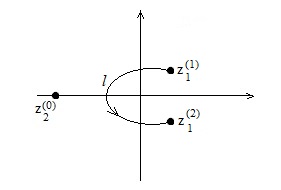 Figure 1
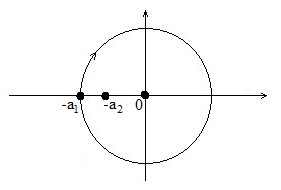 Figure 2
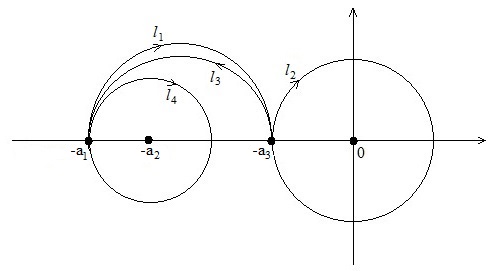 Figure 3
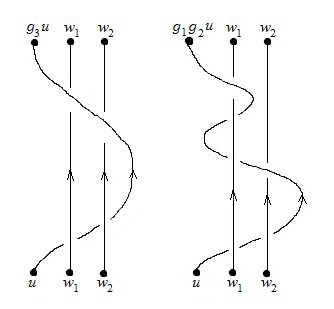 Figure 4