Stretchable persistent spin helices in GaAs quantum wells
Florian Dettwiler, Jiyong Fu, Shawn Mack, Pirmin J. Weigele, J. Carlos, Egues, David D. Awschalom, and Dominik M. Zumb\"uhl

TL;DR
This paper demonstrates the electrical control and continuous locking of Rashba and Dresselhaus spin-orbit couplings in GaAs quantum wells, enabling stretchable persistent spin helices with variable pitches for potential long-distance spin communication.
Contribution
It introduces a novel method for independently tuning and continuously locking spin-orbit couplings, creating stretchable persistent spin helices with variable pitches in GaAs quantum wells.
Findings
Achieved electrical control over Rashba and Dresselhaus couplings.
Demonstrated continuous locking of SO fields at equal strengths.
Observed enhanced spin coherence near the locking point.
Abstract
The Rashba and Dresselhaus spin-orbit (SO) interactions in 2D electron gases act as effective magnetic fields with momentum-dependent directions, which cause spin decay as the spins undergo arbitrary precessions about these randomly-oriented SO fields due to momentum scattering. Theoretically and experimentally, it has been established that by fine-tuning the Rashba and Dresselhaus couplings to equal strengths , the total SO field becomes unidirectional thus rendering the electron spins immune to dephasing due to momentum scattering. A robust persistent spin helix (PSH) has already been experimentally realized at this singular point . Here we employ the suppression of weak antilocalization as a sensitive detector for matched SO fields together with a technique that allows for independent electrical control over the SO couplings…
Click any figure to enlarge with its caption.
 Figure 1
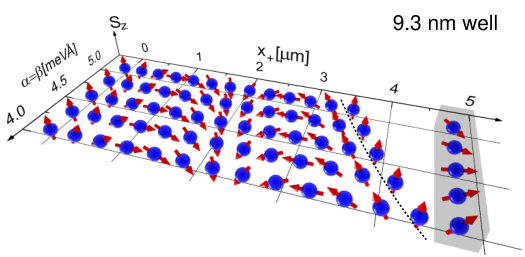 Figure 2
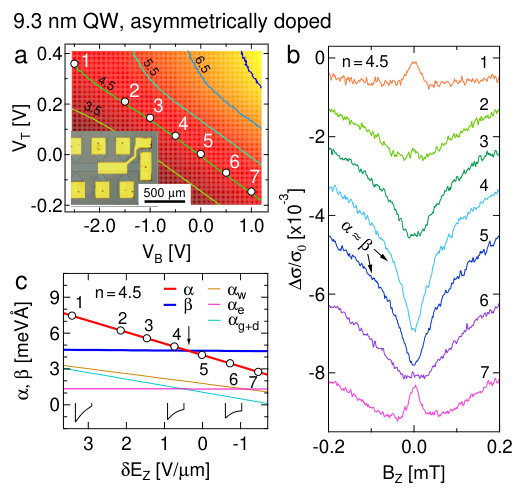 Figure 3
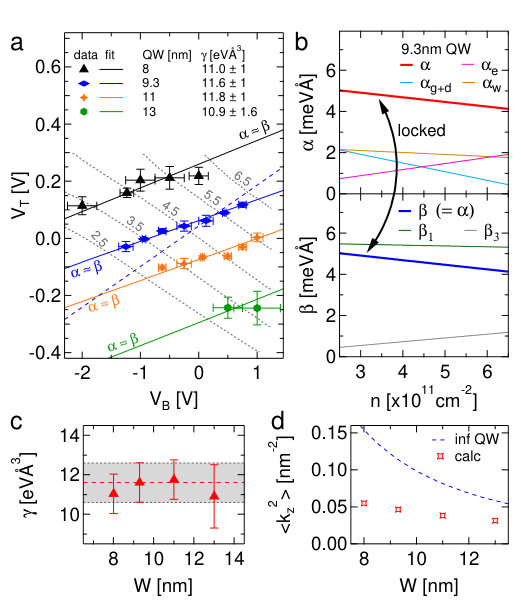 Figure 4
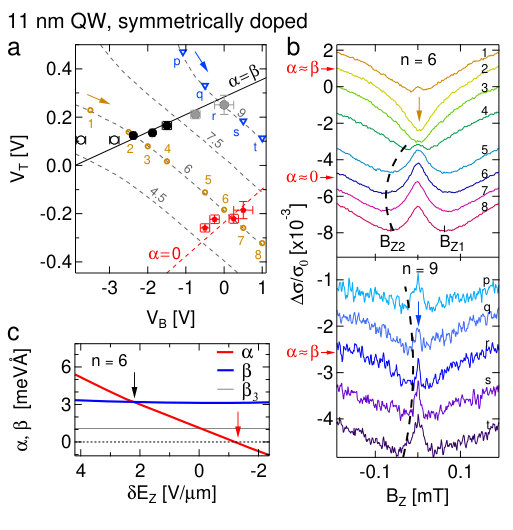 Figure 5
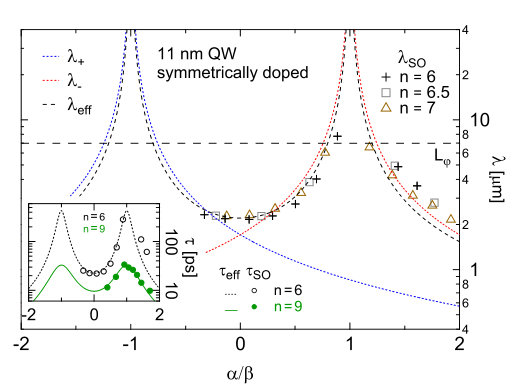 Figure 6
Peer Reviews
No public reviews on file for this paper yet. If you reviewed it on a platform where reviews are public (OpenReview, ICLR, NeurIPS, ICML), you can paste yours below so the community can read it here.
Videos
No videos yet. Explain this paper in a talk, walkthrough, or lecture? Add one.
††thanks: Permanent address: Department of Physics, Qufu Normal University, Qufu, Shandong, 273165, China††thanks: Current address: Naval Research Laboratory, Washington, DC 20375, USA
Stretchable persistent spin helices in GaAs quantum wells
Florian Dettwiler
Department of Physics, University of Basel, CH-4056, Basel, Switzerland
Jiyong Fu
Instituto de Física de São Carlos, Universidade de São Paulo, 13560-970 São Carlos, SP, Brazil
Shawn Mack
California NanoSystems Institute, University of California, Santa Barbara, California 93106, USA
Pirmin J. Weigele
Department of Physics, University of Basel, CH-4056, Basel, Switzerland
J. Carlos Egues
Instituto de Física de São Carlos, Universidade de São Paulo, 13560-970 São Carlos, SP, Brazil
David D. Awschalom
California NanoSystems Institute, University of California, Santa Barbara, California 93106, USA
Institute for Molecular Engineering, University of Chicago, Chicago, IL 60637 USA
Dominik M. Zumbühl
Department of Physics, University of Basel, CH-4056, Basel, Switzerland
Abstract
The Rashba and Dresselhaus spin-orbit (SO) interactions in 2D electron gases act as effective magnetic fields with momentum-dependent directions, which cause spin decay as the spins undergo arbitrary precessions about these randomly-oriented SO fields due to momentum scattering. Theoretically and experimentally, it has been established that by fine-tuning the Rashba and Dresselhaus couplings to equal fixed strengths , the total SO field becomes unidirectional thus rendering the electron spins immune to dephasing due to momentum scattering. A robust persistent spin helix (PSH), i.e., a helical spin-density wave excitation with constant pitch , , has already been experimentally realized at this singular point . Here we employ the suppression of weak antilocalization as a sensitive detector for matched SO fields together with a technique that allows for independent electrical control over the SO couplings via top gate voltage and back gate voltage , to extract all SO couplings as functions of and when combined with detailed numerical simulations. We demonstrate for the first time the gate control of and the continuous locking of the SO fields at , i.e., we are able to vary both and controllably and continuously with and , while keeping them locked at equal strengths. This makes possible a new concept: “stretchable PSHs”, i.e., helical spin patterns with continuously variable pitches over a wide parameter range. This further protects spins from decay when electrically controlling the spin precession. We also quantify the detrimental effect of the cubic Dresselhaus term, which breaks the unidirectionality of the total SO field and causes spin decay at higher electron densities. The extracted spin-diffusion lengths and decay times as a function of show a significant enhancement near . Since within the continuous-locking regime quantum transport is diffusive (2D) for charge while ballistic (1D) for spin and thus amenable to coherent spin control, stretchable PSHs could provide the platform for the much heralded long-distance communication m between solid-state spin qubits, where the spin diffusion length for is an order of magnitude smaller.
The inextricable coupling between the electron spatial and spin degrees of freedom – the spin-orbit (SO) interaction – underlies many fundamental phenomena such as the spin Hall effects – quantum and anomalous Sinova et al. (2015) – and plays a crucial role in newly discovered quantum materials hosting Majorana Mourik et al. (2012) and Weyl fermions Wan et al. (2011). In nanostructures the SO coupling strength can be varied via gate electrodes Engels et al. (1997); Nitta et al. (1997). As recently demonstrated Chuang et al. (2015), this enables controlled spin modulation Datta and Das (1990) of charge currents in non-magnetic (quasi-ballistic) spin transistors.
The SO coupling in a GaAs quantum well has two dominant contributions: the Rashba Bychkov and Rashba (1984) and the Dresselhaus Dresselhaus (1955) effects, arising from the breaking of the structural and crystal inversion symmetries, respectively. When the Rashba and Dresselhaus SO couplings match at Schliemann et al. (2003); Bernevig et al. (2006), the direction of the combined Rashba-Dresselhaus field becomes momentum independent thus suppressing D’yakonov-Perel and Elliott-Yafet spin-flip processes due to non-magnetic impurities, provided that the cubic Dresselhaus term be small. The significantly enhanced spin lifetime at enables non-ballistic spin transistors and persistent spin helices Schliemann et al. (2003); Bernevig et al. (2006). However, despite substantial efforts, so far this symmetry point has only been achieved at isolated points with finely-tuned system parameters Koralek et al. (2009); Walser et al. (2012a); Kohda et al. (2012), which is too difficult to be reliably attained on demand as required for a useful technology.
Stretchable Persistent Spin Helices.— Here we overcome this outstanding obstacle by (i) using a technique that allows independent control of the SO couplings via a top gate voltage and a back gate voltage , which control the electron density and the electric fields in the well, while (ii) simultaneously measuring the suppression of weak-antilocalization (WAL) in an external magnetic field as a sensitive probe for the matched SO couplings. We demonstrate a robust continuous locking of the Rashba and Dresselhaus couplings at over a wide range of densities , i.e., a “symmetry line” (not a point) in the () plane. More specifically, for a nm wide GaAs well we can vary the SO couplings continuously and controllably from to . This enables “stretchable spin helices”, see Fig. 1, with spin density , , and and variable pitches , , that can coherently couple spin qubits over unprecedented long distances.
Long-distance spin communication.— Within the range of the continuously matched-locked SO couplings , quantum transport in the well is diffusive for charge (2D) while essentially ballistic (1D) for spins (see SOM Sec. V). The cubic Dresselhaus term is small in this range as we quantify later on and leads to spin decay with spin-diffusion lengths m over which spin dephases by 1 radian. The full electrical control of the SO couplings demonstrated in our 9.3 nm wide quantum well enables stretchable PSHs with pitches stretching from to , see Fig. 1. These stretchy waves can be excited upon injection of spin polarization, see e.g., Refs. Koralek et al. (2009); Walser et al. (2012a). Figure 1 illustrates how spin information can be conveyed between spins via a stretchable PSH. Within the shortest spin-diffusion length for our 9.3 nm well, controlled spin rotations can be performed under spin protection on any spin sitting at a position along the stretchable PSH by varying in the range above. For example, a spin at can be rotated by as varies in the range above, see gray box shading in Fig. 1. Other spin communication modes can be envisaged with this setup. Note that this type of spin control, manipulation and spin transfer is not possible for a GaAs helix with as m in this case. Stretchable helices could provide a platform for unprecedented long-distance spin communication between spin qubits defined in GaAs 2D gases.
Additional results. WAL was also used to identify other regimes such as the Dresselhaus regime (, Fig. 4a) in a more symmetrically doped sample. Combined with numerical simulations, we extracted the SO couplings and , the bulk Dresselhaus parameter , the spin-diffusion lengths and spin-relaxation times over a wide range of system parameters. We also quantified the detrimental effects of the third harmonic of the cubic Dresselhaus term Fig. 5, which limits spin protection at higher densities. Interestingly, our spin diffusion lengths and spin-relaxation times are significantly enhanced within the locked range thus attesting that our proposed setup offers a promising route for spin protection and manipulation.
In what follows we first explain the essential density dependence of the Dresselhaus coupling that enables the continuous locking of the SO fields, how it also leads to spin decay at higher densities, and then the relevant WL/WAL detection scheme, measurements and simulations. A full account of our approach, including additional data and details of the model and simulations, is presented in the Appendix and the SOM.
Linear cubic Dresselhaus terms in 2D. Due to the well confinement along the direction (growth), the cubic-in-momentum bulk (3D) Dresselhaus SO interaction gives rise to, after the projection into the lowest quantum well subband eigenstates, distinct terms that are linear and cubic in , the 2D electron wave vector. The linear-in-k term has a coefficient and is practically independent of the density in the parameter range of interest here Fig. 3(b),(d), as we discuss below. The cubic-in- term, on the other hand, is density dependent and has yet two components with distinct angular symmetries: (i) the first-harmonic contribution proportional to and and (ii) the third-harmonic contribution proportional to and ; here is the polar angle in 2D between and the [100] direction (see SOM). Interestingly, the first-harmonic contribution with coefficient has the same angular symmetry as both the linear-in- Dresselhaus term (see Refs. Iordanskii et al. (1994); Pikus and Pikus (1995) and SOM), and the Rashba term.
To a very good approximation the coefficient , where the Fermi vector and is the carrier density of the 2D gas. This neglects the tiny angular anisotropy in the Fermi wave vector due to the competition between the Rashba and Dresselhaus effects (specially in GaAs wells). Note that by approximating both the first-harmonic and the third-harmonic parts of the cubic-in- Dresselhaus term become actually linear in [see SOM, Eqs. (S20)-(S21)] and, more importantly, become density dependent. We can now group the linear-in- Dresselhaus term together with the first-harmonic contribution into a single linear Dresselhaus term by defining [details are given in the SOM, Eq. (S15)]. As described below, it is this density-dependent coefficient that can be tuned with a gate voltage to match the Rashba coupling continuosly, see Fig. 3(b). This matching leads to a -independent spinor (or, equivalently, to a -independent effective SO field), whose direction is immune to momentum scattering.
Spin decay at higher densities. The strength of the third-harmonic contribution of the Dresselhaus term is also described by the coefficient . This term, however, is detrimental to spin protection as it breaks the angular symmetry of the other linear SO terms and makes the spinor -dependent and susceptible to in-plane momentum scattering, even for matched couplings . As we discuss later on (Fig. 4), the detrimental effect of the third-harmonic contribution does not prevent our attaining the continuous locking over a relevant wide range of electron densities.
Gate-tunable range of the Dresselhaus coupling . For the narrow quantum wells used here, is essentially gate-independent since the wave function spreads over the full width of the well. This also implies (the infinite well limit), see Fig. 3d, due to wave function penetration into the finite barriers. Thus, a change of density by a factor of changes by the same factor, resulting in a gate-tunable range of . In addition, quantum wells of width and nm were usedLuo et al. (1990); Koralek et al. (2009), resulting in a change of by roughly a factor of .
Controlling the Rashba coupling . The Rashba coefficient Bychkov and Rashba (1984) can be tuned with the wafer and doping profile Koralek et al. (2009) as well as in-situ using gate voltagesEngels et al. (1997); Nitta et al. (1997) at constant density and thus independent of the Dresselhaus term. A change of top gate voltage can be compensated by an appropriate, opposing change of back gate voltage (see Fig. 2a) to keep fixed Papadakis et al. (1999); Grundler (2000) while changing the gate-induced electric field in the quantum well, where 2D plane. In this way we achieve independent, continuous control of the Rashba and Dresselhaus terms by using top and back gate voltages. This is an unprecedented tunability of the SO terms within a single sample.
Detection scheme for the matched SO couplings. WAL is a well established signature of SO coupling in magnetoconductance Bergmann (1984); Altschuler and Aronov (1985); Iordanskii et al. (1994); Pikus and Pikus (1995); Knap et al. (1996); Miller et al. (2003) exhibiting a local maximum at zero field. In the regime, the resulting internal SO field is uniaxial, spin rotations commute and are undone along time-reversal loops. Therefore WAL is suppressed and the effectively spin-less situation displaying weak localization (WL) (i.e., exhibiting a local minimum at ) is restored Pikus and Pikus (1995); Schliemann et al. (2003); Bernevig et al. (2006); Kohda et al. (2012). Away from the matched regime, the SO field is not uniaxial, spin rotations do not commute and trajectories in time-reversal loops interfere destructively upon averaging Bergmann (1984) due to the SO phases picked up along the loops thus leading to WAL. Hence this suppression is a sensitive detector for . We note that the WL dip – often used to determine phase coherence – sensitively depends on the SO coupling (e.g. curves in Fig. 2b), even before WAL appears. Negligence of SO coupling could thus lead to spurious or saturating coherence times.
Continuous locking . We proceed to demonstrate gate-locking of the SO couplings , . Figure 2b displays of the nm well for top and back gate configurations labeled , all lying on a contour of constant density, see Fig. 2a. Along this contour, is held fixed since the density is constant ( is essentially gate independent), while is changing as the gate voltages are modifying the electric field perpendicular to the quantum well. Across these gate configurations, the conductance shows a transition from WAL (conf. ) to WL () back to WAL (). Selecting the most pronounced WL curve allows us to determine the symmetry point . This scheme is repeated for a number of densities, varying by a factor of , yielding the symmetry point for each density (see Fig. 3a, blue markers), thus defining a symmetry line in the -plane. Along this line, is changing with density as previously described, and follows , remaining “continuously” locked at . As mentioned earlier, this is a very interesting finding as it should allow the creation of persistent spin helices with gate-controllable pitches as illustrated in Fig. 1.
Simulations and fitting of . Self-consistent calculations combined with the transport data can deliver all SO parameters. The numerical simulations Calsaverini et al. (2008) (see Appendix and SOM) can accurately calculate and . This leaves only one fit parameter: , the bulk Dresselhaus coefficient, which can now be extracted from fits to the density dependence of the symmetry point, see solid blue line in Fig. 3a, giving excellent agreement with the data (blue markers). This procedure can be repeated for a set of wafers with varying quantum well width and thus varying . This shifts the symmetry point , producing nearly parallel lines, as indicated with colors in Fig. 3a corresponding to the various wafers as labeled. As seen, locking over a broad range is achieved in all wafers. Since gate voltages can be tuned continuously, any and all points on the symmetry lines can be reached. Again performing fits over the density dependence of the symmetry point for each well width, we obtain very good agreement, see Fig. 3a, and extract consistently for all wells (Fig. 3c). We emphasize that is notoriously difficult to calculate and measure Knap et al. (1996); Miller et al. (2003); Krich and Halperin (2007); the value reported here agrees well with recent studies Krich and Halperin (2007); Walser et al. (2012a, b). Obtaining consistent values over wide ranges of densities and several wafers provides a robust method to extract .
Beyond , the simulations reveal important information about the gate-tuning of the SO parameters. The Rashba coefficient is modeled as in the simulation, with gate and doping term , quantum well structure term , and Hartree term . Along a contour of constant density, the simulations show that mainly and are modified, while and remain constant, see Fig. 2c. The density dependence for locked , on the other hand, shows that while is nearly constant, is linearly increasing with , thus reducing , see Fig. 3b. Hence, to keep locked, has to be reduced correspondingly. The Hartree term , however, increases for growing . Thus, on the line, the other -terms – mainly the gate dependent – are strongly reduced, maintaining locked , as seen in Fig. 3b. We emphasize that neglecting the gate/density dependence of and fixing results in a line with slope indicated by the blue dashed line in Fig. 3(a), which is clearly inconsistent with the data. Thus, the density dependent enabling gate-tunability of the Dresselhaus term is crucial here.
Dresselhaus regime. We now show that can be tuned through and through zero in a more symmetrically doped wafer, opening the Dresselhaus regime . We introduce the magnetic field where the magneto conductance exhibits minima at . These minima describe the crossover between WAL and WL, where the Aharonov-Bohm dephasing length and the SO diffusion length are comparable. Beyond the WAL-WL-WAL transition (Fig. 4b upper panel), is seen to peak and decrease again (dashed curve). The gate voltages with maximal are added to Fig. 4a for several densities (red markers). We surmise that these points mark : signifies the crossover between WL/WAL-like conductance, thus defining an empirical measure for the effects of SO coupling (larger , stronger effects). For , the full effect of on the conductance becomes apparent without cancellation from , giving a maximal . Indeed, the simulated curve (dashed red line in Fig. 4a) cuts through the experimental points, also reflected in Fig. 4c by a good match with the simulated crossing point (red arrow).
Diverging spin-orbit lengths. For a comparison of experiment and simulation, we convert the empirical to a “magnetic length” , which we later on interpret as a spin-diffusion length, where is the electron charge and the factor of two accounts for time-reversed pairs of closed trajectories. We also introduce the ballistic SO lengths . These lengths correspond to a spin rotation of 1 radian, as the electrons travel along and , respectively, with spins initially aligned perpendicular to the corresponding SO field (e.g., for an electron moving along the its spin should point along or so spin precession can occur, see SOM Eq S20 for an expression of the SO field). For , diverges (no precession, indicating that an electron traveling along does not precess) while is finite, and vice versa for .
Figure 5 shows the theoretical spin diffusion length (see methods) and the ballistic , together with the experimental , all agreeing remarkably well. Since at spin transport is ballistic despite charge diffusion, and its diffusive counterpart (small ) are essentially equivalent as shown in the SOM. The enhanced around corresponds to an increased spin relaxation time . Note that quantifies the deviation from the uniaxial SO field away from , and thus the extent to which spin rotations are not undone in a closed trajectory due to the non-Abelian nature of spin rotations around non-collinear axes. This leads to WAL, a finite and , as observed (see Fig. 5). Unlike the corresponding time scales, the SO lengths are only weakly dependent on density and mobility when plotted against , allowing a comparison of various densities.
The third harmonic contribution of cubic-in- term causes spin relaxation even at and becomes visible at large densities: WAL is present in all traces and through (Fig. 4b, lower panel), because the SO field can no longer be made uniaxial, thus breaking spin symmetry and reviving WAL. A partial symmetry restoration is still apparent, where – in contrast to the case – a minimal is reached (dashed curves) consistent with (grey markers Fig. 4a at large ). We include the cubic in the spin relaxation time (see methods), shown in the inset of Fig. 5 for two densities, finding good agreement with the experimental , where is the diffusion constant. Over the whole locked regime of Fig. 3b, WAL is absent, and is enhanced between one and two orders of magnitude compared to . Finally, the coherence length sets an upper limit for the visibility of SO effects: WAL is suppressed for , setting the width of the WAL-WL-WAL transition (see SOM).
Final remarks and outlook.— This work is laying the foundation for a new generation of experiments benefiting from unprecedented command over SO coupling in semiconductor nanostructures such as quantum wires, quantum dots, and electron spin qubits. Moreover, our work relaxes the stringency (i.e., the “fine tuning”) of the symmetry condition at a particular singular point (gate) by introducing a “continuous locking” of the SO couplings over a wide range of voltages, which should enable new experiments exciting persistent spin helices with variable pitches in GaAs wells Koralek et al. (2009); Walser et al. (2012a), i.e., stretchable PSHs. Another possibility is the generation of a skyrmion lattice (crossed spin helices) with variable lattice constants, as recently proposed in Ref. Fu et al. (2016).
Finally, we stress that within the continuously-locked regime of SO couplings demonstrated in our study, SO-coupled quantum transport in our samples shows a very distinctive feature: it is diffusive (2D) for charge while ballistic (1D) for spins thus providing a unique setting for coherent spin control. This ultimately adds a new functionality to the non-ballistic spin transistor of Ref. Schliemann et al. (2003), i.e. it can now be made to operate as the ideal (ballistic) Datta-Das spin transistor – but in a realistic 2D diffusive system, with yet controlled spin rotations protected from spin decay.
Acknowledgements.
We would like to thank A. C. Gossard, D. Loss, D. L. Maslov, G. Salis for valuable inputs and stimulating discussions. This work was supported by the Swiss Nanoscience Institute (SNI), NCCR QSIT, Swiss NSF, ERC starting grant, EU-FP7 SOLID and MICROKELVIN, US NSF and ONR, Brazilian grants FAPESP, CNPq, PRP/USP (Q-NANO), and natural science foundation of China (Grant No. 11004120).
Author Contributions
F.D., J.F., P.W., J.C.E. and D.M.Z. designed the experiments, analysed the data and co-wrote the paper. All authors discussed the results and commented on the manuscript. S.M. and D.D.A. designed, simulated, and carried out the molecular beam epitaxy growth of the heterostructures. F.D. processed the samples and with P.W. performed the experiments. J.F. and J.C.E. developed and carried out the simulations and theoretical work.
Appendix A Materials and Methods
A.1 GaAs quantum well materials
The wells are grown on an n-doped substrate (for details see SOM) and fabricated into Hall bar structures (see inset, Fig. 2a) using standard photolithographic methods. The 2D gas is contacted by thermally annealed GeAu/Pt Ohmic contacts, optimized for a low contact resistance while maintaining high back gate tunability (low leakage currents) and avoiding short circuits to the back gate. On one segment of the Hall bar, a Ti/Au top gate with dimensions of x was deposited. The average gate-induced E-field change in the well is defined as , with effective distance from the well to the top/back gate, respectively, extracted using a capacitor model, consistent with the full quantum description (see SOM). Contours of constant density follow . Deviations from linear behavior appear at most positive/negative gate voltages due to incipient gate leakage and hysteresis.
A.2 Low temperature electronic measurements.
The experiments are performed in a dilution refrigerator with base temperature mK. We have used a standard four-wire lock-in technique at Hz and nA current bias, chosen to avoid self-heating while maximising the signal. The density is determined with Hall measurements in the classical regime, whereas Shubnikov-de Haas oscillations were used to exclude occupation of the second subband, which is the case for all the data discussed. The WAL signature is a small correction () to total conductance. To achieve a satisfactory signal-to-noise ratio, longitudinal conductivity traces were measured at least times and averaged.
A.3 Numerical Simulations
The simulations calculate the Rashba coefficient and based on the bulk semiconductor band parameters, the well structure, the measured electron densities and the measured gate lever arms. We solve the Schrödinger and Poisson equations self consistently (“Hartree approximation”), obtain the self-consistent eigenfunctions, and then determine via appropriate expectation values Calsaverini et al. (2008). The Dresselhaus coefficient is extracted from fits of the simulation to the experiment which detects the absence of WAL at . Thus, given and from the simulation and the measured , we obtain consistently for all asymmetrically doped wells. Taking into account the uncertainties of the band parameters, the experimental errors and a negligible uncertainty on , an overall uncertainty of about or about on results. About error originates from the experimental uncertainty of determining . The doping distribution (above/below well) is not expected to influence , and hence we use the same for the more symmetrically doped wafer. Fits to the experimental points then determine how much charge effectively comes from upper rather than lower doping layers, fixing the last unknown parameter also for the more symmetrically doped well (see SOM).
A.4 Spin-dephasing times and lengths
In WL/WAL measurements, additional spin dephasing is introduced by the external magnetic field via the Aharonov-Bohm phase arising from the magnetic flux enclosed by the time reversed trajectories: , where is the loop area. Here we take as a characteristic “diffusion area” probed by our WL/WAL experiment, with being the spin dephasing time, and the spin diffusion length. By taking (rad) at , we can extract the spin-diffusion length and spin-dephasing time from the minima of the WAL curves from and , respectively. The factor of 4 here stems from the two time-reversed paths and the diffusion length.
A.5 Effective SO times and lengths
Theoretically, we determine via a spin random walk process (D’yakonov-Perel (DP)). The initial electron spin in a loop can point (with equal probability) along the , , and axes (analogous to , , and , respectively), which have unequal spin-dephasing times , , and . For unpolarized, independent spins, we take the average , which leads to an effective spin difusion length . Actually, is defined from the average variance , obtained by averaging the spin-dependent variances , and over the spin directions , , and (this is equivalent to averaging over the ’s and not over ’s). In the SOM, we discuss the spin random walk and provide expressions for the DP times including corrections due to the cubic term. Figure 5 shows curves for the spin dephasing times and lengths presented here. In the main panel, the cubic is neglected in since for , WL appears at (small ). In contrast, the cubic term is included in in the inset since at the higher density , WAL persists (sufficiently strong ).
The reference list from the paper itself. Each links out to its DOI / PubMed record.
- 1Sinova et al. (2015) J. Sinova, S. O. Valenzuela, J. Wunderlich, C. Back, and T. Jungwirth, Reviews of Modern Physics 87 , 1213 (2015) . · doi ↗
- 2Mourik et al. (2012) V. Mourik, K. Zuo, S. M. Frolov, S. R. Plissard, E. P. a. M. Bakkers, and L. P. Kouwenhoven, Science 336 , 1003 (2012) . · doi ↗
- 3Wan et al. (2011) X. Wan, A. M. Turner, A. Vishwanath, and S. Y. Savrasov, Physical Review B 83 , 205101 (2011) . · doi ↗
- 4Engels et al. (1997) G. Engels, J. Lange, T. Schäpers, and H. Lüth, Physical Review B 55 , R 1958 (1997).
- 5Nitta et al. (1997) J. Nitta, T. Akazaki, H. Takayanagi, and T. Enoki, Physical Review Letters 78 , 1335 (1997).
- 6Chuang et al. (2015) P. Chuang, S.-C. Ho, L. W. Smith, F. Sfigakis, M. Pepper, C.-H. Chen, J.-C. Fan, J. P. Griffiths, I. Farrer, H. E. Beere, G. a. C. Jones, D. A. Ritchie, and T.-M. Chen, Nature Nanotechnology 10 , 35 (2015) . · doi ↗
- 7Datta and Das (1990) S. Datta and B. Das, Applied Physics Letters 56 , 665 (1990).
- 8Bychkov and Rashba (1984) Y. A. Bychkov and E. I. Rashba, JETP Letters 39 , 78 (1984).