Bounds on heavy Majorana neutrinos in type-I seesaw and implications for collider searches
Arindam Das, Nobuchika Okada

TL;DR
This paper investigates the parameter space of heavy Majorana neutrinos in the type-I seesaw model, considering experimental constraints, and discusses prospects for collider detection at future high-energy colliders.
Contribution
It provides a comprehensive parameter scan of heavy Majorana neutrinos in the minimal seesaw model, incorporating multiple experimental constraints and highlighting future collider search potentials.
Findings
Heavy neutrino mixings are more constrained than current LHC limits.
Allowed parameter regions can be probed at HL-LHC and future 100 TeV colliders.
Parameter space consistent with neutrino data and precision measurements is identified.
Abstract
The neutrino masses and flavor mixings, which are missing in the Standard Model (SM), can be naturally incorporated in the type-I seesaw extension of the SM with heavy Majorana neutrinos being singlet under the SM gauge group. If the heavy Majorana neutrinos are around the electroweak scale and their mixings with the SM neutrinos are sizable, they can be produced at high energy colliders, leaving characteristic signatures with lepton-number violations. Employing the general parametrization for the neutrino Dirac mass matrix in the minimal seesaw scenario, we perform a parameter scan and identify allowed regions to satisfy a variety of experimental constraints from the neutrino oscillation data, the electroweak precision measurements and the lepton-flavor violating processes. We find that the resultant mixing parameters between the heavy neutrinos and the SM neutrinos are more severely…
Click any figure to enlarge with its caption.
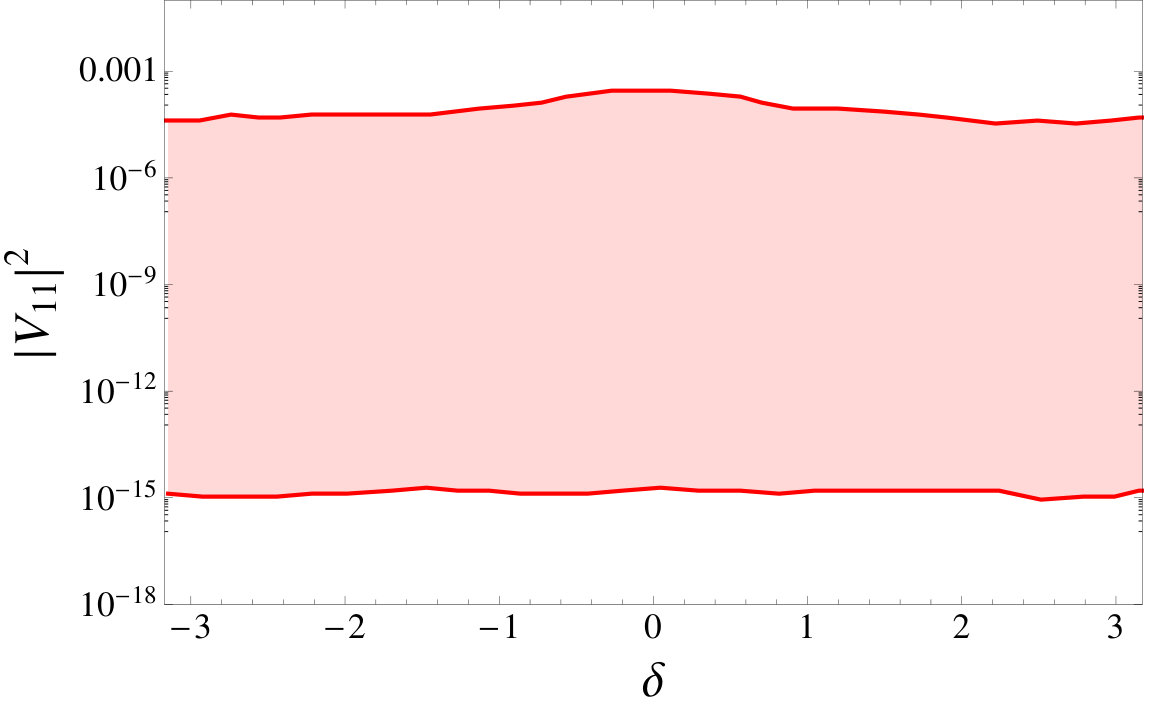 Figure 1
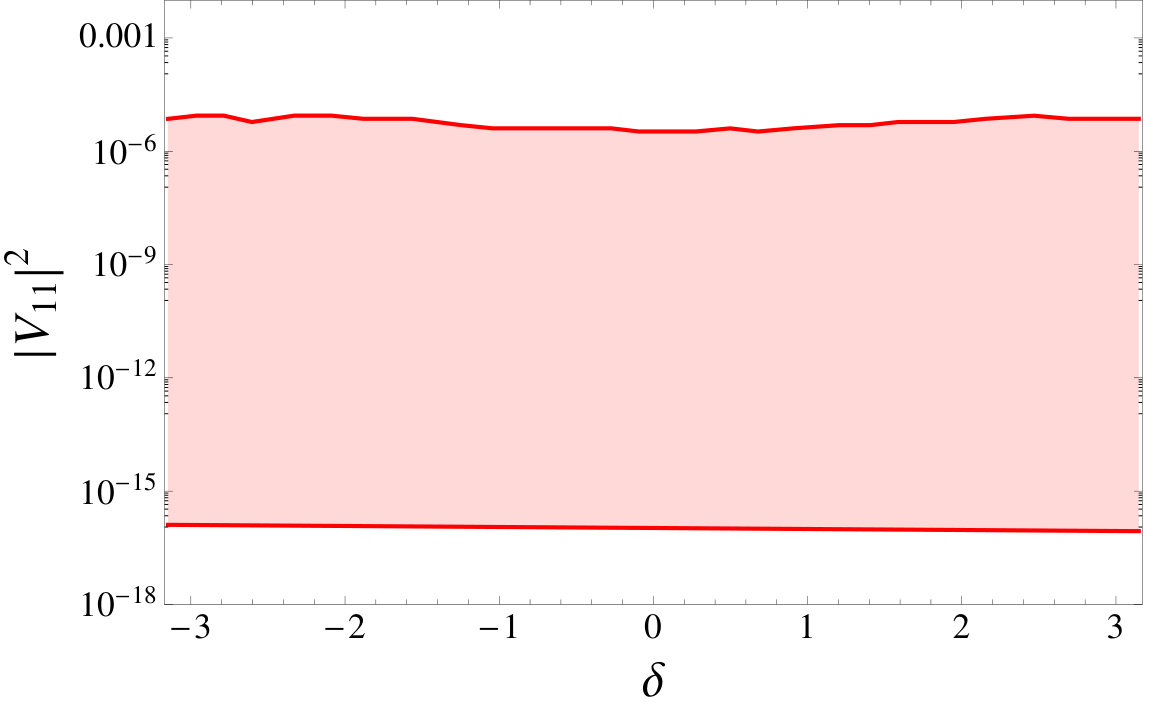 Figure 2
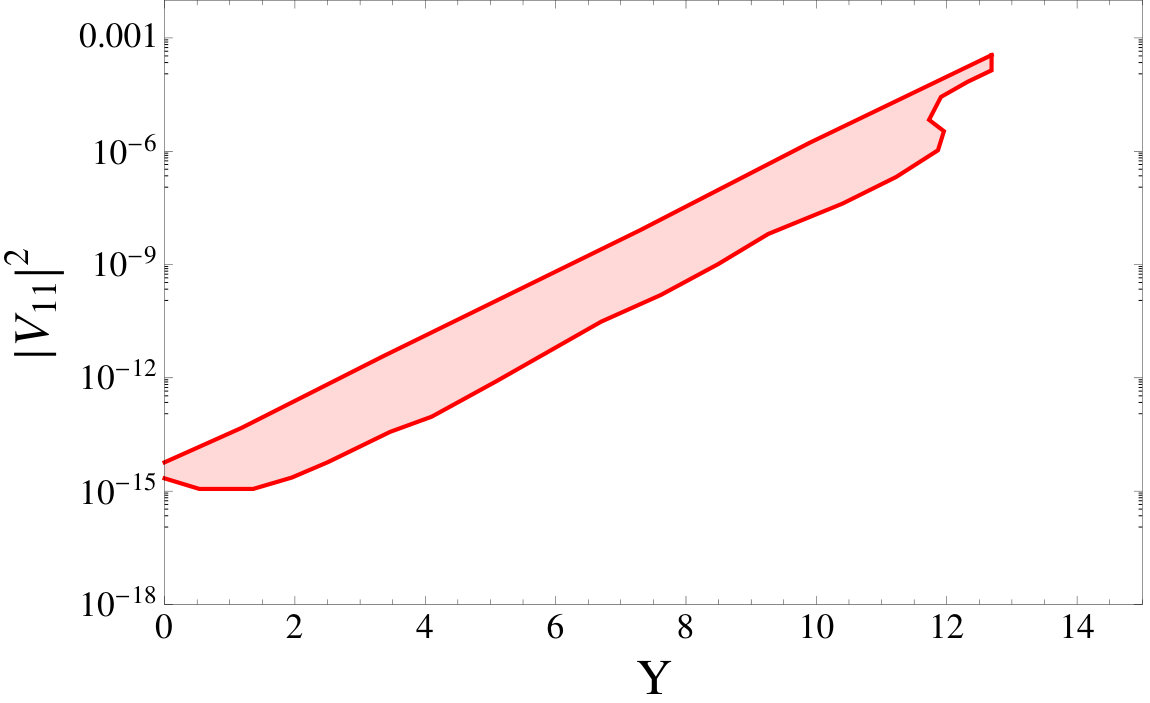 Figure 3
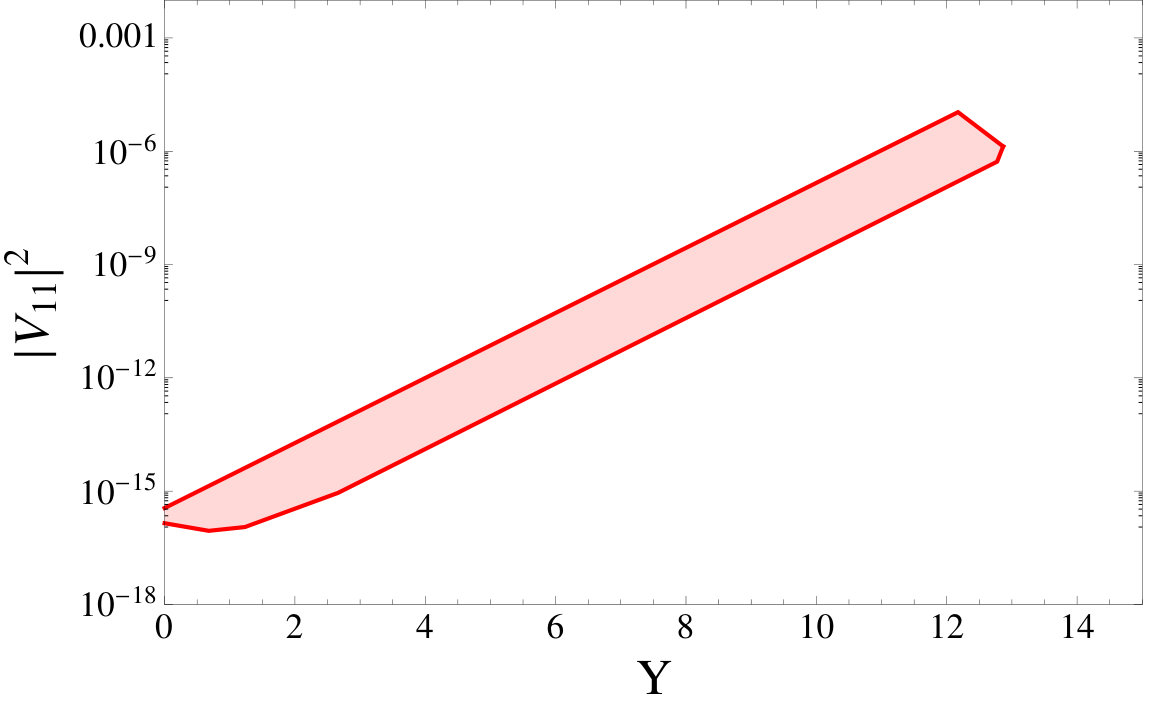 Figure 4
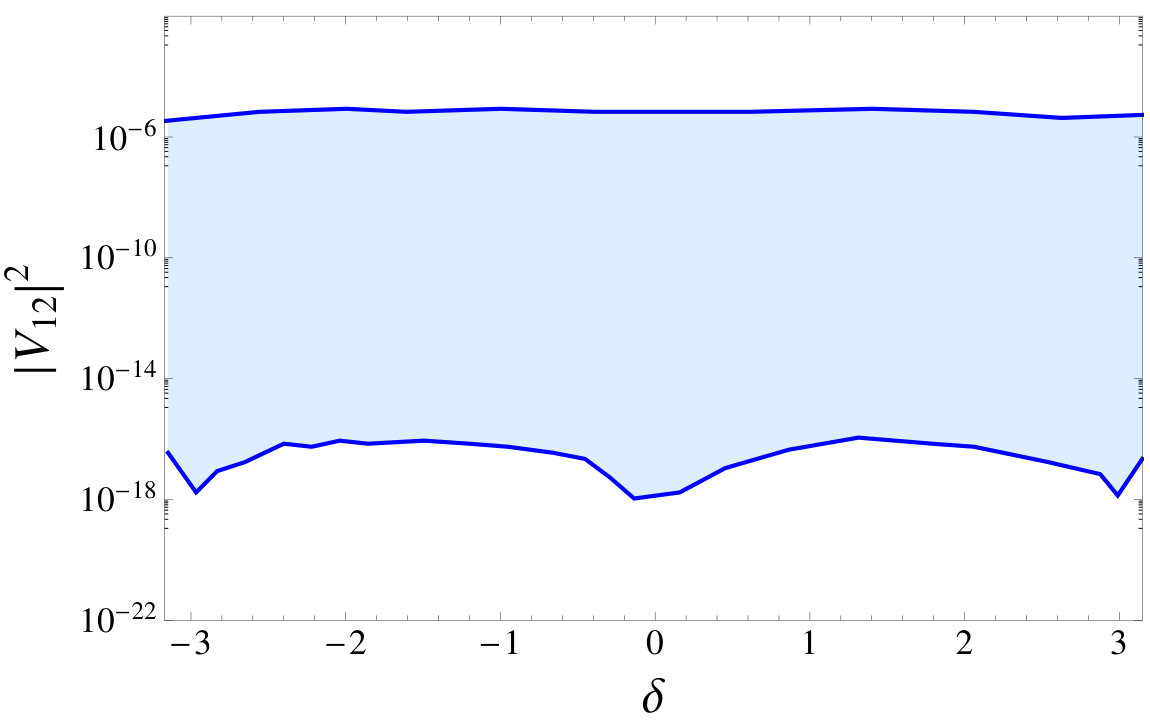 Figure 5
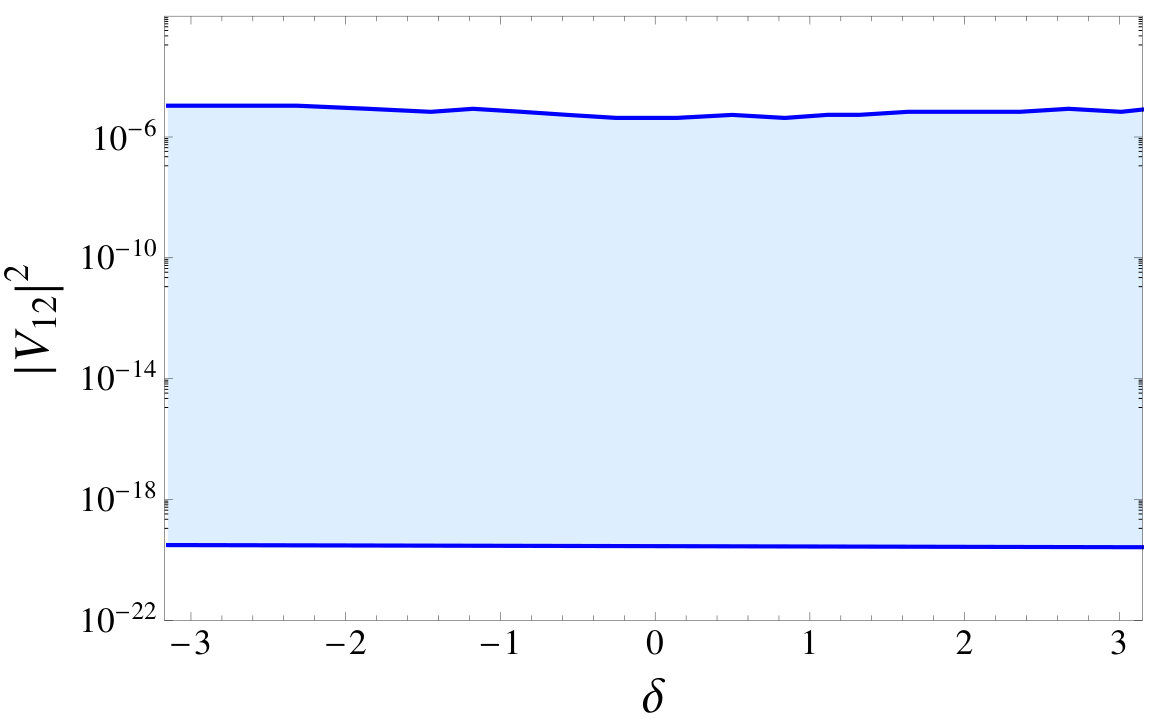 Figure 6
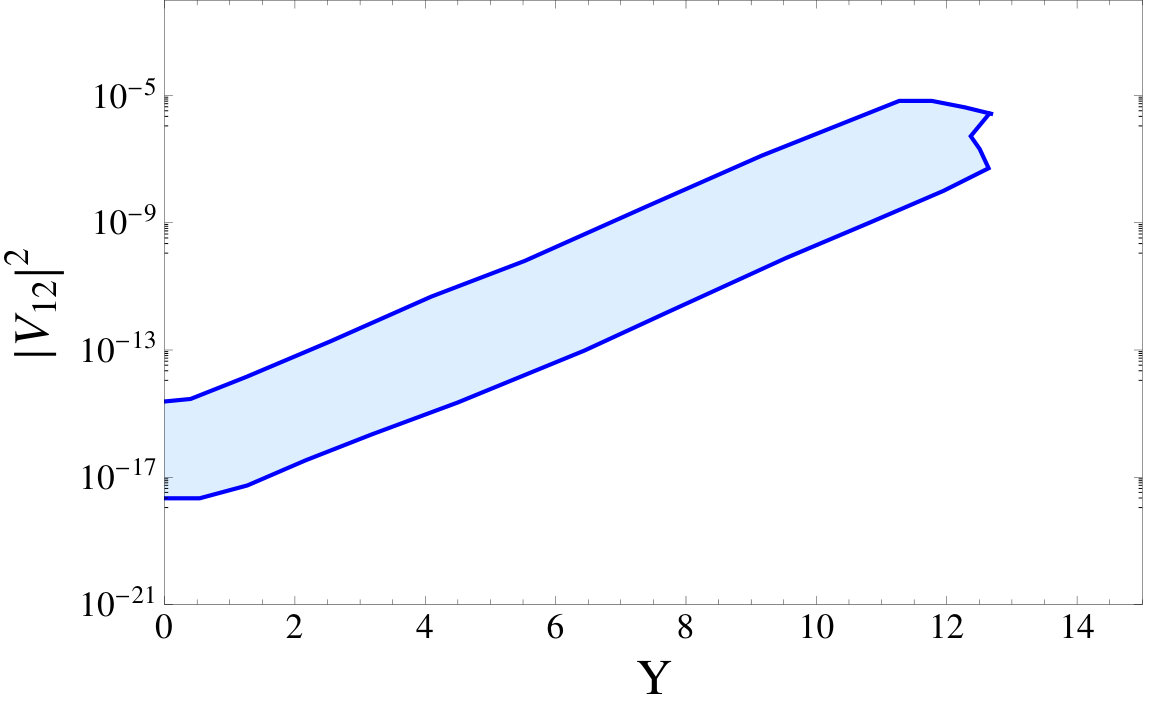 Figure 7
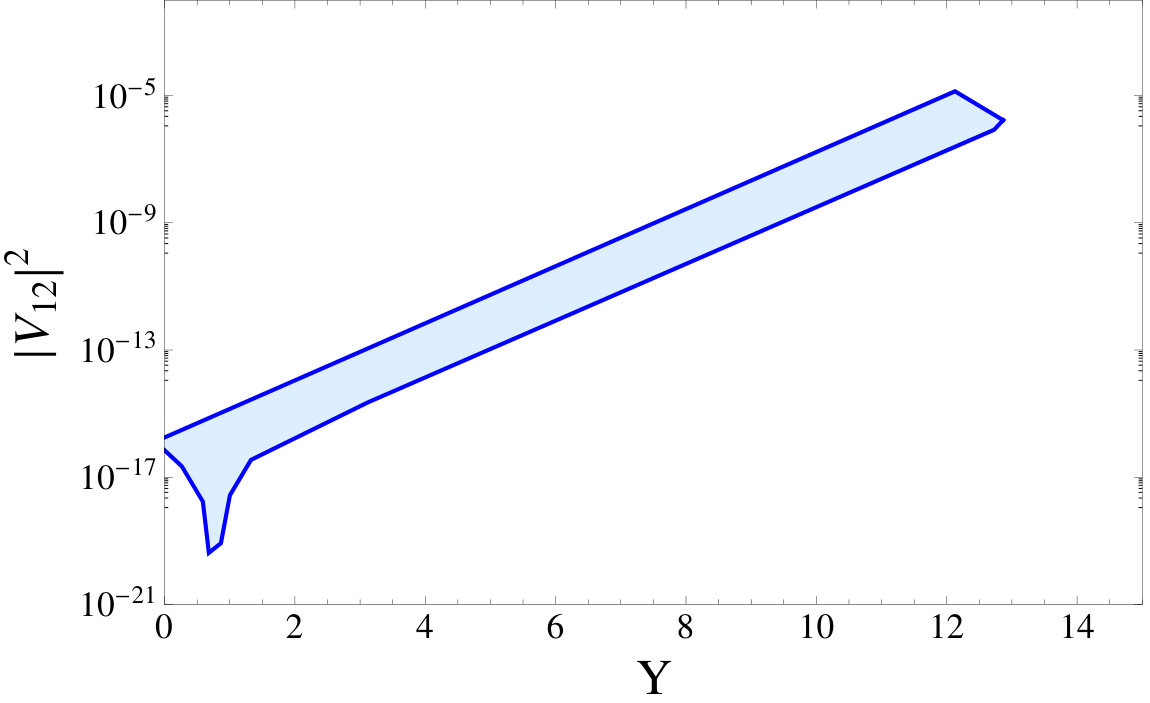 Figure 8
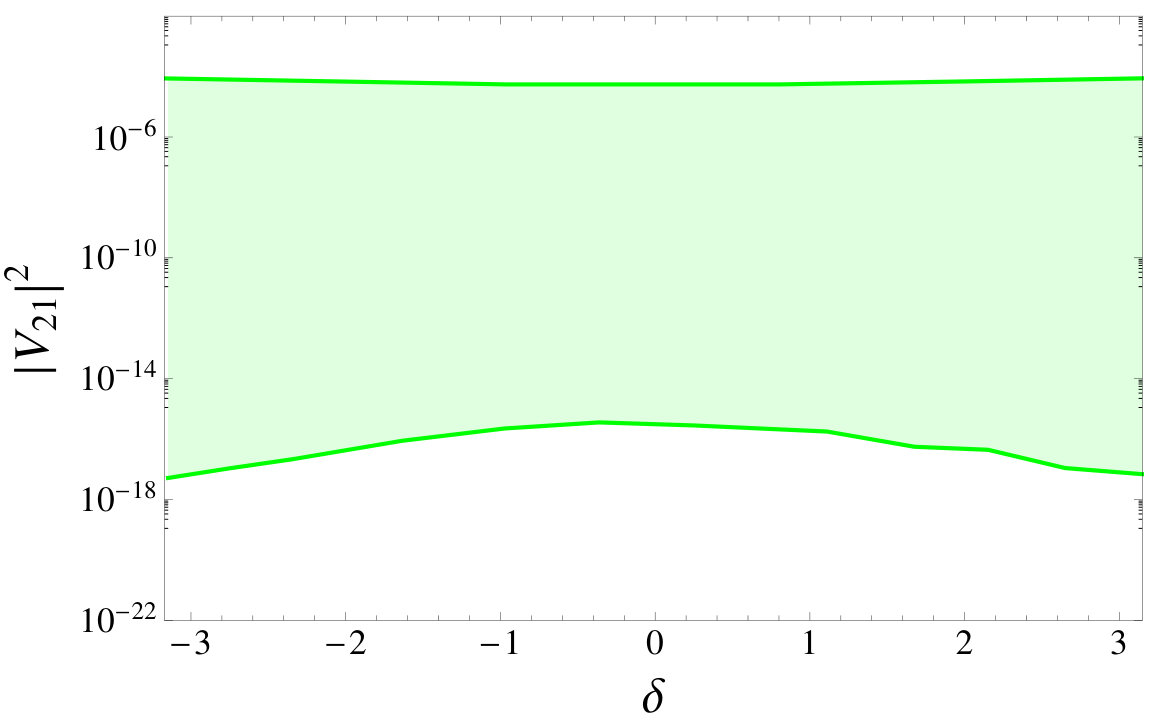 Figure 9
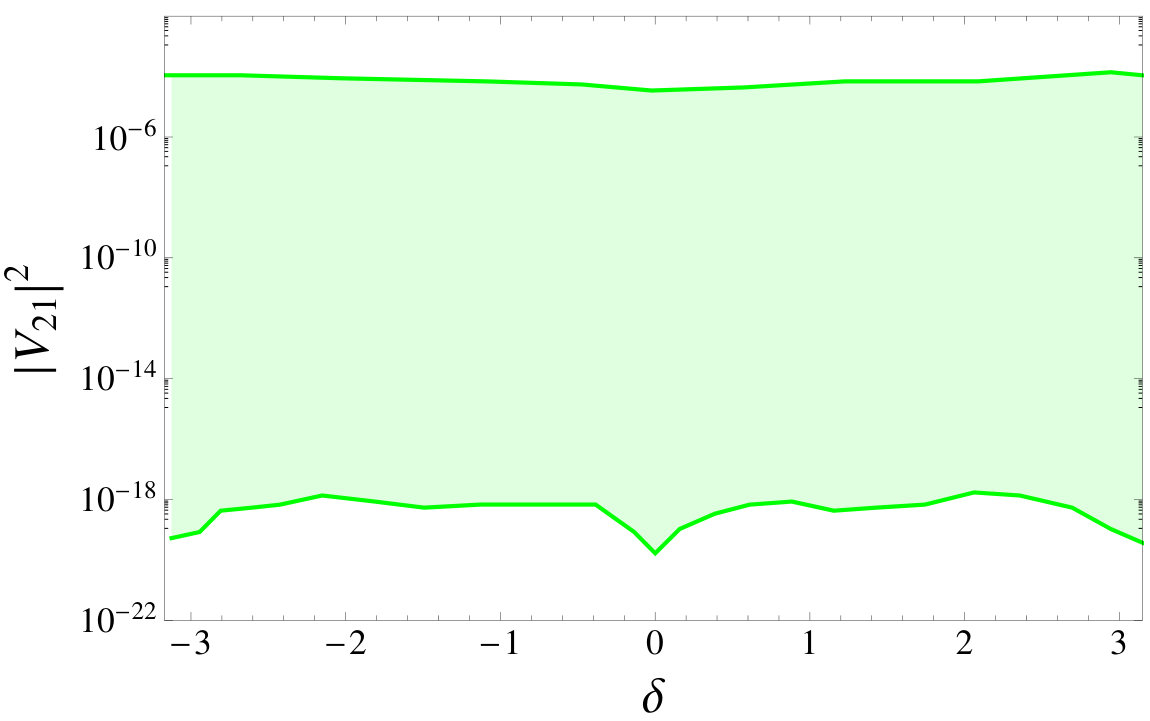 Figure 10
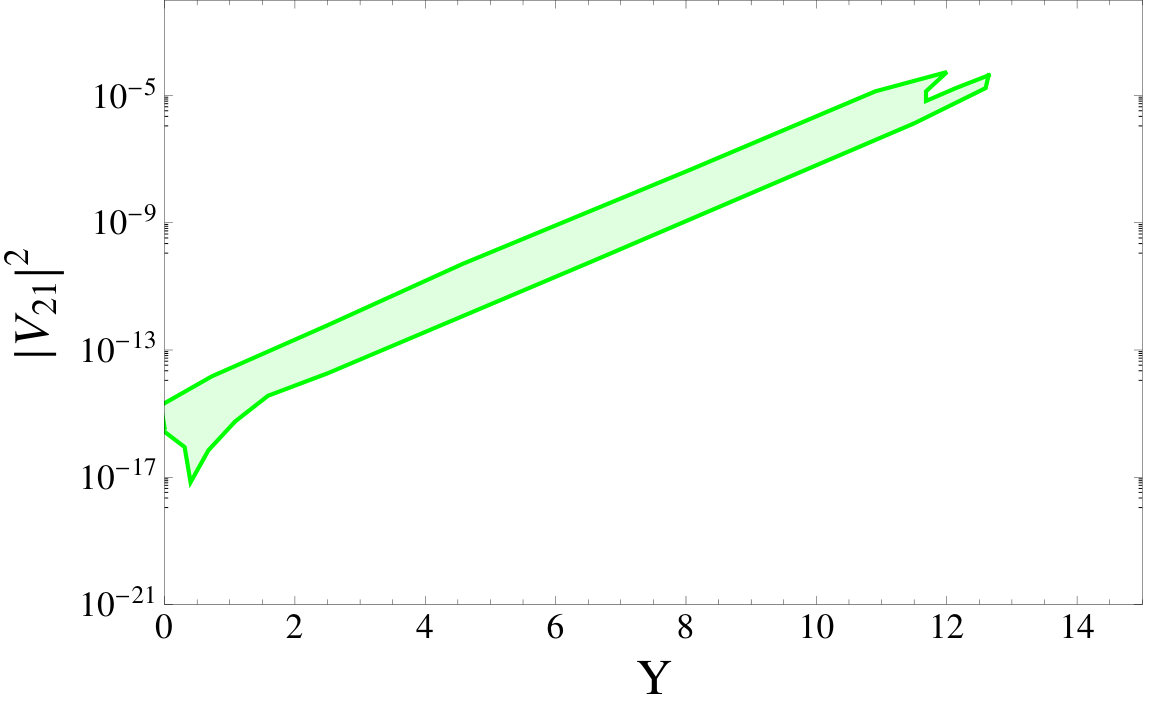 Figure 11
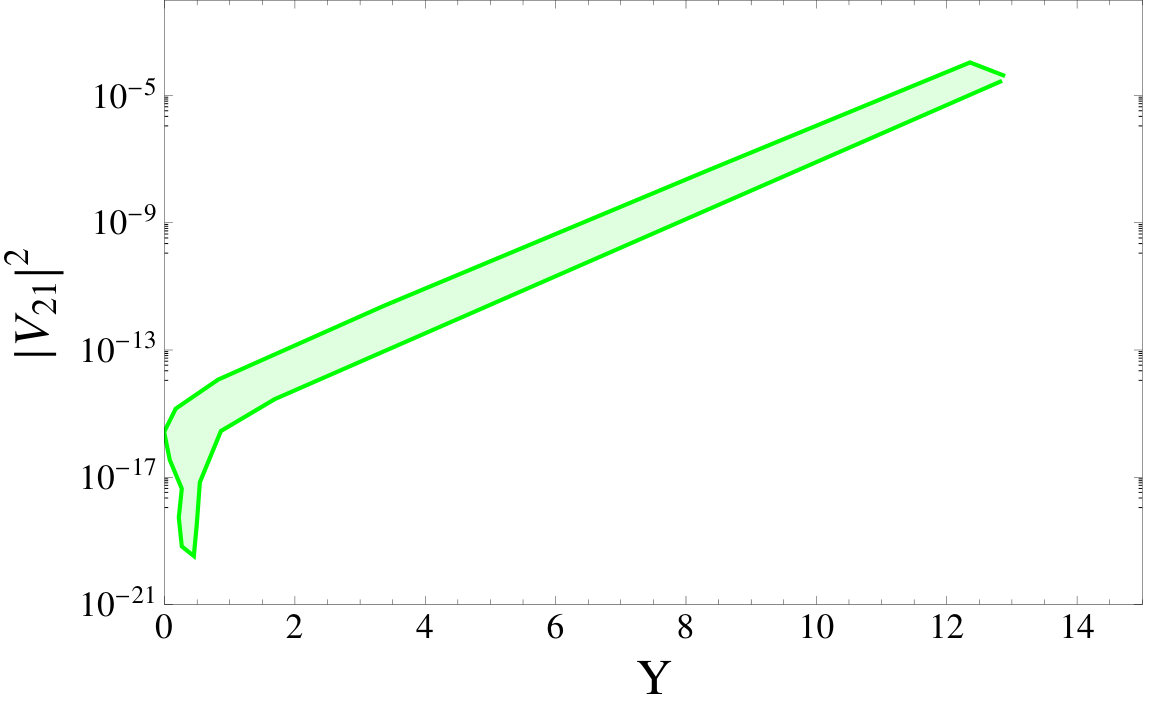 Figure 12
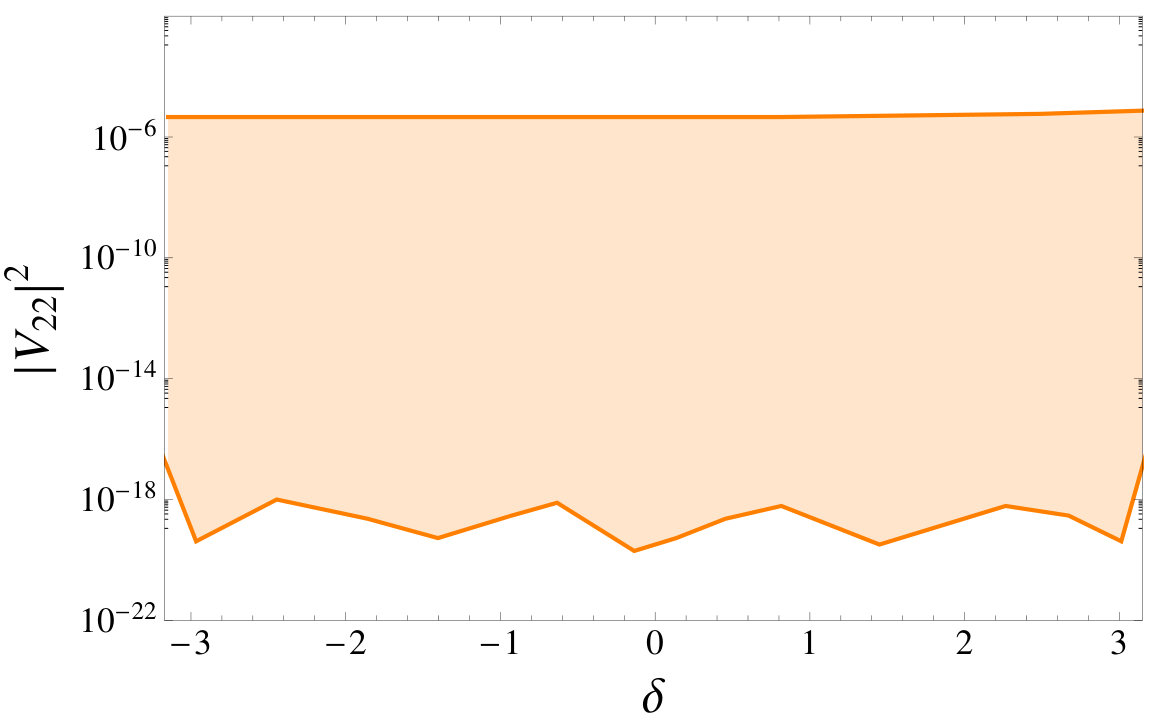 Figure 13
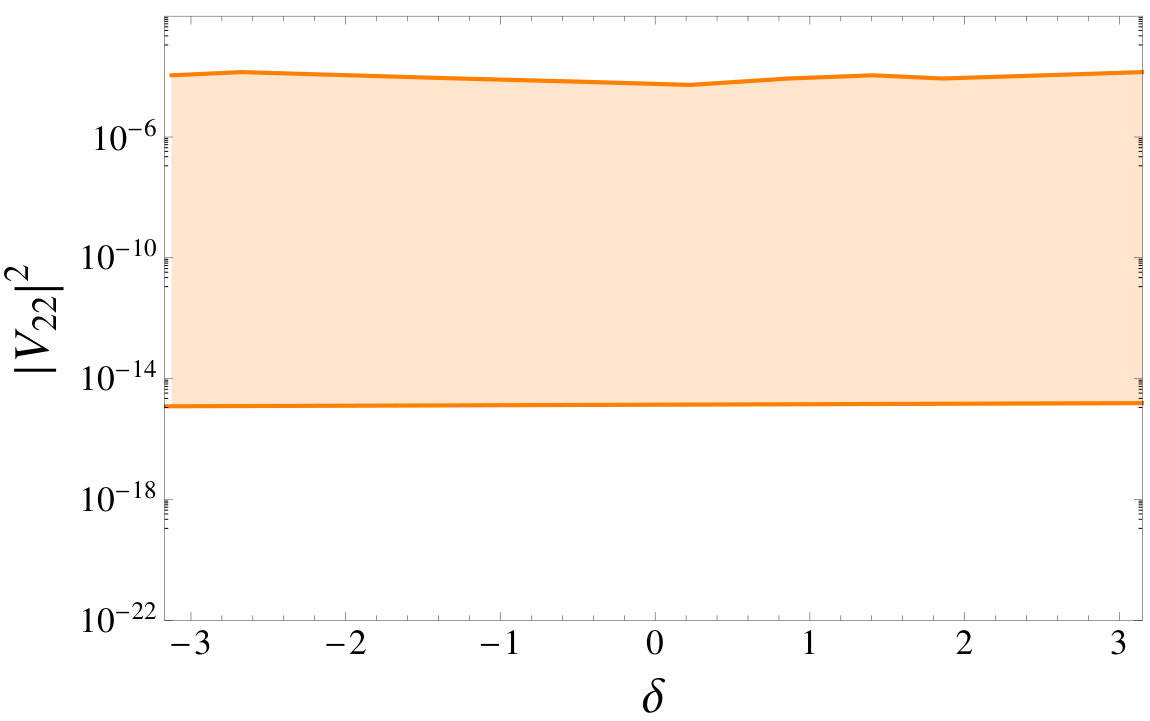 Figure 14
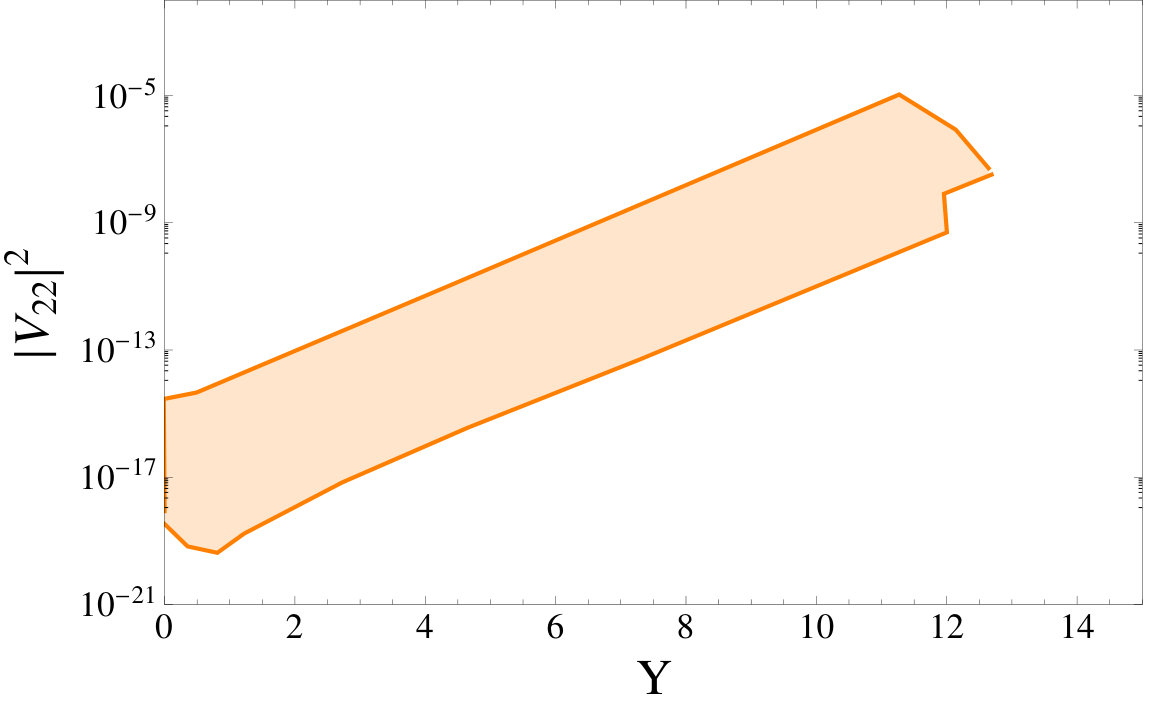 Figure 15
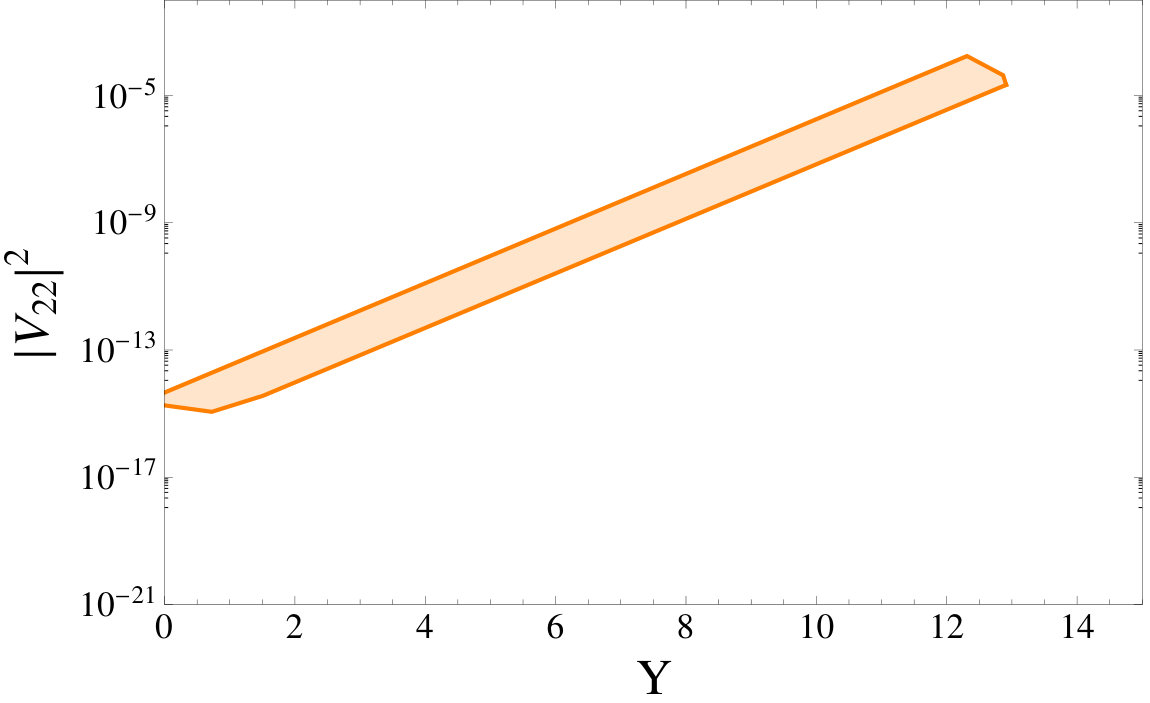 Figure 16
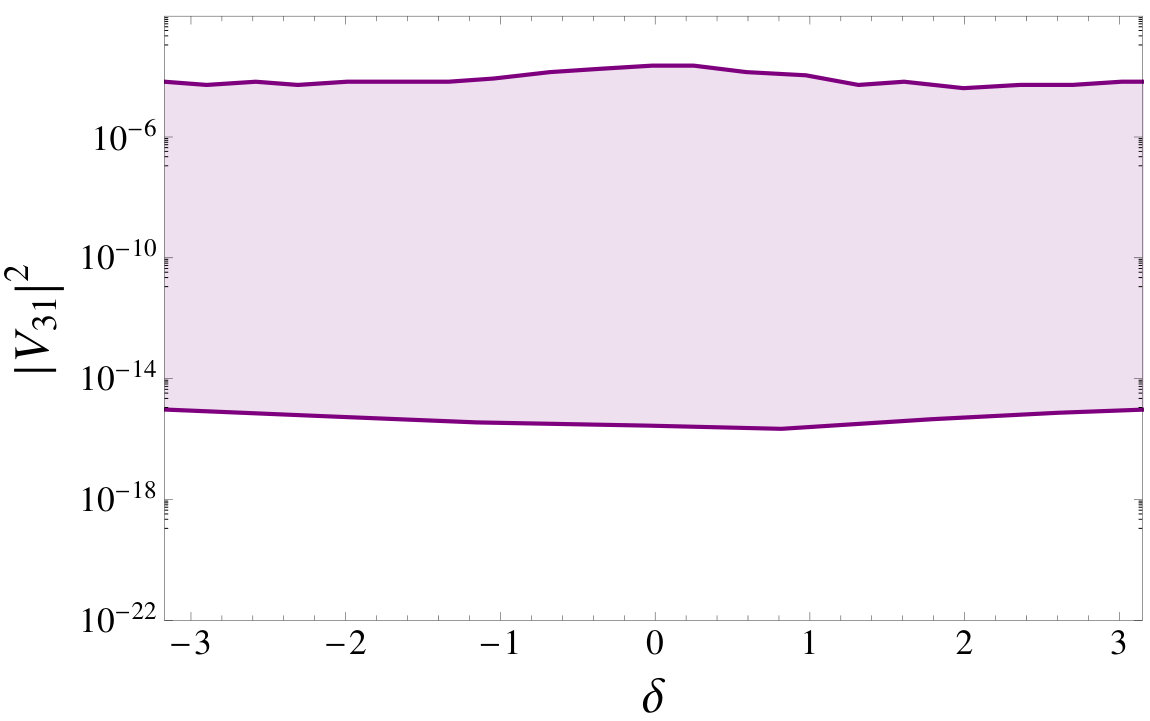 Figure 17
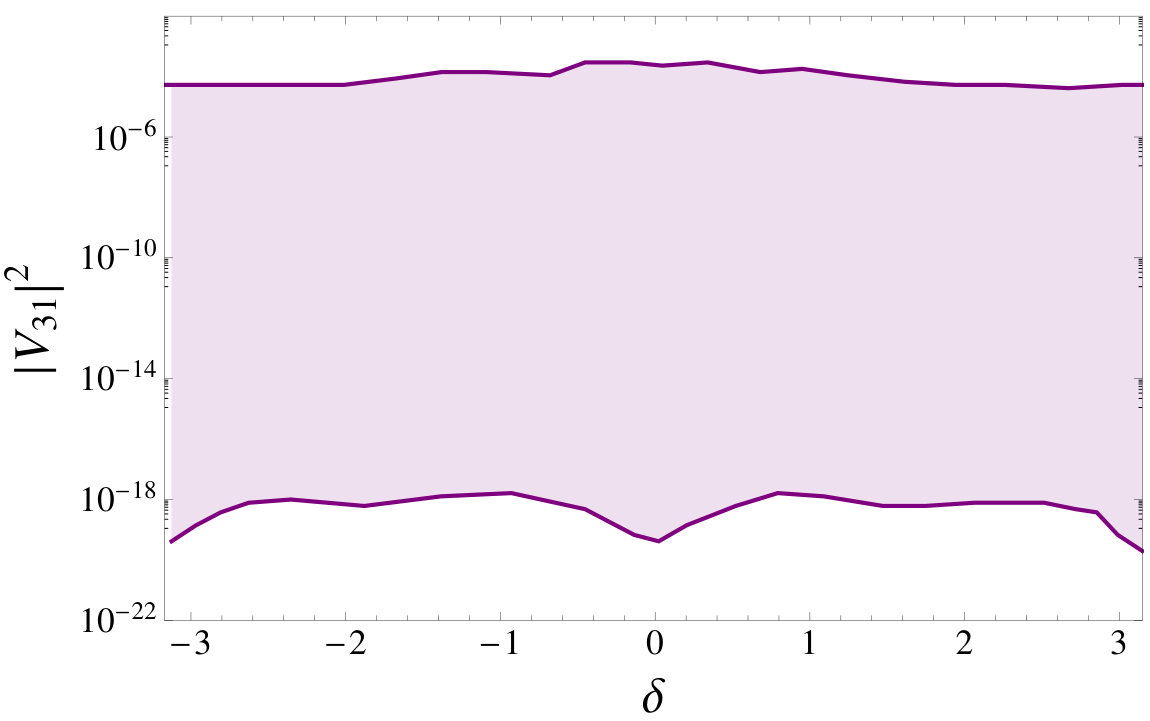 Figure 18
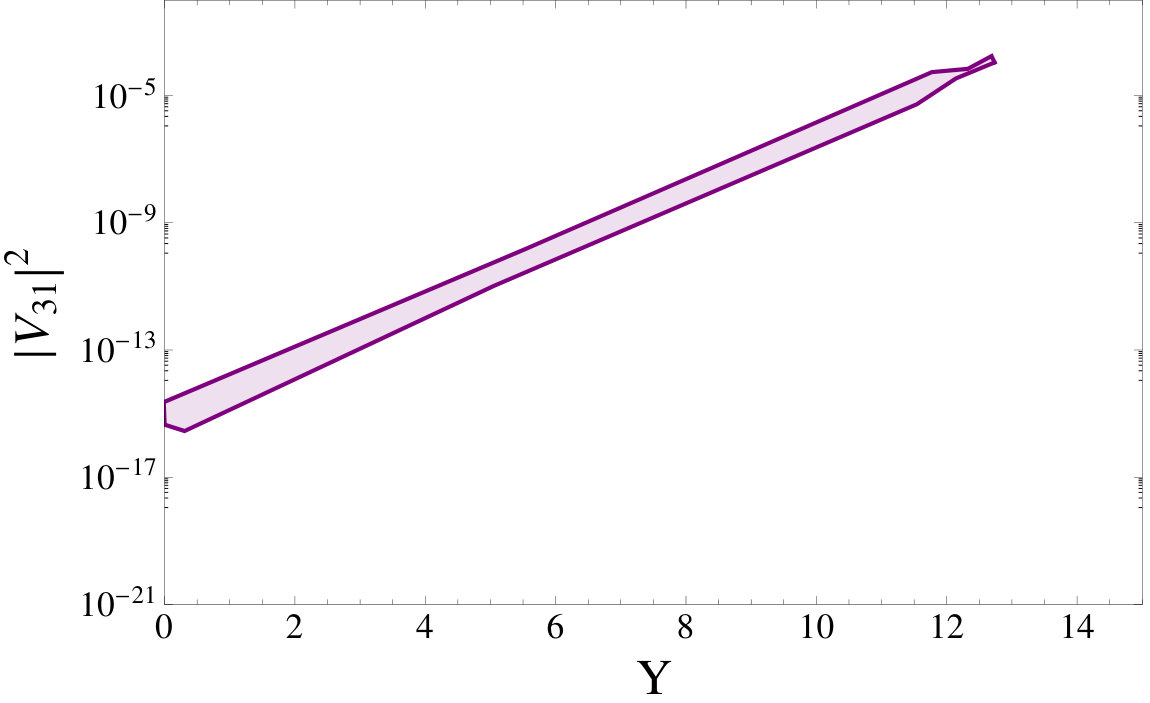 Figure 19
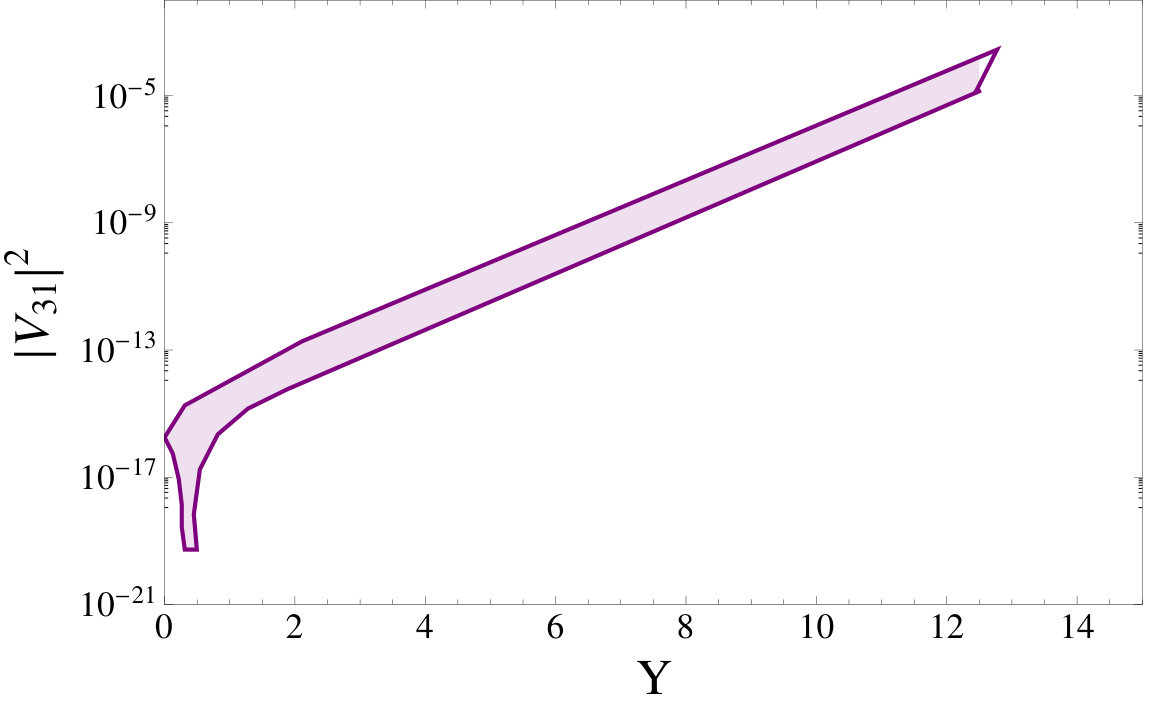 Figure 20
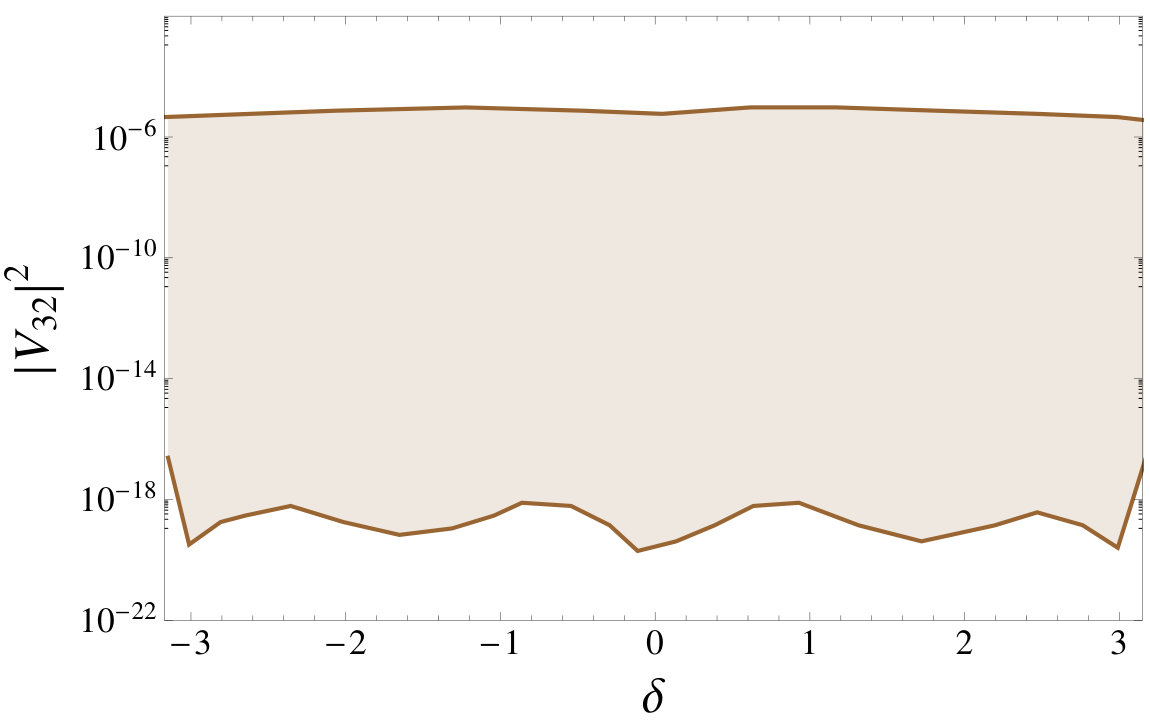 Figure 21
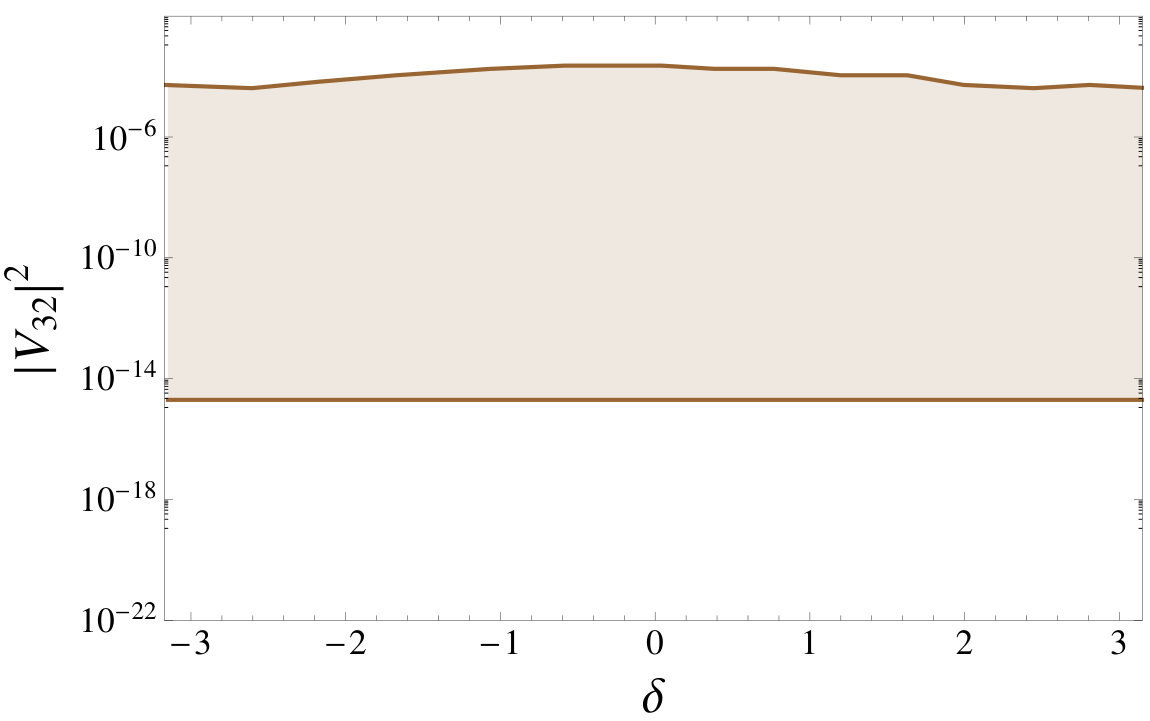 Figure 22
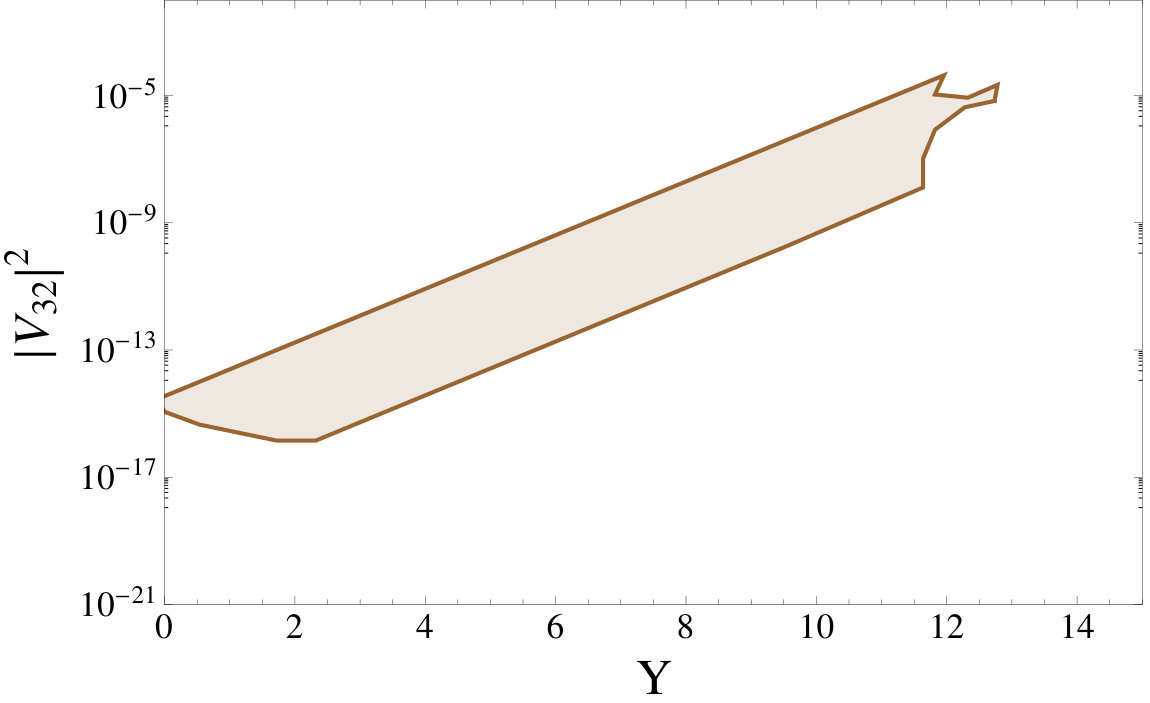 Figure 23
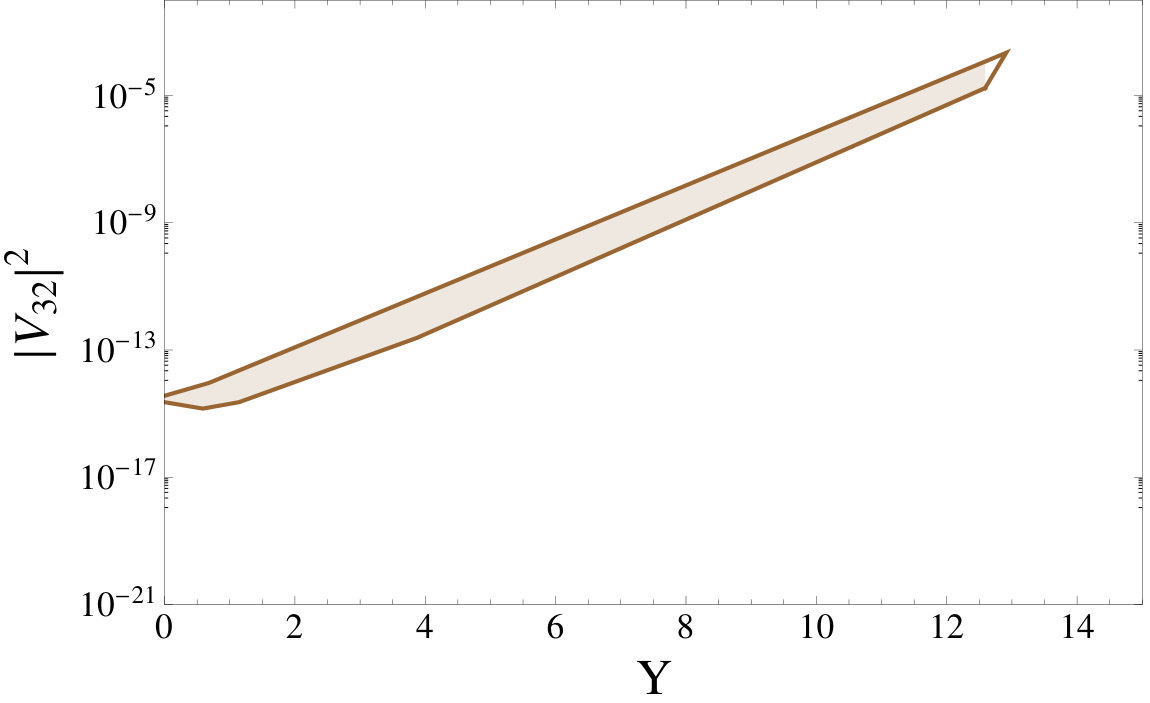 Figure 24
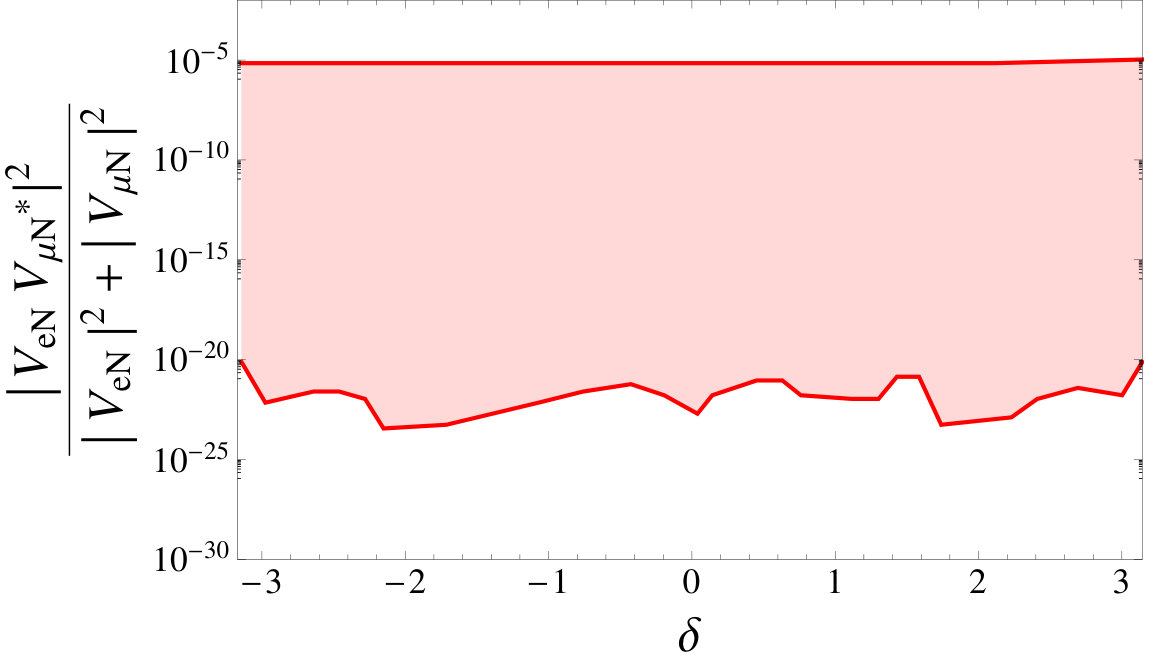 Figure 25
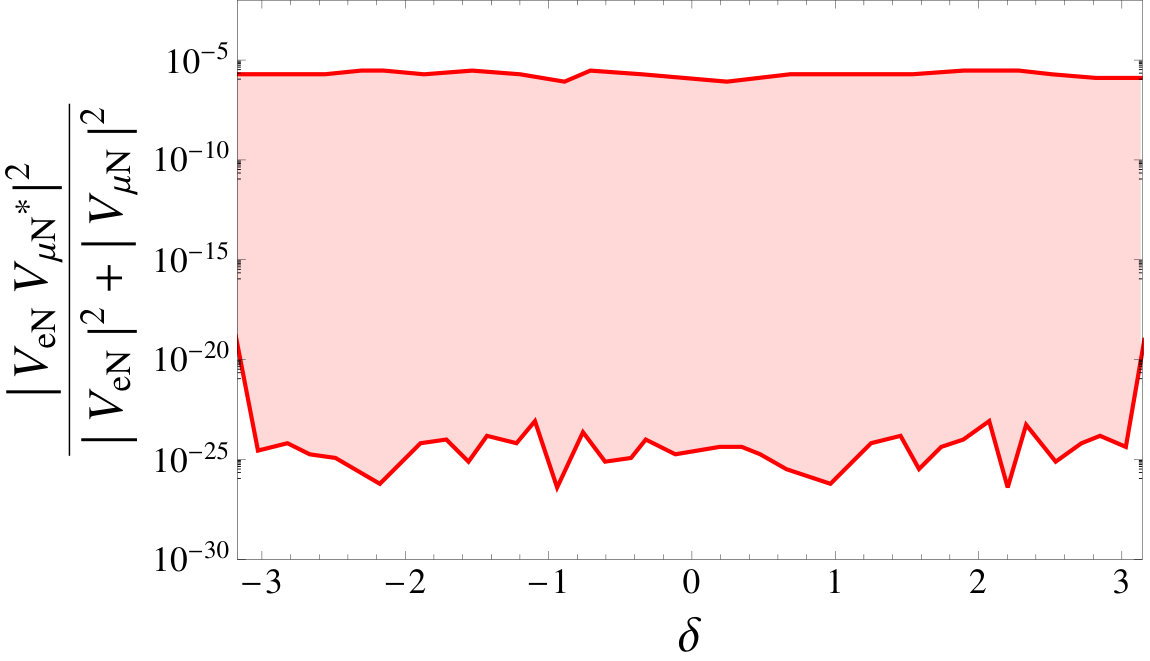 Figure 26
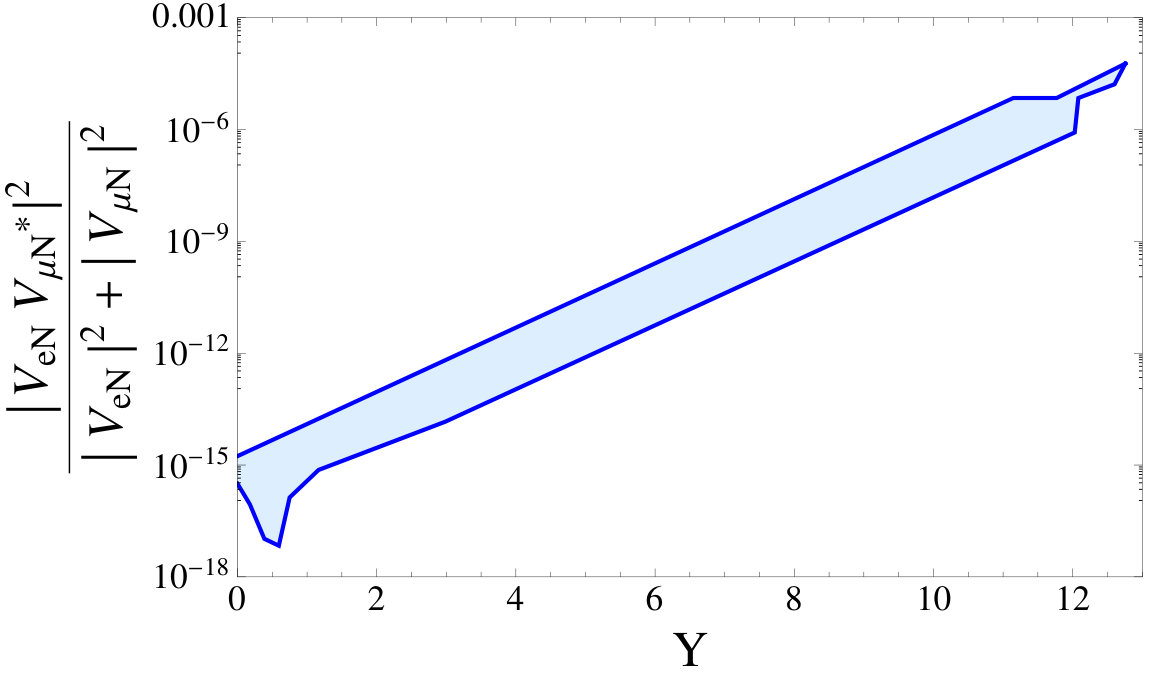 Figure 27
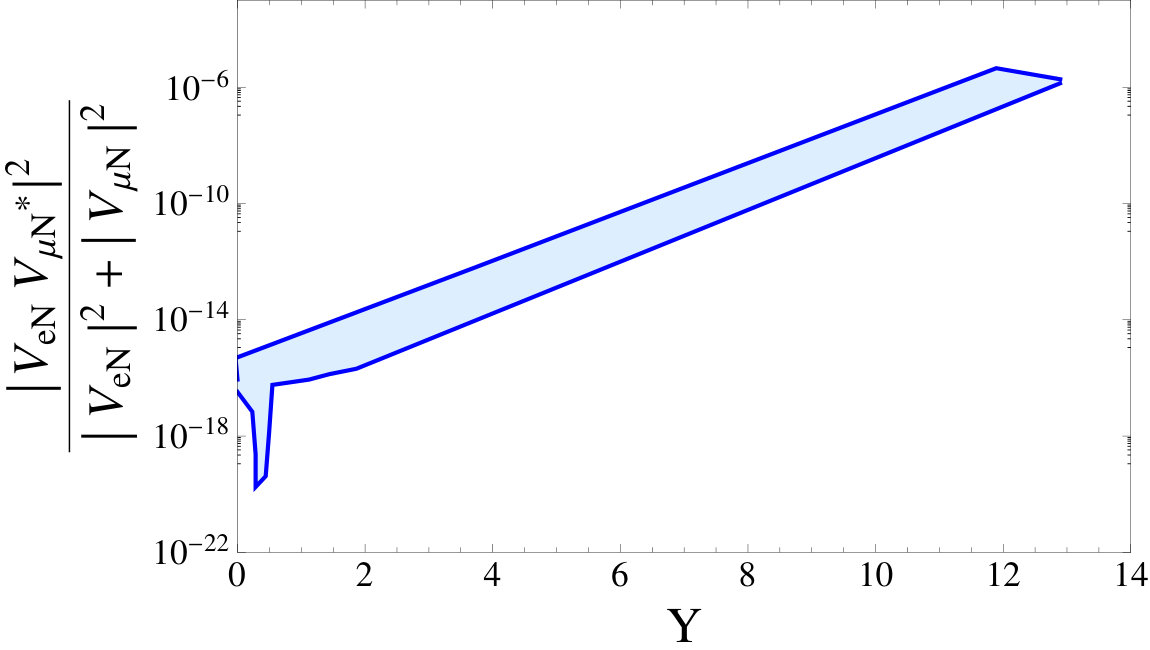 Figure 28
| Experiments | Mixning angles | Upper Bounds |
|---|---|---|
| EWPD-edeBlas:2013gla ; delAguila:2008pw ; Akhmedov:2013hec | ||
| EWPD-deBlas:2013gla ; delAguila:2008pw ; Akhmedov:2013hec | ||
| EWPD-deBlas:2013gla ; delAguila:2008pw ; Akhmedov:2013hec | ||
| L3Achard:2001qv | , | |
| Higgs-LHCBhupalDev:2012zg | , | |
| LHC-e(ATLAS, 8 TeV)Aad:2015xaa | ||
| LHC-(ATLAS, 8 TeV)Aad:2015xaa | ||
| LHC-e(CMS, 8 TeV)CMS8:2016olu | ||
| LHC-(CMS, 8 TeV)CMS8:2016olu | ||
| LHC-e, (CMS, 8 TeV)CMS8:2016olu |
Peer Reviews
No public reviews on file for this paper yet. If you reviewed it on a platform where reviews are public (OpenReview, ICLR, NeurIPS, ICML), you can paste yours below so the community can read it here.
Videos
No videos yet. Explain this paper in a talk, walkthrough, or lecture? Add one.
Bounds on heavy Majorana neutrinos in type-I seesaw
and implications for collider searches
Arindam [email protected]
School of Physics, KIAS, Seoul 130-722, Korea
Department of Physics & Astronomy, Seoul National University 1 Gwanak-ro, Gwanak-gu, Seoul 08826, Korea
Korea Neutrino Research Center, Bldg 23-312, Seoul National University, Sillim-dong, Gwanak-gu, Seoul 08826, Korea
Nobuchika [email protected]
Department of Physics and Astronomy, University of Alabama,
Tuscaloosa, Alabama 35487, USA
Abstract
The neutrino masses and flavor mixings, which are missing in the Standard Model (SM), can be naturally incorporated in the type-I seesaw extension of the SM with heavy Majorana neutrinos being singlet under the SM gauge group. If the heavy Majorana neutrinos are around the electroweak scale and their mixings with the SM neutrinos are sizable, they can be produced at high energy colliders, leaving characteristic signatures with lepton-number violations. Employing the general parametrization for the neutrino Dirac mass matrix in the minimal seesaw scenario, we perform a parameter scan and identify allowed regions to satisfy a variety of experimental constraints from the neutrino oscillation data, the electroweak precision measurements and the lepton-flavor violating processes. We find that the resultant mixing parameters between the heavy neutrinos and the SM neutrinos are more severely constrained than those obtained from the current search for heavy Majorana neutrinos at the LHC. Such parameter regions can be explored at the High-Luminosity LHC and a 100 TeV pp-collider in the future.
With the measurements of nonzero reactor angle Neut1 ; Neut2 ; Neut4 ; Neut5 ; Neut6 , all neutrino oscillation data expect the Dirac -phase have been determined Neut3 , which indicate physics beyond the Standard Model (SM). The type-I seesaw extension seesaw0 ; seesaw1 ; seesaw2 ; seesaw3 ; seesaw4 ; seesaw5 ; seesaw6 of the SM is arguably the simplest idea to naturally incorporate the tiny neutrino masses and the flavor mixings into the SM, where heavy Majorana neutrinos which are singlet under the SM gauge group are introduced. The heavy neutrinos are integrated out at low energies, leading to a dimension five operator Weinberg:1979sa among the SM lepton and the Higgs doublets at low energies. After the electroweak symmetry breaking, light Majorana masses for the SM neutrinos are generated thought the type-I seesaw mechanism.
Although the heavy Majorana neutrinos are singlet under the SM gauge group, the heavy mass eigenstates after the seesaw mechanism couple with the weak bosons and the Higgs boson through the mixing with the SM neutrinos. If the heavy neutrinos are around or below the electroweak scale and the mixing with the SM neutrinos is not extremely small, the heavy Majorana neutrinos can be produced at high energy colliders. The smoking gun collider signature of heavy neutrino production at the collider experiments is the same-sign dilepton in the final state which reflects the lepton-number violation due to their Majorana masses. The heavy neutrino signature, once observed at collider experiments, can provide us with a clue to explore the origin of the neutrino masses and flavor mixings.
The mixing of the heavy neutrinos with the SM neutrinos affects not only the production cross section at high energy colliders but also a variety of phenomenologies such as the neutrino oscillation data Escrihuela:2015wra ; Ge:2016xya , the precision measurement of weak boson decays, and the lepton-flavor-violating decays of charged leptons Constraints1 ; Constraints2 ; Constraints3 ; Constraints4 ; Constraints5 Asaka:2011pb ; Ruchayskiy:2011aa ; Gorbunov:2014ypa ; Drewes:2015iva ; Hernandez:2016kel ; Drewes:2016jae Abada:2013aba ; Abada:2014kba ; Asaka:2014kia ; Fernandez-Martinez:2015hxa ; deGouvea:2015euy ; Fernandez-Martinez:2016lgt , which severely constrain the mixing parameters. Therefore, in order to discuss the possibility of the heavy neutrino production at high energy colliders, it is essential to identify allowed regions for the mixing parameters from the current phenomenological constraints. In this letter, for simplicity, we consider the minimal seesaw scenario minimal_seesaw1 ; minimal_seesaw2 and introduce two right-handed neutrinos to the SM, which is the minimal setup to reproduce the observed neutrino oscillation data with a prediction of one massless neutrino. Employing the general parametrization for the neutrino Dirac mass matrix in the seesaw model, we perform a parameter scan to identify the allowed regions for the mixing parameters.
Let us begin with a brief review of the minimal seesaw. We introduce two flavors of right-handed neutrinos (). The relevant part of the Lagrangian is written as
[TABLE]
where () and are the SM lepton doublet of the -th generation and the SM Higgs doublet, respectively, and the Majorana mass matrix of the right-handed neutrinos is taken to be diagonal without loss of generality. After the electroweak symmetry breaking, we obtain the Dirac mass matrix as , where GeV is the Higgs vacuum expectation value. Using the Dirac and Majorana mass matrices, the neutrino mass matrix is expressed as
[TABLE]
Assuming the hierarchy of , we diagonalize the mass matrix and obtain the seesaw formula for the light Majorana neutrinos as
[TABLE]
We express the light neutrino flavor eigenstate in terms of the mass eigenstates of the light and heavy Majorana neutrinos such as , where , \mathcal{N}=\Big{(}1-\frac{1}{2}\epsilon\Big{)}U_{\rm{MNS}} with and is the neutrino mixing matrix which diagonalizes the light neutrino mass matrix as
[TABLE]
In the presence of , the mixing matrix is not unitary, namely .
In terms of the neutrino mass eigenstates, the charged current interaction can be written as
[TABLE]
where () denotes the three generations of the charged leptons, and . Similarly, the neutral current interaction is given by
[TABLE]
where is the weak mixing angle. Through the mixing , the heavy neutrinos can be produced at high energy colliders, which have been extensively studied Das:2012ze ; Dev:2013wba ; Das:2014jxa ; Alva:2014gxa ; Das:2015toa ; Hessler:2014ssa ; Degrande:2016aje ; Das:2016hof ; Das:2017pvt ; Antusch:2014woa ; Antusch:2015mia ; Antusch:2015rma ; Antusch:2015gjw ; Antusch:2016brq ; Antusch:2016vyf ; Fischer:2016rsh ; Antusch:2016qby ; Antusch:2016ejd ; Dib:2015oka ; Dib:2016wge ; Asaka:2013jfa ; Dib:2014iga ; Dib:2014pga ; Cvetic:2012hd ; Cvetic:2010rw ; Cvetic:2016fbv ; Zamora-Saa:2016ito ; Rasmussen:2016njh ; Bambhaniya:2014hla ; Bambhaniya:2014kga ; Bambhaniya:2016rbb ; Blennow:2016jkn ; Caputo:2016ojx ; Deppisch:2015qwa ; Dev:2014xea . For example, the production cross section of the -th generation heavy neutrino at the Large Hadron Collider (LHC) through the process ( and ) is given by
[TABLE]
where is the production cross section of the SM neutrino when its mass is set to be . Similarly, the production cross section at an collider such as the Large Electron-Positron Collider (LEP) and the International Linear Collider (ILC) is given by
[TABLE]
where is the production cross section of the SM neutrino at an collider when its mass is set to be , and we have used the approximation for as we will find in the following.
The elements of the matrices and are constrained by the experimental data. In the following analysis, we adopt, for the current neutrino oscillation data, Neut5 along with the other oscillation data Neut3 : , , eV2, and eV2. The neutrino mixing matrix is given by
[TABLE]
where and . We consider the Dirac -phase and the Majorana phase as free parameters.
The minimal seesaw scenario predicts one massless eigenstate. For the light neutrino mass spectrum, we consider both the normal hierarchy (NH) and the inverted hierarchy (IH). In the NH case, the diagonal mass matrix is given by
[TABLE]
while in the IH case
[TABLE]
In order to make our discussion simple, we assume the degeneracy of the heavy neutrinos in mass such as , so that the light neutrino mass matrix is simplified as
[TABLE]
for the NH/IH cases. From this formula, we can parameterize the neutrino Dirac mass matrix as CI_Para 333 This formula only holds at the tree level and a generalization at the one-loop level has been introduced in Ref. Lopez-Pavon:2015cga . Although the loop corrections can be potentially important in our analysis, the loop corrections vanish when the heavy neutrinos are degenerate Lopez-Pavon:2015cga , and our analysis is reliable at the tree level.
[TABLE]
where the matrices denoted as are defined as
[TABLE]
and is a general orthogonal matrix given by
[TABLE]
where and are real parameters.
Due to its non-unitarity, the elements of the mixing matrix are severely constrained by the combined data from the neutrino oscillation experiments, the precision measurements of weak boson decays, and the lepton-flavor-violating decays of charged leptons Constraints1 ; Constraints2 ; Constraints3 ; Constraints4 ; Constraints5 . We update the results by using more recent data on the lepton-favor-violating decays Adam ; Aubert ; OLeary :
[TABLE]
where the diagonal elements are from the precision measurements of weak boson decays (the SM prediction is ) while the off-diagonal elements are the upper bounds from the lepton-favor-violating decays, namely, the (1,2) and (2,1) elements from the process, the (2,3) and (3,2) elements from the process, and the (1,3) and (3,1) elements from the process. Since , we have the constraints on such that
[TABLE]
The most stringent bound is given by the -element which is from the constraint on the lepton-flavor-violating muon decay . Using the general parametrization of the Dirac mass matrix in Eq. (13), we have
[TABLE]
Here, note that is independent of since
[TABLE]
Now we perform a scan for the parameter set and identify an allowed region for which satisfies the experimental constraints in Eq. (17).444 Similar analysis of the parameter scan have been done in Refs. Asaka:2011pb ; Ruchayskiy:2011aa ; Gorbunov:2014ypa ; Drewes:2015iva ; Hernandez:2016kel ; Drewes:2016jae , but for heavy Majorana neutrinos (much) lighter than the weak bosons. In this paper, we focus on the Majorana neutrinos heavier than the weak bosons from the view point of the direct heavy neutrino production at the LHC. Our resultant upper bounds on the mixing parameters are quite different from those obtained in the previous work.
In our analysis, we set GeV and vary the three parameters in the range of with the interval of and with the interval of . For the NH case, we show in Fig. 1 our results on the mixing matrix element with respect to . In each panel, the shaded region satisfies the experimental constraints in Eq. (17). We have found . Note that as in Eqs. (7) and (8), the heavy neutrino production cross section is proportional to and hence the constraints in Eq. (17) provide us with the upper bound on the cross section. The same results but with respect to are shown in Fig. 2. For the IH case, the corresponding results are shown in Fig. 3 and Fig. 4, respectively. Similarly to the NH case, we have found . We also show in Fig. 5 and Fig. 6 our results for a combination of the mixing parameters, , in the NH and IH cases, respectively. For comparison, we list in Table 1 the upper bounds on the mixing parameters from the collider experiments, for GeV. We can see that the upper bounds on the mixing we have obtained are more severe than those listed in Table 1.
In summary, we have studied the minimal type-I seesaw scenario and the current experimental bounds on the mixing between the heavy Majorana neutrinos and the SM neutrinos. We have employed the general parameterization for the neutrino Dirac mass matrix so as to reproduce all neutrino oscillation data. In this way, the model is controlled by only three parameters, the Dirac -phase, one Majorana phase, and the (complex) angle of the orthogonal matrix with the degenerate heavy neutrino mass GeV. We have performed the parameter scan to identify the allowed parameter region which satisfies the experimental constraints from the electroweak precision measurements and the lepton-flavor violations. For the allowed parameter region, we have found the upper bound on the mixing parameters to be , which is more severe than those obtained from the search for heavy Majorana neutrinos at the current LHC experiments. The region we have found can be tested at the High-Luminosity LHC or at a 100 TeV pp-collider in the future. We have also performed parameter scan for the effective neutrino mass relevant to the neutrinoless double beta decay and found the range of (NH case) and (IH case), which are consistent with the current experimental bound eV KamLAND-Zen:2016pfg .
From Figs. 2 and 4, we can see that the upper bounds on the mixing parameters are obtained for . For such a value, the matrix in Eq. (19) is approximately proportional to , and hence in Eq. (18) and the upper bound on is determined from the constraint of Eq (17). In this case, the mixing matrix is roughly proportional to and its upper bound is fixed accordingly. Although the value of to yield the upper bound is a function of , the upper bounds on the mixing matrix elements are almost independent of . However, the cross section of the heavy neutrino at the LHC is exponentially decreasing as values are increased, because of the energy dependence of the parton distribution functions.
Although we have shown the results only for the case with the degenerate heavy neutrinos, we have also performed parameter scans for the non-generate case with a few sample values of GeV and found that the upper bound on the mixing parameters reduces from the case with GeV. This observation suggests that the degenerate mass spectrum is preferable in terms of the testability of the type-I seesaw scenario at the future collider experiments. Our parameter scan analysis in this letter is similar to that in Ref. Das:2012ze , where the inverse-seesaw scenario was considered. A crucial difference of the inverse-seesaw scenario is that we can choose a flavor-blind Dirac mass matrix by encoding all the flavor structures into the small lepton-number violating parameter and easily avoid the experimental constraints in Eq. (17). However, there is no such freedom in the type-I seesaw scenario, and the neutrino Dirac mass matrix must satisfy all the experimental data such as the neutrino oscillation data, the electroweak precision measurements, and the lepton-flavor violations. As a result, the heavy neutrino production cross section at the high energy colliders are constrained very severely.
Acknowledgements.
The authors would like to thank P. S. Bhupal Dev for useful comments. A.D. would like to thank Bose Institute, Kolkata for hospitality and arranging an academic visit where a part of the work was done. The work of A.D. is supported by the Korea Neutrino Research Center which is established by the National Research Foundation of Korea (NRF) grant funded by the Korea government (MSIP) (No. 2009-0083526). The work of N.O. is supported in part by the United States Department of Energy (No. DE-SC0013680).
The reference list from the paper itself. Each links out to its DOI / PubMed record.
- 1(1) K. Abe et. al. [T 2K Collaboration] Phys. Rev. Lett. 107, 041801 (2011).
- 2(2) P. Adamson et al. [MINOS Collaboration], Phys. Rev. Lett. 107, 181802 (2011).
- 3(3) Y. Abe et al. [DOUBLE-CHOOZ Collaboration], Phys. Rev. Lett. 108, 131801 (2012).
- 4(4) F. P. An et al. [DAYA-BAY Collaboration], Phys. Rev. Lett. 108, 171803 (2012).
- 5(5) J. K. Ahn et al. [RENO Collaboration], Phys. Rev. Lett. 108, 191802 (2012).
- 6(6) C. Patrignani et al. [Particle Data Group], “Review of Particle Physics,” Chin. Phys. C 40 , no. 10, 100001 (2016). doi:10.1088/1674-1137/40/10/100001
- 7(7) P. Minkowski, “ μ → e γ → 𝜇 𝑒 𝛾 \mu\rightarrow e\gamma at a Rate of One Out of 10 9 superscript 10 9 10^{9} Muon Decays?,” Phys. Lett. 67B , 421 (1977). doi:10.1016/0370-2693(77)90435-X
- 8(8) T. Yanagida, “Horizontal Symmetry and Masses of Neutrinos,” Prog. Theor. Phys. 64 , 1103 (1980).