Anisotropy of magnetic interactions and symmetry of the order parameter in unconventional superconductor Sr$_{2}$RuO$_{4}$
Bongjae Kim, Sergii Khmelevskyi, I. I. Mazin, D. F. Agterberg, and, Cesare Franchini

TL;DR
This paper investigates magnetic interactions and anisotropy in Sr$_{2}$RuO$_{4}$, challenging existing assumptions about its superconducting pairing symmetry and proposing a new model to explore its unconventional superconductivity.
Contribution
It introduces a density-functional analysis of magnetic anisotropy and proposes a double-exchange-like model to better understand the superconducting order parameter in Sr$_{2}$RuO$_{4}$.
Findings
Magnetic anisotropy is too strong for the order parameter rotation hypothesis.
Knight shift invariance across Tc cannot be explained by spin-orbit interaction.
The proposed model reveals degeneracy splitting among triplet states due to anisotropic terms.
Abstract
SrRuO is the best candidate for spin-triplet superconductivity, an unusual and elusive superconducting state of fundamental importance. In the last three decades SrRuO has been very carefully studied and despite its apparent simplicity when compared with strongly correlated high- cuprates, for which the pairing symmetry is understood, there is no scenario that can explain all the major experimental observations, a conundrum that has generated tremendous interest. Here we present a density-functional based analysis of magnetic interactions in SrRuO and discuss the role of magnetic anisotropy in its unconventional superconductivity. Our goal is twofold. First, we access the possibility of the superconducting order parameter rotation in an external magnetic field of 200 Oe, and conclude that the spin-orbit interaction in this material is several orders of…
Click any figure to enlarge with its caption.
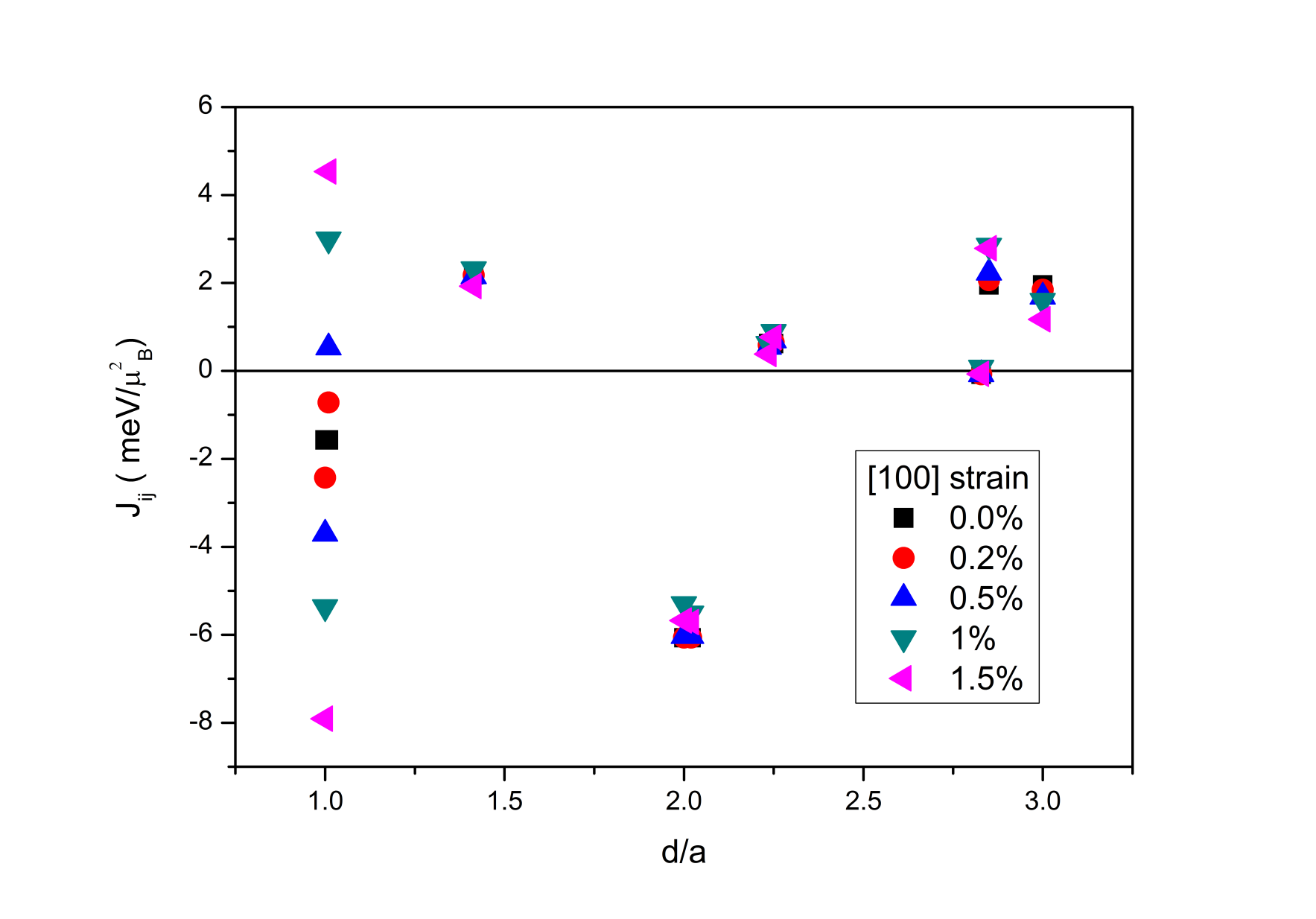 Figure 1
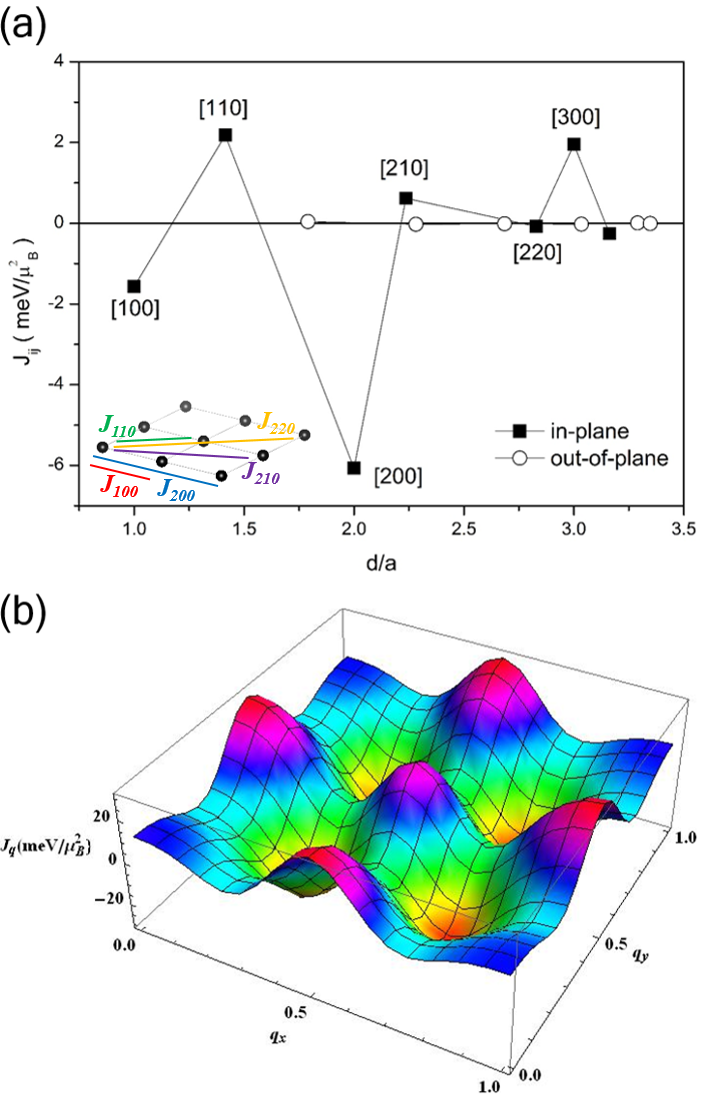 Figure 1
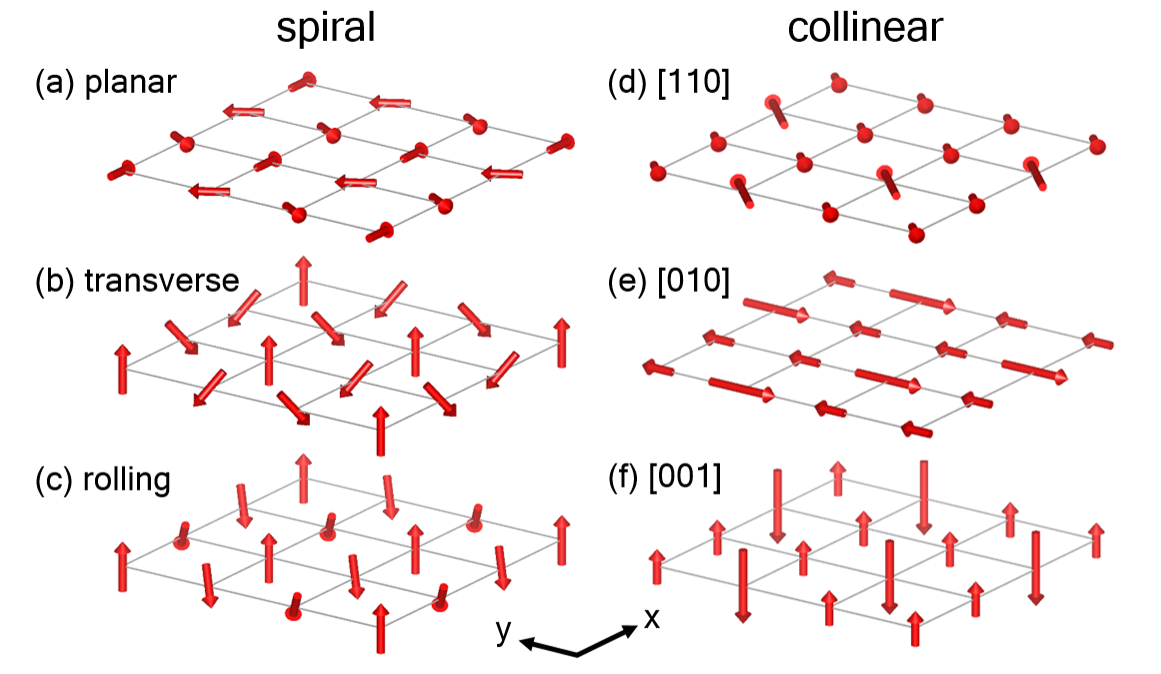 Figure 2
| spin orientation | energy | ||
| planar | 0 | ||
| spiral | rolling | -0.42 | |
| transverse | -0.22 | ||
| (110) | -0.34 | ||
| collinear | (010) | -0.24 | |
| (001) | -1.27 | ||
| collinear | 38.06 | ||
| stripes | 39.57 |
| Pairing Channel | ||
|---|---|---|
| axial chiral | ||
| planar radial | ||
| planar quadrupolar | ||
| planar quadrupolar | ||
| planar tangential |
| energy | ||||
|---|---|---|---|---|
| planar | 1 | 0 | ||
| spiral | rolling | 1 | ||
| transverse | 1 | |||
| (110) | ||||
| collinear | (100) | 0 | ||
| (001) |
Peer Reviews
No public reviews on file for this paper yet. If you reviewed it on a platform where reviews are public (OpenReview, ICLR, NeurIPS, ICML), you can paste yours below so the community can read it here.
Videos
No videos yet. Explain this paper in a talk, walkthrough, or lecture? Add one.
††thanks: These two authors contributed equally
Dated: ]
Anisotropy of magnetic interactions and symmetry of the order parameter in
unconventional superconductor Sr2RuO4
Bongjae Kim1
Sergii Khmelevskyi1,20
Igor I. Mazin3
Daniel F. Agterberg4
Cesare Franchini1
1 University of Vienna, Faculty of Physics and Center for Computational Materials Science, Vienna A-1090, Austria
2 Center for Computational Materials Science, Institute for Applied Physics, Vienna University of Technology, Wiedner Hauptstrasse - , Vienna, Austria
3Code 6393, Naval Research Laboratory, Washington, D.C. 20375, USA
4 Department of Physics, University of Wisconsin, Milwaukee, Wisconsin 53201, USA
([)
Sr2RuO4 is the best candidate for spin-triplet superconductivity, an unusual and elusive superconducting state of fundamental importance. In the last three decades Sr2RuO4 has been very carefully studied and despite its apparent simplicity when compared with strongly correlated high- cuprates, for which the pairing symmetry is understood, there is no scenario that can explain all the major experimental observations, a conundrum that has generated tremendous interest. Here we present a density-functional based analysis of magnetic interactions in Sr2RuO4 and discuss the role of magnetic anisotropy in its unconventional superconductivity. Our goal is twofold. First, we access the possibility of the superconducting order parameter rotation in an external magnetic field of 200 Oe, and conclude that the spin-orbit interaction in this material is several orders of magnitude too strong to be consistent with this hypothesis. Thus, the observed invariance of the Knight shift across c has no plausible explanation, and casts doubt on using the Knight shift as an ultimate litmus paper for the pairing symmetry. Second, we propose a quantitative double-exchange-like model for combining itinerant fermions with an anisotropic Heisenberg magnetic Hamiltonian. This model is complementary to the Hubbard-model-based calculations published so far, and forms an alternative framework for exploring superconducting symmetry in Sr2RuO As an example, we use this model to analyze the degeneracy between various triplet states in the simplest mean-field approximation, and show that it splits into a single and two doublets with the ground state defined by the competition between the “Ising” and “compass” anisotropic terms.
I Introduction
Superconductivity in Sr2RuO even though it occurs at a rather low temperature, has been attracting attention comparable to that attached to high-temperature superconductors review . For many years the dominant opinion was that it represents a unique example of a chiral triplet pairing state K ; K-O ; chi ; msr . Interestingly, the original premise that led to this hypothesis was the presumed proximity of Sr2RuO4 to ferromagnetism, and thus it was touted as a 3D analogue of 3He Sigrist-Rice ; MS1 . It was soon discovered, first theoretically MS2 , and then experimentally Braden1 , that the leading instability occurs in an antiferromagnetic, not ferromagnetic channel, and thus a spin-fluctuation exchange in the Berk-Schrieffer spirit would normally lead to a -wave, not -wave superconductivity.
The issue seems to have been decided conclusively when the Knight shift on Ru was shown to be temperature-independent across K , and later also on O K-O , and the neutron-measured spin-susceptibility was found to be roughly constant across the transition as well chi . The chiral -wave state with an order parameter where the Cooper pair spins can freely rotate in-plane, is the only state that could have this property. Moreover, since in this state spins are confined in the plane, the Knight shift in a magnetic field parallel to ẑ is supposed to drop below in pretty much the same manner as in singlet superconductors. Nonetheless, when eventually this experiment was performed Kz , it appeared that is also independent of temperature. The authors of Ref. Kz attempted to reconcile the accepted pairing symmetry with their experiment, by assuming that the experimental magnetic field of 200 Oe is affecting drastically the pairing state and converting it to (or the corresponding partner state). One goal of our paper is to estimate whether this hypothesis is tenable with realistic material parameters.
It is worth noting that the invariance of the in-plane susceptibility is the only experiment consistent exclusively with a chiral -state (CS). Some probes indicate chirality ( detects spontaneous currents below msr ), while others indicate breaking of time-reversal symmetry Kapitulnik , but the triplet parity is not, in principle, necessary to explain these experiments. For instance, the singlet chiral state or even which is not chiral (although this second state would require two phase transitions with decreasing temperature, which has never been detected), but breaks the time reversal symmetry, are other admissible candidates. Josephson junction experiments Liu suggested that the order parameter changes sign under the transformation, which is consistent with a CS, but also with other order parameters Zutic .
Spin-orbit coupling plays an important role not only in selecting between different triplet states (chiral vs. planar), but also in the structure of the chiral state itself. For instance, in CuxBi2Se instead of the expected chiral state, a nematic spin-triplet state was observed mat16 ; yon16 . Indeed, in CuxBi2Se3 the large spin-orbit coupling necessarily implies that a induces also an in-plane -vector component yip13 . This in-plane component leads to a non-unitary pairing state, which is not energetically favored in weak coupling fu14 , and, instead, the lower-symmetry nematic state with is realized. In principle, similar physics must occur in Sr2RuO4, but there the corresponding induced in-plane -vector component should be much smaller, thus allowing for a chiral -wave state to exist. However, this is a quantitative, not qualitative difference, and needs a better understanding of the role of spin-orbit coupling.
Finally, recent years have brought about an array of experiments that are actually inconsistent with the CS. One prediction of a CS is the existence of edge states at boundaries and at domain walls mat99 ; kal09 ; sca15 . However, no evidence for these edge states has been found kir07 ; kal09 . There are a variety of predictions about the response of CS to in-plane magnetic fields that have not been observed experimentally. In particular, it is known that a finite in-plane magnetic field should lead to two superconducting transitions as temperature is reduced agt98 ; VPM and that the slope of the upper critical field with temperature at should depend upon the in-plane field direction (this is only true for pairing states that can break time-reversal symmetry) gor84 ; VPM . In addition, several different probes indicate behavior resembling substantial Pauli paramagnetic effects (see Ref. PPE for discussion and original references). The latest cloud on the CS sky appeared because of the uniaxial strain experiments. For the CS (or, in fact, any other two-component state) the critical temperature, under an orthorhombic stress must change linearly with the strain (the and state are not degenerate any more, and the splitting is linear in strain). In the experiment strain varies at least quadratically (more likely, quartically), whereas the linear term is absent within the experimental accuracy, and only one, very well expressed specific heat jump, has been observed, with no trace of a second transition even while the critical temperature changes a lothicksAPS . Moreover, it was established that both and the variations trace the changes in the density of states, and peak when the Fermi level passes the van Hove singularities at the or points. This observation is particularly important, because, by symmetry, the superconducting gap in a triplet channel in a tetragonal superconductor is identically zero at and (it need not be zero at a finite but in a highly 2D material like Sr2RuO4 it will be still very small by virtue of continuity). Correspondingly, one expects these van Hove singularities to have little effect on superconductivity. A slightly more subtle, but even more convincing argument against triplet pairing in Ref. strain is related to the reduced critical field anisotropy. Finally, a recent detailed study of thermal conductivity has concluded that a -wave state is by far better consistent with the thermal transport than the CS taillfer .
In fact, only one fact unambiguously points toward the CS: the invariance of the spin susceptibility in the in-plane magnetic field — but, as discussed above, the analogous experiment for the out-of-plane field show such an invariance. Thus, our acceptance of the NMR data as an ultimate proof of the CS hinges upon the possibility of a magnetic field 200 Oe (0.02 T, or 13 mK in temperature units) to overcome the energy difference between the helical ( and chiral ( states. On can show (the derivation is presented below) that this implies that the two states, whose energy difference comes from the spin-orbit (SO) interaction, are nearly degenerate with the accuracy K where meV is the SO constant. Moreover, it is often claimed that the solution of other paradoxes outlined above may be obtained (although nobody has convincingly succeeded in that) in a formalism where the relativistic effects would be fully accounted for since the separation between singlet and triplet channels is only possible in terms of the full angular moment, rather than just electron spins.
II Results and Discussion
In order to illustrate how SO coupling affects the core assumption of the field-induced d-vector rotation, let us show a simple back-of-the-envelope calculation: suppose that the one-electron Hamiltonian has a relativistic term of the order of The physical meaning of this term is that in the state when electron spins are confined in the plane (as opposed to be parallel to ), this affects the exchange part of the effective crystal potential, and, correspondingly, one-electron energies. The change is proportional to and so is the number of affected one-electron states, leading to an energy loss of the order of where is the magnetic anisotropy scale which is determined by the SO coupling. One way in which this energy contribution manifests itself is the conventional magnetic anisotropy in a spin-ordered state in which case However, the same “feedback” effect must be present in a triplet superconducting state. The number of electrons bound in Cooper pairs and thus forced to be either parallel or perpendicular to can be estimated as where is some average superconducting gap, and is the density of states, which has been experimentally measured to be about states/spin/Ru/eV review . Assuming K, we estimate e/Ru. If the magnetic anisotropy scale is of the order of 10 K (we will show later that this is the case), then the total energy loss incurred by rotating the spins of the Cooper pairs is K (this is smaller than various model estimates of the change in as reviewed in Ref. MaenoJPSJ ; we use the above estimate because we wanted to have a conservative bound on and a model-independent estimate of the energy, and not simply a critical temperature difference, since the latter may, in principle, dramatically differ from the former). This seems like a small number, but we shall compare it with the energy gained by allowing screening of an external field of 200 Oe by Cooper pairs, which is K. This is four orders of magnitude smaller than the estimated loss of superconducting energy. In other words, to allow for the presumed -vector rotation, various relativistic effects must fortuitously cancel each other with a accuracy. Note that in Ref. MaenoJPSJ , instead, was compared with the Zeeman splitting, but this comparison is hardly relevant at all for the problem at hands; the correct way is to compare the energy gain with the energy loss.
This simple estimate emphasizes the importance of getting a handle of the type and scale of relativistic effects in Sr2RuO So far all efforts in this direction have been performed either within simplified models or by educated guesses from the experiment ng00 ; eremin02 ; annett08 ; cobo16 ; scaffidi14 . The goal of this paper is to address the issue from a first principle perspective. It is known that this approach correctly describes (only slightly underestimating) the spin-orbit interactionsVeenstra (our SO splitting is exactly the same as calculated in that reference, 90 meV), and, by comparing the Fourier transform of the calculated exchange interaction with the experimentally measured q-dependent spin susceptibility, we observe that the latter is also well reproduced. The only serious problem with this approach is that it overestimates the tendency to magnetic ordering for a given set of magnetic interactions because of the mean field nature of the density functional theory. Thus we start with a realistic paramagnetic state of Sr2RuO using the alloy analogy model in the first principles DFT framework and calculate the isotropic exchange interactions (See Methods). The Fourier transform of these interactions gives us the shape of the full spin susceptibility in the momentum space; as expected, this is peaked at the nesting vector in agreement with the experiment. Next, we calculate the mean-field energy of several ordered magnetic states, all characterized by the same wave vector q=q3, and degenerate without SO interaction. This shall allow us to calculate nearest neighbor relativistic Ising terms (see below). Finally, we calculate magnetic anisotropy for the states, which breaks the tetragonal symmetry, and from there we extract the nearest neighbor compass exchange (See Methods). The energy scale of magnetic anisotropy appears rather large, which not only renders the hypothesis of a d-vector rotation unlikely, but also supports the idea that anisotropic interactions must be properly accounted for before drawing conclusions from the experiment. The set of interactions that we derived should serve as a launching pad and testbed for model calculation of the superconducting properties. We maintain that a model where all interelectron interactions are absorbed into spin-spin interactions (with Hund’s coupling between the spins and noninteracting electrons) is complementary to the widely used Hubbard model and at least as realistic.
Experimentally, Sr2RuO4 shows no sign of magnetic ordering down to the low temperatures. However, neutron diffraction studies have revealed sidis99 ; servant02 ; braden04 spin-fluctuations in the paramagnetic state with a characteristic nearly-commensurate wave vector close to which persist even at the room temperature Iida . The Density Functional Theory (DFT), being a static mean field theory (by some criteria, the best such theory possible), overestimates the tendency to magnetism. In its Generalized Gradient Approximation flavor (GGA) DFT stabilizes even ferromagnetic order, albeit with small moments deGroot . Unsurprisingly, spin density waves with are even lower in energy. This deficiency of the DFT can, however, be put to a good use by mapping the DFT (*i.e., *mean-field) energetics onto a spin-Hamiltonian, as it is often done, for instance, for Fe-based superconductors Glasbrenner . Since the isotropic and anisotropic magnetic interactions entails completely different energy scales, and require different level of accuracy, we have chosen two different techniques to calculate them; as discussed below, the isotropic calculations were performed perturbatively, allowing us to fully account for the long-range, nesting-driven interaction, while the nearest neighbor exchange interactions were calculated by brute force comparing highly accurate energy values in different magnetic configurations.
First we have calculated the Heisenberg part of the Hamiltonian, defined as
[TABLE]
where is the Ru moment on the site and the summation is performed over all bonds up to a given coordination sphere. The parameters are calculated in the Disordered Local Moments (DLM) approximation Gyorffy , which is used to model the paramagnetic state of Sr2RuO4 (See Methods for more details and employed approximations).
The results presented in the Fig. 1 are derived for the Ru local moment being fixed to 1 in the DLM state. The obtained values of the exchange constants, however, are fairly independent of the values of the local moment fixed in the DLM state; the minimum of the Fourier transform is always at with . Note that the interplane exchanges nearly vanish, indicating an almost perfect 2D character of the magnetism in Sr2RuO4. For instance, the nearest neighbors between-the-planes K/ (ferromagnetic), or about
The leading term is the in-plane third nearest neighbour (NN) antiferromagnetic interaction , which is quite counterintuitive from the point of view of the Hubbard model and superexchange mechanism that is often employed as a starting point. This is a consequence of the Ru electrons itinerancy, since Sr2RuO4 is a metal. The lattice Fourier transform, , of the calculated interactions is shown in the Figure 1 (b). has a meaning of a measure of the energy () of the spin-density fluctuations with a wave-vector and a given amplitude [the quantitity that is directly related to the static zero-temperature spin susceptibility is The deep minima of at suggest that the spin-fluctuations with the wave vector will be dominant in the paramagnetic state of Sr2RuO4. The position of these minima is indeed in perfect agreement with the sharp maxima of the integrated magnetic scattering intensity, experimentally observed in neutron diffraction Iida . Thus, both our calculation and the experiment suggest the dominance of the spin-fluctuations with the wave vector in the excitation spectra of Sr2RuO4.
In order to extract the relevant anisotropic exchange interaction parameters, we used direct calculations of the total energy in different magnetic configurations compatible with the ordering vector . Note that anisotropic magnetic interactions appear exclusively due to the SO coupling (See Methods for the description of codes and approximations used in these calculations). Allowed anisotropic terms for the nearest neighbor terms are absorbed in the following Hamiltonian (simplified compared to a more complete expression discussed in the Methods section):
[TABLE]
where the first term is given by Eq. 1, the second is Ising exchange (sometimes called the Kitaev interaction), and the last two represent the compass term. Summation in the last two terms is over all horizontal and all vertical bonds, respectively, while in the Ising term it is over all inequivalent bonds. Note that Dzyaloshinskii-Moriya terms Dzyaloshinskii ; Moriya are not allowed by symmetry.
The six most energetically favorable states are depicted in Fig. 2. The first three states can be described as harmonic spin-density waves (SDWs):
[TABLE]
where with hardly varying between the three states and equal to 0.76 The fourth to sixth states are collinear where the amplitude of the moments varies along each of the crystallographic directions 100, 010, and 110 as (more precisely, Note that is very close to in the harmonic SDWs, and the average is the same in all these states (within a 1.3% error). In this collinear state the direction of the magnetization can be selected in three inequivalent ways, namely along 110, 11̄0 or 001. Upon inclusion of the SO term, the 001 collinear up-up-down structure is the ground state (Table 1).
Next, we fit the energy differences in Table 1 to the Hamiltonian (2), extracting and (the fitting procedure included more parameters than in Eq. 2, and is discussed in the Methods Section). All isotropic (Heisenberg) parts of the exchange interactions are included in the . The compass parameter does not affect the states with and was extracted from a separate set of calculations with and where and and was fixed to be equal to its value in the spiral states, 0.76 . These wave vectors define so-called single stripe antiferromagnetic order, well known in Fe-based superconductors.
Thus obtained parameters are meV/, and meV/ ( meV, meV, for ). The details of the fitting are described in the Methods section. Note that does not have an error bar not because it was accurately determined, but because we did not have enough calculations to estimate the error. First, one observes that the scale of the anisotropy induced by SO is of the order of K. As discussed in the introduction, this renders the explanation of the invariance of the Knight shift below in term of the order parameter rotation Kz untenable and shakes the main argument in favor of the chiral triplet superconductivity in Sr2RuO4. Second, our fitting provides a powerful tool for modeling normal and especially superconducting properties of Sr2RuO4 from an entirely different perspective. Compared to the generally accepted models based on the Hubbard-Hund Hamiltonians, our new approach is based entirely on first principles calculations, and emphasizes the role of magnetic interactions. The corresponding *DFT-inspired *model Hamiltonian reads
[TABLE]
where the first term is the noninteracting energy, with the band (spin) indices (), and the second is the Hund’s rule (Stoner, in the DFT parlance) coupling. All electron-electron interactions carried by spin fluctuations are absorbed in the local Hund’s interaction and the intersite magnetic interactions while interactions due to charge fluctuations are not included in Eq. 5, but can be added separately, if needed (or just collected in one Coulomb pseudopotential as in the Eliashberg theory). Eq. 5 can be understood as a generalized double-exchange Hamiltonian Khomskii . Indeed, this model, inspired by DFT calculations, entails electrons moving in the same effective potential as used in other techniques, and described by the same tight-binding parameters. However, as it is usual in DFT, all electron-electron interactions are implicitly integrated out. Instead, we introduce quasi-local magnetic moments that interact with the electrons via the local Hund’s rule coupling (parameterized as the Stoner parameter in DFT), while the moments interact among themselves according to the sum of the long-range Heisenberg and the short-range anisotropic Hamiltonian (Eq. 2). The former part incorporates implicitly all Fermi surface effects, including nesting at while the latter selects between different triplet states. It is important not to attempt to integrate out the free carriers in Eq. 5 in order to extract additional interaction between the local moments M; that would have been incorrect, because all such interactions had been computed previously and embedded in ** **On the contrary, the intended solution of these equations is integrating out the M’s in order to obtain the effective pairing interaction, as illustrated below.
It might be instructive to demonstrate how Eqs. 4, 5 can be reduced to a Hamiltonian including only the itinerant electrons (as convenient for analyzing superconductivity). We can safely assume that all s are much smaller than introduce the itinerant spin polarization and single out the terms relevant to the pairwise interaction between and
[TABLE]
In the lowest order in the mean field solution requires that and be parallel, and the effective pairwise interaction can be written as (note that essentially the same Hamiltonian, only written in the orbital basis rather than the band basis, which can also be done in this case, was applied to Fe-based superconductors in several papers, for instance, in Ref. Hu ; after summation of the total energy over the band indices these approaches become equivalent). In principle, one can easily derive the next order correction to the interaction, which is
As an example of how this Hamiltonian can be used to address superconductivity, we solve in the simplest mean field approximation the problem of the relative energetics of the five unitary triplet states. In particular, beginning with and restricting the electronic spins to a single band for simplicity (generalizing onto three bands with realistic dispersions is straighforward), we find that the Ising and compass exchange modify the pairing interaction in different pairing channels differently, as shown in Table 2.
Thus, in this approximation the five states split into two planar doublets (of course, this degeneracy is not driven by symmetry, and will be lifted in more sophisticated calculations, but likely the splitting will be small) and a CS singlet, which is located between the doublets if and below both of them otherwise (note that we found to be negative. In other words, we have shown that selection between chiral and planar superconductivity is driven by the competition between the Ising and compass anisotropic exchange. Of course, this is just an illustration of principle; in principle, this approach should be applied to the true three-band electronic structure and extended to singlet as well as triplet states, but this is beyond the scope of this paper.
We reiterate that we do not insist that this approach is superior to the Hubbard Hamiltonian, but it is different and complementary, having the potential to uncover new physics. Similar to the former, it can be used in the contexts of, random phase approximation (RPA), fluctuation exchange (FLEX) or functional renormalization group (fRG) calculations.
A final note relates to the recent experiments on strained Sr2RuO This is a large topic mostly outside of the scope of this paper. However, we would like to make one comment in this regard. The fact that rapidly grows with the strain and peaks at the strain corresponding to the Lifshits transition (where the band touches the X-point) can be explained by either a DOS effect (van Hove singularity) or by a change in pairing interaction. The former explanation, as mentioned before, is realistic for singlet, but not triplet pairing symmetries. The latter would be viable if the change in DOS were sufficient to shift the balance between the AF and FM tendencies toward the latter. To verify that, we have repeated the calculations of the Heisenberg parameters in the strained case. However, we found that the main effect of the strain is not related to the van Hove singularity, and that the average exchange coupling does not become more ferromagnetic. Instead, the strain introduces a splitting between and while the average value barely changes, as shown in Fig. 3. These results therefore indicate that the peak in is directly related to the peak in DOS, and not enhanced pairing interaction. This conclusion is supported by recently reported thermodynamic resultshicksAPS , which strongly suggest that not only but also is peaked at the van Hove singularity.
To summarize, we have presented first principle calculations of the leading isotropic and anisotropic magnetic interactions in Sr2RuO4. Our results indicate that rotating a wave superconducting order parameter during measurements of the Knight shift is impossible by several orders of magnitude and thus the invariance of the Knight shift across the transition remains an unresolved puzzle. We further proposed a model framework, based on a double-exchange type Hamiltonian, and incorporating the calculated magnetic interactions in their entirety, and present an example of using this framework for addressing superconducting pairing symmetry.
III Methods
First principles calculations
For relativistic total energy calculations we have employed the projector augmented wave method PAW as implemented in the Vienna Ab initio Simulation Package (VASP) Kresse , including SO coupling SOCVASP . We have used the density functional theory within the Perdew-Burke-Ernzerhof parametrization for the exchange and correlation potential PBE , and the experimental lattice structure is employed in all calculations. The energy cutoff was set to 400 eV with convergence criteria of eV. We used up to 1386 irreducible k-points, reduced to 900 for the four formula units cell. For Ru, a pseudopotential with states includes as valence states was selected.
For the calculation of the isotropic exchange constants we used the Korringa-Kohn-Rostokker KKR method within the atomic sphere approximation (ASA) KKRASA and the Green function based magnetic-force theorem Lichtenstein . The implementation of this technique has been described elsewhere MFT-KKR . Physically, this technique can be considered to be a magnetic analogue of the disordered alloys theory based on coherent potential approximation MFT-KKR and is known as the Disordered Local Moments (DLM) approximation Cyrot ; Gyorffy . Upon fixing the Ru magnetic moments in the DLM state we achieved self-consistency using 115 irreducible k-points in the Brillouin zone, and then used an extended set of k-points (1529) to compute the isotropic exchange constants in the framework of the magnetic force theorem.
**Fitting procedure. **The full equation used to describe the calculated energies, including all bilinear terms up to the second neighbors, reads:
[TABLE]
Here, for completeness, we have included the single-site anisotropy term ; since it always enters in the same combination with , they cannot be decoupled within this set of calculations. While this term is, in principle, allowed because of itinerancy, we note that the calculated magnetization is close to the the and therefore we expect . This approximation was used in the main text. We have also included, besides the nearest neighbor anisotropic interaction and the corresponding second nearest neighbor interactions and The latter distinguishes between the collinear state polarized along the (110) tetragonal direction and the one polarized along (100), and the transverse and rolling spirals. We found it to be relatively small, meV/ The second nearest neighbour Ising interaction simply adds to and therefore was absorbed into the latter in the fitting procedure. The difference in energies between the planar spiral and the (100) collinear structure, meV, is likely related to the fact that the isotropic exchange constants enter these two state differently. Our non-relativistic calculations find them degenerate within the computational accuracy, apparently, fortuitously. Since SOC also affects the isotropic constants, it is no surprise that relativistic effects break this accidental degeneracy.
One can calculate and either from the set of spiral calculations, or from collinear calculations; the results differ by %. It is unlikely that this is due to computational inaccuracy, but rather to other interactions not accounted for, such as third neighbors (which is the leading isotropic exchange) or anisotropic biquadratic coupling.
The full summary of the magnetic patterns and their energies used for the fitting, as well as the expressions for the total energies in terms of the parameters in Eq. 8, are presented in Table 3.
Mean-field comparison of pairing energies. To find the interactions in Table II, we begin with the following Hamiltonian that includes charge and spin fluctuations. As an example of how this approach can be used we ask a relatively simple question of how the magnetic anisotropy we have found affects spin-triplet pairing states. To this end, we generalize Ref. miy86 and consider only a single band with the following Hamiltonian with charge, and spin, interactions
[TABLE]
Focussing on superconductivity with zero momentum Cooper pairs, can be rewritten
[TABLE]
where and are the possible singlet and triplet Cooper pair operators, and the effective interactions for the different pairing channels are found to be
[TABLE]
This result reduces to that found when spin interactions are isotropic miy86 ; cho13 or have uniaxial symmetry kuw00 . In our case, the specific form of the spin anisotropy is
[TABLE]
Expressing with the above spin anisotropy in terms of irreducible representations of tetragonal symmetry for the Cooper pairs leads to Table II.
IV Acknowledgements
B.K, S.K, and C.F were supported by the joint FWF and Indian Department of Science and Technology (DST) project INDOX (I1490-N19), and by the FWF-SFB ViCoM (Grant No. F41). I.I.M. is supported by ONR through the NRL basic research program. D.F.A was supported by the National Science Foundation grant DMREF-1335215.
V Contributions
S.K. and I.M conceived the research; B.K has carried out most of the numerical calculations with contributions by S.K. and I.M; the superconductivity-related discussion was authored by D.A., who also performed the sample mean-field calculations, and by I.M. All authors participated in the discussions and contributed to writing the paper; C.F. supervised the Vienna part of the project.
The reference list from the paper itself. Each links out to its DOI / PubMed record.
- 1(1) Mackenzie, A. P. & Maeno, Y. The superconductivity of Sr 2 Ru O 4 and the physics of spin-triplet pairing. Rev. Mod. Phys. 75 , 657–712 (2003).
- 2(2) Ishida, K. et al. Anisotropic pairing in superconducting Sr 2 Ru O 4 : Ru NMR and NQR studies. Phys. Rev. B 56 , R 505-R 508 (1997).
- 3(3) Ishida, K. et al. Spin-triplet superconductivity in Sr 2 Ru O 4 identified by 17 O Knight shift. Nature 396 , 658–660 (1998).
- 4(4) Duffy, J. A et al. Polarized-neutron scattering study of the cooper-pair moment in Sr 2 Ru O 4 . Phys. Rev. Lett. 85 , 5412–5415 (2000).
- 5(5) Luke, G. M. et al. Time-reversal symmetry-breaking superconductivity in Sr 2 Ru O 4 . Nature 394 , 558–561 (1998).
- 6(6) Rice, T. M. & Sigrist, M. Sr 2 Ru O 4 : an electronic analogue of 3 He? J. Phys.: Condens. Matter 7 , L 643-L 648 (1995).
- 7(7) Mazin, I. I. & Singh, D. J. Ferromagnetic spin fluctuation induced superconductivity in Sr 2 Ru O 4 . Phys. Rev. Lett. 79 , 733–736 (1997).
- 8(8) Mazin, I. I. & Singh, D. J. Competitions in layered ruthenates: ferromagnetism versus antiferromagnetism and triplet versus singlet pairing. Phys. Rev. Lett. 82 , 4324–4327 (1999).