Celebrating Haldane's `Luttinger liquid theory'
Jean-S\'ebastien Caux, Cristiane Morais Smith

TL;DR
This paper commemorates Haldane's foundational work that established the modern theoretical framework for understanding Luttinger liquids in one-dimensional quantum systems.
Contribution
It highlights the significance of Haldane's 1981 paper in establishing the theoretical basis for Luttinger liquids.
Findings
Haldane's theory revolutionized understanding of 1D quantum systems
Luttinger liquid concepts are now central in condensed matter physics
The paper emphasizes the enduring impact of Haldane's work
Abstract
This short piece celebrates Haldane's seminal J. Phys. C 14, 2585 (1981) paper laying the foundations of the modern theory of Luttinger liquids in one-dimensional systems.
Click any figure to enlarge with its caption.
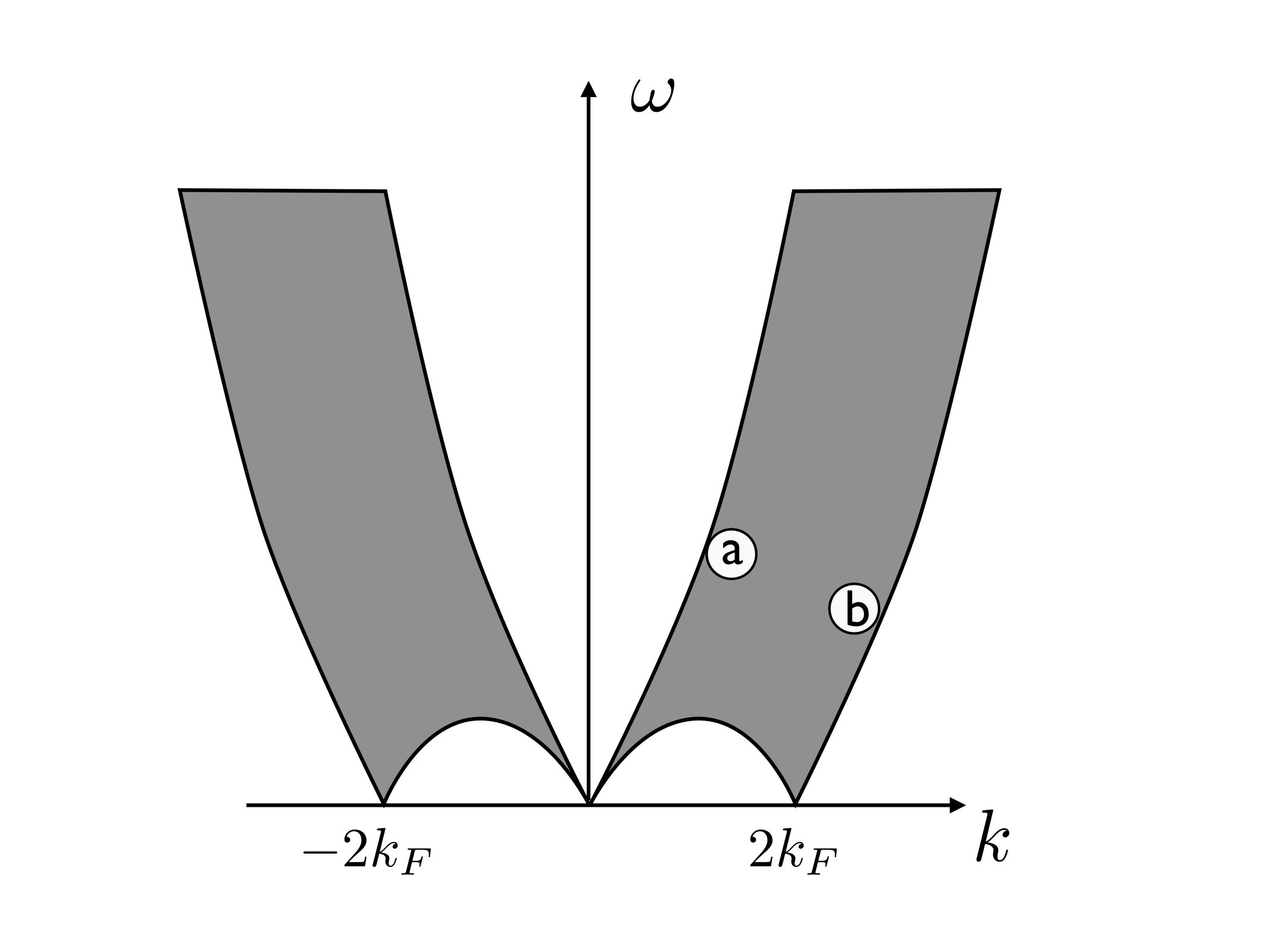 Figure 1
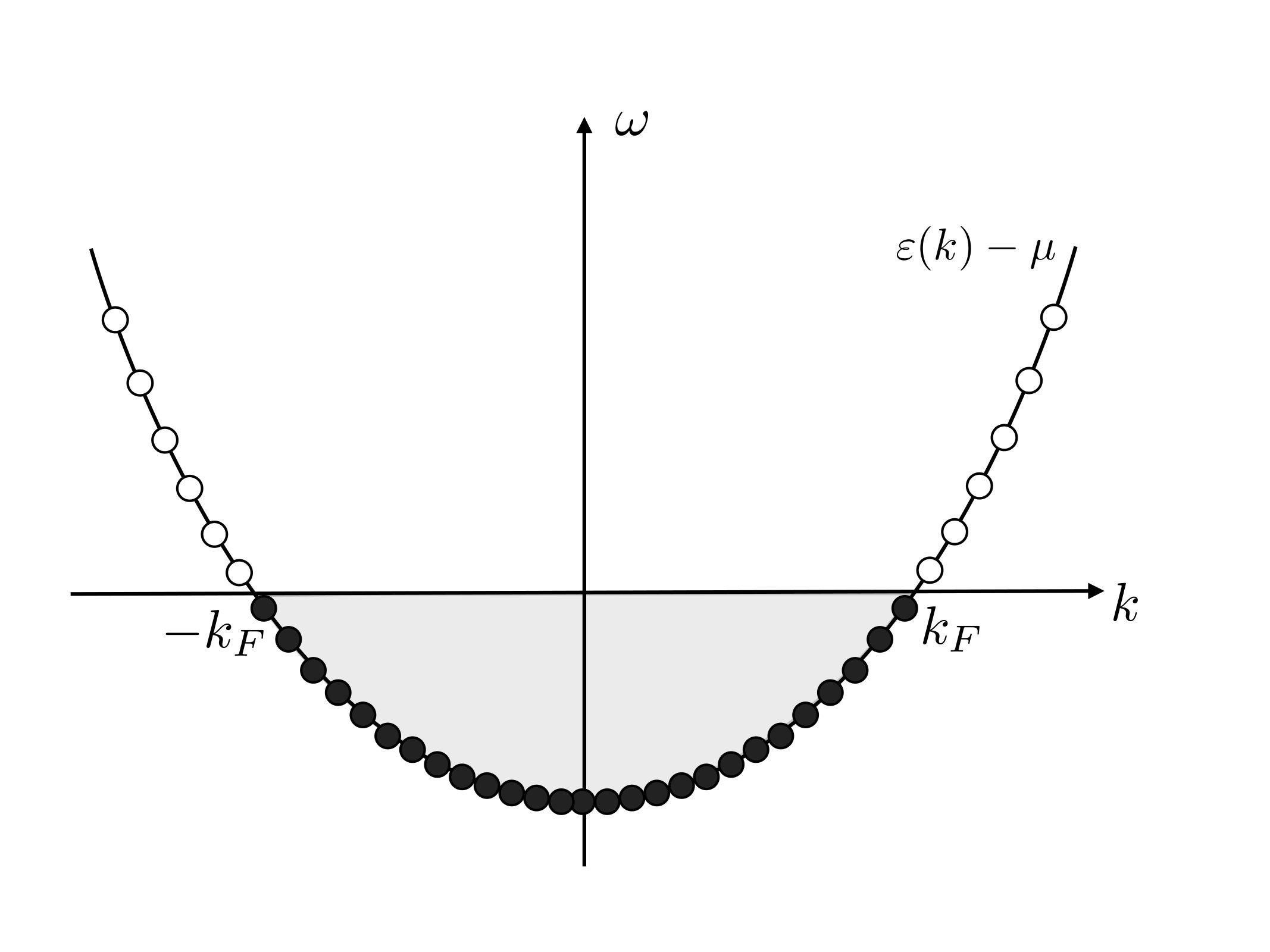 Figure 1
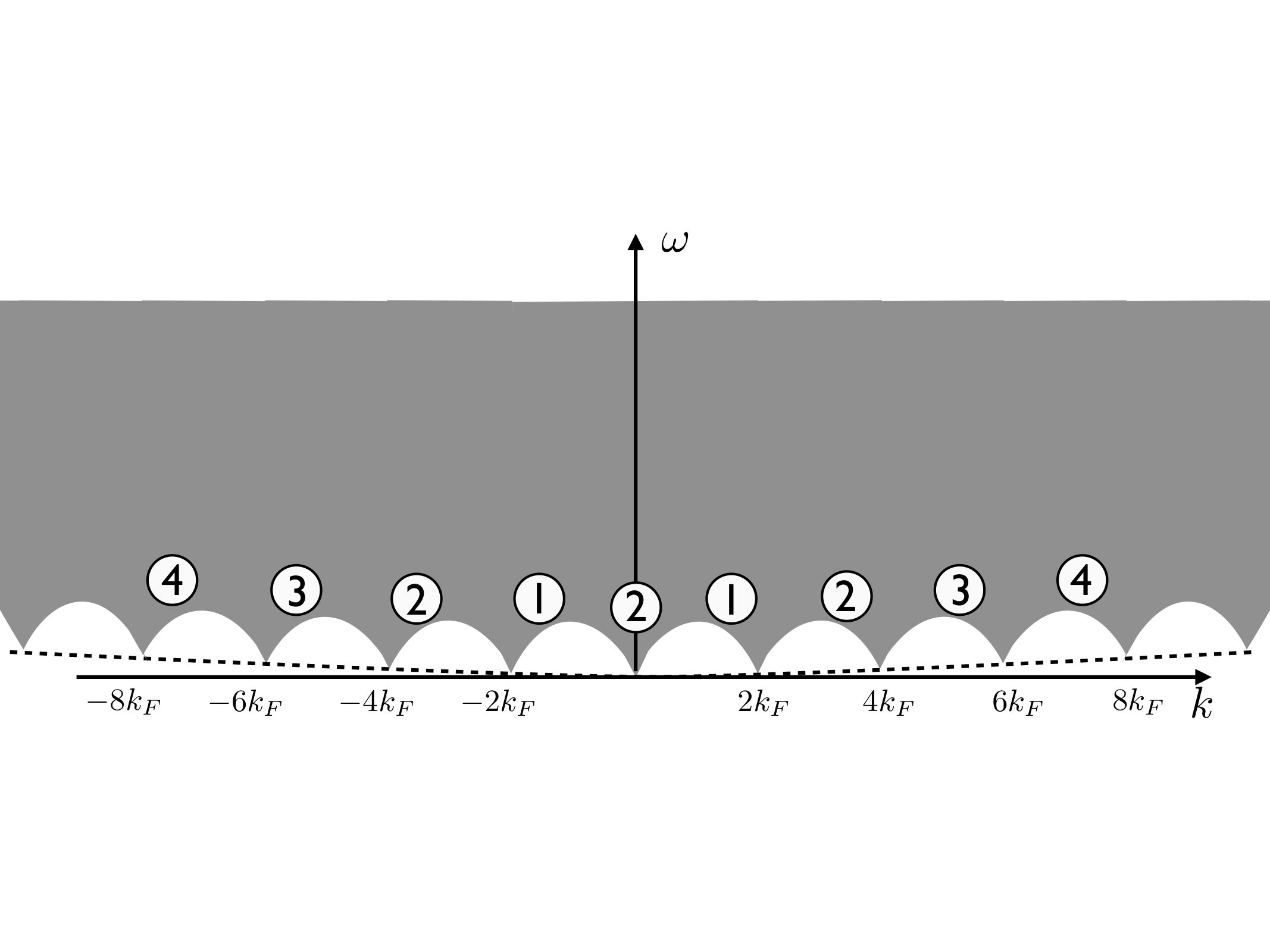 Figure 1
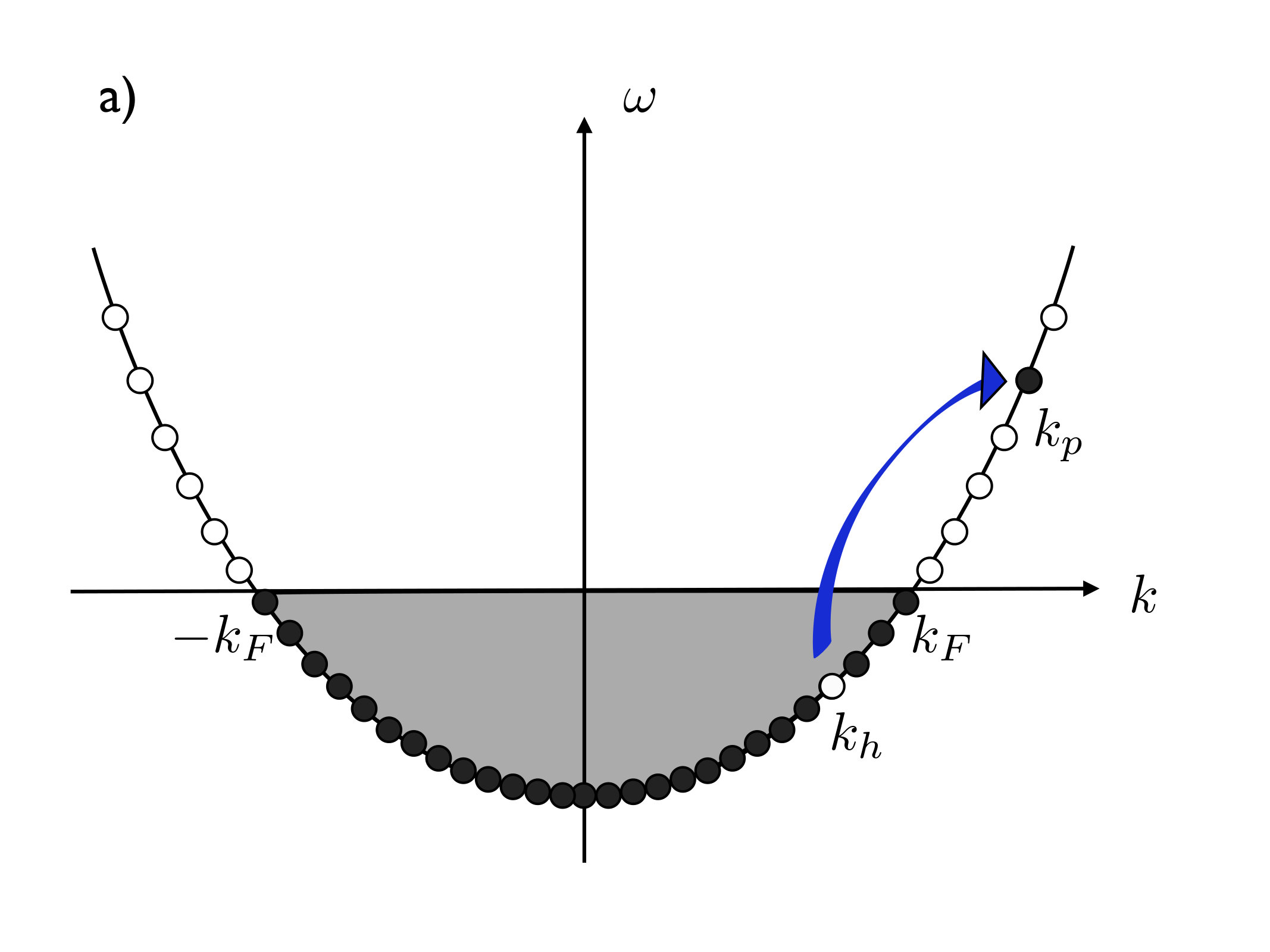 Figure 1
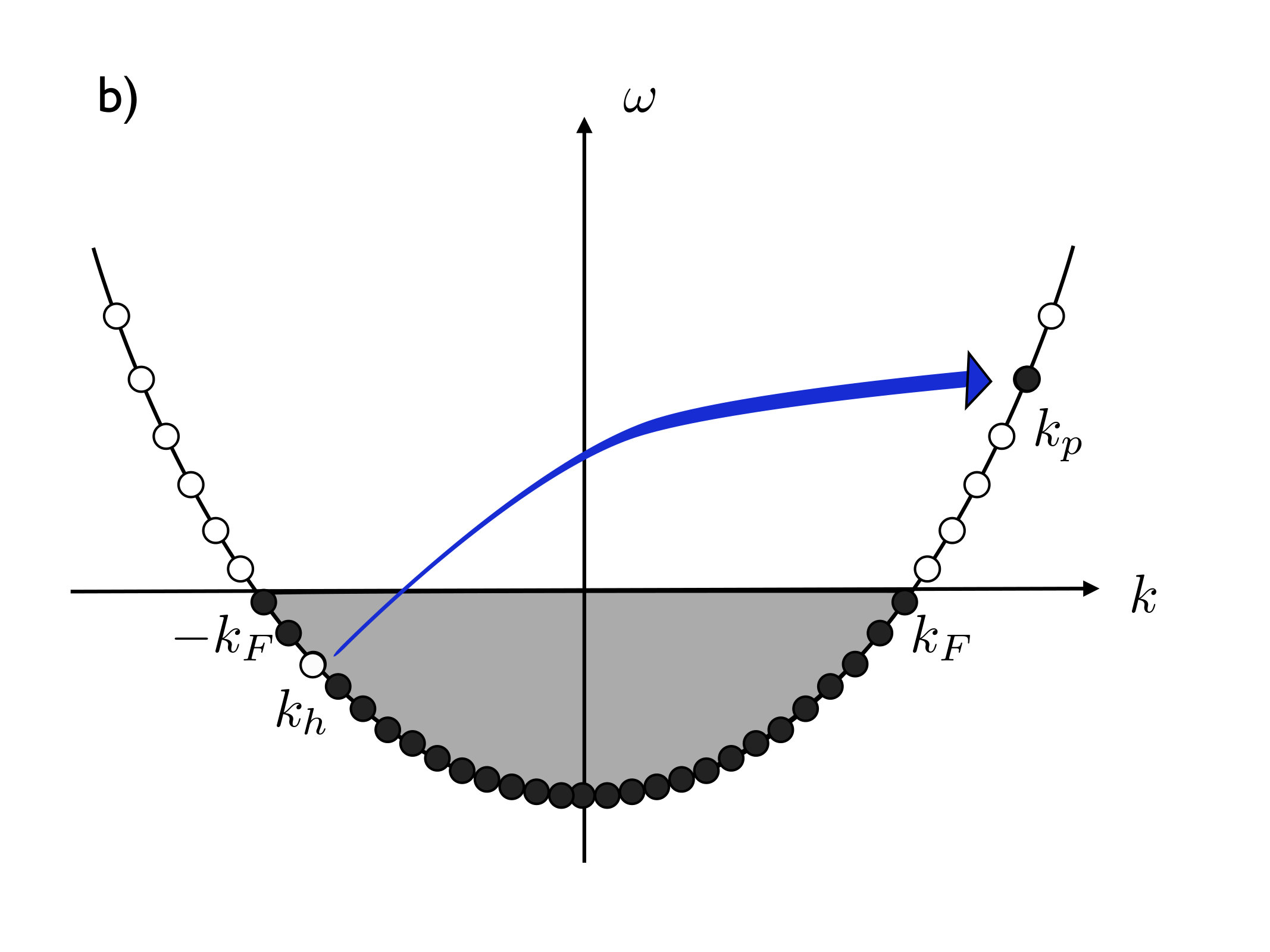 Figure 1
Peer Reviews
No public reviews on file for this paper yet. If you reviewed it on a platform where reviews are public (OpenReview, ICLR, NeurIPS, ICML), you can paste yours below so the community can read it here.
Videos
No videos yet. Explain this paper in a talk, walkthrough, or lecture? Add one.
Celebrating Haldane’s ‘Luttinger liquid theory’
Jean-Sébastien Caux
Institute for Theoretical Physics Amsterdam and Delta Institute for Theoretical Physics, University of Amsterdam, Science Park 904, 1098 XH Amsterdam, The Netherlands
Cristiane Morais Smith
Institute for Theoretical Physics, Center for Extreme Matter and Emergent Phenomena, Utrecht University, Leuvenlaan 4, 3584 CE Utrecht, The Netherlands
Abstract
This short piece celebrates Haldane’s seminal J. Phys. C 14, 2585 (1981) paper laying the foundations of the modern theory of Luttinger liquids in one-dimensional systems.
1 Introduction
In a pioneering paper published in J. Phys. C in 1981 [1], Duncan Haldane taught us that one-dimensional fermionic systems behave in a fundamentally different manner than those in the universality class described by Landau’s Fermi liquid theory [2]-[4].
At the simplest level, one-dimensionality alters the kinematics of simple excitations around a Fermi sea (Fig. 1). The spectrum is formed by particle/hole excitations in the vicinity of the two Fermi points (Fig. 2), and their (multiple) Umklapp modes. In 1d, in contrast to higher dimensions, forbidden regions of the frequency -momentum plane exist. Low-energy modes around integer multiples of the Fermi momentum are always present (Fig. 3), but there exist no low-energy excitations in the lobes between points and for any integer . For energies (much) below the height of the lobes (so in which is the Fermi velocity), we can thus explicitly separate the excitations into different sectors labelled by an even integer .
The lowest-energy state of sector is the -th Umklapp state at momentum . These states are ‘persistent current’ modes obtained by a Galilean transformation of the ground state, giving momentum to the whole system, and carrying a quadratic (in ) energy shift.
Above the persistent current Umklapp states, but for energies still low on the scale of , the spectrum of the theory is expected to be given by a linear in momentum boson (sound wave) spectrum (up to nonlinear corrections). Similarly, adding particles shifts the Fermi momentum linearly (in ), and the energy quadratically. We can thus immediately guess, following Haldane’s reasoning in [1], that an effective theory for our fermions universally takes the form
[TABLE]
where is the ground-state energy and and respectively denote sound, charge and current velocities. It was Haldane’s great insight to realize that in the presence of interactions, the effective description based on Eq. (1) remains valid, albeit with renormalized parameters and (constrained by ). This theory, which is thus universally valid for gapless one-dimensional systems (be they based on underlying fermionic, bosonic or spin degrees of freedom), should be viewed as a ‘theory of everything’ in 1d, similarly to the status that Landau’s Fermi liquid theory has achieved in higher dimensions. This is the point of view so eloquently put forward in Haldane’s paper [1].
Many important contributions paved the way for this synthesis. The development of bosonization goes back almost to the very beginnings of quantum mechanics. In 1934, Bloch [5] used the fact that 1d fermions have the same type of low-energy excitations as a harmonic chain in his study of incoherent X-ray diffraction. Some years later, in 1950, Tomonaga [6] applied Bloch’s sound wave method to interacting fermions in 1d. His main contribution was probably to realize that the physical density operator splits up into left- and right-moving modes, obeying a bosonic Hamiltonian. He however missed the contribution to the density correlation function, and did not notice the anomalous decay of correlations. The fundamental paper of Luttinger [7] follows in 1963, in which (perhaps unaware of Tomonaga’s 1950 paper) he formulated his (part)namesake model. Using Toeplitz determinants, he found that the average occupation in the ground state behaves as a power-law with an interaction-dependent anomalous dimension. He thus realized the crucial fact that the Fermi surface discontinuity is destroyed by interactions in 1d. This work was however incorrect in its treatment of the commutation relations of the density operators. Later, Mattis and Lieb offered a correct treatment in their seminal paper [8].
The idea of bosonization, namely that bosons could be used to construct a complete set of states of a 1d fermionic system, appeared in 1965 in [9]. Subsequently, early computations of correlation functions appeared in [10] and [11]. In particular, in the first of these, Theumann noticed the absence of single-particle poles in the Green’s function. She thus correctly concluded that single-particle excitations are absent in such theories. In their famous 1974 paper [12], Dzyaloshinskii and Larkin recovered the absence of single-particle pole and of Fermi surface discontinuity, and offered an interpretation of Mattis and Lieb’s solution starting from conventional diagrammatic perturbation theory.
An early version of the actual bosonization operator identity appeared in [13]. This was refined by Mattis in 1974 [14], rendering calculation of correlation functions straightforward. Similar results appeared in the work of Luther and Peschel [15]. The power-law form for correlations was also recovered from equations of motion techniques in [16]. Bosonization was then applied to spin chains and vertex models in [17]. The first precise field-theoretical bosonization formula (as an operator identity) including the (until that point neglected) particle number raising/lowering operators (Klein factors) is in general attributed to [18]. An early formulation of Luttinger liquid concepts appeared in 1975 in [19].
But the fact remains that it is Haldane, in a remarkable series of papers, who gave Luttinger liquid theory the form it has today. Starting in [20], he gave the first explicit construction of charge-raising operatos (Klein factors). Subsequently, in [21], [22] and most notably in [1] he offered the complete and explicit construction of the bosonization operator identities, and cross-checked results with exactly solvable models. Most importantly, he proposed the concept of the Luttinger liquid (as he so defined it) as the proper replacement for the Fermi liquid in one dimension, and showed that many different types of systems of fermions, bosons and spins belong to this new universality class. This realization sparked much of the revolutionary advances achieved in low-dimensional quantum systems over the last 35 years.
The reference list from the paper itself. Each links out to its DOI / PubMed record.
- 1[1] F. D. M. Haldane. ‘Luttinger liquid theory’ of one-dimensional quantum fluids. I. Properties of the Luttinger model and their extension to the general 1D interacting spinless Fermi gas. J. Phys C: Sol. St. Phys. , 14(19):2585, 1981.
- 2[2] L. D. Landau. Theory of Fermi-liquids. Sov. Phys. JETP , 3:920, 1957.
- 3[3] L. D. Landau. Oscillations in a Fermi-liquid. Sov. Phys. JETP , 5:101, 1957.
- 4[4] A. A. Abrikosov, L. P. Gorkov, and I. E. Dzyaloshinski. Methods of Quantum Field Theory in Statistical Physics . Dover, 1963.
- 5[5] F. Bloch. Inkohärente Röntgenstreuung und Dichteschwankungen eines entarteten Fermigases. Helv. Phys. Acta , 7:385, 1934.
- 6[6] S.-I. Tomonaga. Remarks on Bloch’s Method of Sound Waves applied to Many-Fermion Problems. Prog. Theor. Phys. , 5(4):544–569, 1950.
- 7[7] J. M. Luttinger. An Exactly Soluble Model of a Many-Fermion System. Journal of Mathematical Physics , 4(9):1154–1162, 1963.
- 8[8] D. C. Mattis and E. H. Lieb. Exact Solution of a Many-Fermion System and Its Associated Boson Field. J. Math. Phys. , 6(2):304–312, 1965.