Algebraic $K$-theory, assembly maps, controlled algebra, and trace methods
Holger Reich, Marco Varisco

TL;DR
This paper introduces the Farrell-Jones Conjecture in algebraic K-theory, discusses its current status, and reviews the main tools—controlled algebra and trace methods—used to approach it.
Contribution
It provides a concise overview of the conjecture, its significance, and the primary techniques employed in recent research.
Findings
Survey of the current status of the Farrell-Jones Conjecture
Explanation of controlled algebra and trace methods
Illustration of applications in algebraic K-theory
Abstract
We give a concise introduction to the Farrell-Jones Conjecture in algebraic -theory and to some of its applications. We survey the current status of the conjecture, and we illustrate the two main tools that are used to attack it: controlled algebra and trace methods.
Click any figure to enlarge with its caption.
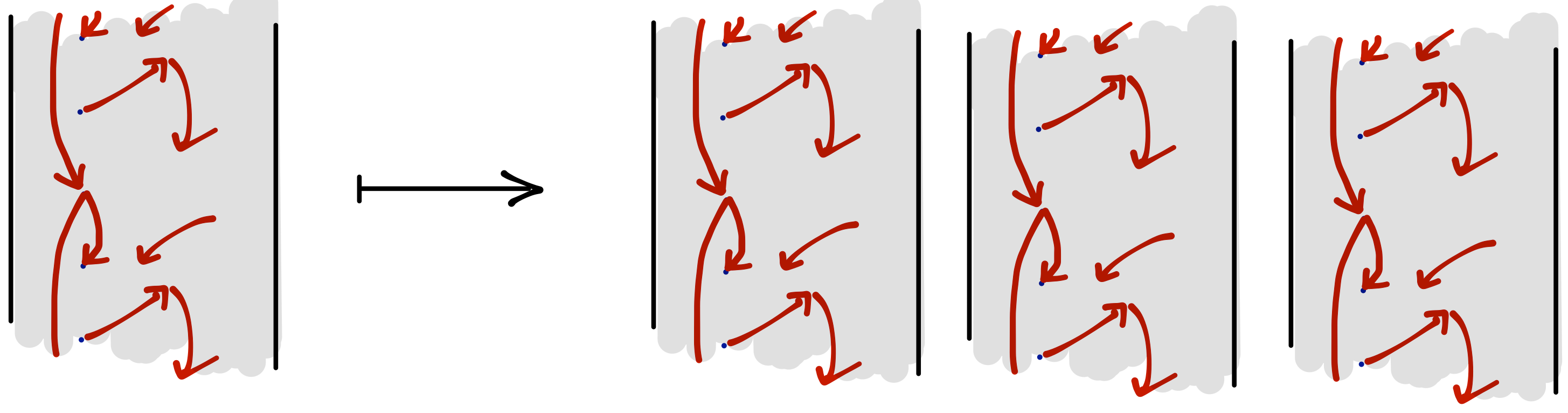 Figure 1
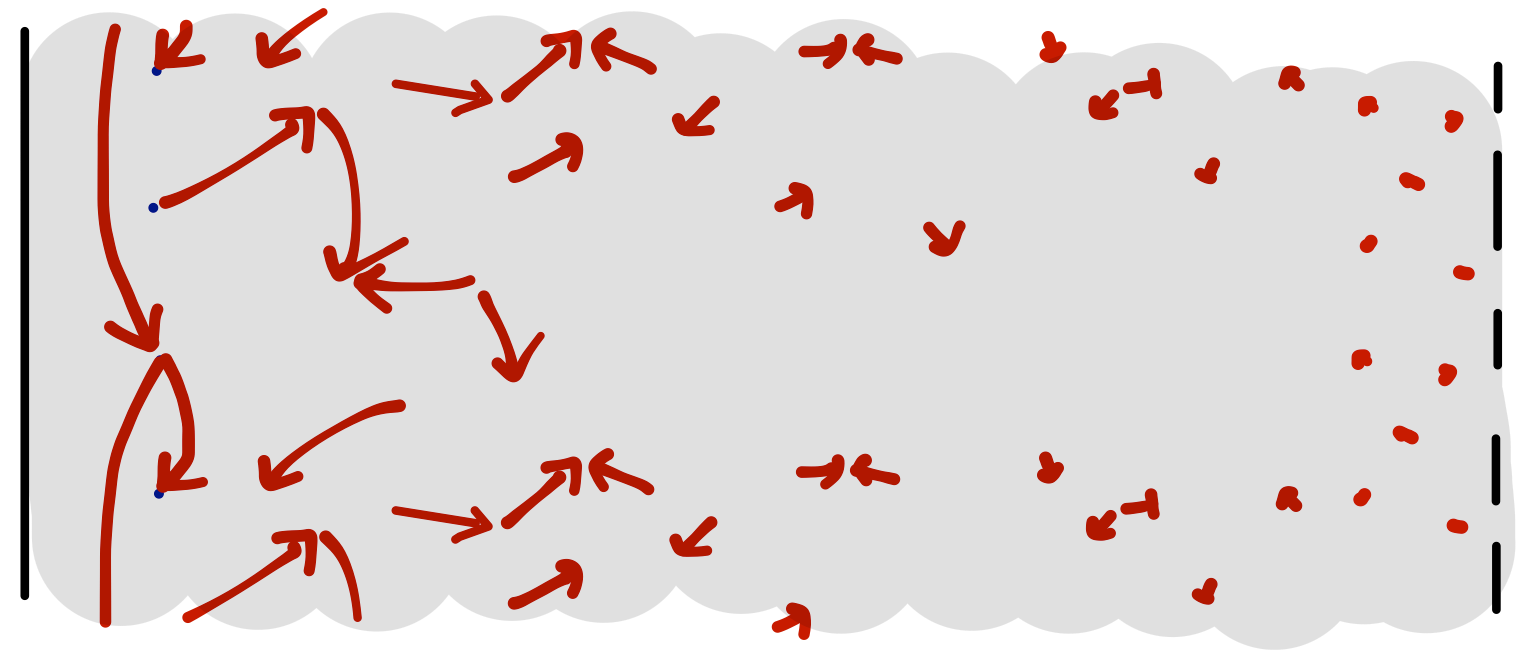 Figure 2
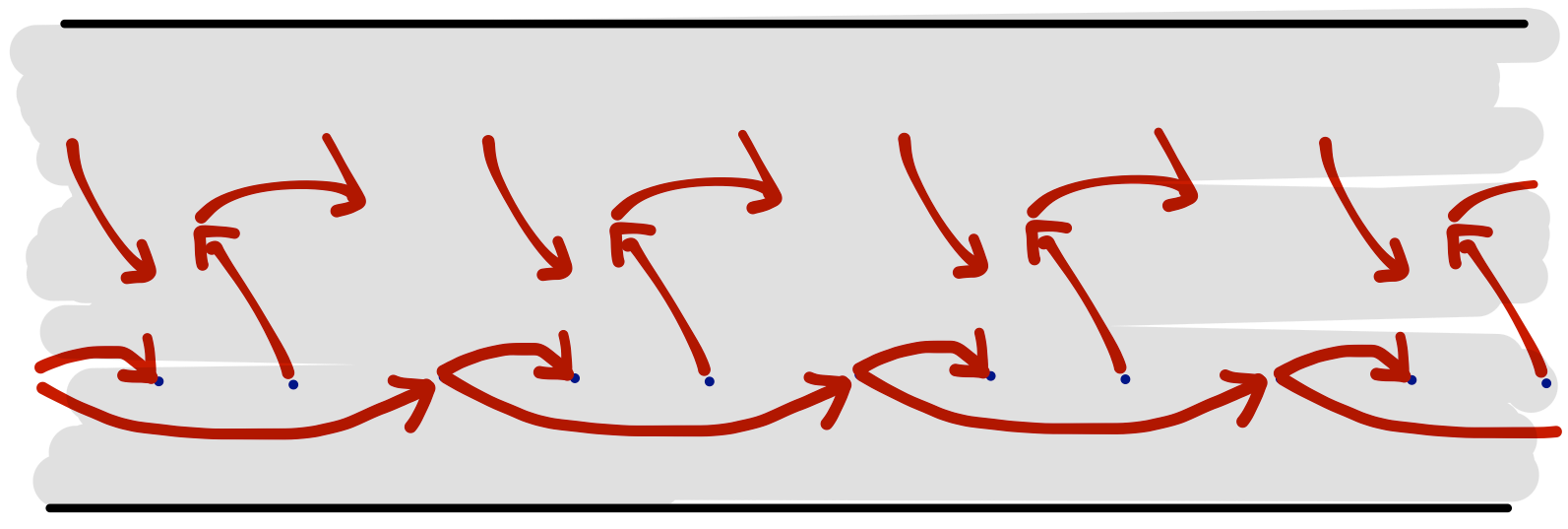 Figure 3
Peer Reviews
No public reviews on file for this paper yet. If you reviewed it on a platform where reviews are public (OpenReview, ICLR, NeurIPS, ICML), you can paste yours below so the community can read it here.
Videos
No videos yet. Explain this paper in a talk, walkthrough, or lecture? Add one.
[columns=1]
Algebraic -theory, assembly maps,
controlled algebra, and trace methods
A primer and a survey of the Farrell-Jones Conjecture
Holger Reich
Institut für Mathematik, Freie Universität Berlin, Germany
\[email protected] \hurlmi.fu-berlin.de/math/groups/top/members/Professoren/reich.html and
Marco Varisco
Department of Mathematics and Statistics, University at Albany, SUNY, USA
\[email protected] \hurlalbany.edu/ mv312143/
(Date: February 23, 2018)
Abstract.
We give a concise introduction to the Farrell-Jones Conjecture in algebraic -theory and to some of its applications. We survey the current status of the conjecture, and we illustrate the two main tools that are used to attack it: controlled algebra and trace methods.
Key words and phrases:
Algebraic -theory, Farrell-Jones Conjecture
2010 Mathematics Subject Classification:
\MSC19-02
Contents
1. Introduction
The classification of manifolds and the study of their automorphisms are central problems in mathematics. For manifolds of sufficiently high dimension, these problems can often be successfully solved using algebraic topological invariants in the algebraic -theory and -theory of group rings.
In an article published in 1993 [FJ93a], Tom Farrell and Lowell Jones formulated a series of Isomorphism Conjectures about the and -theory of group rings, which became universally known as the Farrell-Jones Conjectures. On the one hand these conjectures represented the culmination of decades of seminal work by Farrell, Jones, and Wu Chung Hsiang, e.g. [FH78], [FH81a], [FH81b], [Hsi84], [FJ86], [FJ89]. On the other hand they have motivated and continue to motivate an impressive body of research.
In this article we focus only on the Farrell-Jones Conjecture for algebraic -theory, and mention briefly some of its variants in Subsection 2.6. We give a concise introduction to this conjecture and to some of its applications, survey its current status, and most importantly we explain the main ideas and tools that are used to attack the conjecture: controlled algebra and trace methods.
Section 2 begins with some fundamental conjectures in algebra and geometric topology, which can be reformulated in terms of and of group rings. These conjectures are all implied by the Farrell-Jones Conjecture, but they are more accessible and elementary; moreover, their importance and appeal do not require algebraic -theory, but may serve as motivation to study it.
In Subsections 2.3 and 2.4 we define assembly maps and use them to formulate the Farrell-Jones Conjecture. Then we discuss how the Farrell-Jones Conjecture implies all other conjectures discussed in this article.
In Section 3 we collect most of what is known today about the Farrell-Jones Conjecture in algebraic -theory. We invite the reader to compare that section to the corresponding Section 2.6 in the survey article [LR05] from 2005, to appreciate the tremendous amount of activity and progress that has taken place since then.
The last two sections focus on proofs. In Section 4 we introduce the basic concepts of controlled algebra and see them at work. In particular, we give an almost complete proof of the Farrell-Jones Conjecture in the simplest nontrivial case, that of the free abelian group on two generators. Many ingenious ideas, mainly going back to Farrell and Hsiang, enter the proof already in this seemingly basic case. This section is meant to be an accessible introduction to controlled algebra. We do not even mention the very important flow techniques, and highly recommend Arthur Bartels’s survey article [Bar16].
In Section 5 we illustrate how trace methods are used to prove rational injectivity results about assembly maps. We give a complete proof of an elementary but illuminating statement about in Subsection 5.1, and then explain how this idea can be generalized using more sophisticated tools like topological Hochschild homology and topological cyclic homology. The complicated technical details underlying the construction of these tools are beyond the scope of this article, and we refer the reader to [DGM13], [Hes05], and [Mad94] for more information. However, we carefully explain the structure of the proof of the algebraic -theory Novikov Conjecture due to Marcel Bökstedt, Hsiang, and Ib Madsen [BHM93]. We follow the point of view used by the authors in joint work with Wolfgang Lück and John Rognes [LRRV17a], leading to a generalization of this theorem for the Farrell-Jones assembly map. In particular, we highlight the importance of a variant of topological cyclic homology, Bökstedt-Hsiang-Madsen’s functor , which has seemingly disappeared from the literature since [BHM93].
We tried to make our exposition accessible to nonexperts, and no deeper knowledge of algebraic -theory is required. However, we expect our reader to have seen the basic definitions and properties of and , and to be willing to accept the existence of a spectrum-valued algebraic -theory functor. Classical and less classical sources for the -theoretic background include [Bas68], [Cor11], [DGM13], [Mil71], [Ros94], and [Wei13].
There are other survey articles about the Farrell-Jones and related conjectures: [Bar16], [LR05], and [Mad94], which we already recommended, and also [Lüc10] and the voluminous book project [Lüc]. Our hope is that this contribution may serve as a more concise and accessible starting point, preparing the reader for these other more advanced surveys and for the original articles.
Acknowledgments
This work was supported by the Collaborative Research Center 647 Space – Time – Matter in Berlin and by a grant from the Simons Foundation (#419561, Marco Varisco).
2. Conjectures
In this section we discuss many conjectures related to group rings and their algebraic -theory. These conjectures are all implied by the Farrell-Jones Conjecture, which we formulate in Subsection 2.4. All of these conjectures are known in many cases but open in general, as we review in Section 3.
2.1. Idempotents and projective modules
An element in a ring is an idempotent if . The trivial examples are the elements [math] and .
Conjecture 1** (trivial idempotents).**
Let be a field of characteristic zero and let be a torsion-free group. Then every idempotent in the group ring is trivial.
The assumption that is torsion-free is necessary: if is an element of finite order , then is a nontrivial idempotent in .
A counterexample to the conjecture above would be in particular a zero-divisor in , and hence a counterexample to Problem 6 in Irving Kaplansky’s famous problem list [Kap57], which is reproduced in [Kap70].
It is interesting to notice that the analog of Conjecture 1 for the integral group ring is true for all groups, even for groups with torsion. The proof that we give below uses operator algebras, as suggested in [Kap70, page 451], and therefore it is very different from the rest of this paper, even though the idea of using traces plays a central role in Section 5.
Theorem 2**.**
For any group , every idempotent in the integral group ring is trivial.
Proof.
The integral group ring embeds into the reduced complex group -algebra , and the map , extends to a positive faithful trace . Let be an idempotent, i.e., . It is known that in the -algebra every idempotent is similar to a projection, i.e., there exist such that , is invertible, and ; see for example [CMR07, Proposition 1.8, Lemma 1.18]. Therefore . Applying the trace to and using positivity one sees that the trace of lies in . The trace of is clearly an integer. Therefore or . By faithfulness of the trace this implies that or , and then the same holds for . ∎
The module for an idempotent in the ring is an example of a finitely generated projective left -module. In view of the conjecture and the result above it seems natural to ask whether all finitely generated projective modules over group rings of torsion-free groups are necessarily free. Again, the assumption that is torsion-free is necessary: if is an element of finite order , then for the non-trivial idempotent the module is projective but not free.
Examples 3**.**
- (i)
Over fields and over principal ideal domains, hence in particular over the polynomial and Laurent polynomial rings and with coefficients in a field , all projective modules are free. 2. (ii)
The question whether finitely generated projective modules over the polynomial ring for are necessarily free was raised by Jean-Pierre Serre in [Ser55], and was answered affirmatively only 21 years later independently by Dan Quillen and Andrei Suslin. The wonderful book [Lam06] gives a detailed account of this exciting story.
The polynomial ring is the monoid algebra of the free abelian monoid generated by . The statement in (ii) was generalized as follows to monoid algebras.
- (iii)
If is a principal ideal domain, then every finitely generated projective module over the monoid algebra is free provided that is a semi-normal, abelian, cancellative monoid without nontrivial units [Gub88], [Swa92]. Free abelian groups are examples of monoids satisfying these conditions. 2. (iv)
If is a principal ideal domain and a finitely generated free group, then every finitely generated projective module over the group ring is free [Bas64].
At this point one could over-optimistically conjecture that every finitely generated projective -module is free if is a torsion-free group. However:
- (v)
Martin Dunwoody constructed in [Dun72] a torsion-free group and a finitely generated projective -module which is not free but has the property that . There are also finitely generated projective modules over with analogous properties.
A weakening of the question above is whether all finitely generated projective -modules are induced from finitely generated projective -modules when is torsion-free. Recall that is defined as the group completion of the monoid of isomorphism classes of finitely generated projective -modules. The surjectivity of the natural map
[TABLE]
induced by [M]\longmapsto\bigl{[}R[G]\operatorname*{\otimes}_{R}M\bigr{]} studies the stable version of this question: is every finitely generated projective -module stably induced? I.e., is there an such that is induced from a finitely generated projective -module? Notice that this is true for Dunwoody’s example (v) above. The stable version of Serre’s Conjecture (ii) above is a lot easier to prove and was established much earlier in [Ser58, Proposition 10].
This discussion leads to the following conjecture. In order to formulate it, we need to recall some notions from the theory of rings. A ring is called left Noetherian if submodules of finitely generated left modules are always finitely generated, and it is said to have finite left global dimension if every left module has a projective resolution of finite length. If both properties hold, then is called left regular. In the sequel we only consider left modules and therefore simply say regular instead of left regular. The ring of integers , all PIDs, and all fields are examples of regular rings.
Conjecture 4**.**
Let be a regular ring, and assume that the orders of all finite subgroups of are invertible in . Then the map
[TABLE]
is an isomorphism. In particular, if is torsion-free, then for any regular ring there is an isomorphism
[TABLE]
Here the colimit is taken over the finite subgroup category , whose objects are the finite subgroups of and whose morphisms are defined as follows. Given finite subgroups and of , let be the set of all group homomorphisms given by conjugation by an element of . The group of inner automorphisms of acts on by post-composition. The set of morphisms in from to is then defined as the quotient . Since inner conjugation induces the identity on , this is indeed a well defined functor on . In the special case when is abelian, the category is just the poset of finite subgroups of ordered by inclusion.
Proposition 5**.**
Conjecture 4 implies Conjecture 1.
Proof.
Let be a field of characteristic zero and let be a torsion-free group. Let denote the augmentation and write . If is an idempotent, then
[TABLE]
Since is a field, either or is the zero module. Replacing by if necessary, let us assume that is zero. The assumption implies that there exist and such that
[TABLE]
Applying we see that , and from this we conclude that is zero as follows. Recall that a ring is called stably finite if always implies that is zero; see [Lam99, Section 1B]. Kaplansky showed that, if is a field of characteristic [math], then any group ring is stably finite; compare [Mon69]. ∎
2.2. h-Cobordisms
Recall that a smooth cobordism over a closed -dimensional smooth manifold consists of another closed -dimensional smooth manifold and an -dimensional compact smooth manifold with boundary together with a diffeomorphism . This is called an -cobordism if both and are homotopy equivalences, where denotes the inclusion of in . Two cobordisms and over are called isomorphic if there exists a diffeomorphism such that . A cobordism over is called trivial if it is isomorphic to the cylinder (and this in particular implies that and are diffeomorphic).
Conjecture 6** (trivial -cobordisms).**
Let be a closed, connected, smooth manifold of dimension at least and with torsion-free fundamental group. Then every -cobordism over is trivial.
Surprisingly, this conjecture can be reinterpreted in terms of algebraic -theory. In fact, the celebrated -Cobordism Theorem of Stephen Smale, Barry Mazur, John Stallings, and Dennis Barden (e.g., see [Mil65], [KL05]), states that there is a bijection
[TABLE]
between the set of isomorphism classes of smooth cobordisms over and the Whitehead group of the fundamental group of , whose definition we now review.
Recall that, given a ring , invertible matrices with coefficients in represent classes in . Given any group , the elements are invertible for any , and hence represent elements in . By definition the Whitehead group is the quotient of by the image of the map that sends to the element represented by in . This map factors over , where is the abelianization of , and the induced map is in fact injective; see for example [LR05, Lemma 2]. So there is a short exact sequence
[TABLE]
For Whitehead groups there is the following well-known folklore conjecture. The cases of the infinite cyclic group [Hig40], of finitely generated free abelian groups [BHS64], and of finitely generated free groups [Sta65] provided early evidence for this conjecture.
Conjecture 8**.**
If is a torsion-free group, then .
By the -Cobordism Theorem recalled above, the connection between the last two conjectures is as follows.
Proposition 9**.**
Let be a closed, connected, smooth manifold of dimension at least and with torsion-free fundamental group. Then Conjecture 6 for is equivalent to Conjecture 8 for .
For groups with torsion, the situation is much more complicated. For example, if is a finite cyclic group of order , then , and in fact even . The analog of Conjecture 8 for arbitrary groups is the following.
Conjecture 10**.**
For any group the map
[TABLE]
is injective.
We highlight two differences with the corresponding Conjecture 4 for . First, Conjecture 10 is only a rational statement, i.e., after applying . Second, it is only an injectivity statement. In order to obtain a rational isomorphism conjecture for one needs to enlarge the source of the map (11). This requires some additional explanations and is postponed to Conjecture 24 below.
2.3. Assembly maps
The Farrell-Jones Conjecture, which we formulate in the next subsection, generalizes Conjectures 4, 8, and 10 from statements about the abelian groups and to statements about the non-connective algebraic -theory spectra of group rings, for arbitrary coefficient rings and arbitrary groups. In order to formulate the Farrell-Jones Conjecture, we need to first introduce the fundamental concept of assembly maps.
Fixing a ring , algebraic -theory defines a functor from groups to spectra. In fact, it is very easy to promote this to a functor
[TABLE]
from the category of small groupoids (i.e., small categories whose morphisms are all isomorphisms) to the category of spectra. Moreover, this functor preserves equivalences, in the sense that it sends equivalences of groupoids to -isomorphisms (i.e., weak equivalences) of spectra. For any such functor we now proceed to construct assembly maps, following the approach of [DL98]. It is not enough to work in the stable homotopy category of spectra, but any point-set level model would work.
Let be a functor that preserves equivalences. Given a group , consider the functor that sends a -set to its action groupoid , with and . Restricting to the orbit category , i.e., the full subcategory of with objects as varies among the subgroups of , we obtain the horizontal composition in the following diagram.
[TABLE]
Now we take the left Kan extension [Mac71, Section X.3] of along the full and faithful inclusion functor of into the category of all -spaces. The left Kan extension evaluated at a -space can be constructed as the coend [Mac71, Sections IX.6 and X.4]
[TABLE]
of the functor
[TABLE]
There are natural isomorphisms , and the fact that preserves equivalences implies that these spectra are -isomorphic to . Notice that for we even have an isomorphism .
To define the assembly map we apply this construction to the following -spaces. Consider a family of subgroups of (i.e., a collection of subgroups closed under passage to subgroups and conjugates) and consider a universal -space . This is a -CW complex characterized up to -homotopy equivalence by the property that, for any subgroup , the -fixed point space
[TABLE]
The assembly map is by definition the map
[TABLE]
induced by the projection (where, in the target, we use the isomorphism ).
Remark 12**.**
- (i)
In the special case of the trivial family , a universal space is by definition a free and non-equivariantly contractible -CW complex, i.e., the universal cover of a classifying space . In this case, there is an identification
[TABLE]
and therefore we obtain the so-called classical assembly map
[TABLE] 2. (ii)
Any -CW complex whose isotropy groups all lie in the family has a map to , and this map is unique up to -homotopy. This applies in particular to when , and we refer to the induced map
[TABLE]
as the relative assembly map. 3. (iii)
The source of the assembly map is a model for
[TABLE]
the homotopy colimit of the restriction of to the full subcategory of of objects with ; compare [DL98, Section 5.2]. 4. (iv)
Taking the homotopy groups of defines a -equivariant homology theory for -CW complexes . This is an equivariant generalization of the well-known statement that gives a non-equivariant homology theory for any spectrum . The Atiyah-Hirzebruch spectral sequence converging to with also generalizes to a spectral sequence converging to with
[TABLE]
the Bredon homology of with coefficients in ; compare [DL98, Theorem 4.7]. Using this we see that, if is a -isomorphism, then in general all with and contribute to .
We conclude with a historical comment. The classical assembly map from Remark 12(i) for algebraic -theory was originally introduced in Jean-Louis Loday’s thesis [Lod76, Chapitre IV] using pairings in algebraic -theory and the multiplication map
[TABLE]
Friedhelm Waldhausen [Wal78a, Section 15] characterized this map as a universal approximation by a homology theory evaluated on a classifying space. This point of view was nicely explained by Michael Weiss and Bruce Williams in [WW95]. In their original work [FJ93a], Farrell and Jones used the language developed by Frank Quinn [Qui82, Appendix]. Later, Jim Davis and Wolfgang Lück [DL98] gave an equivariant version of the point of view of [WW95], clarifying and unifying the underlying principles. Their approach leads to the concise description of the assembly map given above. The different approaches are compared and shown to agree in [HP04].
2.4. The Farrell-Jones Conjecture
We begin by formulating the Farrell-Jones Conjecture in the special case of torsion-free groups and regular rings.
Farrell-Jones Conjecture 13** (special case).**
For any torsion-free group and for any regular ring the classical assembly map
[TABLE]
is a -isomorphism.
On the classical assembly map produces the map induced by the inclusion . So we see that the Farrell-Jones Conjecture 13 implies the torsion-free case of Conjecture 4.
On , in the special case when , we have
[TABLE]
The first isomorphism comes from the Atiyah-Hirzebruch spectral sequence, which is concentrated in the first quadrant because regular rings have vanishing negative -theory. The second isomorphism comes from the computations and . Under the isomorphism (14), it can be shown [Wal78a, Assertion 15.8] that the classical assembly map produces on the left-hand map in (7), whose cokernel is by definition the Whitehead group . So we see that the Farrell-Jones Conjecture 13 implies Conjecture 8.
From these identifications and computations of and for finite groups we see that and may not be surjective for groups with torsion, even when . The classical assembly map may also fail to be injective on homotopy groups if we drop the assumption torsion-free. This happens for example for if is a finite field of characteristic prime to and is the non-cyclic group with elements [UW17].
The regularity assumption cannot be dropped either. For example, consider the case when is the infinite cyclic group. Then of course and , and it can be shown that on the classical assembly map produces the left-hand map in the short exact sequence
[TABLE]
given by the Fundamental Theorem of algebraic -theory; see for example [BHS64] in low dimensions, [Swa95, Section 10], and [Wal78a, Theorem 18.1]. Recall that the groups are defined as the cokernel of the split injection induced by the natural map . It is known that for each if is regular [Swa95, Theorem 10.1(1) and 10.3], but can be nontrivial for arbitrary rings. So we see that the classical assembly map for the infinite cyclic group is a -isomorphism if the ring is regular, but otherwise it may fail to be surjective on homotopy groups.
For arbitrary groups and rings, the generalization of Conjecture 13 is the following.
Farrell-Jones Conjecture 15**.**
For any group and for any ring the Farrell-Jones assembly map
[TABLE]
is a -isomorphism.
Here denotes the family of virtually cyclic subgroups of . A group is called virtually cyclic if it contains a cyclic subgroup of finite index.
The Farrell-Jones Conjectures 13 and 15 are related as follows.
Proposition 16**.**
If is a torsion-free group and is a regular ring, then the Farrell-Jones Conjectures 13 and 15 are equivalent.
Proof.
This is an application of the following principle, which is proved in [LR05, Theorem 65].
Transitivity Principle 17**.**
Let and be families of subgroups of with . Assume that for each the assembly map
[TABLE]
is a -isomorphism, where . Then the relative assembly map explained in Remark 12(ii), i.e., the left vertical map in the following commutative triangle, is a -isomorphism.
[TABLE]
Therefore, is a -isomorphism if and only if is a -isomorphism.
We now apply the transitivity principle in the case and . Any nontrivial torsion-free virtually cyclic group is infinite cyclic. Recall that can be identified with the classical assembly map in Conjecture 13. So it is enough to show that the classical assembly map is a -isomorphism for the infinite cyclic group . The fact that this is true in the case of regular rings is explained above, before the statement of Conjecture 15. ∎
The next result shows, as promised, that the Farrell-Jones Conjecture implies all the other conjectures introduced in the first two subsections; the case of Conjecture 10 is considered right after Conjecture 24 below.
Proposition 18**.**
The Farrell-Jones Conjecture 15 implies Conjectures 4 and 8, and so also Conjectures 1 and 6 by Propositions 5 and 9.
Proof.
The case of Conjecture 8 and the torsionfree case of Conjecture 4 is explained above, directly after the statement of Conjecture 13. The general case of Conjecture 4 follows from the following isomorphisms.
[TABLE]
Theorem 19(ii) yields the isomorphism ➀. Since if is not finite, the isomorphism ➁ follows immediately by inspecting the construction of the coend. The assumptions that is regular and that the order of every finite subgroup of is invertible in imply that also is regular. For regular rings the negative -groups vanish [Ros94, 3.3.1], and therefore the equivariant Atiyah-Hirzebruch spectral sequence explained in Remark 12(iv) is concentrated in the first quadrant. This gives the isomorphism ➂. The singular or cellular chain complex , considered as a contravariant functor , resolves the constant functor , therefore ➃ follows from right exactness of for any fixed . The coend with the constant functor is one possible construction of the colimit in abelian groups, hence ➄. Since and since inner automorphisms induce the identity on -theory, the functor factors over , the functor sending , to the class of , . The isomorphism ➅ then follows by standard properties of colimits. ∎
The next result deals with the passage from finite to virtually cyclic subgroups in the source of the Farrell-Jones assembly map.
Theorem 19** (finite to virtually cyclic).**
- (i)
The relative assembly map
[TABLE]
is always split injective. 2. (ii)
If is regular and the order of every finite subgroup of is invertible in , then is a -isomorphism. 3. (iii)
If is regular then is a -isomorphism, i.e., it induces isomorphisms on for all .
Proof.
Part (i) is the main result of [Bar03a]. Part (ii) is shown in [LR05, Proposition 70]. Part (iii) is proved in [LS16, Theorem 0.2] and generalizes [Gru08, Corollary on page 165]. ∎
2.5. Rational computations
After tensoring with the rational numbers, the Farrell-Jones Conjecture 15 for regular rings can be reformulated in a more concrete and computational fashion as follows.
Assume that is a regular ring. Recall from Theorem 19(iii) that the relative assembly map induces isomorphisms
[TABLE]
The theory of equivariant Chern characters developed by Lück in [Lüc02] yields the following isomorphisms:
[TABLE]
Before we explain the notation, notice the analogy with the well-known isomorphism
[TABLE]
whose source corresponds to the summand in (21) indexed by .
Given a subgroup of , we denote by the normalizer and by the centralizer of in , and we define the Weyl group as the quotient . Notice that the Weyl group of a finite subgroup is always finite, since it embeds into the outer automorphism group of . We write for the family of finite cyclic subgroups of , and for the set of conjugacy classes of finite cyclic subgroups. Furthermore, is an idempotent endomorphism of , which corresponds to a specific idempotent in the rationalized Burnside ring of , and whose image is a direct summand of isomorphic to
[TABLE]
The Weyl group acts via conjugation on and hence on . The Weyl group action on the homology groups in the source of (21) comes from the fact that is a model for .
Farrell-Jones Conjecture 23** (rationalized version).**
For any group and for any regular ring the composition of the Farrell-Jones assembly map and the isomorphisms (21) and (20)
[TABLE]
is an isomorphism for each .
Analogously one obtains the following conjecture for Whitehead groups, which is the correct generalization of Conjecture 10 mentioned at the end of Subsection 2.2.
Conjecture 24**.**
For any group there is an isomorphism
[TABLE]
Conjecture 24 implies Conjecture 10, because in fact
[TABLE]
and the map (11) coincides with the restriction to this summand of the map in Conjecture 24.
Remark 25**.**
For finite groups we have that by the exact sequence (7). The only difference between the sources of the maps in Conjectures 23 and 24 is the absence from 24 of the summands with . For finite groups the natural map is an isomorphism, and hence it follows from (22) that the only non-vanishing summand among these is corresponding to . This is consistent with the exact sequence .
Finally, we note that in the special case when the dimensions of the -vector spaces in (22) for any and any finite cyclic group can be explicitly computed as follows.
Theorem 26**.**
Let be a cyclic group of order . Then
[TABLE]
Here \varphi(c)=\#\{\,x\in C\;|\;\text{xC}\,\} is Euler’s -function, is the prime factorization of , and , where is the smallest number such that .
This result is proved in [Pat14, Theorem on page 9], and more details will appear in [PRV].
2.6. Some related conjectures
We now survey very briefly some other conjectures that are analogous to Conjecture 15. For details and further explanations we recommend [FRR95], [KL05], [Lüc], [LR05], and [MV03].
In [FJ93a], Farrell and Jones formulated Conjecture 15 not only for algebraic -theory, but also for -theory; more precisely, for , the quadratic algebraic -theory spectrum of with decoration , for any ring with involution . The corresponding assembly map is constructed completely analogously, by applying the machinery of Subsection 2.3 to the functor . In the special case of torsion-free groups , this conjecture is equivalent to the statement that the classical assembly map is a -isomorphism, for any ring , not necessarily regular.
If is a torsion-free group and the Farrell-Jones Conjectures hold for both and , then the Borel Conjecture is true for manifolds with fundamental group and dimension at least . The Borel Conjecture states that, if and are closed connected aspherical manifolds with isomorphic fundamental groups, then and are homeomorphic, and every homotopy equivalence between and is homotopic to a homeomorphism. In short, the Borel Conjecture says that closed aspherical manifolds are topologically rigid. Recall that a connected CW complex is aspherical if its universal cover is contractible, or equivalently if for all .
We also mention that the Farrell-Jones Conjecture in algebraic -theory implies the Novikov Conjecture about the homotopy invariance of higher signatures.
Furthermore, Farrell and Jones also formulated an analog of Conjecture 15 for the stable pseudo-isotopy functor, or equivalently for Waldhausen’s -theory, also known as algebraic -theory of spaces. We refer to [ELP*+*16] for a modern approach to this conjecture and in particular for its many applications to automorphisms of manifolds.
Finally, the analog of the Farrell-Jones Conjecture 15 for the complex topological -theory of the reduced complex group -algebra of is equivalent to the famous Baum-Connes Conjecture, formulated by Paul Baum, Alain Connes, and Nigel Higson in [BCH94]. For the Baum-Connes Conjecture, the relative assembly map is always a -isomorphism; compare and contrast with Theorem 19. Also the Baum-Connes Conjecture implies the Novikov Conjecture. For more information on the relation between the Baum-Connes Conjecture and the Farrell-Jones Conjecture in -theory we refer to [LN17] and [Ros95].
3. State of the art
We now overview what we know and don’t know about the Farrell-Jones Conjecture 15, to the best of our knowledge in January 2017. We aim to give immediately accessible statements, which may not always reflect the most general available results. We restrict our attention to algebraic -theory and ignore the related conjectures mentioned in the previous subsection.
3.1. What we know already
The following theorem is the result of the effort of many mathematicians over a long period of time. The methods of controlled algebra and topology that underlie this theorem (and that we illustrate in the next section) were pioneered by Steve Ferry [Fer77] and Frank Quinn [Qui79], and were then applied with enourmous success by Farrell-Hsiang [FH78], [FH81b], [FH83] and Farrell-Jones [FJ86], [FJ89], [FJ93b], [FJ93a]. Many ideas in the proofs of the following results originate in these articles. The formulation of the theorem below is meant to be a snapshot of the best results available today, as opposed to a comprehensive historical overview of the many important intermediate results predating the works quoted here.
Theorem 27**.**
Let be the smallest class of groups that satisfies the following two conditions.
- (1)
The class contains:
- (a)
hyperbolic groups **[BLR08]**; 2. (b)
finite-dimensional CAT(0)-groups **[BL12a]**, **[Weg12*]**; * 3. (c)
virtually solvable groups **[FW14]**, **[Weg15]**; 4. (d)
Baumslag-Solitar groups and graphs of abelian groups **[FW14]**, **[GMR15]**; 5. (e)
lattices in virtually connected Lie groups **[BFL14]**, **[KLR16]**; 6. (f)
arithmetic and -arithmetic groups **[BLRR14]**, **[Rüp16]**; 7. (g)
fundamental groups of connected manifolds of dimension at most **[Rou08]**; 8. (h)
Coxeter groups; 9. (i)
Artin braid groups **[AFR00]**; 10. (j)
mapping class groups of oriented surfaces of finite type **[BB16]**. 2. (2)
The class is closed under:
- (A)
subgroups **[BR07a]**; 2. (B)
overgroups of finite index **[BLRR14, Section 6]**; 3. (C)
finite products; 4. (D)
finite coproducts; 5. (E)
directed colimits **[BEL08]**; 6. (F)
graph products **[GR13]**; 7. (G)
if is a group extension such that and for each infinite cyclic subgroup , then ; 8. (H)
if is a countable group that is relatively hyperbolic to subgroups and each , then **[Bar17]**.
Then the Farrell-Jones Conjecture 15 holds for any ring and for any group .
Proof.
In order to have the inheritance properties formulated in (2) one needs to work with a slight generalization of the Farrell-Jones Conjecture. First, one needs to allow coefficients in arbitrary additive categories with -actions [BR07a]; then, one says that the conjecture with finite wreath products is true for if the conjecture holds not only for , but also for all wreath products of with finite groups [Rou07], [BLRR14, Section 6]. The Farrell-Jones Conjecture with coefficients and finite wreath products is true for all groups listed under (1) and has all the inheritance properties listed under (2).
Some of the earlier references given above omit the discussion of the version with finite wreath products; consult [BLRR14, Section 6] and [GR13, Proposition 1.1] for the corresponding extensions.
We discuss the statements (1)(h), (2)(C), (2)(D) and (2)(G), for which no reference was provided above. Coxeter groups (1)(h) are known to fall under (1)(b) by a result of Moussong; compare [Dav08, Theorem 12.3.3]. For (2)(C) use [BR07a, Corollary 4.3] applied to the projection to the factors, the Transitivity Principle 17, and the fact that the Farrell-Jones Conjecture is known for finite products of virtually cyclic groups. The extension to the version with finite wreath products uses the fact that is a subgroup of . Finite coproducts are treated similarly using property (2)(G) and the natural map from the coproduct to the product; compare [GR13, Proposition 1.1]. Statement (2)(G) itself is simply a combination of [BR07a, Corollary 4.3] and the Transitivity Principle 17. ∎
3.2. What we don’t know yet
At the time of writing the Farrell-Jones Conjecture 15 seems to be open for the following classes of groups:
- (i)
Thompson’s groups; 2. (ii)
outer automorphism groups of free groups; 3. (iii)
linear groups; 4. (iv)
(elementary) amenable groups; 5. (v)
infinite products of groups (satisfying the Farrell-Jones Conjecture).
However, for some of these groups there are partial injectivity results, as we explain in Remark 29 below.
3.3. Injectivity results
The next theorem gives two examples of injectivity results for assembly maps in algebraic -theory. Part (i) is proved using the trace methods explained in Section 5 below, where more rational injectivity results are described. Part (ii) is based on a completely different approach using controlled algebra, the descent method due to Gunnar Carlsson and Erik Pedersen [CP95]. For this method to work, the group has to satisfy some mild metric conditions, which are not needed for the weaker statement in part (i). One such condition goes back to [FH81a]. The condition of finite asymptotic dimension appeared in the context of algebraic -theory in [Bar03b] and [CG04, CG05], and was later generalized to finite decomposition complexity in [RTY14]. The extension to non-classical assembly maps appeared in [BR07b, BR17] and [Kas15]. The statement in part (ii) below is from [KNR18] and further improves and combines these developments. We also mention [FW91] for yet another approach to injectivity results.
Recall from Theorem 19 that the relative assembly map
[TABLE]
is always split injective, and it becomes an isomorphism after applying if is regular, e.g., if . Therefore the results below would follow if we knew the Farrell-Jones Conjecture 15.
Theorem 28**.**
Assume that there exists a finite-dimensional , and that there exists an upper bound on the orders of the finite subgroups of .
- (i)
If , then there exists an integer such that for every the rationalized assembly map
[TABLE]
is injective. 2. (ii)
Assume furthermore that has regular finite decomposition complexity. Then for any ring the assembly map
[TABLE]
is split injective on .
Proof.
(i) is a consequence of Theorem 71 below, or rather of its more general version in [LRRV17a, Main Technical Theorem 1.16]; see Remark 72(iv) and [LRRV17a, Theorem 1.15], where the result is only stated for cocompact , but the proof given on page 1015 only uses finite-dimensionality and the existence of a bound on the order of the finite cyclic subgroups. (ii) is [KNR18, Theorem 1.3]. ∎
Remark 29**.**
Theorem 28 applies to groups for which no isomorphism results were known at the time of writing:
- (i)
The existence of an upper bound on the orders of the finite subgroups of follows from the existence of a cocompact . For example, this is the case for outer automorphism groups of free groups, to which Theorem 28(i) then applies. 2. (ii)
Regular finite decomposition complexity is a property shared by all groups that are either (a) of finite asymptotic dimension, (b) elementary amenable, (c) linear, or (d) subgroups of virtually connected Lie groups.
4. Controlled algebra methods
As noted in the previous section, most proofs of the Farrell-Jones Conjecture 15 use the ideas and technology of controlled algebra, which are the focus of this section. The ultimate goal is to explain the Farrell-Hsiang Criterion for assembly maps to be -isomorphisms. The criterion goes back to [FH78] and has been successfully applied in many cases, e.g. [FH81b], [FH83], [Qui12], and plays an important role in the proof of Theorem 27(1)(1)(e) [BFL14]. The formulation that we give here in Theorem 57 is due to [BL12b].
Our goal is to keep the exposition as concrete as possible, and to work out the main details of the proof of the following result, establishing the first nontrivial case of the Farrell-Jones Conjecture.
Theorem 30**.**
The Farrell-Jones Conjecture 15 holds for finitely generated free abelian groups, i.e., for any and for any ring , the assembly map
[TABLE]
is a -isomorphism.
Before we get to the proof, we want to show how Theorem 30 leads to a simple formula for the Whitehead groups of ; the article [LR14] contains many similar but way more general explicit computations. The Whitehead groups of over are defined as , where is the homotopy cofiber of the classical assembly map appearing in Conjecture 13. Of course, .
Corollary 31**.**
For any and there are isomorphisms
[TABLE]
where denotes the set of maximal cyclic subgroups of .
Observe that the set of maximal cyclic subgroups of can be identified with , the set of all -dimensional subspaces of the -vector space .
Proof.
There is a -equivariant homotopy pushout square
[TABLE]
Applying preserves homotopy pushout squares, and the induced left vertical map can be identified with a wedge sum of copies of the classical assembly map for , using induction isomorphisms. The homotopy cofibration sequence
[TABLE]
is known to split, and ; compare [Swa95, Section 10] and [Wal78a, Theorem 18.1]. Therefore we obtain the following homotopy pushout square.
[TABLE]
Theorem 30 identifies the bottom right corner with , and therefore the homotopy cofiber of the right vertical map agrees with the homotopy cofiber of the classical assembly map for , completing the proof. ∎
Working with the Farrell-Jones Conjecture with coefficients mentioned in the proof of Theorem 27, we can use induction and reduce the proof of Theorem 30 to the case , by applying the inheritance property formulated in Theorem 27(2)(2)(G) to a surjective homomorphism . Notice that for itself Theorem 27(2)(2)(G) is useless.
However, even in the case the full proof of Theorem 30 involves many technicalities that obscure the underlying ideas. For this reason, we concentrate on the following partial result.
Proposition 32**.**
The assembly map
[TABLE]
is surjective for any ring .
In the rest of this section we give a complete proof of this proposition modulo Theorem 37, which we use as a black box. The proof is completed right after the statement of Claim 50.
4.1. Geometric modules
The main characters of controlled algebra are defined next.
Definition 34** (geometric modules).**
Given a ring and -space , the category of geometric -modules over is defined as follows. The objects of are cofinite free -sets together with a -map . Notice that, given a cofinite free -set , the -module is in a natural way a finitely generated free -module. The morphisms in from to are simply the -linear maps .
The category is additive and depends functorially on , in the sense that a -map induces an additive functor which sends the object to . Let be the category of finitely generated free -modules. The functor (where stands for underlying) that sends to is obviously an equivalence of additive categories, since does not enter the definition of the morphisms in . Therefore we obtain a -isomorphism
[TABLE]
However, the advantage of is that morphisms have a geometric shadow in , and if is equipped with a metric we can talk about their size.
Definition 36** (support and size).**
Let be a morphism in from to . Let be the associated matrix. Define the support of to be
[TABLE]
If is equipped with a -invariant metric , define the size of to be
[TABLE]
Note that the supremum is really a maximum, since is -equivariant, is -invariant, and is cofinite. As we will see, sometimes it is convenient to work with extended metrics, i.e., metrics for which is allowed. Being of finite size is then a severe restriction on . In the support picture no arrow is allowed between points at distance ; compare Figure 2 on page 2.
The main idea now is that assembly maps can be described as forget control maps. Proving that an element is in the image of an assembly map can be achieved by proving that it has a representative of small size. Before making this precise we introduce some more conventions and definitions.
Recall that a point in a simplicial complex can be written uniquely in the form
[TABLE]
where is the set of vertices of the underlying abstract simplicial complex, , and . The point lies in the interior of the realization of the unique abstract simplex given by . The -metric on Z is defined as
[TABLE]
Observe that the distance between points is always , and that every simplicial automorphism is an isometry with respect to the -metric.
Theorem 37** (small elements are in the image).**
For any integer there is an such that for every -simplicial complex of dimension the following is true. Let and consider the assembly map induced by .
[TABLE]
Then if there exists an automorphism in with and
[TABLE]
Corollary 38**.**
Retain the notation and assumptions of Theorem 37. If all isotropy groups of belong to the family , then is also in the image of the assembly map
[TABLE]
Proof.
The universal property of in Remark 12(ii) gives a -equivariant map . Hence the assembly map , which is induced by , factors over the assembly map , which is induced by . ∎
The sufficient condition for surjectivity on from the preceding two results is generalized in Theorem 55 below to a necessary and sufficient condition for assembly maps to be -isomorphisms. In Remark 56 we explain how and where in the literature Theorem 37 is proved.
4.2. Contracting maps
In view of Theorem 37 and Corollary 38, a possible strategy to prove surjectivity of is to look for contracting maps. This leads to the following criterion.
Criterion 40**.**
Fix , , , and a word metric for . Suppose that there is an such that for any arbitrarily large there exist a simplicial complex with a simplicial -action and a -equivariant map satisfying the following conditions:
- (i)
; 2. (ii)
all isotropy groups of lie in ; 3. (iii)
the map is -contracting with respect to the -metric in the target and the word metric in the source, i.e., for all we have
[TABLE]
Then the map (39) is surjective.
The projection map to a point always satisfies (i) and (iii) but not (ii). The -skeleton of a simplicial model for always satisfies (i) and (ii). But how can we produce contracting maps that satisfy all three conditions? In Remark 41 below we explain why the assumptions of the criterion are too strong to be useful. Nevertheless, we spell out the proof of the criterion as a warm-up exercise.
Proof.
Set , where comes from Theorem 37. Given any consider the following diagram.
[TABLE]
Choose an automorphism in whose class maps to under . Determine the sizes of and , and then choose so large that
[TABLE]
and analogously for . Then Corollary 38 implies that is in the image of the assembly map in (39). ∎
Remark 41**.**
The case of Proposition 32 is when and . Unfortunately, the conditions of Criterion 40 cannot possibly be satisfied in this case. To explain why, we need the following lemma.
Lemma 42**.**
Let be a simplicial automorphism of a simplicial complex with . If is such that
[TABLE]
then a barycenter of a face of the simplex spanned by is fixed under .
Proof.
For a vertex with set . If then permutes the finitely many elements in and in particular fixes the barycenter of the face spanned by .
Suppose that for no vertex with we have . Then for all there exists a smallest such that and hence . Since contains at most vertices we know that for all . Write ; then from
[TABLE]
and we conclude that
[TABLE]
However, since , the last inequality cannot be true for all vertices in . ∎
Now suppose we can arrange (i) and (iii) from Criterion 40. If is a (very large) finite subset of , then by (iii) there exists a -equivariant map to a -simplicial complex that is contracting enough in order to have for all . The lemma implies that for each a barycenter of a face of the simplex determined by is fixed under . Let be the number of vertices in the barycentric subdivision of an -simplex. Then there exists a subset with cardinality and a point in fixed by all elements of . The subgroup generated by must lie in if we require (ii). Since can be arbitrarily large it seems difficult to keep small.
In the case we can choose
[TABLE]
Then if we have , and since a subset of with more than elements cannot be contained in a line, the set generates a finite index subgroup. Hence we can never arrange as desired, proving the claim in Remark 41.
4.3. The Farrell-Hsiang Criterion
The trick to obtain sufficiently contracting maps is to relax the requirement that the maps are -equivariant, and instead only ask for equivariance with respect to (finite index) subgroups. We first illustrate this phenomenon in an example that is too simple to be useful.
Example 43**.**
Consider the standard shift action of the infinite cyclic group on the real line:
[TABLE]
This is a simplicial action if we consider as -dimensional simplicial complex with set of vertices . The map
[TABLE]
is -contracting but not -equivariant. It becomes -equivariant if we change the action on to the action given by
[TABLE]
However, this action is no longer simplicial. If we restrict the action to the subgroup or to any subgroup with , then the -action on is simplicial, and
[TABLE]
is a -contracting -equivariant map.
Assume for a moment that for a subgroup of finite index we have an -equivariant map
[TABLE]
to an -simplicial complex that is -contracting with respect to a word metric in the source and the -metric in the target. Let us see what happens when we induce up to .
If is a metric space with an isometric -action, then has an isometric -action with respect to the extended metric
[TABLE]
Applying this to we obtain a map
[TABLE]
which is still -contracting. However, observe that , and that a pair of points at distance in the source is mapped to a pair of points still at distance in the target. Hence the map can be used to diminish the size of a morphism between geometric modules only if the morphism over is of finite size, i.e., only if it has no components that connect points at distance .
The usual induction homomorphism given by the functor can be easily lifted to the categories of geometric modules, i.e., for any metric space the functor
[TABLE]
induces the upper horizontal map in the following commutative diagram.
[TABLE]
If is a metric space in the usual sense (where is not allowed), then morphisms in the image of have the desired property: the size of is finite even though is a metric space in the extended sense. Moreover
[TABLE]
Therefore, using the map we can hope to show that, maybe not arbitrary elements, but at least elements of the form belong to the image of .
The reason why this is useful is the following theorem of Swan. Recall that a finite group is called hyperelementary if it fits into a short exact sequence where is cyclic and the order of is a prime power.
Theorem 44** (Swan induction).**
Let be a finite group, a surjective homomorphism, and
[TABLE]
Then for every there exist -modules and that are finitely generated free as -modules, and such that, for each and each , we have
[TABLE]
Here, for and a -module which is finitely generated free as a -module, we write for the image of under the map induced in -theory by the functor that sends the -module to equipped with the diagonal -action.
Proof.
The Swan group is by definition the -group of -modules that are finitely generated free as -modules. The relation is the usual additivity relation for (not necessarily split) short exact sequences. Tensor products over equipped with the diagonal -actions induce the structure of a unital commutative ring on , and also define an action of on . Swan showed in [Swa60] that for a finite group there exist -modules and , where runs through all hyperelementary subgroups of , such that in we have
[TABLE]
The natural isomorphisms
[TABLE]
given by and , respectively, yield the following identity in for :
[TABLE]
Using this and one derives the statement in the theorem with from (46). ∎
If we want to use -equivariant contracting maps, as explained above, to show that each of the summands in (45) is in the image of , we need to control the size of a geometric representative of in terms of the size of a representative of .
This is indeed easy. Similarly to induction, also the functors restriction and can be lifted to categories of geometric modules. For restriction simply send the object given by to . For observe that if is a finite -basis for the -module , then there are isomorphisms of -modules
[TABLE]
Here the first isomorphism is given by , where in the source one uses the diagonal -action, and in the target the -action on the right tensor factor. The second isomorphism is the obvious one. One constructs the desired functor by working only with objects of the form and sending such a to , where is the projection onto the second factor. The behaviour on morphisms is determined by the isomorphism (47): one defines between the objects on the right in (47) in such a way that on the left it corresponds to . One then checks easily that
[TABLE]
In summary, given a finite index subgroup , a -module that is finitely generated free as a -module, and an -equivariant -contracting map to an -simplicial complex, we have a commutative diagram
[TABLE]
and the estimate
[TABLE]
In order to prove surjectivity of it remains to find suitable finite quotients and suitable -equivariant contracting maps for each . This leads to the criterion formulated in Theorem 57 below for arbitrary groups . Groups that meet this criterion have been named Farrell-Hsiang groups in [BL12b].
4.4. is a Farrell-Hsiang group
Now we concentrate on the concrete situation where , and explain how the criterion is met in this special case.
Claim 50** ( is a Farrell-Hsiang group with respect to ).**
Fix a word metric on . Consider as a simplicial complex with vertices and with the corresponding -metric . For any arbitrarily large there exists a surjective homomorphism to a finite group with the following property. For each
[TABLE]
there exist:
- (i)
a simplicial -action on with only cyclic isotropy, 2. (ii)
a map that is -equivariant and -contracting, i.e.,
[TABLE]
for all .
We first show that this implies Proposition 32.
Proof of Proposition 32.
The simplicial complex is -dimensional. Let be as in Theorem 37. Given choose an automorphism in such that maps to under the forgetful map . Choose so large that . Use Claim 50 in order to find a finite quotient and -equivariant -contracting maps for every .
For each , let be as in Theorem 44, and send through the upper row in diagram (48). Use estimate (49) to conclude that
[TABLE]
By Corollary 38 and the commutativity of (48), we see that is in the image of the map (33). Because of the decomposition (45) in Theorem 44, also is in the image. ∎
Proof of Claim 50.
We begin with some simplifications. With respect to the standard generating set , the word metric is Lipschitz equivalent to the Euclidean metric on . On the simplicial metric and the Euclidean metric satisfy
[TABLE]
for some fixed constant . Therefore it is enough to establish (51) with respect to the Euclidean metrics on and on , instead of the word and -metrics. Moreover, it is enough to consider only maximal hyperelementary subgroups of , because then for any we can take .
Let us start to look for suitable finite quotients of . If itself were hyperelementary, then we would have to find a contracting map to a -simplicial complex with cyclic isotropy that is -equivariant. But in Remark 41 we saw that this is impossible.
Every finite quotient of is isomorphic to , which is hyperelementary if and only if is a prime power. Hence a simple choice of which is not itself hyperelementary is for distinct primes and . In order to achieve the contracting property we will later choose the primes to be very large.
Let be the projection. A maximal hyperelementary subgroup of has order or . By symmetry it is enough to consider the case where the order of is . Let . Now we need to construct .
For every with , consider the map
[TABLE]
where is the standard inner product on . If we equip with the -action given by
[TABLE]
then is -equivariant. More importantly, we have that:
- (A)
is -contracting, i.e., . This follows immediately from the linearity of and the Cauchy-Schwarz inequality. 2. (B)
The isotropy group at every point of is , and hence cyclic since we assumed that . 3. (C)
The action restricts to a simplicial -action if .
Let us reformulate the last condition. Consider the following commutative diagram.
[TABLE]
Here is a generator of the -vector space . Observe that because the order of is . Then the last condition above is equivalent to saying that the composition in diagram (52) from to is trivial, i.e., that .
Hence, if we can find a vector such that
[TABLE]
then from (A) we get that is a -contracting -equivariant map to , where is equipped with a simplicial -action by (C) and has cyclic isotropy by (B).
The existence of such a vector is established by the following counting argument. Consider the set
[TABLE]
This set has more than elements, and therefore the map
[TABLE]
is not injective, where was defined right after diagram (52). If and are two distinct vectors in with , then is a vector which satisfies the equality in (53). For the inequality in (53) we estimate
[TABLE]
So we define for such a and finish the argument using Euclid’s Theorem: since there are infinitely many primes, for any given we can find distinct primes and such that both and , and hence for every
[TABLE]
the map is -contracting. ∎
4.5. The Farrell-Hsiang Criterion (continued)
We now indicate how the ideas developed in this section can be used to prove isomorphism results in all dimensions instead of just surjectivity results for . In [BLR08] the authors introduce, for an arbitrary -space , the additive categories , , and , and establish in [BLR08, Lemma 3.6] a homotopy fibration sequence
[TABLE]
The category is a variant of the category denoted in this section. The functor is a -equivariant homology theory on -CW complexes [BFJR04, Section 5], and the value at is -isomorphic to [BFJR04, Section 6]. Therefore the general principles in [WW95] and [DL98] identify the map
[TABLE]
with the (suspended) assembly map .
A variant of the category can be defined as follows. Objects are -equivariant maps , where now the free -set is allowed to be cocountable instead of only cofinite. Moreover we require that is cofinite for every .
A morphism from to is again an -linear map , but now there is a severe restriction on the support of a morphism: towards the arrows representing non-vanishing components must become smaller and smaller. Notice though that is only a topological and not a metric space, and “small” has no immediate meaning. We refer to [BFJR04, Definition 2.7] for the precise definition of this condition, which is known as equivariant continous control at infinity.
The following result explains the choice of notation: the category is the obstruction category.
Theorem 55**.**
The assembly map
[TABLE]
is a -isomorphism if and only if .
Proof.
The map and the homotopy fibration sequence (54) induce the following commutative diagram with exact rows.
[TABLE]
The map ➀ is an isomorphism, because source and target are both isomorphic to via the forgetful map (35). Using the shift map , , it is not difficult to prove that admits an Eilenberg swindle, and so . Therefore also the map ➂ is an isomorphism. Since the map ➁ is identified with the assembly map, the result follows. ∎
Remark 56** (Proof of Theorem 37).**
Consider the ladder diagram in the previous proof, but replace with a simplicial complex . The maps ➀ and ➂ are still isomorphisms. The maps ➁ and ➃ for are both models for the assembly map in Theorem 37. Exactness implies that is in the image of the assembly map if it maps to . The statement of Theorem 37 is now a special case of [BL12a, Theorem 5.3(i)].
With some additional work, the program carried out above to decompose an arbitrary -element into summands with sufficiently small representatives can be generalized to show that the -theory of the obstruction category in Theorem 55 vanishes. This leads to the following theorem, which is the main result of [BL12b].
Theorem 57** (Farrell-Hsiang Criterion).**
Let be a family of subgroups of . Fix a word metric on . Assume that there exists an such that for any arbitrarily large there exists a surjective homomorphism to a finite group with the following property. For each
[TABLE]
there exist:
- (i)
an -simplicial complex of dimension at most and whose isotropy groups are all contained in ; 2. (ii)
a map that is -equivariant and -contracting, i.e., for all .
Then the assembly map
[TABLE]
is a -isomorphism.
5. Trace methods
Trace maps are maps from algebraic -theory to other theories like Hochschild homology, topological Hochschild homology, and their variants, which are usually easier to compute than -theory. These trace maps have been used successfully to prove injectivity results about assembly maps in algebraic -theory. In fact, the most sophisticated trace invariant, topological cyclic homology, was invented by Bökstedt, Hsiang, and Madsen specifically to attack the rational injectivity of the classical assembly map for , as explained in Subsection 5.2 below. In joint work with Lück and Rognes, we applied similar techniques to the Farrell-Jones assembly map, and in particular we obtained the following partial verification of Conjecture 10; see [LRRV17a, Theorem 1.1].
Theorem 58**.**
Assume that, for every finite cyclic subgroup of a group , the first and second integral group homology and of the centralizer of in are finitely generated abelian groups. Then satisfies Conjecture 10, i.e., the map
[TABLE]
is injective.
In this section we want to explain the ideas and the structure of the proofs of Bökstedt-Hsiang-Madsen’s Theorem 67 and its generalization, suppressing some of the technical details. We first consider a -analog of Theorem 58 and explain in full detail its proof, which is an illuminating example of the trace methods.
5.1. A warm-up example
Proposition 60**.**
Let be any field of characteristic zero. Then for any group the map
[TABLE]
is injective.
This is closely related to Conjecture 4 for , but observe that, even though is a finitely generated free abelian group for each finite group , the colimit in the source of the map in Conjecture 4 may contain torsion [KM91]. Therefore Proposition 60 does not imply the injectivity of the map in Conjecture 4.
The key ingredient in the proof of Proposition 60 is the trace map
[TABLE]
where denotes the subgroup of the additive group of generated by commutators. The trace map is defined as follows. The projection extends to a map
[TABLE]
which is easily seen to be the universal additive map out of with the trace property: . If is an idempotent matrix in , then only depends on the isomorphism class of the projective -module . Since the trace sends the block sum of matrices to the sum of the traces, it induces a group homomorphism
[TABLE]
Now consider the case of group algebras. We denote by the set of conjugacy classes of elements of . The map induced by the projection sends \bigl{[}R[G],R[G]\bigr{]} to zero, and it induces an isomorphism
[TABLE]
The composition of the trace map from (61) with this isomorphism gives a map
[TABLE]
which is known as the Hattori-Stallings rank. In the special case of group algebras of finite groups with coefficients in fields of characteristic zero we have the following result.
Lemma 62**.**
Suppose that the group is finite and that is a field of characteristic zero. Let be the representation ring of over , and consider the map
[TABLE]
that sends each representation to its character. Then there is a commutative diagram
[TABLE]
whose vertical maps are isomorphisms.
In other words, the Hattori-Stallings rank can be identified up to isomorphism with the character map . Notice, though, that unlike the Hattori-Stallings rank is natural in .
Proof of Lemma 62.
Since is finite and has characteristic zero, a finitely generated projective -module is the same as a finite-dimensional -vector space equipped with a linear -action . This explains the left vertical isomorphism in the diagram above. It is well known that every irreducible representation is contained as a direct summand in the regular representation . Therefore we can assume that the idempotent lies in . Let be the -bilinear form on that is determined on group elements by . Then
[TABLE]
For the last equality observe that the stabilizer of under the action of on itself via conjugation is the centralizer . For the Hattori-Stallings rank we have . ∎
We are now ready to prove Proposition 60.
Proof of Proposition 60.
It suffices to prove the injectivity of the map in Proposition 60 with replaced by . We explain the proof in the case . Consider the following commutative diagram.
[TABLE]
The vertical maps are induced by the -linear extension of the Hattori-Stallings rank. For each finite group this extension is an isomorphism by Lemma 62 and [Ser78, Corollary 1 in §12.4], and so the map ➀ is an isomorphism. The map ➁ is an isomorphism because the functor is left adjoint and hence preserves colimits. Since conjugation with elements in represents morphisms in , the map ➂ is easily seen to be injective already before applying .
The proof for an arbitrary field of characteristic zero is completely analogous, but the set needs to be replaced by the set of -conjugacy classes, a certain quotient of . ∎
Notice that for each finite group the Hattori-Stallings rank itself (before -linear extension) is always injective. But we cannot leverage this fact to prove integral injectivity results because colimits need not preserve injectivity.
5.2. Bökstedt-Hsiang-Madsen’s Theorem
The map in (61) is just the first (or rather the zeroth) and the easiest trace invariant of the algebraic -theory of . We now briefly overview how it can be generalized, starting with the Dennis trace with values in Hochschild homology.
Consider the simplicial abelian group
[TABLE]
whose face maps are
[TABLE]
The geometric realization of the simplicial abelian group (63) is the zeroth space of an -spectrum denoted , whose homotopy groups
[TABLE]
In particular, we see that is the cokernel of the map , and hence
[TABLE]
The trace map in (61) lifts to a map of spectra
[TABLE]
called the Dennis trace, such that . We use to denote connective algebraic -theory, the -connected cover of the functor we used throughout.
Following ideas of Goodwillie and Waldhausen, Bökstedt [Bök86] introduced a far-reaching generalization of , called topological Hochschild homology and denoted . We omit the technical details of the definitions, and we rather explain the underlying ideas and structures.
The key idea in the definition of topological Hochschild homology is to pass from the ring to its Eilenberg-Mac Lane ring spectrum , and to replace the tensor products (over the initial ring ) with smash products (over the initial ring spectrum ). In order to make this precise, one needs to work within a symmetric monoidal model category of spectra (e.g., symmetric spectra), or with ad hoc point-set level constructions (as Bökstedt did, long before symmetric spectra and the like were discovered). Once these technical difficulties are overcome, one obtains a simplicial spectrum
[TABLE]
whose geometric realization is . Notice that of course this definition applies not only to Eilenberg-Mac Lane ring spectra but to arbitrary ring spectra .
Bökstedt also lifted the Dennis trace to topological Hochschild homology for any connective ring spectrum :
[TABLE]
Cyclic permutation of the tensor factors in (63) or smash factors in (64) makes those simplicial objects into cyclic objects, thus inducing a natural -action on their geometric realizations; see for example [Jon87, Section 3] and [Dri04]. Bökstedt, Hsiang, and Madsen [BHM93] discovered that topological Hochschild homology has even more structure, which Hochschild homology lacks. Fix a prime . As varies, the fixed points of the induced -actions are related by maps
[TABLE]
called Restriction and Frobenius. The map is simply the inclusion of fixed points, whereas the definition of the map is much more delicate and specific to the construction of . The homotopy equalizer of (65) is denoted . One important property of the maps and is that they commute, and therefore they induce a map The topological cyclic homology of at the prime is then defined as the homotopy limit
[TABLE]
Bökstedt, Hsiang, and Madsen lifted the Bökstedt trace to topological cyclic homology, thus obtaining the following commutative diagram for any connective ring spectrum :
[TABLE]
The map is called the cyclotomic trace map.
They then used this technology to prove the following striking theorem, which is often referred to as the algebraic -theory Novikov Conjecture; see [BHM93, Theorem 9.13] and [Mad94, Theorem 4.5.4].
Theorem 67** (Bökstedt-Hsiang-Madsen).**
Let be a group. Assume that the following condition holds.
For every , the integral group homology is a finitely generated abelian group.
Then the classical assembly map
[TABLE]
is -injective, i.e., is injective for all .
We now explain the structure of the proof of Theorem 67, following the approach of [LRRV17a]. As mentioned above, the idea is to use the cyclotomic trace map. However, it is not enough to work with topological cyclic homology, and one needs a variant of it that we proceed to explain. Instead of taking the homotopy equalizer of and in (65), we may consider just the homotopy fiber of and define
[TABLE]
The map induces a map and we define
[TABLE]
A fundamental property, also established in [BHM93], is that can be identified with , up to a zigzag of -isomorphisms. In [LRRV17a, Section 8] we provided a natural zigzag of -isomorphisms between and , natural even before passing to the stable homotopy category of spectra. The key tool here is the natural Adams isomorphism for equivariant orthogonal spectra developed in [RV16].
In the special case when is a spherical group ring, then the maps split, and these splittings can be used to construct a map
[TABLE]
The crucial advantage of using instead of is that more general rational injectivity statements can be proved for the assembly maps for ; compare Remark 75 below.
In order to prove Theorem 67 one studies the following commutative diagram.
[TABLE]
The horizontal maps are all classical assembly maps, and we want to prove that the one at the top of the diagram is -injective. The maps ➀ and ➊ are induced by the natural maps from connective to non-connective algebraic -theory. Since is regular, ➀ is a -isomorphism. The maps ➁ and ➋ come from the linearization (or Hurewicz) map , and they are both -isomorphisms by a result of Waldhausen [Wal78b, Proposition 2.2]. The maps ➂ and ➌ are given by the cyclotomic trace map, and ➃ and ➍ by the natural maps in (66) and (68).
So, in order to prove that the top horizontal map in diagram (69) is -injective, it is enough to show that:
- (a)
The assembly map ➄ is -injective. 2. (b)
The composition is -injective.
The assumption is then shown to imply (a), and in fact not just for but for arbitrary connective ring spectra . This is the special case of Theorems 73 and 74 below. The difficult part in proving (b) is the analysis of the map ➂. The Atiyah-Hirzebruch spectral sequences collapse rationally, and therefore it is enough to study the rational injectivity of . To this end, consider the following commutative diagram.
[TABLE]
Here denotes the -completion of spectra and are the -adic numbers. The map is a -isomorphism for each by a result of Hesselholt and Madsen [HM97, Theorem D]. We already mentioned above that ➁ is a -isomorphism.
It remains to discuss the diamond. Since the groups are known to be finitely generated, ➇ is -injective. The question whether ➈ is -injective is open in general. It can be reformulated in terms of similar maps in étale -theory, étale cohomology, or Galois cohomology, as surveyed in [LRRV17a, Section 18]. Luckily the equivalent conjecture in Galois cohomology is known to be true if is a regular prime by results in [Sch79]; see [LRRV17a, Proposition 2.9]. Recall that a prime is regular if it does not divide the order of the ideal class group of . Since regular primes exist we obtain the following statement and we are done.
There exists a prime such that is -injective.
We remark that little is known about the rationalized homotopy groups of without -completion; compare [Wei05, Warning 60].
This concludes our explanation of the proof of Theorem 67.
5.3. Generalizations
The following result generalizes Theorem 67 from the classical to the Farrell-Jones assembly map, and is a special case of [LRRV17a, Main Technical Theorem 1.16].
Theorem 71**.**
Let be a group and let be a family of finite cyclic subgroups of . Assume that the following two conditions hold.
For every and every , the integral group homology of the centralizer of in is a finitely generated abelian group. 2.
For every and every , the natural homomorphism
[TABLE]
is injective, where is the order of , is any primitive -th root of unity, and .
Then the assembly map
[TABLE]
is -injective.
Remark 72**.**
Several comments are in order.
- (i)
When is the trivial family, Theorems 67 and 71 coincide. This is because assumption of Theorem 71 is literally the same as assumption of Theorem 67, and assumption follows at once from the corresponding true statement explained at the end of the previous subsection. 2. (ii)
When , then the rationalized assembly map for connective algebraic -theory studied in Theorem 71 can be rewritten as in Conjecture 23, because the isomorphisms (20) and (21) hold for both connective and non-connective algebraic -theory. The only difference is that the summands indexed by in the source of the map in Conjecture 23 are now missing. Notice that the negative -groups are known to vanish for any if is finite or even virtually cyclic [FJ95]. 3. (iii)
As noted above, assumption implies and is the obvious generalization of assumption . For any , assumption is satisfied if there is a universal space of finite type, i.e., whose skeleta are all cocompact. Hyperbolic groups, finite-dimensional CAT(0)-groups, cocompact lattices in virtually connected Lie groups, arithmetic groups in semisimple connected linear -algebraic groups, mapping class groups, and outer automorphism groups of free groups are all examples of groups that even have a finite-dimensional and cocompact . Among these groups, outer automorphism groups of free groups do not appear in Theorem 27, and for them Theorem 71 gives the first result about the Farrell-Jones Conjecture. An interesting example of a group that satisfies without having an of finite type is given by Thompson’s group of orientation preserving, piecewise linear, dyadic homeomorphisms of the circle; see [GV17]. 4. (iv)
Conjecturally assumption of Theorem 71 is always satisfied; in fact, it is implied by a weak version of the Leopoldt-Schneider Conjecture for cyclotomic fields, as explained carefully in [LRRV17a, Sections 2 and 18]. When or , i.e., for and , the map in is injective for arbitrary by direct computation; compare [LRRV17a, Proposition 2.4]. For any fixed it is known that injectivity may fail for at most finitely many values of . These two facts allow to deduce Theorems 58 and 28(i) from Theorem 71, or rather from its more general version in [LRRV17a, Main Technical Theorem 1.16], as explained in loc. cit., Section 17 and page 1015. Notice that, on the other hand, Theorem 67 cannot be used to deduce information about the Whitehead group , which is the cokernel of the map induced on by the classical assembly map .
The proof of Theorem 71 follows the same strategy as the proof of Theorem 67 outlined above. We consider the analog of diagram (69) for the generalized assembly map ; compare [LRRV17a, “main diagram” (3.1)]. The key results about assembly maps are summarized in the following two theorems [LRRV17a, Theorem 1.19, parts (i) and (ii)]. We point out that all the following results hold for arbitrary connective ring spectra .
Theorem 73**.**
For any group and for any family of subgroups of , the assembly map
[TABLE]
induces split monomorphisms on , and it is a -isomorphism if and only if contains all cyclic subgroups of , i.e., .
Theorem 74**.**
Let be a group and let be a family of finite cyclic subgroups of . Assume that the following condition holds.
For every and every , the integral group homology of the centralizer of in is a finitely generated abelian group.
Then the assembly map
[TABLE]
is -injective.
Remark 75**.**
In order to establish an analog of Theorem 74 for the assembly map
[TABLE]
in topological cyclic homology, we need to assume not only condition , but also the following two conditions:
the family contains only finitely many conjugacy classes of subgroups;
for every , if and only if .
The fact that the assembly map (76) is -injective under assumptions , , and is a special case of [LRRV17b, Theorem 1.8]. Notice the following facts.
- (i)
When , assumption is vacuously true, but is not satisfied if has -torsion. This is the reason why, in the proof of Bökstedt-Hsiang-Madsen’s Theorem 67, we need to work with and not just . 2. (ii)
As pointed out in Remark 72(iii), Thompson’s group satisfies and obviously also . However, contains finite cyclic subgroups of any given order, and therefore does not satisfy . It is an interesting open question whether the assembly map (76) is -injective for . 3. (iii)
Without homological finiteness assumptions on , the assembly map (76) is not rationally injective in general. For example, if and , then (76) is essentially trivial after applying . This is explained in [LRRV17a, Remark 3.7]. Of course, the group does not satisfy .
Finally, we mention the following two additional results about assembly maps for topological cyclic homology, which we proved in [LRRV17b, Theorems 1.1, 1.4(ii), and 1.5].
One should view Theorem 77 as a cyclic induction theorem for the topological cyclic homology of any finite group, with coefficients in any connective ring spectrum. It allows to reduce the computation of of any finite group to the case of the finite cyclic subgroups; this is carried out explicitly in [LRRV17b, Proposition 1.2] for the basic case of the symmetric group on three elements.
Theorem 78 studies the analog for of the Farrell-Jones Conjecture 15. For a large class of groups (for which Conjecture 15 is already known; see Theorem 27), we prove that is injective, but surprisingly not surjective.
Theorem 77**.**
For any finite group the assembly map
[TABLE]
is a -isomorphism.
Theorem 78**.**
Assume that is either hyperbolic or virtually finitely generated abelian. Then the assembly map
[TABLE]
is always injective but in general not surjective on homotopy groups. For example, it is not surjective on if and is either finitely generated free abelian or torsion-free hyperbolic, but not cyclic.
Index
-
assembly map §2.3
-
classical item (i)
-
relative item (ii)
-
transitivity principle Transitivity Principle 17
-
conjecture
-
Borel §2.6
-
Farrell-Jones Farrell-Jones Conjecture 15
-
from finite to virtually cyclic subgroups Theorem 19
-
injectivity results Theorem 28
-
open cases §3.2
-
rationalized version Farrell-Jones Conjecture 23
-
special case of torsion-free groups and regular rings Farrell-Jones Conjecture 13
-
state of the art Theorem 27
-
Serre item (ii)
-
trivial -cobordisms Conjecture 6
-
trivial idempotents Conjecture 1
-
controlled algebra, *see *geometric modules
-
cyclotomic trace map §5.2
-
geometric modules Definition 34
-
support and size of morphisms Definition 36
-
Hattori-Stallings rank §5.1
-
Hochschild homology §5.2
-
theorem
-
Bökstedt-Hsiang-Madsen Theorem 67
-
generalization Theorem 71
-
Farrell-Hsiang Criterion Theorem 57
-
special case of Claim 50
-
topological cyclic homology Theorem 77, §5.2
-
topological Hochschild homology Theorem 73, §5.2
-
trace map
-
cyclotomic §5.2
-
Hattori-Stallings rank §5.1
The reference list from the paper itself. Each links out to its DOI / PubMed record.
- 1[AFR 00] C. S. Aravinda, F. Thomas Farrell, and S. K. Roushon. Algebraic K 𝐾 K -theory of pure braid groups. Asian J. Math. , 4(2):337–343, 2000. DOI 10.4310/AJM.2000.v 4.n 2.a 4 . MR 1797585 . · doi ↗
- 2[Bar 03a] Arthur Bartels. On the domain of the assembly map in algebraic K 𝐾 K -theory. Algebr. Geom. Topol. , 3:1037–1050, 2003. DOI 10.2140/agt.2003.3.1037 . MR 2012963 . · doi ↗
- 3[Bar 03b] Arthur Bartels. Squeezing and higher algebraic K 𝐾 K -theory. K 𝐾 K -Theory , 28(1):19–37, 2003. DOI 10.1023/A:1024166521174 . MR 1988817 . · doi ↗
- 4[Bar 16] Arthur Bartels. On proofs of the Farrell-Jones conjecture. In Topology and geometric group theory , volume 184 of Springer Proc. Math. Stat. , pages 1–31. Springer, Cham, 2016. DOI 10.1007/978-3-319-43674-6_1 . MR 3598160 . · doi ↗
- 5[Bar 17] Arthur Bartels. Coarse flow spaces for relatively hyperbolic groups. Compos. Math. , 153(4):745–779, 2017. DOI 10.1112/S 0010437 X 16008216 . MR 3631229 . · doi ↗
- 6[Bas 64] Hyman Bass. Projective modules over free groups are free. J. Algebra , 1:367–373, 1964. DOI 10.1016/0021-8693(64)90016-X . MR 0178032 . · doi ↗
- 7[Bas 68] Hyman Bass. Algebraic K 𝐾 K -theory . W. A. Benjamin, Inc., New York-Amsterdam, 1968. MR 0249491 .
- 8[BB 16] Arthur Bartels and Mladen Bestvina. The Farrell-Jones conjecture for mapping class groups. Preprint, available at ar Xiv:1606.02844 , 2016.