Mixed Weyl semimetals and dissipationless magnetization control in insulators by spin-orbit torques
Jan-Philipp Hanke, Frank Freimuth, Chengwang Niu, Stefan Bl\"ugel,, Yuriy Mokrousov

TL;DR
This paper predicts that topologically non-trivial magnetic insulators, specifically mixed Weyl semimetals, can exhibit exceptionally strong spin-orbit torques and Dzyaloshinskii-Moriya interactions, enabling efficient magnetization control without currents.
Contribution
It introduces the concept of mixed Weyl semimetals in magnetic insulators and links their topology to enhanced spin-orbit torques and topological phase transitions.
Findings
Spin-orbit torques in these insulators can surpass those in metallic magnets.
Magnetic monopoles in electronic structure drive the topological response.
The work connects topology with magneto-electric phenomena in insulators.
Abstract
Reliable and energy efficient magnetization switching by electrically-induced spin-orbit torques is of crucial technological relevance for spintronic devices implementing memory and logic functionality. Here we predict that the strength of spin-orbit torques and the related Dzyaloshinskii-Moriya interaction in topologically non-trivial magnetic insulators can exceed by far that of conventional metallic magnets. In analogy to the quantum anomalous Hall effect, we explain this extraordinary response in absence of longitudinal currents as a hallmark of magnetic monopoles in the electronic structure of systems that are interpreted most naturally within the framework of mixed Weyl semimetals. We thereby launch the effect of spin-orbit torque into the field of topology and reveal its crucial role in mediating the topological phase transitions arising due to the complex interplay between…
Click any figure to enlarge with its caption.
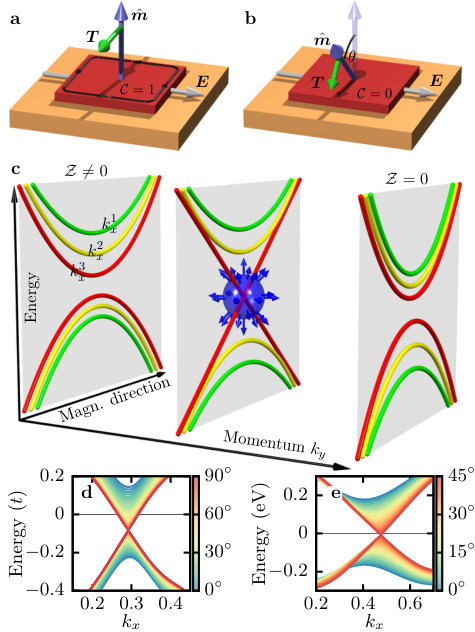 Figure 1
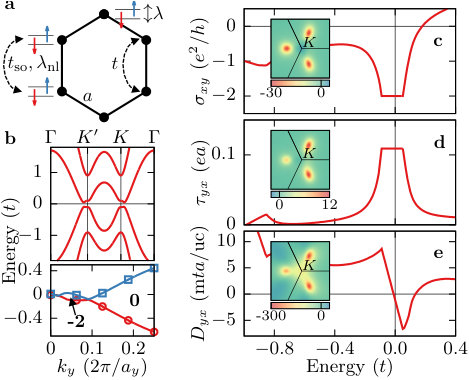 Figure 2
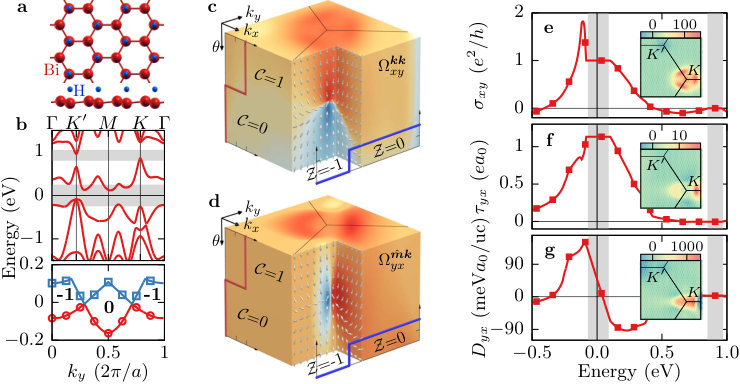 Figure 3
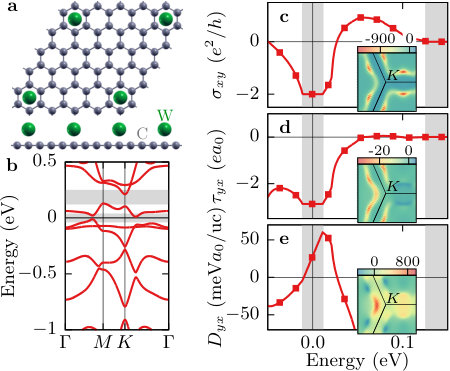 Figure 4
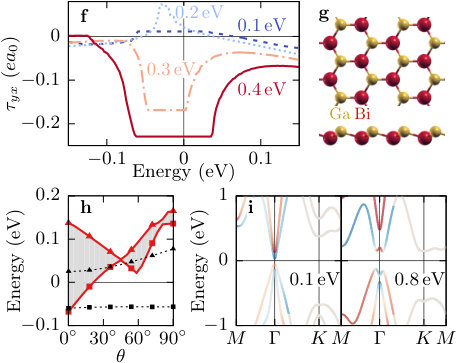 Figure 4
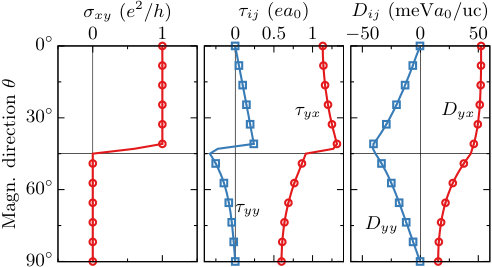 Figure 6
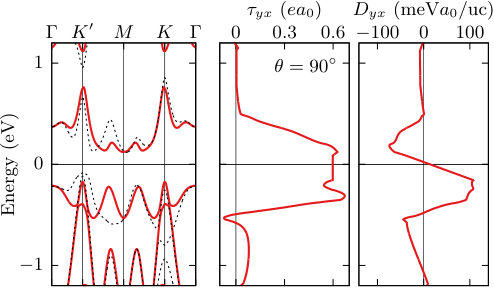 Figure 7
Peer Reviews
No public reviews on file for this paper yet. If you reviewed it on a platform where reviews are public (OpenReview, ICLR, NeurIPS, ICML), you can paste yours below so the community can read it here.
Videos
No videos yet. Explain this paper in a talk, walkthrough, or lecture? Add one.
Mixed Weyl semimetals and dissipationless magnetization control in insulators by spin-orbit torques
Jan-Philipp Hanke
Frank Freimuth
Chengwang Niu
Stefan Blügel
Yuriy Mokrousov
Peter Grünberg Institut and Institute for Advanced Simulation,
Forschungszentrum Jülich and JARA, 52425 Jülich, Germany
(April 24, 2017)
Abstract
Reliable and energy efficient magnetization switching by electrically-induced spin-orbit torques is of crucial technological relevance for spintronic devices implementing memory and logic functionality. Here we predict that the strength of spin-orbit torques and the related Dzyaloshinskii-Moriya interaction in topologically non-trivial magnetic insulators can exceed by far that of conventional metallic magnets. In analogy to the quantum anomalous Hall effect, we explain this extraordinary response in absence of longitudinal currents as a hallmark of magnetic monopoles in the electronic structure of systems that are interpreted most naturally within the framework of mixed Weyl semimetals. We thereby launch the effect of spin-orbit torque into the field of topology and reveal its crucial role in mediating the topological phase transitions arising due to the complex interplay between magnetization direction and momentum-space topology. The concepts presented here may be exploited to understand and utilize magneto-electric coupling phenomena in insulating ferromagnets and antiferromagnets.
Progress in control and manipulation of the magnetization in magnetic materials is pivotal for the innovative design of future non-volatile, high-speed, low power, and scalable spintronic devices. The effect of spin-orbit torque (SOT) provides an efficient means of magnetization control by electrical currents in systems that combine broken spatial inversion symmetry and spin-orbit interaction 1; 2; 3; 4; 5. These current-induced torques are believed to play a key role in the practical implementation of various spintronics concepts, since they were demonstrated to mediate the switching of single ferromagnetic layers 6; 7 and antiferromagnets 8 via the exchange of spin angular momentum between the crystal lattice and the (staggered) collinear magnetization. Among the two different contributions to SOTs, the so-called anti-damping torques are of utter importance owing to the robustness of their properties with respect to details of disorder 5.
Only recently, the research on electrically-controlled magnetization switching started to reach out to topological condensed matter for example, very efficient magnetization switching has been achieved lately in metallic systems incorporating topological insulators 9. And although in latter cases a strong torque can be generated, the resulting electric-field response does not rely on the global topological properties of these trivial systems. The discovery of a quantized version of the anomalous Hall effect in magnetic insulators with non-trivial topology in momentum space 10; 11; 12 led to a revolution in forging new spintronic device concepts that utilize topology. On the other hand, moving the field of magnetization control by SOTs into the realm of topological spintronics would open bright avenues in exploiting universal arguments of topology for designing magneto-electric coupling phenomena in magnetic insulators. With this work, we firmly put the phenomenon of SOT on the topological ground. Employing theoretical techniques we investigate the origin and size of anti-damping SOTs and Dzyaloshinskii-Moriya interaction (DMI) in prototypes of topologically non-trivial magnetic insulators, demonstrate that complex topological properties have a direct strong impact on the emergence and magnitude of SOT and DMI in various classes of magnetic insulators, and formulate intriguing perspectives for the electric-field control of magnetization in absence of longitudinal charge currents.
**Results
Mixed Weyl semimetals and spin-orbit torque**. In a clean sample, the anti-damping SOT acting on the magnetization in linear response to the electric field is mediated by the so-called torkance tensor , i.e., 13 (see Fig. 1a,b). The Berry phase nature of the anti-damping SOT manifests in the fact that the tensor elements are proportional to the mixed Berry curvature of all occupied states 13; 14, which incorporates derivatives of lattice-periodic wave functions with respect to both crystal momentum and magnetization direction . Here, denotes the th Cartesian unit vector. Intimately related to the anti-damping SOT is the DMI 15; 16, crucial for the emergence of chiral domain walls and chiral skyrmions 17; 18; 19; 20, which can be quantified by the so-called spiralization tensor reflecting the change of the free energy due to chiral perturbations according to 13.
Optimizing the efficiency of magnetization switching in spintronic devices by current-induced SOTs relies crucially on the knowledge of the microscopic origin of most prominent contributions to the electric-field response. To promote the understanding, it is rewarding to draw an analogy between the anti-damping SOT as given by and the intrinsic anomalous Hall effect as determined by the Berry curvature 21. Both and are components of a general curvature tensor in the composite phase space combining crystal momentum and magnetization direction 22; 23. Band crossings, also referred to as magnetic monopoles in -space, are known 24 to act as important sources or sinks of . When transferring this concept to current-induced torques, crossing points in the composite phase space can be anticipated to give rise to a large mixed Berry curvature , which in turn yields the dominant microscopic contribution to torkance and spiralization. Thus, materials providing such monopoles close to the Fermi energy can be expected to exhibit notably strong SOTs and DMI.
In the field of topological condensed matter 25; 26, the recent advances in the realization of quantum anomalous Hall, or, Chern insulators have been striking 11; 12. These magnetic materials are characterized by a quantized value of the anomalous Hall conductivity and an integer non-zero value of the Chern number in -space, . On the other hand, topological semimetals have recently attracted great attention due to their exceptional properties stemming from monopoles in momentum space. Among these latter systems, magnetic Weyl semimetals host gapless low-energy excitations with linear dispersion in the vicinity of non-degenerate band crossings at generic -points 27; 28; 29; 30, which are sources of . Their conventional description in terms of the Weyl Hamiltonian can be formally extended to the case of what we call the mixed Weyl semimetal as described by , where is the vector of Pauli matrices, and is the angle that the magnetization makes with the -axis. As illustrated in Fig. 1c, mixed Weyl semimetals feature monopoles in the composite phase space of and , which are sources of the general curvature . In analogy to conventional Weyl semimetals 27, we can characterize the topology and detect magnetic monopoles by monitoring the flux of the mixed Berry curvature through planes of constant as given by the integer mixed Chern number , Fig. 1c. In the following, we show that a significant electric-field response near monopoles in mixed Weyl semimetals is invaluable in paving the road towards dissipationless magnetization control by SOTs 31.
Magnetically doped graphene. We begin with a tight-binding model of magnetically doped graphene 32:
[TABLE]
which is sketched in Fig. 2a. Here, () denotes the creation (annihilation) of an electron with spin at site , restricts the sums to nearest neighbors, and the unit vector points from to . Besides the usual hopping with amplitude , the first line in equation (1) contains the Rashba spin-orbit coupling of strength originating in the surface potential gradient of the substrate. The remaining terms in equation (1) are the exchange energy due to the local () and non-local () exchange interaction between spin and magnetization. Depending on , the non-local exchange describes a hopping process during which the spin can flip. Supplementary Note 1 provides further details on the tight-binding model and its numerical solution.
First, by monitoring the evolution of the mixed Chern number we demonstrate that the above model hosts a mixed Weyl semimetal state. Indeed, as shown in Fig. 2b, the topological index changes from to [math] at a certain value of , indicating thus the presence of a band crossing in composite phase space that carries a topological charge of . One of these monopoles appears near the -point off any high-symmetry line if the magnetization is oriented in-plane along the -direction (see Fig. 1d). The emergence of the quantum anomalous Hall effect 32, Fig. 2c, over a wide range of magnetization directions can be understood as a direct consequence of the magnetic monopoles acting as sources of the curvature . Correspondingly, for out of the plane, the system is a quantum anomalous Hall insulator. Moreover, large values of the mixed curvature in the vicinity of the monopole are visible in the momentum-space distributions of torkance and spiralization in the insets of Figs. 2d and 2e, respectively. For an out-of-plane magnetization, the primary microscopic contribution to the effects arises from an avoided crossing along – a residue of the Weyl point in -space. Since the expression for the mixed Berry curvature relies only on the derivative of the wavefunction with respect to one of the components of the Bloch vector, the symmetry between and in the distributions of torkance and spiralization is broken naturally (see Methods).
As a consequence of the monopole-driven momentum-space distribution, the energy dependence of the torkance , Fig. 2d, displays a decent magnitude of in the insulating region (with being the interatomic distance), and stays constant throughout the band gap. In contrast to the Chern numbers and , the torkance is, however, not guaranteed to be quantized to a robust value, i.e., the height of the torkance plateau in Fig. 2d is sensitive to fine details of the electronic structure such as magnetization direction and model parameters. Because of their intimate relation in the Berry phase theory 13; 33; 34, the plateau in torkance implies a linear behavior of the spiralization within the gap, changing from m/uc to m/uc as shown in Fig. 2e, where “uc” refers to the in-plane unit cell containing two atoms.
To provide a realistic manifestation of the model considerations above, we study from ab initio systems of graphene decorated by transition-metal adatoms, Fig. 4a. These systems, which exhibit complex spin-orbit mediated hybridization of graphene states with states of the transition metal, have by now become one of the prototypical material classes for realization of the quantum anomalous Hall effect 35; 36; 37; 38; 39. Details on the first-principles calculations are provided in Supplementary Note 2. In the Chern insulator phase of these materials with magnetization perpendicular to the graphene plane, depending on the transition-metal adatom, both torkance and spiralization can reach colossal magnitudes that originate from mixed Weyl points. In the case of W in 4$$\times$$4-geometry on graphene, for example, the torkance amounts to a huge value of (with being Bohr’s radius), and the spiralization ranges from meV/uc to meV/uc, Fig. 4b-e, surpassing thoroughly the values obtained in metallic magnetic heterostructures 5; 13 and non-centrosymmetric bulk magnets 20. Since the details of the electronic structure can influence the value of the torkance in the gap, upon replacing W with other transition metals, the magnitude of SOT and DMI can be tailored in the gapped regions of corresponding materials according to our calculations.
Functionalized bismuth film. Aiming at revealing pronounced magneto-electric coupling effects in magnetic insulators with larger band gaps as compared to the above examples, we turn to a semi-hydrogenated Bi(111) bilayer, Fig. 3a, which is a prominent example of functionalized insulators realizing non-trivial topological phases 39. As we show, semi-hydrogenated Bi(111) bilayer is a mixed Weyl semimetal. For an out-of-plane magnetization, the system is a valley-polarized quantum anomalous Hall insulator 40 with a magnetic moment of per unit cell, and it exhibits a large band gap of eV at the Fermi energy as well as a distinct asymmetry between the valleys and , Fig. 3b.
Analyzing the evolution of the mixed Chern number as a function of in Fig. 3b, we detect two magnetic monopoles of opposite charge that emerge at the transition points between the topologically distinct phases with and . Alternatively, these crossing points and the monopole charges in the composite phase space could be identified by monitoring the variation of the momentum-space Chern number with magnetization direction. These monopoles occur at generic points near the valley for (see Fig. 1e) and in the vicinity of the -point for , respectively. The presence of such mixed Weyl points in the electronic structure drastically modifies the behavior of the general curvature in their vicinity, as visible from the three-dimensional representation of displayed in Fig. 3c,d. Revealing characteristic sign changes when passing through monopoles in composite phase space, the singular behavior of the Berry curvature underlines the role of the mixed Weyl points as sources or sinks of . For an out-of-plane magnetization, the complex nature of the electronic structure in momentum space manifests in the quantization of to , Fig. 3e, which is primarily due to the pronounced positive contributions near . Calculations of the energy dependence of the torkance and spiralization in the system, shown in Figs. 3f and 3g, reveal the extraordinary magnitudes of these phenomena of the order of for and meV/uc for , exceeding by far the typical magnitudes of these effects in magnetic metallic materials 5; 13; 20.
Proof of monopole-driven SOT enhancement. An important question to ask at this point is whether the colossal magnitude of the SOT in the insulators considered above can be unambiguously identified with the mixed Weyl semimetallic state. In the following, we answer this question by explicitly demonstrating the utter importance of the emergent mixed monopoles for driving pronounced magneto-electric response. First, by removing the mixed Weyl points from the electronic structure of the model (1) via, e.g., including an intrinsic spin-orbit coupling term, we confirm that the electric-field response is strongly suppressed, which promotes the monopoles as unique origin of large SOT and DMI. Secondly, to verify this statement from the first-principles calculations, we analyze the electric-field response throughout the topologically trivial gaps above the Fermi level that are highlighted in Figs. 3b and 4b. Since these gaps do not exhibit the mixed Weyl points, we obtain a greatly diminished magnitude of the torkance within these energy regions as apparent from Figs. 3f and 4d.
Finally, we clearly demonstrate the key role of these special points by studying an illustrative example: a thin film of GaBi with triangular lattice structure, Fig. 4g. The initial system is a non-magnetic trivial insulator, on top of which we artificially apply an exchange field , with the purpose of triggering a topological phase transition as a function of the exchange field strength, see Supplementary Note 4. When tuning the exchange field strength we carefully monitor the evolution of the system from a trivial magnetic insulator for eV to a mixed Weyl semimetal as indicated by the emergence of magnetic monopoles in the electronic structure. The latter phase is accompanied by the quantum anomalous Hall effect prominent for a finite range of directions , for instance, if is perpendicular to the film plane, Fig. 4h,i. Comparing in Fig. 4f the electric-field response for these two distinct phases, we uniquely identify drastic changes in sign and magnitude of the torkance with the transition from the trivial insulator to the mixed Weyl semimetal hosting monopoles near the -point. This proves the crucial relevance of emergent monopoles in driving magneto-electric coupling effects in topologically non-trivial magnetic insulators.
Discussion
Remarkably, the magnetization switching via anti-damping torques in mixed Weyl semimetals can be utilized to induce topological phase transitions from a Chern insulator to a trivial magnetic insulator mediated by the complex interplay between magnetization direction and momentum-space topology in these systems as illustrated in Fig. 1a,b. In the case of the functionalized bismuth film, for instance, the material is a trivial magnetic insulator with a band gap of eV if the magnetization is oriented parallel to the film plane. Nevertheless, the resulting anti-damping torkance in this trivial state is still very large, and the DMI exhibits a strong variation within the gap, see Supplementary Note 3. We therefore motivate experimental search and realization of large magneto-electric response and topological phase transitions in quantum anomalous Hall systems fabricated to date 12; 41; 42; 43. Overall, mixed Weyl semimetals that combine exceptional electric-field response with a large band gap (such as, e.g., functionalized bismuth films) lay out extremely promising vistas in room-temperature applications of magneto-electric coupling phenomena for dissipationless magnetization control – a subject which is currently under extensive scrutiny (see, e.g., refs. 31; 44; 45). In contrast to the anti-damping SOT in magnetic metallic bilayers (such as Co/Pt) for which large spin-orbit interaction in the non-magnetic substrate is necessary for generating large spin Hall effect and large values of SOT 4, the magnitude of the SOT in insulating phases of a mixed Weyl semimetal is driven by the presence of the mixed monopole rather than the spin-orbit strength itself. This opens perspectives in exploiting a strong magneto-electric response of weak-spin-orbit materials.
In the examples that we considered here, the non-trivial topology of mixed Weyl semimetals leads to DMI changes over a wide range of values throughout the bulk band gap, implying that proper electronic-structure engineering enables us to tailor both strength and sign of the DMI in a given system, for instance, by doping or applying strain. Such versatility could be particularly valuable for the stabilization of chiral magnetic structures such as skyrmions in insulating ferromagnets. In the latter case, very large values of the anti-damping SOT arising in these systems would open exciting perspectives in manipulation and dynamical properties of chiral objects associated with minimal energy consumption by magneto-electric coupling effects. Generally, we would like to remark that magnetic monopoles in the composite phase space, which we discuss here, do not only govern the electric-field response in insulating magnets but are also relevant in metals, where they appear on the background of metallic bands. Ultimately, in analogy to the (non-quantized) anomalous Hall effect in metals, this makes the analysis of SOT and DMI in metallic systems very complex owing to competing contributions to these effects from various bands present at the Fermi energy. In addition, the electric-field strength in metals is typically much smaller, limiting thus the reachable magnitude of response phenomena as compared to insulators.
At the end, we reveal the relevance of the physics discussed here for antiferromagnets (AFMs) that satisfy the combined symmetry of time reversal and spatial inversion. SOTs in such antiferromagnets are intimately linked with the physics of Dirac fermions, which are doubly-degenerate elementary excitations with linear dispersion 46; 47. In these systems, the reliable switching of the staggered magnetization by means of current-induced torques has been demonstrated very recently 8. In analogy to the concept of mixed Weyl semimetals presented here, we expect that the notion of mixed Dirac semimetals in a combined phase space of crystal momentum and direction of the staggered magnetization vector will prove fruitful in understanding the microscopic origin of SOTs in insulating antiferromagnets. Following the very same interpretation that we formulated here for ferromagnets, monopoles in the electronic structure of AFMs can be anticipated to constitute prominent sources or sinks of the corresponding general non-Abelian Berry curvature, whose mixed band-diagonal components correspond to the sublattice-dependent anti-damping SOT, in analogy to the spin Berry curvature for quantum spin Hall insulators and Dirac semimetals 48; 49; 50. Correspondingly, exploiting the principles of electronic-structure engineering for topological properties depending on the staggered magnetization could result in an advanced understanding and utilization of pronounced magneto-electric response in insulating AFMs.
Methods
Tight-binding calculations. The Hamiltonian (1) is a generalization of the model in ref. 32, taking additionally into consideration arbitrary magnetization directions as well as the non-local exchange interaction. A brief description of its numerical solution is given in Supplementary Note 1.
First-principles electronic structure calculations. Using the full-potential linearized augmented plane-wave code FLEUR 51, we performed self-consistent density functional theory calculations of the electronic structure of the considered materials using the structural parameters of refs. 36 and 40. The effect of spin-orbit coupling was treated within the perturbative second-variation scheme. Starting from the converged charge density, we constructed higher-dimensional Wannier functions 52 by employing our extension of the wannier90 code 53. We used these functions to generalize the Wannier interpolation 54; 55; 52 allowing us to evaluate efficiently anomalous Hall conductivity, torkance, and spiralization. Further details on the electronic structure calculations are given in Supplementary Note 2.
Berry phase expressions for torkance and spiralization. In order to characterize the anti-damping SOTs, we evaluate within linear response the torkance 13
[TABLE]
where is the number of -points, and denotes the elementary positive charge. Similarly, the spiralization 13 is obtained as
[TABLE]
where , is the lattice-periodic Hamiltonian with eigenenergies , is the Fermi level, and is the unit cell volume.
Code availability. The tight-binding code that supports the findings of this study is available from the corresponding authors on request.
Data availability. The data that support the findings of this study are available from the corresponding authors on request.
The reference list from the paper itself. Each links out to its DOI / PubMed record.
- 11 Chernyshov, A. et al. Evidence for reversible control of magnetization in a ferromagnetic material by means of spin–orbit magnetic field. Nat. Phys. 5 , 656–659 (2009).
- 22 Miron, I. M. et al. Current-driven spin torque induced by the Rashba effect in a ferromagnetic metal layer. Nat. Mater. 9 , 230–234 (2010).
- 33 Miron, I. M. et al. Fast current-induced domain-wall motion controlled by the Rashba effect. Nat. Mater. 10 , 419–423 (2011).
- 44 Garello, K. et al. Symmetry and magnitude of spin-orbit torques in ferromagnetic heterostructures. Nature Nanotech. 8 , 587–593 (2013).
- 55 Freimuth, F., Blügel, S. & Mokrousov, Y. Spin-orbit torques in Co/Pt (111) and Mn/W (001) magnetic bilayers from first principles. Phys. Rev. B 90 , 174423 (2014).
- 66 Miron, I. M. et al. Perpendicular switching of a single ferromagnetic layer induced by in-plane current injection. Nature 476 , 189–193 (2011).
- 77 Liu, L., Lee, O., Gudmundsen, T., Ralph, D. & Buhrman, R. Current-induced switching of perpendicularly magnetized magnetic layers using spin torque from the spin Hall effect. Phys. Rev. Lett. 109 , 096602 (2012).
- 88 Wadley, P. et al. Electrical switching of an antiferromagnet. Science 351 , 587–590 (2016).