X-ray Binaries
Jorge Casares, Peter G. Jonker, Garik Israelian

TL;DR
This chapter explores how X-ray binaries inform our understanding of supernovae, neutron star and black hole formation, and binary evolution through observational data on masses, velocities, and chemical compositions.
Contribution
It provides new insights into the mass distribution, formation mechanisms, and chemical properties of X-ray binary components, linking observations to supernova physics.
Findings
Evidence for a mass gap between 2-5 Msun in compact objects.
Neutron star masses differ between LMXBs and HMXBs due to accretion history.
Black hole masses in LMXBs are limited to ~12 Msun, possibly due to wind mass loss.
Abstract
This chapter discusses the implications of X-ray binaries on our knowledge of Type Ibc and Type II supernovae. X-ray binaries contain accreting neutron stars and stellar--mass black holes which are the end points of massive star evolution. Studying these remnants thus provides clues to understanding the evolutionary processes that lead to their formation. We focus here on the distributions of dynamical masses, space velocities and chemical anomalies of their companion stars. These three observational features provide unique information on the physics of core collapse and supernovae explosions within interacting binary systems. There is suggestive evidence for a gap between ~2-5 Msun in the observed mass distribution. This might be related to the physics of the supernova explosions although selections effects and possible systematics may be important. The difference between neutron star…
Click any figure to enlarge with its caption.
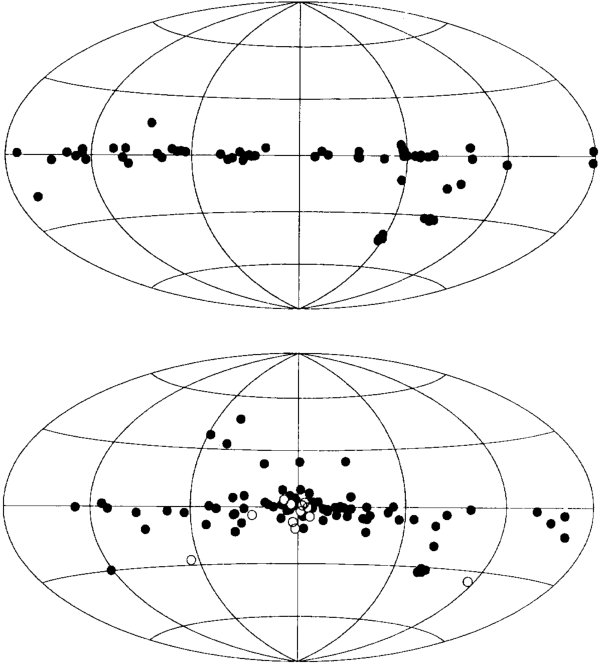 Figure 1
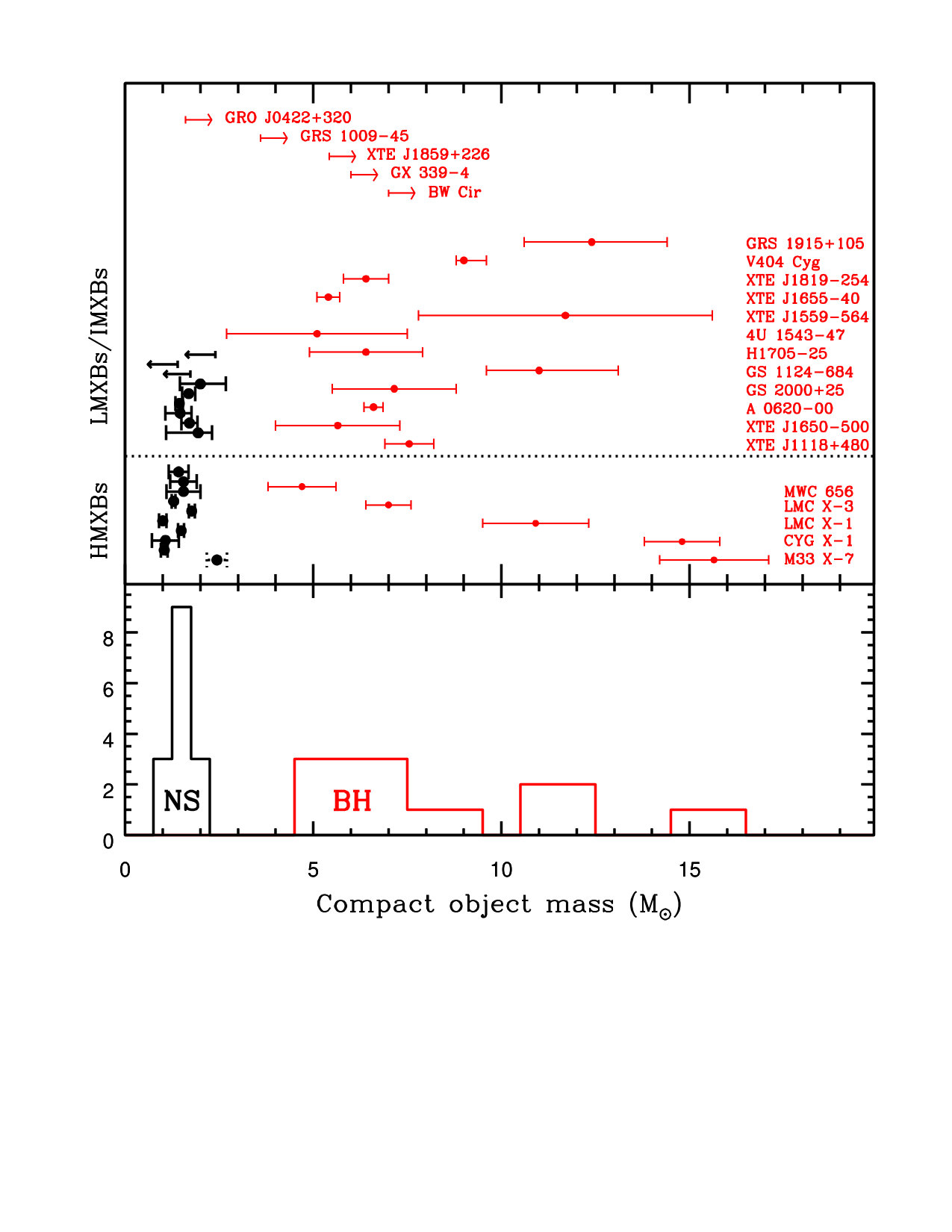 Figure 2
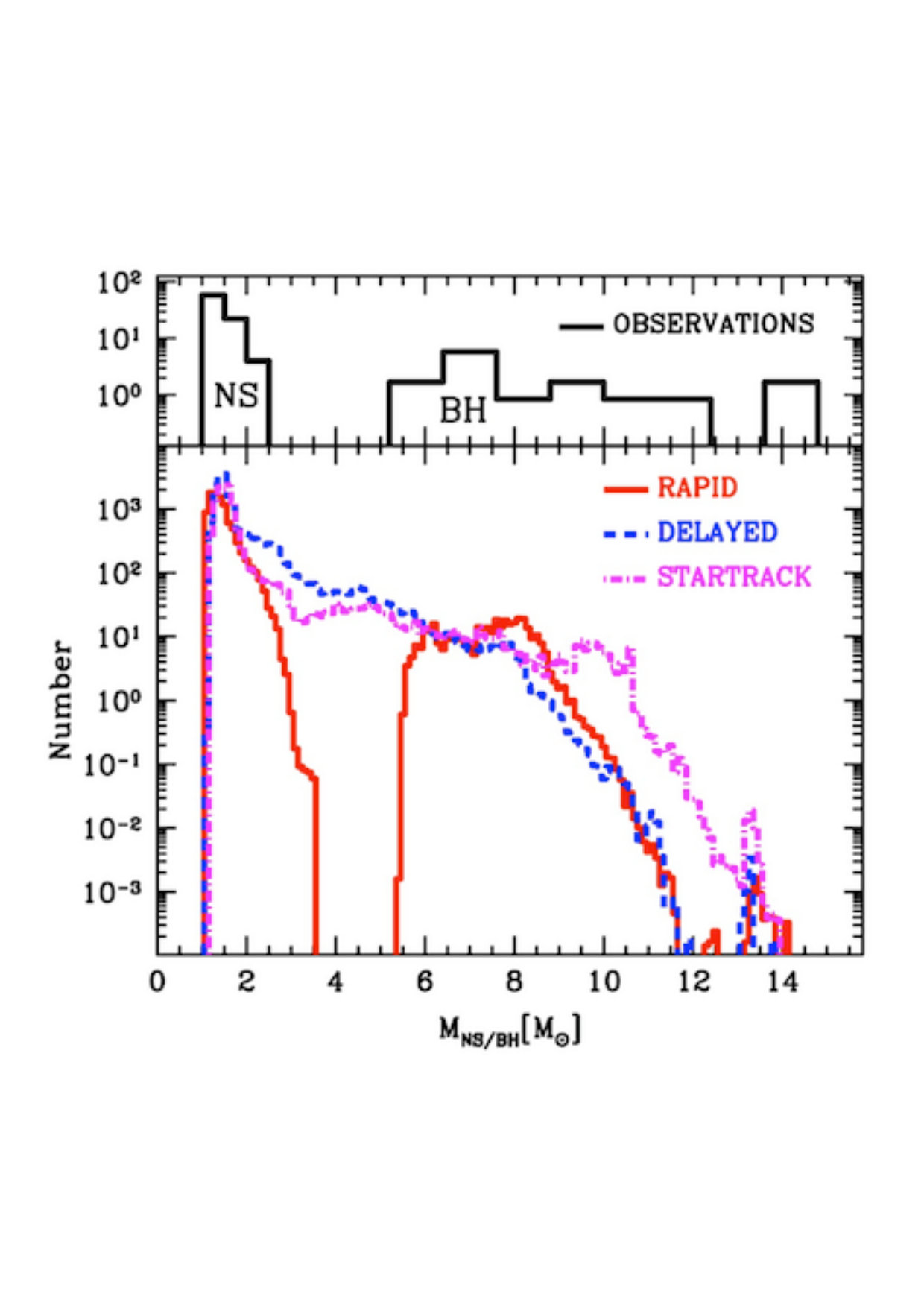 Figure 3
 Figure 4
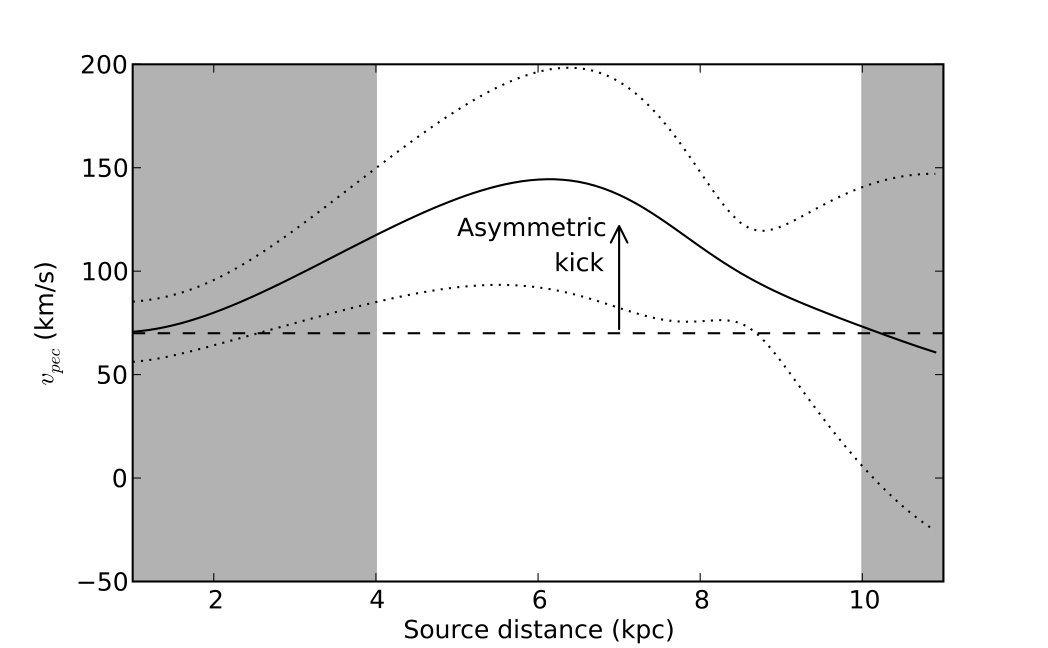 Figure 5
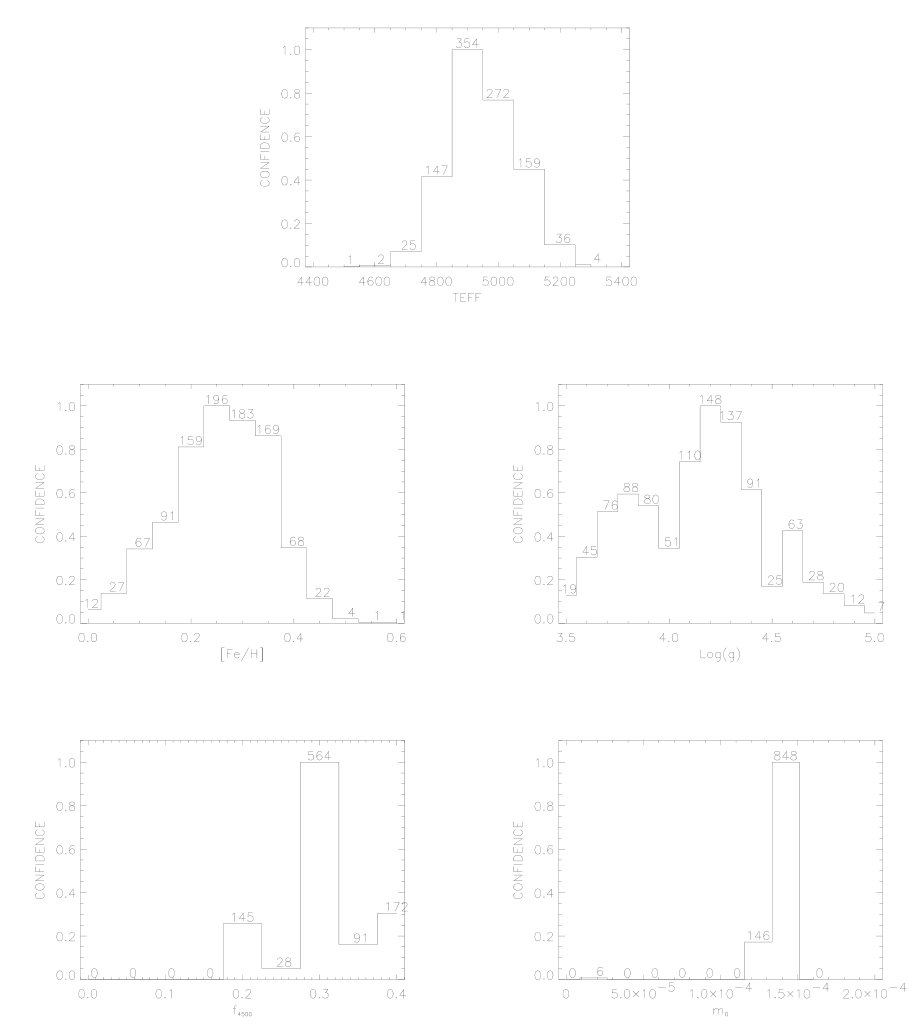 Figure 6
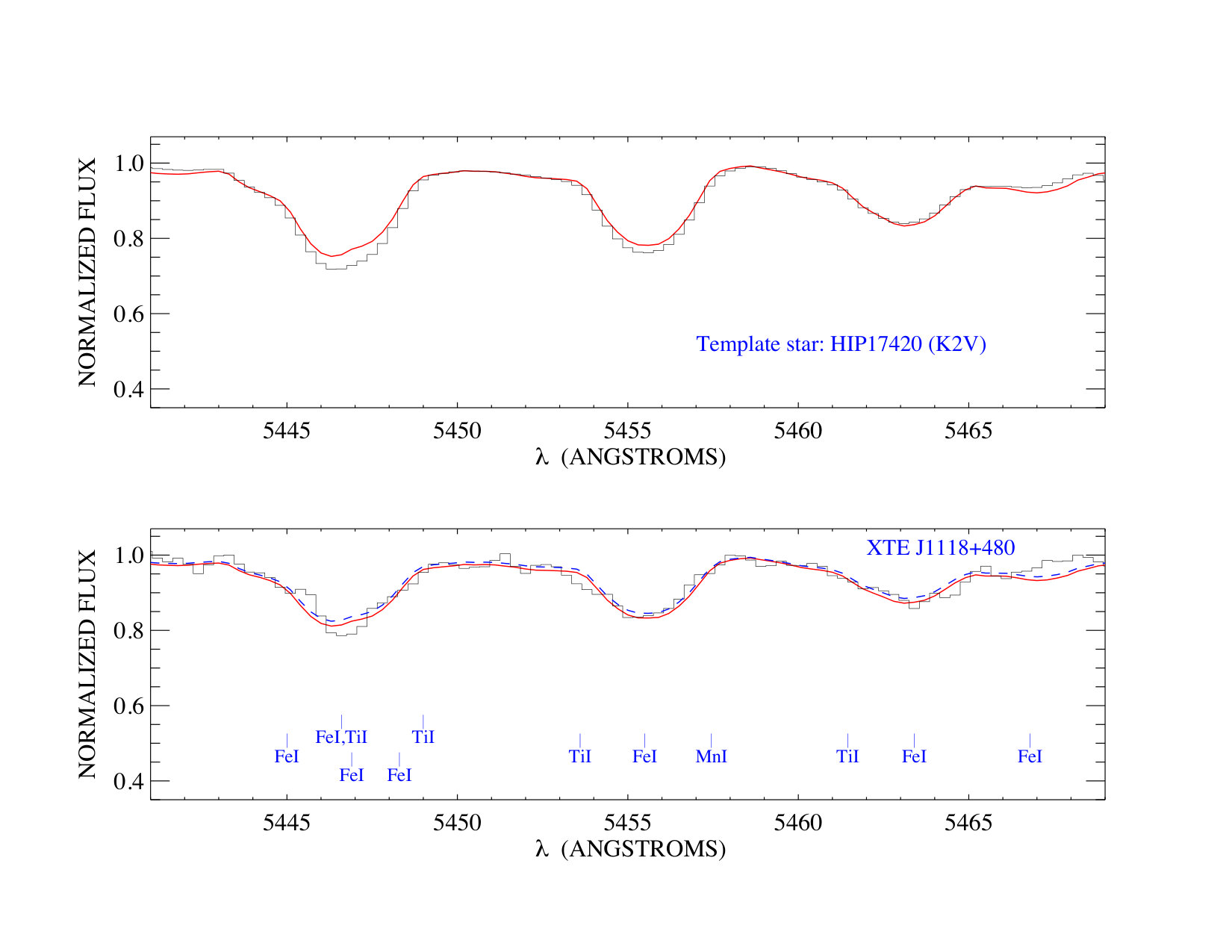 Figure 7
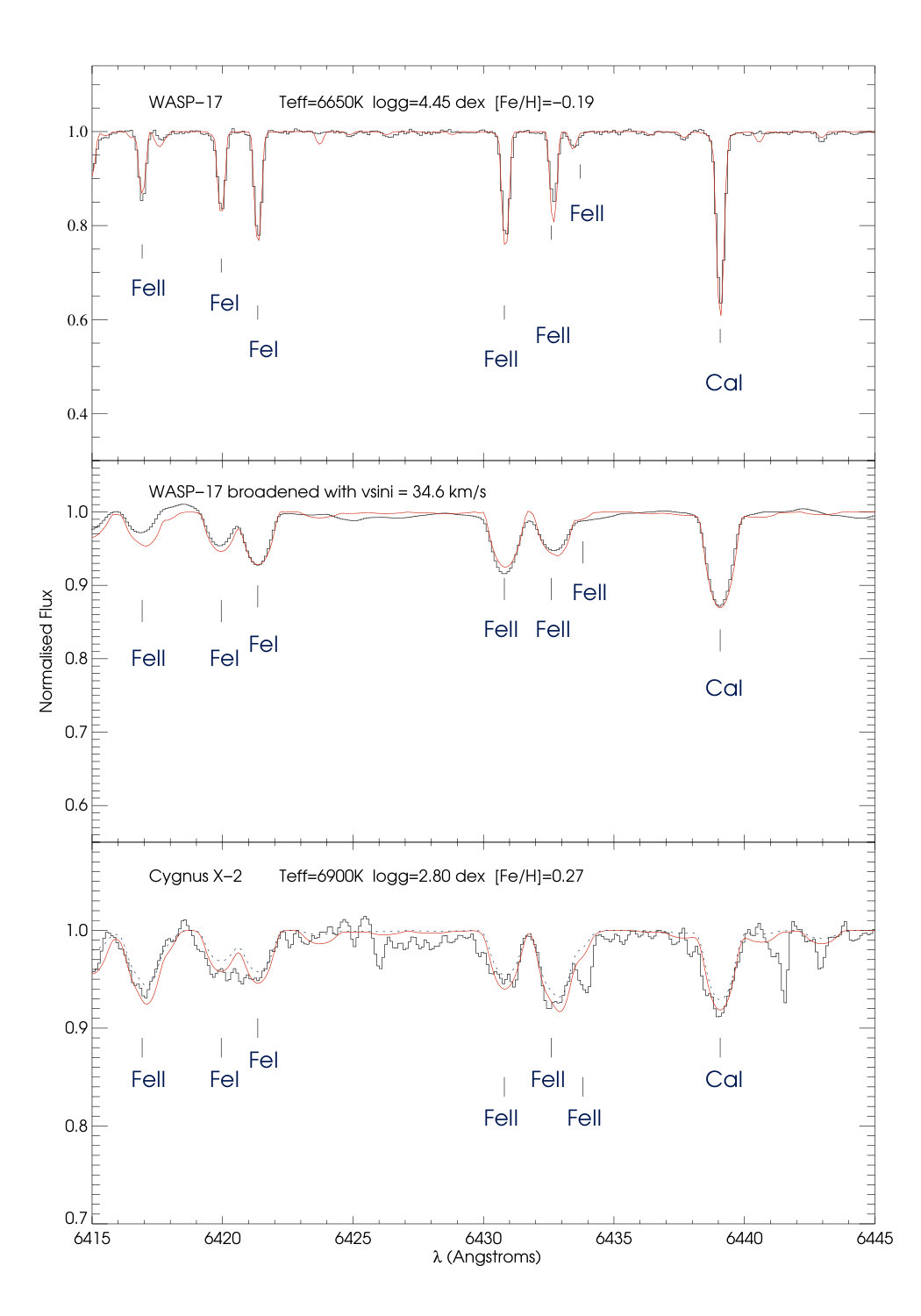 Figure 8
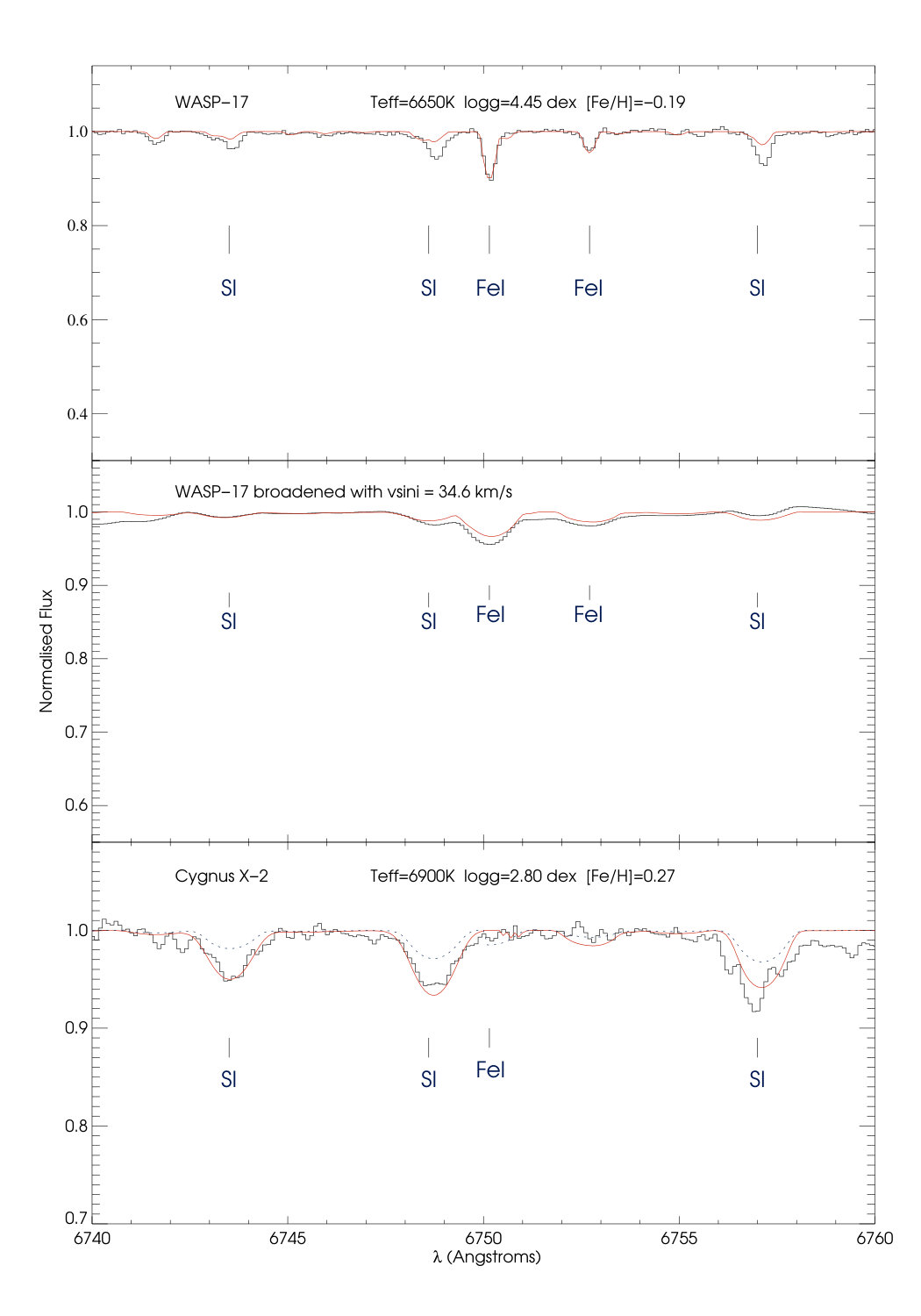 Figure 8
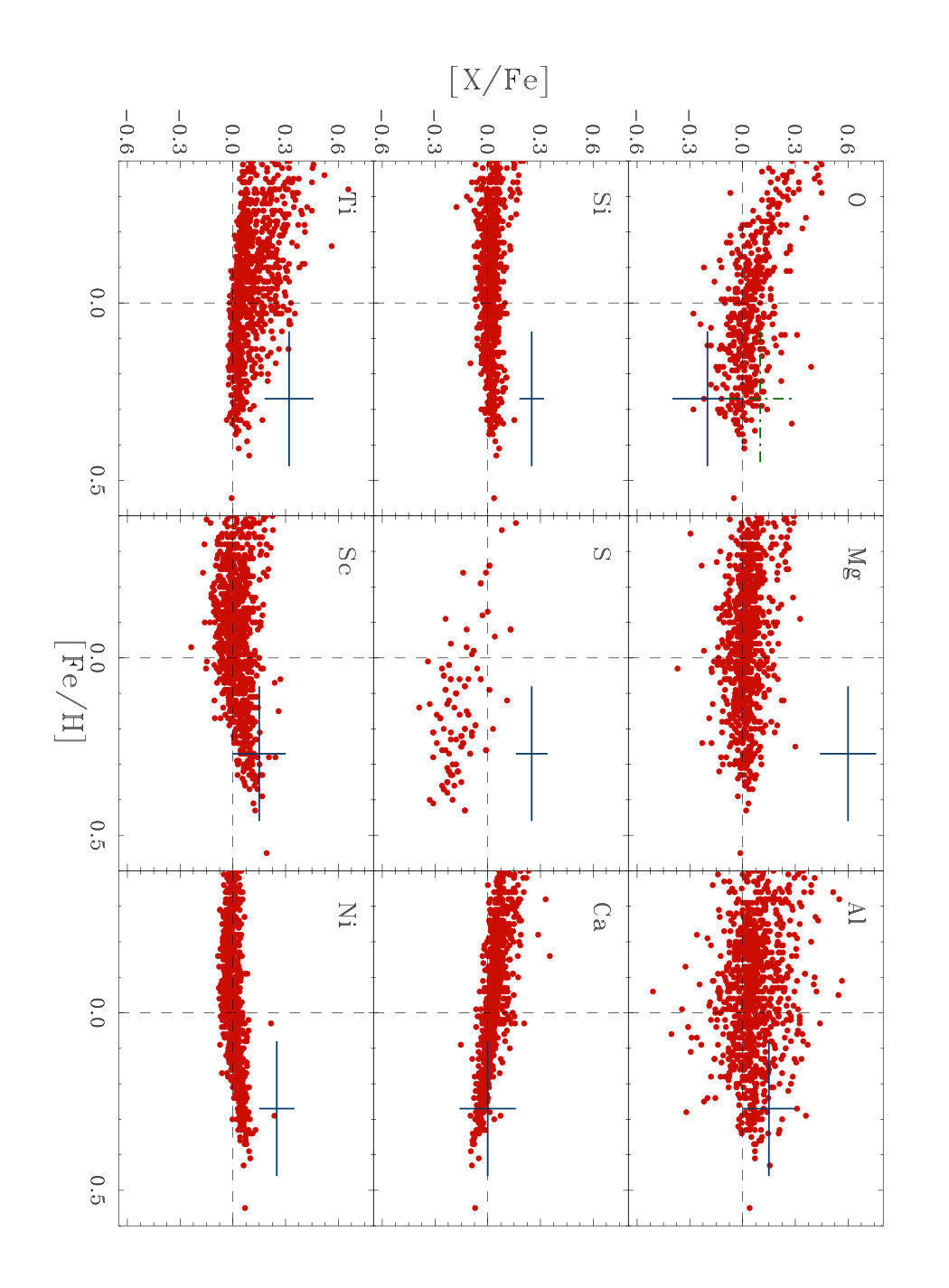 Figure 9
| Object | X-ray Binary Class | Remnant | Mass (M⊙) | References |
| \svhline OAO 1657-415 | HMXB/persistent | X-ray pulsar | 1.420.26 | mason12 |
| SAX 18027-2016 | ,, | ,, | 1.2-1.9 | mason11 |
| EXO 1722-363 | ,, | ,, | 1.550.45 | mason10 |
| 4U 1538-52 | ,, | ,, | 1.000.10 | |
| SMC X-1 | ,, | ,, | 1.040.09 | |
| Vel X-1 | ,, | ,, | 1.770.08 | |
| LMC X-4 | ,, | ,, | 1.290.05 | |
| Cen X-3 | ,, | ,, | 1.490.08 | |
| 4U 1700-37 | ,, | ? | 2.440.27 | clark02 |
| Her X-1 | IMXB/persistent | X-ray pulsar | 1.070.36 | |
| \svhline Cyg X-2 | LMXB/persistent | NS | 1.710.21 | casares10 |
| V395 Car | ,, | ,, | 1.440.10 | |
| Sco X-1 | ,, | ,, | 1.73 | mata15 |
| XTE J2123-058 | LMXB/transient | ,, | 1.46 | tomsick02 |
| Cen X-4 | ,, | ,, | 1.94 | shahbaz14 |
| 4U 1822-371 | ,, | X-ray pulsar | 1.52-1.85 | munoz08 |
| XTE J1814-338 | ,, | msec ,, | 2.0 | wang17 |
| SAX J1808.4-3658 | ,, | ,, ,, | 1.4 | |
| HETE 1900.1-2455 | ,, | ,, ,, | 2.4 |
| Star | A0620–00 | Centaurus X-4 | XTE J1118+480 | Nova Sco 94 | V404 Cygni | Cygnus X-2 |
|---|---|---|---|---|---|---|
| Alternative name | V616 Mon | V822 Cen | KV UMa | GRO J1655–40 | GS 2023+338 | V1341 Cyg |
| () | ||||||
| () | ||||||
| (km ) | ||||||
| (K) | ||||||
| [O/H]‡ | – | – | – | |||
| [Na/H] | – | – | – | – | ||
| [Mg/H] | ||||||
| [Al/H] | – | |||||
| [Si/H] | – | – | ||||
| [S/H] | – | – | – | – | ||
| [Ca/H] | ||||||
| [Ti/H] | ||||||
| [Cr/H] | – | – | – | – | – | |
| [Fe/H] | ||||||
| [Ni/H] |
Peer Reviews
No public reviews on file for this paper yet. If you reviewed it on a platform where reviews are public (OpenReview, ICLR, NeurIPS, ICML), you can paste yours below so the community can read it here.
Videos
No videos yet. Explain this paper in a talk, walkthrough, or lecture? Add one.
11institutetext: J. Casares 22institutetext: Instituto de Astrofísica de Canarias, E–38205 La Laguna, S/C de Tenerife, Spain.
Departamento de Astrofísica, Universidad de La Laguna, E–38206 La Laguna, S/C de Tenerife, Spain.
Department of Physics, Astrophysics, University of Oxford, Keble Road, Oxford OX1 3RH, UK 22email: [email protected] 33institutetext: P.G. Jonker 44institutetext: SRON, Netherlands Institute for Space Research, Sorbonnelaan 2, 3584 CA, Utrecht, The Netherlands.
Department of Astrophysics/IMAPP, Radboud University Nijmegen, P.O. Box 9010, 6500 GL, Nijmegen, The Netherlands.
44email: [email protected] 55institutetext: G. Israelian 66institutetext: Instituto de Astrofísica de Canarias, E–38205 La Laguna, S/C de Tenerife, Spain.
Departamento de Astrofísica, Universidad de La Laguna, E–38206 La Laguna, S/C de Tenerife, Spain. 66email: [email protected]
X-Ray Binaries
J. Casares
P.G. Jonker
G. Israelian
Abstract
This chapter discusses the implications of X-ray binaries on our knowledge of Type Ibc and Type II supernovae. X-ray binaries contain accreting neutron stars and stellar–mass black holes which are the end points of massive star evolution. Studying these remnants thus provides clues to understanding the evolutionary processes that lead to their formation. We focus here on the distributions of dynamical masses, space velocities and chemical anomalies of their companion stars. These three observational features provide unique information on the physics of core collapse and supernovae explosions within interacting binary systems. There is suggestive evidence for a gap between 2-5 M*⊙* in the observed mass distribution. This might be related to the physics of the supernova explosions although selections effects and possible systematics may be important. The difference between neutron star mass measurements in low-mass X-ray binaries (LMXBs) and pulsar masses in high-mass X-ray binaries (HMXBs) reflect their different accretion histories, with the latter presenting values close to birth masses. On the other hand, black holes in LMXBs appear to be limited to 12 M*⊙* because of strong mass-loss during the wind Wolf-Rayet phase. Detailed studies of a limited sample of black-hole X-ray binaries suggest that the more massive black holes have a lower space velocity, which could be explained if they formed through direct collapse. Conversely, the formation of low-mass black holes through a supernova explosion implies that large escape velocities are possible through ensuing natal and/or Blaauw kicks. Finally, chemical abundance studies of the companion stars in seven X-ray binaries indicate they are metal-rich (all except GRO J1655-40) and possess large peculiar abundances of -elements. Comparison with supernova models is, however, not straightforward given current uncertainties in model parameters such as mixing.
1 Introduction
X-ray binaries contain compact stellar remnants accreting from ”normal” companion stars. Therefore, they provide ideal opportunities for probing the core-collapse of massive stars in a binary environment and are thus able to constrain the physics of Type Ibc and Type II supernovae. These compact remnants are revealed by persistent/transient X-ray activity which is triggered by mass accretion. Observationally, they come in three flavors – pulsars, neutron stars and black holes – that are paired with companion (donor) stars of a wide range of masses. Historically, X-ray binaries have been classified according to the donor mass as either Low Mass X-ray Binaries (LMXBs) or High Mass X-ray Binaries (HMXBs). The former are fueled by accretion discs supplied by a 1 M*⊙* Roche-lobe filling star while HMXBs are mostly fed directly from the winds of a 10 M*⊙* companion. They display distinct Galactic distributions associated with Population I and Population II objects, with HMXBs lying along the Galactic plane and LMXBs clustering towards the Galactic bulge and in globular clusters joss84 (Fig. 1 ). A handful of X-ray binaries with M*⊙* Roche-lobe filling companions are sometimes referred to as Intermediate Mass X-ray Binaries (IMXBs). For a comprehensive review on X-ray binaries we refer to charles06 .
The type of X-ray activity observed is determined by (i) the mass transfer rate from the donor, (ii) the magnetic field of the compact star, and (iii) the X-ray heating of the accretion disc by the accretion luminosity. The interplay between these three quantities explains why black hole remnants are mostly found in transient LMXBs, neutron stars in persistent LMXBs and pulsars in HMXBs. In recent years we have seen the discovery of pulsars with millisecond spin periods in transient LMXBs. These are considered a missing link in X-ray binary evolution, with neutron stars being spun up by sustained accretion to become recycled pulsars alpar82 ; wijnands98 . A detailed review of X-ray binary evolution with the variety of evolutionary paths and end products can be found in Chap. 7.13 of this book.
X-ray binaries present ideal laboratories for examining the physics of the supernova explosions which formed their compact objects. The orbital motion of the stellar companions can be used to weigh the masses of the supernova remnants. Abundance anomalies are often seen in the companion star atmospheres, demonstrating chemical pollution by the supernova ejecta. And the spatial motion of the binary possesses information on the kick velocity imparted by the explosion itself. These three topics (dynamical masses, kick velocities and chemical anomalies) and their impact on our understanding of Type Ibc and Type II supernovae are the scope of this chapter and will be presented in turn.
2 Remnant Masses
The distribution of masses of compact remnants contains the imprints of the physics of the supernova explosions. Various aspects, such as the explosion energy, mass cut, amount of fallback or the explosion mechanism itself are important for the final remnant mass distribution. By building the mass spectrum of compact objects in X-ray binaries we can therefore obtain new insights onto the physics of core-collapse in Type Ibc and Type II supernovae. In principle, precise masses can be extracted from eclipsing double-line spectroscopic binaries using simple geometry and Kepler’s laws but this is not often the case in X-ray binaries. Note that neutron star masses in binary radio pulsars are already covered in Chap. 7.4 of this book and hence are not discussed here. It should also be noted that the accretion process responsible for lighting up the X-ray binaries can in principle change significantly the neutron star mass in systems where sufficient time is available such as neutron stars in old LMXBs. On the other hand, the accreted mass is too low to alter the BH mass significantly and similarly, the neutron star mass in short lived HMXBs can also not be changed significantly.
2.1 Pulsar Masses in HMXBs
Pulsars in eclipsing binaries present, in principle, the best prospects for accurate determination of remnant masses. The Doppler shift of the donor’s photospheric lines, combined with timing delays of the neutron star pulse, allows us to measure the projected orbital velocities of the two binary components ( and respectively) thus making them double-lined binaries. If the pulsar is eclipsed by the massive donor (a 40% chance in incipient Roche-lobe overflowing systems ) then the inclination angle i is given by
[TABLE]
where is the eclipse half-angle, the binary separation and the stellar radius. The latter can be approximated by some fraction of the effective Roche lobe radius , also known as the stellar ”filling factor”, while is purely a function of the binary mass ratio and the degree of stellar synchronization (usually 1). The stellar masses can then be solved from the mass function equations
[TABLE]
[TABLE]
where stands for the binary period and the orbital eccentricity. This method has produced nine pulsar masses with relatively high precision which we list in Table 2.1. The major source of uncertainty arises from the combined effect of variable stellar wind, tidal pulsations and X-ray irradiation which distort the absorption profiles and hence the radial velocity curve of the optical companion (e.g. quaintrell03 ; reynolds97 ). Although not a pulsar, we have also included in this section a remnant mass determination for the eclipsing HMXB 4U 1700-37. With a mass significantly higher than the nine HMXBs pulsars, the nature of the compact object in this system is unclear and a low-mass black hole cannot be dismissed. In any case, the quoted mass should be regarded as somewhat less secure because it rests upon the spectroscopic mass of the optical companion (see clark02 for details).
Interestingly, the largest known population of pulsar X-ray binaries (over 100) belong to the subclass of Be/X-ray binaries reig11 . These systems generally have very wide and eccentric orbits, with the neutron star accreting material from the circumstellar Be disc during periastron passages or through episodic disc instability events. Unfortunately, the scarcity of eclipsing systems and the very long orbital periods makes reliable mass determination in Be/X-ray binaries extremely difficult.
The reference list from the paper itself. Each links out to its DOI / PubMed record.
- 1(1) Alpar, M.A., Cheng, A.F., Ruderman, M.A., Shaham, J.: A new class of radio pulsars. Nature 300 , 728-730 (1982)
- 2(2) Belczynski, K., Wiktorowicz, G., Fryer, C.L., Holtz, D.E., Kalogera, V.: Missing black holes unveil the supernova explosion mechanism. Ap J 757 , 91-96 (2012)
- 3(3) Blaauw, A.: On the origin of the O- and B-type stars with high velocities (the ”run-away” stars), and some related problems. Bulletin Astronomical Institutes of the Netherlands, 15, 265-290 (1961)
- 4(4) Brown, G.E., Heger, A., Langer, N., Lee, C.-H., Wellstein, S., Bethe, H.A.: Formation of high mass X-ray black hole binaries. New Astron. 6 , 457-470 (2001)
- 5(5) Cantrell, A. G., Bailyn, C. D., Mc Clintock, J. E., & Orosz, J. A.: Optical State Changes in the X-Ray-quiescent Black Hole A 0620-00. Ap JL, 673, L 159-L 162 (2008)
- 6(6) Casares, J., González Hernández, J.I., Israelian, G., Rebolo, R.: On the mass of the neutron star in Cyg X-2. MNRAS, 401 , 2517-2520 (2010)
- 7(7) Casares, J., Negueruela, I., Ribó, M., Ribas, I., Paredes, J.M., Herrero, A., Simón-Díaz, S.: A Be-type star with a black-hole companion. Nature 505 , 378-381 (2014)
- 8(8) Casares, J., Jonker, P.G.: Mass Measurements of Stellar and Intermediate-Mass Black Holes. Space Science Rev. 183 , 223-252 (2014)