A note on counting flows in signed graphs
Matt DeVos, Edita Rollov\'a, Robert \v{S}\'amal

TL;DR
This paper extends Tutte's polynomial approach to counting nowhere-zero flows from graphs to signed graphs, establishing a polynomial formula for the number of flows based on the group's 2-torsion subgroup size.
Contribution
It proves the existence of a polynomial counting function for nowhere-zero flows in signed graphs, parameterized by the 2-torsion subgroup size of the abelian group.
Findings
Polynomial counting functions for flows in signed graphs are established.
The result generalizes previous work for groups of odd order.
The polynomial depends on the subgroup structure of the group.
Abstract
Tutte initiated the study of nowhere-zero flows and proved the following fundamental theorem: For every graph there is a polynomial so that for every abelian group of order , the number of nowhere-zero -flows in is . For signed graphs (which have bidirected orientations), the situation is more subtle. For a finite group , let be the largest integer so that has a subgroup isomorphic to . We prove that for every signed graph and there is a polynomial so that is the number of nowhere-zero -flows in for every abelian group with and . Beck and Zaslavsky had previously established the special case of this result when (i.e., when has odd order).
Click any figure to enlarge with its caption.
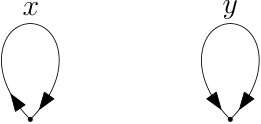 Figure 1
 Figure 2
Peer Reviews
No public reviews on file for this paper yet. If you reviewed it on a platform where reviews are public (OpenReview, ICLR, NeurIPS, ICML), you can paste yours below so the community can read it here.
Videos
No videos yet. Explain this paper in a talk, walkthrough, or lecture? Add one.
A note on counting flows in signed graphs
Matt DeVos Email: [email protected]. Math Dept., Simon Fraser University, Burnaby, British Columbia, Canada. Supported by an NSERC Discovery Grant (Canada).
Edita Rollová Email: [email protected]. European Centre of Excellence, NTIS – New Technologies for Information Society, Faculty of Applied Sciences, University of West Bohemia, Pilsen. Partially supported by project GA14-19503S of the Czech Science Foundation. Partially supported by project LO1506 of the Czech Ministry of Education, Youth and Sports.
Robert Šámal Email: [email protected]. Computer Science Institute of Charles University, Prague. Partially supported by grant GA ČR P202-12-G061. Partially supported by grant LL1201 ERC CZ of the Czech Ministry of Education, Youth and Sports.
Abstract
Tutte initiated the study of nowhere-zero flows and proved the following fundamental theorem: For every graph there is a polynomial so that for every abelian group of order , the number of nowhere-zero -flows in is . For signed graphs (which have bidirected orientations), the situation is more subtle. For a finite group , let be the largest integer so that has a subgroup isomorphic to . We prove that for every signed graph and there is a polynomial so that is the number of nowhere-zero -flows in for every abelian group with and . Beck and Zaslavsky [1] had previously established the special case of this result when (i.e., when has odd order).
1 Introduction
Throughout the paper we permit graphs to have both multiple edges and loops. Let be a graph equipped with an orientation of its edges and let be an abelian group written additively. We say that a function is a -flow if it satisfies the following equation (Kirchhoff’s law) for every vertex .
[TABLE]
where ( denote the set of edges directed away from (toward) the vertex . We say that is nowhere-zero if . If is a -flow and we switch the direction of an edge of , we may obtain a new flow by replacing by its additive inverse. Note that this does not affect the property of being nowhere-zero. So, in particular, whenever some orientation of has a nowhere-zero -flow, the same will be true for every orientation. More generally, the number of nowhere-zero -flows in two different orientations of will always be equal, and we denote this important quantity by . Tutte [8] introduced the concept of a nowhere-zero -flow and proved the following key theorem about counting them.
Theorem 1.1** (Tutte [8])**
Let be a graph.
*If *and are abelian groups with , then . 2. 2.
There exists a polynomial so that for every abelian group with .
Our interest in this paper is in counting nowhere-zero -flows in signed graphs, so we proceed with an introduction to this setting. A signature of a graph is a function . We say that a subgraph is positive if and negative if this product is , in particular we call an edge positive (negative) if the graph induces is positive (negative). We say that two signatures and are equivalent if the symmetric difference of the negative edges of and the negative edges of is an edge-cut of . Let us note that two signatures are equivalent if and only if they give rise to the same set of negative cycles; this instructive exercise was observed by Zaslavsky [9]. Observe that if is a signature and is an edge-cut of , then we may form a new signature equivalent to by the following rule:
[TABLE]
So, in particular, for any signature and a non-loop edge , there is a signature equivalent to with . We define a signed graph to consist of a graph together with a signature . As suggested by our terminology, we will only be interested in properties of signed graphs which are invariant under changing to an equivalent signature.
Following Bouchet [2] we now introduce a notion of a half-edge so as to orient a signed graph. For every graph we let be a set of half edges obtained from the set of edges as follows. Each edge contains two distinct half edges and incident with and , respectively. Note that if , is a loop containing two half-edges both incident with . For a half-edge , we let denote the edge of that contains . To orient a signed graph we will equip each half edge with an arrow and direct it either toward or away from its incident vertex. Formally, we define an orientation of a signed graph to be a function with the property that for every edge containing the half edges we have
[TABLE]
We think of a half edge with () to be directed toward (away from) its endpoint. Note that in the case when is identically 1, both arrows on every half edge are oriented consistently, and this aligns with the usual notion of orientation of an (ordinary) graph.
We define a -flow in such an orientation of a signed graph to be a function which obeys the following rule at every vertex
[TABLE]
As before, we call nowhere-zero if . Note that in the case when is identically 1, this notion agrees with our earlier notion of a (nowhere-zero) flow in an orientation of a graph. Also note that, as before, we may obtain a new flow by reversing the orientation of an edge (i.e., by changing the sign of for both half edges contained in ) and then replacing by its additive inverse. This new flow is nowhere-zero if and only if the original flow had this property. In light of this, we may now define to be the number of nowhere-zero -flows in some (and thus every) orientation of the signed graph .
As we remarked, we are only interested in properties of signed graphs which are invariant under changing to an equivalent signature, and this is indeed the case for . To see this, suppose that is an orientation of the signed graph and that is a nowhere-zero -flow for this orientation. Assume that the signature is obtained from by flipping the sign of every edge in the edge-cut (here and is the set of edges with exactly one end in ). Modify the orientation to obtain a new orientation by switching the sign of for every half edge incident with a vertex of . It is straightforward to verify that is now an orientation of the signed graph given by and , and is still a -flow for this new oriented signed graph.
Beck and Zaslavsky [1] considered the problem of counting nowhere-zero flows in signed graphs and proved the following analogue of Tutte’s Theorem 1.1 for groups of odd order.
Theorem 1.2** (Beck and Zaslavsky [1])**
Let be a signed graph.
If are abelian groups and is odd, then . 2. 2.
There exists a polynomial so that for every odd integer , every abelian group with satisfies .
The purpose of this note is to extend the above theorem to allow for groups of even order by incorporating another parameter. For any finite group we define to be the largest integer so that contains a subgroup isomorphic to (here ).
Theorem 1.3
Let be a signed graph and let .
If and are abelian groups with and , then . 2. 2.
For every nonnegative integer , there exists a polynomial so that for every abelian group with and .
The proof of the above theorem is a straightforward adaptation of Tutte’s original method, so it may seem surprising it was not proved earlier. The cause of this may be some confusion over whether or not it was already done. The paper by Beck and Zaslavsky [1] includes a footnote with the following comment: “Counting of flows in groups of even order has been completely resolved by Cameron et al.”. This refers to an interesting paper of Cameron, Jackson, and Rudd [3] which concerns problems such as counting the number of orbits of nowhere-zero flows under a group action. However, the methods developed in this paper only apply to counting nowhere-zero flows in (ordinary) graphs for the reason that the incidence matrix of an oriented graph is totally unimodular. Since the corresponding incidence matrices of oriented signed graphs are generally not totally unimodular (and not equivalent to such matrices under elementary row and column operations), our result does not follow from Cameron et al.
Before giving the proof of our theorem, let us pause to make one further comment about nowhere-zero flows in signed graphs which consist of a single loop edge . For a loop edge with signature we may obtain a nowhere-zero flow by assigning any nonzero value to the edge . So, two groups and will have the same number of nowhere-zero flows for this graph if and only if . If, on the other hand, our graph consists of a single loop edge which is negative, then the number of nowhere-zero -flows in this graph will be precisely the number of nonzero group elements for which (i.e., the number of elements of order 2). All elements of order 2 form (together with the zero element) a subgroup isomorphic to , thus this number is precisely . So, in order for two groups and to have the same number of nowhere-zero flows on this graph, they must satisfy . By our main theorem, two groups and will satisfy for every signed graph if and only if this holds for every one edge graph. This statement is in precise analogy with the situation for flows in ordinary graphs.
We close the introduction by mentioning related results about the number of integer flows. Tutte [7] defined a nowhere-zero -flow to be a -valued flow that only uses values with . Surprisingly, a graph has a nowhere-zero -flow if and only if it has a nowhere-zero -flow. Let us use to denote the number of nowhere-zero -flows on . While and are either both zero or both nonzero, the actual values differ. An analogical statement to the second part of Theorem 1.1 is again true, by a result of Kochol [5]; that is, is a polynomial in . His result has already been extended for bidirected graphs. Beck and Zaslavsky [1] prove that for a signed graph , is a quasipolynomial of period 1 or 2; that is, there are polynomials and such that is equal to for even and to for odd . Both the Kochol’s and the Beck and Zaslavsky’s result is proved by an illustrative application of Ehrhart’s theorem [4, 6].
2 The proof
The proof of our main theorem requires the following lemma about counting certain solutions to an equation in an abelian group.
Lemma 2.1
Let be an abelian group with and . Then the number of solutions to with is given by the formula
[TABLE]
*Proof. *We claim that for every abelian group of order , the number of solutions to with is given by the formula
[TABLE]
We prove this by induction on . The base case holds trivially. For the inductive step, we may assume . The total number of solutions to the given equation for which are nonzero, but is permitted to have any value is exactly since we may choose the nonzero terms arbitrarily and then set to obtain a solution. By induction, there are exactly of these solutions for which . We conclude that the number of solutions with all variables nonzero is
[TABLE]
as claimed.
Now, to prove the lemma, we consider the group homomorphism given by the rule . Note that the kernel of , denoted , is isomorphic to . Now satisfy if and only if satisfy . So, to count the number of solutions to in with all variables nonzero, we may count all possible solutions to within the group and then, for each such solution, count the number of nonzero sequences in with . For every , the pre-image is a coset of . So the number of nonzero elements with will equal if and if . Now we will combine this with the claim proved above. For every , the number of solutions to in the group with exactly nonzero terms is given by
[TABLE]
Each such solution will be the image of exactly nonzero sequences . Summing over all gives the desired formula.
We also require the usual contraction-deletion formula for counting nowhere-zero flows.
Observation 2.2
Let be an oriented signed graph and let satisfy .
If is a loop edge, then . 2. 2.
If is not a loop edge, then .
*Proof. *The first part follows from the observation that every nowhere-zero flow in is obtained from a nowhere-zero flow in by choosing an arbitrary nonzero value for . The second part follows from the usual contraction-deletion formula for flows. Suppose is a nowhere-zero flow in , and return to the original graph by uncontracting . It follows from elementary considerations that there is a unique value we can assign to so that is a flow. It follows that is precisely the number of -flows in for which all edges except possibly are nonzero. This latter count is exactly and this completes the proof.
Equipped with these lemmas, we are ready to prove our main theorem about counting group-valued flows.
*Proof of Theorem 1.3. * For the first part, we proceed by induction on . Our base cases will consist of one vertex graphs for which every edge has signature . In this case we may orient so that every half-edge is directed toward its endpoint. If the edges are , then to find a nowhere-zero flow we need to assign each edge a nonzero value so that . By Lemma 2.1, the number of ways to do this is the same for and .
For the inductive step, we may assume is connected, as otherwise the result follows by applying induction to each component. If has a loop edge with , then the result follows from the previous lemma and induction on . Otherwise must have a non-loop edge . By possibly switching to an equivalent signature, we may assume that . Now our result follows from the previous lemma and induction on and .
The second part of the theorem follows by a very similar argument. In the base case when is a one vertex graph in which every edge has signature , the desired polynomial is given by Lemma 2.1. For the inductive step, we may assume is connected, as otherwise the result follows by applying induction to each component and taking the product of these polynomials. If we are not in the base case, then must either have a loop edge with signature or a non-loop edge which we may assume has signature . In either case, Observation 2.2 and induction yield the desired result.
The reference list from the paper itself. Each links out to its DOI / PubMed record.
- 1[1] M. Beck and T. Zaslavsky, The number of nowhere-zero flows on graphs and signed graphs , J. Combin. Theory Ser. B 96 (2006), no. 6, 901–918.
- 2[2] A. Bouchet, Nowhere-zero integral flows on a bidirected graph , J. Combin. Theory Ser. B 34 (1983), no. 3, 279–292.
- 3[3] P. J. Cameron, B. Jackson, and J. D. Rudd, Orbit-counting polynomials for graphs and codes , Discrete Math. 308 (2008), no. 5-6, 920–930.
- 4[4] E. Ehrhart, Sur les polyèdres rationnels homothétiques à n 𝑛 n dimensions , C. R. Acad. Sci. Paris 254 (1962), 616–618.
- 5[5] M. Kochol, Polynomials associated with nowhere-zero flows , Journal of Combinatorial Theory, Series B 84 (2002), no. 2, 260–269.
- 6[6] S. V. Sam, A bijective proof for a theorem of Ehrhart , Amer. Math. Monthly 116 (2009), no. 8, 688–701.
- 7[7] W. T. Tutte, On the imbedding of linear graphs in surfaces , Proc. London Math. Soc. (2) 51 (1949), 474–483.
- 8[8] W. T. Tutte, A contribution to the theory of chromatic polynomials , Canadian J. Math. 6 (1954), 80–91.