High $p_{\rm T}$ spectra and anisotropy of light and heavy hadrons
Peter Christiansen

TL;DR
This paper presents a simple interpretation of high transverse momentum spectra and anisotropy in heavy-ion collisions, focusing on energy loss mechanisms and the effects of asymmetric QGP expansion.
Contribution
It introduces a QGP-brick model to interpret high pT results and explores the impact of QGP expansion asymmetry and quark-gluon energy loss differences.
Findings
Highlights the potential influence of asymmetric QGP expansion on v2 at high pT
Discusses the possibility of different energy loss between quarks and gluons
Proposes extensions using Event-Shape Engineering to compare light and heavy quark energy loss
Abstract
Data driven studies of heavy-ion results has played a big role in highlighting interesting features of these complex systems. In this proceeding, a simple QGP-brick interpretation of the and at high ( GeV/c) is presented. This interpretation draws attention to two fundamental questions: is there an effect of the asymmetric QGP expansion on the at high ? is there an energy loss difference between quarks and gluons? Finally, it is discussed how these studies can be extended using Event-Shape Engineering and how they can be applied to compare the energy loss of light and heavy quarks.
Click any figure to enlarge with its caption.
 Figure 1
 Figure 2
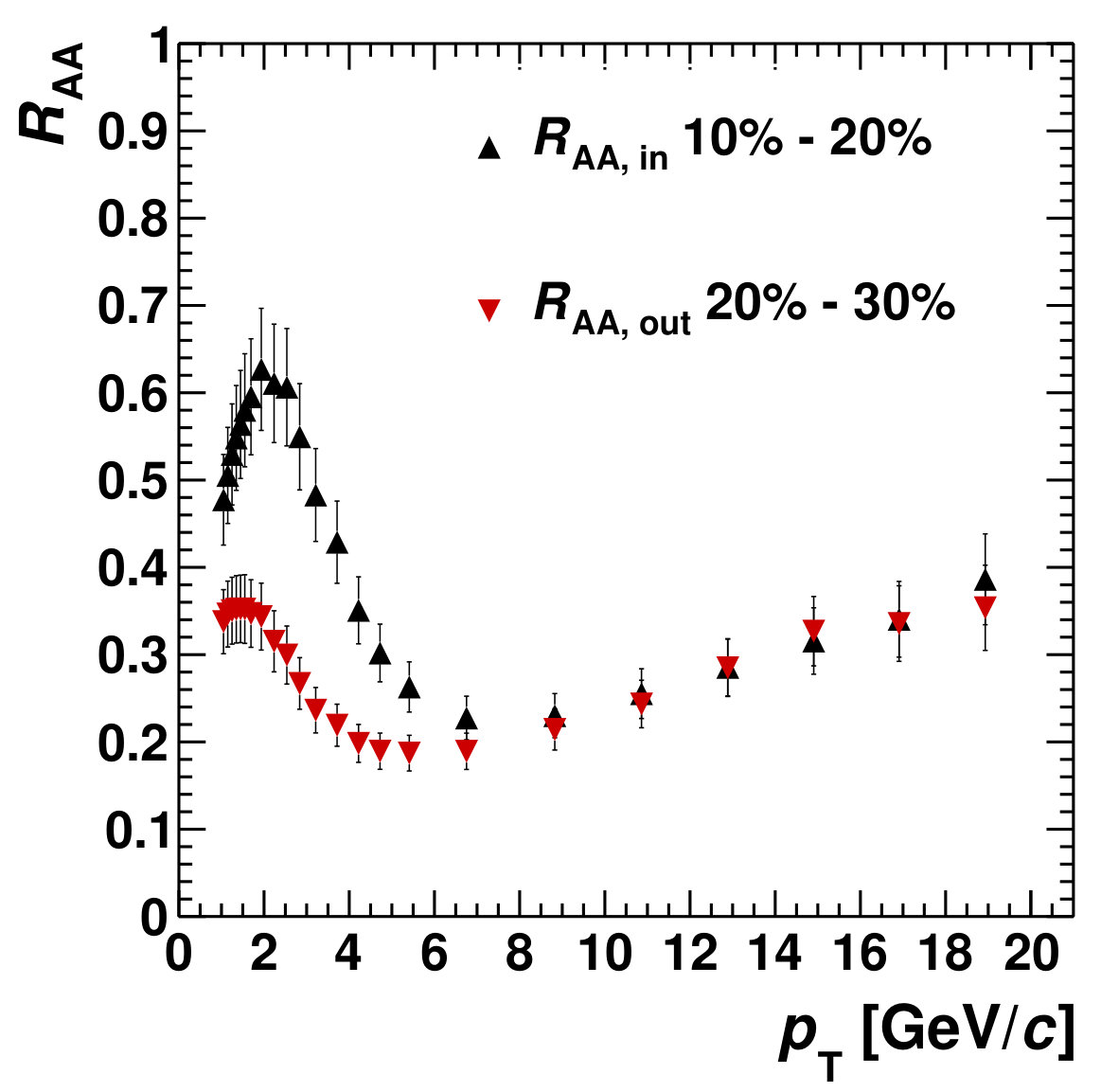 Figure 31
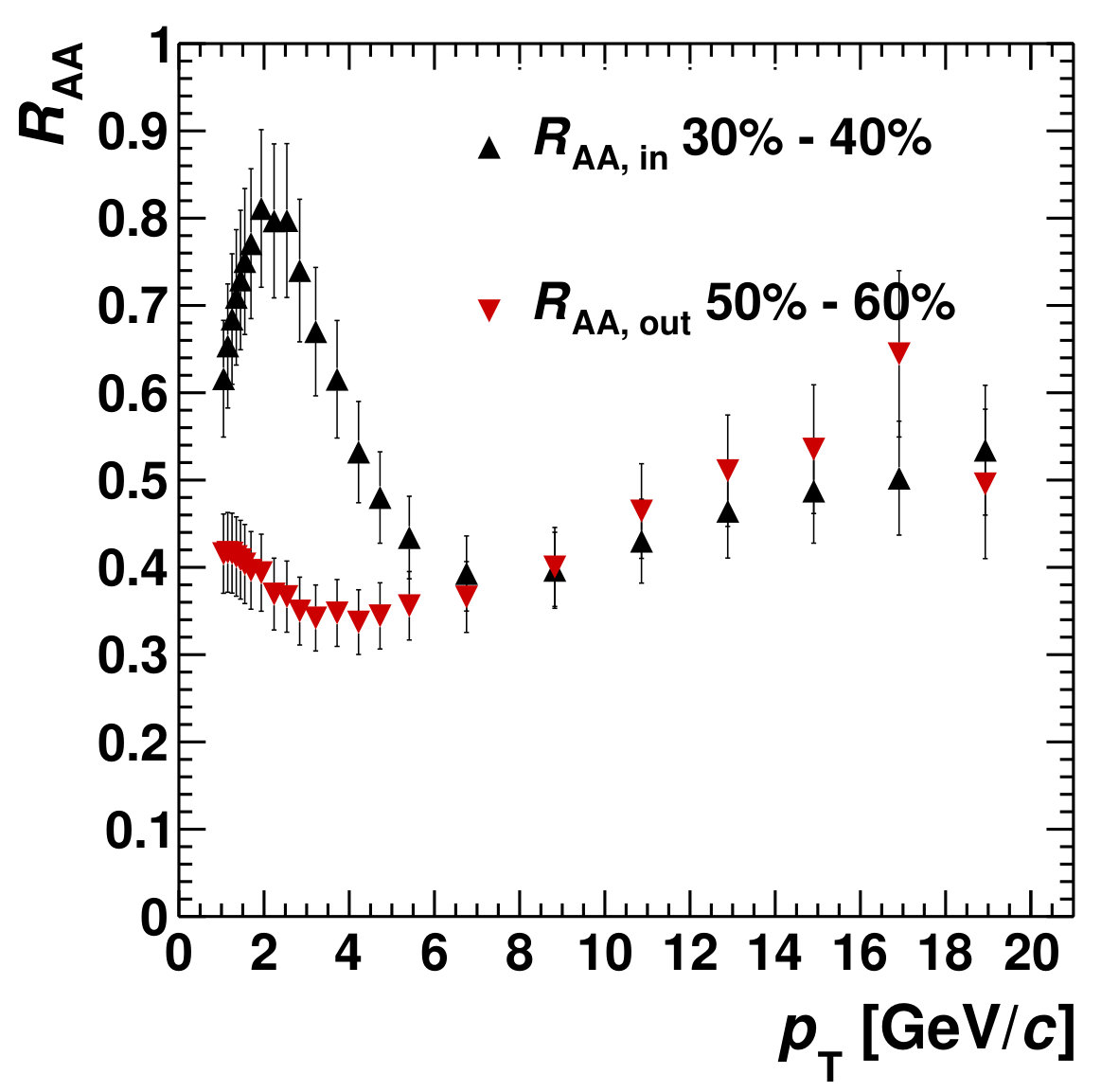 Figure 32
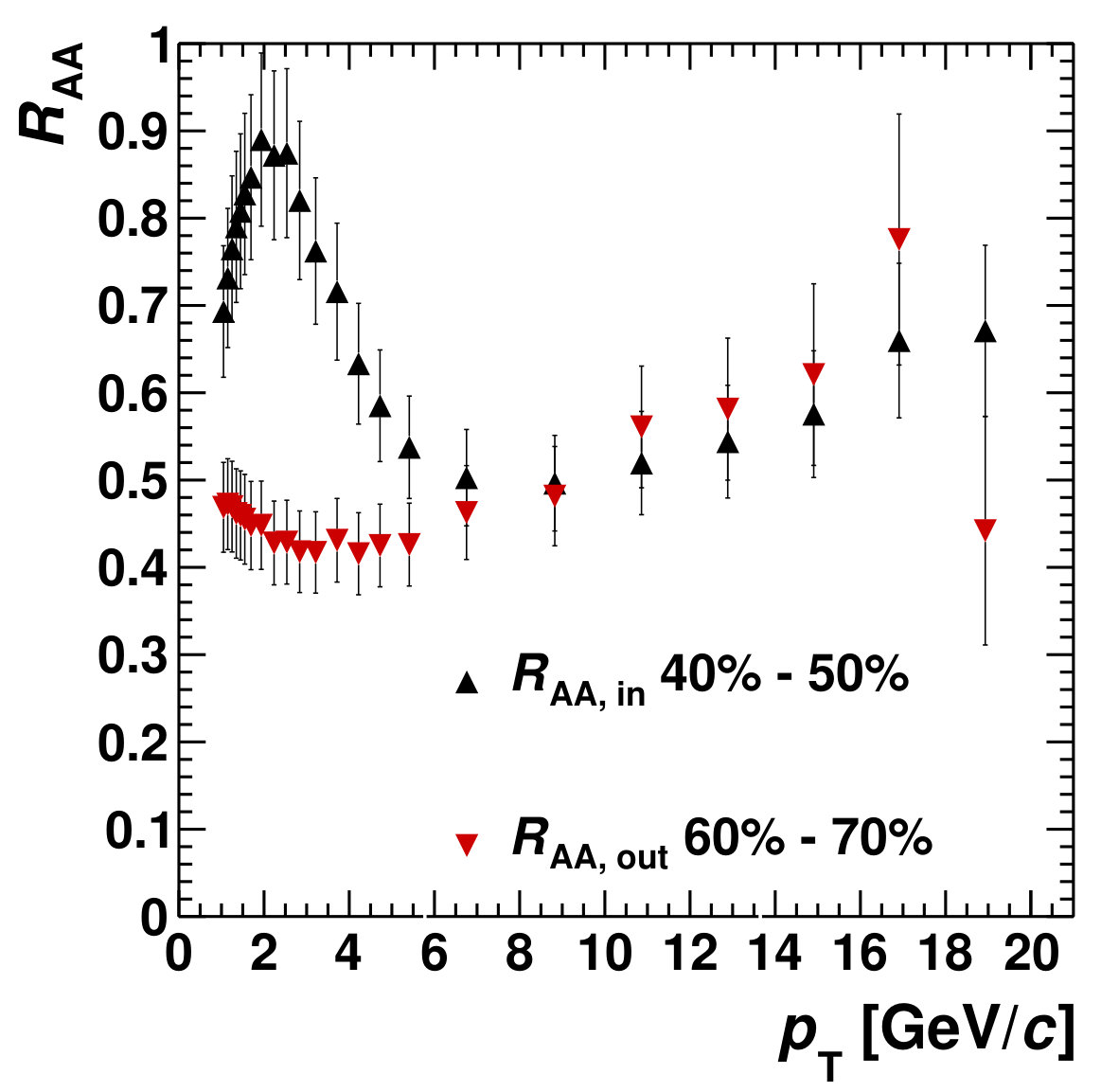 Figure 33
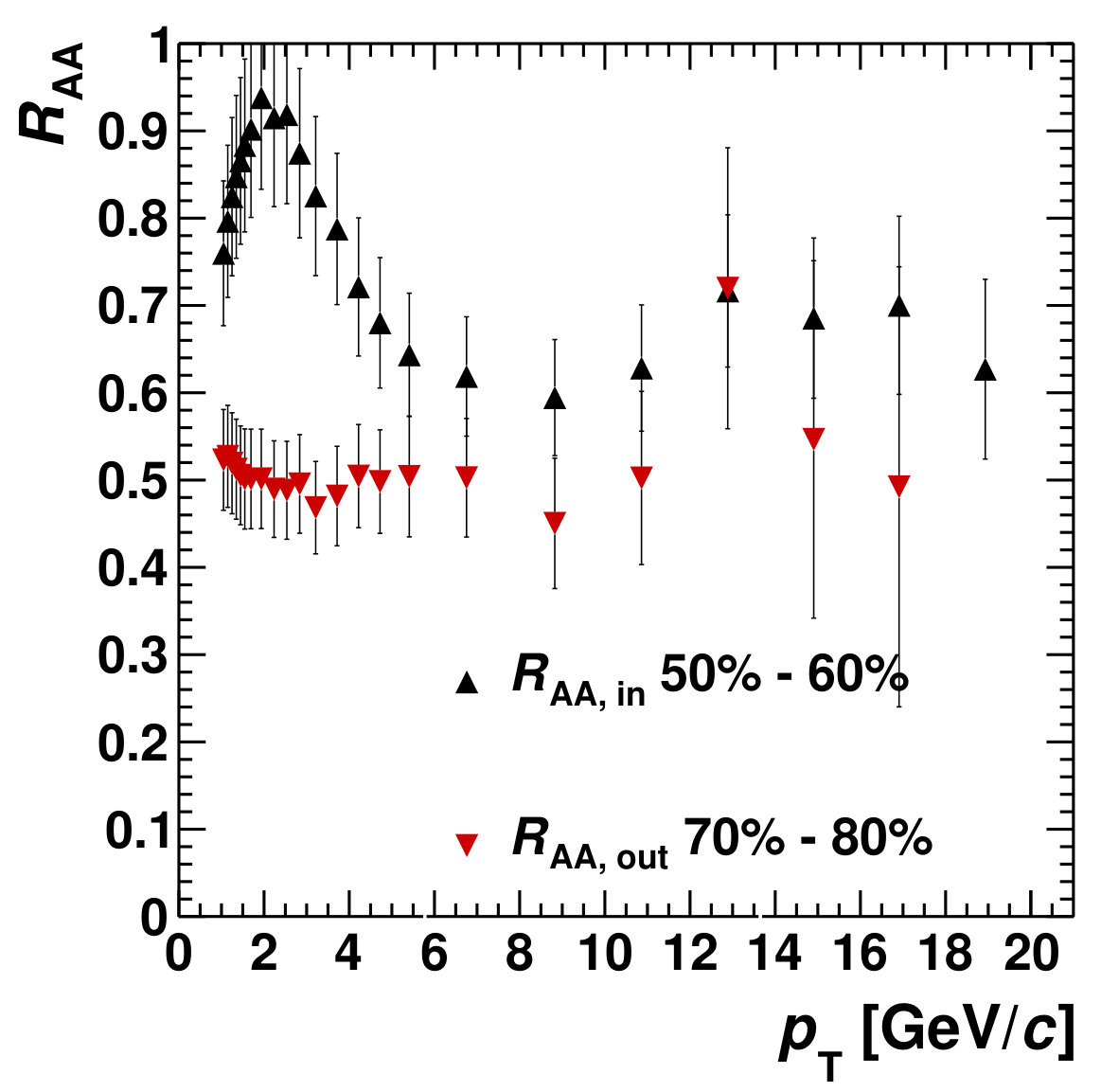 Figure 34
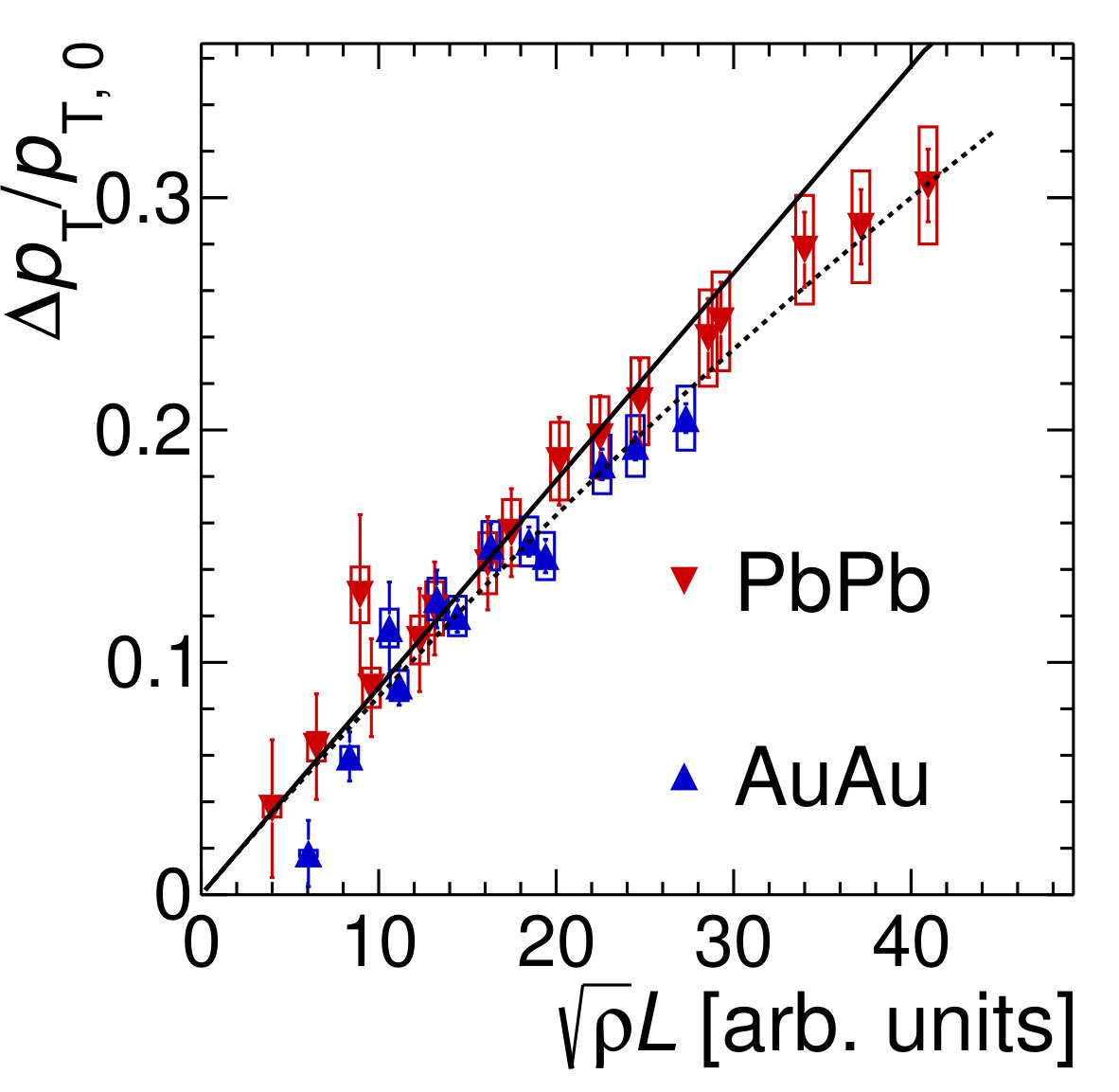 Figure 7
Peer Reviews
No public reviews on file for this paper yet. If you reviewed it on a platform where reviews are public (OpenReview, ICLR, NeurIPS, ICML), you can paste yours below so the community can read it here.
Videos
No videos yet. Explain this paper in a talk, walkthrough, or lecture? Add one.
Taxonomy
TopicsParticle physics theoretical and experimental studies · High-Energy Particle Collisions Research · Quantum Chromodynamics and Particle Interactions
High spectra and anisotropy of light and heavy hadrons
Peter Christiansen
Lund University, Division of Particle Physics, Sweden
Abstract
Data driven studies of heavy-ion results has played a big role in highlighting interesting features of these complex systems. In this proceeding, a simple QGP-brick interpretation of the and at high (p_{\rm T}\approx 10\text{\,GeV/c}) is presented. This interpretation draws attention to two fundamental questions: is there an effect of the asymmetric QGP expansion on the at high ? is there an energy loss difference between quarks and gluons?
Finally, it is discussed how these studies can be extended using Event-Shape Engineering and how they can be applied to compare the energy loss of light and heavy quarks.
keywords:
Jet quenching , High , ,
1 Introduction
The understanding of heavy-ion data is a tremendous challenge. The heavy-ion collision undergoes many phases from QGP creation to hadron production. Even results obtained within models can be hard to interpret and approaches, such as the core-corona model [1], has turned out to be powerful in separating the physical origin of the observed centrality dependence of a quantity (which typically has a simple explanation) from its absolute magnitude (which typically requires the full QCD model).
In jet-quenching studies the challenge is one of the most formidable because one has to model how the propagating jet interacts with the expanding bulk medium. To be able to make a valid comparison of various jet quenching models it has been important in the past to test them using a simple QGP brick (e.g., studies by the TECHQM Collaboration).
In this proceeding of Hard Probes 2016 (HP16) I report a study aimed at a simple understanding of jet quenching in terms of essentially static QGP bricks. The QGP bricks I will use are elliptic with semi-axes in () and out-of-plane () given as the standard deviation of a standard Glauber calculation. The area of the QGP cross section, , is therefore . The energy density, , is assumed to be homogenous and scale with : , where is an unknown scale factor that will be the same for all centralities and beam energies. All jets are assumed to propagate from the center of the ellipse and so for each centrality class there is basically two parameters the jet quenching can depend on: path length and energy density .
The studies described here have been published in Ref. [2] and extended somewhat in Ref. [3]. At the HP16 conference several similar, but much more advanced studies were presented by J. Noronha-Hostler [4], J. Noronha [5], and M. Gyulassy, see also Ref. [6].
2 A scaling model for and
The realization that many calculations could describe but not was a big step forward in constraining jet quenching models, e.g. [7]. This lead to a lot of progress and recently quite successful descriptions of and using Soft-Hard Event Engineering [4].
In this proceeding the goal is much simpler. First, to describe the and at p_{\rm T}\approx 10\text{\,GeV/c} for most centralities using a simple scaling relation for the QGP brick parameters , , and (this section). Second, to point out additional ways of trying to constrain jet quenching models in data driven ways (the following two sections).
2.1 High tracks as proxies for jets
One of the main results from jet studies at LHC is that quenched jets look essentially like vacuum jets of the same final energy [8, 9]. While the CMS results are consistent with no leading- modification, the ATLAS results have smaller systematic uncertainties and show some modification there. At HP16 it was suggested by M. Spousta that this could be due to the difference in quenching of quark and gluon jets, which would lead to a different partonic composition of quenched jets [10]. Here we assume that since the modification is small, one can use high tracks as proxies for jets.
At LHC there is evidence that a good definition of high for jets is p_{\rm T}>10\text{\,GeV/c}. At this , the particle composition in Pb–Pb collisions is the same as in pp collisions [11]. At the same time, the new measurement by CMS of shows that it is consistent with zero for p_{\rm T}>10-20\text{\,GeV/c} [12]. This suggests that for jet quenching only the even harmonics are relevant and that for charged tracks all the relevant information is contained in and .
2.2 Constraining the path length
The following is a brief summary of Ref.[2].
Instead of describing and separately we will focus on describing the and combined into the in and out-of plane
[TABLE]
using results from ALICE [13] and ATLAS [14].
To attempt that, the pathlength dependence will be constrained using two centrality classes where . The question is then if we can explain the difference between and using only the difference in energy density between the two centrality classes. I want to stress here that this is not at all trivial because the expansion, which is not in any way considered in this model, is very different in- and out-of-plane. Furthermore, studies on the effect of this expansion on the energy loss has previously found significant effects [15].
The scaling relation we finally obtain is that when they have the same scaling variable . Figure 1 shows that if we select centrality classes based on this variable then indeed the and are the same. There is some tension for the most peripheral data, but this is also the region where the origin of the large is perhaps not completely geometrical.
There are two important points to stress.
Since the eccentricity has a large centrality variation one would expect that the asymmetric expansion, if important, would result in different scaling relations. As this is not the case it raises the question if this asymmetric expansion has any effect at all. This is a question that would be interesting to study in realistic models. If one would find (an explanation for why) it has no effects it would simplify the understanding of jet quenching considerably.
A scaling relation for and is not unique because if is a good scaling relation then so is (and any power of the scaling variable). What we did in Ref. [2] was to demand that the loss was approximately linear in the scaling variable. The loss was derived using a similar estimate as employed by PHENIX, see e.g. [17]. Surprisingly, when we employed the same scaling variable for PHENIX high- results we found that they follow the same trend as shown in Fig. 2. The origin of this scaling relation is very puzzling for us as the amount of quark and gluon jets as this is very different at these two energies.
3 Event-Shape Engineering
The following idea was also described in Ref.[3].
In the previous section the path length was constrained and the energy density was varied. Using Event-Shape Engineering (ESE) [18] it is possible to constrain the energy density and vary the path length. The basic idea is similar to the old idea of studying and together where one also essentially does this. The new direction here is that one can obtain much larger path length variations using ESE. ESE relies on the near perfect fluidity of the QGP. This means that
[TABLE]
where is the initial state ellipticity and is a function derivable from viscous hydrodynamic modeling of the QGP.
This means that, by selecting on the 2nd order flow vector of the event, one can explore a much larger range of path lengths. This variation can be estimated using Glauber calculations. For Pb–Pb 20–30% central collisions . Using ESE and selecting the 10% of the events with the highest one can obtain a variation of . At the same time one is able to select events, e.g., the 10% of the events with the lowest , where the asymmetry is minimal in- and out-of-plane.
If one can use the variation of the initial state asymmetry to pin down the effect of the radial expansion, then the additional path-length variation can further constrain the path-length dependence.
4 Energy loss of heavy quarks
Many exciting results were shown for heavy quarks at HP16, e.g., B meson [19] and D meson [20]. There are specific QCD predictions for what to expect for the relation between heavy quarks and light quarks. To this author it seems attractive to make similar data driven tests as has been done for light quarks and maybe some of the additional ideas presented here could be included. At HP16 first model calculations in this direction was presented [5].
For reasons of statistics, the obvious first choice for comparing light and heavy quark energy loss is the D meson. One problem is that the region used for the studies presented here (p_{\rm T}>10\text{\,GeV/c}) is probably too large to detect a significant dead-cone effect for D mesons (c quarks), see e.g. [21]. However, the results in Fig. 1 suggests that if one would use for light quarks then one could in principle go to lower p_{\rm T}\approx 4\text{\,GeV/c} without having too big an effect of flow. Using ESE it might be possible to go even lower in . This could increase the sensitivity to the dead cone effect in such studies 111In general flow effects should be smaller for pions than for protons and this could allow light quarks studies of jet quenching down to even lower ..
5 Conclusions
The work presented here has followed two basic ideas:
Using elliptic flow to fix path length while varying the medium density
- 2.
Using Event-Shape Engineering to fix the medium density while varying the path length
These approaches have been used here in a data driven way, but one could also attempt to use them to interpret complex models. The data driven analysis presented here pointed to some interesting questions:
The role of the medium expansion for the energy loss
- 2.
The difference in energy loss for quark and gluon jets (RHIC and LHC)
These are questions where the author hopes that clearer insights will be available at the next HP conference.
Acknowledgements
The author would like to thank the organizers for a wonderful conference: amazing physics, fantastic food, and perfect liquid.
The reference list from the paper itself. Each links out to its DOI / PubMed record.
- 1[1] K. Werner, Core-corona separation in ultra-relativistic heavy ion collisions, Phys. Rev. Lett. 98 (2007) 152301. ar Xiv:0704.1270 , doi:10.1103/Phys Rev Lett.98.152301 . · doi ↗
- 2[2] P. Christiansen, K. Tywoniuk, V. Vislavicius, Universal scaling dependence of QCD energy loss from data driven studies, Phys. Rev. C 89 (3) (2014) 034912. ar Xiv:1311.1173 , doi:10.1103/Phys Rev C.89.034912 . · doi ↗
- 3[3] P. Christiansen, Event-Shape Engineering and Jet Quenching, J. Phys. Conf. Ser. 736 (1) (2016) 012023. ar Xiv:1606.07963 , doi:10.1088/1742-6596/736/1/012023 . · doi ↗
- 4[4] J. Noronha-Hostler, Resolving the R A A subscript 𝑅 𝐴 𝐴 R_{AA} to v n subscript 𝑣 𝑛 v_{n} puzzle, in: 8th International Conference on Hard and Electromagnetic Probes of High-energy Nuclear Collisions: Hard Probes 2016 (HP 2016) Wuhan, Hubei, China, September 23-27, 2016, 2016. ar Xiv:1612.00892 .
- 5[5] C. A. G. Prado, J. Noronha-Hostler, J. Noronha, A. A. P. Suaide, M. G. Munhoz, M. R. Cosentino, Heavy meson flow harmonics in event-by-event viscous relativistic hydrodynamics, in: 8th International Conference on Hard and Electromagnetic Probes of High-energy Nuclear Collisions: Hard Probes 2016 (HP 2016) Wuhan, Hubei, China, September 23-27, 2016, 2016. ar Xiv:1612.05724 .
- 6[6] J. Noronha-Hostler, B. Betz, J. Noronha, M. Gyulassy, Event-by-event hydrodynamics + + jet energy loss: A solution to the R A A ⊗ v 2 tensor-product subscript 𝑅 𝐴 𝐴 subscript 𝑣 2 R_{AA}\otimes v_{2} puzzle, Phys. Rev. Lett. 116 (25) (2016) 252301. ar Xiv:1602.03788 , doi:10.1103/Phys Rev Lett.116.252301 . · doi ↗
- 7[7] A. Adare, et al., Azimuthal anisotropy of neutral pion production in Au+Au collisions at ( s N N ) \sqrt{(}s_{N}N) = 200 Ge V: Path-length dependence of jet quenching and the role of initial geometry, Phys. Rev. Lett. 105 (2010) 142301. ar Xiv:1006.3740 , doi:10.1103/Phys Rev Lett.105.142301 . · doi ↗
- 8[8] S. Chatrchyan, et al., Measurement of jet fragmentation into charged particles in p p 𝑝 𝑝 pp and Pb Pb collisions at s N N = 2.76 subscript 𝑠 𝑁 𝑁 2.76 \sqrt{s_{NN}}=2.76 Te V, JHEP 10 (2012) 087. ar Xiv:1205.5872 , doi:10.1007/JHEP 10(2012)087 . · doi ↗